Archive for ‘Chindia Alert’

21/02/2019

Xi meets Chang’e-4 mission representatives

CHINA-BEIJING-XI JINPING-CHANG'E-4 MISSION-REPRESENTATIVES-MEETING (CN)

Chinese President Xi Jinping, also general secretary of the Communist Party of China Central Committee and chairman of the Central Military Commission, delivers a speech as he meets representatives of space scientists and engineers who participated in the research and development of the Chang’e-4 mission at the Great Hall of the People in Beijing, capital of China, Feb. 20, 2019. (Xinhua/Ju Peng)

BEIJING, Feb. 20 (Xinhua) — Chinese President Xi Jinping met representatives of space scientists and engineers who participated in the research and development of the Chang’e-4 mission at the Great Hall of the People in Beijing Wednesday afternoon.

Xi, also general secretary of the Communist Party of China (CPC) Central Committee and chairman of the Central Military Commission, noted that there is no end for space exploration.

Xi called on science and technology workers and space engineers in China to ride on the wave of the Chang’e-4 mission to achieve the general goal of China’s lunar project, make more efforts to push forward the international aerospace cause and bring more Chinese wisdom, solutions and force to the peaceful use of space and the building of a community with a shared future for humanity.

Members of the Standing Committee of the Political Bureau of the CPC Central Committee Li Keqiang, Li Zhanshu, Wang Yang, Wang Huning, Zhao Leji and Han Zheng also attended the meeting.

Xi shook hands with the scientists and engineers, inquired about their work and life and took pictures with them.

In a speech addressing the meeting, Xi first extended his sincere regards to all those who have made historic contributions to the country’s space undertakings and expressed warm congratulations to all those who have contributed to the Chang’e-4 mission eminently.

“Your outstanding feats achieved in mounting the science and technology peak and exploring the universe’s mysteries have set a model for the whole Party, the whole armed forces and people of all ethnic groups in China to strive for a new era and start a new journey, for which our country and people thank you,” Xi said.

“Five years ago, we celebrated the success of the Chang’e-3 mission. Five years later, we are here to celebrate the success of the Chang’e-4 mission,” he said.

He pointed out that the Chang’e-4 mission, by adhering to independent, collaborative and open innovations, has realized the first-ever patrol and exploration on the far side of the moon by a human spacecraft and engraved Chinese “footprints” there for the first time.

“It is another vivid practice of exploring to establish a new institution that can pool the resources of the whole country,” Xi said.

“Experience tells us that great undertakings begin with dreams, and dreams are the source of vitality. China is a nation that pursues dreams bravely. The CPC Central Committee’s decision to implement the lunar exploration project is to pursue the nation’s unyielding dream of flying into the sky and reaching for the moon,” he noted.

Each bold idea and its successful implementation in lunar exploration is a full demonstration of the human capacity to gain knowledge of and utilize a celestial body, he said.

“In the journey of building a great modern socialist country and realizing the great rejuvenation of the Chinese nation, every industry and every person should dream and strive courageously and fulfill their dreams with arduous and continuous efforts, step by step and baton by baton just like in a relay race,” he emphasized.

“Experience tells us that great undertakings are based on innovation, and innovation determines the future. It won’t be a smooth path to build a leading nation in science and technology, and only innovation can help gain advantages,” he said.

“The mission has made multiple innovations come true and filled a series of international and domestic gaps, which has fully displayed the innovative spirit just as making the first move in chess or taking the initiative in battle,” he added.

China should have a grasp of the general trend of the science and technology development in the world, foster respect for science and focus on strategic, basic and pioneering sectors, said Xi.

China should shore up its weakness in certain areas, keep pace with the leaders in some areas, and strive to lead in other areas, aim for significant breakthroughs in core and key technologies, improve the overall efficiency of the national innovation system, boost science and technology strength and innovation ability, in a bid to earn itself a spot in the global hi-tech sector, he said.

“Experience tells us that great undertakings succeed in solid work,” Xi noted. He said China need to encourage more prominent scientists, leading talent, young scientists and innovation teams to lead the trend and work hard to realize the value of life by contributing to the nation’s great undertakings.

Xi pointed out that exploring the vast universe is a common dream of all humankind. China has been actively advancing international space cooperation and carried out productive cooperation with multiple countries and international organizations. The complete success of the Chang’e-4 mission, for instance, includes contributions of many countries.

China is willing to work with countries around the world and follow the principle of achieving shared growth through discussion and collaboration, so as to deepen the international exchanges on basic scientific research, boost big science projects and step up opening-up and cooperation to enhance innovation ability and push forward the development of science.

The Chang’e-4 mission had two launches. The relay satellite, named Queqiao, meaning Magpie Bridge, was launched on May 21, 2018. The Chang’e-4 probe, launched from the Xichang Satellite Launch Center in southwest China on Dec. 8, 2018, touched down on the far side of the moon on Jan. 3.

Scientific research involving multiple countries and international organizations has been carried out.

The complete success of Chang’e-4 mission marks the first-ever international organizations, patrol and exploration on the far side of the moon by a spacecraft, the first communication link between Earth and the far side of the moon and the first footprints there in the history of lunar exploration, which unveils its mysteries and opens a new chapter in mankind’s exploration of the universe.

Source: Xinhua

21/02/2019

Chinese schools under fire after demanding parents pay for tablets

  • Students at one middle school were told they could join an ‘experimental class’ if they paid US$590 for a designated device
  • That class was later scrapped because of a lack of interest, while the principal of the other school clarified that its plan was not compulsory

Chinese schools under fire after demanding parents pay for tablets

21 Feb 2019

Parents took to social media asking why they had to buy a new tablet when they already had one, and questioning why a specific model was needed. Photo: Alamy
Two schools in northern China have come under fire from parents after they were asked to spend thousands of yuan on tablets for their children’s studies, with one forced to cancel its plan for an “experimental class” due to a lack of interest.

At that school, paying for the device would have given a student a place in a top class where they had access to the best resources.

Earlier this week, Yuying School in Yongnian county, Hebei province demanded 3,000 yuan (US$450) from parents of Year Seven students so that tablets could be bought to assist their studies, Red Star News reported on Wednesday.

They were told via a message on social network WeChat from one of the teachers. It said students should bring the money on Thursday – the first day of the new term – because the private school wanted to “teach using tablets to improve classroom efficiency”. Screenshots of the message have been circulating on social media.

Chinese high school students create daring sex education game, earning positive reviews on Steam

But some parents were against the idea, asking on the WeChat group why they had to buy a new tablet when they already had one, and questioning why a specific model was needed.

“We have several tablets at home – can’t my child use one of them at school?” one parent asked.

Another wrote: “I’m just wondering if this tablet is really worth 3,000 yuan.”

The reaction prompted school principal Li Jinxi to clarify on Wednesday that the tablet purchase was not mandatory, and staff had “misunderstood the policy”, according to the report.

“There could be some minor impact for those students who don’t buy the tablet but it won’t be a big deal because we will also continue to use traditional teaching methods,” he was quoted as saying.

Meanwhile, at Gongyi No 1 Senior High school in Henan province, students were told they could join an “experimental class” if they paid 3,980 yuan for a designated tablet, according to a report on news app Kuaibao on Tuesday.

The school had contacted some of its top students to take part in its “smart class cloud teaching experiment”, the report said.

But the Gongyi education bureau later posted a statement on Weibo, saying only about 70 of the school’s 520 students had signed up for the plan so the school had decided to scrap the idea and would refund the money to parents.

Huawei video in Chinese school exam sparks product placement row

The school was not the first in China to give students a chance to enter a top class if they bought tablets. In 2015, a school in Longkou, Shandong province told students that those who did not pay for a tablet would end up in “ordinary classes”. After the move caused uproar, the school ended up offering a free three-month trial of the devices, with students then able to choose whether to buy one or not – a decision that would not affect which class they got put in.

Source: SCMP

21/02/2019

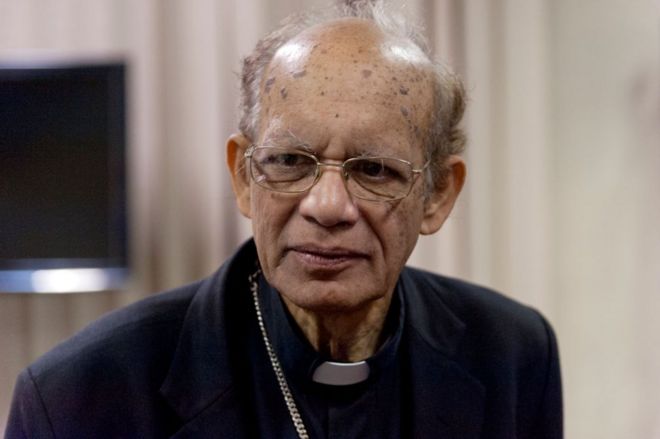
India Catholic Cardinal Oswald Gracias ‘failed abuse victims’

Cardinal Oswald Gracias, Archbishop of Bombay, during the launch of the bishops' declaration on climate justice on 26 October 2018 in Rome, Italy.Image copyrightGETTY IMAGES
Image captionCardinal Oswald Gracias told the BBC it pained him to hear accusations that he had neglected victims of alleged abuse

One of the Catholic Church’s most senior cardinals has admitted that he could have better handled sexual abuse allegations that were brought to him.

Oswald Gracias, the Archbishop of Mumbai is one of four men organising a major Vatican conference on child abuse this week.

We found two separate cases where the cardinal, who is tipped by some to possibly become the next Pope, is claimed to have failed to respond quickly or offer support to the victims.

Victims and those who supported them allege that Cardinal Gracias did not take allegations of abuse seriously when they were reported to him.

India’s Catholics say there is a culture of fear and silence in the Catholic Church about sexual abuse by priests. Those who have dared to speak out say it has been an ordeal.

‘My heart was hurt’

The first case dates back to 2015 in Mumbai.

A woman’s life changed when her son returned from Mass at the church and told her that the parish priest had raped him.

“I could not understand what should I do?” she said. She did not know this yet, but this event would put her on a collision course with the Catholic Church in India.

Media captionWhy is India’s Catholic church silent about sexual abuse?

The man she reached out to for help was and remains one of the most senior representatives of the Church.

It was nearly 72 hours after the alleged rape that the family briefly met Cardinal Gracias, then president of the Catholic Bishop’s Conference of India and Federation of Asian Bishops’ Conferences.

The issue of sexual abuse within the Church is being called the Vatican’s biggest crisis in modern times, and the integrity of the Catholic Church is said to ride on the outcome of this conference.

Pope Francis, flanked by Archbishop of Bombay Cardinal Oswald Gracias (L) and other bishops, arrives at Synod Hall in Vatican City on 24 October 2015Image copyrightGETTY IMAGES
Image captionPope Francis with Cardinal Oswald Gracias (fourth from left)

Over the past year, the Catholic Church has been reeling under multiple allegations of sexual abuse around the world.

But while abuse claims have made headlines in North and South America, Europe and Australia, very little is known about the problems in Asian countries. In countries such as India there is a social stigma about reporting abuse.

Among Christians, who are a minority of nearly 28 million people, a culture of fear and silence makes it impossible to gauge the true scale of the problem.

Cardinal Blase Cupich of Chicago – a colleague of Cardinal Gracias on the four-member organising committee – has promised that decisive action in Rome and in dioceses worldwide will follow after the meeting so as to safeguard children and bring justice to the victims.

Cardinal Gracias will open the second day of the summit with a conversation about accountability in the Church.

Media captionBrigitte, a survivor of child sex abuse by a chaplain, explains why she is ready to speak now

This vital role given to him during this crucial conference has made some in India unhappy.

They say his track record in protecting children and women from abusers is questionable. Those we have spoken to who have taken cases to him say they received little support from him.

The mother of the abused boy said: “I told the cardinal about what the priest had done to my child, that my child was in a lot of pain. So he prayed for us and told us he had to go to Rome…my heart was hurt in that moment.

“As a mother, I had gone to him with great expectations that he would think about my son, give me justice, but he said he had no time, he only cared about going to Rome.”

The family say they requested medical help but were offered none.

The cardinal told us it pained him to hear this, and that he was not aware that the boy needed medical help – and if he had been asked, he would have immediately offered it.

The Archbishop's house in Mumbai

The cardinal admits he left for Rome that night without alerting the authorities.

By failing to call the police, Cardinal Gracias may have violated India’s Protection of Children from Sexual Offences Act, 2012 (POCSO).

The provisions of this law state that if the head of any company or institution fails to report the commission of an offence in respect of a subordinate under his control, they shall be punished with imprisonment for a term which may extend to one year, and with a fine.

The cardinal told us he had telephoned his bishop the next day, who told him the family had subsequently informed the police themselves.

Asked if he regretted not calling the police personally at the time, he said: “You know I’m being honest, I’m not 100% sure… but I must reflect on that. I admit whether immediately, the police should have got involved, sure.”

He says he was under a duty to evaluate the credibility of accusations by speaking to the accused man.

Emerging from that meeting, the family decided to go to a doctor.

“He took one look at my boy and said that something has happened to him. This is a police case. Either you report it or I will… so we went to the police that night,” the mother said.

A police medical examination found that the child had been sexually assaulted.

Indian Catholics pray during Friday afternoon service at the Holy Name Cathedral in Mumbai on 15 March 2013.Image copyrightGETTY IMAGES
Image captionIndia is home to about 19 million Catholics

A current priest who spoke to us on the condition of anonymity said this was not the first time allegations about this priest had been brought to the cardinal’s attention.

“I met him some years before this [alleged] incident,” the priest told us.

“There were strong rumours about [the accused priest] in the diocese, and like these are about abuse that is taking place. And yet he seems to be moving from one place to another, one parish to another. The cardinal told me directly that he is not aware directly of all these things.”

The cardinal says he cannot recall the conversation. He says he did not recollect any “cloud of suspicion” over the man.

‘A lonely battle’

As part of our investigation, we wanted to see if there were other allegations of the cardinal being slow to act.

We found an instance dating back almost a decade, brought to his attention just a couple of years after becoming archbishop of Mumbai.

Virginia Saldanha.
Image captionCatholic activist Virginia Saldanha says three legal notices were sent to the cardinal, threatening court action unless took action about the claims of abuse

In March 2009, a woman approached him with accusations of sexual abuse by another priest who conducted retreats.

She says that he took no action against the priest so she reached out to a group of female Catholic activists, who say they forced the cardinal to act.

Under pressure, he finally set up an enquiry committee in December 2011. Six months after the enquiry, there was still no action and the accused priest continued working in his parish.

“We had to send the cardinal three legal notices to act, threaten to take the matter to the courts if he did not act,” said Virginia Saldanha, a devout Catholic who has worked on the women’s desk of multiple Church-affiliated positions for over two decades.

When the cardinal replied, he said: “The priest is not listening to me.”

Blurred image of family
Image captionThe family says they have been ostracised from the church and isolated within their communities since reporting the sexual assault

During the time, Saldanha said she had to leave the church because “I could not bear to see that man giving Mass in the church. I did not feel like going there.”

The priest was eventually removed from his parish, but the reasons for his departure were never made public.

The punishment, decided by the cardinal personally in October 2011, was a “guided retreat and therapeutic counselling”.

When we pressed him about the speed of process and punishment, the cardinal said it was a “complicated case”.

After a stay in the seminary, the accused priest was briefly given a parish again and still conducts retreats.

Meanwhile, the family of the allegedly raped minor feel abandoned by the institution that they had built their lives around.

“It has been a lonely battle,” the mother concedes. They say they have been ostracised from the church and isolated within their communities.

“After complaining to the police, when we would go into church, people would refuse to talk to us, to sit next to us during Mass. If I went to sit next to someone… they would get up and leave,” she said.

The hostility she encountered eventually “made us leave the church. But it got so difficult for us that we eventually had to change our home as well. We left it all behind”.

Church members say that it is this hostility that makes it harder for victims and their families to speak up.

Caught between an apparently unsupportive clergy and hostile social network, many find their voices faltering.

Source: The BBC

21/02/2019

India withdraws security for Kashmir separatist leaders

NEW DELHI (Reuters) – India’s Jammu and Kashmir state withdrew the security details for 18 separatist leaders and 155 other opposition figures on Wednesday after an Islamist suicide bomber killed 40 paramilitary troopers last week.

The restive mountain state is currently administered by India’s federal government after Prime Minister Narendra Modi’s Bharatiya Janata Party walked out a coalition with a major Kashmiri party.

The separatist leaders had been allocated security personnel to protect them from militants after they entered talks with the federal government.

In a statement, the Jammu and Kashmir state government said it “felt that providing security to these separatist leaders is a wastage of scarce state resources which could be better utilized elsewhere”.

Besides the separatist leaders, the security of 155 political figures and activists – some from mainstream opposition parties – was also withdrawn, the statement said.

“Through this (step), over 1,000 police personnel and over 100 vehicles are freed to do regular police work,” it said.

Both India and Pakistan lay claim to Kashmir and have twice gone to war over it since independence from Britain in 1947. India accuses Pakistan of fomenting decades of sporadic insurgency in its only Muslim-majority state.

Pakistan denies that, saying it only offers political support to the Kashmiri people.

Source: Reuters

20/02/2019

China’s senior political advisor visits Germany

BERLIN, Feb. 19 (Xinhua) — China’s senior political advisor Gao Yunlong wrapped up a three-day visit to Germany on Tuesday.

Gao, vice chairman of the 13th National Committee of the Chinese People’s Political Consultative Conference (CPPCC), and chairman council of the China Federation for Peace and Development, was visiting at the invitation of the Koerber Foundation.

Gao met Thomas Oppermann, vice president of the German Bundestag; Dagmar Schmidt, chairman of the German-Chinese Parliamentary Friendship Group in the German Bundestag; and Kurt Beck, chairman of the Friedrich Ebert Foundation.

A seminar was held at the Koerber Foundation during Gao’s visit.

The German side praised China’s achievements during its 40 years of reform and opening up, voiced support for the Belt and Road Initiative, and expressed its willingness to communicate and coordinate with the Chinese side on major international issues.

Source: Xinhua

20/02/2019

Wei Fenghe meets Vietnam’s deputy minister of national defense

BEIJING, Feb. 19 (Xinhua) — Chinese State Councilor and Minister of National Defense Wei Fenghe on Tuesday met with Vietnam’s Deputy Minister of National Defense Nguyen Chi Vinh in Beijing.

“With shared ideals and convictions, the friendship between China and Vietnam is deeply rooted and of special importance,” Wei said. “The two countries are a community of shared future with strategic significance.”

He said the Chinese military is willing to work with the Vietnamese military to implement the important consensus reached at the high level between the two parties and the two countries, strengthen strategic communication and coordination, and deepen exchanges and cooperation in various fields.

The Chinese military also stands ready to properly handle differences, push military-to-military relations to a new level and contribute to safeguarding the fundamental interests of the two countries and regional security and stability, he said.

Vinh said that the Central Committee of the Communist Party of Vietnam and the Central Military Commission cherish the traditional friendship between the two countries and are willing and have confidence to push relations between the two countries and two militaries to a higher level and bring more benefits to the two peoples.

Source: Xinhua

20/02/2019

Chinese envoy urges pushing Yemeni parties to sustain effective political dialogue

UN-SECURITY COUNCIL-MEETING-YEMEN

Chinese Permanent Representative to the United Nations Ma Zhaoxu (C, Front) addresses a Security Council meeting on the situation in Yemen, at the UN headquarters in New York, on Feb. 19, 2019. The first redeployment of forces in Hodeidah of Yemen could possibly begin later Tuesday, UN Special Envoy to Yemen Martin Griffiths told the Security Council via video link from Amman on Tuesday. (Xinhua/Li Muzi)

UNITED NATIONS, Feb. 19 (Xinhua) — A Chinese envoy on Tuesday urged the international community to push the Yemeni parties to sustain effective political dialogue.

“We should push the Yemeni parties to sustain effective political dialogue and negotiation,” Ma Zhaoxu, China’s permanent representative to the United Nations, said at a Security Council meeting on the situation in Yemen.

“We need to insist on the role of the United Nations as the main channel,” he said.

“Under the leadership of the Redeployment Coordination Committee, political will is to be turned into real action,” the Chinese ambassador said.

“We hope to see an early launch of the next round of peace talks under the leadership of special envoy (Martin) Griffiths, so as to reach a settlement that balances and takes into account of the interests of all parties and help resume peace, stability, and normal order in Yemen,” he said.

Noting that the international community “is paying close attention to” the issue of Yemen and is having a lot of expectations for the resumption of peace and stability in Yemen, Ma said that the Stockholm Agreement “has brought about hope of peace for the Yemeni people.”

“The Security Council should have a timely understanding of the implementation of the agreement by all parties and the challenges they are facing, and continue to play a positive role on the issue of Yemen,” the Chinese envoy added.

Ma told the Security Council that all Yemeni parties “are abiding by the ceasefire agreement in general,” adding that the Redeployment Coordination Committee under the auspices of the United Nations and with the participation of all Yemeni parties, is conducting its work “in an orderly fashion and has arrived at a consensus” on the first phase arrangement on Sunday.

Speaking of the challenges, the Chinese envoy said that the practical difficulties in implementing the agreement cannot be underestimated.

“Fighting is going on in Hodeidah and its surrounding areas. The two parties still have differences on the list of prisoners and the issue of task,” he said.

“The humanitarian situation in Yemen is dire,” Ma noted.

The envoy urged parties concerned to continue with the implementation of the Stockholm Agreement.

“The Yemeni parties should effectively implement the agreement, address their differences through dialogue, and increase their consensus,” he said.

“Efforts should be made to accelerate the deployment of the UN mission in Yemen to assist and monitor the implementation of the agreement,” said the ambassador.

Noting that the Security Council should take full account of, and respect the opinions of the country in question and the countries in the region, Ma said that the council should “continue to stay united.”

He also called for vigorous effort to ease the humanitarian situation in Yemen, stressing that the international community should provide food, medicine and funds “in a targeted fashion” to support the economic improvement and price stabilization in Yemen to satisfy the basic needs of livelihood for the Yemeni people.

UN Special Envoy to Yemen Griffiths told the Security Council via video link from Amman that Yemen’s government and Houthi rebels had agreed to pull back from the rebel-held ports of Saleef and Ras Issa followed by a redeployment from Hodeidah port, also held by the Houthis, and critical parts of the city.

Source: Xinhua

20/02/2019

China’s top legislator holds talks with Iran’s parliament speaker

CHINA-BEIJING-LI ZHANSHU-IRAN-ALI LARIJANI-TALKS (CN)

Li Zhanshu (R), chairman of the National People’s Congress (NPC) Standing Committee, holds talks with Iranian Parliament Speaker Ali Larijani at the Great Hall of the People in Beijing, capital of China, Feb. 19, 2019. (Xinhua/Pang Xinglei)

BEIJING, Feb. 19 (Xinhua) — China’s top legislator Li Zhanshu on Tuesday held talks with visiting Iranian Parliament Speaker Ali Larijani, calling for stronger cooperation to boost ties.

Li, chairman of the National People’s Congress (NPC) Standing Committee, urged the two sides to take a strategic and long-term view in bilateral ties, constantly deepen political mutual trust, strengthen communication and coordination, and provide mutual support on issues concerning each others’ core interests.

He also called for more anti-terrorism security cooperation and more mutually beneficial cooperation within the framework of the Belt and Road Initiative.

Despite profound changes in the international situation and increasing instabilities and uncertainties, China’s position in safeguarding the Iranian nuclear deal has not changed, neither has its commitment to developing China-Iran relations, Li said.

During Chinese President Xi Jinping’s state visit to Iran in 2016, the two countries established a comprehensive strategic partnership, ushering in a new chapter in bilateral ties, said Li.

Hailing the smooth progress in all-round cooperation in recent years, Li said that exchanges between the countries’ legislative institutions are an important component in the comprehensive strategic partnership.

“The NPC is willing to carry out friendly exchanges with Iranian parliament at different levels and in different forms, strengthen communication on experiences in legislation, supervision, and state governance, so as to provide sound legal guarantee for the two countries’ mutually beneficial cooperation,” he said.

Larijani said the ancient trade routes of the Silk Road witnessed the long history of exchanges between the two countries, and the Belt and Road Initiative proposed by President Xi Jinping gives new meanings to the Silk Road.

He said the Iranian side highly values and actively participates in the Belt and Road Initiative. The Iranian Parliament would like to carry out more exchanges with the NPC and support mutually beneficial cooperation in various fields.

Source: Xinhua

20/02/2019

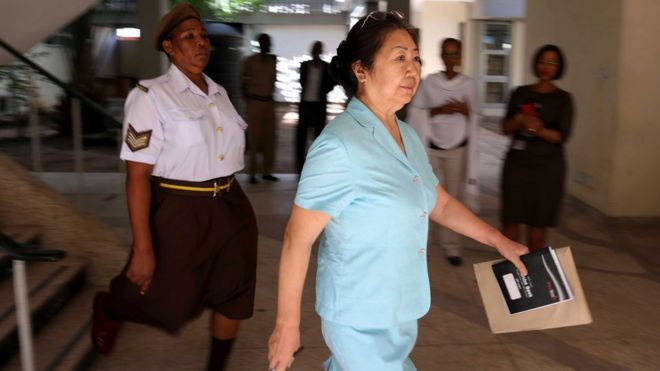
Chinese ‘Ivory Queen’ Yang Fenglan jailed in Tanzania

Yang Fenglan leaves court, Dar Es Salaam, 2016Image copyrightAFP
Image captionYang Fenglan was a leading figure in business circles at the time of her arrest

Tanzania has sentenced Yang Fenglan, a Chinese businesswoman nicknamed the “Ivory Queen”, to 15 years in jail for smuggling hundreds of elephant tusks.

Yang was accused of operating one of Africa’s biggest ivory-smuggling rings, responsible for smuggling $2.5m (£1.9m) worth of tusks from some 400 elephants.

Two Tanzanian men were also found guilty of involvement in the ring.

Ivory poaching is said to have caused a 20% decline in the population of African elephants in the last decade.

The International Union for Conservation of Nature (IUCN), a global environmental body, says the population of African elephants has fallen to 415,000 – a drop of 110,000 over the last 10 years – as a result of poaching.

The illicit trade is fuelled by demand from China and east Asia, where ivory is used to make jewellery and ornaments.

Yang was convicted on charges relating to the smuggling of around 800 pieces of ivory between 2000 and 2014 from Tanzania to the Far East.

The Tanzanian men were also jailed for 15 years on similar charges.

The court in Dar es Salaam, Tanzania’s main city, has ordered Yang’s property to be repossessed.

She had been under investigation for more than a year when she was arrested in 2015, following a high-speed car chase.

At the time of her arrest, Yang was a prominent businesswoman, operating a Chinese restaurant as well as an investment company in Dar es Salaam.

Fluent in Swahili, she had lived and worked in Tanzania since the 1970s, and had served as vice-president of the China-Africa Business Council of Tanzania.

Environmental campaigners welcomed the arrest because she was seen as playing a pivotal role in the illegal ivory trade. Most arrests tend to involve minor players.

Source: The BBC

20/02/2019

China to deepen reforms of agriculture sector to boost rural areas

  • Policy statement outlines broad goals including plan to revive domestic soybean production
A farmer picks tea leaves in Mianxian county, Shaanxi province. Beijing’s policy document reiterated a strategy to improve income levels and living standards in China’s countryside. Photo: Xinhua
China will deepen reforms of its agriculture sector to promote its rural economy, the government said in its first policy statement of 2019, as it seeks to bolster growth and offset trade challenges.

Beijing’s statement, released late on Tuesday, comes after the world’s second-largest economy saw its weakest growth in 28 years in 2018 and remains entangled in a trade war with Washington.

“Under the complicated situation of increasing downward pressure on the economy and profound changes in the external environment, it is of special importance to do a good job in agriculture and rural areas,” the government said in the document issued by the State Council and published by official news agency Xinhua.

The biggest winners in Shenzhen, ‘China’s Silicon Valley’? Pig and chicken farmers

Known as the “No 1 document”, this year’s policy reiterated a rural rejuvenation strategy first laid out in 2017 to improve income levels and living standards in China’s countryside.

It also highlighted a plan to boost domestic soybean production but did not offer further details.

Chinese President Xi Jinping visits a farm in northeastern Heilongjiang province during an inspection tour in September. Photo: Xinhua via AP

Industry analysts said on Wednesday they were eagerly awaiting further details to assess the impact of the plan, which had already been flagged by Agriculture Minister Han Changfu earlier this month.

China has been overhauling its crop structure in recent years, reducing support for corn after stocks ballooned, and seeking to promote more planting of oilseeds that it mostly imports.

That goal has become increasingly important since a trade war with the United States, which led China to slap tariffs on soybean imports, tightening domestic supplies.

Han has previously urged authorities in China’s northeast to support soybean production through subsidies and called for rotating of soybeans with other crops including corn and wheat.

Beijing also aims to support the production of rapeseed in the Yangtze River Basin, according to the document.

The garlic case that foreshadowed the US-China trade war

As in previous years, it also called for stable grain production, but also an increase in imports of agriculture products where there are shortages in the domestic market.

“The focus now is on retaining production capacity, in the form of high quality farmland, and using the international market to make up production shortfalls,” said Even Rogers Pay, an agriculture analyst at China Policy, a Beijing-based consultancy.

The reference to imports is positive for trade partners like the United States, said Cherry Zhang, analyst with Shanghai JC Intelligence, who said it raised the likelihood that China will buy more US agriculture products.

China’s DJI turns its eye to enterprise uses like agriculture after conquering global commercial drone market

Shares of Chinese livestock companies, along with pig and poultry breeders, rose on Wednesday following the release of the policy paper.

The document also outlines plans to accelerate development of a new farm subsidy policy system and further crack down on the smuggling of agriculture products.

Additionally, the government said it plans to strengthen the monitoring and control of African swine fever outbreaks, after more than 100 cases were reported in China since August.

Other plans include continuing to tackle rural pollution and promoting recycling of agricultural waste such as manure and agricultural film.

Source: SCMP

Law of Unintended Consequences

continuously updated blog about China & India

ChiaHou's Book Reviews

continuously updated blog about China & India

What's wrong with the world; and its economy

continuously updated blog about China & India