Chindia Alert: You’ll be Living in their World Very Soon
aims to alert you to the threats and opportunities that China and India present. China and India require serious attention; case of ‘hidden dragon and crouching tiger’.
Without this attention, governments, businesses and, indeed, individuals may find themselves at a great disadvantage sooner rather than later.
The POSTs (front webpages) are mainly 'cuttings' from reliable sources, updated continuously.
The PAGEs (see Tabs, above) attempt to make the information more meaningful by putting some structure to the information we have researched and assembled since 2006.
Soldiers from 140 countries are expected to take part in 10-day sporting event in Wuhan, Hubei province
It coincides with the Xiangshan Forum, where Beijing may seek to reinforce its position on issues like the South China Sea and US arms sales to Taiwan
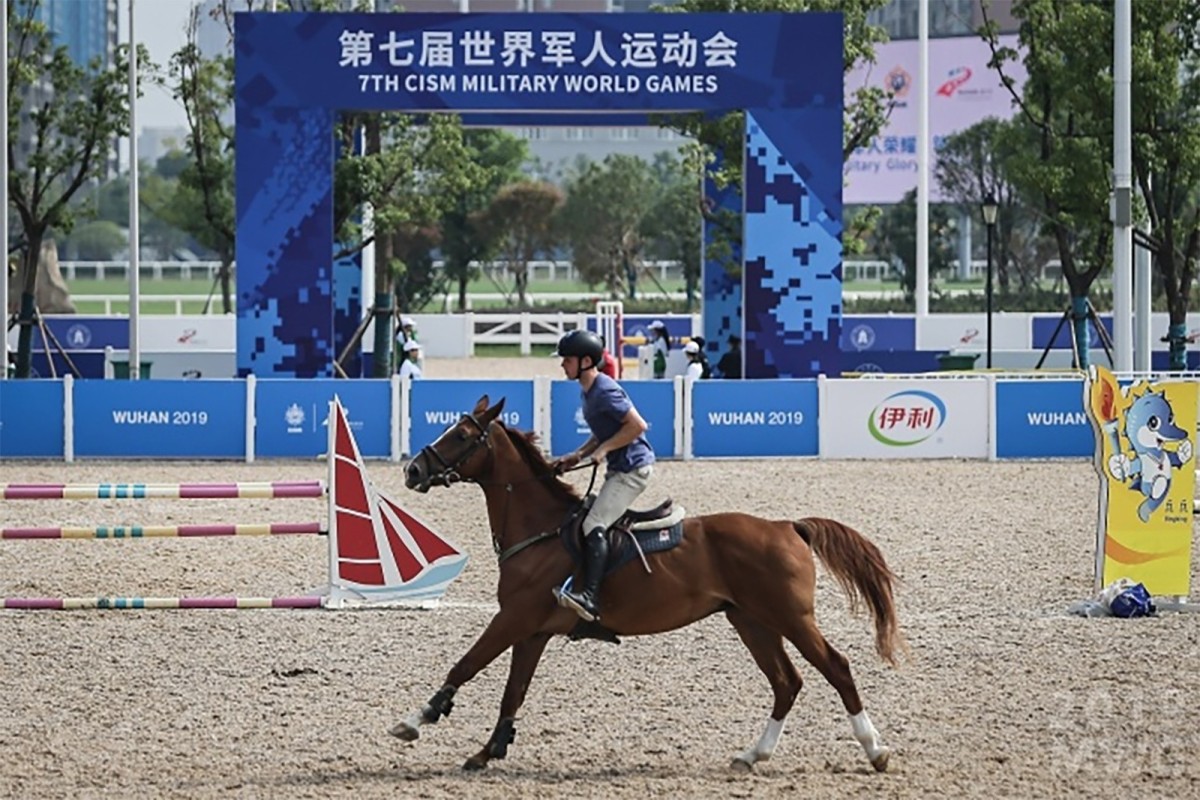
More than 100 horses have arrived in Wuhan for the equestrian and modern pentathlon events of the Military World Games, which begin on Friday. Photo: Handout
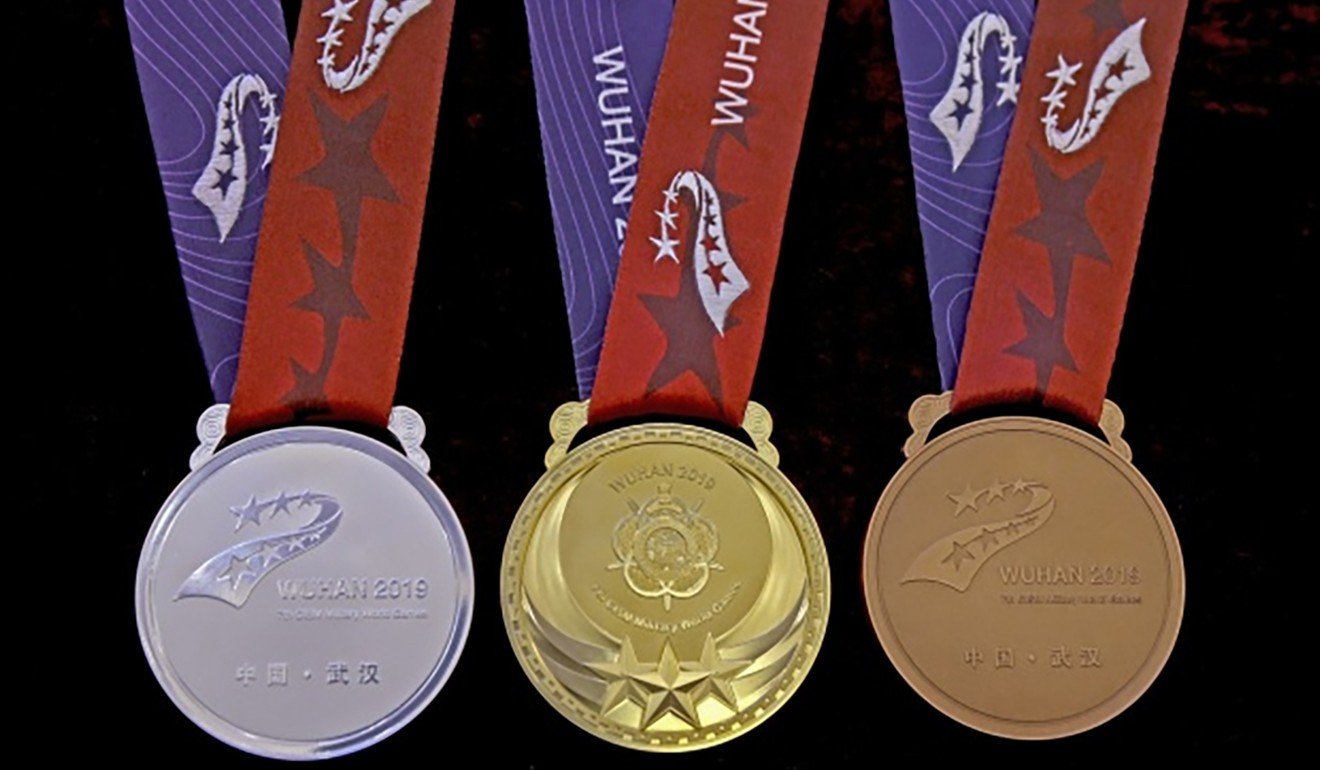
President Xi Jinping is expected to open the Military World Games in central China on Friday, setting the stage for a People’s Liberation Army charm offensive as it seeks to strengthen ties with foreign forces and exert its influence.
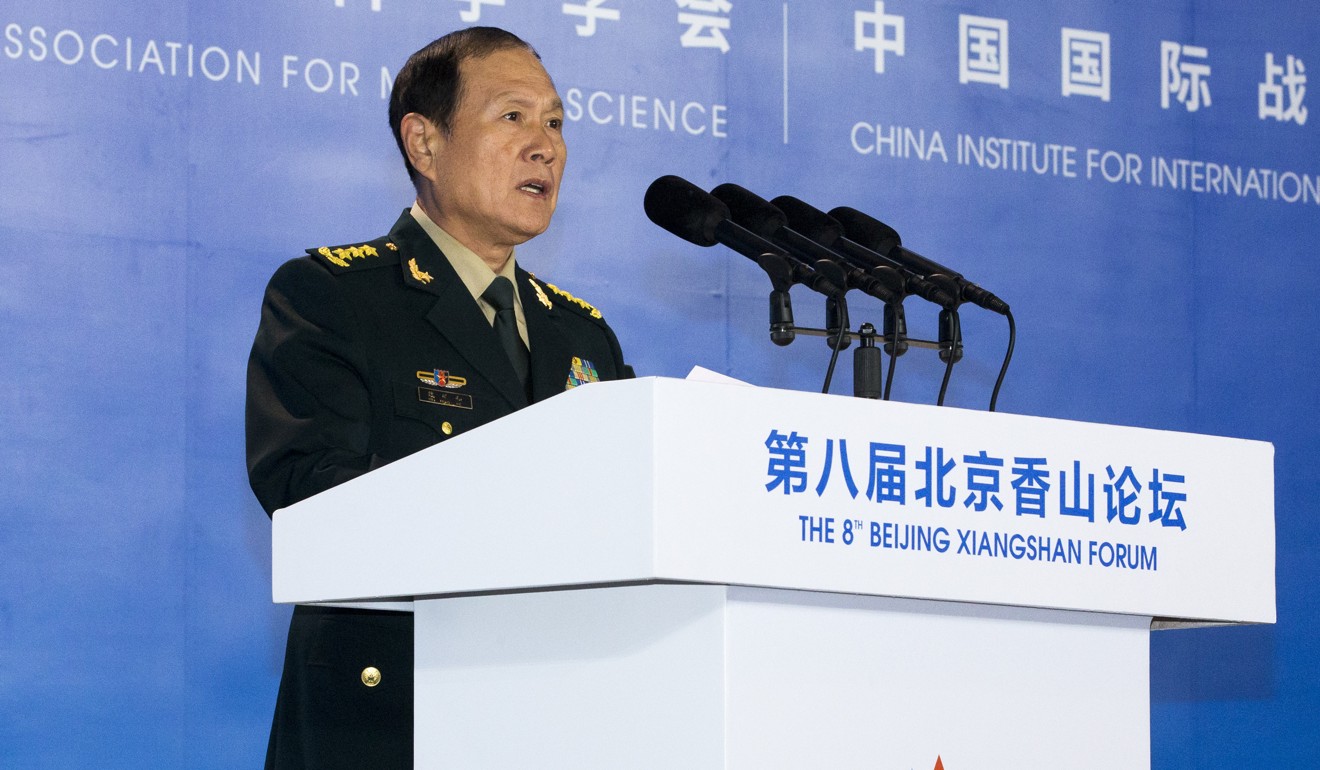
China is hosting the 10-day sporting event in Wuhan, Hubei province, and soldiers from 140 countries are expected to take part. It will coincide with the three-day Xiangshan Forum – China’s equivalent of the Shangri-La Dialogue in Singapore – to be held on the outskirts of Beijing from Sunday.
It comes after China staged a lavish military parade in Beijing to celebrate the 70th anniversary of the People’s Republic on October 1, showcasing some of the PLA’s most advanced weapon systems and strategic weaponry.
A Chinese military insider on Tuesday said Xi was expected to kick off the games in Wuhan – a symbolic move by the president as he seeks to boost the PLA’s international profile.
China has built a new athletes’ village in Wuhan that can accommodate 10,000 people. Photo: Handout
“[China sees] the Military World Games as a platform to promote international military diplomacy and an opportunity for the PLA to build its international image through sporting events,” the insider said.
It will be the first time China hosts the Military World Games, which is the second-biggest multi-sport event after the Olympics and is also held every four years.
To host the mega event, China has built a new athletes’ village in Wuhan that can accommodate the 10,000 military athletes who will compete. This year’s games will have the largest number of events ever, with badminton, table tennis, tennis and men’s gymnastics included for the first time.
The US Armed Forces will send about 300 athletes to Wuhan, according to state-run Xinhua. One of them is Mark Juliano, an archer and taekwondo player, who told the news agency: “You developed world-class venues and I can’t wait to experience the games.”
The Chinese president has high hopes for the PLA athletes at this year’s Military World Games, according to an insider. Photo: Handout
The military insider said Xi had high hopes that the PLA would win gold in some of the events.
“The Russians are known to be very good at some sports but the PLA has yet to earn a reputation in any particular sport,” the insider said. “Xi hopes that the home ground advantage will give the PLA the edge this time.”
Another Beijing-based military source said the top brass had put great emphasis on the success of three events this year – the National Day parade, Military World Games and the Xiangshan Dialogue.
The source said it would be the biggest Xiangshan Forum since China began holding the event more than a decade ago, and dozens of senior foreign defence officials and military leaders invited to the games in Wuhan would also take part in the forum.
How robots are revolutionising China’s firework factories
Set up in 2006, China uses the forum to play host to foreign military experts and leaders and discuss security and defence issues in the Asia-Pacific region. It is widely seen as an effort by Beijing to compete with the Asia Security Forum in Singapore, also known as the Shangri-La Dialogue after the hotel where it is staged.
The theme of this year’s Xiangshan Forum is “Maintaining international order and promoting peace in the Asia-Pacific”. Military observers said Beijing was likely to use it as an opportunity to reinforce its position on issues like the South China Sea and US arms sales to Taiwan.
Defence Minister Wei Fenghe criticised the US for damaging ties with China at last year’s Xiangshan Forum. Photo: Xinhua
Yao Yunzhu, a retired PLA major general and a delegate at the forum, said this year’s event would give the PLA an opportunity to explain its strategy to foreign militaries, including the US.
“The relationship between the PLA and its American counterpart has been stable over the past year despite tensions between Beijing and Washington over issues such as trade,” Yao said.
“But that military relationship has been stable thanks to the efforts of the two militaries to keep their communication open, as well as improving their crisis management mechanism,” she added.
Another forum delegate, Zhu Feng, dean of the international relations school at Nanjing University, said smaller countries in the region would use the forum to raise their concerns over the impact of tensions between China and the US on the region’s long-term stability.
Chinese Vice Premier Han Zheng, also a member of the Standing Committee of the Political Bureau of the Communist Party of China Central Committee, meets with Singaporean Deputy Prime Minister Heng Swee Keat in southwest China’s Chongqing, Oct. 15, 2019. (Xinhua/Liu Weibing)
CHONGQING, Oct. 15 (Xinhua) — China and Singapore on Tuesday announced that the upgraded version of the China-Singapore Free Trade Agreement will take effect on Oct. 16.
The two sides made the announcement after four bilateral cooperation mechanism meetings co-chaired by Chinese Vice Premier Han Zheng and Singaporean Deputy Prime Minister Heng Swee Keat in Chongqing.
The four meetings were the 15th China-Singapore Joint Council for Bilateral Cooperation Meeting, the 20th China-Singapore Suzhou Industrial Park Joint Steering Council Meeting, the 11th China-Singapore Tianjin Eco-City Joint Steering Council Meeting and the third China-Singapore (Chongqing) Demonstration Initiative on Strategic Connectivity Joint Steering Council Meeting.
During the meetings, the two sides comprehensively reviewed the implementation of the high-level consensus and the process of practical cooperation.
The two sides exchanged views on the high-quality joint construction of the Belt and Road, promoting regional development and cooperation, and upholding multilateralism and free trade, and made plans for the direction and focus of their cooperation in the future.
The two sides agreed to enhance connectivity, financial support, third-party cooperation, law and judicial cooperation under the framework of the Belt and Road Initiative, increase investment in the new land-sea corridor and promote upgrading of major cooperation projects.
The two sides agreed to improve regional free trade arrangements, promote regional integration, enhance multilateral economic and trade cooperation, and push forward the building of an open world economic system.
Prior to the four meetings, Han met with Heng.
Commending the positive development momentum of bilateral relations, Han, also a member of the Standing Committee of the Political Bureau of the Communist Party of China Central Committee, called on the two sides to implement the important consensus reached by the leaders of the two countries that have established strategic guidance of the development of bilateral relations. The two countries should make good use of the mechanism meetings to deepen cooperation in various fields, Han said.
“China’s reform will not stop, but will only accelerate. China’s door of opening-up will not be closed, but will only open wider,” said Han, adding that China welcomes Singapore to participate in its process of reform and opening-up in a larger scope, wider areas and at a deeper level.
Han said China and Singapore must work with each other to guard against the headwinds of unilateralism and protectionism, and resolutely safeguard the international system based on multilateralism and international laws, with the UN as its core.
Heng extended congratulations on the 70th anniversary of the founding of the People’s Republic of China and spoke highly of China’s great development achievements.
He said the friendship between Singapore and China has remained unshakable and become increasingly stronger over the years.
Heng said Singapore attaches great importance to the building of cooperation mechanisms and is ready to work with China to promote cooperation to a new height and to upgrade bilateral relations to a new level. Singapore stands ready to work with China to jointly safeguard the rules-based multilateral trading system and address global challenges.
After the mechanism meetings, Han and Heng witnessed the signing of a series of cooperation documents covering exchanges and training, technological innovation, smart city and intellectual property.
Luo Zhaohui, who was credited with helping to resolve 2017 Doklam stand-off peacefully, joins group set up to tackle global warming
Luo Zhaohui previously served as China’s ambassador to India. Photo: Handout
China’s former ambassador to India Luo Zhaohui has joined a national team in charge of fighting climate change, the Chinese government website has announced.
The team, led by Premier Li Keqiang, will be responsible for coming up with proposals to tackle the problem, develop proposals for energy conservation and analyse the impact of climate change on socio-economic development.
China is currently the world’s largest polluter, accounting for a quarter of the world’s total emissions, making it crucial in the effort to curb global warming.
The US withdrawal from the Paris Climate Agreement in 2017 also makes China the largest single economy committed to the efforts to limit emissions.
In this post, Luo is in charge of Beijing’s relations with its Asian neighbours, replacing Kong Xuanyou, who was named China’s new ambassador to Japan.
Luo was credited by diplomatic observers as having helped bring relations with India back on track after the 2017 Doklam stand-off, one of the worst border disputes in decades between the two sides.
In July 2017, Luo told media in New Delhi that the Chinese people were deeply angry over the “occupation” by Indian troops of its sovereign territory but helped to resolve the situation through diplomatic means, paving the way for an informal summit between President Xi Jinping and Prime Minister Narendra Modi in Wuhan last year.
Luo, 57, has also served in diplomatic missions in Singapore and the US and was head of the foreign ministry’s department for Asian affairs.
He previously served as ambassador to Pakistan and Canada before being posted to the embassy in New Delhi in India in 2016.
Image copyright AFPImage caption The dispute turned to violence in 1992 when a Hindu mob destroyed a mosque at the site
The Ayodhya dispute, which stretches back more than a century, is one of India’s thorniest court cases and goes to the heart of its identity politics.
Hindus believe that Ayodhya, a city in the northern state of Uttar Pradesh, is the birthplace of one of their most revered deities, Lord Ram.
But Muslims say they have worshipped there for generations.
A court case pertaining to the ownership of the land has been dragging on in the Supreme Court for years, but a verdict is expected next month.
The court concluded its final hearing into the case on Wednesday.
What is the row actually about?
At the centre of the row is a 16th Century mosque that was demolished by Hindu mobs in 1992, sparking riots that killed nearly 2,000 people.
Many Hindus believe that the Babri Masjid was actually constructed on the ruins of a Hindu temple that was demolished by Muslim invaders.
Muslims say they offered prayers at the mosque until December 1949 when some Hindus placed an idol of Ram in the mosque and began to worship the idols.
Over the decades since, the two religious groups have gone to court many times over who should control the site.
Since then, there have been calls to build a temple on the spot where the mosque once stood.
The case currently being heard by five judges in the top court is to determine who the land in question belongs to.
A verdict is expected between 4 and 15 November.
Hinduism is India’s majority religion and is thought to be more than 4,000 years old. India’s first Islamic dynasty was established in the early 13th Century.
Who is fighting the case?
The long and complicated property dispute has been dragging in various courts for more than a century.
This particular case is being fought between three main parties – two Hindu groups and the Muslim Waqf Board, which is responsible for the maintenance of Islamic properties in India.
Image copyright GETTY IMAGES
The Hindu litigants are the Hindu Mahasabha, a right-wing political party, and the Nirmohi Akhara, which is a sect of Hindu monks.
They filed a title dispute in the Allahabad High Court in 2002, a decade after the mosque was demolished.
A verdict in that case was pronounced in September 2010 – it determined that the 2.77 acres of the disputed land would be divided equally into three parts.
The court ruled that the site should be split, with the Muslim community getting control of a third, Hindus another third and the Nirmohi Akhara sect the remainder. Control of the main disputed section, where the mosque once stood, was given to Hindus.
The judgement also made three key observations.
It affirmed the disputed spot was the birthplace of Lord Ram, that the Babri Masjid was built after the demolition of a Hindu temple and that it was not built in accordance with the tenets of Islam.
The Supreme Court suspended this ruling in 2011 after both Hindu and Muslim groups appealed against it.
What are the other important legal developments?
In 1994 the Supreme Court, which was ruling on a related case, remarked that the concept of a mosque was “not integral to Islam”. This has bolstered the case made by Hindus who want control of the entire site.
In April 2018, senior lawyer Rajeev Dhavan filed a plea before the top court, asking judges to reconsider this observation.
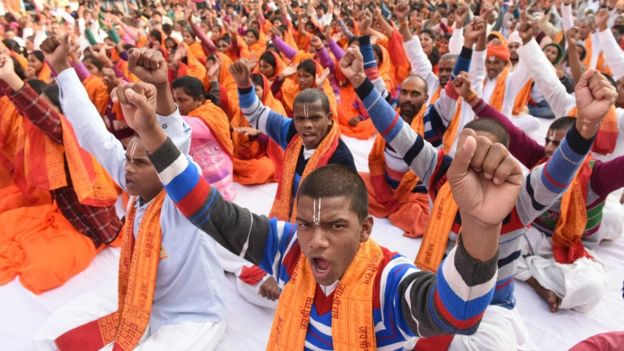
Image copyright GETTY IMAGESImage caption Hindu activists are demanding the construction of the Ram Temple
Have religious tensions eased in India in recent years?
Ever since the Narendra Modi-led Hindu nationalist BJP first came to power in 2014, India has seen deepening social and religious divisions.
The call for the construction of a Hindu temple in Ayodhya has grown particularly loud, and has mostly come from MPs, ministers and leaders from the BJP since it took office.
Restrictions on the sale and slaughter of cows – considered a holy animal by the majority Hindus – have led to vigilante killings of a number of people, most of them Muslims who were transporting cattle.
An uninhibited display of muscular Hindu nationalism in other areas has also contributed to religious tension.
Most recently, the country’s home minister Amit Shah said he would remove “illegal migrants” – understood to be Muslim – from the country through a government scheme that was used recently in the north-eastern state of Assam.
Beijing joins global condemnation of attack launched by Ankara on Kurdish fighters after US President Donald Trump decided to pull out troops
Foreign ministry spokesman says issue should be resolved with ‘political solutions’ and the operation may result in a revival of Islamic State
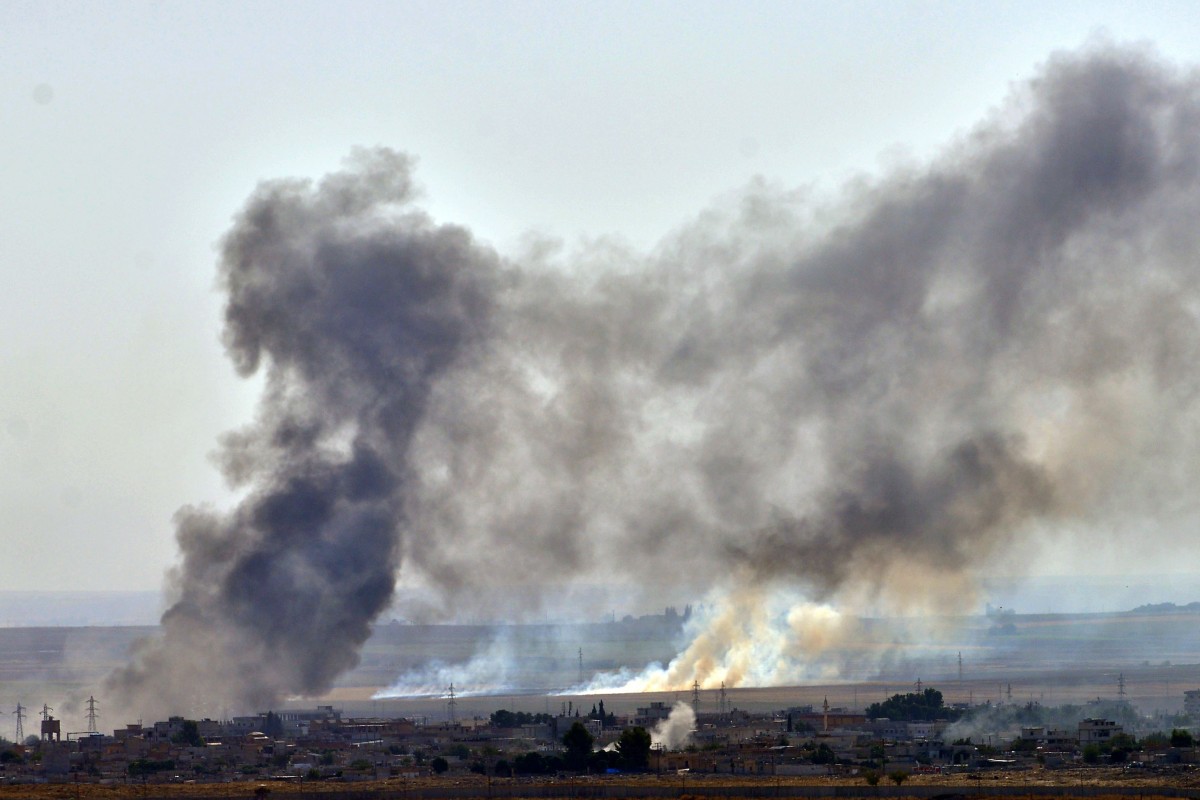
Turkey launched the attack on Kurdish fighters in northeastern Syria last week. Photo: Xinhua
China has urged Turkey to stop the military offensive it began in northeastern Syria last week and “return to the right track”.
Beijing is the latest to join global condemnation of the cross-border attack launched by Ankara on Kurdish fighters last Wednesday following US President Donald Trump’s decision to withdraw US troops from the region.
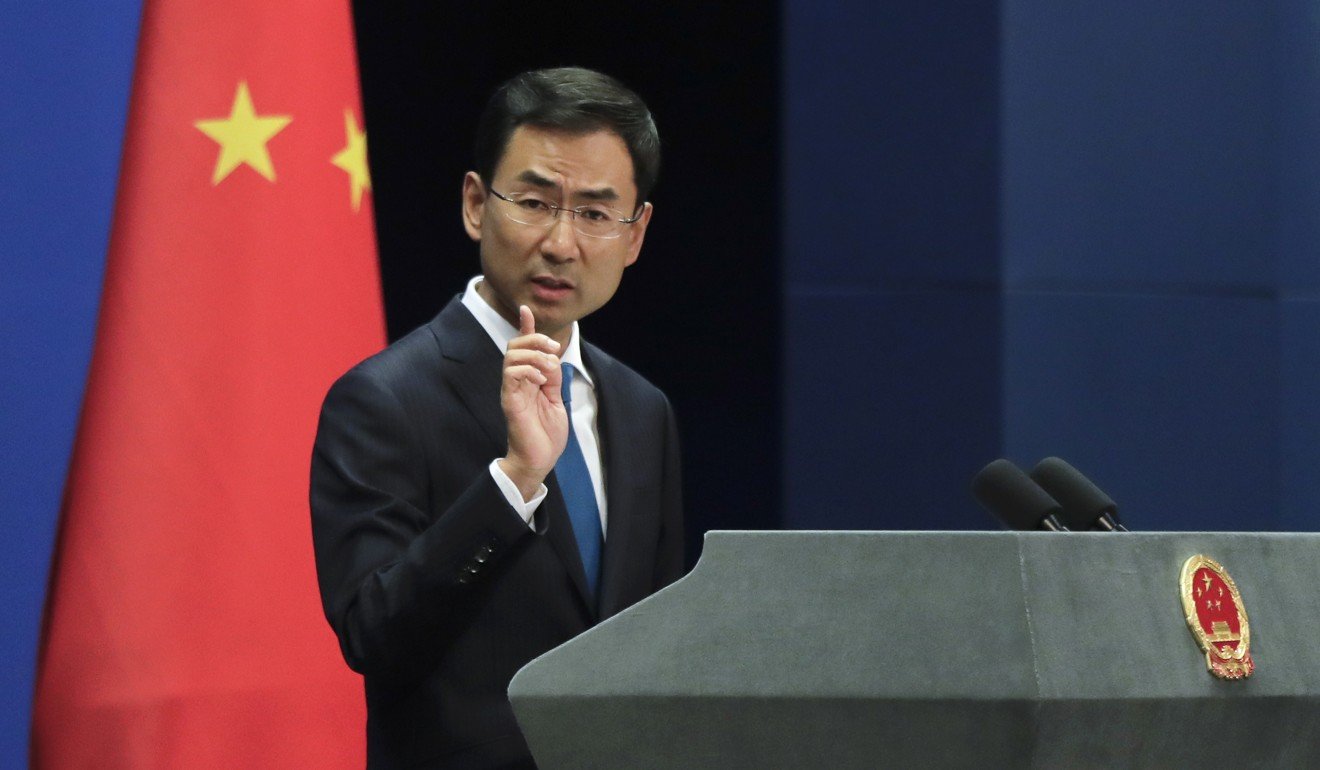
Foreign ministry spokesman Geng Shuang on Tuesday called for a ceasefire.
“The Chinese side has always opposed the use of force in international relations and has advocated for adherence to the Charter of the United Nations, and to resolve problems through political and diplomatic channels,” Geng said during a regular press briefing, when asked about Beijing’s position on the situation.
“Sovereignty, independence, unification and territorial integrity should be respected and protected,” he said. “We urge Turkey to halt military action and to return to the right track, resolving the issue with political solutions.”
Chinese foreign ministry spokesman Geng Shuang called on Turkey to “work with the international community in fighting against terrorism”. Photo: AP
Geng also said the “anti-terrorism situation in Syria is still severe”, and the military operation could result in a comeback by Islamic State.
“We urge Turkey to take responsibility and work with the international community in fighting against terrorism,” he said.
Explained: why are Syria’s Kurds accusing the US of betrayal?
Trump’s move has drawn sharp criticism from around the world. Critics say he has abandoned the allies that helped fight against Isis, and that withdrawing troops could pave the way for a resurgence of the jihadist group whose violent takeover of Syrian and Iraqi land five years ago was the reason US forces went in.
The US president said about 1,000 US troops who had been partnering with local Kurdish fighters to battle Islamic State in northern Syria were leaving the country. He said they would remain in the Middle East to “monitor the situation” and to prevent a revival of Isis – a goal that even Trump’s allies say has become much more difficult as a result of the US pull-out.
Turkey says the offensive aims to remove the Kurdish-led Syrian Democratic Forces from the border area and create what it calls a “safe zone” to relocate 1 million Syrian refugees.
on Turkey, halted bilateral trade negotiations and called for an immediate ceasefire.
Vice-President Mike Pence also said Trump was sending him to the Middle East because the president was concerned about instability in the region.
Beijing has long worried that conflict in the region could spill over to Chinese soil after thousands of Uygurs – the Turkic-speaking Muslim minority from far western China – travelled to Syria to train and fight as jihadists.
HANOI (Reuters) – Vietnamese President and Communist Party chief Nguyen Phu Trong has called for restraint in the disputed South China Sea amid a tense months-long standoff between Chinese and Vietnamese ships, state media reported on Tuesday.
China claims almost all the energy-rich waters but neighbours Brunei, Malaysia, the Philippines, Taiwan and Vietnam also have claims.
Tension escalated when Beijing dispatched a research ship to conduct an energy survey in waters controlled by Vietnam in July.
“On the subject of foreign policy, including the East Sea issue, the General Secretary stressed the importance of maintaining a peaceful and stable environment, and resolutely fighting to protect Vietnam’s independence, sovereignty and territorial integrity,” the state-run Voice of Vietnam (VOV) said on its website.
The South China Sea is known as the East Sea in Vietnam.
Vietnam has good relations with China but should “never compromise” on its sovereignty and territorial integrity, VOV quoted Trong as saying.
The Chinese vessel, the Haiyang Dizhi 8, was continuing its survey in Vietnam’s exclusive economic zone late on Tuesday, under escort from at least three Chinese ships, according to data from Marine Traffic, a website that tracks vessel movements.
Vietnam’s foreign ministry has repeatedly accused the vessel and its escorts of violating its sovereignty and has demanded that China remove its ships from the area.
On Sunday, Vietnam pulled DreamWorks’ animated film “Abominable” from cinemas over a scene featuring a map which shows China’s unilaterally declared “nine-dash line” in the South China Sea.
The U-shaped line is used on Chinese maps to illustrate its claims, including large swathes of Vietnam’s continental shelf, where it has awarded oil concessions.
In August, police broke up a brief protest outside the Chinese embassy in Hanoi over the survey vessel.
Trong has made more public appearances in recent weeks after suffering from an unspecified illness..
The 75-year-old has presided over a widespread crackdown on corruption in the Southeast Asian country that has seen several high-ranking ministers and politicians, including one Politburo member, sent to prison on charges ranging from embezzlement to economic mismanagement.
Nepali President Bidya Devi Bhandari hosts a grand farewell ceremony for Chinese President Xi Jinping at the airport in Kathmandu, Nepal, Oct. 13, 2019. Nepali Vice President Nanda Bahadur Pun, Prime Minister K.P. Sharma Oli, Chairman of the National Assembly Ganesh Prasad Timilsina, cabinet members and senior army generals also attended the ceremony. Chinese President Xi Jinping returned to Beijing from Kathmandu on Sunday. (Xinhua/Gao Jie)
BEIJING, Oct. 13 (Xinhua) — Chinese President Xi Jinping returned to Beijing Sunday evening after his second informal meeting with Indian Prime Minister Narendra Modi in India and a state visit to Nepal.
Xi’s entourage, including Ding Xuexiang, member of the Political Bureau of the Communist Party of China (CPC) Central Committee, member of the Secretariat of the CPC Central Committee, and director of the General Office of the CPC Central Committee; Yang Jiechi, member of the Political Bureau of the CPC Central Committee and director of the Office of the Foreign Affairs Commission of the CPC Central Committee; State Councilor and Foreign Minister Wang Yi; and He Lifeng, vice chairman of the National Committee of the Chinese People’s Political Consultative Conference and head of the National Development and Reform Commission, also returned to Beijing on the same plane.
As Xi and his entourage were leaving Kathmandu on Sunday noon local time, people of Nepal flocked to both sides of a road leading to the airport, waving flags and playing music to see the Chinese guests off.
Nepali President Bidya Devi Bhandari hosted a grand farewell ceremony for Xi at the airport. Nepali Vice President Nanda Bahadur Pun, Prime Minister K.P. Sharma Oli, Chairman of the National Assembly Ganesh Prasad Timilsina, cabinet members and senior army generals also attended the ceremony, which featured a 21-gun salute and the playing of national anthems of China and Nepal.
Calling his visit to Nepal a “very successful” one, Xi told Bhandari that upon his arrival, he had been warmly welcomed by the Nepali government and people.
Xi said he was convinced that the China-Nepal friendship enjoyed lasting popularity among the two peoples and will be unbreakable.
Expressing his appreciation for the arrangements made by the Nepali president, government and people, Xi said he was very satisfied with the visit that had resulted in the upgrading of bilateral relations.
He called for joint efforts to further develop the friendly relations between the two countries.
Bhandari said Xi’s successful and fruitful visit has become a milestone in the history of bilateral ties.
The Nepal-China relationship has entered a new era and stepped on a new height, Bhandari said, adding that Nepal will resolutely work with China to promote friendly and good neighborly relations and strategic cooperative partnership.
Chinese President Xi Jinping meets with Nepali President Bidya Devi Bhandari in Kathmandu, Nepal, Oct. 12, 2019. (Xinhua/Xie Huanchi)
KATHMANDU, Oct. 12 (Xinhua) — China and Nepal agreed on Saturday to upgrade their relations to a strategic partnership of cooperation featuring ever-lasting friendship for development and prosperity.
The agreement was made and announced when Chinese President Xi Jinping met with his Nepali counterpart, Bidya Devi Bhandari.
Xi said that he came to Nepal as scheduled after Bhandari warmly invited him for a visit this year when they met in Beijing in April. He also agreed that as what Bhandari has said there is only friendship and cooperation between China and Nepal.
Xi said that he saw sincere smile on the faces of the Nepali people and felt the friendship from the deep of their heart toward the Chinese people, adding that he felt once again that the China-Nepal friendship enjoys broad consensus and solid foundation in Nepal.
The two peoples have shared weal and woe, and set an example of friendly exchanges between neighboring countries, said Xi, adding that he hopes to carry forward the traditional friendship and take the bilateral relationship to a new and higher level via the visit.
Xi called on the two sides to consolidate the political foundation of bilateral ties, and set the building of a community with a shared future as a long-term goal for the development of China-Nepal relations.
The Chinese president appreciated Nepal’s firm adherence to the one-China policy, saying that China will as always support Nepal in safeguarding its national independence, sovereignty and territorial integrity.
The two sides should build an all-round cooperation pattern, carry out the construction of a trans-Himalayan connectivity network, and expand exchanges and cooperation in various fields, Xi said.
Noting that China just celebrated the 70th anniversary of the founding of the People’s Republic of China (PRC), Xi said that China will continue to deepen reform and expand opening-up so as to advance high-quality development.
A stable, open and prosperous China will always be a development opportunity for Nepal and the rest of the world, the Chinese leader added.
For her part, Bhandari warmly welcomed Xi’s state visit to Nepal and congratulated again on the 70th anniversary of the founding of the PRC, saying that Nepal is willing to learn from China’s successful experience of development.
Bhandari said she believes that the Chinese people, under the leadership of the Communist Party of China, will realize the Chinese Dream of national rejuvenation, which will definitely bring benefits to Nepal, and help promote regional peace, development and prosperity.
Noting that Xi is the first Chinese president to visit Nepal in 23 years, Bhandari said the visit is of historic significance, adding that the two countries’ announcement of establishing a strategic partnership of cooperation will consolidate the two countries’ traditional friendship, enrich the contents of bilateral ties and usher in a new era for the Nepal-China relationship.
Nepal, she said, respects China’s sovereignty and territorial integrity and will never allow any anti-China force to engage in anti-China activities in Nepal, adding that Nepal is willing to actively participate in the Belt and Road Initiative and the building of a trans-Himalayan connectivity network.
Nepal is the second leg of Xi’s two-country trip, which also took him to the southern Indian city of Chennai for an informal meeting with Indian Prime Minister Narendra Modi.
The leaders agreed to set up a mechanism to boost economic ties and tackle India’s trade deficit with China after their second informal summit
As 2020 is the 70th anniversary of diplomatic ties between both countries, India and China will hold 70 events next year to promote relations
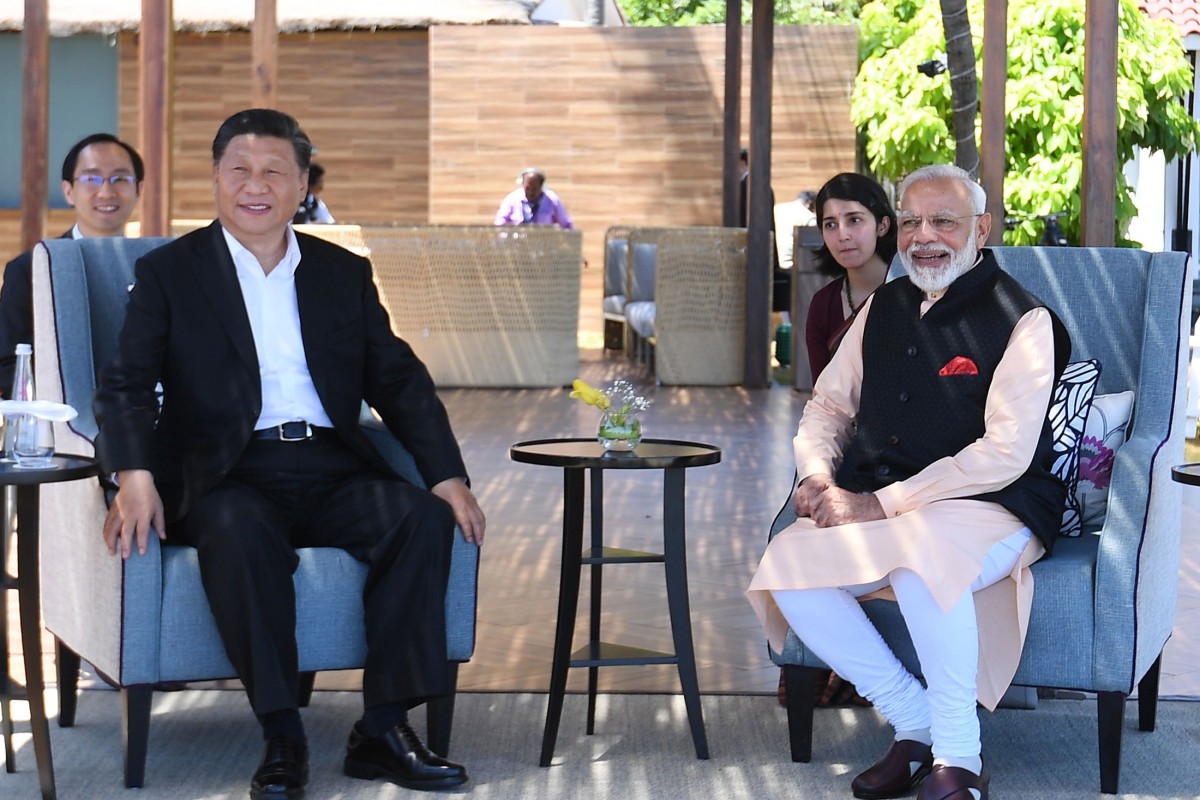
Indian Prime Minister Narendra Modi and Chinese President Xi Jinping during their meeting in Mamallapuram, Chennai. Photo: EPA
Chinese President Xi Jinping and Indian Prime Minster Narendra Modi concluded their second informal summit on Saturday by pledging to overcome trade differences and appreciate “each other’s autonomous foreign policies”, signalling an effort to focus on mutual interests rather than on long-standing contentious issues.
Modi remarked that both sides had agreed to be “sensitive” to each other’s concerns and not let differences escalate into disputes, while Xi called for communication to “alleviate suspicions” and for India and China to enhance strategic mutual trust, according to state news broadcaster CCTV.
Their desire to look beyond irritants in diplomatic ties, including a decades-long border row and China’s close military ties with India’s arch rival, Pakistan, comes as Beijing is embroiled in a tariff war with Washington that has rocked the global economy.
In a sign of China’s willingness to address India’s trade deficit with it, the leaders agreed to launch a “High Level Economic and Trade Dialogue”.
As Xi meets Modi, Chinese in Chennai hope to witness the ‘Wuhan spirit’
Chinese Vice-Premier Hu Chunhua and Indian Finance Minister Nirmala Sitharaman will meet regularly to discuss ways to boost two-way trade and investments, Indian foreign secretary Vijay Gokhale said in a media briefing.
India has a US$53 billion trade deficit with China, which makes up almost a third of its total trade deficit. It is also facing pressure to decide if it will commit to the China-led
(RCEP), which aims to create the world’s largest trading bloc involving 16 countries before the end of the year.
Narendra Modi exchanges gifts with Xi Jinping. Photo: AFP
Negotiations are ongoing with talks taking place in Bangkok this week, but India’s domestic producers have opposed the agreement over fears of a flood of Chinese imports. On Friday, the Indian government rejected clauses in the agreement related to e-commerce, according to reports.
Gokhale told the media briefing that both leaders, who met in the coastal town of Mamallapuram about 50km away from Chennai, briefly discussed the RCEP.
“PM Modi said India was looking forward to the RCEP but it is important that RCEP is balanced, that a balance is maintained in trade in goods, trade in services and investments,” he said, adding that Xi agreed to further discussions of India’s concerns on the issue.
Narendra Modi with Xi Jinping in Mamallapuram. Photo: EPA
CCTV said Xi had six suggestions for how China and India could further improve ties, including assessing each other correctly and stepping up cooperation between their militaries. Besides economic and trade dialogue, China welcomed Indian pharmaceutical and IT companies to invest there, he said.
“We should look at disputes with a correct mind, and not let disputes affect cooperation.
“Both sides should properly and fairly get a solution for border disputes that are acceptable to each other … [and] cautiously handle each other’s core interests, and take proper measures to control issues that cannot be resolved immediately,” the president reportedly said.
Gokhale told reporters that both countries had agreed to pursue, through special representatives, an ongoing dialogue on their disputed border. China and India have held more than 20 rounds of talks to resolve their boundary dispute, over which they went to war in 1962. Different mechanisms have been set up to maintain peace along the 4,000-kilometre (2,485-mile) so-called Line of Actual Control.
Xi and Modi bank on chemistry as they talk trade and terrorism
Gokhale confirmed that the leaders – who met for a total of seven hours over Friday and Saturday, with the bulk of their time spent in one-on-one talks – did not discuss
has lobbied its allies – including its all-weather friend China – to support its opposition to the move. New Delhi had reacted sharply to Beijing’s move to take the matter to the United Nations, insisting that it was a purely bilateral issue. Two days before the summit, Xi had hosted Pakistan Prime Minister Imran Khan and had assured him of China’s support on all core issues, a statement that had irked India.
Gokhale said both leaders “emphasised the importance of having independent and autonomous foreign policies”.
“President Xi said that the two countries needed to have more extensive dialogue in order to understand each other’s perspectives on major global and regional issues,” he added.
Narendra Modi exchanges gifts with Xi Jinping. Photo: AFP
The leaders also discussed terrorism, with a statement issued later by New Delhi saying both sides would make efforts to ensure the international community strengthened its framework “against training, financing and supporting terrorist groups throughout the world and on a non-discriminatory basis”.
The China-led multilateral Financial Action Task Force, which has been investigating Pakistan’s efforts to stamp out the financing of terrorism, is expected to decide soon if it would add Islamabad to its blacklist along with Iran and North Korea, a move that could invite stringent economic sanctions and drive away international financial institutions, both of which could affect Pakistan’s already-indebted economy adversely.
Gokhale added that as 2020 is the 70th anniversary of diplomatic ties between both countries, India and China will hold 70 events next year to promote people-to-people ties, with Modi accepting an invitation by Xi for the next informal summit to be held in China.
Both leaders had struck positive notes on the summit – with Xi describing their discussions as “candid” and between friends and Modi hailing the “Chennai Connect” meeting as marking a new era of cooperation between both countries.
War games, Kashmir and a US$57b question: the issues as Xi meets Modi
But analysts said they would be looking to see how the newly-announced high-level mechanism on trade panned out.
Narayani Basu, a New Delhi-based author, foreign policy analyst and China watcher felt the summit had achieved its purpose of bagging small wins for both sides.
“Discussing contentious issues would have defeated the purpose of the summit. The idea behind such a summit must be that despite the overarching posturing on different divergent issues, the two countries can achieve the easily-achievable wins. That is what the summit seems to have tried doing.”
But in terms of actual outcomes, she said she remained sceptical.
“I don’t think there has been much progress in the ties between the two countries since the last summit in Wuhan. Hence, this time, there is a lot more caution and scepticism towards such a summit,” she said, referring to the first summit last year in the Chinese city of Wuhan.
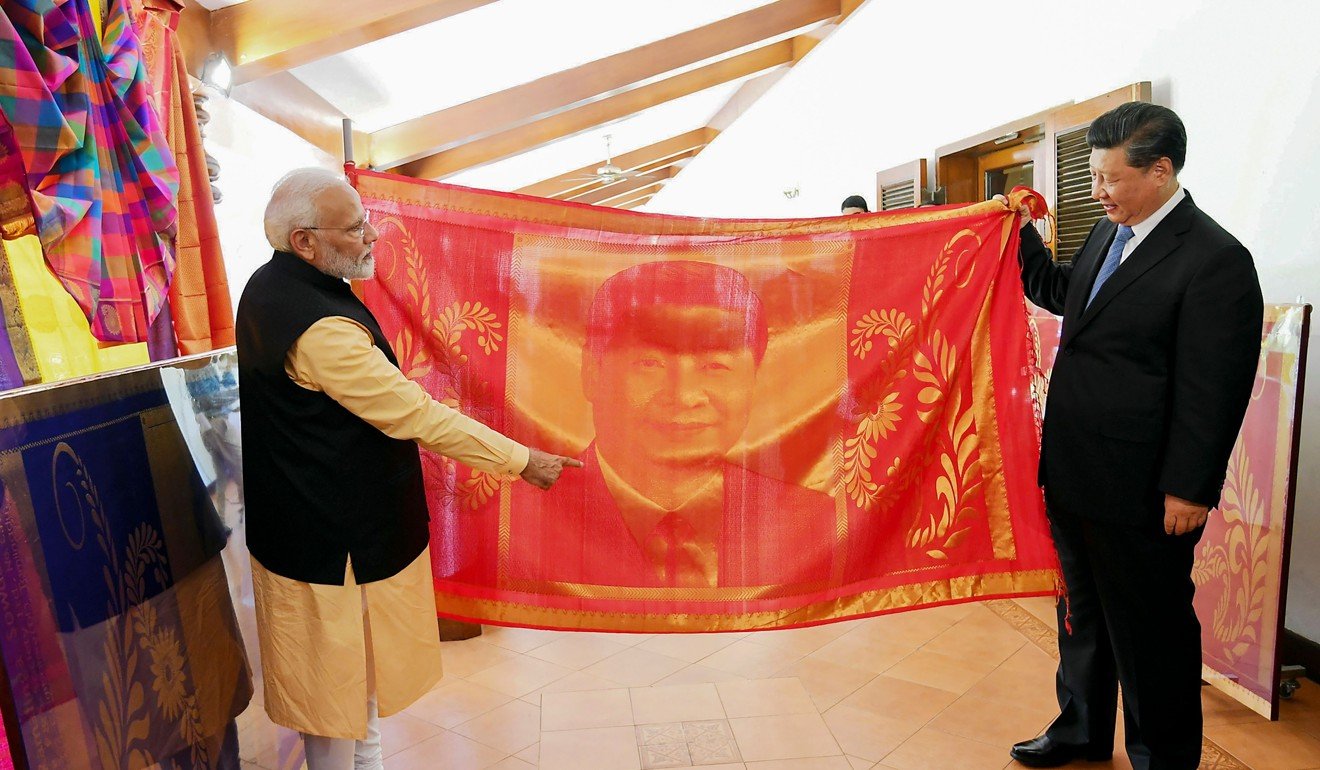
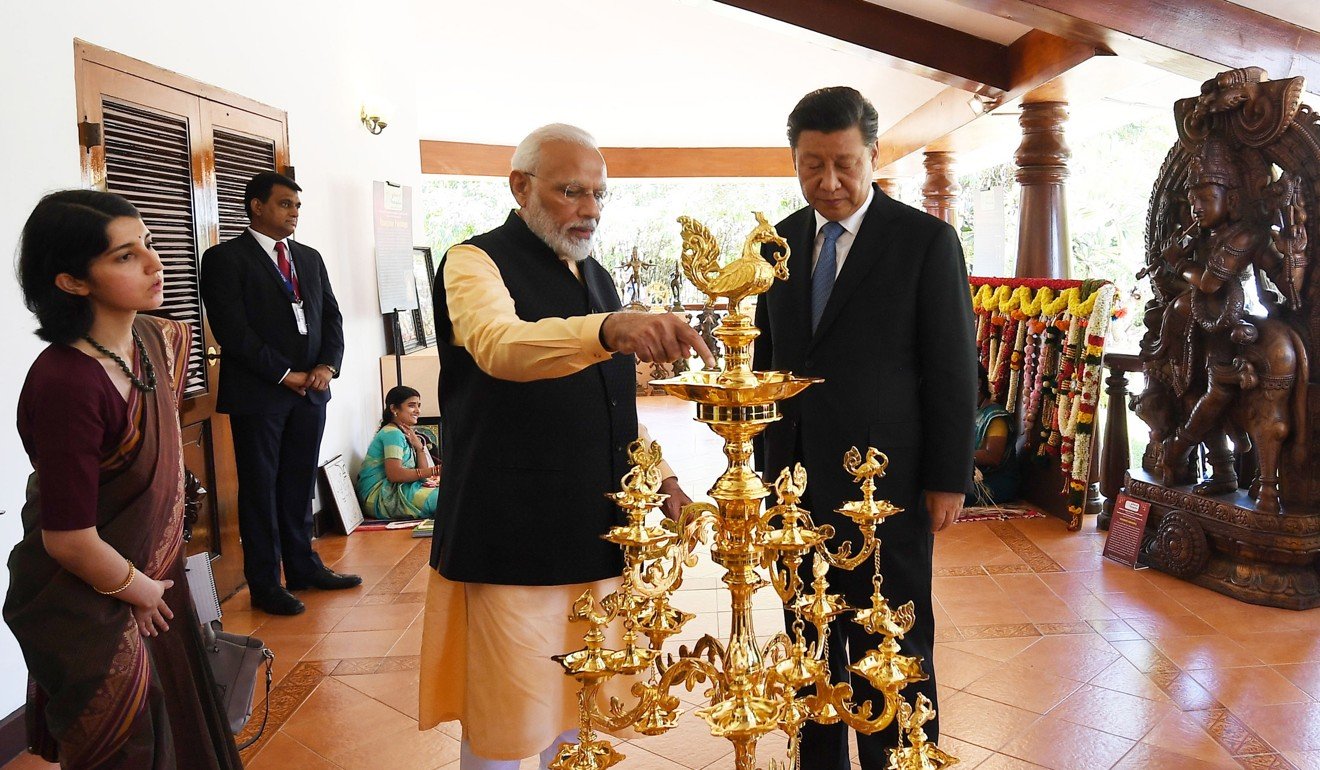
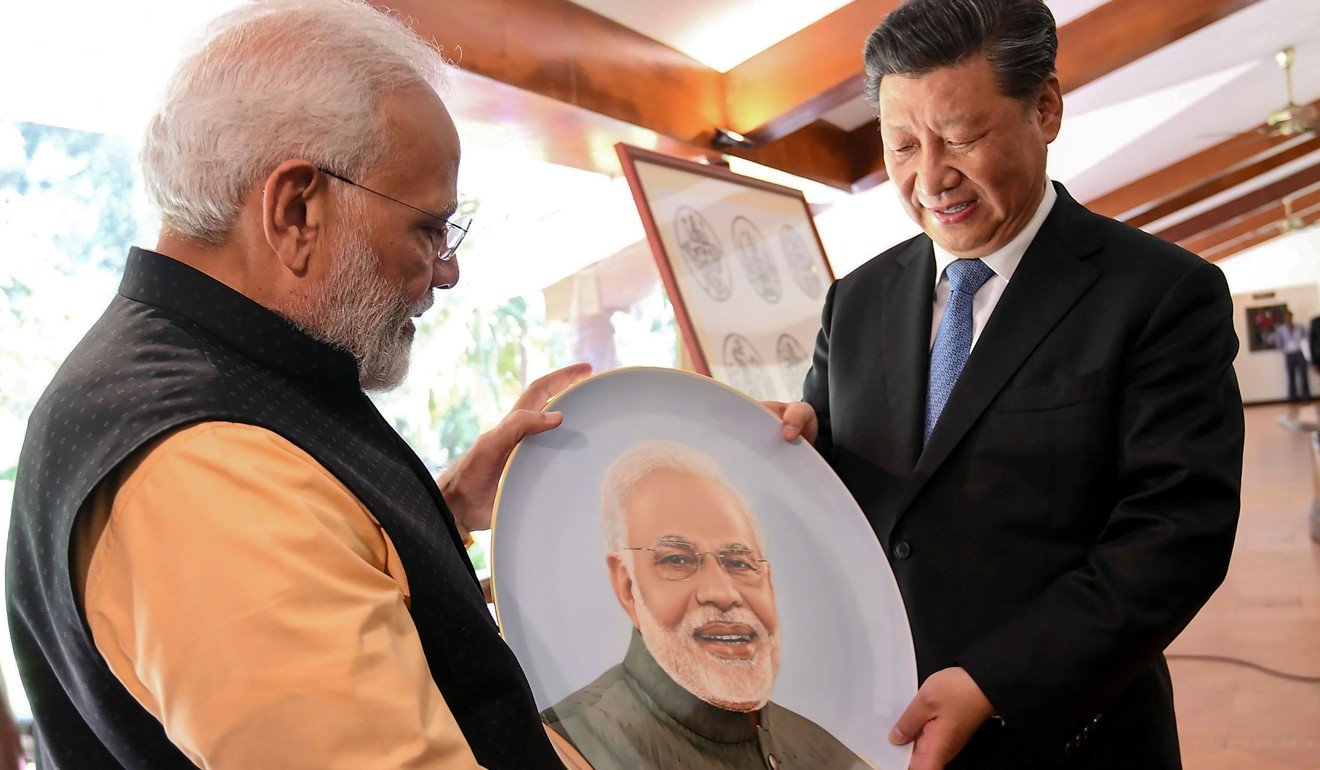
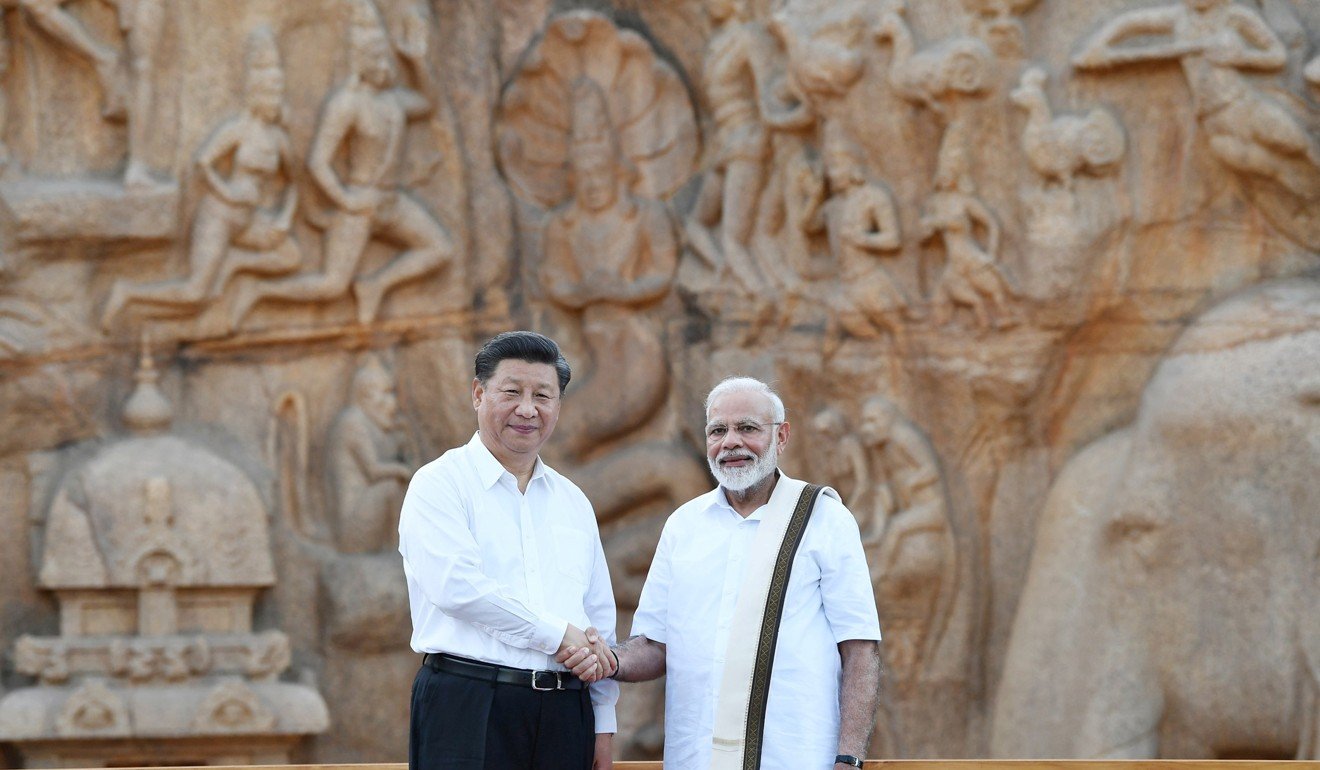
During Xi’s visit to southern India, which lasted 24 hours in all, Modi took him on a personal tour of temple monuments dating back to the seventh and eighth century in Mamallapuram when regional leaders had trade ties with Chinese provinces. He was also shown local artisan handicrafts and art forms, and gifted a handwoven silk portrait, a lamp and a painting.
Xi gave Modi a porcelain plate with the image of the prime minister’s face printed on it.
Xi Jinping with Narendra Modi in Mamallapuram. Photo: Reuters
On Friday, New Delhi announced that visa rules for Chinese nationals visiting India would be relaxed, with multiple-entry visas with a validity period of five years available from this month onwards. At present, most visas are single-entry and usually for between 30 and 60 days. Visa fees would also be reduced, the government said, with the multiple-entry visa costing US$80.
This was aimed at further enhancing “people-to-people exchanges between the two countries and [encouraging] more Chinese tourists to choose India as a destination for tourism purposes,” it said in a statement.
Xi left Chennai on Saturday afternoon and arrived in Nepal, which lies in between India and China. He will be the first Chinese president to visit Nepal in 22 years and is expected to sign a slew of deals with Nepal’s Prime Minister K.P. Sharma Oli, including the planned extension of the rail link from remote, mountainous Tibet to Nepal’s capital, Kathmandu.
The link will be part of Beijing’s ambitious infrastructure project to boost trade, the
More than 120 countries have signed on to the BRI, including Pakistan, where a series of projects worth US$46 billion are being constructed under the China-Pakistan Economic Corridor (CPEC). India has snubbed the BRI and questioned the transparency of funding agreements.
President Tsai Ing-wen also vowed in a National Day speech to defend Taiwan’s sovereignty, saying her government would safeguard freedom and democracy as Beijing ramps up pressure on the self-ruled island it considers a wayward province.
Tsai, who is seeking re-election in January amid criticism of her policy towards China, referred to the arrangement for the return of the former British colony of Hong Kong to Chinese rule in 1997 as a failure.
Hong Kong has been hit by months of anti-government protests triggered by widespread resentment of what many city residents see as relentless efforts by Beijing to exert control of their city despite the promises of autonomy.
China has proposed that Taiwan be brought under Chinese rule under a similar arrangement, but Tsai said Beijing’s policies towards the island were a danger to regional stability.
“China is still threatening to impose its ‘one country, two systems’ model for Taiwan. Their diplomatic offensives and military coercion pose a serious challenge to regional stability and peace,” Tsai said.
“When freedom and democracy are challenged, and when the Republic of China’s existence and development are threatened, we must stand up and defend ourselves,” Tsai said, referring to Taiwan by its official name.
“The overwhelming consensus among Taiwan’s 23 million people is our rejection of ‘one country, two systems,’ regardless of party affiliation or political position.”
Taiwan’s National Day, marking the anniversary of the start of a 1911 uprising that led to the end of dynastic rule in China and the founding of a republic, was celebrated in Taipei with singing, dancing and parades.
Cold War hostility between the island and the mainland had eased over the past decade or so as both sides focused more on expanding business ties, but relations have cooled considerably since Tsai took office in 2016.
China suspects Tsai and her independence-leaning Democratic Progressive Party of pushing for the island’s formal independence, and this year threatened it with war if there was any such move.
Tsai denies seeking independence and reiterated that she would not unilaterally change the status quo with China.
FLASHPOINT
Despite her assurances, Beijing has stepped up pressure on the island to seek “reunification” and backed up its warnings by flying regular bomber patrols around it.
Beijing also says Taiwan does not have the right to state-to-state relations and is keen to isolate it diplomatically.
Seven countries have severed diplomatic ties with the Taiwan and switched allegiance to Beijing since Tsai coming to power. It now has formal diplomatic ties with just 15 nations.
But Tsai said Taiwan was undaunted.
“The determination of the Taiwanese people to embrace the world has never wavered,” she said, adding that Taiwan must work with “like-minded countries” to ensure peace and stability across the Taiwan Strait.
Tsai said under her watch Taiwan has boosted its combat capabilities with the purchase of advanced weapons and development of home-made aircraft.
Taiwan unveiled its largest defence spending increase in more than a decade in August, aiming to purchase more advanced weapons from overseas.
The island has long been a flashpoint in the U.S.-China relationship.
In July, the United States approved the sale of an $2.2 billion worth of weapons to Taiwan, angering Beijing.
The United States has no formal ties with Taiwan but is bound by law to help provide it with the means to defend itself.








 CHINDIA ALERT: You'll be living in their world, very soon