Chindia Alert: You’ll be Living in their World Very Soon
aims to alert you to the threats and opportunities that China and India present. China and India require serious attention; case of ‘hidden dragon and crouching tiger’.
Without this attention, governments, businesses and, indeed, individuals may find themselves at a great disadvantage sooner rather than later.
The POSTs (front webpages) are mainly 'cuttings' from reliable sources, updated continuously.
The PAGEs (see Tabs, above) attempt to make the information more meaningful by putting some structure to the information we have researched and assembled since 2006.
Members of a road construction team depart from the advance camp at an altitude of 6,500 meters of Mount Qomolangma in southwest China’s Tibet Autonomous Region, May 10, 2020. A road construction team will work on a route to the peak of Mount Qomolangma on May 12 if weather conditions permit. China initiated a new round of measurement on the height of Mount Qomolangma, the world’s highest peak, on April 30. The measurement team consists of members from the Ministry of Natural Resources and the national mountaineering team. (Xinhua/Sun Fei)
MOUNT QOMOLANGMA BASE CAMP, May 10 (Xinhua) — A road construction team will work on a route to the peak of Mount Qomolangma on May 12 if weather conditions permit.
In order to complete missions of building a route to the peak and transporting materials to camps below 8,300 meters above sea level, members of road construction and transportation teams departed for a camp at an altitude of 7,028 meters from the advance camp at an altitude of 6,500 meters at 7:00 a.m. Sunday.
The members eliminated potential safety hazards along the route and arrived at the camp at 2:00 p.m.
On May 12, a total of 12 guides will depart from the camp at an altitude of 7,028 meters to transport materials to another camp.
China initiated a new round of measurement on the height of Mount Qomolangma, the world’s highest peak, on April 30. The measurement team consists of members from the Ministry of Natural Resources and the national mountaineering team.
Since the founding of the People’s Republic of China in 1949, Chinese surveyors have conducted six rounds of scaled measurement and scientific research on Mount Qomolangma and released the height of the peak twice in 1975 and 2005, which was 8,848.13 meters and 8,844.43 meters respectively.
Joint mission will send two unmanned probes into orbit around the closest planet to the sun
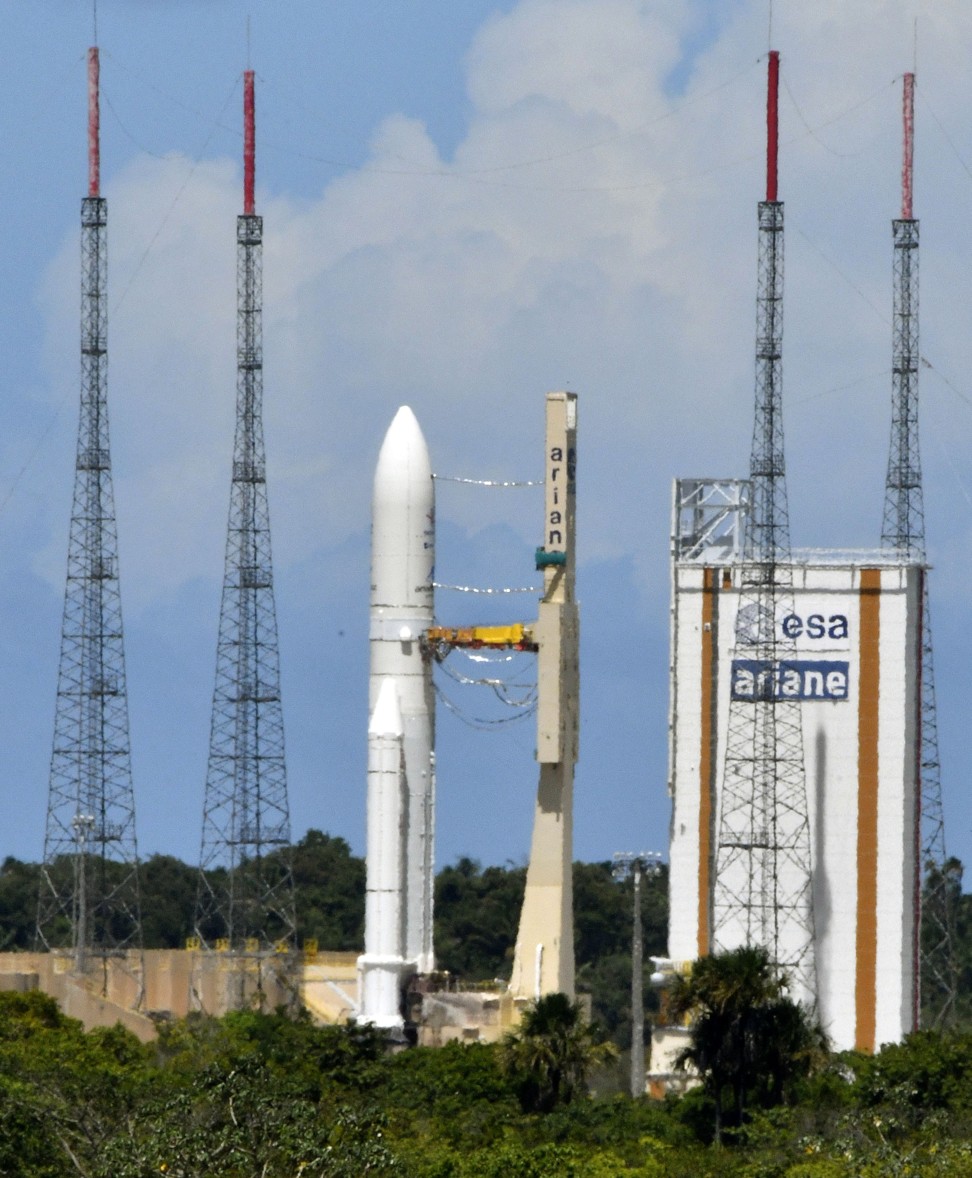
The BepiColombo standing in position at a test facility in Spijkenisse. Its mission to Mercury is scheduled for launch on an Ariane 5 from Europe’s Spaceport in Kourou, French Guiana on October 20. Photo: AFP Photo
Final preparations were underway on Friday for the launch of a joint mission by European and Japanese space agencies to send twin probes to Mercury, the closest planet to the sun.
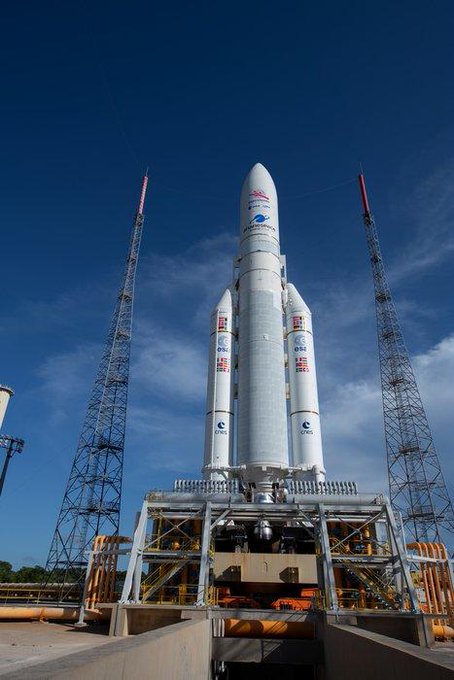
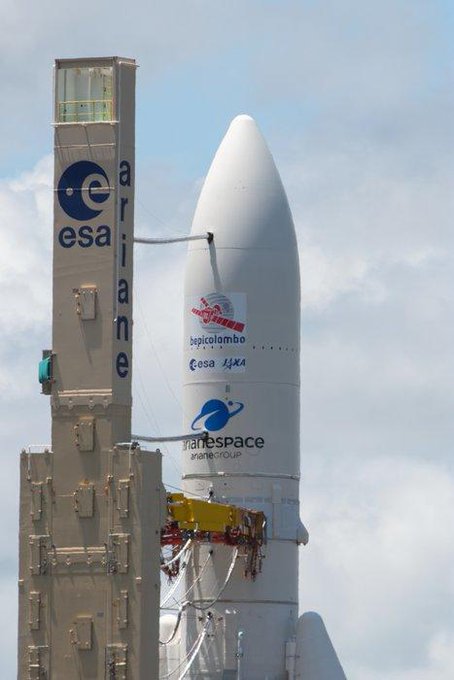
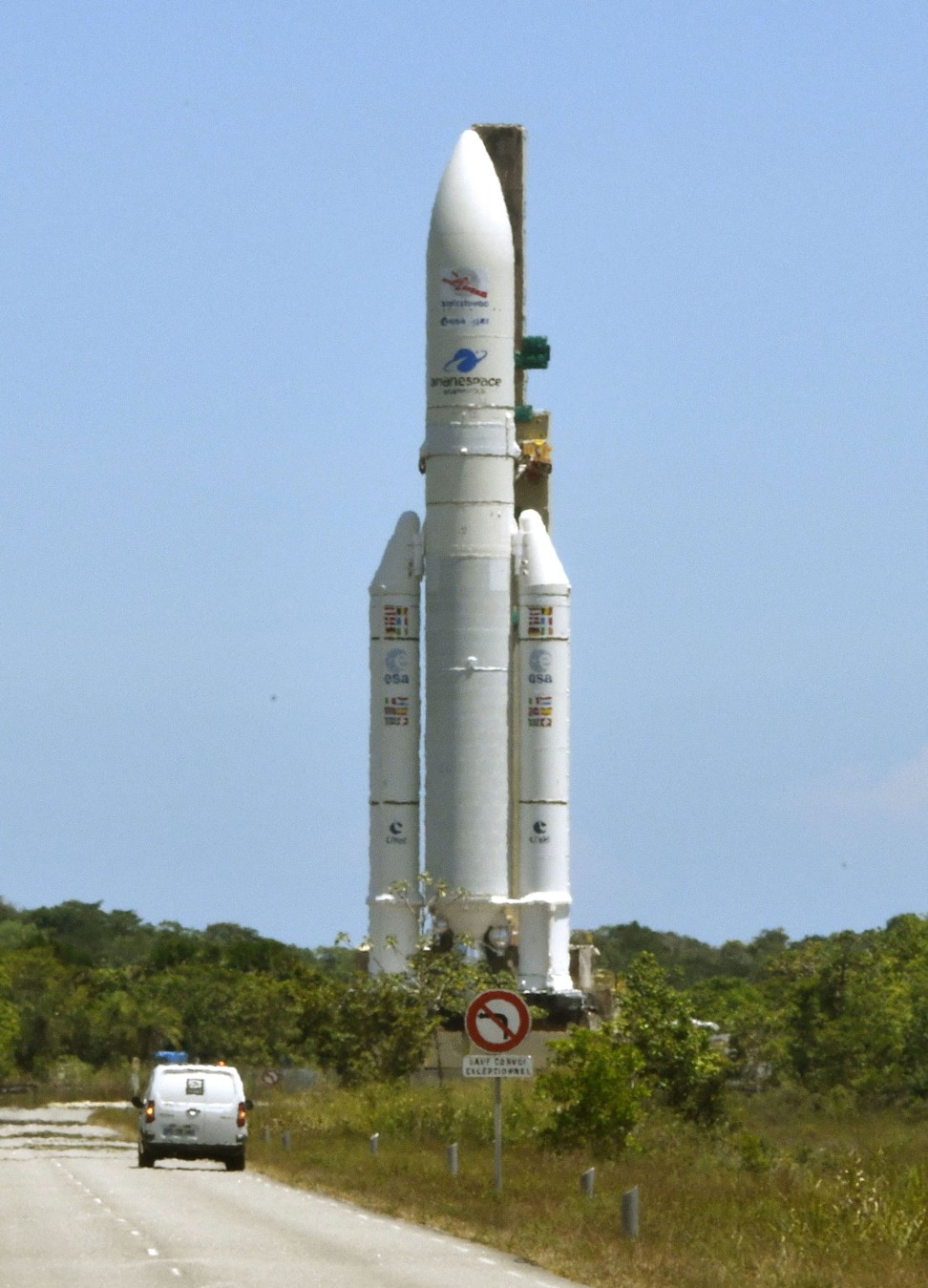
An Ariane 5 rocket is scheduled to lift the unmanned spacecraft into orbit from French Guiana shortly before midnight, the start of a seven-year journey to the solar system’s innermost planet.
Mercury is seen in silhouette, lower third of image, as it transits across the face of the sun. Photo: AFP PHOTO / NASA / BILL INGALLS
The European Space Agency says the €1.3 billion (US$1.5 billion) mission is one of the most challenging in its history. Mercury’s extreme temperatures, the intense gravity pull of the sun and blistering solar radiation make for hellish conditions.
The BepiColombo spacecraft will have to follow an elliptical path that involves a fly-by of Earth, two of Venus and six of Mercury itself so it can slow down sufficiently before arriving at its destination in December 2025.
An Ariane-5 rocket is set for launch at the Guiana Space Centre in Kourou in French Guiana. Photo: Kyodo
Newly developed electrical ion thrusters will help nudge the spacecraft, which was named after Italian scientist Giuseppe “Bepi” Colombo, into the right orbit.
Aborted launch astronauts may head to International Space Station this year: Nasa head says
12 Oct 2018
When it arrives, BepiColombo will release two probes – Bepi and Mio – that will independently investigate the surface and magnetic field of Mercury. The probes are designed to cope with temperatures varying from 430 degrees Celsius (806F) on the side facing the sun, and -180 degrees Celsius (-292F) in Mercury’s shadow.
An Ariane-5 rocket is transported to its launch site at the Guiana Space Centre in Kourou. Photo: Kyodo
Scientists hope to build on the insights gained by Nasa’s Messenger probe, which ended its mission in 2015 after a four-year orbit of Mercury. The only other spacecraft to visit Mercury was Nasa’s Mariner 10 that flew past the planet in the mid-1970s.
Japanese space robots have landed on asteroid to carry out world-first survey
22 Sep 2018
Mercury, which is only slightly larger than Earth’s moon, has a massive iron core about which little is known. Researchers are also hoping to learn more about the formation of the solar system from the data gathered by the BepiColombo mission.
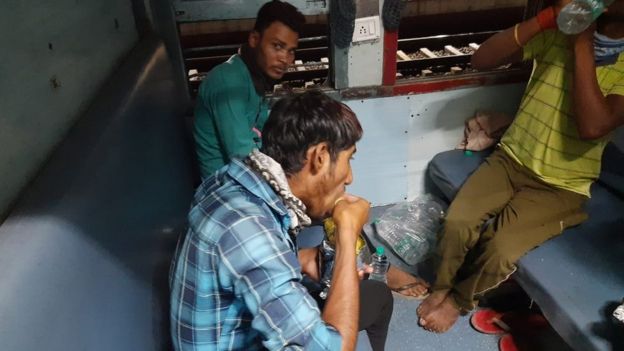
Image copyright ANIImage caption Millions of people across India have been stranded by the lockdown
The first train carrying migrant workers stranded by a nationwide lockdown in India has left the southern state of Telangana.
The 24-coach train, carrying 1,200 passengers, is travelling non-stop to eastern Jharkhand state.
Earlier this week, India said millions of people stranded by the lockdown can return to their home states.
The country has been in lockdown to curb the spread of coronavirus since 24 March.
However, the movement of people will be only possible through state government facilitation, which means people cannot attempt to cross state borders on their own.
This train is a “one-off special train” to transport the workers on the request of the Telangana state government, Rakesh Ch, the chief public relations officer of South-Central Railways, told the BBC.
The train left Lingampally, a suburb of the southern city of Hyderabad, early on Friday and is expected to reach Hatia in Jharkhand on Saturday.
Mr Rakesh said that adequate social distancing precautions had been taken and food was being served to the passengers.
Image copyright ANIImage caption Railways officials said that adequate social distancing precautions had been taken and food was being served to the passengers.
He said each carriage was carrying 54 passengers instead of its 72-seat capacity.
“The middle berth is not being used in the sleeper coaches and only two people are sitting in the general coaches,” Mr Rakesh said.
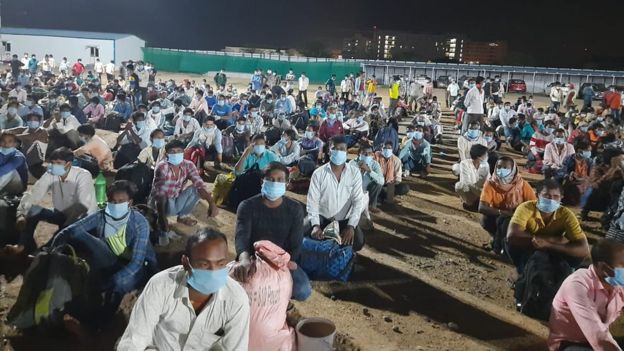
Before the train pulled out of the station, all the passengers were screened for fever and other symptoms.
They had all been employed at a construction site at the Indian Institute of Technology, a top engineering school, in Hyderabad city.
The workers had earlier protested at the site against the non-payment of wages by their contractor.
Senior official M Hanumantha Rao said the contractor was asked to pay their salaries and arrangement made to send them back home.
The journey was organised at “very short notice”, senior police official S Chandra Shekar Reddy told BBC Telugu.
“We screened them at the labour camp itself and transported them to the railway station in buses,” he said.
India’s migrant workers are the backbone of the big city economy, constructing houses, cooking food, serving in eateries, delivering takeaways, cutting hair in salons, making automobiles, plumbing toilets and delivering newspapers, among other things.
Image copyright ANIImage caption Before the train pulled out of the station, all the passengers were screened for fever and other symptoms.
Most of the country’s estimated 100 million migrant workers live in squalid conditions.
When industries shut down overnight, many of them feared they would starve.
For days, they walked – sometimes hundreds of kilometres – to reach their villages because bus and train services were shut down overnight. Several died trying to make the journey.
Some state governments tried to facilitate buses, but these were quickly overrun. Thousands of others have been placed in quarantine centres and relief camps.
City at centre of outbreak finally able to declare itself clear of disease after months in lockdown and thousands of deaths
Risk of infection remains, however, with some patients testing positive for coronavirus that causes disease without showing symptoms
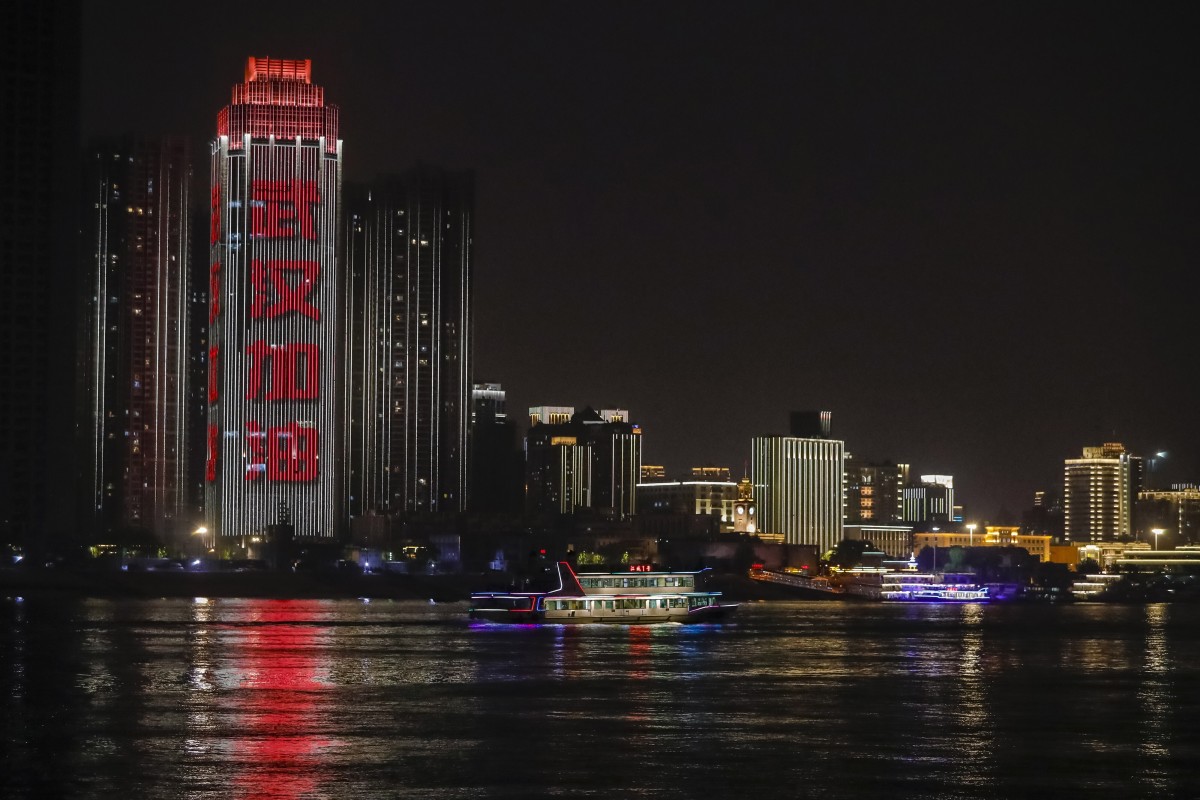
Ferries and other public transport services resumed in Wuhan last week. Photo: Xinhua
The city of Wuhan, the initial epicentre of the coronavirus pandemic, no longer has any Covid-19 patients in hospital after the last 12 were discharged on Sunday.
Their release ended a four-month nightmare for the city, where the disease was first detected in December. The number of patients being treated for Covid-19, the disease caused by a new coronavirus, peaked on February 18 at 38,020 – nearly 10,000 of whom were in severe or critical condition.
“With the joint efforts of Wuhan and the national medical aid given to Hubei province, all cases of Covid-19 in Wuhan were cleared as of April 26,” Mi Feng, a spokesman for the National Health Commission said on Sunday afternoon.
The announcement came only one day after the city discharged the last patient who had been in a severe condition. That patient also was the last severe case in Hubei province.
The last patient discharged from Wuhan Chest Hospital, a 77-year-old man surnamed Ding, twice tested negative for Sars-CoV-2, the virus that causes Covid-19, and was released at noon on Sunday.
“I missed my family so much!” Ding told Changjing Daily.
Another unidentified patient exclaimed as he left the hospital: “The air outside is so fresh! The weather is so good today!”
Wuhan faced a long journey to bring its patient count down to zero.
The city of 11 million, the capital of Hubei province and a transport hub for central China, was put under a strict lockdown on January 23 that barred anyone from entering or exiting the city without official approval for 76 days until it was officially lifted on April 8.
Coronavirus: Wuhan, Los Angeles officials discuss getting back to work after lockdown
22 Apr 2020
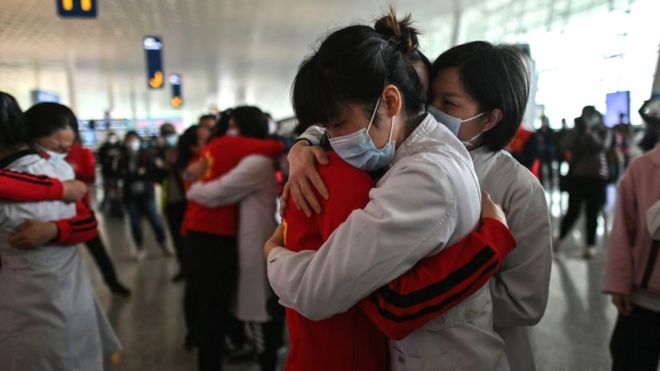
Residents were ordered to stay in their apartments as the city stopped public transport and banned private cars from city streets. As the epidemic worsened, more than 42,000 medical staff from across the country were sent to the city and to Hubei province to help ease the burden on the local health care system.
Wuhan was the hardest hit city in China, accounting for 50,333 of the 82,827 locally transmitted Covid-19 cases recorded in China. More than 4,600 died in the country from the disease.
On March 13, the city reported for the first time that there were no new suspected cases of the infection, and five days later there were no confirmed cases.
The number of discharged patients bottomed out at 39.1 per cent at the end of February, gradually climbing to 92.2 per cent by last Thursday.
“Having the patients in the hospital cleared on April 26 marks a major achievement for the city’s Covid-19 treatment,” the Wuhan Health Commission said in a statement.
However, having no severe cases in hospital does not mean all the discharged patients will require no further treatment as they may still need further care.
“Clearing all the severe cases marks a decisive victory for the battle to safeguard Wuhan,” health minister Ma Xiaowei told state broadcaster China Central Television on Saturday.
“Some patients who have other conditions are being treated in specialised hospitals. It has been properly arranged.”
Coronavirus: Chinese writer hit by nationalist backlash over diary about Wuhan lockdown
18 Apr 2020
Ten patients aged between 42 and 85 who have been declared coronavirus-free are still in intensive care at the city’s Tongji Hospital where they are being treated for kidney problems and other complications arising from Covid-19. Some still need ventilators to help them breathe.
These 10 patients are under 24-hour care, with 190 nurses on four-hour rotations. There are other patients in a similar condition in two other hospitals in Wuhan, according to the Hubei Broadcasting and Television Network.
However, the discharge of the last batch of Covid-19 patients does not mean that the risk of infection is gone.
The city reported 20 new cases of people testing positive for Sars-CoV-2, the official name for the coronavirus that causes the disease, but who do not yet show symptoms.
There are 535 such carriers under medical observation. Past data shows some of these asymptomatic carriers will develop symptoms, and so will be counted as Covid-19 patients under China’s diagnosis and treatment plan.
China’s coronavirus infection curve has flattened out with about 694 imported cases of Covid-19 on top of about 800 locally transmitted ones now under treatment.
The national health commission spokesman warned that people still need to be on high alert as the virus is continuing to spread around the globe, with no sign yet of a slowdown.
“[We] must not drop our guard and loosen up. [We] must discover cases in time and deal with them quickly,” Mi said, citing the continued pressure from cases imported by people returning from overseas.
“The next step will be to implement the requirements of the central government and continue to guard against imported cases and a rebound of domestic transmitted cases.”
SHANGHAI (Reuters) – China’s smog-prone northern province of Hebei met its air quality targets by a big margin over the winter after concerted efforts to tackle emissions, a local official said on Sunday, without mentioning coronavirus-related factory shutdowns.
Average PM2.5 concentrations over the October-March period dropped 15% from a year earlier to 61 micrograms per cubic metre, while sulphur dioxide also fell by a third, said He Litao, vice-head of the provincial environmental bureau.
Most experts have attributed the significant decline in air pollution throughout China in the first quarter to the coronavirus outbreak and tough containment measures, which saw cities and entire provinces locked down and sharply reduced traffic and industrial activity throughout the country.
With millions staying at home, concentrations of lung-damaging PM2.5 particles fell by nearly 15% in more than 300 Chinese cities in the first three months of 2020.
Shanghai saw emissions fall by nearly 20% in the first quarter, while in Wuhan, where the pandemic originated, monthly averages dropped more than a third compared to last year.
However, He of the Hebei environmental bureau attributed the local decline in pollution to the “conscientious implementation” of government decisions even in the face of unfavourable weather conditions.
According to a winter action plan published last year, 10 cities in Hebei were expected to cut lung-damaging small particles known as PM2.5 by 1%-6% compared to the previous year.
Despite the decline, average PM2.5 was still much higher than China’s official standard of 35 micrograms, and the recommended World Health Organization level of 10 micrograms.
Image copyright GETTY IMAGESImage caption The Chinese city of Wuhan recently lifted its strict quarantine measures
The Chinese city of Wuhan, where the coronavirus originated last year, has raised its official Covid-19 death toll by 50%, adding 1,290 fatalities.
Wuhan officials attributed the new figure to updated reporting and deaths outside hospitals. China has insisted there was no cover-up.
It has been accused of downplaying the severity of its virus outbreak.
Wuhan’s 11 million residents spent months in strict lockdown conditions, which have only recently been eased.
The latest official figures bring the death toll in the city in China’s central Hubei province to 3,869, increasing the national total to more than 4,600.
China has confirmed nearly 84,000 coronavirus infections, the seventh-highest globally, according to Johns Hopkins University data.
What’s China’s explanation for the rise in deaths?
In a statement released on Friday, officials in Wuhan said the revised figures were the result of new data received from multiple sources, including records kept by funeral homes and prisons.
Deaths linked to the virus outside hospitals, such as people who died at home, had not previously been recorded.
Media caption Learn how Wuhan dealt with the lockdown
The “statistical verification” followed efforts by authorities to “ensure that information on the city’s Covid-19 epidemic is open, transparent and the data [is] accurate”, the statement said.
It added that health systems were initially overwhelmed and cases were “mistakenly reported” – in some instances counted more than once and in others missed entirely.
A shortage of testing capacity in the early stages meant that many infected patients were not accounted for, it said.
A spokesman for China’s National Health Commission, Mi Feng, said the new death count came from a “comprehensive review” of epidemic data.
In its daily news conference, the foreign ministry said accusations of a cover-up, which have been made most stridently on the world stage by US President Donald Trump, were unsubstantiated. “We’ll never allow any concealment,” a spokesman said.
Why are there concerns over China’s figures?
Friday’s revised figures come amid growing international concern that deaths in China have been under-reported. Questions have also been raised about Beijing’s handling of the epidemic, particularly in its early stages.
In December 2019, Chinese authorities launched an investigation into a mysterious viral pneumonia after cases began circulating in Wuhan.
China reported the cases to the World Health Organization (WHO), the UN’s global health agency, on 31 December.
But WHO experts were only allowed to visit China and investigate the outbreak on 10 February, by which time the country had more than 40,000 cases.
The mayor of Wuhan has previously admitted there was a lack of action between the start of January – when about 100 cases had been confirmed – and 23 January, when city-wide restrictions were enacted.
Around that time, a doctor who tried to warn his colleagues about an outbreak of a Sars-like virus was silenced by the authorities. Dr Li Wenliang later died from Covid-19.
Wuhan’s death toll increase of almost exactly 50% has left some analysts wondering if this is all a bit too neat.
For months questions have been asked about the veracity of China’s official coronavirus statistics.
The inference has been that some Chinese officials may have deliberately under-reported deaths and infections to give the impression that cities and towns were successfully managing the emergency.
If that was the case, Chinese officials were not to know just how bad this crisis would get in other countries, making its own figures now seem implausibly small.
The authorities in Wuhan, where the first cluster of this disease was reported, said there had been no deliberate misrepresentation of data, rather that a stabilisation in the emergency had allowed them time to revisit the reported cases and to add any previously missed.
That the new death toll was released at the same time as a press conference announcing a total collapse in China’s economic growth figures has led some to wonder whether this was a deliberate attempt to bury one or other of these stories.
Then again, it could also be a complete coincidence.
China has been pushing back against US suggestions that the coronavirus came from a laboratory studying infectious diseases in Wuhan, the BBC’s Barbara Plett Usher in Washington DC reports.
US President Donald Trump and some of his officials have been flirting with the outlier theory in the midst of a propaganda war with China over the origin and handling of the pandemic, our correspondent says.
Mr Trump this week halted funding for the World Health Organization (WHO), accusing it of making deadly mistakes and overly trusting China.
“Do you really believe those numbers in this vast country called China, and that they have a certain number of cases and a certain number of deaths; does anybody really believe that?” Mr Trump said at the White House on Wednesday.
On Thursday, UK Foreign Secretary Dominic Raab said: “We’ll have to ask the hard questions about how [coronavirus] came about and how it couldn’t have been stopped earlier.”
But China has also been praised for its handling of the crisis and the unprecedented restrictions that it instituted to slow the spread of the virus.
Image copyright GETTY IMAGESImage caption The Chinese city of Wuhan recently lifted its strict quarantine measures
The Chinese city of Wuhan, where the coronavirus originated last year, has raised its official Covid-19 death toll by 50%, adding 1,290 fatalities.
Wuhan officials attributed the new figure to updated reporting and deaths outside hospitals. China has insisted there was no cover-up.
It has been accused of downplaying the severity of its virus outbreak.
Wuhan’s 11 million residents spent months in strict lockdown conditions, which have only recently been eased.
The latest official figures bring the death toll in the city in China’s central Hubei province to 3,869, increasing the national total to more than 4,600.
China has confirmed nearly 84,000 coronavirus infections, the seventh-highest globally, according to Johns Hopkins University data.
What’s China’s explanation for the rise in deaths?
In a statement released on Friday, officials in Wuhan said the revised figures were the result of new data received from multiple sources, including records kept by funeral homes and prisons.
Deaths linked to the virus outside hospitals, such as people who died at home, had not previously been recorded.
Media caption Learn how Wuhan dealt with the lockdown
The “statistical verification” followed efforts by authorities to “ensure that information on the city’s Covid-19 epidemic is open, transparent and the data [is] accurate”, the statement said.
It added that health systems were initially overwhelmed and cases were “mistakenly reported” – in some instances counted more than once and in others missed entirely.
A shortage of testing capacity in the early stages meant that many infected patients were not accounted for, it said.
A spokesman for China’s National Health Commission, Mi Feng, said the new death count came from a “comprehensive review” of epidemic data.
In its daily news conference, the foreign ministry said accusations of a cover-up, which have been made most stridently on the world stage by US President Donald Trump, were unsubstantiated. “We’ll never allow any concealment,” a spokesman said.
Why are there concerns over China’s figures?
Friday’s revised figures come amid growing international concern that deaths in China have been under-reported. Questions have also been raised about Beijing’s handling of the epidemic, particularly in its early stages.
In December 2019, Chinese authorities launched an investigation into a mysterious viral pneumonia after cases began circulating in Wuhan.
China reported the cases to the World Health Organization (WHO), the UN’s global health agency, on 31 December.
But WHO experts were only allowed to visit China and investigate the outbreak on 10 February, by which time the country had more than 40,000 cases.
The mayor of Wuhan has previously admitted there was a lack of action between the start of January – when about 100 cases had been confirmed – and 23 January, when city-wide restrictions were enacted.
Around that time, a doctor who tried to warn his colleagues about an outbreak of a Sars-like virus was silenced by the authorities. Dr Li Wenliang later died from Covid-19.
Wuhan’s death toll increase of almost exactly 50% has left some analysts wondering if this is all a bit too neat.
For months questions have been asked about the veracity of China’s official coronavirus statistics.
The inference has been that some Chinese officials may have deliberately under-reported deaths and infections to give the impression that cities and towns were successfully managing the emergency.
If that was the case, Chinese officials were not to know just how bad this crisis would get in other countries, making its own figures now seem implausibly small.
The authorities in Wuhan, where the first cluster of this disease was reported, said there had been no deliberate misrepresentation of data, rather that a stabilisation in the emergency had allowed them time to revisit the reported cases and to add any previously missed.
That the new death toll was released at the same time as a press conference announcing a total collapse in China’s economic growth figures has led some to wonder whether this was a deliberate attempt to bury one or other of these stories.
Then again, it could also be a complete coincidence.
But China has also been praised for its handling of the crisis and the unprecedented restrictions that it instituted to slow the spread of the virus. WHO Director General Dr Tedros Adhanom Ghebreyesus has hailed China for the “speed with which [it] detected the outbreak” and its “commitment to transparency”.
US President Donald Trump this week halted funding for the WHO, accusing it of making deadly mistakes and overly trusting China.
“Do you really believe those numbers in this vast country called China, and that they have a certain number of cases and a certain number of deaths; does anybody really believe that?” Mr Trump said at the White House on Wednesday.
On Thursday, UK Foreign Secretary Dominic Raab said: “We’ll have to ask the hard questions about how [coronavirus] came about and how it couldn’t have been stopped earlier.”
The 39 people found dead in a refrigerated trailer in Essex were Chinese nationals, it is understood.
Police are continuing to question lorry driver Mo Robinson, 25, who was arrested on suspicion of murder.
Officers in Northern Ireland have raided two houses and the National Crime Agency said it was working to identify “organised crime groups who may have played a part”.
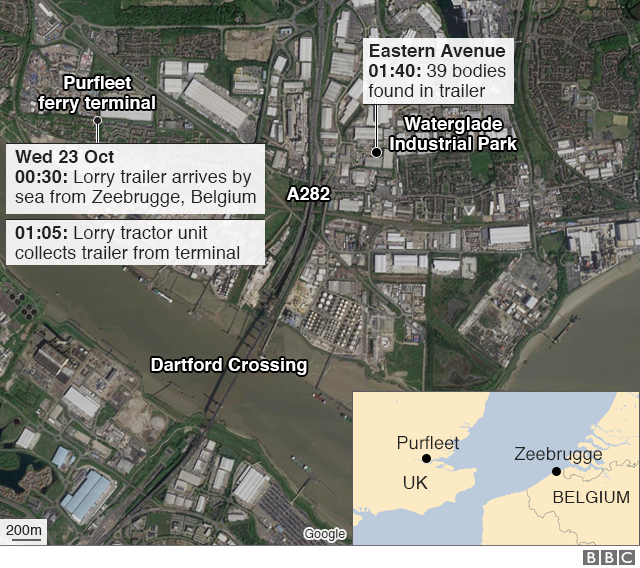
The trailer arrived in Purfleet on the River Thames from Zeebrugge in Belgium.
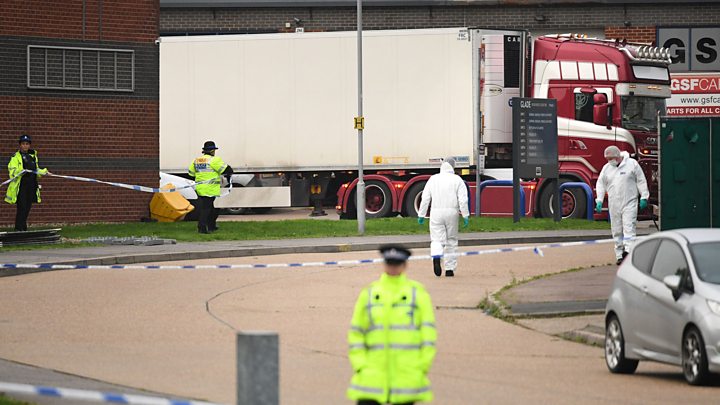
Ambulance staff discovered the bodies of the 38 adults and one teenager in the container at Waterglade Industrial Park in Grays just after 01:30 BST on Wednesday.
The lorry and trailer left the port at Purfleet shortly after 01:05.
Police said the tractor unit – the front part of the lorry – came from Northern Ireland and picked up the trailer from Purfleet.
Image copyright FACEBOOKImage caption The lorry driver has been named locally as Mo Robinson, from County Armagh
Councillor Paul Berry said the village of Laurelvale in County Armagh, where the Robinson family live, was in “complete shock”.
He said he had been in contact with Mr Robinson’s father, who had learned of his son’s arrest on Wednesday through social media.
“The local community is hoping that he [Mo Robinson] has been caught up innocently in this matter but that’s in the hands of Essex Police, and we will leave it in their professional hands to try to catch the perpetrators of this,” he said.
The Belgian Federal Public Prosecutor’s Office said it had opened a case which would focus on the organisers and others involved in the transport.
A spokesman said the container arrived in Zeebrugge at 14:29 on Tuesday and left the port later that afternoon before arriving in Purfleet in the early hours of Wednesday.
It was not clear when the victims were placed in the container or if this happened in Belgium, he said.
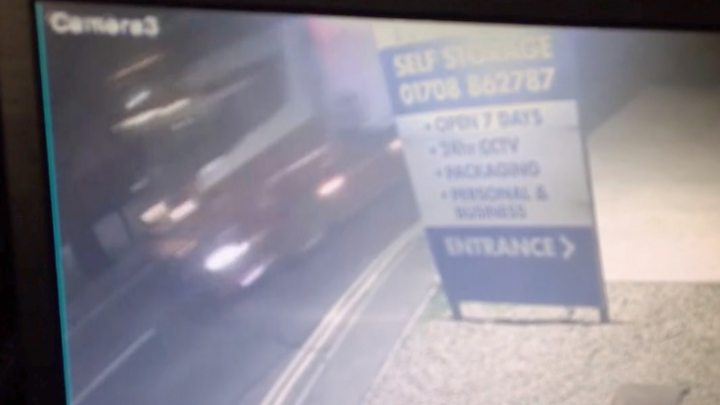
Media caption Essex lorry deaths: CCTV shows arrival at industrial park
St Peter and St Paul’s Church in Grays will be open for people to light candles and say prayers between 12:00 and 14:00.
A vigil is being held at 18:00 outside the Home Office to “call for urgent action to ensure safe passage” for people fleeing war and poverty.
The lorry was moved to a secure site at Tilbury Docks on Wednesday so the bodies could be “recovered while preserving the dignity of the victims”.
Essex Police initially suggested the lorry could be from Bulgaria, but later said officers believed it entered the UK from Belgium.
The force said formal identification of the 39 bodies “could be a lengthy process”.
A spokesman for the Bulgarian foreign affairs ministry said the truck was registered in the country under the name of a company owned by an Irish citizen.
He said it was “highly unlikely” the deceased were Bulgarians.
Shaun Sawyer, the National Police Chiefs Council lead for modern slavery and human trafficking, said while forces had prevented thousands of deaths, “tragically, for 39 people that didn’t work yesterday”.
He told BBC Radio 4’s Today programme even if there were routes perceived as easier to get through, organised criminals would still exploit people who could not access those.
“You can’t turn the United Kingdom into a fortress,” added Mr Sawyer, who is the Chief Constable of Devon and Cornwall Police.
Media caption I’ve seen people running out of a lorry’
Thurrock’s Conservative MP Jackie Doyle-Price said there needed to be an international response.
“We have partnerships in place but those efforts need to be rebooted, this is an international criminal world where many gangs are making lots of money and until states act collectively to tackle that it is going to continue,” she said.
Richard Burnett, chief executive of the Road Haulage Association, said temperatures in refrigerated trailers could be as low as -25C.
He described conditions for anyone inside as “absolutely horrendous”.
Prime Minister Boris Johnson said it was an “unimaginable tragedy and truly heartbreaking”.
In 2015, the bodies of 71 people were found in an abandoned lorry on an Austrian motorway. Police suspected the vehicle was part of a Bulgarian-Hungarian human trafficking operation.


 Members of a road construction team depart from the advance camp at an altitude of 6,500 meters of Mount Qomolangma in southwest China’s Tibet Autonomous Region, May 10, 2020. A road construction team will work on a route to the peak of Mount Qomolangma on May 12 if weather conditions permit. China initiated a new round of measurement on the height of Mount Qomolangma, the world’s highest peak, on April 30. The measurement team consists of members from the Ministry of Natural Resources and the national mountaineering team. (Xinhua/Sun Fei)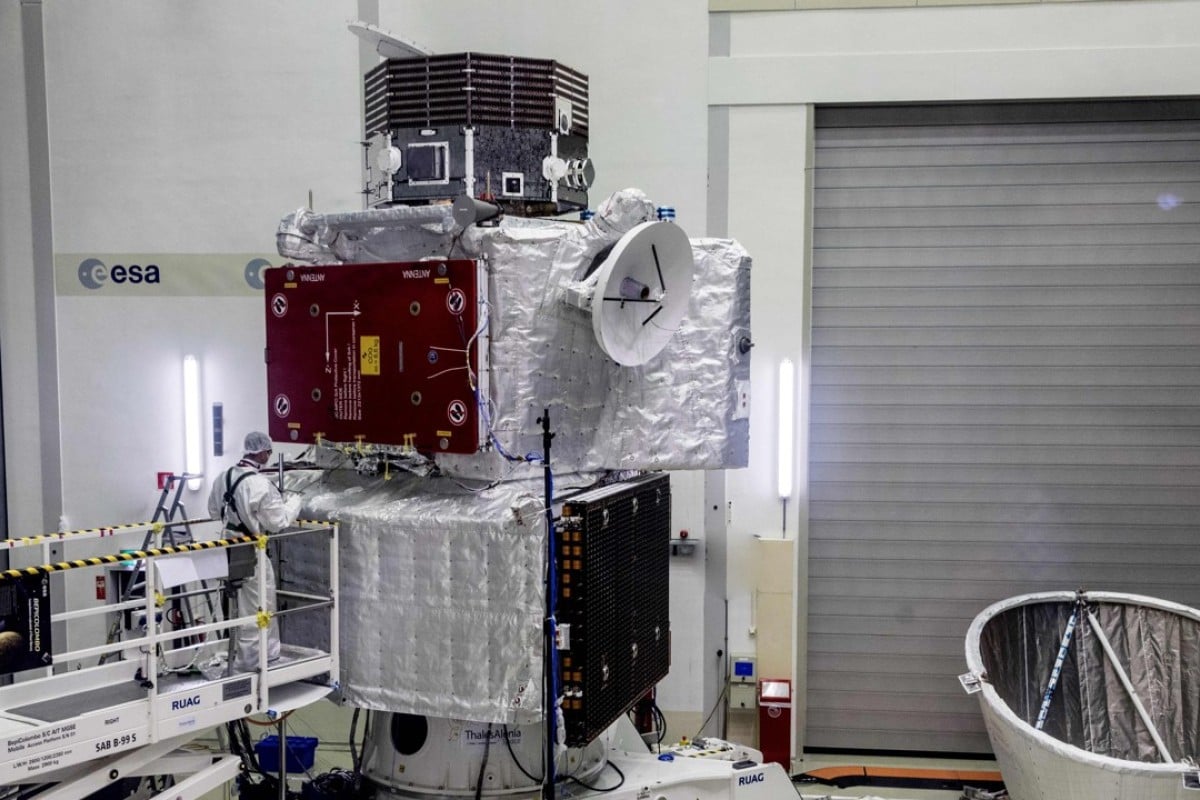













 CHINDIA ALERT: You'll be living in their world, very soon