Chindia Alert: You’ll be Living in their World Very Soon
aims to alert you to the threats and opportunities that China and India present. China and India require serious attention; case of ‘hidden dragon and crouching tiger’.
Without this attention, governments, businesses and, indeed, individuals may find themselves at a great disadvantage sooner rather than later.
The POSTs (front webpages) are mainly 'cuttings' from reliable sources, updated continuously.
The PAGEs (see Tabs, above) attempt to make the information more meaningful by putting some structure to the information we have researched and assembled since 2006.
Children from Hejiazhuang primary school paint in Hejiazhuang Village of Wangba Township in Kangxian County, northwest China’s Gansu Province, May 30, 2020. (Xinhua/Chen Bin)
BEIJING, May 31 (Xinhua) — Chinese President Xi Jinping has greeted children of all ethnic groups across the country on International Children’s Day, which falls on June 1.
Xi, also general secretary of the Communist Party of China Central Committee and chairman of the Central Military Commission, called on children to study hard, firm up their ideals and convictions and develop strong bodies and minds to prepare for realizing the Chinese Dream of national rejuvenation.
Xi noted that children nationwide have experienced a special period during the country’s fight against COVID-19 as all Chinese people stand united.
Children paint elephants at the Chimelong Safari Park in Guangzhou, south China’s Guangdong Province, May 27, 2020. Two female Asian elephants gave birth to two babies respectively on April 30 and May 12 in the Chimelong Safari Park in Guangzhou, adding the total number of the Asian elephants here to 27. (Xinhua/Liu Dawei)
Witnessing the great feats of Chinese people working together and rising to challenges, the children have followed the call of the Party and the government to support the anti-epidemic battle with their concrete actions, demonstrating the fine spirit of the country’s children, Xi said.
He stressed that China’s children today are not only undergoing and witnessing the realization of the country’s first centenary goal, they are also a new force for achieving the second centenary goal and building China into a great modern socialist country.
Xi urged Party committees and governments at all levels as well as the society to care for children and create favorable conditions for their growth.
BEIJING (Reuters) – China announced on Sunday two new confirmed cases of coronavirus and four new asymptomatic cases, including one person without symptoms of COVID-19 on a chartered flight from Germany.
The two confirmed cases in Shandong province on Saturday compared with four cases the day before, data from the country’s health authority showed.
The National Health Commission (NHC) confirmed three new asymptomatic cases on Saturday.
On Sunday, the Chinese city of Tianjin confirmed one asymptomatic person, a passenger arriving from Frankfurt on a chartered Lufthansa flight, LH342, to Tianjin. This case was discovered between midnight and 6 a.m. local time on Sunday, the city’s daily statements show.
These charter flights are part of an accelerated entry procedure offered by Beijing as China and Germany seek to reignite their economies after months of lockdown. The flight to Tianjin carried about 200 passengers, mostly German business executives.
Lufthansa has another charter flight scheduled for Shanghai on Wednesday.
A 34-year-old German engineer tested positive for the coronavirus after arriving in Tianjin but he does not have any symptoms, the Tianjin government said on its official social media platform Weibo.
The asymptomatic patient has been transferred to a local hospital to be placed under medical observation, the Tianjin government said, adding that the whole process was a “closed loop”, meaning posing no great risk to the Chinese public.
Chinese groups calling for more ‘fighting spirit’ are getting the upper hand on those who favour calm and cooperation, government adviser says
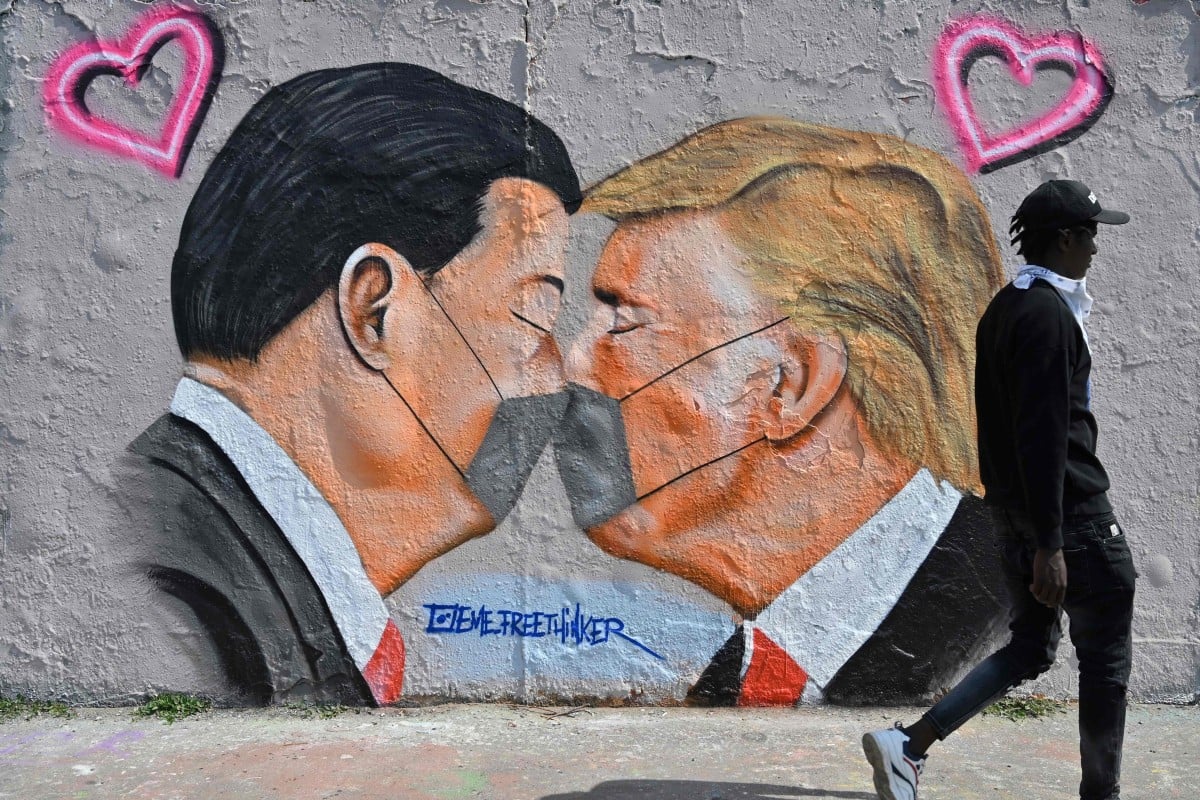
From Hong Kong to Covid-19, trade to the South China Sea, Beijing and Washington are clashing on a growing number of fronts and in an increasingly aggressive way
Efforts to promote dialogue and cooperation between the US and China are failing, observers say. Photo: AFP
Moderates who favour dialogue and cooperation as a way to resolve China’s disputes with the United States are losing ground to hardline groups bent on taking the fight to Washington, according to political insiders and observers.
“There are two camps in China,” said a former state official who now serves as a government adviser and asked not to be named.
“One is stressing the combat spirit, the other is trying to relieve tensions. And the former has the upper hand.”
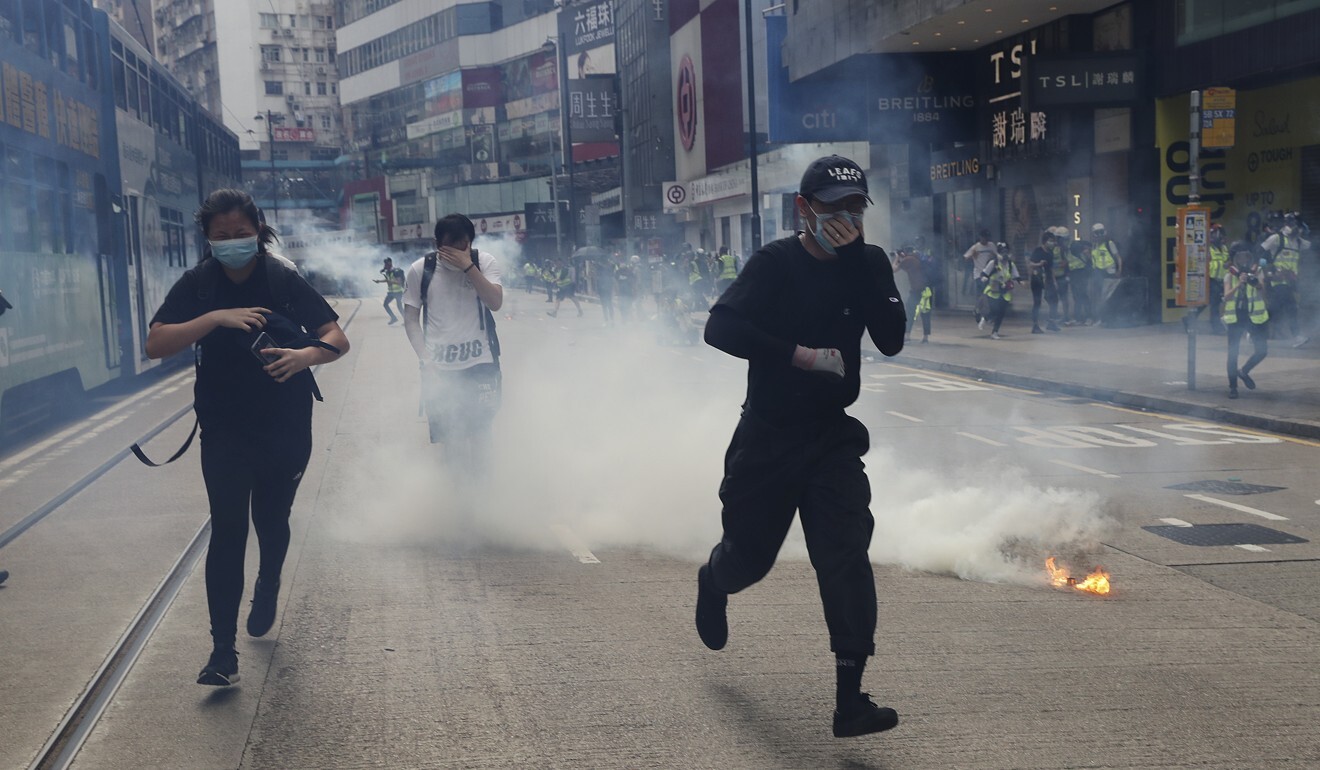
Relations between China and the US are under intense pressure. After Beijing moved to introduce a national security law for Hong Kong, US President Donald Trump said on Friday that Washington would begin eliminating the special policy exemptions it grants the city, as it no longer considers it autonomous from mainland China.
Beijing’s decision to enact a national security law for Hong Kong was met with anger from the US and other Western countries. Photo: Sam Tsang
The two nations have also clashed over trade, Xinjiang, Taiwan and the South China Sea, with the US passing several acts denouncing Beijing and sanctioning Chinese officials.
China has also experienced turbulence in its relations with other countries, including Australia and members of the European Union, mostly related to the Covid-19 pandemic
and Beijing’s efforts to position itself as a leader in the fight against the disease with its policy of “mask diplomacy”.
After Canberra appealed for an independent investigation to be carried out to determine the origins of the coronavirus, Beijing responded by imposing tariffs on imports of Australian barley, showing it is prepared to do more than just trade insults and accusations with its adversaries.
Pang Zhongying, a professor of international relations at Ocean University of China in Qingdao, said there was a worrying trend in China’s relations with other nations.
“We need political and diplomatic means to resolve the challenges we are facing, but … diplomatic methods have become undiplomatic,” he said.
“There are some who believe that problems can be solved through tough gestures, but this will never work. Without diplomacy, problems become confrontations.”
said during his annual press conference on the sidelines of the National People’s Congress last weekend that China and the United States must work together to prevent a new Cold War.
His words were echoed by Chinese Premier Li Keqiang, who said during a press conference after the closure of the legislative session on Thursday that the many challenges facing the China-US relations could only be resolved through cooperation.
However, the government adviser said there was often quite a chasm between what China’s leaders said and what happened in reality.
“Even though we say we do not want a Cold War, what is happening at the working level seems to be different.” he said. “The implementation of policies is not properly coordinated and often chaotic.”
Tensions between China and the US have been in a poor state since the start of a trade war almost two years ago. After multiple rounds of negotiations, the sides in January signed a phase one deal, but the positivity that created was short-lived.
In February, Beijing expelled three reporters from The Wall Street Journal over an article it deemed racist, while Washington has ramped up its military activity in the South China Sea and Taiwan Strait, and threatened to revoke the visas of Chinese students studying science and technology in the US over concerns they might be engaged in espionage.
Beijing has also used its state media and army of “Wolf Warrior” diplomats to promote its narrative, though many Chinese scholars and foreign policy advisers have said the latter’s nationalistic fervour has done more harm than good and appealed to Beijing to adopt a more conciliatory tone.
However, Hu Xijin, editor-in-chief of Chinese tabloid Global Times, said China had no option but to stare down the US, which regarded the world’s most populous nation as its main rival.
“Being contained by the US is too high a price for China to pay,” he said. “I think the best thing people can do is forget the old days of China-US ties”.
Jin Canrong, a professor of international relations at Renmin University in Beijing, wrote in a recent newspaper article that Beijing’s actions – notably enacting a national security law for Hong Kong – showed it was uncompromising and ready to stand its ground against the US.
Wu Xinbo, dean of international studies at Fudan University in Shanghai, agreed, saying relations between the two countries were likely to worsen in the run-up to the US presidential election in November and that Beijing should be prepared for a fight.
But Adam Ni, director of China Policy Centre, a think tank in Canberra, said the issue was not that the moderate camp had been sidelined, but rather Beijing’s perception of the US had changed.
“Beijing has woken up to the idea that America’s tough policy on China will continue and it is expecting an escalation of the tensions,” he said.
“The centre of gravity in terms of Beijing’s perception of the US has shifted, in the same way the US perception of China has shifted towards a more negative image”.
Beijing was simply responding in kind to the hardline, assertive manner of the US, he said.
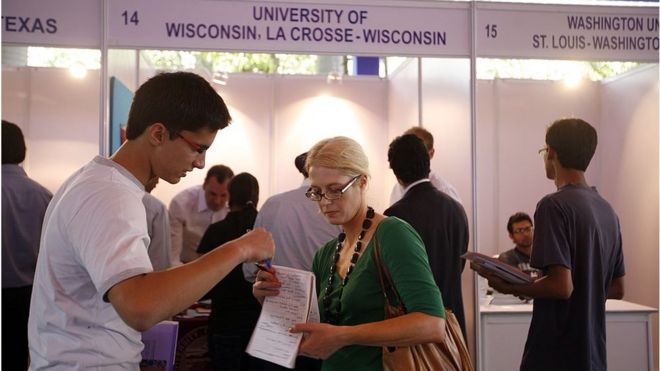
Image copyright GETTY IMAGESImage caption International students are uncertain of the future in the wake of Covid-19
Two years ago, 29-year-old Raunaq Singh started working towards his dream of pursuing an MBA from one of the world’s top business schools.
In January 2020, he was waitlisted by UC Berkeley’s Haas School of Business in California, and was asked to send more information to bolster his case for admission.
“So, I quit my stable job of five years and started working with a mental wellness start-up as a consultant,” Mr Singh says.
“I’m on a major pay cut because the purpose of joining this company wasn’t to earn money, but to add value to my application.”
Fortunately, he was accepted at Berkeley, and was due to start his course in September.
But then the world changed as Covid-19 spread, plunging the immediate future into uncertainty.
Mr Singh is one of hundreds of thousands of Indian students who were planning to study abroad. But now they are not quite sure what will happen given international travel restrictions, new social distancing norms and the sheer uncertainty of what the next few months will bring.
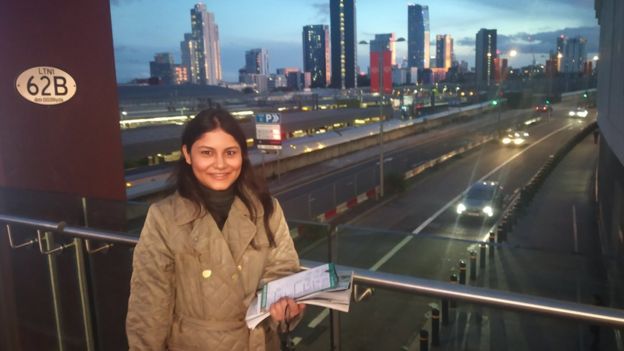
Image copyright MEEHIKA BARUAImage caption Ms Barua is one of the hundreds of thousands of Indians who wants to study abroad
Every year, in June and July, students flood visa centres and consulates to start the paperwork to travel and study abroad. But things look different this year.
“There’s a lot of stress and anxiety and tension at this time but not enough clarity,” says Meehika Barua, 23, who wants to study journalism in the UK.
“We don’t know when international travel restrictions will be lifted or whether we’d be able to get our visas in time. We may also have to take classes online.”
Some universities across the UK and the US are giving international students the option to defer their courses to the next semester or year, while others have mandated online classes until the situation improves.
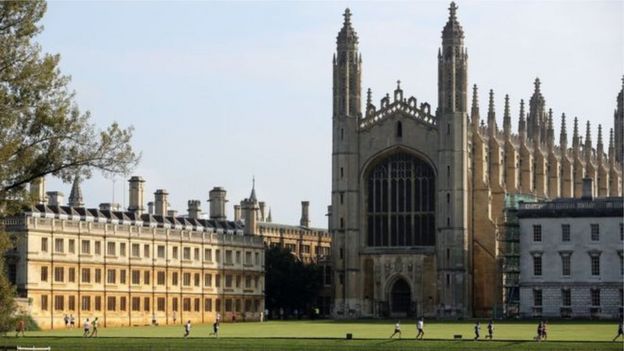
The University of Cambridge recently announced that lectures will be online only until next year. Others, like Greenwich University, will have a mix of online and face-to-face approaches while its international students can defer to the next semester.
“It feels a little unfair, especially after spending a year-and-half to get admission in one of these schools,” Mr Singh says. “Now, a part of the experience is compromised.”
Like him, many others are disappointed at the prospect of virtual classes.
Image copyright PA MEDIAImage caption Cambridge University has announced that all lectures will be online
“The main reason we apply to these universities is to be able to get the experience of studying on campus or because we want to work in these countries. We want to absorb the culture there,” Ms Barua says.
Studying abroad is also expensive. Many US and UK universities charge international students a higher fee. And then there’s the additional cost of applications or standardised tests.
Virtual classes mean they don’t have to pay for a visa, air tickets or living expenses. But many students are hesitant about spending their savings or borrowing money to pay for attending college in their living room.
Even if, months later, the situation improves to some extent, and students could travel abroad and enrol on campus, they say that brings its own challenges.
For one, Mr Singh points out, there is the steep cost of healthcare, and questions over access to it, as countries like the US are experiencing a deluge of infections and deaths.
Image copyright GETTY IMAGESImage caption Students are also unsure of finding jobs overseas after graduation
And then there are the dimming job prospects. The pandemic has squeezed the global economy, so employers are less likely to hire, or sponsor visas for foreign workers.
“For international students, the roller coaster has been more intense because there is increased uncertainty about their ability to get jobs in the US after graduation, and for some, in their ability to get to the US at all,” says Taya Carothers, who works in Northwestern University’s international student office.
The idea of returning to India with an expensive degree and the looming unemployment is scaring students – especially since for many of them, the decision to study abroad is tied to a desire to find a well-paying job there.
“The risk we take when we leave our home country and move to another country – that risk has increased manifold,” Mr Singh adds.
The current crisis – and its economic impact – has affected the decision of nearly half the Indians who wanted to study abroad, according to a recent report by the QS, a global education network.
And logistics will also pose a challenge – colleges have to enforce social distancing across campuses, including dormitories, and accommodate students from multiple time zones in virtual classes.
“Regardless of how good your technology is, you’re still going to face problems like internet issues,” says Sadiq Basha, who heads a study abroad consultancy.
He adds that there might be a knee-jerk reaction as a large number of international students consider deferring their admission to 2021. But he’s positive that “in the long term, the ambitions of Indian students are not going to go down.”
Mr Singh is still waiting to see how things will unfold in the next few months, but he’s almost certain he will enrol and start his first semester of the two-year program online.
“Since I’ve been preparing for over a year now, I think mentally I’m already there,” he says.
WASHINGTON/NEW DELHI (Reuters) – U.S. President Donald Trump said on Wednesday he had offered to mediate a standoff between India and China at the Himalayan border, where soldiers camped out in a high-altitude region have accused each other of trespassing over the disputed border.
“We have informed both India and China that the United States is ready, willing and able to mediate or arbitrate their now raging border dispute,” Trump said in a Twitter post.
The standoff was triggered by India’s construction of roads and air strips in the region as it competes with China’s spreading Belt and Road initiative, involving infrastructure development and investment in dozens of countries, Indian observers said on Tuesday.
Both were digging defences and Chinese trucks have been moving equipment into the area, the officials said, raising concerns about an extended standoff.
There was no immediate response from either India or China to Trump’s offer. Both countries have traditionally opposed any outside involvement in their matters and are unlikely to accept any U.S. mediation, experts said.
China’s ambassador to India, Sun Weidong, struck a conciliatory note, saying the two Asian countries should not let their differences overshadow the broader bilateral relationship.
“We should adhere to the basic judgment that China and India are each other’s opportunities and pose no threat to each other. We need to see each other’s development in a correct way and enhance strategic mutual trust,” he said, speaking in a webinar on China’s experience of fighting COVID-19.
“We should correctly view our differences and never let the differences shadow the overall situation of bilateral cooperation.”
The two countries are engaged in talks to defuse the border crisis, an Indian government source said. “These things take time, but efforts are on at various levels, military commanders as well as diplomats,” the source said.
The Chinese side has been insisting that India stop construction near the Line of Actual Control or the de facto border. India says all the work is being done on its side of the border and that China must pull back its troops.
Trump in January offered to “help” in another Himalayan trouble spot, the disputed region of Kashmir that is at the center of a decades-long quarrel between India and Pakistan.
But the U.S. offer triggered a political storm in India, which has long bristled at any suggestion of third-party involvement in tackling Kashmir which it considers an integral part of the country.
LONDON (Reuters) – The United Kingdom’s COVID-19 death toll surpassed 47,000 on Tuesday, a dire human cost that could define the premiership of Boris Johnson.
The Office for National Statistics said 42,173 people had died in England and Wales with suspected COVID-19 as of May 15, bringing the UK total to 47,343 – which includes earlier data from Scotland, Northern Ireland, plus recent hospital deaths in England.
A death toll of nearly 50,000 underlined Britain’s status as one of the worst-hit countries in a pandemic that has killed at least 345,400 worldwide.
Johnson, already under fire for his handling of the pandemic, has had to defend his top adviser Dominic Cummings who drove 250 miles from London to access childcare when Britons were being told to stay at home to fight COVID-19.
One Johnson’s junior ministers, Douglas Ross, resigned on Tuesday in protest. Johnson has stood by Cummings, saying the aide had followed the “instincts of every father”.
The government says that while it may have made some mistakes it is grappling with the biggest public health crisis since the 1918 influenza outbreak and that it has ensured the health service was not overwhelmed.
Unlike the daily death toll published by the government, Tuesday’s figures include suspected cases and confirmed cases of COVID-19, the respiratory disease caused by the novel coronavirus.
But even these figures underestimate the true number of deaths.
In March, Britain’s chief scientific adviser said keeping deaths below 20,000 would be a “good outcome”. In April, Reuters reported the government’s worst-case scenario was 50,000 deaths.
Disease experts are watching the total number of deaths that exceed the usual for amount for the time of year, an approach that is internationally comparable.
The early signs suggest Britain is faring badly here too.
Excess deaths are now approaching 60,000 across the UK, ONS statistician Nick Stripe said, citing the latest data – a toll equivalent to the populations of historic cities like Canterbury and Hereford.
Chinese President Xi Jinping, also general secretary of the Communist Party of China Central Committee and chairman of the Central Military Commission, takes part in a deliberation with his fellow deputies from the delegation of Inner Mongolia Autonomous Region at the third session of the 13th National People’s Congress (NPC) in Beijing, capital of China, May 22, 2020. (Xinhua/Ju Peng)
BEIJING, May 23 (Xinhua) — “What is people first?” Chinese President Xi Jinping asked, before offering his own answer when he was talking with lawmakers at the ongoing national legislative session.
“So many people worked together to save a single patient. This, in essence, embodies doing whatever it takes (to save lives),” he said.
Xi, also general secretary of the Communist Party of China Central Committee and chairman of the Central Military Commission, is a deputy to the 13th National People’s Congress.
During his deliberations with fellow deputies from Inner Mongolia Autonomous Region on Friday, “people” was a keyword.
Xi referred to a story told by another deputy that morning. Luo Jie, from the COVID-19 hard-hit province of Hubei, told reporters at the session how medical workers in his hospital spent 47 days saving an 87-year-old COVID-19 patient.
“About 10 medical workers meticulously took care of the patient for dozens of days, and finally saved the patient’s life,” Xi said. “I am really impressed.”
In the COVID-19 pandemic, health workers around the world got to know the elderly are the most difficult to treat and require the most sophisticated medical resources. China has given every patient equal treatment irrespective of their age or wealth.
Chinese President Xi Jinping, also general secretary of the Communist Party of China Central Committee and chairman of the Central Military Commission, takes part in a deliberation with his fellow deputies from the delegation of Inner Mongolia Autonomous Region at the third session of the 13th National People’s Congress (NPC) in Beijing, capital of China, May 22, 2020. (Xinhua/Huang Jingwen)
In Hubei alone, more than 3,600 COVID-19 patients over the age of 80 have been cured. In the provincial capital Wuhan, seven centenarian patients have been cured.
“We mobilized from around the nation the best doctors, the most advanced equipment and the most needed resources to Hubei and Wuhan, going all out to save lives,” Xi said during the deliberations, adding that the eldest patient cured is 108 years old.
“We are willing to save lives at all costs. No matter how old the patients are and how serious their conditions have become, we never give up,” Xi said.
Xi joined political advisors and lawmakers on Thursday and Friday in paying silent tribute to the lives lost to COVID-19 as the top political advisory body and the national legislature opened their annual sessions.
This year’s government work report said China’s economy posted negative growth in the first quarter of this year, but it was “a price worth paying” to contain COVID-19 as life is invaluable.
“As a developing country with 1.4 billion people, it is only by overcoming enormous difficulties that China has been able to contain COVID-19 in such a short time while also ensuring our people’s basic needs,” the report said.
Epidemic response is a reflection of China’s governing philosophy.
The fundamental goal for the Party to unite and lead the people in revolution, development and reform is “to ensure a better life for them,” Xi said.
The nation’s average life expectancy reached 77 years in 2018, more than double that in 1949, when the people’s republic was founded.
Chinese people are not just living longer but better lives, with more material wealth and broader choices to pursue individual dreams. All rural poor will bid farewell to poverty this year as part of the goal of building a moderately prosperous society in all respects.
The Party’s long-term governance, Xi said, rests on “always maintaining close bond with the people.”
“We must always remain true to the people’s aspiration and work in concert with them through thick and thin,” Xi said.
Chinese President Xi Jinping, also general secretary of the Communist Party of China Central Committee and chairman of the Central Military Commission, takes part in a deliberation with his fellow deputies from the delegation of Inner Mongolia Autonomous Region at the third session of the 13th National People’s Congress (NPC) in Beijing, capital of China, May 22, 2020. (Xinhua/Huang Jingwen)
BEIJING, May 22 (Xinhua) — President Xi Jinping stressed acting on the people-centered philosophy in every aspect of work when he participated in a deliberation on the first day of the annual session of the National People’s Congress (NPC), China’s national legislature.
Xi, also general secretary of the Communist Party of China (CPC) Central Committee and chairman of the Central Military Commission, made the remarks Friday when joining in discussions with fellow lawmakers from north China’s Inner Mongolia Autonomous Region.
Xi, an NPC deputy himself, exchanged views with other deputies on a wide range of topics including poverty eradication, grassland ecological conservation, and ethnic unity.
The fundamental goal for the Party to unite and lead the people in revolution, development and reform is to ensure a better life for them, Xi said, adding that the CPC will never waver in pursuing such a goal.
He particularly stressed adhering to “people first” in coordinating epidemic control and economic and social development.
In the face of the spread of COVID-19, the CPC has, from the very beginning, stated clearly that people’s life and health should be considered as the top priority. “We are willing to protect people’s life and health at all costs,” he said.
Xi stressed improving the regular epidemic response mechanisms to prevent a resurgence of the outbreak.
Commending the people as the main source of confidence for the Party, Xi said the masses have been the fundamental strength in the country’s epidemic response.
China’s socialist democracy is the broadest, most genuine, and most effective democracy to safeguard the fundamental interests of the people, he said.
Noting that the epidemic has brought relatively huge impact to China’s economic and social development, the president said it has also led to new opportunities for development.
He urged targeted efforts in mapping out major plans, reforms and policies that will serve as locomotives in the country’s high-quality development and high-efficiency governance.
Authorities must make working for the people their primary political achievements, Xi said.
He also highlighted efforts to consolidate and expand the progress in using industrial development and employment as poverty-alleviation methods, and doing a good job in facilitating employment for graduating college students, migrant workers, and demobilized military personnel.
Xi voiced his complete support for a government work report submitted to the NPC deputies for deliberation. He also expressed full acknowledgment of the work of Inner Mongolia over the past year, stressing the importance of upholding and improving the system of regional ethnic autonomy.
He called for maintaining the strategic resolve of building an ecological civilization, noting that the green ecological barrier in Inner Mongolia should be further fortified.
Xi also called for firm efforts to combat corruption and oppose the practice of formalities for formalities’ sake and bureaucratism.
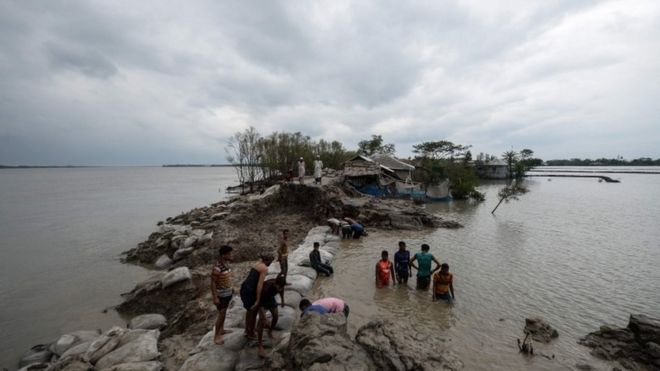
Image copyright AFPImage caption Embankments have been washed away in Bangladesh
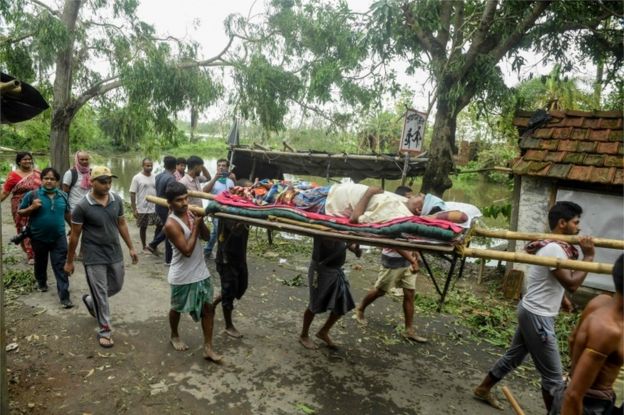
Millions of people across Bangladesh and eastern India are taking stock of the devastation left by Cyclone Amphan.
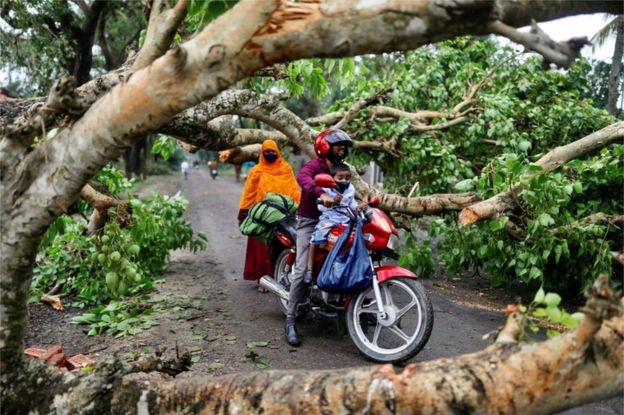
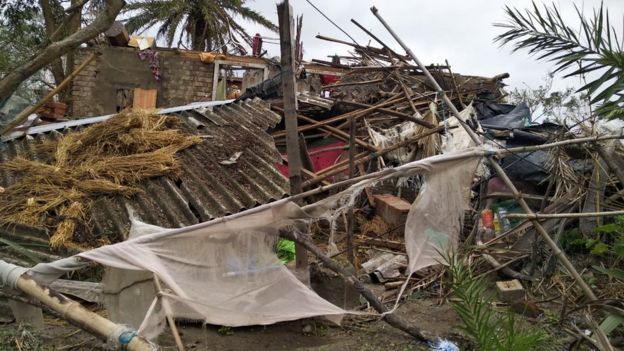
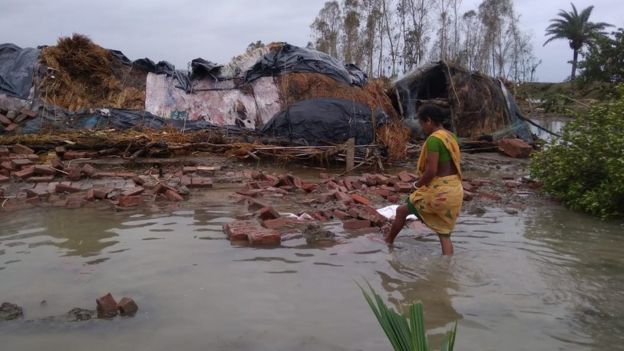
A massive clean-up operation has begun after the storm left 84 dead and flattened homes, uprooted trees and left cities without power.
India’s Prime Minister Narendra Modi has arrived in West Bengal state to conduct an aerial survey.
Authorities in both countries had evacuated millions of people before the storm struck.
Covid-19 and social-distancing measures made mass evacuations more difficult, with shelters unable to be used to full capacity.
Officials also said people were afraid and reluctant to move to shelters for fear of contracting the virus.
The cyclone arrived with winds gusting up to 185km/h (115mph) and waves as high as 15ft.
Image copyright REUTERSImage caption Roads have been blocked by falling trees in BangladeshImage copyright AFPImage caption Many people have been injured in wall collapses in Bengal
It is the first super cyclone to form in the Bay of Bengal since 1999. Though its winds had weakened by the time it struck, it was still classified as a very severe cyclone.
Three districts in India’s West Bengal – South and North 24 Parganas and East Midnapore – were very badly hit.
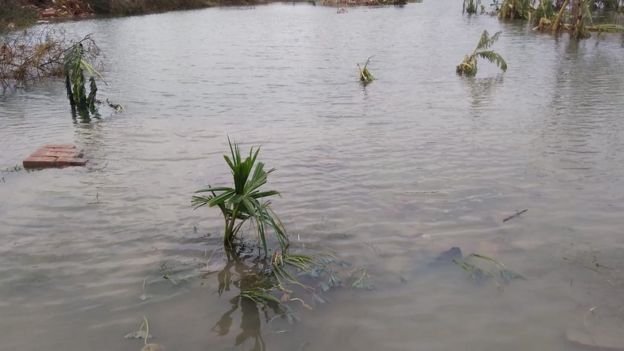
In Bangladesh, there are reports of tens of thousands of homes damaged or destroyed and many villages submerged by storm surges in low-lying coastal areas like Khulna and Satkhira.
The affected areas include the Sunderbans, mangroves spread over an area of more than 10,000 square kilometres that spans both India and Bangladesh – the swampy islands are home to more than four million of the world’s poorest people.
Image copyright MUKTIImage caption Many homes, built of brick and mud, have been washed away
Those in the Sunderbans say it is too early to estimate casualties in the area, which is now cut-off from the mainland by the storm.
“There are houses which have collapsed and people could be trapped in them but we don’t know yet,” Debabrat Halder, who runs an NGO in one of the villages, told the BBC.
He recalls cyclone Bulbul in November 2019, which was followed by a huge incidence of fever, diarrhoea and flu, and is afraid that that the same may happen again.
And worse, he adds, is that the flooding from contaminated sea water, has likely destroyed the soil.
“Nothing will grow in this soil,” he says, adding that it will likely take years to convert it into fertile land again.
Image copyright MUKTIImage caption The Sunderbans delta is frequently hit by severe stormsImage copyright MUKTIImage caption Crops have all been destroyed by the flooding
Kolkata, the capital of West Bengal, and one of India’s biggest cities has been devastated. Its roads are flooded and the city was without power for more than 14 hours.
The state’s chief minister, Mamata Banerjee, said the devastation in Kolkata was “a bigger disaster than Covid-19”.
But assessment of the damage is being hampered by blocked roads and flooding in all these areas.
The third session of the 13th National Committee of the Chinese People’s Political Consultative Conference (CPPCC) opens at the Great Hall of the People in Beijing, capital of China, May 21, 2020. (Xinhua/Li Tao)
BEIJING, May 21 (Xinhua) — China’s top political advisory body started its annual session Thursday afternoon in Beijing.
Xi Jinping and other Chinese leaders attended the opening meeting of the third session of the 13th National Committee of the Chinese People’s Political Consultative Conference (CPPCC), held at the Great Hall of the People.
Attendees at the meeting paid a silent tribute to martyrs who died fighting COVID-19 and compatriots who lost their lives in the epidemic.
The agenda for the session was reviewed and approved at the meeting.
Wang Yang, chairman of the CPPCC National Committee, delivered a work report of the Standing Committee of the CPPCC National Committee to the session.
The report noted the role of political advisors in the fight against the COVID-19 epidemic, saying that they have submitted more than 1,300 reports and suggestions on preventing and controlling the epidemic, resuming work and production, stabilizing public expectations and strengthening law-based governance.
Giving full play to role of the CPPCC as a specialist consultative body, 71 consultation meetings, 97 research trips as well as online consultations were organized in the past year, it said.
The report made arrangements for the CPPCC’s work in 2020 in six aspects, urging political advisors to fulfil their duties around achieving a moderately prosperous society in all respects.
Attendees were also briefed on the handling of proposals submitted since the previous annual session of the top political advisory body.







 CHINDIA ALERT: You'll be living in their world, very soon