Chindia Alert: You’ll be Living in their World Very Soon
aims to alert you to the threats and opportunities that China and India present. China and India require serious attention; case of ‘hidden dragon and crouching tiger’.
Without this attention, governments, businesses and, indeed, individuals may find themselves at a great disadvantage sooner rather than later.
The POSTs (front webpages) are mainly 'cuttings' from reliable sources, updated continuously.
The PAGEs (see Tabs, above) attempt to make the information more meaningful by putting some structure to the information we have researched and assembled since 2006.
Motorist kills six as he ploughs into passers-by, before being shot dead by police
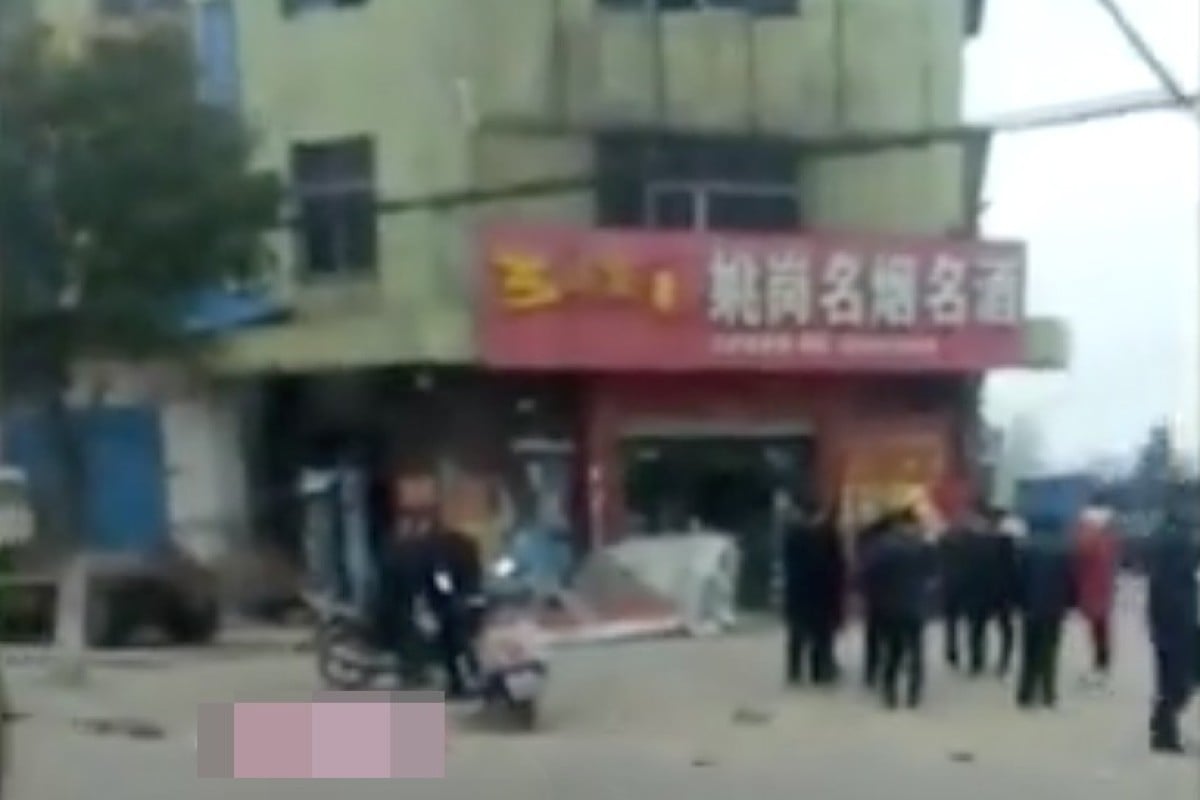
A man drove a car into a crowd on Friday morning, killing six and injuring seven in Hubei province. Photo: Thepaper.cn
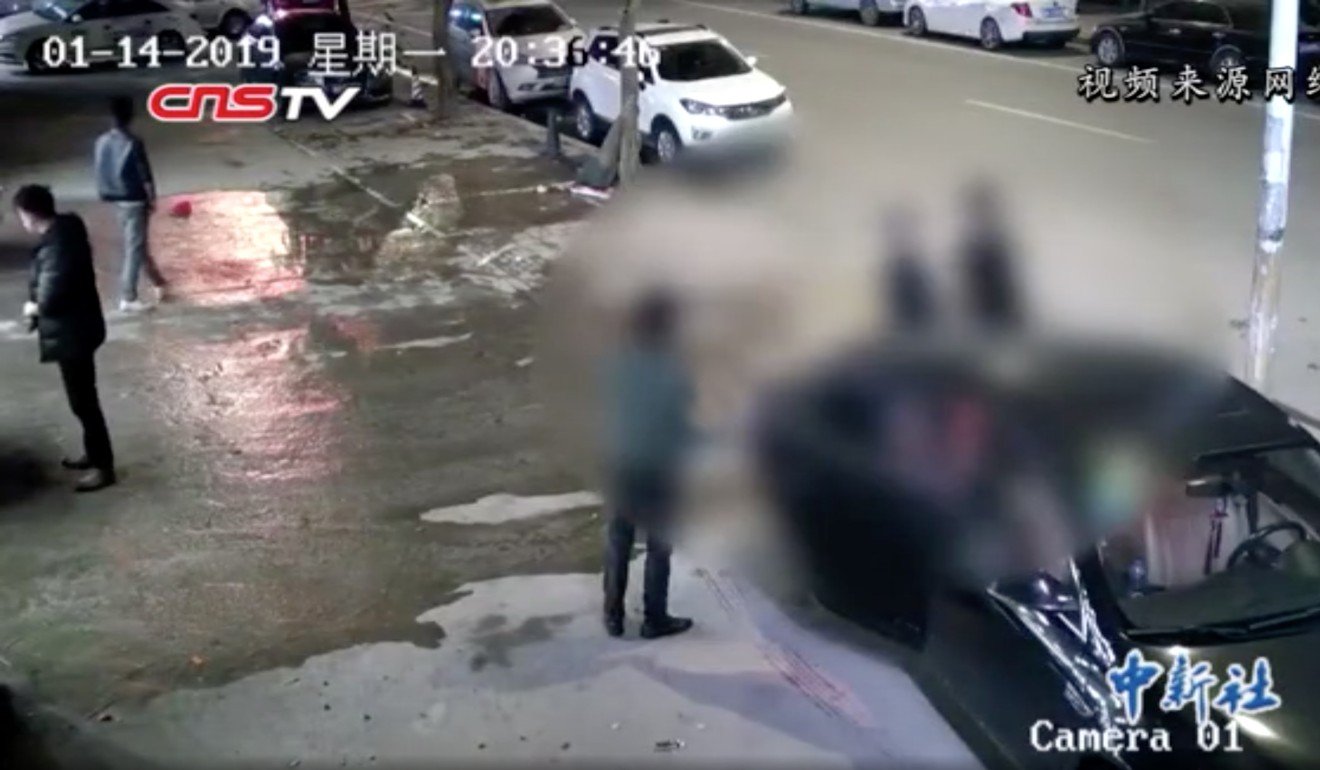
Police in central China shot dead a man who drove a car into a crowd on Friday morning, killing six and wounding six others, including children, Chinese media reported.
The police received calls at around 6am about someone driving into pedestrians in the township of Taiping in Hubei province. Officers shot the driver dead, taking the death toll to seven.
The Zaoyang municipal government, which administers Taiping, said the motorist was 44-year-old restaurant owner Cui Lidong.
The government said Cui attacked his wife and daughter that morning before driving his car into the crowd.
One child was among those killed and four children, including the daughter, were wounded.
A police investigation into the incident was under way.
A video published by news portal Thepaper.cn shows several people lying on the ground as an ambulance arrives at the scene.
One witness identified only as Wang said the car ploughed randomly into pedestrians and other vehicles, the Beijing News reported.
Another witness said: “There were bodies everywhere on the street.”
The reports prompted debate online about whether the incident was yet another case of “revenge on society”, where the suspect lashes out at the public to settle personal scores or draw attention to a dispute.
There have been several such revenge cases in recent years, including car crashes, knife attacks and bombings in which the victims were mostly pedestrians or schoolchildren.
In March, police in Tangshan, Hebei province, arrested a man for attacking several pupils outside a primary school. In September 2018, a driver crashed a car into a crowd in central China before attacking pedestrians with a knife and shovel, killing 11 and wounding 44.
SRINAGAR (Reuters) – Five people were killed in a gun battle between members of a Pakistani militant group and Indian security forces in disputed Kashmir on Sunday as India intensified a security
Indian authorities have killed at least eight JeM militants and detained around 50 militants, sympathizers and their relatives since the bomb attack, which also sparked the roundup of separatists which India says is needed to head off trouble ahead of a general election to be held by May.
Most of those rounded up over the last two days were linked to the Islamist party Jamaat-e-Islami (JeI).
“Since JeI has a wider network across Kashmir and they are mobilising anti-India protests, their arrest could help in curbing such protests ahead of elections,” the senior police officer said.
One well-known separatist leader, Abdul Gani Bhat, was placed under house arrest, according to his political party.
Separatists called a strike to protest against the detentions. Many shops, petrol stations, and businesses closed, with few people and vehicles on streets in sensitive areas, except for troop patrols.
In some areas of the main city of Srinagar, the government limited the movement of people and vehicles.
“The restrictions have been imposed as a precautionary measure to avoid any untoward incident,” the police said.
FUEL SUPPLIES LOW
The government of Jammu and Kashmir said fuel rationing had been introduced in the Kashmir Valley where there was only enough gasoline for one day, diesel for four days and no liquefied petroleum gas (LPG).
The government said it would seek to increase supplies to the region and that shortages are the result of road blockages after the suicide bomb attack.
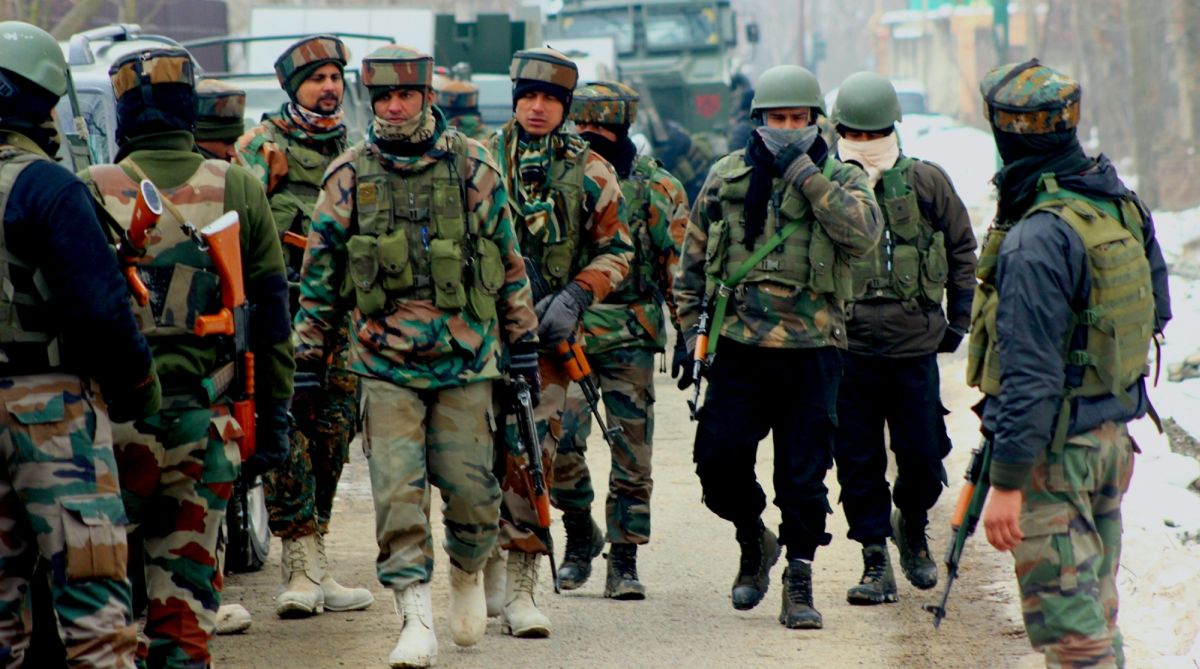
Indian paramilitary troops in riot gear arrived in strength at first light, said Shakeel Ahmad, a resident of Nowhatta in the Srinagar district.
“At places, they have blocked the main roads with steel barricades and concertina wire,” he said.
State Governor Satya Pal Malik called on residents not to believe “rumours of any extreme nature”. The government said an increase in police numbers was to prevent candidates and voters from being intimidated into not standing or voting in the general election.
Separatist leader Mirwaiz Umar Farooq, who chairs the Hurriyat Conference of separatist groups, said arbitrary arrests and jailing of leaders, activists and young people for their political beliefs had happened across Kashmir for 30 years.
“Intimidating activists and leadership will not deter them from their path, nor will it stop people from demanding the resolution of the Kashmir dispute through self-determination,” he said.
Reuters’ telephone calls to the Indian home ministry to seek comment went unanswered.
TENSIONS RAISED
The suicide bomb attack has raised tensions between India and Pakistan which both claim Kashmir in full but rule it in part. India blames Pakistan for harbouring militant groups operating in Kashmir, which Pakistan denies.
After the attack, India dropped trade privileges for Pakistan and prepared to send as many as 10,000 more troops to the contested area, according to a home ministry letter seen by Reuters.
The Indian army said that early on Sunday evening Pakistan violated the two nations’ ceasefire at the Rajouri area of the border, through shelling from mortars and small arms fire. Defence spokesman Lieutenant Colonel Devender Anand said the Indian army was “retaliating strongly and effectively”.
Ceasefire violations are not unusual along the border.
A Pakistani security official said Pakistani forces had not initiated any action but had responded to Indian firing.
Kashmir is likely to be a key issue in India’s election, distracting from concerns about how Prime Minister Narendra Modi and his Bharatiya Janata Party have managed the economy.
Modi has promised a strong response to the attack, saying in a monthly radio broadcast on Sunday that it had caused anguish to all of India.
Modi added that the army had vowed to destroy the militants and those who helped them.
Islamabad has warned it would respond with “full force” if attacked. On Sunday, Foreign Minister Shah Mehmood Qureshi called on India to show restraint or it would put “the entire region’s peace and security at stake”.
India’s Supreme Court will hear a case this week seeking to drop a constitutional provision that bars non-residents from moving to the state of Jammu and Kashmir that encompasses the Muslim-majority region.
Image copyrightGETTY IMAGES (ALLISON JOYCE)Image captionCow vigilantes in Ramgarh in 2015
A Muslim dairy farmer was stopped late one night last July as he led two cows down a track in rural Rajasthan, south of the Indian capital, Delhi. Within hours he was dead, but who killed him, asks the BBC’s James Clayton – the “cow vigilantes” he met on the road, or the police?
It’s 4am and Dr Hassan Khan, the duty doctor at Ramgarh hospital, is notified of something unusual.
The police have brought in a dead man, a man they claim not to know.
“What were the police like when they brought him in? Were they calm?” I ask him.
“Not calm,” he says. “They were anxious.”
“Are they usually anxious?” I ask.
“Not usually,” he says, laughing nervously.
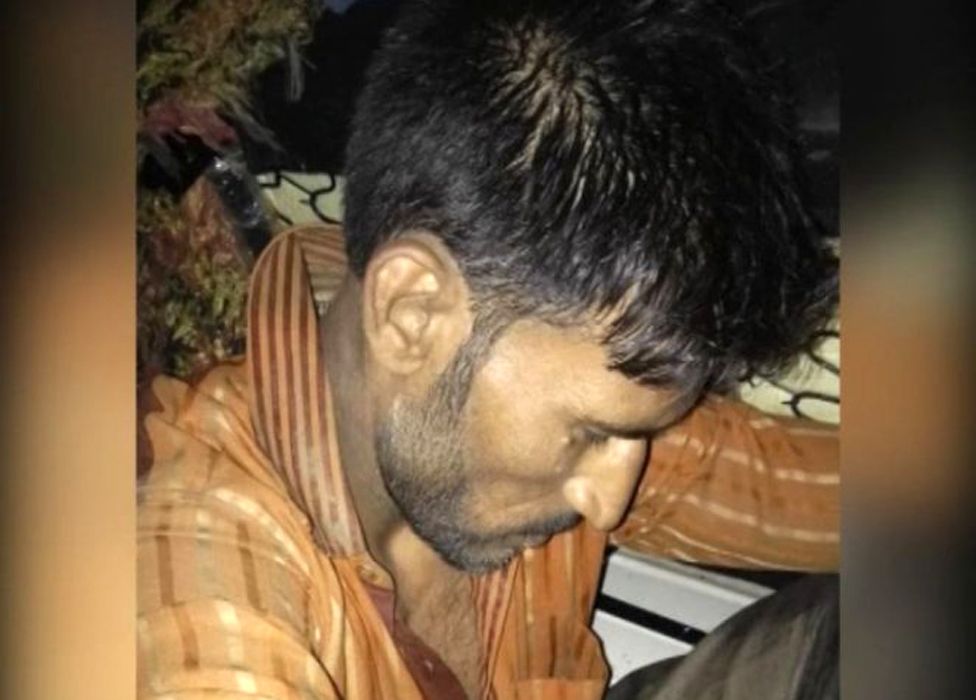
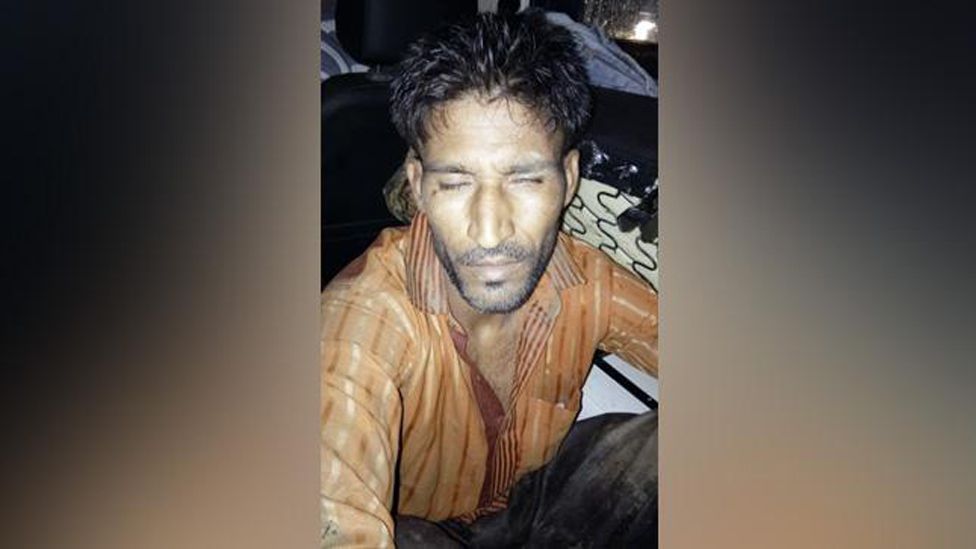
The dead man is later identified by his father as local farmer Rakbar Khan.
This was not a random murder. The story illustrates some of the social tensions bubbling away under the surface in India, and particularly in the north of the country.
And his case raises questions for the authorities – including the governing Hindu nationalist BJP party.
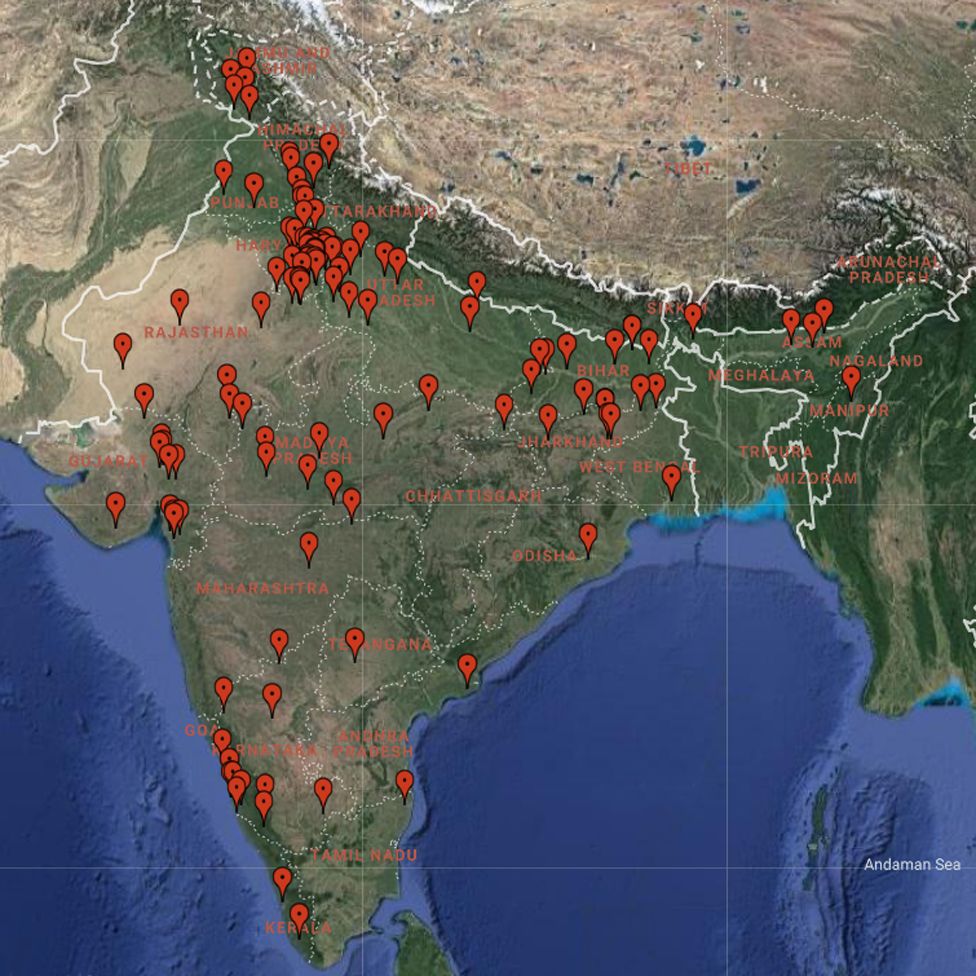
Cow-related violence – 2012-2019
Image copyrightINDIASPENDRakbar Khan was a family man. He had seven children.
He kept cows and he also happened to be a Muslim. That can be a dangerous mix in India.
“We have always reared cows, and we are dependent on their milk for our livelihood,” says Rakbar’s father, Suleiman.
“No-one used to say anything when you transported a cow.”
That has changed. Several men have been killed in recent years while transporting cows in the mainly Muslim region of Mewat, not far from Delhi, where Rakbar lived.
“People are afraid. If we go to get a cow they will kill us. They surround our vehicle. So everyone is too scared to get these animals,” says Suleiman.
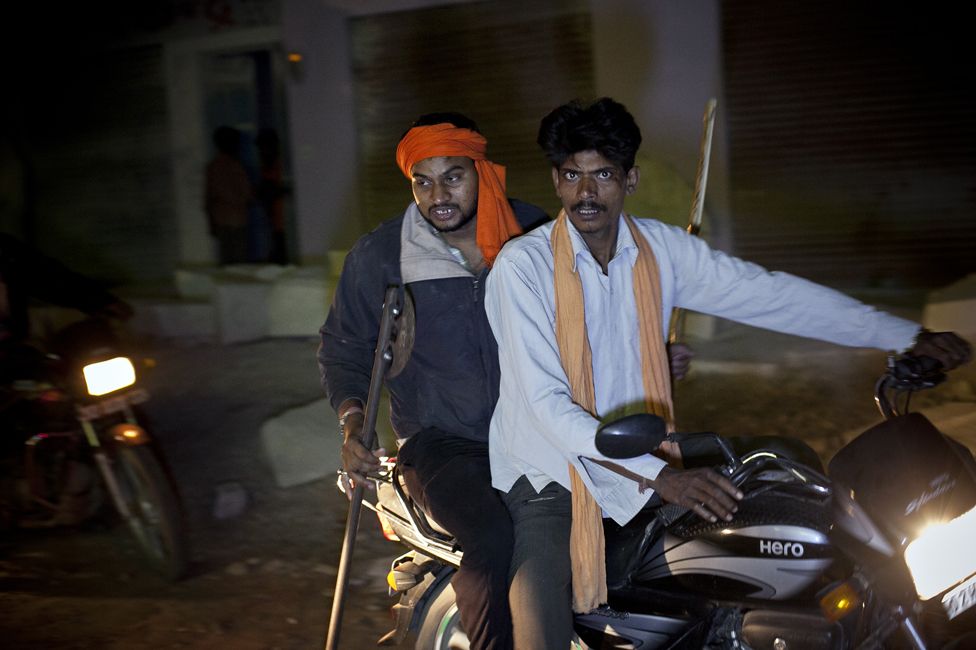
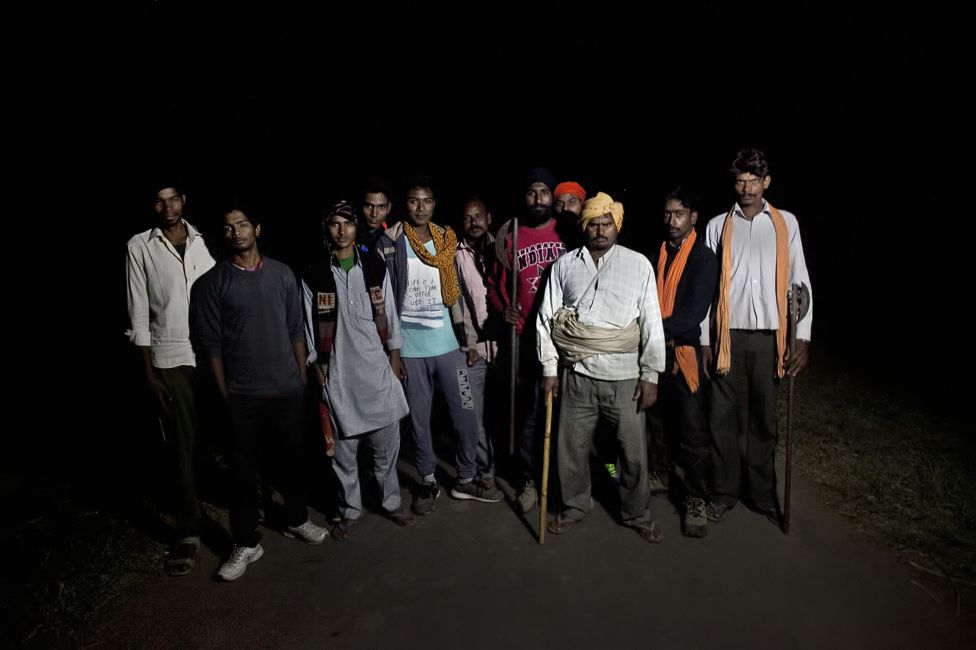
Everyone I speak to in the village where the Khans live is afraid of gau rakshaks – cow protection gangs.
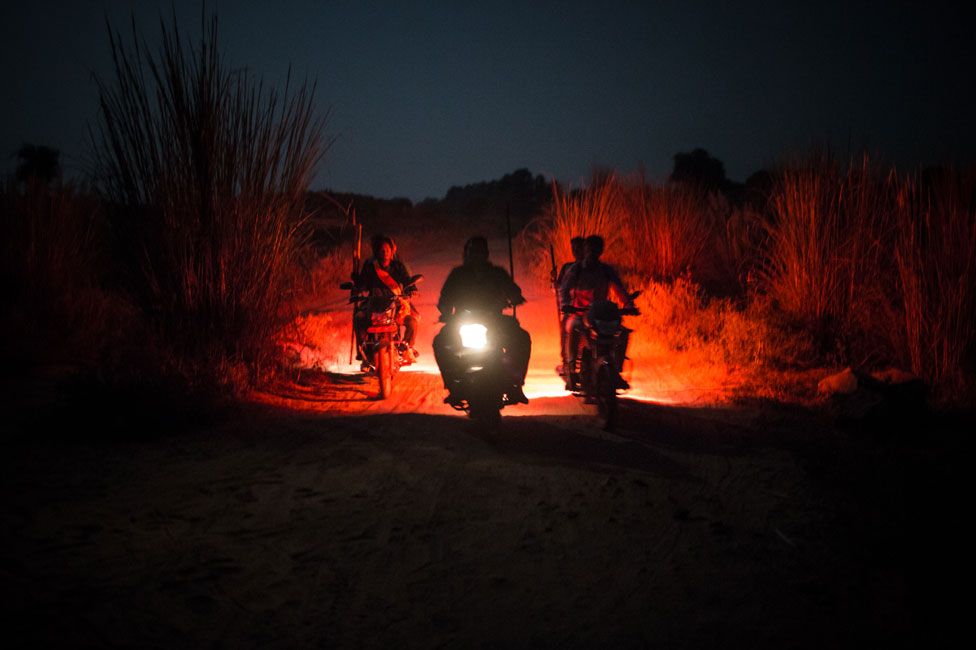
Image copyrightGETTY IMAGES (ALLISON JOYCE)Image captionNawal Kishore Sharma’s cow protection group in 2015The gangs often consist of young, hardline Hindus, who believe passionately in defending India’s holy animal.
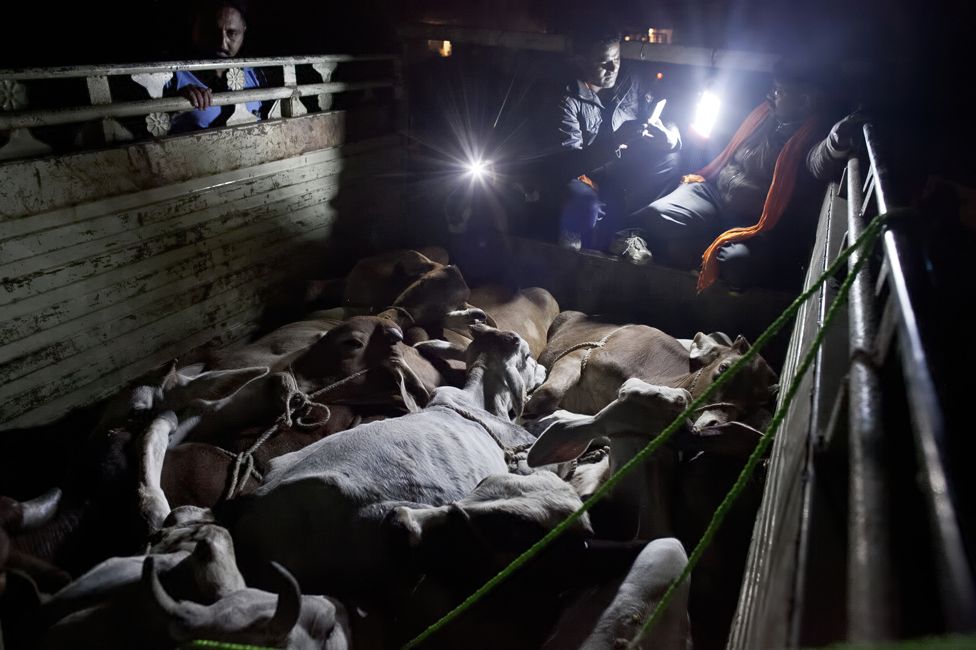
They believe that laws to protect cows, such as a ban on slaughtering the animals, are not being fully enforced – and they hunt for “cow smugglers”, who they believe are taking cows to be killed for meat.
Often armed, they have been responsible for dozens of attacks on farmers in India over the last five years, according to data analysis organisation IndiaSpend, which monitors reports of hate crimes in the media.
On 21 July 2018, Rakbar Khan met the local gau rakshak.
There are some things we know for certain about what happened that night.
Rakbar was walking down a small road with two cows. It was late and it was raining heavily.
Then, out of the dark, came the lights of motorbikes. We know this, because Rakbar was with a friend, who survived.
Image copyrightGETTY IMAGES (ENRICO FABIAN)At this point the details become a little sketchier. There are three versions of the story.
The gang managed to catch Rakbar, but his friend, Aslam, slipped away. He lay on the ground, in the mud and prayed he wouldn’t be found.
“There was so much fear inside me, my heart was hurting,” he says.
“From there I heard the screams. They were beating him. There wasn’t a single part of his body that wasn’t broken. He was beaten very badly.”
The documentary India’s Cow Vigilantes can be seen on Our World on BBC World Newsand on the BBC News Channel (click for transmission times)
Aslam says that Rakbar was killed then and there.
But there is evidence that suggests otherwise.
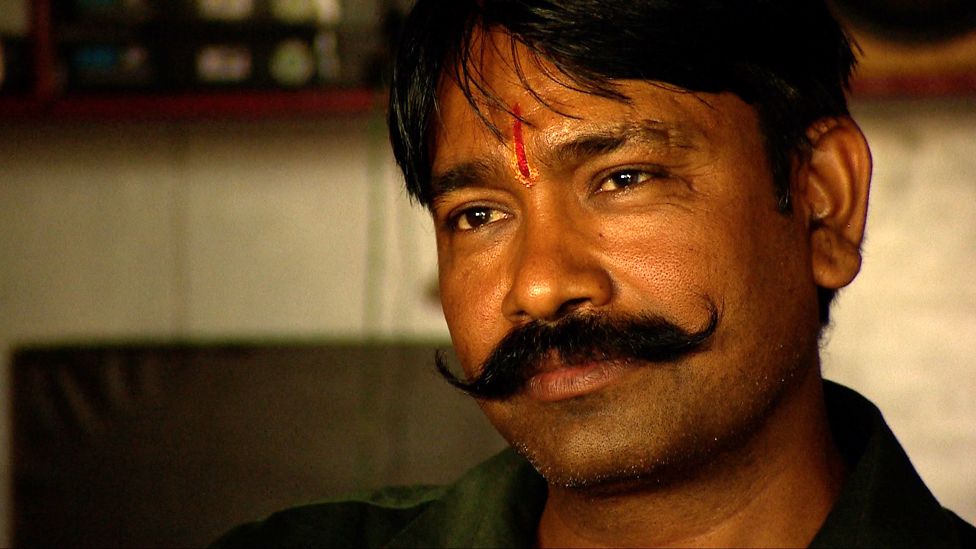
Much of what happened next focuses around the leader of the local cow vigilante group, Nawal Kishore Sharma.
Aslam claims he heard the gang address him by name that night, but when I speak to Sharma, he denies he was there at all.
Image captionNawal Kishore Sharma
“It was about 00:30 in the morning and I was sleeping in my house… Some of my group phoned me to say they’d caught some cow smugglers,” he says.
According to Nawal Kishore Sharma, he then drove with the police to the spot. “He was alive and he was fine,” he says.
But that’s not what the police say.
In their “first incident report” they say that Rakbar was indeed alive when they found him.
“Nawal Kishore Sharma informed the police at about 00:41 that some men were smuggling two cows on foot,” the report says.
“Then the police met Nawal Kishore outside the police station and they all went to the location.
“There was a man who was injured and covered in mud.
“He told the police his name, his father’s name, his age (28) and the village he was from.
“And as he finished these sentences, he almost immediately passed out. Then he was put in the police vehicle and they left for Ramgarh.
“Then the police reached Ramgarh with Rakbar where the available doctor declared him dead.”
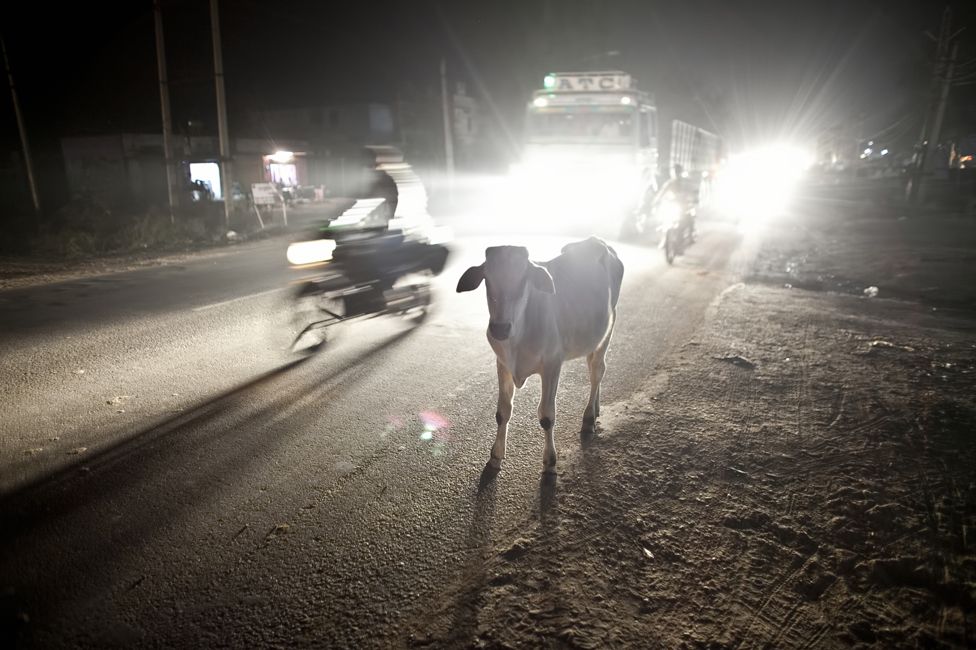
Image copyrightGETTY IMAGES (ALLISON JOYCE)Image captionRamgarh at nightBut this version of events is highly dubious.
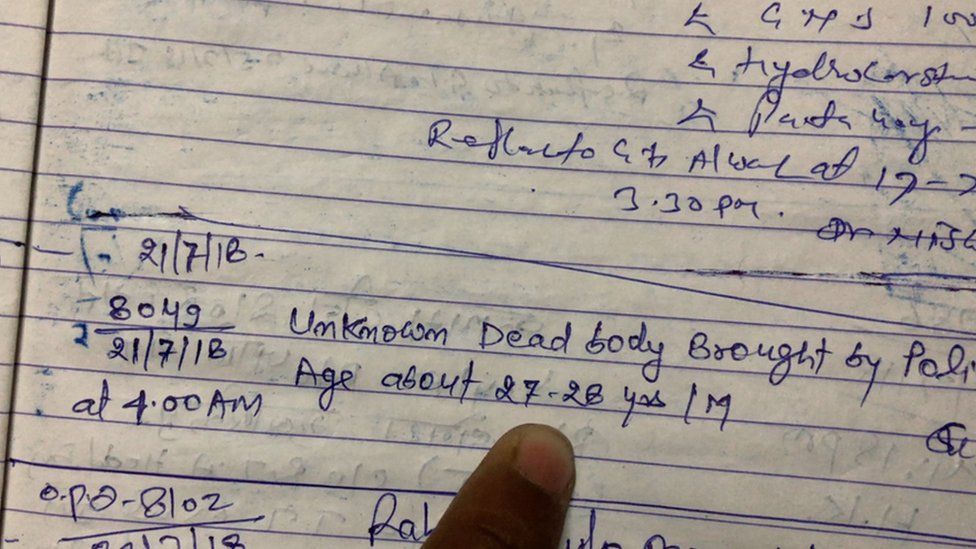
I go to the hospital in Ramgarh, where Rakbar was taken. Hospital staff are busily going through bound books of hospital records – looking for Rakbar’s admission entry.
And then, there it is. “Unknown dead body” brought in at 04:00 on 21 July 2018.
It’s not a long entry, but it contradicts the police’s story, and raises some serious questions.
For a start, Rakbar was found about 12 minutes’ drive away from the hospital. Why did it take more than three hours for them to take him there?
And if the police say Rakbar gave them his name, why did they tell the hospital they didn’t know who he was?
Nawal Kishore Sharma claims to know why. He paints a very different picture of what happened to Rakbar.
He tells me that after picking up Rakbar, they changed his clothes.
He then claims to have taken two photos of Rakbar – who at this point was with the police.
Sharma says that he went to the police station with the police. He claims that’s when the beating really began.
“The police injured him badly. They even beat him with their shoes,” he says.
“They kicked him powerfully on the left side of his body four times. Then they beat him with sticks. They beat him here (pointing at his ribs) and even on his neck.”
At about 03:00 Nawal Kishore Sharma says he went with some police officers to take the two cows to a local cow shelter. When he returned, he says, the police told him that Rakbar had died.
Rakbar’s death certificate shows that his leg and hand had been broken. He’d been badly beaten and had broken his ribs, which had punctured his lungs.
According to his death certificate he died of “shock… as a result of injuries sustained over body”.
I ask the duty doctor at the hospital whether he remembers what Rakbar’s body was like when the police brought it in.
“It was cold,” he says.
I ask him how long it would take for a body to become cold after death.
“A couple of hours,” he replies.
“I don’t want to talk about Rakbar’s case,” says Rejendra Singh, chief of police of Alwar district, which includes Ramgarh.
Since Rakbar’s murder several police officers have been suspended. I want to know why.
He looks uneasily at me.
“There were lapses on the police side,” he says.
I ask him what those lapses were.
“They had not followed the regular police procedure, which they were supposed to do,” he says. “It was one big lapse.”
Three men from Nawal Kishore Sharma’s vigilante group have been charged with Rakbar’s murder. Sharma himself remains under investigation.
The vigilante group and the police blame each other for Rakbar’s death, but neither denies working together that night.
The way Sharma describes it, the police cannot be everywhere, so the vigilantes help them out. But it’s the police that “take all the action” he says.
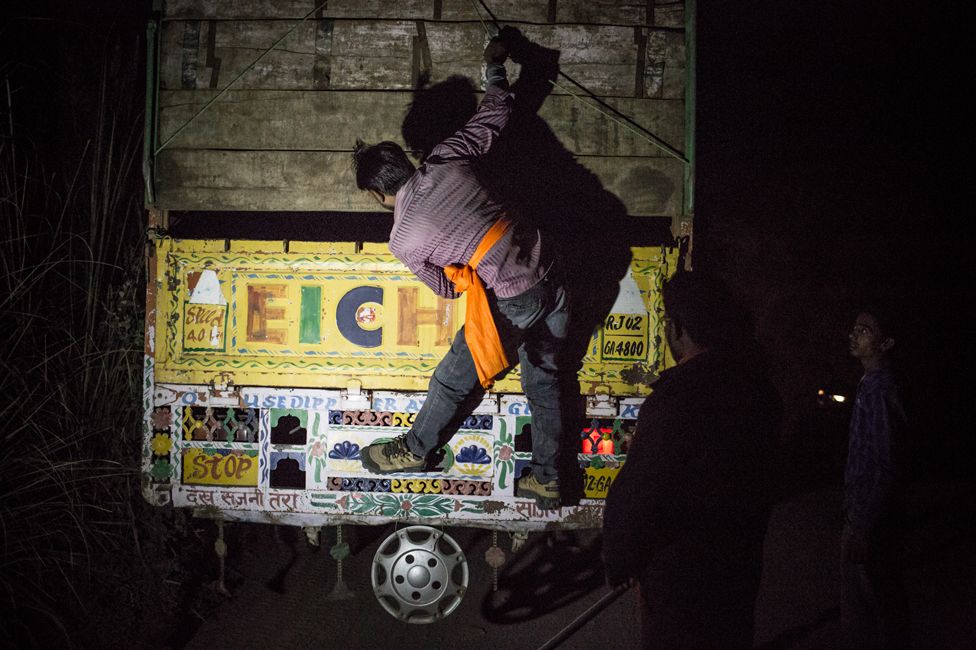
Image copyrightGETTY IMAGES (ENRICO FABIAN)Image captionNawal Kishore Sharma inspects a lorry transporting cows (October 2015)Much police activity in Rajasthan is focused on stopping cow slaughter.
Across the state there are dozens of formal cow checkpoints, where police stop vehicles looking for smugglers who are taking cows to be killed.
I visited one of the checkpoints. Sure enough police were patiently stopping vehicles and looking for cows.
The night before officers had had a gun battle with a group of men after a truck failed to stop.
These checkpoints have become common in some parts of India. Sometimes they are run by the police, sometimes by the vigilantes, and sometimes by both.
This gets to the heart of Rakbar’s case.
Human rights groups argue that his murder – and others like his – show that in some areas the police have got too close to the gangs.
Image copyrightGETTY IMAGES (ALLISON JOYCE)Image captionThe vigilantes find what they are looking for (November 2015)“Unfortunately what we’re finding too often is that the police are complicit,” says Meenakshi Ganguly of Human Rights Watch, which published a 104-page report on cow-related violence in India this week.
In some areas, police have been reluctant to arrest the perpetrators of violence – and much faster to prosecute people accused of either consuming or trading in beef, he says.
Human Rights Watch has looked into 12 cases where it claims police have been complicit in the death of a suspected cow smuggler or have covered it up. Rakbar’s is one of them.
But this case doesn’t just illustrate police failings. Some would argue that it also illustrates how parts of the governing BJP party have inflamed the problem.
Gyandev Ahuja is a larger-than-life character. As the local member of parliament in Ramgarh at the time when Rakbar was killed he’s an important local figure.
He has also made a series of controversial statements about “cow smugglers”.
After a man was badly beaten in December 2017 Ahuja told local media: “To be straightforward, I will say that if anyone is indulging in cow smuggling, then this is how you will die.”
After Rakbar’s death he said that cow smuggling was worse than terrorism.
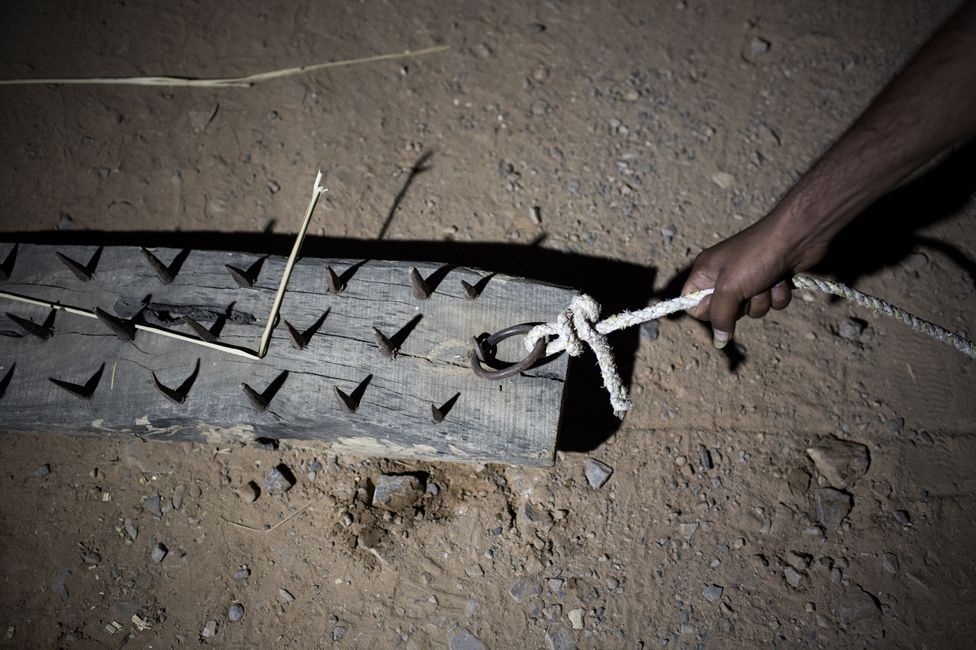
Image copyrightGETTY IMAGES (ENRICO FABIAN)Image captionNails used by the vigilantes to force lorries to stopGyandev Ahuja is just one of several BJP politicians who have made statements that are supportive of the accused in so-called “cow lynchings”.
One of Prime Minister Narendra Modi’s ministers was even photographed garlanding the accused murderers in a cow vigilante case. He has since apologised.
Meenakshi Ganguly of Human Rights Watch says it is “terrifying” that elected officials have defended attackers.
“It is really, at this point of time, something that is a great concern, because it is changing a belief into a political narrative, and a violent one,” he says.
The worry is that supportive messages from some of the governing party’s politicians have emboldened the vigilantes.
No official figures are kept on cow violence, but the data collected by IndiaSpend suggests that it started ramping up in 2015, the year after Narendra Modi was elected.
IndiaSpend says that since then there have been 250 injuries and 46 deaths related to cow violence. This is likely to be an underestimate because farmers who have been beaten may be afraid to go to the police – and when a body is found it may not be clear what spurred the attack. The vast majority of the victims are Muslims.
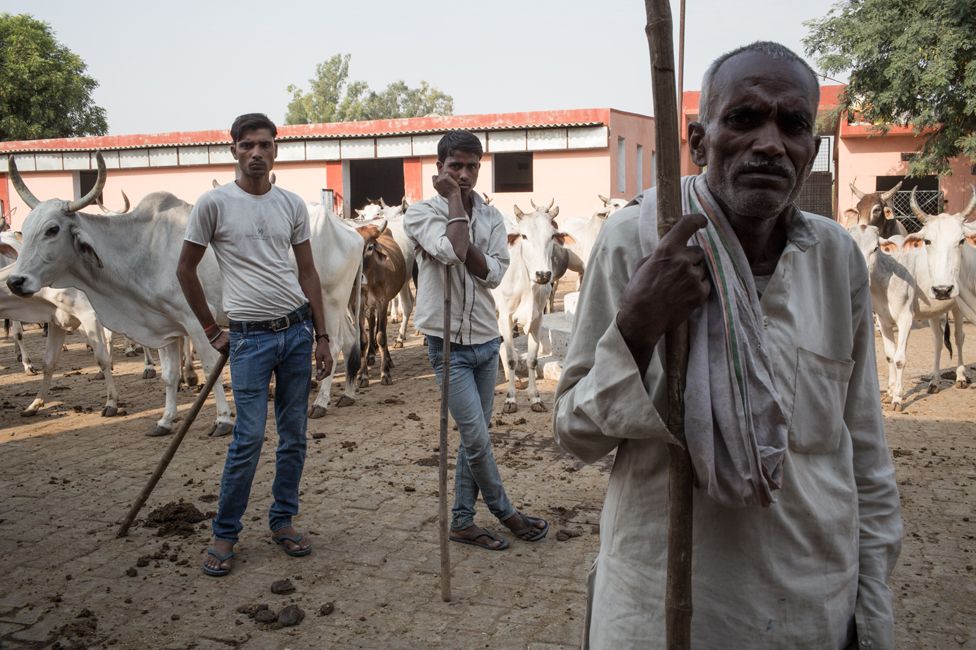
Image copyrightGETTY IMAGES (ENRICO FABIAN)Image captionA cow shelter in RamgarhA BJP spokesman, Nalin Kohli, emphatically rejects any connection between his party and cow violence.
“To say the BJP is responsible is perverse, inaccurate and absolutely false,” he tells me.
“Many people have an interest in building a statement that the BJP is behind it. We won’t tolerate it.”
I ask him about Gyandev Ahuja’s inflammatory statements.
“Firstly that is not the party’s point of view and we have very clearly and unequivocally always said an individual’s point of view is theirs, the point of view of the party is articulated by the party.
“Has the BJP promoted him or protected him? No.”
But a month after this interview, Ahuja was made vice-president of the party in Rajasthan.
Shortly afterwards, Prime Minister Narendra Modi visited Rajasthan – publicly slapping Ahuja on the back and waving together at crowds of BJP supporters.
In Mewat I speak to Rakbar’s wife, Asmina.
“Show me how you raise seven children without a husband. How will I be able to raise them?” she says, wiping away tears.
“My youngest daughter says that my father went to God. If you ask her, ‘How did he go to God?’ she says, ‘My father was bringing a cow and people killed him.’
“The life of an animal is so important but that of a human is not.”
The trial of the three men accused of his murder has yet to take place, but perhaps we will never know what really happened to Rakbar.
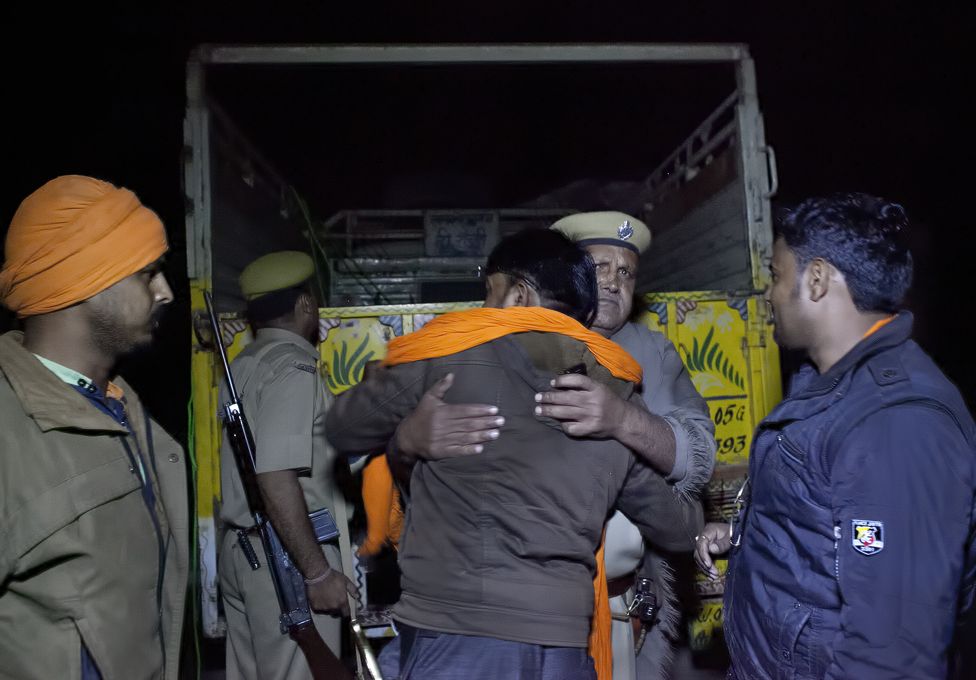
In November 2015, photographer Allison Joyce spent a night following Nawal Kishore Sharma’s vigilantes in the countryside near Ramgarh. One of her photographs shows a police officer embracing Sharma after a shootout between the vigilantes and a suspected cow smuggler.
Though the police now accuse the cow vigilantes of killing Rakbar Khan, and the vigilantes accuse the police, the photograph illustrates just how closely they worked together.
Image copyrightGETTY IMAGES (ALLISON JOYCE)In the Indian media there have been claims that the police took the two cows that Rakbar had been transporting to a cow shelter, as Rakbar lay dead or dying in a police vehicle.
There are also claims that the police stopped and drank tea instead of taking Rakbar to hospital.
Whatever they did, they did not take Rakbar to hospital immediately.
Ghazi Abdul Rashid was an aide of the Pakistan-based JeM patron, Masood Azhar, and had infiltrated into India in mid-December to train Kashmiri terrorists in IED blasts, according to authorities
SP Sharma | Jammu | February 18, 2019 4:26 pm
In a major success, security forces in Jammu and Kashmir killed two Pakistani terrorists, including Jaish-e-Mohammad (JeM) top commander Ghazi Abdul Rashid who was the mastermind of the 14 February Pulwama terror attack in which 44 CRPF jawans were martyred, in an encounter in the same of South Kashmir area on Monday. Ghazi, a trusted man of JeM patron Azhar Masood, reportedly motivated and trained a Kashmiri youth, Adil Dar, to ram his explosives-laden car into a convoy of CRPF vehicles. The nearly 10-hour-long Pulwama encounter also left four Army personnel, including a Major, and a civilian killed.
The second slain militant was identified as Bilal Ahmed Naik, who was a local Kashmiri.
The encounter took place after a joint team of the Army, the CRPF and the J&K Police cordoned off the area on Sunday night.
The martyred soldiers are Major Vibhuti Shankar Dhoundiyal, Havaldar Sheo Ram, and Sepoys Ajay Kumar and Hari Singh. After Major Chitresh Singh Bisht, who died while defusing a mine in Rajouri on Saturday, Major Dhoundiyal is the second officer of the rank from Dehradun to be attain martyrdom in Kashmir this month.
Two people have been killed and 27 injured in separate mass stabbings in China on Monday.
In the first incident one man died and 19 people were injured in Fuzhou, the capital of the southeastern province of Fujian.
According to Fuzhou News, a motorcyclist attacked a group of a pedestrians after getting into an argument with his former wife, a woman named Huang, and stabbing her new boyfriend.
The report named the suspect as a 48-year-old called Hou and said that he had confronted his former wife at her home in Jianxin town at around 8pm.
After stabbing the boyfriend the attacker then rode off on his motorbike, before attacking a group of people in the street.
A witness told Beijing Youth Daily that while returning home around 9pm, she saw a man and a woman collapse with stab wounds on the city’s Pushang bridge.
“I thought he was a beggar so I did not give him much attention. Later, I saw a woman collapsing to the ground as well and people running away from the scene, urging others to run,” she told the reporter.
Another witness told local radio station FM987 that the attacker pulled his motorcycle over in front of a street stall selling shoes, said nothing and then stabbed the stall owner in the stomach.
He fled immediately on the motorcycle, and the crowd quickly called the police.
One woman was stabbed while she was standing at a crossroads and making a phone call was sent to the Jinshan branch of the Fujian Provincial Hospital.
“That man just came up to her and stabbed her all of a sudden, before fleeing,” the victim’s son told local media.
The second attack in Dongguan, a manufacturing hub in the southern province of Guangdong, left one person dead and eight injured.
Police have arrested a man named Tan in connection with the attack and confirmed they were investigating the case.
Few details have been made available, but officers said they did not believe it was a terrorist attack.
One local resident posted on a WeChat group on Monday evening: “Everyone, please don’t go out. There is a psycho in Huaide area stabbing people randomly. He doesn’t just stab everyone but attacks suddenly.”
The driver of a subway train in southwestern China was killed and three other people were injured when it smashed into protective barrier doors on Tuesday night, less than two weeks after the metro rail line opened.
Station staff on the Chongqing rail transit loop line evacuated 30 passengers and took one passenger, who sustained a slight hand injury, and three injured rail staff, including the driver, to hospital.
The train driver later died in hospital.
The front of the train was damaged and the first compartment offset, but not derailed, when it collided with the protective doors protruding on to the track area between two stations, according to the Chongqing Morning Post.
Chongqing’s railway transit company said three stations along the affected 4km (2.4 miles) route were out of service, while the rest of the metro loop line was still in operation.
The 34km northeastern section of the Chongqing rail line opened on December 28, 2018 and is still under trial operation.
There are 24 stations in the new section, built with an investment of 22.2 billion yuan (US$3.2 billion), with 17 stations currently open, according to local media reports.
The cause of the incident is being investigated.
The protective doors used in Chongqing are a feature of the mountainous city’s rail system and were primarily used in wartime, a staff member of the city’s rail transit department told online news portal Thepaper.cn.
“Protective doors were primarily used during the anti-Japanese war and now to prevent nuclear catastrophes,” the employee said.
During the second world war, hundreds of wartime bomb shelters were built into the sides of mountains in Chongqing to provide protection from Japanese bombardment.
SRINAGAR, India (Reuters) – Seven civilians died and dozens were injured when Indian security forces opened fire at people protesting the killing of three militants in a gun battle in restive Kashmir on Saturday, police said.
People offer the funeral prayers of Zahoor Ahmad, a suspected militant, who according to local media reports was killed during a gun battle with Indian soldiers, in Sirnoo village in south Kashmir’s Pulwama district
December 15, 2018. REUTERS/Danish Ismail
Defence spokesman Colonel Rajesh Kalia said an operation was launched in the morning in response to intelligence reports about the presence of militants in a village in Pulwama district, south of the state’s summer capital Srinagar.
“During the operation militants fired upon troops, leading to a gun battle in which three militants were killed,” he said.
A senior police officer, who was not authorised to speak to the media, said large numbers of local people then gathered at the site, leading to clashes between them and security forces in which seven people were killed and about 50 injured.
An eyewitness, Mohammad Ayuob, told Reuters Indian troops fired at the locals when they tried to retrieve the body of a militant.
Jammu and Kashmir is mainly Hindu India’s only Muslim-majority state. India and Pakistan both rule the region in part but claim in full. India accuses Pakistan of fomenting trouble in its part of Kashmir, a charge Islamabad denies.
The Himalayan state has been particularly tense over the past few months as Prime Minister Narendra Modi’s Hindu nationalist party pulled out of local government, leaving a power void.
Widespread protests have broken out in Srinagar and other parts of Kashmir over the killings. Security has been tightened and troops rushed to potential hotspots. A curfew was imposed in Pulwama town and surrounding areas, according to media reports.
The separatist group Hurriyat Conference called for a three-day strike and protests across Kashmir.
“Bullets and pellets rain!” its Chairman Mirwaiz Omar tweeted, adding that their supporters would march towards an army cantonment on Monday so that the Indian government can “kill all of us at one time rather than killing us daily”.
Authorities have suspended train services in the Kashmir Valley and shut down mobile internet services to try and prevent the unrest from spreading.
Indian security forces say they have killed 242 militants this year. In addition, 101 civilians and 82 security officials have also died, according to officials. The total death toll in violence is the highest in more than a decade.











 CHINDIA ALERT: You'll be living in their world, very soon
COMMENTS: 1