Chindia Alert: You’ll be Living in their World Very Soon
aims to alert you to the threats and opportunities that China and India present. China and India require serious attention; case of ‘hidden dragon and crouching tiger’.
Without this attention, governments, businesses and, indeed, individuals may find themselves at a great disadvantage sooner rather than later.
The POSTs (front webpages) are mainly 'cuttings' from reliable sources, updated continuously.
The PAGEs (see Tabs, above) attempt to make the information more meaningful by putting some structure to the information we have researched and assembled since 2006.
XI’AN, Dec. 8 (Xinhua) — In the winter drizzle, a white control line model plane climbs, dives and turns. The flyer, Huang Jinquan, 11, has just won his first national title in August with a dazzling aerobatic performance.
Not keen to talk, the introverted champion prefers to show his passion with the two lines in his hands.
Jinquan is a student of Redian Primary School in the eastern suburbs of Xi’an, northwest China. More than 70 percent of the students at this school come from rural areas and have been taken to cities by their parents, who are migrant workers striving for a better life. Many, like Huang, lack a companion as their parents are usually busy with work, and model planes are too expensive for them.
Headmaster Han Baoan had a chance to receive flying training in 1983 when he first came to work in Redian. Since then he has been trying his best to help his students fly.
“We may not have enough money, but nothing can deprive us of passion for the sport,” he says.
The school managed to establish a model airplane club in 2012. The sport became more popular among Redian students when it was included in the program of the 2017 Chinese National Games. Now the club has 20 members and has won the national championships in two years in a row.
“Model planes are expensive. Many beginners in the more developed coastal provinces can afford serious competition models. They can buy new ones when they crash the models,” says Han. “We don’t have enough funding. Neither can we charge our students in the club. All we can do is to train harder than other teams.”
“But still, I’d like to help these children fly further and higher in their life,” Han says.
Han and other teachers bought components and made model planes themselves. They teach students take-off and landing and later flying stunts.
“A good flyer needs to practice for thousands of hours. For example, Huang has to finish more than 10 training sessions every week in order to better master the skills,” says Han.
The club renewed an air-raid shelter under the classroom building to store and fix models.
“We can fix up some small problems of the model airplanes such as a broken propeller or a broken landing gear,” says Jin Yuwei, who partnered Huang to snatch the first place of the Chinese Teenagers’ Model Airplane Competition.
The title was hard-earned. In the 2017 national competition, her plane accidentally crashed into Huang’s. The then eight-year-old girl burst into tears. After the failure, she trained even harder and now she can operate the plane better.
“I love the sport and my parents are all supportive. Since I began playing model planes I seldom play computer games or get up late at the weekend. The sport helps me to develop good habits,” Jin says.
Flying model airplanes also means more opportunities for these students. To promote the sport, the city government has launched a project in which schools like Redian can share local top schools’ funding and other resources on extra-curricular activities.
Jinquan’s sister Jinxia, who snatched the club’s first national title in 2018, was also recommended to study in one of the top middle schools in Xi’an.
Jinquan says he just wants to keep playing model airplanes, without elaborating on his future plan.
URUMQI, Dec. 8 (Xinhua) — Rich in resources but remote, Xinjiang in China’s far west has become a magnet for investors for its unique position on the Silk Road.
In a workshop of the Amer International Group in Urumqi, capital of Xinjiang Uygur Autonomous Region, workers are busy adjusting and packing laptops.
Recently, Amer sent the first batch of 2,000 laptops it produced for the German company TrekStor to the European market via China-Europe freight trains.
Headquartered in the southern Chinese city of Shenzhen, Amer invested 20 billion yuan (around 2.8 billion U.S. dollars) to build an industrial park in Xinjiang in 2018. So far, the industrial park has produced and exported around 1.5 million mobile phones, according to Wang Wenyin, the founder and chairman of Amer International Group.
“We saw Xinjiang’s geographical advantages, so we established the industrial park and cooperated with our counterparts in South and Central Asia in the fields of smartphones and IT high-end manufacturing,” Wang said.
Amer International Group is among a growing number of enterprises that have been attracted by Xinjiang in recent years, as trains and planes have made Xinjiang better connected than ever before.
As China’s key trade gateway to Central and West Asia, the remote region’s position as the heart of the Belt and Road Initiative is unmistakable. In 2013, China proposed the BRI, which opened up new space for the world economy, spurring trade and economic growth and stimulating investment and creating jobs worldwide.
Urumqi Customs saw the number of China-Europe freight trains skyrocket to 5,743 in the first 10 months this year, up 53.68 percent year on year, outnumbering the total of 2018.
To attract more investors, the local government has gone to great lengths creating a more friendly business environment, such as cutting the time required for starting a business and lowering the entry threshold for products.
Up to now, Xinjiang has had more than 1.8 million market entities including 359,000 enterprises, up 18 percent year on year.
Foreign and domestic business giants including German chemical giant BASF and China’s real estate conglomerates Wanda Group have also invested in the region.
Lai Naixiang, head of Kashgar Oumeisheng Energy Technology, a home appliance manufacturer, moved his business from Shenzhen to Kashgar in southern Xinjiang in 2017.
“We chose to settle in Kashgar because of the great market potential in adjacent Central Asian countries as well as Xinjiang’s lower electricity prices and preferential tax policy,” he said.
Last year, the company exported electric kettles worth more than 16 million yuan to Kyrgyzstan and Tajikistan.
Foreign trade in Xinjiang has seen booming growth. The region recorded around 131.5 billion yuan in imports and exports in the first 10 months of this year, up 28 percent year on year.
In the first 10 months, Kazakhstan topped the list of Xinjiang’s major trade partners, with trade volume between the two growing by 28.2 percent to 60.2 billion yuan.
Xinjiang’s trade with Kyrgyzstan, Australia, Pakistan, Britain, Argentina and Vietnam also showed fast growth, according to the local customs authorities.
“With further Belt and Road construction, Xinjiang will get more impetus in economic and social development. I see great potential in the region,” Wang said.
World’s largest coal consumer shows little sign of ending its dependency even though it is also the biggest market for renewable energy sources
UN climate summit is meeting to discuss ways to limit future warming, but hopes are fading that China will commit to further curbs on emissions
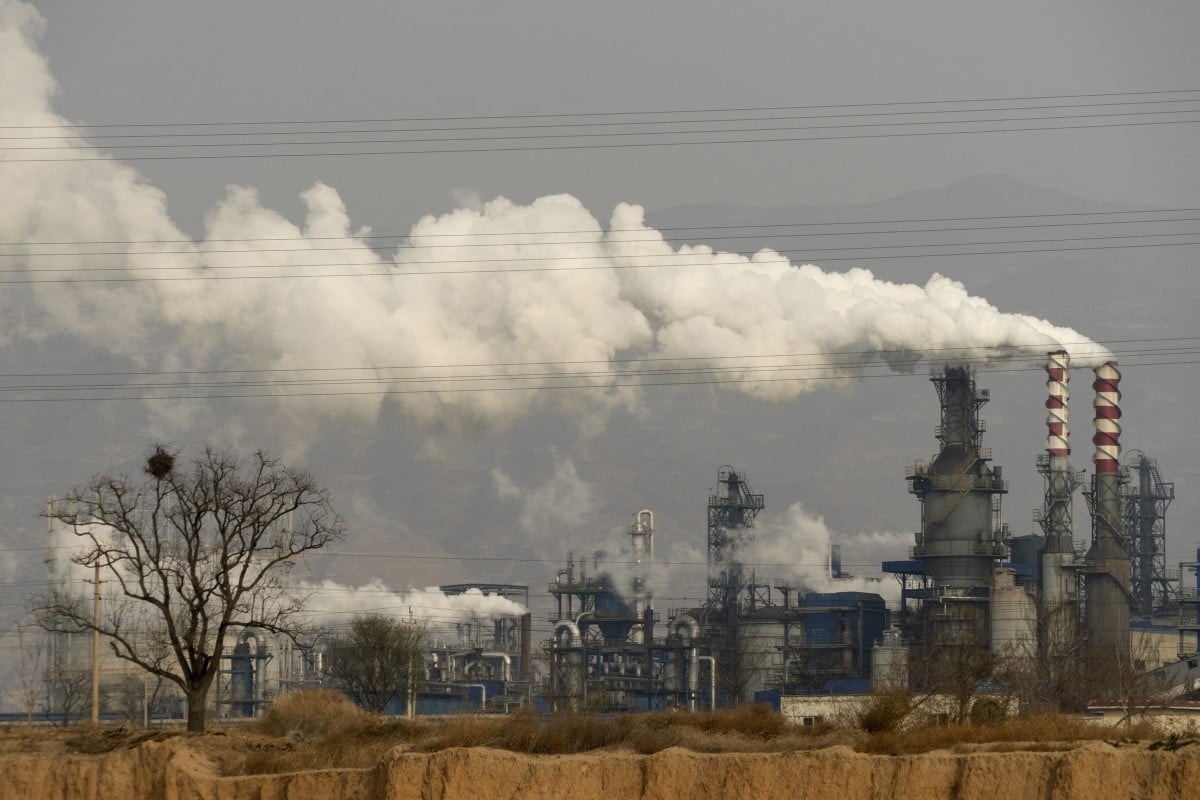
China now accounts for around 30 per cent of the world’s carbon emissions. Photo: AP
As world leaders gather in Spain to discuss how to slow the warming of the planet, the spotlight has fallen on China – the top emitter of greenhouse gases.
China burns about half the coal used globally each year. Between 2000 and 2018, its annual carbon emissions nearly tripled, and it now accounts for about 30 per cent of the world’s total.
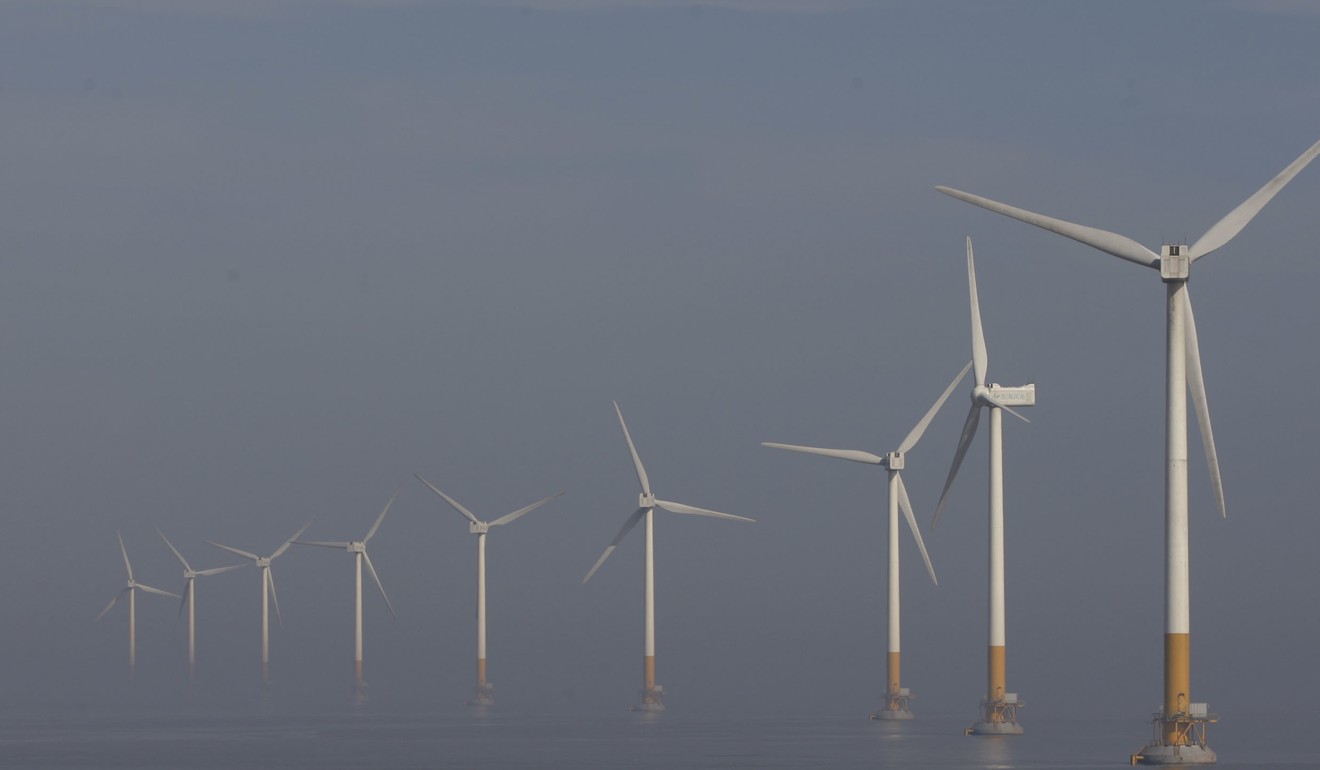
Yet it is also the leading market for solar panels, wind turbines and electric vehicles, and it manufactures about two-thirds of solar cells installed worldwide.
“We are witnessing many contradictions in China’s energy development,” said Kevin Tu, a Beijing-based fellow with the Centre on Global Energy Policy at Columbia University. “It’s the largest coal market and the largest clean energy market in the world.”
That apparent paradox is possible because of the sheer scale of China’s energy demands.
Pollution alarm as tourism businesses contaminate home of China’s hairy crab
But as China’s economy slows to the lowest level in a quarter century – around 6 per cent growth, according to government statistics – policymakers are doubling down on support for coal and other heavy industries, the traditional backbones of China’s energy system and economy. At the same time, the country is reducing subsidies for renewable energy.
At the annual United Nations climate summit, this year in Madrid, government representatives will put the finishing touches on implementing the 2015 Paris Agreement, which set a goal to limit future warming to 1.5 to 2 degrees Celsius above pre-industrial levels.
Nations may decide for themselves how to achieve it.
China had previously committed to shifting its energy mix to 20 per cent renewables, including nuclear and hydroelectric energy.
Climate experts generally agree that the initial targets pledged in Paris will not be enough to reach the goal, and next year nations are required to articulate more ambitious targets.
Hopes that China would offer to do much more are fading.
Recent media reports and satellite images suggest that China is building or planning to complete new coal power plants with total capacity of 148 gigawatts – nearly equal to the entire coal-power capacity of the European Union within the next few years, according to an analysis by Global Energy Monitor, a San Francisco-based non-profit.
China is the world’s leading market for wind turbines and other renewables – but is still a major source of emissions. Photo: Chinatopix via AP
Meanwhile, investment in China’s renewable energy dropped almost 40 per cent in the first half of 2019 compared with the same period last year, according to Bloomberg New Energy Finance, a research organisation. The government slashed subsidies for solar energy.
Last week in Beijing, China’s vice-minister of ecology and environment told reporters that non-fossil-fuel sources already account for 14.3 per cent of the country’s energy mix. He did not indicate that China would embrace more stringent targets soon.
“We are still faced with challenges of developing our economy, improving people’s livelihood,” Zhao Yingmin said.
As a fast-growing economy, it was always inevitable that China’s energy demands would climb steeply. The only question was whether the country could power a sufficiently large portion of its economy with renewables to curb emissions growth.
Many observers took hope from a brief dip in China’s carbon emissions between 2014 and 2016. Today the country’s renewed focus on coal comes as a disappointment.
“Now there’s a sense that rather than being a leader, China is the one that is out of step,” said Lauri Myllyvirta, lead analyst at the Centre for Research on Energy and Clean Air in Helsinki.
He notes that several developed countries – including Germany, South Korea and the United States – are rapidly reducing their reliance on coal power.
After climbing sharply for two decades, China’s emissions stalled around 2013 and then declined slightly in 2015 and 2016, according to Global Carbon Budget, which tracks emissions worldwide.
This dip came as Chinese leaders declared a “war on pollution” and suspended the construction of dozens of planned coal power plants, including some in Shanxi.
Pollution scandal near China nature reserve at Tengger desert’s edge
At the same time, the government required many existing coal operators to install new equipment in chimneys to remove sulphur dioxide, nitrous oxide and other hazardous substances. About 80 per cent of coal plants now have scrubbers, said Alvin Lin, Beijing-based China climate and energy policy director for the Natural Resources Defence Council, a non-profit.
As a result, the air quality in many Chinese cities, including Beijing, improved significantly between 2013 and 2017. Residents long accustomed to wearing face masks and running home air-filter machines enjoyed a reprieve of more “blue sky days,” as low-pollution days are known in China.
In the past three years, China’s carbon emissions have begun to rise again, according to Global Carbon Budget.
The coming winter in Beijing may see a return of prolonged smog, as authorities loosen environmental controls on heavy industry – in part to compensate for other slowing sectors in the economy.
The UN Climate Change Conference is taking place in Madrid this month. Photo: AFP
Permits for new coal plants proliferated after regulatory authority was briefly devolved from Beijing to provincial governments, which see construction projects and coal operations as boosts to local economies and tax bases, said Ted Nace, executive director of Global Energy Monitor.
“It’s as though a boa constrictor swallowed a giraffe, and now we’re watching that bulge move through the system,” said Nace. In China, it takes about three years to build a coal plant.
The world has already warmed by 1 degree Celsius. All scenarios envisioned by the Intergovernmental Panel on Climate Change for holding planetary warming to around 1.5 degrees Celsius involve steep worldwide reductions in coal-power generation.
In that effort, other countries rely on Chinese manufacturing to hold down prices on solar panels. wind turbines and lithium-ion batteries.
“China has a really mixed record. On the one hand, it’s seen rapidly rising emissions over the past two decades,” said Jonas Nahm, an energy expert at Johns Hopkins University.
“On the other hand, it’s shown it’s able to innovate around manufacturing – and make new energy technologies available at scale, faster and cheaper.”
NEW DELHI (Reuters) – India will unveil a series of infrastructure projects this month as part of a plan to invest 100 trillion rupees ($1.39 trillion/£1.08 trillion) in the sector over the next five years, the finance minister said on Saturday, in a push to improve the country’s economy.
Nirmala Sitharaman’s comments, as cited in local newspapers, followed data released on Friday that showed India’s economic growth slowed to 4.5% in the July-September quarter – its weakest pace since 2013 – upping the pressure on Prime Minister Narendra Modi’s government to speed reforms.
“A set of officers are looking into the pipeline of projects that can be readied so that once the fund is ready, it could be front-loaded on these projects,” Sitharaman said at a business summit in Mumbai, the newspapers reported.
“That task is nearly completed. Before December 15, we will be able to announce frontloading of at least ten projects,” she said.
Modi came to power in 2014 on the promise to improve India’s economy and boost foreign investments, but he has struggled to meet those aims due to a lack of structural reforms. Modi won a second term in May and has taken various measures since 2014 to spur growth, including cutting the corporate tax and speeding up privatisation of state-run firms.
But several economic indicators show domestic consumption is weak, and many economists expect the current slowdown could persist for another two years.
WUHAN, Nov. 30 (Xinhua) — Central China’s Hubei Province on Friday opened a new high-speed railway that connects many of the province’s scenic spots and poverty-stricken areas.
The railway linking Wuhan, capital of Hubei, with Shiyan, a city in the northwest of the province, has designed maximum speeds of 250 kph and 350 kph in its two sections, according to China Railway Wuhan Group.
The railway passes five cities, home to 46 percent of Hubei’s population. It also snakes into the Qinling Mountains and reaches large expanses of impoverished areas there.
Dubbed the “most beautiful railway” in Hubei, the rail line links four national tourist attractions with the highest 5A-level ratings, including Mount Wudang, known for its many Taoist temples.
Zheng Zongli, a Wuhan resident and passenger on the first train on the line, hailed the railway for slashing travel time between the two cities of Wuhan and Shiyan to about two hours.
“It is so convenient that you can set out in the morning and arrive at Mount Wudang in the afternoon. It used to take more than a day,” he said.
Shi Lilong, chief of the poverty reduction office of Shiyan, said the railway would become a powerful weapon in the local battle against poverty by bringing the mountains and its sceneries closer to tourists, unlocking the tourism potential of the mountainous region.
A child makes a snowman at the Palace Museum in Beijing, capital of China, Nov. 30, 2019. Beijing saw a snowfall Friday night. (Xinhua/Meng Dingbo)
BEIJING, Nov. 30 (Xinhua) — Beijing on Saturday was covered in white after experiencing the first snow this winter, which experts said was timely after a much-delayed snowfall in last year’s droughty winter.
The snow, which began Friday evening, reached the level of a blizzard in the outlying districts of Yanqing and Changping. In the city proper, the average precipitation was 3.1 millimeters, said the Beijing Meteorological Service.
“The first snowfall in Beijing this winter was most timely. Records show since 1961, Beijing’s average first winter snowfall happened exactly on Nov. 29,” said Guo Jinlan, a chief forecaster with the service.
The city’s first snow last winter did not fall until February this year.
Experts expect the snow to reduce the risks of wildfire and clean the air in Beijing, whose air pollution usually deteriorates in the winter season.
The city has issued an alert for icy roads and advised citizens to beware of health problems during the low temperature and windy weather after the snow.
Unit 121 on Lanman Hutong, about 10 minutes’ drive from Tiananmen Square and the Forbidden City, changed hands last month for 1.28 million yuan
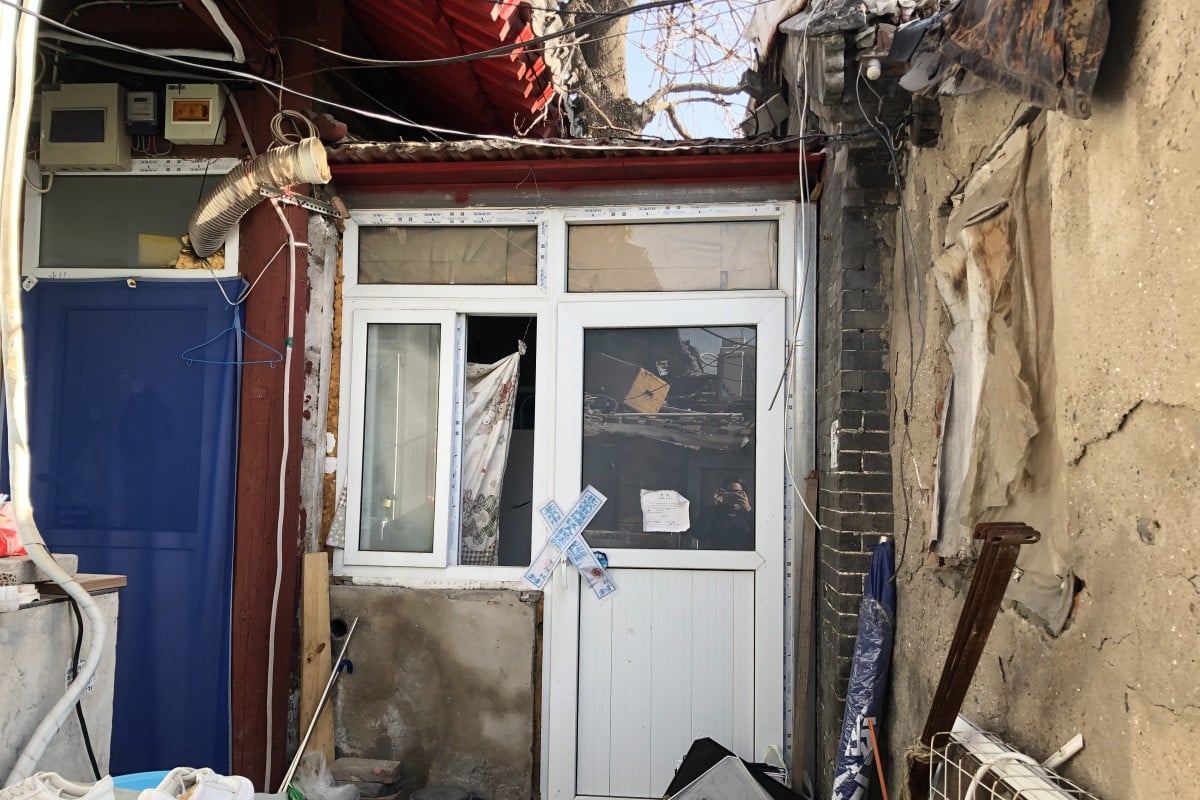
The new owner bought a 5.6-square metre (72 square feet) cubicle covered in bathroom tiles large enough to fit a bunk bed, with standing room only
A view of the 5.6 square metre cubicle-size home in Beijing on 15 November 2019. The home sold for 1.28 million yuan at auction. Photo: Louise Moon
A subdivided home in a run-down alley in Beijing recently sold for a record price at auction, as eager buyers piled in to get hold of its much sought-after address to gain access to some of the Chinese capital’s best schools.
A subdivided unit at No. 121 Lanman Hutong, about 10 minutes’ drive from Tiananmen Square and the Forbidden City, changed hands on November 11 for 1.28 million yuan (US$182,400) after 136 rounds of furious bidding during an auction in Beijing.
For 230,000 yuan per square metre (HK$23,850 per square foot), the new owner bought a 5.6-square metre (72 square feet) cubicle covered in bathroom tiles large enough to fit a bunk bed, with standing room only. That’s smaller than even Hong Kong’s notorious micro-apartments – also known derisively as shoebox flats or nano flats – which average about 200 square feet. A standard car parking space measures 126 square feet.
What the dilapidated space does have is an address that entitles its owner to a hukou, the household registration that is the prerequisite for access to schools, homes, civil service jobs, public health care and almost every aspect of daily life in the Chinese capital.
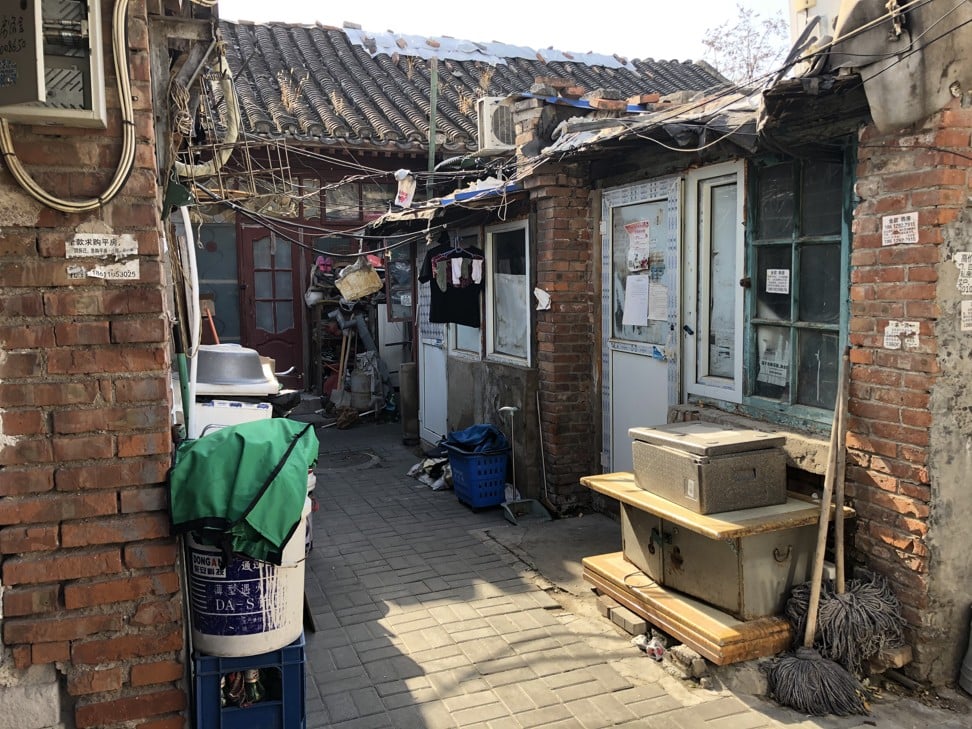
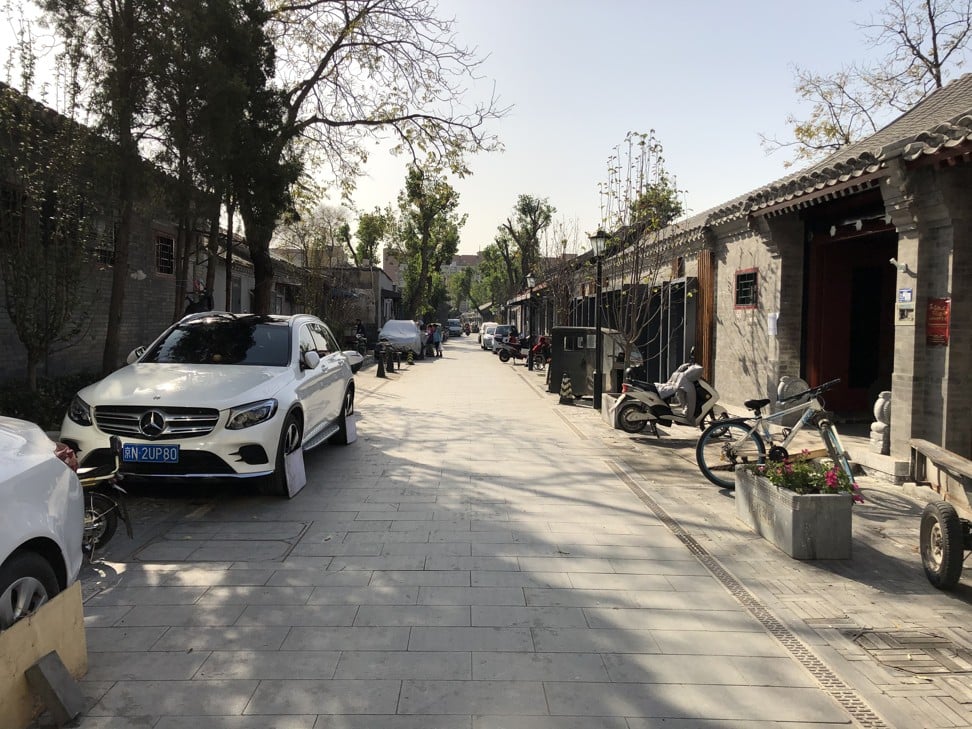
The alley on which No. 121 Lanman Hutong sits in Beijing on 15 November 2019. Photo: Louise Moon
Lanman Hutong, or the Alley of the Brilliant Drapes, sits in Xicheng district, a chequerboard neighbourhood criss-crossed with hundreds of alleyways that boasts three of the five highest-ranked schools in the city.
According to Beijing’s real estate regulations, one square metre entitles the owner a hukou. That fuelled the rush by parents to buy property in the area to qualify for sending their children to such eminent schools as the Beijing No. 4 High School, whose alumni include former Chongqing Commissar Bo Xilai, former China Development Bank president Chen Yuan and Citic’s chairman Kong Dan. Most of these bolt holes are now unoccupied after they have served their purposes, local residents said.
Lanman Hutong, or the Alley of the Brilliant Drapes, in the Xicheng district of Beijing, about 10 minutes drive from the Tiananmen Square and the Forbidden City, on 15 November 2019. Photo: Louise Moon
The auction result offers a peek into the growing speculative bubble in Beijing’s property market, a development that has defied more than two years of policymakers’ attempts to control. The average price of newly built homes rose 4.3 per cent in October to 60,894 yuan per square metre in Beijing, according to China’s statistics bureau data and Lianjia, a major real estate broker.
“Beijing’s homes have always been expensive, [particularly so] in Xicheng, where only the ultra-wealthy can afford to stay,” said Midland Beijing’s analyst Zhao Jia. “A million yuan is not expensive at all, to find space that close to the Forbidden City.”
Beijing’s average home price is equivalent to 24.9 years of the city’s median net income, excluding expenditures, according to data by E-House China Research and Development Institution. Hong Kong, the world’s most expensive urban centre to live and work in, requires 21 years of average income to affordable the average abode, according to the Demographia International Housing Affordability Study, as the city also boasts of a higher income and lower tax rate.
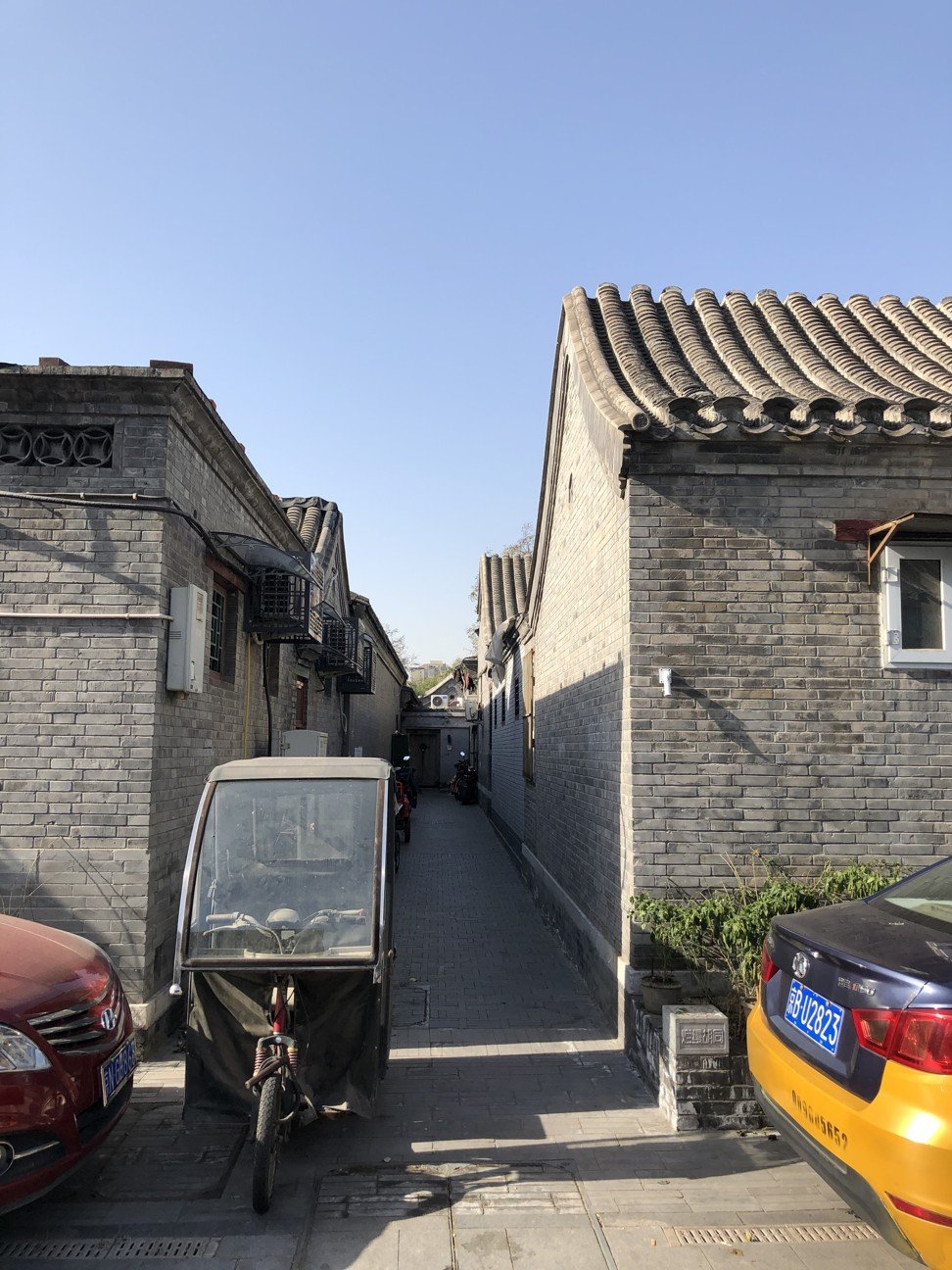
A tiny alleyway leading to No. 121 Lanman Hutong, which sold earlier this week for 1.28 million yuan in Beijing. Photo: Louise Moon
“It is not that easy for the average person to own property in Beijing,” said Midland’s Zhao. “For most homes in the city, 1 million yuan is only enough for a down payment.”
Unit 121 on Lanman Hutong is located among a cluster of siheyuan, as Beijing’s traditional courtyard homes are called. Bicycles, old washing machines and other household junk are piled along the maze of alleyways leading to the ground-floor unit.
Its auction drew 29 bidders starting from 470,000 yuan. The final winning bid prices the Lanman cubicle 35 per cent higher than a 100-million yuan villa with view of the Summer Palace in Beijing’s outskirts, on a per square foot basis.
To be sure, the unidentified buyer of the unit may be speculating for a quick flip, when the property is torn down, said Zhang Dawei, an analyst at Centaline Property Agency.
“This is more like a gamble, betting on the unit being demolished,” Zhang said. “If the odds are good, the buyer can pocket the [compensation], which could be several times what he bought it for. Even if it is not demolished in the short term, it is not bad to have some asset in the heart of Beijing.”
Television report shows how drivers are willing to pay more than US$20,000 for a sham marriage with someone who has a valid registration
City authorities ration the number of plates that allow people to use their cars in the capital as part of efforts to tackle pollution and congestion
Beijing has started limiting the number of plates issued as part of its efforts to tackle the city’s notorious pollution and congestion. Photo: EPA-EFE
Some desperate Beijing motorists are resorting to sham marriages to get round strict licence plate rules that are designed to limit the number of cars allowed on the city’s congested roads.
A report by state broadcaster CCTV that aired on Sunday night claimed that some drivers were willing to pay the equivalent of tens of thousands of US dollars to marry someone with one of the prized plates, have it transferred into their name and then get divorced.
Specialist agencies charge over 160,000 yuan (US$22,700) to help their clients obtain a licence this way for a petrol-driven car, or over 110,000 yuan for an electric-powered one, according to the report.
The scam is the result of a licence lottery first introduced in 2011 to tackle the Chinese capital’s notorious congestion and pollution.
Chinese driver arrested for doctoring number plate to spell out obscene phrase
Because of the strict limits on the number of Beijing number plates issued, there are now 2,600 applicants for every one issued for petrol-powered vehicles. Those who wanted a licence for an electric car may have to wait until 2028, the report said.
The government has also been steadily lowering the annual quota for new local licences from 240,000 in 2013 to 100,000 last year.
The owners of locally registered cars are also banned from using them on one day a week, which is determined according to the plate number.
Cars that do not have a Beijing licence plate face severe limits on driving in the city. The owners of these cars must apply for a permit that only allows them to use their cars for seven days at a time – and as of this month they are only allowed 12 permits a year.
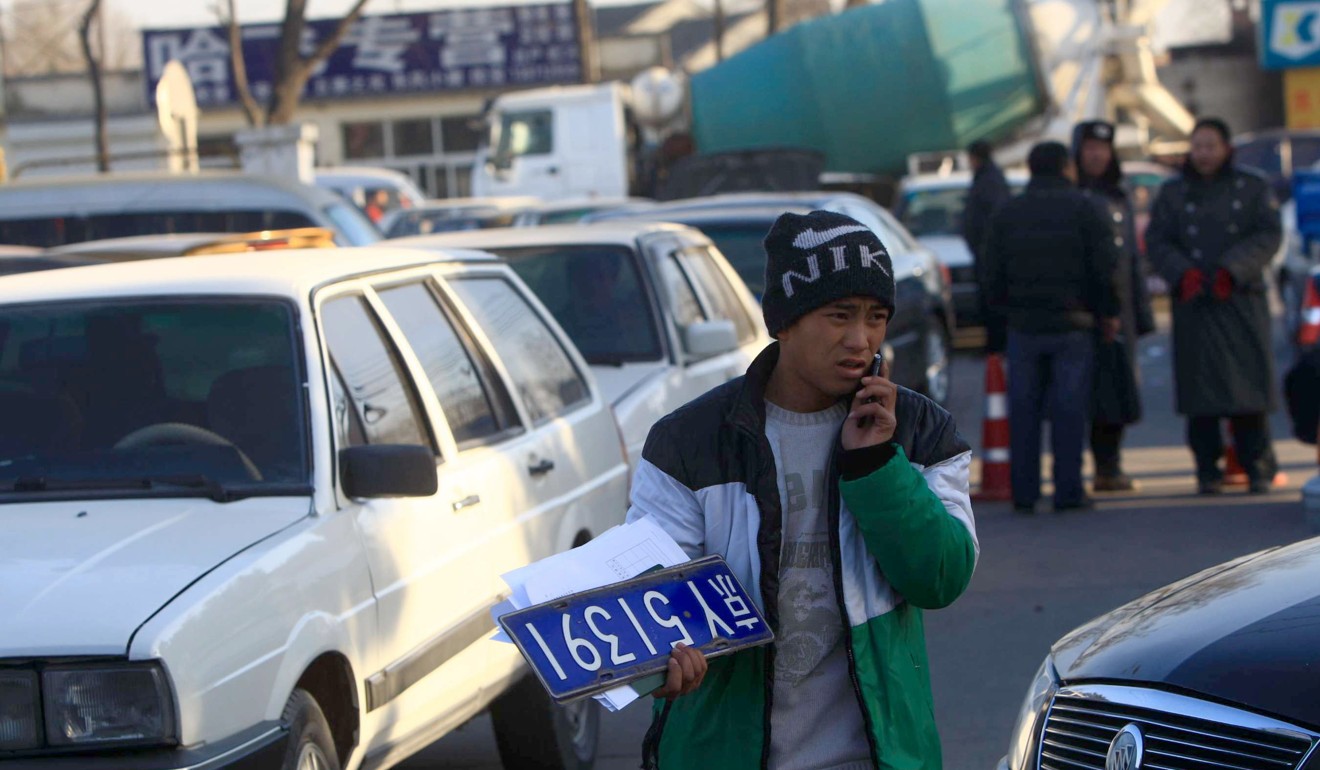
A man carries a number plate at a used car market in Beijing. Photo: AFP
The result is that many drivers have been looking for legal ways to get round the limits – with the sham marriages being one of the most extreme examples.
“We receive at least three or four clients a day asking to get a licence via fake marriages,” a manager at one agency told a CCTV reporter.
A staff worker helps go through all the procedures and if a suitable match is found, the process can be completed within 20 days.
Another loophole some are taking advantage of is to buy a car in the name of someone who has won the licence lottery, according to the agency.
Chinese police do U-turn on traffic crash after online crowd doubt official account
The actual user pays for the car in full, registers it under the licence owner’s name, and pays the latter a sum of money for using the licence – typically 20,000 yuan a year, 49,000 yuan for three years or 69,000 for a five-year deal.
In many cases, the two parties sign an agreement to limit the risk of a protracted dispute, but one judge warned that this was still a risky business.
Wang Lidan, a judge at Haidian District People’s Court in the northwest of the capital, told the programme makers that he knew of one case where a woman had paid a man with a Beijing licence to marry her, only for him to vanish after receiving the money.
Not only did the woman miss out on getting the licence but she faced an extra legal headache in getting a divorce.
Under Chinese law she had to first publish a notice about his disappearance in a newspaper and then wait three months before the divorce could go through the courts.
Record price for Beijing’s cubicle home shows desperation for hukou
Read more
Congestion or consumption? Beijing ponders trade-off on car purchases
Read more
Pollution alarm as tourism contaminates home of China’s hairy crab
Comic crusader Priya, a gang-rape survivor who earlier campaigned against rape and acid attack, is back in a new avatar. This time she is fighting the trafficking of girls and women for sex.
The “modern-day female superhero” was first launched in December 2014, exactly two years after the horrific gang rape of a young woman on a bus in Delhi, to focus attention on the problems of gender and sexual violence in India.
In the latest edition – Priya and the Lost Girls – she takes on the powerful sex-trafficker Rahu, the evil demon who runs an underworld brothel city where he has entrapped many women, including Priya’s sister Lakshmi.
Indian-American actor and writer Dipti Mehta, who wrote the script of the comic, draws on ancient Indian mythology to create larger-than-life fantastical characters and delivers a powerful feminist statement.
The story of Lost Girls begins when the protagonist returns home to find that there are no girls in her village.
She then mounts her flying tiger Sahas (Hindi for courage) and arrives in Rahu’s den. It’s a city ruled by greed, jealousy and lust, where women exist only to serve and please men – and those who resist are turned into stone.
Image copyright PRIYASHAKTI
Priya is threatened and attacked, a woman who works for Rahu tries to lure her into the sex trade saying: “If you work for us, you’d serve only five to six men and not 20”, but in the end, good wins over evil and she manages to vanquish Rahu and liberate her sister and all the other trafficked girls.
But victory still eludes her. The families of rescued girls refuse to take them back. The survivors are treated like “lepers”, facing stigma, scorn and ridicule.
But Priya and the other girls stand up to confront patriarchy, says Ms Mehta, “just as women have broken their silence to talk about MeToo”, the campaign against sexual harassment and abuse that started in Hollywood in October 2107 and later spread to many other parts of the world.
“I was very clear from the start that Lost Girls can’t be just another comic book where good guy wins and evil dies, it had to be much more than that,” Ms Mehta says.
Image copyright PRIYASHAKTI
Ram Devineni, the Indian-American creator of the comic series, told the BBC that he had decided to focus on sex trafficking in this edition after visiting Sonagachi, India’s largest red-light area in the eastern city of Kolkata, where he met several women engaged in sex work.
“Half of them told me they had been tricked into coming there and, once there, they were forced into the sex trade. The other half said they’d agreed to do this for a living because they were dirt poor and they had no alternative.
“Often there were two to three women sharing a small dingy room, many of them had young children who lived with them, and some of them said their children slept in the same bed where they serviced clients.
Mr Devineni says that from his conversations with them, he realised that many of the women there could leave, but chose not to.
“Most believed in the idea of sacrifice, for the sake of their families, their children. The shackles that hold them back are mostly emotional and psychological coercion.”
Some of their stories, he says, have found their way into the Lost Girls, which will be launched digitally on Monday to coincide with the start of United Nation’s 16 Days of Activism Against Gender-based Violence.
Image copyright PRIYASHAKTIAccording to the United Nations Office on Drugs and Crime, human trafficking is the second largest organised criminal business in the world after the arms trade. It is even ahead of the drugs trade.
“It’s a multi-billion-dollar industry,” anti-trafficking activist Ruchira Gupta told the BBC on the phone from New York.
Ms Gupta, who supports trafficked girls and women in India through her charity Apne Aap Women Worldwide, says there are 100 million people trapped in human trafficking globally, of which 27 million are in India alone, and most of the trafficking is in girls and young women.
India, Bangladesh and Nepal, she says, make up “the epicentre” of global sex trafficking.
Ms Gupta, who collaborated on Priya and the Lost Girls, says she plans to take the comic to schools and colleges in India and the US to use it as a talking tool, “as a conversation starter on what is a very difficult topic”.
The only way to fight trafficking, she believes, is to “de-normalise” sex trade – and cinema, art and pop culture are tools that can help do that.
The comic is made to appeal to young people. After its launch, it can be downloaded for free anywhere in the world; it also has “augmented reality features”, which means people can see special animation and movies by scanning the artwork with their smartphones.
Image copyright PRIYASHAKTI
“People often make flippant comments to say that prostitution is the oldest occupation in the world, but they don’t realise that trafficking is not some poor woman getting money in exchange for having sex with a man. It is the extreme exploitation of most vulnerable girls,” Ms Gupta says.
To stop this “commodification” of girls, she adds, we need to create revulsion in men’s minds about sex trade – and it’s best to catch them young.
“We must work with young boys and teenagers, 13 to 14 year olds, through storytelling and pop culture. They learn about sex from porn sites which portray sex workers as happy hookers, and no-one sees the girl behind her.
“I want to demolish that myth of the happy hooker. I want to ensure that people see the girl behind her.”
Artwork by Syd Fini and Neda Kazemifar
You may also be interested in…
Media caption Freida Pinto: Why I made a film about sex slaves
Chinese President Xi Jinping poses for a group photo with foreign delegates attending the 2019 New Economy Forum before meeting with them at the Great Hall of the People in Beijing, capital of China, Nov. 22, 2019. (Xinhua/Huang Jingwen)
BEIJING, Nov. 22 (Xinhua) — Chinese President Xi Jinping said on Friday realizing the Chinese dream of national rejuvenation is by no means to seek hegemony.
Saying he has full confidence in China’s prospects for development, Xi noted China does not intend to replace any power, rather, its aim is to “regain the dignity and status it deserves.”
The president made the remarks when meeting with foreign delegates attending the 2019 New Economy Forum held in Beijing.
China, with a 5,000-year-old history of civilization, is home to the four great inventions that had contributed tremendously to the progress of human civilization. The country had become a semi-colonial and semi-feudal society since the Opium Wars, but the Chinese people had never yielded and spared no effort in seeking a path to national rejuvenation, Xi stressed.
Earth-shattering changes have taken place since the founding of the People’s Republic of China 70 years ago, and the humiliating history of China as a semi-colonial and semi-feudal country will never be repeated, he said.
“The fundamental reason is that we have found a correct path that suits China’s national conditions, conforms to the trends of the times and enjoys the support of the people. The path is socialism with Chinese characteristics,” Xi said.
With full confidence, the Chinese people will unswervingly follow this path, he added.
Xi noted that innovation is a major theme of the current times, as the world is undergoing changes rarely seen in a century, featuring a new round of technological revolution and rapid industrial transformation.
The common challenges facing humanity call for concerted efforts of all countries. No country can become an independent innovation center or enjoy fruits of innovation alone, Xi said. “Innovation should benefit the world rather than being encaved.”
He said China is willing to carry out cooperation in innovation with other countries including the United States, so as to better benefit the people of the two countries and the world.
Despite great achievements, China will continue to adhere to the traditional concept of “harmony in diversity,” stick to the path of peaceful development, and strive for mutually beneficial cooperation with other countries, Xi told the foreign delegates.
China will stick to the reform and opening-up through bold innovations and with a manner of “feeling the rocks on the riverbed when crossing the river,” he said.
“The more resistance we are confronted with, the more determined we will be to open up,” Xi said. “I have full confidence in China’s prospects of development.”
During the meeting, former U.S. Secretary of State Henry Kissinger, former U.S. Treasury Secretary Henry Paulson, Egyptian Tourism Minister Dalia al-Mashat, former Japanese Foreign Minister Yoriko Kawaguchi, and Credit Suisse Group AG CEO Tidjane Thiam exchanged views, and expressed their support for innovation cooperation.
The 2019 New Economy Forum, which focused on development trends and social impacts of innovation, gathered more than 500 delegates from more than 60 countries around the world.


















 CHINDIA ALERT: You'll be living in their world, very soon