Chindia Alert: You’ll be Living in their World Very Soon
aims to alert you to the threats and opportunities that China and India present. China and India require serious attention; case of ‘hidden dragon and crouching tiger’.
Without this attention, governments, businesses and, indeed, individuals may find themselves at a great disadvantage sooner rather than later.
The POSTs (front webpages) are mainly 'cuttings' from reliable sources, updated continuously.
The PAGEs (see Tabs, above) attempt to make the information more meaningful by putting some structure to the information we have researched and assembled since 2006.
BEIJING, Nov. 7 (Xinhua) — Chinese President Xi Jinping’s upcoming visit to Greece and Brazil is expected to intensify China’s relations with the two countries and enhance BRICS cooperation, officials said here Thursday.
At the invitation of Greek President Prokopis Pavlopoulos, Xi will pay a state visit to Greece from Nov. 10 to 12, said Vice Foreign Minister Qin Gang.
This will be the first visit to the European country by a Chinese president after an interval of 11 years, which will exert a historic influence of China-Greece ties and push forward China-Europe relations and Belt and Road cooperation, Qin said.
He noted that China and Greece, both with old civilizations, are trustworthy and helpful friends respecting and supporting each other on core interests and major concerns.
Greece is among the first European Union (EU) countries to sign an intergovernmental cooperation document with China to jointly construct the Belt and Road, Qin said, adding that Greek prime ministers attended the first and second Belt and Road Forum on International Cooperation in Beijing.
The two sides have conducted fruitful cooperation on the principle of mutual benefit and win-win cooperation and witnessed increased bilateral trade and investment, Qin said.
“The Piraeus Port project, a flagship project for the Belt and Road cooperation, has made important contributions to the local economic and social development of Greece and played an important role in advancing connectivity in various regions around the globe,” said the vice foreign minister.
Speaking of people-to-people and cultural exchanges, Qin said peoples of the two countries respect each other and advocate openness and inclusiveness in their close interactions.
“Both China and Greece hold that different civilizations should respect each other and facilitate experience sharing, mutual learning and conversation among civilizations,” he said.
China and Greece are new friends of the “17 +1” cooperation. In April this year, Greece became a full member of the China-Central and Eastern European Countries Cooperation Mechanism, adding new opportunities to the development of this mechanism, which is also conducive to developing China-EU relations and China-EU connectivity, Qin said.
Greek Prime Minister Kyriakos Mitsotakis led a delegation to the ongoing second China International Import Expo (CIIE). Xi met with him, and the two leaders visited the Greek pavilion, Qin said.
According to Qin, in Greece, Xi is scheduled to hold talks respectively with Pavlopoulos and Mitsotakis, in a bid to consolidate political mutual trust and traditional friendship between the two countries, intensify pragmatic cooperation in trade, investment, infrastructure and other fields, uphold multilateralism and free trade and build an open world economy.
Besides, Qin noted that the Chinese and Greek leaders will conduct cultural exchanges and advocate dialogues among civilizations.
The two sides will issue a joint statement on strengthening the comprehensive strategic partnership, draw up a blueprint for the development of bilateral ties, sign intergovernmental cooperation documents on investment and education, and ink commercial agreements in such fields as ports, finance, and energy.
Greece, in the West, and China, in the East, are heirs of ancient civilizations. Noting that both China and Greece are faced with the mission of rejuvenation and prosperity, Qin said the two countries can enlighten the world to deal with various problems and challenges.
Xi’s upcoming visit to Greece shows respect and appreciation of the ancient Chinese civilization to the ancient Greek civilization, as well as the expectation of jointly building a community with a shared future for humanity, Qin said.
It is believed the visit will elevate the level of bilateral cooperation in an all-round way and inject new impetus to the development of China-EU relations with fruitful results, Qin stressed.
According to Vice Foreign Minister Ma Zhaoxu, at the invitation of Brazilian President Jair Messias Bolsonaro, Xi will attend the 11th BRICS summit in Brasilia, the capital of Brazil, from Nov. 13 to 14.
BRICS is the acronym for an emerging-market bloc that groups Brazil, Russia, India, China and South Africa.
Xi is scheduled to attend the closing ceremony of the BRICS business forum, closed and public meetings of the BRICS leaders’ meeting and the BRICS leaders’ dialogue with the BRICS Business Council and the New Development Bank. The leaders’ declaration is expected to be released, Ma said.
Xi will hold talks with Bolsonaro, sign cooperation documents in various fields, and hold bilateral meetings with leaders of other participating countries to exchange views on ties and BRICS cooperation, Ma said.
As the world is undergoing changes rarely seen in a century and confronted with unprecedented opportunities and challenges, BRICS countries have drawn ever-growing attention worldwide, Ma said, stressing that China appreciates the efforts made by Brazil in its preparation and stands ready to jointly prompt the meeting to achieve fruitful results.
He voiced expectations of the Chinese side.
“The Chinese side hopes that BRICS countries will further enhance political mutual trust, boost mutually beneficial cooperation and forge a more comprehensive, closer and broader partnership,” Ma said.
As for safeguarding multilateralism and strengthening global governance, Ma voiced China’s determination to make joint efforts with other BRICS countries to safeguard the rules-based multilateral trade system, the international order based on international law, and the international system with the UN at the core.
This aims to promote a more equitable, open, transparent and inclusive global governance system and safeguard common interests and development space of emerging markets and developing countries, Ma said.
“China believes the five BRICS countries should follow the trend of the new industrial revolution and facilitate economic transformation and upgrading,” Ma noted.
As an important outcome of last year’s Johannesburg meeting, the BRICS partnership for a new industrial revolution has progressed well in the past year, he said, adding that China is willing to work with concerned parties to accelerate the development of the partnership and tap more potential for cooperation projects, so as to propel high-quality development of the five countries.
“China looks forward to more cooperation on economy, trade, finance, political security and people-to-people exchanges, with projects meeting the development needs of the five countries and serving the interests of their peoples,” he said.
The Chinese side believes that with concerted efforts of all parties and under the political guidance of the five countries’ leaders, the 11th BRICS Summit will be a full success, Ma said, stressing that the BRICS countries will continue to contribute to world peace and development and the building of a community with a shared future for humanity.
French leader calls for restraint and says he raised the topic ‘on several occasions’ during his visit
Two sides find common ground on need to defend free trade and fight climate change as Donald Trump starts process of pulling US out of Paris Climate Agreement
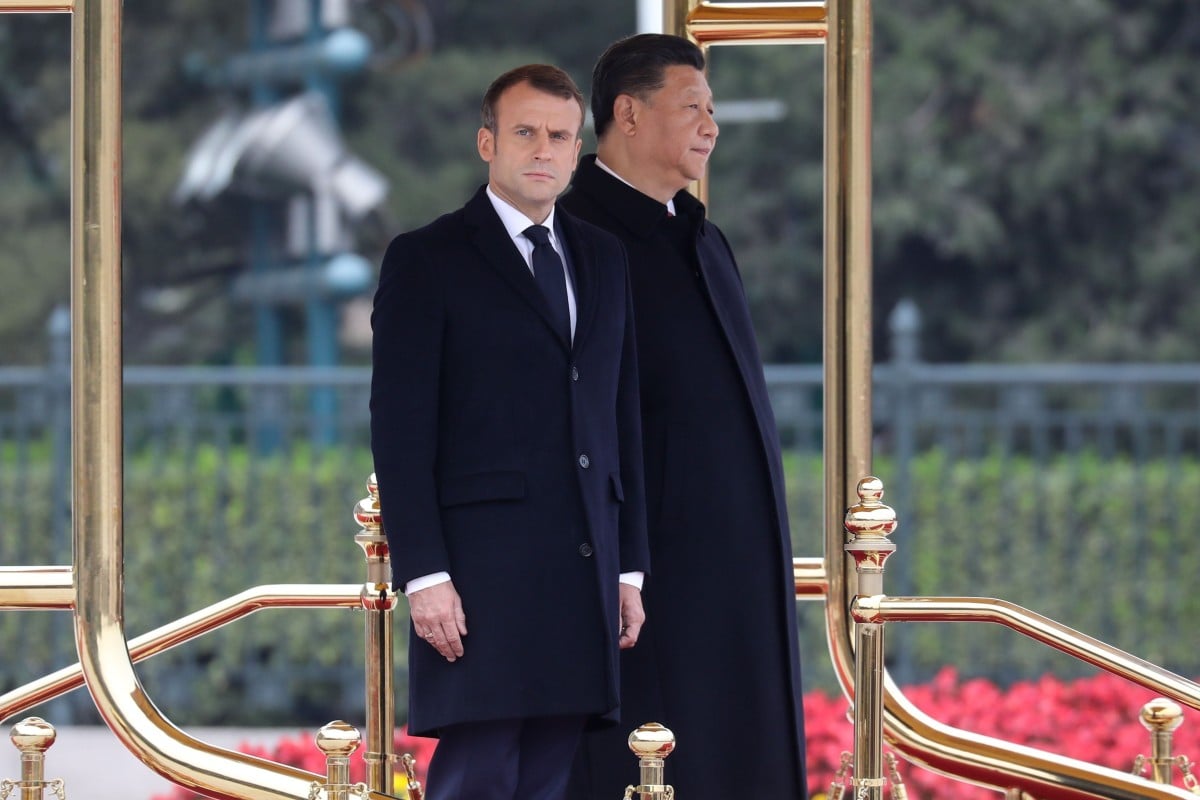
Xi Jinping and Emmanuel Macron at a welcome ceremony ahead of their talks in Beijing on Wednesday. Photo: AFP
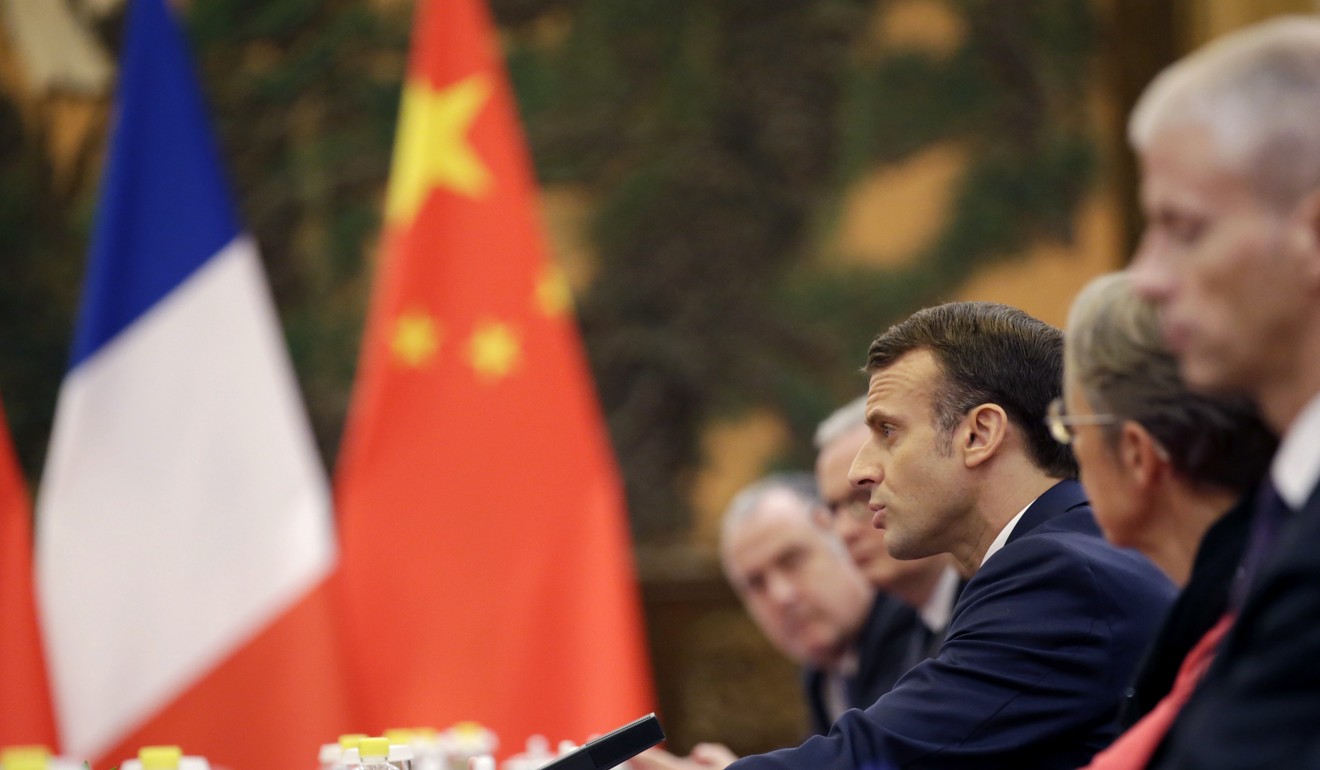
French President Emmanuel Macron said he raised human rights and the Hong Kong situation during his talks with his Chinese counterpart Xi Jinping on Wednesday.
Macron’s visit to China concluded with pledges to work together on climate change, but the French leader also said he also called for a de-escalation of the situation in the city through dialogue after months of protests.
Macron, who had promised to raise “taboo” topics during the visit, told a press conference: “I obviously raised this with President Xi Jinping on several occasions.
“We have repeatedly called on the parties involved to [engage in] dialogue, to show restraint, to de-escalate.”
The discussion followed Xi’s meeting with Hong Kong’s embattled Chief Executive Carrie Lam Cheng Yuet-ngor in Shanghai on Monday, where he expressed “high trust” in her and “fully affirmed” support for her response to the unrest that has gripped the city since June.
Earlier the French and Chinese leaders had restated their commitment to protect free trade and pledged their continued support for the Paris Agreement as the United States begins the process of formally withdrawing from the global climate deal.
Macron expressed “regret” over “some countries’ negative attitude” towards environmental protection and the fight against climate change and pledged to work with China to halt the loss of biodiversity.
The French president’s office also released a statement on Wednesday that reaffirmed France and China’s joint support for the “irreversible” Paris Agreement.
Macron points to common ground with China on tariffs and climate action
With the European Union, China and Russia backing the pact, he added, “the isolated choice of one or another is not enough to change the course of the world. It only leads to marginalisation.”
The two countries also agreed to work together to develop joint nuclear power projects and signed a series of contracts worth US$15 billion.
The deals covered aeronautics, energy and agriculture, including approval for 20 French companies to export poultry, beef and pork to China.
An additional action plan released after the talks said French utility giant EDF and China General Nuclear Power should be encouraged to cooperate on projects in China or third countries, citing the joint efforts by the two companies to build nuclear reactors at the Hinkley Point C station in Britain as an example.
The two sides also committed to signing a contract for the construction of a nuclear fuel recycling plant in China, which would involve French energy giant Orano, by January 31.
Xi took what appeared to be a veiled swipe at the United States, which is still embroiled in a protracted trade war and other confrontations with Beijing.
“We advocate for mutual respect and equal treatment, and are opposed to the law of the jungle and acts of intimidation,” Xi said.
“We advocate for openness, inclusion and for mutually beneficial cooperation, and are opposed to protectionism and a zero-sum game.”
Macron said China and the European Union should work in partnership as the world became more unstable, calling on the two sides to further open up market access.
“We call again for trade multilateralism to respond to distortions that have appeared in the global economy, which have led to a profound rise in inequalities and imbalances that explain the surge of challenges to the international systems,” he said.
“China and Europe also share the same views that the trade war only leads to loss.”
Macron kicks off China visit with deal to protect wine and cheese from counterfeiting
Chinese state news agency Xinhua said the two countries agreed to work together to push forward with plans to assemble Airbus’s A350 model in China.
Meanwhile, Beijing Gas Group and French utility firm Engie will collaborate on a liquefied natural gas terminal and storage in the northern city of Tianjin, while France’s Total will set up a joint venture with China’s Shenergy Group to distribute liquid nitrogen gas by truck in the Yangtze River Delta.
The two countries also agreed to reach an agreement by the end of January 2020 on the cost and location of a nuclear fuel reprocessing facility to be built by Orano, formerly known as Areva.
Wu Libo a professor and director of the Centre for Energy Economics and Strategies Studies at Fudan University, said there was “great potential” for further cooperation between the two countries on nuclear energy.
“France has many useful experiences in the operation and management of nuclear power plants and its plants have long-term safe and stable operation records,” she said.
The two sides agreed to work together on joint nuclear power projects. Photo: AP
Jiang Kejun, a senior researcher at the Energy Research Institute of China’s National Development and Reform Commission, said China’s cooperation with France would add credibility to potential third-country projects.
“China has advanced third-generation technology but it’s still a new member in the nuclear power market, while France has developed nuclear energy for a long time, and its EPR reactors – a technology designed and developed in France – are in business operation,” he said.
Jiang said possible markets for the joint projects included Argentina and India, while some Middle Eastern states – such as Saudi Arabia and Qatar – had expressed interest in nuclear energy.
China’s ambassador hits out at Macron’s team for backing ‘hypocritical’ EU stance on Hong Kong
Tong Jiadong, professor of international trade at Nankai University, said that the deals between the two sides helped show that France and China could work together to counteract US unilateralism.
“Objectively speaking, this will form, or at least imply, an opposition to US unilateralism,” Tong said. “China hopes the cooperation between these two countries produces demonstrable effects for other EU member states.”
Ding Chun, a professor of European Studies at Fudan University, said he did not think the EU wanted to “choose a side” between the US and China.
But Ding continued: “If we are talking about free trade and multilateralism, there’s no doubt that the EU and China share a common view and can balance Donald Trump’s unilateralism.”
Chinese Vice Premier Han Zheng, also a member of the Standing Committee of the Political Bureau of the Communist Party of China Central Committee, meets with Kazakhstan’s First Deputy Prime Minister Alikhan Smailov, who also co-chaired the 9th meeting of the China-Kazakhstan Cooperation Committee, in Beijing, capital of China, Nov. 4, 2019. (Xinhua/Yan Yan)
BEIJING, Nov. 4 (Xinhua) — Chinese Vice Premier Han Zheng met with Kazakhstan’s First Deputy Prime Minister Alikhan Smailov Monday in Beijing, who also co-chaired the 9th meeting of the China-Kazakhstan Cooperation Committee.
Han, also a Standing Committee member of the Political Bureau of the Communist Party of China Central Committee, said the development of bilateral ties had been healthy and steady to become a model of relations between neighboring countries.
Earlier this year, China and Kazakhstan upgraded their relations to a permanent comprehensive strategic partnership, which Han said marked a new phase of bilateral relations.
The China-Kazakhstan Cooperation Committee, as an intergovernmental mechanism, makes overall planning for, coordinates and guides bilateral cooperation.
Han said since the last meeting of the committee, the two countries had deepened the synergy of their development strategies, accelerated trade, investment and industrial cooperation, strengthened financial cooperation, and continuously enhanced cooperation in security, environmental protection, energy, technology and mining.
Noting the solid foundation, huge potential and broad prospects of bilateral cooperation, Han said the two countries should promote cooperation in industrial capacity, transportation, agriculture and energy.
He called on the two sides to jointly implement the synergy between the Silk Road Economic Belt and Kazakhstan’s “Bright Road” new economic policy, strengthen innovation-driven cooperation and carry out digital industry, blockchain and biotechnology cooperation to create new growth points.
He said the two sides should carry out more facilitation measures to constantly optimize the business environment and guarantee the rights and interests of enterprises from both countries.
Smailov said Kazakhstan is ready to work with China to promote cooperation in trade, finance, energy, agriculture, transportation, logistics and infrastructure to benefit the two peoples.
Chinese Premier Li Keqiang addresses the 22nd China-ASEAN (10+1) leaders’ meeting in Bangkok, Thailand, Nov. 3, 2019. (Xinhua/Zhai Jianlan)
BANGKOK, Nov. 3 (Xinhua) — Chinese Premier Li Keqiang on Sunday called on China and ASEAN to uphold multilateralism and free trade, resist risks and realize common development at the 22nd China-ASEAN (10+1) leaders’ meeting in Bangkok.
Since China and ASEAN established dialogue relations, they have brought benefits to each other and the wider region, Li said, adding that China always supports ASEAN’s central role in East Asian cooperation.
Noting that the mounting downward pressure on the global economy brings new severe challenges, Li said China and ASEAN countries should jointly uphold multilateralism and free trade, withstand risks and realize common development.
The premier said China and ASEAN countries should stick to the principle of shared benefits and win-win outcomes, and speed up the work to upgrade economic and trade cooperation.
He called for an early conclusion of the negotiations on the Regional Comprehensive Economic Partnership (RCEP) so as to lay the foundation for East Asia’s economic integration, and the implementation of the China-ASEAN Free Trade Area Upgrade Protocol to promote trade and investment liberalization and facilitation.
Li said China and ASEAN countries should enhance strategic mutual trust and safeguard peace and stability in the region.
The Code of Conduct (COC) in the South China Sea is an upgraded version of the Declaration on the Conduct of Parties in the South China Sea (DOC). Last year, China proposed that all parties should try to finish the COC talks in three years. The first reading of the single draft negotiating text of the COC in the South China Sea has been completed ahead of schedule, and the second reading has been launched.
Li said he hopes all sides will actively carry forward the consultations according to the previously agreed timetable, meet each other halfway, and safeguard peace and stability in the South China Sea.
The premier also said China and ASEAN countries need to carry forward their friendship from generation to generation, and stay ready to enhance people-to-people and cultural exchanges in such areas as media, health, education and tourism.
China is willing to train 1,000 administrative health staff and technical professionals in the following three years for ASEAN and will support projects such as the China-ASEAN Young Leaders Scholarship, said the premier.
Stressing that China will unswervingly pursue the path of peaceful development and an opening-up strategy of mutual benefit, Li said China is willing to synergize the Belt and Road Initiative with the development strategies of ASEAN as a whole and its members as well.
He urged to accelerate the construction of the existing economic corridors, promote infrastructure connectivity cooperation, as well as support the building of the Brunei Darussalam Indonesia Malaysia Philippines East ASEAN Growth Area.
Li encouraged innovation cooperation in the areas including digital economy, artificial intelligence, big data and cyber security, and the establishment of a China-ASEAN partnership on blue economy to enhance maritime exchanges and cooperation.
Thailand’s Prime Minister, also the rotating chair of ASEAN, Prayut Chan-o-cha, Philippine President Rodrigo Duterte, Brunei’s Sultan Haji Hassanal Bolkiah, Indonesian President Joko Widodo, Malaysian Prime Minister Mahathir Mohamad, Vietnamese Prime Minister Nguyen Xuan Phuc, Myanmar’s State Counselor Aung San Suu Kyi, Singaporean Prime Minister Lee Hsien Loong, Lao Prime Minister Thongloun Sisoulith and Cambodian Prime Minister Samdech Techo Hun Sen attended the meeting. Li and Prayut co-chaired the meeting.
At the meeting, ASEAN leaders expressed congratulations on the 70th anniversary of the founding of the People’s Republic of China, saying that the ASEAN-China partnership is the most dynamic one in all the partnerships ASEAN has forged.
Speaking highly of the new cooperation progress over the past year, the leaders said their countries would like to take an active role in building the Belt and Road, expand cooperation in areas of inter-connectivity, science and technology innovation, e-commerce, smart cities and blue economy, and increase two-way investment.
They also expressed the hope that the ASEAN-China trade volume can exceed 1 trillion U.S. dollars at an early date.
The leaders also applauded the new progress made in the COC negotiation, saying that their countries would like to maintain the momentum and advance the process.
During the meeting, China and ASEAN agreed to make an action plan to implement The Joint Declaration on China-ASEAN Strategic Partnership for Peace and Prosperity (2021-2025), issued statements on the Belt and Road Initiative, smart cities and media exchanges, and announced that the year 2020 will be the year of China-ASEAN digital economy cooperation.
Li arrived in Bangkok late on Saturday for an official visit to Thailand and a series of events including the 22nd China-ASEAN (10+1) leaders’ meeting, the 22nd ASEAN-China, Japan and South Korea (10+3) leaders’ meeting, and the 14th East Asia Summit.
MANILA, Nov. 3 (Xinhua) — Chinese State Councilor and Foreign Minister Wang Yi has offered condolences for the people killed in the series of strong earthquakes that devastated central and eastern Mindanao in the southern Philippines last month, saying China is ready to help the Philippine government in its efforts to rehabilitate the region.
In a message of sympathy sent to Philippine Foreign Secretary Teodoro Locsin on Saturday, Wang said he was shocked to learn that strong earthquakes had hit Mindanao, resulting in casualties and property damage.
“He (Wang) would like to extend sincere sympathy to the victims and the bereaved families,” the Chinese Embassy in the Philippines said in a statement.
“China is willing to offer assistance to the Philippines within our capacity, and believes that under the strong leadership of the Philippine government, the Philippine people will overcome the disaster and return to normal life at an early date,” it quoted Wang as saying.
On Friday, China announced a donation of 3 million yuan (about 434,896 U.S. dollars) to help the quake victims, mostly poor farmers.
The Philippine National Disaster Risk Reduction and Management Council (NDRRMC) said in an updated report on Sunday that the Oct. 29 6.6-magnitude and the Oct. 31 6.5-magnitude earthquakes that hit several central and eastern Mindanao provinces had killed 21 people and injured more than 400 others.
Rescuers were still looking for two missing villagers, the country’s disaster agency said.
The agency said the two tremors also affected more than 178,000 people in 200 villages in the region. Nearly 22,000 displaced people were staying in makeshift tents, it added.
The agency said the quakes also damaged nearly 29,000 infrastructures in the region, mostly houses, school buildings, hospitals, roads and bridges.
Image copyright DYFED-POWYS POLICEImage caption Trade in some species, including some types of crocodiles, is banned outright
People buying animal “souvenirs” have been warned they must check they are legal after police seized a number of crocodile skulls imported from China.
Police are investigating the finds after searching two properties in Machynlleth, Powys, on Wednesday.
Dyfed-Powys Police and North Wales Police said they had found “numerous” skulls across the searches.
Animal trade charity Traffic said importers and buyers must make sure they had the correct permits.
Richard Thomas, from Traffic, said some people would buy things such as skulls as a “talking point”.
Trade in some species, including some types of crocodiles, is banned outright, but others can be bought and sold as long as the exporting country issues permits.
The Convention on International Trade in Endangered Species of Wild Fauna and Flora is the main worldwide agreement controlling trade in wild animals and plants, and is signed by more than 180 countries.
In 2016, the UN estimated that the annual value of illegal wildlife trade was between $7bn-$23bn (£5.4bn-£17.8bn).
Traffic said demand for such items as horns, ivory, bones and skins was “driving unprecedented wildlife population declines”.
Team from Dalian Institute of Chemical Physics says its goal is to ‘develop an all-season battery that is low cost but high safety for consumer products’
Researchers make breakthrough by using hard carbon and lithium vanadium phosphate
Chinese researchers say they have made a breakthrough in the development of small lithium batteries that can withstand low temperatures. Photo: Xinhua
Chinese researchers say they have found a way to produce a tiny, lightweight lithium battery for use in mobile phones and electric cars that can hold up to 80 per cent of its charge in temperatures as low as minus 40 degrees Celsius.
The breakthrough came by using a combination of a new material called hard carbon along with lithium vanadium phosphate, the team from the Dalian Institute of Chemical Physics said in a paper published in this month’s edition of the scientific journal Nano Energy.
“Our goal is to develop an all-season battery that is low-cost but high-safety for consumer products,” said Song Zihan, its lead author.
It was an unprecedented approach, but “we proved it works”, he said.
The idea of a battery that can withstand extreme cold is not new. Photo: Shutterstock
The idea of a battery that can withstand extreme cold is not new, and they are already in use in space and in the Arctic and Antarctic.
But they tend to be very bulky because of the heating system and large amount of insulation they need to function properly at sub-zero temperatures.
Such measures are neither physically nor economically viable for applications like smartphones, cameras, laptops or electric cars. The trick, Song said, was replacing the soft graphite in normal lithium batteries with hard carbon.
Graphite is a good conductor and often used for the anode at the bottom of a battery, where electrons are generated. But the performance of graphite drops as the mercury slides.
How military tech sparked a robot revolution in firework factories
Song said that hard carbon was a new material that had attracted a lot of research interest in recent years, and compared with graphite, it had a much higher tolerance for the cold.
That was because of its highly irregular and “almost messy” structure, comprising layers of carbon atoms that are interconnected with each other, he said.
However, hard carbon also caused a rapid depletion of the lithium ions that served as an agent carrying the electric flow in battery, he said.
The researchers want to make battery suitable for use in consumer products. Photo: EPA-EFE
In the past, researchers have tried adding lithium powders or flakes to improve battery life, but the approach has proven costly and dangerous, mostly because pure lithium is highly reactive.
So Song and his colleagues used a composite material called lithium vanadium phosphate as the positive cathode on top of the battery.
The composite was capable of providing enough extra lithium ions for the hard carbon’s need without increasing the risk of fire or explosion, and it was cheap, he said.
“The pairing of hard carbon and lithium vanadium phosphate worked a charm,” Song said.
But the technology is still a long way from being commercially viable.
The battery Song’s team made is far too small for any real-life applications, and enlarging it would require some “innovative engineering solutions”, he said.
Another scientist involved in the project said the team was working with battery manufacturers to see if the technology could be commercialised.
Chinese academics and young scientists join global scientific elite to explore frontiers of research
International joint laboratory announced at Shanghai forum
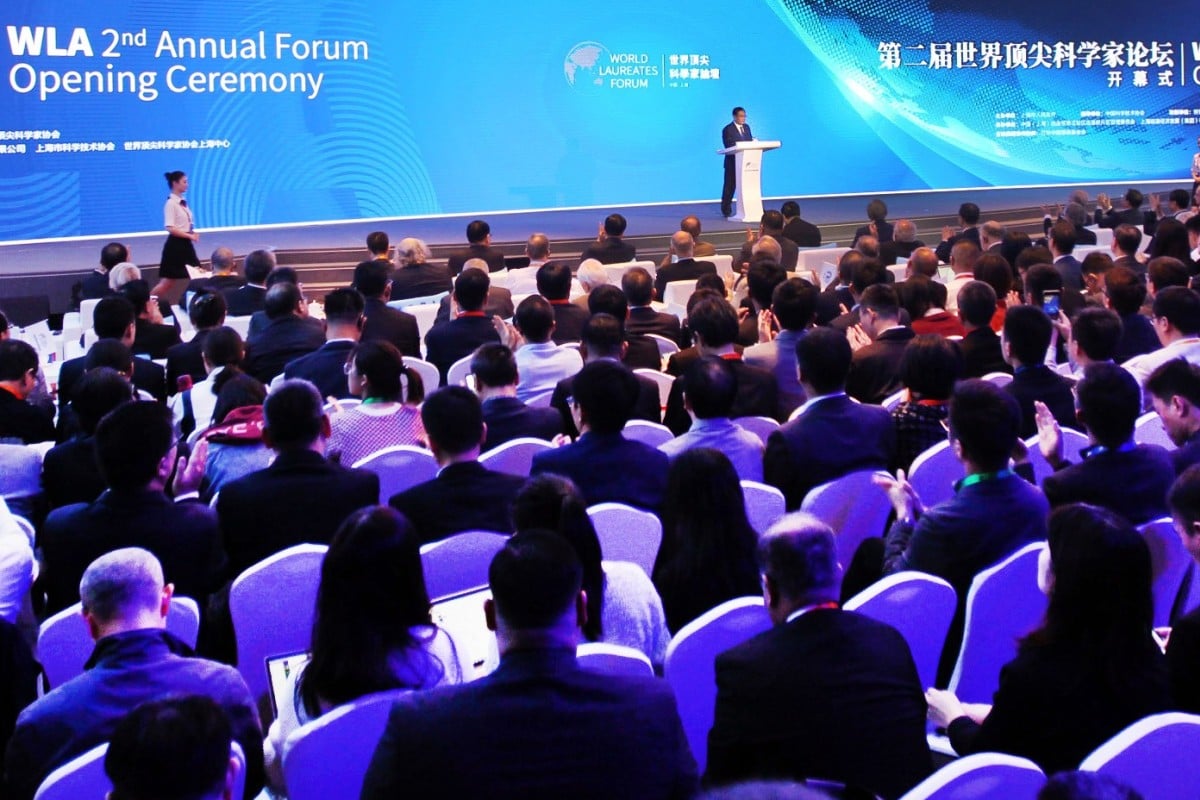
More than three dozen Nobel Prize winners for science were among the gathering in Shanghai for the second annual forum of the World Laureates Association. Photo: Xinhua
Shanghai hosted one of the largest gatherings of Nobel laureates in the world last week, with 44 Nobel Prize-winning scientists in the city for a government-sponsored forum with the lofty goal of discussing science and technology for the “common destiny of mankind”.
The four-day forum, which brought together young Chinese scientists and the cream of the international scientific crop, was a signal of China’s ambitions for its own researchers to take their place at the forefront of development and bring home their own prizes.
Experts agreed the event – the second in an annual “World Laureates Forum” – was hardly a public relations stunt, but a testament to China’s deep-seated, steadfast desire to learn from the world’s top scientists and join them, and their home countries, as leaders on the frontier of science and produce regular home-grown contenders for top prizes.
“The Nobel Prize is the holy grail for China, and it is still quite elusive for Chinese indigenous scientists to be awarded this prestigious recognition,” said Chengxin Pan, an associate professor of international relations at Australia’s Deakin University. “You could say China has a Nobel Prize complex.”
China says US tech ban is a barrier but will not halt scientific advance
Becoming a leader in the sciences was more than just an issue of driving economic expansion through technology and innovation, it was a matter of national preservation with deep roots in Chinese history, Pan said.
“China sees the lack of power, lack of scientific achievements and modern technology as largely responsible for the backwardness and humiliation it suffered during much of the 19th century and early 20th century,” he said.
“They need to make up for lagging behind by engaging with the top leading scientists in the world, wherever they are from.”
To that end, celebrated theoretical physicists, organic chemists, neuroscientists and biologists joined Chinese academics and youth scientists for the conference organised by the Shanghai city government and an association of top global scientists known as the World Laureates Association.
Among them were 2019 Nobel Prize for physics laureates Michel Mayor and Didier Queloz, as well as winners of other top prizes including the Wolf Prize, Lasker Award, and Fields Medal for mathematics. Discussions included the latest breakthroughs in disease prevention and drug development, sustainability and new energy, aerospace and black holes, as well as what drives their scientific curiosity.
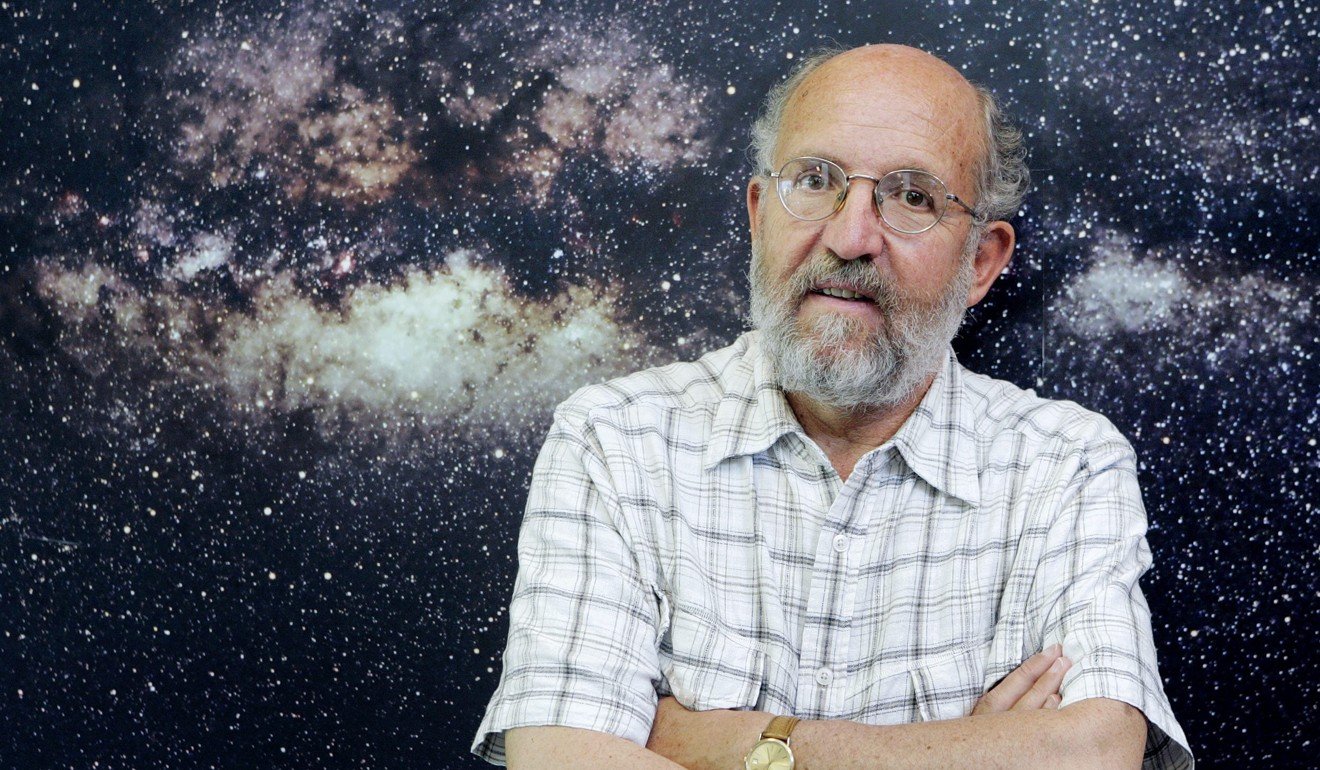
Swiss professor Michel Mayor, astrophysicist and director of the Geneva Observatory, was one of the co-winners of the 2019 Nobel Prize in physics and among the attendees at the forum in Shanghai. Photo: EPA-EFE
The event, which culminated with the announcement of an international joint research laboratory for the world’s top scientists, to be established in Shanghai, was lauded by President Xi Jinping in an open letter to the attendees.
“China attaches great importance to the development of the frontier fields of science and technology,” Xi said, stressing China’s willingness to “work with all countries of the world” to “address the challenges of our age”.
The high calibre meeting was a rare opportunity for China to broadcast its message of commitment to scientific advancement, at a time when the reputation of its universities, academics and hi-tech companies have been taking a broad hit as part of a blowback from the US-China trade and tech wars, as well as suspicion among Western countries of China’s geopolitical aims.
In the past year, a number of major global Chinese tech companies, including Huawei and Hikvision, have been blacklisted in the US, while US tech giants like Google and Apple noticeably skipped out on China’s annual state-run World Internet Conference last month. Academic ties between Chinese and Western universities have also been called into question over suspicions of espionage, fraud, and intellectual property theft.
“China is saying we are still open for business and, at this juncture, we more warmly welcome foreign scientists and collaboration between countries in science and technology,” said Zhu Tian, an economics professor at the Chinese Europe International Business School in Shanghai.
60 science groups demand US end crackdown on foreign-born researchers
The past decade has seen China advance rapidly in the sciences. A surge in government funding, along with successive top level strategies to build up science and tech – including the Made in China 2025 innovation blueprint – and a significant uptick in international collaborations, have propelled the nation on to the global scientific stage.
Recent developments, like the first successful landing of a probe on the far side of the moon earlier this year, the dominance of the 5G network technology created by China’s Huawei, and the opening of the world’s largest radio telescope in Guizhou in 2017, have also raised the country’s profile in emerging tech and science.
But, so far, China’s rising visibility as a scientific powerhouse has been largely driven by scale. A June report by the journal Nature found researchers affiliated with the Chinese Academy of Sciences contributed the greatest number of “high-quality natural sciences research” to international journals compared with their peers at other institutions, while last month the journal found the top four “fastest rising” new universities for research output were all from mainland China.
“To some in the outside world, China is already a powerhouse in innovation … but in terms of the quality of innovations or scientific research, China still lags behind developed countries like the US, UK or Switzerland,” Zhu said.
Despite “making the fastest progress among all countries”, and significant leaps as a developing nation, “China is not at the frontier of technology or science yet,” he said, which is why international engagement, like the recent summit, is key to China’s growth.
“In order to catch up you have to know what is the frontier, you have to learn from those who are at the frontier.”
It is a point further underlined by the numerous blog posts and widely circulated articles in Chinese media about China’s meagre Nobel track record. Apart from one celebrated exception – 2015 Nobel laureate for medicine Tu Youyou – Chinese-born scientists who have won the prize did so for their work in overseas laboratories, or after changing citizenship.
Nobel Prize winner may have found solution to malaria drug resistance
Tu was the People’s Republic of China’s first Nobel Prize winner in the sciences and the country’s first woman to win the prize in any category.
Among China’s other Nobel laureates in the sciences are 1957 physics prizewinners Li Zhengdao and Yang Chen-ning, who won their award while in the US, having left China before the Communist Party takeover in 1949. Both later became US citizens. In 2017,
relinquishing his US citizenship to become a Chinese citizen.
China has worked hard to reverse the damage of brain drain, for example with its flagship “Thousand Talents” programme, a high-profile, state-backed recruitment drive set up in 2008 to attract overseas Chinese students and academics back to China with generous funding.
But reaching the frontiers of science, and making Nobel-worthy advancements, will also require China to do some reshuffling of its domestic priorities, which have been heavy on producing innovations in applied sciences and tech, but lighter on the basics – like physics, chemistry, and biology – whose mysteries are probed by the leading labs around the developed world.
Chinese scientists turn black coal by-product into gleaming white paper
“China in the past has been known as a place for incremental innovation, and not the place where really radical innovation and big breakthroughs have come from, but they don’t want to be tinkering at the margins, they want to be a major innovation powerhouse,” said Andrew Kennedy, an associate professor in the policy and governance programme at the Australian National University.
To change this, China has begun to raise investment in basic sciences, Kennedy said, pointing to National Bureau of Statistics figures which indicate an average spending increase of more than 20 per cent each year between 1995 to 2016. Even so, spending at the end of that period – some US$11.9 billion at market rates – still lagged well below the figure cited for the US in 2015, which rang up US$83.5 billion, he said.
Chinese scientists develop laser that could track submarines
The gathering of science laureates itself was further indication of that shift to place more emphasis on basic sciences, the kinds of disciplines the laureates lead, and could be a major boost to that agenda, according to Naubahar Sharif, associate professor of social science and public policy at Hong Kong University of Science and Technology.
“This [event] is a rocket-propelled, massive injection of scientific power into one place, and China has ambitions to gear up their own scientists to this level,” Sharif said, “and I’m sure the local Chinese scientists have been prepped to take advantage of it.”
While China has work to do in pushing back on criticism of questionable practices in intellectual property transfer, or the extent to which they share their own advances with others, collaboration with leading scientists is a crucial part of China’s “long-haul” vision in the sciences, Sharif said.
“If you rub shoulders with the most prestigious scientists of your era, your local scientists will learn something, and there’s going to be knowledge exchange and making linkages and a start to partnerships,” he said.
“This is the way that getting to that frontier can be achieved.”
Image copyright FENG VIDEOImage caption Wu Huayan ate only rice and chillies in order to save money to help her ill brother
Well-wishers have donated almost a million yuan to a Chinese student who was hospitalised after living on 2 yuan ($0.30, £0.20) a day for five years.
The case of Wu Huayan shocked Chinese people after it hit the headlines earlier this week.
The 24-year old woman became seriously malnourished while struggling to study and support her sick brother.
Ms Wu’s story also sparked anger at authorities for failing to recognise her plight and help her much earlier.
After the story was reported, donations began pouring in for the college student in the city of Guiyang – reportedly totalling some 800,000 yuan ($114,000, £88,000).
What is Wu Huayan’s story?
Earlier, this month, the young woman went into hospital after having difficulty breathing, according to Chinese media.
She was only 135cm (4ft 5ins) tall, weighing barely more than 20kg (43 pounds; three stones).
The doctors found she was suffering from heart and kidney problems due to five years spent eating minimal amounts of food. She said she needed to save money to support her sick brother.
Wu Huayan lost her mother when she was four and her father died when she was in school.
She and her brother were then supported by their grandmother, and later by an uncle and aunt who could only support them with 300 yuan ($42, £32) each month.
Most of that money went on the medical bills of her younger brother, who had mental health problems.
This meant Ms Wu spent only 2 yuan a day on herself, surviving largely off chillies and rice.
The siblings are from Guizhou, one of the poorest provinces in China.
Media caption China’s uphill struggle fighting extreme poverty
What has the reaction been?
The case sparked an outpouring of concern – and anger at authorities.
Many people on social media said they wanted to help with donations, and many voiced concern about her college not helping her.
One user called her situation “worse than that of refugees in Afghanistan”, while another pointed to the extravagant cost of China’s 70th anniversary celebrations, saying the money could have been better spent.
Others expressed their admiration at her efforts to help her brother, while also persevering with her studies in college.
Aside from the donations on crowd funding platforms, her teachers and classmates donated 40,000 yuan ($5,700; £4,400), while local villagers collected 30,000 yuan to help her.
Officials released a statement saying Ms Wu had been receiving the minimum government subsidy – thought to be between 300 and 700 yuan a month – and was now getting an emergency relief fund of 20,000 yuan.
“We will keep following the case of this strong-minded and kind girl,” the Tongren City Civil Affairs Bureau said.
“We will actively co-operate with other relevant departments to solve the problem according to the minimum living standard and temporary assistance responsibility that the civil affairs department bears.”
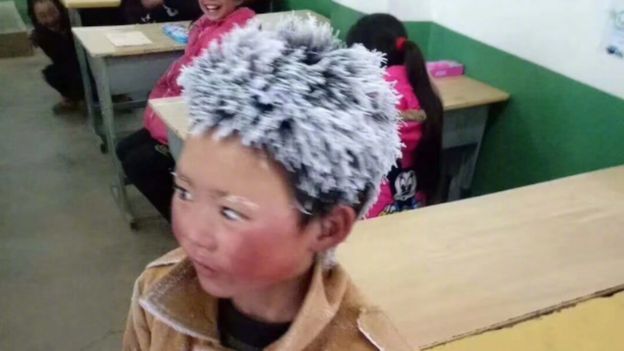
Dubbed “Little Wang”, his story also went viral, leading to international donations from people impressed by his resilience, and shocked at his poverty.
Image copyright PEOPLE’S DAILY
While China’s economy has skyrocketed over the past decades, poverty has not disappeared, and inequality has grown.
One major reason cited is the huge divide between rural and urban areas.
As a point of comparison, in rural region of Guizhou where Ms Wu lives, that figure is around 16,703 yuan.
China has moved from being “moderately unequal in 1990 to being one of the world’s most unequal countries,” according to a 2018 report by the International Monetary Fund.
According to the National Bureau of Statistics in 2017, 30.46 million rural people were still living below the national poverty line of $1.90 a day.
China has previously pledged to “eliminate” poverty by 2020.
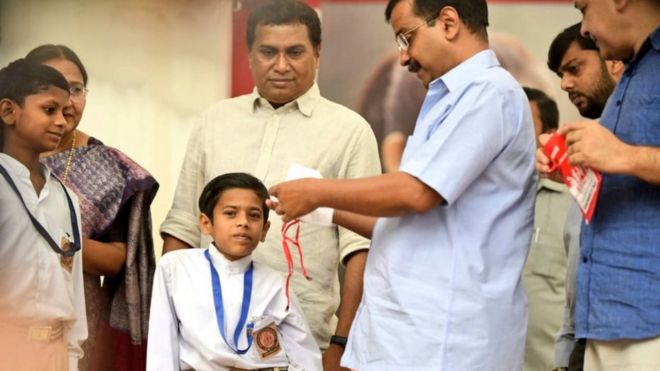
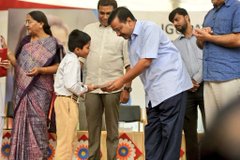
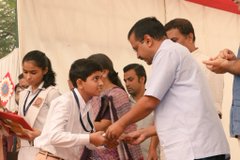
Image copyright TWITTER/@ARVINDKEJRIWALImage caption Delhi Chief MinisterArvind Kejriwal has been handing out masks to school students
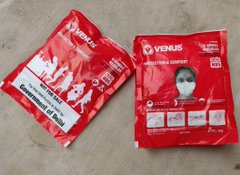
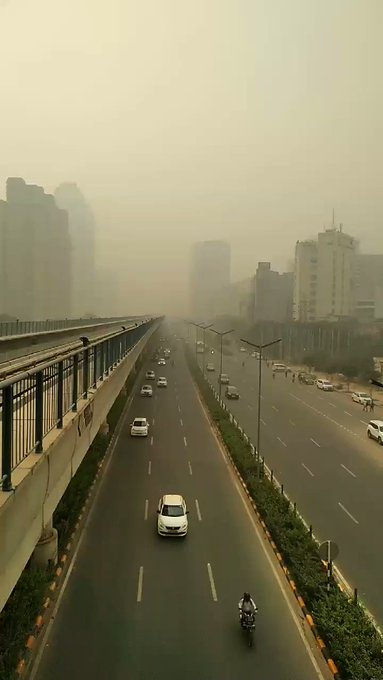
Five million masks are being distributed at schools in India’s capital, Delhi, after pollution made the air so toxic officials were forced to declare a public health emergency.
A Supreme Court mandated panel imposed several restrictions in the city and two neighbouring states, as air quality deteriorated to “severe” levels.
All construction has been halted for a week and fireworks have been banned.
The city’s schools have also been closed until at least next Tuesday.
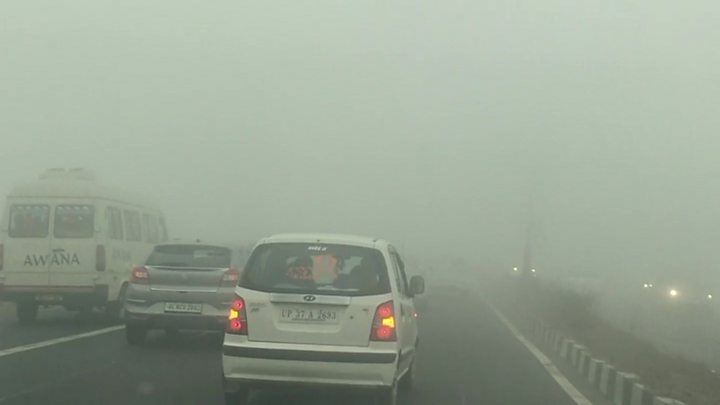
Delhi’s Chief Minister Arvind Kejriwal said Delhi had been turned into a “gas chamber”.
The masks are being handed out to students and their parents, and Mr Kejriwal has asked people to use them as much as possible.
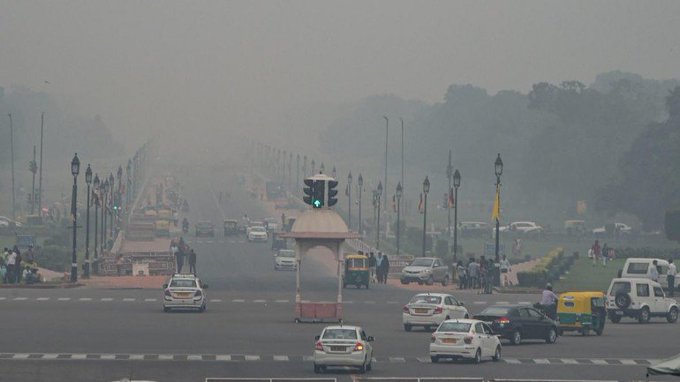
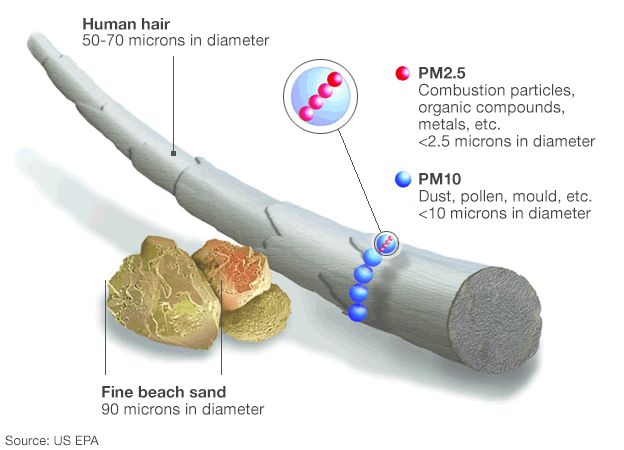
The levels of tiny particulate matter (known as PM2.5) that enter deep into the lungs are 533 micrograms per cubic metre in the city. The WHO recommends that the PM2.5 levels should not be more than 25 micrograms per cubic metre on average in 24 hours.
As thick white smog blanketed the city, residents started tweeting pictures of their surroundings. Many are furious that the situation remains the same year after year.
The hashtags #DelhiAirQuality and #FightAgainstDelhiPollition are trending on Twitter.
One of the main reasons for air quality in the city worsening every year in November and December is that farmers in the neighbouring states of Punjab and Haryana burn crop stubble to clear their fields. It’s made worse by the fireworks during the Hindu festival of Diwali.
There are other reasons too, including construction dust, factory and vehicular emissions, but farm fires remain the biggest culprit.
Media caption A hair-raising drive through the Delhi smog
More than two million farmers burn 23 million tonnes of crop residue on some 80,000 sq km of farmland in northern India every winter.
The stubble smoke is a lethal cocktail of particulate matter, carbon dioxide, nitrogen dioxide and sulphur dioxide.
Using satellite data, Harvard University researchers estimated that nearly half of Delhi’s air pollution between 2012 and 2016 was due to stubble burning.
The burning is so widespread that it even shows up in satellite photos from Nasa.
What are PM 2.5 particles?
Particulate matter, or PM, 2.5 is a type of pollution involving fine particles less than 2.5 microns (0.0025mm) in diameter
A second type, PM 10, is of coarser particles with a diameter of up to 10 microns
Some occur naturally – e.g. from dust storms and forest fires, others from human industrial processes
They often consist of fragments that are small enough to reach the lungs or, in the smallest cases, to cross into the bloodstream as well















 CHINDIA ALERT: You'll be living in their world, very soon