Archive for ‘Economics’

11/04/2019

China to enhance BRI cooperation with Croatia: premier

CROATIA-ZAGREB-CHINA-LI KEQIANG-PM-TALKS

Chinese Premier Li Keqiang (L, front) attends a grand welcome ceremony held by Croatian Prime Minister Andrej Plenkovic (R, front) at the St. Mark’s Square in Zagreb, Croatia, April 10, 2019. Li held talks with Plenkovic in the Croatian capital of Zagreb on Wednesday. (Xinhua/Shen Hong)

ZAGREB, April 10 (Xinhua) — China is ready to enhance the synergy of the Belt and Road Initiative (BRI) with Croatia’s development strategies, Chinese Premier Li Keqiang said on Wednesday.

Li made the remarks when holding talks with Croatian Prime Minister Andrej Plenkovic in the Croatian capital of Zagreb.

Hailing the long-term friendship between the two countries, Li said China and Croatia have enjoyed a healthy and sound development of bilateral relations since the establishment of diplomatic ties.

He said China stands ready to work with Croatia to strengthen mutually beneficial and win-win cooperation and carry on friendship on the basis of mutual respect, equity and mutual trust, so as to explore new dimensions for bilateral relations and push forward bilateral cooperation to a new level.

On practical cooperation, Li said China is ready to expand the scale of two-way trade, boost the level of two-way investment, and increase the import of Croatian specialty products that suit the demands of the Chinese market, and deepen people-to-people exchanges including culture and tourism.

“China will support its companies to participate in the construction of Croatian ports and railways in line with market principles,” Li said.

The Chinese premier is scheduled to inspect the Peljesac Bridge project with his Croatian counterpart on Thursday. The bridge, which used European Union (EU) standards and funds, is contracted by a Chinese company through bidding.

“The Peljesac Bridge project is a model of tripartite cooperation among China, Croatia and the EU, and realizes mutual benefits and win-win results,” Li said.

Li stressed that the 16+1 cooperation mechanism has played an important role in enhancing cooperation between China and 16 Central and Eastern European Countries (CEEC) and cementing the European integration process.

China appreciates Croatia’s work on facilitating 16+1 cooperation and is ready to make joint efforts with Croatia toward a successful China-CEEC leaders’ meeting, Li said.

This is the first time ever by a Chinese premier to visit Croatia since the establishment of diplomatic ties.

Plenkovic welcomed Li on the visit and said Croatia stands ready to strengthen the understanding of China’s history and culture, share China’s development opportunities, support the building of the Belt and Road so as to benefit the two countries and peoples.

Noting the high-level development of bilateral relations, Plenkovic said Croatia and China will ink a series of cooperation documents during Premier Li’s visit, which demonstrates the latest achievements of practical cooperation between the two sides.

“The Peljesac Bridge is highly rated by the Croatian people and China is Croatia’s important partner on infrastructure construction,” said the Croatian prime minister, adding that Croatia is willing to further enhance cooperation with China in politics, economy, culture, tourism and port infrastructure.

Saying he is looking forward to co-chairing the eighth leaders’ meeting of China-CEEC, Plenkovic also commended positively the outcomes of the 21st China-EU leaders’ meeting and said as an EU member, Croatia stands ready to play an active and constructive role in cementing the development of EU-China ties.

After the meeting, Li and Plenkovic witnessed the signing of multiple bilateral cooperation documents in areas including trade and investment, tourism, quality inspection and sports. The two sides also released a joint communique between the two governments.

Prior to the meeting, Plenkovic held a grand welcome ceremony at the St. Mark’s Square for Li.

Source: Xinhua
11/04/2019

U.S., China agree to establish trade deal enforcement offices – Mnuchin

WASHINGTON (Reuters) – The United States and China have largely agreed on a mechanism to police any trade agreement they reach, including establishing new “enforcement offices,” U.S. Treasury Secretary Steven Mnuchin said on Wednesday.

Mnuchin, speaking on CNBC television, said that progress continues to be made in the talks, including a “productive” call with China’s Vice Premier Liu He on Tuesday night. The discussions would be resumed early on Thursday, Washington time, he added.

“We’ve pretty much agreed on an enforcement mechanism, we’ve agreed that both sides will establish enforcement offices that will deal with the ongoing matters,” Mnuchin said, adding that there were still important issues for the countries to address.

Mnuchin declined to comment on when or if U.S. tariffs on $250 billion worth of Chinese goods would be removed. Although President Donald Trump said recently that a deal could be ready around the end of April, Mnuchin declined to put a timeframe on the negotiations, adding that Trump was focused on getting the “right deal.”

“As soon as we’re ready and we have this done, he’s ready and willing to meet with President Xi (Jinping) and it’s important for the two leaders to meet and we’re hopeful we can do this quickly, but we’re not going to set an arbitrary deadline,” Mnuchin added.

The United States is demanding that China implement significant reforms to curb the theft of U.S. intellectual property and end forced transfers of technology from American companies to Chinese firms.

Washington also wants Beijing to curb industrial subsidies, open its markets more widely to U.S. firms and vastly increase purchases of American agricultural, energy and manufactured goods.

The Chinese commerce ministry on Thursday confirmed that senior trade negotiators from both countries discussed the remaining issues in a phone call following the last round of talks in Washington.

“In the next step, both trade teams will keep in close communication, and work at full speed via all sorts of effective channels to proceed with negotiations,” Gao Feng, the ministry’s spokesman told reporters in a regular briefing in Beijing.

Mnuchin did not address whether the enforcement structure would allow the United States a unilateral right to reimpose tariffs without retaliation if China fails to follow through on its commitments.

People familiar with the discussions have said that U.S. negotiators are seeking that right, but that China is reluctant to agree to such a concession. Alternatively, the United States may seek to keep tariffs in place, only removing them when China meets certain benchmarks in implementing its reforms.

Mnuchin said he and U.S. Trade Representative Robert Lighthizer, who is leading the negotiations, are focused on “execution” of drafting the documents in the trade agreement.
The two sides are working on broad agreements covering six areas: forced technology transfer and cyber theft, intellectual property rights, services, currency, agriculture and non-tariff barriers to trade, according to two sources familiar with the progress of the talks.
“Some of the chapters are close to finished, some of the chapters still have technical issues,” Mnuchin said.
Source: Reuters
10/04/2019

IMF revises up China’s growth forecast for 2019 to 6.3 pct

WASHINGTON, April 9 (Xinhua) — The International Monetary Fund (IMF) on Tuesday revised up the 2019 growth projection for China to 6.3 percent, up 0.1 percentage point from its previous estimation in January, according to the newly released April 2019 World Economic Outlook (WEO).

The upward revision reflected the combined impact of recent developments in the China-U.S. trade talks, China’s stronger-than-expected expansionary fiscal policy, and a slowing global economy, Changyong Rhee, director of the IMF’s Asia and Pacific Department, told Xinhua.

“We have to revise our growth forecast due to more fiscal expansion, at the same time, the global economy has started to slow down, that actually has negative impact on that,” Rhee said, adding that the IMF made the latest projection taking into account both positive and negative factors.

In its latest annual government work report, China set the 2019 gross domestic product (GDP) growth target at 6-6.5 percent. The world’s second-largest economy also pledges to continue pursuing high-quality development.

The IMF’s medium-term forecast sees a gradual slowdown in China “as internal rebalancing toward a private-consumption and services-based economy continues and regulatory tightening slows the accumulation of debt and associated vulnerabilities.”

In the latest WEO report, it projected a 6.1 percent growth rate for China in 2020, slightly down from the previous estimation of 6.2 percent.

The report highlighted trade tensions as one of the key sources of downside risk to the global outlook, noting that raising tariffs would lead to higher prices for consumers, and trade policy uncertainty would reduce business investment, disrupt supply chains, and dampen productivity growth.

Source: Xinhua

09/04/2019

China’s bridge to North Korea opens 3 years after it was built – but why now?

  • Buses from the North make return trip to China on Monday, according to South Korean media
  • Opening of Jian-Manpo border crossing had been delayed during heightened tension over sanctions on the North
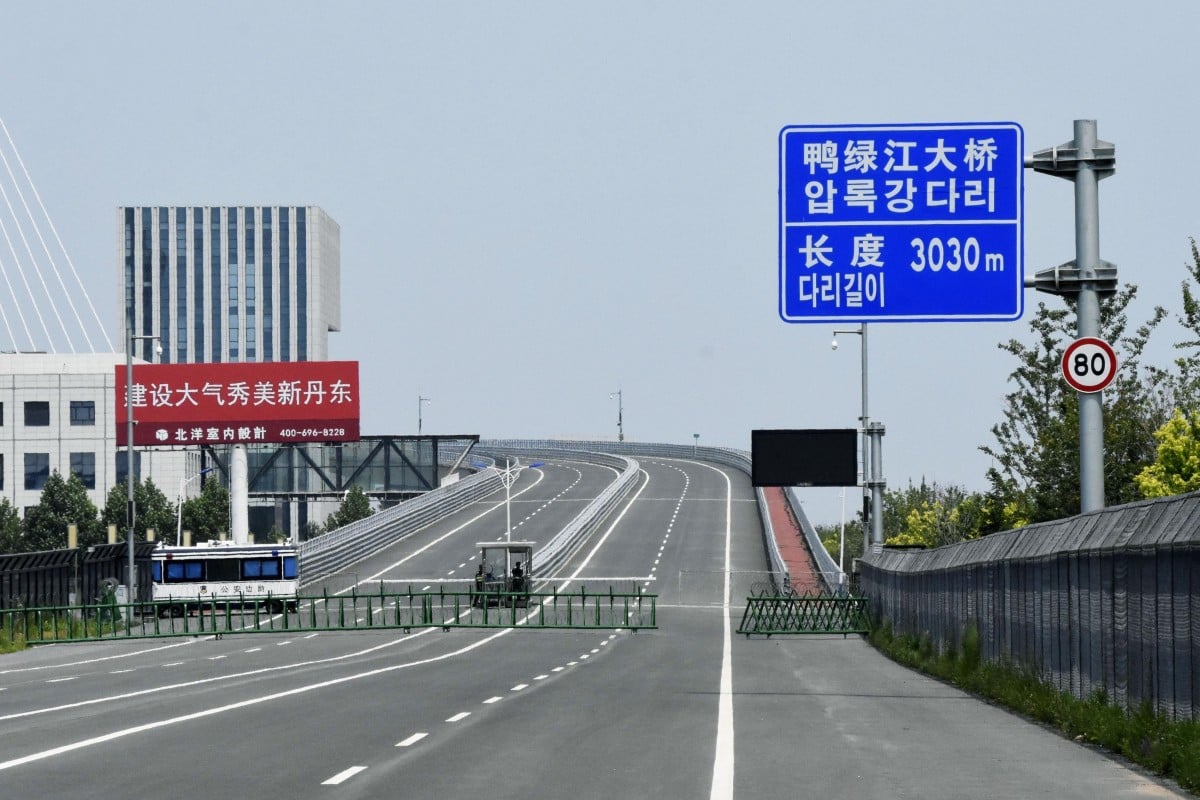
The bridge crosses the Yalu River on the border between China and North Korea. Photo: Kyodo
China and North Korea have finally opened a border bridge built between the two countries in 2016, in a potential boost to the North’s economy as Beijing tries to balance its concerns about its neighbour against ongoing international pressure for it to denuclearise.
A border checkpoint and bridge connecting the Chinese city of Jian with North Korea’s Manpo were open on Monday, following three years of delays since they were built.

Four buses crossed the border from North Korea in the morning and returned to the hermit kingdom about an hour later carrying about 120 people, who included tourists, according to South Korean media. It was not known whether the people travelled from North Korea or boarded the buses in China.

The bridge had remained closed on its completion in 2016, with Beijing taking a cautious approach at a time when it faced international scrutiny of whether it was fully implementing UN Security Council sanctions on the North.

to enforce the sanctions after a UN committee accused it and South Korea of being reluctant to enforce a ban on coal exports from the North.

But there has been a change in the status of the Jian-Manpo border crossing – built near to where Kim’s father, the former leader Kim Jong-il, was reported to have crossed the border in 2010 in a rare trip outside his country.

Kim’s second summit with Trump in February collapsed against a backdrop of continued economic struggles for North Korea. Beijing is wary of instability around the North Korean regime posing a threat to the security of China’s northeast, fearing an influx of refugees into one of its poorest regions.

North Korea’s trade has suffered to the extent that the Korea Development Institute said in February it had almost collapsed.

The North’s exports to China – which accounts for the bulk of its trade – plunged 87 per cent year-on-year in 2018, according to data compiled by South Korea’s Korea

International Trade Association, while there have been myriad other economic problems at a time when Kim has vowed to deliver on the economy.

In April last year, Kim announced that Pyongyang was moving away from its twin-track “byungjin” policy of developing nuclear weapons and the economy simultaneously to focus exclusively on rebuilding the economy.

Boo Seung-chan, adjunct professor at the Yonsei Institute for North Korean Studies in Seoul, said the bridge’s primary use would be to boost tourism in North Korea, which is not restricted by the UN sanctions.

“Tourism is the only sector left for the North Koreans to earn foreign revenue,” Boo said. “Besides, China can only offer its financial help through the tourism sector as it does not wish to violate UN sanctions.

“China’s Korean peninsula policy is to maintain the stability of the region. It may also be drawing a road map for when sanctions may be lifted, finding its means to accelerate its economic engagement to increase its sphere of influence.”

Source: SCMP

08/04/2019

China’s booming middle class creates opportunities for culture, entertainment industry: business leaders

NEW YORK, April 6 (Xinhua) — Boosted by a growing middle class population, China’s culture and entertainment industry enjoys broader prospect and is creating enormous opportunities, a group of business leaders from the United States and China said here Saturday.

Chinese society today has a growing appetite for the intellectual strength of art and music, Joseph Polisi, president emeritus and chief China officer at the Juilliard School, a renowned performing arts conservatory in the United States, said at a panel in New York.

Themed “The human connection: China and America in culture and entertainment,” the panel is part of the ongoing annual conference held by the Committee of 100 (C100), a premier U.S. organization of Chinese-American leaders from different fields.

The demand of “Chinese audiences are growing in size for western music,” he said, adding that Chinese parents have a greater request for orchestral musical training programs resulting in Chinese children being able to engage in sophisticated musical works at a young age.

Polisi, who is also an accomplished bassoonist, said that Juilliard is establishing a campus in Tianjin. Slated to open in fall 2019, the Tianjin campus offers audition-based programs on pre-college and graduate levels.

U.S. businesses have much to gain by accessing the Chinese market with the growth of the Chinese middle class and the emergence of dynamic forces including the nation’s Generation Z, small-town and rural dwellers, noted the panelists.

Their growing demand for a better life and high-quality goods will create new business opportunities.

Ben Wood, founder of Studio Shanghai Architectural Firm, who has spent 22 years in China, said bringing popular culture to China through the rapid rise of the middle class is among others behind his business success.

Gong Yu, founder and CEO of China’s leading online entertainment platform iQiyi, said his company delivers content to 200 to 300 million users daily, a remarkable achievement made in a span of only nine years thanks to the broader picture of China’s rapid development. He is confident that there will be more Chinese culture and entertainment production going global since more Chinese young people are willing to be dedicated in the industry.

Now China is home to the world’s biggest middle-income group comprised of some 400 million people, and the number is still on the rise. The country is evolving from the world’s workshop to becoming a major consumer of goods and services instead.

ource: Xinhua

08/04/2019

China to avoid debt burden for BRI participating countries: envoy

AMMAN, April 7 (Xinhua) — Li Chengwen, ambassador for China-Arab States Cooperation Forum Affairs of China’s Foreign Ministry, refuted on Sunday the criticism that China’s Belt and Road Initiative (BRI) will create so-called “debt trap” for some participating countries.

“China is trying to find mechanisms to avoid the ‘debt trap,'” Li said during a session on the second day of the World Economic Forum on the Middle East and North Africa 2019 held in the Dead Sea area of Jordan.

The Chinese envoy was responding to the criticism directed at the BRI by some people in the United States and Europe ahead of the second Belt and Road Forum for International Cooperation, due to be hosted by China later this month in Beijing.

The initiative, proposed by China in 2013, aims at building a trade and infrastructure network connecting Asia with Europe and Africa along the ancient trade routes of the Silk Road to seek common development and prosperity.

As of July 2018, more than 100 countries and international organizations had signed Belt and Road cooperation documents with China, extending the initiative’s scope from the Eurasian continent to Africa, Latin America and the Caribbean, and the South Pacific region.

Li pointed out that no participating country has complained of falling into the so-called “trap” of Chinese loans.

“The Belt and Road Initiative aims to increase the economic prosperity of a country. It does not aim at expanding the political and geographical authority of China in the world,” he said.

Many participants at the forum in Jordan agreed with Li’s comments.

“If you keep your interest first, you will not find China an unfair partner,” said Shandana Gulzar Khan, Pakistan’s parliamentary secretary for commerce. “But it depends on how well you do your homework.”

In Pakistan, a major BRI participating country, the China-Pakistan Economic Corridor has created tens of thousands of jobs and revived the economy of an entire region, Khan noted.

Speaking at the session, He Wenping, a research fellow of the Institute of West-Asian and African Studies, Chinese Academy of Social Sciences, echoed Li’s remarks.

“The biggest worry on the ‘debt-trap diplomacy’ should come from China’s side, not from outside. It is tax payers’ money,” the Chinese professor said.

“China is not waving the ‘China First’ flag,” she said.

The upcoming Belt and Road forum to be held in Beijing later this month could be an opportunity to kickstart a “second phase” of the initiative, she added.

Source: Xinhua

07/04/2019

China-EU tourism cooperation receives boost, official says

BRUSSELS, April 6 (Xinhua) — China-European Union (EU) relations in tourism get a boost as the 2018 EU-China Tourism Year has scored a success, an official recently said.

During the tourism year, China and the EU held more than 100 promotional activities. It “has been extremely successful,” said Eduardo Santander, executive director of the European Travel Commission (ETC).

There was a 5.1-percent year-on-year increase in Chinese arrivals in EU destinations in 2018, and among the top ones in terms of the volume of Chinese arrivals were Britain, Germany and France, according to the latest figures from the ETC and the air travel analysis agency ForwardKeys.

“We continue to see the benefits in 2019,” Santander added. “The growth in Chinese travellers has been solid, and the near future, judging by current bookings, will see the EU continuing to increase its share of this valuable market, not just to traditional destinations, but lesser-known and emerging ones as well.”

Chinese bookings to the EU for the first four months of 2019 are 16.9 percent ahead of where they were at the end of 2017, said the ETC, adding that this compares very favorably to the global trend, which is 9.3 percent ahead.

According to a recent report by China Tourism Academy and China’s online travel agency Ctrip, 70 percent of Chinese tourists in 2018 chose “package tours” when traveling in Europe, due to language, visa, culture and other factors.

Nevertheless, the proportion of independent and customized travel continues to rise. In 2018, the demand for customized European tours booked by the travel website increased by 127 percent over the past year, far higher than the growth rate of the overall market, said the report.

In addition, a number of new routes were launched between China and Europe in 2018, including direct flights from Fuzhou to Moscow, Changsha to London, Jinan to Paris, and Shenzhen to Brussels. In 2018, there were more than 600 flights a week between China and Europe, according to the report.

Ctrip in 2018 forecast that consumption of each tourist in Europe will exceed 25,000 yuan (about 3,721 U.S. dollars) in two years, with the total annual consumption to reach 150 billion yuan (about 22.3 billion dollars).

“Our findings confirm what a concerted effort to boost tourism can achieve. It also appears to have lasting effects, as we can see in the forward booking figures,” said Olivier Jager, CEO of ForwardKeys.

China’s domestic travel agencies are also deepening the cooperation with Europe. For example, the SkyScanner, Ctrip’s online travel search platform, set up its first overseas calling service center in Edinburgh in April 2018.

Source: Xinhua

06/04/2019

China’s outbound investment in U.S. expected to rebound, expert says

U.S.-NEW YORK-COMMITTEE 100 CHAIRMAN-CHINESE OUTBOUND INVESTMENT

H. Roger Wang, chairman of Committee of 100, a non-profit U.S. leadership organization of Chinese Americans, speaks during a press conference in New York, the United States, April 5, 2019. Speaking at a press conference on Friday, H. Roger Wang said he is positive that the situation would improve although China’s outbound investment in the United States currently hit the bottom. (Xinhua/Wang Ying)

NEW YORK, April 5 (Xinhua) — China’s outbound investment in the United States is going to recover after posting a deep drop in 2018, according to chairman of Committee of 100, a non-profit U.S. leadership organization of Chinese Americans.

Speaking at a press conference on Friday, H. Roger Wang said he is positive that the situation would improve although China’s outbound investment in the United States currently hit the bottom.

“You will see more Chinese investment into the United States,” said Wang.

Chinese investors only invested 4.8 billion U.S. dollars in the United States in 2018, down from 29 billion U.S. dollars in 2017 and 46 billion U.S. dollars in 2016, according to data from the research institute Rhodium Group.

The slump of Chinese investment in the United States last year resulted from tighter regulatory checks from both the United States and China, according to Wang.

Most companies indicated that they would maintain or accelerate their investment in each other’s markets in 2019, according to a new snap survey with top executives from companies which are committed to doing business in both the United States and China.

“Businesses in both countries plan to stay engaged with most planning to maintain or increase investment,” said a release issued on Friday on the survey jointly conducted by Committee of 100 and the U.S.-China Business Council, which represents American companies that do business with China.

Source: Xinhua

01/04/2019

China manufacturing returns to growth in March: Caixin PMI

BEIJING (Reuters) – China’s manufacturing sector unexpectedly returned to growth for the first time in four months in March, in a sign that government stimulus measures may be slowly gaining traction, a private business survey showed on Monday.

But growth in new domestic and exports orders was marginal, suggesting the economy will remain under pressure in coming months and will likely require more policy support before it can convincingly stabilize.

The Caixin/Markit Manufacturing Purchasing Managers’ Index (PMI) expanded at the strongest pace in eight months in March, rising to 50.8 from 49.9 in February, above the neutral 50-mark dividing expansion from contraction on a monthly basis and the highest level seen since July 2018.

Economists polled by Reuters had forecast the reading for March would stay unchanged at 49.9. The surprise expansion seen in the Caixin survey echoed that seen in the official PMI released on Sunday, which also showed factory activity defying expectations for another contraction in March.

“With a more relaxed financing environment, government efforts to bail out the private sector and positive progress in Sino-U.S. trade talks, the situation across the manufacturing sector recovered in March,” Zhengsheng Zhong, director of macroeconomic analysis at CEBM Group, said in a commentary accompanying the data release.

China has made proposals in talks with the United States on a range of issues that go further than it has before, including on forced technology transfer, as the two sides work to overcome obstacles to a deal to end their protracted trade war, U.S. officials told Reuters on Wednesday.

But sources close to the talks have stressed that a deal is by no means certain, and tit-for-tat tariffs on both sides have remained in place.

Zhang noted the employment situation improved significantly in March, a trend that may ease some government and investor concerns after the unemployment rate in urban areas for February rose to the highest since early 2017.

Caixin’s findings showed factories added headcount in March for the first time in 65 months, arresting a relentless spell of job shedding since October 2013. Some firms were hiring to support higher production and new business development, the release said.

New orders — an indicator of future activity — increased for the second month running, though the pace of growth was marginal. Output also grew for the second straight month.

New export orders expanded after contracting in the previous month. Though the rate of increase was fractional, Caixin said the broad trend appeared to have steadied in the first quarter.

Chinese manufacturers also signaled an improvement in pricing power in March, which could ease pressure on profit margins. Output charges edged up into expansionary territory and outpaced growth in input prices, reflecting reduced pressure from raw material costs.

“The producer price index might have risen faster year-on-year in March, and increased month-on-month, compared with a monthly decline in February,” Zhong added.

Optimism among businesses edged up to a 10-month high partly on expectations that market conditions, both at home and abroad, will improve, the statement said.

But purchasing activity declined for the third straight month, suggesting some firms remain cautious.
Economists at Nomura have forecast that China’s industrial production growth will moderate again in April and May after a brief rebound in March mainly due to last year’s low base.
Source: Reuters
26/03/2019

India election 2019: Bringing power to the people

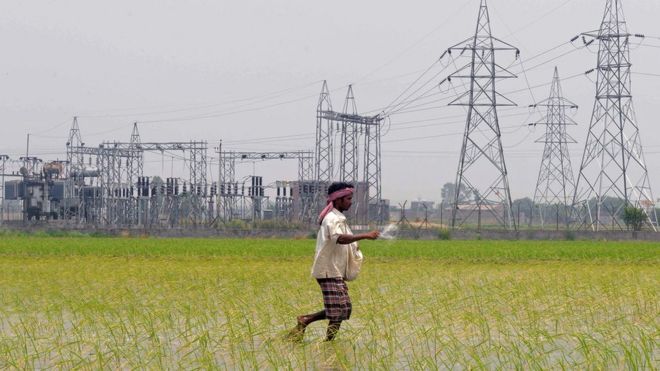
A farmer walks through a lush rice field in rural India with electricity pylons in the backgroundImage copyrightAFP

The Indian Prime Minister, Narendra Modi, said last year that his government had reached its target of providing every village in India with electricity.

“Yesterday, we fulfilled a commitment due to which the lives of several Indians will be changed forever,” Mr Modi tweeted in April 2018.

In the run-up to the Indian election, which gets under way on 11 April, BBC Reality Check examines claims and pledges made by the main political parties.

So does this claim stand up to scrutiny?

Let’s start by looking at villages.

There are almost 600,000 villages in India, according to the 2011 census.

The government defines a village as fully electrified if 10% of its households, as well as public places such as schools and health centres, are connected to the grid.

By this definition, all villages have now been electrified, according to official data.

However, much of the work had been done under the previous governments.

When Mr Modi took office, 96% of all the villages in India were already electrified. That left about 18,000 villages to go.

Before the BJP came to power, India had the world’s largest electricity access deficit – 270 million people.

That accounted for just under a third of the overall global deficit, according to the World Bank’s 2017 State of Electricity Access report.

The World Bank estimates that nearly 85% of the entire population now has access to power supply – that’s slightly higher than the government estimate of 82%.

What about households?

The project Mr Modi launched in September 2017 aimed to provide electricity to all Indian households by December 2018, covering 40 million families, primarily targeting rural India.

Virtually all Indian households have now been electrified, according to the government’s data. As of March, just 19,753 households are left.

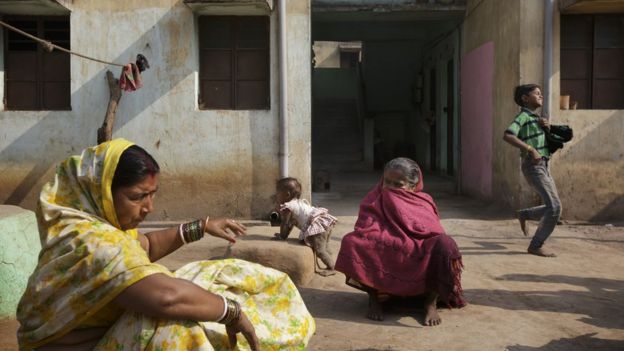
Two Indian women sat opposite each other on the pavement in an Indian village. A boy runs behind them in the background.Image copyrightGETTY IMAGES
Image captionThe quality of the electricity supply is weaker in the northern and eastern states.

The current government has suggested it has been electrifying villages at a faster rate than the previous one.

However, using central electricity authority data, we found that under the previous Congress-led government, an average of more than 9,000 villages a year were being electrified compared with the Modi government’s average of more than 4,000 villages a year.

Problems with supply

Although substantial progress has been made to electrify Indian villages – both by the current and previous administrations – the quality of the supply remains a problem, especially in rural areas.

Only six out of 29 states receive a 24-hour power supply, according to a government response to a question in India’s parliament.

Just under half of villages have more than 12 hours of domestic electricity a day and a third receive between eight and 12 hours, according to government data.

States with the highest percentage of villages that receive between just one and four hours of electricity a day include Jharkhand, Mizoram and Arunachal Pradesh.

Source: The BBC

Law of Unintended Consequences

continuously updated blog about China & India

ChiaHou's Book Reviews

continuously updated blog about China & India

What's wrong with the world; and its economy

continuously updated blog about China & India