Chindia Alert: You’ll be Living in their World Very Soon
aims to alert you to the threats and opportunities that China and India present. China and India require serious attention; case of ‘hidden dragon and crouching tiger’.
Without this attention, governments, businesses and, indeed, individuals may find themselves at a great disadvantage sooner rather than later.
The POSTs (front webpages) are mainly 'cuttings' from reliable sources, updated continuously.
The PAGEs (see Tabs, above) attempt to make the information more meaningful by putting some structure to the information we have researched and assembled since 2006.
Chinese President Xi Jinping, also general secretary of the Communist Party of China Central Committee and chairman of the Central Military Commission, takes part in a deliberation with his fellow deputies from the delegation of Inner Mongolia Autonomous Region at the third session of the 13th National People’s Congress (NPC) in Beijing, capital of China, May 22, 2020. (Xinhua/Ju Peng)
BEIJING, May 23 (Xinhua) — “What is people first?” Chinese President Xi Jinping asked, before offering his own answer when he was talking with lawmakers at the ongoing national legislative session.
“So many people worked together to save a single patient. This, in essence, embodies doing whatever it takes (to save lives),” he said.
Xi, also general secretary of the Communist Party of China Central Committee and chairman of the Central Military Commission, is a deputy to the 13th National People’s Congress.
During his deliberations with fellow deputies from Inner Mongolia Autonomous Region on Friday, “people” was a keyword.
Xi referred to a story told by another deputy that morning. Luo Jie, from the COVID-19 hard-hit province of Hubei, told reporters at the session how medical workers in his hospital spent 47 days saving an 87-year-old COVID-19 patient.
“About 10 medical workers meticulously took care of the patient for dozens of days, and finally saved the patient’s life,” Xi said. “I am really impressed.”
In the COVID-19 pandemic, health workers around the world got to know the elderly are the most difficult to treat and require the most sophisticated medical resources. China has given every patient equal treatment irrespective of their age or wealth.
Chinese President Xi Jinping, also general secretary of the Communist Party of China Central Committee and chairman of the Central Military Commission, takes part in a deliberation with his fellow deputies from the delegation of Inner Mongolia Autonomous Region at the third session of the 13th National People’s Congress (NPC) in Beijing, capital of China, May 22, 2020. (Xinhua/Huang Jingwen)
In Hubei alone, more than 3,600 COVID-19 patients over the age of 80 have been cured. In the provincial capital Wuhan, seven centenarian patients have been cured.
“We mobilized from around the nation the best doctors, the most advanced equipment and the most needed resources to Hubei and Wuhan, going all out to save lives,” Xi said during the deliberations, adding that the eldest patient cured is 108 years old.
“We are willing to save lives at all costs. No matter how old the patients are and how serious their conditions have become, we never give up,” Xi said.
Xi joined political advisors and lawmakers on Thursday and Friday in paying silent tribute to the lives lost to COVID-19 as the top political advisory body and the national legislature opened their annual sessions.
This year’s government work report said China’s economy posted negative growth in the first quarter of this year, but it was “a price worth paying” to contain COVID-19 as life is invaluable.
“As a developing country with 1.4 billion people, it is only by overcoming enormous difficulties that China has been able to contain COVID-19 in such a short time while also ensuring our people’s basic needs,” the report said.
Epidemic response is a reflection of China’s governing philosophy.
The fundamental goal for the Party to unite and lead the people in revolution, development and reform is “to ensure a better life for them,” Xi said.
The nation’s average life expectancy reached 77 years in 2018, more than double that in 1949, when the people’s republic was founded.
Chinese people are not just living longer but better lives, with more material wealth and broader choices to pursue individual dreams. All rural poor will bid farewell to poverty this year as part of the goal of building a moderately prosperous society in all respects.
The Party’s long-term governance, Xi said, rests on “always maintaining close bond with the people.”
“We must always remain true to the people’s aspiration and work in concert with them through thick and thin,” Xi said.
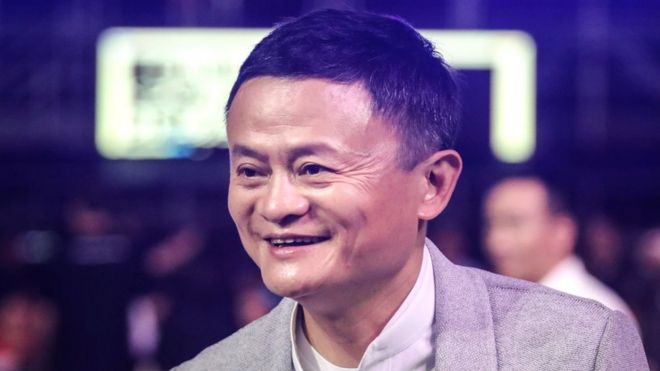
The richest man in China opened his own Twitter account last month, in the middle of the Covid-19 outbreak. So far, every one of his posts has been devoted to his unrivalled campaign to deliver medical supplies to almost every country around the world.
“One world, one fight!” Jack Ma enthused in one of his first messages. “Together, we can do this!” he cheered in another.
The billionaire entrepreneur is the driving force behind a widespread operation to ship medical supplies to more than 150 countries so far, sending face masks and ventilators to many places that have been elbowed out of the global brawl over life-saving equipment.
But Ma’s critics and even some of his supporters aren’t sure what he’s getting himself into. Has this bold venture into global philanthropy unveiled him as the friendly face of China’s Communist Party? Or is he an independent player who is being used by the Party for propaganda purposes? He appears to be following China’s diplomatic rules, particularly when choosing which countries should benefit from his donations, but his growing clout might put him in the crosshairs of the jealous leaders at the top of China’s political pyramid.
Other tech billionaires have pledged more money to fight the effects of the virus – Twitter’s Jack Dorsey is giving $1bn (£0.8bn) to the cause. Candid, a US-based philanthropy watchdog that tracks private charitable donations, puts Alibaba 12th on a list of private Covid-19 donors. But that list doesn’t include shipments of vital supplies, which some countries might consider to be more important than money at this stage in the global outbreak.
The world’s top coronavirus financial donors
How Alibaba compares to the top five. No one else other than the effervescent Ma is capable of dispatching supplies directly to those who need them. Starting in March, the Jack Ma foundation and the related Alibaba foundation began airlifting supplies to Africa, Asia, Europe, Latin America and even to politically sensitive areas including Iran, Israel, Russia and the US.
Ma has also donated millions to coronavirus vaccine research and a handbook of medical expertise from doctors in his native Zhejiang province has been translated from Chinese into 16 languages. But it’s the medical shipments that have been making headlines, setting Ma apart.
“He has the ability and the money and the lifting power to get a Chinese supply plane out of Hangzhou to land in Addis Ababa, or wherever it needs to go,” explains Ma’s biographer, Duncan Clark. “This is logistics; this is what his company, his people and his province are all about.”
A friendly face
Jack Ma is famous for being the charismatic English teacher who went on to create China’s biggest technology company. Alibaba is now known as the “Amazon of the East”. Ma started the company inside his tiny apartment in the Chinese coastal city of Hangzhou, in the centre of China’s factory belt, back in 1999. Alibaba has since grown to become one of the dominant players in the world’s second largest economy, with key stakes in China’s online, banking and entertainment worlds. Ma himself is worth more than $40bn.
Officially, he stepped down as Alibaba’s chairman in 2018. He said he was going to focus on philanthropy. But Ma retained a permanent seat on Alibaba’s board. Coupled with his wealth and fame, he remains one of the most powerful men in China.
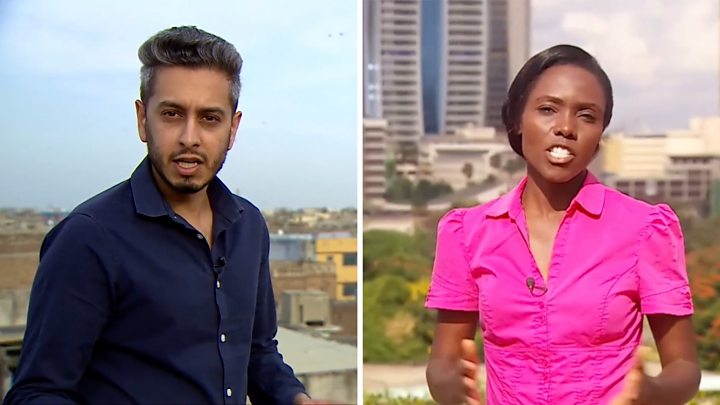
Media caption The BBC’s Secunder Kermani and Anne Soy compare how prepared Asian and African countries are
It appears that Ma’s donations are following Party guidelines: there is no evidence that any of the Jack Ma and Alibaba Foundation donations have gone to countries that have formal ties with Taiwan, China’s neighbour and diplomatic rival. Ma announced on Twitter that he was donating to 22 countries in Latin America. States that side with Taiwan but who have also called for medical supplies – from Honduras to Haiti – are among the few dozen countries that do not appear to be on the list of 150 countries. The foundations repeatedly refused to provide a detailed list of countries that have received donations, explaining that “at this moment in time, we are not sharing this level of detail”.
However, the donations that have been delivered have certainly generated a lot of goodwill. With the exception of problematic deliveries to Cuba and Eritrea, all of the foundations’ shipments dispatched from China appear to have been gratefully received. That success is giving Ma even more positive attention than usual. China’s state media has been mentioning Ma almost as often as the country’s autocratic leader, Xi Jinping.
AFP
So far…
Over 150 countries have received donations from Jack Ma, including about:
120.4mface masks
4,105,000testing kits
3,704ventilators
Source: Alizila
It’s an uncomfortable comparison. As Ma soaks up praise, Xi faces persistent questions about how he handled the early stages of the virus and where, exactly, the outbreak began.
The Chinese government has dispatched medical teams and donations of supplies to a large number of hard-hit countries, particularly in Europe and South-East Asia.
However, those efforts have sometimes fallen flat. China’s been accused of sending faulty supplies to several countries. In some cases, the tests it sent were being misused but in others, low-quality supplies went unused and the donations backfired.
In contrast, Jack Ma’s shipments have only boosted his reputation.
“It’s fair to say that Ma’s donation was universally celebrated across Africa,” says Eric Olander, managing editor of the China Africa Project website and podcast. Ma pledged to visit all countries in Africa and has been a frequent visitor since his retirement.
“What happens to the materials once they land in a country is up to the host government, so any complaints about how Nigeria’s materials were distributed are indeed a domestic Nigerian issue,” Olander adds. “But with respect to the donation itself, the Rwandan leader, Paul Kagame, called it a “shot in the arm” and pretty much everyone saw it for what it was which was: delivering badly-needed materials to a region of the world that nobody else is either willing or capable of helping at that scale.”
Walking the tightrope
But is Ma risking a backlash from Beijing? Xi Jinping isn’t known as someone who likes to share the spotlight and his government has certainly targeted famous faces before. In recent years, the country’s top actress, a celebrated news anchor and several other billionaire entrepreneurs have all “disappeared” for long periods. Some, including the news anchor, end up serving prison sentences. Others re-emerge from detention, chastened and pledging their allegiance to the Party.
“There’s a rumour that [Jack Ma] stepped down in 2018 from being the chairman of the Alibaba Group because he was seen as a homegrown entrepreneur whose popularity would eclipse that of the Communist Party,” explains Ashley Feng, research associate at the Centre for New American Security in Washington DC. Indeed, Ma surprised many when he suddenly announced his retirement in 2018. He has denied persistent rumours that Beijing forced him out of his position.
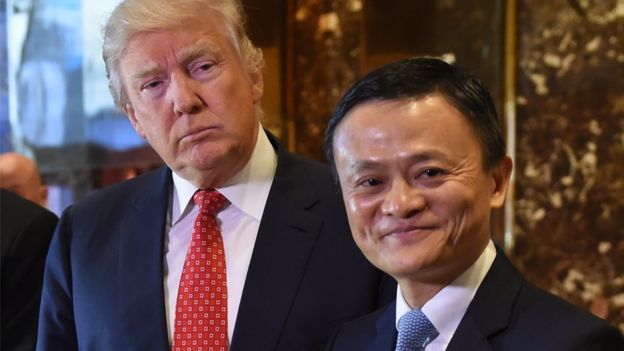
Image copyright GETTY IMAGESImage caption Ma discussed trade with then-President-elect Donald Trump in January 2017
Duncan Clark, Ma’s biographer, is also aware of reports that Ma was nudged away from Alibaba following a key incident in January 2017. The Chinese billionaire met with then-President-elect Donald Trump in Trump Tower, ostensibly to discuss Sino-US trade. The Chinese president didn’t meet with Trump until months later.
“There was a lot of speculation of time that Jack Ma had moved too fast,” Clark says. “So, I think there’s lessons learned from both sides on the need to try to coordinate.”
“Jack Ma represents a sort of entrepreneurial soft power,” Clark adds. “That also creates challenges though, because the government is quite jealous or nervous of non-Party actors taking that kind of role.”
Technically, Ma isn’t a Communist outsider: China’s wealthiest capitalist has actually been a member of the Communist Party since the 1980s, when he was a university student.
But Ma’s always had a tricky relationship with the Party, famously saying that Alibaba’s attitude towards the Party was to “be in love with it but not to marry it”.
Even if Ma and the foundations connected to him are making decisions without Beijing’s advance blessing, the Chinese government has certainly done what it can to capitalise on Ma’s generosity. Chinese ambassadors are frequently on hand at airport ceremonies to receive the medical supplies shipped over by Ma, from Sierra Leone to Cambodia.
China has also used Ma’s largesse in its critiques of the United States. “The State Department said Taiwan is a true friend as it donated 2 million masks,” the Chinese Foreign Ministry tweeted in early April. “Wonder if @StateDept has any comment on Jack Ma’s donation of 1 million masks and 500k testing kits as well as Chinese companies’ and provinces’ assistance?”
Perhaps Ma can rise above what’s happened to so many others who ran afoul of the Party. China might just need a popular global Chinese figure so much that Ma has done what no one else can: make himself indispensable.
“Here’s the one key takeaway from all that happened with Jack Ma and Africa: he said he would do something and it got done,” explains Eric Olander. “That is an incredibly powerful optic in a place where foreigners often come, make big promises and often fail to deliver. So, the huge Covid-19 donation that he did fit within that pattern. He said he would do it and mere weeks later, those masks were in the hands of healthcare workers.”
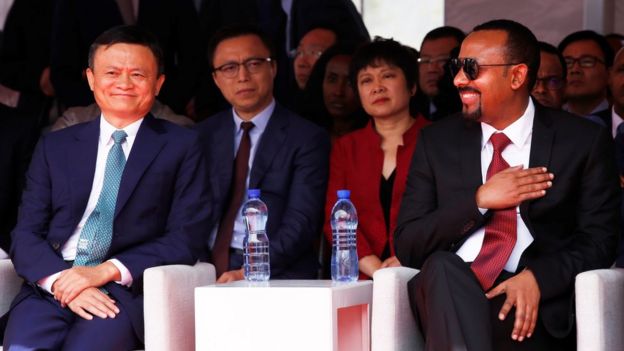
Image copyright GETTY IMAGESImage caption Ma at an Electronic World Trade Platform event with Ethiopian Prime Minister Abiy Ahmed last year
Duncan Clark argues that Ma already had a seat at China’s high table because of Alibaba’s economic heft. However, his first-name familiarity with world leaders makes him even more valuable to Beijing as China tries to repair its battered image.
“He has demonstrated the ability, with multiple IPOs under his belt, and multiple friendships overseas, to win friends and influence people. He’s the Dale Carnegie of China and that certainly, we’ve seen that that’s irritated some in the Chinese government but now it’s almost an all hands on deck situation,” Clark says.
There’s no doubt that China’s wider reputation is benefiting from the charitable work of Ma and other wealthy Chinese entrepreneurs. Andrew Grabois from Candid, the philanthropic watchdog that’s been measuring global donations in relation to Covid-19, says that the private donations coming from China are impossible to ignore.
“They’re taking a leadership role, the kind of thing that used to be done by the United States,” he says. “The most obvious past example is the response to Ebola, the Ebola outbreak in 2014. The US sent in doctors and everything to West Africa to help contain that virus before it left West Africa.”
Chinese donors are taking on that role with this virus.
“They are projecting soft power beyond their borders, going into areas, providing aid, monetary aid and expertise,” Grabois adds.
So, it’s not the right time for Beijing to stand in Jack Ma’s way.
“You know, this is a major crisis for the world right now,” Duncan Clark concludes. “But obviously, it’s also a crisis for China’s relationship with the rest of the world. So they need anybody who can help dampen down some of these those pressures.”
New report from Oxfam highlights how the country’s wealth is concentrated in the hands of a few
Unequal Footing
Data from Oxfam show India has the highest percentage of its country’s wealth held by the top 1%.
Country
Percentage of wealth top 1% has
Global
51
Australia
22
Belgium
18
Brazil
48
Canada
26
Denmark
31
France
25
Germany
31
India
58
Italy
25
Mexico
38
Netherlands
24
New Zealand
20
South Africa
42
Sweden
36
U.K.
24
U.S.
42
The richest 1% of Indians hold 58% of the country’s total wealth, according to Oxfam India.
The stark inequality in India is worse than the global data put out by the organization, which show that the richest 1% have more than 50% of the total world wealth, Oxfam said.
It said recently improved data on the distribution of wealth, particularly in countries like India and China, indicate that the poorest half of the world has less wealth was previously thought. Oxfam singled out India repeatedly in the report.
It said that companies are increasingly driven to pay higher returns to their shareholders. In India, the amount of profits corporations share with shareholders is as high as 50% and growing rapidly, the report said.
A family sits atop a pile of hay on a horse cart on a highway near Amritsar, India, Nov. 4, 2016.
The report said the annual share dividends paid by from Zara’s parent company to Amancio Ortega – the world’s second richest man – are equal to around 800,000 times the annual wage of a worker employed by a garment factory in India.
Oxfam said that the combined wealth of India’s 57 billionaires is equivalent to that of the country’s poorest 70%.“India is hitting the global headlines for many reasons, but one of them is for being one of the most unequal countries in the world with a very high and sharply rising concentration of income and wealth,” Nisha Agarwal, chief executive of Oxfam said in a statement.
Oxfam said India should introduce an inheritance tax and raise its wealth levies as well as increasing public spending on health and education. It said it should end the era of tax havens and crack down on rich people and corporations avoiding tax.
Still, those who track the rich point to it as an optimistic signal. At the end of 2013, there were 1,090,000 people with a net worth of more than 10 million yuan ($1.6 million) and 67,000 with more than 100 million yuan, according to the Hurun Wealth Report 2014. That’s an increase of 4% for both categories. In the previous year, the growth rate was 3% and 2%, respectively, which represented the lowest increase over the six years Hurun has compiled the report.
Hurun, which also puts together an annual list of the richest people in China, said it came up with its headcount by two methods. First, it looked at the sales of high-end real estate and cars, as well as income tax returns and other data related to wealthy individuals. Then, it rounded out its headcount by taking into account macroeconomic data like gross domestic product growth and gross national product.
So who are the new rich? Mostly private business owners, said Hurun, who make up 55% of all millionaires (up from 50% last year). The report said the wealthy typically own a personal residence worth at least 2 million yuan, multiple cars worth more than 200,000 yuan as well as 1.7 million yuan in “investable assets.”
Where do the world’s rich live? As has long been true, the U.S. has more millionaires (in U.S. dollars) than any other country, with 7.1 million. But China last year came in second with 2.4 million millionaire households, beating Japan with half as many. The number of millionaire families around the world reached 16.3 million last year, up from 13.7 million the year before.
All told, the total value of global private wealth grew far faster than global economic output, up 14.6 percent, to $152 trillion, compared with an 8.6 percent increase in 2012. Much of the new money originated in the Asia-Pacific region (excluding Japan), up by 30.5 percent, to $37 trillion. That put Asia in the No. 3 spot for riches, behind North America and Europe, according to the 14th annual survey on private wealth by Boston Consulting Group.
Driven by rapid GDP growth in China and India, Asia is expected to surpass North America and Europe as the leading source of global wealth in 2018. That year, the global pot of gold will total a bit less than $200 trillion, with the proportion from Asia projected to reach $61 trillion, slightly more than North America, with $59.1 trillion. “The Asia-Pacific region and its new wealth will account for about half of the total growth,” the report predicts.
India is a country of acute contrasts; and perhaps nowhere is the divide more pronounced than in the status of women. In terms of the big milestones, the country has a reputation for leapfrogging others – Indira Gandhi became the world’s second ever female prime minister way back in 1966 (pipped to post by Sirimavo Bandaranaike of Sri Lanka), and women have since served in multiple senior political roles.
They’ve also stormed ahead in the professions (notably medicine and law) and in the international corporate world. One might cite Indra Nooyi, who beat all comers to secure the top job at Pepsi-Co; ot her aptly named Padmasree Warrior, chief technology and strategy officer at Cisco Systems. Meanwhile, a generation of newly-empowered and highly-educated young women are going out to work in larger numbers than before.
Set against these achievements, however, is the increasingly troubling situation facing Indian women more broadly. A recent Reuters Trustlaw investigation – examining a wide variety of measures from male-to-female pay disparity, through female foeticide, to deaths in dowry disputes – ranked India as the worst country in the G20 to be born female.
Assushma Kapoor, South Asia deputy director for UN Women sums up: “There are two Indias: one where we can see more equality and prosperity for women, but another where the vast majority of women are living with no choice, voice, or rights.”
Although more than two decades of economic liberalisation has opened up opportunities in progressive cities such as New Delhi, Kolkata and Bangalore, large parts of the country – particularly in the north – remain entrenched in feudalism. The upshot, according to The Economist, is that just 29 per cent of Indian women are currently in the workforce, compared with two-thirds of women in China.If deep-rooted changes in social attitudes are needed, who better to lead them than India’s companies? The willingness with which multinational companies (especially in the IT sector) have embraced the female graduates of India’s management schools is surely indicative of their quality. As well as Vanitha Narayan of IBM (profiled overleaf) the managing directors of both CapGemini India and Hewlett-Packard India are women. Female representation at the top of the banking profession is also much higher in India than many other countries.
The sectors in which women are currently thriving at senior levels – FMCG, retail, IT and retail banking – tend to be consumer-centric, says headhunter Ronesh Puri of Executive Access: reflecting the fact that household buying decisions are usually made by women and companies feel the need to ‘connect’. In more labour-intensive industries like mining, oil and gas, and aviation, women are still under-represented – as they are in the west – though that is beginning to change.
Indeed, demand for female directors at Indian companies across the board is growing at an estimated rate of about 10 per cent each year. That’s partly the result of new legislation mandating at least one board for certain classes of companies. But it’s also a response to the growing body of research suggesting a link between business growth and profitability, and gender diversity.Many women in corporate India might protest that there’s a long way to go. But the same is true in virtually every other developed nation. And one thing India is not short of is distinguished role models. Here we profile four inspirational women, who’ve made their mark across very different sectors.
Shubhalakshmi Panse
Chairman and managing director, Allahabad Bank
When Shubhalakshmi Panse’s became the first woman to lead India’s oldest bank last year, it marked the culmination of a near 40-year career at the financial coal-face. It almost never happened. Panse, 59, was pursuing a doctorate in embryology at Pune University when she stumbled across a recruitment advert from the state-owned Bank of Maharashtra. She took the qualifying exams “just for fun”. Having successfully climbed the professional ladder, Panse made the most of a sabbatical in the US in the early 1990s, completing a three-year MBA in twelve months flat before returning to India. The sizeable challenge she was hired to tackle at Allahabad Bank was to turn round the struggling institution in a year, ahead of her retirement next January. Panse admits “networking” isn’t her forte. She credits her success to her work ethic (“my commitment has always been 200 per cent”); and her parents. “We were raised as independent individuals. My mother would say ‘you can do it’.
Ishita Swarup
Founder, Orion Dialog and 99.labels.com
Ishita Swarup knew from an early age that she wanted to do “something of my own” rather than get stuck in “the cog in the wheel syndrome”. After completing her MBA, she joined Cadbury’s Indian brand management team, but stayed in the corporate cocoon just three years before starting the online phone marketing firm, Orion Dialog, in 1994 aged 27. The firm, which numbered Citibank among early clients, caught the rising tide of business process outsourcing. In 2004, Swarup exited in style: selling out to Aegis BPO (part of the Essar group). Still, she’s had much a choppier time with her second big venture, the ecommerce outfit 99.labels.com. Launched in 2009, the site was India’s first ‘flash sales’ shopping portal. But a proliferation of ‘me too’ competition and profitability concerns have dogged the firm and, in May, a big investor pulled out. Swarup hasn’t given up. She’s rejigging the business model and looking for new backers. “Seeing a venture take shape from idea to reality, and then taking it to a growth level, motivates me,” she says. “Making mistakes is part of that process.”
India’s wealthiest self-made woman started Biocon aged 25 in 1978, out of the garage of a rented house with the bare minimum of capital because she could not get financial backing. The decision to strike out on her own – becoming India’s first biotech entrepreneur – was taken almost by default. She had hoped to get a job at Vijay Mallya’s United Breweries, but was shocked to hear that male colleagues wouldn’t accept her. “That’s when the hard fact hit me. There is a gender bias.” Biocon began life as an enzyme specialist, before moving whole sale into the lucrative bio-pharma sector in the late 1990s, ahead of the great ‘off patent’ bonanza. IN 2004, Mazumdar-Shaw too the company public, Now 60 and worth US$625 million, according to Forbes, she lives in an estate outside Bangalore. “You could be in California”, she said last year. “Then you step outside and see poverty. That’s not a nice feeling.” She has pledged to five away three-quarters of her wealth.
Vanitha Narayanan
Managing director, IBM India
In contrast, one woman who has thrived on corporate life is Vanitha Narayanan, an IBM ‘lifer’ who became responsible this year for all Big Blue’s operations in India and South Asia – one of the company’s fastest-growing regions. With 150,000 people on the payroll, IBM is the largest multinational employer in India. Naraythan, a graduate of the University of Madras, cheerfully admits that, apart from a brief stint in a department store, “IBM is my only job”. She joined the company’s US telecoms group as a trainee after taking an MBA at the University of Houston, and made her name working with just one client, the Southwestern Bell Telephone Company. “It helped me lay a foundation – you respect the industry of your client, and sometimes the client is your best teacher.” That certainly proved true in her case. She went on to become a global vice-president of IBM’s telecom solutions, and in 2006 moved to China to run the Asia Pacific Unit. At 54, Narayanan is modest about her achievements, preferring the word “influence” to power. “She’s no pushover,” says a colleague. “But she can build trust very easily”.
The Times: “One of India’s top technology bosses has attacked the growing tendency towards conspicuous consumption among his country’s business elite, saying that some of the excesses were repugnant in a nation of such poverty.
Azim Premji, the billionaire philanthropist and chairman of Wipro, the IT services group, said that practices such as flying in American bands for weddings at $1 million a time were damaging in India, where official statistics last year suggested that 360 million people were living in the depths of poverty.
His words come as Delhi considers imposing higher taxes on the super-rich as it tries to close a yawning budget gap.
The country’s ultra-wealthy should be devoting more of their earnings to philanthropy, Mr Premji said. He declined to be drawn on whether he thought the elite should be subject to higher taxes, emphasising instead the importance of giving away wealth voluntarily. The 67-year-old is one of Asia’s leading philanthropists and in 2001 founded the Azim Premji Foundation, an educational charity to which he has handed billions of dollars.
Mr Premji said: “In India the very rich are demonstrating too much conspicuous wealth in terms of lifestyle. That I think has not been the culture of India in terms of the previous rich, [who] always had very moderate, regulated lifestyles. That is getting a lot of visibility. If you go for parties and you go for weddings and in a country of our poverty some of those make you sick.”
India’s economy has slowed sharply, with growth of 5.5 per cent forecast for this year, down from expansion of over 8 per cent early in the decade. Mr Premji said that his country’s boom had been hyped in the past and that its image had been damaged recently by the economic slowdown and policy indecision.
Mr Premji, ranked as India’s third-wealthiest person by Forbes, warned that unemployment in his country could turn into a “complete disaster” if growth did not accelerate sharply.”
China Daily: “Western experience sought after to advance China’s development
The newly rich in China are looking to the West for experience again. But this time, they want to learn how to spend money, rather than how to make it.
Zhang Xin, CEO and co-founder of Soho China, a leading real estate developer, said she had no clear strategy when she started her journey into philanthropy.
“In the early days, when I established the Soho China Foundation, we did not have a clear plan. We gave money to build a school here and set up a kindergarten there and rushed to help people affected by a tsunami,” Zhang said.
Zhang said she gradually realized that it is important to discover the pressing social problems China faces and then choose one field that requires a huge investment of money and human capital.
The female billionaire said her foundation started the project Teach for China, which is dedicated to training teachers in rural schools in Northwest China’s Gansu province, one of the most impoverished provinces, six years ago.
“Teach for China is what we learned from an American foundation,” she said.
Zhang made her remarks at the China Philanthropy Forum 2012, which was jointly held on Friday by the China Association for International Friendly Contact, Caijing Magazine and other organizations in Beijing.”






 CHINDIA ALERT: You'll be living in their world, very soon