Chindia Alert: You’ll be Living in their World Very Soon
aims to alert you to the threats and opportunities that China and India present. China and India require serious attention; case of ‘hidden dragon and crouching tiger’.
Without this attention, governments, businesses and, indeed, individuals may find themselves at a great disadvantage sooner rather than later.
The POSTs (front webpages) are mainly 'cuttings' from reliable sources, updated continuously.
The PAGEs (see Tabs, above) attempt to make the information more meaningful by putting some structure to the information we have researched and assembled since 2006.
BEIJING, April 10 (Xinhua) — China on Wednesday urged relevant countries to offer a fair, just and non-discriminatory business environment for enterprises of various countries, including Chinese ones.
Foreign Ministry spokesperson Lu Kang made the remarks at a routine press briefing when asked whether Australia applies double standards on the cybersecurity issue.
Recently, a number of Australian media reported that relevant Australian law mandated communication enterprises install “backdoors” for the Australian government. Google, Apple, Amazon and other technology companies have expressed serious concern about the act, saying it threatens cybersecurity in Australia and the world.
While the Australian side previously claimed that the country does not want any company in its communications networks that have an obligation to any other government. For this reason, Australia banned Huawei from the 5G telecommunications network.
Noting China has been closely following the relevant developments, Lu said the communication market and international cooperation will be seriously affected when it forces enterprises to install “backdoors” by legislation, which builds its own security and interests on the basis of violating other countries’ security and the privacy of their citizens.
“As you can see, the business communities have expressed serious concern about this,” Lu said.
A puzzling thing is that on the one hand, relevant countries use cybersecurity and sensationalize the so-called “security threat” of other countries or enterprises with trumped-up charges. On the other hand, they are doing things that endanger cybersecurity, Lu said.
“I am just as interested as you are in what the Australian government would say,” said the spokesperson.
Emphasizing that China has always attached great importance to and firmly maintained cybersecurity, Lu said that the Chinese side is willing to continue to actively participate in international cooperation in cybersecurity and work with all parties to build a peaceful, secure, open, cooperative and orderly cyberspace.
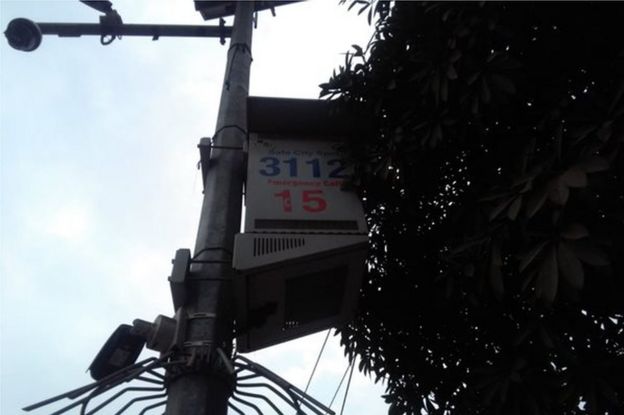
Image captionThe surveillance system was built to monitor Lahore’s streets following a series of terrorist attacks
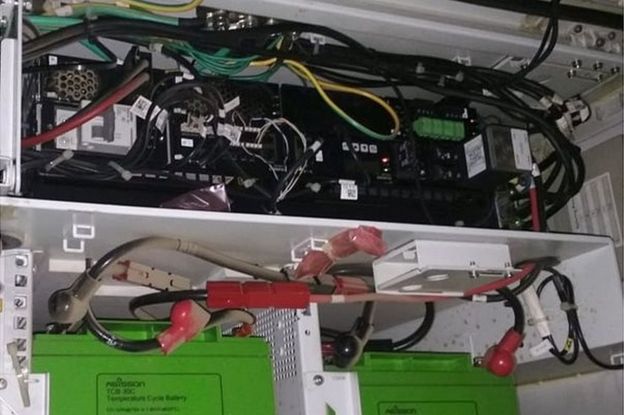
Huawei removed wi-fi transmitting cards from a Pakistan-based surveillance system’s CCTV cabinets after they were discovered by the project’s staff.
Punjab Safe City Authority (PSCA) told BBC Panorama it had told the firm to remove the modules in 2017 “due to [a] potential of misuse”.
The authority said that the Chinese firm had previously made mention of the cards in its bidding documents.
But a source involved in the project suggested the reference was obscure.
A spokesman for Huawei said there had been a “misunderstanding”. He added that the cards had been installed to provide diagnostic information, but said he was unable to discuss the matter further.
The PSCA confirmed that the explanation it had been given was that wi-fi connectivity could have made it easier for engineers to troubleshoot problems when they stood close to the cabinets, without having to open them up.
Two people involved in Lahore’s project helped bring the matter to the BBC’s attention and have asked to remain anonymous. One said that Huawei had never provided an app to make use of the wi-fi link, and added that the cabinets could already be managed remotely via the surveillance system’s main network.
Image captionIt was suggested that a wi-fi link could have helped engineers troubleshoot problems without having to climb up and open the cabinets
A UK-based cyber-security expert said that it was not uncommon for equipment sellers to install extra gear to let them offer additional services at a later date.
But he added that the affair highlighted the benefit of oversight because if the authority had remained unaware of the cards’ existence, it could not have taken steps to manage any potential risk they posed.
“As soon as you give someone another method of remote connectivity you give them a method to attack it,” commented Alan Woodward.
“If you put a wi-fi card in then you’re potentially giving someone some other form of remote access to it. You might say it’s done for one purpose, but as soon as you do that it’s got the potential to be misused.”
There is no evidence that the cards created a vulnerability, and one of the sources involved confirmed that there had not been an opportunity to test if they could be exploited before the kit was removed.
‘Prompt response’
Lahore’s Safe City scheme was first announced in 2016 following a series of terrorist bombings.
It provides a vast surveillance network of cameras and other sensors, and a brand new communications system for the city’s emergency services
As part of the system, Huawei installed 1,800 CCTV cabinets, within which it placed the wi-fi modules behind other equipment.
Image captionThe cards were placed among other equipment in the cabinets
The PSCA’s chief operating officer told the BBC that Huawei had been “prompt” in its response to a request to remove them and had fully “complied with our directions”.
“It is always [the] choice of the parties in a contract to finalise the technical details and modules as per their requirements and local conditions,” added Akbar Nasir Khan.
“PSCA denies that there are any threats to the security of the project [and the] system was continuously checked by our consultants, including reputed firms from [the] UK.”
But there is no suggestion that this was related to Huawei’s involvement, and in any case the wi-fi modules would have been removed by this point. The PSCA has also denied anyone from its office had been involved.
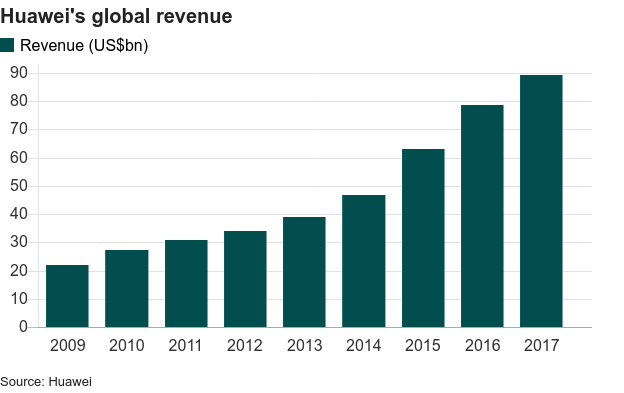
Chinese telecoms giant Huawei said revenues topped $100bn in 2018 despite a US-led campaign against the business on fears it poses a security threat.
The firm said revenue for 2018 hit 721.2bn yuan ($107bn), while net profit jumped 25% to 59.3bn yuan.
The US and others have restricted the company over concerns that its ties to Beijing represent a security threat.
Huawei says it is independent and strongly denies its products pose a security risk.
The Shenzhen-based firm said global revenue surged 19.5% in 2018, its fastest pace of growth in two years. The result was supported by strong sales of smartphones in China.
At the same time its carrier business, which sells telecoms infrastructure to countries around the world, eased 1.3%.
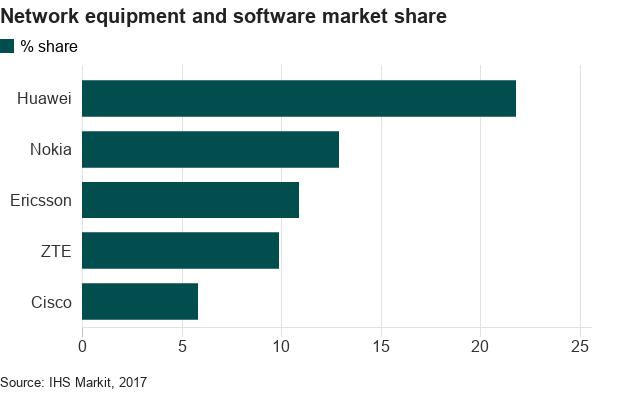
Huawei is the world’s largest maker of telecoms equipment. It faces a growing backlash from Western countries on concerns over the security of its products used in next-generation 5G mobile networks.
The US, Australia and New Zealand have all blocked local firms from using Huawei to provide the technology for their 5G networks.
The report, issued by the National Cyber Security Centre, said it can provide “only limited assurance that the long-term security risks can be managed in the Huawei equipment currently deployed in the UK”.
Huawei has begun pushing back. It has launched a more aggressive strategy in recent months to counter what it sees as an American “smear” campaign.
Earlier this month, it filed a lawsuit against the US government over a ban that restricts federal agencies from using its products, arguing it is “unconstitutional.”
SHANGHAI (Reuters) – Smartphone retailers in China say it’s a tough sell of late with consumers reluctant to upgrade, put off by chill economic winds.
Even so domestic brands led by Huawei have made big strides, wooing consumers with top-notch hardware and innovative features as they move upmarket in the $500-$800 price range. The result: a loss of share in a key segment for Apple Inc and fresh price cuts for iPhones by Chinese retailers.
“Of those people who are upgrading, there are many switching from Apple to Chinese brands but very few switching from Chinese brands to Apple,” said Jiang Ning, who manages a Xiaomi store in the northern province of Shandong.
Huawei Technologies Co Ltd, Xiaomi Corp, Oppo and Vivo once sought to grab share in the world’s biggest smartphone market with value-for-money devices, but consumer demand for better phones has prompted strategic rethinks.
“People are more attached to their phone than ever and have higher expectations for the function and experience it offers. The response has been constant upgrading of hardware specs,” Alen Wu, global vice president at Oppo, told Reuters.
He Fan, CEO of Huishoubao which buys and resells used phones, said he has seen a consumer shift to Huawei from Apple, driven by the Chinese love of selfies and emphasis on camera quality. Huawei has had a tie-up with German camera maker Leica since 2016.
“Huawei’s cameras have become noticeably better than Apple’s in that they suit the tastes of Chinese consumers more,” he said.
Compared to dual-cameras common in most smartphones, Huawei’s P20 Pro device boasts three rear-facing cameras, with the additional one improving zoom capabilities.
It is one of several new devices in its P20 and Mate 20 lines, which helped Huawei’s share of the $500-$800 segment in China surge to 26.6 percent last year from 8.8 percent, data from research firm Counterpoint shows.
Apple, by contrast, saw its share of the segment tumble to 54.6 percent from 81.2 percent, also hurt by its decision to move even further upmarket with the iPhone X series.
“Most Chinese smartphone buyers are not ready to shell out beyond $1,000 for a phone,” said Neil Shah, research director at Counterpoint. “This left a gap in the below-$800 segment, which Chinese vendors grabbed with both hands.”
Shipments of phones priced above $600 in China grew 10 percent in 2018, data from research firm Canalys shows. By contrast, the overall market shrunk 14 percent, marking a second year of contraction.
OVERSEAS GAINS
The weaker cachet for Apple in China was underscored this month when several major retailers simultaneously cut iPhone prices for a second time this year.
A 64GB iPhone 8 sold at Suning.com Co Ltd now costs 3,899 yuan ($580), roughly 25 percent less than it did in December. That’s also lower than its $599 price tag in the United States, where iPhones typically cost less to buy than in China. Most iPhone models through to the iPhone 8 series have seen prices in China cut, albeit not equally.
In earnings too, it seems to be a tale of divergent fortunes. Apple’s October-December revenue from the Greater China region fell by about a quarter from a year earlier. Greater China currently accounts for 15.6 percent of its overall revenue.
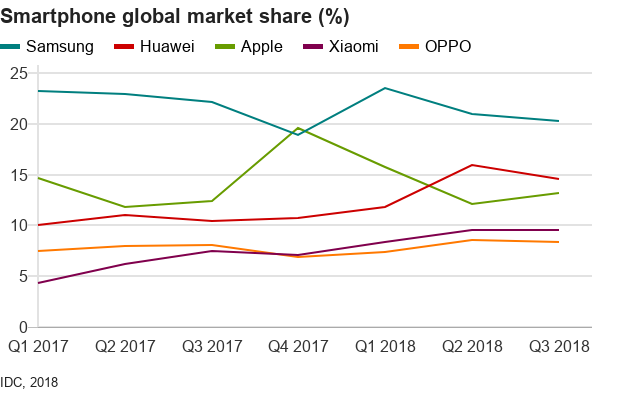
Huawei, the world’s No. 2 smartphone maker, has estimated revenue for 2018 rose 21 percent, which analysts attribute in large part to robust smartphone sales.
More broadly, fewer sales for Apple means fewer customers for its App Store and media streaming services. The shift to higher-end phones by Chinese brands has also meant greater inroads in overseas markets.
Huawei’s shipments in Europe jumped 55 percent in the latest quarter and it now has 23.6 percent market share, according to Canalys. That’s not far behind Samsung Electronics and Apple which saw small declines in shipments.
OPPO, VIVO
If Huawei is taking the lion’s share of turf that Apple once had in China, Oppo and Vivo – brands owned by electronics hardware conglomerate BBK – are the newest threats.
In June, Vivo launched the Nex which starts from 3,898 yuan ($610) and in July, Oppo launched the Find X, priced at 4,999 yuan ($755).
The models mark the first time the brands have priced a phone above $600, a sharp departure from their roots selling $300-$500 models to young consumers in second-tier cities.
The devices came with features unavailable in the iPhone, including under-the-glass fingerprint sensors and “notchless” displays, both of which increase the size of usable screen.
Xiaomi too is going upmarket, announcing in January it would split off its low-budget Redmi range of phones into a sub-brand. In doing so, it is taking a leaf out of Huawei’s book which has for years sold cheaper devices under the Honor brand, helping differentiate its products.
Redmi will target international markets and e-commerce sales, while the flagship Xiaomi brand will target China and offline retail markets, company founder Lei Jun told reporters.
Last month, Xiaomi unveiled the Mi 9, its latest flagship device with a price tag of 2,999 yuan ($450). But the company also said it might be the last time a Xiaomi flagship phone would be priced under 3,000 yuan.
“Xiaomi’s flagship series phones were once always set at 1,999 yuan,” said Lei. “This was a contributing factor to our rise, but it also became an obstacle to our growth,” he said.
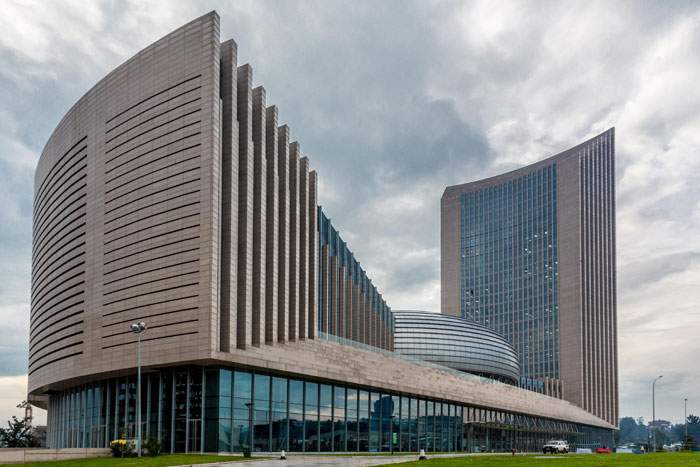
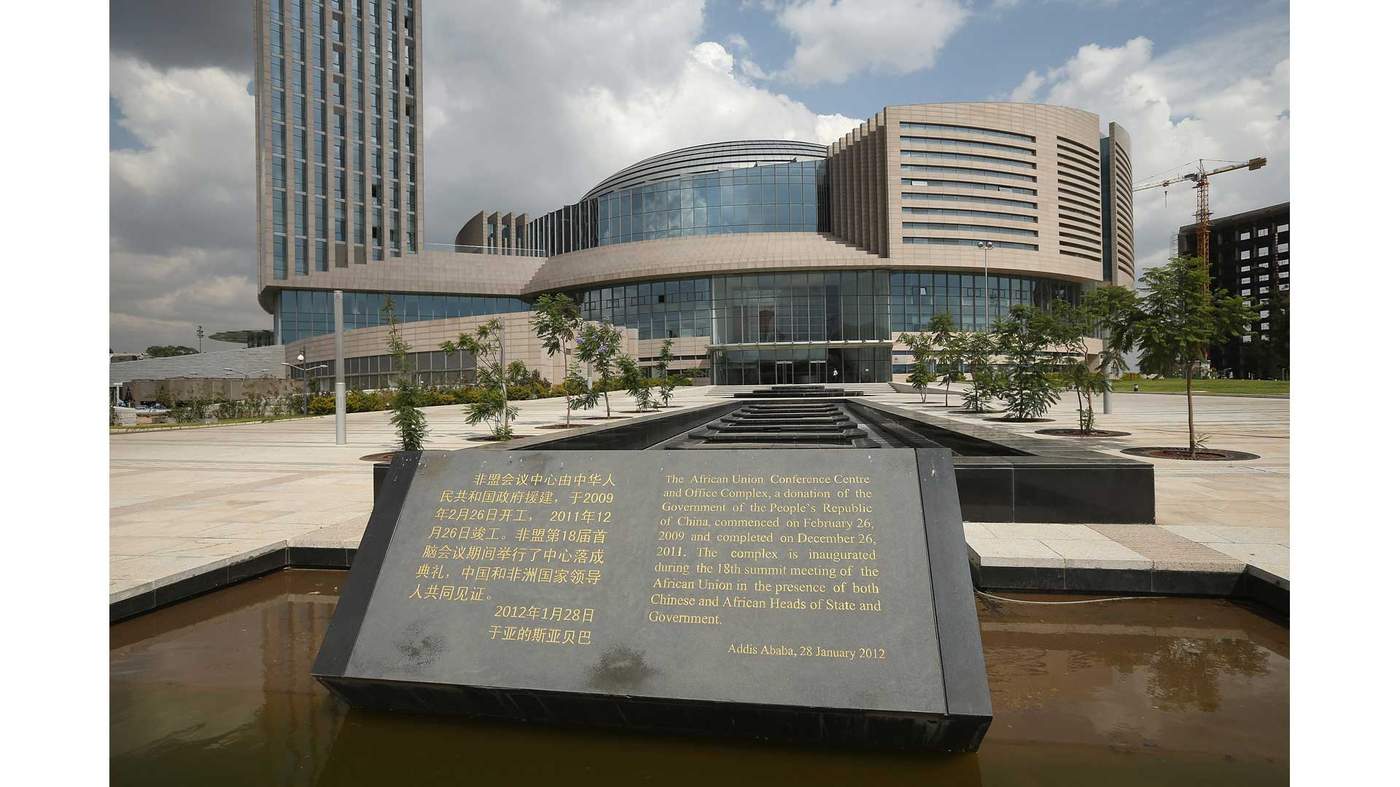
The African Union headquarters in Addis Ababa is a shiny spaceship-like structure that glistens in the afternoon sun.
With its accompanying skyscraper, it stands out in the Ethiopian capital.
Greetings in Mandarin welcome visitors as they enter the lifts, and the plastic palm trees bear the logos of the China Development Bank.
African Union HQ, Addis Ababa
Everywhere, there are small indications that the building was made possible through Chinese financial aid.
In 2006, Beijing pledged $200m to build the headquarters. Completed in 2012, everything was custom-built by the Chinese – including a state-of-the-art computer system.
For several years, the building stood as a proud testament to ever-closer ties between China and Africa. Trade has rocketed over the past two decades, growing by about 20% a year, according to international consultancy McKinsey. China is Africa’s largest economic partner.
But in January 2018, French newspaper Le Monde Afrique dropped a bombshell.
It reported that the AU’s computer system had been compromised.
The newspaper, citing multiple sources, said that for five years, between the hours of midnight and 0200, data from the AU’s servers was transferred more than 8,000km away – to servers in Shanghai.
This had allegedly continued for 1,825 days in a row.
Le Monde Afrique reported that it had come to light in 2017, when a conscientious scientist working for the AU recorded an unusually high amount of computer activity on its servers during hours when the offices would have been deserted.
It was also reported that microphones and listening devices had been discovered in the walls and desks of the building, following a sweep for bugs.
The reaction was swift.
Both AU and Chinese officials publicly condemned the report as false and sensationalist – an attempt by the Western media to damage relations between a more assertive China and an increasingly independent Africa.
But Le Monde Afrique said that AU officials had privately expressed concerns about just how dependent they were on Chinese aid – and what the consequences of that could be.
In the midst of all of this, one fact remained largely unreported.
The main supplier of information and communication technology systems to the AU headquarters was China’s best-known telecoms equipment company – Huawei.
The company says it had “nothing” to do with any alleged breach.
Huawei “served as the key ICT provider inside the AU’s headquarters”, said Danielle Cave of the Australian Strategic Policy Institute, in a review of the alleged incident.
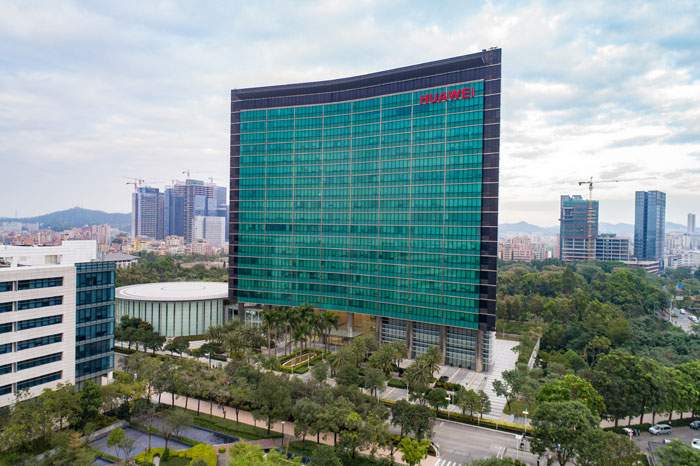
Huawei headquarters in Shenzhen, China
“This doesn’t mean the company was complicit in any theft of data. But… it’s hard to see how – given Huawei’s role in providing equipment and key ICT services to the AU building and specifically to the AU’s data centre – the company could have remained completely unaware of the apparent theft of large amounts of data, every day, for five years.”
There is no evidence to indicate that Huawei’s telecoms network equipment was ever used by the Chinese government – or anyone else – to gain access to the data of their customers.
Indeed, no-one has ever gone on record to confirm that the AU system was compromised in the first place.
But these reports played into years of suspicions about Huawei – that a large Chinese company might find itself unduly influenced by the Chinese government.
Ren and the rise of Huawei
“When I first started out 30 years ago… we didn’t really have any telephones. The only phones we had were those hand-cranked phones that you see in old World War II films. We were pretty undeveloped then.”
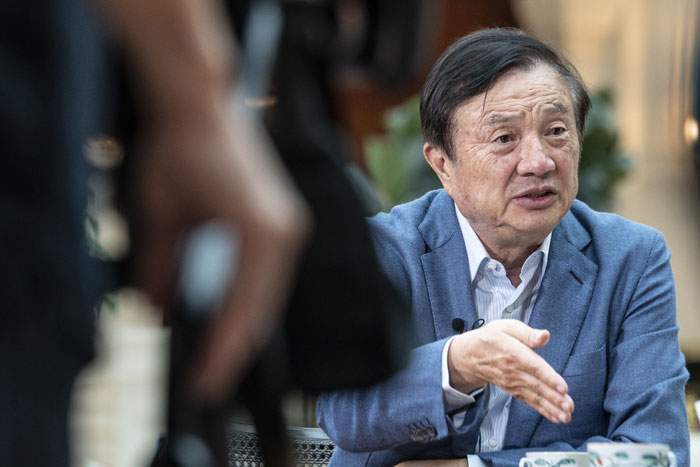
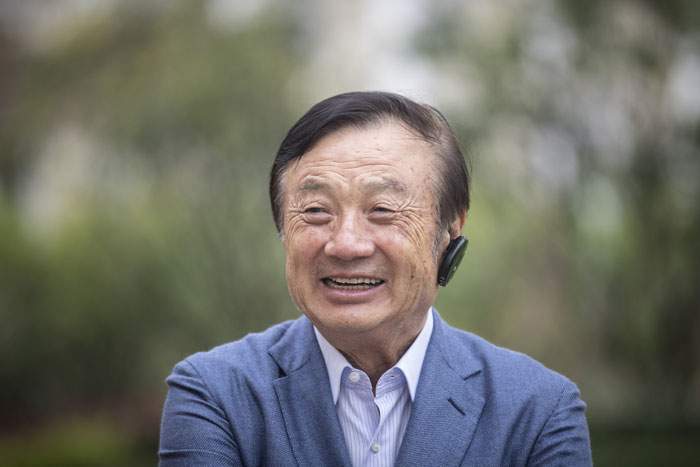
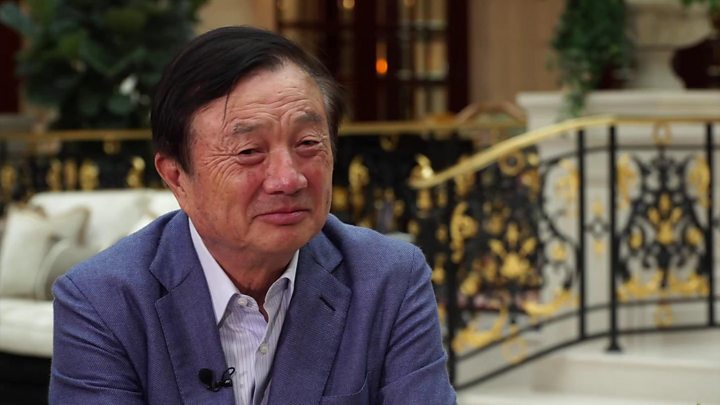
Huawei’s founder and chairman Ren Zhengfei is reminiscing to the BBC about the origins of the world’s second-biggest smartphone firm, while sitting in the Huawei headquarters in Shenzhen – a symbol of the success that he’s worked his whole lifetime for.
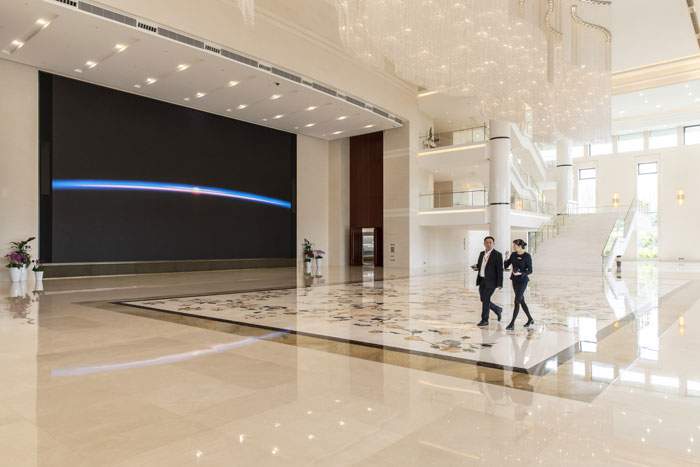
A long marbled staircase, covered in plush red carpet, greets you as you first walk in.
At the top of the stairs, a giant painting depicts a traditional Chinese New Year scene.
Inside Huawei’s Shenzhen HQ
A few kilometres away in Dongguan, Huawei’s latest campus is even more eye-catching.
The site – designed to accommodate the company’s 25,000 R&D staff – comprises 12 “villages”, each of which recreates the architecture of a different European city, among them Paris, Bologna and Granada.
It’s as if Silicon Valley had been re-imagined by Walt Disney. Long corridors of Roman pillars and picturesque French cafes adorn the campus, with a train connecting the different areas, running through manicured gardens and past an artificial lake.
It’s a world away from the environment that Mr Ren found himself in when he first started the company in 1987. “I founded Huawei when China began to implement its reform and opening up policy,” he says. “At that time, China was shifting from a planned economy to a market economy. Not only people like myself, but even the most senior government officials, did not have the vaguest idea of what a market economy was. It seemed it was hard to survive.”
Ren was born in 1944 in Southern China – a tumultuous, chaotic place, one of the poorest regions in an already destitute country.
For a long time, hardship was all he ever knew.
He was from a family of seven children. “They were very poor,” says David De Cremer, who has co-written a book on Ren and Huawei.
“I think hardship is something that you can see throughout his life, and which he keeps emphasising himself.”
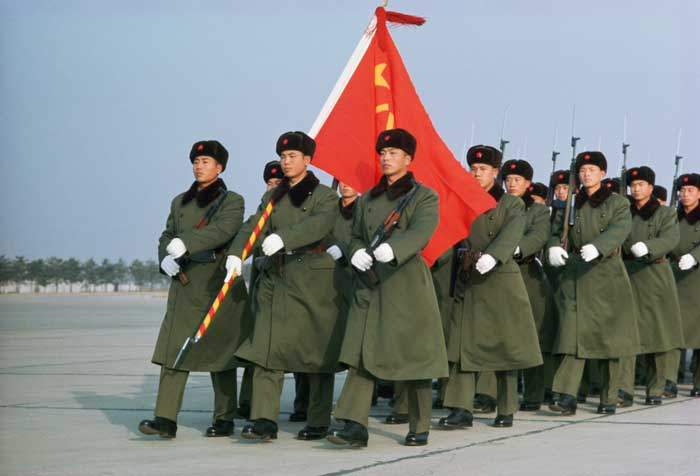
To escape that life of poverty and drudgery, Ren did what many young Chinese men of that era did. He joined the army.
Soldiers from the People’s Liberation Army, 1972
“I was a very low-ranking officer in the People’s Liberation Army,” he says. “I served in an ordinary construction project, not a field unit. At the time, I was a technician of a company in the military, and then I became an engineer.”
He left the military in 1983 when China began to downsize its forces, and went into the electronics business.
By his own admission, he wasn’t a great businessman at first.
“I was someone who had been in the military all my life at the time, used to doing what I was told,” he says. “Suddenly, I began to work in a market economy. I was at a total loss. So I too suffered losses, I too was deceived, and I was cheated.”
But he was quick to learn, and was a keen student of Western business practices and European history.
“I did research on what exactly a market economy was all about,” he says. “I read books on laws, including those about European and US laws. At that time, there were very few books on Chinese laws, and I had to read those on European and US laws.”
Five years later, he founded Huawei – the name can be translated as “splendid achievement” or “China is able” – to sell simple telecoms equipment to the rural Chinese market. Within a few years, Huawei was developing and producing the equipment itself.
Sometime in the early 90s, Huawei won a government contract to provide telecoms equipment for the People’s Liberation Army.
By 1995, the company was generating sales of around US$220,000, mainly from selling to the rural market.
The following year Huawei was given the status of a Chinese “national champion”. In practice, this meant the government closed the market to foreign competition.
At a time when China’s economy was growing by an average of 10% per year, this was no small advantage. But it was only when Huawei started to expand overseas in 2000, that it really saw its sales soar.
In 2002, Huawei made US$552m from its international market sales. By 2005 its international market contracts exceeded its domestic business for the first time.
Ren’s early days in business instilled in him a desire to protect his company from the whims and fancies of the stock market. Huawei is privately held and employee-owned. This gave Ren the power to plough more money back into research and development. Each year, Huawei spends US$20bn on R&D – one of the biggest such budgets in the world.
“Publicly listed companies have to pay a lot of attention to their balance sheets,” he says. “They can’t invest too much, otherwise profits will drop and so will their share prices. At Huawei, we fight for our ideals. We know that if we fertilise our ‘soil’ it will become more bountiful. That’s how we’ve managed to pull ahead and succeed.”
One story from the early days of the company tells how Ren was cooking for his staff (he loves to cook, or so the story goes). Suddenly he rushed out of the kitchen and announced to the room: “Huawei will be a top three player in the global communications market 20 years from now!”
And that’s exactly what happened. In fact, those ambitions were surpassed.
Today, Huawei is the world’s biggest seller of network telecommunications equipment.
From aspiring to be a company like Apple, it now sells more smartphones than Apple.
But shadows have continued to loom over Huawei’s international success.
Ren and Huawei’s links to the Chinese Communist Party have raised suspicions that the company owes its meteoric rise to its powerful political connections in China. The US has accused Huawei of being a tool of the Chinese government.
It’s an accusation which Ren denies. “Please don’t think that Huawei has become what it is today because we have special connections,” he says. “Even 100% state-owned companies have failed. Do good connections mean you will succeed then? Huawei’s success is still very much due to our hard work.”
The case against
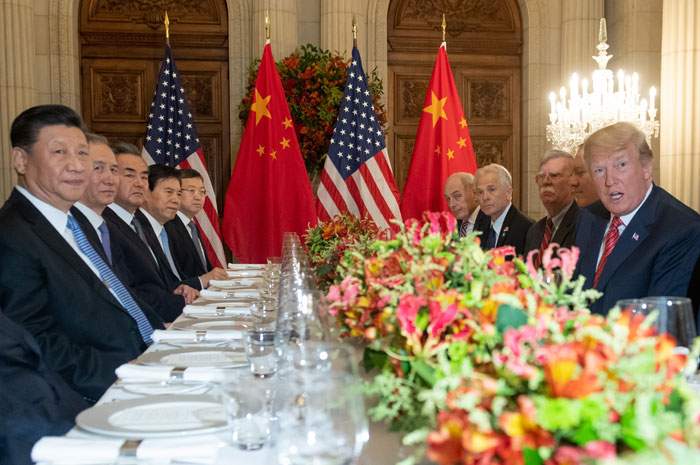
It was 1 December 2018. US President Donald Trump and China’s President Xi Jinping were dining on grilled sirloin followed by caramel rolled pancakes at the G20 summit in Buenos Aires.
They had a lot to discuss. The US and China were in the middle of a trade war – imposing tariffs on each other’s goods – and growth forecasts for both countries had recently been cut as a result. This was adding to the fear of a slowing global economy.
In the event, the two leaders agreed a truce in the trade war, with Donald Trump tweeting that “Relations with China have taken a BIG leap forward!”
Xi Jinping and Donald Trump at dinner, December 2018
But thousands of kilometres north in Canada, an arrest was taking place that would throw doubt on this rapprochement.
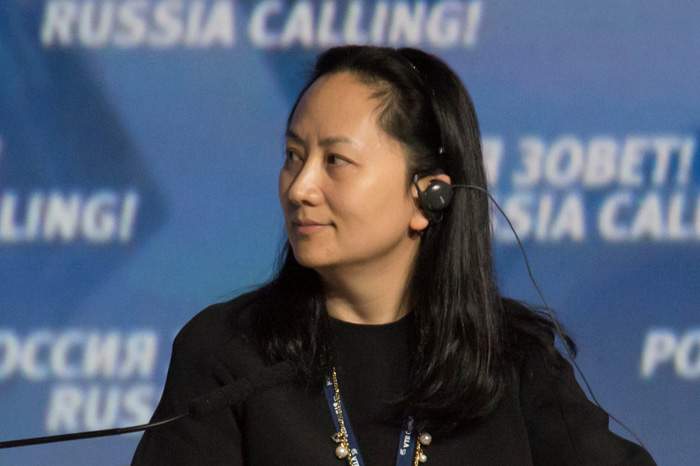
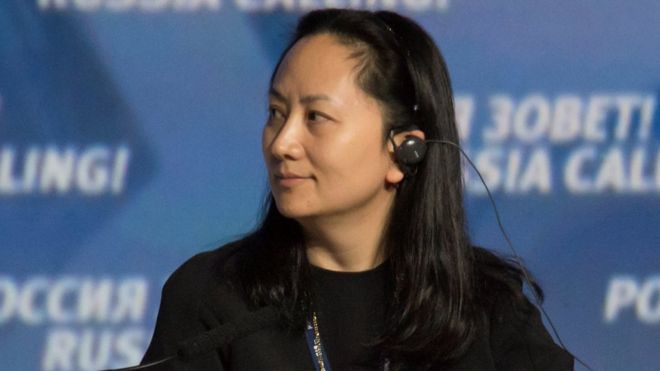
Meng Wanzhou, Huawei’s chief financial officer and Ren Zhengfei’s eldest daughter, had been detained by Canadian officials while transferring between flights at Vancouver airport.
The arrest had come at the request of the US, who accused her of breaking sanctions against Iran.
“When she was detained, as her father, my heart broke,” says Ren, visibly emotional. “How could I watch my child suffer like this? But what happened, has happened. We can only depend on the law to solve this problem.”
Meng Wanzhou being driven to court in Canada
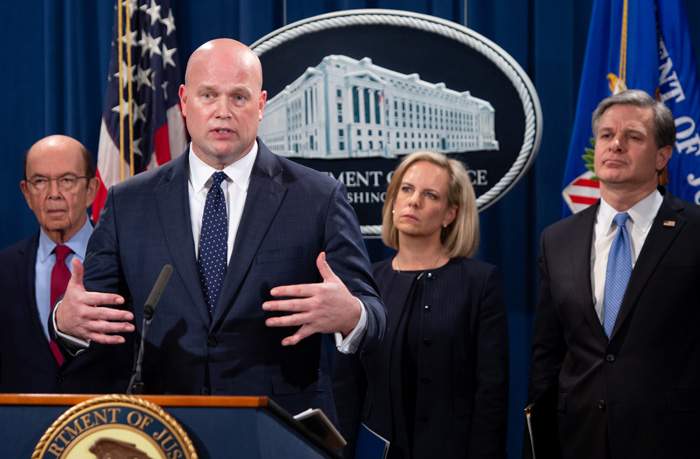
Huawei’s problems were just beginning. Nearly two months later, the US Department of Justice filed two indictments against Huawei and Ms Meng.
Under the first indictment, Huawei and Ms Meng were charged with misleading banks and the US government about their business in Iran.
The second indictment – against Huawei – involved criminal charges including obstruction of justice and the attempted theft of trade secrets.
Both Huawei and Ms Meng deny the charges.
January 2019: Acting US attorney general Matthew Whittaker announces charges against Huawei and Meng Wanzhou
The charge of stealing trade secrets centres on a robotic tool – developed by T-Mobile – known as Tappy.
According to legal documents, Huawei had tried to buy Tappy, a device which mimicked human fingers by tapping mobile phone screens rapidly to test responsiveness.
T-Mobile was in partnership with Huawei at the time, but it rebuffed the Chinese firm’s offers, fearing it would use the technology to make phones for T-Mobile’s competitors.
It’s alleged that one of Huawei’s US employees then smuggled Tappy’s robotic arm into his satchel so that he could send its details to colleagues in China.
After the alleged theft was discovered, the Huawei employee claimed that the arm had mistakenly fallen into his bag.
Huawei claimed that the employee had been acting alone, and the case was settled out of court in 2014. But the latest case is built on email trails between managers in China and the company’s US employees, linking Huawei management to the alleged theft.
The indictment also details evidence of a bonus scheme from 2013, offering Huawei employees financial rewards for stealing confidential information from competitors.
Huawei has denied any such scheme exists.
Meng Wanzhou, photographed in 2014
This is not the first time that Huawei has been accused of stealing trade secrets. Over the years companies like Cisco, Nortel and Motorola have all pointed the finger at the Chinese firm.
But US fears about Huawei are about much more than industrial espionage. For more than a decade, the US government has seen the company as little more than an arm of the Chinese Communist Party.
These concerns have been brought to the fore with the advent of “fifth generation” or 5G mobile internet, which promises download speeds 10 or 20 times faster than at present, and much greater connectivity between devices.
As the world’s biggest telecoms infrastructure provider, Huawei is one of the companies best placed to build new 5G networks. But the US has warned its intelligence partners that awarding contracts to Huawei would be tantamount to allowing the Chinese spy on them.
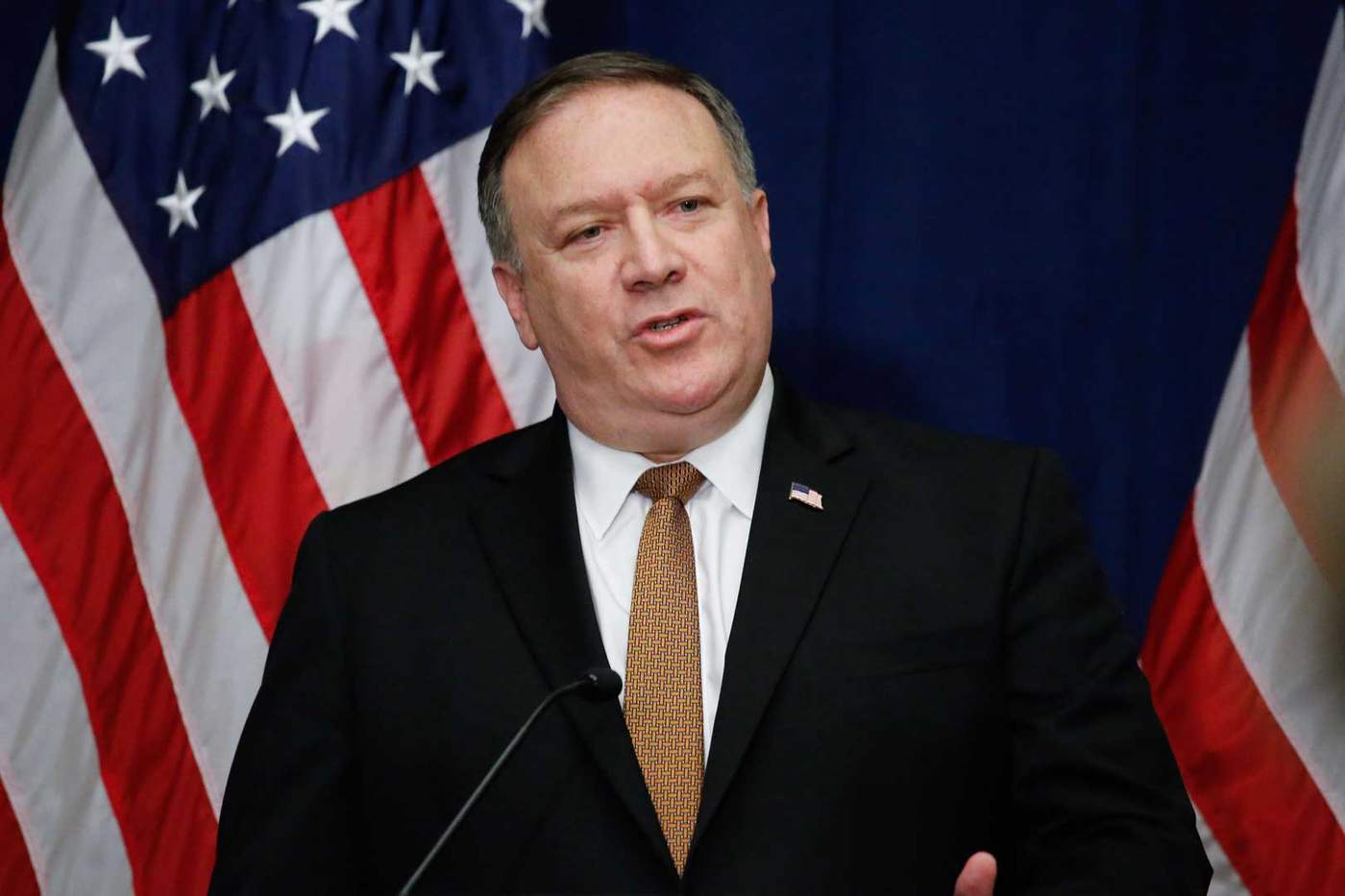
US Secretary of State Mike Pompeo recently cautioned against Huawei, saying, “If a country adopts this and puts it in some of their critical information systems, we won’t be able to share information with them.”
US Secretary of State Mike Pompeo
The UK, Germany and Canada are reviewing whether Huawei’s products pose a security threat.
Australia went a step further last year, and banned equipment suppliers “likely to be subject to extrajudicial directions from a foreign government”.
Huawei was not mentioned by name, but Danielle Cave of the Australian Strategic Policy Institute says the company posed a national security risk because of its government links.
She cites an article in Chinese law that makes it impossible for any company to refuse to help the Chinese Communist Party in intelligence gathering.
“Admittedly, what is missing from this debate is the smoking gun,” she says.
“For the average person who has a Huawei smartphone it’s not a big deal. But if you’re a Western government that has key national security to protect – why would you allow this access to a company that is in the political system that China is in?”
For his part, Ren says that Huawei’s resources have never and would never be used to spy for the Chinese government.
“The Chinese government has clearly said that it won’t ask companies to install backdoors,” he says. A “backdoor” is a term used to describe a secret entry point in software or a computer system that gives access to the person or entity who installed it to the inner workings of the system.
“Huawei will not do it either,” he continues. “Our sales revenues are now hundreds of billions of dollars. We are not going to risk the disgust of our country and our customers all over the world because of something like that. We will lose all our business. I’m not going to take that risk.”
Xi’s China
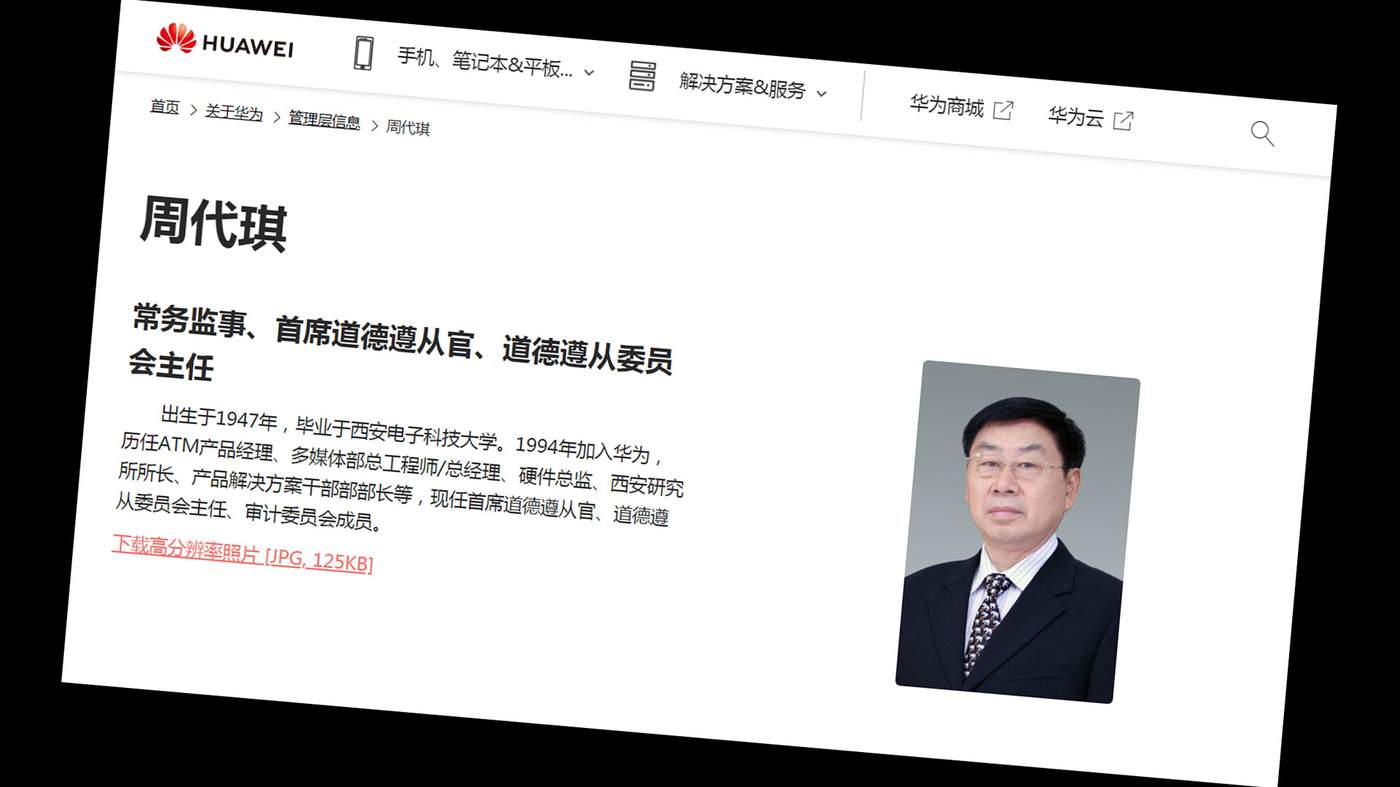
Zhou Daiqi is Huawei’s chief ethics and compliance officer.
He’s been with the company for nearly 25 years, in a number of different positions – chief engineer, director of the hardware department, head of the research centre in Xi’an, according to his biography on the company’s website. He is also understood to combine his high-ranking executive duties with another role – party secretary of Huawei’s Communist Party committee.
All companies in China are required by law to have a Communist Party committee.
Zhou Daiqi’s profile on Huawei’s website
The official line is that they exist to ensure that employees uphold the country’s moral and social values. Representatives of the committee are also often tasked with helping workers with financial problems.
But critics of China’s one-party system argue that they allow the state to exert control on corporate China. And they say the level of this control has increased in recent years.
“[President] Xi Jinping is exerting greater control over the business community in China,” says Elliott Zaagman, who regularly advises Chinese companies on their PR strategy. “As these companies gain power and influence overseas, the party doesn’t want to lose control over them.”
Ren, however, argues that the role of Huawei’s Communist Party committee is far less important than many in the West believe.
“[It] serves only to educate its employees,” he says. “It is not involved in any business decisions.”
In China, most chief executives are Communist Party members.
Every year, they dutifully turn up to the National People’s Congress along with local and national party chiefs, officials and chief executives.
It’s where the big economic decisions are voted on – although no proposal is put forward which hasn’t already been agreed upon.
Still, big CEOs come to show their commitment to the party, and to contribute to working papers that are meant to help the government understand the concerns of the business community.
Being a member of the party is very much a networking opportunity – in the way one would join a business association.
Elliott Zaagman argues that this is a system that demands loyalty.
“There is no separation from the party and the state,” he says.
“The system in China encourages the lack of transparency in companies like Huawei.”
The worry is that these close links mean that if the Communist Party asked a company to do something, they would have no choice but to comply.
And if that company is one that is involved in sensitive global telecoms infrastructure projects, it’s easy to see why Western observers would be worried.
There is no evidence to indicate that Huawei is in any way under the orders of the Chinese government, or that Beijing has any plans to dictate business plans and strategy at Huawei – particularly when it comes to spying.
But the way in which the Chinese Communist Party has robustly defended Huawei has raised questions about how independent the company is of its influence.
For example, Beijing stated that Ms Meng’s detention was a rights abuse .
And while her extradition case to the US was moving forward, China detained two Canadian citizens and accused them of stealing state secrets. Critics say the detentions are linked to Ms Meng’s arrest.
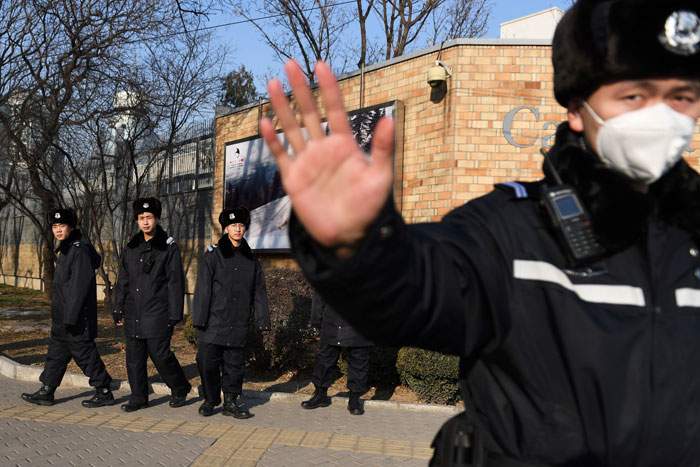
December 2018: Chinese police patrol outside Canada’s embassy in Beijing
While not commenting on the arrest of the Canadians, Ren says China’s defence of Huawei is understandable.
“It is the Chinese government’s duty to protect its people,” he says. “If the US attempts to gain competitive edge by undermining China’s most outstanding hi-tech talent, then it is understandable if the Chinese government, in turn, protects its hi-tech companies.”
Over the past few years, there have been signs of a bigger push by the government to get private companies, and in particular tech firms, to cooperate with party rules – even when they are firmly resistant.
A Didi Chuxing logo adorns a building in Hangzhou, China
China’s ride-hailing giant Didi Chuxing’s troubles are an example of the struggles Chinese firms face when they try to uphold their independence in the face of government pressure.
Chinese attitudes to data collection and data privacy are different to those in the West – many people don’t care if businesses have access to their data, arguing that it adds to the convenience of life and work.
Government access to data in China is not the free-for-all that many outside of China assume it to be
Samm Sacks, CSIS
So it wasn’t unusual when, after the murders of two of its passengers by Didi drivers, regulators used the scandal to force Didi to share more corporate data with the government. But Didi resisted – citing customer privacy. Under Chinese law, it had no choice but to comply.
When it did, it handed over “three boxes of data printed on paper, including 95 hard copies for authorities to review”.
According to Samm Sacks of the Center for Strategic and International Studies (CSIS), the case demonstrates that “government access to data in China is not the free-for-all that many outside China assume it to be”.
She says this indicates that there appears to be “a kind of tug of war between the government and companies over data”.
How this plays out will determine how Chinese companies are viewed by foreign governments when they do business overseas.
Companies like Huawei have grown up in a system where to survive and thrive they needed strong links to the Chinese government – there was and is no other choice. But these links could harm their reputation abroad.
“It’s two different systems,” says Zaagman. “Think of it like an electrical outlet. China’s plug doesn’t fit in to the outlets we have in the West.”
What’s at stake
“Basically you want to connect to everything that can be connected.”
Zhu Peiying, head of Huawei’s 5G wireless labs, is showing off devices that can connect to the new technology. From a smart toothbrush that collects data about how well you brush your teeth, to a smart cup that reminds you when you should drink some water, this is a world where everything you can think of is being measured and analysed.
At its most sophisticated, everything in entire cities would be connected – driverless cars, the temperature of buildings, the speed of public transport – the list is endless.
Huawei is thought to be a year ahead of its competitors in terms of its technological expertise and what it can offer customers, according to industry sources.
It’s also thought that the company can offer prices that are about 10% cheaper than its competitors, although critics claim this is because of state support.
Ren dismisses this, saying that Huawei doesn’t receive government subsidies.
He says the real reason behind the US resistance to Huawei is its superior technology.
“There’s no way the US can crush us,” he says. “The world needs Huawei because we are more advanced. Even if they persuade more countries not to use us temporarily we could just scale things down a bit.”
Many analysts say that Huawei’s exclusion from US networks could actually cause the US to fall behind in its 5G capabilities.
“It would mean we wouldn’t be able to participate in any blended network [using Huawei] in Europe or Asia,” says Samm Sacks of CSIS. “That would put us at a significant disadvantage.”
What this would mean in reality is a world of two internets – or what analysts are calling a “digital iron curtain” – dividing the world into parts that do business with Chinese companies like Huawei, and those that don’t.
Because of US pressure on its allies, Huawei has been on an aggressive public relations campaign to win over customers and government stakeholders.
In recent days, Vodafone’s boss Nick Read called on the US to share any evidence it has about Huawei, while Andrus Ansip, the European Commission’s vice president for the digital single market, said in a tweet that he had met with Huawei’s rotating CEO to discuss the importance of being open and transparent, as they explored ways of working together.
But suspicions about Huawei remain.
One security firm reports a sharp rise in inquiries by Asian government clients about Huawei.
“Some have asked us how much they should worry about whether Huawei is really a liability,” says an analyst who consults to Asian governments, on condition of anonymity.
Ren is sanguine about such concerns.
“For countries who believe in them [suspicions about Huawei] we will hold off,” he says. “For countries who feel Huawei is trustworthy, we may move a little faster. The world is so big. We can’t walk across every corner of it.”
But this is about more than just one company or one CEO and his family.
Increasingly, this is perceived as a battle between two world orders, and which one is the future.
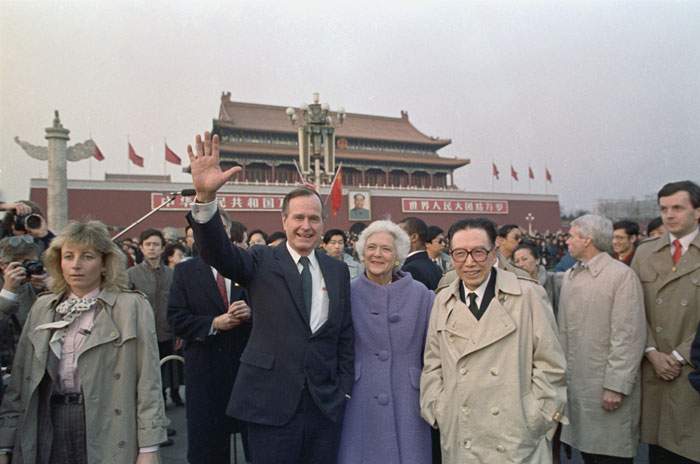
In the early days of China opening up, US presidents like George HW Bush espoused the merits of engagement.
“No nation on Earth has discovered a way to import the world’s goods and services while stopping foreign ideas at the border,” he said in a 1991 speech. “Just as the democratic idea has transformed nations on every continent, so, too, change will inevitably come to China.”
1989: George HW Bush in Beijing – he encouraged economic engagement with China
Previous US administrations believed that economic engagement in China would lead to China following a freer, more “liberal” path.
There’s no denying China has made remarkable strides in the past 40 years. The economy grew by an annual average of 10% for three decades, helping to lift 800 million people out of poverty. It is now the second-largest economy in the world, only surpassed by the US.
Some estimates put China’s economy ahead of America’s by 2030.
It achieved this while maintaining one-party rule and the supremacy of the Communist Party.
But its success has raised concerns that it is only possible with a huge amount of government control over the country’s companies. The fear is that control could be used to achieve the Communist Party’s goals – which are at this point unclear.
“It’s a double-edged sword for China,” says Danielle Cave. “[Because of its laws] the Chinese Communist Party has made it virtually impossible for Chinese companies to expand without attracting understandable and legitimate suspicion.”
Added to this, China has become more authoritarian under Xi Jinping’s rule.
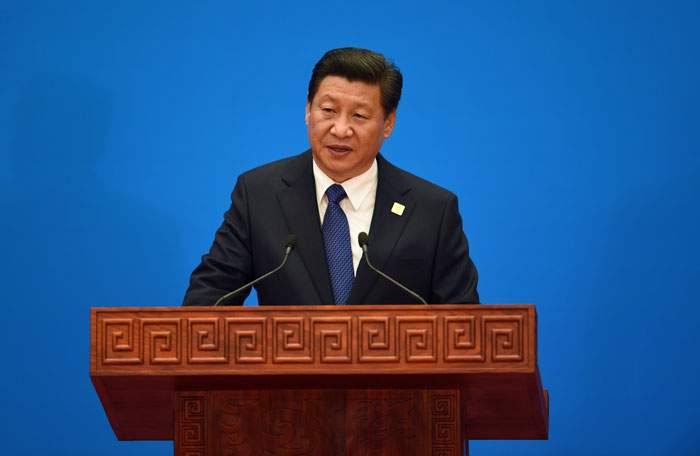
President Xi Jinping
“Xi is systematically undermining virtually every feature that made China so distinct and helped it work so well in the past,” writes Jonathan Tepperman, editor in chief of Foreign Policy.
“His efforts may boost his own power and prestige in the short term and reduce some forms of corruption. On balance, however, Xi’s campaign will have disastrous long-term consequences for his country and the world.”
But Ren dismisses this, insisting that China is more open than ever before.
“If this meeting took place 30 years ago,” he says of our interview, “it would have been very dangerous for me. Today, I can be straightforward when answering difficult questions. This shows that China has a more open political environment.”
Still, Ren is hopeful of the direction China will take in the future.
“China has more or less tried to close itself off from the outside world for 5,000 years,” he says. “Yet we had found ourselves poor, lagging behind other nations. It was only in the past 30 years since Deng Xiaoping opened China’s doors to the world that China has become more prosperous. Therefore, China must continue to move forward on the path of reform and opening-up.”
In one of Huawei’s vast campus sites across Shenzen, lies a man-made lake. Swimming in these serene waters are two black swans.
There is a story that Ren put the birds here to remind employees of “black swan” events – unpredictable and catastrophic financial eventualities that are impossible to prepare for. He dismisses this as an urban myth, but it’s hard not to read something into it.
For Huawei, and Ren, these are highly uncertain times with no way of telling what lies ahead.
China has attacked Ms Meng’s arrest and the extradition process as a “political incident”. She denies all the charges against her.
What does Ms Meng’s lawsuit say?
Ms Meng’s claim – filed in British Columbia’s Supreme Court on Friday – seeks damages against the Royal Canadian Mounted Police (RCMP), Canadian Border Services Agency (CBSA) and the federal government for allegedly breaching her civil rights under Canada’s Charter of Rights and Freedoms.
She says CBSA officers held, searched and questioned her at the airport under false pretences before she was arrested by the RCMP.
Image copyrightREUTERSImage caption Ms Meng has a property in Vancouver and is currently out on bail
Her detention was “unlawful” and “arbitrary”, the suit says, and officers “intentionally failed to advise her of the true reasons for her detention, her right to counsel, and her right to silence”.
Where are we in the extradition process?
Ms Meng, 47, will next appear in court on Wednesday, when it will be confirmed that Canada has issued a legal writ over her extradition to the US. A date for an extradition hearing will be set.
But this is still the early stages. A judge must authorise her committal for extradition and the justice minister would then decide whether to surrender her to the US.
There will be chances for appeal and some cases have dragged on for years.
The Meng Wanzhou case – how did we get here?
1 December: Ms Meng, the daughter of Huawei’s founder, is arrested while changing planes at Vancouver airport
7 December: Ms Meng first appears in court in Vancouver, where it is revealed she is accused of breaking US sanctions on Iran. China demands her release
10 December: Canadian citizens Michael Kovrig and Michael Spavor are arrested in China
11 December: Ms Meng is released on bail
28 January: US formally charges Ms Meng with fraud and Huawei with circumventing US sanctions on Iran and stealing technology from T Mobile
2 March: Canada says Ms Meng’s extradition can move forward but the process is expected to be long
What is Huawei accused of?
The US alleges Huawei misled the US and a global bank about its relationship with two subsidiaries, Huawei Device USA and Skycom Tech, to conduct business with Iran.
US President Donald Trump’s administration has reinstated all sanctions on Iran removed under a 2015 nuclear deal and recently imposed even stricter measures, hitting oil exports, shipping and banks.
It also alleges Huawei stole technology from T Mobile used to test smartphone durability, as well as obstructing justice and committing wire fraud.
In all, the US has laid 23 charges against the company.
Some Western nations are reviewing business with the firm over spying concerns, although Huawei has always maintained it acts independently.
How has China reacted?
Media caption – Huawei founder Ren Zhengfei on the arrest of his daughter
The arrest has seriously strained relations between China, and the US and Canada.
Beijing says it is an “abuse of the bilateral extradition treaty” between Canada and the US, and has expressed its “resolute opposition” and “strong dissatisfaction” with the proceedings.
China also says the accusations against Huawei, the world’s second biggest smartphone maker by volume, are a “witch-hunt”.
Two Canadian citizens are thought to have been detained in China in retaliation for the arrest.
China and the US are also engaged in tough trade negotiations to end a major tariff dispute.
URUMQI, March 2 (Xinhua) — Farmers at a small village in western Xinjiang hardly had any days off this winter. Production at a walnut processing factory is going full throttle to meet demand.
Yusup Tursun and his wife are walnut farmers in Kupchi Village in Yecheng County on the edge of the Taklimakan Desert. The couple has been hired by a new walnut processing facility in the village, with the husband a quality inspector and his wife working part-time cracking nuts.
As a main base for walnut production, Yecheng has over 38,000 hectares of high-quality thin-shell walnut groves.
“It used to be quite difficult to sell the walnuts. The factories, with so many products, have made it easier for the sales,” Yusup said.
Seven companies make products from the nuts — walnut milk, walnut candies and edible oil. The shells are made into coloring agent and pollutant-absorbing carbon.
Diversity in the walnut products pushed the industry output to a new high of 2 billion yuan (about 299 million U.S. dollars). Three in every five people work in the walnut industry in Yecheng, where 550,000 people live.
Across Xinjiang, processing facilities are established to add value to agricultural products. Transport and logistical services are improved to boost the sales of Xinjiang’s signature agricultural products such as Hami melons, Korla pears and Turpan grapes.
UP THE VALUE CHAIN
Xinjiang is also moving up the value chain in two of its traditional industries — cotton and coal.
As one of the main cotton production bases in China, Xinjiang holds sway in the textile industry. By making full use of its cotton resources and geographical advantages as a portal for opening up, the region no longer sees itself as just a production base for raw materials. Starting from 2014, China’s leading garment and apparel makers including Ruyi Group, HoDo Group, and Huafu Fashion Co. Ltd invested in the region and built factories.
These factories have produced added benefits and created jobs for the local people. Xinjiang produces 1.5 million tons of yarn and over 40 million ready-made garments every year. More than 400,000 people work in the industry.
In the eastern part of the coal-rich Junggar Basin, workers have found that the snow is cleaner than before. The Zhundong Economic Technological Development Park, about 200 km west of Urumqi, is home to China’s largest coal field.
A stringent environmental requirement is applied to the park, said Ren Jianpin, director of the management committee of the park. Coal enterprises are required to control coal dust, install equipment to recycle water and coal slags are processed into construction materials, he said.
The park is focused on boosting high-end industries in aluminum and silicon materials, which generate more value and have less impact on the environment, he said.
GOING HI-TECH
Last year, a large-scale bio-based plant went into operation in Usu City to turn corn into nylon. The Cathay Industrial Biotech, a Shanghai-based biotech company, is the investor.
Nylon is usually made from petroleum, and the use of crops such as corn and wheat to make recyclable and environment-friendly nylon has promising business prospects, said Wang Hongbo, vice general manager of the company’s Usu branch.
The Usu branch will have an annual output of 100,000 tons of bio-based polyamide, and it is expected to boost the development of downstream industries in the future, he said.
The oil-rich city of Karamay has also received a hi-tech boost as cloud computing firms eye the dry and cold weather in the area. Karamay is home to many key state-level projects and IT-industry leaders, including a global cloud service data center for Huawei, data centers for the China National Petroleum Corp. (CNPC) and China Mobile.
Xinjiang is making new breakthroughs in precision machining, new materials, manufacturing and textiles.
Data from the regional statistics bureau show that the value added of the hi-tech manufacturing in Xinjiang rose by 32.1 percent year-on-year in 2018.
FURTHER OPENING UP
As a core area on the Silk Road Economic Belt, Xinjiang has maintained solid growth momentum in foreign trade. Foreign trade volume between Xinjiang and 36 countries and regions along the Belt and Road (B&R) totaled about 291.5 billion yuan (43.5 billion U.S. dollars) in 2018, up 13.5 percent year on year.
Economic observers say that there is still much room for Xinjiang to scale up its processing trade to raise the level of imports and exports.
Xinjiang will further develop an export-oriented economy in 2019 and participate in economic exchanges with neighboring countries, according to the regional government’s work report released in January.
(This Feb. 24 story corrects paragraph 12 to show Huawei was world’s third-largest smartphone vendor last year, not second largest)
BARCELONA (Reuters) – China’s Huawei welcomed comments from President Donald Trump about the future of U.S. mobile communications on Sunday and asserted its position as a world-leading smartphone producer as Washington and Beijing seek a trade war ceasefire.
U.S. and Chinese negotiators are set to meet for a sixth straight day of negotiations on Sunday as they work to strike a deal ahead of a March 1 deadline on a trade dispute which has disrupted global commerce and slowed the world economy.
At the center of the imbroglio is Huawei Technologies, accused by Washington of sanctions busting, intellectual property theft and facilitating Chinese state espionage operations.
Speaking ahead of the mobile industry’s biggest global event which begins in Barcelona on Monday, Huawei Chairman Guo Ping reiterated his company’s position that it has never and would never allow any country to spy through its equipment.
Guo, who holds Huawei’s rotating chairmanship, said Trump’s recent assertion that the United States needed to get ahead in mobile communications through competition rather than seeking to block technology was “clear and correct”.
Trump’s tweets on Thursday did not specifically mention Huawei, the world’s largest producer of mobile network equipment, but appeared to soften earlier U.S. statements that it should be barred from Western networks on security grounds.
“I have noticed the president’s Twitter, he said that the U.S. needs faster and smarter 5G, or even 6G in the future, and he has realized that the U.S. is lagging behind in this respect, and I think his message is clear and correct,” Guo said, speaking through an interpreter.
He said the United States did not represent the whole world and called for equipment makers, network operators and governments to work together to devise trustworthy standards to manage cyber security risks.
The Huawei logo is displayed ahead of the Mobile World Congress (MWC 19) in Barcelona, Spain, February 24, 2019. REUTERS/Sergio Perez
“We need to have unified standard that should be verifiable. It should not be based on politics,” Guo said.
FOLDING PHONE, RIGID PRICE TAG
Huawei also sought to reaffirm its position as one of the world’s leading technology companies, unveiling a folding 5G smartphone to an audience of media and analysts in Barcelona.
Huawei, the world’s third-largest smartphone vendor after Samsung and Apple, said it had taken the lead in developing phones for 5G – which promises super-fast internet speeds – because it was also involved in developing the networks.
The new Huawei Mate X will have two back-to-back screens which unfold to become an eight-inch tablet display, and goes on sale later this year priced at 2,299 euros ($2,607), setting a new upper limit for consumer smartphones.
Samsung had unveiled its own folding smartphone last week, priced at nearly $2,000, as part of a bid to top the technology of Chinese rivals and Apple Inc.
Thomas Husson, principal analyst at Forrester Research, said the Mate X showed Huawei was an innovative technology company and no longer trailing American and Korean competitors.
“The fact that Huawei is not just a network equipment provider but also a smartphone manufacturer … gives them a competitive advantage for 5G. It is also a double-edge sword as some argue the security risks are higher,” Husson said.
China’s Xiaomi, the world’s fourth-largest smartphone maker, also unveiled a 5G handset on Sunday, but without the folding screen or high price tags touted by the Huawei and Samsung devices. Xiaomi’s offering will start at 599 euros ($679) when it hits the market in May.
WASHINGTON (Reuters) – President Donald Trump said on Friday there was “a very good chance” the United States would strike a deal with China to end their trade war and that he was inclined to extend his March 1 tariff deadline and meet soon with Chinese President Xi Jinping.
U.S. and Chinese negotiators had made progress and will extend this week’s round of negotiations by two days through Sunday, Trump told reporters at the White House as he met with his top negotiators and their counterpart, Chinese Vice Premier Liu He.
“I think that we both feel there’s a very good chance a deal will happen,” Trump said.
RELATED COVERAGE
No more MOUs! USTR Lighthizer tweaks trade terminology after dispute with Trump
Trump says could include Huawei and ZTE in trade deal
Liu agreed there had been “great progress”.
“From China, we believe that (it) is very likely that it will happen and we hope that ultimately we’ll have a deal. And the Chinese side is ready to make our utmost effort,” he said at the White House.
The Republican president said he probably would meet with Xi in March in Florida to decide on the most important terms of a trade deal.
Extending the deadline would put on hold Trump’s threatened tariff increase to 25 percent from 10 percent on $200 billion of Chinese imports into the United States. That would prevent a further escalation in a trade war that already has disrupted commerce in goods worth hundreds of billions of dollars, slowed global economic growth and roiled markets.
Optimism that the two sides will find a way to end the trade war lifted stocks, especially technology shares. The S&P 500 stock index reached its highest closing level since Nov. 8. Oil prices rose to their highest since mid-November, with Brent crude reaching a high of $67.73 a barrel. [.N] [O/R]
CURRENCY AGREEMENT
Trump and Treasury Secretary Steven Mnuchin said the two sides had reached an agreement on currency. Trump declined to provide details, but U.S. officials long have expressed concerns that China’s yuan is undervalued, giving China a trade advantage and partly offsetting U.S. tariffs.
Announcement of a pact aimed at limiting yuan depreciation was putting “the currency cart before the trade horse,” but would likely be positive for Asian emerging market currencies, said Alan Ruskin, global head of currency strategy at Deutsche Bank in New York.
“How can you agree to avoid excessive Chinese yuan depreciation or volatility if you have not made an agreement on trade that could have huge FX implications?” Ruskin asked in a note to clients.
In a letter to Trump read aloud by an aide to Liu at the White House, Xi called on negotiators to work hard to strike a deal that benefits both country.
Trump said a deal with China may extend beyond trade to encompass Chinese telecommunications companies Huawei Technologies and ZTE Corp.
The Justice Department has accused Huawei of conspiring to violate U.S. sanctions on Iran and of stealing robotic technology from T-Mobile US Inc.
Chinese peer ZTE was last year prevented from buying essential components from U.S. firms after pleading guilty to similar charges, crippling its operations.
MEMORANDUMS NO MORE
Trump appeared at odds with his top negotiator, U.S. Trade Representative Robert Lighthizer, on the preliminary terms that his team is outlining in memorandums of understanding for a deal with China. Trump said he did not like MOUs because they are short term, and he wanted a long-term deal.
“I don’t like MOUs because they don’t mean anything,” Trump said. “Either you are going to make a deal or you’re not.”
Lighthizer responded testily that MOUs were binding, but that he would never use the term again.
Reuters reported exclusively on Wednesday that the two sides were drafting the language for six MOUs covering the most difficult issues in the trade talks that would require structural economic change in China.
Negotiators have struggled this week to agree on specific language within those memorandums to address tough U.S. demands, according to sources familiar with the talks. The six memorandums include cyber theft, intellectual property rights, services, agriculture and non-tariff barriers to trade, including subsidies.
An industry source briefed on the talks said both sides have narrowed differences on intellectual property rights, market access and narrowing a nearly $400 billion U.S. trade deficit with China. But bigger differences remain on changes to China’s treatment of state-owned enterprises, subsidies, forced technology transfers and cyber theft of U.S. trade secrets.
Lighthizer pushed back when questioned on forced technology transfers, saying the two sides made “a lot of progress” on the issue, but did not elaborate.
The United States has said foreign firms in China are often coerced to transfer their technology to Chinese firms if they want to operate there. China denies this.
The U.S. Chamber of Commerce on Friday urged the U.S. government to ensure the deal was comprehensive and addressed core issues, rather than one based on more Chinese short-term purchases of goods.
China has pledged to increase purchases of agricultural produce, energy, semiconductors and industrial goods to reduce its trade surplus with the United States.
China committed to buying an additional 10 million tonnes of U.S. soybeans on Friday, U.S. Agriculture Secretary Sonny Perdue said on Twitter. China bought about 32 million tonnes of U.S. soybeans in 2017. The commitments are a “show of good faith by the Chinese” and “indications of more good news to come,” Perdue wrote.
China was the top buyer of U.S. soybeans before the trade war, but Beijing’s retaliatory tariffs on U.S. soybeans slashed business that had been worth $12 billion annually.
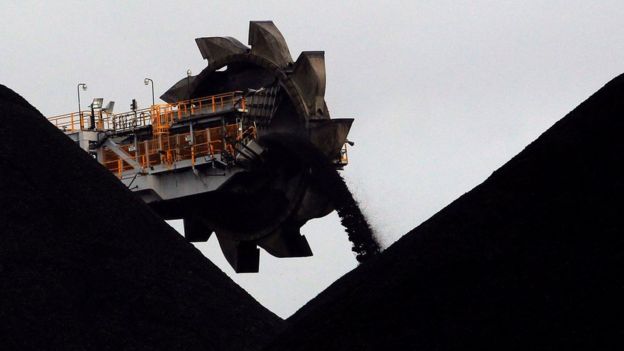
Image copyrightGETTY IMAGESImage captionOne of China’s biggest ports is reported to have halted Australian coal imports
The Australian government says it is seeking an “urgent” clarification from Beijing over reports that a major Chinese port has halted imports of Australian coal.
Australia is a top supplier of coal to China, its biggest export market.
Beijing has not confirmed the reported halt in the port of Dalian, but called changes in such arrangements “normal”.
Canberra sought to play down speculation on Friday that the matter may be linked to bilateral tensions.
Australian officials said there was “confusion” over the situation, and they were consulting their Chinese counterparts.
“I wouldn’t jump to conclusions. The Australia-China trading relationship is exceptionally strong,” Treasurer Josh Frydenberg told the Australian Broadcasting Corporation.
Fears about the issue have prompted a fall in the Australian dollar.
What has happened?
On Thursday, Reuters reported that China’s Dalian port region would not allow Australian coal to pass through customs.
The news agency quoted officials as saying that only Australian coal had been affected, with no limits placed on Indonesian and Russian shipments.
It said other Chinese ports had delayed Australian coal shipments in recent months.
Image copyrightREUTERSImage captionCoal is Australia’s biggest export commodity
Australian trade officials said they had been notified of recent industry concerns about market access.
When asked about the reported halt, Chinese Foreign Ministry spokesman Geng Shuang offered general comments that authorities sought “to safeguard the rights and interests of Chinese importers and protect the environment”.
“The banning of those coal shipments is a form of coercion against Australia. It’s punishment against states that resist China’s pressure,” said Dr Malcolm Davis, from the Australian Strategic Policy Institute.
Other recent tensions have emerged over allegations – denied by Beijing – of Chinese interference in Australian politics and society.
However others, including the head of the Reserve Bank of Australia, have suggested that China’s concerns about its own coal industry may be behind any such halts.
Blocking “a couple of months of coal exports” would not hurt the Australian economy, said Philip Lowe.
“If it were to be the sign of a deterioration in the underlying political relationship between Australia and China then that would be more concerning,” he said.
Mr Frydenberg said: “We can see these occasional interruptions to the smooth flow but that doesn’t necessarily translate to some of the consequences that aspects of the media might seek to leap to.”








 CHINDIA ALERT: You'll be living in their world, very soon