Chindia Alert: You’ll be Living in their World Very Soon
aims to alert you to the threats and opportunities that China and India present. China and India require serious attention; case of ‘hidden dragon and crouching tiger’.
Without this attention, governments, businesses and, indeed, individuals may find themselves at a great disadvantage sooner rather than later.
The POSTs (front webpages) are mainly 'cuttings' from reliable sources, updated continuously.
The PAGEs (see Tabs, above) attempt to make the information more meaningful by putting some structure to the information we have researched and assembled since 2006.
Chinese President Xi Jinping, also general secretary of the Communist Party of China Central Committee and chairman of the Central Military Commission, takes part in a deliberation with his fellow deputies from the delegation of Inner Mongolia Autonomous Region at the third session of the 13th National People’s Congress (NPC) in Beijing, capital of China, May 22, 2020. (Xinhua/Ju Peng)
BEIJING, May 23 (Xinhua) — “What is people first?” Chinese President Xi Jinping asked, before offering his own answer when he was talking with lawmakers at the ongoing national legislative session.
“So many people worked together to save a single patient. This, in essence, embodies doing whatever it takes (to save lives),” he said.
Xi, also general secretary of the Communist Party of China Central Committee and chairman of the Central Military Commission, is a deputy to the 13th National People’s Congress.
During his deliberations with fellow deputies from Inner Mongolia Autonomous Region on Friday, “people” was a keyword.
Xi referred to a story told by another deputy that morning. Luo Jie, from the COVID-19 hard-hit province of Hubei, told reporters at the session how medical workers in his hospital spent 47 days saving an 87-year-old COVID-19 patient.
“About 10 medical workers meticulously took care of the patient for dozens of days, and finally saved the patient’s life,” Xi said. “I am really impressed.”
In the COVID-19 pandemic, health workers around the world got to know the elderly are the most difficult to treat and require the most sophisticated medical resources. China has given every patient equal treatment irrespective of their age or wealth.
Chinese President Xi Jinping, also general secretary of the Communist Party of China Central Committee and chairman of the Central Military Commission, takes part in a deliberation with his fellow deputies from the delegation of Inner Mongolia Autonomous Region at the third session of the 13th National People’s Congress (NPC) in Beijing, capital of China, May 22, 2020. (Xinhua/Huang Jingwen)
In Hubei alone, more than 3,600 COVID-19 patients over the age of 80 have been cured. In the provincial capital Wuhan, seven centenarian patients have been cured.
“We mobilized from around the nation the best doctors, the most advanced equipment and the most needed resources to Hubei and Wuhan, going all out to save lives,” Xi said during the deliberations, adding that the eldest patient cured is 108 years old.
“We are willing to save lives at all costs. No matter how old the patients are and how serious their conditions have become, we never give up,” Xi said.
Xi joined political advisors and lawmakers on Thursday and Friday in paying silent tribute to the lives lost to COVID-19 as the top political advisory body and the national legislature opened their annual sessions.
This year’s government work report said China’s economy posted negative growth in the first quarter of this year, but it was “a price worth paying” to contain COVID-19 as life is invaluable.
“As a developing country with 1.4 billion people, it is only by overcoming enormous difficulties that China has been able to contain COVID-19 in such a short time while also ensuring our people’s basic needs,” the report said.
Epidemic response is a reflection of China’s governing philosophy.
The fundamental goal for the Party to unite and lead the people in revolution, development and reform is “to ensure a better life for them,” Xi said.
The nation’s average life expectancy reached 77 years in 2018, more than double that in 1949, when the people’s republic was founded.
Chinese people are not just living longer but better lives, with more material wealth and broader choices to pursue individual dreams. All rural poor will bid farewell to poverty this year as part of the goal of building a moderately prosperous society in all respects.
The Party’s long-term governance, Xi said, rests on “always maintaining close bond with the people.”
“We must always remain true to the people’s aspiration and work in concert with them through thick and thin,” Xi said.
A customer buys products at a time-honoredfood store in east China’s Shanghai Municipality, April 26, 2020. (Xinhua/Wang Xiang)
Twelve cases were domestically transmitted, with 11 reported in Jilin Province and the other one in Hubei Province.
BEIJING, May 10 (Xinhua) — Chinese health authority said Sunday that it received report of 14 new confirmed COVID-19 cases on the Chinese mainland Saturday, of which two were imported cases reported in Shanghai.
Twelve cases were domestically transmitted, with 11 reported in Jilin Province and the other one in Hubei Province, the National Health Commission said in a daily report.
One new suspected case imported from abroad was reported in the Inner Mongolia Autonomous Region.
No deaths were reported Saturday on the mainland, according to the commission.
On Saturday, 74 people were discharged from hospitals after recovery, while the number of severe cases decreased by two to 13.
As of Saturday, the overall confirmed cases on the mainland had reached 82,901, including 148 patients who were still being treated, and 78,120 people who had been discharged after recovery.
Altogether 4,633 people had died of the disease, the commission said.
By Saturday, the mainland had reported a total of 1,683 imported cases. Of the cases, 1,568 had been discharged from hospitals after recovery, and 115 remained hospitalized with three in severe conditions. No deaths from the imported cases had been reported.
The commission said four people, all from overseas, were still suspected of being infected with the virus.
According to the commission, 5,840 close contacts were still under medical observation after 427 people were discharged from medical observation Saturday.
Also on Saturday, 20 new asymptomatic cases were reported on the mainland. One case was re-categorized as a confirmed case, and 61 asymptomatic cases, including 16 from overseas, were discharged from medical observation, according to the commission.
The commission said 794 asymptomatic cases, including 48 from overseas, were still under medical observation.
By Saturday, 1,044 confirmed cases including four deaths had been reported in the Hong Kong Special Administrative Region (SAR), 45 confirmed cases in the Macao SAR, and 440 in Taiwan including six deaths.
A total of 967 patients in Hong Kong, 40 in Macao, and 361 in Taiwan had been discharged from hospitals after recovery.
BEIJING, April 28 (Xinhua) — China has achieved much progress in environmental protection and taken the lead in green development in recent years.
The efforts have exemplified Chinese President Xi Jinping’s proposal of “working together for a green and better future for all” made a year ago in his speech at the opening ceremony of the International Horticultural Exhibition 2019 Beijing.
In the keynote speech, Xi proposed a five-point initiative on promoting green development, namely pursuing harmony between man and nature, pursuing the prosperity based on green development, fostering a passion for nature-caring lifestyle, pursuing a scientific spirit in ecological governance, and joining hands to tackle environmental challenges.
China’s hard work on environment protection has paid off.
The ecological environment has improved significantly. People are enjoying more days of blue sky, cleaner water, and fertile land.
China has achieved the goal of zero growth of desertified land by 2030 set by the United Nations ahead of time. Besides, forest stock volume increased by 4.56 billion cubic meters compared with that of 2005.
Carbon dioxide emissions per unit of GDP in 2018 fell by 45.8 percent compared with that of 2005, exceeding the target set for the year.
After more than 30 years of hard work, the seventh largest desert in China, the Kubuqi Desert in Inner Mongolia Autonomous Region, once known as the “sea of death” difficult for birds to fly across, has turned into a green valley.
In January 2020, in a letter in reply to the student representatives of the Global Alliance of Universities on Climate, the Chinese president mentioned his thoughts about ecological civilization in his youth.
“Over four decades ago, I lived and worked for many years in a small village on the Loess Plateau in western China. Back then, the ecology and environment there was seriously damaged due to over-development and the local people were trapped in poverty as a result,” Xi wrote.
“This experience taught me that man and nature are a community of life and that the damage done to nature will ultimately hurt mankind,” said Xi.
China’s progress and achievements are recognized worldwide.
The ecological civilization and green development advocated by China are actually an endeavor to find a way to balance economic development and environmental protection, said John Cobb, Jr., the founding president of the Institute for Postmodern Development of China and member of the American Academy of Arts and Sciences.
Noting that the endeavor is a remarkable exploration, he expressed his hope that it will succeed.
China is on the right path in dealing with global climate change and achieving sustainable development, said Borge Brende, president of the World Economic Forum.
In addition to making efforts at home, China has also rolled out a series of measures to support the global combat against climate change.
In September 2015, ahead of the Paris climate change conference, Xi pledged a 20-billion-yuan (3-billion-U.S. dollars) China South-South Climate Cooperation Fund, which was dedicated to help other developing countries combat climate change.
China has also been fulfilling the obligations of the United Nations Framework Convention on Climate Change and the Paris Agreement, and achieved the goal of its intended nationally determined contributions submitted to the secretariat of the Climate Change Convention as scheduled.
UN Secretary-General Antonio Guterres expressed his appreciation for China’s important contributions to addressing the climate change and building a green “Belt and Road,” and said he expects China to continue to play a leading role in addressing the climate change and other issues.
“Lucid waters and lush mountains are invaluable assets,” a concept put forward by Xi in 2005 when he visited Yucun Village in southeast China’s Zhejiang Province as the party chief of the province, has become the motto of the Lao Ministry of Natural Resources and Environment.
In March 2020, when Xi returned to Yucun, he said that economic development should not be achieved at the expense of the ecological environment. To protect the ecological environment is to develop the productive forces, he said.
The history of civilizations shows that the rise or fall of a civilization is closely tied to its relationship with nature, Xi said at the International Horticultural Exhibition last year.
Only by joining hands can the humankind advance a global ecological civilization and march towards the bright future of building a community with a shared future for mankind.
ULAN BATOR, Sept. 19 (Xinhua) — Mongolians have been reaping tangible benefits from humanitarian activities under the China-proposed Belt and Road Initiative (BRI), the Mongolian Red Cross Society (MRCS)General Director Nordov Bolormaa said here on Thursday.
“Humanitarian activities play a crucial role in strengthening cooperation between countries and friendship between their peoples,” Bolormaa told Xinhua in an interview. “We are very happy that many Mongolian citizens have been benefiting from humanitarian projects under the BRI.”
A total of 98 Mongolian children with congenital heart disease have received free surgeries in China under a BRI humanitarian aid program launched in 2017, she said.
The heart surgeries were among multiple humanitarian aid programs conducted by the MRCS, the Red Cross Society of China (RCSC), and the latter’s Inner Mongolian branch, according to the RCSC of Inner Mongolia Autonomous Region.
In addition, over 300 Mongolian seniors have received free cataract surgeries under a project called “The Belt and Road-Brightness Trip” since June, Bolormaa said. The plan aims to provide at least 1,000 free cataract surgeries within five years.
Moreover, the RCSC Inner Mongolia branch helped build a first-aid training center equipped with advanced devices at the headquarters of the MRCS in June on the occasion of the 80th anniversary of the MRCS.
“We provide first aid trainings to students, teachers, employees of organizations and others 3-4 times a week at the center,” Bolormaa said, adding that this is another example of fruitful cooperation of the humanitarian organizations between Mongolia and China.
She said that the MRCS will further contribute the development of bilateral relations between Mongolia and China by more actively cooperating with the RCSC in disaster relief, first aid, prevention of traffic accidents and disaster risk reduction.
Research sheds light on 500-year Chinese weather cycle and suggests a cool change could be on the way
Findings leave no room for complacency or inaction
A team of Chinese researchers says a period of global cooling could be on the way, but the consequences will be serious. Photo: Xinhua
A new study has found winters in northern China have been warming since 4,000BC – regardless of human activity – but the mainland scientists behind the research warn there is no room for complacency or inaction on climate change, with the prospect of a sudden global cooling also posing a danger.
The study found that winds from Arctic Siberia have been growing weaker, the conifer tree line has been retreating north, and there has been a steady rise in biodiversity in a general warming trend that continues today. It appears to have little to do with the increase in greenhouse gases which began with the industrial revolution, according to the researchers.
Lead scientist Dr Wu Jing, from the Key Laboratory of Cenozoic Geology and Environment at the Institute of Geology and Geophysics, part of the Chinese Academy of Sciences, said the study had found no evidence of human influence on northern China’s warming winters.
“Driving forces include the sun, the atmosphere, and its interaction with the ocean,” Wu said. “We have detected no evidence of human influence. But that doesn’t mean we can just relax and do nothing.”
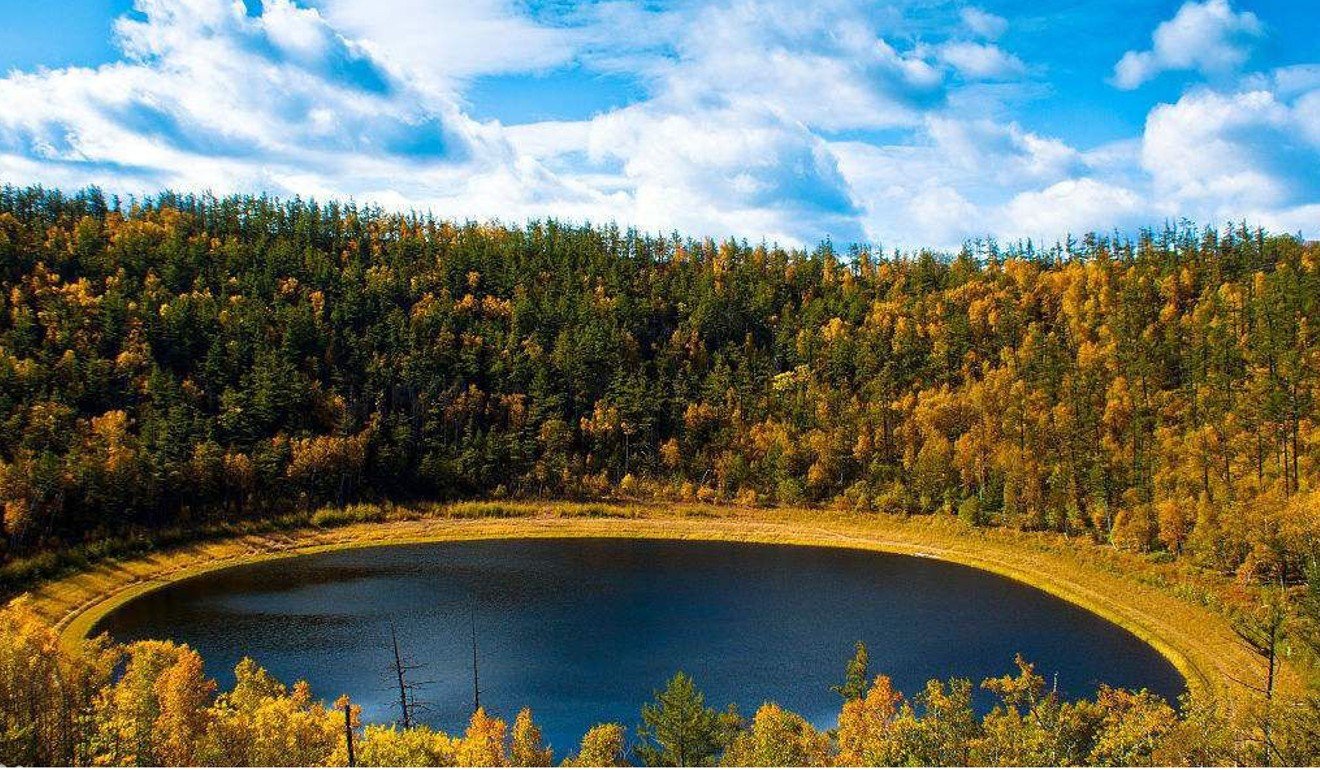
Moon Lake, a small volcanic lake hidden in the deep forest of China’s Greater Khingan Mountain Range, where a team of scientists spent more than a decade studying the secrets hidden in its sediments. Photo: Baidu
Wu and her colleagues are concerned that, as societies grow more used to the concept of global warming, people will develop a misplaced confidence in our ability to control climate change. Nature, they warned, may trick us and might catch us totally unprepared – causing chaos, panic, famine and even wars as the global climate system is disrupted.
There are already alarming signs, according to their paper, which has been accepted for publication by the online Journal of Geophysical Research: Atmospheres.
Wu and her colleagues spent more than a dozen years studying sediments under Moon Lake, a small volcanic lake hidden in the deep forests of the Greater Khingan Mountain Range in China’s Inner Mongolia autonomous region. They found that winter warming over the past 6,000 years had not been a smooth ride, with ups and downs occurring about every 500 years.
Their findings confirmed an earlier study by a separate team of Chinese scientists, published by online journal Scientific Reports in 2014, which first detected the 500-year cyclical pattern of China’s summer monsoons and linked it to solar activity.
The 2014 research, which drew on 5,000 years’ worth of data, suggested the current warm phase of the cycle could terminate over the next several decades, ushering in a 250-year cool phase, potentially leading to a partial slowdown in man-made global warming.
Wu said the latest study, with 10,000 years’ worth of new data, not only helped to draw a more complete picture of the 500-year cycle, but also revealed a previously unknown mechanism behind the phenomenon, which suggested the impact of the sun on the Earth’s climate may be greater than previously thought.
According to Wu, the variation in solar activity alone was usually not strong enough to induce the rapid changes in vegetation the research team recorded in the sediment cores of Moon Lake. Instead, the scientists found the warming impact was amplified by a massive, random interaction between surface seawater and the atmosphere in the Pacific Ocean known as the El Nino-Southern Oscillation.
As a result of the research findings, Wu said she was now more worried about cooling than warming.
“A sharp drop of temperature will benefit nobody. The biggest problem is, we know it will come, but we don’t know exactly when.”
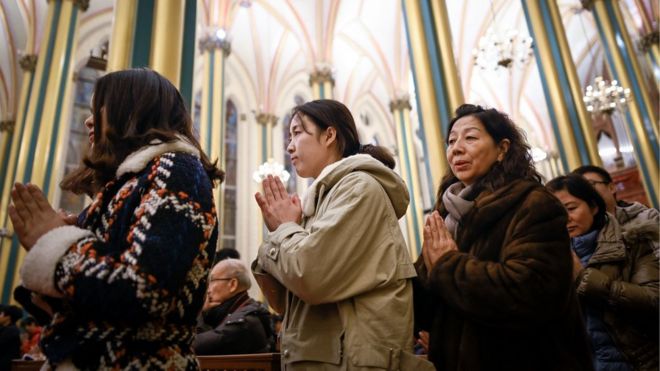
Image copyright GETTY IMAGESImage caption Christmas in Beijing: Catholics attend mass on 24 December 2018
A bishop has been ordained with the blessing of both the Pope and the Chinese state for the first time under a new deal.
Religious organisations in China must be approved by the state, leading to a decades-long row with the Vatican.
But a deal was agreed last September, giving the Vatican a say in the bishops appointed by the state church.
Yao Shun received the papal mandate for his ordination as bishop in China’s Inner Mongolia region.
The country is home to about 12 million Catholics – split between the Chinese Patriotic Catholic Association and an underground church loyal to the Vatican.
For decades, members of the underground church have only recognised the authority of the pope, while members of the state church have refused it. The relationship between the Holy See and Beijing has been strained by the disagreement since the 1950s.
In practice, the Vatican has recognised many Chinese bishops over the years on an individual, informal basis, including several last year as part of the deal.
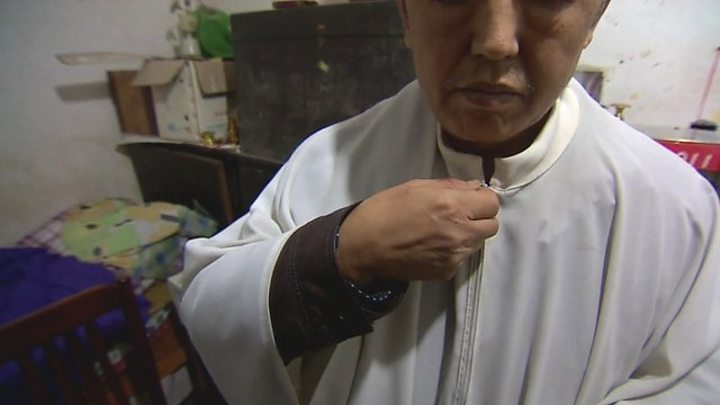
Media caption Father Dong Guanhua has been kicked out of the Chinese Catholic church for calling himself a bishop
The Vatican confirmed the new bishop’s ordination – referring to him as Antonio Yao Shun – as “the first to take place in the framework of the Provisional Agreement between the Holy See and the People’s Republic of China”.
But the deal between the two remains controversial among some Catholics.
Cardinal Joseph Zen from Hong Kong – where Chinese rules on state churches do not apply – accused the Vatican of “selling out” when details of the deal became clear in January 2018.
He said that the decision to reconcile with Beijing meant that retiring bishops of the underground church, faithful to Rome, would now be replaced by state-approved appointees.
Catholic news outlet Crux, meanwhile, reported that Bishop Shun had been chosen by the Vatican some time ago, before the agreement came into effect – and so his ordination is not a true test of the new mechanism.
But Bishop Shun’s ordination may be a notable moment in the reconciliation between the two countries.
In the past, Chinese state bishops were excommunicated from the Catholic Church for their role in ordaining new bishops outside of the papal mandate.
The relationship between China and the Vatican is further complicated by the Vatican’s diplomatic relations with Taiwan, which China considers to be a breakaway province destined for reunification at some future date.
Research sheds light on 500-year Chinese weather cycle and suggests a cool change could be on the way
Findings leave no room for complacency or inaction
A team of Chinese researchers says a period of global cooling could be on the way, but the consequences will be serious. Photo: Xinhua
A new study has found winters in northern China have been warming since 4,000BC – regardless of human activity – but the mainland scientists behind the research warn there is no room for complacency or inaction on climate change, with the prospect of a sudden global cooling also posing a danger.
The study found that winds from Arctic Siberia have been growing weaker, the conifer tree line has been retreating north, and there has been a steady rise in biodiversity in a general warming trend that continues today. It appears to have little to do with the increase in greenhouse gases which began with the industrial revolution, according to the researchers.
Lead scientist Dr Wu Jing, from the Key Laboratory of Cenozoic Geology and Environment at the Institute of Geology and Geophysics, part of the Chinese Academy of Sciences, said the study had found no evidence of human influence on northern China’s warming winters.
“Driving forces include the sun, the atmosphere, and its interaction with the ocean,” Wu said. “We have detected no evidence of human influence. But that doesn’t mean we can just relax and do nothing.”
Moon Lake, a small volcanic lake hidden in the deep forest of China’s Greater Khingan Mountain Range, where a team of scientists spent more than a decade studying the secrets hidden in its sediments. Photo: Baidu
Wu and her colleagues are concerned that, as societies grow more used to the concept of global warming, people will develop a misplaced confidence in our ability to control climate change. Nature, they warned, may trick us and might catch us totally unprepared – causing chaos, panic, famine and even wars as the global climate system is disrupted.
There are already alarming signs, according to their paper, which has been accepted for publication by the online Journal of Geophysical Research: Atmospheres.
Wu and her colleagues spent more than a dozen years studying sediments under Moon Lake, a small volcanic lake hidden in the deep forests of the Greater Khingan Mountain Range in China’s Inner Mongolia autonomous region. They found that winter warming over the past 6,000 years had not been a smooth ride, with ups and downs occurring about every 500 years.
Their findings confirmed an earlier study by a separate team of Chinese scientists, published by online journal Scientific Reports in 2014, which first detected the 500-year cyclical pattern of China’s summer monsoons and linked it to solar activity.
The 2014 research, which drew on 5,000 years’ worth of data, suggested the current warm phase of the cycle could terminate over the next several decades, ushering in a 250-year cool phase, potentially leading to a partial slowdown in man-made global warming.
Wu said the latest study, with 10,000 years’ worth of new data, not only helped to draw a more complete picture of the 500-year cycle, but also revealed a previously unknown mechanism behind the phenomenon, which suggested the impact of the sun on the Earth’s climate may be greater than previously thought.
According to Wu, the variation in solar activity alone was usually not strong enough to induce the rapid changes in vegetation the research team recorded in the sediment cores of Moon Lake. Instead, the scientists found the warming impact was amplified by a massive, random interaction between surface seawater and the atmosphere in the Pacific Ocean known as the El Nino-Southern Oscillation.
As a result of the research findings, Wu said she was now more worried about cooling than warming.
“A sharp drop of temperature will benefit nobody. The biggest problem is, we know it will come, but we don’t know exactly when.”
Chinese President Xi Jinping, also general secretary of the Communist Party of China (CPC) Central Committee and chairman of the Central Military Commission, attends a panel discussion with his fellow deputies from Inner Mongolia Autonomous Region at the second session of the 13th National People’s Congress in Beijing, capital of China, March 5, 2019. (Xinhua/Xie Huanchi)
BEIJING, March 5 (Xinhua) — President Xi Jinping on Tuesday stressed efforts to maintain strategic resolve in enhancing the building of an ecological civilization and to protect the country’s beautiful scenery in the northern border areas.
Xi, also general secretary of the Communist Party of China (CPC) Central Committee and chairman of the Central Military Commission, made the remarks when attending a panel discussion with his fellow deputies from Inner Mongolia Autonomous Region at the second session of the 13th National People’s Congress, China’s national legislature.
The president called for intensified protection of the ecological system, urging people to fight resolutely against pollution.
The Party’s theory on an ecological civilization has been constantly enriched and improved since the 18th CPC National Congress in late 2012, Xi said.
All localities and departments should earnestly implement the Party’s arrangement and requirements for building an ecological civilization, pushing it to a new level, Xi said.
Building Inner Mongolia into an important shield for ecological security in northern China is a strategic position set with full consideration of the country’s overall development and a major responsibility the region must shoulder, Xi said.
Fundamentally speaking, environmental protection and economic development are closely integrated and complement each other, Xi said.
In the Chinese economy’s transition from the phase of rapid growth to a stage of high-quality development, pollution control and environmental governance are two major tasks that must be accomplished, he added.
The country should explore a new path of high-quality development that prioritizes ecology and highlights green development, Xi said.
With its diversified natural forms including forests, grasslands, wetlands, rivers, lakes and deserts, Inner Mongolia features a comprehensive ecological system formed over a long period of time. Integrated measures should be taken in ecological protection and rehabilitation in the region, he said.
Xi underlined a resolute and effective fight to prevent and control pollution, saying prominent environmental issues the people are strongly concerned about must be addressed properly.
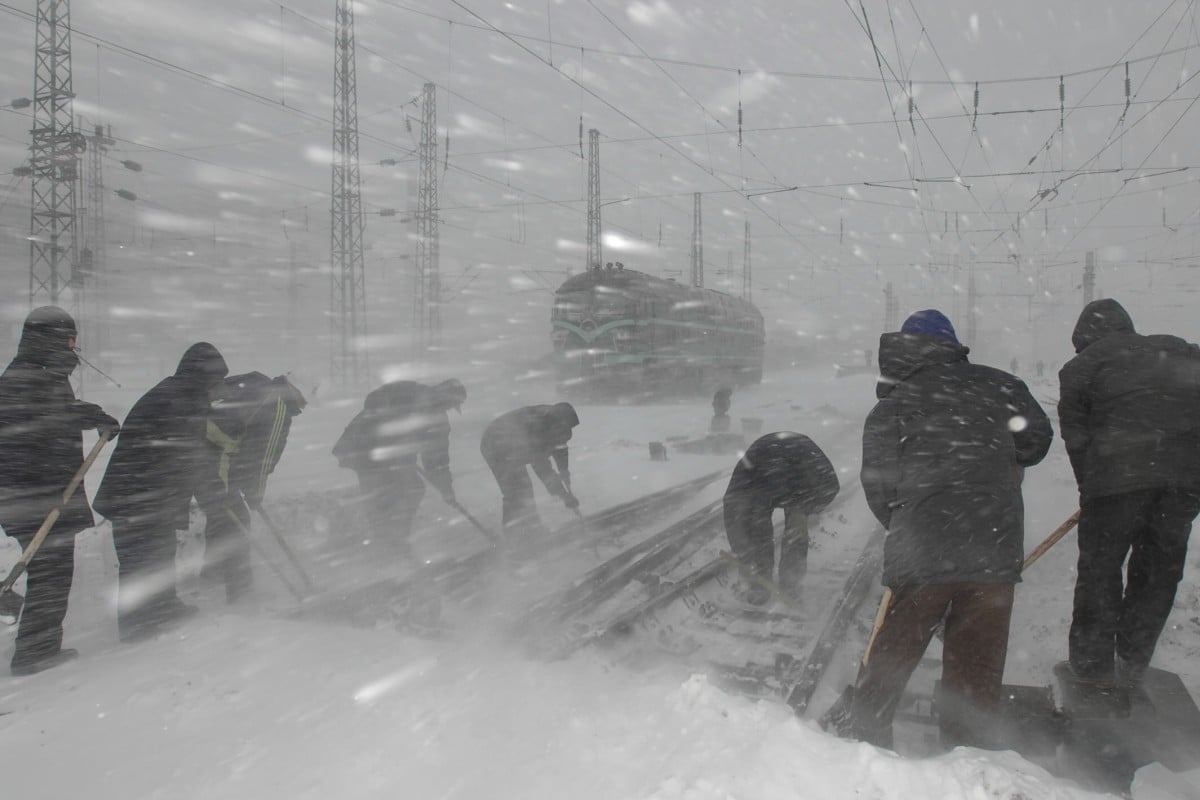
BEIJING, Feb. 14 (Xinhua) — Parts of north China including Beijing, Hebei Province and Inner Mongolia Autonomous Region saw heavy snow on Thursday.
The snow started at around 5 a.m. in Beijing Thursday, following snow on Tuesday.
It started from the western and northern mountain areas, and gradually reached most parts of the city. It is expected to last until Thursday night, with a maximum precipitation of 4 mm in the western and northern mountain areas, and an average precipitation of 1 mm in downtown areas, according to the Beijing meteorological bureau.
The bureau has issued an alert for icy roads as of this morning.
More than one hundred bus lines were affected, and flights have been delayed and canceled at Beijing International Airport due to the snow.
According to the National Meteorological Center, north China is experiencing this winter’s largest and heaviest snow on Thursday, with estimated accumulations of as much as 2.5 centimeters.
Snow and low temperatures have hit most parts of the neighboring Hebei Province since Wednesday. The provincial government has issued emergency notices to require departments of heating, transportation, public security and city management to make preparations for the lingering snow and low temperatures in the following days.
Local power supply companies have strengthened patrols to ensure stable power supply.
Many parts of Inner Mongolia also saw snow early Thursday morning. The capital city Hohhot was covered with snow by 8:00 a.m.
“Although the heavy snow is inconvenient, it is very exciting. Only snow can make the winter feel real,” said Wei Qiang, a resident of the city.
The region has embraced a dry winter with the capital city receiving no prior snowfall. But a round of snow, strong winds and cool weather will continue to batter most parts of the region until Friday, according to the local meteorological observatory.
So far, local traffic and agricultural facilities have been affected by the snowy weather. Relevant departments have been ordered to take precautionary measures and solve problems in a timely manner.




 CHINDIA ALERT: You'll be living in their world, very soon