Chindia Alert: You’ll be Living in their World Very Soon
aims to alert you to the threats and opportunities that China and India present. China and India require serious attention; case of ‘hidden dragon and crouching tiger’.
Without this attention, governments, businesses and, indeed, individuals may find themselves at a great disadvantage sooner rather than later.
The POSTs (front webpages) are mainly 'cuttings' from reliable sources, updated continuously.
The PAGEs (see Tabs, above) attempt to make the information more meaningful by putting some structure to the information we have researched and assembled since 2006.
Outbound flights from Beijing were 15 times higher on one travel site within half an hour of Beijing relaxing quarantine requirements on the city
The rebound in bookings spells some hope for online travel providers in China as the country emerges from a pandemic which saw widespread travel restrictions
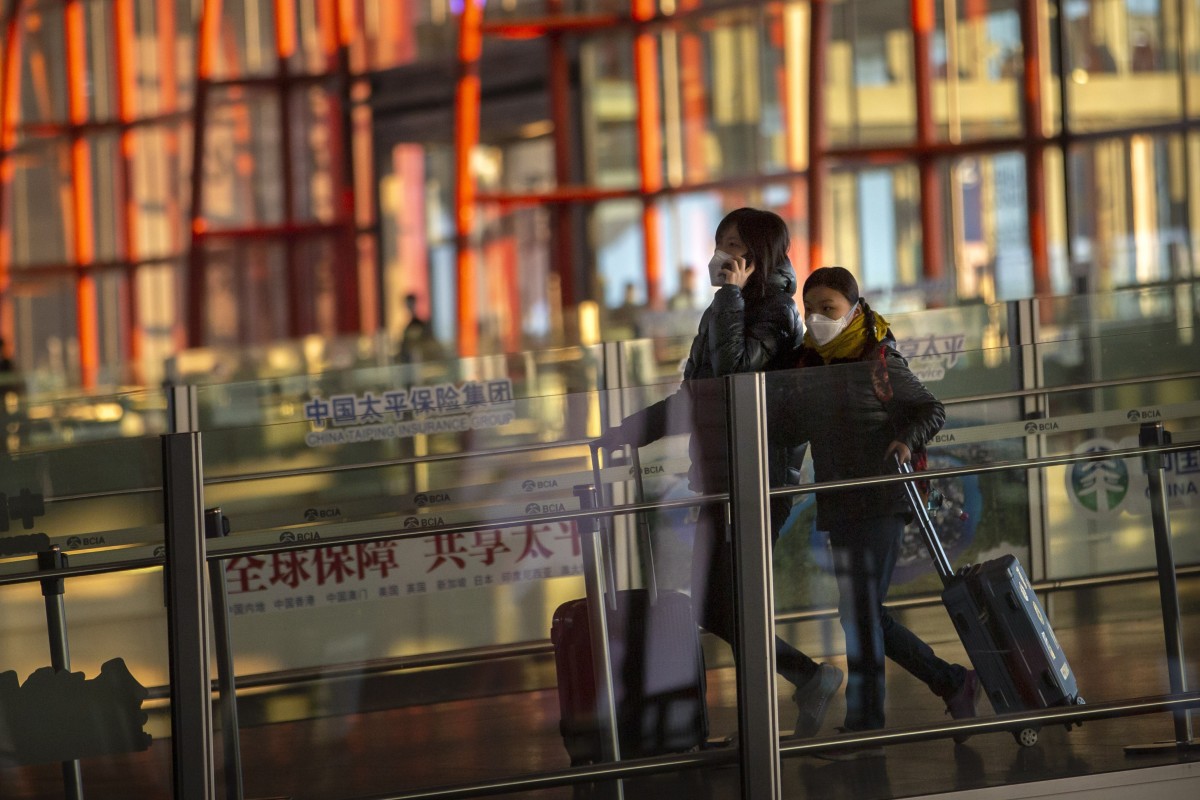
Passengers arrive from a domestic flight at Beijing Capital Airport on March 27, 2020. Photo: AFP
Within an hour of Beijing downgrading its emergency response level, relaxing quarantine requirements for some arrivals to the Chinese capital city, travel bookings on some sites surged up to 15 times.
Thirty minutes after the announcement on Wednesday, bookings for outbound flights from Beijing were 15 times higher than before the announcement on Qunar, one of the biggest online travel service providers in China. Searches for travel packages and hotel bookings on the platform also increased three-fold, according to a Qunar report.
On Alibaba Group Holding‘s Fliggy travel platform, bookings for flight and trains heading in and out of Beijing increased 500 per cent and 300 per cent respectively one hour after the announcement, compared to the same time a day ago, according to a Fliggy report. Alibaba owns the South China Morning Post.
Bookings for flight and train tickets in Beijing for the upcoming Labour Day long weekend also increased more than 300 per cent and 160 per cent respectively on Chinese group buying site Meituan Dianping on Wednesday after the announcement compared to the day before, while searches for the attractions in the Beijing area on the platform increased almost three times from a week ago, according to Meituan.
“The surge in searches for travel in Beijing was because the lockdown measures in the city were the strictest in the country after work resumed,” said Jiang Xinwei, senior analyst with Analysys. “Consumption among residents was suppressed [during the lockdowns], so there is now a rebound in bookings.”
China’s online travel sites prepare for surge in domestic tourism
21 Mar 2020
The rebound in bookings spells some hope for online travel providers in China as the country gradually emerges from a pandemic which the Chinese government responded to by implementing strict quarantine measures, shutting down tourist attractions and suspending group tours.
Beijing-based consultancy Analysys estimates that China’s national tourism economy lost at least 10 billion yuan (US$1.4 billion) a day on average during the outbreak, with travel service providers like Qunar and Ctrip overloaded with millions of booking changes as well as cancellation and refund requests.
The relaxation of travel restrictions in and out of Beijing also comes ahead of a
, which starts on Friday and is the first extended public holiday after Lunar New Year in late January.
In November, the Chinese government lengthened the holiday from the original three days to five to stimulate consumption and encourage travelling amid a slowing economy weighed down by the US-China trade war.
Some cities, such as Huzhou in eastern China’s Zhejiang province and Kunming in southwestern province Yunnan, have issued travel vouchers to stimulate consumption for the tourist industry, according to the Ministry of Culture and Tourism.
Ctrip estimated that there would be more than 86 million domestic tourists during the long weekend – more than double the number of travellers seen during the Ching Ming Festival in April, which recorded 43 million tourists, according to the China Tourism Academy.
However, Jiang said the rebound this week does not mean the Chinese travel industry is out of the red. “The travel industry will recover partially during the public holiday, but this will not be more than 60 per cent [of levels before the pandemic],” he said. “The government needs to do more to signal that travelling is safe and encourage residents to do so.”
Buying and paying for meals and supplies online was already second nature for many Chinese before the Covid-19 lockdown
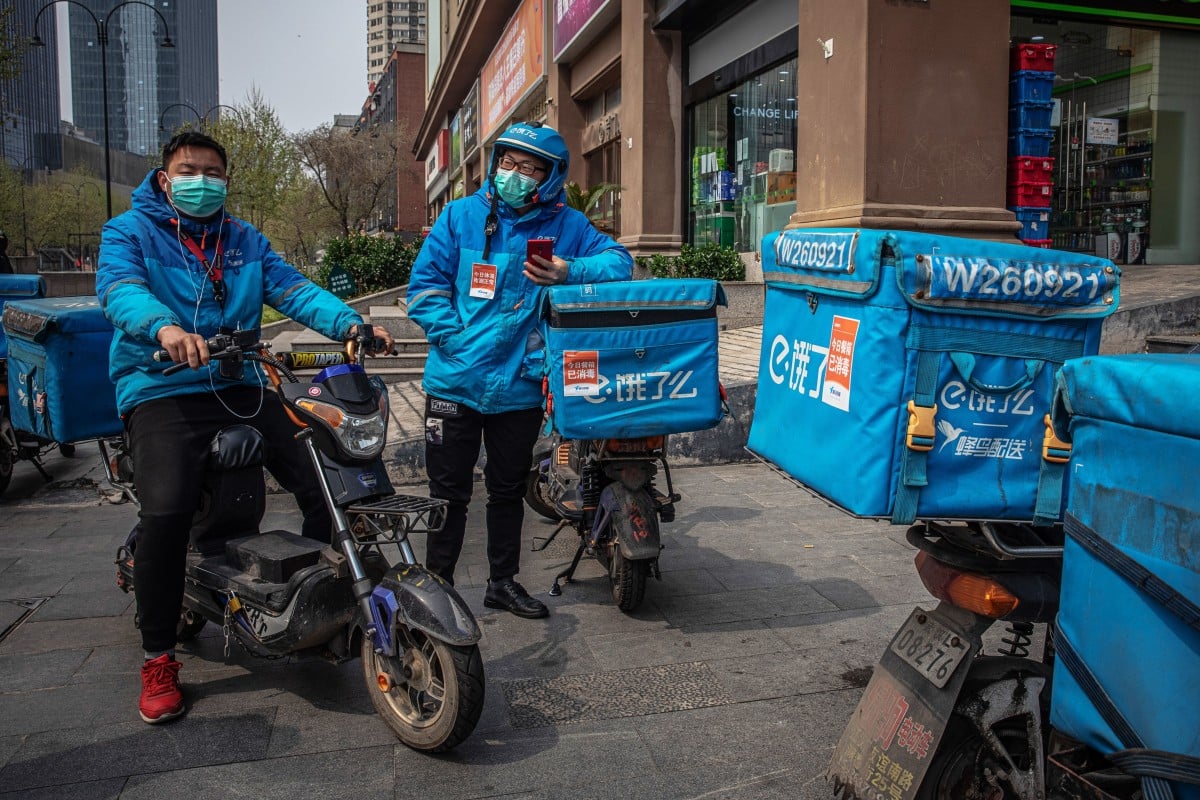
The supply and delivery networks that were already in place were able to work with the authorities in cities like Wuhan
China’s established home delivery system played an important role in getting food and other necessities to residents during the Wuhan lockdown. Photo: EPA-EFE
When Liu Yilin, a retired middle schoolteacher in Wuhan, first heard rumours of a
and shoppers flooded to the markets and malls to snap up supplies.
But as time went on and with residents banned from leaving their homes, he became increasingly concerned about getting hold of fresh supplies of vegetables, fruit and meat until the nation’s vast network of delivery drivers came to the rescue.
“It was such a relief that several necessity purchasing groups organised by community workers and volunteers suddenly emerged on WeChat [a leading social media app] days after the lockdown,” Liu said. “China’s powerful home delivery service makes life much easier at a time of crisis.”
Hu Xingdou, a Beijing-based independent political economist said: “Home delivery played a very important role amid the coronavirus outbreak. To some extent, it prevented people from starving especially in cases when local governments took extreme measures to isolate people.”
According to Liu, people in Wuhan during the lockdown had to stay within their residential communities, with community workers guarding the exits.
Human contact was limited to the internet. Residents placed orders online with farmers, small merchants or supermarkets to buy daily necessities, and community workers helped distribute the goods from deliverymen.
Every morning, Liu passed a piece of paper with his name, phone number and order number to a community worker who would collect the items from a courier at the gate of the residential area.
Thanks to a high population density in urban areas, affluent labour force and people’s openness to digital life, China has built a well-developed home delivery network.
Extensive funding from technology companies has been invested in hardware infrastructure, software to improve logistics and big data and cloud computing to help predict consumers’ behaviour.
Mark Greeven, professor of innovation and strategy at IMD Business School in Lausanne, Switzerland, said: “Whether it is delivery of products, air parcels or fresh food or even medicine or materials for medical use, China has a very well developed system. Much better developed than I think almost any other places in the world.
“Well before the crisis, China had started to embrace digital technology in daily life whether it is in consumption, business, government and smart cities and use of third party payments. All of these things have been in place for a long time and the crisis tested its agility and capability to deal with peak demand.”
China’s e-commerce giants help revive sales of farm goods from Hubei
3 Apr 2020
According to e-commerce giant JD.com, demands for e-commerce and delivery services spiked during the outbreak of Covid-19, the illness caused by the new coronavirus.
It sold around 220 million items between January 20 and February 28, mainly grains and dairy products with the value of beef orders trebling and chicken deliveries quadrupling compared with a year ago.
Tang Yishen, head of JD Fresh, its fresh foods subsidiary, said: “The surge of online demand for fresh merchandise shows the pandemic helped e-commerce providers further penetrate into the life of customers. It also helped upstream farm producers to know and trust us.”
Meituan Dianping, a leading e-commerce platform, said its grocery retail service Meituan Instashopping reported a 400 per cent growth in sales from a year ago in February from local supermarkets.
The most popular items ordered between January 26 and February 8 were face masks, disinfectant, tangerines, packed fresh-cut fruits and potatoes.
The food delivery service Ele.me said that, between January 21 and February 8, deliveries of frozen food surged more than 600 per cent year on year, followed by a nearly 500 per cent growth in delivery of pet-care products. Fresh food deliveries rose by 181 per cent while drink and snack deliveries climbed by 101 per cent and 82 per cent, respectively. Ele.me is owned by Alibaba, the parent company of the South China Morning Post.
Chinese hotpot restaurant chain adapts as coronavirus fears push communal meals off the menu
E-commerce providers used the opportunity to show goodwill and improve their relationship with customers and partners, analysts say.
Sofya Bakhta, marketing strategy analyst at the Shanghai-based Daxue Consulting, said the food delivery sector had made significant headway in reducing physical contact during the outbreak.
Delivery staff left orders in front of buildings, in lifts or temporary shelters as instructed by the clients as most properties no longer allowed them inside.
Some companies also adopted more hi-tech strategies.
In Beijing, Meituan used self-driving vehicles to deliver meals to contactless pickup stations. It also offered cardboard boxes to be used as shields aimed at preventing the spread of droplets among its clients while they ate in their workplaces. In Shanghai, Ele.me employed delivery drones to serve people under quarantine in the most affected regions.
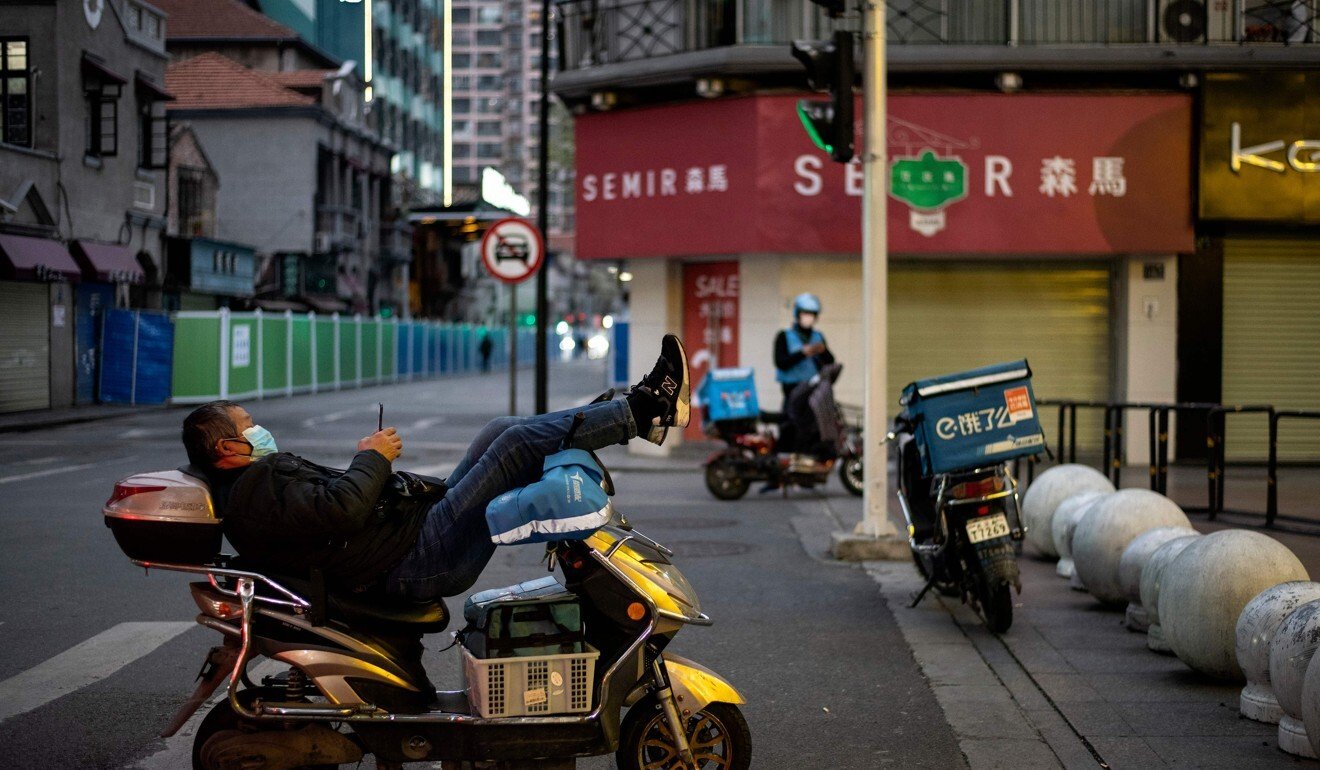
Some companies even “shared” employees to meet the growing labour demand in the food delivery industry that could not be satisfied with their ordinary workforce, Bakhta said.
More employees from restaurants, general retail and other service businesses were “loaned” to food delivery companies, which faced manpower shortages during the outbreak, according to Sandy Shen, senior research director at global consultancy Gartner.
“These arrangements not only ensured the continuity of the delivery service but also helped businesses to retain employees during the shutdown,” she said.
A delivery man takes a break between orders in Wuhan, central China, during the lockdown. Photo: AFP
Mo Xinsheng became one such “on-loan” worker after customers stopped coming to the Beijing restaurant where he worked as a kitchen assistant.
“I wanted to earn some money and meanwhile help people who are trapped at home,” said Mo, who was hired as a delivery man.
But before he could start work he had to go through lengthy health checks before he was allowed into residential compounds.
He also had to work long hours battling the wind and cold of a Beijing winter and carrying heavy loads.
“I work about 10 hours every day just to earn several thousand yuan [several hundred US dollars] a month,” he said.
“Sometimes I almost couldn’t breathe while my hands were fully loaded with packages of rice, oil and other things.
“But I know I’m doing an important job, especially at a time of crisis,” Mo said, “It was not until then that I realised people have become so reliant on the home delivery system.”
Woman uses remote control car to buy steamed buns amid coronavirus outbreak in China
The delivery system has been improved by an effective combination of private sector innovation and public sector coordination, said Li Chen, assistant professor at the Centre for China Studies at Chinese University of Hong Kong.
“[In China,] government units and the Communist Party grass roots organisations have maintained fairly strong mobilisation capabilities to cope with emergencies, which has worked well in the crisis,” he said.
However, Liu, the Wuhan resident, said prices had gone up and vegetables were three times more expensive than they had been over Lunar New Year in 2019.
“There were few varieties that we could choose from, apart from potatoes, cabbage and carrots,” he said.
“But I’m not complaining. It’s good we can still get fresh vegetables at a difficult time. Isn’t it? After all, we are just ordinary people,” he said.
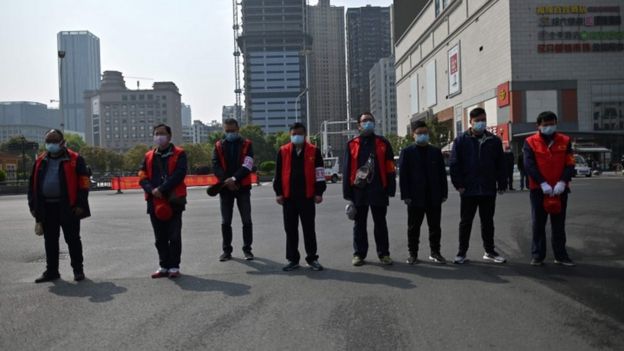
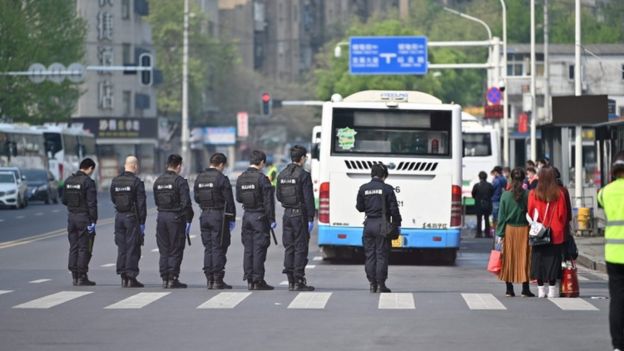
In Wuhan, the epicentre of China’s outbreak, all traffic lights in urban areas were turned red at 10:00, ceasing traffic for three minutes.
China’s government said the event was a chance to pay respects to “martyrs”, a reference to the 14 medical workers who died battling the virus.
Image copyright GETTY IMAGESImage caption China came to a standstill during the three-minute silence at 10:00 local time
They include Li Wenliang, a doctor in Wuhan who died of Covid-19 after being reprimanded by the authorities for attempting to warn others about the disease.
“I feel a lot of sorrow about our colleagues and patients who died,” a Chinese nurse who treated coronavirus patients told AFP news agency. “I hope they can rest well in heaven.”
Wearing white flowers pinned to their chest, Chinese President Xi Jinping and other government officials paid silent tribute in Beijing.
Saturday’s commemorations coincide with the annual Qingming festival, when millions of Chinese families pay respects to their ancestors.
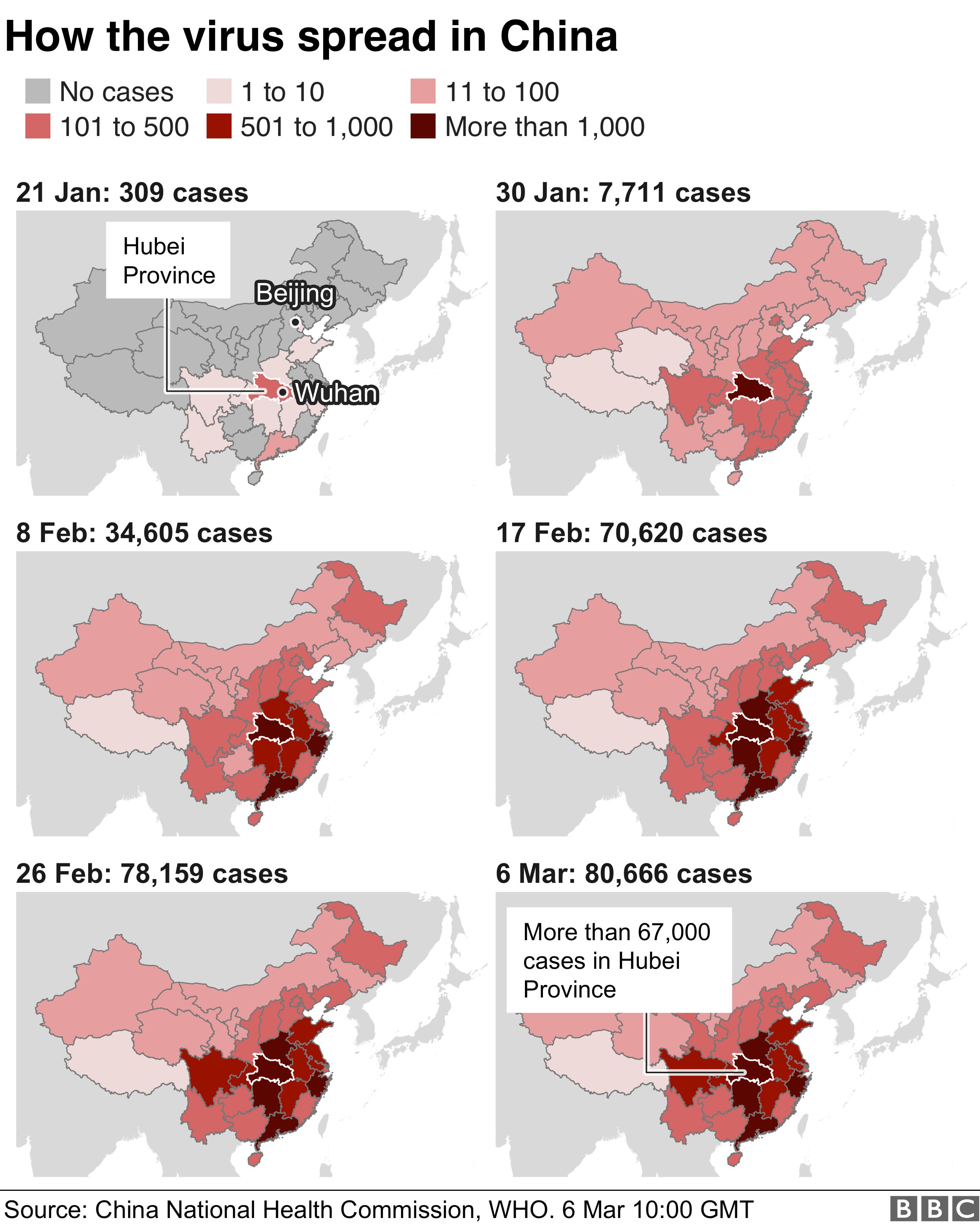
China first informed the World Health Organization (WHO) about cases of pneumonia with unknown causes on 31 December last year.
By 18 January, the confirmed number of cases had risen to around 60 – but experts estimated the real figure was closer to 1,700.
Image copyright GETTY IMAGESImage caption China’s government said the commemoration was held to pay respects to “martyrs”
Just two days later, as millions of people prepared to travel for the lunar new year, the number of cases more than tripled to more than 200 and the virus was detected in Beijing, Shanghai and Shenzhen.
From that point, the virus began to spread rapidly in Asia and then Europe, eventually reaching every corner of the globe.
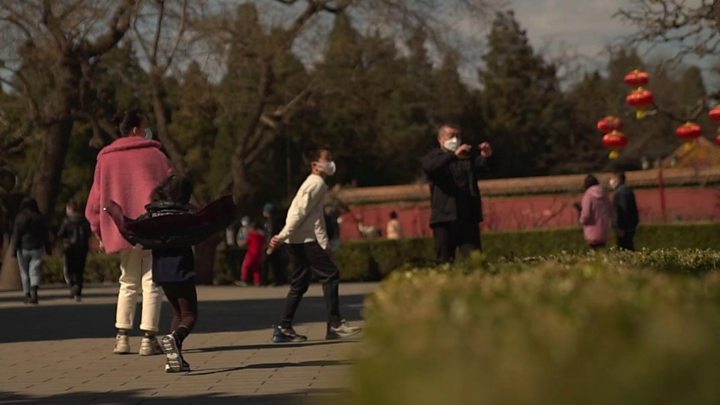
Media caption The BBC met people in Beijing heading out after the lockdown
In the past few weeks, China has started to ease travel and social-distancing restrictions, believing it has brought the health emergency under control.
Last weekend, Wuhan partially re-opened after more than two months of isolation.
On Saturday, China reported 19 new confirmed cases of coronavirus, down from 31 a day earlier. China’s health commission said 18 of those cases involved travellers arriving from abroad.
As it battles to control cases coming from abroad, China temporarily banned all foreign visitors, even if they have visas or residence permits.
What is the latest worldwide?
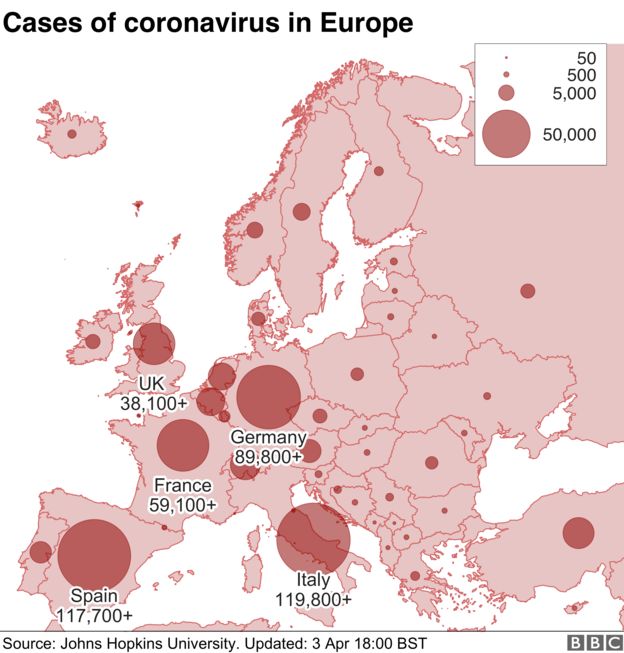
As the coronavirus crisis in China abates, the rest of the world remains firmly in the grip of the disease.
The deaths increased by 1,480 in 24 hours, the highest daily death toll since the pandemic began, AFP news agency reported, citing Johns Hopkins University’s case tracker.
The head of the International Monetary Fund (IMF) said the pandemic has bought the global economy to a standstill, causing a recession “way worse than the global financial crisis” of 2008
The United Nations appealed to governments around the world not to use the pandemic as an excuse to stifle dissent
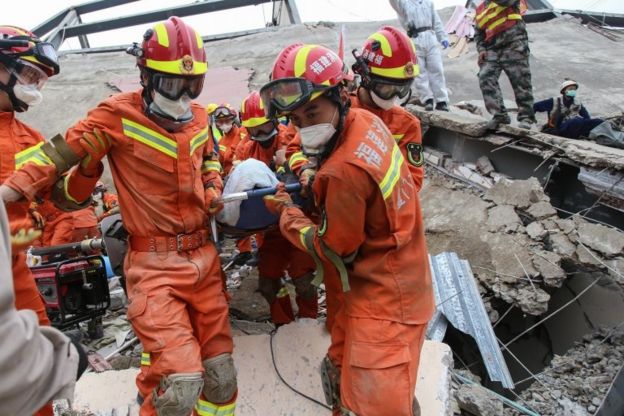
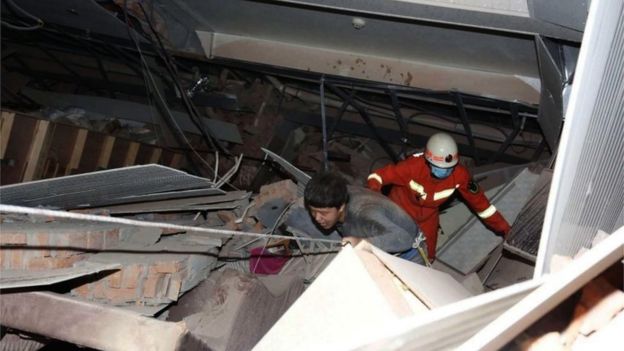
At least six people are dead and 28 remain missing after a hotel being used as a coronavirus quarantine facility in the Chinese city of Quanzhou collapsed on Saturday.
Rescue workers are still searching the rubble of the five-storey Xinjia Hotel in the southern province of Fujian.
Seventy-one people were in the building when it collapsed and dozens have been rescued, authorities say.
It is not clear what caused the collapse on Saturday evening.
Image copyright GETTY IMAGESImage caption Rescue workers continued to search for survivors on Sunday
State media say the hotel was being used as a quarantine facility monitoring people who had had close contact with coronavirus patients. It’s reported 58 of the 71 people in the building were under quarantine.
The building’s first floor had been undergoing renovation since before the Lunar New Year, the official Xinhua news agency said, adding that police had summoned the building’s owner.
The hotel reportedly opened in 2018 and had 80 guest rooms.
The city of Quanzhou has recorded 47 cases of the virus, which first emerged in the city of Wuhan, about 1,000km away.
Image copyright EPAImage caption The hotel reportedly had 80 guest rooms
One woman told the Beijing News website that relatives including her sister had been under quarantine there.
“I can’t contact them, they’re not answering their phones,” she said.
“I’m under quarantine too [at another hotel] and I’m very worried, I don’t know what to do. They were healthy, they took their temperatures every day, and the tests showed that everything was normal.”
As of Friday, Fujian province had 296 confirmed cases of coronavirus. Meanwhile 10,819 people have been placed under observation because they have been in close contact with someone infected.
The number of new reported cases in China dropped on Saturday to 44, down from 99 the previous day.
The World Health Organization says more than 101,000 people worldwide have now contracted the virus. More than 80,000 of them are in China.
About 3,500 people have died – the majority in the Chinese province of Hubei where the outbreak originated.
China Passenger Car Association said sales fell to just 4,909 units in the first 16 days of February, from 59,930 in the first quarter of 2019
The growth rate for China’s imports and exports is expected to decline sharply in the January-February period
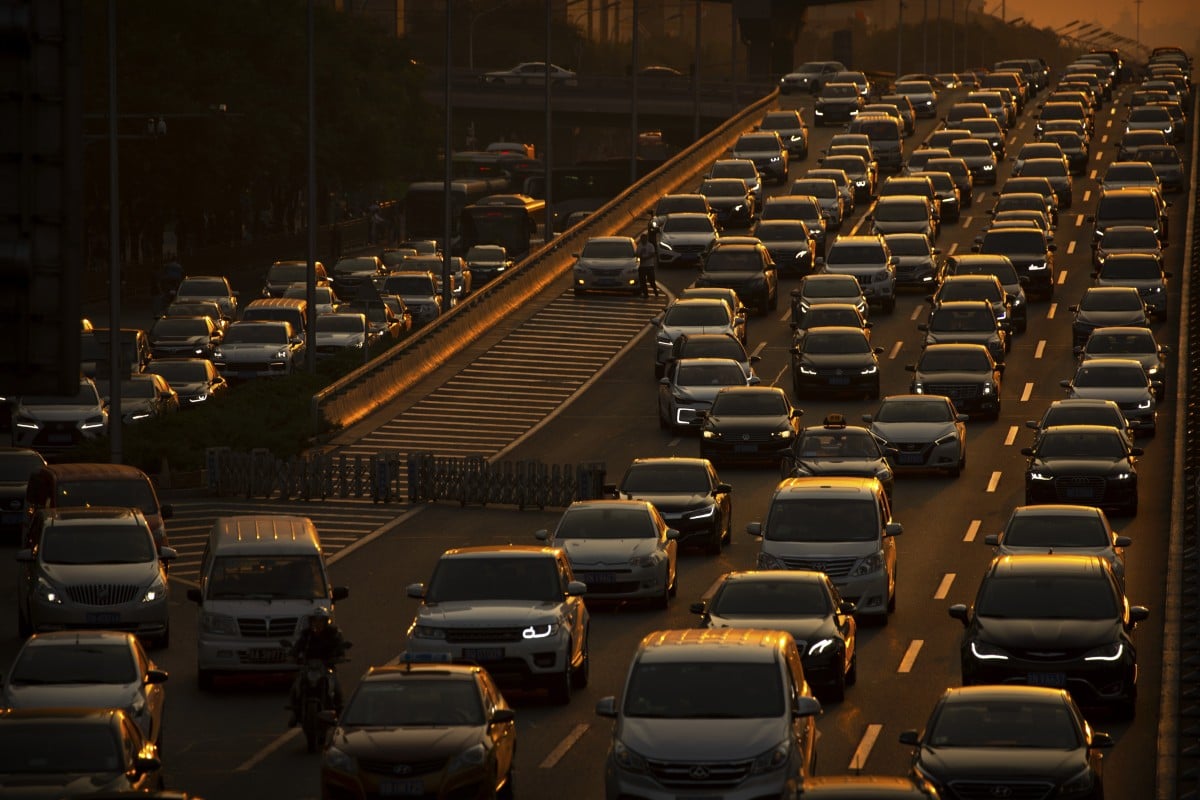
Commuters make their way along an expressway during rush hour in Beijing. Photo: AP
A 92 per cent drop in car sales in China in the first half of February provided the first real indicator of the economic impact of the coronavirus epidemic, with officials also warning of a sharp decline in Chinese exports and imports for the first two months of the year.
The China Passenger Car Association (CPCA) on Friday said that sales dropped to just 4,909 units in the first 16 days of the month, down from 59,930 vehicles in the same period a year earlier.
“Very few dealerships opened in the first weeks of February and they have had very little customer traffic,” said the CPCA.
China’s car market is likely to see sales slide more than 10 per cent in the first half of the year due to the outbreak, and around 5 per cent for the whole year, provided the virus is effectively contained before April, the country’s top industry body, the China Association of Automobile Manufacturers (CAAM), said last week.
Chinatowns around the world feel effects of coronavirus fears
The sector was already under pressure from the cooling economy, with car sales falling 3 per cent in 2018 in the first sales contraction since the 1990s, and 8.2 per cent in 2019, CAAM said.
“We must firmly believe that China’s auto market still has great development space and potential, and the automobile consumption demand is still strong,” Wang Bin, vice-director of the commerce market operation department at the commerce ministry, said on Thursday.
To stabilise the market, in which more than 25 million vehicles were sold last year, China’s commerce ministry said it will introduce more measures to boost consumption.
Li Xingqian, head of foreign trade at the Ministry of Commerce, said the growth rate for China’s exports and imports would decline sharply in the January-February period due to a collapse in logistics and the delayed start of work following the extended Lunar New Year holiday, which was aimed at controlling the coronavirus outbreak.
“The impact of the epidemic on the first quarter is here objectively, should not be underestimated, but [growth] is still within the tolerable range,” he said on Friday. “As the prevention and control [measures] achieve new staged results, foreign trade will inevitably resume its growth. China’s foreign trade development is expected to remain within a reasonable range throughout the year.”
China cancelled the release of its January trade data, with the General Customs Administration of China saying it will combine January and February’s data in an effort to remove seasonal volatility from the Lunar New Year period. Statistics will be released in early March.
Trade is traditionally volatile over the first two months of the year in China. Shipments are heavily affected by the Lunar New Year break, with this volatility to be exacerbated by the coronavirus outbreak, which causes the disease officially known as Covid-19.
Zong Changqing, head of the commerce ministry’s foreign investment department, also conceded the virus could hit inward investment over the entire first quarter of 2020. Zong claimed the impact would only be temporary, and that China remained an attractive environment for foreign investment.
Foreign direct investment (FDI) in China in 2019 rose 5.8 per cent from a year earlier to 941.5 billion yuan (US$134 billion), according to the commerce ministry. FDI in China also saw a steady year-on-year increase of 4 per cent last month, compared with a growth of 4.8 per cent registered in January 2019.
The impacts of the outbreak on foreign investment have begun to show, and are expected to become greater in February and March. Zong Changqing
“The impacts of the outbreak on foreign investment have begun to show, and are expected to become greater in February and March,” Zong said.
He confirmed that the ministry asked local authorities in Shandong province to push all 32 South Korean-owned car parts companies to restart production by the end of last week to keep the global supply chain stable.
He also said that over 80 per cent of key foreign-owned enterprises in Shanghai, Shandong and Hunan province had reopened, with most regions expected to restore production by the end of February, provided the spread of the virus is contained.
However, a survey by the American Chamber of Commerce in Shanghai, released earlier this week, found that in the vast majority of cases, factories that have reopened are running at a fraction of their production capacity.
Elderly resident says he can’t recall this happening in his city before, not even during the Cultural Revolution
Outbreak is expected to deal a heavy blow to businesses, especially smaller eateries, with some already forced to close
Like many elderly Chinese in Guangzhou, He Zhijian was shocked when he heard there was a ban on eating in restaurants, as authorities try to curb the spread of the coronavirus.
The 73-year-old has spent his entire life in the southern city, where gathering for dim sum is an important weekly family ritual.
“My wife and I … are used to having dim sum, tea and Cantonese dishes at the local restaurants every week. From memory, this [type of ban] has never happened in Guangzhou before – not even during the Cultural Revolution,” He said, referring to the decade of social and political upheaval from 1966, when food was in short supply.
The ban took effect at 9pm on Wednesday and is part of measures to contain the outbreak of the virus, which causes a disease officially known as Covid-19, and is believed to have started in Wuhan in December. The pneumonia-like illness has so far
Residents can still get takeaway meals in Guangzhou, but they have been encouraged to order online and have them delivered. Photo: He Huifeng
Guangzhou is home to more than 15 million people and a busy trading port, and has been known as China’s most open city since the 1600s. For locals, going to restaurants for yum cha, or “drinking tea”, and dining on dim sum is an important part of the city’s history and culture – a tradition that has been carried through many generations.
“Even in the ‘three years of natural disasters’ [from 1959 to 1961, when China was in the grip of a famine] I remember there were still restaurants open,” He said. “I was really shocked [by the ban]. I guess the epidemic situation must be severe, otherwise Guangzhou definitely wouldn’t introduce this measure.”
China’s Hubei province reports huge spike in coronavirus cases, rising 10-fold from previous day
Many people in Guangzhou and across the country went back to work on Monday after an extended Lunar New Year break – another measure to try to stop the virus from spreading – with the government keen for businesses to return to normal operations.
The ban on dining in applies to restaurants, but employees can continue to have meals at their company canteens. And while residents can still get takeaways from restaurants, they have been encouraged to do this online, and have their meals delivered, rather than collecting their orders.
Group gatherings have also been banned in the city, and according to Nanfang Daily, some 126 banquets that would have involved more than 90,000 people have been cancelled by authorities already. The authorities did not say how long the measures would be in place.
Guangzhou is not the only city in Guangdong province to bring in a ban on dining in restaurants – Futian district in Shenzhen, Xiangzhou in Zhuhai, Foshan and Zhongshan have all taken the same step.
Beijingers gradually return to work as China’s fight against deadly coronavirus continues
In Guangzhou, while residents try to adapt, businesses are expecting to take a hit. One of the city’s top hotels said the virus outbreak could have a severe impact on the industry.
“Now we will focus on promoting takeaways for local customers. They can order our meals through apps providing online takeaway ordering services,” said Fion Liang, director of sales and marketing at The Garden Hotel. “As for guests staying in the hotel we will deliver meals to their rooms.”
To work or not to work: the difficult coronavirus question facing China
13 Feb 2020
She said the outbreak did not have a big impact on the hotel’s business in January, because the situation only became severe at the end of the month.
“The impact was definitely much bigger in February. If the epidemic continues to be severe throughout February, the occupancy rate of our rooms will be in the single digits this month,” Liang said. “[Most] hotels in Guangzhou are in the same situation.”
The outbreak is expected to deal a heavy blow to restaurants in the city, especially smaller eateries, and some have already been forced to close. June Zhao, the owner of dumpling restaurant Xi Xi, decided to shut down on Wednesday – the day the eat-in ban was announced.
Prospects had been good for the restaurant – it also sold books and alcohol in the evenings, and its trendy decor drew a young crowd.
“We had just started making money last winter and we were looking forward to earning more over the Lunar New Year holiday. But then the coronavirus came, our turnover fell to several hundred yuan a day, and we lost hope,” she said. “The new ban makes this situation worse – takeaway is not a good choice for dumplings, especially in winter. The losses will continue if we stay open.”
Coronavirus: major cities given power to seize private property
13 Feb 2020
The ban has also interrupted daily routines. Freelance cameraman Cony Yu, 28, usually spends some of his working day at cafes, but that is no longer possible. “[Now] I don’t have a comfortable place to sit aside from my home – even the parks have all been closed,” Yu said.
China disinfects entire cities to fight coronavirus outbreak, some twice a day
In the southern tech hub of Shenzhen, dining in has also been banned in central Futian district. Zhu Hao, a financial analyst based in the district, has been working from home for a week and ordering takeaway food every day. But he has to collect it from the gate at his residential compound, where security staff check the temperature of anyone entering or leaving.
He is losing patience with the restrictions. “I want to eat out. I want beef hotpot, coconut chicken, Korean barbecue and seafood,” he said.
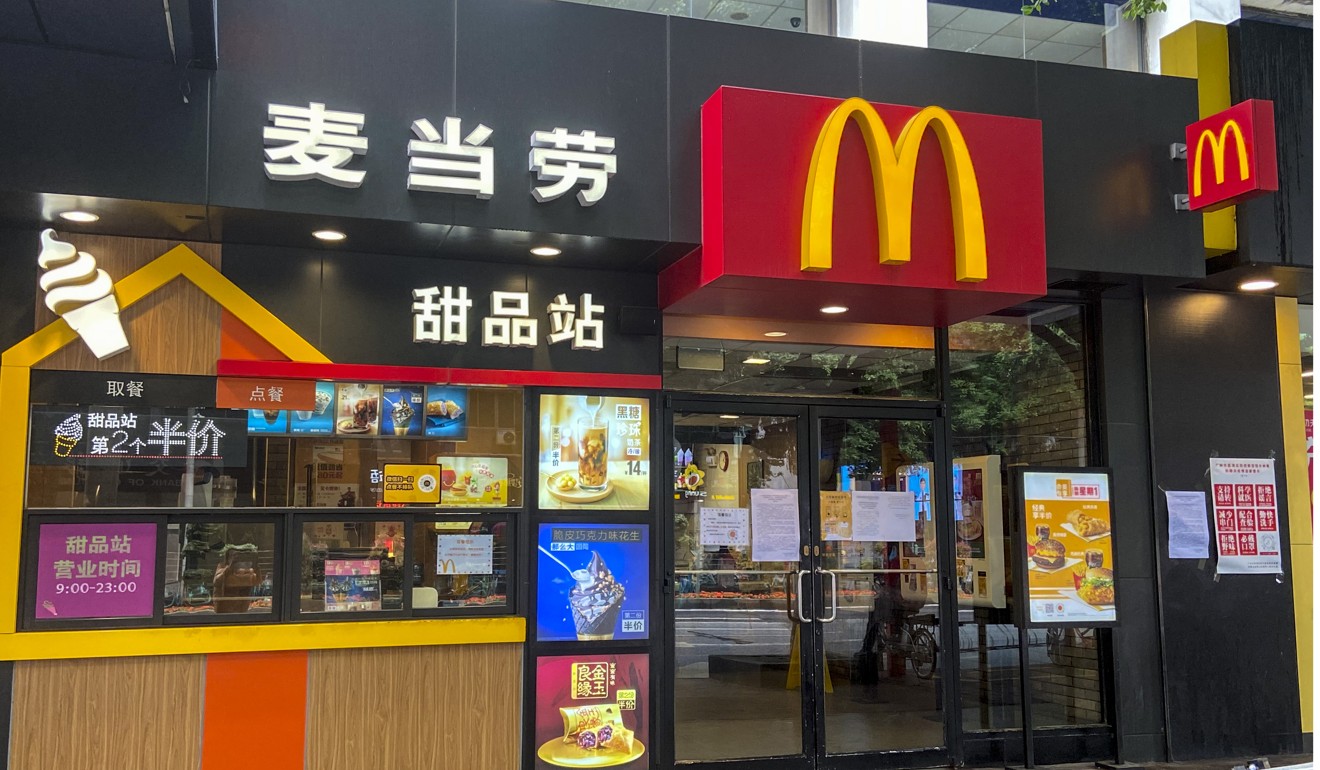
In other Shenzhen districts, many restaurants and shopping centres have been temporarily closed or can only provide takeaway meals – including fast food chains such as McDonald’s and Starbucks.
Other places have strict rules for customers. At a bread shop, customers must register their ID and phone numbers and have their temperatures checked before they can enter. And for now, all hotpot restaurants have been closed.
Lufthansa, British Airways, Air Canada among several big name airlines to halt flights, while others reduce services
Travel agents expecting slump in sales amid rising uncertainty over how epidemic will play out
Many airlines have cancelled flights into mainland China because of the coronavirus outbreak. Photo: AP
International air travellers and ticketing agents are in for a turbulent time in the weeks ahead as airlines around the world react to the coronavirus epidemic by cancelling or limiting flights to and from the Chinese mainland.
Lufthansa, British Airways, Air Canada and Indonesia’s Lion Air have
, while United Airlines, American Airlines, IndiGo, Finnair, Delta Air Lines and Jetstar Asia have significantly reduced their services.
“It’s going to be pretty bad for travel agencies. We’ve had a lot of cancellations. Everyone is afraid of coming to China,” said Annabelle Auger from Travel Stone in Beijing.
“Many of our European clients are very worried because of the media coverage they’ve seen. Still, people are willing to wait and see for a few weeks to see how things go,” she said.
For foreigners looking to leave China, Auger said they should contact their embassy to find out about repatriation flights.
“The situation is very unclear, so it’s difficult to give any general recommendations,” she said.
Already this week, the embassies of the United States, Japan, South Korea and Britain have cleared flights to evacuate their nationals from Hubei, the central China province at the heart of the outbreak.
Auger said she and her colleagues had been busy rearranging flights for China-based foreigners who had gone away for the holidays.
“The schools are closed, so families with children abroad are thinking, ‘OK, let’s extend our stay for another week’,” she said.
Politics may have stalled information in coronavirus crisis, scientist says
30 Jan 2020
The Beijing government said on Monday it would extend the Lunar New Year
holiday until Sunday to help stop the spread of the disease, while school breaks have also been extended.
Another travel agent in Beijing, who asked not to be named, said the virus outbreak had yet to have a significant impact on business but concerns were growing.
“We are a bit worried that things may get difficult in the coming months,” she said. “But we trust that the government is doing all it can and will take the appropriate measures to solve the problems.”
Zhu Tao, director of the flight standards department at the Civil Aviation Administration of China (CAAC), said at a press conference in Beijing on Thursday that the relevant authorities were working closely with airlines to help Chinese nationals trapped overseas to get home.
The government had already chartered flights from Japan, Myanmar and South Korea to bring Chinese nationals back to Hubei, he said.
While all flights out of Hubei have been suspended since last week, Zhu said air transport was playing its part in fighting the disease.
As of Wednesday, the CAAC had sent 86 flights carrying 5,129 medical workers and 115,000 items of equipment and other supplies into Wuhan, he said.
Wu Zunyou, the chief epidemiologist at the China Centre for Disease Control and Prevention, said that efforts to prevent the coronavirus spreading outside the country had been successful, as only about 1 per cent of the confirmed infections were outside China.
Despite the flight cancellations, Beijing’s Capital International Airport was operating as normal on Thursday.
Andre Muchanga, a student from Abu Dhabi at the Beijing Institute of Technology, said he made a late decision to fly home.
“I decided to buy my ticket last night,” he said. “At school, our dormitory is almost completely empty. I knocked on a friend’s door last night and found there was no one there, so I decided I better just go home and spend some time with my family.”
He said he decided not to buy a return flight as it he did not know when his classes would resume.
Signs at check-in counters reminded passengers who had travelled to Hubei or had a Hubei address to put themselves in isolation for 14 days.
While flights out of Hubei have been stopped, there was still plenty of inbound traffic.
“The number of domestic inbound travellers seems pretty normal for this time of year,” a man working on an information desk at Capital airport said.
“It’s the sixth day of the Lunar New Year. Lots of people have to return to work.”
An Air China employee, surnamed Hu, said that the airport had stepped up its disinfecting and general cleaning work. Body temperature checks had been installed at all access points and employees had been told to wear masks, he said.
“I don’t mind working during the Lunar New Year holiday,” he said. “I’m not afraid of the virus, I’m here to serve the people.”
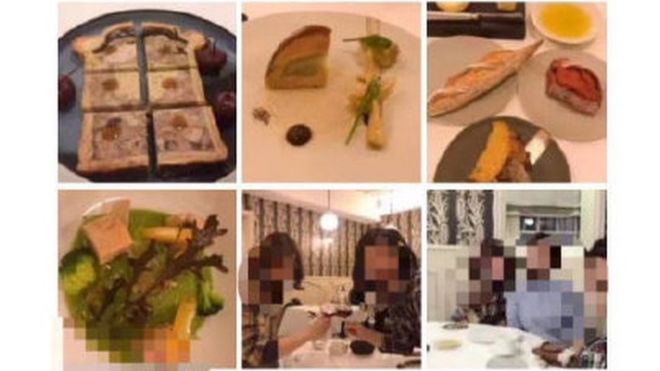
Image copyright WEIBOImage caption She posted pictures of her meal on social media platform WeChat
The Chinese embassy in Paris has tracked down a woman from Wuhan who said she took tablets to pass airport health checks.
The woman boasted on social media that she had been suffering from a fever, but managed to reduce her symptoms with medicine.
She later posted pictures showing herself dining at what she claimed was a Michelin-starred restaurant in Lyon.
The embassy has now confirmed that her symptoms are under control.
The woman left Wuhan – where the new coronavirus emerged late last year – before flights were suspended, but when thermal scanning was in place.
Since yesterday, public transport has been shut down, with residents told not to leave the city.
At least 25 people with the virus have died. It was first reported to the World Health Organization 31 December.
The virus has spread to countries as far as South Korea, Japan and the US.
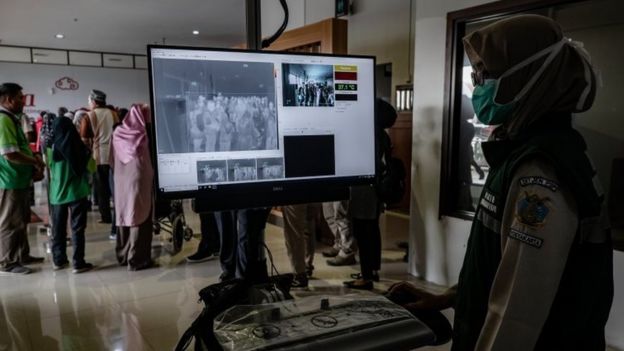
Image copyright GETTY IMAGESImage caption People have been thermally scanned when leaving Wuhan, and arriving at their destination. This picture was taken in Indonesia on Thursday
The woman detailed her journey to Lyon on social media site WeChat.
“Finally I can have a good meal, I feel like I’ve been starving for two days. When you are in a gourmet city of course you have to eat Michelin [food],” she wrote.
“Just before I left, I had a low fever and cough. I was scared to death and rushed to eat [fever-reducing] medicine. I kept on checking my temperature. Luckily I managed to get it down and my exit was smooth.”
She also posted pictures of the meal she enjoyed. It is not clear exactly when she arrived.
Her post quickly went viral and she was widely criticised by other social media users.
The Chinese embassy in Paris said it had received calls and emails about the woman. It said she had taken antipyretics, and that it attached “great importance” to the case.
The embassy said it contacted her on Wednesday evening and asked her to refer herself to medical services.
On Thursday, in a new statement, the embassy said the woman’s temperature was under control, and that she had no more fever or cough symptoms.
It added that she did not require “further examinations” at this point.
Media caption Fears over coronavirus in China trigger face mask shortage
China has effectively quarantined nearly 20 million people in Hubei province. Other major cities in China like Beijing and Shanghai are also affected.
Authorities have cancelled all large-scale celebrations in Beijing. Temple fairs are banned, film releases postponed and the Forbidden City will be closed to the public.
All this comes as millions of Chinese people are travelling across the country for Lunar New Year.
Currently known as 2019-nCoV, the virus is understood to be a new strain of coronavirus not previously identified in humans.
As public health concerns rise over a new virus, the impact is being felt by China’s travel and tourism sector.
More than 400m Chinese were expected to travel over the Lunar New Year which starts today, normally one of the busiest periods for airlines, hotels and tourist attractions.
Instead, flights and hotels are being cancelled as people face travel restrictions or choose to stay home.
The virus has already taken 25 lives, with more than 800 cases globally.
Many airlines have agreed to refund fares or let passengers rebook free of charge if affected, while major hotel chains are now following suit as more travel restrictions are announced.
After the Civil Aviation Administration of China announced that airlines should give refunds for cancelled flights, the country’s three major airlines, China Southern Airlines, China Eastern Airlines and China Air all saw their share prices take a dive. China Eastern Airlines has seen its value fall about 13% this week.
Hong Kong’s national carrier Cathay Pacific was among the first airlines to allow passengers scheduled to fly to or from Wuhan to reschedule for free while, at the same time, allowing cabin crew to wear surgical masks on flights.
Wuhan is where the first cases in the outbreak were reported. The flu-like virus has since spread to several our parts of China and internationally with cases being confirmed in Singapore, Thailand and the US among others countries.
China’s biggest online travel agency, Trip.com, is also waiving cancellation fees on all hotels, car rentals and tickets for tourist attractions to Wuhan and is ”actively monitoring the situation to ensure the safety of all travellers”.
Hotels and casinos hit
Hotel groups are also paying out refunds to tourists who want to cancel trips to Wuhan and other parts of China.
Both InterContinental Hotels Group (IHG) and Hyatt will allow guests to change or cancel stays at the majority of their Chinese hotels over the Lunar New Year holiday. IHG has 443 hotels in China, Hong Kong, Macau and Taiwan under different brands, with four in Wuhan.
Casino operators have also seen shares fall, particularly those with businesses in Macau. The city is home to casinos owned by Las Vegas Sands and Wynn Resorts.
The release of seven movies over the Lunar New Year has also been postponed.
Blow to economy
Tourism has become an increasingly important part of the Chinese economy and is estimated to contribute about 11% of China’s economic growth and employ about 28 million people.
In 2018, 62.9 million tourists visited China, ranking it the fourth most popular tourist destination behind France, Spain and the US, according to the UN’s World Tourism Rankings.
Outside of China, luxury goods brands are also likely to take a battering as Chinese tourists stay at home rather than travel overseas for shopping sprees. LVMH, which owns the Burberry, Louis Vuitton and Hermes brands, saw its value slide this week.
BEIJING (Reuters) – The death toll from China’s coronavirus outbreak jumped on Saturday to 41 as the Lunar New Year got off to a gloomy start, with Hong Kong declaring a virus emergency, scrapping celebrations, and restricting links to mainland China.
Australia on Saturday confirmed its first four cases, Malaysia confirmed three and France reported Europe’s first cases on Friday, as health authorities around the world scrambled to prevent a pandemic.
Hong Kong leader Carrie Lam on Saturday declared a virus emergency in the Asian financial hub, with five confirmed cases, immediately halting official visits to mainland China and scrapping official Lunar New Year celebrations.
Inbound and outbound flights and high speed rail trips between Hong Kong and Wuhan, the epicentre of the outbreak, would be halted, and schools, now on Lunar New Year holidays, would remain shut until Feb. 17. The territory was also treating 122 people suspected of having the disease.
RELATED COVERAGE
U.S. to evacuate its citizens from Wuhan, China – WSJ
China’s President Xi holds politburo meeting on curbing virus outbreak – state TV
The death toll in China rose to 41 on Saturday from 26 a day earlier and more than 1,300 people have been infected globally with a virus traced to a seafood market in the central city of Wuhan that was illegally selling wildlife.
Hu Yinghai, deputy director-general of the Civil Affairs Department in Hubei province, where Wuhan is located, made an appeal on Saturday for masks and protective suits. Hospitals in the city have made similar pleas.
“We are steadily pushing forward the disease control and prevention … But right now we are facing an extremely severe public health crisis,” he told a news briefing.
Vehicles carrying emergency supplies and medical staff for Wuhan would be exempted from tolls and given traffic priority, China’s transportation ministry said on Saturday.
Wuhan said it would ban non-essential vehicles from its downtown starting Sunday to control the spread of the virus, further paralysing a city of 11 million that has been on virtual lockdown since Thursday, with nearly all flights cancelled and checkpoints blocking the main roads leading out of town.
Authorities have since imposed transport restrictions on nearly all of Hubei province, which has a population of 59 million.
In Australia, three men, aged 53, 43 and 35 in New South Wales were in stable condition after they were confirmed to have the virus after returning from Wuhan earlier this month.
A Chinese national in his 50s, who had been in Wuhan, was also in stable condition in a Melbourne hospital after arriving from China on Jan. 19, Victoria Health officials said.
State-run China Global Television Network reported in a tweet on Saturday that a doctor who had been treating patients in Wuhan, 62-year-old Liang Wudong, had died from the virus.
Police officers stand guard in front of the closed gate of Lama Temple where a notice saying that the temple is closed for the safety concern following the outbreak of a new coronavirus is seen, in Beijing, China January 25, 2020. REUTERS/Carlos Garcia Rawlins
It was not immediately clear if his death was already counted in the official toll of 41, of which 39 were in the central province of Hubei, where Wuhan is located.
U.S. coffee chain Starbucks said on Saturday that it was closing all its outlets in Hubei province for the week-long Lunar New Year holiday, following a similar move by McDonald’s in five Hubei cities.
PROTECTIVE SUITS
In Beijing on Saturday, workers in white protective suits checked temperatures of passengers entering the subway at the central railway station, while some train services in eastern China’s Yangtze River Delta region were suspended, the local railway operator said.
The number of confirmed cases in China stands at 1,287. The virus has also been detected in Thailand, Vietnam, Singapore, Japan, South Korea, Taiwan, Nepal, and the United States.
The U.S. Centers for Disease Control and Prevention said on Friday it had 63 patients under investigation, with two confirmed cases. While China has called for transparency in managing the crisis, after cover-up of the 2002/2003 Severe Acute Respiratory Syndrome spread, officials in Wuhan have come in for criticism over their handling of the current outbreak.
In rare public dissent, a senior journalist at a Hubei provincial newspaper run by the ruling Communist Party on Friday called for a “immediate” change of leadership in Wuhan on the Twitter-like Weibo. The post was later removed.
REINFORCEMENTS TO WUHAN
The World Health Organization (WHO) declared the new coronavirus an “emergency in China” this week but stopped short of declaring it of international concern.
Human-to-human transmission has been observed in the virus.
China’s National Health Commission said it had formed six medical teams totalling 1,230 medical staff to help Wuhan.
Hubei province, where authorities are rushing to build a 1,000 bed hospital in six days to treat patients, announced on Saturday that there were 658 patients affected by the virus in treatment, 57 of whom were critically ill.
The newly-identified coronavirus has created alarm because there are still many unknowns surrounding it, such as how dangerous it is and how easily it spreads between people. It can cause pneumonia, which has been deadly in some cases.
Symptoms include fever, difficulty breathing and coughing. Most of the fatalities have been in elderly patients, many with pre-existing conditions, the WHO said.
NEW YEAR DISRUPTIONS
Airports around the world have stepped up screening of passengers from China, though some health officials and experts have questioned the effectiveness of such screenings.
There are fears the transmission could accelerate as hundreds of millions of Chinese travel during the week-long Lunar New Year holiday, which began on Saturday, although many have cancelled their plans, with airlines and railways in China providing free refunds.
The virus outbreak and efforts to contain it have put a dampener on what is ordinarily a festive time of year.
Sanya, a popular resort destination on the southern Chinese island of Hainan, announced that it was shutting all tourist sites, while the island’s capital city, Haikou, said visitors from Wuhan would be placed under 14-day quarantine in a hotel.
Shanghai Disneyland was closed from Saturday. The theme park has a 100,000 daily capacity and sold out during last year’s Lunar New Year holiday.
Beijing’s Lama Temple, where people traditionally make offerings for the new year, has also closed, as have some other temples.








 CHINDIA ALERT: You'll be living in their world, very soon