Chindia Alert: You’ll be Living in their World Very Soon
aims to alert you to the threats and opportunities that China and India present. China and India require serious attention; case of ‘hidden dragon and crouching tiger’.
Without this attention, governments, businesses and, indeed, individuals may find themselves at a great disadvantage sooner rather than later.
The POSTs (front webpages) are mainly 'cuttings' from reliable sources, updated continuously.
The PAGEs (see Tabs, above) attempt to make the information more meaningful by putting some structure to the information we have researched and assembled since 2006.
Image copyright GETTY IMAGESImage caption International students are uncertain of the future in the wake of Covid-19
Two years ago, 29-year-old Raunaq Singh started working towards his dream of pursuing an MBA from one of the world’s top business schools.
In January 2020, he was waitlisted by UC Berkeley’s Haas School of Business in California, and was asked to send more information to bolster his case for admission.
“So, I quit my stable job of five years and started working with a mental wellness start-up as a consultant,” Mr Singh says.
“I’m on a major pay cut because the purpose of joining this company wasn’t to earn money, but to add value to my application.”
Fortunately, he was accepted at Berkeley, and was due to start his course in September.
But then the world changed as Covid-19 spread, plunging the immediate future into uncertainty.
Mr Singh is one of hundreds of thousands of Indian students who were planning to study abroad. But now they are not quite sure what will happen given international travel restrictions, new social distancing norms and the sheer uncertainty of what the next few months will bring.
Image copyright MEEHIKA BARUAImage caption Ms Barua is one of the hundreds of thousands of Indians who wants to study abroad
Every year, in June and July, students flood visa centres and consulates to start the paperwork to travel and study abroad. But things look different this year.
“There’s a lot of stress and anxiety and tension at this time but not enough clarity,” says Meehika Barua, 23, who wants to study journalism in the UK.
“We don’t know when international travel restrictions will be lifted or whether we’d be able to get our visas in time. We may also have to take classes online.”
Some universities across the UK and the US are giving international students the option to defer their courses to the next semester or year, while others have mandated online classes until the situation improves.
The University of Cambridge recently announced that lectures will be online only until next year. Others, like Greenwich University, will have a mix of online and face-to-face approaches while its international students can defer to the next semester.
“It feels a little unfair, especially after spending a year-and-half to get admission in one of these schools,” Mr Singh says. “Now, a part of the experience is compromised.”
Like him, many others are disappointed at the prospect of virtual classes.
Image copyright PA MEDIAImage caption Cambridge University has announced that all lectures will be online
“The main reason we apply to these universities is to be able to get the experience of studying on campus or because we want to work in these countries. We want to absorb the culture there,” Ms Barua says.
Studying abroad is also expensive. Many US and UK universities charge international students a higher fee. And then there’s the additional cost of applications or standardised tests.
Virtual classes mean they don’t have to pay for a visa, air tickets or living expenses. But many students are hesitant about spending their savings or borrowing money to pay for attending college in their living room.
Even if, months later, the situation improves to some extent, and students could travel abroad and enrol on campus, they say that brings its own challenges.
For one, Mr Singh points out, there is the steep cost of healthcare, and questions over access to it, as countries like the US are experiencing a deluge of infections and deaths.
Image copyright GETTY IMAGESImage caption Students are also unsure of finding jobs overseas after graduation
And then there are the dimming job prospects. The pandemic has squeezed the global economy, so employers are less likely to hire, or sponsor visas for foreign workers.
“For international students, the roller coaster has been more intense because there is increased uncertainty about their ability to get jobs in the US after graduation, and for some, in their ability to get to the US at all,” says Taya Carothers, who works in Northwestern University’s international student office.
The idea of returning to India with an expensive degree and the looming unemployment is scaring students – especially since for many of them, the decision to study abroad is tied to a desire to find a well-paying job there.
“The risk we take when we leave our home country and move to another country – that risk has increased manifold,” Mr Singh adds.
The current crisis – and its economic impact – has affected the decision of nearly half the Indians who wanted to study abroad, according to a recent report by the QS, a global education network.
And logistics will also pose a challenge – colleges have to enforce social distancing across campuses, including dormitories, and accommodate students from multiple time zones in virtual classes.
“Regardless of how good your technology is, you’re still going to face problems like internet issues,” says Sadiq Basha, who heads a study abroad consultancy.
He adds that there might be a knee-jerk reaction as a large number of international students consider deferring their admission to 2021. But he’s positive that “in the long term, the ambitions of Indian students are not going to go down.”
Mr Singh is still waiting to see how things will unfold in the next few months, but he’s almost certain he will enrol and start his first semester of the two-year program online.
“Since I’ve been preparing for over a year now, I think mentally I’m already there,” he says.
WASHINGTON (Reuters) – U.S. President Donald Trump signaled a further deterioration of his relationship with China over the coronavirus outbreak, saying he has no interest in speaking to President Xi Jinping right now and going so far as to suggest he could even cut ties with the world’s second largest economy.
In an interview with Fox Business Network broadcast on Thursday, Trump said he was very disappointed with China’s failure to contain the disease and that the pandemic had cast a pall over his January trade deal with Beijing, which he has previously hailed as a major achievement.
“They should have never let this happen,” Trump said. “So I make a great trade deal and now I say this doesn’t feel the same to me. The ink was barely dry and the plague came over. And it doesn’t feel the same to me.”
Trump’s pique extended to Xi, with whom the U.S. president has said repeatedly he has a good relationship.
“But I just – right now I don’t want to speak to him,” Trump said in the interview, which was taped on Wednesday.
Trump was asked about a Republican senator’s suggestion that U.S. visas be denied to Chinese students applying to study in fields related to national security, such as quantum computing and artificial intelligence.
RELATED COVERAGE
U.S. says it condemns China-linked ‘cyber actors’ trying to steal COVID research
“There are many things we could do. We could do things. We could cut off the whole relationship,” he replied.
“Now, if you did, what would happen? You’d save $500 billion,” Trump said, referring to estimated U.S. annual imports from China, which he often refers to as lost money.
Chinese foreign ministry spokesman Zhao Lijian told reporters in Beijing on Friday that maintaining a steady bilateral relationship served the interests of both peoples and would be beneficial for world peace and stability.
“Both China and the U.S. should now be cooperating more on fighting the virus together, to cure patients and resume economic production, but this requires the U.S. to want to work with us on this,” Zhao said.
Trump’s remarks drew ridicule from Hu Xijin, editor in chief of China’s influential Global Times tabloid, who referred to the president’s much-criticized comments last month about how COVID-19, the disease caused by the coronavirus, might be treated.
“This president once suggested COVID-19 patients inject disinfectants,” Hu said on Twitter. “Remember this and you won’t be surprised when he said he could cut off the whole relationship with China.”
CONCERNED, REVIEWING OPTIONS
U.S. Treasury Secretary Steven Mnuchin told Fox Business Network China needed to provide a lot more information about the coronavirus and Trump was reviewing his options.
“The president is concerned. He’s reviewing all his options. Obviously, we’re very concerned about the impact of this virus on the economy, on American jobs, the health of the American public and the president is going to do everything to protect the economy and protect American workers,” Mnuchin said.
“It’s a difficult and complex matter and the president has made very clear, he wants more information. They didn’t let us in, they didn’t let us understand what was going on.”
Trump and his Republican backers have accused Beijing of failing to alert the world to the severity and scope of the coronavirus outbreak and of withholding data about the earliest cases. The pandemic has sparked a sharp global recession and threatened Trump’s November re-election chances.
The United States has been hardest hit by the pandemic, according to official data.
China insists it has been transparent, and, amid increasingly bitter exchanges, both sides have questioned the future of the trade deal.
Opponents of Trump have said that while China has much to answer for over the outbreak, he appears to be seeking to deflect attention from criticism over his response to the crisis.
Scott Kennedy of Washington’s Center for Strategic and International Studies think tank called Trump’s remarks “dangerous bravado.”
“Avoiding communication is not an effective strategy for solving a crisis that requires global cooperation. And cutting off the economic relationship would badly damage the American economy,” he said.
Michael Pillsbury, a China analyst who has worked as an outside adviser to Trump, told Reuters he believed the president was concerned that China not only wanted to re-negotiate the Phase 1 deal, but also had not been meeting goals in purchasing from United States.
He said that according to figures cited by the China Daily, China’s purchases of U.S. products in the first four months of this year were 3% less than during the same period last year.
“It’s not good news for reducing the trade deficit or helping our economy recover from the coronavirus crisis,” he said.
China took some additional steps towards the Phase 1 goals on Thursday, buying U.S. soybean oil for the first time in nearly two years and issued customs notices allowing imports of U.S. barley and blueberries.
An executive from Chinese state agriculture trading house COFCO said China was set to speed up purchases of U.S. farm goods to implement the Phase 1 deal.
While U.S. intelligence agencies have said the coronavirus does not appear manmade or genetically modified, Trump said in his interview that China should have stopped it at its source.
“Whether it came from the lab or came from the bats, it all came from China, and they should have stopped it,” he said.
BEIJING (Reuters) – Tang Yue, a 27-year-old teacher from the city of Guilin in southwest China, steam-presses a blue dress and takes dozens of photographs before picking one to clinch her 200th online sale.
For a growing number of Chinese like Tang, hit by job losses, furloughs and salary cuts, the consumer economy has begun to spin in reverse. They are no longer buying – they are selling.
Instead of emerging from the coronavirus epidemic and returning to the shopping habits that helped drive the world’s second-largest economy, many young people are offloading possessions and embracing a new-found ethic for hard times: less is more.
With Tang’s monthly salary of about 7,000 yuan ($988), the self-described shopaholic said she has bought everything from Chanel lipsticks to Apple’s (AAPL.O) latest iPad in the past three years.
But the adrenaline rush that comes with binge-shopping is gone, said Tang, whose wages have been slashed with the suspension of all the classes on tourism management she usually teaches.
“The coronavirus outbreak was a wake-up call,” she said. “When I saw the collapse of so many industries, I realised I had no financial buffer should something unfortunate happen to me.”
There is no guarantee that the nascent minimalist trend will continue once the coronavirus crisis is fully over, but if it does, it could seriously damage China’s consumer sector and hurt thousands of businesses from big retailers to street-corner restaurants, gyms and beauty salons.
To be sure, there are signs that pent-up demand will drive a rush of spending as authorities reopen malls, leisure venues and tourist spots. In South Korea, the first major economy outside of China to be hit by the virus, people thronged malls this weekend to go “revenge shopping” to make up for time lost in lockdown.,
There are some signs that a similar trend will take hold in China, where some upscale malls are starting to get busy, although luxury firm Kering SA (PRTP.PA) – which owns Gucci, Balenciaga and other fashion brands – has said it is hard to predict how or when sales in China might come back.
A recent McKinsey & Co survey showed that between 20% and 30% of respondents in China said they would continue to be cautious, either consuming slightly less or, in a few cases, a lot less.
“The lockdown provided consumers with a lot of time and reasons to reflect and consider what is important to them,” said Mark Tanner, managing director at Shanghai-based research and marketing consultancy China Skinny.
“With much more of their days spent in their homes, consumers also have more time and reasons to sort through things they don’t feel they need – so they’re not living around clutter that is common in many apartments.”
#DITCHYOURSTUFF
Tang made a spreadsheet to keep track of her nearly 200 cosmetic products and hundreds of pieces of clothing. She then marked a few essentials in red that she wanted to keep. In the past two months, she has sold items worth nearly 5,000 yuan on second-hand marketplaces online.
Bargain-hunting online has become a new habit for some Chinese as the stigma that once hung over second-hand goods has begun to fade.
Idle Fish, China’s biggest online site for used goods, hit a record daily transaction volume in March, its parent company Alibaba (BABA.N) told Reuters.
Government researchers predict that transactions for used goods in China may top 1 trillion yuan ($141 billion) this year.
Posts with the hashtag #ditchyourstuff have trended on Chinese social media in recent weeks, garnering more than 140 million views.
Jiang Zhuoyue, 31, who works as an accountant at a traditional Chinese medicine company in Beijing – one of the few industries that may benefit from the health crisis – has also decided to turn to a simpler life.
“I used to shop too much and could be easily lured by discounts,” said Jiang. “One time Sephora offered 20% off for all goods, I then bought a lot of cosmetics because I feel I’m losing money if I don’t.”
Jiang, the mother of a 9-month-old baby, said she recently sold nearly 50 pieces of used clothing as the lockdown gave her the opportunity to clear things out. “It also offered me a chance to rethink what’s essential to me, and the importance of doing financial planning,” she said.
Eleven Li, a 23-year-old flight attendant, said she used to spend her money on all manner of celebrity-endorsed facial masks, snacks, concert tickets and social media activity, but now has no way to fund her spending.
“I just found a new job late last year, then COVID-19 came along, and I haven’t been able to fly once since I joined, and I’ve gotten no salary at all,” said Li, who said she was trying to sell her Kindle.
Some are even selling their pets, as they consider leaving big cities like Beijing and Shanghai where the high cost of living is finally catching up with them.
NO RETURN TO OLD WAYS?
As the coronavirus comes under control in China, the government is gradually releasing cities from lockdown, easing transport restrictions and encouraging consumers to venture back into malls and restaurants by giving out billions-worth of cash vouchers, worth between 10 yuan and 100 yuan.
But many people say they are still worried about job security and potential wage cuts because of the struggling economy. Nationwide retail sales have plunged every month so far this year.
Xu Chi, a Shanghai-based senior strategic analyst with Zhongtai Securities, said some Chinese consumers may prove the ‘21 Day Habit Theory,’ a popular scientific proposition that it only takes that long to establish new habits.
“We believe people’s spending patterns follow the well-known theory, which means most people in China, having been cooped-up at home for more than a month and not having binge-shopped, may break the habit and not return to their old ways,” Xu said.
Jiang said she was determined not to return to her free-spending ways and planned to cook more at home.
“I’ll turn to cheaper goods for some luxury brands,” she said. “I’ll choose Huawei’s smartphone, because (Apple’s) iPhone has too much brand premium.”
Tang, who has recently used 100 yuan of shopping coupons to stock up on food, is going to hold the purse strings even tighter.
“I’ve set my monthly budget at 1,000 yuan,” she said. “Including one – and just one – bottle of bubble tea.”
People work at a construction site of a utility tunnel in Wuhan, central China’s Hubei Province, April 30, 2020. (Xinhua/Xiao Yijiu)
BEIJING, May 1 (Xinhua) — China is getting the world’s largest workforce back to work as the nationwide battle against COVID-19 has secured major strategic achievements.
The unprecedented fight has nurtured new trends in the workplace. For example, more attention is being paid to public health and e-commerce to boost consumption and emerging sectors brought by new applications based on the country’s rapid new infrastructure development of 5G networks and data centers.
In this aerial photo taken on April 29, 2020, representatives of frontline health workers fighting COVID-19 attend a bell-ringing ceremony at the Yellow Crane Tower, or Huanghelou, a landmark in Wuhan, central China’s Hubei Province. (Xinhua/Xiao Yijiu)
ANGELS OF PUBLIC HEALTH
Ye Man, head nurse of gastrointestinal department of Hubei General Hospital East District, one of the five remaining COVID-19 designated hospitals in Wuhan, is taking her first weeklong vacation since January.
The 34-year-old mother of two started to take a week off on Monday, one day after her hospital cleared all remaining confirmed COVID-19 patients. The nine ICU wards in her hospital had been kept occupied over the past several months.
Friday marked International Workers’ Day, and the start of China’s five-day public holiday. Ye said she planned to visit urban parks with her family during the holiday.
At her busiest point, she and her colleagues took care of a ward filled with 40 COVID-19 patients.
“It was a really tough time,” she recalled. She had to wear a protective gown and a mask for nine hours a day and be separated from her family to avoid possible cross-infections.
Wuhan, capital of central China’s Hubei Province and once hard hit by COVID-19, cleared all confirmed cases in hospitals on April 26. Over 42,000 medical workers mobilized nationwide to aid Hubei have contributed to achieving a decisive outcome in the fight to defend Hubei and Wuhan.
In an inspection tour to Wuhan on March 10, President Xi Jinping, also general secretary of the Communist Party of China Central Committee and chairman of the Central Military Commission, lauded medical workers as “the most beautiful angels” and “messengers of light and hope.”
To reward brave and dedicated medics, major tourist sites in Hubei are offering free entry to medical staff over the following two years.
Chinese President Xi Jinping, also general secretary of the Communist Party of China Central Committee and chairman of the Central Military Commission, learns about development of the black fungus industry in Jinmi Village of Xiaoling Township in Zhashui County, Shangluo City, northwest China’s Shaanxi Province, April 20, 2020. (Xinhua/Xie Huanchi)
LIVESTREAMING ANCHORS
“We have a new batch of supplies today. Those who did not get the goods should hurry to buy now,” said Li Xuying, a livestreaming anchorwoman selling agaric mushrooms in Zhashui, a small county deep in the Qinling Mountains in northwest China’s Shaanxi Province.
Li has been prepared for a boom of online shopping in the holiday, because online buyers rushed to her livestreaming website to place orders, after Xi inspected the county and chatted with her in the village of Jinmi during a recent tour to Shaanxi.
“I used to sell goods worth about 50,000 yuan (7,070 U.S. dollars) on average after a six-hour livestreaming session. Now the sales are 10 times that,” she said.
Li was one of the 10 sales staff sent by the local agricultural e-commerce firm to Chinese e-commerce platform Taobao’s headquarters for livestreaming training. She said livestreaming is effective in bridging buyers and farmers, through which viewers can watch planting and harvesting online.
With the number of netizens in China reaching 904 million in March, e-commerce has been one of the popular means of promoting the sale of farm produce and helping farmers shake off poverty. Despite the impact of COVID-19, the country is determined to eradicate absolute poverty by the end of this year.
Workers work at the construction site of a 5G base station at Chongqing Hi-tech Zone in Chongqing, southwest China, April 15, 2020. (Xinhua/Wang Quanchao)
HI-TECH WORKERS IN “NEW INFRASTRUCTURE” BUILDING
As an elasticity calculation engineer of Alibaba Cloud, Zhao Kun and his colleagues always stay on alert for high data flow, for example, brought by the anticipated online shopping spike during the holiday.
“The profession, which may sound obscure, is actually closely connected to everyone’s life, as cloud computing is the infrastructure supporting high-tech applications of artificial intelligence and blockchain,” said Zhao.
The Chinese leadership has underscored expediting “new infrastructure” development to boost industrial and consumption upgrading and catalyze new growth drivers.
Seizing the opportunities of industrial digitization and digital industrialization, China needs to expedite the construction of “new infrastructure” projects such as 5G networks and data centers, and deploy strategic emerging sectors and industries of the future including the digital economy, life health services and new materials, President Xi has said.
During the epidemic, Zhao and his colleagues expanded more than 100,000 cloud servers to ensure the stable operation of “cloud classrooms” and “cloud offices” for millions of people working and studying from home.
In the “new infrastructure” building, people like Zhao contribute to constructing the virtual infrastructure of an ecosystem, which enables e-commerce, e-payment, online teaching and the digital transformation of manufacturing and supply chain management.
In early April, China released a plan on promoting the transformation of enterprises toward digitalization and intelligence by further expanding the application of cloud and data technologies, to nurture new business models of the digital economy.
BEIJING (Reuters) – China announced on Wednesday that its parliament will open a key annual session on May 22, signalling that Beijing sees the country returning to normal after being reduced to a near-standstill for months by the COVID-19 epidemic.
During the gathering of the National People’s Congress in the capital, delegates will ratify major legislation, and the government will unveil economic targets, set defence spending projections and make personnel changes. The ruling Communist Party also typically announces signature policy initiatives.
The session was initially scheduled to start on March 5 but was postponed due to COVID-19, which has infected nearly 83,000 people and killed more than 4,600 on the mainland after emerging late last year in the central city of Wuhan.
As the epidemic has subsided, economic and social life gradually returned to normal, making it possible for the congress to convene, the official Xinhua news agency quoted the standing committee of the NPC, the legislature’s top decision-making body, as saying.
The committee also appointed Huang Runqiu as the new minister for ecology and environment, a post vacated when predecessor Li Ganjie became deputy Communist Party chief for Shandong province earlier this month, Xinhua reported.
Tang Yijun was also named as the new justice minister to replace Fu Zhenghua, who has reached the retirement age of 65 for ministers.
The Chinese People’s Political Consultative Conference (CPPCC), an advisory body to parliament, has proposed starting its annual session a day before the parliamentary session opens.
Analysts expect China to roll out additional fiscal stimulus in order to cushion the blow from COVID-19, which has developed in to a worldwide pandemic that some fear will trigger a severe global recession.
China’s economy contracted for the first time on record during the January-March period, when the government imposed severe travel and transport restriction to curb the spread of the epidemic.
Parliament is also expected to discuss the anti-government protests in Hong Kong, amid growing speculation that Beijing take steps to strengthen its grip on the city.
It is unclear how long parliament and its advisory body will meet for this time, and people familiar with the matter have told Reuters that this year’s annual sessions could be the shortest in decades due to COVID-19 concerns. Usually more than 5,000 delegates descend on Beijing from all over China for at least 10 days.
Beijing city plans to ease quarantine rules as early as Thursday, two sources familiar with the situation told Reuters, ahead of the key political meetings.
People arriving in the capital from other parts of China will no long have to be quarantined for two weeks unless they come from high-risk areas such as Heilongjiang in the north and some parts of Guangdong in the southeast, the sources said.
SHANGHAI (Reuters) – Apple Inc’s (AAPL.O) discounts on the iPhone 11 in China and the release of a new low-price SE model have put the company in a better position than rivals to weather a coronavirus-related plunge in global smartphone demand.
While China, which accounts for roughly 15% of Apple’s revenue, appears to be a rare bright spot, investors will be keen to get a picture of global demand when the Cupertino, California-headquartered company reports second-quarter results on Thursday.
The iPhone maker has shut retail stores in the United States and Europe following the COVID-19 outbreak, and China is the only major market where it has been able to reopen all shops.
Consumer spending is expected to be muted as the pandemic has crippled economies and Apple, the world’s second-most valuable tech company, is better armed with the launch of its new price-conscious iPhone model, analysts said.
“Apple is better positioned than most to experience a rapid recovery in a post COVID world,” Evercore analyst Amit Daryanani said in a research note. “We see demand as pushed out, not canceled.”
He added that the launch of the $399 iPhone SE suggested that Apple’s supply chain was getting back on its feet after weeks of shutdown earlier this year.
Analysts expect Apple to report a 6% drop in revenue and an 11% fall in net income in its fiscal second quarter, according to Refinitiv data.
On the other hand, Chinese brands such as Oppo and Vivo who have steadily moved to offer high-end models to challenge iPhones, stand to lose marketshare as bargain hunters choose Apple.
Earlier this month, several online retailers in China slashed prices of the iPhone 11 by as much as 18% – a tactic Apple has used in the past to boost demand. And while initial social media reaction to the new iPhone SE was muted, analysts said they were seeing a pick up in demand.
The cheaper iPhone SE could tempt iPhone owners to opt for a newer device, something they might have otherwise delayed in a weak economy, said Nicole Peng, who tracks the smartphone sector at research firm Canalys.
“People want to avoid uncertainty in a downturn,” she said. “Having a brand like Apple that can showcase quality and make people less worried about breakdowns or after-sales service can bring in buyers.”
CHEAP IS GOOD
Early data suggests that the Chinese smartphone market is recovering rapidly in the aftermath of the virus, and Apple has emerged relatively unscathed.
Sales of iPhones in China jumped 21% last month from a year earlier and more than three fold from February, government data showed, meaning March-quarter sales in the country were likely to have slipped just 1%.
To be sure, a recovery in Chinese demand won’t offset sales lost in the United States and Europe. And the company is yet to launch a smartphone enabled with 5G wireless technology like those offered by Asian rivals, a disadvantage for Apple so far.
But those same expensive 5G models may not sell well in the current climate of frugality, analysts said.
“If there are no massive subsidies (in China), I doubt there will be many smartphone users who will be eager to upgrade to 5G,” said Linda Sui, who tracks the smartphone sector at research firm Strategy Analytics.
Sui expects iPhone shipments in 2020 to be down 2 percentage points at the most, versus double digit declines at Chinese firms.
Apple also has revenue from its services business to fall back on. It has leveraged its large iPhone customer base to boost services revenue from music, apps, gaming and video.
“Apple’s Services segment should remain resilient in today’s work-from-home environment, thereby demonstrating the durability of Apple’s model,” Cowen analyst Krish Sankar said.
But trade with partner countries might not be as badly affected as with countries elsewhere in the world, observers say
China’s trade with belt and road countries rose by 3.2 per cent in the January-March period, but second-quarter results will depend on how well they manage to contain the pathogen, academic says
China’s investment in foreign infrastructure as part of its Belt and Road Initiative has been curtailed because of the coronavirus pandemic. Photo: Xinhua
The coronavirus pandemic is set to cause a slump in Chinese investment in its signature
and a dip in trade with partner countries that could take a year to overcome, analysts say.
But the impact of the health crisis on China’s economic relations with nations involved in the ambitious infrastructure development programme might not be as great as on those that are not.
China’s total foreign trade in the first quarter of 2020 fell by 6.4 per cent year on year, according to official figures from Beijing.
Trade with the United States, Europe and Japan all dropped in the period, by 18.3, 10.4 and 8.1 per cent, respectively, the commerce ministry said.
By comparison, China’s trade with belt and road countries increased by 3.2 per cent in the first quarter, although the growth figure was lower than the 10.8 per cent reported for the whole of 2019.
China’s trade with 56 belt and road countries – located across Africa, Asia, Europe and South America – accounts for about 30 per cent of its total annual volume, according to the commerce ministry.
Despite the first-quarter growth, Tong Jiadong, a professor of international trade at Nankai University in Tianjin, said he expected China’s trade with belt and road countries to fall by between 2 and 5 per cent this year.
His predictions are less gloomy than the 13 to 32 per cent contraction in global trade forecast for this year by the World Trade Organisation.
“A drop in [China’s total] first-quarter trade was inevitable but it slowly started to recover as it resumed production, especially with Southeast Asian, Eastern European and Arab countries,” Tong said.
“The second quarter will really depend on how the epidemic is contained in belt and road countries.”
Nick Marro, Hong Kong-based head of global trade at the Economist Intelligence Unit, said he expected China’s total overseas direct investment to fall by about 30 per cent this year, which would be bad news for the belt and road plan.
“This will derive from a combination of growing domestic stress in China, enhanced regulatory scrutiny over Chinese investment in major international markets, and weakened global economic prospects that will naturally depress investment demand,” he said.
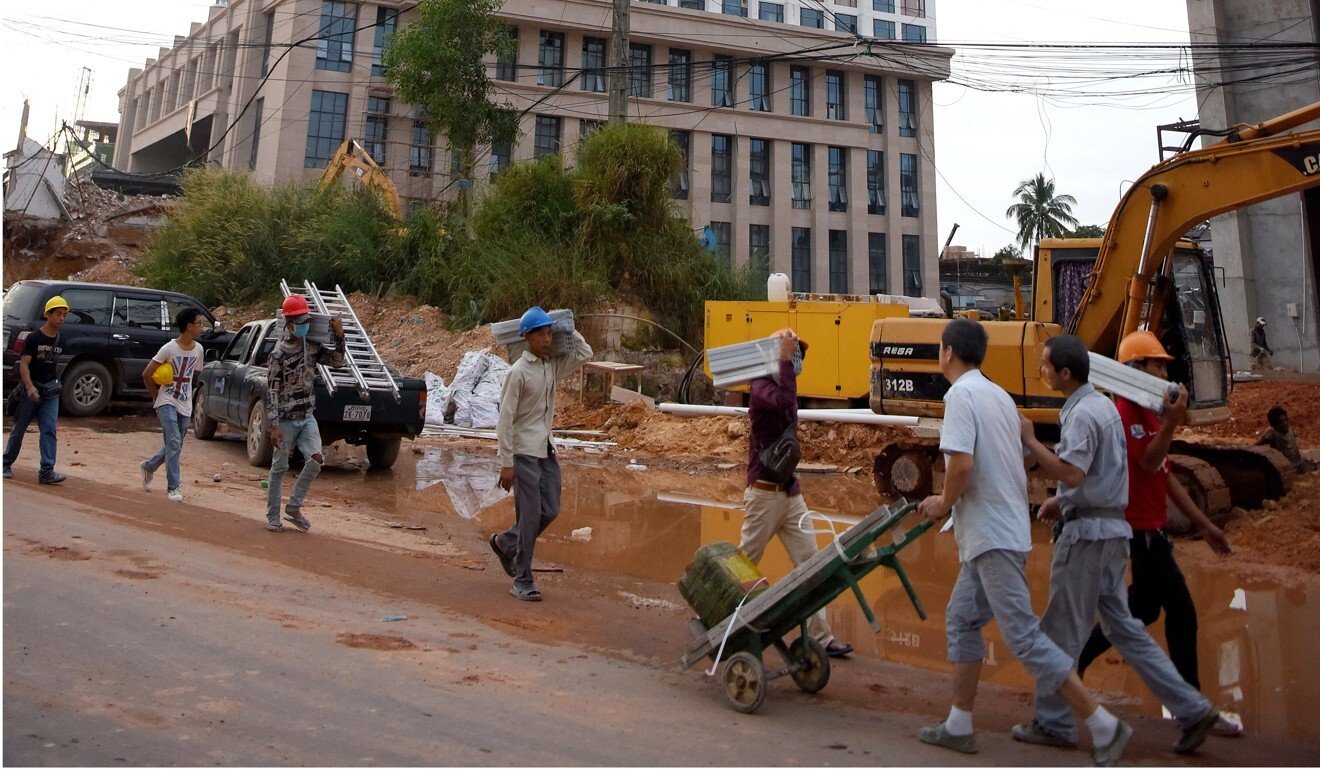
The development of the Chinese built and operated special economic zone in the Cambodian town of Sihanoukville is reported to have slowed, while infrastructure projects in Bangladesh, including the Payra coal-fired power plant, have been put on hold.
The development of the Chinese built and operated special economic zone in the Cambodian town of Sihanoukville is reported to have slowed. Photo: AFP
Marro said the reduction of capital and labour from China might complicate other projects for key belt and road partner, like Pakistan, which is home to infrastructure projects worth tens of billions of US dollars, and funded and built in large part by China.
“Pakistan looks concerning, particularly in terms of how we’ve assessed its sovereign and currency risk,” Marro said.
“Public debt is high compared to other emerging markets, while the coronavirus will push the budget deficit to expand to 10 per cent of GDP [gross domestic product] this year.”
Last week, Pakistan asked China for a 10-year extension to the repayment period on US$30 billion worth of loans used to fund the development of infrastructure projects, according to a report by local newspaper Dawn.
China’s overseas investment has been falling steadily from its peak in 2016, mostly as a result of Beijing’s curbs on capital outflows.
Last year, the direct investment by Chinese companies and organisations other than banks in belt and road countries fell 3.8 per cent from 2018 to US$15 billion, with most of the money going to South and Southeast Asian countries, including Singapore, Vietnam, Indonesia and Pakistan.
Tong said the pandemic had made Chinese investors nervous about putting their money in countries where disease control measures were becoming increasingly stringent, but added that the pause in activity would give all parties time to regroup.
“Investment in the second quarter will decline and allow time for the questions to be answered,” he said.
“Past experience along the belt and road has taught many lessons to both China and its partners, and forced them to think calmly about their own interests. The epidemic provides both parties with a good time for this.”
Dr Frans-Paul van der Putten, a senior research fellow at Clingendael Institute in the Netherlands, said China’s post-pandemic strategy for the belt and road in Europe
might include a shift away from investing in high-profile infrastructure projects like ports and airports.
Investors might instead cooperate with transport and logistics providers rather than invest directly, he said.
“Even though in the coming years the amount of money China loans and invests abroad may be lower than in the peak years around 2015-16, I expect it to maintain the belt and road plan as its overall strategic framework for its foreign economic relations,” he said.
SEOUL (Reuters) – South Korean and Chinese officials on Tuesday cast doubt on reports North Korean leader Kim Jong Un was ill after media outlets said he had undergone a cardiovascular procedure and was in “grave danger”.
Daily NK, a Seoul-based speciality website, reported late on Monday, citing one unnamed source in North Korea, that Kim was recovering after undergoing the procedure on April 12. The North Korean leader is believed to be about 36.
CNN cited a U.S. official with direct knowledge of the matter as saying Washington was “monitoring intelligence” that Kim was in grave danger after surgery. Bloomberg quoted an unnamed U.S. official as saying the White House was told that Kim took a turn for the worse after the surgery.
However, two South Korean government officials rejected the CNN report without elaborating on whether Kim had undergone surgery. The presidential Blue House said there were no unusual signs coming from the reclusive, nuclear-capable state.
Kim is the unquestioned leader of North Korea and the sole commander of its nuclear arsenal. He has no clear successor and any instability in the country could be a major international risk.
RELATED COVERAGE
Factbox: Questions hang over North Korea succession amid reports on Kim health
The state KCNA news agency gave no indication of the whereabouts of Kim in routine dispatches on Tuesday, but said he had sent birthday gifts to prominent citizens.
An official at the Chinese Communist Party’s International Liaison Department, which deals with North Korea, told Reuters the source did not believe Kim was critically ill. China is North Korea’s only major ally.
Chinese foreign ministry spokesman Geng Shuang said Beijing was aware of reports about the health of Kim, but said it does not know their source, without commenting on whether it has any information about the situation.
South Korean shares exposed to North Korea tumbled and the Korean won fell on the reports. The won traded down more than 1% against the dollar even as South Korean government sources said Kim was not gravely ill.
U.S. stock futures were trading 0.5% lower, but it was not clear how much of that weakness was owing to the collapse in U.S. oil prices and consequent concerns over global demand.
Daily NK said Kim had been admitted to hospital on April 12, just hours before the cardiovascular procedure, as his health had deteriorated since August due to heavy smoking, obesity and overwork.
It said he was now receiving treatment at a villa in the Mount Myohyang resort north of the capital Pyongyang.
“My understanding is that he had been struggling (with cardiovascular problems) since last August but it worsened after repeated visits to Mount Paektu,” a source was quoted as saying, referring to the country’s sacred mountain.
Accompanied by senior North Korean figures, Kim took two well-publicised rides on a stallion on the snowy slopes of the mountain in October and December.
KIM’S HEALTH KEY TO STABILITY
An authoritative U.S. source familiar with internal U.S. government reporting on North Korea questioned the CNN report that Kim was in “grave danger”.
“Any credible direct reporting having to do with Kim would be highly compartmented intelligence and unlikely to leak to the media,” a Korea specialist working for the U.S. government said on condition of anonymity.
Japan’s top government spokesman, Yoshihide Suga, declined to comment on the reports of Kim’s health.
“We are regularly gathering and analysing information about North Korea with great concern,” he said. “We will keep gathering and analysing information regarding North Korea by collaborating with other countries such as the U.S.”
Kim’s potential health issues could fuel uncertainty over the future of the reclusive state’s dynastic rule and stalled denuclearisation talks with the United States, issues in which Kim wields absolute authority.
With no details known about his young children, analysts say his sister and loyalists could form a regency until a successor is old enough to take over.
Speculation about Kim’s health first arose following his absence from the anniversary of the birthday of its founding father and Kim’s grandfather, Kim Il Sung, on April 15.
On April 12, North Korean state media reported that Kim Jong Un had visited an airbase and observed drills by fighter jets and attack aircraft.
Two days later North Korea launched multiple short-range anti-ship cruise missiles into the sea and Sukhoi jets fired air-to-surface missiles as part of military exercises.
The missile launches were part of the celebrations for Kim’s grandfather, Seoul officials said, but there was no North Korea state media report on his attendance or the tests.
Reporting from inside North Korea is notoriously difficult, especially on matters concerning the country’s leadership, given tight controls on information. There have been false and conflicting reports in the past on matters related to its leaders.
Kim is a third-generation hereditary leader who rules North Korea with an iron-fist, taking over the titles of head of state and commander in chief of the military since late 2011.
In recent years Kim has launched a diplomatic offensive to promote both himself as a world leader and his hermit kingdom, holding three meetings with U.S. President Donald Trump, four with South Korean President Moon Jae-in and five with China’s President Xi Jinping.
He was the first North Korean leader to cross the border into South Korea to meet Moon in 2018. Both Koreas are technically still at war, as the Korean War of 1950-53 ended in an armistice, not a peace treaty.
Kim has sought to have international sanctions against his country eased, but has refused to dismantle his nuclear weapons programme, a steadfast demand by the United States.
BEIJING, April 20 (Xinhua) — China has resumed construction of major water conservancy projects amid its further containment of the novel coronavirus disease (COVID-19) epidemic.
Construction has resumed so far on 143 of the 172 major water conservancy projects, with the scale of investment under construction reaching over 1 trillion yuan (around 141 billion U.S. dollars), according to the Ministry of Water Resources.
The ministry said 30 conservancy projects have completed construction and produced benefits.
As the situation of epidemic control and prevention continues to improve, China is speeding up construction on major infrastructure projects to mitigate the economic impact of the novel coronavirus epidemic.
Construction has resumed on about 85 percent of the housing and urban infrastructure projects in China as of April 1, with about 158,700 housing and urban infrastructure projects across the country cranking up work, according to the Ministry of Housing and Urban-Rural Development.
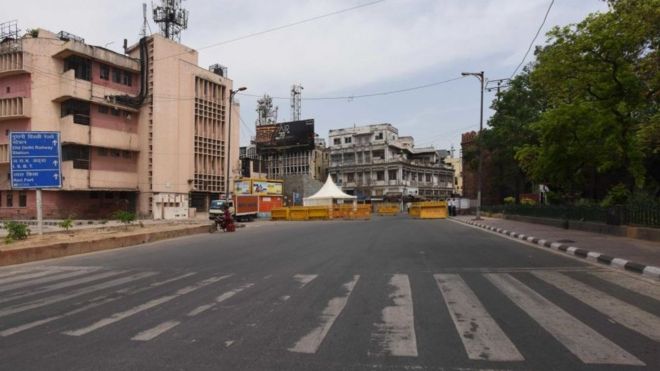
Image copyright GETTY IMAGESImage caption An empty stretch of the road and Delhi Police barricades to screen commuters during lockdown, at Delhi Gate on April 16, 2020 in New Delhi, India.
India has eased some restrictions imposed as part of a nationwide lockdown to curb the spread of the coronavirus.
Most of the new measures are targeted at easing pressure on farming, which employs more than half the nation’s workforce.
Allowing farms to operate again has been seen as essential to avoid food shortages.
But some other measures announced last week, will not be implemented.
This includes the delivery of non-essential items such as mobile phones, computers, and refrigerators by e-commerce firms – the government reversed its decision on that on Sunday.
And none of the restrictions will be lifted in areas that are still considered “hotspots” for the virus – this includes all major Indian cities.
Domestic and international flights and inter-state travel will also remain suspended.
So what restrictions are being eased?
Most of the new measures target agricultural businesses – farming, fisheries and plantations. This will allow crops to be harvested and daily-wagers and others working in these sectors to continue earning.
To restore the supply chain in these industries, cargo trucks will also be allowed to operate across state borders to transport produce from villages to the cities.
Essential public works programmes – such as building roads and water lines in rural areas – will also reopen, but under strict instructions to follow social distancing norms. These are a huge source of employment for hundreds of thousands of daily-wage earners, and farmers looking to supplement their income.
Banks, ATMs, hospitals, clinics, pharmacies and government offices will remain open. And the self-employed – such as plumbers, electricians and carpenters – will also be allowed to work.
Some public and even private workplaces have been permitted to open in areas that are not considered hotspots.
But all businesses and services that reopen are expected to follow social distancing norms.
Who decides what to reopen?
State governments will decide where restrictions can be eased. And several state chief ministers, including Delhi’s Arvind Kejriwal, have said that none of the restrictions will be lifted in their regions.
Mr Kejriwal said the situation in the national capital was still serious and the decision would be reviewed after one week.
India’s most populous state, Uttar Pradesh, will also see all restrictions in place, as will the southern states of Andhra Pradesh, Telangana and Karnataka.
The southern state of Kerala, which has been widely acknowledged for its success in dealing with the virus, has announced a significant easing of the lockdown in areas that it has demarcated as “green” zones.
This includes allowing private vehicular movement and dine-in services at restaurants, with social distancing norms in place. However, it’s implementing what is known as an “odd-even” scheme – private cars with even and odd number plates will be allowed only on alternate days, to limit the number of people on the road.


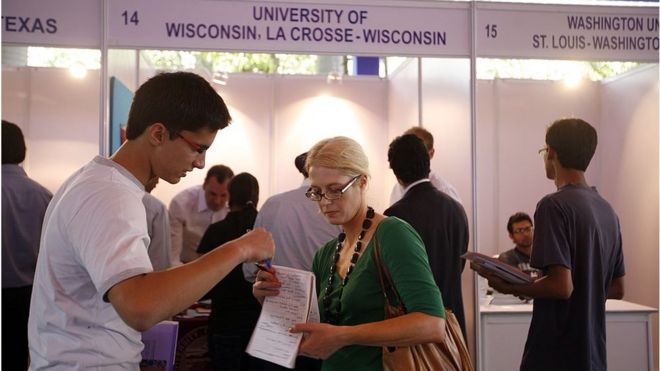 Image copyright GETTY IMAGES
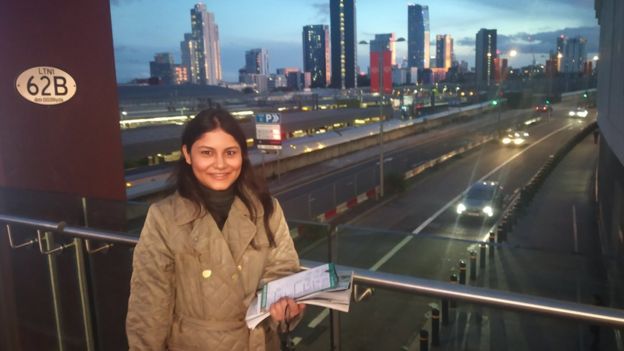 Image copyright MEEHIKA BARUA
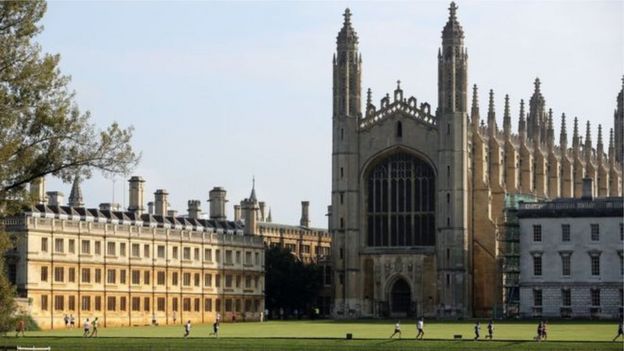 Image copyright PA MEDIA
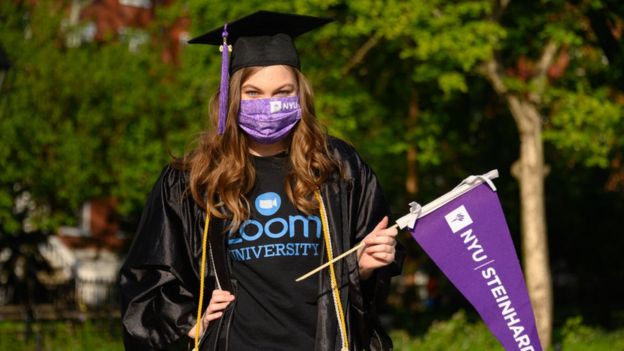 Image copyright GETTY IMAGES



 CHINDIA ALERT: You'll be living in their world, very soon
South Korea, China cast doubt on reports North Korean leader Kim gravely ill
SEOUL (Reuters) – South Korean and Chinese officials on Tuesday cast doubt on reports North Korean leader Kim Jong Un was ill after media outlets said he had undergone a cardiovascular procedure and was in “grave danger”.
Daily NK, a Seoul-based speciality website, reported late on Monday, citing one unnamed source in North Korea, that Kim was recovering after undergoing the procedure on April 12. The North Korean leader is believed to be about 36.
CNN cited a U.S. official with direct knowledge of the matter as saying Washington was “monitoring intelligence” that Kim was in grave danger after surgery. Bloomberg quoted an unnamed U.S. official as saying the White House was told that Kim took a turn for the worse after the surgery.
However, two South Korean government officials rejected the CNN report without elaborating on whether Kim had undergone surgery. The presidential Blue House said there were no unusual signs coming from the reclusive, nuclear-capable state.
Kim is the unquestioned leader of North Korea and the sole commander of its nuclear arsenal. He has no clear successor and any instability in the country could be a major international risk.
RELATED COVERAGE
The state KCNA news agency gave no indication of the whereabouts of Kim in routine dispatches on Tuesday, but said he had sent birthday gifts to prominent citizens.
An official at the Chinese Communist Party’s International Liaison Department, which deals with North Korea, told Reuters the source did not believe Kim was critically ill. China is North Korea’s only major ally.
Chinese foreign ministry spokesman Geng Shuang said Beijing was aware of reports about the health of Kim, but said it does not know their source, without commenting on whether it has any information about the situation.
South Korean shares exposed to North Korea tumbled and the Korean won fell on the reports. The won traded down more than 1% against the dollar even as South Korean government sources said Kim was not gravely ill.
U.S. stock futures were trading 0.5% lower, but it was not clear how much of that weakness was owing to the collapse in U.S. oil prices and consequent concerns over global demand.
Daily NK said Kim had been admitted to hospital on April 12, just hours before the cardiovascular procedure, as his health had deteriorated since August due to heavy smoking, obesity and overwork.
It said he was now receiving treatment at a villa in the Mount Myohyang resort north of the capital Pyongyang.
“My understanding is that he had been struggling (with cardiovascular problems) since last August but it worsened after repeated visits to Mount Paektu,” a source was quoted as saying, referring to the country’s sacred mountain.
Accompanied by senior North Korean figures, Kim took two well-publicised rides on a stallion on the snowy slopes of the mountain in October and December.
KIM’S HEALTH KEY TO STABILITY
An authoritative U.S. source familiar with internal U.S. government reporting on North Korea questioned the CNN report that Kim was in “grave danger”.
“Any credible direct reporting having to do with Kim would be highly compartmented intelligence and unlikely to leak to the media,” a Korea specialist working for the U.S. government said on condition of anonymity.
Japan’s top government spokesman, Yoshihide Suga, declined to comment on the reports of Kim’s health.
“We are regularly gathering and analysing information about North Korea with great concern,” he said. “We will keep gathering and analysing information regarding North Korea by collaborating with other countries such as the U.S.”
Kim’s potential health issues could fuel uncertainty over the future of the reclusive state’s dynastic rule and stalled denuclearisation talks with the United States, issues in which Kim wields absolute authority.
With no details known about his young children, analysts say his sister and loyalists could form a regency until a successor is old enough to take over.
Speculation about Kim’s health first arose following his absence from the anniversary of the birthday of its founding father and Kim’s grandfather, Kim Il Sung, on April 15.
On April 12, North Korean state media reported that Kim Jong Un had visited an airbase and observed drills by fighter jets and attack aircraft.
Two days later North Korea launched multiple short-range anti-ship cruise missiles into the sea and Sukhoi jets fired air-to-surface missiles as part of military exercises.
The missile launches were part of the celebrations for Kim’s grandfather, Seoul officials said, but there was no North Korea state media report on his attendance or the tests.
Reporting from inside North Korea is notoriously difficult, especially on matters concerning the country’s leadership, given tight controls on information. There have been false and conflicting reports in the past on matters related to its leaders.
Kim is a third-generation hereditary leader who rules North Korea with an iron-fist, taking over the titles of head of state and commander in chief of the military since late 2011.
In recent years Kim has launched a diplomatic offensive to promote both himself as a world leader and his hermit kingdom, holding three meetings with U.S. President Donald Trump, four with South Korean President Moon Jae-in and five with China’s President Xi Jinping.
He was the first North Korean leader to cross the border into South Korea to meet Moon in 2018. Both Koreas are technically still at war, as the Korean War of 1950-53 ended in an armistice, not a peace treaty.
Kim has sought to have international sanctions against his country eased, but has refused to dismantle his nuclear weapons programme, a steadfast demand by the United States.
Source: Reuters
Posted in 1950-53, 2018, 36, about, absence, absolute, accompanied, admitted, after, air-to-surface missiles, airbase, ally, analysts, anniversary, anonymity, anti-ship, April, armistice, arose, attack aircraft, attendance, August, authoritative, authority, aware, “grave danger”, “monitoring intelligence”, before, Beijing, believed, Birthday, birthday gifts, Bloomberg, Blue House, border, capital, cardiovascular, cardiovascular problems, cast, celebrations, China, China's President Xi Jinping, China’s, Chinese Communist Party’s International Liaison Department, chinese foreign ministry spokesman, Chinese officials, cited, citing, Citizens, clear, CNN, collaborating, collapse, coming from, commander-in-chief, comment, commenting, compartmented, concerning, concerns, condition, conflicting, consequent, controls, Country, country’s, critically ill, cross, Daily NK, deals, December, declined, demand, denuclearisation, details, deteriorated, difficult, diplomatic offensive, Direct, dismantle, dollar, doubt, drills, dynastic rule, eased, elaborating, enough, especially, exposed, false, fighter jets, fired, first, five, following, founding father, four, future, given, global demand, government officials, government spokesman, grandfather, gravely, head of state, health, heavy smoking, hereditary, hermit kingdom, himself, Hospital, hours, ill, indication, information, Instability, intelligence, international, international risk, iron-fist, issues, Japan’s, KCNA news agency, Kim, Kim Il Sung, Kim Jong Un, knowledge, Korean, Korean War, launched, leader, leadership, leak, lower, loyalists, Major, matter, matters, media, media outlets, meetings, Military, military exercises, Monday, Mount Myohyang, Mount Paektu, Mountain, multiple, North, North Korean leader, notoriously, nuclear arsenal, nuclear weapons, nuclear-capable, obesity, observed, October, Official, old, one, only, overwork, owing, part, peace treaty, President Moon Jae-in, presidential, procedure, programme, prominent, promote, Pyongyang, quoted, receiving, reclusive, recovering, refused, regency, rejected, repeated, report, reported, reports, Resort, Reuters, rides, routine dispatche, routine dispatches, rules, sacred mountain, sanctions, saying, sea, senior, sent, Seoul, shares, short-range, sister, situation, snowy slopes, sole commander, source, South Korea, South Korean, speciality, speculation, stalled, stallion, state, steadfast, still at war, struggling, succession, successor, Sukhoi jets, surgery, take over, taking, talks, technically, tests, Third-generation, Three, tight, titles, told, top, trading, treatment, Tuesday, tumbled, turn for the worse, two, U.S. official, U.S. oil prices, U.S. President Donald Trump, Uncategorized, uncertainty, undergoing, undergone, United States, unlikely, unnamed, unquestioned, unusual signs, urn for the worse, villa, visited, visits, Washington, weakness, website, well-publicised, whereabouts, whether, White House, wields, without, won, world leader, worsened, young children | Leave a Comment »