Chindia Alert: You’ll be Living in their World Very Soon
aims to alert you to the threats and opportunities that China and India present. China and India require serious attention; case of ‘hidden dragon and crouching tiger’.
Without this attention, governments, businesses and, indeed, individuals may find themselves at a great disadvantage sooner rather than later.
The POSTs (front webpages) are mainly 'cuttings' from reliable sources, updated continuously.
The PAGEs (see Tabs, above) attempt to make the information more meaningful by putting some structure to the information we have researched and assembled since 2006.
SHANGHAI (Reuters) – China’s smog-prone northern province of Hebei met its air quality targets by a big margin over the winter after concerted efforts to tackle emissions, a local official said on Sunday, without mentioning coronavirus-related factory shutdowns.
Average PM2.5 concentrations over the October-March period dropped 15% from a year earlier to 61 micrograms per cubic metre, while sulphur dioxide also fell by a third, said He Litao, vice-head of the provincial environmental bureau.
Most experts have attributed the significant decline in air pollution throughout China in the first quarter to the coronavirus outbreak and tough containment measures, which saw cities and entire provinces locked down and sharply reduced traffic and industrial activity throughout the country.
With millions staying at home, concentrations of lung-damaging PM2.5 particles fell by nearly 15% in more than 300 Chinese cities in the first three months of 2020.
Shanghai saw emissions fall by nearly 20% in the first quarter, while in Wuhan, where the pandemic originated, monthly averages dropped more than a third compared to last year.
However, He of the Hebei environmental bureau attributed the local decline in pollution to the “conscientious implementation” of government decisions even in the face of unfavourable weather conditions.
According to a winter action plan published last year, 10 cities in Hebei were expected to cut lung-damaging small particles known as PM2.5 by 1%-6% compared to the previous year.
Despite the decline, average PM2.5 was still much higher than China’s official standard of 35 micrograms, and the recommended World Health Organization level of 10 micrograms.
BENGALURU (Reuters) – The Indian economy is likely to suffer its worst quarter since the mid-1990s, hit by the ongoing lockdown imposed to stem the spread of coronavirus, according to a Reuters poll, which predicted a mild and gradual recovery.
Over 2.6 million people tmsnrt.rs/3aIRuz7 have been infected by the coronavirus worldwide and more than 180,000 have died. Business and household lockdowns have disrupted supply chains globally, bringing growth to a halt.
The April 17-22 Reuters poll predicted the economy expanded at an annual pace of 3.0% last quarter but will shrink 5.2% in the three months ending in June, far weaker than expectations in a poll published last month for 4.0% and 2.0% growth, respectively.
The predicted contraction would be the first – under any gross domestic product calculation, which has changed a few times – since the mid-1990s, when official reporting for quarterly data began.
“The extended lockdown until early May adds further downside risk to our view of a 5% year-on-year GDP fall in the current quarter, the worst in the last few decades,” said Prakash Sakpal, Asia economist at ING.
“We don’t consider economic stimulus as strong enough to position the economy for a speedy recovery once the pandemic ends,” he said.
(Graphic: Reuters poll graphic on coronavirus impact on the Indian economy IMAGE link: here)
The Indian government announced a spending package of 1.7 trillion rupees in March to cushion the economy from the initial lockdown, which has been extended until May 3.
In an emergency meeting last week, the Reserve Bank of India cut its deposit rate again, after reducing it on March 27 and lowering the main policy rate by 75 basis points. It also announced another round of targeted long-term repo operations to ease liquidity.
But even with those measures, 40% of economists, or 13 of 32 – who provided quarterly figures – predicted an outright recession this year. Only one had expected a recession last month.
In the worst case, a smaller sample of respondents predicted, the economy would contract 9.3% in the current quarter. That compares with 0.5% growth in the previous poll’s worst-case forecast in late March, underscoring how rapidly the outlook has deteriorated.
The latest poll’s consensus view still shows the economy recovering again slowly in the July-September quarter, growing 0.8%, then 4.2% in October-December and 6.0% in the final quarter of the fiscal year, in early 2021.
But that compares with considerably more optimistic near-term forecasts of 3.3%, 5.0% and 5.6%, respectively, in the previous poll.
“A rebound in economic activity following the disruption is expected, but the low starting point of growth implies a gradual recovery,” said Upasana Chachra, chief India economist at Morgan Stanley.
“Indeed, before disruptions related to COVID-19, growth was slowing, with domestic issues of risk aversion in financial sector … (and) those concerns will likely stay after the COVID-19 disruptions have passed unless the policy response is much larger than expected,” she said.
The unemployment rate has tripled to 23.8% since the lockdown started on March 25, according to the Centre for Monitoring Indian Economy, a Mumbai-based research firm.
The Indian economy was now forecast to expand 1.5% in the fiscal year ending on March 31, 2021 – the weakest since 1991 and significantly lower than 3.6% predicted in late March. It probably grew 4.6% in the fiscal year that just ended.
Under a worst-case scenario, the median showed the economy shrinking 1.0% this fiscal year. That would be the first officially reported economic contraction for a 12-month period since GDP was reported to have contracted for calendar year 1979.
“Unless fiscal policy is also loosened aggressively alongside monetary policy, there is a big risk the drastic economic slowdown currently underway morphs into an annual contraction in output and that the recovery is hampered,” said Shilan Shah, senior India economist at Capital Economics.
All 37 economists who answered a separate question unanimously said the RBI would follow up with more easing, including lowering the repo and reverse repo rates and expanding the new long-term loans programme.
The RBI was expected to cut its repo rate by another 40 basis points to 4.00% by the end of this quarter. Already lowered twice over the past month by a cumulative 115 basis points, the reverse repo rate was forecast to be trimmed by another 25 points by end-June to 3.50%.
SEOUL/BEIJING (Reuters) – China has allowed 200 employees from South Korea’s Samsung Electronics Co Ltd (005930.KS) to enter the country to work on an expansion of the firm’s NAND memory chip factory, the company said on Wednesday.
The move came after China said on Tuesday that it was in talks with some countries to establish fast-track procedures to allow travel by business and technical personnel to ensure the smooth operation of global supply chains.
China said it has reached a consensus on such an arrangement with South Korea, without elaborating on the terms, including whether individuals entering China will be subject to quarantine.
China, where the virus first emerged late last year, blocked entry last month for nearly all foreigners in an effort to curb risks of coronavirus infections posed by travellers from overseas. After bringing the local spread under control with tough containment measures, it is trying to restart its economic engines after weeks of near paralysis.
A chartered China Air Ltd (601111.SS) plane flew in the Samsung Electronics employees on Wednesday, a company spokeswoman said.
Samsung said its employees will follow the local government’s policy upon arrival, without elaborating.
Shaanxi province, where Samsung’s NAND memory chip plant is located, requires people travelling from overseas to undergo a 14-day quarantine, according to South Korea’s foreign ministry.
“Samsung employees will not be exempted from the 14-day quarantine rule imposed by the Shaanxi province. They will get coronavirus tests at the airport upon arrival and will be transported to a local hotel designated by Chinese authorities,” an official at the Consulate General of South Korea in Xi’an told Reuters.
Samsung Electronics in December increased investment at its chip factory in China by $8 billion to boost production of NAND flash memory chips.
BEIJING, April 19 (Xinhua) — China will step up efforts to expedite technological research on the construction and application of digital infrastructure, according to the Ministry of Industry and Information Technology (MIIT).
More support should be provided to the research and development of 5G enhancement technology and 6G technology, while the accurate matching of innovation, industrial, capital and policy chains should be promoted, said Chen Zhaoxiong, vice minister of the MIIT.
Chen also stressed the importance of emphasizing the huge demand for digital transformation and improving new digital infrastructure to facilitate economic and social upgrade of the country.
The MIIT will take a string of measures to optimize industrial development, such as expediting construction of 5G and industrial internet connecting people, machine and things, developing new types of intelligent computing facilities, advancing orderly construction and application of large data centers while upgrading micro and small data centers, enriching application scenarios and building a network security system.
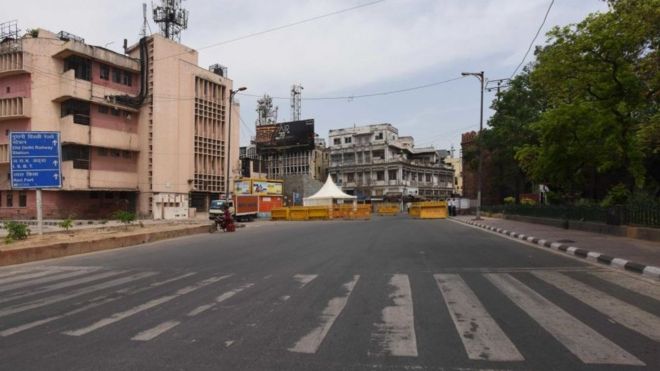
Image copyright GETTY IMAGESImage caption An empty stretch of the road and Delhi Police barricades to screen commuters during lockdown, at Delhi Gate on April 16, 2020 in New Delhi, India.
India has eased some restrictions imposed as part of a nationwide lockdown to curb the spread of the coronavirus.
Most of the new measures are targeted at easing pressure on farming, which employs more than half the nation’s workforce.
Allowing farms to operate again has been seen as essential to avoid food shortages.
But some other measures announced last week, will not be implemented.
This includes the delivery of non-essential items such as mobile phones, computers, and refrigerators by e-commerce firms – the government reversed its decision on that on Sunday.
And none of the restrictions will be lifted in areas that are still considered “hotspots” for the virus – this includes all major Indian cities.
Domestic and international flights and inter-state travel will also remain suspended.
So what restrictions are being eased?
Most of the new measures target agricultural businesses – farming, fisheries and plantations. This will allow crops to be harvested and daily-wagers and others working in these sectors to continue earning.
To restore the supply chain in these industries, cargo trucks will also be allowed to operate across state borders to transport produce from villages to the cities.
Essential public works programmes – such as building roads and water lines in rural areas – will also reopen, but under strict instructions to follow social distancing norms. These are a huge source of employment for hundreds of thousands of daily-wage earners, and farmers looking to supplement their income.
Banks, ATMs, hospitals, clinics, pharmacies and government offices will remain open. And the self-employed – such as plumbers, electricians and carpenters – will also be allowed to work.
Some public and even private workplaces have been permitted to open in areas that are not considered hotspots.
But all businesses and services that reopen are expected to follow social distancing norms.
Who decides what to reopen?
State governments will decide where restrictions can be eased. And several state chief ministers, including Delhi’s Arvind Kejriwal, have said that none of the restrictions will be lifted in their regions.
Mr Kejriwal said the situation in the national capital was still serious and the decision would be reviewed after one week.
India’s most populous state, Uttar Pradesh, will also see all restrictions in place, as will the southern states of Andhra Pradesh, Telangana and Karnataka.
The southern state of Kerala, which has been widely acknowledged for its success in dealing with the virus, has announced a significant easing of the lockdown in areas that it has demarcated as “green” zones.
This includes allowing private vehicular movement and dine-in services at restaurants, with social distancing norms in place. However, it’s implementing what is known as an “odd-even” scheme – private cars with even and odd number plates will be allowed only on alternate days, to limit the number of people on the road.
BEIJING, April 13 (Xinhua) — Chinese authorities have released a circular, only allowing outdoor tourist attractions to reopen amid the COVID-19 epidemic.
The tourist sites that resume operation should receive no more than 30 percent of their daily visitor capacity, according to the circular jointly released by the Ministry of Culture and Tourism and the National Health Commission.
The reopened tourist attractions should take measures to prevent the number of visitors from exceeding the limit, said the circular, adding that indoor tourist sites should remain closed amid the epidemic.
The circular required tourist sites to encourage visitors to reserve visiting slots in advance to control visitor flows and prevent large gatherings of people.
While noting some tourist attractions have seen large crowds of tourists after resuming operation, which increased the risk of virus transmission, the circular demanded temperature checking at the entrance of tourist sites and major scenic spots.
China’s famed Yiwu International Trade Market, a barometer for the health of the nation’s exports, has been hammered by the economic fallout from Covid-19
Export orders have dried up amid sweeping containment measures in the US and Europe and restrictions on foreigners entering China have shut out international buyers
The coronavirus pandemic has severely dented wholesale trade at the Yiwu International Trade Market in China. Photo: SCMP
The Yiwu International Trade Market has always been renowned as a window into the vitality of Chinese manufacturing, crammed with stalls showcasing everything from flashlights to machine parts.
But today, as the coronavirus pandemic rips through the global economy, it offers a strikingly different picture – the dismal effect Covid-19 is having on the nation’s exports.
The usually bustling wholesale market, home to some 70,000 vendors supplying 1,700 different types of manufactured goods, is a shadow of its former self.
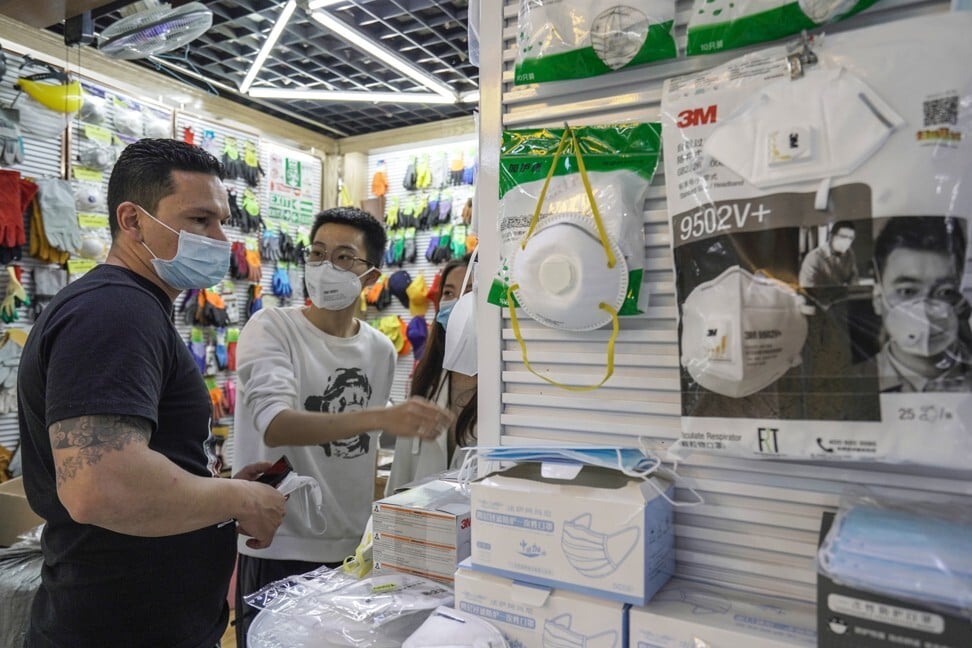
Only a handful of foreign buyers traipse through aisles of the sprawling 4-million-square-metre (43 million square feet) complex, while store owners – with no customers to tend to – sit hunched over their phones or talking in small groups.
A foreign buyer visits a stall selling face masks. Photo: Ren Wei
“We try to convince ourselves that the deep slump will not last long,” said the owner of Wetell Razor, Tong Ciying, at her empty store. “We cannot let complacency creep in, although the coronavirus has sharply hampered exports of Chinese products.”
Chinese exports plunged by 17.2 per cent in January and February combined compared to the same period a year earlier, according to the General Administration of Customs. The figure was a sharp drop from 7.9 per cent growth in December.
After riding out a supply shock that shut down most of its factories, China is now facing a second wave demand shock, as overseas export orders vanish amid sweeping containment measures to contain the outbreak around the globe.
Nowhere is that clearer to see than in Yiwu. The city of 1.2 million, which lies in the prosperous coastal province of Zhejiang, was catapulted into the international limelight as a showroom for Chinese manufacturing when the country joined the World Trade Organisation in 2001.
Coronavirus: Is the gig economy dead, and should the self-employed worry?
Before the pandemic, thousands of foreign buyers would flock to the mammoth trade market each day to source all manner of products before sending them home.
But the outbreak, which has claimed the lives of more than 113,000 people and infected more than 1.9 million around the world, is proving a major test for the market and the health of the trade dependent city.
Imports and exports via Yiwu last year were valued at 296.7 billion yuan (US$42.2 billion) – nearly double the city’s economic output.
Businesses, however, are facing a very different picture in 2020. Most traders at the market say they have lost at least half their business amid the pandemic, which was first detected in the central Chinese city of Wuhan last year.
Just take a look at the situation in Yiwu and you will understand the extent of the virus’ effect on China’s trade with foreign countries – Tianqing
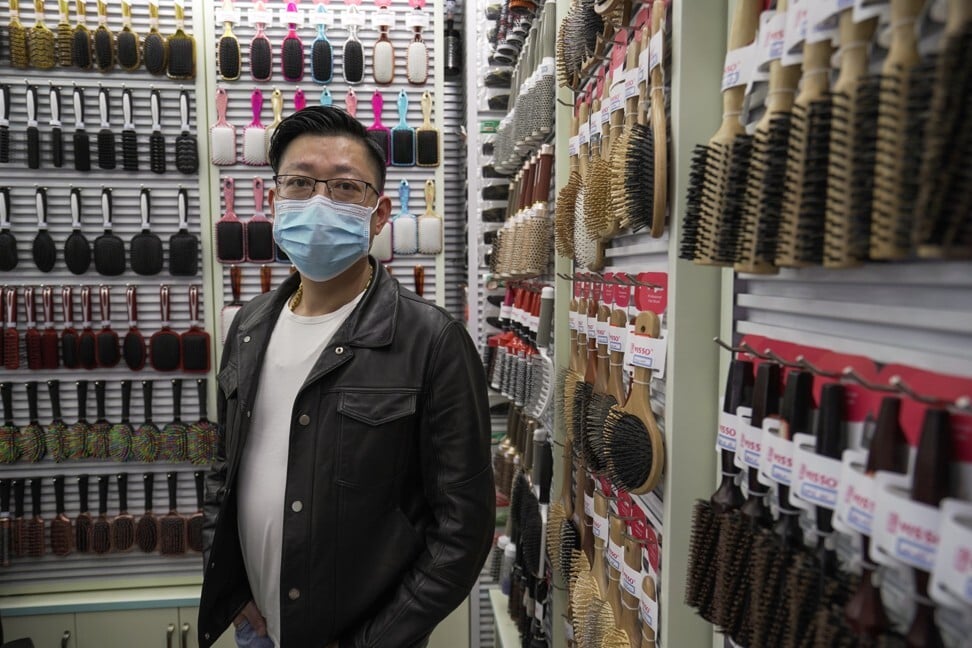
“Yiwu is the barometer for China’s exports,” said Jiang Tianqing, the owner of Beauty Shine Industry, a manufacturer of hair brushes. “Just take a look at the situation in Yiwu and you will understand the extent of the virus’ effect on China’s trade with foreign countries.”
Jiang said his business was only just hanging on thanks to a handful of loyal customers placing orders via WeChat.
“I assume it will be a drawn-out battle against the coronavirus,” he said. “We are aware of the fact that developed economies like the US and Europe have been severely affected.”
The Yiwu market reopened on February 18 after a one-month long hiatus following the Lunar New Year holiday and the government’s order to halt commercial activities to contain the spread of the outbreak.
Jiang Tianqing, owner of hair brush company Beauty Shine Industry. Photo: Ren Wei
But facing the threat of a spike in imported cases, Beijing banned foreigners from entering the country in late March – shutting out potential overseas buyers.
Despite the lack of business, local authorities have urged stall owners to keep their spaces open to display Yiwu’s pro-business attitude, owners said.
“For those bosses who just set up their shops here, it would be a do-or-die moment now since their revenue over the next few months will probably be zero,” said Tong. “I am lucky that my old customers are still making orders for my razors.”
The impact of the coronavirus is just the latest challenge for local merchants, who normally pay 200,000 yuan (US$28,000) per year for a 10-square-metre (108 square feet) stall at the market.
Traders were hard hit by the trade war between China and the United States when the Trump administration imposed a 25 per cent tariff on US$200 billion of Chinese imports last year.
At the time, some Chinese companies agreed to slash their prices to help American buyers digest the additional costs.
“But it is different this time,” said Jiang. “Pricing does not matter. Both buyers and sellers are eager to seal deals, but we are not able to overcome the barriers [to demand caused by the virus].”
Ma Jun, a manager with a LED light bulb trading company, said the only export destination for her company’s products was war-torn Yemen because it was the only country with ports still open.
It is a public health crisis that ravages not just our businesses, but the whole world economy – Dong Xin
Dong Xin, an entrepreneur selling stationery products, said he could not ship the few orders he had because “ocean carriers have stopped operations”.
“It is a public health crisis that ravages not just our businesses, but the whole world economy,” he said. “The only thing can do is to pray for an early end to the pandemic.”
Most wholesale traders in the Yiwu market run manufacturing businesses based outside the city, so a sharp fall in sales has a ripple effect on their factories, potentially resulting in massive job cuts.
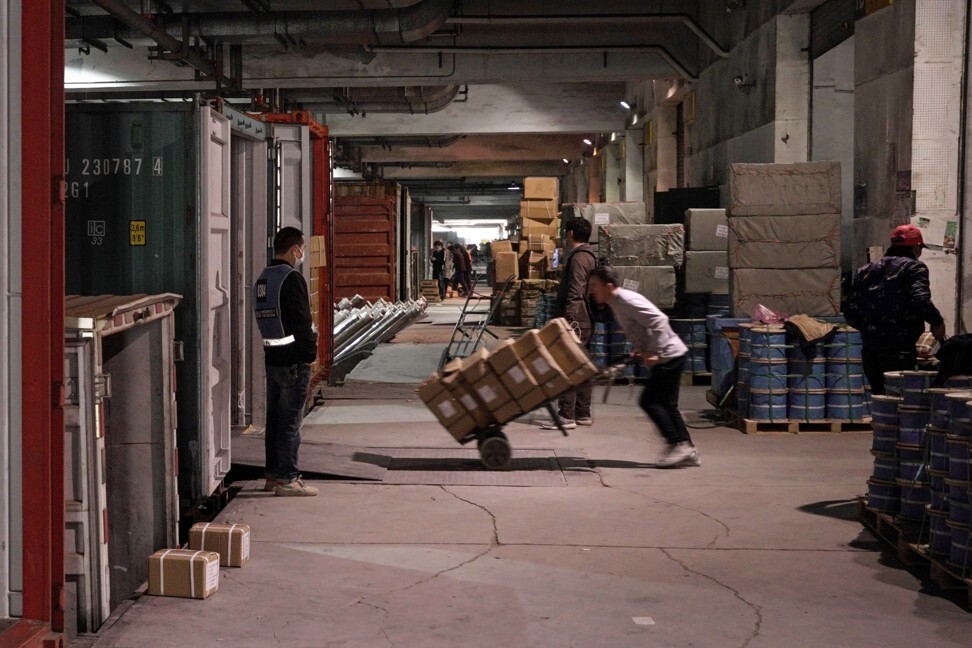
Workers pack containers at Yiwu Port, an inland port home to dozens of warehouses. Photo: Ren Wei
At Yiwu Port, an inland logistics hub full of warehouses where goods from the factories are unpacked and repacked for shipping abroad, container truck drivers joke about their job prospects.
“We used to commute between Shaoxing and here five times a week, and now it is down to twice a week,” said a driver surnamed Wang, describing the trip from his home to the shipping port, just over 100km away.
“At the end of the day, we may not be infected with the coronavirus, but our jobs will still be part of the cost of the fight against it.”
People enjoy sunset on a plank road at the Donghu Lake in Wuhan, capital of central China’s Hubei Province, March 18, 2020. No new infections of the novel coronavirus were reported on Wednesday in Wuhan, the epicenter of the epidemic, marking a notable first in the city’s months-long battle with the microscopic foe. (Xinhua/Shen Bohan)
WUHAN, March 19 (Xinhua) — No new infections of the novel coronavirus were reported on Wednesday in Wuhan, the epicenter of the epidemic, marking a notable first in the city’s months-long battle with the deadly virus and sending a message of hope to the world gripped by the pandemic.
The Health Commission of Hubei Province, where Wuhan is the capital, said the virus’ death toll climbed by eight in the province, but the total confirmed cases of the novel coronavirus disease (COVID-19) in Wuhan and Hubei remained at 50,005 and 67,800 on Wednesday.
No increase was observed in the province’s number of suspected cases, which fell to zero on Tuesday, in another indication that large-scale transmissions have been suppressed at the epidemic ground zero after a slew of strict measures.
Previously, the central Chinese province had reported single-digit increases of new infections, all of which were from Wuhan, for a week in a row since last Wednesday. A month ago, the figure was several thousand a day.
The province also saw 795 patients discharged from hospital after recovery on Wednesday, reducing its caseload of hospitalized patients to 6,636, including 1,809 in severe condition and 465 in critical condition.
With no new cases in Wuhan, the Chinese mainland on Wednesday reduced the increase in domestic transmissions to zero, according to the National Health Commission. The country now faces a greater threat of infections imported from overseas, which jumped by 34 on Wednesday.
“The clearing of new infections in Wuhan came earlier than predicted, but it is still too early to let down our guard,” said Zhang Boli, one of the leading experts advising on the epidemic fight in Hubei.
Arduous work still lies ahead as China strengthens its defence against imported cases from abroad, treats thousands of patients still in serious or critical condition and rehabilitates those discharged from hospitals, said Zhang, an academician of the Chinese Academy of Engineering.
“CUNNING VIRUS”
The novel coronavirus was first identified in Wuhan in December as a new pathogen facing mankind. Before its traits were fully understood, the virus had cut a swath of infections among Wuhan’s unsuspecting public, before jumping from the transportation hub to other parts of China via the largest seasonal human migration ahead of the Spring Festival.
The Chinese leadership has described the COVID-19 outbreak as the most difficult to contain since the founding of the People’s Republic of China in 1949 and “a big test” for the country.
Medical experts said the virus is more contagious, though less deadly, than the SARS virus that belongs to the same coronavirus family. Globally, the SARS virus infected 8,422 people and killed 919 between 2002 and 2003.
“We still have insufficient knowledge of the novel coronavirus. What we already know is it’s a very cunning virus with a long incubation period,” said Wang Daowen, a cardiologist at Tongji Hospital in Wuhan.
“We still found the virus from the anus, if not from the lungs, of one patient after he was hospitalized for 50 days,” said Wang, who was among the first medical experts joining the treatment of COVID-19. “Usually, a virus should vanish from one’s body in two weeks.”
TURNING TIDE
China began to see a drop in the number of COVID-19 patients on Feb. 18, after the number of recovered patients surged and new cases declined. By late February, the virus had withdrawn from most territories on the Chinese mainland, with only single-digit daily increases of infections in areas outside Wuhan.
On March 6, the epidemic epicenter Wuhan slashed the daily increase of confirmed cases to below 100, down from a peak of more than 14,000 in early February. Bruce Aylward, who led the China-WHO joint mission on COVID-19, said the outbreak in China had come down “faster than would have been expected.”
On March 11, the daily increase of locally transmitted infections dropped to single digits for the first time on the Chinese mainland. The virus has so far caused a total of 80,928 infections and 3,245 fatalities, defying earlier predictions by foreign researchers of a more extensive national outbreak.
Behind the downward trends were a raft of strong measures taken by the Chinese government, including canceling mass events, closing scenic attractions, suspending long-distance buses and asking hundreds of millions of Chinese to stay indoors to break transmission chain.
On Jan. 23, Wuhan declared unprecedented traffic restrictions, including suspending the city’s public transport and all outbound flights and trains, in an attempt to contain the epidemic within its territory.
The situation in Wuhan and its nearby cities was grim. Officials said more than 3,000 medics in Hubei contracted the virus at the early stage of the outbreak due to limited knowledge of the virus. Many families lost multiple loved ones.
Following reports of overloaded local hospitals, more than 42,000 medical staff, including those from the military, were dispatched to Hubei from across the country. At the peak of the fight, one in 10 intensive care medics in China were working in Wuhan.
Fleets of trucks carrying aid goods and displaying banners of “Wuhan be strong!” rushed to the city from all corners of the country. Under a “pairing-up support” system, each city in Hubei is taken care of by at least one provincial-level region.
To ensure the timely admission of patients, two hospitals with a total of 2,600 beds were built from scratch in Wuhan within a few days, and 16 temporary hospitals were converted from gyms and exhibition centers to add 13,000 beds. Nucleic acid testing (NAT) capacity in Wuhan reached 24,000 people a day. Testing is made free and treatment fees are covered by China’s basic medical insurance.
Huang Juan, 38, witnessed the first few days of chaos and despair at local hospitals before calm and order gradually set in amid the influx of support.
Huang recalled the hospitals were packed with patients — over 100 patients were waiting for the injection but only one nurse was around. Every day, her mother who had a fever on the eve of the Spring Festival in late January waited 10 hours to be injected.
After a week of imploration, Huang finally found a hospital willing to admit her mother. Ten days later, her mother was discharged upon negative NAT results. “She still had symptoms, but there was no choice, as many patients were waiting for beds,” Huang said.
The situation improved when her father, also diagnosed with the disease, was hospitalized on Feb. 19.
“He was discharged after the doctor confirmed his recovery on March 11. It was apparent that the standards for discharge were raised as Wuhan got sufficient beds,” Huang said.
Cui Cui (pseudonym), 57, also testified to the improving situation. The Wuhan resident was transferred to the newly built Huoshenshan (Fire God Mountain) Hospital as her sickness worsened on Feb. 10.
The military-run hospital that treats severe cases impressed her with a calm ambiance. “Doctors and nurses there called me ‘auntie’ instead of ‘patient’ and spent time chatting with me to ease my anxiety,” said Cui, who was discharged after recovering on Feb. 26.
COMMUNITY CONTROL
Outside Hubei, the battle against the epidemic has tested the mobilization capacity of China’s big cities and remote villages alike as they scrambled to prevent sporadic imported cases from evolving into community outbreaks.
Earlier this month, Beijing said about 827,000 people who returned to the capital city after the Spring Festival holiday were placed in two-week home observation. Around 161,000 property management staff and security guards were on duty to enforce the quarantine rules.
Shanghai, a metropolis in eastern China, has demanded its over 13,000 residential communities to guard their gates and take temperatures of residents upon entrance, according to Zeng Qun, deputy head of the Shanghai Civil Affairs Bureau.
Quyi Community was among the first Shanghai neighborhoods to adopt closed-off management. Since late January, it has been disinfecting public areas, introducing contactless deliveries and ensuring residents returning from severely affected regions are placed in quarantine.
“For those who are under self-quarantine at home, health workers will provide door-to-door visits every day, and services from grocery shopping to psychological counseling are offered,” said Huang Ying, an official with Hongkou District where the community is located.
Shanghai, with a population of 24 million, is among China’s most populous cities and a commercial hub. It was once predicted as the most susceptible to a coronavirus outbreak.
Mathematical models estimated that without prevention and control measures, Shanghai’s infection numbers would exceed 100,000. Even with some interventions, the figure could still reach tens of thousands, according to Zhang Wenhong, who heads Shanghai’s medical team to fight the epidemic.
“But now, the infection number is just over 300. This means the measures taken by Shanghai over the past month are effective,” Zhang said, describing the city as an epitome of China’s battle against the epidemic.
NEW BATTLEGROUNDS
China’s economy became a new battleground as the war against the virus wore on, delaying the reopening of plants after the Spring Festival holiday and causing a shortage of workers with the nationwide traffic restrictions in place.
China has about 170 million rural migrant workers employed away from their hometowns, many of whom could not return to work as enterprises across the country began to resume production on Feb. 10.
In response, local governments have arranged chartered flights and trains to take workers directly to the factories while issuing subsidies to tide companies over difficulties. By early March, the southern manufacturing heartland Guangdong Province had seen 91.2 percent of firms resume operation.
Almost every sector of Chinese society has chipped in on the anti-virus fight, from barbers offering medics free haircuts to factories revamping their assembly lines to produce medical masks.
According to the Ministry of Industry and Information Technology, China’s output of protective clothing has surged to 500,000 pieces per day from fewer than 20,000 pieces at the beginning of the outbreak. The daily output of N95-rated medical masks rose from 200,000 to 1.6 million, while that of regular masks reached 100 million.
“China’s economic and social development over the past decade has laid a sound foundation for the fight against the epidemic and enabled the society to mobilize more quickly,” said Tang Bei, an international public health researcher at Shanghai International Studies University.
China’s tech boom also made contributions — tech companies rolled out disinfecting robots, thermal camera-equipped drones and AI-powered temperature measurement equipment, which have been rapidly deployed to reduce the risks of cross-infection.
The outbreak has led to what is being called “the world’s largest work-from-home experiment.” The number of online meetings supported by Tencent Meeting on Feb. 10, when most enterprises started resuming work, was 100 times that of its previous average daily use.
Lu Chuanying, a researcher with Shanghai Institutes for International Studies, said digital technologies have risen to the fore, not only in the country’s anti-virus efforts but also in the recovery of the virus-hit economy.
“Remote consultations, artificial intelligence and big data were used to contain the epidemic, while telecommuting, online education and online vegetable markets have kept our lives in quarantine going,” Lu said.
BEIJING, Feb. 6 (Xinhua) — A slew of preventive measures have been taken to contain the novel coronavirus as a growing number of Chinese people hit the road and return to work after the Spring Festival holiday, the Ministry of Transport (MOT) said Thursday.
According to big data analysis, passenger flow is expected to pick up around this weekend, said Cai Tuanjie, an official with the MOT, at a press conference.
To contain virus infections during the trips, railways, airports and other public transportation operators have intensified disinfection, ventilation and sanitation of vehicles and stations, Cai said.
Passengers will go through body temperature screening at both entrances and exits of operating public transportation stations across the country. People found to have caught a fever above 37.3 degrees Celsius will be transferred to health departments.
Meanwhile, steps have been taken to make sure vehicles are not fully booked to allow a safe distance between passengers, Cai said, adding that temporary isolation areas had been set in the vehicles to avoid cross-infections in case of emergency during the journey.
Some residents of the coastal Chinese province are being locked inside their homes while others must present a ‘passport’ to go out every two days for supplies
Weddings and funerals discouraged as ‘unessential’ venues are also shut down
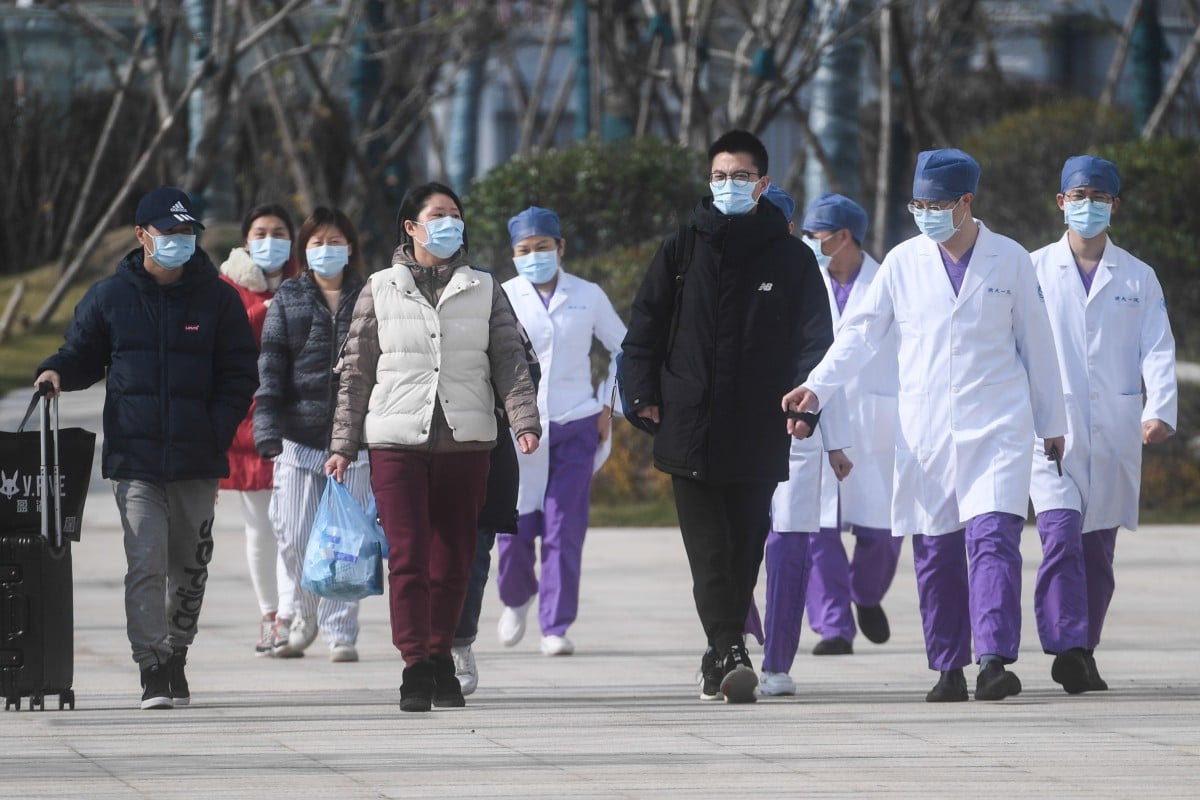
Cured coronavirus patients leave hospital in Hangzhou, one of four cities in the eastern Chinese province of Zhejiang which has adopted draconian quarantine measures for its residents. Photo: Xinhua
In the Chinese coastal province of Zhejiang, some 560km (350 miles) east of where the new coronavirus originated, at least four cities have introduced measures that mirror the draconian rules established by Hubei province – epicentre of the outbreak – to keep the virus from spreading.
Authorities in Zhejiang, which neighbours the port city of Shanghai, have closed “unessential” public venues, banned funerals and weddings, limited the number of times people can go out and quarantined families at home, sometimes by locking them in.
In the Zhejiang cities of Wenzhou, Hangzhou, Ningbo and Taizhou – which have a combined population of more than 30 million – each household is being issued a “passport”, usually a piece of paper that carries one’s name, home address and an official stamp. Only one person per household is permitted to leave their home every two days.
The rules were announced on state media and the governments’ social media accounts, and families have already received their “passports”.
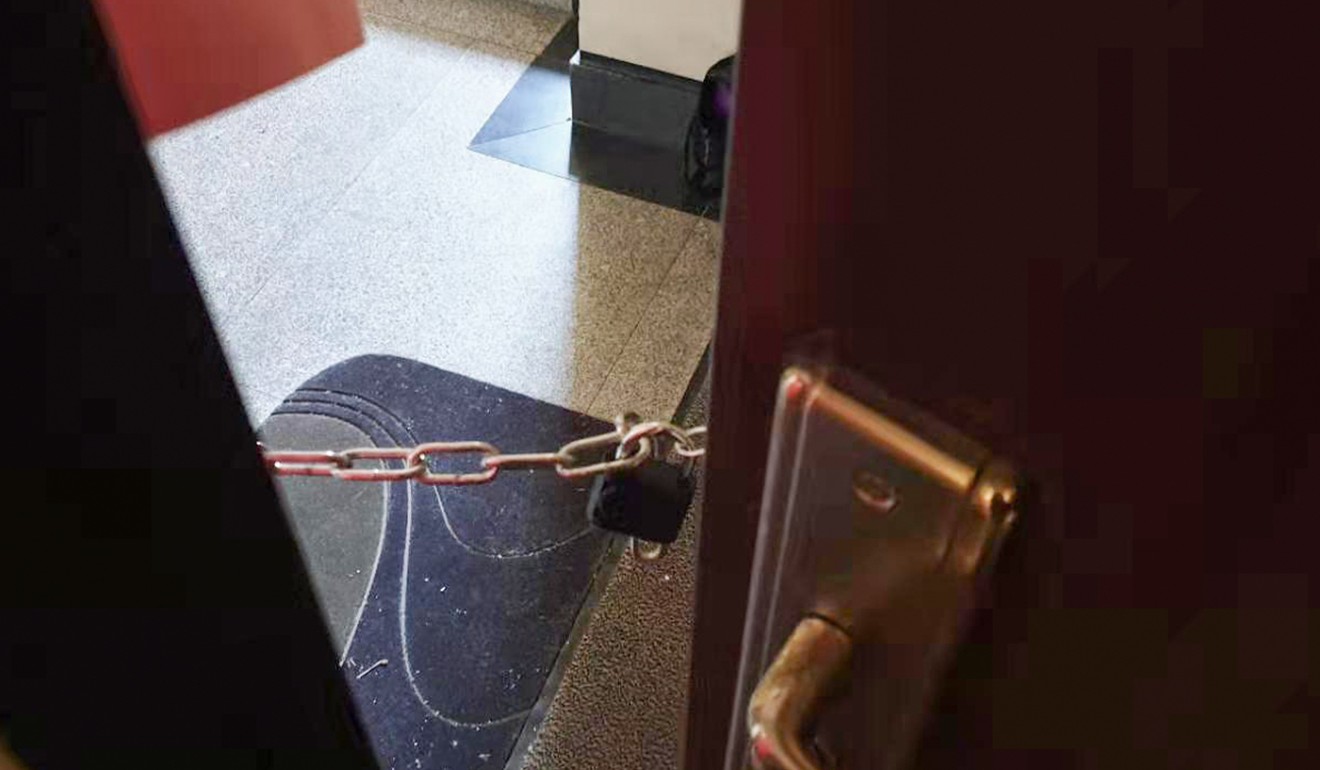
Some people have been locked inside their homes, including Allen Li and his family in Hangzhou. Photo: Handout
To enforce the new travel rules, community officers have been stationed at the entrance of some residential compounds. Every time a resident leaves their compound, an officer at the entrance marks the time and date on the “passport”. People from the same household are then barred from going out again for the next two days.
With 954 coronavirus patients, the province of Zhejiang is the hardest hit region outside Hubei, which has about 19,665 of the more than 28,000 total cases.
Hangzhou, the provincial capital and home to some of China’s biggest tech companies, has reported 151 confirmed cases. The port city of Wenzhou has reported 396 cases.
Yao Gaoyuan, mayor of Wenzhou, said in an interview with CCTV on February 2 that the city had decided to impose the restrictions to contain the spread the coronavirus. “This could reduce the transmission to the greatest extent possible,” he said.
One neighbourhood in Wenzhou introduced a mobile technology system to enforce the stay-at-home rules, according to the state-run Wenzhou Daily, with residents using their phones to scan a QR code at the checkpoints every time they leave the compound. Only those who have not been out for two days will be allowed through.
In Hangzhou, the government on Tuesday banned all weddings and demanded that funerals, which traditionally involve family gatherings and banquets, be held frugally.
All public venues deemed “unessential” were ordered to close. Underground train services are running at 30-minute intervals. Factories need special permission to resume work during the extended Lunar New Year holiday.
Some families have also been confined to their homes because they have travelled to places with large numbers of confirmed cases.
No, the coronavirus can’t be kept away by saltwater gargling or cow dung
6 Feb 2020
Allen Li, 26, who is now living with his parents in Hangzhou, said the family had been told to stay home for 14 days after they returned from Wenzhou.
Community workers put up a sign saying “quarantined at home, no visitors allowed” on their door. On Wednesday, they locked the flat with a metal chain from the outside despite the family’s protest.
“We argued with them, but they said it’s a decision from above,” Li said. “We understand we should not go out. But this is not humane. What if there’s a fire at our home at midnight, and we can’t get anyone to unlock it?”
China scrambles to deliver food to coronavirus epicentre Wuhan amid lockdown
Some social media users have applauded such measures as ways to contain the virus, but others have criticised the quarantine as essentially “house arrest”.
Wuhan party official apologises for failures in coronavirus outbreak
6 Feb 2020
Some Hangzhou residents have complained online that they were barred from entering their rented homes after having spent the Lunar New Year holiday elsewhere.
The coronavirus was first reported in December in Wuhan, the provincial capital of Hubei that has been sealed off since January 23.
In a sign of the rising fear of contagion, regional authorities across China have imposed travel restrictions on residents that mirror the draconian measures in Hubei province.
But officials said about 5 million people had already travelled out of the city during the Lunar New Year travel season, contributing to the spread of the virus to other Chinese provinces and at least 24 countries.




 CHINDIA ALERT: You'll be living in their world, very soon
