Chindia Alert: You’ll be Living in their World Very Soon
aims to alert you to the threats and opportunities that China and India present. China and India require serious attention; case of ‘hidden dragon and crouching tiger’.
Without this attention, governments, businesses and, indeed, individuals may find themselves at a great disadvantage sooner rather than later.
The POSTs (front webpages) are mainly 'cuttings' from reliable sources, updated continuously.
The PAGEs (see Tabs, above) attempt to make the information more meaningful by putting some structure to the information we have researched and assembled since 2006.
With India under lockdown and social distancing being advised to deal with the threat of the coronavirus, an online collective of “Caremongers” is reaching out to help the elderly and other vulnerable groups.
It started last week when Mahita Nagaraj, a digital marketing professional and single mum, received a call from a close friend in the UK requesting her to help arrange some medicines for her “very elderly parents”.
Within hours, she heard from another friend living in the US with a similar question: can you ensure that my parents have provisions for the month?
Ms Nagaraj, who lives in the southern city of Bengaluru (formerly Bangalore), says that set her thinking about other friends whose elderly parents didn’t have anyone to call upon.
So, she posted a message on Facebook asking people to get in touch if they needed help.
The response she got was “overwhelming”. People reached out to her from all over India and, surprisingly, most who got in touch said they wanted to help out too.
And thus was born Caremongers India – a Facebook group, asking people to “stop scaremongering and start caremongering” – on 17 March.
“There is so much scaremongering in the current scenario,” says Ms Nagaraj. “We are trying to address the feeling of helplessness in the people. We are telling people to stop spreading fear and panic, and instead spread love.”
Image copyright CAREMONGERS INDIAImage caption Mahita Nagaraj set up Caremongers India after her friends called her to seek help
Ms Nagaraj says she learnt about caremongering from a BBC article from Canada. The concept actually started in Toronto to help vulnerable people, but within days it spread to cover almost all of Canada with tens of thousands signing up.
Reports of altruism have come in from other parts of the world too. Britons are delivering soup to the elderly, in the US neighbours are helping those quarantined with buying groceries and one Long Island mother, infected with the virus, wrote about a neighbour who cooked a lasagne and left it outside her door.
Along with all the fear and panic caused by the coronavirus, the pandemic has also seen kindness go viral across the globe, with neighbours and complete strangers pitching in to help.
In India too, caremongering took off from the word go – in the first 24 hours, the Facebook group had 200 members. A week later, it has become a pan-India network with more than 6,500 volunteers.
Ms Nagaraj says she realised that on Facebook, most people were getting in touch to offer help, but only a few were asking for help. So, on Friday night, she launched a helpline number and since then, “it’s gone crazy”.
Caremongers India offers help to those who are most at risk of health complications due to the virus like the elderly, the disabled, those with pre-existing health conditions and anyone with an infant under a year.
In less than a week, Ms Nagaraj says, she has received thousands of calls and messages and although a large number of them have been to verify whether the number is genuine, she has also taken hundreds of requests for assistance.
Listed on the Caremongers India page are countless examples of assistance sought and provided; and testimonials and messages of gratitude.
Image copyright IMAGE COURTESY: DUNZOBesides those calling in from within India, Ms Nagaraj has been fielding dozens of calls from people across the globe seeking help for their elderly parents and grandparents.
“When people give their requirement and address, we match the requester with the closest volunteer,” she explains.
So last Saturday, when Amit Joshi, a resident of an upscale apartment block in the Delhi suburb of Noida, called the helpline, he was connected to Caremonger Madhavi Juneja, who also lives in Noida.
“We woke up to the news that our apartment complex was under lockdown,” Mr Joshi told me.
A resident had tested positive for the coronavirus and Mr Joshi was informed that they would not be allowed to leave home for a week.
“Police had put up barricades outside on the road and our complex was swamped with disaster management teams and health officials. Everything around us was shuttered. There was complete panic,” he says.
Mr Joshi, who lives with his wife and elderly parents, says his biggest worry was how to get essentials like bread and milk.
And when he received a random WhatsApp forward from a colleague about Caremongers India, he decided to call them.
A few hours later, Ms Juneja, a psychotherapist and life coach, turned up at the gate of Mr Joshi’s housing society and handed over the supplies to him.
“I wore a mask and took my bottle of hand sanitiser and drove to his complex to carry out the delivery,” she said.
“Because the street was barricaded, I parked my car and then walked. If I had left it outside, someone else could have taken it. After I handed over the package to him, I sanitised my hands and got back into my car.”
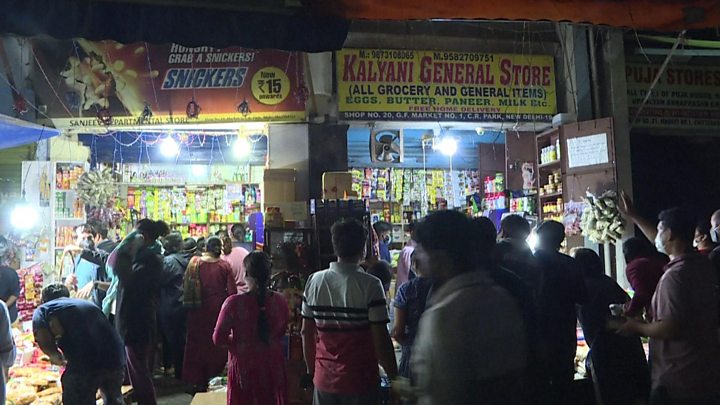
Media caption People panicked after Narendra Modi said nobody should leave their homes, and did not mention the status of essential supplies
Mr Joshi says, “In trying times like these, to have people selflessly reaching out to those in need has strengthened my belief in humanity.”
Ms Nagaraj says it’s “so heartening” to see that so many people want to help.
“Every request we receive is very special when we fulfil it. When a daughter calls to say her dad who lives alone requires provisions, we work hard to ensure he gets it.”
Ms Nagaraj says caremongering has taken over life and even her home.
“It’s not easy to answer 450 calls a day,” she says, “but when you help others, you go to bed thinking you haven’t wasted your day and that’s good enough for me.”
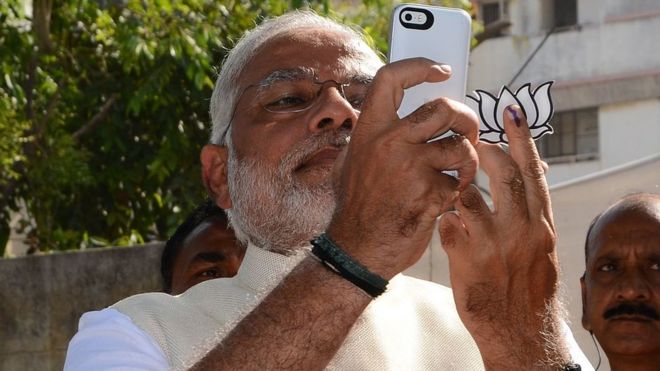
Image copyright STRDELImage caption Prime Minister Modi is the third most followed leader on Twitter after Donald Trump
The world’s second most popular leader – when it comes to social media, at least – sent shockwaves through the internet on Monday, after announcing he was considering leaving the platforms.
After all, Indian Prime Minister Narendra Modi is the only politician to even come close to challenging US President Donald Trump’s online dominance.
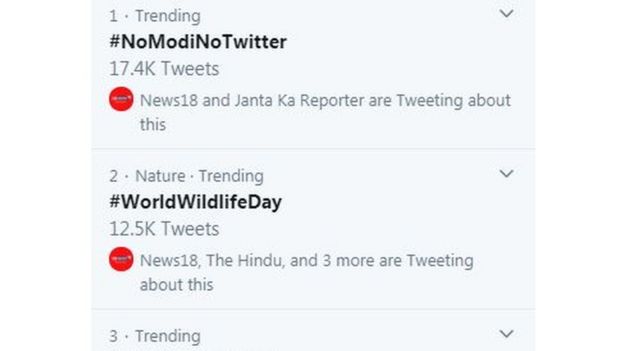
And so it was somewhat unsurprising that the hashtag #ModiQuitsSocialMedia began trending in India, with users quick to share a heady cocktail of conspiracy theories, memes and desperate pleas.
However, Mr Modi, who has 54 million followers on Twitter, 35.2 million followers on picture sharing platform Instagram and 44 million followers on Facebook, soon revealed the true reason behind his abandonment of social media.
On Tuesday, he said that he would “give away my social media accounts to women whose life & work inspire us”.
But the “big reveal” came only after his first tweet generated an absolute social media storm.
Some theories suggested he was quitting social media platforms as they were being controlled by his opponents. Others speculated that he would launch an indigenous social platform, to match Twitter and Facebook, something similar to social media platforms like WeChat and Weibo in China.
“Expect SM companies stock to crash,” wrote one confident user.
Apart from the theories, there were desperate pleas from his fans. One wrote: “Please Sir, You can’t leave social media now for the sake of your fans!” Another added: “Modi Ji if you leave social media , they will use it against you and nation interest.”
“For me he is not only PM of India but also emotion. You’re king of social media. Don’t go sir.”
Some users suggested that his account had been hacked.
Soon, #Iwillalsoleavetwitter started trending.
Arun Yadav, the head of Haryana state IT and social media for BJP, tweeted asking the PM to not quit the platform as it was one way Indians could communicate with him.
But there were also jokes.
“Spare a thought for Twitter, Facebook & their stocks. PM Modi is all set to demonetise social media,” wrote one user, referring to the overnight decision to ban high value currency notes in November.
One user suggested that the prime minister was quitting all other platforms in order to make his TikTok debut.
“Modi ji is a typical Indian boyfriend after breakup,” quipped one Twitter user.
“Modiji should be awarded Nobel Peace Prize for bringing peace in the digital world,” said another.
Image caption #NoModiNoTwitter was a India trend on Twitter after PM Modi’s tweet yesterday
There were political reactions too.
In a cheeky response, Rahul Gandhi, former president of the main opposition Congress party, tweeted: “Give up hatred, not social media accounts.”
Congress leader and MP Shashi Tharoor followed suit, writing: “The PM’s abrupt announcement has led many to worry whether it’s a prelude to banning these services throughout the country too.”
Mr Modi’s eventual tweet which clarified matters was seen by some as an anti-climax.
But for the millions who were pleading with him to reconsider, this is surely a big relief.
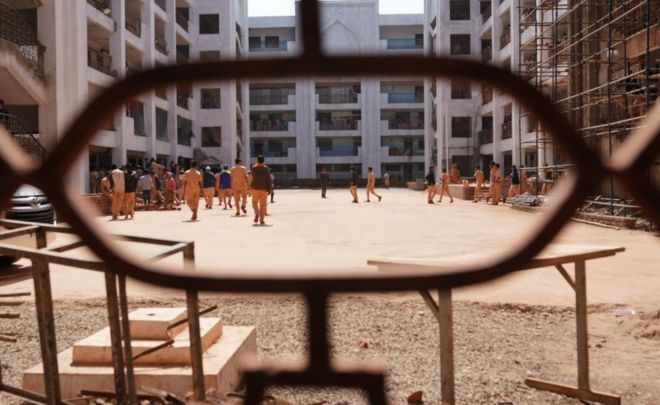
Image caption A play staged at Shaheen School has led to the arrest of a parent and a teacher
An Indian school play involving nine to 12-year-olds became the subject of national attention after it landed a young mother and a teacher in jail. BBC Telugu’s Deepthi Bathini reports.
“I’m not sure how I ended up here,” says 26-year-old Nazbunnisa, a single mother who did not give her last name and who works as a domestic help.
She was arrested on 30 January, along with Farida Begum, a teacher at her daughter’s school. The charge against them: sedition, which the women, both Muslim, deny.
They spoke to the BBC in a prison official’s office at Bidar district jail in the southern state of Karnataka. Both were on the verge of tears – they said they are trying to be “strong”, but their lives have suddenly turned “upside down”.
Their bail hearing is scheduled for Tuesday. Their lawyer says the charge of sedition is being misused.
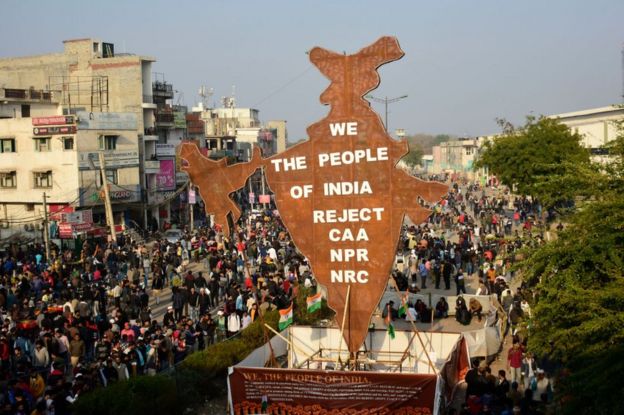
Image copyright GETTY IMAGESImage caption The citizenship law has sparked huge protests
The two women are accused of spreading “false information” and of “spreading fear among [the] Muslim community” and of using children to insult India’s Prime Minister, Narendra Modi.
Their ordeal began with a play put on by the students and staff at Shaheen School in Bidar, where Ms Nazbunnisa’s daughter studies and Farida Begum, 52, teaches.
The play was about a controversial new citizenship law, which has polarised India since it was passed in December by the governing Hindu nationalist Bharatiya Janata Party (BJP).
The Citizenship Amendment Act (CAA), offers amnesty to non-Muslim immigrants from Pakistan, Bangladesh and Afghanistan. It sparked fear among India’s 200 million-plus Muslims as it came in the wake of the government’s plans to introduce a National Register of Citizens (or NRC) based on those who can prove their ancestors were Indian citizens.
Authorities are yet to clarify what documents would be needed to prove citizenship, but taken together, the measures have spurred massive protests – critics say the government is marginalising Muslims while offering a path to citizenship for people of other religious communities who fail to make it on to the NRC.
The governing BJP denies these charges, and insists India’s Muslims have nothing to worry about.
So, given the contentious subject, after one of the parents streamed the school play live on Facebook, the recording quickly went viral. Local resident Neelesh Rakshal was among those who watched it.
Mr Rakshal, who describes himself as a social activist, says he became furious over a scene where a man approaches an elderly woman and tells her that Narendra Modi wants Muslims to produce documents proving their Indian citizenship and that of their ancestors, and if they fail to do so, they will be asked to leave the country.
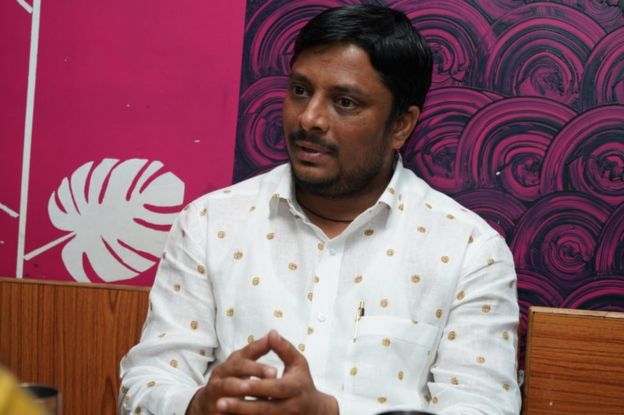
Image caption Mr Rakshal says the play “spreads hatred”
The woman responds that she has been in India for generations and would have to dig up the graves of her ancestors to look for documents. She then says a “boy who was selling tea”, a reference to Mr Modi who has said he used to sell tea as a teenager, is now demanding that she show him her documents.
“I will ask him for his documents and if he doesn’t show them to me, I will hit him with slippers,” she adds.
Mr Rakshal says he immediately registered a police complaint against the school for “using children in a school play to abuse the prime minister and also for spreading hatred”.
The complaint named the school management and the parent who streamed the play. While several members of the school management and the president of the school have also been charged with sedition, police told the court they are still looking for them.
“We do not know for what reason sedition charges have been invoked against the school. It is beyond the imagination of any reasonable person. We will fight it in court,” the school’s CEO, Thouseef Madikeri, says.
Image copyright GETTY IMAGESImage caption School officials allege that they are being targeted because most of the students are Muslim
Police also questioned students – videos and screen grabs of CCTV footage showing them speaking to students were shared widely on social media, prompting criticism.
Mr Madikeri alleges that on one occasion, police in uniform questioned students, with no child welfare officials present – an accusation denied by police superintendent DL Nagesh.
“The students were questioned five times. It’s mental harassment to students and this may have an impact on them in [the] long run,” Mr Madikeri says.
The Karnataka State Commission for Protection of Child Rights has asked police to explain why they questioned students so many times. Police say it was because not all the students were available at the same time.
Mr Madikeri told the BBC it was the questioning of students that led to the arrest of Farida Begum and Ms Nazbunnisa.
One parent whose child was questioned says she is now scared of going to school.
“My daughter told me police repeatedly asked her to identify the teachers and others who might have taught them the [play’s] dialogues,” he said.
“I do not understand what was wrong in the play. Children have been seeing what has been happening around the country. They picked up the dialogues from social media.”
Image caption Farida Begum’s husband is worried about what will happen
Ms Nazbunnisa is also perplexed as to why she was arrested.
“My daughter was rehearsing for the play at home,” she says. “But I did not know what it was about, or what this controversy about CAA or NRC is about. I did not even go to see her play.”
Ms Nazbunnisa has met her daughter only once since she was jailed: “It was just for a few minutes, and even then only through a window. I held back my tears. I did not want to scare her further.”
The girl is staying with a friends of the family – they told the BBC she is having nightmares and often wakes up crying for her mother.
“She has been pleading that her mother not be punished for her mistake. She is sorry for what has happened,” one of them says.
Farida Begum, who suffers from high blood pressure, says she is “scared of what the future holds”. Her husband, Mirza Baig, says he fears that his wife being in jail will affect his daughter’s marriage prospects.
Image copyright AFPImage caption The dispute turned to violence in 1992 when a Hindu mob destroyed a mosque at the site
The Ayodhya dispute, which stretches back more than a century, is one of India’s thorniest court cases and goes to the heart of its identity politics.
Hindus believe that Ayodhya, a city in the northern state of Uttar Pradesh, is the birthplace of one of their most revered deities, Lord Ram.
But Muslims say they have worshipped there for generations.
A court case pertaining to the ownership of the land has been dragging on in the Supreme Court for years, but a verdict is expected next month.
The court concluded its final hearing into the case on Wednesday.
What is the row actually about?
At the centre of the row is a 16th Century mosque that was demolished by Hindu mobs in 1992, sparking riots that killed nearly 2,000 people.
Many Hindus believe that the Babri Masjid was actually constructed on the ruins of a Hindu temple that was demolished by Muslim invaders.
Muslims say they offered prayers at the mosque until December 1949 when some Hindus placed an idol of Ram in the mosque and began to worship the idols.
Over the decades since, the two religious groups have gone to court many times over who should control the site.
Since then, there have been calls to build a temple on the spot where the mosque once stood.
The case currently being heard by five judges in the top court is to determine who the land in question belongs to.
A verdict is expected between 4 and 15 November.
Hinduism is India’s majority religion and is thought to be more than 4,000 years old. India’s first Islamic dynasty was established in the early 13th Century.
Who is fighting the case?
The long and complicated property dispute has been dragging in various courts for more than a century.
This particular case is being fought between three main parties – two Hindu groups and the Muslim Waqf Board, which is responsible for the maintenance of Islamic properties in India.
Image copyright GETTY IMAGES
The Hindu litigants are the Hindu Mahasabha, a right-wing political party, and the Nirmohi Akhara, which is a sect of Hindu monks.
They filed a title dispute in the Allahabad High Court in 2002, a decade after the mosque was demolished.
A verdict in that case was pronounced in September 2010 – it determined that the 2.77 acres of the disputed land would be divided equally into three parts.
The court ruled that the site should be split, with the Muslim community getting control of a third, Hindus another third and the Nirmohi Akhara sect the remainder. Control of the main disputed section, where the mosque once stood, was given to Hindus.
The judgement also made three key observations.
It affirmed the disputed spot was the birthplace of Lord Ram, that the Babri Masjid was built after the demolition of a Hindu temple and that it was not built in accordance with the tenets of Islam.
The Supreme Court suspended this ruling in 2011 after both Hindu and Muslim groups appealed against it.
What are the other important legal developments?
In 1994 the Supreme Court, which was ruling on a related case, remarked that the concept of a mosque was “not integral to Islam”. This has bolstered the case made by Hindus who want control of the entire site.
In April 2018, senior lawyer Rajeev Dhavan filed a plea before the top court, asking judges to reconsider this observation.
Image copyright GETTY IMAGESImage caption Hindu activists are demanding the construction of the Ram Temple
Have religious tensions eased in India in recent years?
Ever since the Narendra Modi-led Hindu nationalist BJP first came to power in 2014, India has seen deepening social and religious divisions.
The call for the construction of a Hindu temple in Ayodhya has grown particularly loud, and has mostly come from MPs, ministers and leaders from the BJP since it took office.
Restrictions on the sale and slaughter of cows – considered a holy animal by the majority Hindus – have led to vigilante killings of a number of people, most of them Muslims who were transporting cattle.
An uninhibited display of muscular Hindu nationalism in other areas has also contributed to religious tension.
Most recently, the country’s home minister Amit Shah said he would remove “illegal migrants” – understood to be Muslim – from the country through a government scheme that was used recently in the north-eastern state of Assam.
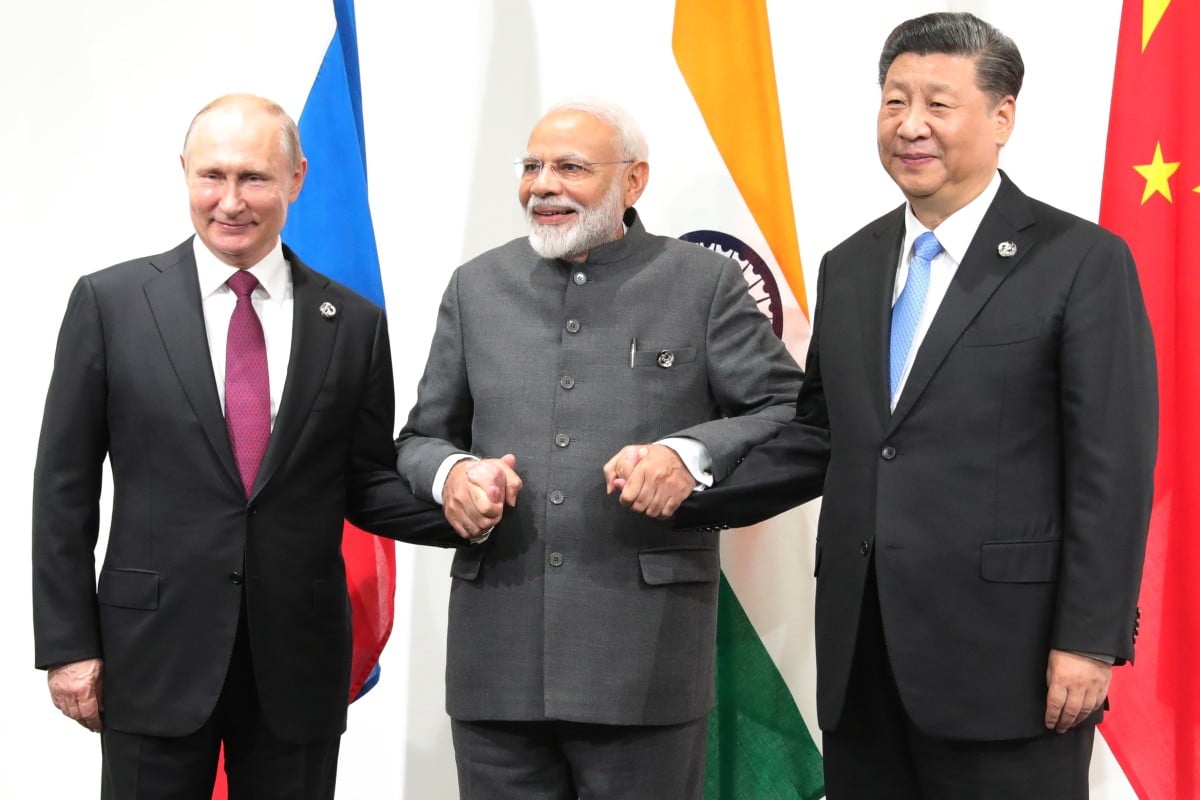
Chinese president also called for the three nations to uphold multilateralism in talks with Vladimir Putin and Narendra Modi in Osaka
In a separate meeting with other BRICS leaders, he said Beijing opposed ‘illegal and unilateral sanctions’ and ‘long-arm jurisdiction’
(From left) Russian President Vladimir Putin, Indian Prime Minister Narendra Modi and Chinese leader Xi Jinping meet on the sidelines of the G20 summit in Osaka, Japan, on Friday. Photo: EPA-EFE
Chinese President Xi Jinping on Friday called on the leaders of Russia and India to take “global responsibility” to safeguard the three countries’ interests and uphold multilateralism, as Beijing seeks to rally support amid its protracted trade war with Washington.
Xi made the remarks during a trilateral meeting with Vladimir Putin and Narendra Modi on the sidelines of the annual
with US President Donald Trump, seeking to reach a truce on the year-long trade conflict between the world’s two biggest economies.
“The rise of protectionism and unilateralism has severely affected global stability and economic growth, as well as the existing international order which emerging economies and developing countries have relied on,” Xi was quoted as saying by state broadcaster CCTV.
“China, Russia and India should take on global responsibility to safeguard the fundamental and long-term interests of these three countries and the world,” he said.
Xi also called for the nations to promote “a more multipolar world and the democratisation of international relations” – meaning with less reliance on a US-led world order.
During a meeting with leaders of the other BRICS countries – major emerging economies Brazil, Russia, India, China and South Africa – Xi also said Beijing opposed what it saw as “illegal and unilateral sanctions” and “long-arm jurisdiction”.
The efforts to forge closer ties among China, Russia and India come as all three nations are locked in disputes with the United States.
New Delhi, a key strategic ally in Washington’s Indo-Pacific policy to contain China’s rise, has been upset over tariffs imposed on Indian goods by the Trump administration. Meanwhile, geopolitical rivalry and the Kremlin’s alleged meddling in US elections has strained relations between Moscow and Washington.
Beneath the smiles and handshakes, tensions simmer as world leaders meet for G20
Wu Jianghao, director general of the Chinese foreign ministry’s Asian affairs department, said the trilateral meeting laid out a framework for future cooperation.
“The three countries have spoken with one voice on some major global issues, helping stability and injecting positive energy to the current international situation – which is filled with instability and uncertainties,” Wu said at a briefing on Friday.
Wu said that the leaders did not talk about Huawei Technologies or 5G networks, but that the three countries had maintained good communication on telecoms issues and would continue to cooperate.
Washington has banned US companies from selling American technology to Huawei and put pressure on its allies to block the Chinese tech firm over security concerns.
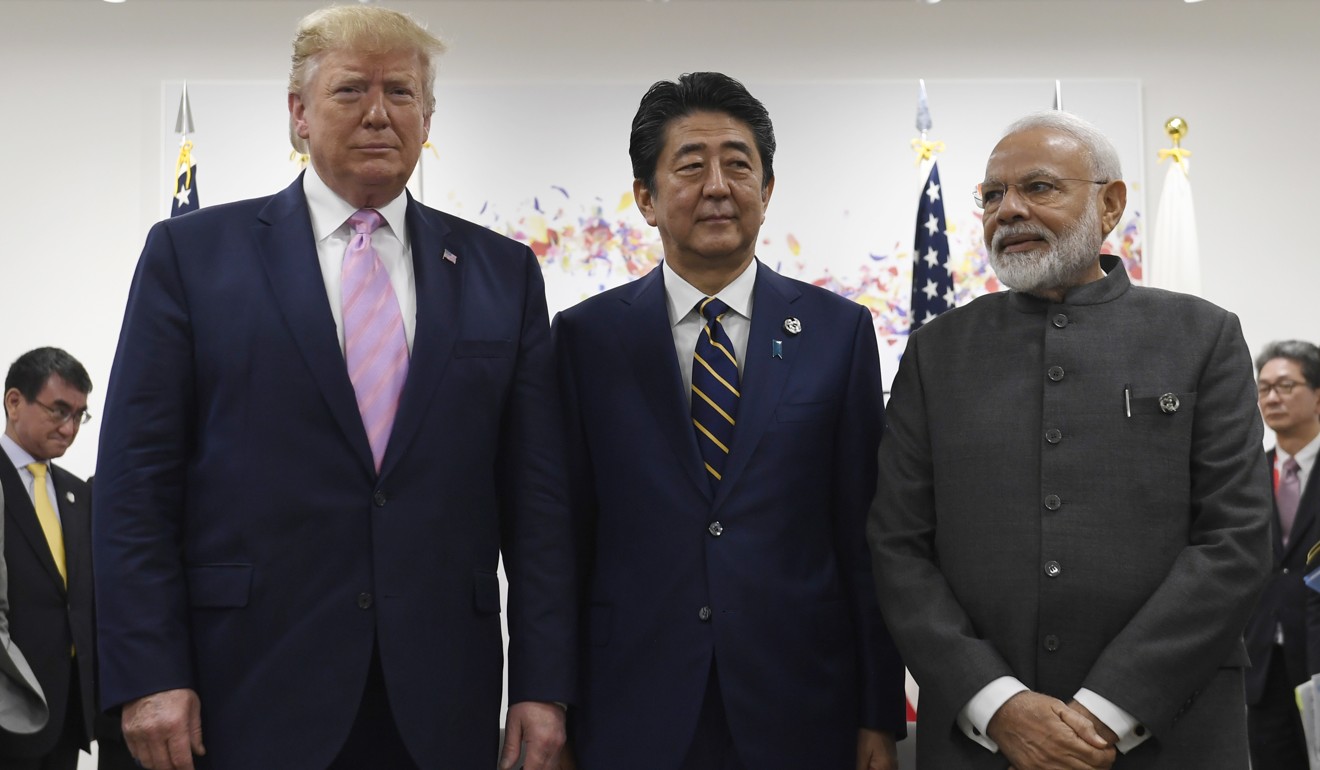
(From left) US President Donald Trump, Japanese Prime Minister Shinzo Abe and Indian Prime Minister Narendra Modi pose for a photo before their meeting. Photo: AP
Meanwhile, the United States is also seeking to build ties with India, with Trump holding trilateral talks with Modi and Japanese Prime Minister Shinzo Abe on Friday.
Indian Foreign Secretary Vijay Gokhale described that trilateral meeting as “very good”, saying it was “short but very productive”.
“The main topic of discussion was the Indo-Pacific, about how the three countries could work together in terms of connectivity, infrastructure and ensuring that peace and stability is maintained, and working together to build upon this new concept so that it would benefit the region as a whole and the three countries,” Gokhale said.
On the Modi-Trump bilateral meeting, he said the two leaders had “a very warm discussion”. They also briefly discussed 5G, with the focus on business cooperation between the two countries to leverage their technology and the potential of the Indian market, according to Gokhale.
He said the discussion of how to develop 5G networks was “in terms of business, not in terms of governments”. “It’s an exciting new area that India and the US can work together [on],” he said.
ISLAMABAD (Reuters) – Pakistani Prime Minister Imran Khan on Sunday spoke to Narendra Modi and congratulated the Indian leader on the runaway election victory of his Hindu-nationalist Bharatiya Janata Party (BJP), both countries said on Sunday.
“Prime Minister Imran Khan spoke to Prime Minister Narendra Modi today and congratulated him on his party’s electoral victory in the Lok Sabha elections in India,” Pakistan’s foreign ministry said in a statement.
“The Prime Minister expressed his desire for both countries to work together for the betterment of their peoples.”
Tensions between India and Pakistan, both nuclear-armed countries, flared in February with cross-border air strikes and a brief battle between fighter jets above Kashmir.
India’s Ministry of External Affairs confirmed Khan had called Modi on Sunday, adding the two leaders had discussed fighting poverty together.
He (Modi) stressed that creating trust and an environment free of violence and terrorism were essential for fostering cooperation for peace, progress and prosperity in our region,” the ministry added in a statement.
The meeting between Priyanka and Rahul Gandhi comes in the backdrop of reports that the powerful working committee of the party may meet in the next three-four days to discuss the leadership issue.
INDIAUpdated: May 28, 2019 13:42 IST
HT Correspondent
Hindustan Times, New Delhi
Congress president Rahul Gandhi with his sister and AICC General Secretary Priyanka Gandhi. (ANI file photo)
Congress general secretary Priyanka Gandhi Vadra met her brother, Congress president Rahul Gandhi amid reports that he wants to quit after the crushing defeat in the Lok Sabha elections.
Priyanka Gandhi, Rajasthan chief minister Ashok Gehlot, his deputy Sachin Pilot and Congress spokesperson Randeep Surjewala arrived at Rahul Gandhi’s 12, Tughlaq Lane residence on Tuesday morning. The meeting between Rahul Gandhi and senior Congress leaders comes in the backdrop of reports that the powerful working committee of the party may meet in the next three-four days to discuss the leadership issue
Rajasthan’s ruling duo Ashok Gehlot and Sachin Pilot calling on him amid rumblings of discontent in the state and his insistence on quitting.
The Congress has denied that any such meeting has been scheduled in the near future. “These reports are baseless,” KC Venugopal, general secretary in-charge of organization who is responsible for convening Congress Working Committee meetings.
On Monday, Congress treasurer Ahmed Patel and KC Venugopal met Rahul Gandhi. But Patel insisted that he had gone to meet Rahul Gandhi for routine administrative work. “I had sought time before the CWC to meet the Congress President to discuss routine administrative work. The meeting today was in that context. All other speculation is incorrect and baseless,” Patel tweeted.
Three more state Congress chiefs resigned on Monday taking ‘moral responsibility’ for party’s poor performance in Lok Sabha elections. Other than Sunil Jakhar (Punjab) and Ajoy Kumar (Jharkhand) and Ripun Bora (Assam), HK Patil, who was tasked to oversee the Karnataka Congress campaign in December, also put in his papers.
ANI
✔@ANI
Delhi: Priyanka Gandhi Vadra and Randeep Singh Surjewala arrive at the residence of Congress President Rahul Gandhi. pic.twitter.com/WXmvlPMJv0
These resignations take the number of party unit chiefs who have resigned since the poll results to six — the others being UP party chief Raj Babbar, Odisha’s Niranjan Patnaik and Ashok Chavan of Maharashtra.
The Congress won just 52 seats in the Lok Sabha polls which saw Narendra Modi-led NDA come to power with a massive mandate winning 352 seats.
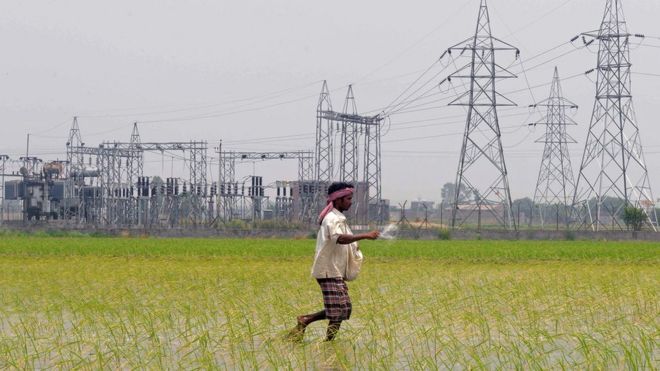
The Indian Prime Minister, Narendra Modi, said last year that his government had reached its target of providing every village in India with electricity.
“Yesterday, we fulfilled a commitment due to which the lives of several Indians will be changed forever,” Mr Modi tweeted in April 2018.
In the run-up to the Indian election, which gets under way on 11 April, BBC Reality Check examines claims and pledges made by the main political parties.
So does this claim stand up to scrutiny?
Let’s start by looking at villages.
There are almost 600,000 villages in India, according to the 2011 census.
The government defines a village as fully electrified if 10% of its households, as well as public places such as schools and health centres, are connected to the grid.
By this definition, all villages have now been electrified, according to official data.
However, much of the work had been done under the previous governments.
When Mr Modi took office, 96% of all the villages in India were already electrified. That left about 18,000 villages to go.
Before the BJP came to power, India had the world’s largest electricity access deficit – 270 million people.
That accounted for just under a third of the overall global deficit, according to the World Bank’s 2017 State of Electricity Access report.
The World Bank estimates that nearly 85% of the entire population now has access to power supply – that’s slightly higher than the government estimate of 82%.
What about households?
The project Mr Modi launched in September 2017 aimed to provide electricity to all Indian households by December 2018, covering 40 million families, primarily targeting rural India.
Virtually all Indian households have now been electrified, according to the government’s data. As of March, just 19,753 households are left.
Image copyrightGETTY IMAGESImage captionThe quality of the electricity supply is weaker in the northern and eastern states.
The current government has suggested it has been electrifying villages at a faster rate than the previous one.
However, using central electricity authority data, we found that under the previous Congress-led government, an average of more than 9,000 villages a year were being electrified compared with the Modi government’s average of more than 4,000 villages a year.
Problems with supply
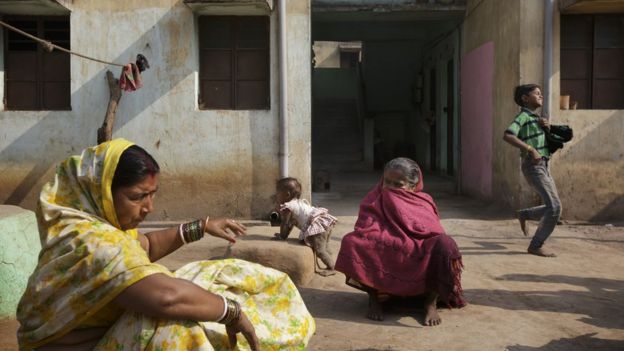
Although substantial progress has been made to electrify Indian villages – both by the current and previous administrations – the quality of the supply remains a problem, especially in rural areas.
Only six out of 29 states receive a 24-hour power supply, according to a government response to a question in India’s parliament.
Just under half of villages have more than 12 hours of domestic electricity a day and a third receive between eight and 12 hours, according to government data.
States with the highest percentage of villages that receive between just one and four hours of electricity a day include Jharkhand, Mizoram and Arunachal Pradesh.
No other injuries reported following accident on southern island of Hainan
Military is currently intensifying training for pilots as it looks to strengthen capabilities
Mobile phone footage believed to be taken from the crash site. Photo: Handout
A Chinese navy plane crashed in Hainan province on Tuesday killing two crew members, the military said.
A short statement said the crash happened during a training exercise over rural Ledong county in the southern island province.
No one else was reported to have been injured after the plane hit the ground and the cause of the incident is being investigated.
Footage that purported to be taken from the crash site started circulating on social media after the accident.
The mobile phone footage, which news portal 163.com said was taken in Hainan, showed smoke rising from piles of wreckage next to a damaged water tower as bystanders gathered at the site.
Footage apparently taken at the crash site. Photo: Handout
The person who uploaded the footage said the plane had hit the water tower before crashing into the ground.
The PLA’s official statement did not specify the type plane that crashed, although unverified witness account online said it was a twin-seat Xian JH-7 “Flying Leopard”.
The JH-7, which entered service with the navy and air force in the 1990s, has been involved in a number of fatal accidents over the years.
The country’s worst military air accident in recent years happened in January 2018. At least 12 crew members died when a PLA Air Force plane, believed to be an electronic reconnaissance aircraft, crashed in Guizhou in the southwest of the country.
Between 2016 and 2017, there were at least four accidents involving the navy’s J-15 “Flying Sharks”, one of them resulting in the death of the pilot.
Military commentators have previously said that China’s drive to improve its combat readiness, which includes the building of new aircraft carriers and warplanes, has resulted in a serious shortage of qualified pilots.
To fill the vacancies the Chinese military has started a major recruitment drive and intensive training programme for pilot pilots.
One unverified report said the plane that crashed was a JH-7 “Flying Leopard”. Photo. Xinhua
Currently China has one aircraft carrier, the Liaoning, in service, which can carry a maximum of 24 J-15s as well as other aircraft.
Meanwhile, the new home-grown carrier Type 001A will soon be commissioned, which is designed to accommodate to carry eight more fighters.
In addition, construction is believed to have started on another carrier that will be able to carry heavier and more advanced warplanes.
According to figures from the end of 2016, there were only 25 pilots qualified to fly the J-15 while 12 others were in training.
Most of the Chinese navy’s pilots have been redeployed from the air force, which is itself in need of more trained pilots.
This year the navy for the first time began a nation-wide programme to scout out potential pilots.
Speaking on the sidelines of the ongoing legislative meeting in Beijing Feng Wei, a PLA pilot from the Western Theatre, said the military was currently intensifying its pilots’ training as increasing amounts of new equipment entered service.
“Personnel quality is the key to everything,” he added.
Image copyrightGETTY IMAGES (ALLISON JOYCE)Image captionCow vigilantes in Ramgarh in 2015
A Muslim dairy farmer was stopped late one night last July as he led two cows down a track in rural Rajasthan, south of the Indian capital, Delhi. Within hours he was dead, but who killed him, asks the BBC’s James Clayton – the “cow vigilantes” he met on the road, or the police?
It’s 4am and Dr Hassan Khan, the duty doctor at Ramgarh hospital, is notified of something unusual.
The police have brought in a dead man, a man they claim not to know.
“What were the police like when they brought him in? Were they calm?” I ask him.
“Not calm,” he says. “They were anxious.”
“Are they usually anxious?” I ask.
“Not usually,” he says, laughing nervously.
The dead man is later identified by his father as local farmer Rakbar Khan.
This was not a random murder. The story illustrates some of the social tensions bubbling away under the surface in India, and particularly in the north of the country.
And his case raises questions for the authorities – including the governing Hindu nationalist BJP party.
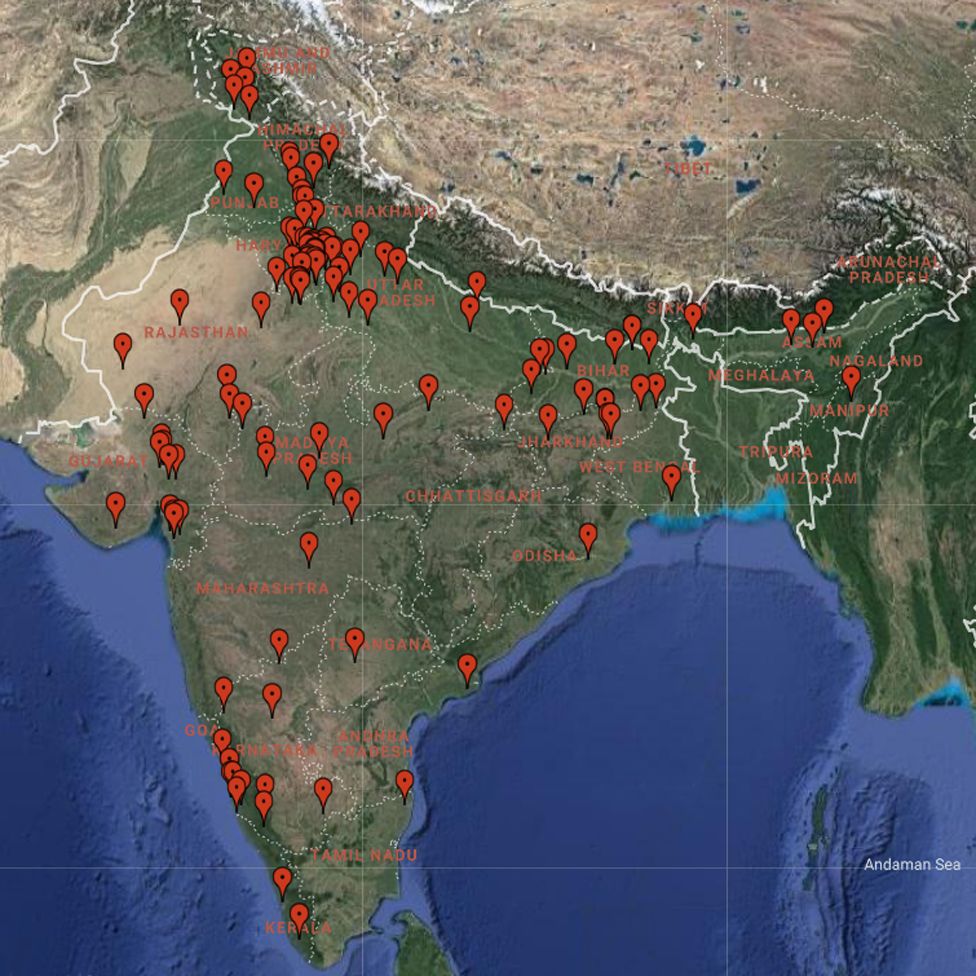
Cow-related violence – 2012-2019
Image copyrightINDIASPENDRakbar Khan was a family man. He had seven children.
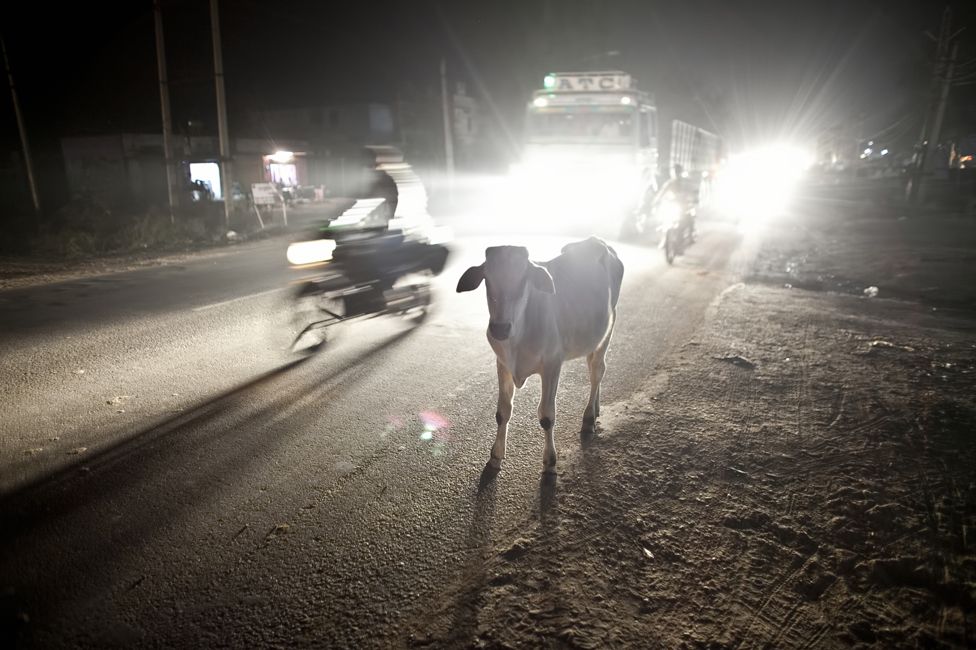
He kept cows and he also happened to be a Muslim. That can be a dangerous mix in India.
“We have always reared cows, and we are dependent on their milk for our livelihood,” says Rakbar’s father, Suleiman.
“No-one used to say anything when you transported a cow.”
That has changed. Several men have been killed in recent years while transporting cows in the mainly Muslim region of Mewat, not far from Delhi, where Rakbar lived.
“People are afraid. If we go to get a cow they will kill us. They surround our vehicle. So everyone is too scared to get these animals,” says Suleiman.
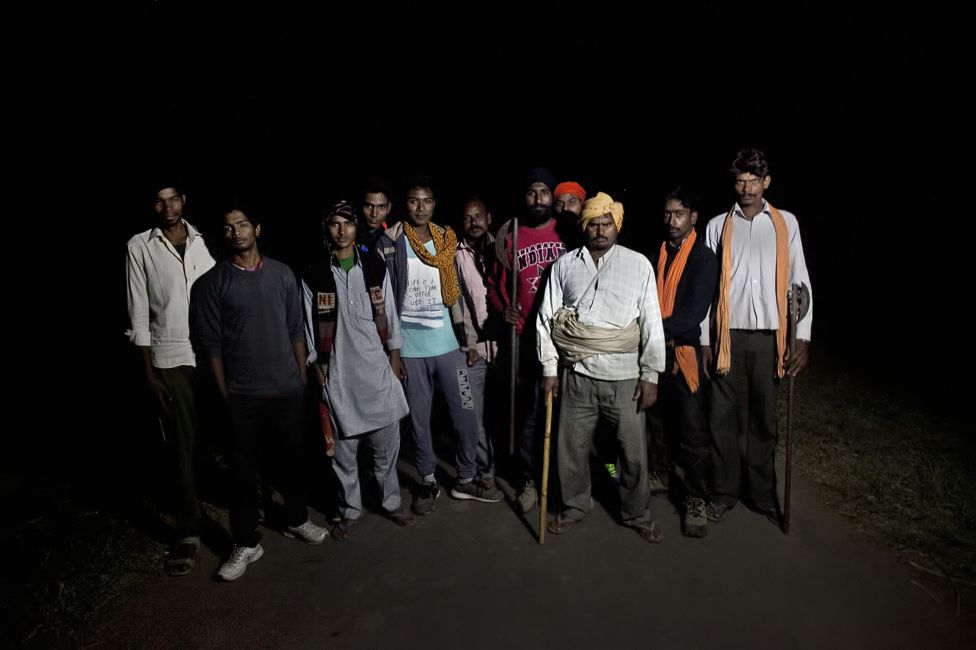
Everyone I speak to in the village where the Khans live is afraid of gau rakshaks – cow protection gangs.
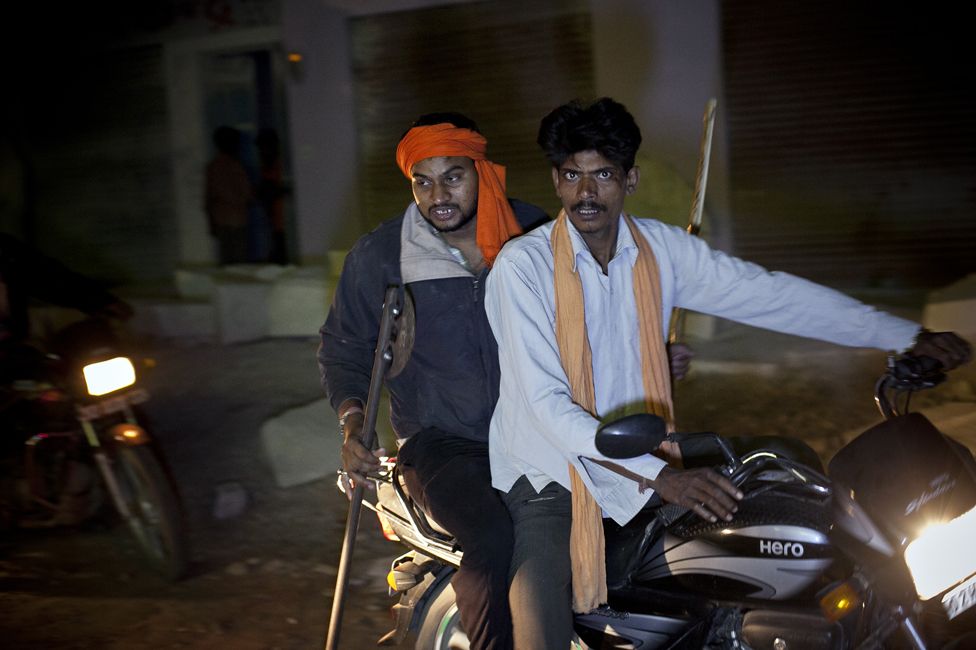
Image copyrightGETTY IMAGES (ALLISON JOYCE)Image captionNawal Kishore Sharma’s cow protection group in 2015The gangs often consist of young, hardline Hindus, who believe passionately in defending India’s holy animal.
They believe that laws to protect cows, such as a ban on slaughtering the animals, are not being fully enforced – and they hunt for “cow smugglers”, who they believe are taking cows to be killed for meat.
Often armed, they have been responsible for dozens of attacks on farmers in India over the last five years, according to data analysis organisation IndiaSpend, which monitors reports of hate crimes in the media.
On 21 July 2018, Rakbar Khan met the local gau rakshak.
There are some things we know for certain about what happened that night.
Rakbar was walking down a small road with two cows. It was late and it was raining heavily.
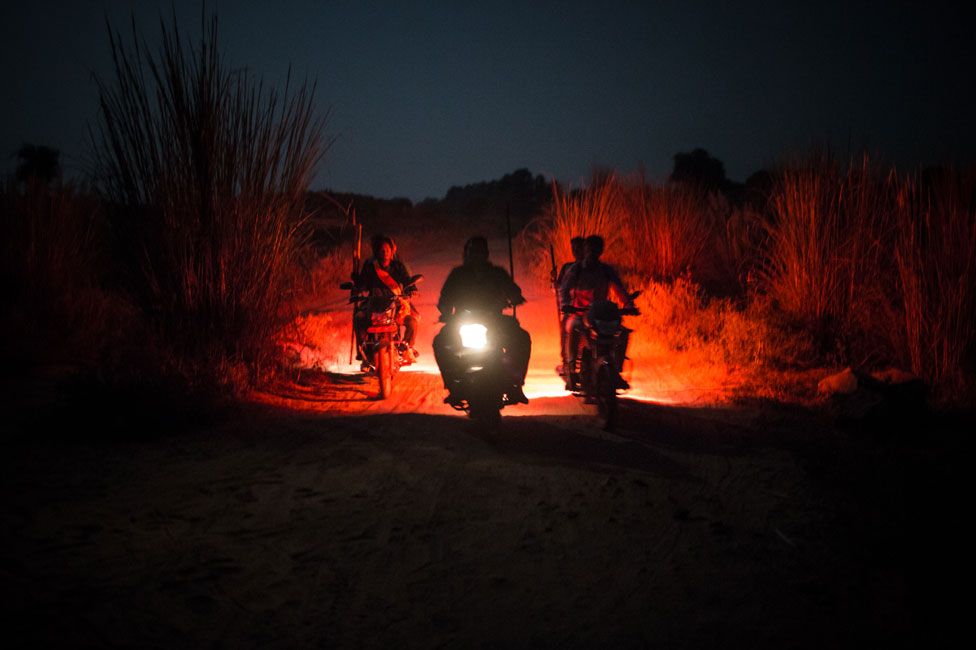
Then, out of the dark, came the lights of motorbikes. We know this, because Rakbar was with a friend, who survived.
Image copyrightGETTY IMAGES (ENRICO FABIAN)At this point the details become a little sketchier. There are three versions of the story.
The gang managed to catch Rakbar, but his friend, Aslam, slipped away. He lay on the ground, in the mud and prayed he wouldn’t be found.
“There was so much fear inside me, my heart was hurting,” he says.
“From there I heard the screams. They were beating him. There wasn’t a single part of his body that wasn’t broken. He was beaten very badly.”
The documentary India’s Cow Vigilantes can be seen on Our World on BBC World Newsand on the BBC News Channel (click for transmission times)
Aslam says that Rakbar was killed then and there.
But there is evidence that suggests otherwise.
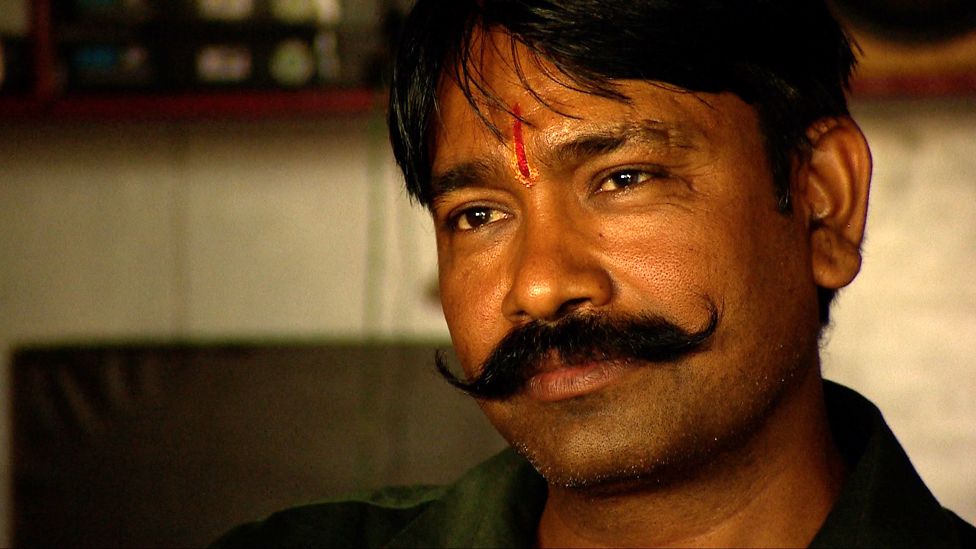
Much of what happened next focuses around the leader of the local cow vigilante group, Nawal Kishore Sharma.
Aslam claims he heard the gang address him by name that night, but when I speak to Sharma, he denies he was there at all.
Image captionNawal Kishore Sharma
“It was about 00:30 in the morning and I was sleeping in my house… Some of my group phoned me to say they’d caught some cow smugglers,” he says.
According to Nawal Kishore Sharma, he then drove with the police to the spot. “He was alive and he was fine,” he says.
But that’s not what the police say.
In their “first incident report” they say that Rakbar was indeed alive when they found him.
“Nawal Kishore Sharma informed the police at about 00:41 that some men were smuggling two cows on foot,” the report says.
“Then the police met Nawal Kishore outside the police station and they all went to the location.
“There was a man who was injured and covered in mud.
“He told the police his name, his father’s name, his age (28) and the village he was from.
“And as he finished these sentences, he almost immediately passed out. Then he was put in the police vehicle and they left for Ramgarh.
“Then the police reached Ramgarh with Rakbar where the available doctor declared him dead.”
Image copyrightGETTY IMAGES (ALLISON JOYCE)Image captionRamgarh at nightBut this version of events is highly dubious.
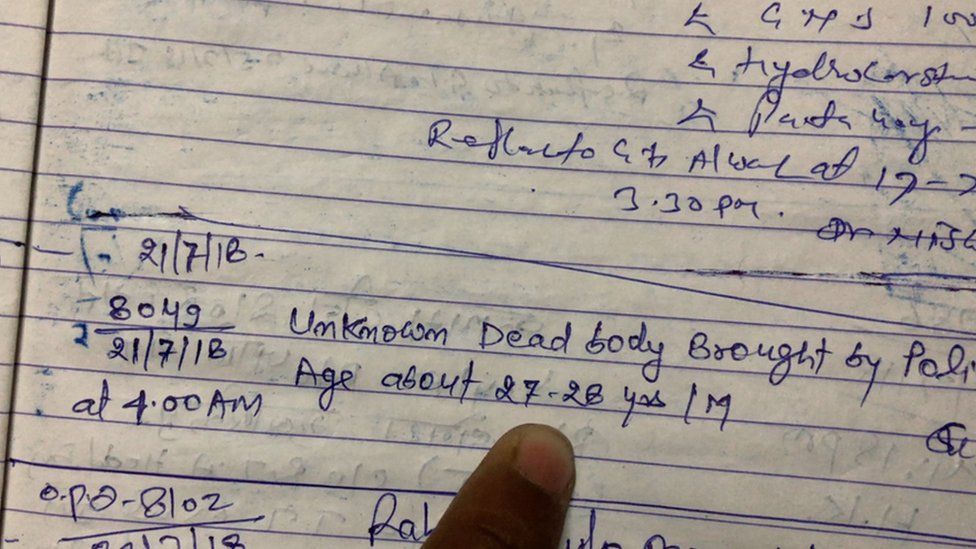
I go to the hospital in Ramgarh, where Rakbar was taken. Hospital staff are busily going through bound books of hospital records – looking for Rakbar’s admission entry.
And then, there it is. “Unknown dead body” brought in at 04:00 on 21 July 2018.
It’s not a long entry, but it contradicts the police’s story, and raises some serious questions.
For a start, Rakbar was found about 12 minutes’ drive away from the hospital. Why did it take more than three hours for them to take him there?
And if the police say Rakbar gave them his name, why did they tell the hospital they didn’t know who he was?
Nawal Kishore Sharma claims to know why. He paints a very different picture of what happened to Rakbar.
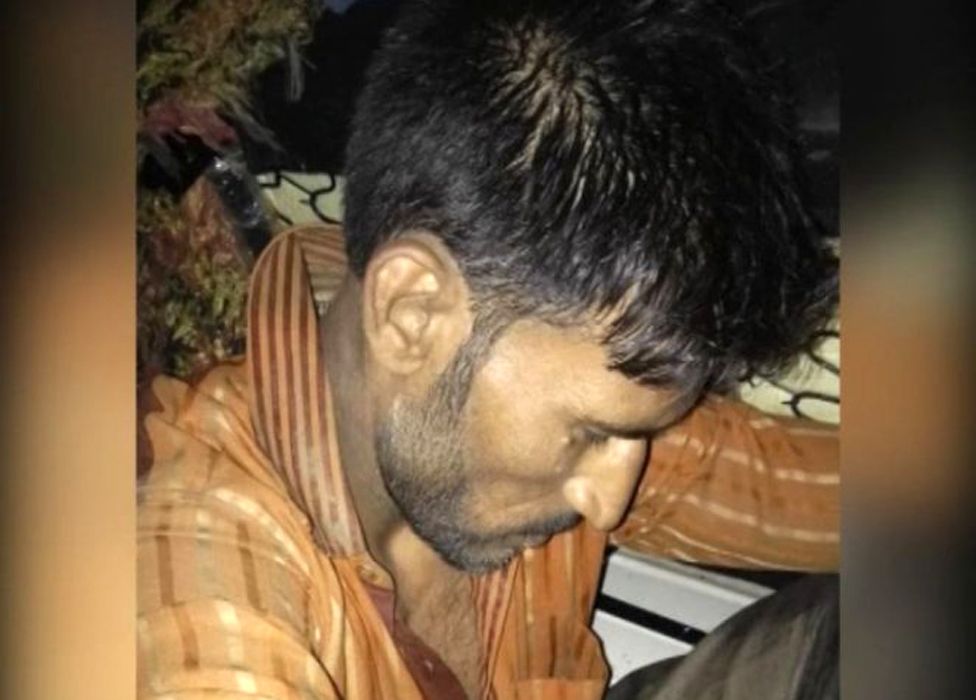
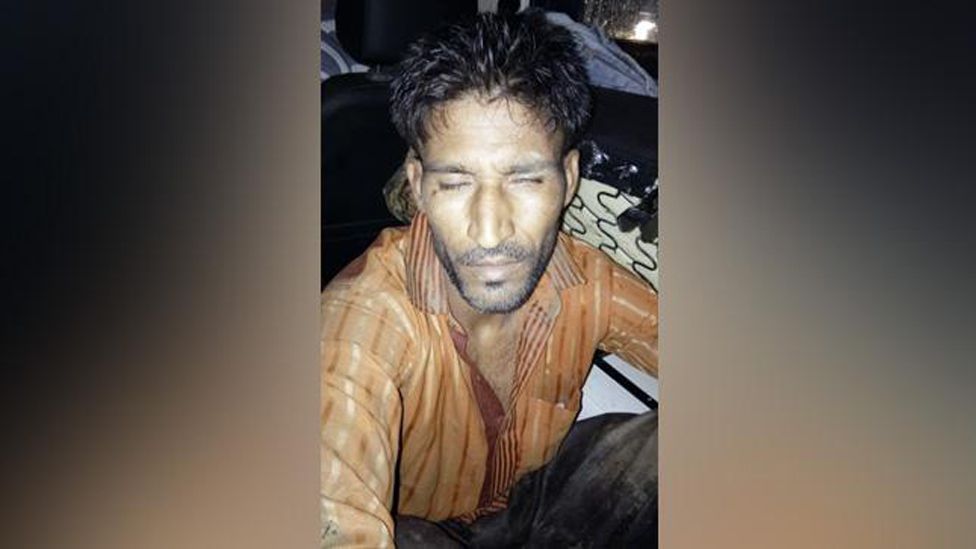
He tells me that after picking up Rakbar, they changed his clothes.
He then claims to have taken two photos of Rakbar – who at this point was with the police.
Sharma says that he went to the police station with the police. He claims that’s when the beating really began.
“The police injured him badly. They even beat him with their shoes,” he says.
“They kicked him powerfully on the left side of his body four times. Then they beat him with sticks. They beat him here (pointing at his ribs) and even on his neck.”
At about 03:00 Nawal Kishore Sharma says he went with some police officers to take the two cows to a local cow shelter. When he returned, he says, the police told him that Rakbar had died.
Rakbar’s death certificate shows that his leg and hand had been broken. He’d been badly beaten and had broken his ribs, which had punctured his lungs.
According to his death certificate he died of “shock… as a result of injuries sustained over body”.
I ask the duty doctor at the hospital whether he remembers what Rakbar’s body was like when the police brought it in.
“It was cold,” he says.
I ask him how long it would take for a body to become cold after death.
“A couple of hours,” he replies.
“I don’t want to talk about Rakbar’s case,” says Rejendra Singh, chief of police of Alwar district, which includes Ramgarh.
Since Rakbar’s murder several police officers have been suspended. I want to know why.
He looks uneasily at me.
“There were lapses on the police side,” he says.
I ask him what those lapses were.
“They had not followed the regular police procedure, which they were supposed to do,” he says. “It was one big lapse.”
Three men from Nawal Kishore Sharma’s vigilante group have been charged with Rakbar’s murder. Sharma himself remains under investigation.
The vigilante group and the police blame each other for Rakbar’s death, but neither denies working together that night.
The way Sharma describes it, the police cannot be everywhere, so the vigilantes help them out. But it’s the police that “take all the action” he says.
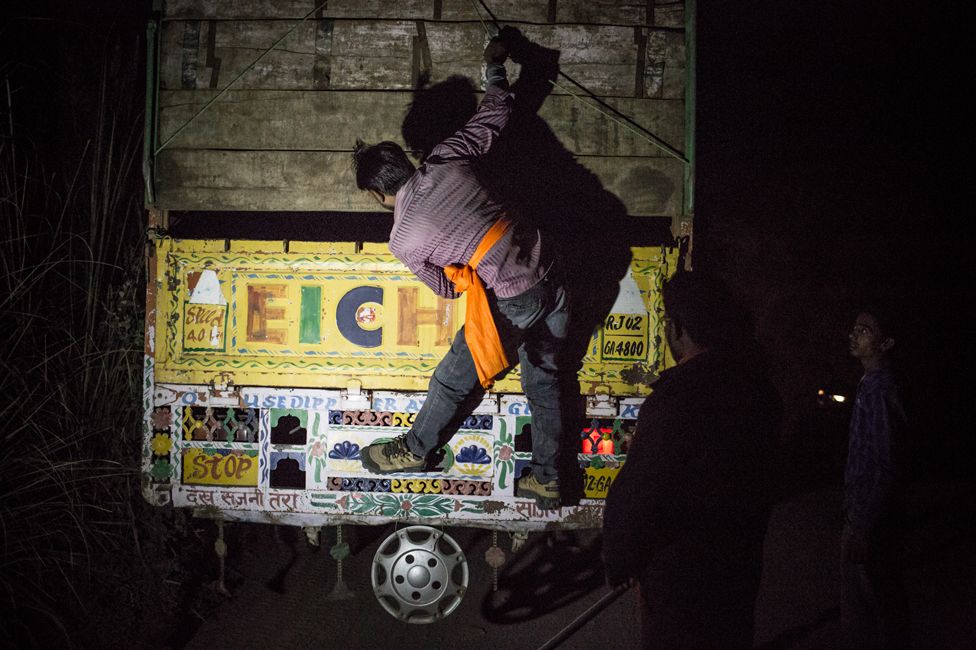
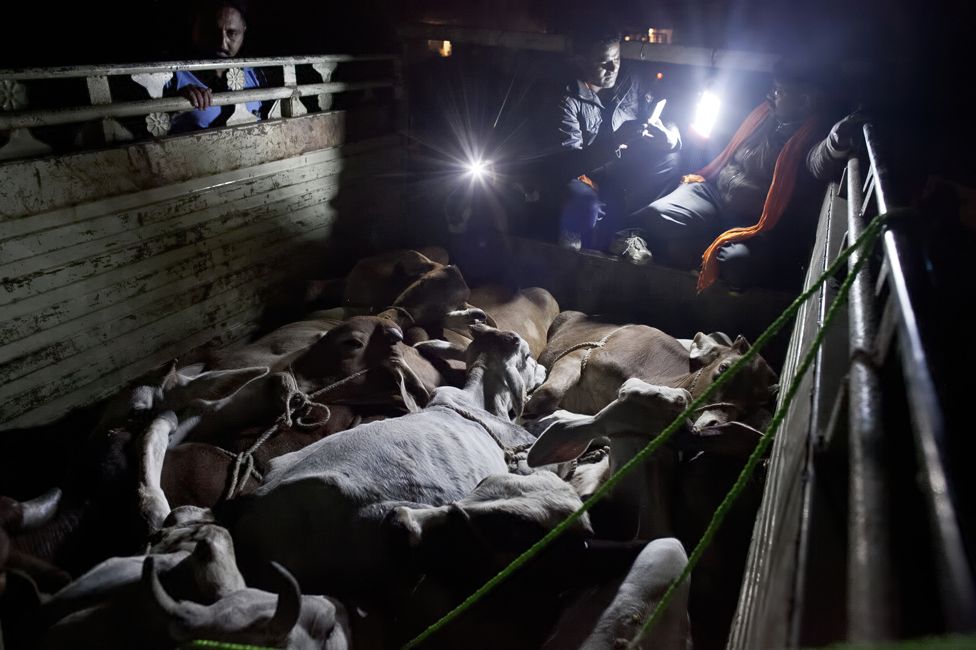
Image copyrightGETTY IMAGES (ENRICO FABIAN)Image captionNawal Kishore Sharma inspects a lorry transporting cows (October 2015)Much police activity in Rajasthan is focused on stopping cow slaughter.
Across the state there are dozens of formal cow checkpoints, where police stop vehicles looking for smugglers who are taking cows to be killed.
I visited one of the checkpoints. Sure enough police were patiently stopping vehicles and looking for cows.
The night before officers had had a gun battle with a group of men after a truck failed to stop.
These checkpoints have become common in some parts of India. Sometimes they are run by the police, sometimes by the vigilantes, and sometimes by both.
This gets to the heart of Rakbar’s case.
Human rights groups argue that his murder – and others like his – show that in some areas the police have got too close to the gangs.
Image copyrightGETTY IMAGES (ALLISON JOYCE)Image captionThe vigilantes find what they are looking for (November 2015)“Unfortunately what we’re finding too often is that the police are complicit,” says Meenakshi Ganguly of Human Rights Watch, which published a 104-page report on cow-related violence in India this week.
In some areas, police have been reluctant to arrest the perpetrators of violence – and much faster to prosecute people accused of either consuming or trading in beef, he says.
Human Rights Watch has looked into 12 cases where it claims police have been complicit in the death of a suspected cow smuggler or have covered it up. Rakbar’s is one of them.
But this case doesn’t just illustrate police failings. Some would argue that it also illustrates how parts of the governing BJP party have inflamed the problem.
Gyandev Ahuja is a larger-than-life character. As the local member of parliament in Ramgarh at the time when Rakbar was killed he’s an important local figure.
He has also made a series of controversial statements about “cow smugglers”.
After a man was badly beaten in December 2017 Ahuja told local media: “To be straightforward, I will say that if anyone is indulging in cow smuggling, then this is how you will die.”
After Rakbar’s death he said that cow smuggling was worse than terrorism.
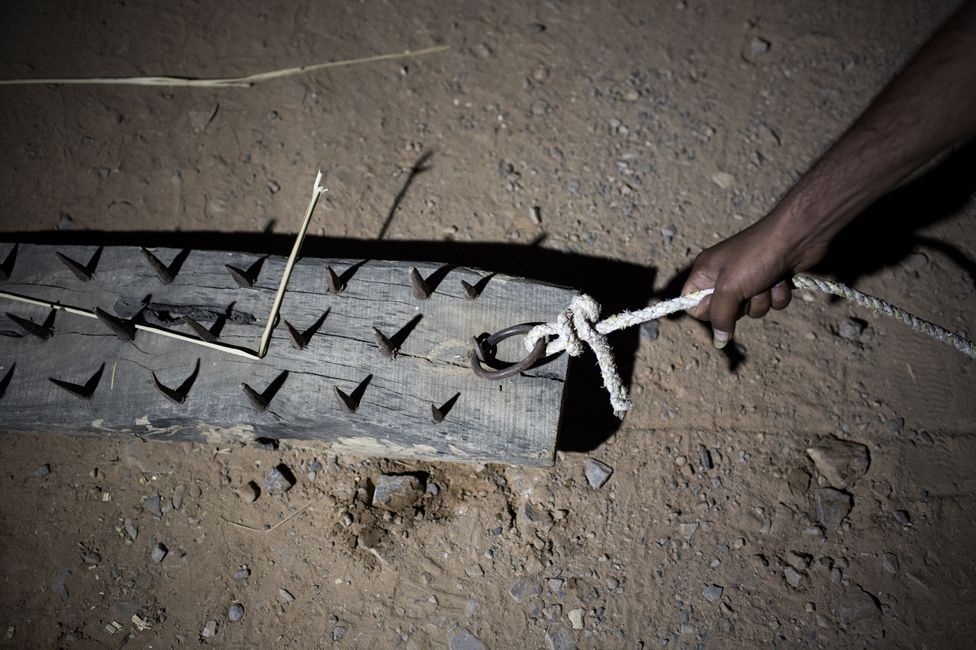
Image copyrightGETTY IMAGES (ENRICO FABIAN)Image captionNails used by the vigilantes to force lorries to stopGyandev Ahuja is just one of several BJP politicians who have made statements that are supportive of the accused in so-called “cow lynchings”.
One of Prime Minister Narendra Modi’s ministers was even photographed garlanding the accused murderers in a cow vigilante case. He has since apologised.
Meenakshi Ganguly of Human Rights Watch says it is “terrifying” that elected officials have defended attackers.
“It is really, at this point of time, something that is a great concern, because it is changing a belief into a political narrative, and a violent one,” he says.
The worry is that supportive messages from some of the governing party’s politicians have emboldened the vigilantes.
No official figures are kept on cow violence, but the data collected by IndiaSpend suggests that it started ramping up in 2015, the year after Narendra Modi was elected.
IndiaSpend says that since then there have been 250 injuries and 46 deaths related to cow violence. This is likely to be an underestimate because farmers who have been beaten may be afraid to go to the police – and when a body is found it may not be clear what spurred the attack. The vast majority of the victims are Muslims.
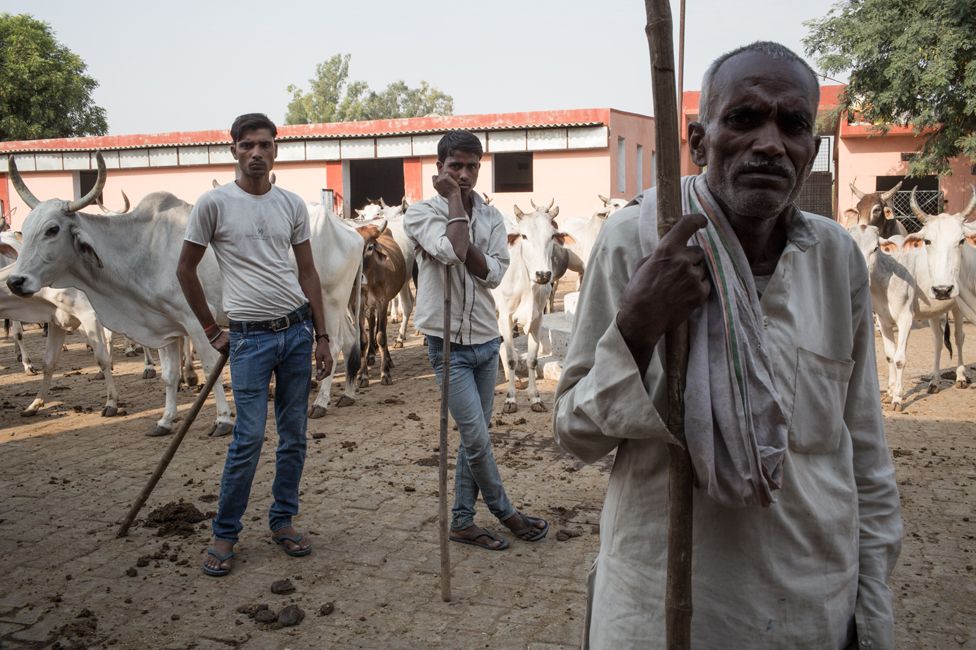
Image copyrightGETTY IMAGES (ENRICO FABIAN)Image captionA cow shelter in RamgarhA BJP spokesman, Nalin Kohli, emphatically rejects any connection between his party and cow violence.
“To say the BJP is responsible is perverse, inaccurate and absolutely false,” he tells me.
“Many people have an interest in building a statement that the BJP is behind it. We won’t tolerate it.”
I ask him about Gyandev Ahuja’s inflammatory statements.
“Firstly that is not the party’s point of view and we have very clearly and unequivocally always said an individual’s point of view is theirs, the point of view of the party is articulated by the party.
“Has the BJP promoted him or protected him? No.”
But a month after this interview, Ahuja was made vice-president of the party in Rajasthan.
Shortly afterwards, Prime Minister Narendra Modi visited Rajasthan – publicly slapping Ahuja on the back and waving together at crowds of BJP supporters.
In Mewat I speak to Rakbar’s wife, Asmina.
“Show me how you raise seven children without a husband. How will I be able to raise them?” she says, wiping away tears.
“My youngest daughter says that my father went to God. If you ask her, ‘How did he go to God?’ she says, ‘My father was bringing a cow and people killed him.’
“The life of an animal is so important but that of a human is not.”
The trial of the three men accused of his murder has yet to take place, but perhaps we will never know what really happened to Rakbar.
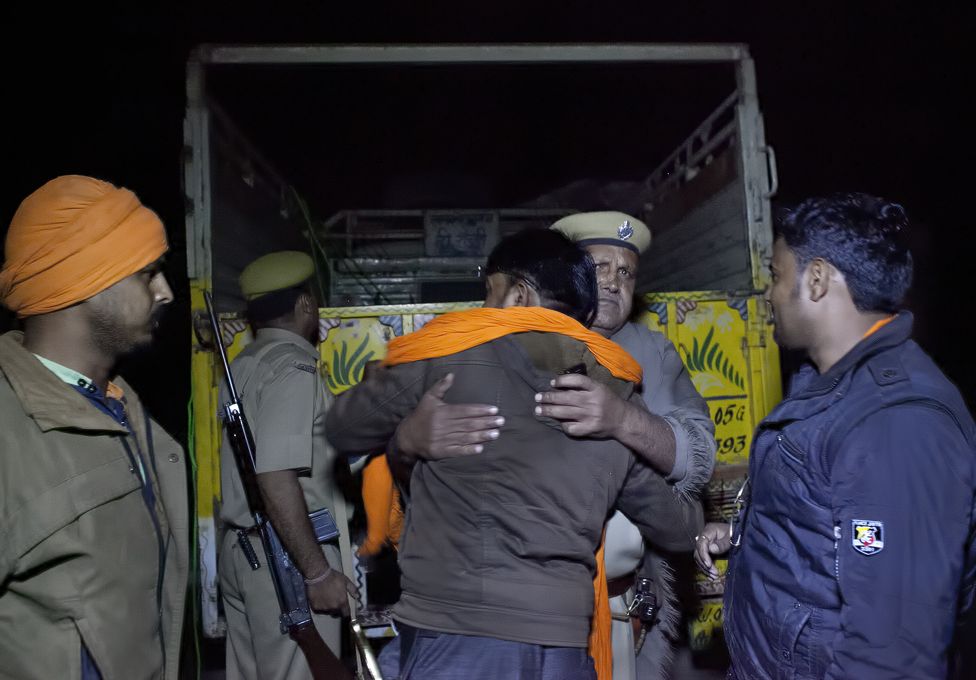
In November 2015, photographer Allison Joyce spent a night following Nawal Kishore Sharma’s vigilantes in the countryside near Ramgarh. One of her photographs shows a police officer embracing Sharma after a shootout between the vigilantes and a suspected cow smuggler.
Though the police now accuse the cow vigilantes of killing Rakbar Khan, and the vigilantes accuse the police, the photograph illustrates just how closely they worked together.
Image copyrightGETTY IMAGES (ALLISON JOYCE)In the Indian media there have been claims that the police took the two cows that Rakbar had been transporting to a cow shelter, as Rakbar lay dead or dying in a police vehicle.
There are also claims that the police stopped and drank tea instead of taking Rakbar to hospital.
Whatever they did, they did not take Rakbar to hospital immediately.


 Image copyright CAREMONGERS INDIA
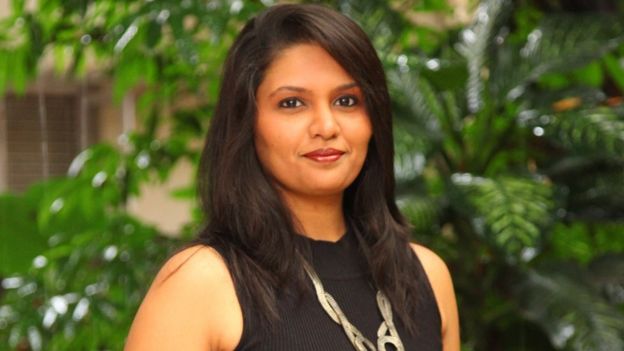 Image copyright CAREMONGERS INDIA
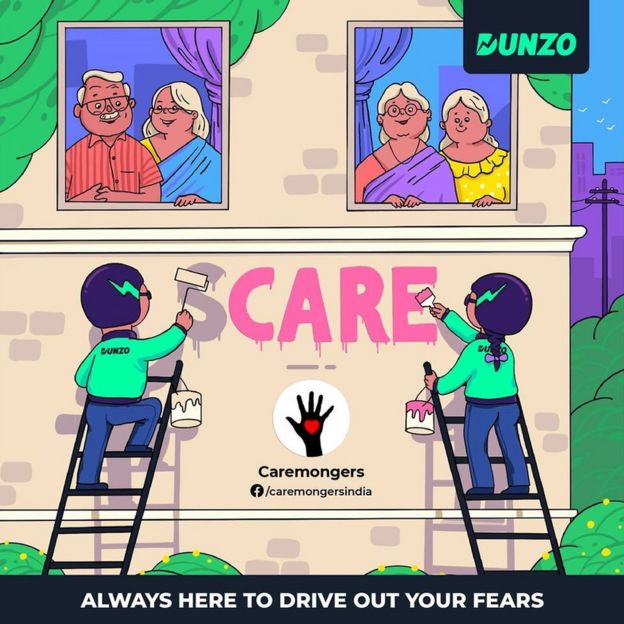 Image copyright IMAGE COURTESY: DUNZO









 CHINDIA ALERT: You'll be living in their world, very soon