Chindia Alert: You’ll be Living in their World Very Soon
aims to alert you to the threats and opportunities that China and India present. China and India require serious attention; case of ‘hidden dragon and crouching tiger’.
Without this attention, governments, businesses and, indeed, individuals may find themselves at a great disadvantage sooner rather than later.
The POSTs (front webpages) are mainly 'cuttings' from reliable sources, updated continuously.
The PAGEs (see Tabs, above) attempt to make the information more meaningful by putting some structure to the information we have researched and assembled since 2006.
BEIJING, March 9 (Xinhua) — Most of the more than 50,000 coronavirus disease (COVID-19) patients in China who have recovered and been discharged from hospital received traditional Chinese medicine (TCM) treatment, a health official said Monday.
Yu Yanhong, deputy head of the National Administration of Traditional Chinese Medicine, told a press conference that the combination of TCM and Western medicine in COVID-19 treatment has been proved effective by the huge number of recovered patients.
TCM has been involved in the treatment of 74,603 confirmed COVID-19 cases nationwide, accounting for 92.5 percent of the total, according to official data.
Compared with those only treated with TCM or Western medicine, an expert team confirmed that the integrated treatment of TCM and Western medicine can more quickly improve the symptoms such as fever, cough and fatigue, as well as effectively reduce the chances of mild and regular symptoms developing into severe or critical ones, so as to improve the recovery rate and reduce the mortality rate.
TCM treatment focuses on improving the body’s natural defenses against an epidemic and its own ability to repair itself while maintaining the overall balance, Yu said.
TCM clinical treatment is personalized and targeted based on the differences in geography, climate and a patient’s physical condition, said Zeng Yixin, deputy director of the National Health Commission.
A circular issued by the commission also encouraged the promotion of effective TCM treatment plans at the community-level epidemic prevention and control, giving full play to the unique role of TCM.
BEIJING (Reuters) – China’s central province of Hubei, excluding the provincial capital Wuhan, has reported zero new cases of coronavirus over 24 hours for the first time in the outbreak, as authorities seek to stem imported infections in other areas.
Wuhan, the centre of the epidemic, reported 126 new confirmed cases on Thursday but there were no new infections elsewhere in the province, the National Health Commission said on Friday.
Elsewhere in China, schools in provinces reporting no new cases for a number of days started to set reopening dates.
Qinghai, a northwesterly that had reported no new infections for 29 days as of March 5, said it would stagger the start date of different schools between March 11 and March 20, according to a notice posted on an official website.
The southwesterly province of Guizhou has said its schools will start reopening from March 16.
Outside of Hubei, there were 17 new confirmed cases, bringing the total new infections in mainland China to 143 on Thursday, up from 139 cases a day earlier.
Of the 17 new cases, 16 were imported from outside of China – 11 in Gansu province, four in Beijing and one in Shanghai.
A total of 311 passengers arriving at Gansu’s provincial capital Lanzhou from Iran were quarantined, state television reported late on Thursday.
Beijing’s four new cases had come from Italy. On Friday, one of the city’s government officials described its epidemic control campaign as being at its most challenging period, adding that roughly 827,000 people who had returned to the capital from outside – most of them from extended Lunar New Year holidays – were currently undergoing home observation.
Last month, Gansu became the first province to lower its emergency response measures from level I to level III, reflecting the lack of new infections.
Tibet became the latest region to lower its emergency response level on Friday, announcing on an official website that some areas had eased to level II and others to level III.
OPTIMISM FOR WUHAN
Health authorities in Shanghai said that the city had recorded three new cases in the first 12 hours of Friday. All were Chinese nationals who had studied in Iran, state media reported. [B9N28E04N]
All three had been transferred by Shanghai customs to quarantine on March 3, a spokeswoman for the city’s health commission told a news briefing.
Despite the fresh cases in Wuhan, senior Chinese government officials expressed optimism about its situation as the city shut its second makeshift hospital on Friday afternoon, state radio reported.
“As the situation in Wuhan and Hubei improves, relevant authorities, with approvals, will make timely adjustments according to China’s Infectious Diseases Law and public health emergency regulations,” Ding Xiangyang, vice secretary general at the State Council, told a news briefing.
“When I went out in the morning, the cherry blossoms were blooming in front of my door, telling us that winter has passed and spring has come. I think the day everyone has been looking forward to is not far away,” he said.
As new cases dwindle in China, attention has turned to potential infections arriving from overseas.
Authorities in Beijing, Shanghai and Guangdong have all vowed to quarantine travellers from countries hit the hardest by the coronavirus, which Beijing identified as South Korea, Japan, Iran and Italy.
The overall accumulated number of confirmed cases in mainland China stood at 80,552 as of Thursday.
The death toll from the outbreak in mainland China was 3,042 as of the end of Thursday, up by 30 from the previous day.
Hubei reported 29 new deaths, while in Wuhan, 23 people died.
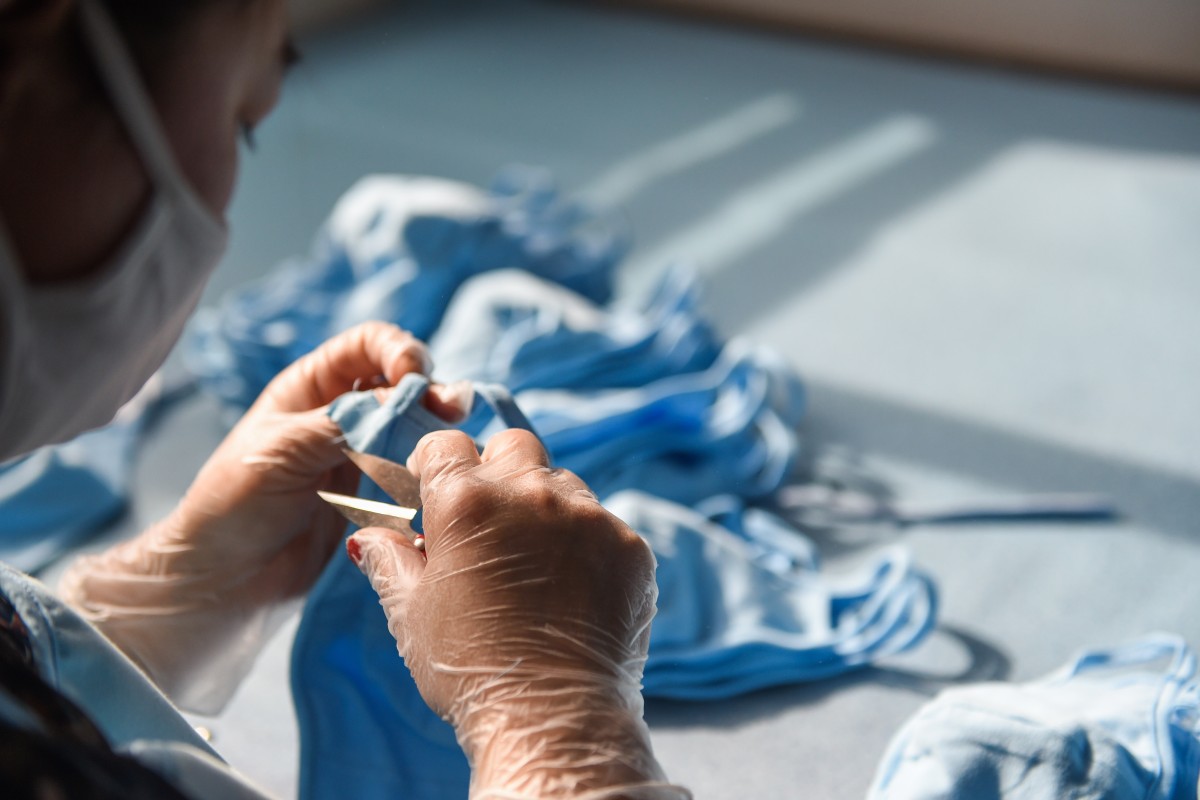
Materials can bought cheaply online and combined to filter out germs, while people exchange tips in online chat groups
Urgent demand has forced individuals and hospitals alike to get to work to meet the shortfall
A worker in northern China makes a face mask as companies strive to match demand – but some people are buying similar materials to assemble at home. Photo: Xinhua
Living in the scenic Puer city in southwestern China’s Yunnan province, 30-year-old Zhang Jianing had thought the coronavirus outbreak in Hubei was far away and irrelevant, until cases were confirmed in her province and then her city at the end of January.
Heeding the warnings to protect herself, Zhang rushed out to buy masks, only to find them all snapped up. When she plucked up the courage to go out to buy groceries, she realised she needed to have a mask on to be allowed to enter shops.
After doing some research online, Zhang made a mask herself: two layers of cotton on the outside, with a sheet of plastic food wrap inside.
“The mask fit my face well and protected me from droplets,” Zhang said. “There was just one thing: it was too difficult to breathe through.”
Experts devise do-it-yourself face masks to help people battle coronavirus
When a nation of 1.4 billion people was suddenly alerted and in many cases ordered to wear masks not only in public indoor places but also in the open air, the huge demand quickly exhausted supply.
Mask production capacity in China was 22 million a day – insufficient for the country’s population. There were hopes that the supply of masks would pick up after a Lunar New Year holiday that was extended to help prevent further spread of infection, but things did not look promising after factories reopened. By Monday, despite mask manufacturers making 10 per cent more than in early February, masks remained a rare commodity.
Making DIY masks became the top trending topic on Chinese online shopping site Taobao for several days. Materials became much sought-after, from nose bars to the non-woven fabric used in disposable surgical masks to filter out viral droplets. An online shop based in Fujian, southeast China, said it had sold more than 5,500 packages of DIY mask materials that can make 50 to 200 surgical masks apiece.
Surgical masks ‘protect more from germs on fingers than viruses in the air’
16 Feb 2020
Zhang spent 200 yuan (US$29) on materials online, from which she made 60 surgical masks when they arrived last week. She is a qipao designer and has a sewing machine at home. The outer layer was a blue waterproof non-woven fabric, over a layer of melt-blown fabric that can filter out most germs and droplets. The inner layer was made with a face flannel.
Hongkongers make reusable fabric masks as Covid-19 epidemic leads to shortages and sky-high prices
“I sent some to my parents and relatives,” Zhang said. “I am not sure how protective they are, but the good thing is our city hasn’t had any new cases for a long time.”
DIY mask production is being taken very seriously, spawning online chat groups to discuss reliability of materials and disinfection methods as people try to make theirs as safe and professional as possible.
Alex Zhang, an office worker in Shanghai, donated her N95 masks to Wuhan, the epicentre of the coronavirus outbreak, when hospitals in the city appealed to the public for protective gear amid an acute shortage – but soon found herself short of masks herself.
Shanghai companies begin production of first reusable face masks
25 Feb 2020
The Shanghai government allowed households to buy a certain number of surgical masks, but it was not enough for her family. Taking apart an N95 mask to see what it was made of, she felt assembling the layers of fabric required no special technique, and decided to do it herself.
Zhang spent 45 yuan on two square metres of melt-blown fabric to stop viruses, and sandwiched it with two layers of nonwoven fabric and an air pad. She sewed the layers together and put them in an electric oven at 70 degrees Celsius (158 Fahrenheit) for a minute, for disinfection. The finished mask is attached using a plastic band.
“Each mask cost about 3 yuan [43 US cents] and was almost like an N95 filter,” Zhang said. “I didn’t find it difficult. I am quite satisfied with my masks and feel very safe to wear them in crowded places.”
How to properly remove and discard face masks to reduce the risk of infection
She later bought nursing pads, which are already disinfected, to replace the layer closest to the face.
DIY masks have also been used where large amounts of protective gear are needed. Garment manufacturer Shenzhou International, in the coastal Zhejiang province, assigned 100 staff to make masks with melt-blown non-woven fabric to meet the needs of its factory workforce of nearly 15,000, who needed two masks each per day, according to a report by Ningbo Daily.
Hospitals short of masks have mobilised nurses to make their own using a non-woven fabric used to wrap disinfected medical products. At least three hospitals, in Xian in central China and in Jinhua, Zhejiang, have tried making masks for medical staff not serving on the front line, according to media reports.
DIY handmade face masks in Hong Kong
The World Health Organisation has said that wearing masks alone is not sufficient protection against the coronavirus, and should be combined with precautions including hand-washing with soap or an alcohol-based hand rub.
However, facing a shortage that will not end any time soon, health authorities have changed from saying people should discard masks every four hours to advising recycling them when possible.
A guideline issued by the National Health Commission said healthy people could wear masks repeatedly and for a longer time.
Chinese driver wears 12 face masks amid coronavirus outbreak
“Masks for repeat use can be hung in clean, dry and airy places or put in a clean paper bag,” its guidelines said. “The masks must be placed separately to avoid contact with other masks.”
Making masks with layers of cotton bandage is acceptable, because they can stay dry when breathed on, but plastic wrap is not recommended, because it blocks the ability to breathe entirely, according to Cai Haodong, an infectious diseases specialist at Beijing’s Ditan Hospital.
Coronavirus: Thais urged to make their own masks, sanitisers due to shortage
7 Feb 2020
Cai said her hospital did not have surgical masks, nor N95s, during the severe acute respiratory syndrome (Sars) outbreak in 2003, and hospital staff made masks for use by front-line medics, disinfecting them with boiling water and drying them in the sun.
“The key is to keep the mask dry,” Cai said. “Self-made masks offer some degree of protection and it is better to wear them than nothing.”
BEIJING, Feb. 24 (Xinhua) — With the positive trend of containing the outbreak of novel coronavirus illness (COVID-19), China is meticulously expanding business operations with a precise approach that attaches different priorities to regions in light of their health risks.
A total of 11 newly confirmed cases of COVID-19 were reported Sunday outside Hubei Province, the center of the outbreak, while 24 provincial-level regions didn’t report newly confirmed cases, according to the National Health Commission Monday.
As more provincial-level regions have been reporting no newly confirmed cases for longer streaks, more local governments are starting to lower their emergency response to fast-track the restoration of economic and social order.
While high-risk regions still need to be fully committed to epidemic prevention and control, regions with relatively low risks are encouraged to focus on forestalling cases brought in from elsewhere and comprehensively restoring the order of production and life, said a meeting Sunday.
Coastal province Fujian has divided the 88 cities and counties into four groups, ranging from regions with over ten infections to regions with none, and adopted differentiated measures to better fight the outbreak and mitigate the impact on the economy.
Changting County in Fujian, for instance, which has no confirmed cases of infection, has seen most of the key enterprises resume production.
The country has pledged efforts such as arranging customized trains for migrant workers, smoothing the traffic, enhancing credit support and alleviating social security burden on employers to bring enterprises back on track.
Shanghai Municipality has rolled out 28 policies to provide targeted fiscal support, tax and fee cuts, as well as epidemic-prevention supplies for local enterprises, ferrying them through rough patches.
Foreign companies will also benefit from the supportive policies and be treated on the same footing as other types of enterprises, said Xu Wei, spokesperson for the Shanghai municipal government.
The operation resumption rate of 51,000 foreign-funded enterprises in Shanghai is nearly 70 percent, while that of the regional headquarters of 217 multinational companies is as high as 93 percent.
Wyeth Nutrition, a Sino-U.S. joint venture with its headquarter in Shanghai, is operating at its capacity to supply infant formula in China.
“The local commerce department has built a green channel for us, ensuring smooth operation of our supply chains and product delivery in the Yangtze River Delta,” said Cao Jingheng, vice president of the company.
Foreign firms and firms are high on the agenda of Chinese government agencies when formulating preferential policies.
The Ministry of Commerce has promised to strengthen services and guarantees to foreign-funded enterprises while the General Administration of Customs vowed efforts to optimize the port business environment and promote reciprocal market opening up.
Now with the country gradually heading back to work, many are confident that the potential economic blow brought by the national production halt is expected to be only a short-term, one-off hit against China’s solid economic foundation.
The epidemic might disturb economic activities in the first quarter of this year, but the economy is likely to steady shortly after the epidemic is contained, as the unleashing of pent-up demands will make up for previous weak economic performance, said Pan Gongsheng, vice governor of the People’s Bank of China, the central bank.
International Monetary Fund Managing Director Kristalina Georgieva said Saturday that she expects China’s economy to “return to normal in the second quarter” of 2020.
“As a result, the impact on the world economy would be relatively minor and short-lived,” Georgieva said.
BEIJING, Feb. 22 (Xinhua) — Some members of the China-World Health Organization (WHO) joint expert team traveled to Wuhan Saturday to investigate the COVID-19 outbreak, the National Health Commission said.
The experts will have discussions with Wuhan’s health authorities and visit medical and health institutions, the commission said.
The joint expert team began its work in China on Feb. 16 and has finished investigation in Beijing, Guangdong Province and Sichuan Province.
BEIJING (Reuters) – China reported a sharp decrease in new deaths and cases of the coronavirus on Saturday but a doubling of infections in South Korea and 10 new cases in Iran added to unease about its rapid spread and global reach.
Mainland China had 397 new confirmed cases of coronavirus infections on Friday, down from 889 a day earlier, but only 31 cases were outside of the virus epicentre of Hubei province, the lowest number since the National Health Commission started compiling nationwide data a month ago.
But infection numbers continued to rise elsewhere, with outbreaks worsening in South Korea, Italy and Lebanon and Iran, prompting a warning from the World Health Organization that the window of opportunity to contain the international spread was closing..
South Korea saw another spike in infections, with 229 new confirmed cases, taking its tally to 433. Officials warned that could rise substantially as more than 1,000 people who attended a church at the centre of the outbreak had shown flu-like symptoms.
Iran, which had no reported cases earlier this week, saw 10 new cases, one of which had died, taking the number to 28 infections and five deaths.
RELATED COVERAGE
South Korea coronavirus cases more than double in a day
Second coronavirus patient dies in Italy – ANSA news agency
Concerns about the virus weighed on U.S. stocks on Friday, driven by an earlier spike in cases in China and data showing stalling U.S. business activity in February. [MKTS/GLOB]
It has spread to some 26 countries and territories outside mainland China, killing 13 people, according to a Reuters tally.
WHO director-general Tedros Adhanom Ghebreyesus on Twitter expressed concern on Saturday about cases with no clear link to China and called on all countries to invest urgently in preparedness. He made an appeal for $675 million to support the most vulnerable countries.
On Friday, he said now was the time to act decisively.
“We still have a chance to contain it,” he said. “If we don’t, if we squander the opportunity, then there will be a serious problem on our hands.”
An outbreak in northern Italy worsened with its first two deaths, among 17 confirmed cases including its first known instance of local transmission.
Japan confirmed 14 new coronavirus cases on Saturday, among those a teacher who had shown symptoms while working at her school.
Japan is facing growing questions about whether it is doing enough to contain its spread, and concern about whether it could scupper this year’s Tokyo Olympics. Organisers on Saturday postponed the start of training for volunteers as a precaution.
The Bank of Japan’s governor on Saturday shrugged off talk that the widening epidemic is triggering an outflow of funds from Asia.
The total number of confirmed cases in mainland China rose to 76,288, with the death toll at 2,345 as of the end of Friday. Hubei reported 106 new deaths, of which 90 were in Wuhan.
But new, albeit isolated findings about the coronavirus could complicate efforts to thwart it, including the Hubei government’s announcement on Saturday that an elderly man took 27 days to show symptoms after infection, almost twice the presumed 14-day incubation period.
That follows Chinese scientists reporting that a woman from Wuhan had travelled 400 miles (675 km) and infected five relatives without showing signs of infection, offering new evidence of asymptomatical spreading.
State television on Saturday showed the arrival in Wuhan of the “blue whale”, the first of seven river cruise ships it is bringing in to house medical workers, tens of thousands of which have been sent to Hubei to contain the virus.
Senior Chinese central bank officials sought to ease global investors’ worries about the potential damage to the world’s second-largest economy from the outbreak, saying interest rates would be guided lower and that the country’s financial system and currency were resilient.
Chen Yulu, a deputy governor of the People’s Bank of China, said policymakers had plenty of tools to support the economy, and were fully confident of winning the war against the epidemic.
“We believe that after this epidemic is over, pent-up demand for consumption and investment will be fully released, and China’s economy will rebound swiftly,” Chen told state television.
China has recently cut several key lending rates, including the benchmark lending rate on Thursday, and has urged banks to extend cheap loans to the worst-hit companies which are struggling to resume production and are running out of cash.
The transport ministry said businesses would resume operations on a larger scale later this month and said more roads, waterways and ports were returning to normal.
Online media and Weibo users posted footage and images on Saturday of some malls reopening, including in the cities of Wuxi, Hangzhou and in Gansu province, with shoppers queuing in near-empty streets outside for mandatory temperature checks as trickles of customers in masks perused luxury goods shops and makeup counters.
Some analysts believe China’s economy could contract in the first quarter from the previous three months due to the combined supply and demand shocks caused by the epidemic and strict government containment measures. On an annual basis, some warn growth could fall by as much as half from 6% in the fourth quarter.
However, transport restrictions remain in many areas and while more firms are reopening, the limited data available suggests manufacturing is still at weak levels, with disruptions starting to spillover into global supply chains.
Samsung Electronics (005930.KS) said on Saturday that one coronavirus case had been confirmed at its mobile device factory complex in Gumi, causing a shutdown of its entire facility.
Finance leaders from the Group of 20 major economies were set to discuss risks to the world economy in Saudi Arabia this weekend.
The WHO’s Tedros on Twitter said 13 priority countries in Africa had been identified for help because of their direct links to China or high travel volume. That would include 30,000 personal protective kits on the way to six countries and 60,000 more for 19 states in the weeks ahead.
Communist Party mouthpiece releases internal speech given to Politburo Standing Committee on February 3 with presidential orders to contain disease
Xi makes ‘rare’ disclosure move as he comes under heavy domestic and international pressure, analyst says
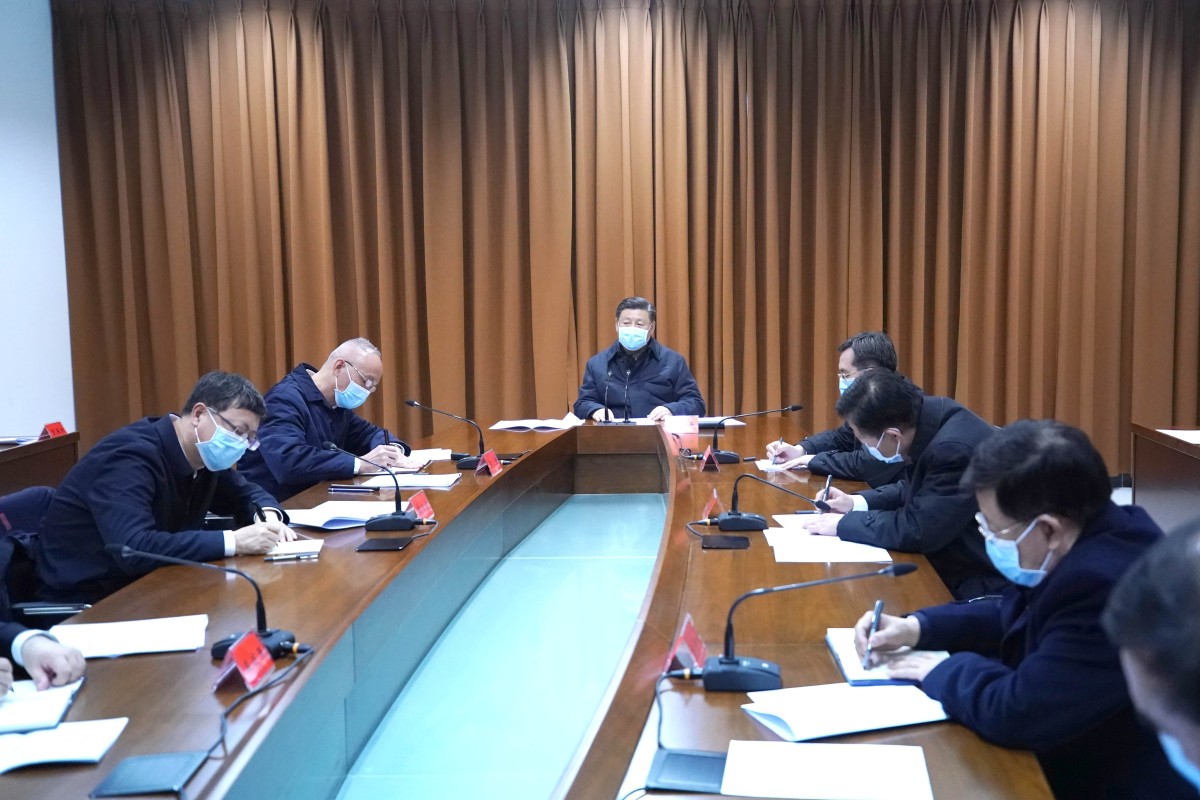
President Xi Jinping presides over a meeting and listens to report on epidemic prevention and control work in Beijing on February 10. Photo: Xinhua
President Xi Jinping told the Communist Party’s top echelon to tackle an outbreak of a previously unknown coronavirus almost two weeks before Chinese authorities announced that there had been human-to-human transmission of the disease, according to an internal speech released on Saturday.
In the speech to the party’s most powerful body, the Politburo Standing Committee, Xi outlined a contingency plan to respond to a crisis that he said could not only hamper the health of people in China, but also jeopardise the country’s economic and social stability – even its open-door policy.
The speech was delivered on February 3 and published in the party’s bimonthly journal Qiushi on Saturday. It was also featured on state television and other official mouthpieces.
The release comes as Xi tries to rally support to counter the biggest crisis in his tenure, including an outpouring of public anger over the death a week ago of ophthalmologist Li Wenliang, who was reprimanded by police for alerting his friends about the virus in its early days.
In his speech, Xi also accused local officials of not carrying out edicts from the central government, vowing to punish incompetent officials.
“I issued demands during a Politburo Standing Committee meeting on January 7 for work to contain the outbreak. On January 20, I gave special instructions about the work to prevent and control the outbreak and I have said we have to pay high attention to it,” he said.
The document did not say whether the Politburo was aware of human-to-human transmission of the disease at the time but research published by Chinese scientists said such infections occurred as early as December.
How China-US mistrust pushed the WHO into a coronavirus corner
15 Feb 2020
The speech by Xi also indicated his desire to win international understanding and support through propaganda and diplomacy.
“We have to liaise and communicate with other countries and regions, to share information about the outbreak and containment strategies to win international understanding and support,” he said.
The disease has spread to multiple continents, including Africa, which reported its first case – in Egypt – on Friday and France, which reported the first death in Europe.
In terms of domestic stability, Xi stressed the need to stabilise food and energy supplies to boost public confidence. He also ordered police to increase their presence on the streets.
“[We must] ensure societal control and security by stepping up law enforcement, mobilising public security and armed police in joint efforts,” Xi said.
1,716 frontline Chinese medics infected with Covid-19 in battle against coronavirus
The authorities should also update the public on their efforts to help boost public confidence, he said.
“[We must] inform the people of what the party and government is doing and what is our next step forward to strengthen the public’s confidence,” he said.
He said the government would encourage companies and scientific institutes to speed up research on drugs and vaccines for the outbreaks and they should share their information with the science sector.
At the same time, Xi stressed that national economic goals set for this year, such as achieving “moderate prosperity”, would remain.
This would be achieved by resuming production, boosting consumption and investment in infrastructure, particularly 5G communications.
“There should not be any thought that we can wait a bit [because of the epidemic],” he said.
Coronavirus: infected Chinese tourist in France dies, in Europe’s first death
16 Feb 2020
Wu Qiang, a Beijing-based political analyst who specialises in analysing Xi’s speeches, said the president’s address was a “rare and interesting” shift from the past.
“The speech was made at a time when Xi is facing heavy domestic and diplomatic pressure,” Wu said.
“This is unprecedented. It sounds like he is defending and explaining how he has done everything in his capacity to lead epidemic prevention.”
Meanwhile, a panel of experts from the World Health Organisation began to arrive in Beijing on a trip that will take in three provinces.
Fang Bin is second Chinese citizen journalist to vanish while reporting from coronavirus epicentre
National Health Commission spokesman Mi Feng said the panel’s mission would include inspecting outbreak prevention work in urban and rural areas, and assessing viral analytics work before making recommendations to China.
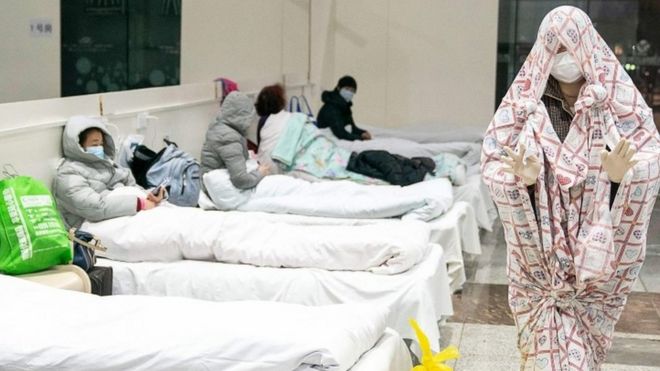
Speaking publicly for the first time since being sent to Wuhan, NHC deputy director Wang Hesheng said he would make sure that there “would not be another Wuhan” in Hubei province. Nine medical centres with a combined capacity of nearly 7,000 beds had opened in the city and the province was planning to open more to treat patients with mild symptoms.
Various cities near Wuhan have stepped up quarantine. On Saturday, the small centre of Wuxue announced that with the exception of people working to contain the epidemic, anyone seen walking the streets would be sent to a stadium for “study sessions”.
Beijing has also appointed two senior firefighting commanders to the Ministry of Emergency Management’s leading group – Xu Ping, head of the ministry’s Forest Fire Bureau, and Qiong Se, director of its Fire and Rescue Bureau.
Zhou Xuewen and Liu Wei, two of the ministry’s existing leading party members, have been appointed deputy ministers for emergency management.
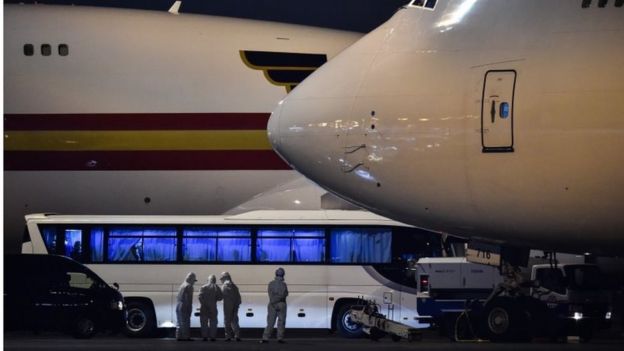
Media caption Americans are taken from the docked ship to Haneda airport in Tokyo
Two planes carrying hundreds of US citizens from a coronavirus-hit cruise ship have left Japan, officials say.
One plane has landed at a US Air Force air base in California, and its passengers will be isolated at military facilities for 14 days.
There were some 400 Americans on board the Diamond Princess. The ship with some 3,700 passengers and crew has been in quarantine since 3 February.
Meanwhile, China reported a total of 2,048 new cases on Monday.
Of those new cases, 1,933 were from Hubei province, the epicentre of the outbreak.
More than 70,500 people across China have been infected by the virus. In Hubei alone, the official number of cases stands at 58,182, with 1,692 deaths. Most new cases and deaths have been reported in Wuhan, Hubei’s largest city.
In other developments:
In Japan, a public gathering to celebrate the birthday of new Emperor Naruhito later this week has been cancelled, due to concerns over the spread of the virus while organisers of the Tokyo marathon due to take place on 1 March are considering whether to cancel the amateur part of the race, reports say
In China, the National People’s Congress standing committee said it would meet next week to discuss a delay of this year’s Congress – the Communist Party’s most important annual gathering – because of the outbreak
At the weekend, an American woman tested positive for the virus in Malaysia after leaving a cruise liner docked off the coast of Cambodia
A Russian court has ordered a woman who escaped from a quarantine facility to go back and stay there until she is confirmed to be disease-free, Fontanka news agency reports. Alla Ilyina has until Wednesday to return
What’s happening on the Diamond Princess?
The cruise ship was put in quarantine in Japan’s port of Yokohama after a man who disembarked in Hong Kong was found to have the virus.
On Monday, Japanese officials said there were 99 new cases of infections on board the ship, bringing the total to 454 confirmed cases. It is the largest cluster of cases outside China.
A Russian woman who was on board and tested positive is thought to be the first Russian national to contract the virus after the two previous cases found in Russia were Chinese nationals, Reuters news agency reports.
She will be taken to a hospital for treatment, the Russian embassy in Japan said.
At least 40 US citizens who were on board are infected and will be treated in Japan, Dr Anthony Fauci, Director of the National Institute of Allergy and Infectious Diseases told US broadcaster CBS.
Image copyright AFPImage caption Those bound for the US left from Tokyo’s Haneda Airport
The two aircraft chartered by the US government left Tokyo’s Haneda Airport in the early hours of Monday. The second flight was due to land at another base in Texas.
More than 300 passengers are being repatriated voluntarily, the US state department said. Fourteen of them were reported during transit to have tested positive for the virus and were being kept separate from the other passengers, it said.
we would like to just finish the quarantine on the ship as planned, decompress in a non-quarantine environment in Japan for a few days, then fly back to the U.S. pursuant to our own arrangements. What’s wrong with that?
The smartphones were distributed so people could use an app, created by Japan’s health ministry, which links users with doctors, pharmacists and mental health counsellors. Phones registered outside of Japan are unable to access the app.
Other evacuation flights have been arranged to repatriate residents of Israel, Hong Kong and Canada. On Monday, Australia announced that it would evacuate 200 of its citizens too.
What is happening in China?
According to official figures for 16 February, 100 people died from the virus in Hubei, down from 139 on Saturday.
The Chinese authorities are tightening curbs on movement to combat the outbreak. People in Hubei province, which has 60 million people, have been ordered to stay at home, though they will be allowed to leave in an emergency.
In addition, a single person from each household will be allowed to leave the building or compound they live in every three days to buy food and essential items.
On housing estates, one entrance will be kept open. It will be guarded to ensure that only residents can enter or leave.
All businesses will stay closed, except chemists, hotels, food shops and medical services.
“The effects of epidemic prevention and control in various parts of the country can already be seen.”
The proportion of infected patients considered to be in a “serious condition” has dropped nationwide from more than 15% to just over 7%, according to China’s State Council.
Taiwan has reported a death from the illness – a taxi driver, 61, who had not travelled abroad recently but had diabetes and hepatitis B, Health Minister Chen Shih-chung said.
The minister said many of his passengers had come from China.
Outside China, there have been more than 500 cases in nearly 30 countries. Four others have died outside mainland China – in France, Hong Kong, the Philippines and Japan.
Meanwhile, a plane carrying 175 evacuated Nepalis, mostly students, has arrived in Kathmandu from Wuhan.
The measures China has taken to stop the spread of the coronavirus are starting to have an impact, Mi Feng, a spokesman at the National Health Commission, said on Sunday.
In other developments:
The number of people who have tested positive on the Diamond Princess cruise ship, which is being held in quarantine in Japan, has risen to 355. The US and Canada are sending planes to evacuate their citizens
A Chinese tourist has died in France – the first fatality outside Asia
An 83-year-old American woman has tested positive after disembarking another cruise ship that was turned away by a number of countries before being allowed to dock in Cambodia
In the UK, all but one of nine people being treated have been discharged from hospital
On Saturday, World Health Organization (WHO) head Tedros Adhanom Ghebreyesus praised Beijing’s response to the outbreak.
“China has bought the world time. We don’t know how much time,” he said. “We’re encouraged that outside China, we have not yet seen widespread community transmission.”
How is China coping?
Tens of millions of Chinese still face heavy restrictions on their day-to-day life as part of the government’s efforts to halt the spread of the disease, which causes a disease named Covid-19.
Much of the response has focused on the hard-hit province of Hubei and its capital Wuhan, where the outbreak began. The city is all but sealed off from the rest of the country.
Foreign Minister Wang Yi said that along with a drop in infections within Hubei there had also been a rapid increase in the number of people who had recovered.
China’s central bank will also disinfect and store used banknotes before recirculating them in a bid to stop the virus spreading.
Media caption Medics in Wuhan resort to shaving their heads in a bid to prevent cross-infection of the coronavirus
In another development Chinese state media published a speech from earlier this month in which Chinese President Xi Jinping said he said he had given instructions on 7 January on containing the outbreak.
At the time, local officials in the city of Wuhan were downplaying the severity of the epidemic.
This would suggest senior leaders were aware of the potential dangers of the virus before the information was made public.
With the government facing criticism for its handling of the outbreak, analysts suggest the disclosure is an attempt to show the party leadership acted decisively from the start.
More than 1,300 people are now known to have died from the virus.
The latest figures show 122 new deaths in China, bringing the toll to 1,381.
The total number of infections has jumped to 63,922 cases, according to the National Health Commission.
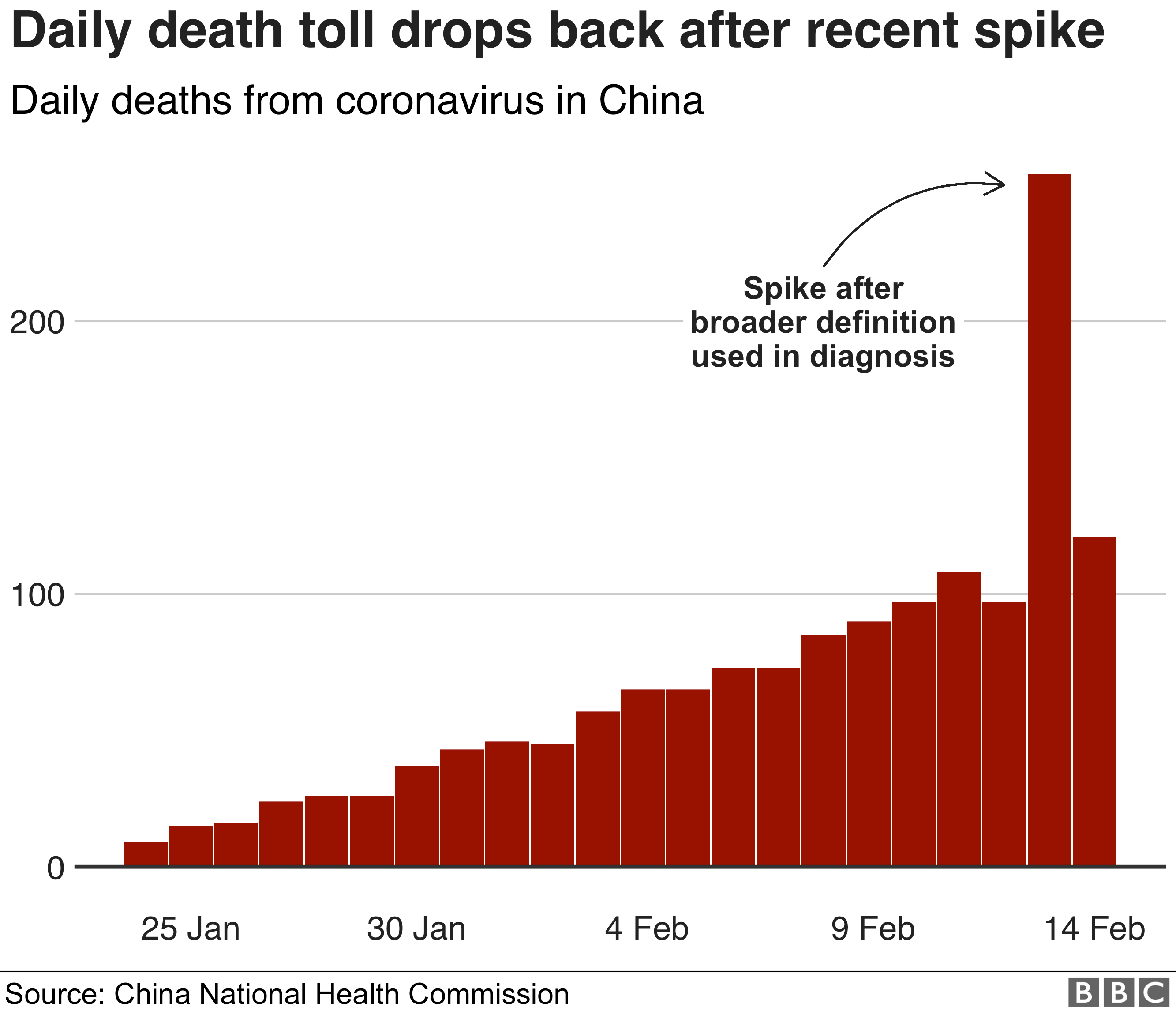
The World Health Organization said there was no major shift in the virus’s pattern of mortality or severity, despite a spike in cases in Hubei, the epicentre of the disease, on Tuesday.
Most of this was down to Hubei using a broader definition to diagnose people, said Mike Ryan, head of WHO’s health emergencies programme.
There was also no significant rise in cases outside China, the WHO said.
However, a cruise ship docked in Japan, the Diamond Princess, saw 44 new cases, bringing the total there to 218.
What is the situation with medical workers?
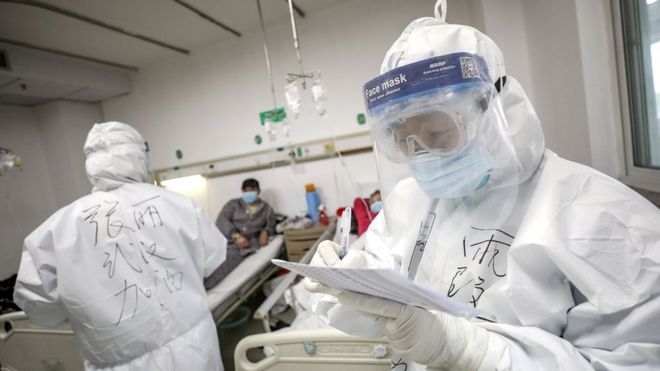
Zeng Yixin, vice minister of China’s National Health Commission, said 1,102 medical workers had been infected in Wuhan, where the outbreak began, and another 400 in other parts of Hubei province.
He said the number of infections among staff was increasing.
Media caption Medics in Wuhan resort to shaving their heads in a bid to prevent cross-infection of the coronavirus
“The duties of medical workers at the front are indeed extremely heavy; their working and resting circumstances are limited, the psychological pressures are great, and the risk of infection is high,” Mr Zeng said, quoted by Reuters.
Local authorities have struggled to provide protective equipment such as respiratory masks, goggles and protective suits in hospitals in the area.
One doctor told AFP news agency that he and 16 colleagues were showing possible symptoms of the virus.
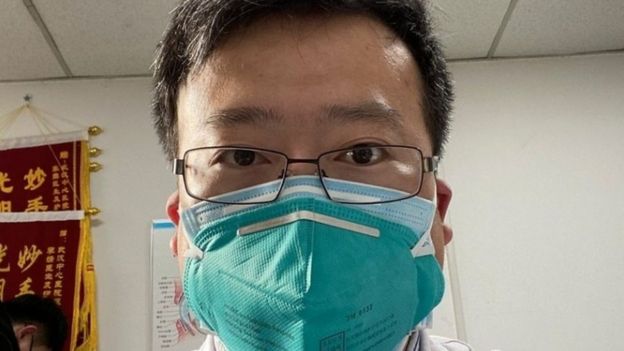
On 7 February the plight of medical workers was highlighted by the death of Li Wenliang, a doctor at Wuhan Central Hospital who had tried to issue the first warning about the virus on 30 December.
Image copyright LI WENLIANGImage caption Li Wenliang contracted the virus while working at Wuhan Central Hospital
He had sent out a warning to fellow medics but police told him to stop “making false comments”.
A wave of anger and grief flooded Chinese social media site Weibo when news of Dr Li’s death broke.
Image copyright AFPImage caption Asian airlines have been hard hit by the virus outbreak
Economic impacts of the virus
Global airline revenue expected to fall by $4bn (£3.1bn) to $5bn this year
China’s car sales likely to fall more than 10% in first half of year, the China Association of Automobile Manufacturers tells Reuters
Singapore’s economy could fall into recession as a result of the outbreak, Prime Minister Lee Hsien Loong says
Malaysian finance minister says a stimulus package will be announced for aviation, retail and tourism industries
What is happening on the Diamond Princess?
The vessel is in quarantine in Yokohama, in southern Japan. Not all the 3,700 people on board have been tested yet.
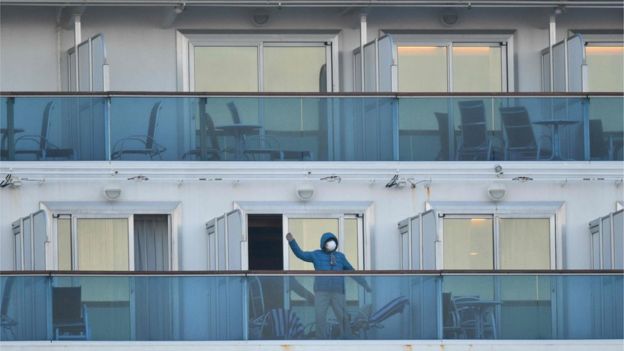
People with the virus are taken to hospitals on land to be treated, while those on board are largely confined to their cabins.
Image copyright AFPImage caption The Diamond Princess has 3,700 people on board – not all of whom have been tested
However on Thursday Japan said it would allow those aged 80 or over who have tested negative for the coronavirus to disembark.
Health Minister Katsunobu Kato said they could be allowed off the ship as early as Friday but would have to stay in accommodation provided by the government, the Japan Times reported.
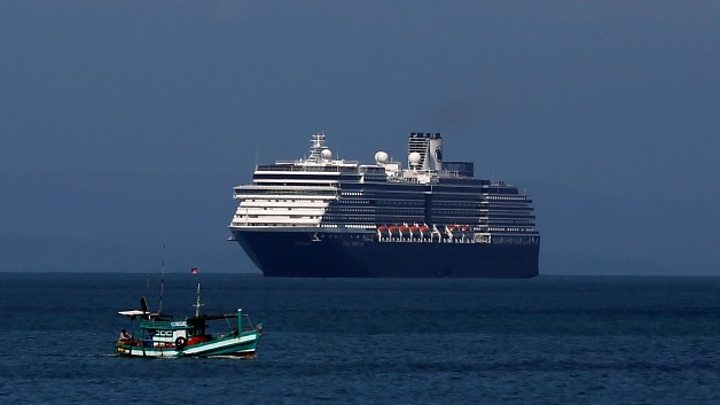
Meanwhile another cruise ship – the MS Westerdam, carrying more than 2,000 people – docked in Cambodia after being turned away by ports in Japan, Taiwan, Guam, the Philippines and Thailand despite having no sick patients on board.
Media caption The Westerdam was finally able to dock in Sihanoukville, Cambodia
In other developments:
Outside China there have now been two deaths and 456 cases in 24 countries
Singapore health ministry reports nine new cases, bringing the total number there to 67
Australia has extended its ban on people coming from mainland China for another week, to 22 February
China said it would stagger the return of children to school – several provinces have closed schools until the end of February
In Vietnam, which borders China, thousands of people in villages near the capital, Hanoi, have been put under quarantine after several cases were discovered. Vietnam has now confirmed at least 16 cases
The Red Cross has called for sanctions relief for North Korea, which would allow the aid agency to transfer funds to buy equipment. Testing kits and protective clothing are urgently needed to prepare for a possible outbreak, it says
A Russian woman – who was put into a coronavirus quarantine but escaped – is resisting attempts by officials to bring her back to hospital by force. Alla Ilyina, 32, has been refusing to open the door of her St Petersburg apartment to police







 CHINDIA ALERT: You'll be living in their world, very soon