Chindia Alert: You’ll be Living in their World Very Soon
aims to alert you to the threats and opportunities that China and India present. China and India require serious attention; case of ‘hidden dragon and crouching tiger’.
Without this attention, governments, businesses and, indeed, individuals may find themselves at a great disadvantage sooner rather than later.
The POSTs (front webpages) are mainly 'cuttings' from reliable sources, updated continuously.
The PAGEs (see Tabs, above) attempt to make the information more meaningful by putting some structure to the information we have researched and assembled since 2006.
Television report shows how drivers are willing to pay more than US$20,000 for a sham marriage with someone who has a valid registration
City authorities ration the number of plates that allow people to use their cars in the capital as part of efforts to tackle pollution and congestion
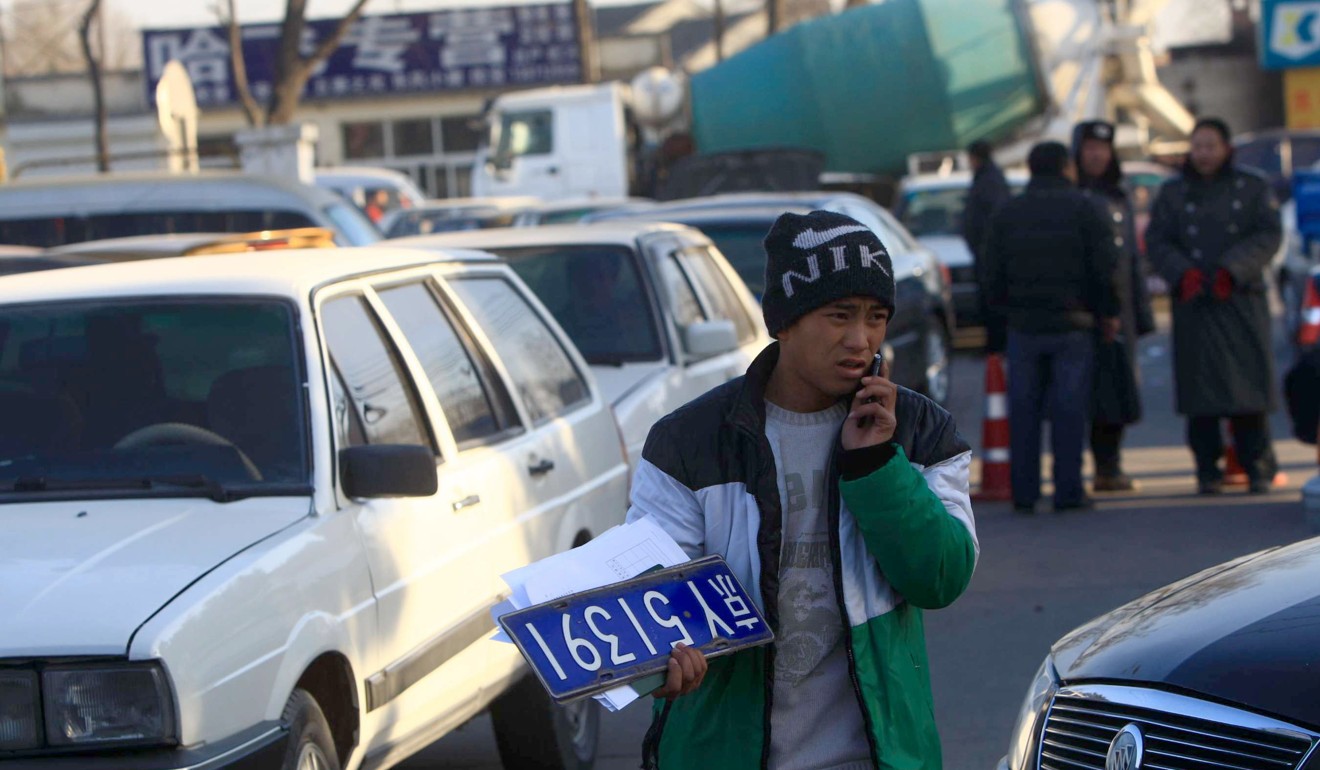
Beijing has started limiting the number of plates issued as part of its efforts to tackle the city’s notorious pollution and congestion. Photo: EPA-EFE
Some desperate Beijing motorists are resorting to sham marriages to get round strict licence plate rules that are designed to limit the number of cars allowed on the city’s congested roads.
A report by state broadcaster CCTV that aired on Sunday night claimed that some drivers were willing to pay the equivalent of tens of thousands of US dollars to marry someone with one of the prized plates, have it transferred into their name and then get divorced.
Specialist agencies charge over 160,000 yuan (US$22,700) to help their clients obtain a licence this way for a petrol-driven car, or over 110,000 yuan for an electric-powered one, according to the report.
The scam is the result of a licence lottery first introduced in 2011 to tackle the Chinese capital’s notorious congestion and pollution.
Chinese driver arrested for doctoring number plate to spell out obscene phrase
Because of the strict limits on the number of Beijing number plates issued, there are now 2,600 applicants for every one issued for petrol-powered vehicles. Those who wanted a licence for an electric car may have to wait until 2028, the report said.
The government has also been steadily lowering the annual quota for new local licences from 240,000 in 2013 to 100,000 last year.
The owners of locally registered cars are also banned from using them on one day a week, which is determined according to the plate number.
Cars that do not have a Beijing licence plate face severe limits on driving in the city. The owners of these cars must apply for a permit that only allows them to use their cars for seven days at a time – and as of this month they are only allowed 12 permits a year.
A man carries a number plate at a used car market in Beijing. Photo: AFP
The result is that many drivers have been looking for legal ways to get round the limits – with the sham marriages being one of the most extreme examples.
“We receive at least three or four clients a day asking to get a licence via fake marriages,” a manager at one agency told a CCTV reporter.
A staff worker helps go through all the procedures and if a suitable match is found, the process can be completed within 20 days.
Another loophole some are taking advantage of is to buy a car in the name of someone who has won the licence lottery, according to the agency.
Chinese police do U-turn on traffic crash after online crowd doubt official account
The actual user pays for the car in full, registers it under the licence owner’s name, and pays the latter a sum of money for using the licence – typically 20,000 yuan a year, 49,000 yuan for three years or 69,000 for a five-year deal.
In many cases, the two parties sign an agreement to limit the risk of a protracted dispute, but one judge warned that this was still a risky business.
Wang Lidan, a judge at Haidian District People’s Court in the northwest of the capital, told the programme makers that he knew of one case where a woman had paid a man with a Beijing licence to marry her, only for him to vanish after receiving the money.
Not only did the woman miss out on getting the licence but she faced an extra legal headache in getting a divorce.
Under Chinese law she had to first publish a notice about his disappearance in a newspaper and then wait three months before the divorce could go through the courts.
Record price for Beijing’s cubicle home shows desperation for hukou
Read more
Congestion or consumption? Beijing ponders trade-off on car purchases
Read more
Pollution alarm as tourism contaminates home of China’s hairy crab
Every morning and night for the past four years, businessman Zhong Congrong has been on the streets of Chongqing to stop people dropping their litter
Admired as a welfare champion, the 54-year-old says he has been beaten and insulted for his cause
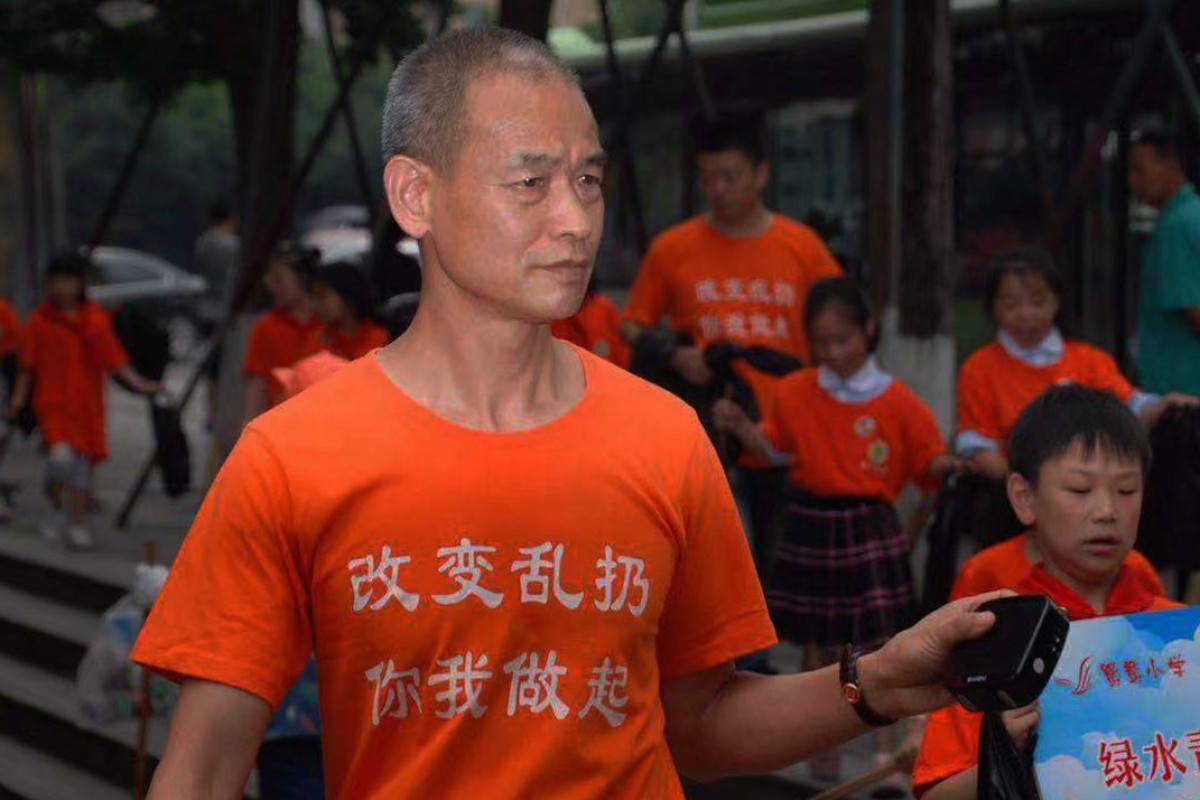
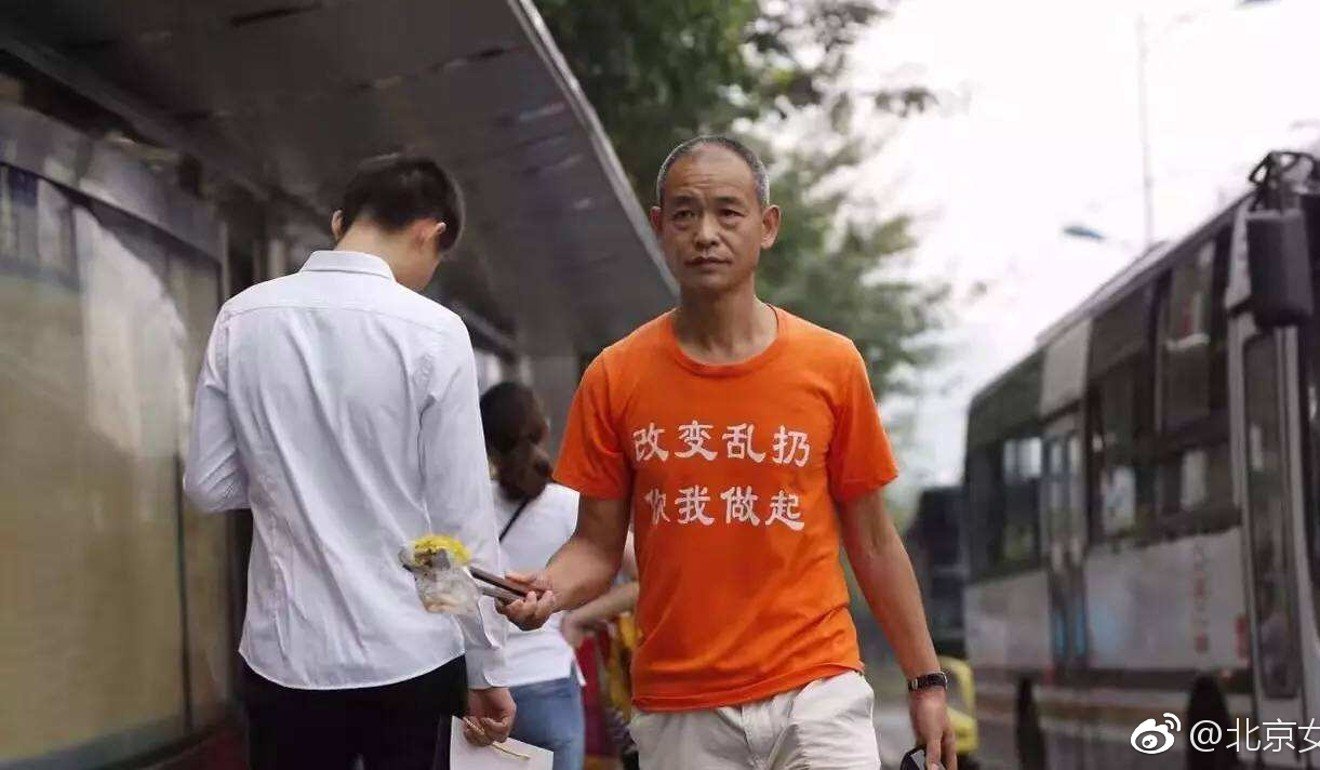
Zhong Congrong is a familiar figure on the streets of his hometown. Photo: Handout
Zhong Congrong owns three businesses in southwestern China which together are worth more than 100 million yuan (US$14.3 million), but he prefers to risk being labelled as an environment “nut” who wants to clean up Chongqing.
Every morning after breakfast and each evening after supper, the entrepreneur pulls on an orange T-shirt, gets into his Mercedes-Benz SUV and heads downtown. For one or two hours, he walks the streets, picking scraps of rubbish off the road and talking to passers-by about littering.
“It is my mission to change people’s bad habits and to raise their awareness of protecting the environment,” said Zhong, who has been on this mission for four years. It has brought the 54-year-old civic rewards, earned him a bruising or two from people who do not want to listen to his message and it nearly cost him his marriage.
Throughout it all, he has remained a persistent voice for the environment in the city of more than 30 million people and, as some of them have learned, he refuses to give up.
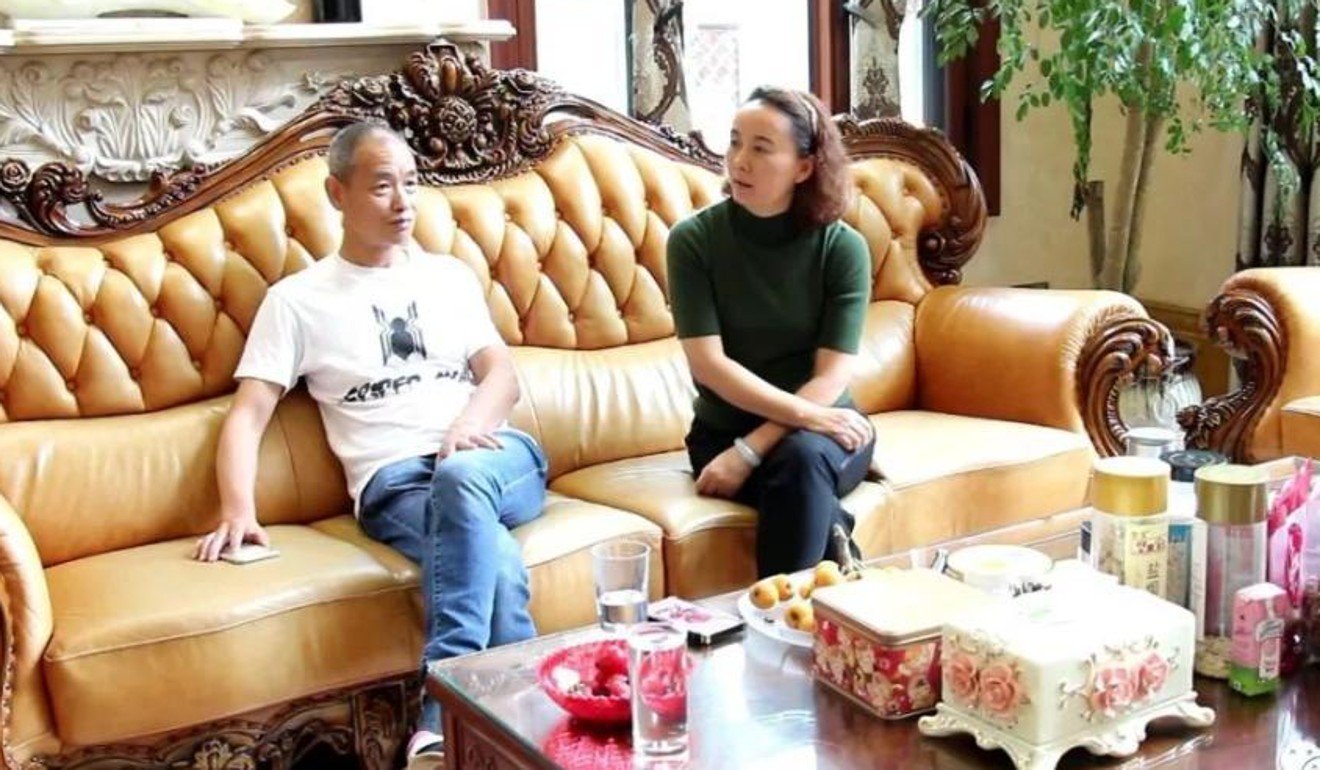
Yang Zuhui (right) has come to admire Zhong Congrong’s dedication to his litter picking mission, but she fears for her husband’s safety. Photo: Weibo
On mainland China, cities have banned littering and some hit offenders with fines as high as 200 yuan. However, the rules are rarely obeyed and feebly enforced, and while there are plenty of dustbins in public places, litter is still a nuisance.
Zhong said his mission started in 2015 after he met a woman in her 70s in Sanya, the southern coastal city on the South China Sea island of Hainan. He was struck by how dedicated she and her husband were when they went litter picking each day.
“They are retired professors from a prestigious university in Beijing,” Zhong said. “I chatted a lot with her and I asked her, ‘What’s the point of collecting rubbish every day? You clean up the beach today, but tomorrow new rubbish appears’.”
The way to solve the problem was to teach people to not litter, she told him, but she said she “dared not” try to do that. Zhong said that encounter gave him his purpose and he would dare to change attitudes.
Shanghai recycling scheme slips up on 9,000 tonnes of waste
Back home, Zhong watched and learned – concluding that customers of restaurants and fast food businesses tended to be the people who dropped rubbish most.
“Perhaps it’s because when people dine in restaurants, they throw their rubbish wherever they like. Going outside, they keep on doing it,” he said.
“People in shopping malls are generally more civilised.”
Zhong says his mission began in 2015 during a holiday on the island of Hainan. Photo: Dickson Lee
While on patrol, Zhong makes himself easy to see in an orange T-shirt that bears his clean-up message. His tools include a metal pincer for picking up tissue paper, plastic bags, drinks bottles, nappies and other everyday detritus and putting it into bins.
He also carries a voice recorder that sends out an appeal to restaurant customers: “To protect our environment and not to affect our kids’ healthy growing up, dear friends, please don’t throw rubbish.”
Can China sort its household waste recycling problem by 2020?
Zhong said that at first he felt afraid and self-conscious when he stood in front of a crowd of diners with his green gospel. But time and practise taught him he had almost nothing to fear, he said.
One of the bigger challenges is getting through to the many people who do not listen to him and refuse to dispose of their rubbish the right way.
“It’s normal that our society has various kinds of people and I need to face this reality,” Zhong said. “I was prepared in my mind that I would be called ‘nut’ since this is such an arduous but fruitless cause.”
He tackles the problem with his usual persistence, so argument and persuasion is all part of the job. When Zhong insists the rule breakers take their rubbish and bin it, some ignore him and others walk away – but he is ready with an answer.
“I tell them, ‘If you don’t pick it up, I guarantee that you will lose face today. I will let passers-by see and hear what a humiliating thing you have done. Everybody will then condemn you and you will be embarrassed’,” he said.
When people tell him what they do is none of his business, Zhong replies that what he is doing is in the public interest.
Sometimes there is a heavier price. Zhong said he once watched several men in their 20s throw rubbish onto the road from their car. He set off after them in his SUV. He waylaid them and asked them to clean up after themselves – the men refused, swore at him and beat him up. Their day ended in a police station.
Zhong said he hoped his work would bring “positive energy” to the employees of his vehicle components and packaging materials companies, but his mission was not about business prestige.
However, last year, he was named as one of the top 10 public welfare figures of Chongqing by the municipal government, while his family was honoured as a Chinese good family by the semi-governmental All-China Women’s Federation, a women’s rights organisation established in 1949.
Street cleaner who found US$22,000 in rubbish refuses to accept a reward
There were trials for Zhong closer to home – his wife, Yang Zuhui, did not support his mission at first and threatened to divorce him.
“It’s OK that you picked up trash on the street and you were just another cleaner there,” she told him in an interview with Hunan Television in 2017. “But what worried me was that you tried to persuade others – physical violence [against him] was inevitable.”
She also said: “My husband is not very tall and, on many occasions, he was at a disadvantage and got beaten up. I am worried about his personal safety.”
Zhong impressed his daughter’s schoolfriends with an inspiring speech. Photo: Weibo
But two years ago, their 10-year-old daughter helped change Yang’s attitude towards her husband’s mission after a school outing.
After lunch that day, Zhong gave the adults and children who had left rubbish behind one of his lectures.
His daughter, who was embarrassed by Zhong’s speech, came to appreciate him when classmates told her: “Your father is awesome. He is like a hero who protects the Earth.”
Yang was won over because she knew her husband was a determined man and once he decided on a course of action would not change his mind.
Their son – who is in his 20s and has returned to Chongqing after studying in France – always stands by his father, Zhong said.
“My son told me that environmental voluntary work normal abroad and it is respected,” he said.
Going out to collect rubbish has become part of Zhong’s life, he said.
“In the evening, if I stay at home, my wife and daughter will ask me ‘Why don’t you go to pick up rubbish?’”
He said it was important to go litter picking every day because the more he did it the more people he could influence.
“By breaking the littering habit, Chinese people can stand tall when they travel abroad,” Zhong said.
MANILA, Nov. 3 (Xinhua) — Chinese State Councilor and Foreign Minister Wang Yi has offered condolences for the people killed in the series of strong earthquakes that devastated central and eastern Mindanao in the southern Philippines last month, saying China is ready to help the Philippine government in its efforts to rehabilitate the region.
In a message of sympathy sent to Philippine Foreign Secretary Teodoro Locsin on Saturday, Wang said he was shocked to learn that strong earthquakes had hit Mindanao, resulting in casualties and property damage.
“He (Wang) would like to extend sincere sympathy to the victims and the bereaved families,” the Chinese Embassy in the Philippines said in a statement.
“China is willing to offer assistance to the Philippines within our capacity, and believes that under the strong leadership of the Philippine government, the Philippine people will overcome the disaster and return to normal life at an early date,” it quoted Wang as saying.
On Friday, China announced a donation of 3 million yuan (about 434,896 U.S. dollars) to help the quake victims, mostly poor farmers.
The Philippine National Disaster Risk Reduction and Management Council (NDRRMC) said in an updated report on Sunday that the Oct. 29 6.6-magnitude and the Oct. 31 6.5-magnitude earthquakes that hit several central and eastern Mindanao provinces had killed 21 people and injured more than 400 others.
Rescuers were still looking for two missing villagers, the country’s disaster agency said.
The agency said the two tremors also affected more than 178,000 people in 200 villages in the region. Nearly 22,000 displaced people were staying in makeshift tents, it added.
The agency said the quakes also damaged nearly 29,000 infrastructures in the region, mostly houses, school buildings, hospitals, roads and bridges.
BEIJING, Oct. 25 (Xinhua) — Chinese President Xi Jinping has underlined the important role of traditional Chinese medicine (TCM) in building “Healthy China.”
The country should carry on fine elements in TCM and innovate them, Xi said in a recent instruction, stressing that traditional medicine is a treasure of Chinese civilization embodying the wisdom of the nation and its people.
Xi’s instruction was delivered at a national conference of TCM held Friday in Beijing.
Xi said that equal importance should be placed on traditional Chinese and Western medicines and efforts be made to enable them to supplement each other and prosper together.
He also underlined the efforts to promote TCM internationally and fully develop its unique strength in preventing and treating diseases.
In an instruction also delivered at the conference, Premier Li Keqiang called TCM a great creation of the Chinese nation.
Li stressed promoting talent training, scientific and technological innovation, and research and development of medicines.
He required efforts to promote preservation, innovation and high-quality development of TCM so that it will contribute to the improvement of people’s health and wellbeing.
Addressing the event, Vice Premier Sun Chunlan pledged to thoroughly implement the leaders’ instructions.
People who made outstanding contribution to TCM development were awarded at the conference.
Visitors tour the desert on camels at Shapotou Scenic Area in Zhongwei, northwest China’s Ningxia Hui Autonomous Region, Oct. 3, 2019. Since the start of the National Day holiday, Shapotou Scenic Area has entered its peak season for tourism. (Photo by Yang Zhisen/Xinhua)
BEIJING, Sept. 28 (Xinhua) — The resumption of diplomatic ties between the governments of China and Kiribati fully demonstrates that the one-China principle meets the shared aspiration of the people and constitutes an irresistible trend of the times, Foreign Ministry Spokesperson Geng Shuang said Saturday.
Chinese State Councilor and Foreign Minister Wang Yi and Kiribati’s President and Foreign Minister Taneti Mamau on Friday signed a communique on resuming diplomatic relations at the ambassadorial level between the two countries at the Chinese Permanent Mission to the United Nations in New York.
Geng stressed that there is but one China in the world, that the government of the People’s Republic of China is the sole legitimate government that represents the whole of China and that Taiwan is an inalienable part of China’s territory.
“This is an objective fact, a universally recognized norm of international relations and a general consensus of the international community,” Geng said.
The government of the Republic of Kiribati recognizes and undertakes to stay committed to the one-China principle, sever the so-called “diplomatic relations” with Taiwan authorities and resume diplomatic relations with China. “We support this important decision which Kiribati government has made on its own as an independent sovereign state,” Geng said.
“This again fully demonstrates that the one-China principle meets the shared aspiration of the people and constitutes an irresistible trend of the times,” Geng added.
Relations between China and Pacific island nations are maintaining rapid growth. People of the two countries hold amicable feelings toward each other, he said. “It is the common expectation of all sectors of Kiribati to resume diplomatic relations and strengthen cooperation with China. It is in the fundamental and long-term interests of the two countries and peoples.”
China stands ready to strengthen pragmatic cooperation and friendly exchanges with Kiribati in various fields on the basis of the one-china principle and the Five Principles of Peaceful Coexistence to benefit the two countries and peoples, said the spokesperson.
Thirty-six others were hurt, with nine being treated for serious injuries
Bus had a tyre blowout and collided with road divider before slamming into truck in the opposite lane in Yixing, Jiangsu province, police say
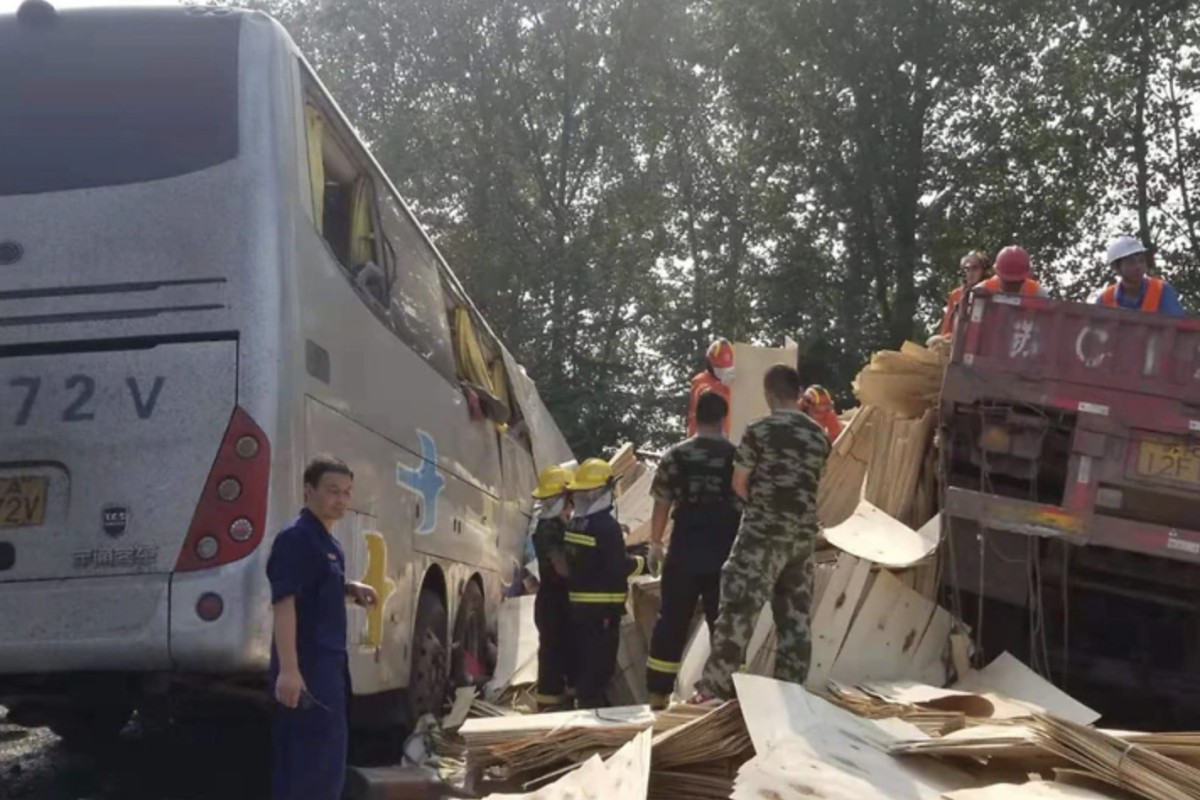
The expressway reopened after a rescue operation of more than eight hours. Photo: Weibo
Thirty-six people were killed and another 36 injured when a coach had a tyre blowout and crashed into a truck on an expressway in eastern China on Saturday.
The coach, which had 69 passengers on board, collided with a road divider before slamming into a truck in the opposite lane at about 7am, the Yixing municipal police department said in a statement on Sunday.
There were three people in the truck.
The accident happened on the Yixing section of the Changchun-Shenzhen Expressway in Jiangsu province.
A rescue operation took more than eight hours, and the injured were taken to hospitals in nearby Yibing.
Nine people were seriously injured, 26 were being treated for minor injuries and one had been discharged from hospital, according to the statement.
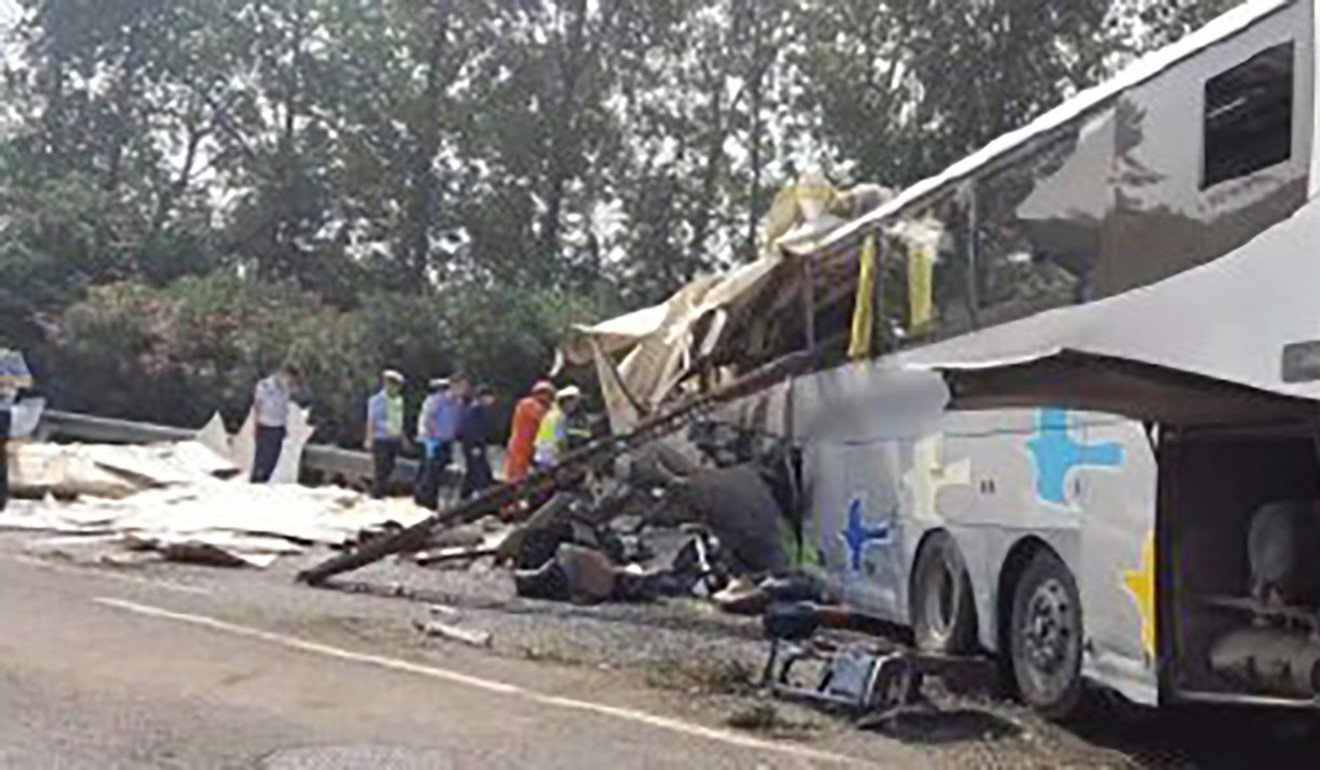
A tyre blowout may have caused the accident on Saturday morning. Photo: Weibo
Police are still looking into the crash but said “according to our preliminary investigation, the accident was caused by a blowout of one of the coach’s front tyres”.
ahead of National Day and the week-long holiday marking it, as all levels of government try to make sure nothing goes wrong.
This month, local governments were told to check factories, restaurants, rental accommodation, scenic spots close to water and roads for safety hazards and to take measures to prevent fire, crashes or other accidents, according to media reports.
Traffic accidents are common in China, where about 200,000 people lose their lives on the roads every year, according to the World Health Organisation.
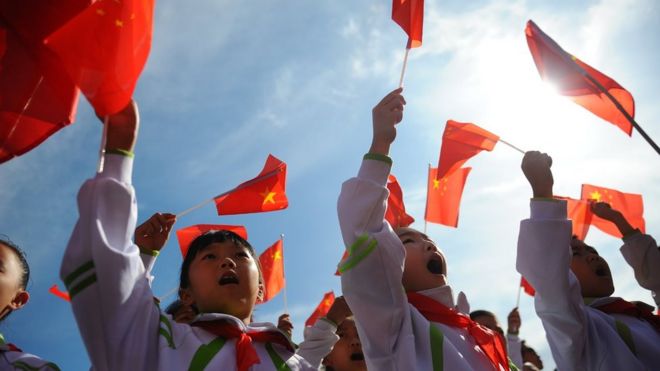
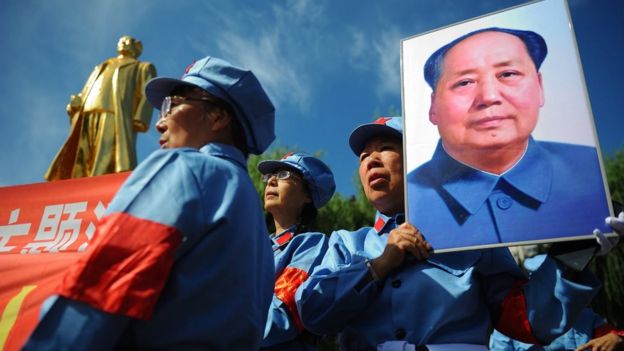
Image copyright GETTY IMAGESImage caption China’s version of its past is a story of prosperity, progress and sacrifice for the common good
China’s extraordinary rise was a defining story of the 20th Century, but as it prepares to mark its 70th anniversary, the BBC’s John Sudworth in Beijing asks who has really won under the Communist Party’s rule.
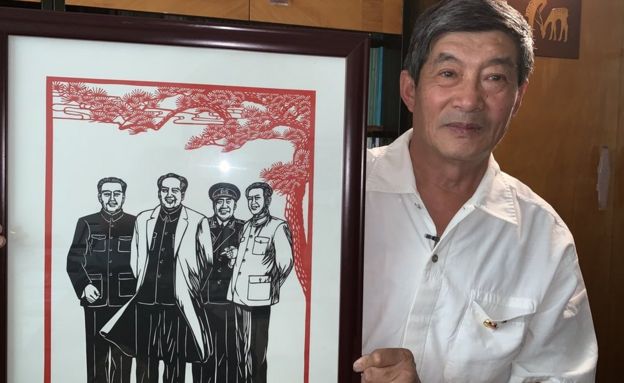
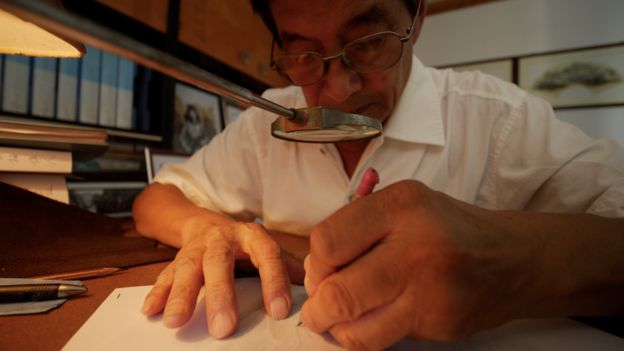
Sitting at his desk in the Chinese city of Tianjin, Zhao Jingjia’s knife is tracing the contours of a face.
Cut by delicate cut, the form emerges – the unmistakable image of Mao Zedong, founder of modern China.
The retired oil engineer discovered his skill with a blade only in later life and now spends his days using the ancient art of paper cutting to glorify leaders and events from China’s communist history.
“I’m the same age as the People’s Republic of China (PRC),” he says. “I have deep feelings for my motherland, my people and my party.”
Image caption For people like Zhao Jingjia, China’s success outweighs the “mistakes” of its leaders
Born a few days before 1 October 1949 – the day the PRC was declared by Mao – Mr Zhao’s life has followed the dramatic contours of China’s development, through poverty, repression and the rise to prosperity.
Now, in his modest but comfortable apartment, his art is helping him make sense of one of the most tumultuous periods of human history.
“Wasn’t Mao a monster,” I ask, “responsible for the deaths of tens of millions of his countrymen?”
“I lived through it,” he replies. “I can tell you that Chairman Mao did make some mistakes but they weren’t his alone.”
“I respect him from my heart. He achieved our nation’s liberation. Ordinary people cannot do such things.”
On Tuesday, China will present a similar, glorious rendering of its record to the world.
Beijing will tremble to the thunder of tanks, missile launchers and 15,000 marching soldiers, a projection of national power, wealth and status watched over by the current Communist Party leader, President Xi Jinping, in Tiananmen Square.
An incomplete narrative of progress
Like Mr Zhao’s paper-cut portraits, we’re not meant to focus on the many individual scars made in the course of China’s modern history.
It is the end result that matters.
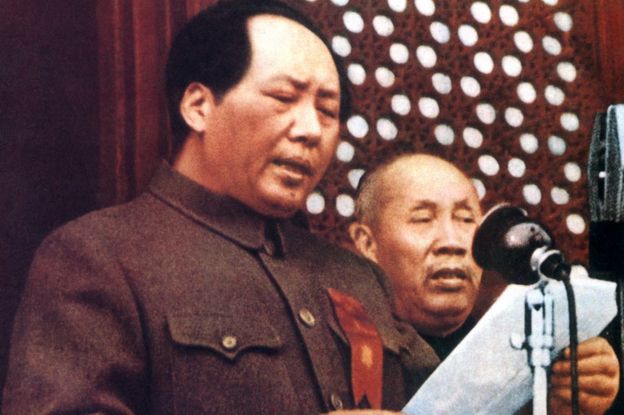
Image copyright XINHUA/AFPImage caption Mao Zedong pronounces the dawn of the People’s Republic of China on 1 October 1949
And, on face value, the transformation has been extraordinary.
On 1 October 1949, Chairman Mao stood in Tiananmen Square urging a war-ravaged, semi-feudal state into a new era with a founding speech and a somewhat plodding parade that could muster only 17 planes for the flyby.
This week’s parade, in contrast, will reportedly feature the world’s longest range intercontinental nuclear missile and a supersonic spy-drone – the trophies of a prosperous, rising authoritarian superpower with a 400 million strong middle class.
It is a narrative of political and economic success that – while in large part true – is incomplete.
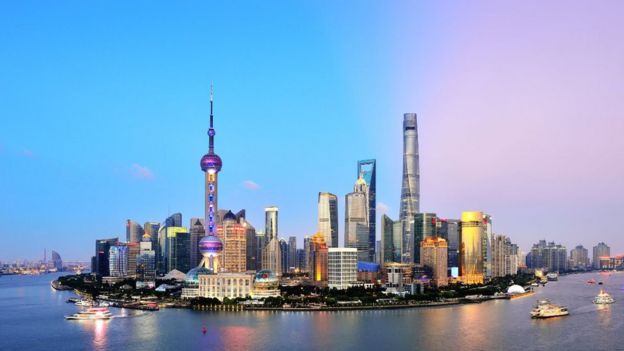
New visitors to China are often, rightly, awe-struck by the skyscraper-festooned, hi-tech megacities connected by brand new highways and the world’s largest high-speed rail network.
Image copyright GETTY IMAGESImage caption Those in China’s glittering cities may accept the trade-off of political freedom for economic growth
They see a rampant consumer society with the inhabitants enjoying the freedom and free time to shop for designer goods, to dine out and to surf the internet.
“How bad can it really be?” the onlookers ask, reflecting on the negative headlines they’ve read about China back home.
The answer, as in all societies, is that it depends very much on who you are.
Many of those in China’s major cities, for example, who have benefited from this explosion of material wealth and opportunity, are genuinely grateful and loyal.
In exchange for stability and growth, they may well accept – or at least tolerate – the lack of political freedom and the censorship that feature so often in the foreign media.
For them the parade could be viewed as a fitting tribute to a national success story that mirrors their own.
But in the carving out of a new China, the knife has cut long and deep.
The dead, the jailed and the marginalised
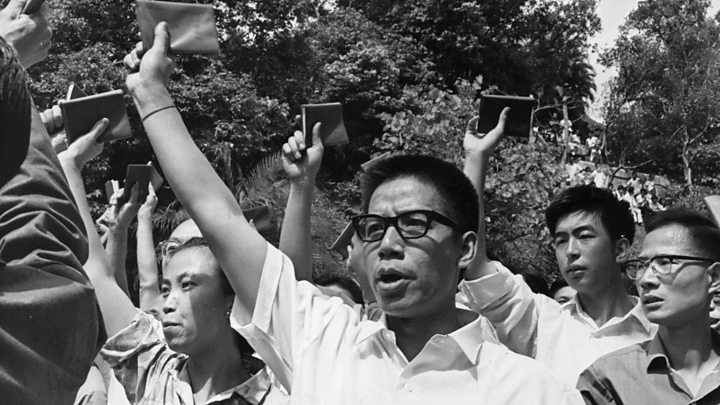
Mao’s man-made famine – a result of radical changes to agricultural systems – claimed tens of millions of lives and his Cultural Revolution killed hundreds of thousands more in a decade-long frenzy of violence and persecution, truths that are notably absent from Chinese textbooks.
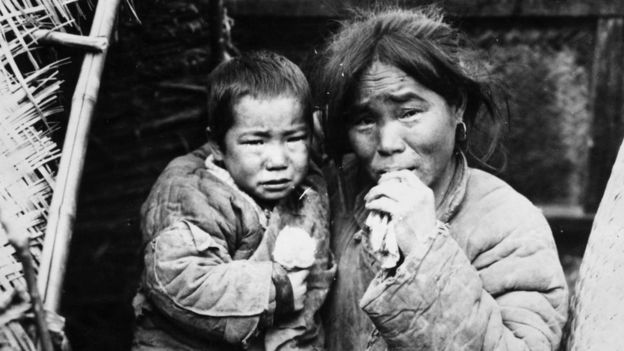
Image copyright GETTY/TOPICALImage caption Tens of millions starved to death under Mao, as China radically restructured agriculture and society
After his death, the demographically calamitous One Child Policy brutalised millions over a 40-year period.
Still today, with its new Two Child Policy, the Party insists on violating that most intimate of rights – an individual’s choice over her fertility.
The list is long, with each category adding many thousands, at least, to the toll of those damaged or destroyed by one-party rule.
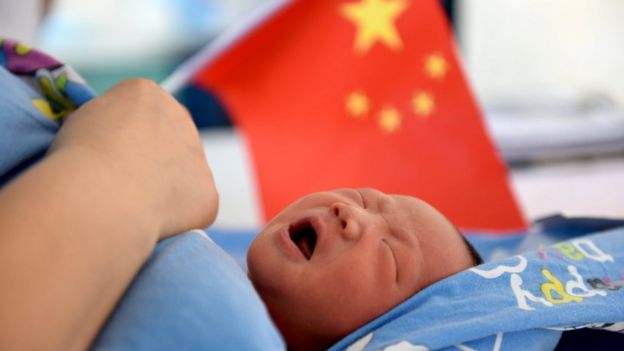
Image copyright GETTY IMAGESImage caption Beijing still regulates how many children families can have
There are the victims of religious repression, of local government land-grabs and of corruption.
There are the tens of millions of migrant workers, the backbone of China’s industrial success, who have long been shut out of the benefits of citizenship.
A strict residential permit system continues to deny them and their families the right to education or healthcare where they work.
And in recent years, there are the estimated one and a half million Muslims in China’s western region of Xinjiang – Uighurs, Kazakhs and others – who have been placed in mass incarceration camps on the basis of their faith and ethnicity.
China continues to insist they are vocational schools, and that it is pioneering a new way of preventing domestic terrorism.
The stories of the dead, the jailed and the marginalised are always much more hidden than the stories of the assimilated and the successful.
Viewed from their perspective, the censorship of large parts of China’s recent history is not simply part of a grand bargain to be exchanged for stability and prosperity.
Getty
Timeline of modern China
1949 Mao declares the founding of the People’s Republic of China
1966-76 Cultural Revolution brings social and political upheaval
1977 Deng Xiaoping initiates major reforms of China’s economy
1989 Army crushes Tiananmen Square pro-democracy protests
2010 China becomes the world’s second-largest economy
2018 Xi Jinping is cleared to be president for life
It is something that makes the silence of their suffering all the more difficult to penetrate.
It is the job of foreign journalists, of course, to try.
‘Falsified, faked and glorified’
But while censorship can shut people up, it cannot stop them remembering.
Prof Guo Yuhua, a sociologist at Beijing’s Tsinghua University, is one of the few scholars left trying to record, via oral histories, some of the huge changes that have affected Chinese society over the past seven decades.
Her books are banned, her communications monitored and her social media accounts are regularly deleted.
“For several generations people have received a history that has been falsified, faked, glorified and whitewashed,” she tells me, despite having been warned not to talk to the foreign media ahead of the parade.
“I think it requires the entire nation to re-study and to reflect on history. Only if we do that can we ensure that these tragedies won’t be repeated.”
Image copyright GETTY IMAGESImage caption Can progress really be attributed to the leadership?
A parade, she believes, that puts the Communist Party at the front and centre of the story, misses the real lesson, that China’s progress only began after Mao, when the party loosened its grip a bit.
“People are born to strive for a better, happier and more respectful life, aren’t they?” she asks me.
“If they are provided with a tiny little space, they’ll try to make a fortune and solve their survival problems. This shouldn’t be attributed to the leadership.”
‘Our happiness comes from hard work’
As if to prove the point about how the unsettled, censored pasts of authoritarian states continue to impact the present, the parade is for invited guests only.
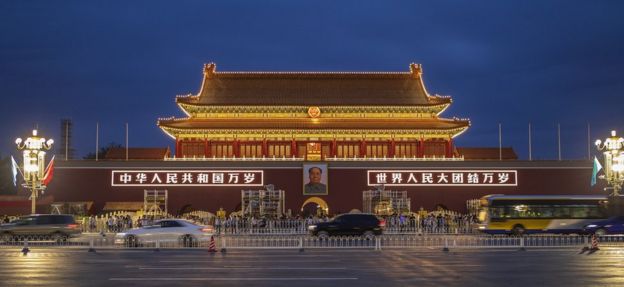
Image copyright GETTY IMAGESImage caption Mao’s portrait will, as it always is, be watching over the events in Tiananmen Square
Another anniversary, of which Tiananmen Square is the centrepiece, is also being measured in multiples of 10 – it is 30 years since the bloody suppression of the pro-democracy protests that shook the foundations of Communist Party rule.
The troops will be marching – as they always do on these occasions – down the same avenue on which the students were gunned down.
The risk of even a lone protester using the parade to mark a piece of history that has largely been wiped from the record is just too great.
With central Beijing sealed off, ordinary people in whose honour it is supposedly being held, can only watch it on TV.
Back in his Tianjin apartment, Zhao Jingjia shows me the intricate detail of a series of scenes, each cut from a single piece of paper, depicting the “Long March”, a time of hardship and setback for the Communist Party long before it eventually swept to power.
“Our happiness nowadays comes from hard work,” he tells me.
It is a view that echoes that of the Chinese government which, like him, has at least acknowledged that Mao made mistakes while insisting they shouldn’t be dwelt on.
“As for the 70 years of China, it’s extraordinary,” he says. “It can be seen by all. Yesterday we sent two navigation satellites into space – all citizens can enjoy the convenience that these things bring us.”
Media caption What was China’s Cultural Revolution?
Police investigation reveals animal had escaped from a nearby restaurant
The escaped crocodile was captured by police officers and taken to the local station. Photo: Handout
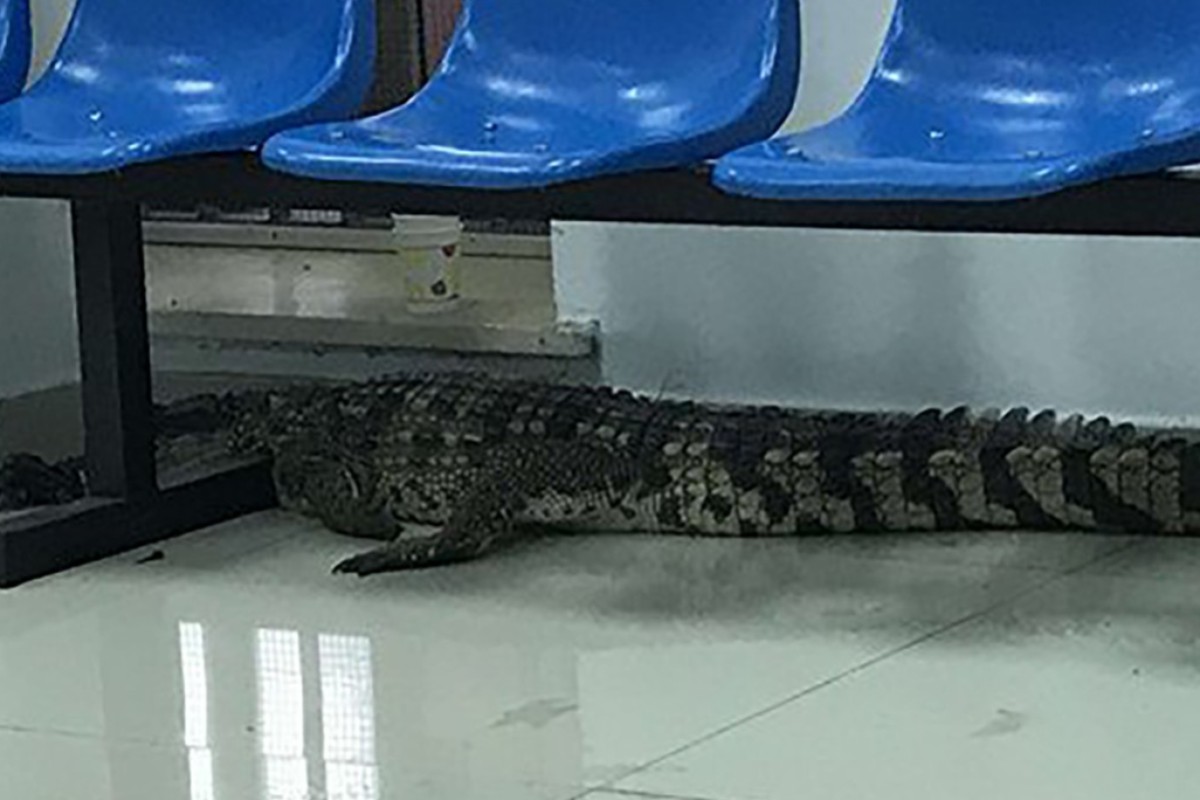
A security guard at a beauty spot in eastern China was shocked to discover a 2-metre (6ft 6in) crocodile while on his rounds in the early hours of Monday morning.
The animal was lying motionless on a road at Xinlonghu Park in Changzhou, Jiangsu province, with its jaws tied by a strip of cloth, when it was spotted by the security guard, who immediately called the police, according to the Modern Express newspaper.
It took a number of officers to capture the crocodile and take it to the local police station, where an investigation revealed the animal had escaped from a nearby restaurant. The animal was returned and the restaurant owner was “criticised” by police, who urged that a close eye be kept on the animal, the report said.
“They bought it from a farm somewhere as a food material to attract customers. It has been killed for crocodile meat dishes,” an officer told the South China Morning Post on Wednesday.
Crocodiles were once vegetarians – but it was just a phase
Police said it was fortunate that the crocodile had been caught before it had entered the park’s lake or caused any danger to people.
It is unclear what species the crocodile belonged to but China permits the commercial breeding and use of the critically endangered Siamese crocodile, as well as saltwater and Nile crocodiles, which are listed as least concern species.
A staff member of the restaurant, called No. 1 Lakeside, told the Post stewed crocodile meat was on the menu for 168 yuan (US$23.60) a serving, while stewed crocodile claw was also available at 258 yuan.
Crocodile appears in ancient Chinese medicine books as a treatment for respiratory illnesses and the meat has long been regarded as a delicacy, especially in southern China, such as Guangdong province. Crocodile skin also remains a popular material for luxury handbags and other leather goods.
In June, another crocodile, measuring about 1.5 metres, was found in a road puddle during a heavy rain in Wuhan, in the central province of Hubei, where many restaurants have crocodile meat on their menus, the Chutian Metropolis Daily reported.
In that incident it took three officers to capture the animal which was sent to a wildlife centre where a physical check-up showed it had been bred in captivity, most likely for food.







 CHINDIA ALERT: You'll be living in their world, very soon