Chindia Alert: You’ll be Living in their World Very Soon
aims to alert you to the threats and opportunities that China and India present. China and India require serious attention; case of ‘hidden dragon and crouching tiger’.
Without this attention, governments, businesses and, indeed, individuals may find themselves at a great disadvantage sooner rather than later.
The POSTs (front webpages) are mainly 'cuttings' from reliable sources, updated continuously.
The PAGEs (see Tabs, above) attempt to make the information more meaningful by putting some structure to the information we have researched and assembled since 2006.
China’s leadership has made it clear to its people that the world will become more dangerous and they must be prepared for hard times
Beijing’s relatively small stimulus response to Covid-19 suggests it wants to save its economic policy ammunition for a bigger battle
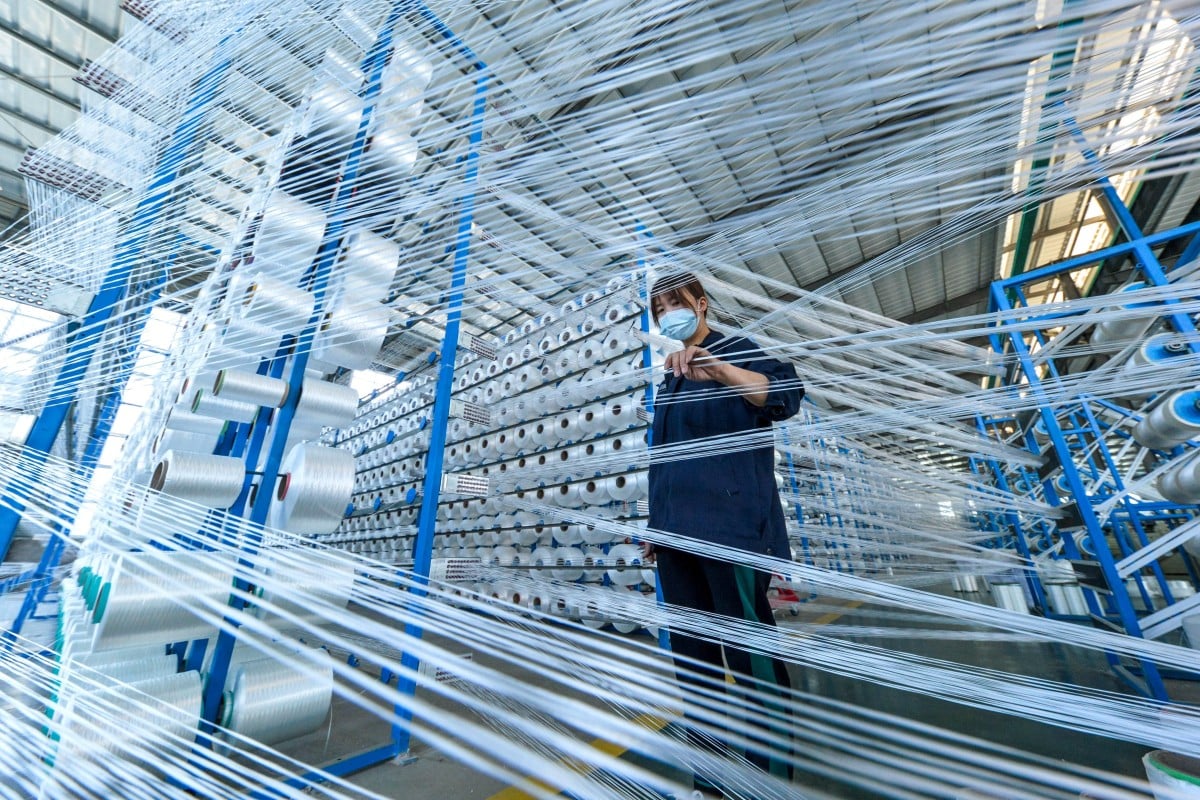
China opted not to set a GDP target for 2020. Photo: Xinhua
Beijing’s decision not to set an annual GDP target for 2020 – for the first time since 2002 – is a sign it is putting stability ahead of growth as part of its preparations for an escalating conflict with the United States.
Economic development has always been the central theme for Beijing since it established diplomatic relations with the US in 1979. But this year it has given priority to job creation and tackling poverty. The coronavirus outbreak might appear to have been the reason for the shift, but the underlying factor is the tension with the US.
Covid-19 offered a preview of what a decoupling of China and US might look like: aircraft grounded, cargo flows disrupted, value chains broken, goodwill and cooperation lost, blame games started.
Both countries have suffered heavy human and economic losses from the coronavirus, yet that did not inspire them to work together. Instead, hostility and rivalry has thrived, and neither wants to blink first.
The Chinese leadership has made it clear to its people that the world will become more dangerous and they must be prepared for hard times. As such, the government is saving its economic policy ammunition.
While the stimulus plans introduced in the US, Germany, Japan and France exceed 10 per cent of their national GDP and interest rates have been cut to the bone, Beijing stopped at just 1 trillion yuan (US$140 billion) worth of special treasury bonds and 1.6 trillion yuan of additional local government bonds. In total, about 2.6 per cent of GDP.
Interest rates in China – 2.7 per cent on 10-year bonds – are some of the highest among major economies.
China’s 6.6 per cent defence spending boost lowest in three decades
23 May 2020
China’s budget fiscal deficit has increased to 3.6 per cent of GDP for 2020, but the larger deficit is mainly from tax and fee cuts instead of increased fiscal expenses, except for an increased military spending.
Beijing is calling on provincial and local authorities to tighten their belts, which is unusual for a government that has huge assets and can increase spending at any time through quantitative easing.
So why is the government, which is known for intervening in the economy, being so restrained?
It is bracing itself for a perceived period of turbulence and hardship as its relationship with the US turns sour. It is putting jobs and social stability on top of its agenda, instead of growth.
Beijing is refraining from excessive spending, eliminating sources of potential instability, making appeals to the most vulnerable social groups, and saving its power for a bigger test.
Against that backdrop, the National People’s Congress passed the national security legislation on Hong Kong. Beijing knew the bill would anger the US, but did it anyway.
Hong Kong is known as China’s gateway to the international capital market and the largest offshore yuan market, but Beijing is ready to trade losses on the financial and economic front for potential gain on a fortified national security fence.
All this points to the suggestion that Beijing is preparing for the possibility of decoupling from the US, even if it doesn’t necessarily want to.
The threat of a new Cold War is clouding the world. The theme of life for one or two generations of people on both sides of the Pacific may shift from growth and prosperity to struggle and confrontation.
China and the US have yet to collide totally, but that moment is drawing near.
PLA commander says new law will help to crack down on separatist and foreign forces in ‘two sessions’ interview
Military has ‘determination, confidence and ability’ to safeguard national security interests and Hong Kong prosperity
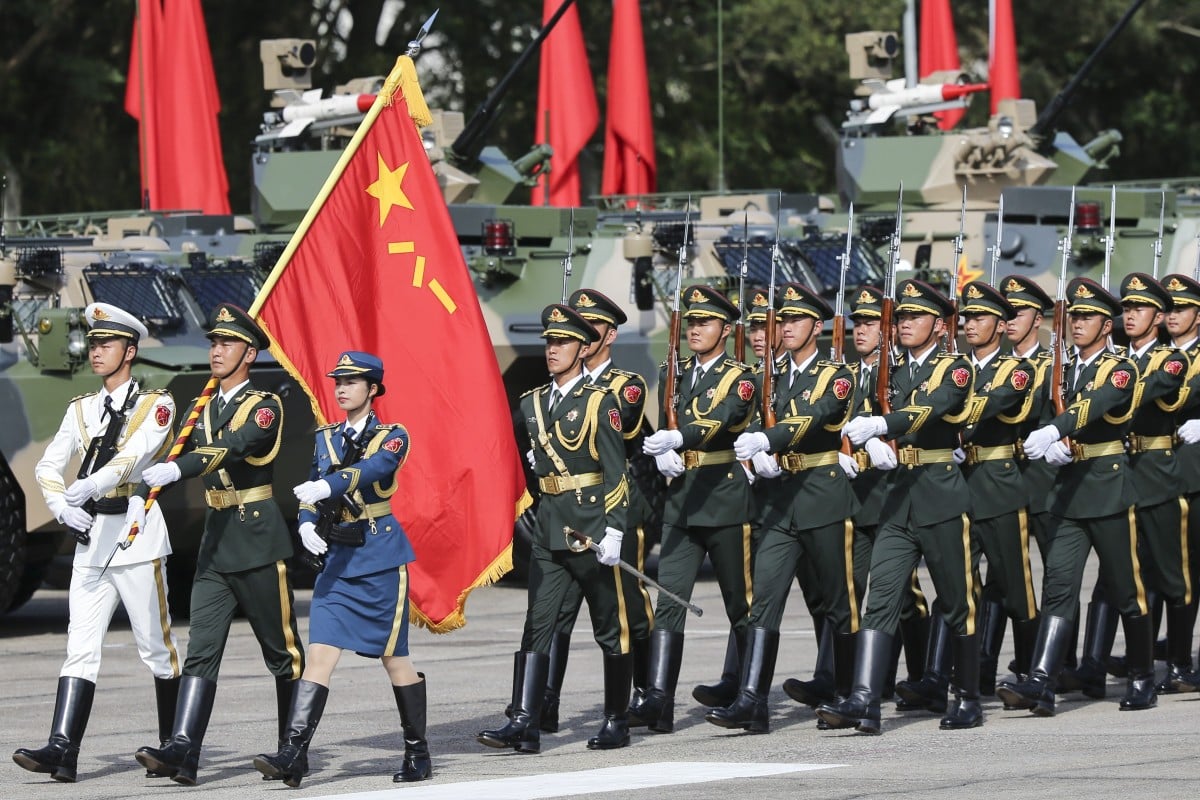
China’s People’s Liberation Army has said its Hong Kong garrison will “resolutely” safeguard national security and sovereignty. Photo: Sam Tsang
The People’s Liberation Army has said the Chinese military will “resolutely” safeguard China’s national security and sovereignty, in its first statement since Beijing announced plans to impose a sweeping national security law in Hong Kong.
Chen Daoxiang, commander of the PLA’s Hong Kong garrison, said it would “act with firm resolve to implement the central government’s decision and plans” as well as continuing to implement the “one country, two systems” policy in the city.
How China is drafting a new Hong Kong national security law at the National People’s Congress
Speaking on the sidelines of China’s annual parliamentary meetings, also known as the
, Chen told state broadcaster CCTV that the new law would help to crack down on separatist and foreign forces aiming to undermine China’s national unity.
“[The garrison] will implement, according to law, various tasks delegated by the party and the people, and has the determination, confidence and ability to safeguard national security and development interest as well as Hong Kong’s continuing prosperity,” he said.
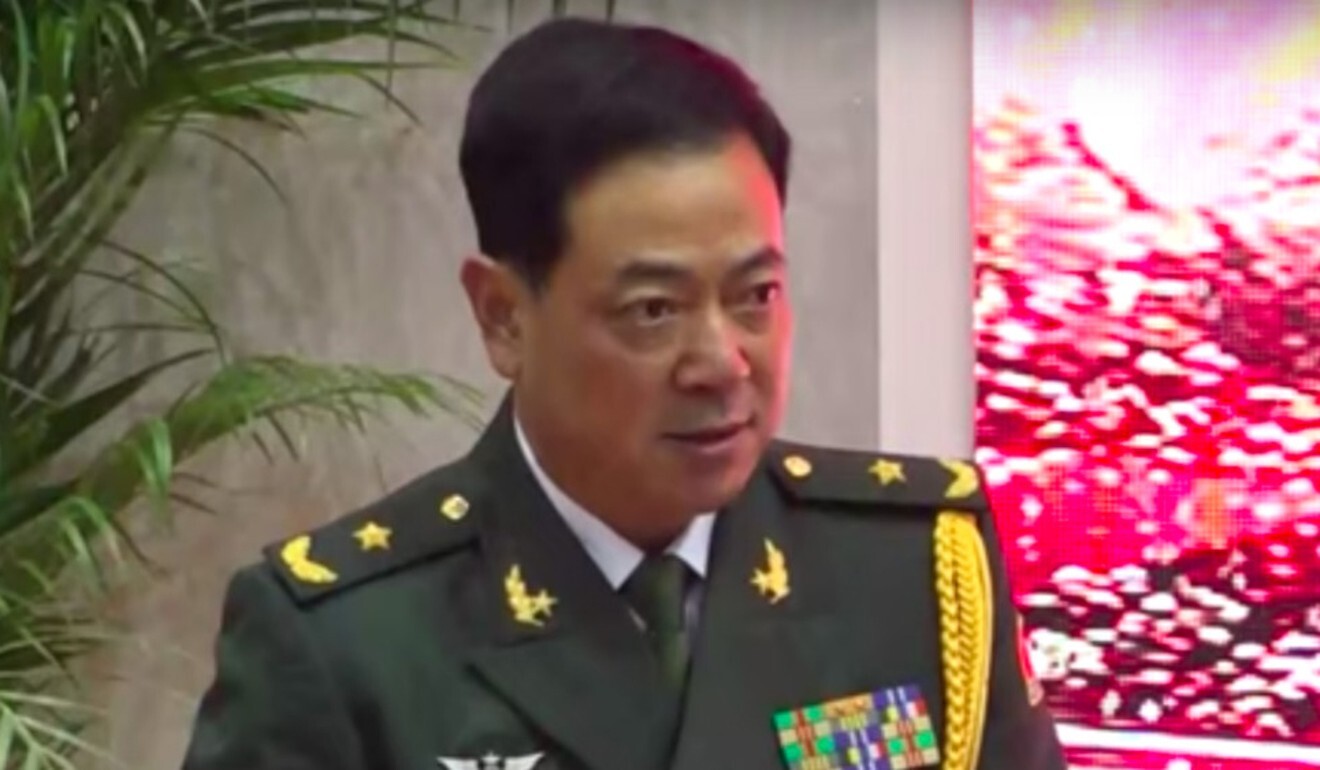
Commander of the PLA Hong Kong garrison Chen Daoxiang. Photo: Weibo
The proposal to impose a national security law in Hong Kong – which will give Beijing more direct control over the city – was introduced by China’s legislature on Friday. Beijing has blamed foreign forces for inciting last year’s months-long protests in Hong Kong, sparked by opposition to a separate and now-withdrawn extradition bill, and described the unrest as a grave threat to national security.
Separately, CCTV reported that a group of top military officials said in a session on Tuesday that there was a “great urgency” for Beijing to impose the law in a bid to address the “new risks and challenges” in governing the city.
The officials, who included Central Military Commission vice-chairmen Xu Qiliang and Zhang Youxia, said the plan was a “very timely, necessary and important” step to prevent and punish efforts to undermine China’s national sovereignty and security.
They reiterated the PLA’s commitment to opposing intervention from foreign forces in Hong Kong as well as maintaining China’s national unity and territorial integrity.
“Hong Kong affairs are purely China’s internal affairs. We resolutely oppose efforts by any foreign country, organisation and individual in interfering with Hong Kong affairs, and will resolutely guard against and contain any attempts by external forces in … engaging any separatist, subversion and infiltration activities,” they said, according to CCTV.
The planned national security law has drawn strong condemnation from the US government, with Secretary of State Mike Pompeo calling it a “death knell” for the territory’s relative autonomy. White House national security adviser Robert O’Brien said on Sunday that the US government would likely impose sanctions on China if Beijing went ahead with the plan.
Xi Jinping, general secretary of the Central Committee of the Communist Party of China (CPC) and Chinese president, holds talks with Kim Jong Un, chairman of the Workers’ Party of Korea (WPK) and chairman of the State Affairs Commission of the Democratic People’s Republic of Korea (DPRK), in Pyongyang, DPRK, June 20, 2019. (Xinhua/Ju Peng)
BEIJING, May 9 (Xinhua) — General Secretary of the Communist Party of China (CPC) Central Committee and Chinese President Xi Jinping on Saturday sent a verbal message of thanks to Kim Jong Un, chairman of the Workers’ Party of Korea (WPK) and chairman of the State Affairs Commission of the Democratic People’s Republic of Korea (DPRK), in reply to an earlier verbal message from the latter.
Saying he was very glad to receive Kim’s warm and friendly message, Xi recalled that in February this year, Kim sent him a letter of sympathy over the COVID-19 outbreak and provided support for China’s prevention and control efforts.
That has fully reflected the profound bond of amity Kim as well as the WPK and the DPRK government and people share with their Chinese counterparts, and vividly illustrated the solid foundation and strong vitality of the traditional friendship between China and the DPRK, said Xi, who also conveyed his deep gratitude and high appreciation.
Xi pointed out that after the coronavirus disease broke out, China, under the firm leadership of the CPC Central Committee and with strong support from various sides, has achieved significant strategic results in COVID-19 prevention and control through arduous efforts.
Senior students walk into Wuhan No. 6 High School in Wuhan, central China’s Hubei Province, May 6, 2020. Senior students in 121 high and vocational schools returned to campus on Wednesday in Wuhan City. (Xinhua/Xiao Yijiu)
He added that he pays great attention to the epidemic prevention and control situation in the DPRK and the health of its people, and noted that Kim has guided the WPK and the DPRK people to carry out a series of epidemic prevention and control measures, which are leading to positive progress. The Chinese president said he is gratified and pleased with that.
China, Xi added, is willing to enhance anti-epidemic cooperation with the DPRK and provide as much support as its capacity allows for the DPRK in line with the latter’s needs.
He also expressed his confidence that with the joint efforts of China and the DPRK as well as the international community, a final victory will be won in the fight against COVID-19.
Meanwhile, Xi said he highly values the development of China-DPRK relations and stands ready to work with Kim to guide relevant departments of the two parties and countries to effectively implement the important consensuses between the two sides, strengthen strategic communication, and deepen exchanges and cooperation.
In so doing, the two neighbors can promote the continuous development of China-DPRK relations in the new era, bring more benefits to both countries and their people, and make positive contributions to regional peace, stability, development and prosperity, added the Chinese president.
In his verbal message sent to Xi on Thursday, Kim congratulated Xi on leading the CPC and the Chinese people to splendid achievements and great victories in the battle against the unprecedented epidemic, saying he highly appreciates that.
Kim expressed his firm belief that under Xi’s leadership, the CPC and the Chinese people will surely further consolidate and expand the successes made so far and win a final victory.
He also wished Xi good health, sent greetings to all CPC members, and expressed his hope that the relationship between the WPK and the CPC will grow closer and enjoy sound development.
BEIJING, April 28 (Xinhua) — China has achieved much progress in environmental protection and taken the lead in green development in recent years.
The efforts have exemplified Chinese President Xi Jinping’s proposal of “working together for a green and better future for all” made a year ago in his speech at the opening ceremony of the International Horticultural Exhibition 2019 Beijing.
In the keynote speech, Xi proposed a five-point initiative on promoting green development, namely pursuing harmony between man and nature, pursuing the prosperity based on green development, fostering a passion for nature-caring lifestyle, pursuing a scientific spirit in ecological governance, and joining hands to tackle environmental challenges.
China’s hard work on environment protection has paid off.
The ecological environment has improved significantly. People are enjoying more days of blue sky, cleaner water, and fertile land.
China has achieved the goal of zero growth of desertified land by 2030 set by the United Nations ahead of time. Besides, forest stock volume increased by 4.56 billion cubic meters compared with that of 2005.
Carbon dioxide emissions per unit of GDP in 2018 fell by 45.8 percent compared with that of 2005, exceeding the target set for the year.
After more than 30 years of hard work, the seventh largest desert in China, the Kubuqi Desert in Inner Mongolia Autonomous Region, once known as the “sea of death” difficult for birds to fly across, has turned into a green valley.
In January 2020, in a letter in reply to the student representatives of the Global Alliance of Universities on Climate, the Chinese president mentioned his thoughts about ecological civilization in his youth.
“Over four decades ago, I lived and worked for many years in a small village on the Loess Plateau in western China. Back then, the ecology and environment there was seriously damaged due to over-development and the local people were trapped in poverty as a result,” Xi wrote.
“This experience taught me that man and nature are a community of life and that the damage done to nature will ultimately hurt mankind,” said Xi.
China’s progress and achievements are recognized worldwide.
The ecological civilization and green development advocated by China are actually an endeavor to find a way to balance economic development and environmental protection, said John Cobb, Jr., the founding president of the Institute for Postmodern Development of China and member of the American Academy of Arts and Sciences.
Noting that the endeavor is a remarkable exploration, he expressed his hope that it will succeed.
China is on the right path in dealing with global climate change and achieving sustainable development, said Borge Brende, president of the World Economic Forum.
In addition to making efforts at home, China has also rolled out a series of measures to support the global combat against climate change.
In September 2015, ahead of the Paris climate change conference, Xi pledged a 20-billion-yuan (3-billion-U.S. dollars) China South-South Climate Cooperation Fund, which was dedicated to help other developing countries combat climate change.
China has also been fulfilling the obligations of the United Nations Framework Convention on Climate Change and the Paris Agreement, and achieved the goal of its intended nationally determined contributions submitted to the secretariat of the Climate Change Convention as scheduled.
UN Secretary-General Antonio Guterres expressed his appreciation for China’s important contributions to addressing the climate change and building a green “Belt and Road,” and said he expects China to continue to play a leading role in addressing the climate change and other issues.
“Lucid waters and lush mountains are invaluable assets,” a concept put forward by Xi in 2005 when he visited Yucun Village in southeast China’s Zhejiang Province as the party chief of the province, has become the motto of the Lao Ministry of Natural Resources and Environment.
In March 2020, when Xi returned to Yucun, he said that economic development should not be achieved at the expense of the ecological environment. To protect the ecological environment is to develop the productive forces, he said.
The history of civilizations shows that the rise or fall of a civilization is closely tied to its relationship with nature, Xi said at the International Horticultural Exhibition last year.
Only by joining hands can the humankind advance a global ecological civilization and march towards the bright future of building a community with a shared future for mankind.
BEIJING, April 21 (Xinhua) — Chinese President Xi Jinping attaches great importance to poverty alleviation. He has addressed the issue on many occasions. The following are some highlights of his quotes.
— It is an essential requirement of socialism to eradicate poverty, improve people’s living standards and achieve common prosperity among the people.
— No single poor area or individual shall be left behind.
— Genuinely poor people are to genuinely shake off poverty. Poverty must be truly eliminated.
— The measurement for moderate prosperity lies in rural areas.
— Cadres play a key role in helping people shake off poverty.
— Eradicating poverty is a common mission of human beings.
— It will be the first time in the millennia-old history of the Chinese nation that absolute poverty is comprehensively eliminated.
— Being lifted out of poverty is not an end in itself but the starting point of a new life and a new pursuit.
Image copyrigh tREUTERSImage caption India’s prime minister called on the country to “challenge the darkness” of coronavirus
Indians have turned off their lights for a nationwide candle-lit vigil, heeding a call for unity as the country battles coronavirus.
Prime Minister Narendra Modi asked India’s 1.3 billion citizens to observe nine minutes without electricity at 21:00 local time (16:30 GMT) on Sunday.
He urged them to “challenge the darkness” of Covid-19 by lighting candles and lamps.
Millions responded, lighting up the night sky in a show of unity.
“Salute to the light of the lamp which brings auspiciousness, health and prosperity, which destroys negative feelings,” Mr Modi tweeted at the time of the vigil.
But critics have dismissed the event as a stunt, arguing it distracted from the health and economic crisis caused by the coronavirus pandemic.
Mr Modi imposed a nationwide lockdown on 25 March, announced with little warning, leaving millions stranded and without food.
Image copyright GETTY IMAGESImage caption Millions of Indians observed the nine-minute vigil called for by Mr Modi
The true figures, however, are thought to be far higher. India has one of the lowest testing rates in the world, although efforts are under way to ramp up capacity.
Image copyright REUTERSImage caption India has been under lockdown since 25 March
There are fears that a major outbreak in the country – one of the world’s most densely populated – could result in a humanitarian catastrophe.
People are banned from leaving their homes under the lockdown measures. All non-essential businesses have been closed and almost all public gatherings are banned.
Media caption As cases of coronavirus rise and the virus hits India’s congested slums, will the country cope?
But the shutdown sparked an exodus from major cities such as Delhi, forcing thousands of migrant labourers to walk hundreds of kilometres to their native villages.
Last week, Mr Modi apologised for the impact of the strict stay-at-home measures, saying there was “no other way” to stop the spread of the virus.
YINCHUAN, Dec. 28 (Xinhua) — In the remote Xiamaguan Township of northwest China’s Ningxia Hui Autonomous Region, swathes of green asparagus sway in the endless loess field.
Farmer Dong Yi started growing asparagus in 2017 when local officials encouraged villagers to cultivate the green plant to get out of poverty.
“We had never seen asparagus before, and everybody doubted if the plant could survive the harsh environment here,” said Dong, 56. “But I decided to try it anyway, because I was struggling to make money.”
Xiamaguan Township is located deep in the mountains, and the dry weather there leaves it in dire need of water. The township is among Ningxia’s poorest, where many people are still struggling to make ends meet.
Despite years of prosperity in the coastal regions, pockets of residents still lag behind in China’s underdeveloped rural areas, which poses a challenge for the country’s battle to wipe out absolute poverty by 2020.
In 2012, China had 98.99 million rural people living under the national poverty line of 2,300 yuan (329 U.S. dollars) in annual income. By the end of 2018, the number had dropped by 82.4 million, with 16.6 million still left in poverty. Ningxia is home to one of the largest poor populations in China.
However, the asparagus has brought fortunes to Xiamaguan Township, with more than 100 families having been lifted out of poverty since the industry took root there, according to the latest government figures. Currently, more than 130 hectares of asparagus thrive in the fields.
In the past, asparagus was something unheard of among impoverished farmers such as Dong Yi in Xiamaguan. Dong’s family has about three hectares of land. For generations, the family depended on grain plantation to make a living, though they barely made enough money to live a decent life.
A few years ago, a series of irrigation projects pumped water from the Yellow River into the dry, sandy lands in Ningxia. The Yellow River is China’s second-longest river. With more water, local residents decided to grow more crops, said local Party official Dong Zhanping.
“The farmers tried a variety of plants at first, including traditional Chinese herbs, and corn, but the yields were less than satisfactory,” the official said.
In 2017, township officials decided to introduce asparagus to the area after multiple field surveys. They invited a company that had success growing asparagus in a nearby county.
“We persuaded farmers to lease their land to us and we managed the land collectively,” Dong Zhanping said, adding that they gave 3,000 yuan to the farmers for each hectare of land they leased. Experts then cultivated asparagus seedlings in greenhouses, before planting them in the fields, depending on dripping irrigation technology.
“Different from the bamboo in southern China, asparagus can adapt to a very dry environment, which is why the land in Xiamaguan is perfect for its cultivation,” said company manager He Jiang. “Besides, the air here is fresh, and the soil is very clean, so the asparagus grown here is very good quality.”
In 2017, Dong Yi, the local farmer, went to learn about asparagus cultivation with the company’s technical staff in east China’s Shandong Province. He learned about weeding and fertilizing there, and returned home to train other villagers. By commanding new techniques and with hard work, farmers like Dong saw the potential of the industry after reaping a good harvest.
“This year we will have another bumper harvest,” he said. “Currently, more than 200 villagers are toiling in the fields.”
The success of Xiamaguan Township has permeated to other villages, according to local officials. In the past, many farmers left home for big cities for decent-paying jobs, but now they stay in their hometown and attend to the asparagus.
Dong Yi said the asparagus is in high demand, with orders from buyers in the provinces of Shandong and Guangdong. Many of the buyers purchased the crop online.
“When the harvest season comes in January, we will rake in more than 150,000 yuan per hectare,” he said.
The asparagus industry has also brought environmental benefits, including less sandy areas and more moist air, in addition to the economic boost.
“We hope to bring more farmers into the industry,” said Party official Dong Zhanping. “The plant has truly changed lives here.”
Japanese Prime Minister Shinzo Abe meets with Chinese State Councilor and Foreign Minister Wang Yi in Tokyo, Japan, Nov. 25, 2019. (Xinhua/Du Xiaoyi)
TOKYO, Nov. 25 (Xinhua) — Japanese Prime Minister Shinzo Abe and Chinese State Councilor and Foreign Minister Wang Yi on Monday agreed that both sides should work together to further improve bilateral ties and strengthen people-to-people exchanges.
Japan and China have witnessed frequent high-level exchanges and positive progress in the improvement of bilateral relations recently, said Abe, adding that the Japanese side is eagerly looking forward to Chinese President Xi Jinping’s state visit next spring and believes that it will be a major opportunity for promoting bilateral relations in the new era.
A stable Japan-China relationship is the cornerstone of peace and prosperity in Asia, and is also crucial to addressing current global challenges. Japan is ready to work with China to usher in a new future of bilateral relations, he said.
Japan welcomes the launch of the high-level consultation mechanism on people-to-people exchanges between the two countries and stands ready to work with China to continuously boost the affinity between the two peoples and properly handle sensitive differences so as to create a favorable atmosphere and conditions for the improvement and development of bilateral relations, he added.
Abe also said he is looking forward to further in-depth communication with Chinese leaders on bilateral ties during his visit to China next month to attend the China-Japan-ROK (Republic of Korea) leaders’ meeting.
Wang, for his part, said that with the political guidance of the two leaders and joint efforts of both sides, China-Japan relations have returned to the right track and have seen a sound momentum of improvement and development. The top leaders of the two countries had a successful meeting in Osaka in June and reached important consensus on building bilateral relations that meet the requirements of the new era.
The China-Japan relations have gone through twists and turns and the present situation has not come easily and should be doubly cherished, Wang said.
The two sides should push for continuous improvement and development of China-Japan relations from a longer-term and broader perspective, he said.
He called on the Japanese side to meet China halfway, take more positive actions, properly manage and handle differences so as to create a favorable atmosphere and conditions for the proposed major political and diplomatic agenda of the two countries.
The improvement and development of China-Japan relations not only conform to the interests of the two countries and peoples but also has great positive significance to regional peace and stability, injecting stability into the current world situation which is full of uncertainty, said Wang.
The Chinese side welcomes Abe to attend the China-Japan-ROK leaders’ meeting in China next month. China is willing to work with Japan to give full play to the role of the high-level consultation mechanism on people-to-people exchanges, usher in a new era of exchanges between our peoples, localities and youth, and create a brighter future for bilateral relations, he said.
BEIJING, Nov. 7 (Xinhua) — Chinese President Xi Jinping’s upcoming visit to Greece and Brazil is expected to intensify China’s relations with the two countries and enhance BRICS cooperation, officials said here Thursday.
At the invitation of Greek President Prokopis Pavlopoulos, Xi will pay a state visit to Greece from Nov. 10 to 12, said Vice Foreign Minister Qin Gang.
This will be the first visit to the European country by a Chinese president after an interval of 11 years, which will exert a historic influence of China-Greece ties and push forward China-Europe relations and Belt and Road cooperation, Qin said.
He noted that China and Greece, both with old civilizations, are trustworthy and helpful friends respecting and supporting each other on core interests and major concerns.
Greece is among the first European Union (EU) countries to sign an intergovernmental cooperation document with China to jointly construct the Belt and Road, Qin said, adding that Greek prime ministers attended the first and second Belt and Road Forum on International Cooperation in Beijing.
The two sides have conducted fruitful cooperation on the principle of mutual benefit and win-win cooperation and witnessed increased bilateral trade and investment, Qin said.
“The Piraeus Port project, a flagship project for the Belt and Road cooperation, has made important contributions to the local economic and social development of Greece and played an important role in advancing connectivity in various regions around the globe,” said the vice foreign minister.
Speaking of people-to-people and cultural exchanges, Qin said peoples of the two countries respect each other and advocate openness and inclusiveness in their close interactions.
“Both China and Greece hold that different civilizations should respect each other and facilitate experience sharing, mutual learning and conversation among civilizations,” he said.
China and Greece are new friends of the “17 +1” cooperation. In April this year, Greece became a full member of the China-Central and Eastern European Countries Cooperation Mechanism, adding new opportunities to the development of this mechanism, which is also conducive to developing China-EU relations and China-EU connectivity, Qin said.
Greek Prime Minister Kyriakos Mitsotakis led a delegation to the ongoing second China International Import Expo (CIIE). Xi met with him, and the two leaders visited the Greek pavilion, Qin said.
According to Qin, in Greece, Xi is scheduled to hold talks respectively with Pavlopoulos and Mitsotakis, in a bid to consolidate political mutual trust and traditional friendship between the two countries, intensify pragmatic cooperation in trade, investment, infrastructure and other fields, uphold multilateralism and free trade and build an open world economy.
Besides, Qin noted that the Chinese and Greek leaders will conduct cultural exchanges and advocate dialogues among civilizations.
The two sides will issue a joint statement on strengthening the comprehensive strategic partnership, draw up a blueprint for the development of bilateral ties, sign intergovernmental cooperation documents on investment and education, and ink commercial agreements in such fields as ports, finance, and energy.
Greece, in the West, and China, in the East, are heirs of ancient civilizations. Noting that both China and Greece are faced with the mission of rejuvenation and prosperity, Qin said the two countries can enlighten the world to deal with various problems and challenges.
Xi’s upcoming visit to Greece shows respect and appreciation of the ancient Chinese civilization to the ancient Greek civilization, as well as the expectation of jointly building a community with a shared future for humanity, Qin said.
It is believed the visit will elevate the level of bilateral cooperation in an all-round way and inject new impetus to the development of China-EU relations with fruitful results, Qin stressed.
According to Vice Foreign Minister Ma Zhaoxu, at the invitation of Brazilian President Jair Messias Bolsonaro, Xi will attend the 11th BRICS summit in Brasilia, the capital of Brazil, from Nov. 13 to 14.
BRICS is the acronym for an emerging-market bloc that groups Brazil, Russia, India, China and South Africa.
Xi is scheduled to attend the closing ceremony of the BRICS business forum, closed and public meetings of the BRICS leaders’ meeting and the BRICS leaders’ dialogue with the BRICS Business Council and the New Development Bank. The leaders’ declaration is expected to be released, Ma said.
Xi will hold talks with Bolsonaro, sign cooperation documents in various fields, and hold bilateral meetings with leaders of other participating countries to exchange views on ties and BRICS cooperation, Ma said.
As the world is undergoing changes rarely seen in a century and confronted with unprecedented opportunities and challenges, BRICS countries have drawn ever-growing attention worldwide, Ma said, stressing that China appreciates the efforts made by Brazil in its preparation and stands ready to jointly prompt the meeting to achieve fruitful results.
He voiced expectations of the Chinese side.
“The Chinese side hopes that BRICS countries will further enhance political mutual trust, boost mutually beneficial cooperation and forge a more comprehensive, closer and broader partnership,” Ma said.
As for safeguarding multilateralism and strengthening global governance, Ma voiced China’s determination to make joint efforts with other BRICS countries to safeguard the rules-based multilateral trade system, the international order based on international law, and the international system with the UN at the core.
This aims to promote a more equitable, open, transparent and inclusive global governance system and safeguard common interests and development space of emerging markets and developing countries, Ma said.
“China believes the five BRICS countries should follow the trend of the new industrial revolution and facilitate economic transformation and upgrading,” Ma noted.
As an important outcome of last year’s Johannesburg meeting, the BRICS partnership for a new industrial revolution has progressed well in the past year, he said, adding that China is willing to work with concerned parties to accelerate the development of the partnership and tap more potential for cooperation projects, so as to propel high-quality development of the five countries.
“China looks forward to more cooperation on economy, trade, finance, political security and people-to-people exchanges, with projects meeting the development needs of the five countries and serving the interests of their peoples,” he said.
The Chinese side believes that with concerted efforts of all parties and under the political guidance of the five countries’ leaders, the 11th BRICS Summit will be a full success, Ma said, stressing that the BRICS countries will continue to contribute to world peace and development and the building of a community with a shared future for humanity.
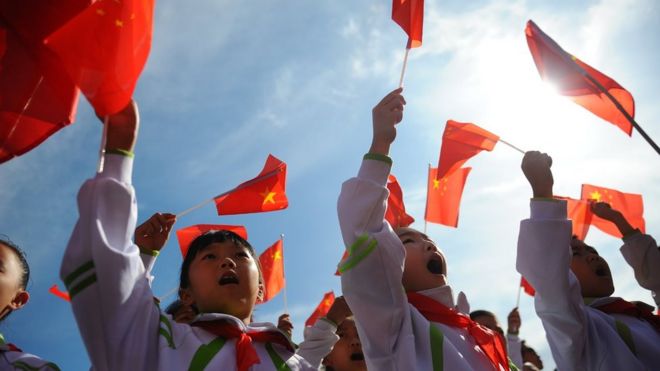
Image copyright GETTY IMAGESImage caption China’s version of its past is a story of prosperity, progress and sacrifice for the common good
China’s extraordinary rise was a defining story of the 20th Century, but as it prepares to mark its 70th anniversary, the BBC’s John Sudworth in Beijing asks who has really won under the Communist Party’s rule.
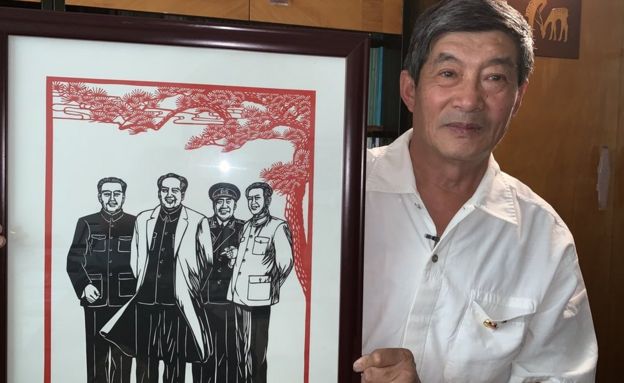
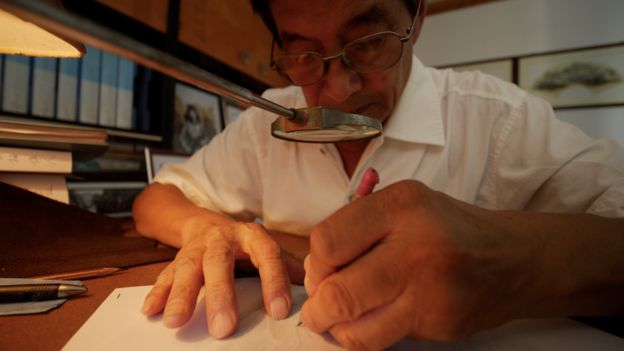
Sitting at his desk in the Chinese city of Tianjin, Zhao Jingjia’s knife is tracing the contours of a face.
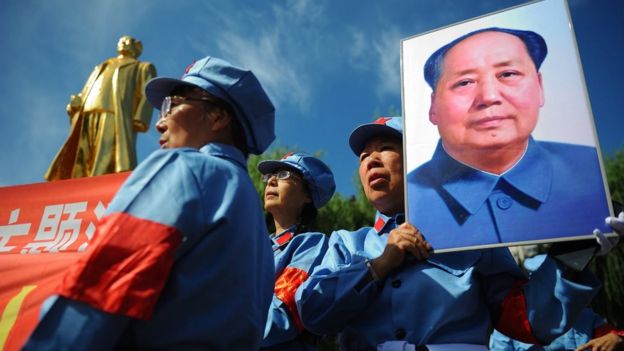
Cut by delicate cut, the form emerges – the unmistakable image of Mao Zedong, founder of modern China.
The retired oil engineer discovered his skill with a blade only in later life and now spends his days using the ancient art of paper cutting to glorify leaders and events from China’s communist history.
“I’m the same age as the People’s Republic of China (PRC),” he says. “I have deep feelings for my motherland, my people and my party.”
Image caption For people like Zhao Jingjia, China’s success outweighs the “mistakes” of its leaders
Born a few days before 1 October 1949 – the day the PRC was declared by Mao – Mr Zhao’s life has followed the dramatic contours of China’s development, through poverty, repression and the rise to prosperity.
Now, in his modest but comfortable apartment, his art is helping him make sense of one of the most tumultuous periods of human history.
“Wasn’t Mao a monster,” I ask, “responsible for the deaths of tens of millions of his countrymen?”
“I lived through it,” he replies. “I can tell you that Chairman Mao did make some mistakes but they weren’t his alone.”
“I respect him from my heart. He achieved our nation’s liberation. Ordinary people cannot do such things.”
On Tuesday, China will present a similar, glorious rendering of its record to the world.
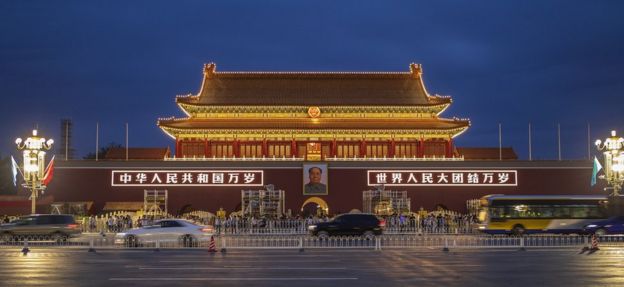
Beijing will tremble to the thunder of tanks, missile launchers and 15,000 marching soldiers, a projection of national power, wealth and status watched over by the current Communist Party leader, President Xi Jinping, in Tiananmen Square.
An incomplete narrative of progress
Like Mr Zhao’s paper-cut portraits, we’re not meant to focus on the many individual scars made in the course of China’s modern history.
It is the end result that matters.
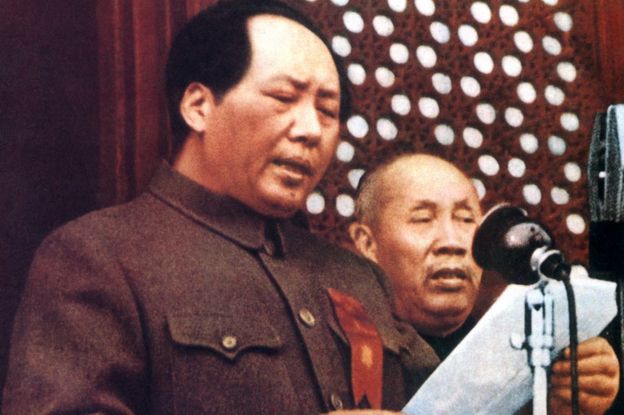
Image copyright XINHUA/AFPImage caption Mao Zedong pronounces the dawn of the People’s Republic of China on 1 October 1949
And, on face value, the transformation has been extraordinary.
On 1 October 1949, Chairman Mao stood in Tiananmen Square urging a war-ravaged, semi-feudal state into a new era with a founding speech and a somewhat plodding parade that could muster only 17 planes for the flyby.
This week’s parade, in contrast, will reportedly feature the world’s longest range intercontinental nuclear missile and a supersonic spy-drone – the trophies of a prosperous, rising authoritarian superpower with a 400 million strong middle class.
It is a narrative of political and economic success that – while in large part true – is incomplete.
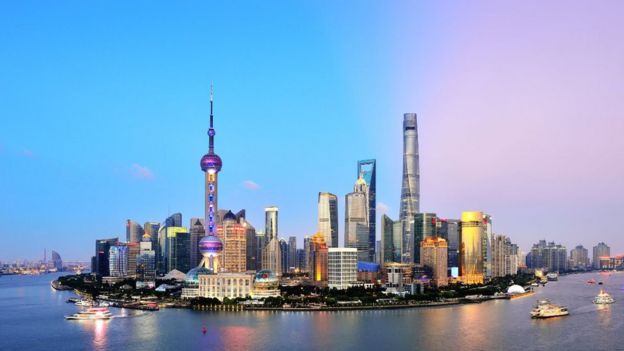
New visitors to China are often, rightly, awe-struck by the skyscraper-festooned, hi-tech megacities connected by brand new highways and the world’s largest high-speed rail network.
Image copyright GETTY IMAGESImage caption Those in China’s glittering cities may accept the trade-off of political freedom for economic growth
They see a rampant consumer society with the inhabitants enjoying the freedom and free time to shop for designer goods, to dine out and to surf the internet.
“How bad can it really be?” the onlookers ask, reflecting on the negative headlines they’ve read about China back home.
The answer, as in all societies, is that it depends very much on who you are.
Many of those in China’s major cities, for example, who have benefited from this explosion of material wealth and opportunity, are genuinely grateful and loyal.
In exchange for stability and growth, they may well accept – or at least tolerate – the lack of political freedom and the censorship that feature so often in the foreign media.
For them the parade could be viewed as a fitting tribute to a national success story that mirrors their own.
But in the carving out of a new China, the knife has cut long and deep.
The dead, the jailed and the marginalised
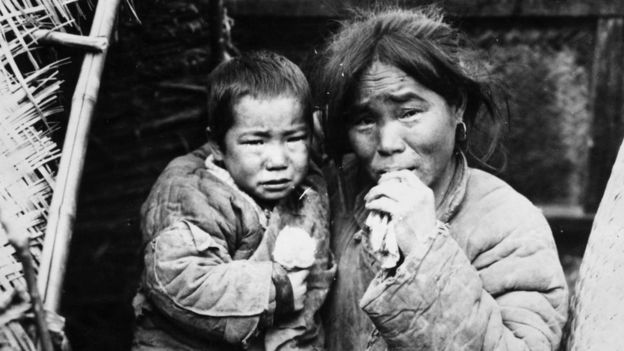
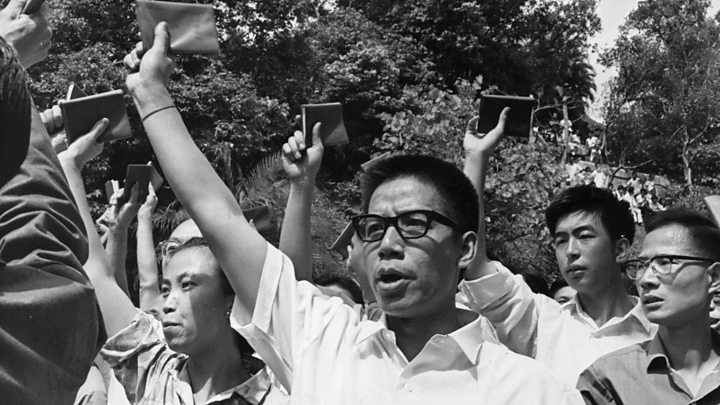
Mao’s man-made famine – a result of radical changes to agricultural systems – claimed tens of millions of lives and his Cultural Revolution killed hundreds of thousands more in a decade-long frenzy of violence and persecution, truths that are notably absent from Chinese textbooks.
Image copyright GETTY/TOPICALImage caption Tens of millions starved to death under Mao, as China radically restructured agriculture and society
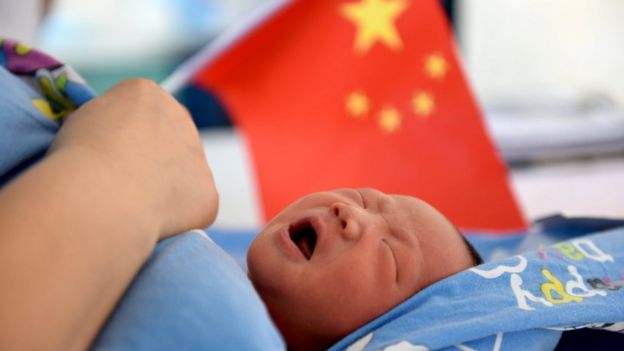
After his death, the demographically calamitous One Child Policy brutalised millions over a 40-year period.
Still today, with its new Two Child Policy, the Party insists on violating that most intimate of rights – an individual’s choice over her fertility.
The list is long, with each category adding many thousands, at least, to the toll of those damaged or destroyed by one-party rule.
Image copyright GETTY IMAGESImage caption Beijing still regulates how many children families can have
There are the victims of religious repression, of local government land-grabs and of corruption.
There are the tens of millions of migrant workers, the backbone of China’s industrial success, who have long been shut out of the benefits of citizenship.
A strict residential permit system continues to deny them and their families the right to education or healthcare where they work.
And in recent years, there are the estimated one and a half million Muslims in China’s western region of Xinjiang – Uighurs, Kazakhs and others – who have been placed in mass incarceration camps on the basis of their faith and ethnicity.
China continues to insist they are vocational schools, and that it is pioneering a new way of preventing domestic terrorism.
The stories of the dead, the jailed and the marginalised are always much more hidden than the stories of the assimilated and the successful.
Viewed from their perspective, the censorship of large parts of China’s recent history is not simply part of a grand bargain to be exchanged for stability and prosperity.
Getty
Timeline of modern China
1949 Mao declares the founding of the People’s Republic of China
1966-76 Cultural Revolution brings social and political upheaval
1977 Deng Xiaoping initiates major reforms of China’s economy
1989 Army crushes Tiananmen Square pro-democracy protests
2010 China becomes the world’s second-largest economy
2018 Xi Jinping is cleared to be president for life
It is something that makes the silence of their suffering all the more difficult to penetrate.
It is the job of foreign journalists, of course, to try.
‘Falsified, faked and glorified’
But while censorship can shut people up, it cannot stop them remembering.
Prof Guo Yuhua, a sociologist at Beijing’s Tsinghua University, is one of the few scholars left trying to record, via oral histories, some of the huge changes that have affected Chinese society over the past seven decades.
Her books are banned, her communications monitored and her social media accounts are regularly deleted.
“For several generations people have received a history that has been falsified, faked, glorified and whitewashed,” she tells me, despite having been warned not to talk to the foreign media ahead of the parade.
“I think it requires the entire nation to re-study and to reflect on history. Only if we do that can we ensure that these tragedies won’t be repeated.”
Image copyright GETTY IMAGESImage caption Can progress really be attributed to the leadership?
A parade, she believes, that puts the Communist Party at the front and centre of the story, misses the real lesson, that China’s progress only began after Mao, when the party loosened its grip a bit.
“People are born to strive for a better, happier and more respectful life, aren’t they?” she asks me.
“If they are provided with a tiny little space, they’ll try to make a fortune and solve their survival problems. This shouldn’t be attributed to the leadership.”
‘Our happiness comes from hard work’
As if to prove the point about how the unsettled, censored pasts of authoritarian states continue to impact the present, the parade is for invited guests only.
Image copyright GETTY IMAGESImage caption Mao’s portrait will, as it always is, be watching over the events in Tiananmen Square
Another anniversary, of which Tiananmen Square is the centrepiece, is also being measured in multiples of 10 – it is 30 years since the bloody suppression of the pro-democracy protests that shook the foundations of Communist Party rule.
The troops will be marching – as they always do on these occasions – down the same avenue on which the students were gunned down.
The risk of even a lone protester using the parade to mark a piece of history that has largely been wiped from the record is just too great.
With central Beijing sealed off, ordinary people in whose honour it is supposedly being held, can only watch it on TV.
Back in his Tianjin apartment, Zhao Jingjia shows me the intricate detail of a series of scenes, each cut from a single piece of paper, depicting the “Long March”, a time of hardship and setback for the Communist Party long before it eventually swept to power.
“Our happiness nowadays comes from hard work,” he tells me.
It is a view that echoes that of the Chinese government which, like him, has at least acknowledged that Mao made mistakes while insisting they shouldn’t be dwelt on.
“As for the 70 years of China, it’s extraordinary,” he says. “It can be seen by all. Yesterday we sent two navigation satellites into space – all citizens can enjoy the convenience that these things bring us.”
Media caption What was China’s Cultural Revolution?









 CHINDIA ALERT: You'll be living in their world, very soon