04/11/2019
- Hopes were high a regional summit could finally wrap up negotiations on the Regional Comprehensive Economic Partnership
- But despite claims of ‘significant progress’ in the 16-nation talks, India remains a stumbling block
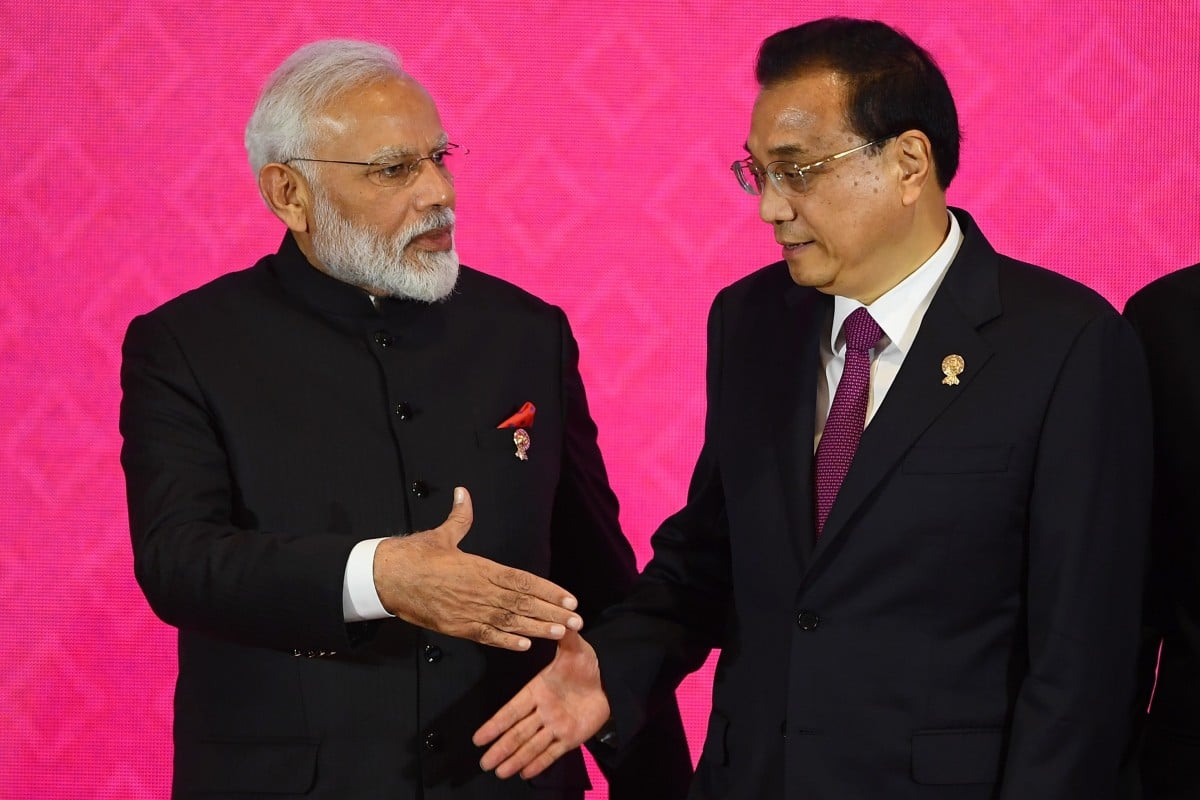
Indian Prime Minister Narendra Modi and China’s Premier Li Keqiang attend the Regional Comprehensive Economic Partnership Summit in Bangkok. Photo: AFP
Fifteen of the countries involved in negotiating a mammoth 16-nation Asian
trade pact were on Monday hoping to seal the deal after seven years of talks but faced a fresh setback as India signalled it was pulling out over terms that were against New Delhi’s interests.
A joint statement by all 16 states involved in the Regional Comprehensive Economic Partnership (RCEP) said 15 economies had “concluded text-based negotiations for all 20 chapters and essentially all their market access issues”, and would undertake legal scrubbing of the proposed pact before a formal signing in 2020.
But “India has significant outstanding issues, which remained unresolved”, the statement said.
“All RCEP participating countries will work together to resolve these outstanding issues in a mutually satisfactory way. India’s final decision will depend on satisfactory resolution of these issues.”
Multiple Indian media outlets reported that Prime Minister Narendra Modi had told a Monday evening meeting of leaders from the RCEP countries that “neither the talisman of [Mahatma Gandhi] nor my own conscience permit me to join the RCEP”.
“When I measure the RCEP agreement, with respect to the interest of Indians, I don’t get a positive answer,” he was quoted as saying.
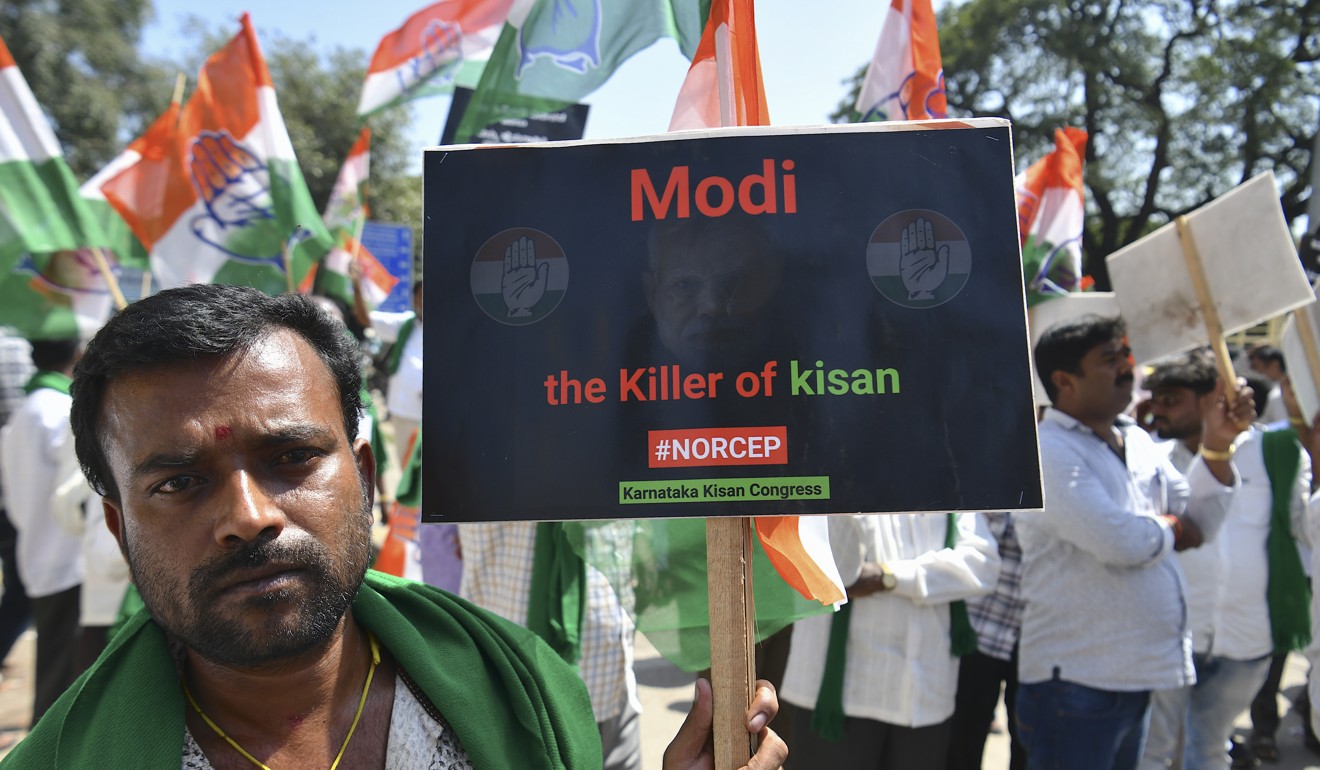
Indians protest against the Modi-led government’s backing of the Regional Comprehensive Economic Partnership. Photo: AFP
Henry Gao, a law professor at the Singapore Management University focusing on international trade law, said an RCEP without India would be “even more worthwhile” for the so-called RCEP-15.
He cited two reasons: India’s “low ambitions” for the pact, and the high level of integration among the countries of East and Southeast Asia which are part of the RCEP-15.
“A mega trade deal like RCEP will only further accelerate the integration process and greatly boost trade and economic growth in the region,” Gao said.
Explained: Regional Comprehensive Economic Partnership (RCEP)
Earlier expectations were that the joint statement would declare at least a “substantial conclusion”, “near conclusion” or “in principle conclusion” of the RCEP, which aims to create a free-trade zone spanning 39 per cent of the world economy.
The phrasing used to describe the progress of negotiations is being closely parsed because, since it requires endorsement from all RCEP countries, it accurately captures the sentiment of all the 16 negotiating teams.
Last year, Singapore, as chair of the Association of Southeast Asian Nations (Asean), pushed for a conclusion of the deal, but eventually the joint statement declared that only “substantial progress” had been made.
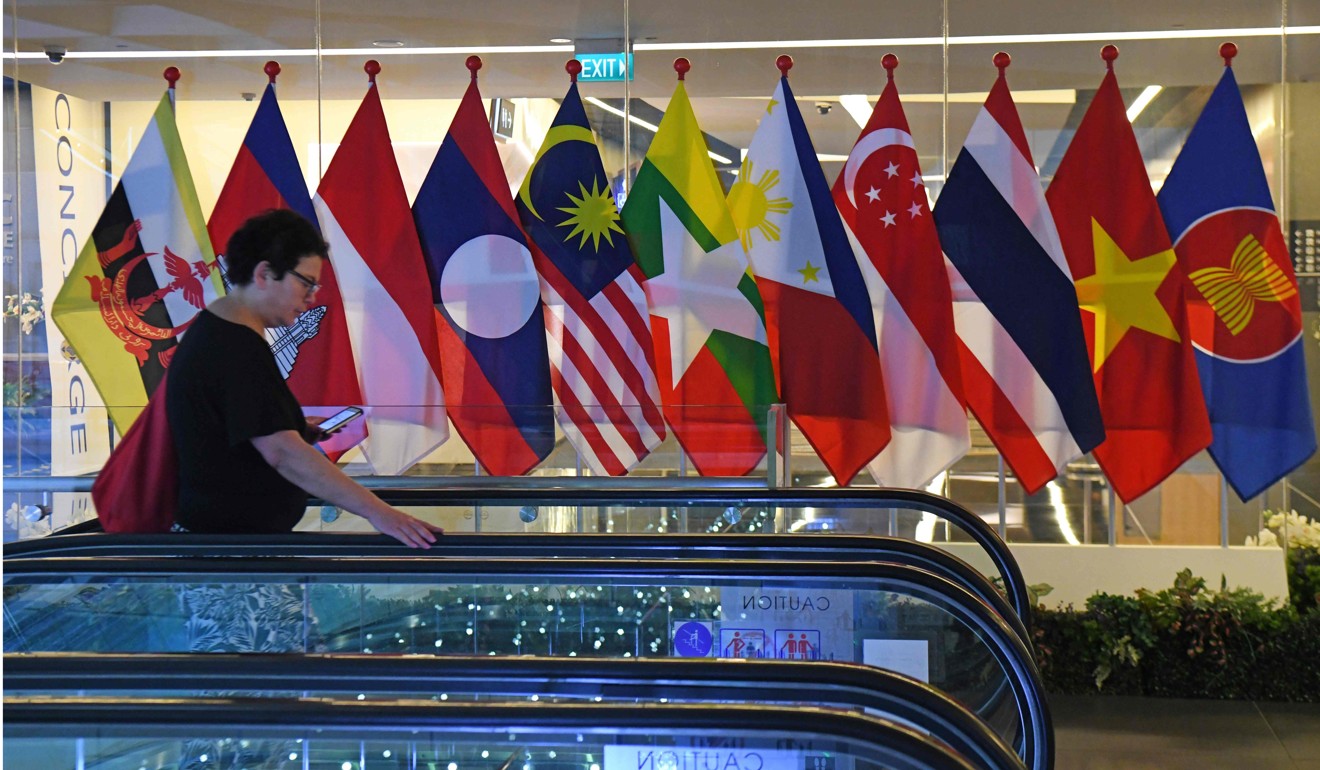
Asean countries plus six others are negotiating the trade pact. Photo: AFP
Indian media, citing government sources, said the pact’s inadequate protection against import surges, the possible circumvention of rules of origin, and a lack of “credible assurances” on market access and non-tariff barriers, proved too much for New Delhi to swallow.
facing fierce domestic criticism for being in the pact despite opposition even from
Hindu nationalist support base, last week piled on a fresh set of demands that other countries balked at, negotiators from Southeast Asian countries said over the weekend.
Furious efforts that continued up to Sunday night failed to bridge the gap between India and the 15 countries.
India’s concerns about RCEP remain the major obstacle to world’s largest trade deal
Indian critics of the RCEP say the deal will have a ruinous impact on the South Asian economy, which has trade deficits with the other 15 countries.
The biggest opposition has come from the country’s long protected industries, such as its dairy sector, which fears it could be wiped out by lower tariffs on Australian and New Zealand products that would result from the RCEP.
Indian government sources on Monday said the country had not made last-minute demands, but Southeast Asian negotiators said major demands were made as late as Thursday.
Gao, the Singapore-based law professor, said it “makes sense for India to stay out” as it would have faced “a lot of competition from Chinese manufactured products” if it were part of the deal.
“India could temporarily shield its firms from Chinese competition by staying out, but whether this will work in the long term is a different question,” he said.
Source: SCMP
Posted in Association of Southeast Asian Nations (ASEAN), Australian products, Chinese manufactured products, Chinese premier Li Keqiang, conscience, India alert, Indian Prime Minister Narendra Modi, mahatma gandhi, negotiations, New Delhi, New Zealand products, pulls out, Regional Comprehensive Economic Partnership, Regional Comprehensive Economic Partnership (RCEP), seven years, Singapore, Singapore Management University, Southeast Asian negotiators, talisman, trade deal, Uncategorized, World economy |
Leave a Comment »
04/11/2019
Chinese Premier Li Keqiang addresses the 22nd China-ASEAN (10+1) leaders’ meeting in Bangkok, Thailand, Nov. 3, 2019. (Xinhua/Zhai Jianlan)
BANGKOK, Nov. 3 (Xinhua) — Chinese Premier Li Keqiang on Sunday called on China and ASEAN to uphold multilateralism and free trade, resist risks and realize common development at the 22nd China-ASEAN (10+1) leaders’ meeting in Bangkok.
Since China and ASEAN established dialogue relations, they have brought benefits to each other and the wider region, Li said, adding that China always supports ASEAN’s central role in East Asian cooperation.
Noting that the mounting downward pressure on the global economy brings new severe challenges, Li said China and ASEAN countries should jointly uphold multilateralism and free trade, withstand risks and realize common development.
The premier said China and ASEAN countries should stick to the principle of shared benefits and win-win outcomes, and speed up the work to upgrade economic and trade cooperation.
He called for an early conclusion of the negotiations on the Regional Comprehensive Economic Partnership (RCEP) so as to lay the foundation for East Asia’s economic integration, and the implementation of the China-ASEAN Free Trade Area Upgrade Protocol to promote trade and investment liberalization and facilitation.
Li said China and ASEAN countries should enhance strategic mutual trust and safeguard peace and stability in the region.
The Code of Conduct (COC) in the South China Sea is an upgraded version of the Declaration on the Conduct of Parties in the South China Sea (DOC). Last year, China proposed that all parties should try to finish the COC talks in three years. The first reading of the single draft negotiating text of the COC in the South China Sea has been completed ahead of schedule, and the second reading has been launched.
Li said he hopes all sides will actively carry forward the consultations according to the previously agreed timetable, meet each other halfway, and safeguard peace and stability in the South China Sea.
The premier also said China and ASEAN countries need to carry forward their friendship from generation to generation, and stay ready to enhance people-to-people and cultural exchanges in such areas as media, health, education and tourism.
China is willing to train 1,000 administrative health staff and technical professionals in the following three years for ASEAN and will support projects such as the China-ASEAN Young Leaders Scholarship, said the premier.
Stressing that China will unswervingly pursue the path of peaceful development and an opening-up strategy of mutual benefit, Li said China is willing to synergize the Belt and Road Initiative with the development strategies of ASEAN as a whole and its members as well.
He urged to accelerate the construction of the existing economic corridors, promote infrastructure connectivity cooperation, as well as support the building of the Brunei Darussalam Indonesia Malaysia Philippines East ASEAN Growth Area.
Li encouraged innovation cooperation in the areas including digital economy, artificial intelligence, big data and cyber security, and the establishment of a China-ASEAN partnership on blue economy to enhance maritime exchanges and cooperation.
Thailand’s Prime Minister, also the rotating chair of ASEAN, Prayut Chan-o-cha, Philippine President Rodrigo Duterte, Brunei’s Sultan Haji Hassanal Bolkiah, Indonesian President Joko Widodo, Malaysian Prime Minister Mahathir Mohamad, Vietnamese Prime Minister Nguyen Xuan Phuc, Myanmar’s State Counselor Aung San Suu Kyi, Singaporean Prime Minister Lee Hsien Loong, Lao Prime Minister Thongloun Sisoulith and Cambodian Prime Minister Samdech Techo Hun Sen attended the meeting. Li and Prayut co-chaired the meeting.
At the meeting, ASEAN leaders expressed congratulations on the 70th anniversary of the founding of the People’s Republic of China, saying that the ASEAN-China partnership is the most dynamic one in all the partnerships ASEAN has forged.
Speaking highly of the new cooperation progress over the past year, the leaders said their countries would like to take an active role in building the Belt and Road, expand cooperation in areas of inter-connectivity, science and technology innovation, e-commerce, smart cities and blue economy, and increase two-way investment.
They also expressed the hope that the ASEAN-China trade volume can exceed 1 trillion U.S. dollars at an early date.
The leaders also applauded the new progress made in the COC negotiation, saying that their countries would like to maintain the momentum and advance the process.
During the meeting, China and ASEAN agreed to make an action plan to implement The Joint Declaration on China-ASEAN Strategic Partnership for Peace and Prosperity (2021-2025), issued statements on the Belt and Road Initiative, smart cities and media exchanges, and announced that the year 2020 will be the year of China-ASEAN digital economy cooperation.
Li arrived in Bangkok late on Saturday for an official visit to Thailand and a series of events including the 22nd China-ASEAN (10+1) leaders’ meeting, the 22nd ASEAN-China, Japan and South Korea (10+3) leaders’ meeting, and the 14th East Asia Summit.
Source: Xinhua
Posted in 14th East Asia Summit (EAS), 22nd ASEAN-China, Japan and South Korea (10+3) leaders' meeting, 22nd China-ASEAN (10+1) leaders' meeting, 70th anniversary of the founding of the People's Republic of China (PRC), ASEAN, Bangkok, Brunei Darussalam Indonesia Malaysia Philippines East ASEAN Growth Area, China alert, China-ASEAN Young Leaders Scholarship, Chinese premier Li Keqiang, Code of Conduct (COC), cultural exchanges, Declaration on the Conduct of Parties in the South China Sea (DOC), East Asian cooperation, education, free trade, Health, media, multilateralism, Regional Comprehensive Economic Partnership (RCEP), South China Sea, Tourism, Uncategorized |
Leave a Comment »
13/10/2019
- The leaders agreed to set up a mechanism to boost economic ties and tackle India’s trade deficit with China after their second informal summit
- As 2020 is the 70th anniversary of diplomatic ties between both countries, India and China will hold 70 events next year to promote relations
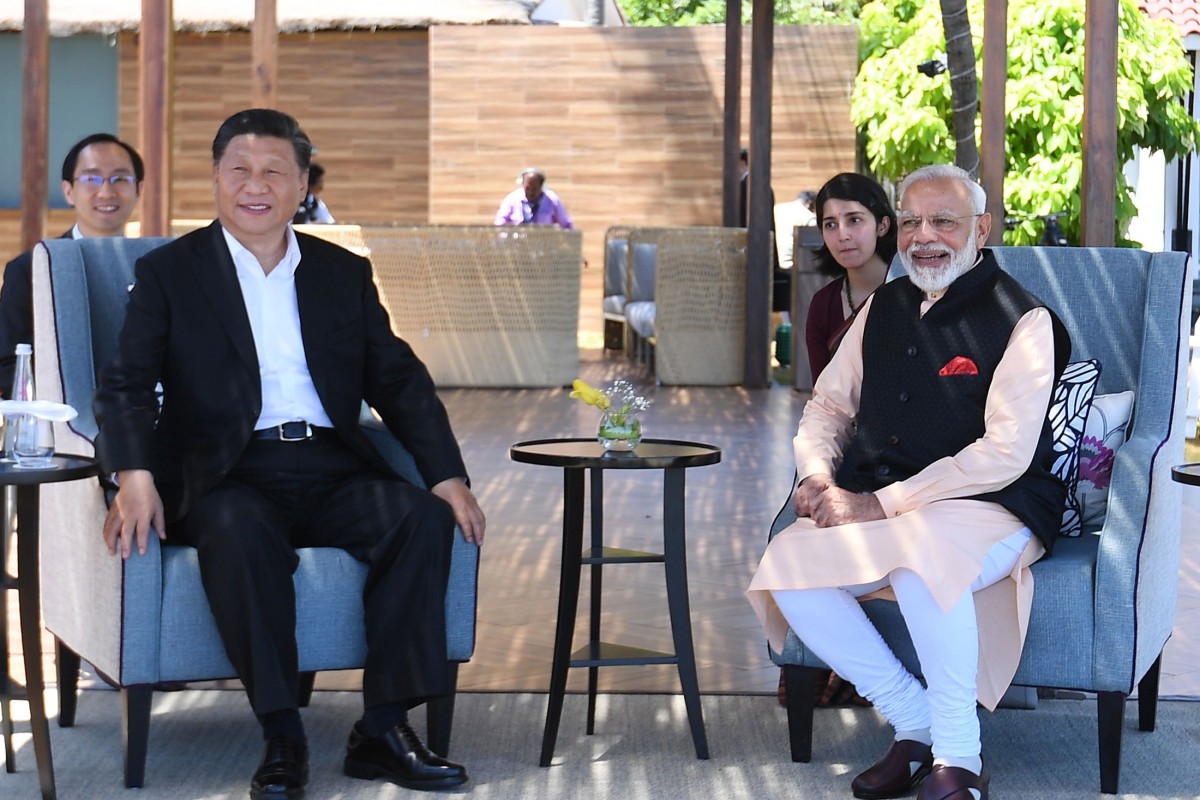
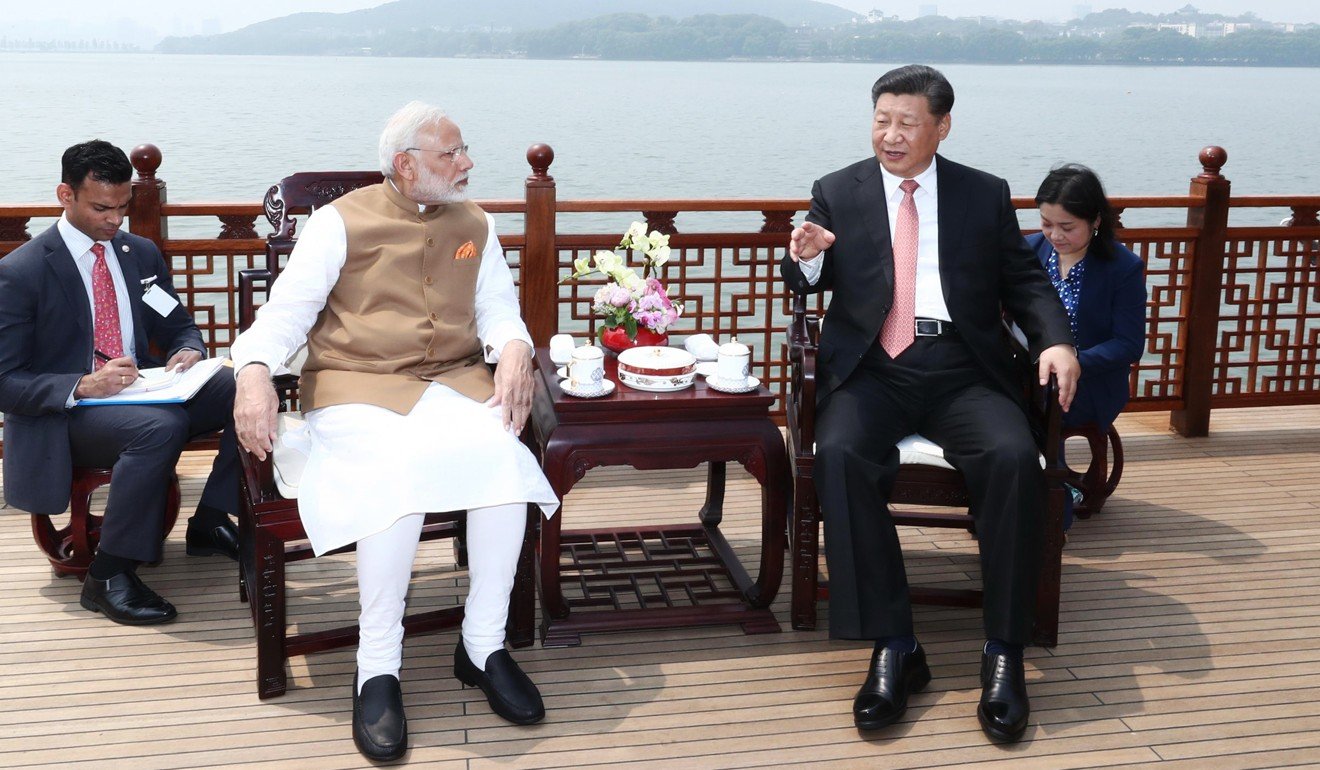
Indian Prime Minister Narendra Modi and Chinese President Xi Jinping during their meeting in Mamallapuram, Chennai. Photo: EPA
Chinese President
Xi Jinping and Indian Prime Minster
Narendra Modi concluded their second informal summit on Saturday by pledging to overcome trade differences and appreciate “each other’s autonomous foreign policies”, signalling an effort to focus on mutual interests rather than on long-standing contentious issues.
Modi remarked that both sides had agreed to be “sensitive” to each other’s concerns and not let differences escalate into disputes, while Xi called for communication to “alleviate suspicions” and for India and China to enhance strategic mutual trust, according to state news broadcaster CCTV.
Their desire to look beyond irritants in diplomatic ties, including a decades-long border row and China’s close military ties with India’s arch rival, Pakistan, comes as Beijing is embroiled in a tariff war with Washington that has rocked the global economy.
In a sign of China’s willingness to address India’s trade deficit with it, the leaders agreed to launch a “High Level Economic and Trade Dialogue”.
As Xi meets Modi, Chinese in Chennai hope to witness the ‘Wuhan spirit’
Chinese Vice-Premier Hu Chunhua and Indian Finance Minister Nirmala Sitharaman will meet regularly to discuss ways to boost two-way trade and investments, Indian foreign secretary Vijay Gokhale said in a media briefing.
India has a US$53 billion trade deficit with China, which makes up almost a third of its total trade deficit. It is also facing pressure to decide if it will commit to the China-led
(RCEP), which aims to create the world’s largest trading bloc involving 16 countries before the end of the year.
Narendra Modi exchanges gifts with Xi Jinping. Photo: AFP
Negotiations are ongoing with talks taking place in Bangkok this week, but India’s domestic producers have opposed the agreement over fears of a flood of Chinese imports. On Friday, the Indian government rejected clauses in the agreement related to e-commerce, according to reports.
Gokhale told the media briefing that both leaders, who met in the coastal town of Mamallapuram about 50km away from Chennai, briefly discussed the RCEP.
“PM Modi said India was looking forward to the RCEP but it is important that RCEP is balanced, that a balance is maintained in trade in goods, trade in services and investments,” he said, adding that Xi agreed to further discussions of India’s concerns on the issue.
Narendra Modi with Xi Jinping in Mamallapuram. Photo: EPA
CCTV said Xi had six suggestions for how China and India could further improve ties, including assessing each other correctly and stepping up cooperation between their militaries. Besides economic and trade dialogue, China welcomed Indian pharmaceutical and IT companies to invest there, he said.
“We should look at disputes with a correct mind, and not let disputes affect cooperation.
“Both sides should properly and fairly get a solution for border disputes that are acceptable to each other … [and] cautiously handle each other’s core interests, and take proper measures to control issues that cannot be resolved immediately,” the president reportedly said.
Gokhale told reporters that both countries had agreed to pursue, through special representatives, an ongoing dialogue on their disputed border. China and India have held more than 20 rounds of talks to resolve their boundary dispute, over which they went to war in 1962. Different mechanisms have been set up to maintain peace along the 4,000-kilometre (2,485-mile) so-called Line of Actual Control.
Xi and Modi bank on chemistry as they talk trade and terrorism
Gokhale confirmed that the leaders – who met for a total of seven hours over Friday and Saturday, with the bulk of their time spent in one-on-one talks – did not discuss
, a region that is currently divided between India and Pakistan but which both nuclear-armed rivals claim in full.
Since India revoked the autonomy of the area it controls in August and imposed a lockdown,
has lobbied its allies – including its all-weather friend China – to support its opposition to the move. New Delhi had reacted sharply to Beijing’s move to take the matter to the United Nations, insisting that it was a purely bilateral issue. Two days before the summit, Xi had hosted Pakistan Prime Minister Imran Khan and had assured him of China’s support on all core issues, a statement that had irked India.
Gokhale said both leaders “emphasised the importance of having independent and autonomous foreign policies”.
“President Xi said that the two countries needed to have more extensive dialogue in order to understand each other’s perspectives on major global and regional issues,” he added.
Narendra Modi exchanges gifts with Xi Jinping. Photo: AFP
The leaders also discussed terrorism, with a statement issued later by New Delhi saying both sides would make efforts to ensure the international community strengthened its framework “against training, financing and supporting terrorist groups throughout the world and on a non-discriminatory basis”.
The China-led multilateral Financial Action Task Force, which has been investigating Pakistan’s efforts to stamp out the financing of terrorism, is expected to decide soon if it would add Islamabad to its blacklist along with Iran and North Korea, a move that could invite stringent economic sanctions and drive away international financial institutions, both of which could affect Pakistan’s already-indebted economy adversely.
Gokhale added that as 2020 is the 70th anniversary of diplomatic ties between both countries, India and China will hold 70 events next year to promote people-to-people ties, with Modi accepting an invitation by Xi for the next informal summit to be held in China.
Both leaders had struck positive notes on the summit – with Xi describing their discussions as “candid” and between friends and Modi hailing the “Chennai Connect” meeting as marking a new era of cooperation between both countries.
War games, Kashmir and a US$57b question: the issues as Xi meets Modi
But analysts said they would be looking to see how the newly-announced high-level mechanism on trade panned out.
Narayani Basu, a New Delhi-based author, foreign policy analyst and China watcher felt the summit had achieved its purpose of bagging small wins for both sides.
“Discussing contentious issues would have defeated the purpose of the summit. The idea behind such a summit must be that despite the overarching posturing on different divergent issues, the two countries can achieve the easily-achievable wins. That is what the summit seems to have tried doing.”
But in terms of actual outcomes, she said she remained sceptical.
“I don’t think there has been much progress in the ties between the two countries since the last summit in Wuhan. Hence, this time, there is a lot more caution and scepticism towards such a summit,” she said, referring to the first summit last year in the Chinese city of Wuhan.
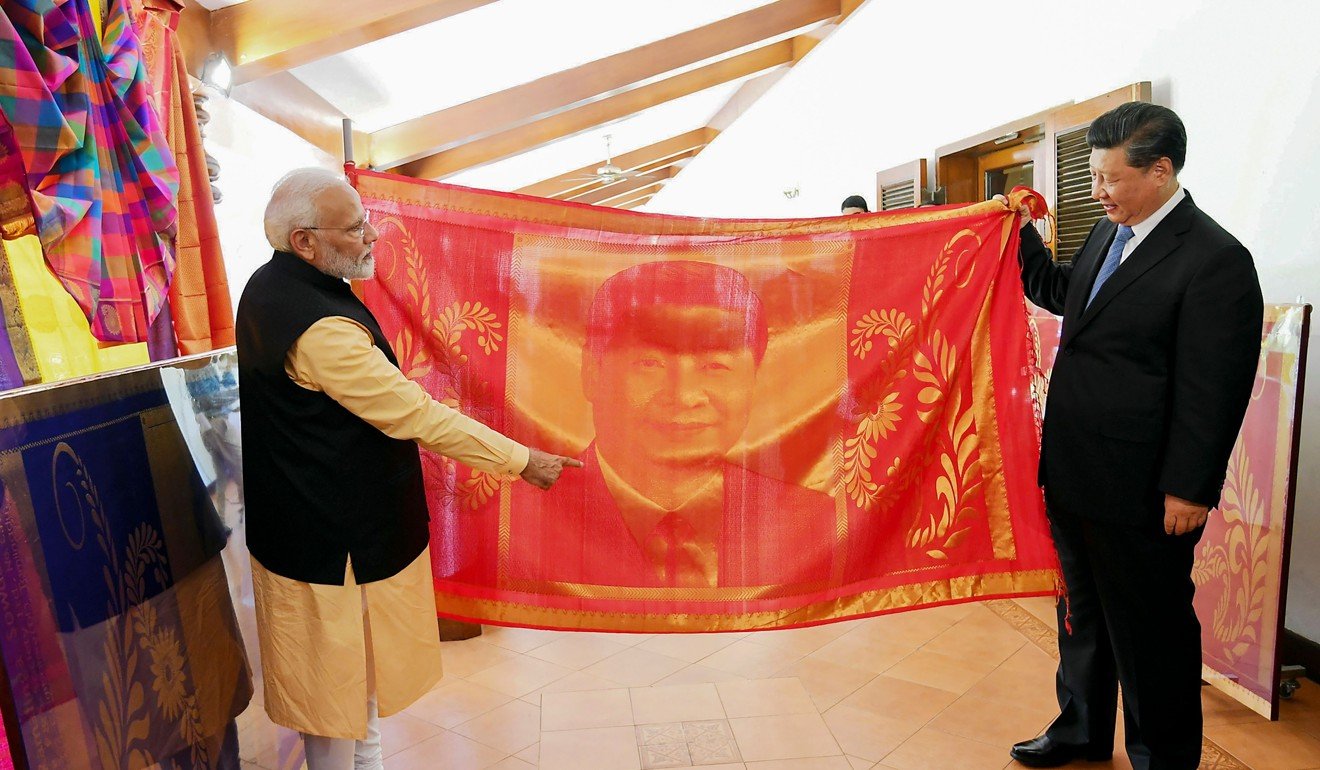
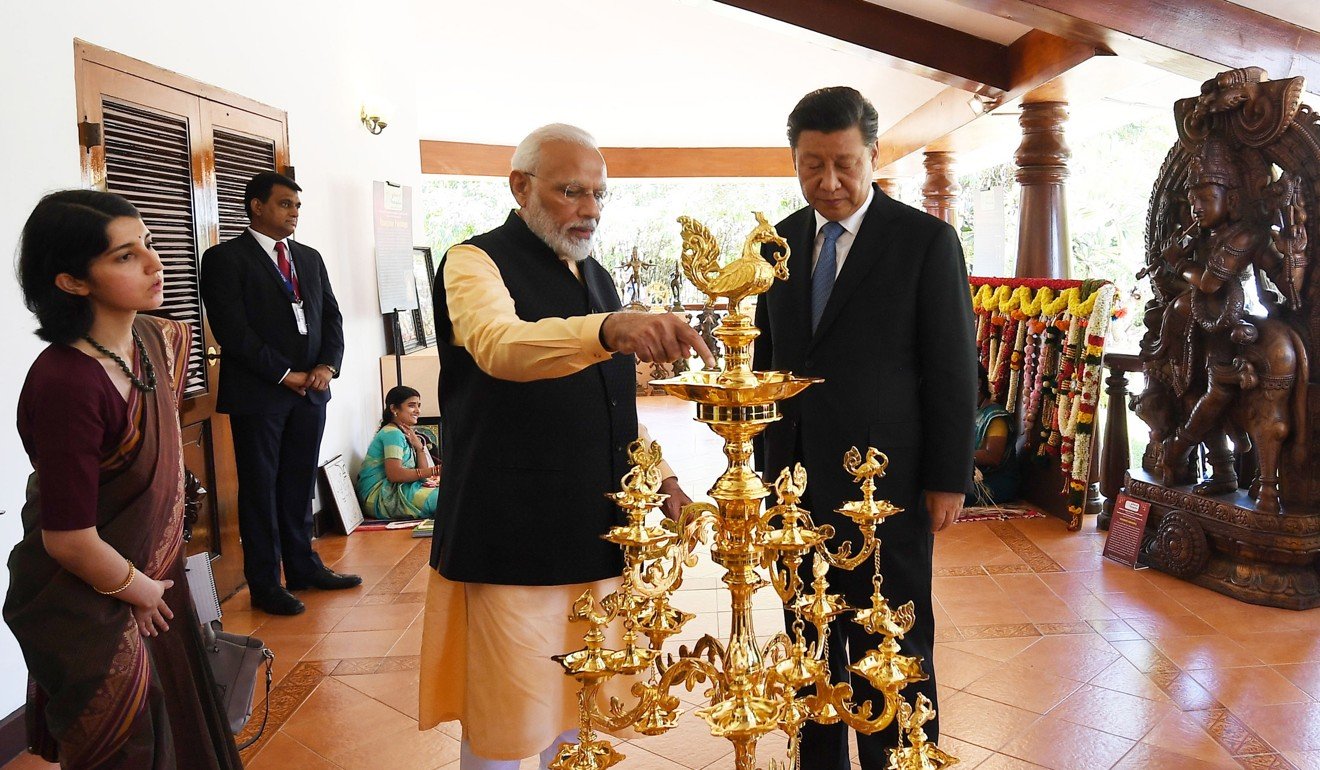
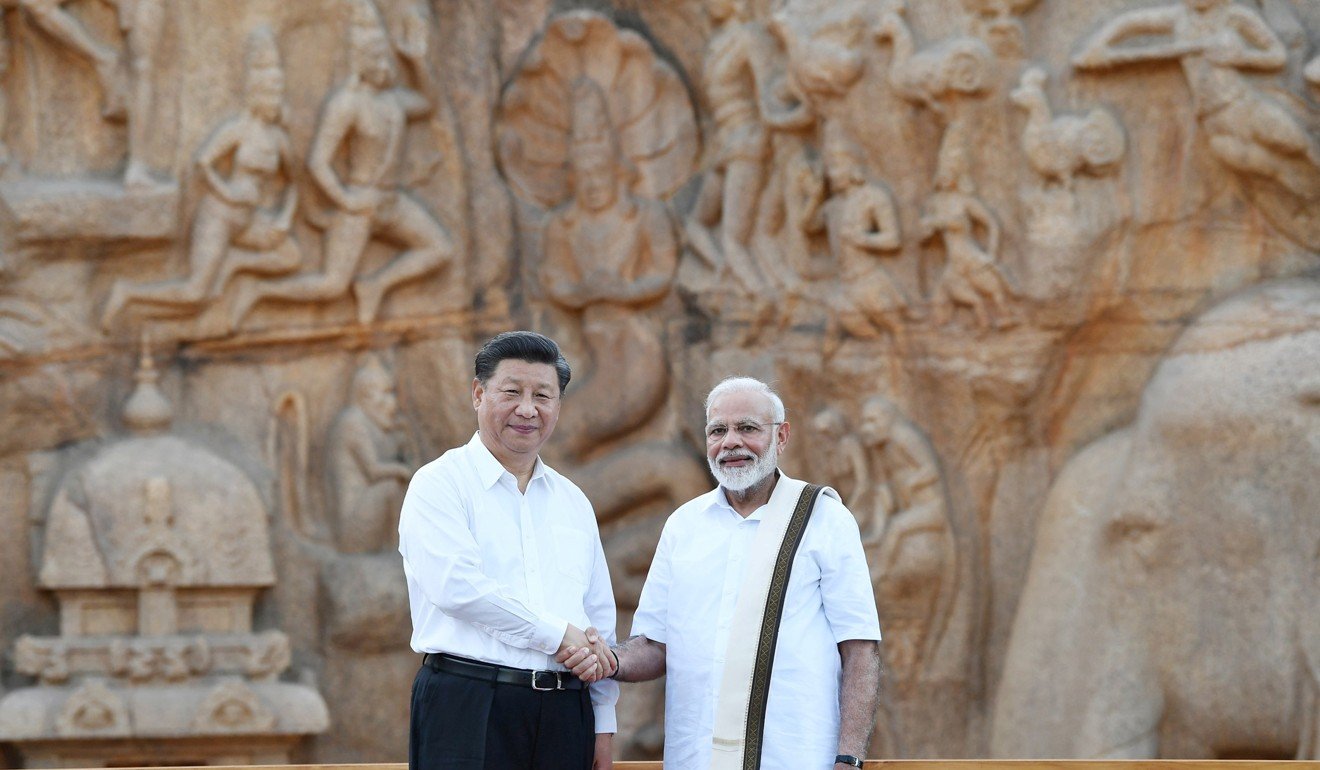
During Xi’s visit to southern India, which lasted 24 hours in all, Modi took him on a personal tour of temple monuments dating back to the seventh and eighth century in Mamallapuram when regional leaders had trade ties with Chinese provinces. He was also shown local artisan handicrafts and art forms, and gifted a handwoven silk portrait, a lamp and a painting.
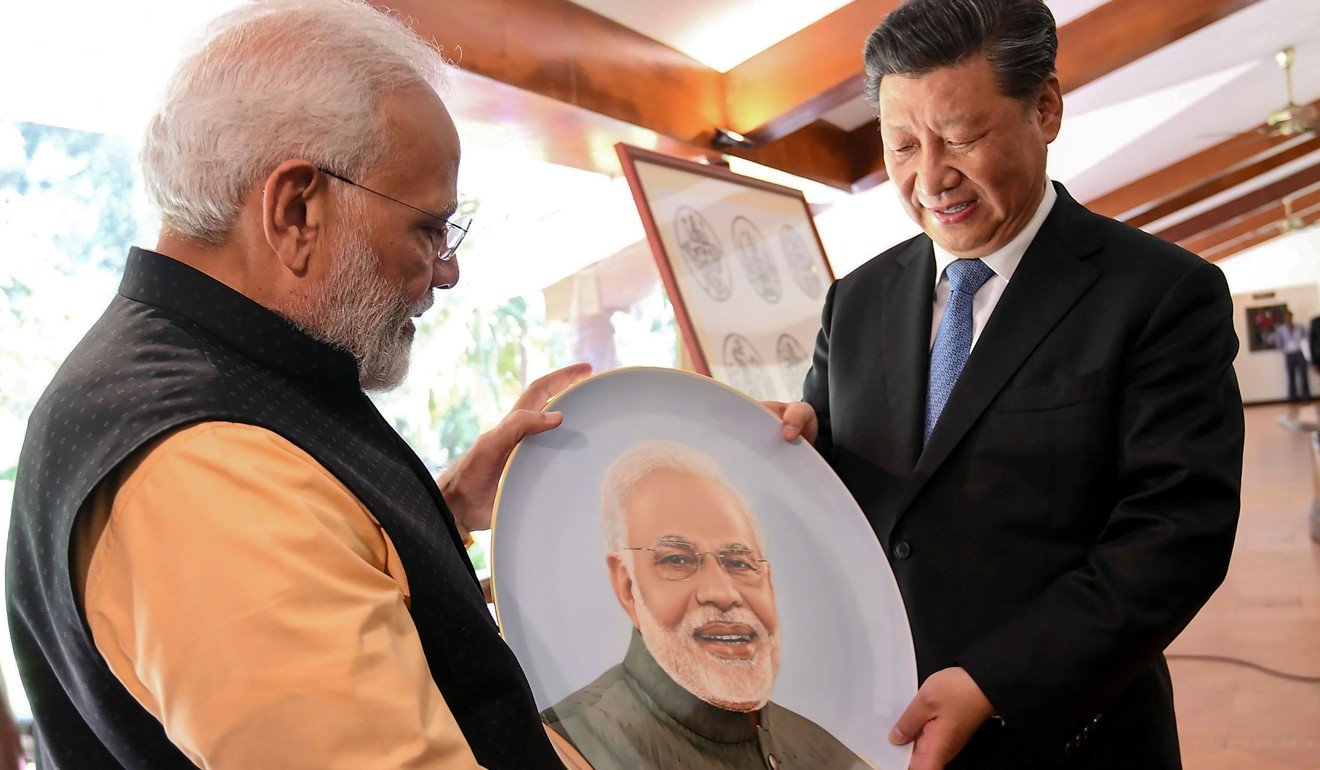
Xi gave Modi a porcelain plate with the image of the prime minister’s face printed on it.
Xi Jinping with Narendra Modi in Mamallapuram. Photo: Reuters
On Friday, New Delhi announced that visa rules for Chinese nationals visiting India would be relaxed, with multiple-entry visas with a validity period of five years available from this month onwards. At present, most visas are single-entry and usually for between 30 and 60 days. Visa fees would also be reduced, the government said, with the multiple-entry visa costing US$80.
This was aimed at further enhancing “people-to-people exchanges between the two countries and [encouraging] more Chinese tourists to choose India as a destination for tourism purposes,” it said in a statement.
Xi left Chennai on Saturday afternoon and arrived in Nepal, which lies in between India and China. He will be the first Chinese president to visit Nepal in 22 years and is expected to sign a slew of deals with Nepal’s Prime Minister K.P. Sharma Oli, including the planned extension of the rail link from remote, mountainous Tibet to Nepal’s capital, Kathmandu.
The link will be part of Beijing’s ambitious infrastructure project to boost trade, the
(BRI), that Nepal joined two years ago.
More than 120 countries have signed on to the BRI, including Pakistan, where a series of projects worth US$46 billion are being constructed under the China-Pakistan Economic Corridor (CPEC). India has snubbed the BRI and questioned the transparency of funding agreements.
Source: SCMP
Posted in 70th anniversary, ambitious infrastructure project, autonomous foreign policies, “High Level Economic and Trade Dialogue”, Bangkok, Beijing, Belt and Road Initiative (BRI), BRI, CCTV, chemistry, Chennai, China-Pakistan Economic Corridor (CPEC), Chinese President Xi Jinping, Chinese Vice-Premier, Chinese Vice-Premier Hu Chunhua, diplomatic ties, economic and trade dialogue, Financial Action Task Force, global economy, Imran Khan, India alert, India’s trade deficit, Indian Finance Minister, Indian Foreign Secretary, Indian Prime Minister Narendra Modi, informal summit, iran, IT companies, Kashmir, Kathmandu, major global and regional issues, Mamallapuram, Nepal, Nepal’s Prime Minister, New Delhi, Nirmala Sitharaman, North Korea, Pakistan, Pakistan Prime Minister, pharmaceutical companies, Prime Minister Imran Khan, Prime Minister K.P. Sharma Oli, rail link from remote, mountainous Tibet, Regional Comprehensive Economic Partnership, Regional Comprehensive Economic Partnership (RCEP), seventh and eighth century, tariff war, temple monuments, terrorism, trade and terrorism, Uncategorized, United Nations, Vijay Gokhale, Washington, Wuhan Spirit |
Leave a Comment »
24/09/2019
NANNING, Sept. 23 (Xinhua) — The Belt and Road Initiative (BRI) provides momentum for regional economic integration and connectivity, helping China and ASEAN forge a closer community of shared future, said Cambodian Deputy Prime Minister Hor Nam Hong.
Hor made the remarks Saturday at the opening ceremony of the 16th China-ASEAN Expo themed “Building the Belt & Road, Realizing Our Vision for a Community of Shared Future.”
The deputy vice prime minister envisioned that the China-ASEAN strategic partnership and the BRI will further deepen the cooperation between the two sides in the joint pursuit of shared prosperity.
Statistics show that China has signed cooperation agreements with more than 130 countries across the globe and 30 international organizations on jointly building the Belt and Road, benefiting people of the involved nations.
Highlighting regional economic cooperation, this year’s China-ASEAN expo is expected to lift the practical and comprehensive cooperation between China, ASEAN and other countries participating in the BRI to new heights.
The expo has served as a crucial platform for promoting investment and trade in Asia over the past 16 years, setting an example of friendly cooperation between China and ASEAN, said Luhut Binsar Pandjaitan, special envoy of the Indonesian president and coordinating minister for maritime affairs.
As the Country of Honor for this year’s expo, Indonesia will showcase its high-quality products from more than 100 Indonesian enterprises.
Speaking highly of the BRI, Luhut said cooperation under the China-proposed initiative will boost infrastructure construction and trade among members of ASEAN to facilitate the building of the ASEAN Community.
To push China-ASEAN ties to new heights, both sides are making joint efforts in constructing the Belt and Road and implementing the Master Plan on ASEAN Connectivity 2025 under the guidance of the China-ASEAN Strategic Partnership Vision 2030.
The BRI accelerates regional connectivity and improves people’s livelihoods, said Thai Deputy Prime Minister and Minister of Commerce Jurin Laksanawisit, adding that Thailand had formulated plans to contribute to the completion of the Regional Comprehensive Economic Partnership, alleviate volatility of the global economy and trade, and inject momentum into sustainable development.
Two-way investment between China and ASEAN countries grew robustly to reach 230 billion U.S. dollars in the first eight months of this year, with the establishment of 25 economic and trade cooperation zones creating over 100,000 jobs.
Meanwhile, the cooperation between China and ASEAN in fields including international production capacity, the digital economy and e-commerce is also leaping forward.
Hailing the achievements of cooperation under the BRI, Lao Deputy Prime Minister Sonexay Siphandone said Laos will take an active role in building the Belt and Road.
Citing the China-Laos railway, the largest cooperation project between the two sides so far, Sonexay said it will promote regional peace, prosperity and sustainable development.
Apart from prospering bilateral trade and investment, recent years have seen the deepening of China-ASEAN cooperation in various other fields. ASEAN has become the largest destination for Chinese tourists, with the number of personal exchanges hitting 57 million in 2018 and nearly 4,000 flights traveling between both sides every week.
Holding similar viewpoints, Myanmar’s Vice President U Myint Swe said the BRI provides opportunities for developing trade and cross-border exchanges and bridging infrastructure gaps.
Looking forward to shared prosperity, Jurin said Thailand, as well as ASEAN, will collaborate with China to strive for sustainable development.
Source: Xinhua
Posted in "Building the Belt & Road, Realizing Our Vision for a Community of Shared Future.", Association of Southeast Asian Nations (ASEAN), Belt and Road Initiative (BRI), Cambodian Deputy Prime Minister, China alert, China-ASEAN Expo, China-ASEAN ties, China-Laos railway, chinese tourists, embrace, Holding similar viewpoints, Myanmar's Vice President, Hor Nam Hong, Laos, Myanmar, Myanmar's Vice President, Regional Comprehensive Economic Partnership, Regional Comprehensive Economic Partnership (RCEP), shared future, Thailand, U Myint Swe, Uncategorized |
Leave a Comment »
21/09/2019
Chinese Vice Premier Han Zheng, also a member of the Standing Committee of the Political Bureau of the Communist Party of China Central Committee, addresses the opening ceremony of the 16th China-ASEAN Expo and the China-ASEAN Business and Investment Summit in Nanning, south China’s Guangxi Zhuang Autonomous Region, on Sept. 21, 2019. (Xinhua/Shen Hong)
NANNING, Sept. 21 (Xinhua) — Relations between China and countries of the Association of Southeast Asian Nations (ASEAN) have entered a new stage of all-round development, Chinese Vice Premier Han Zheng said Saturday.
Han, also a member of the Standing Committee of the Political Bureau of the Communist Party of China Central Committee, made the remarks at the opening ceremony of the 16th China-ASEAN Expo in Nanning, capital of south China’s Guangxi Zhuang Autonomous Region.
Stressing that ASEAN is a key area in Belt and Road construction, Han said China is willing to work with ASEAN countries to pursue a higher level strategic partnership and build a closer community with a shared future.
China is ready to work with ASEAN to construct the Belt and Road and implement the Master Plan on ASEAN Connectivity 2025 under the guidance of the China-ASEAN Strategic Partnership Vision 2030, Han said.
While stepping up efforts to implement the protocol on upgrading the China-ASEAN Free Trade Area, China will join hands with relevant parties to complete the Regional Comprehensive Economic Partnership, according to the vice premier.
With platforms such as the China International Import Expo and the China-ASEAN Expo injecting strong momentum into common development, China will cooperate with ASEAN in building economic and trade cooperation zones and the China-Indochina Peninsula Economic Corridor.
In addition, efforts will be made to boost the connectivity of infrastructures and deepen innovation cooperation in spheres such as e-commerce, digital trade and 5G internet, Han said.
Source: Xinhua
Posted in 5G internet, all-round development, ASEAN Connectivity 2025, Association of Southeast Asian Nations (ASEAN), Belt and Road construction, China International Import Expo, China International Import Expo (CIIE), China-ASEAN Expo, China-ASEAN Free Trade Area, China-ASEAN Strategic Partnership Vision 2030, China-ASEAN ties, China-Indochina Peninsula Economic Corridor, Chinese Vice Premier, connectivity, digital trade, E-commerce, enter, Guangxi Zhuang Autonomous Region, Han Zheng, infrastructures, innovation cooperation, Nanning, new stage, Regional Comprehensive Economic Partnership, Regional Comprehensive Economic Partnership (RCEP), Standing Committee of the Political Bureau of the Communist Party of China Central Committee, Uncategorized, Vice Premier Han Zheng |
Leave a Comment »
12/09/2019
BEIJING, Sept. 11 (Xinhua) — Premier Li Keqiang on Wednesday expressed his expectation for the Japanese economic community to seize the opportunities of China’s opening up, increase investment in China and expand bilateral cooperation areas to promote more achievements in trade and the economy.
Li made the remarks in a meeting with a delegation from Japan’s business community, led by president of the Japan-China Association on Economy and Trade Shoji Muneoka, chair of the Japan Chamber of Commerce and Industry Akio Mimura, and Nobuyuki Koga, chairman of the Board of Councilors of the Japan Business Federation.
China-Japan relations have returned to the right track since last year thanks to the joint efforts of the two sides, and the trade and economic cooperation between the two countries has been steadily advanced and the prospects for bilateral cooperation are broad, said Li.
When China-Japan relations encountered difficulties, the Japanese economic community made important efforts and contributions to maintain their healthy and steady development as well as accelerate pragmatic cooperation between the two countries, the Chinese premier said.
According to Li, China and Japan are two of the world’s major economies, and should give full play to their complementary advantages and work together to deepen cooperation, which will not only benefit the two countries, but also conducive to regional and global economy, as well as the prosperity and stability of the world.
Noting that economic globalization is irreversible, and economic and trade exchanges should not be blocked by national borders, Li pointed out that promoting the healthy development of globalization is the way of progress.
“China has always firmly upheld the multilateral trading system with the World Trade Organization at its core and promotes the liberalization and facilitation of trade and investment,” Li said, stressing China will unswervingly promote all-round opening up, and strive to optimize the business environment.
China welcomes the Japanese economic community to seize the opportunity brought forth by China’s opening up and increase investments in China, expand cooperation areas, and promote more cooperation achievements in trade and economic areas between the two countries, he said.
While expressing congratulations on the 70th anniversary of the founding of the People’s Republic of China, the Japanese economic delegation said that Japan and China have witnessed progress in bilateral ties since last year, and close high-level exchanges have facilitated the two countries’ economic and trade cooperation.
The Japanese economic community firmly supports free trade and hopes China and the United States will resolutely resolve their trade disputes through negotiation, they said.
Speaking highly of China’s efforts in promoting trade and investment liberalization, expanding market access and improving the business environment, they said that the Japanese economic community is willing to boost cooperation with the Chinese side in science and technology innovation, climate change, health care and third-party markets.
They also expressed their expectation of concluding the negotiations for the Regional Comprehensive Economic Partnership (RCEP), a proposed free trade agreement between the 10 ASEAN (the Association of Southeast Asian Nations) members and Australia, China, India, Japan, South Korea and New Zealand, by the end of the year.
Source: Xinhua
Posted in 70th anniversary, Akio Mimura, ASEAN (the Association of Southeast Asian Nations), Australia, Board of Councilors of the Japan Business Federation, China alert, China–Japan relations, congratulations, economic and trade exchanges, economic globalization, facilitation of trade and investment, founding, founding of the People's Republic of China (PRC), free trade agreement, India alert, irreversible, Japan, Japan Chamber of Commerce and Industry, Japan-China Association on Economy and Trade, Japanese economic community, liberalization, major economies, multilateral trading system, national borders, New Zealand, Nobuyuki Koga, People's Republic of China, People's Republic of China (PRC), Premier Li Keqiang, Regional Comprehensive Economic Partnership (RCEP), Shoji Muneoka, South Korea, Uncategorized, United States, World Trade Organization (WTO) |
Leave a Comment »
12/09/2019
NEW DELHI (Reuters) – India will only sign a 16-member Asia-Pacific trade pact if its local industry is protected and if the deal would not lead to indiscriminate imports, the trade minister said on Wednesday.
Talks are ongoing to negotiate the China-initiated Regional Comprehensive Economic Partnership (RCEP), Piyush Goyal said, without specifying whether India would sign the deal in 2019.
New Delhi had asked South Korea and Japan to review free trade agreements with India, he added.
Posted in China-backed, India alert, industry, Japan, New Delhi, protected, Regional Comprehensive Economic Partnership (RCEP), South Korea, trade deal, Uncategorized |
Leave a Comment »
31/07/2019
- China suggests good progress made in Regional Comprehensive Economic Partnership talks after marathon 10-day negotiations in Zhengzhou
- Indian Commerce Minister Piyush Goyal has opted to skip the upcoming high-level meetings, adding fuel to rumours that the country could be removed
The Association of Southeast Asian Nations (Asean) has overtaken the US to become China’s second-largest trading partner in the first half of 2019. Photo: AP
China has claimed “positive progress” towards finalising the world’s largest free-trade agreement by the end of 2019 after hosting 10 days of talks, but insiders have suggested there was “never a chance” of concluding the deal in Zhengzhou.
The 27th round of the Regional Comprehensive Economic Partnership (RCEP) negotiations closed on Wednesday in the central Chinese city.
working level conference brought over 700 negotiators from all 16 member countries to Henan province, with China keen to push through a deal which has proven extremely difficult to close.
If finalised, the agreement, which involves the 10 Asean nations, as well as China, Japan, South Korea, Australia, New Zealand, and India, would cover around one-third of the global gross domestic product, about 40 per cent of world trade and almost half the world’s population.
“This round of talks has made positive progress in various fields,” said assistant minister of commerce Li Chenggang, adding that all parties had reaffirmed the goal of concluding the deal this year. “China will work together with the RCEP countries to proactively push forward the negotiation, strive to resolve the remaining issues as soon as possible, and to end the negotiations as soon as possible.”
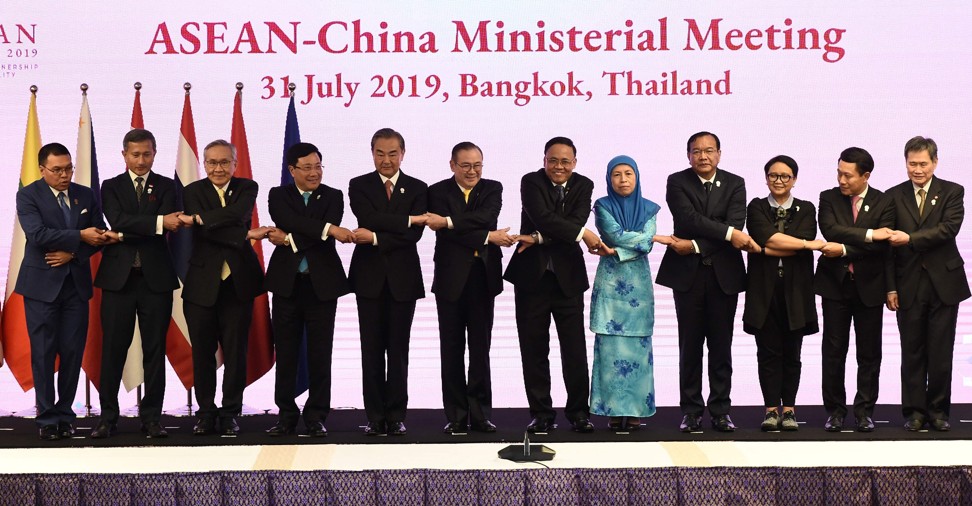
China’s Foreign Minister Wang Yi (fifth left) poses with foreign ministers from the Association of Southeast Asian Nations (Asean) countries during the ASEAN-China Ministerial Meeting in Bangkok. Photo: AFP
China is keen to complete a deal which would offer it a buffer against the United States in Asia, and which would allow it to champion its free trade position, while the US pursues protectionist trade policy.
The RCEP talks took place as Chinese and American trade negotiators resumed face-to-face discussions in Shanghai, which also ended on Wednesday, although there was little sign of similar progress.
As the rivalry between Beijing and Washington has intensified and bilateral trade waned, the Association of Southeast Asian Nations (Asean) overtook the US to become China’s second-largest trading partner in the first half of 2019. From January to June, the trade volume between China and the 10-member bloc reached US$291.85 billion, up by 4.2 per cent from a year ago, according to government data.
The Asean bloc is made up of Indonesia, Thailand, Malaysia, Singapore, Philippines, Vietnam, Myanmar, Cambodia, Brunei and Laos.
China will work together with the RCEP countries to proactively push forward the negotiation, strive to resolve the remaining issues as soon as possible, and to end the negotiations as soon as possible. Li Chenggang
RCEP talks will now move to a higher level ministerial meeting in Beijing on Friday and Saturday, but trade experts have warned that if material progress is not made, it is likely that the RCEP talks will continue into 2020, prolonging a saga which has already dragged on longer than many expected. It is the first time China has hosted the ministerial level talks.
But complicating matters is the fact that India’s Commerce Minister, Piyush Goyal, will not attend the ministerial level talks, with an Indian government official saying that he has to participate in an extended parliamentary session.
India is widely viewed as the biggest roadblock to concluding RCEP, the first negotiations for which were held in May 2013 in Brunei. Delhi has allegedly opposed opening its domestic markets to tariff-free goods and services, particularly from China, and has also had issues with the rules of origin chapter of RCEP.
China is understood to be “egging on” other members to move forward without India, but this could be politically explosive, particularly for smaller Asean nations, a source familiar with talks said.
Deborah Elms, executive director of the Asian Trade Centre, a Singapore-based lobby group, said that after the last round of negotiations in Melbourne between June 22 to July 3 – which she attended – there was “frustration” at India’s reluctance to move forward.
She suggested that in India’s absence, ministers in China could decide to move forward through a “pathfinder” agreement, which would remove India, but also potentially Australia and New Zealand.
India’s Commerce Minister, Piyush Goyal, will not attend the ministerial level talks this week in Beijing. Photo: Bloomberg
This “Asean-plus three” deal would be designed to encourage India to come on board, Elms said, but would surely not go down well in Australia and New Zealand, which have been two of the agreement’s biggest supporters.
New Zealand has had objections to the investor protections sections of RCEP, and both countries have historically been pushing for a more comprehensive deal than many members are comfortable with, since both already have free trade agreements with many of the other member nations.
However, their exclusion would be due to “an unfortunate geographical problem, which is if you’re going to kick out India, there has always been an Asean-plus three concept to start with”. Therefore it is easier to exclude Australia and New Zealand, rather than India alone, which would politically difficult.
A source close to the negotiating teams described the prospect of being cut out of the deal at this late stage as a “frustrating rumour”, adding that “as far as I know [it] has no real basis other than a scare tactic against India”.
There was “never a chance of concluding [the deal during] this round, but good progress is being made is what I understand. The key issues remain India and China”, said the source, who wished to remain anonymous.
Replacing bilateral cooperation with regional collaborations is a means of resolving the disputesTong Jiadong
However, Tong Jiadong, a professor of international trade at the Nankai University of Tianjin, said Washington’s refusal to recognise India as a developing country at the World Trade Organisation could nudge the world’s second most populous nation closer to signing RCEP.
“That might push India to the RCEP, accelerating the pace of RCEP,” Tong said, adding that ongoing trade tensions between Japan and South Korea could also be soothed by RCEP’s passage.
“Replacing bilateral cooperation with regional collaborations is a means of resolving the disputes between the two countries,” Tong said.
Although the plan was first proposed by the Southeast Asian countries, China has been playing an increasingly active role, first as a response to the now defunct US-backed Trans-Pacific Partnership (TPP), and more recently as a means of containing the impact of the trade war.
China’s vice-commerce Minister, Wang Shouwen, told delegates last week that RCEP was “the most important free trade deal in East Asia”. He called on all participants to “take full advantage of the good momentum and accelerating progress at the moment” to conclude a deal by the end of the year.
Source: SCMP
Posted in Asean nations, ASEAN-China Ministerial Meeting, Asia, Asian Trade Centre, Australia, Bangkok, Beijing, biggest roadblock, Brunei, Cambodia, China alert, claims, Delhi, Henan province, India alert, Indian Commerce Minister, Indonesia, Japan, Laos, Malaysia, Melbourne, Myanmar, Nankai University of Tianjin, New Zealand, Philippines, Piyush Goyal, progress, Regional Comprehensive Economic Partnership (RCEP), remains, rivalry, Shanghai, Singapore, South Korea, Thailand, towards, Trans-Pacific Partnership (TPP), Uncategorized, United States, Vietnam, Washington, World Trade Organisation (WTO), world’s biggest trade deal, Zhengzhou |
Leave a Comment »
31/07/2019
- China’s Wang Yi and US’ Mike Pompeo at summit in Thailand to sell their visions of future for Southeast Asia
- Analysts expect pragmatism from Asean as world’s two biggest economic powers play diplomatic game
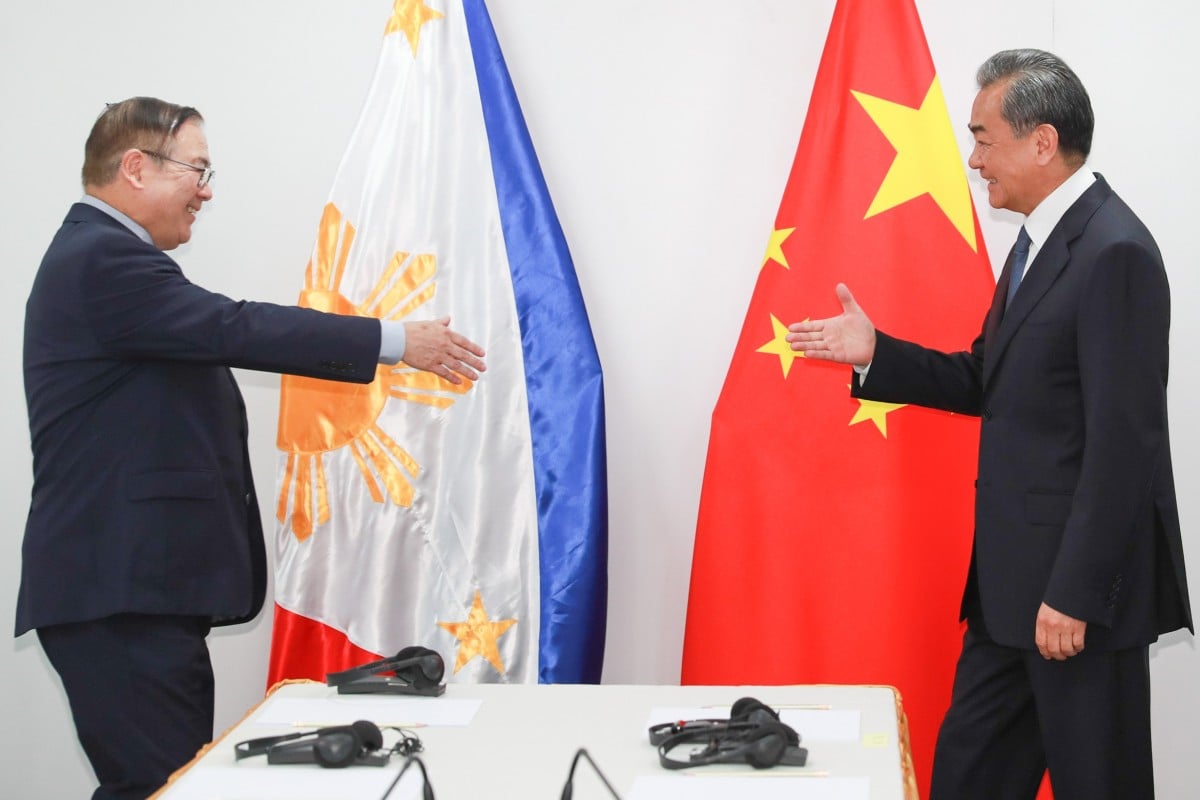
Chinese Foreign Minister Wang Yi (right) greets his Philippine counterpart Teodoro Locsin at the Asean meeting in Bangkok, Thailand. Photo: Xinhua
China and the United States are on a mission to strengthen ties with allies and expand their influence in Southeast Asia this week as their trade war enters a second year.
US Secretary of State Mike Pompeo arrived for a meeting of the Association of Southeast Asian Nations (Asean) in Bangkok on Wednesday to promote the US-led Indo-Pacific strategy, while Chinese Foreign Minister Wang Yi touched down a day earlier to advance Beijing’s Belt and Road Initiative.
The US Department of State said Pompeo’s trip was aimed at deepening Washington’s “long-standing alliances and vibrant bilateral relations with these countries, and [to] reaffirm our commitment to Asean, which is central to our vision for the Indo-Pacific region”.
In Beijing on Wednesday, Chinese foreign ministry spokeswoman Hua Chunying said that while their meeting was yet to be set, Wang and Pompeo were expected to meet and talk “frankly” about bilateral relations.
“I think that it is indeed necessary for China and the United States to maintain communication, as the two countries face many situations,” Hua said. “The issues would be communicated frankly”.
The Indo-Pacific strategy is a military and economic framework to contain China’s expansion into the Pacific and Indian oceans, and give an alternative to Beijing’s flagship belt and road development programme.
En route to Thailand, Pompeo said that after a stalled start to US Indo-Pacific policy during the Barack Obama administration, Washington’s strategy was well on its way to bearing fruit for the US and its allies.
South China Sea tensions, US-China trade war loom over Asean summit
“We have watched these coalitions build out,” he said.
Pompeo dismissed claims that China’s sphere of influence among Asean members was growing, saying such speculation was “not factually accurate”.
“[Asean countries] are looking for partners that are going to help them build out their economies and to take good care of their people,” he said, pledging greater engagement from President Donald Trump’s administration.
Pompeo was expected to sit down on Friday with his South Korean and Japanese counterparts to consolidate their trilateral alliance in the region.
He was also expected to hold talks with Thai Foreign Minister Don Pramudwinai that day.
US Secretary of State Mike Pompeo is expected to meet Chinese Foreign Minister Wang Yi at Asean in Thailand. Photo: EPA-EFE
Meanwhile, Wang launched his belt and road pitch to his Cambodian, Philippine and Indonesian counterparts after he arrived in Thailand for the gathering, which ends on Saturday.
The belt and road projects are largely commercial and aimed at strengthening land and sea infrastructure linking Asia, Europe and Africa. But they raised suspicion in the West that they are aimed at eroding the US-led world order.
During his meeting with Philippine Foreign Affairs Secretary Teodoro Locsin, Wang said: “China is willing to have high-level exchanges with the Philippines, to deepen the mutual trust, and promote the Belt and Road Initiative [in the Philippines] … to accelerate the development of regional infrastructure.”
Can China’s trade boost with Asean help get the Regional Comprehensive Economic Partnership over the line?
This year’s Asean forum was taking place as countries were more receptive to Chinese initiatives, in part due to the unpredictability of the US administration, according to Rajeev Ranjan Charturvedy, a visiting fellow at the S. Rajaratnam School of International Studies at Nanyang Technological University in Singapore.
“Policy uncertainties under the Trump administration have already pushed some Asean countries towards China in ways that would have seemed unlikely a few years ago,” Charturvedy said.
Analysts said Trump’s “America first” approach shaped his Asean policy. The president had vowed to apply “punishments” to countries – including Asean member states – for contributing to the US trade deficit.
Chinese Foreign Minister Wang Yi is talking to Asean counterparts at a time when they are receptive to China’s proposals, an analyst says. Photo: AFP
Trump was absent at the Asean summit in Singapore last year, leading to concerns that Washington’s commitment to Asia was declining.
Charturvedy said the Asean forum’s focus was about building constructive regionalism, but China’s attitudes to security could pose a challenge.
“[However] Asean countries clearly hope not to be forced to choose between the US and Chinese offers. Rather, they would like more freedom of choice while accommodating for a larger role for China in the region,” he said.
Clarita Carlos, a professor of political science at the University of the Philippines, suggested that Asean members would be pragmatic during the forum.
Robert Lighthizer warns Vietnam over trade deficit with US
They would try to find their own balance between the two major powers – as countries rather than a bloc – to try to maximise each state’s interests and advantages, Carlos said.
“Vietnam has a love-hate relationship with China, especially as a winner in the ongoing US-China trade war,” she said. “Singapore has close relations with China. There are also ups and downs in the relationship with China for Brunei, Malaysia and Indonesia.”
Source: SCMP
Posted in africa, Asia, Association of Southeast Asian Nations (ASEAN), Bangkok, Barack Obama administration, Beijing, belt and road development programme, Belt and Road Initiative (BRI), belt and road projects, Brunei, Cambodian, China alert, China court Asean members, Chinese foreign minister Wang Yi, diplomatic game, Don Pramudwinai, enters second year, Europe, Indo-Pacific strategy, Indonesia, Indonesian, land infrastructure, Malaysia, Mike Pompeo, Philippine, Philippine Foreign Affairs Secretary, pragmatism, President Donald Trump, Regional Comprehensive Economic Partnership, Regional Comprehensive Economic Partnership (RCEP), S. Rajaratnam School of International Studies, sea infrastructure, Singapore, Singapore’s Nanyang Technological University, Southeast Asia, strengthen Indo-Pacific ties, summit, Teodoro Locsin, Thai Foreign Minister, Thailand, trade war, Trump administration, Uncategorized, United States, University of the Philippines, US court Asean members, visions of future, Washington |
Leave a Comment »
14/07/2019
- The Indian prime minister refused to back the Chinese leader’s ambitious global infrastructure vision at a summit last week, but the apparent snub is not getting in the way of amicable ties between Asia’s two biggest economies
Chinese President Xi Jinping and Indian Prime Minister Narendra Modi at the BRICS Summit at the Xiamen International Conference and Exhibition Center in 2017. Photo: AFP
Their informal summit in Wuhan last year created all the right optics; even their chemistry seemed on point. So, when
and
met last week on the sidelines of the Shanghai Cooperation Organisation (SCO), the bonhomie seemed like it was there to stay.
But a day later, cracks appeared to emerge. India, holding on to its long-stated position, delivered a public snub to China by refusing to endorse its ambitious, trillion-dollar
(BRI) in the SCO summit’s Bishkek declaration.
Now, after equal parts public bonhomie and disagreement over the BRI, where do
finally stand? Somewhere in the middle, by all indications.
With just 10 days before Xi and Modi meet again at the Russia-India-China (RIC) trilateral meeting on the sidelines of the
in Osaka, there have been increasing signs that both countries may now be trialling a fresh approach to diplomacy – one that neither sidesteps contentious issues nor does it allow differences to derail ties.
Chinese President Xi Jinping leads other leaders of Shanghai Cooperation Organisation: Russia’s Vladimir Putin and India’s Narendra Modi at the 2018 summit. Photo: Xinhua
Such an approach would delink the thorny issues – like the
and the BRI – from other non-contentious issues of cooperation in other sectors.
But the jury is still out on whether it will pay off, especially given the historical distrust and the baggage that both countries carry.
In the last week alone, there have been at least three flashpoints in the Sino-India relationship.
While the dust was still settling on India’s refusal to sign the Bishkek declaration endorsing the BRI, reports emerged that the
was expected to scrap plans to build jointly with China an ocean observatory overlooking the Indian Ocean. The news came a week after Modi had visited the Maldives capital Male in early June.
For Modi 2.0, India’s US-China balancing act just got trickier
The Maldives’ decision to build the observatory was first mulled in December 2017, raising the Indian establishment’s hackles as it would have given China a presence in the region.
Another irritant between India and China has seemed to be the proposed 16-nation
(RCEP). India has been lukewarm on the free-trade bloc, frustrating the Chinese. Indications have been that China is likely to push for a 13-member bloc at the coming RCEP meeting in Thailand on June 20, excluding India.
BRI and border issues have not managed to overshadow the remaining business between the two countries Narayani Basu
Yet, despite all this, there has been no let down in engagement levels between Modi and Xi. Both leaders are expected to meet at the RIC summit on June 29 to 30, and have at least two more meetings planned this year alone – an informal Xi-Modi summit in India
in October and the BRICS summit on November 13 to 14.
For Narayani Basu, a New Delhi-based author and independent foreign policy analyst with a special focus on China, such sustained engagement between the two countries signals a new level of maturity.
“There has been a fairly successful attempt at delinking historical geopolitical and territorial issues from issues which are economic in nature,” Basu said. “As a result, the BRI and border issues have not managed to overshadow the remaining business between the two countries.”
Indian Prime Minister Narendra Modi speaks with Chinese President Xi Jinping in Wuhan. Photo: Xinhua
STRONG LEADERS, STRONGER AGENDAS
The approach might also have to do with where both leaders currently stand.
Modi and his Bharatiya Janata Party (BJP) have freshly emerged from a landslide
. Through the campaign, Modi portrayed a hardline image of himself and his government, especially on issues of national security. Similarly, Xi has emerged as a stronger leader since his reappointment last year – his approach marked by a higher-than-ever emphasis on economic nationalism and connectivity. Modi made a reference to this in his SCO meeting with Xi.
Basu said Sino-India ties were also being guided by the personalities of both leaders – strong, with harder-than-before agendas.
Did Japan and India just launch a counter to belt and road?
“They both came back on agendas based on consolidation of power, protection of sovereignty and nationalism. These are all issues that will not allow either side to blink easily. “So, even as both leaders are looking to move forward, they also do not want to compromise on their core issues – primary among them being territorial sovereignty,” she said.
The message is loud – India’s opposition to the BRI does not mean India will allow adversarial relations to develop between the two Sana Hashmi
In his SCO summit speech, Modi brought up territorial sovereignty as a thinly veiled reference to China’s BRI, saying India only supported connectivity projects that are based on “respect of sovereignty” and “regional integrity”.
Sana Hashmi, an analyst with Perth-based think tank Future Directions International and author of China’s Approach Towards Territorial Disputes: Lessons and Prospects, agreed that India was not letting historical issues get in the way of its relationship with Beijing.
Hashmi noted that India’s main objections to BRI revolved around one component – the China-
Economic Corridor (CPEC), which runs through the disputed region of Kashmir.
“But to make sure this does not affect the relationship, PM Modi and President Xi are meeting numerous times,” Hashmi said. “The message is loud – India’s opposition to the BRI does not mean India will allow adversarial relations to develop between the two.”
A NEED FOR EACH OTHER
Another factor that has likely prompted the new approach between India and China is their need for each other, particularly as both Asian powers navigate bumpy relationships with US under
China is caught in a protracted
and is reeling from the tariffs imposed on Chinese imports to America. India, too, has seen a similar but smaller version of this trade battle play out – things have escalated especially since the Trump administration withdrew its preferential trade treatment towards India. Responding to this, India imposed tariffs on 28 US products over the weekend.
Move over, ‘Made in China’. It’s ‘Made in Bangladesh’ era now
In such a context, a stronger relationship between the two Asian giants might be in mutual interest.
Basu said the scope for the relationship to deliver on, especially economically, is vast.
“Despite the chemistry, India and China’s promises to each other on the economic front haven’t materialised on the ground. Major projects as well as investments in each country are stuck.”
Source: SCMP
Posted in Beijing, Belt and Road (B&R), bonhomie, BRICS summit, China-India ties, China-Pakistan Economic Corridor (CPEC), China’s Approach Towards Territorial Disputes: Lessons and Prospects, Chinese President Xi Jinping, derail, disagreement, Group of 20 (G20) summit, Indian Prime Minister Narendra Modi, Japan, Made in Bangladesh, Made in China, Maldives, Osaka, Regional Comprehensive Economic Partnership (RCEP), Shanghai Cooperation Organisation (SCO), snub, Uncategorized, US President Donald Trump, Vladimir Putin, Xiamen International Conference and Exhibition Center |
Leave a Comment »





 CHINDIA ALERT: You'll be living in their world, very soon