Chindia Alert: You’ll be Living in their World Very Soon
aims to alert you to the threats and opportunities that China and India present. China and India require serious attention; case of ‘hidden dragon and crouching tiger’.
Without this attention, governments, businesses and, indeed, individuals may find themselves at a great disadvantage sooner rather than later.
The POSTs (front webpages) are mainly 'cuttings' from reliable sources, updated continuously.
The PAGEs (see Tabs, above) attempt to make the information more meaningful by putting some structure to the information we have researched and assembled since 2006.
In his “verbal message of thanks”, Mr Xi said he highly appreciated Mr Kim’s support during China’s outbreak and “showed his personal attention to the situation of the pandemic and people’s health” in North Korea, according to state media.
Mr Xi called for more efforts to strengthen co-operation in preventing the spread of the coronavirus, and said China was “willing to continue to provide assistance within its own capacity for [North Korea] in the fight against Covid-19”.
On Friday, North Korean state media reported that Mr Kim had sent a verbal message to the president that “congratulated him, highly appreciating that he is seizing a chance of victory in the war against the unprecedented epidemic”.
Image copyright REUTERSImage caption Kim Jong-un disappeared from public view for 20 days, before visiting a factory on 2 May
Mr Kim recently went 20 days without appearing in public, and missed the celebration of his grandfather’s birthday – one of the biggest events of the year.
Some media reports claimed he was “gravely ill”, or even dead.
But he then appeared at a fertiliser factory on 2 May – apparently in good health.
On Wednesday, South Korea’s National Intelligence Service told a parliamentary committee that there had been no signs the health rumours were true.
“He was performing his duties normally when he was out of the public eye,” a member of the committee, Kim Byung-kee, told reporters afterwards.
The lawmaker said the North Korean leader’s absence could have been down to a Covid-19 outbreak that the authorities in Pyongyang had not reported.
Analysis
By Celia Hatton, Asia Pacific Editor, BBC World Service
For months, North Korea-watchers have questioned Pyongyang’s claims that it has managed to isolate itself from Covid-19.
Admittedly, North Korea was the first country to suspend travel in response to the virus. There are unconfirmed reports that North Korean guards have been ordered to shoot at those who try to cross the lengthy border the North shares with China. However, it will be difficult to completely seal that dividing line for long. North Korea’s underground economy relies on illicit trade with Chinese entrepreneurs.
Beijing has a few good reasons for wanting to help North Korea. On a practical level, China needs to suppress a possible Covid-19 outbreak there if it wants to keep its own population healthy. Beijing also worries about what might happen inside North Korea if the virus takes hold. The North’s decrepit health system would quickly be overwhelmed by an outbreak of Covid-19, and that could threaten the fragile Kim Jong-un regime. Beijing has been Pyongyang’s biggest aid donor for decades, and it will continue to do what it can to keep Mr Kim in power. The alternatives to Kim Jong-un are much riskier for China, which does not want change on its doorstep.
China’s global political interests are also at play. Diplomatically, Mr Xi’s public exchange with Kim Jong-un underlines the seemingly close ties between China and North Korea. Pyongyang has been slow to accept public offers of help from the United States, and peace talks with Washington have stalled. If North Korea appeared to accept Beijing’s help, China would reassert itself as North Korea’s “true” ally in a time of need.
South Korea itself reported 18 new confirmed cases of Covid-19 on Saturday.
Seventeen of them are linked to a 29-year-old man who tested positive after spending time at five nightclubs and bars in Seoul’s Itaewon leisure district last weekend, the Yonhap news agency said.
Mayor Park Won-soon ordered nightclubs, bars and hostess venues across the capital to suspend business in response.
“Carelessness can lead to an explosion in infections – we clearly realised this through the group infections seen in the Itaewon club case,” Mr Park said.
Health officials have urged people who have visited the five venues in Itaewon to self-isolate and get tested to prevent additional transmissions. At least 1,500 people signed their entry logs, according to Yonhap.
The new infections brought the nationwide total to 10,840, while the death toll remained unchanged at 256.
As China prepares its 14th five-year plan, researchers at one state-affiliated think tank predicted a more hostile global situation
Beijing urged to strengthen home-grown innovation and use vast domestic market to power economy post-coronavirus
A think tank linked to China’s State Council has encouraged Beijing to focus on home-grown technology and its vast consumer market over the next five years. Photo: Xinhua
China’s will face an increasingly hostile world over the next five years, meaning its policy plan should be focused on its vast domestic market, home-grown technological innovation and improving its citizen’s welfare, according to recommendations in a new paper.
The report by the Chinese Academy of Social Sciences (CASS), a think tank affiliated with the State Council, foresees the next five years presenting “major changes unseen in a century” for China, as “the strategic game between superpowers has intensified, while international systems and orders are reshuffled”.
While the report does not mention the coronavirus specifically, its recommendations suggest that China should become more self-reliant in response to the pandemic. This view represents one side of a lively debate among policymakers and scholars in China, ahead of the next five-year plan, which will come into place next year.
Between 2021 and 2025, the globalised economy which helped China grow into an economic power will be radically different, the report said, meaning it must adapt if it is to continue to thrive.
“The disadvantages of economic globalisation have increasingly stood out. Populism has risen as the global economy weakens, while countries are divided as imbalances expand. The old multilateral [trading] system is under pressure,” read the paper, part of a wave of preliminary studies offering advice ahead of China’s 14th five-year plan, a blueprint for economic and social development.
China is the only major economy that publishes a five-year policy plan and has been doing so since 1953, in a tradition borrowed from the Soviet Union. China’s own plans are broad strategic guidelines, rather than Moscow’s previously detailed command economy production worksheets.
China is currently in the final year of its 13th five-year plan, the stage during which the Soviet Union collapsed. The 14th plan is expected to be published in early-2021, but brainstorming about challenges and policy options is well under way among academics and state planning officials.
That debate is expected to feature prominently in the coming meetings of the “Two Sessions,” the Chinese People’s Political Consultative Congress, which is due to meet in Beijing on May 21, and the National People’s Congress, which will begin to meet a day later.
A common point in the debate is that the lessons of the past few years have shown the need to be more self-reliant. Even before the coronavirus outbreak, the US-China trade war and the growing superpower rivalry have made many think that Beijing can no longer rely on the goodwill of trading partners to continue the expansion it has enjoyed since the late-1970s.
Coronavirus pandemic creates ‘new Cold War’ as US-China relations sink to lowest point in decades
In December 2017, US President Donald Trump declared China a “strategic competitor” in anticipation of the Chinese economy reaching two-thirds the size of America’s, which happened in 2018. Since then, the two have engaged in a tit-for-tat tariff battle, while the coronavirus has served to sharpen tensions and fuel arguments for further decoupling.
“Uncertainties and instabilities are clearly increasing,” read the analysis published in the academic journal Economic Perspectives this week.
Without citing coronavirus directly, the CASS researchers suggested that China should “stick to its developmental direction and concentrate on doing its own things well”.
China now has a middle income group of between 500 and 700 million people and that alone can be a source empowering China’s economic growth for the next five years, the report said.
However, China must also attempt to smooth out a major weakness, namely unbalanced growth, including the yawning wealth gap between urban and rural groups.
In terms of innovation, the researchers led by Huang Qunhui said China should rely less on foreign technologies. “China’s innovation capacity is still lagging behind developed countries. Breakthroughs in core technologies are in urgent need,” read the report.
The Made in China 2025 plan, published in 2015, stated Beijing’s ambitions to dominate future technologies such as robotics and artificial intelligence. However, after loud complaints from the US and European Union, China has been forced to play down such bold innovative goals.
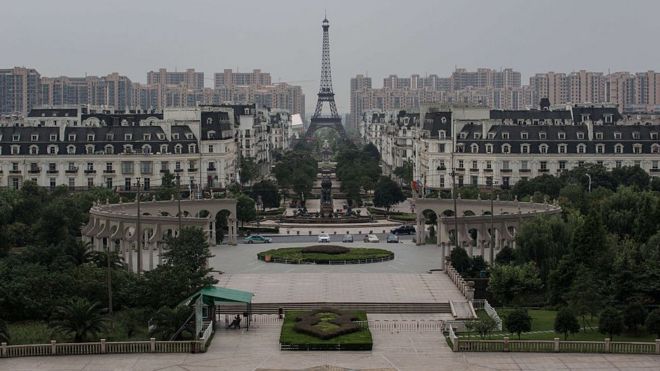
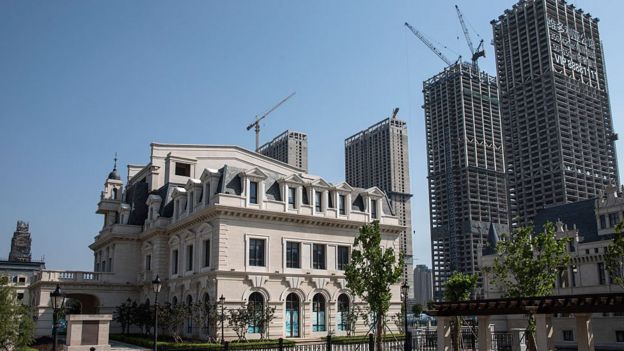
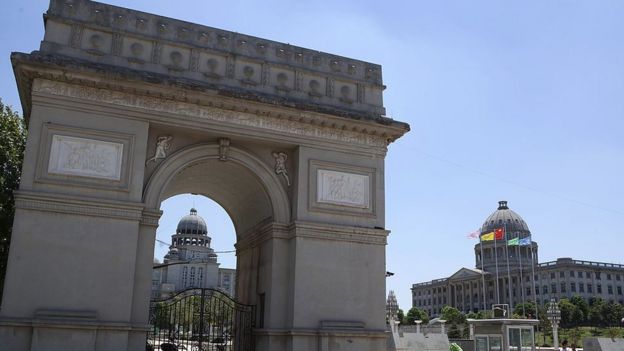
The statement, issued on 27 April but only reported this week, singles out stadiums, exhibition centres, museums and theatres as public facilities where it’s especially important to ban plagiarism.
“City constructions are the combination of a city’s external image and internal spirit, revealing a city’s culture,” the government statement says.
It calls for a “new era” of architecture to “strengthen cultural confidence, show the city’s features, exhibit the contemporary spirit, and display the Chinese characteristics”.
Image copyright STR / AFP / GETTYImage caption – Not the Arc de Triomphe, but a college gate in Wuhan
The guidelines on “foreign” architecture were mostly welcomed on Chinese social media.
“The ban is great,” wrote a Weibo user, according to state media the Global Times. “It’s much better to protect our historical architectures than build fake copycat ones.”
Another recalled seeing an imitation White House in Jiangsu province. “It burned my eyes,” she said.
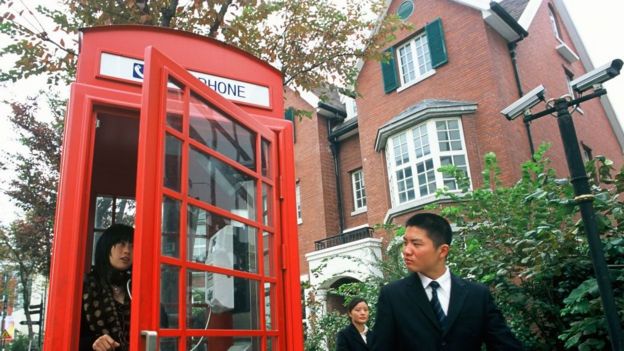
Image copyright OLIVIER CHOUCHANA / GETTYImage caption Thames Town, an English-themed town near Shanghai, pictured in 2008
In 2013, the BBC visited “Thames Town”, an imitation English town in Songjiang in Shanghai.
The town features cobbled streets, a medieval meeting hall – even a statue of Winston Churchill – and was a popular spot for wedding photos.
“Usually if you want to see foreign buildings, you have to go abroad,” said one person. “But if we import them to China, people can save money while experiencing foreign-style architecture.”
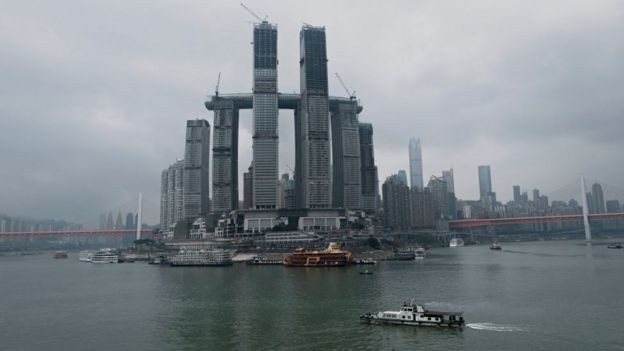
Image copyright WANG ZHAO / GETTYImage caption – Raffles City, Chongqing, in 2019 – mimicking the Marina Bay Sands hotel in Singapore
China, of course, is not the only country to borrow – or copy – other countries’ designs.
Las Vegas in the US revels in its imitations of iconic foreign architecture including the Eiffel Tower and Venetian canals.
Thailand also has developments that mimic the Italian countryside and charming English villages, mainly aimed at domestic tourists.
BEIJING (Reuters) – China announced on Wednesday that its parliament will open a key annual session on May 22, signalling that Beijing sees the country returning to normal after being reduced to a near-standstill for months by the COVID-19 epidemic.
During the gathering of the National People’s Congress in the capital, delegates will ratify major legislation, and the government will unveil economic targets, set defence spending projections and make personnel changes. The ruling Communist Party also typically announces signature policy initiatives.
The session was initially scheduled to start on March 5 but was postponed due to COVID-19, which has infected nearly 83,000 people and killed more than 4,600 on the mainland after emerging late last year in the central city of Wuhan.
As the epidemic has subsided, economic and social life gradually returned to normal, making it possible for the congress to convene, the official Xinhua news agency quoted the standing committee of the NPC, the legislature’s top decision-making body, as saying.
The committee also appointed Huang Runqiu as the new minister for ecology and environment, a post vacated when predecessor Li Ganjie became deputy Communist Party chief for Shandong province earlier this month, Xinhua reported.
Tang Yijun was also named as the new justice minister to replace Fu Zhenghua, who has reached the retirement age of 65 for ministers.
The Chinese People’s Political Consultative Conference (CPPCC), an advisory body to parliament, has proposed starting its annual session a day before the parliamentary session opens.
Analysts expect China to roll out additional fiscal stimulus in order to cushion the blow from COVID-19, which has developed in to a worldwide pandemic that some fear will trigger a severe global recession.
China’s economy contracted for the first time on record during the January-March period, when the government imposed severe travel and transport restriction to curb the spread of the epidemic.
Parliament is also expected to discuss the anti-government protests in Hong Kong, amid growing speculation that Beijing take steps to strengthen its grip on the city.
It is unclear how long parliament and its advisory body will meet for this time, and people familiar with the matter have told Reuters that this year’s annual sessions could be the shortest in decades due to COVID-19 concerns. Usually more than 5,000 delegates descend on Beijing from all over China for at least 10 days.
Beijing city plans to ease quarantine rules as early as Thursday, two sources familiar with the situation told Reuters, ahead of the key political meetings.
People arriving in the capital from other parts of China will no long have to be quarantined for two weeks unless they come from high-risk areas such as Heilongjiang in the north and some parts of Guangdong in the southeast, the sources said.
Myanmar’s State Counsellor and Foreign Minister Aung San Suu Kyi (R) meets with visiting Chinese State Councilor and Foreign Minister Wang Yi in Nay Pyi Taw Dec. 7, 2019. (Xinhua/U Aung)
NAY PYI TAW, Dec. 8 (Xinhua) — China and Myanmar pledged on Saturday to strengthen communication and high-level exchanges, according to a meeting held between Myanmar’s State Counsellor and Foreign Minister Aung San Suu Kyi and visiting Chinese State Councilor and Foreign Minister Wang Yi.
Wang said in light of the 70th anniversary of the establishment of their diplomatic relations next year, China and Myanmar should hold a series of celebrations, plan and prepare for high-level exchanges, comprehensively push forward cooperation in areas including economy, trade, people-to-people and cultural exchanges.
Wang said China and Myanmar should also carry forward the “Paukphaw” (fraternal) friendship, deepen the comprehensive strategic cooperative partnership and jointly build a community of shared future.
Wang said China is willing to promote China-Myanmar Economic Corridor from concept and plan into substantial implementation and build it into a flagship program of joint construction of the Belt and Road between the two countries.
Wang said infrastructure connectivity is framework of China-Myanmar Economic Corridor and the two sides should cooperate on pressing forward projects including Kyaukphyu Special Economic Zone and border economic cooperation zones.
Wang stressed that China always upholds democratization of international relations, advocates equality among countries, opposes interference in internal affairs of other countries, and disapproves of complicating bilateral issues by involving more parties.
Wang said China’s development will bring opportunities to the world, especially neighboring countries and China will stand firm with people of Myanmar during the future development process of the country.
Suu Kyi appreciated support extended by China on safeguarding national sovereignty, opposing foreign interference, promoting social and economic development of Myanmar, adding that Myanmar is willing to strengthen communication with China on international and regional issues and jointly uphold the purpose and principles of the UN Charter.
She said the two sides will seize the 70th anniversary of the establishment of their diplomatic relations as an opportunity to strengthen high-level exchanges, jointly build the Belt and Road as well as China-Myanmar Economic Corridor.
Wang also met with U Kyaw Tint Swe, minister of the State Counsellor’s Office, U Thuang Tun, minister of Investment and Foreign Economic Relations, U Han Zaw, minister for Construction, U Kyaw Tin, minister for International Cooperation, and attended the signing ceremony of a cooperation agreement on the same day.
Wang said China pays close attention to Rakhine issue and is ready to provide assistance on repatriation-related work and help promote economic development in Rakhine and improve people’s livelihoods. Meanwhile, Myanmar hopes that China continues to play an important and positive role in Rakhine issue.
Li Zhanshu (L), chairman of the Standing Committee of the National People’s Congress of China, meets with Azerbaijani President Ilham Aliyev in Baku, Azerbaijan, Sept. 19, 2019. Li paid an official goodwill visit to Azerbaijan from Sept. 19 to 21 at the invitation of Ogtay Asadov, speaker of the National Assembly of Azerbaijan. (Xinhua/Pang Xinglei)
BAKU, Sept. 21 (Xinhua) — Li Zhanshu, chairman of the Standing Committee of the National People’s Congress (NPC) of China, and top Azerbaijani officials have agreed here to strengthen bilateral cooperation in various areas.
During an official goodwill visit from Thursday to Saturday, Li met with Azerbaijani President Ilham Aliyev and conveyed Chinese President Xi Jinping’s cordial greetings to him.
Li briefed Aliyev on the great achievements of the People’s Republic of China since its founding 70 years ago, saying that the Communist Party of China is forging ahead on the road of socialism with Chinese characteristics in line with China’s national conditions.
The socialism with Chinese characteristics has now entered a new era, and China under the leadership of Xi is striving to achieve its “two centenary goals” and realize the Chinese dream of the great rejuvenation of the Chinese nation, Li told Aliyev.
China deems Azerbaijan as an important partner in Eurasia and is ready to implement the blueprint made by Xi and Aliyev on the development of bilateral ties, further cement political mutual trust, strengthen practical cooperation in various areas, and jointly safeguard the two countries’ security and development interests, Li said.
Aliyev asked Li to convey his best wishes to Xi and said he had witnessed the great changes in China with his own eyes during his repeated trips to the country and that he admired such achievements.
Azerbaijan-China relations are developing rapidly with a rosy future, he said, adding that his country firmly adheres to the one-China principle, and intends to combat jointly with China the “three forces” of terrorism, separatism and extremism, and improve their coordination and cooperation on international and regional issues.
LEGISLATIVE EXCHANGES
During a meeting with Ogtay Asadov, speaker of the National Assembly of Azerbaijan, Li said his visit was aimed at strengthening cooperation between the two legislatures and implementing the important consensuses reached by the two heads of state.
The Chinese top legislator suggested both sides increase interactions at various levels, exchange experience on governing the countries, and provide legal assurance for bilateral practical cooperation.
Every country has a unique history, national situation and culture, so different civilizations should coexist harmoniously and learn from each other, Li said.
The NPC of China is willing to work with the National Assembly of Azerbaijan to promote cultural and people-to-people exchanges between the two countries, learn from each other, and cement public support for bilateral relations, he said.
Asadov said Li was the first top Chinese legislator to visit Azerbaijan in 19 years and that the trip has injected new vitality into the development of bilateral relations and the interactions between the two legislatures.
Azerbaijan and China have signed many cooperation deals and the two legislatures should help to deliver on the agreements, Asadov said.
An increasing number of Azerbaijani people are interested in Chinese culture and there is a need to promote educational, cultural and youth exchanges, he said.
ECONOMIC COOPERATION
At a meeting with Azerbaijani Prime Minister Novruz Mammadov, Li said Azerbaijan is located at the junction of Europe and Asia and is an important country along the Belt and Road.
Li said China is ready to boost economic and trade exchanges with Azerbaijan and enhance cooperation with the country in jointly building the Belt and Road and achieve more cooperation outcomes in such fields as energy, agriculture, transportation, logistics, tourism and informatization.
He welcomed Azerbaijan to the second China International Import Expo to be held in early November in Shanghai.
Mammadov said his country was among the earliest participants in the Belt and Road Initiative and is ready to expand cooperation with China in various areas.
He welcomed more Chinese investments in Azerbaijan and expected cooperation with China on the construction of a Trans-Caspian International Transport Corridor so that more Chinese goods can hit the Eurasian market via Azerbaijan.
During his stay in Baku, Li also visited the Heydar Aliyev Center and a carpet museum, and laid a wreath at the tomb of former President Heydar Aliyev and the Eternal Flame.


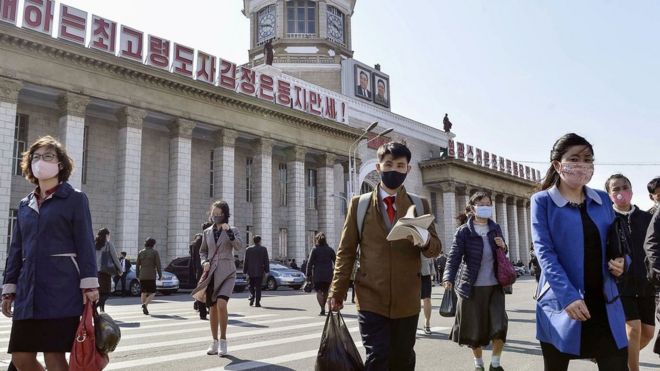 Image copyright REUTERS
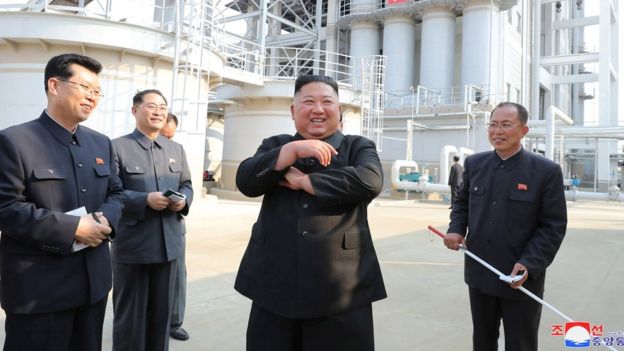 Image copyright REUTERS



 CHINDIA ALERT: You'll be living in their world, very soon