Chindia Alert: You’ll be Living in their World Very Soon
aims to alert you to the threats and opportunities that China and India present. China and India require serious attention; case of ‘hidden dragon and crouching tiger’.
Without this attention, governments, businesses and, indeed, individuals may find themselves at a great disadvantage sooner rather than later.
The POSTs (front webpages) are mainly 'cuttings' from reliable sources, updated continuously.
The PAGEs (see Tabs, above) attempt to make the information more meaningful by putting some structure to the information we have researched and assembled since 2006.
There has been strong demand for air freight services since April, when Chinese factories got back to work
Cargo flights have become critical in moving protective health equipment across the globe
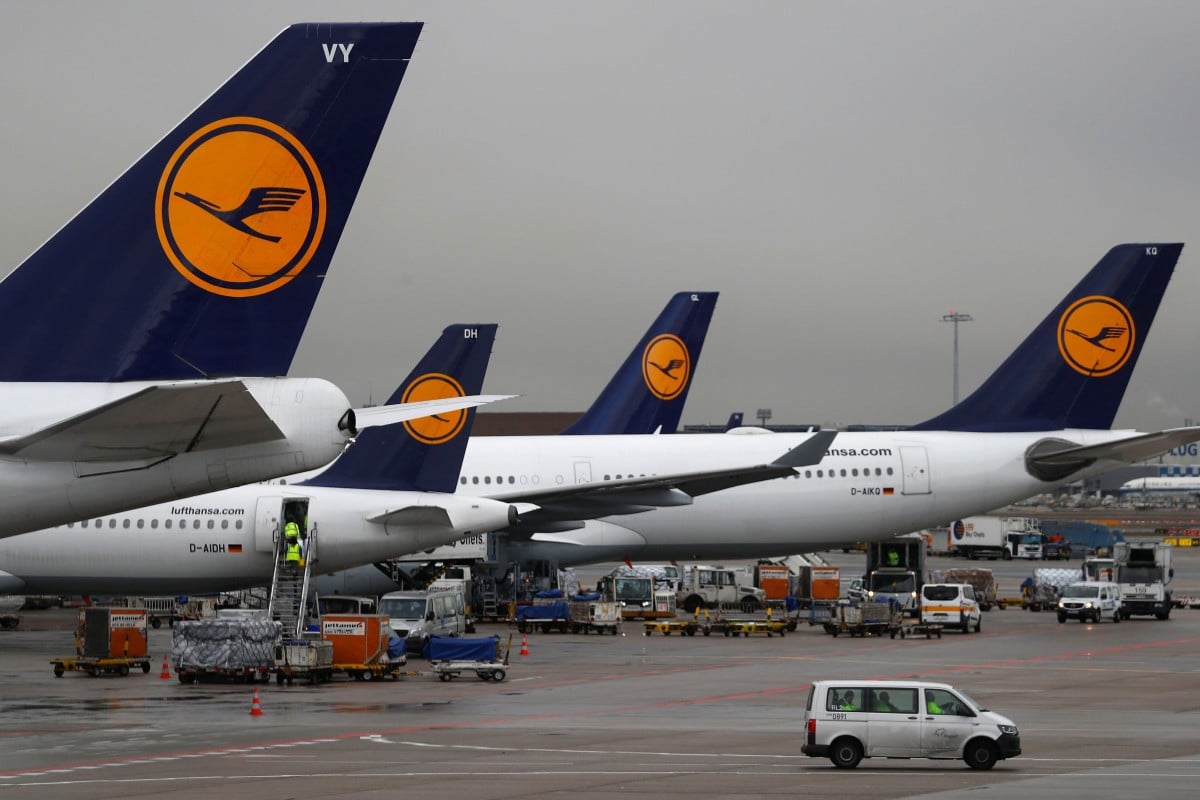
Planes of German air carrier Lufthansa at the country’s largest airport in Frankfurt. Photo: Reuters
German freight carrier Lufthansa Cargo is expanding in China, surpassing 100 weekly flights for the first time, and adding new flights to Shenzhen.
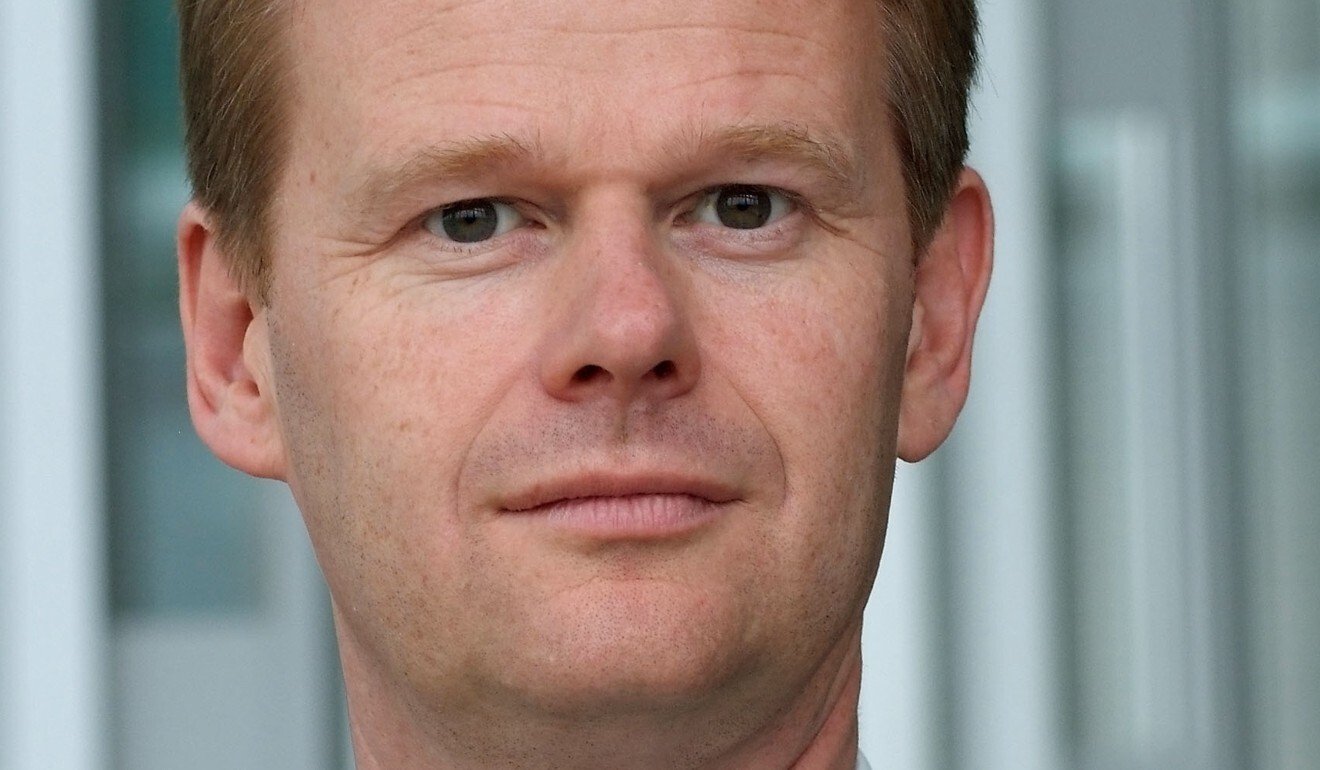
Peter Gerber, CEO of Europe’s largest cargo airline, said there had been heavy demand for its services, though this might cool by the peak of summer.
“At the moment, cargo demand is very, very strong,” he told the Post. “It started to get strong in April, when Chinese industries got back to work, and after that we have seen a constant, heavy demand, a real peak.”
Cathay Pacific and Cathay Dragon report combined HK$4.5 billion loss for start of 2020
15 May 2020
Global air freight capacity has been squeezed as two-thirds of the world’s aircraft have been grounded by the Covid-19 pandemic.
The collapse of air travel has practically put a stop to passenger flights, which typically carry half of all air cargo.
Since the pandemic, cargo flights have been critical in moving protective health equipment across the globe. From sending masks and other supplies to China in February, the German carrier is now taking urgent supplies from the mainland back to Europe.
Peter Gerber says Lufthansa Cargo has a high responsibility in maintaining supply chains, for both global health and world trade. Photo: Handout
“We have a high responsibility in maintaining supply chains in these unprecedented times for both global health and world trade,” Gerber said.
With the addition of Shenzhen, Lufthansa Cargo will fly to five destinations in China. It serves more than 300 destinations in 100 countries.
The cargo carrier is part of the Lufthansa Group and coordinates all the freight that goes into the passenger planes of its sibling brands, including Lufthansa, Swiss and Austrian.
Coronavirus: South Africa asks Hong Kong to remove its citizens from government quarantine list
16 May 2020
By next week, Lufthansa Cargo will be running more freight flights to China than the 72 passenger flights the group flew weekly before the pandemic to Beijing, Shanghai, Shenyang, Nanjing and Qingdao.
Lufthansa Cargo has a fleet of seven Boeing 777 Freighters (777Fs), with two new 777Fs arriving this year as part of its strategy to operate a fleet with a single aircraft type.
It also has six McDonnell Douglas-11Fs that Gerber said would still be retired as planned at the end of 2020, despite the extra demand for cargo capacity.
Its additional flights to China will make use of “preighters” – passenger aircraft flying cargo only. Gerber felt the trend of using empty passenger planes as “preighters” had peaked, pointing out that they cost the same to operate as freighters but carry only a fraction of the cargo.
Although he did not rule out future expansion, he said: “Demand will gradually come down in the next two or three months because a lot of equipment would have been shipped by then and some shipments will go on rail or ocean shipping.”
Coronavirus: Cathay Pacific could get cash injection from shareholder Qatar Airways
13 May 2020
He said some uncertainty remained over continued demand for airfreighted cargo, given the battered state of the world economy. Airlines would have to consider longer-term demand before deciding to invest more in cargo aircraft. “It depends how it looks beyond the next year,” he said.
Gerber said no decision had been taken yet on whether to convert some of the group’s orders for Boeing’s newest widebody 777X passenger aircraft into cargo planes.
He added that future plane orders would be balanced against the wider needs and spending decisions at Lufthansa Group, which is currently negotiating a government pandemic bailout package in the region of €9 billion (US$9.7 billion).
Calgary Zoo to ship pair back home after pandemic upends delivery of essential fresh produce
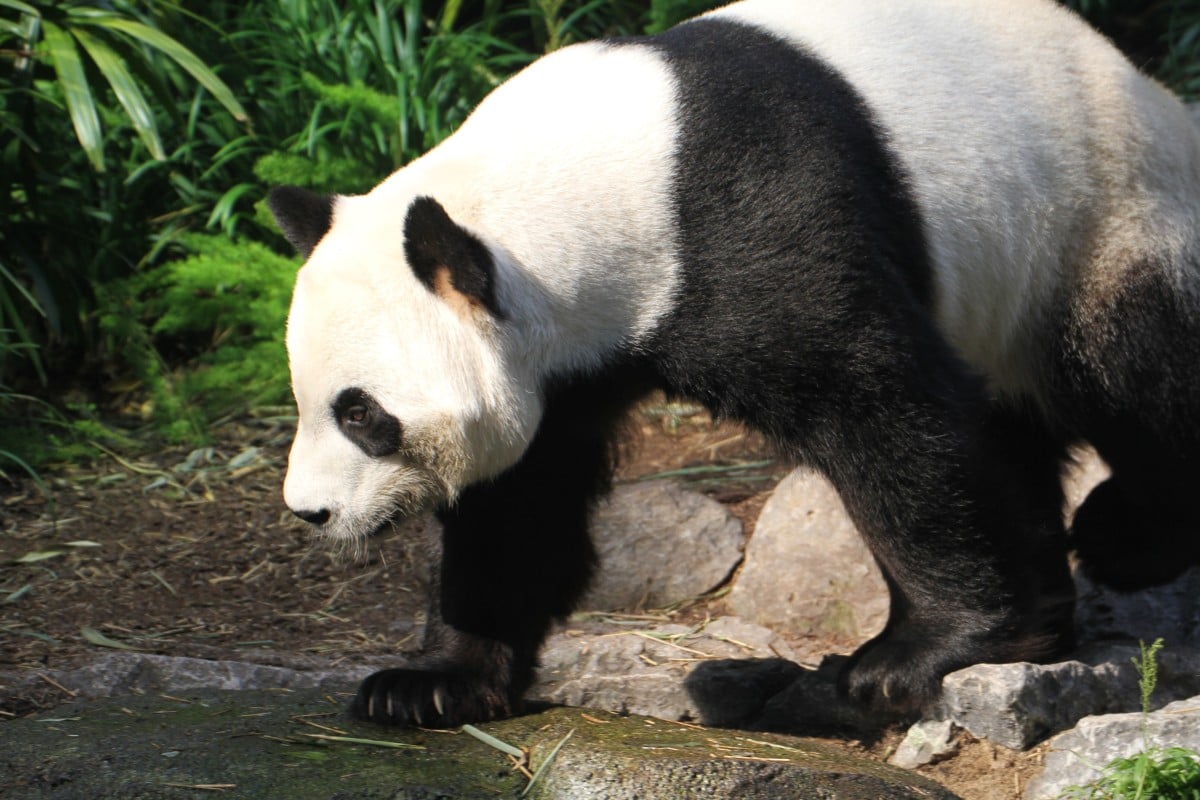
Er Shun and Da Mao refuse to eat some of the centre’s locally sourced supplies
The Calgary Zoo cannot guarantee supplies of fresh bamboo for its giant pandas.Photo: Calgary Zoo
A Canadian zoo has decided to send two adult giant pandas back to China because the
coronavirus pandemic has disrupted essential deliveries of fresh bamboo.
The Calgary Zoo said it previously had bamboo flown in from China directly, but was forced to switch to domestic supplies after flights were cancelled.
The pandas had refused to eat some of the local product, which had been degraded by longer delivery times, and the supplies could be disrupted without warning, the zoo said.
“Knowing a second wave of Covid-19 is likely, and the bamboo supply chain challenges will continue to negatively impact the zoo’s ability to bring bamboo to the giant pandas, the Calgary Zoo feels it’s critical to move the beloved giant pandas back to China where there are abundant local sources of bamboo as soon as possible,” the zoo said on Tuesday.
Giant pandas in Hong Kong mate naturally for the first time in a decade
Giant pandas feed almost exclusively on fresh bamboo and each adult chews through about 40kg (88 pounds) of the plant every day.
“We believe the best and safest place for Er Shun and Da Mao to be during these challenging and unprecedented times is where bamboo is abundant and easy to access,” Calgary Zoo president and chief executive Clément Lanthier said, referring to the two pandas. “This was an incredibly difficult decision to make but the health and well-being of the animals we love and care for always comes first.”
Er Shun and Da Mao arrived in Canada in 2014 as part of a 10-year agreement between Canada and China. They spent five years at the Toronto Zoo and arrived in Calgary in March 2018 with their cubs, Jia Panpan and Jia Yueyue.
It is unclear whether the cubs will be sent to China as well.
The zoo said the pandas would be deeply missed by staff, volunteers, donors and visitors from around the world. Although in-person farewells were not possible during the zoo’s temporary closure, the public could see the pandas online through PandaCam, it said.
In all, 58 giant pandas in 17 countries are on loan from China, according to the Chengdu Research Base of Giant Panda Breeding in Sichuan province.
Finland is the most recent recipient, taking delivery of a pair in January 2018, while
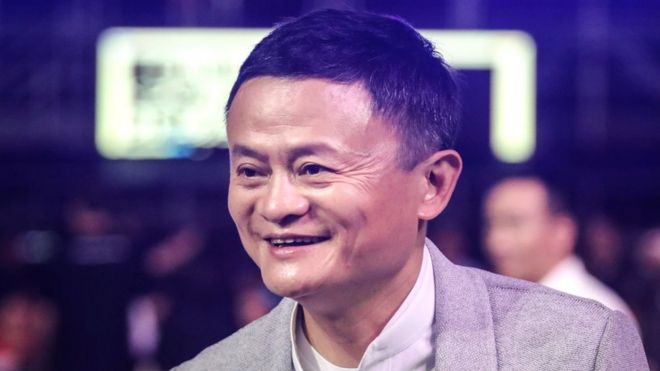
The richest man in China opened his own Twitter account last month, in the middle of the Covid-19 outbreak. So far, every one of his posts has been devoted to his unrivalled campaign to deliver medical supplies to almost every country around the world.
“One world, one fight!” Jack Ma enthused in one of his first messages. “Together, we can do this!” he cheered in another.
The billionaire entrepreneur is the driving force behind a widespread operation to ship medical supplies to more than 150 countries so far, sending face masks and ventilators to many places that have been elbowed out of the global brawl over life-saving equipment.
But Ma’s critics and even some of his supporters aren’t sure what he’s getting himself into. Has this bold venture into global philanthropy unveiled him as the friendly face of China’s Communist Party? Or is he an independent player who is being used by the Party for propaganda purposes? He appears to be following China’s diplomatic rules, particularly when choosing which countries should benefit from his donations, but his growing clout might put him in the crosshairs of the jealous leaders at the top of China’s political pyramid.
Other tech billionaires have pledged more money to fight the effects of the virus – Twitter’s Jack Dorsey is giving $1bn (£0.8bn) to the cause. Candid, a US-based philanthropy watchdog that tracks private charitable donations, puts Alibaba 12th on a list of private Covid-19 donors. But that list doesn’t include shipments of vital supplies, which some countries might consider to be more important than money at this stage in the global outbreak.
The world’s top coronavirus financial donors
How Alibaba compares to the top five. No one else other than the effervescent Ma is capable of dispatching supplies directly to those who need them. Starting in March, the Jack Ma foundation and the related Alibaba foundation began airlifting supplies to Africa, Asia, Europe, Latin America and even to politically sensitive areas including Iran, Israel, Russia and the US.
Ma has also donated millions to coronavirus vaccine research and a handbook of medical expertise from doctors in his native Zhejiang province has been translated from Chinese into 16 languages. But it’s the medical shipments that have been making headlines, setting Ma apart.
“He has the ability and the money and the lifting power to get a Chinese supply plane out of Hangzhou to land in Addis Ababa, or wherever it needs to go,” explains Ma’s biographer, Duncan Clark. “This is logistics; this is what his company, his people and his province are all about.”
A friendly face
Jack Ma is famous for being the charismatic English teacher who went on to create China’s biggest technology company. Alibaba is now known as the “Amazon of the East”. Ma started the company inside his tiny apartment in the Chinese coastal city of Hangzhou, in the centre of China’s factory belt, back in 1999. Alibaba has since grown to become one of the dominant players in the world’s second largest economy, with key stakes in China’s online, banking and entertainment worlds. Ma himself is worth more than $40bn.
Officially, he stepped down as Alibaba’s chairman in 2018. He said he was going to focus on philanthropy. But Ma retained a permanent seat on Alibaba’s board. Coupled with his wealth and fame, he remains one of the most powerful men in China.
Media caption The BBC’s Secunder Kermani and Anne Soy compare how prepared Asian and African countries are
It appears that Ma’s donations are following Party guidelines: there is no evidence that any of the Jack Ma and Alibaba Foundation donations have gone to countries that have formal ties with Taiwan, China’s neighbour and diplomatic rival. Ma announced on Twitter that he was donating to 22 countries in Latin America. States that side with Taiwan but who have also called for medical supplies – from Honduras to Haiti – are among the few dozen countries that do not appear to be on the list of 150 countries. The foundations repeatedly refused to provide a detailed list of countries that have received donations, explaining that “at this moment in time, we are not sharing this level of detail”.
However, the donations that have been delivered have certainly generated a lot of goodwill. With the exception of problematic deliveries to Cuba and Eritrea, all of the foundations’ shipments dispatched from China appear to have been gratefully received. That success is giving Ma even more positive attention than usual. China’s state media has been mentioning Ma almost as often as the country’s autocratic leader, Xi Jinping.
AFP
So far…
Over 150 countries have received donations from Jack Ma, including about:
120.4mface masks
4,105,000testing kits
3,704ventilators
Source: Alizila
It’s an uncomfortable comparison. As Ma soaks up praise, Xi faces persistent questions about how he handled the early stages of the virus and where, exactly, the outbreak began.
The Chinese government has dispatched medical teams and donations of supplies to a large number of hard-hit countries, particularly in Europe and South-East Asia.
However, those efforts have sometimes fallen flat. China’s been accused of sending faulty supplies to several countries. In some cases, the tests it sent were being misused but in others, low-quality supplies went unused and the donations backfired.
In contrast, Jack Ma’s shipments have only boosted his reputation.
“It’s fair to say that Ma’s donation was universally celebrated across Africa,” says Eric Olander, managing editor of the China Africa Project website and podcast. Ma pledged to visit all countries in Africa and has been a frequent visitor since his retirement.
“What happens to the materials once they land in a country is up to the host government, so any complaints about how Nigeria’s materials were distributed are indeed a domestic Nigerian issue,” Olander adds. “But with respect to the donation itself, the Rwandan leader, Paul Kagame, called it a “shot in the arm” and pretty much everyone saw it for what it was which was: delivering badly-needed materials to a region of the world that nobody else is either willing or capable of helping at that scale.”
Walking the tightrope
But is Ma risking a backlash from Beijing? Xi Jinping isn’t known as someone who likes to share the spotlight and his government has certainly targeted famous faces before. In recent years, the country’s top actress, a celebrated news anchor and several other billionaire entrepreneurs have all “disappeared” for long periods. Some, including the news anchor, end up serving prison sentences. Others re-emerge from detention, chastened and pledging their allegiance to the Party.
“There’s a rumour that [Jack Ma] stepped down in 2018 from being the chairman of the Alibaba Group because he was seen as a homegrown entrepreneur whose popularity would eclipse that of the Communist Party,” explains Ashley Feng, research associate at the Centre for New American Security in Washington DC. Indeed, Ma surprised many when he suddenly announced his retirement in 2018. He has denied persistent rumours that Beijing forced him out of his position.
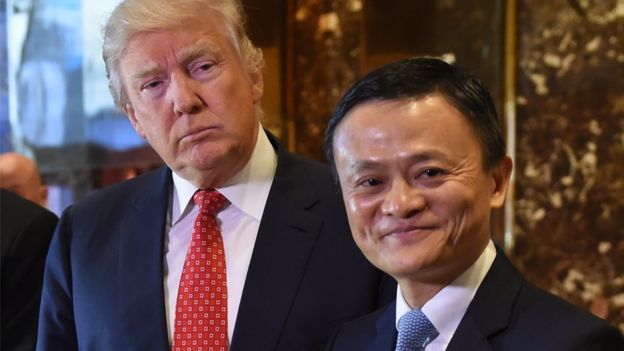
Image copyright GETTY IMAGESImage caption Ma discussed trade with then-President-elect Donald Trump in January 2017
Duncan Clark, Ma’s biographer, is also aware of reports that Ma was nudged away from Alibaba following a key incident in January 2017. The Chinese billionaire met with then-President-elect Donald Trump in Trump Tower, ostensibly to discuss Sino-US trade. The Chinese president didn’t meet with Trump until months later.
“There was a lot of speculation of time that Jack Ma had moved too fast,” Clark says. “So, I think there’s lessons learned from both sides on the need to try to coordinate.”
“Jack Ma represents a sort of entrepreneurial soft power,” Clark adds. “That also creates challenges though, because the government is quite jealous or nervous of non-Party actors taking that kind of role.”
Technically, Ma isn’t a Communist outsider: China’s wealthiest capitalist has actually been a member of the Communist Party since the 1980s, when he was a university student.
But Ma’s always had a tricky relationship with the Party, famously saying that Alibaba’s attitude towards the Party was to “be in love with it but not to marry it”.
Even if Ma and the foundations connected to him are making decisions without Beijing’s advance blessing, the Chinese government has certainly done what it can to capitalise on Ma’s generosity. Chinese ambassadors are frequently on hand at airport ceremonies to receive the medical supplies shipped over by Ma, from Sierra Leone to Cambodia.
China has also used Ma’s largesse in its critiques of the United States. “The State Department said Taiwan is a true friend as it donated 2 million masks,” the Chinese Foreign Ministry tweeted in early April. “Wonder if @StateDept has any comment on Jack Ma’s donation of 1 million masks and 500k testing kits as well as Chinese companies’ and provinces’ assistance?”
Perhaps Ma can rise above what’s happened to so many others who ran afoul of the Party. China might just need a popular global Chinese figure so much that Ma has done what no one else can: make himself indispensable.
“Here’s the one key takeaway from all that happened with Jack Ma and Africa: he said he would do something and it got done,” explains Eric Olander. “That is an incredibly powerful optic in a place where foreigners often come, make big promises and often fail to deliver. So, the huge Covid-19 donation that he did fit within that pattern. He said he would do it and mere weeks later, those masks were in the hands of healthcare workers.”
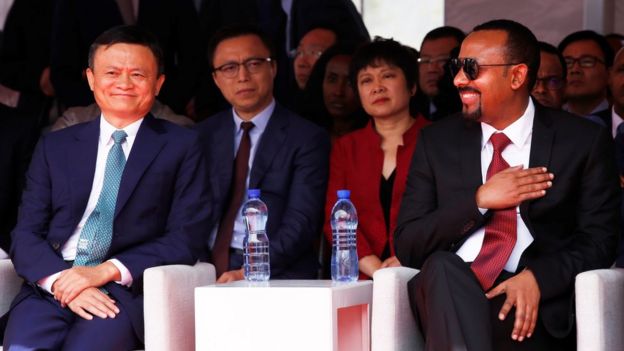
Image copyright GETTY IMAGESImage caption Ma at an Electronic World Trade Platform event with Ethiopian Prime Minister Abiy Ahmed last year
Duncan Clark argues that Ma already had a seat at China’s high table because of Alibaba’s economic heft. However, his first-name familiarity with world leaders makes him even more valuable to Beijing as China tries to repair its battered image.
“He has demonstrated the ability, with multiple IPOs under his belt, and multiple friendships overseas, to win friends and influence people. He’s the Dale Carnegie of China and that certainly, we’ve seen that that’s irritated some in the Chinese government but now it’s almost an all hands on deck situation,” Clark says.
There’s no doubt that China’s wider reputation is benefiting from the charitable work of Ma and other wealthy Chinese entrepreneurs. Andrew Grabois from Candid, the philanthropic watchdog that’s been measuring global donations in relation to Covid-19, says that the private donations coming from China are impossible to ignore.
“They’re taking a leadership role, the kind of thing that used to be done by the United States,” he says. “The most obvious past example is the response to Ebola, the Ebola outbreak in 2014. The US sent in doctors and everything to West Africa to help contain that virus before it left West Africa.”
Chinese donors are taking on that role with this virus.
“They are projecting soft power beyond their borders, going into areas, providing aid, monetary aid and expertise,” Grabois adds.
So, it’s not the right time for Beijing to stand in Jack Ma’s way.
“You know, this is a major crisis for the world right now,” Duncan Clark concludes. “But obviously, it’s also a crisis for China’s relationship with the rest of the world. So they need anybody who can help dampen down some of these those pressures.”
BEIJING/SHANGHAI (Reuters) – China expects to import more soybeans and pork this year following the novel coronavirus outbreak and African swine fever, which has decimated its pig herds.
Soybean imports are forecast at 92.48 million tonnes this year, rising to 96.62 million tonnes in 2025 and 99.52 million tonnes in 2029, an official from the agriculture ministry told a video conference on the outlook for agriculture released on Monday.
Pork imports this year are seen rising to 2.8 million tonnes, a 32.7% increase from the previous year.
China is a key buyer and consumer of soybeans and pork globally, and typically imports millions of tonnes of soybeans per year to crush for meal to feed its livestock.
The African swine fever outbreak, however, had slashed China’s pig herd by over 40% last year, reducing supplies in the world’s biggest pork consumer.
Combined with the coronavirus outbreak, which hit the transport of pigs and delayed the restart of slaughtering plants, prices of China’s favourite meat rose to record levels in February.
China has been increasing pork imports in recent months to make up for the drop in domestic supply.
Despite the expected surge in imports, China’s 2020 pork consumption is forecast to fall to 42.06 million tonnes, down 5.6% year-on-year, hit by high prices and a fall in consumer demand due to the coronavirus outbreak, according to the agriculture ministry.
In line with the slowing consumption, China’s slaughtered pig herd this year will fall 7.8% year-on-year to 501.49 million heads. Pork output this year will also decline to 39.34 million tonnes from 2019, but will rebound to around 54 million tonnes in 2022.
In the longer term, however, pork imports are expected to gradually fall, the ministry forecast, while beef and mutton imports are set to increase in the next decade.
Meanwhile, China’s domestic soybean output is seen at 18.81 million tonnes in 2020, a 3.9% gain from the previous year, while crushing volumes were pegged at 85.98 million tonnes.
Soybean consumption will increase steadily and continue to rely mainly on imports in the next 10 years, said a ministry official.
The ministry also said China’s corn acreage and output are both set to increase in 2020, with production forecast to reach over 260 million tonnes this year, while annual rice output is expected to hold steady above 200 million tonnes per year in the next 10 years.
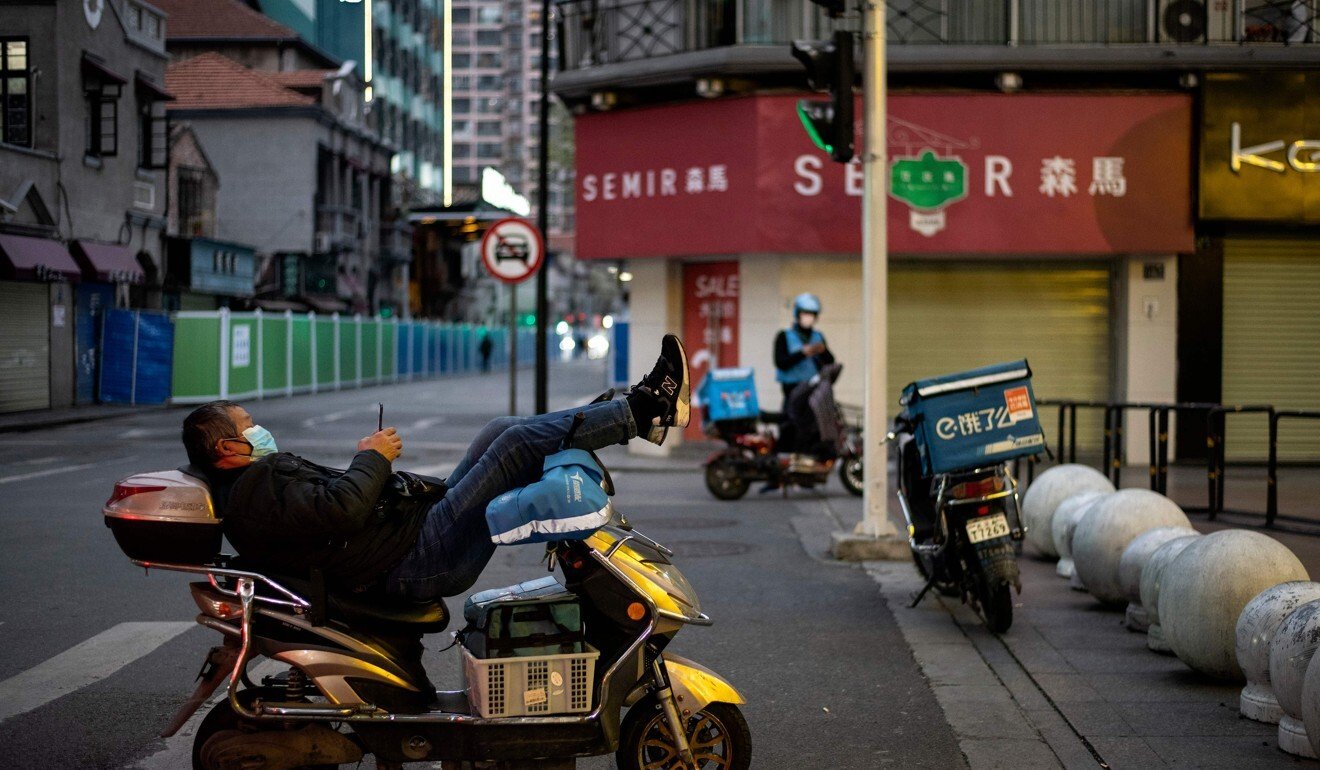
Buying and paying for meals and supplies online was already second nature for many Chinese before the Covid-19 lockdown
The supply and delivery networks that were already in place were able to work with the authorities in cities like Wuhan
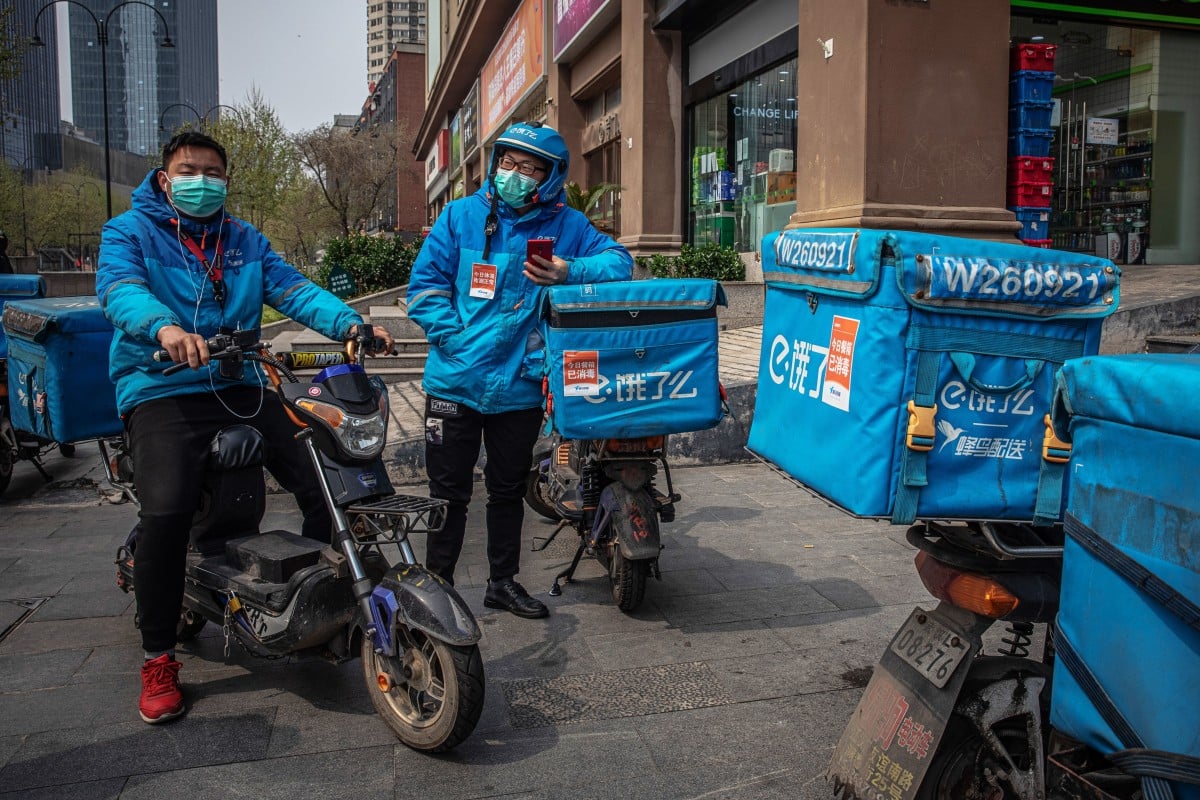
China’s established home delivery system played an important role in getting food and other necessities to residents during the Wuhan lockdown. Photo: EPA-EFE
When Liu Yilin, a retired middle schoolteacher in Wuhan, first heard rumours of a
and shoppers flooded to the markets and malls to snap up supplies.
But as time went on and with residents banned from leaving their homes, he became increasingly concerned about getting hold of fresh supplies of vegetables, fruit and meat until the nation’s vast network of delivery drivers came to the rescue.
“It was such a relief that several necessity purchasing groups organised by community workers and volunteers suddenly emerged on WeChat [a leading social media app] days after the lockdown,” Liu said. “China’s powerful home delivery service makes life much easier at a time of crisis.”
Hu Xingdou, a Beijing-based independent political economist said: “Home delivery played a very important role amid the coronavirus outbreak. To some extent, it prevented people from starving especially in cases when local governments took extreme measures to isolate people.”
According to Liu, people in Wuhan during the lockdown had to stay within their residential communities, with community workers guarding the exits.
Human contact was limited to the internet. Residents placed orders online with farmers, small merchants or supermarkets to buy daily necessities, and community workers helped distribute the goods from deliverymen.
Every morning, Liu passed a piece of paper with his name, phone number and order number to a community worker who would collect the items from a courier at the gate of the residential area.
Thanks to a high population density in urban areas, affluent labour force and people’s openness to digital life, China has built a well-developed home delivery network.
Extensive funding from technology companies has been invested in hardware infrastructure, software to improve logistics and big data and cloud computing to help predict consumers’ behaviour.
Mark Greeven, professor of innovation and strategy at IMD Business School in Lausanne, Switzerland, said: “Whether it is delivery of products, air parcels or fresh food or even medicine or materials for medical use, China has a very well developed system. Much better developed than I think almost any other places in the world.
“Well before the crisis, China had started to embrace digital technology in daily life whether it is in consumption, business, government and smart cities and use of third party payments. All of these things have been in place for a long time and the crisis tested its agility and capability to deal with peak demand.”
China’s e-commerce giants help revive sales of farm goods from Hubei
3 Apr 2020
According to e-commerce giant JD.com, demands for e-commerce and delivery services spiked during the outbreak of Covid-19, the illness caused by the new coronavirus.
It sold around 220 million items between January 20 and February 28, mainly grains and dairy products with the value of beef orders trebling and chicken deliveries quadrupling compared with a year ago.
Tang Yishen, head of JD Fresh, its fresh foods subsidiary, said: “The surge of online demand for fresh merchandise shows the pandemic helped e-commerce providers further penetrate into the life of customers. It also helped upstream farm producers to know and trust us.”
Meituan Dianping, a leading e-commerce platform, said its grocery retail service Meituan Instashopping reported a 400 per cent growth in sales from a year ago in February from local supermarkets.
The most popular items ordered between January 26 and February 8 were face masks, disinfectant, tangerines, packed fresh-cut fruits and potatoes.
The food delivery service Ele.me said that, between January 21 and February 8, deliveries of frozen food surged more than 600 per cent year on year, followed by a nearly 500 per cent growth in delivery of pet-care products. Fresh food deliveries rose by 181 per cent while drink and snack deliveries climbed by 101 per cent and 82 per cent, respectively. Ele.me is owned by Alibaba, the parent company of the South China Morning Post.
Chinese hotpot restaurant chain adapts as coronavirus fears push communal meals off the menu
E-commerce providers used the opportunity to show goodwill and improve their relationship with customers and partners, analysts say.
Sofya Bakhta, marketing strategy analyst at the Shanghai-based Daxue Consulting, said the food delivery sector had made significant headway in reducing physical contact during the outbreak.
Delivery staff left orders in front of buildings, in lifts or temporary shelters as instructed by the clients as most properties no longer allowed them inside.
Some companies also adopted more hi-tech strategies.
In Beijing, Meituan used self-driving vehicles to deliver meals to contactless pickup stations. It also offered cardboard boxes to be used as shields aimed at preventing the spread of droplets among its clients while they ate in their workplaces. In Shanghai, Ele.me employed delivery drones to serve people under quarantine in the most affected regions.
Some companies even “shared” employees to meet the growing labour demand in the food delivery industry that could not be satisfied with their ordinary workforce, Bakhta said.
More employees from restaurants, general retail and other service businesses were “loaned” to food delivery companies, which faced manpower shortages during the outbreak, according to Sandy Shen, senior research director at global consultancy Gartner.
“These arrangements not only ensured the continuity of the delivery service but also helped businesses to retain employees during the shutdown,” she said.
A delivery man takes a break between orders in Wuhan, central China, during the lockdown. Photo: AFP
Mo Xinsheng became one such “on-loan” worker after customers stopped coming to the Beijing restaurant where he worked as a kitchen assistant.
“I wanted to earn some money and meanwhile help people who are trapped at home,” said Mo, who was hired as a delivery man.
But before he could start work he had to go through lengthy health checks before he was allowed into residential compounds.
He also had to work long hours battling the wind and cold of a Beijing winter and carrying heavy loads.
“I work about 10 hours every day just to earn several thousand yuan [several hundred US dollars] a month,” he said.
“Sometimes I almost couldn’t breathe while my hands were fully loaded with packages of rice, oil and other things.
“But I know I’m doing an important job, especially at a time of crisis,” Mo said, “It was not until then that I realised people have become so reliant on the home delivery system.”
Woman uses remote control car to buy steamed buns amid coronavirus outbreak in China
The delivery system has been improved by an effective combination of private sector innovation and public sector coordination, said Li Chen, assistant professor at the Centre for China Studies at Chinese University of Hong Kong.
“[In China,] government units and the Communist Party grass roots organisations have maintained fairly strong mobilisation capabilities to cope with emergencies, which has worked well in the crisis,” he said.
However, Liu, the Wuhan resident, said prices had gone up and vegetables were three times more expensive than they had been over Lunar New Year in 2019.
“There were few varieties that we could choose from, apart from potatoes, cabbage and carrots,” he said.
“But I’m not complaining. It’s good we can still get fresh vegetables at a difficult time. Isn’t it? After all, we are just ordinary people,” he said.
NEW YORK (Reuters) – The number of U.S. coronavirus infections climbed above 82,000 on Thursday, surpassing the national tallies of China and Italy, as New York, New Orleans and other hot spots faced a surge in hospitalizations and looming shortages of supplies, staff and sick beds.
With medical facilities running low on ventilators and protective masks and hampered by limited diagnostic testing capacity, the U.S. death toll from COVID-19, the respiratory disease caused by the virus, rose beyond 1,200.
“Any scenario that is realistic will overwhelm the capacity of the healthcare system,” New York Governor Andrew Cuomo told a news conference. He described the state’s projected shortfall in ventilators – machines that support the respiration of people have cannot breathe on their own – as “astronomical.”
“It’s not like they have them sitting in the warehouse,” Cuomo added. “There is no stockpile available.”
RELATED COVERAGE
Trump to receive new coronavirus recommendations this weekend, plans Xi call
How many Americans have coronavirus? New Reuters poll might offer a hint
At least one New York City hospital, New York-Presbyterian/Columbia University Medical Center in Manhattan, has begun a trial of sharing single ventilators between two patients.
While New York was the coronavirus epicenter in the United States this week, the next big wave of infections appeared headed for Louisiana, where demand for ventilators has already doubled. In New Orleans, the state’s biggest city, Mardi Gras celebrations late last month are believed to have fueled the outbreak.
Louisiana Governor John Bel Edwards said New Orleans would be out of ventilators by April 2 and potentially out of bed space by April 7 “if we don’t flatten the infection curve soon.”
“It’s not conjecture, it’s not some flimsy theory,” Edwards told a press conference. “This is what is going to happen.”
About 80% of Louisiana’s intensive care patients are now on breathing machines, up from the normal rate of 30-40%, said Warner Thomas, chief executive of Ochsner Health System, the state’s hospital group.
Scarcities of protective masks, gloves, gowns and eyewear for doctors and nurses – reports abound of healthcare workers recycling old face masks, making their own or even using trash bags to shield themselves – have emerged as a national problem.
“Our nurses across the country do not have the personal protective equipment that is necessary to care for COVID patients, or any of their patients,” Bonnie Castillo, head of the largest U.S. nurses union, National Nurses United, told MSNBC.
In an ominous milestone for the United States as a whole, at least 82,153 people nationwide were infected as of Thursday, according to a Reuters tally from state and local public health agencies. China, where the global pandemic emerged late last year, had the second highest number of cases, 81,285, followed by Italy with 80,539.
At least 1,204 Americans have died from COVID-19, which has proven especially dangerous to the elderly and people with underlying chronic health conditions, Reuters’ tally showed.
MORE BEDS NEEDED
For New York state, Cuomo said a key goal was rapidly to expand the number of available hospital beds from 53,000 to 140,000.
New York hospitals were racing to comply with Cuomo’s directive to increase capacity by at least 50%. At Mount Sinai Hospital’s Upper East Side location, rooms were being constructed within an atrium to open up more space for beds.
At Elmhurst Hospital in New York’s borough of Queens, about a hundred people, many wearing masks with their hoods pulled up, lined up behind barriers outside the emergency room entrance, waiting to enter a tent to be screened for the coronavirus.
The city coroner’s office has posted refrigerated trucks outside Elmhurst and Bellevue Hospital to temporarily store bodies of the deceased.
Deborah White, vice chair of emergency medicine at Jack D. Weiler Hospital in the city’s Bronx borough, said 80% of its emergency room visits were patients with coronavirus-like symptoms.
A ventilator shortfall and surge in hospitalizations has already raised the prospect of rationing healthcare.
Asked about guidelines being drafted on how to allocate ventilators to patients in case of a shortage, New Jersey Governor Phil Murphy told reporters such bioethical discussions “haunted him” but were unavoidable.
Outside New York and New Orleans, other hot spots appeared to be emerging around the country, including Detroit.
Brandon Allen, 48, was buying groceries in Detroit for his 72-year-old mother, who has tested positive and was self-quarantining at home.
“It’s surreal,” Allen said. “People around me I know are dying. I know of a couple people who have died. I know a couple of people who are fighting for their lives. Everyday you hear of another person who has it.”
RECORD UNEMPLOYMENT CLAIMS
Desperate to slow virus transmissions by limiting physical contact among people, state and local governments have issued stay-at-home orders covering about half the U.S. population. A major side effect has been the strangulation of the economy, and a wave of layoffs.
The U.S. Labor Department reported Thursday the number of Americans filing claims for unemployment benefits last week soared to a record of nearly 3.28 million – almost five times the previous weekly peak of 695,000 during the 1982 recession.
Dr. Anthony Fauci, director of the U.S. National Institute of Allergy and Infectious Diseases, said warmer weather may help tamp down the U.S. outbreak as summer approaches, though the virus could re-emerge in the winter.
“We hope we get a respite as we get into April, May and June,” Fauci said on WNYC public radio.
Washington state Governor Jay Inslee said he may extend a stay-at-home order tentatively set to expire April 6, encouraged by what he called a “very modest improvement” in the Seattle area.
Washington experienced the first major U.S. outbreak of COVID-19 and has been among the hardest-hit states. As of Thursday the state reported about 3,200 cases and 147 deaths.
In California’s Coachella Valley, a region rife with retirees who are especially vulnerable, 25 members of the state’s National Guard helped a non-profit distribute food to people stuck in their homes, as most of the regular volunteers are senior citizens.
More than 10,000 troops have been deployed in 50 states to provide humanitarian aid during the pandemic.
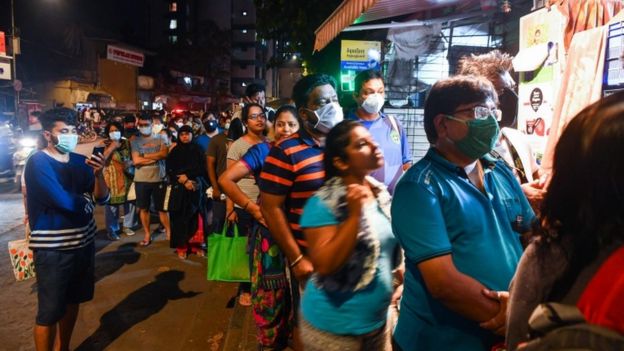
But in Delhi and the financial capital, Mumbai, people fearing shortages quickly thronged shops and pharmacies.
“I have never witnessed such a chaos in my life,” the owner of one store in the Shakarpur district of Delhi said, quoted by the Press Trust of India.
“All our stocks, including rice, flour, bread, biscuits, edible oils, have been sold out.”
Police in the busy city of Ghaziabad, in Uttar Pradesh state, patrolled the streets with megaphones to tell residents to stay indoors.
Image copyright AFPImage caption People in Mumbai rushed to stock up on essentials following Mr Modi’s address
Under the new measures, all non-essential businesses will be closed but hospitals and other medical facilities will continue to function as normal. Schools and universities will remain shut and almost all public gatherings will be banned.
Anyone flouting the new rules faces up to two years in prison and heavy fines.
In his address, Prime Minister Modi also:
Stressed that the 21-day lockdown was “very necessary to break the chain of coronavirus”
Emphasised the seriousness of the situation and said that even developed countries had faced problems in combating it
Said that “social distancing was the only way to stop” the virus spreading
Announced that nearly $2bn (£1.8bn) would be made available to boost the country’s health infrastructure
Called on people not to “spread rumours” and to follow instructions
His announcement came after several Indian states introduced measures of their own, such as travel restrictions and the closure of non-essential services.
India has already issued a ban on international arrivals and grounded domestic flights. The country’s rail network has also suspended most passenger services.
Many parts of India, including cities such as Delhi and Mumbai, are already under tight restrictions. But this move extends those provisions to every corner of the country.
An earlier one-day curfew, which was seen as a trial, was flouted by many.
Mr Modi called on Indians to clap and cheer the emergency services from their balconies on Sunday. But many misunderstood the call and congregated in the streets as they danced and chanted.
“It’s impossible to fathom the cost that India may have to pay if such irresponsible behaviour continues,” Mr Modi warned at the time. “Social distancing is the only option to combat coronavirus.”
The implications of a total lockdown in India are huge, not just economically, but socially.
This is a nation where community is everything. Going to worship at a temple, mosque or church is an essential part of daily life for so many.
This is a seismic cultural shift but – like the rest of the world facing similar restrictions – a necessary one.
What’s the latest from around Asia?
Neighbouring Pakistan has almost twice as many confirmed cases – 878 as of Monday evening. Sweeping restrictions are in place although the government has stopped short of imposing a nationwide lockdown. However, several provinces have announced them independently. The army is being brought in to help enforce the restrictions
Bangladesh, which has reported 33 cases and three deaths, is also deploying its armed forces to help maintain social distancing and boost Covid-19 preventive measures. The soldiers will also monitor thousands of quarantined expatriate returnees. Across South Asia, there are concerns that the actual number of cases could be much higher than is being reported.
Indonesia, which has 49 confirmed Covid-19 deaths – the highest in South East Asia – has converted an athlete’s village built for the 2018 Asian Games into a makeshift hospital for coronavirus patients. A state of emergency was declared in Jakarta on Monday
In Thailand, a month-long state of emergency which will include curfews and checkpoints will begin on Thursday. The government has been criticised for failing to take strong action so far. Four people have died and nearly 900 tested positive
The most populous country that was without a case until now – Myanmar – has announced two cases
And what about the rest of the world?
Elsewhere, governments are continuing to work to stem the spread of the virus which has now affected more than 190 countries worldwide
More than 2.6 billion people are in lockdown now India has introduced its new measures, according to a tally by the AFP news agency
Media caption Reality Check tackles misleading health advice being shared online
Europe remains at the epicentre of the pandemic. On Tuesday, the death toll jumped by 514 in a single day in Spain and other European countries also reported sharp increases
Italy is the worst affected country in the world in terms of deaths. The virus has killed almost 7,000 people there over the past month
The World Health Organization (WHO) has warned that the US has the potential to become the new epicentre of the pandemic
In other developments, Japanese Prime Minister Shinzo Abe said the International Olympic Committee has agreed that the 2020 Tokyo Olympics should be postponed by a year
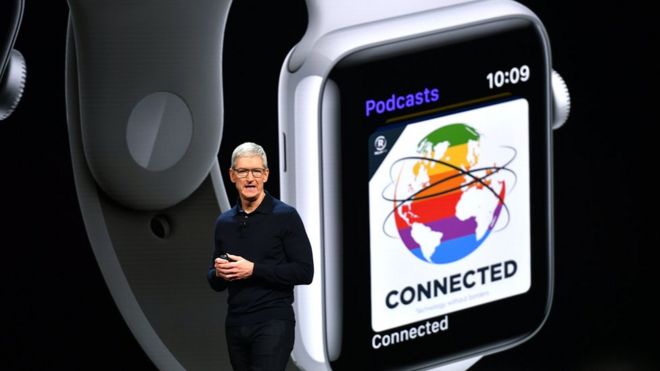
Apple’s chief executive Tim Cook said the company would open its first physical stores in India in 2021 and a online outlet later this year.
Apple had to seek special approval from the Indian government to open a store without a local partner.
The announcement was made at the company’s annual shareholders’ meeting.
Investors at the meeting also voted on a proposal that the firm should alter how it responds when governments ask it to remove apps from its marketplace.
Though the measure wasn’t approved, it failed by a slimmer margin then similar proposals in the past.
Apple’s move into India, the second largest smartphone market in the world, has been expected for some time, but the announcement of a date was new.
In 2018 India changed the laws that prevented foreign brands from opening single-brand stores in the country. Nevertheless Mr Cook said India had wanted Apple to open its store with a local partner.
Mr Cook told investors he didn’t think Apple would be a “good partner”.
“We like to do things our way,” he said.
Apple sells its products through third-party stores in India at the moment. But its sales lag competitors Samsung and Huawei.
With demand for Apple products slowing in China – even before the outbreak of Coronavirus – the firm is hoping it can spur growth in other developing markets like India.
Human rights vote
Apple investors also voted on a proposal meant to change the way the company handles requests by governments to remove applications from its App Store.
The proposal would have forced Apple to publicly commit to respecting “freedom of expression as a human right.”
The measure was tied to Apple’s removal of apps by the Chinese government, including an app that allowed protestors in Hong Kong get around China’s internet restrictions.
Supporters of the measure said Apple was complicit in Chinese human right abuses when it gave in to requests to remove these types of apps.
The measure was voted down but received nearly 40% of the vote.
Similar measures have been proposed in the past but have never received as much support.
Two shareholder advisory groups, Glass Lewis and Institutional Shareholder Services recommended voting in favour of the proposal.
Coronavirus concerns
Mr Cook also addressed the impact that coronavirus is having on Apple’s operations.
The tech giant warned investors early this month that it expected to miss its quarterly earnings estimate because of the outbreak. Many of the Chinese plants that make components for Apple products – like its iPhones and MacBook laptops- have been closed or operating at with limited capacity to reduce the spread of the disease.
The shareholders meeting also allowed investors to ask Apple executives questions about the company’s other development.
One investor asked why the company had not bought the rights to the upcoming reunion of the TV show Friends – which is slated for HBO Max.
Mr Cook said a spinoff would not be keeping with the brand of Apple TV Plus – which is focused on original content.
BEIJING, Feb. 22 (Xinhua) — Supply of daily necessities has been stable in China, including the epidemic-hit Hubei Province, despite the ongoing novel coronavirus outbreak that heavily impacted daily life and factory activities, an official with the Ministry of Commerce said Saturday.
With more Chinese returning to work, more than 95 percent of the chain supermarkets and about 90 percent of the large fast-food chains have opened to customers, Wang Bin with the commerce ministry told a press conference.
Meanwhile, around 80 percent of the chain convenience stores and 80 percent of the large wholesale farm produce markets nationwide have resumed operation, along with many farmers’ markets and grocery stores.
In China’s 50 key wholesale farm produce markets, vegetable transaction volume on Friday jumped 26.4 percent from the beginning of the month, he said.
In contrast, other retailers are getting back to service at a slower pace. For instance, only 50 percent of the department stores and shopping malls have so far opened for business, according to Wang.
For Hubei, especially the provincial capital Wuhan where the epidemic first broke out with the largest number of infections, Wang said while the epidemic did cause some difficulties, the local market is generally stable with stocks of grain, meat and vegetables on the rise.
Local authorities in Wuhan have ordered online purchase, group buying and direct delivery services to provide daily necessities to residents kept indoors by the epidemic.
Up to 80 percent of communities in the city’s central districts are covered by group buying services from shops and supermarkets, he said.
To ensure food price stability in the epidemic-hit Hubei, Wang said the commerce ministry has ordered 150 key food producers, including state-owned food group COFCO and major pork producer Shuanghui, to provide over 600,000 tonnes of food to the region.
For the next stage, Wang said the authorities will work on product circulation, farm product sales and further resumption of wholesale markets to both help farmers sell their produce while ensuring daily supplies for residents amid the epidemic.
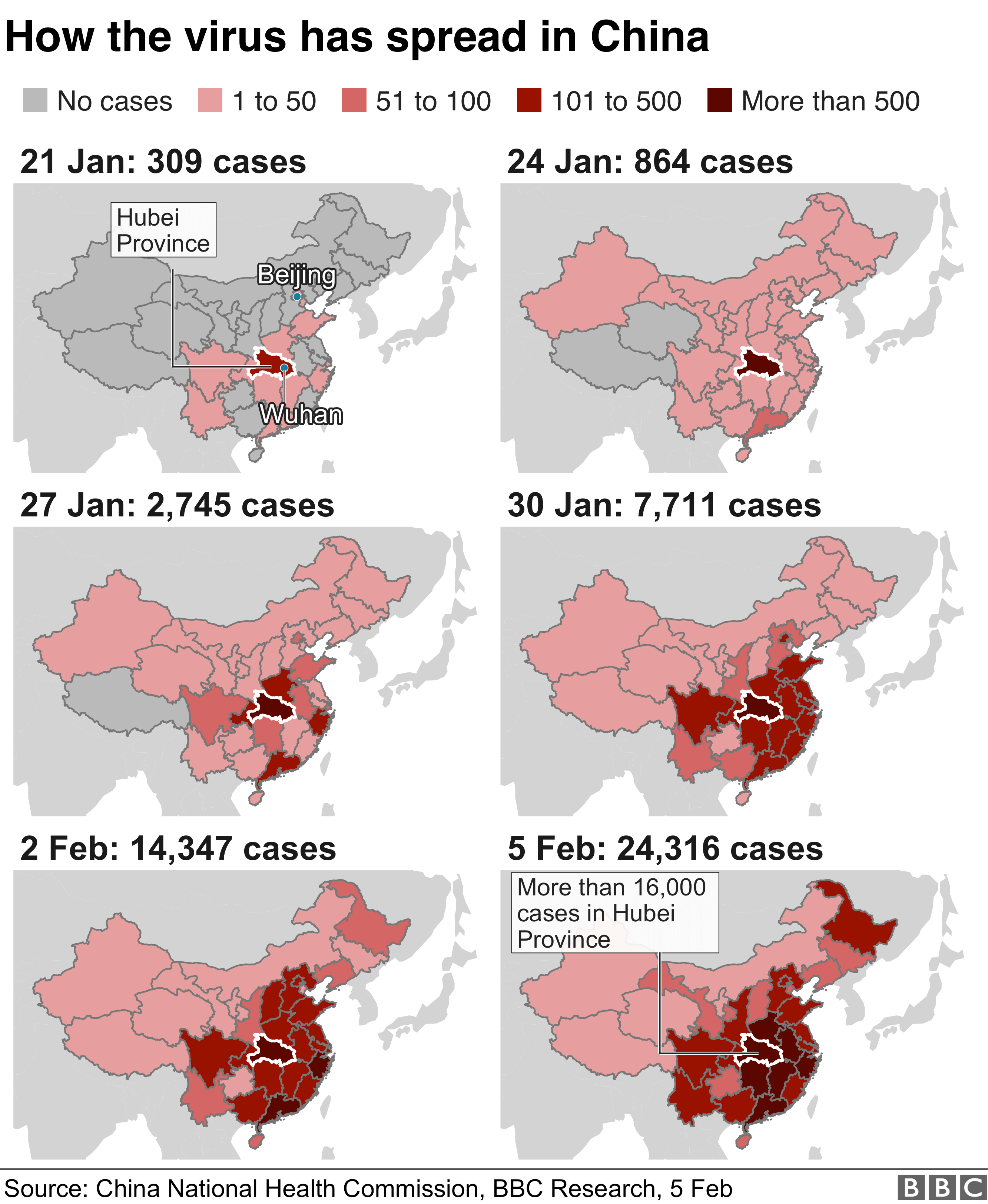
We can’t know a definitive overall number as the virus spreads across China, but to give an idea of the scale of the demand, let’s start by looking at the situation in Hubei province, the epicentre of the outbreak.
Just dealing with medical staff alone, there are an estimated 500,000 across the province.
Medical advice in China is to change face masks regularly, as often as four times a day for medical teams, which would require two million masks each day.
This is the procedure being followed in one of the main hospitals in Wuhan, the largest city in Hubei province.
We don’t have a breakdown for the numbers of medical staff in other significantly affected provinces, but it would be reasonable to assume a similar pattern of usage, as coronavirus infections spread.
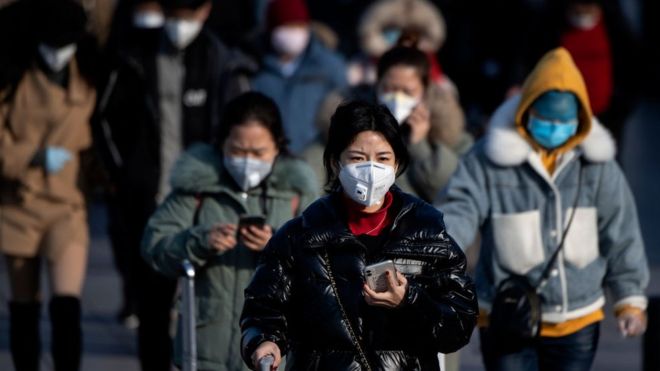
Then there’s the widespread use of face masks among the ordinary population, whether or not they’ve been instructed to do so by the authorities.
More than half a million staff working on public transport in China have been told to use masks
There are reports that some shops, businesses and other public premises have told people to use masks if they want to enter
It’s also important to say that culturally, it’s quite common for people in China to wear face masks, both as general protection and if they feel they are getting ill.
So, although we can’t know overall numbers of masks needed, it’s clear there’s already a huge demand which is only going to increase across China, particularly as people head back to work in mid-February after the New Year holiday.
How many is China producing?
Under normal circumstances, China produces around twenty millions masks each day. That’s estimated to be around half of all masks made globally.
However, Chinese production has currently been cut to around 10 million, both because of the New Year holiday as well as the impact of the virus itself.
That’s clearly not sufficient to meet even the current demand in China.
In addition, it’s the higher-quality masks which are most effective, and most needed.
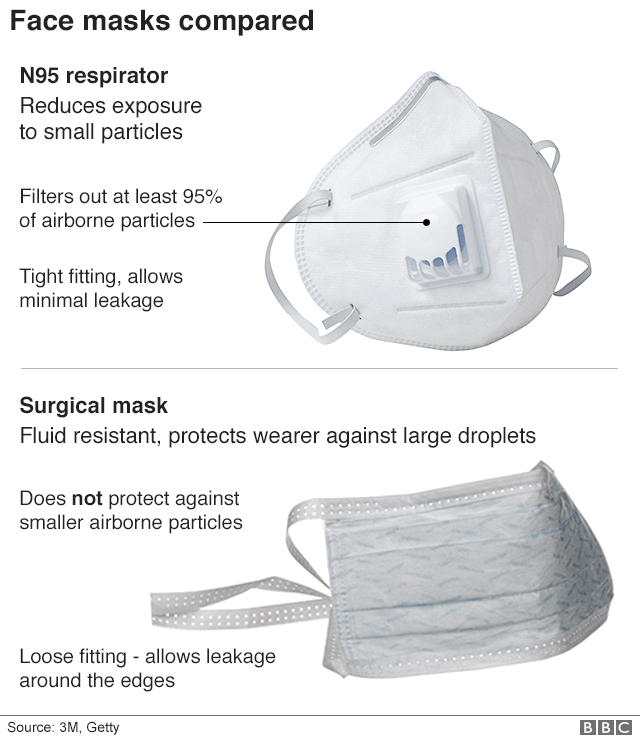
One type, known as the N95 respirator, is designed to filter at least 95% of airborne particles, and is more effective than an ordinary surgical or medical mask, which also needs to be changed more frequently.
China currently produces each day around 600,000 of these high-quality masks, according to figures from the Ministry of Industry.
One province, Zhejiang, reported on 27 January that they needed a million of these masks each day, and other provinces have said they are only just able to meet demand for these high-quality masks.
In addition, hospitals don’t have large stockpiles of these masks – in most cases, only enough to last two weeks.
Across China, there have been reports of shortages and soaring prices, as people have rushed to buy masks.
To give an idea of this demand, the Chinese online shopping site Taobao says than in just two days in January, they sold more than 80 million masks.
Can China get masks from abroad?
China bought 220 million face masks between 24 January and 2 February, with South Korea one of the countries supplying them.
Since the beginning of February, the authorities have also removed tariffs and duties on imported medical supplies.
The US firm, 3M, which is a major producer of high-quality face masks, says the company is increasing production to meet global demand.
The UK-based Cambridge Mask Company, which makes high-quality respirator masks, says it has faced unprecedented demand, and has completely sold out.
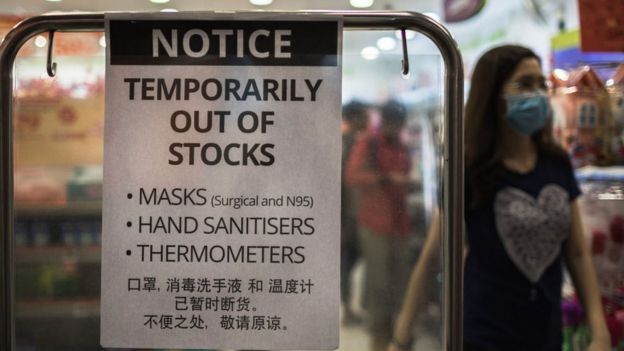
Image copyright GETTY IMAGESImage caption A pharmacy in Singapore: Supplies have been bought up in countries outside China
Some countries, such as Taiwan and India, have banned the export of protective clothing such as face masks.
Taiwan says it wants to prioritise the protection of its own citizens, and has announced a rationing system for buying face masks.
There have also been reports of shortages in countries outside China because of panic buying, as fears grow about the global spread of the coronavirus.













 CHINDIA ALERT: You'll be living in their world, very soon