Chindia Alert: You’ll be Living in their World Very Soon
aims to alert you to the threats and opportunities that China and India present. China and India require serious attention; case of ‘hidden dragon and crouching tiger’.
Without this attention, governments, businesses and, indeed, individuals may find themselves at a great disadvantage sooner rather than later.
The POSTs (front webpages) are mainly 'cuttings' from reliable sources, updated continuously.
The PAGEs (see Tabs, above) attempt to make the information more meaningful by putting some structure to the information we have researched and assembled since 2006.
Kremlin says project highlights the growing closeness between the two countries
Military observers argue cooperation between the two sides helps provide counterbalance to American military might
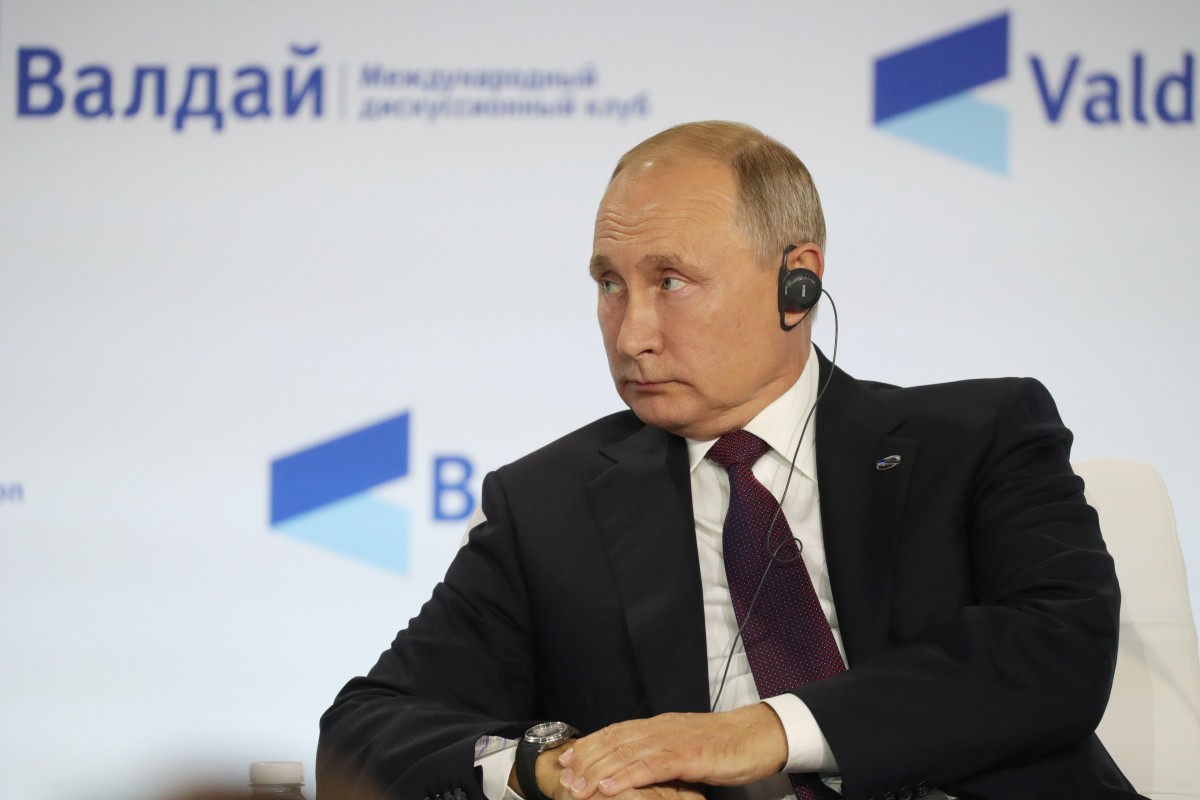
Vladimir Putin disclosed the project at a forum in Sochi. Photo: Sputnik/AFP
Russia is helping China to build an early warning system to counter missile attacks, Vladimir Putin said on Thursday.
Speaking at an international affairs conference in the resort town of Sochi, he said Moscow was helping China increase its missile defence capability, Russian state-owned news agency Sputnik reported.
“This is a very serious endeavour that will fundamentally and radically increase the defence capability of the People’s Republic of China because only the United States and Russia have such a system at present,” the Russian leader said.
Kremlin spokesman Dmitry Peskov declined to say when the system would be operational, but told reporters on a conference call that the move highlighted Russia’s close ties with China.
“Russia has special relations with China of advanced partnership … including the most sensitive [areas] linked to military-technical cooperation and security and defence capabilities,” Peskov said.
Macau-based military observer Antony Wong Dong said Putin’s remarks indicated that military cooperation between Beijing and Moscow may have evolved from the previous “model alliance” to a “real alliance” with the US as their common target.
“Such changes will likely further fuel the strategic arms race, which is already evident from the missile tests [that we have witnessed] and the recent military parade,” said Wong in a reference to the grand parade held in Beijing on Tuesday when China celebrated the 70th anniversary of the founding of the People’s Republic.
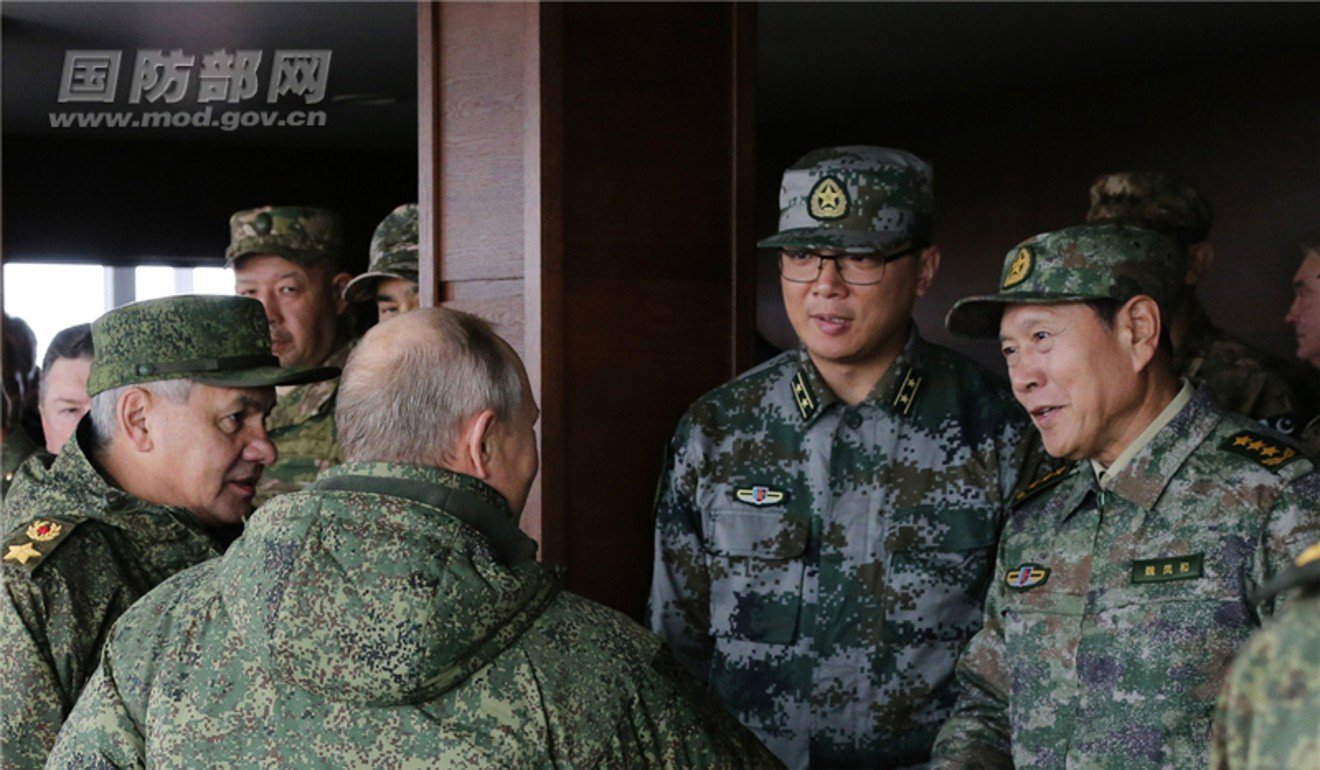
Russian President Vladimir Putin welcomes China’s defence minister Wei Fenghe (right) to a base in Orenburg at the start of a joint exercise. Photo: Handout
Hong Kong-based military analyst Song Zhongping said the system would help Beijing and Moscow set up a joint early ballistic missile network to counter “American global hegemony”.
“If the US wants to attack China [with its ICBMs], their missiles are likely to be launched from the Arctic, and that will be covered by Russia’s early warning system, and that means Moscow will have the capability to alert Beijing,” said Song who added that the Chinese military could provide reciprocal help to Russia.
Beijing-based military expert Zhou Chenming said Putin’s remarks served as a veiled warning to US President Donald Trump who has taken the unilateral step of withdrawing from the Intermediate Range Nuclear Forces Treaty, a cold war-era pact signed between the US and Russia in 1987.
“Joint cooperation will help both Russia and China to save costs because early warning ballistic missile systems are very expensive,” Zhou said,
However, he said Moscow was unlikely to share its most advanced technologies with China.
“For example, Russia’s missile defence system just covers Moscow and St Petersburg, so China’s network will properly just cover Beijing, Tianjin, Hebei province, the Yangtze River Delta area, the Greater Bay Area in South China, as well as a number of key cities in the centre.”
Putin also told the forum that the two countries would continue to work together on space exploration.
Last month, the Ministry of Defence of the Russian Federation announced that Moscow and Beijing have developed a plan for cooperation between military departments for next year and 2021.
Last month 1,600 members of the Chinese military arrived at a Russian training base in the Orenburg oblast for a large-scale joint training exercise.
BEIJING (Reuters) – Beijing’s new $63 billion Daxing airport began its first scheduled international flights on Sunday as it ramped up operations to help relieve pressure on the city’s existing Capital airport.
Shaped like a phoenix – though to some observers it is more reminiscent of a starfish – the airport was designed by famed Iraqi-born architect Zaha Hadid, and formally opened in late September ahead of the Oct. 1 celebrations of the 70th anniversary of the People’s Republic of China.
It boasts four runways and is expected to handle up to 72 million passengers a year by 2025, eventually reaching 100 million.
China Southern Airlines (600029.SS) and China Eastern Airlines (600115.SS) will be the main domestic carriers at Daxing, though Air China (601111.SS) will provide a small number of flights too.
An Air China flight to Bangkok was the first international flight to leave on Sunday, while British Airways (ICAG.L) will operate the first transcontinental flight, to London.
About 50 foreign airlines, including Finnair (FIA1S.HE), plan to move all or part of their China operations to the airport in the coming quarters.
The relocation of all the airlines which will use Daxing is to due to be completed by the winter of 2021. Air China and its Star Alliance partners will remain mostly at Capital airport.
The airport, roughly the size of 100 football fields and expected to become one of the world’s busiest, has come in for some criticism due to its distance from central Beijing.
By public transport it takes over an hour to reach it from Beijing’s central business district, more than double the time needed to reach Capital airport, which strains at the seams and is often hit by delays.
Officials say Daxing airport is not only designed to serve Beijing, but also the surrounding province of Hebei and next-door city of Tianjin, to boost regional development.
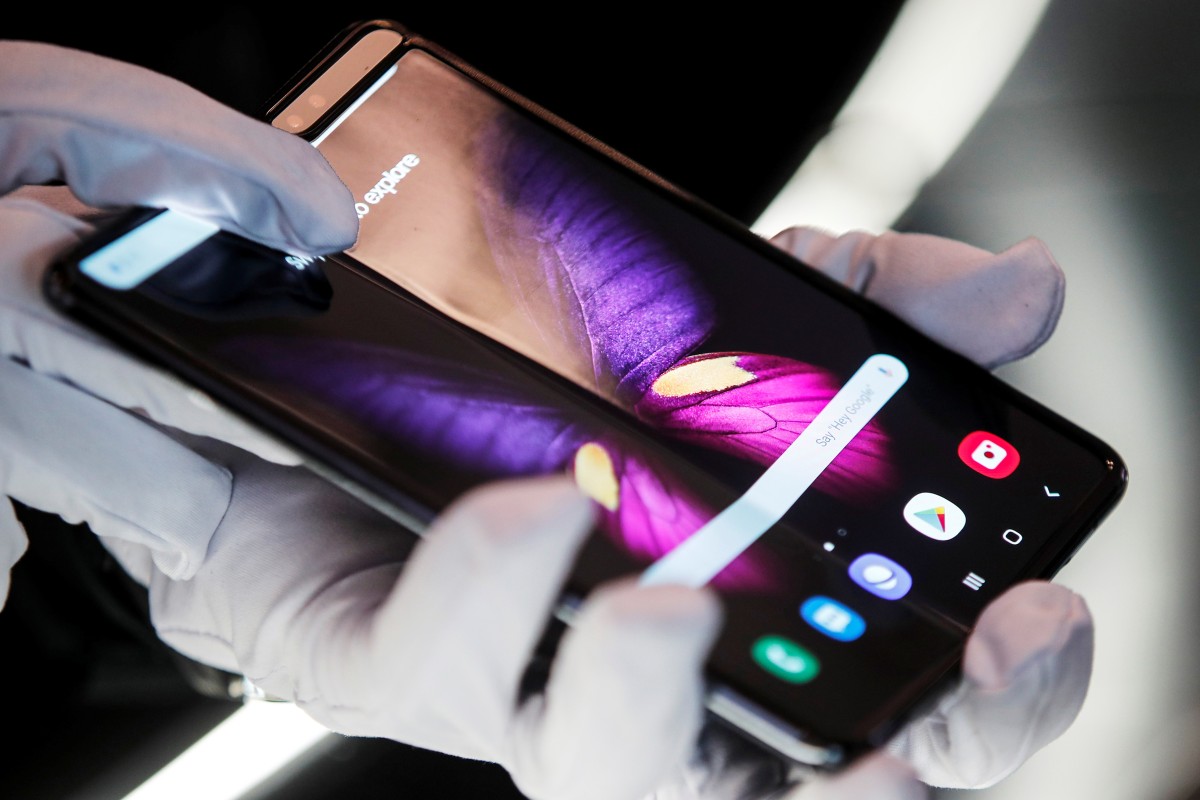
said on Friday it has ended the production of smartphones in its last factory in China.
Operations at the plant in the south China city of Huizhou, Guangdong province, ended last month, it said in an email.
The company made “the difficult decision to cease operations of Samsung Electronics Huizhou” in order “to enhance efficiency” in its manufacturing, it said.
Samsung’s market share in China has dwindled to near insignificance as competitors like Huawei and Xiaomi have taken the upper hand. It once had 15 per cent of China’s smartphone market.
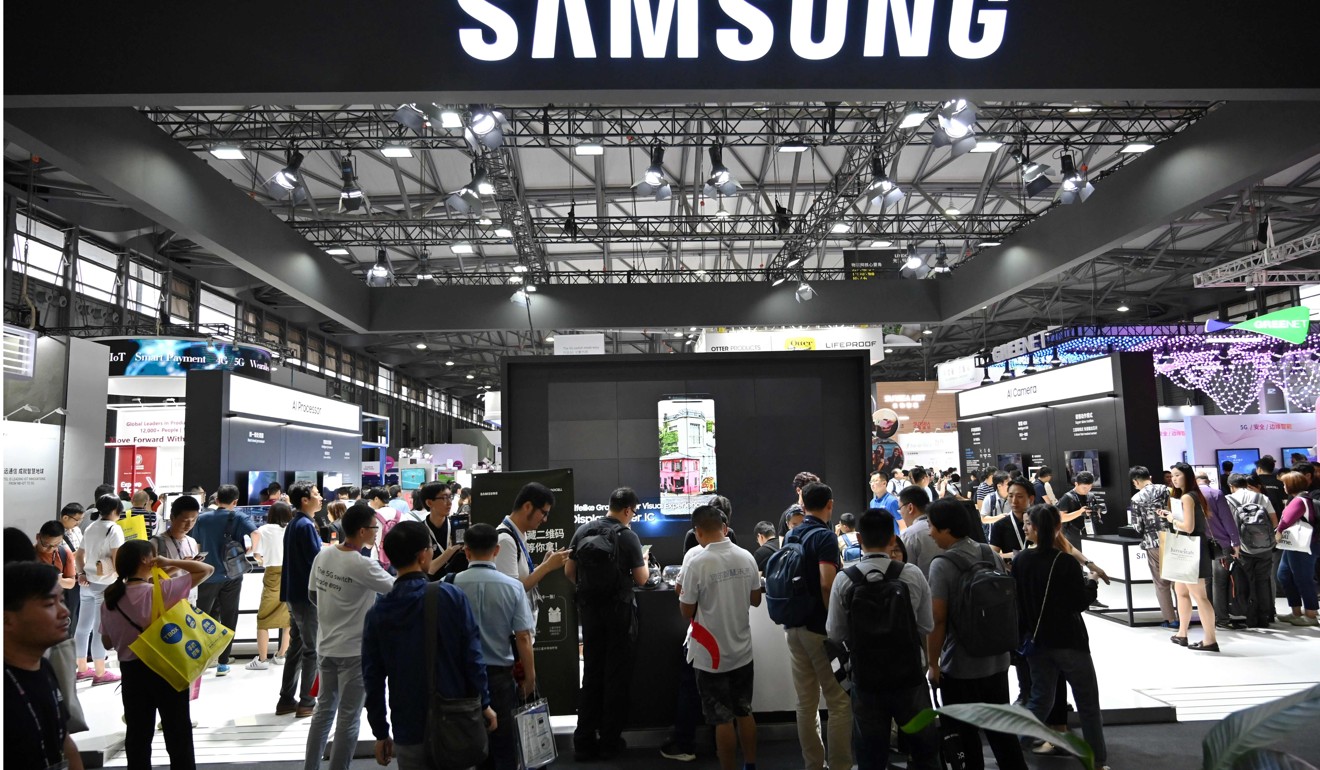
Samsung once had a 15 per cent share of China’s smartphone market. Photo: AFP
The South Korean giant has moved a large share of its smartphone production to Vietnam and closed a factory in northeastern China’s Tianjin last year.
“The production equipment will be reallocated to other global manufacturing sites depending on our global production strategy based on market needs,” the statement said.
Samsung is the world’s biggest manufacturer of semiconductors and smartphones and a major producer of display screens. But the flagship of South Korea’s largest conglomerate is currently weathering a spell of slack demand for computer chips.
Like other South Korean electronics makers, it also is facing the impact of tightened Japanese controls on exports of hi-tech materials used in semiconductors and displays.
On Wednesday, Sony said it was closing its Beijing smartphone plant and would only make smartphones in Thailand.
“In China, people buy low-priced smartphones from domestic brands and high-end phones from Apple or Huawei,” Park Sung-soon, an analyst at Cape Investment & Securities, said.
“Samsung has little hope there to revive its share.”
Samsung’s factory in Huizhou was built in 1992, according to the company. South Korean media said it employed 6,000 workers and produced 63 million units in 2017.
Samsung manufactured 394 million handsets around the world in 2107, according to its annual report.
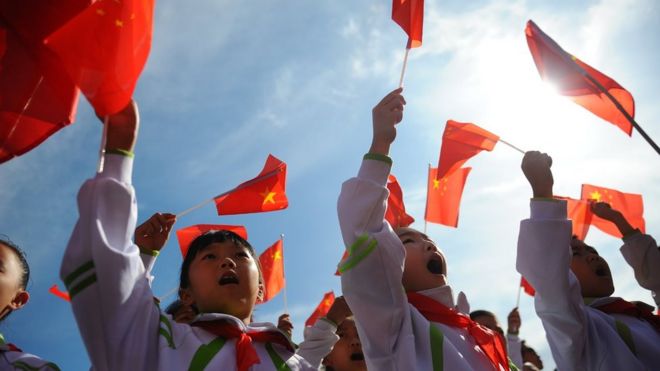
Image copyright GETTY IMAGESImage caption China’s version of its past is a story of prosperity, progress and sacrifice for the common good
China’s extraordinary rise was a defining story of the 20th Century, but as it prepares to mark its 70th anniversary, the BBC’s John Sudworth in Beijing asks who has really won under the Communist Party’s rule.
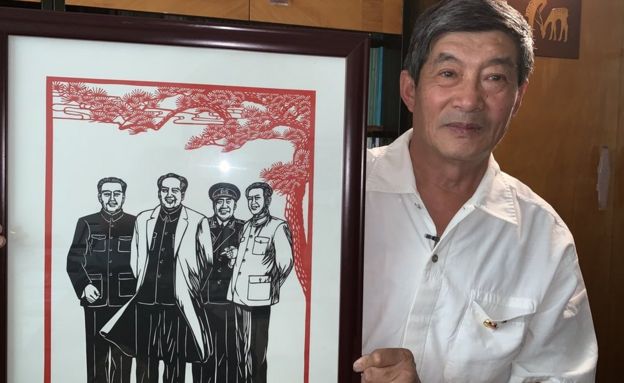
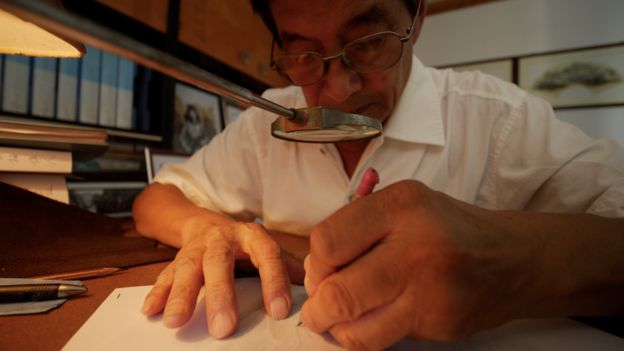
Sitting at his desk in the Chinese city of Tianjin, Zhao Jingjia’s knife is tracing the contours of a face.
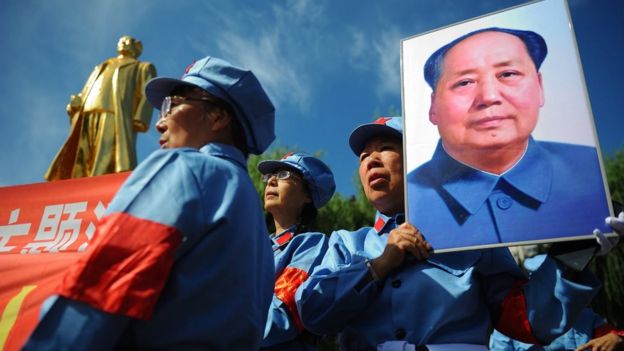
Cut by delicate cut, the form emerges – the unmistakable image of Mao Zedong, founder of modern China.
The retired oil engineer discovered his skill with a blade only in later life and now spends his days using the ancient art of paper cutting to glorify leaders and events from China’s communist history.
“I’m the same age as the People’s Republic of China (PRC),” he says. “I have deep feelings for my motherland, my people and my party.”
Image caption For people like Zhao Jingjia, China’s success outweighs the “mistakes” of its leaders
Born a few days before 1 October 1949 – the day the PRC was declared by Mao – Mr Zhao’s life has followed the dramatic contours of China’s development, through poverty, repression and the rise to prosperity.
Now, in his modest but comfortable apartment, his art is helping him make sense of one of the most tumultuous periods of human history.
“Wasn’t Mao a monster,” I ask, “responsible for the deaths of tens of millions of his countrymen?”
“I lived through it,” he replies. “I can tell you that Chairman Mao did make some mistakes but they weren’t his alone.”
“I respect him from my heart. He achieved our nation’s liberation. Ordinary people cannot do such things.”
On Tuesday, China will present a similar, glorious rendering of its record to the world.
Beijing will tremble to the thunder of tanks, missile launchers and 15,000 marching soldiers, a projection of national power, wealth and status watched over by the current Communist Party leader, President Xi Jinping, in Tiananmen Square.
An incomplete narrative of progress
Like Mr Zhao’s paper-cut portraits, we’re not meant to focus on the many individual scars made in the course of China’s modern history.
It is the end result that matters.
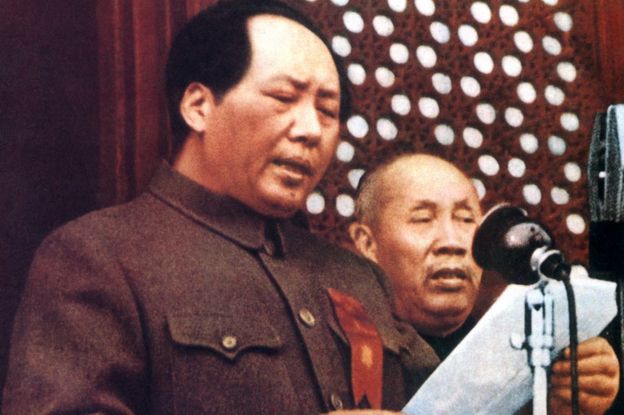
Image copyright XINHUA/AFPImage caption Mao Zedong pronounces the dawn of the People’s Republic of China on 1 October 1949
And, on face value, the transformation has been extraordinary.
On 1 October 1949, Chairman Mao stood in Tiananmen Square urging a war-ravaged, semi-feudal state into a new era with a founding speech and a somewhat plodding parade that could muster only 17 planes for the flyby.
This week’s parade, in contrast, will reportedly feature the world’s longest range intercontinental nuclear missile and a supersonic spy-drone – the trophies of a prosperous, rising authoritarian superpower with a 400 million strong middle class.
It is a narrative of political and economic success that – while in large part true – is incomplete.
New visitors to China are often, rightly, awe-struck by the skyscraper-festooned, hi-tech megacities connected by brand new highways and the world’s largest high-speed rail network.
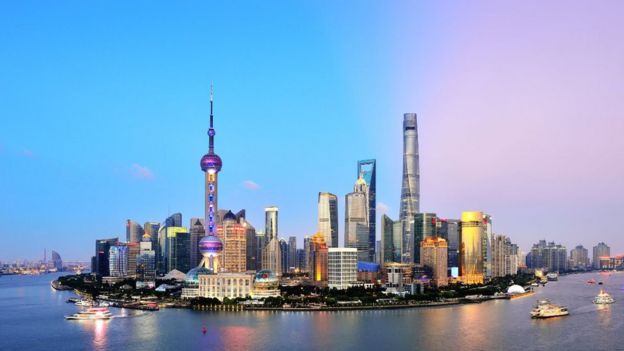
Image copyright GETTY IMAGESImage caption Those in China’s glittering cities may accept the trade-off of political freedom for economic growth
They see a rampant consumer society with the inhabitants enjoying the freedom and free time to shop for designer goods, to dine out and to surf the internet.
“How bad can it really be?” the onlookers ask, reflecting on the negative headlines they’ve read about China back home.
The answer, as in all societies, is that it depends very much on who you are.
Many of those in China’s major cities, for example, who have benefited from this explosion of material wealth and opportunity, are genuinely grateful and loyal.
In exchange for stability and growth, they may well accept – or at least tolerate – the lack of political freedom and the censorship that feature so often in the foreign media.
For them the parade could be viewed as a fitting tribute to a national success story that mirrors their own.
But in the carving out of a new China, the knife has cut long and deep.
The dead, the jailed and the marginalised
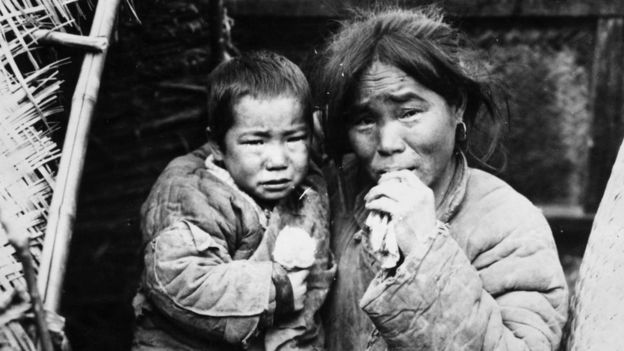
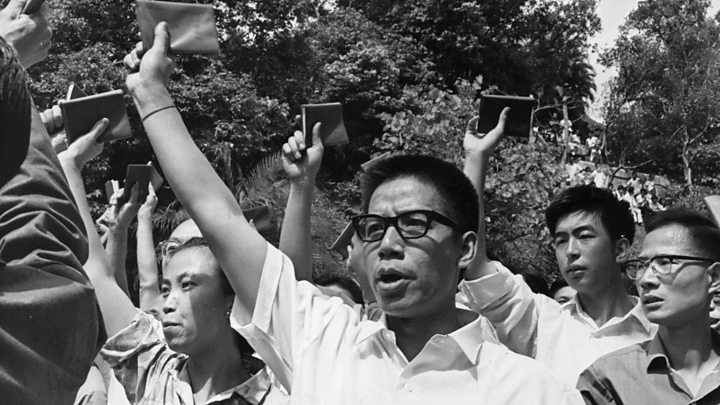
Mao’s man-made famine – a result of radical changes to agricultural systems – claimed tens of millions of lives and his Cultural Revolution killed hundreds of thousands more in a decade-long frenzy of violence and persecution, truths that are notably absent from Chinese textbooks.
Image copyright GETTY/TOPICALImage caption Tens of millions starved to death under Mao, as China radically restructured agriculture and society
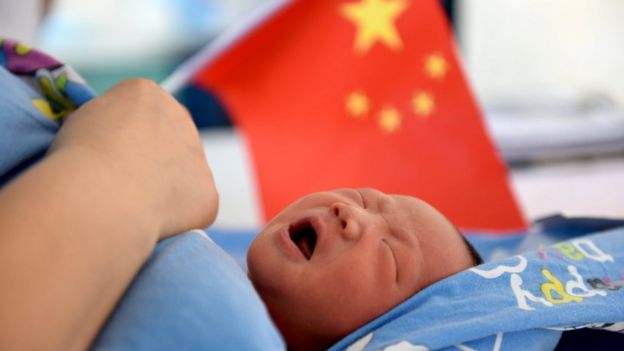
After his death, the demographically calamitous One Child Policy brutalised millions over a 40-year period.
Still today, with its new Two Child Policy, the Party insists on violating that most intimate of rights – an individual’s choice over her fertility.
The list is long, with each category adding many thousands, at least, to the toll of those damaged or destroyed by one-party rule.
Image copyright GETTY IMAGESImage caption Beijing still regulates how many children families can have
There are the victims of religious repression, of local government land-grabs and of corruption.
There are the tens of millions of migrant workers, the backbone of China’s industrial success, who have long been shut out of the benefits of citizenship.
A strict residential permit system continues to deny them and their families the right to education or healthcare where they work.
And in recent years, there are the estimated one and a half million Muslims in China’s western region of Xinjiang – Uighurs, Kazakhs and others – who have been placed in mass incarceration camps on the basis of their faith and ethnicity.
China continues to insist they are vocational schools, and that it is pioneering a new way of preventing domestic terrorism.
The stories of the dead, the jailed and the marginalised are always much more hidden than the stories of the assimilated and the successful.
Viewed from their perspective, the censorship of large parts of China’s recent history is not simply part of a grand bargain to be exchanged for stability and prosperity.
Getty
Timeline of modern China
1949 Mao declares the founding of the People’s Republic of China
1966-76 Cultural Revolution brings social and political upheaval
1977 Deng Xiaoping initiates major reforms of China’s economy
1989 Army crushes Tiananmen Square pro-democracy protests
2010 China becomes the world’s second-largest economy
2018 Xi Jinping is cleared to be president for life
It is something that makes the silence of their suffering all the more difficult to penetrate.
It is the job of foreign journalists, of course, to try.
‘Falsified, faked and glorified’
But while censorship can shut people up, it cannot stop them remembering.
Prof Guo Yuhua, a sociologist at Beijing’s Tsinghua University, is one of the few scholars left trying to record, via oral histories, some of the huge changes that have affected Chinese society over the past seven decades.
Her books are banned, her communications monitored and her social media accounts are regularly deleted.
“For several generations people have received a history that has been falsified, faked, glorified and whitewashed,” she tells me, despite having been warned not to talk to the foreign media ahead of the parade.
“I think it requires the entire nation to re-study and to reflect on history. Only if we do that can we ensure that these tragedies won’t be repeated.”
Image copyright GETTY IMAGESImage caption Can progress really be attributed to the leadership?
A parade, she believes, that puts the Communist Party at the front and centre of the story, misses the real lesson, that China’s progress only began after Mao, when the party loosened its grip a bit.
“People are born to strive for a better, happier and more respectful life, aren’t they?” she asks me.
“If they are provided with a tiny little space, they’ll try to make a fortune and solve their survival problems. This shouldn’t be attributed to the leadership.”
‘Our happiness comes from hard work’
As if to prove the point about how the unsettled, censored pasts of authoritarian states continue to impact the present, the parade is for invited guests only.
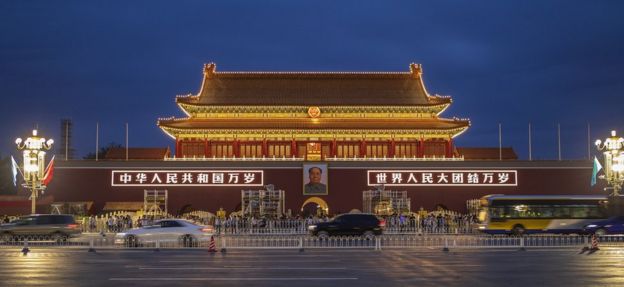
Image copyright GETTY IMAGESImage caption Mao’s portrait will, as it always is, be watching over the events in Tiananmen Square
Another anniversary, of which Tiananmen Square is the centrepiece, is also being measured in multiples of 10 – it is 30 years since the bloody suppression of the pro-democracy protests that shook the foundations of Communist Party rule.
The troops will be marching – as they always do on these occasions – down the same avenue on which the students were gunned down.
The risk of even a lone protester using the parade to mark a piece of history that has largely been wiped from the record is just too great.
With central Beijing sealed off, ordinary people in whose honour it is supposedly being held, can only watch it on TV.
Back in his Tianjin apartment, Zhao Jingjia shows me the intricate detail of a series of scenes, each cut from a single piece of paper, depicting the “Long March”, a time of hardship and setback for the Communist Party long before it eventually swept to power.
“Our happiness nowadays comes from hard work,” he tells me.
It is a view that echoes that of the Chinese government which, like him, has at least acknowledged that Mao made mistakes while insisting they shouldn’t be dwelt on.
“As for the 70 years of China, it’s extraordinary,” he says. “It can be seen by all. Yesterday we sent two navigation satellites into space – all citizens can enjoy the convenience that these things bring us.”
Media caption What was China’s Cultural Revolution?
TIANJIN, Sept. 21 (Xinhua) — Just scan a QR code on a vending machine, then you will be given a drink. The special vending machine placed at the ongoing cybersecurity expo held in Tianjin has attracted many people to try it out.
Once you scan the code, you will receive a message in a second, reminding you that “arbitrary code-sweeping will endanger personal property safety,” as your personal information might have been illegally collected.
This machine was installed by 360 Security Technology Inc.
The expo is a part of a cybersecurity publicity campaign held in north China’s Tianjin Municipality, aiming to promote public awareness of the issue
In fact, it is also a part of the 2019 China Cybersecurity Week, held from Sept. 16 to 22 nationwide.
The campaign was jointly launched by the Publicity Department of the Communist Party of China Central Committee, the Office of the Central Cyberspace Affairs Commission and the ministries of education, public security and industry and information technology.
Over 100 cybersecurity and Internet enterprises have attended various activities held during the week.
There will also be themed activities to promote cybersecurity issues related to students, the telecommunication sector and financial sector.
Personal information protection is a major theme of this year’s campaign.
In Tianjin, an interactive experience area has been set up at the expo, which allowed visitors to raise their cybersecurity awareness through taking part in different activities.
“I’ve learned a lot about cybersecurity through these activities. Do not click strange links or download mobile software from unofficial platforms,” said a 64-year-old visitor surnamed Zhang.
Statistics released showed that China has more than 200 app stores providing nearly 5 million apps. They bring convenience for many people, but some of them become “information funnels,” leaking people’s mobile phone numbers, call records, text messages, consumption records and other private information.
According to a report on netizen’s satisfaction on cybersecurity issued during the event, 51.25 percent of surveyed Chinese netizens believe the Internet is safe, up 12.91 percentage points from last year. About 37 percent of the respondents believe there are personal information leaks on the Internet, and 58 percent experienced personal information infringement.
More than 82 percent of the respondents also urge legislation on individual information protection.
Early in January, the Office of the Central Cyberspace Affairs Commission, the Ministry of Industry and Information Technology, the Ministry of Public Security and the State Administration for Market Regulation teamed up to launch a campaign to crackdown on illegal collection of personal information in mobile apps.
So far, more than 600 popular apps have been evaluated, with over 200 apps asked to make improvements in personal information protection.
BEIJING, July 7 (Xinhua) — China has built six National Supercomputing Centers (NSCC) since 2009, serving as a new driver for the country’s innovation, according to the NSCC in north China’s Tianjin Municipality, which celebrated the 10th anniversary of the founding of the center on Saturday.
Since the establishment of the NSCC in Tianjin was approved by the Ministry of Science and Technology in May 2009, other five supercomputing centers were founded one after another in Shenzhen, Jinan, Changsha, Guangzhou and Wuxi respectively.
As the first supercomputing center in China, the NSCC in Tianjin is not only where China’s first petaflop supercomputer the Tianhe-1 is located, but also responsible for developing China’s new generation of the exascale supercomputer the Tianhe-3.
Tianjin has established a complete autonomous information industry including high-performance chips, autonomous control system, high-performance server and database, setting up a model on the transformation of technologic innovation achievements, said Li Xiang, vice president of the National University of Defense Technology.
“The supercomputer has become a symbol of power reflecting the innovative capabilities of China. Next, we will connect these supercomputing centers and share the resources nationwide,” said Mei Jianping, deputy director-general of the Department of High and New Technology of the Ministry of Science and Technology.
TOKYO, July 6 (Xinhua) — “When I wrote the letter, I didn’t expect to receive a reply from President Xi Jinping. I was surprised and honored,” said Daichi Nakashima with excitement.
The 27-year-old Japanese man said he had received the reply from Xi before the Chinese leader attended the Group of 20 summit in Osaka. “When my friend told me on WeChat, I was shocked!” Nakashima said in an exclusive interview with Xinhua.
Nakashima had several times been a winner in the Panda Cup Japan Youth Essay Contest. Founded in 2014, the competition is co-sponsored by People’s China magazine, the Chinese embassy in Japan and the Japan Science Society, aiming to help Japanese youths have a more comprehensive, objective and rational understanding of China.
Nakashima began learning Chinese in college and has participated in several short-term exchange programs in China.
When talking about his original intention of writing a letter to Xi, Nakashima said, “I wanted to convey the warmth and friendship of the Chinese people I felt during my visit to China and the importance of mutual understanding and exchanges between Japanese and Chinese youths.”
Xi, in his reply, said he was glad to see that Nakashima has been studying the Chinese language and literature for a long time and, by participating in essay contests and exchange activities in China, has learned more about China and strengthened his bonds with Chinese friends.
“It’s the best affirmation and recognition of my persistence for so many years. I’m very touched,” Nakashima said.
Born in 1992, Nakashima first learned about China through classics like “Romance of the Three Kingdoms” and “Outlaws of the Marsh,” but it was a two-week trip to Tianjin in 2011 that gave him a glimpse of a vibrant China.
After that, he visited Beijing, Sichuan, Guangdong and other places. Last year, he went to Fudan University in Shanghai and studied for half a year.
Nakashima found that Chinese youth are very familiar with Japanese anime, music and so on, while Japanese youngsters do not know much about China. Their impression of China is restricted to Chinese tourists, “not knowing about Chinese movies and popular music,” he said.
Nakashima said he believes that the friendship between the two peoples needs more bilateral youth exchanges, as President Xi said in the letter.
Noting that China and Japan are close neighbors separated by only a narrow strip of water, Xi said the friendship between the two countries is rooted in the people, and that the future of the friendship between the two peoples is in the hands of the young people.
Xi said he hopes that the youth of China and Japan will strengthen exchanges and mutual learning, enhance mutual understanding, develop long-lasting friendships, and contribute to creating an even brighter future for bilateral relations.
Xi also encouraged Nakashima to continue to promote the China-Japan friendship. Nakashima said this is an encouragement, a mission and also motivation for him to move forward.
Nakashima graduated with a master’s degree in April and has begun to work in a publishing house. He has been determined to introduce excellent works such as Chinese picture books and science fiction to Japan, so that Japanese teenagers can feel the affinity between the two countries.
“I have met many friendly Chinese people and made many friends that are very important to me. In the future, I will continue to make efforts to help Japanese and Chinese youth deepen mutual understanding,” he said.
SHIJIAZHUANG, July 4 (Xinhua) — Authorities in Beijing, Tianjin and Hebei will conduct joint law enforcement in environment-related areas from 2019 to 2020.
That was learned from a working meeting, held Wednesday in Langfang of Hebei Province, on joint law enforcement involving ecology and environment in Beijing, Tianjin and Hebei.
The campaign is aimed at handling cases of cross-region environmental pollution and related violations.
The authorities will inspect industries, with priority going to polluters such as printing, furniture-making, medicine and pesticide, and rubber products. They will also inspect water resources in regional border areas.
China pledged to coordinate its efforts on environmental protection and economic development in 2019. It promised to push for better air quality with better regional coordination and heavy-polluter revamps, according to the Ministry of Ecology and Environment.
Lotte, Kia and Hyundai are also gradually winding down their China business due to political risks, tariffs and losing market share
Western companies fleeing Donald Trump’s tariffs may not have luxury of a managed exit, but should look at the South Korean case studies closely, experts say
Samsung’s last mobile phone production line remaining in China in Huizhou is winding down, implementing a voluntary retirement programme. Photo: He Huifeng
Upon landing in Australia in 2017 to attend a seminar, a senior politician with South Korea’s parliamentary defence committee was greeted by Julie Bishop, then Australia’s foreign minister, who had a burning question: “How are you dealing with the China threat?”
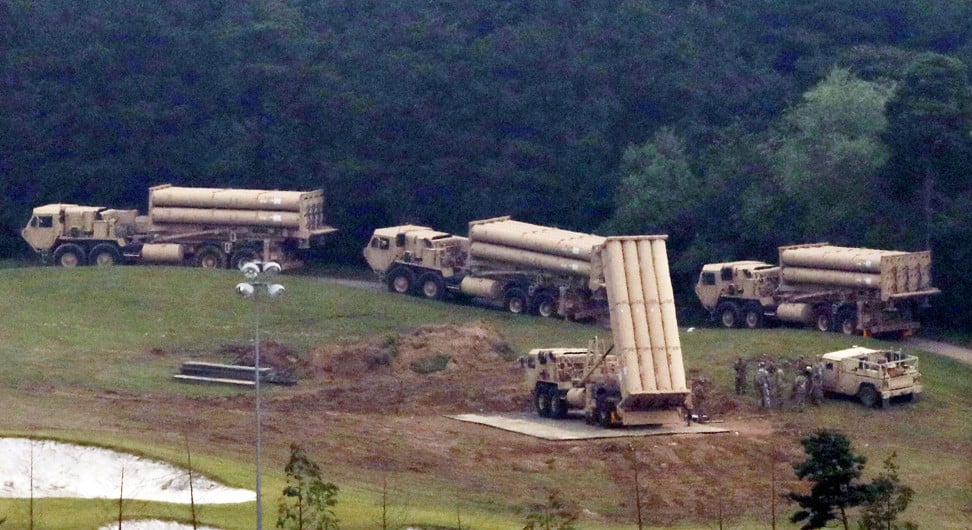
Bishop was referring to the treatment of South Korean firms in China, which escalated after Seoul agreed in 2016 to a long-standing request from the United States to allow the deployment of the Terminal High Altitude Area Defence system (THAAD) on South Korean soil.
Lotte Corporation, one of Korea’s chaebol conglomerates that dominate its economy, had sold a plot of land in Seongju county to the South Korean government, on which the system’s radar and interceptor missiles were set up. While both Washington and Seoul said it was meant to counter threats from North Korea, Beijing viewed THAAD as a security risk, since its radar had the range to monitor China’s nearby military facilities.
After it was deployed in 2017, THAAD triggered widespread boycotts of Lotte’s retail operations in China, with the state-owned media acting as aggressive cheerleaders. The company was sanctioned by Beijing, with its expansion plans in China grinding to a halt on the orders of the Chinese government.
The Terminal High Altitude Area Defence (THAAD) arrived in Seongju in September 2017. Photo: Reuters
Australia – like South Korea – is heavily dependent on trade with China, but is also closely bound to the US in defence and political terms, and Bishop feared that should Australia fall out of favour with Beijing, Australian companies could face similar risks, and so she sought the counsel of the politician, who asked not to be named.
The case of Canadian canola and meat exports being banned from China, reportedly in retaliation for the arrest of Huawei chief financial officer Meng Wanzhou, also known as Sabrina Meng and Cathy Meng, is an example of how third nations can be drawn into the modern day superpower rivalry.
Many analysts say the efforts of South Korean firms in China should be essential study material for Western governments and businesses about the political risks of doing business in the mainland, which are growing as the US-China trade war threatens to draw in other nations and expand into a broader geopolitical struggle.
But large South Korean firms have been gradually withdrawing from China for a number of years – even before the THAAD crisis – and have been able to leave on a managed basis. They are leaving to avoid a repeat of the political crisis that ruined Lotte’s China business, and to avoid tariffs on exports of their China-made products to the US.
Lotte have been forced to close retail operations in China. Photo: Reuters
Share:
But they are also leaving because Chinese firms have become much more competitive in the domestic market that South Korean companies had found so fruitful for more than a decade – a fate that could easily befall Western companies that are eyeing China’s burgeoning middle-class consumer market. Now, while American firms are considering exiting China and setting up in nations that have lower tariff access to the US, South
Korean competitors have had a few years’ head start.
“In a way, all the problems that some South Korean companies had since 2017 might be a blessing in disguise. It meant that they started all of this [supply chain shift] two years before all the other companies,” said Andrew Gilholm, Seoul-based director of analysis for China and Korea at political risk advisory, Control Risks.
Another chaebol, Samsung Electronics, opened its first plant in Vietnam in 2008 and this long-term presence has enabled it to build a supply chain of South Korean companies, which in turn makes it easier for other South Korean firms to establish a base in the Southeast Asian nation.
We have experienced some of the worst situations in China over the past few years and learnt that the political risk there wouldn’t just simply go away overnight Ex-Lotte Shopping manager
As a result, South Korean investment into Vietnam climbed to US$1.97 billion in the first half of 2018, exceeding the country’s investment in China of US$1.6 billion over the same period for the first time, according to the Export-Import Bank of Korea.
Overall in 2018, South Korea’s total investment to the Southeast Asian country totalled US$3.2 billion. Its exports to Vietnam also increased to US$48.6 billion, 121 times that of 1992, when the two countries established diplomatic relations, and the trend is expected to continue.
“We have experienced some of the worst situations in China over the past few years and learnt that the political risk there wouldn’t just simply go away overnight,” said a former manager of Lotte Shopping, the chaebol’s retail arm, who spoke on condition of anonymity.
“China may pass all the legislation ensuring the safety of foreign investments and the rights of multinational companies, but the chance of it swinging away again when there is another political confrontation is just too high … we cannot afford to take any more risk.”
China eventually lifted its economic sanctions on Lotte in April, and the municipal government of Shenyang, the capital of Liaoning province in Northeastern China, gave the company permission in May to resume work on the US$2.6 billion Lotte Town shopping and leisure development.
But according to a person close to the project, Lotte is considering selling the complex after its completion, as it does not wish to continue its retail business in China. A Lotte spokesman declined to comment, saying the situation is “complicated”.
On one hand, its eagerness to leave China reflects the volatility in the market, but on the other, its decision to complete the construction of project before leaving suggests an unwillingness to burn bridges in the process, analysts said.
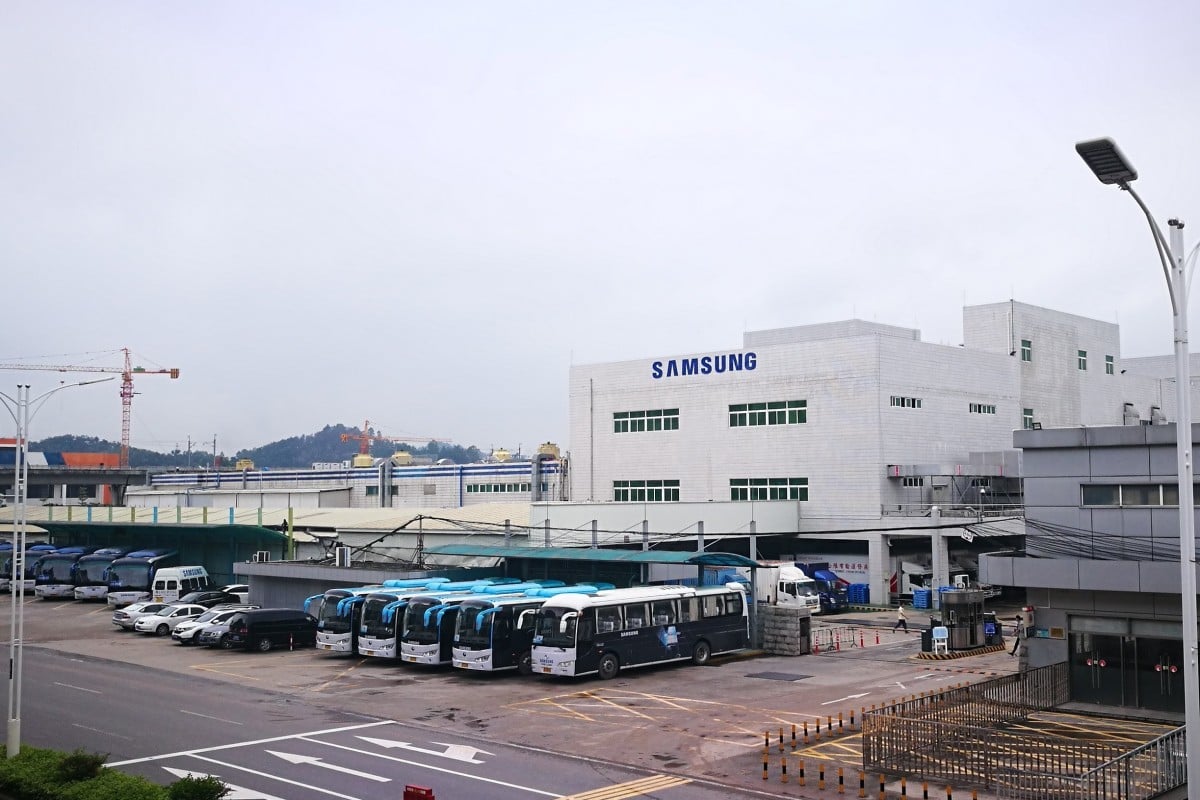
Samsung is another South Korean giant downsizing its Chinese manufacturing presence after it closed its Shenzhen production line in May 2018, followed by its Tianjin factory in December.
Samsung has been very aware of the potential issues around those closuresJason Wright
Its last remaining mobile phone production line in
implementing a voluntary retirement programme. Samsung is also considering moving some television manufacturing from China to Vietnam, according to a company insider.
However, it too, is carefully managing its exit strategy, said Jason Wright, founder of Hong Kong-based intelligence firm Argo Associates, who is advising a growing number of South Korean companies seeking to leave China. Samsung is still a large supplier of microchips to Chinese companies like Huawei, and to exit on negative terms could disrupt its ongoing business.
“Samsung has been quite generous in the packages that have been offered [to workers in the factories that it has closed],” Wright said. “Samsung has been very aware of the potential issues around those closures.”
As well as the political risks and tariffs, Samsung has seen its mainland market share in several product queues shrink dramatically due to competition from Chinese rivals. Its share of China’s smartphone market, for example, fell from 20 per cent in 2013 to just 0.8 per cent last year, according to Strategy Analytics, a market research firm.
Over the same period, it has been moving its supply chain out of China in a “subtle and imperceptible” way, according to Julien Chaisse, a professor of trade law at City University of Hong Kong who has advised, among others, Lotte on its plans to relocate to Vietnam.
Samsung Electronics opened its first plant in Vietnam in 2008. Photo: Cissy Zhou
As stories emerged in June that Apple was considering a partial exit of China, it was impossible not to see parallels. iPhone sales in China fell 30 per cent in the first quarter of 2019, according to research firm Canalys, while smartphones will be among those facing a potential tariff of up to 25 per cent, although this has been at least delayed after the trade war truce agreed by
Meanwhile, South Korean car companies Kia and Hyundai’s combined market share in China fell to 2.7 per cent last year, from about 10 per cent at the beginning of the decade. Both companies, which have shared ownership, are downsizing their Chinese operations.
“In the past, China was just a great market, but for Korea, now China has become a competitor. So that is really a change in the dynamic over the last five years. China was not really able to compete with Korea in most areas,” said Wright from Argo Associates.
City University of Hong Kong professor Chaisse traces the exodus of South Korean firms back to 2014, before THAAD and before the trade war, and highlighted an arcane arbitration case at the United Nations’ dispute settlement courts as a turning point. After that case, South Korean companies in China faced an increasingly hostile environment.
Filed in 2014 and settled in 2017, the case emerged after South Korean company Ansung Housing had been forced to sell a golf resort it was developing in Eastern China after a change in the country’s real estate legislation.
Ansung took the case to an arbitration panel, claiming it breached a Sino-Korean investment treaty. The company won – only the second defeat for China in two decades of participation in the court, but this ushered in a “change in atmosphere” for South Korean firms.
“My take is that while the Korean case is unique for a number of reasons, it highlights what is going to happen to many other foreign companies operating in China,” Chaisse said.
“I think very soon even European companies will be reconsidering their businesses in China. Every time it will be a different story: different countries, different companies, in different economic sectors will have different reaction times and the magnitude of their withdrawal may vary.”
But for those now fleeing trade war tariffs, they may not have the luxury of long-term planning that companies like Samsung and Lotte have had, said Gilholm from Control Risks.
“Long term, I think the Korean firms that are moving out of China have had it easier because they haven’t had to do it under quite such pressured and scrutinised circumstances as a company which starts to move things now,” he said.
BEIJING, July 1 (Xinhua) — Several provincial-level regions on Monday started implementing the “China VI” vehicle emission standards ahead of schedule to ramp up efforts against a major source of air pollution.
Sales and registrations of new vehicles in regions including Beijing, Shanghai, Tianjin, Hebei Province and Guangdong Province now have to comply with what is believed to be one of the world’s strictest rules on automobile pollutants.
In Beijing, all new buses and other heavy-duty diesel vehicles shall follow the new emission rules, while all new vehicles are expected to follow suit starting Jan. 1, 2020.
All existing vehicles on the roads are obliged to meet the previous “China V” emission standards.
According to official data, emissions from some 6.2 million vehicles were responsible for 45 percent of Beijing’s concentration of small, breathable particles known as PM2.5, a key indicator of air pollution.
Compared with the “National V” standards, the new rules demand substantially fewer pollutants such as nitrogen oxides and particulate matters and introduce limits on particulate number and ammonia.
The new emission standards were initially set to take effect nationwide from July 1, 2020. A three-year action plan on air pollution control released last July urged early implementation in major heavily-polluted areas, the Pearl River Delta region, Sichuan Province and Chongqing Municipality.
Automakers and the market have been preparing for the tougher rules.
Manufacturers have completed the development of most “China VI” models and have entered the stage of mass production and sales, said Liu Youbin, a spokesperson with the Ministry of Ecology and Environment.
By June 20, 99 light vehicle makers had unveiled environmental protection information of 2,144 new models and 60 heavy-duty vehicle manufacturers unveiled information on 896 green models, Liu said.
“The market has basically accomplished a smooth transition,” Liu said.
Li Hong, an official with the China Association of Automobile Manufacturers (CAAM), said roll-outs of “China VI” vehicles as well as preferential tax and fee policies would boost China’s auto market.
“The production and sales of new energy vehicles (NEVs) will continue its relatively fast growth,” Li said.
Car sales in China continued to drop in May, with about 1.913 million vehicles sold, down by 16.4 percent year on year, CAAM showed. Bucking the trend, sales of NEVs kept growing that month, edging up 1.8 percent year on year.
China saw robust sales growth of NEVs in the first four months this year with 360,000 NEVs sold, surging by 59.8 percent from the same period a year earlier.
Chinese authorities have announced that the tax exemptions on NEV purchases will continue through 2020 to boost the country’s green development and retain a strong domestic market.




 CHINDIA ALERT: You'll be living in their world, very soon