03/10/2019
- Managers of the Leshan Giant Buddha and Jiuzhaigou National Park restrict ticket sales as millions head off for the holiday break
Park authorities in charge of the Leshan Giant Buddha in Sichuan have restricted visitor numbers in golden week. Photo: Xinhua
Several major
tourist attractions in China have capped visitor numbers during this year’s National Day “golden week” holiday as millions take the chance to travel.
October 1 marked the start of a week-long break on the mainland, with an estimated 800 million people expected to go on trips in China or overseas, about 10 per cent more than last year, according to the China Tourism Academy.
The academy estimated that 726 million people would take domestic trips in this peak holiday period – a 9.4 per cent increase from last year, but that is the lowest level of growth since 2007 as pressure from China’s slowing economy and the trade war with the United States take their toll.
Managers at the scenic area surrounding the Leshan Giant Buddha – a 71-metre (233 feet) tall ancient statue carved into a cliff in southwestern Sichuan province – said last week that daily tickets would be capped at 22,400 during the holiday, which runs until Monday.
West Lake in Hangzhou, Zhejiang province, drew 300,400 visitors as golden week started. Photo: Xinhua
The park said it would update visitors on daily ticket sales through social media.
“Today’s tickets for the Giant Buddha have reached the limit and sales have stopped,” the park management committee said on its Weibo account on Tuesday. “To all tourists, please rearrange your itinerary. You can visit the areas surrounding the Giant Buddha scenic spot,” it said, adding that tickets could be booked online for any day for the rest of golden week.
“I expected it to be chock-full of people, but actually today it’s still relatively calm. I had lots of fun,” a visitor to the Giant Buddha told Pear Video on Tuesday.
Hong Kong protests leave ‘golden week’ tourist boom in tatters
Jiuzhaigou National Park in Sichuan said last week that it would be limiting visitors to 5,000 per day during golden week and said on Monday that tickets had sold out.
The network of valleys known for its natural scenery was devastated by an earthquake in August 2017, and reopened with limited access in March 2018.
However, there were no restrictions at other attractions. In eastern Zhejiang province, 340,400 visitors went through the gates at Hangzhou’s West Lake on Tuesday, the Global Times’ Chinese edition reported.
“There’s too many people. I have never seen so many of them in my life,” one tourist was quoted as saying.
A guide also said that instances of “uncivilised behaviour”, such as trampling on the gardens, were down compared to last year.
“During the major holidays, many tourist attractions are so crowded that tourists can barely move an inch,” Hangzhou Daily said in an editorial on Monday.
“Not only is the tourist experience bad, but there are also safety hazards such as being trampled on, and this puts a lot of pressure on nearby public transport and food establishments.”
Travel booking platform Ctrip said that tourists heading overseas were increasingly seeking out new destinations, with bookings to places such as the Czech Republic, Austria, Croatia, Malta and Cambodia up by 45 per cent this year.
However, bookings for Hong Kong had fallen substantially after nearly four months of anti-government protests, Ctrip said.
Source: SCMP
Posted in ancient statue, Austria, Cambodia, China alert, China Tourism Academy, Croatia, crowds, Ctrip, cut, Czech Republic, domestic trips, food establishments, Giant Buddha, Global Times, golden week, Hangzhou, Hangzhou Daily, holiday break, Hong Kong, Jiuzhaigou National Park, Leshan Giant Buddha, Leshan Giant Buddha and Jiuzhaigou National Park, limit, Malta, Managers, Numbers, October 1, overseas, Pear Video, pressure, public transport, restrict, scenic sites, sichuan province, slowing economy, ticket sales, toll, tourists, trade war, trampled on, Travel booking platform, trips, Uncategorized, uncivilised behaviour, United States, visitor, Weibo, West Lake, zhejiang province |
Leave a Comment »
30/09/2019
- Train trips, Xinjiang and chartered flights among the growing holiday trends, travel agents say
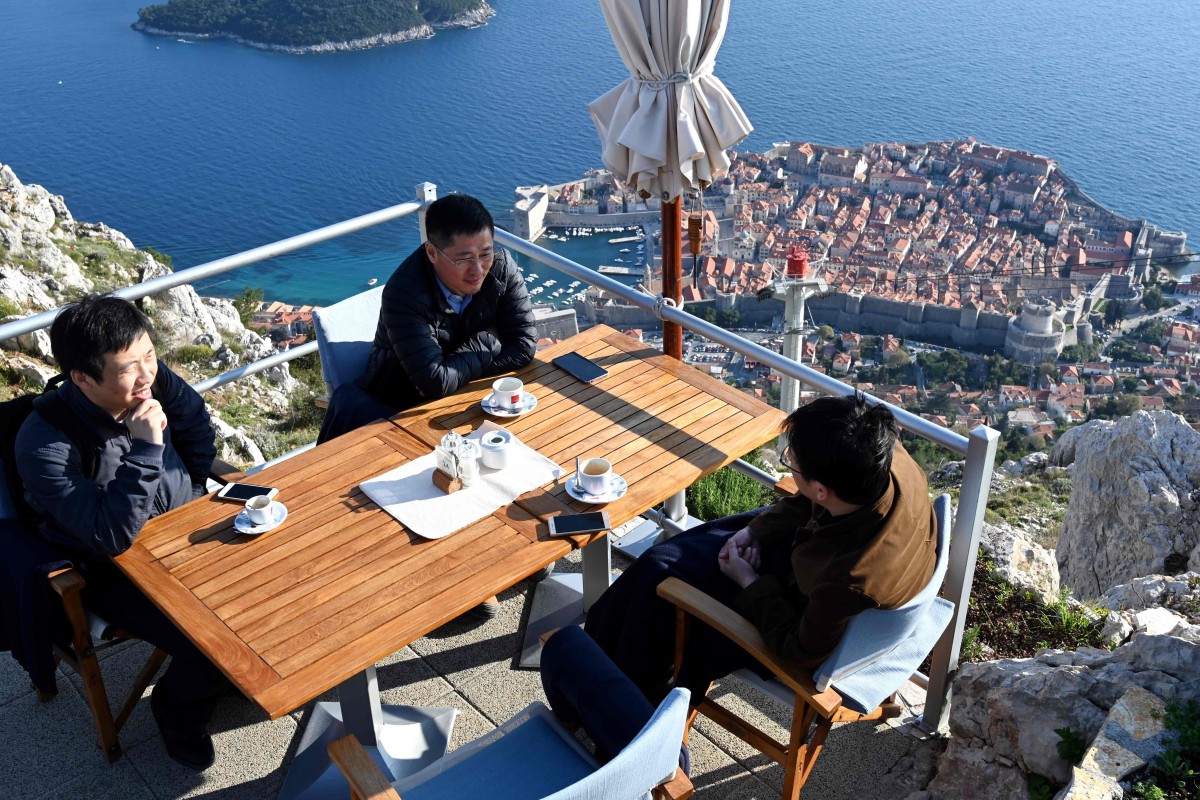
Destinations such as Dubrovnik, Croatia, are becoming more popular among mainland Chinese tourists, according to one of China’ s biggest travel services. Photo: AFP
Chartered flights and niche destinations such as Croatia and Malta are growing in popularity as Hong Kong falls out of favour for mainland Chinese holidaymakers over the National Day “golden week” break.
Japan has overtaken Thailand as the most searched overseas destination on the website of travel agency Ctrip, followed by Malaysia, the United States, Singapore, Australia, Macau, France, Italy and Russia.
Within the mainland places such as Beijing and Shanghai continued to be among the most popular searches but Urumqi, capital of Xinjiang Uygur autonomous region, is a fast-growing term, especially among people in Shanghai and Guangzhou.
“It could be that tourists want to see autumn leaves,” a Ctrip spokesman told the South China Morning Post.
October 1 marks the start of a week-long break on the mainland when millions of Chinese take the chance to travel. This year, an estimated 800 million people are expected to go on trips in China or overseas, about 10 per cent more than last year.
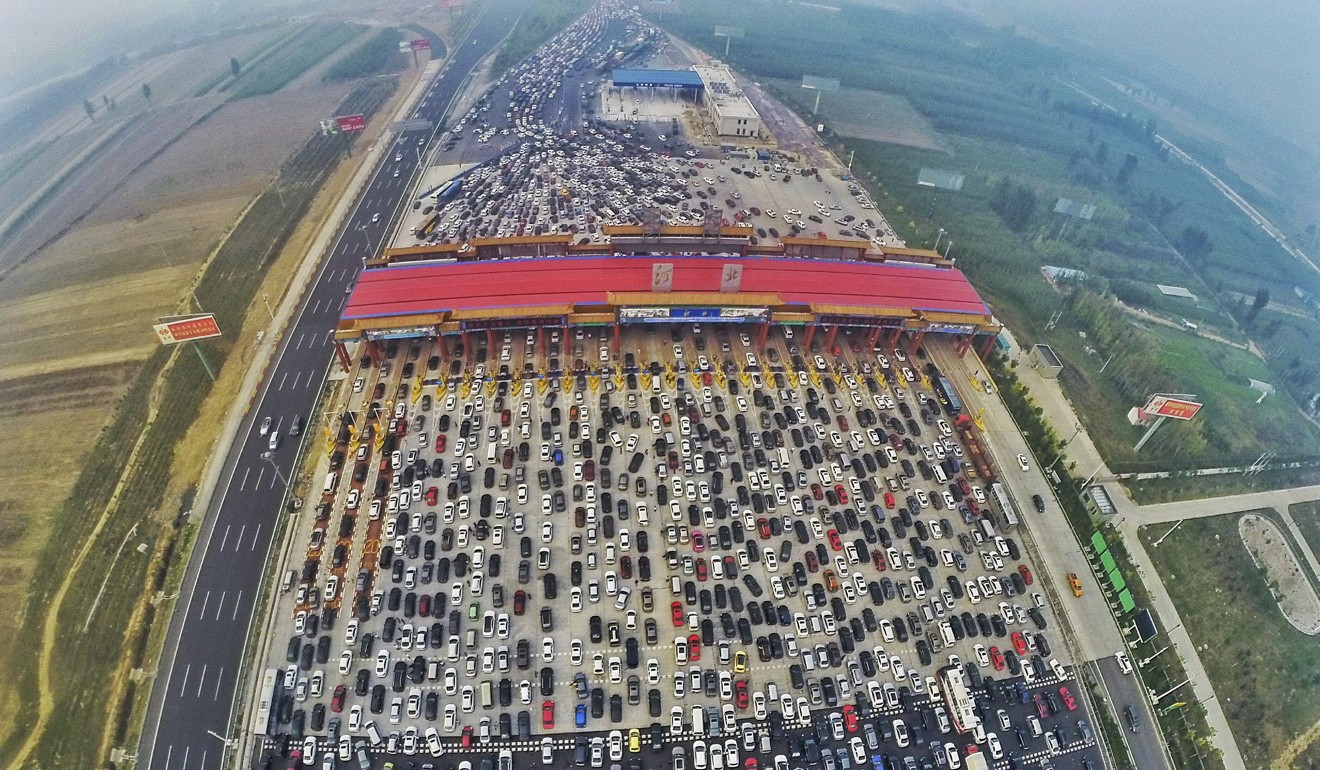
The country’s motorways are expected to be jammed from about 2pm on Monday, reaching a peak at around midnight, and again from 10am Tuesday, according to web mapping service Tencent Map.
China’s highways can expect heavy traffic as travellers head out for the holiday. Photo: Reuters
Ctrip said people heading overseas were increasingly seeking out new destinations, with bookings to places such as the Czech Republic, Austria, Croatia, Malta and Cambodia growing by 45 per cent this year.
“As Chinese people travel outside the country more and their experience of travel grows, many are more willing to go to smaller eastern European countries, such as the Czech Republic,” the spokesman said.
“Popular movies also have a strong influence. Many young people are willing to travel to see where films are shot, such as Croatia, one of the locations for Game of Thrones.”
Other noticeable trends this year include more people travelling with pets, by train and on chartered flights. The site said it sold 60 per cent more European train tickets and 10 times the number of train tickets for Japan for this golden week compared to last year.
The most popular routes in Asia were Tokyo to Kyoto in Japan, and Seoul to Busan in South Korea.
Hong Kong protests leave ‘golden week’ tourist boom in tatters as visitor arrivals during Chinese holiday period are set to be slashed by a third
Thousands of users also chose chartered flights, a service Ctrip introduced in September.
Ji Yu, head of chartered flights for Ctrip said most people thought chartered flights or helicopters were something only millionaires could afford, but in the internet age, they had become cheaper and more accessible.
“In the internet era, consumer needs vary from person to person, especially in terms of travel. There are products on the market to satisfy each customer’s personal needs.”
Among the more popular chartered routes were from Beijing or Shanghai to Tokyo, Bangkok, the Maldives and London.
More people are also going away for longer. Digital travel services giant Qunar said that 80 per cent of the travellers booking flights or hotels through its services were heading off for more than five days. And of those 41 per cent were travelling for more than a week.
Meanwhile, trips to Hong Kong have fallen substantially, with just 15 group tours expected to enter the city each day, down from 110 last year, according to the Travel Industry Council of Hong Kong.
Efforts to promote Hong Kong attractions have also increased in Shenzhen in recent weeks, with advertising videos scenic spots, popular restaurants and malls in Hong Kong playing on cross-border buses. Passengers can also get discounts to some stores and services with their tickets.
Source: SCMP
Posted in Australia, Austria, autumn leaves, Ürümqi, Bangkok, Beijing, booking flights, break, Busan, Cambodia, capital, chartered flights, Chinese travellers, consumer needs, cross-border buses, Ctrip, Czech Republic, destinations, European train tickets, France, Game of Thrones, golden week, growing, Guangzhou, helicopters, holiday trends, Hong Kong, internet age, internet era, Italy, jammed, Japan, Kyoto, London, Macau, Malaysia, Maldives, malls, Malta, millionaires, motorways, National Day, niche, October 1, person to person, Qunar, restaurants, Russia, scenic spots, Seoul, Shanghai, Shenzhen, Singapore, skip, south china morning post, South Korea, Tencent Map, Thailand, Tokyo, tourists, Train, Train trips, travel, Travel agency Ctrip, travel agents, travelling with pets, Uncategorized, United States, vary, Xinjiang, Xinjiang Uygur Autonomous Region |
Leave a Comment »
21/09/2019
BEIJING, Sept. 21 (Xinhua) — A total of 73 popular domestic scenic spots have joined a campaign to collect garbage as China marked the World Cleanup Day Saturday.
Stalls will be set up in these scenic spots to encourage tourists to pick up garbage, take them away and sort them.
Spearheaded by China’s largest online travel agency Ctrip and charity program Pickup China, the campaign will last through the National Day holiday and is expected to attract about 1 million travelers and reduce 1,000 tonnes of tourism-related waste.
A mobile game was also launched on Ctrip’s app to raise awareness of trash collection and sorting among its users.
Sustainability will contribute to improved travel experiences and the sector’s development, said Fang Hongfeng, general manager of the activities business unit at Ctrip, adding that they are willing to seek broader cooperation with scenic areas in this field.
The World Cleanup Day, which falls on Sept. 21 each year, is a global social action program designed to address the global solid waste problem.
Source: Xinhua
Posted in Beijing, campaign, charity program, China's scenic spots, collect garbage, Ctrip's app, domestic, garbage pickup, global solid waste problem, join, Mark, Mobile game, National Day holiday, online travel agency Ctrip, Pickup China, popular, scenic spots, Spearheaded, Stalls, Sustainability, tourism-related waste, tourists, travelers, Uncategorized, World Cleanup Day |
Leave a Comment »
20/09/2019
NANNING, Sept. 19 (Xinhua) — Pham Thi Nguyet Hoa, a vendor living in Vietnam’s Mong Cai, comes to Dongxing, a southern Chinese port city, to sell Vietnam fruits every day. When night falls, she often ends up with thousands of yuan in her pocket, much more than what she can earn at home.
“Most of my customers are Chinese, and it is very convenient to exchange Chinese yuan to Vietnamese Dong as many banks in Dongxing have this currency exchange service,” said Pham.
Tourism has been a pillar industry in the border city of southern China’s Guangxi Zhuang Autonomous Region. Dongxing port saw 12 million people, of which half were tourists, pass through last year, ranking first among all land ports in China.
In the first six months this year, tourism consumption at the port exceeded 6.2 billion yuan (874 million U.S. dollars), up 40.4 percent from the year before.
The flourishing border tourism has brought a huge demand for currency exchange, with a slew of financial reforms rolled out in recent years.
In 2014, the ABC China (Dongxing Experimental Zone) ASEAN Currency business center was established in Dongxing, allowing direct convertibility of Chinese yuan and Vietnamese Dong.
In February 2018, a total of 8 million yuan was transferred in cash from Vietnam to China, marking the first cross-border cash transfer in Guangxi between China and Vietnam.
Fan Zuojun, vice president of Guangxi University, said the cross-border cash transfer will further promote the financial cooperation between China and Members of the Association of Southeast Asian Nations (ASEAN) as well as deepen reform and push forward the internationalization of the Chinese currency in the region.
China and ASEAN countries have always maintained close relations in trade.
In January 2010, the China-ASEAN Free Trade Area was set up, which has significantly boosted bilateral trade. China has maintained its position as the largest trading partner of ASEAN for 10 consecutive years, and trade between China and ASEAN has skyrocketed tenfold from 16 years ago to 587.8 billion U.S. dollars in 2018.
In the first half of 2019, ASEAN became China’s second-largest trading partner, with bilateral trade volume reaching 291.85 billion U.S. dollars, up 4.2 percent year on year.
Guangxi’s geographical advantages have also given it huge development dividends over the past decades. ASEAN has been Guangxi’s largest trade partner for 19 consecutive years, and trade volume between Guangxi and ASEAN in the first seven months of this year topped 128 billion yuan, accounting for 48.7 percent of Guangxi’s total foreign trade.
Now with the launch of the Guangxi Pilot Free Trade Zone (FTZ) in August, bilateral trade exchanges are expected to embrace another golden opportunity.
The pilot FTZ, with a total area of nearly 120 square km, will focus on modern financial services, smart logistics, digital economy, port shipping logistics, international trade and cross-border tourism, among others.
Guangxi vows to make greater efforts to consolidate its financial strength and build itself into an ASEAN-oriented financial portal, with over 90 financial reform measures being rolled out to further facilitate trade and investment and promote innovation in financial services with ASEAN countries.
Posted in ABC China (Dongxing Experimental Zone) ASEAN Currency business center, ASEAN, Association of Southeast Asian Nations (ASEAN), build, China alert, China's border region, China-ASEAN Free Trade Area, Chinese, Chinese yuan, consumption, customers, Dongxing, exchange, expedites, financial gateway, first, Guangxi Pilot Free Trade Zone (FTZ), Guangxi University, Guangxi Zhuang Autonomous Region, land ports, Nanning, night, pillar industry, port city, ranking, reform, sell, Tourism, tourists, Uncategorized, Vietnam, Vietnam fruits, Vietnamese Dong |
Leave a Comment »
12/08/2019
- Chief executive Rupert Hogg says staff who ‘support or participate in illegal protests’ would face disciplinary action that ‘may include termination of employment’
- Airline’s shares down 4.37 per cent on Monday morning to lowest level in 10 years, despite it complying with orders on Friday from China’s aviation authority
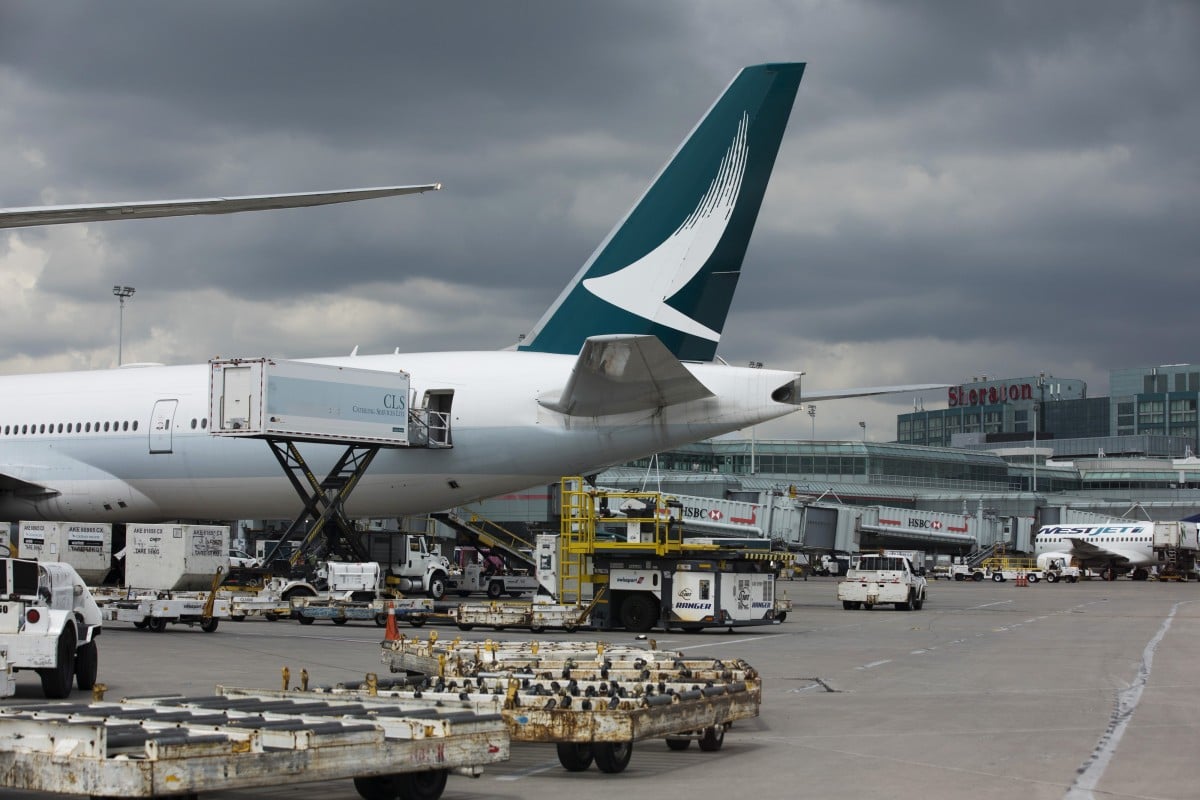
Cathay Pacific moved over the weekend to comply with new orders from China’s aviation authority. Photo: Bloomberg
Cathay Pacific has warned that it would sack staff taking part in illegal protests in Hong Kong, saying it would take a “zero tolerance” approach, as its shares slumped to their lowest level in 10 years in morning trading on Monday.
In a note to staff on Monday, chief executive Rupert Hogg said staff who “support or participate in illegal protests” would face disciplinary action that “could be serious and may include termination of employment”.
His warning indicated an escalation by the company, under pressure to crack down on employees after China’s civil aviation regulator said on Friday that airline staff supporting the Hong Kong protests would be barred from flights going to, from or through mainland China.
“We are all obliged to abide by law at all times,” Hogg said. “Cathay Pacific Group has a zero-tolerance approach to illegal activities. Specifically, in the current context, there will be disciplinary consequences for employees who support or participate in illegal protests. These consequences could be serious and may include termination of employment.”
By noon in Hong Kong, the stock had fallen 4.37 per cent to HK$9.85 (US$1.26), its lowest level since June 2009. Losses dragged the carrier’s parent company Swire Pacific down 5.4 per cent to HK$77.50, making it the worst performer on Hong Kong’s stock market during morning trading.
This was the lowest price since October 2018 for Swire, which owns 45 per cent of the airline. Air China, which owns 22.7 per cent of Cathay, also fell 1.53 per cent in Hong
On Friday, the Civil Aviation Administration of China (CAAC) told Hong Kong’s flagship carrier that any staff members who had taken part in what it called “illegal protests”, “violent actions” and “overly radical activities” would not be allowed to fly to or from the mainland, in a first warning shot at a Hong Kong-based corporate giant.
The CAAC also said that the airline would have to submit identification details of all crew operating all services using mainland China airspace, and that flights with unapproved crew lists would be barred. It gave the airline until Thursday to submit a detailed plan to improve its procedures.
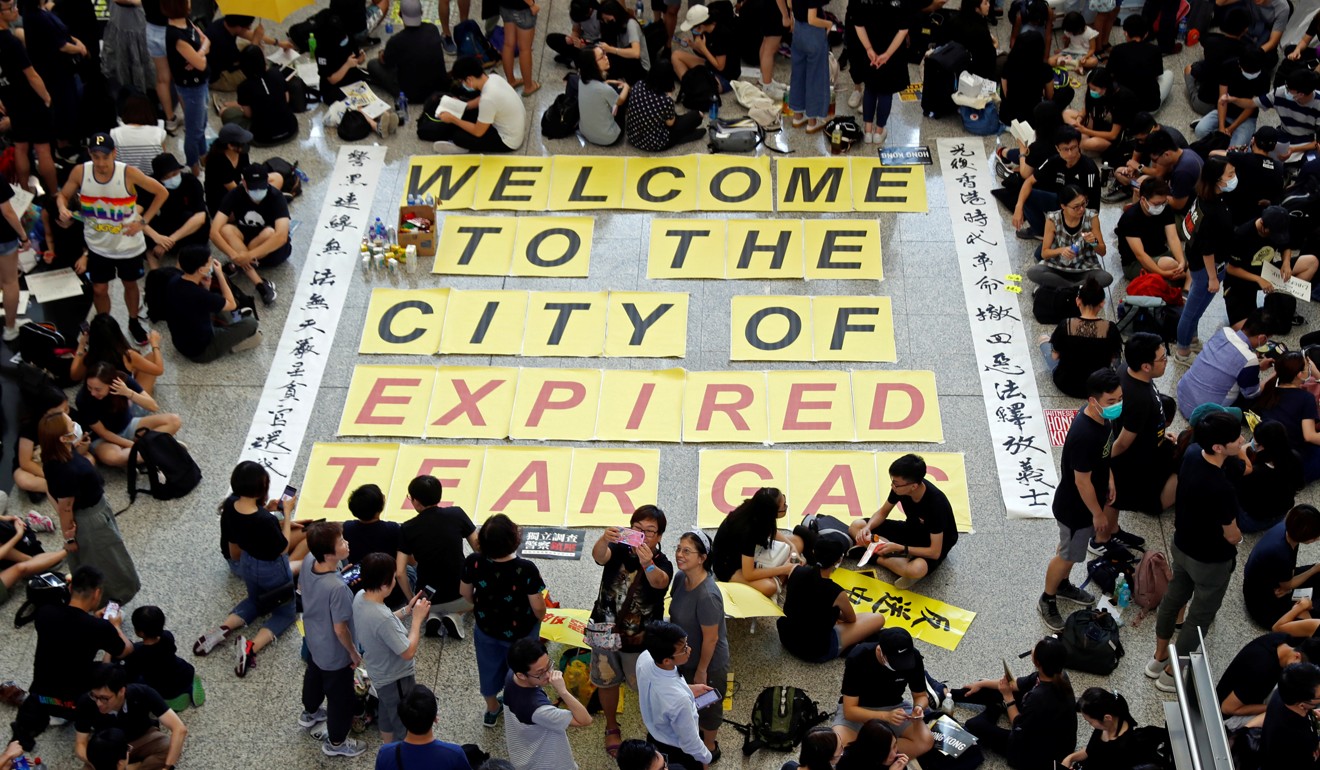
Anti-extradition bill protesters join a sit-in protest at Hong Kong International Airport on Sunday. Photo: Reuters
Cathay Pacific had earlier said it would not stop staff members from taking part in demonstrations.
On Wednesday, Cathay Pacific chairman John Slosar said the company would not rein in staff for openly supporting the protests. “We certainly wouldn’t dream of telling them what they have to think about something,” Slosar said.
But in his second statement in two days in relations to the CAAC’s sanctions, Hogg said the “actions and words” of staff outside of work hours could have a “significant effect on the company”, adding that the actions of a few of Cathay’s 34,000 employees would be seen as a company position.
He also asked staff to not “support or participate” in the illegal protest at the airport, saying the carrier was concerned that the protests could become disorderly and violent.
No flights by Cathay Pacific, nor by its subsidiaries Cathay Dragon or HK Express, were delayed or cancelled on Saturday or Sunday, the company said.
The CAAC’s move was widely seen as a clear warning to Hong Kong’s business community to toe Beijing’s line to pressure ongoing anti-government protests in the city that have been taking place for over two months.
Despite the airline acting over the weekend to comply with the rules, Chinese state media continued to put pressure on the company.
Global Times, a tabloid associated with Communist Party mouthpiece People’s Daily, said on Sunday the airline had still not allayed all concerns despite its adjustments to comply with the ruling.
Carrie Lam’s remarks about Beijing’s sovereignty ‘add fuel to the fire’, analysts warn
“These are only small steps [showing] that Cathay Pacific is heading towards the right direction, and their sincerity will need to be tested over time,” the tabloid said in an opinion article on Sunday.
It said 2,000 company staff joined citywide strikes last Monday, and cited the case of a pilot who was arrested and charged with rioting during a demonstration on July 28.
“Cathay Pacific has touched on this behaviour lightly, which has a huge impact on the trust the industry and the public have towards the company,” the article said.
State broadcaster CCTV published a short video on Weibo on Monday morning of its anchor issuing further warnings to the airline, saying there were reports of staff continuing to join “illegal gatherings” and asking tourists not to go to Hong Kong.
“If this continues, it’s not a matter of whether or not people would still want to come to Hong Kong, but whether they would still want to be on your airline,” Kang Hui said in a one-minute video.
“Let me send a friendly reminder: one would not be in trouble had one not asked for it,” Kang said, in Mandarin and then in English, translating the popular Chinese internet meme phrase “No zuo no die” and claiming some Cathay Pacific staff pretended not to understand Mandarin. Cantonese is the dominant language in Hong Kong.
Elsewhere, the company announced that two of its airport employees
for leaking passenger information about a Hong Kong police soccer team who had been on a flight to mainland China. It has also suspended the pilot who was among 44 people charged with rioting on July 28.
Although the company does not clearly specify its country-by-country performance, China and Hong Kong produced half of all its 2018 revenue – HK$57 billion of a total of HK$111 billion. A fifth of all the carrier’s flight are to and from the mainland.
Source: SCMP
Posted in airline staff, airspace, Anti-extradition bill protesters, arrested, aviation authority, Beijing, business community, Cantonese, Carrie Lam, Cathay Dragon, Cathay Pacific, CCTV, charged with rioting, Civil Aviation Administration of China (CAAC), civil aviation regulator, Communist Party mouthpiece, draws line, English, Global Times, HK Express, Hong Kong, Hong Kong International Airport, illegal gatherings, illegal protests, Language, Mainland China, Mandarin, No zuo no die, overly radical activities, People’s Daily, pilot, protests, sit-in protest, stock market, Swire Pacific, tabloid, threatens staff, tourists, Uncategorized, violent actions, Weibo, with sack, zero tolerance |
Leave a Comment »
22/07/2019
- Some 150,000 residents of Baishizhou have to leave by the end of September to make way for malls, hotels and high-end residential projects
- They worry about finding affordable housing in the city, and their children’s education
Urban villages like Baishizhou provide affordable housing, mostly for migrant workers. Photo: Phoebe Zhang
As their eviction deadline nears, all Chen Jian can think about is the wrecking ball – and where his family is going to go. He often dreams about the negotiations – with officials, real estate developers, landlords. On other nights, he cannot sleep at all.
“I’m mostly worried about my daughter – she starts secondary school in September,” said Chen, 41, who works as a quality supervisor for a foreign trading company.
His family of four lives in a cheap one-bedroom flat in Baishizhou, one of the last standing chengzhongcun, or “urban villages”, in the flourishing commercial zones of southern Chinese city Shenzhen.
The villages provide affordable housing – costing from a few hundred to a few thousand yuan per month – to a mostly migrant worker population that provides services and labour.
But Baishizhou, in the Nanshan district, will not be standing for much longer. Many tenants in the area have received eviction notices since June, telling them to move out before the end of September to make way for a real estate project led by Shenzhen-based developer LVGEM Group.
The developer bought the land and buildings from their landlords, and it plans to knock them down and replace them with malls, hotels, high-end residential projects and skyscrapers.
Some 150,000 people are affected, mostly migrant workers, and they will have to find new homes, change jobs or even move back home at short notice.
Chen Jian lives in a one-bedroom flat in Baishizhou with his wife, daughter and son. Photo: Phoebe Zhang
For Chen and more than 2,000 other families, their children’s education is the most urgent issue. He said they could move somewhere else nearby, but the rent would be more than four times higher. A cheaper area would mean a long walk to school for his daughter from the nearest subway station.
As the breadwinner, Chen’s monthly income of 12,000 yuan (US$1,750) has to cover the whole family. His wife takes care of their three-year-old son and their daughter, 12.
“If I were here by myself, I would just pack up my bags and go,” said Chen, who moved to Shenzhen from Henan province. “But I can’t – I have children, I would do anything for my children.”
Families who’ve lived in old Chinese town for generations being kicked out to make way for tourists
Urban villages are a phenomenon that grew from China’s rapid development. In the 1980s, soon after Shenzhen became the country’s first special economic zone, the local government expropriated mostly vacant land from villagers and allowed developers to build commercial properties there.
The locals invested the large sums of money they received into new living spaces in their villages, which they rented out to the migrant workers that flowed into the city amid a manufacturing boom.
These chengzhongcun emerged as a tangle of damp alleyways, where electricity and telephone wires hang like spiderwebs. They bustle with fruit carts, soy milk shops, cobblers, karaoke parlours, short-stay love hotels and hair salons offering massage services. The “handshake buildings” where people live are packed together so tightly that residents could reach out of the window and shake their neighbour’s hand in the opposite flat.
“I call this ‘voluntary urbanisation’,” said Duan Peng, an architect based in the city. Since he moved to Shenzhen in 2001, Duan has spent many days and nights in Baishizhou. He said its development was in line with the government’s urban planning policy, since it allowed migrant workers to live in a relatively prosperous area in the city centre rather than on its periphery.
“Handshake buildings”, where residents can shake their neighbours’ hands through the windows, are a feature of China’s urban villages. Photo: Phoebe Zhang
Chen moved to Shenzhen with his wife in 2000, and both their children were born there. They moved to Baishizhou in 2008 after he was introduced to his landlord, who is from Chen’s hometown and rented him the flat for 650 yuan a month.
The rent has gone up by just 300 yuan in the 11 years they have lived there. They have watched as new developments sprang up around them – amusement parks, a golf course, malls and an area that is home to some of the country’s top tech companies including Huawei, Tencent and DJI.
How the eviction of Beijing’s migrant workers is tearing at the fabric of the city’s economy
But away from the shiny new developments, 150,000 migrant workers from all over the country are packed into 2,500 buildings in Baishizhou, where rents and services are affordable.
The urban village is full of people like Chen. Small business owner Wang Fang came to Shenzhen from northeast China in 2003 and has lived in Baishizhou ever since. Six months ago, she signed a three-year lease on a commercial space and opened a dumpling restaurant, but she is worried about the future.
“I can’t go back home, I already have a Shenzhen hukou,” she said, referring to the household registration document that gives access to public services. “I don’t have land there any more and can’t make a living there [as a farmer].”
She has not been told she has to leave the restaurant, but Wang and her two sons have until the end of September – when the building’s water and electricity will be cut off – to vacate their flat.
“It’s only a matter of time before the business is shut down as well,” she said.
Small shops and street vendors line Baishizhou’s bustling alleyways. Photo: Phoebe Zhang
According to an online poll of 1,031 Baishizhou residents this week, about half said they may have to find another job, and more than 600 were concerned about their children’s education. The survey, conducted by Shenzhen University urban planning professor Chen Zhu, also found that 70 per cent of those polled planned to find another flat in the city, while 28 per cent would leave.
Duan said the evictions and redevelopment would inevitably affect the surrounding areas, as well as the residents.
“The prices of services in the neighbourhood will increase, because many of the workers [now providing those services] will move far away, and rents will increase as well,” he said.
But for many such redevelopments, while the government, landlords and village officials might be consulted, the tenants are left out.
“Most of these residents, their voices and their interests aren’t on the negotiating table – their losses aren’t calculated in the real estate developer’s demolition costs,” Duan said.
A receptionist at LVGEM said he was not aware of any complaints about the redevelopment, while emails to the company went unanswered.
Meanwhile the developer’s partner, Baishizhou Corporation, told Southern Metropolis Daily it would provide legal services, rentals support and school buses for tenants who will be displaced.
But it is not enough for migrant workers like Chen. Like many of those facing eviction, he fears he will have to pay more rent, and there may not be a school bus service in his area.
He mentions a slogan plastered on walls in the city, “Once you come, you’re a Shenzhener” – part of a government campaign to lure talent and investors.
Chen said he worried that Shenzhen wanted only hi-tech workers and luxury residential compounds in the city, leaving little room for low-income workers.
“Despite what the slogan says, you ask yourself, are you really a Shenzhener?” he said.
Source: SCMP
Posted in affordable housing, automotive special economic zone (SEZ, Baishizhou, breadwinner, chengzhongcun, commercial properties, dumpling restaurant, education, evictions, forced out, hotels, household registration document, hukou, landlords, malls, migrant workers, Nanshan district, negotiations, officials, real estate developers, residential projects, residents, Shenzhen, Shenzhen University, Shenzhener, skyscrapers, subway station, tourists, Uncategorized, urban villages, wrecking ball |
Leave a Comment »
07/07/2019
- Five thousand-year-old ruins in Zhejiang province are the earliest known example of Chinese civilisation
- Country passes Italy to become home to the largest number of World Heritage Sites
The Liangzhu site in Zhejiang dates back to 3,500BC. Photo: Thepaper.cn
A 5,300-year old Chinese city that provides the earliest example of civilisation in the country has been named as the country’s latest Unesco World Heritage Site.
The Liangzhu Archaeological Site in Zhejiang province was designated a “cultural site” at the latest Unesco meeting in Azerbaijan, bringing the total number of Chinese heritage sites to 55 – passing Italy as the country with the largest number in the world.
The ruins, located on the outskirts of the modern city of Hangzhou, sits on the plain of river networks in the basin of the Yangtze River and date back to 3,300BC.
The site covers an area of 14.3 square kilometres, and mainly consists relics of 11 dams, cemetery sites, water conservancy system and walls that gives evidence to an early Chinese urban civilisation, with rice cultivation as the economic foundation.
An aerial view of the site. Photo: Thepaper.cn
The discovery of the site was of “primary importance” as it provides evidence of compelling evidence that Chinese civilisation started 5,000 years ago, 1,000 years earlier than previously thought, Colin Renfrew, a retired professor of archaeology at University of Cambridge, told state news agency Xinhua.
“So when we are talking of the origins of state society in China, we can think of the Liangzhu … instead of the Shang civilisation around 1,500BC.
The site was first discovered in 1936 when a team of archaeologists unearthed some pottery and began searching for further evidence
Liangzhu is China’s 55th Unesco World Heritage Site. Photo: Thepaper.cn
A breakthrough came in 1986 when a burial site with around 1,200 artefacts made from jade, pottery and ivory was uncovered.
The walls of the city were discovered in 2007 and the surrounding water conservancy system was unearthed in 2015.
Archaeologists estimate that it would have taken 4,000 people working for a decade to build the system, according to Xinhua.
The decision to add the site to the Unesco list is the culmination of more than two decades’ work, with preliminary work starting in 1994.
The site is now open to tourists, but a maximum number allowed to visit the site is limited to 3,000 a day and bookings must be made online.
Source: SCMP
Posted in Ancient Chinese city ruins, Archaeologists, Azerbaijan, bookings, burial site, cemetery sites, Chinese civilisation, dams, economic foundation, Hangzhou, Italy, Liangzhu Archaeological Site, professor of archaeology, rice cultivation, Shang civilisation, tourists, Uncategorized, unesco world heritage site, University of Cambridge, urban civilisation, walls, water conservancy system, Yangtze River, zhejiang province |
Leave a Comment »
05/07/2019
- Sichuan attraction was due to reopen for the summer but managers decided there was no point after it was stripped bare of its most celebrated feature
Visitors have been filmed breaking into the park in Sichuan to pick its lotus flowers. Photo: Red Star News
An ecological park in southwest China has been forced to close for the rest of the year because hundreds of tourists have stripped it of its celebrated lotus flowers.
Longqiao Cultural and Ecological Park in Sichuan province’s Lu county has been closed since late March for watercourse construction and was due to reopen soon.
Chinese university creates cherry blossom filter to save trees from tourists
The park is well known for its sprawling fields of lotus flowers that cover around 250,000 square metres (62 acres) – an area larger than New York’s Grand Central Terminal.
But since the start of the summer blossom season last month, hundreds of people have been breaking into the park to pick the flowers, forcing managers to keep it closed for the rest of the year.
The flower-pickers have prompted widespread condemnation. Photo: Red Star News
“We cannot control the tourists. We can just guarantee we’ve done our job well. We’ve put notes on the park gate and near the flower field and we have security personnel on patrol as well,” a member of staff surnamed Zhou said.
Zhou added that the construction work in the park was almost finished but that there was no point in reopening because there were virtually no flowers left.
Badly behaved Chinese tourists are back in Boracay
Around 200 to 300 people a day are still believed to be breaking into the park, and have forced management to increase the number of security patrols.
Videos and photos of people picking lotus flowers have been circulated widely online and drawn criticism.
Visitors pictured climbing the fence to break into the park. Photo: Thepaper.cn
“Even the highest fence cannot stop those without manners. It’s like you can never wake up a person that pretends to sleep,” one Weibo user commented.
“Only penalties can stop these greedy people,” said another.
Source: SCMP
Posted in Boracay, Chinese eco park, forced to stay shut, greedy people, Longqiao Cultural and Ecological Park, lotus flowers, New York’s Grand Central Terminal, penalties, sichuan province, strip away, tourists, Uncategorized, widespread condemnation |
Leave a Comment »
22/04/2019
- Embassy officials have contacted families of two Chinese nationals who were killed in the blasts on Easter Sunday, and visited five who were injured
- Four of the missing were travelling to the Indian Ocean on a study trip
Police and investigators work at the Shangri-La Hotel blast scene in Colombo on Sunday, where the two Chinese were killed. Photo: Xinhua
Five Chinese nationals remain missing following a series of suicide bombings in hotels and churches in Sri Lanka on Easter Sunday that claimed the lives of
At least 290 people were killed and more than 500 others injured in the blasts, according to a Sri Lankan government official on Monday, who said a local militant group was behind the attacks.
The Chinese embassy in Colombo had contacted the families of the two deceased Chinese and was awaiting police confirmation on the fate of the five still missing, state-run People’s Daily reported.
Two Chinese nationals sustained serious injuries in the blasts and three others minor ones. Embassy officials had visited them several times in hospital, the report said.
“The embassy will closely monitor the situation, urge Sri Lankan police to confirm the whereabouts of the missing persons and assist Chinese citizens and families to properly handle the aftermath,” the embassy was quoted as saying.
The two Chinese who died, cousins surnamed Tan, were caught in a blast at the Shangri-La Hotel in Colombo, Red Star News quoted a Chinese businesswoman in the Sri Lankan capital as saying.
“Their families identified them at the scene,” she said.
Four of the missing Chinese are students from the First Institute of Oceanography at the Ministry of Natural Resources. Photo: FIO
Four of the missing Chinese – Li Dawei, Li Jian, Pan Wenliang and Wang Liwei – are students from the Ministry of Natural Resources’ First Institute of Oceanography who were going to take part in a study in the Indian Ocean, an institute staff member told Red Star News.
The institute has sent staff to
Four of the five injured are students from the Chinese Academy of Sciences’ South China Sea Institute of Oceanology, who were en route to a study trip in the eastern Indian Ocean.
“It is an annual scientific expedition programme and they were on the way to replace the 10 others who had completed their rotation,” a staff member told The Beijing News. “Some sustained bruising on their legs and one could hardly hear after the blast.”
Tourists who returned to Shanghai and Chengdu, Sichuan province, told the newspaper that their trip had to be cut short as shops were closed and a curfew imposed amid tight security.
“All the private cars, coaches, vans and buses had to open their doors for inspection. There were checkpoints every 10 metres,” said one tour guide from Chengdu.
A traveller from the same city said airport security had also been stepped up. “There was a bombing 20 minutes after we left a restaurant and another one outside the airport when we were waiting there. We had to pass through three or four very strict security checks at the airport,” she said.
Back in Shanghai, another woman said: “We were not scared there but we are very glad to be back home.”
Source: SCMP
Posted in Chengdu, China alert, Chinese Academy of Sciences, Colombo, embassy, First Institute of Oceanography, Five Chinese, Indian Ocean, Li Dawei, Li Jian, Ministry of Natural Resources, missing, Pan Wenliang, People’s Daily, Red Star News, return home, Shanghai, Shangri-La Hotel, sichuan province, South China Sea Institute of Oceanology,, Sri Lanka bombings, Sri Lankan police, suicide bombings, The Beijing News, tourists, Uncategorized, Wang Liwei |
Leave a Comment »
17/04/2019
- Wildlife park in southwest of country issues warning after tourist throws 10,000 yuan worth of banknotes into enclosure
The money was thrown into the giraffe enclosure on Tuesday. Photo: Toutiao
A wildlife park in southwestern China is looking for a visitor who tried to feed its giraffes almost US$1,500 worth of cash.
Staff at the Yunnan Wildlife Park discovered on Tuesday that someone had thrown 10,000 yuan in banknotes into the giraffe enclosure and then disappeared, the park said later that day.
“Some tourists love to feed animals food when visiting zoos, but have you seen people who feed them renminbi?” the park said in a notice issued on WeChat, China’s most popular social media platform.
The banknotes landed in the giraffe enclosure just before noon and staff had to distract the animals with food while they picked up the money, it said.
Nearly 10,000 yuan, mostly in 100 yuan notes, was retrieved. Staff then questioned visitors in the area but they all denied any knowledge of the incident, it said.
Surveillance camera footage showed that the money was thrown from a blind spot, it added.
“So far no one has come to claim ownership of the money. The police are also helping us look for the owner,” a worker from the tourists’ service centre told the South China Morning Post on Wednesday.
Staff had to remind visitors that strange objects could harm the animals. Photo: toutiao
“As we search for the owner, may we also kindly advise tourists not to drop litter or feed animals ‘strange things’?” the notice said.
“Taking different food provided by tourists can give the animals nutritional disorders, and as a result influence their growth and reproduction. And if they eat objects that are indigestible, such as plastic bags, they can die or suffer life-threatening injuries.”
The wildlife park said it was hoping to return the cash to its owner if he or she can be traced.
Source: SCMP
Posted in animals, China alert, Chinese zoo, enclosure, giraffe enclosure, giraffes, Kunming, provincial capital, social media platform, Surveillance camera footage, tourists, toutiao, Uncategorized, WeChat, Yunnan Wildlife Park |
Leave a Comment »















 CHINDIA ALERT: You'll be living in their world, very soon