Chindia Alert: You’ll be Living in their World Very Soon
aims to alert you to the threats and opportunities that China and India present. China and India require serious attention; case of ‘hidden dragon and crouching tiger’.
Without this attention, governments, businesses and, indeed, individuals may find themselves at a great disadvantage sooner rather than later.
The POSTs (front webpages) are mainly 'cuttings' from reliable sources, updated continuously.
The PAGEs (see Tabs, above) attempt to make the information more meaningful by putting some structure to the information we have researched and assembled since 2006.
Indian security forces have killed a prominent militant leader in disputed Kashmir, officials say.
Riyaz Naikoo had taken over command of the banned Hizbul Mujahideen group, succeeding Burhan Wani who was killed by security forces in 2016.
Wani’s death triggered massive protests in the region, which is claimed in its entirety by both India and Pakistan.
The region has seen an armed insurgency against Indian rule since 1989, which has flared following Wani’s killing.
Naikoo was shot dead in his home village of Beigh Pora in Pulwama district after militants killed eight security personnel in two separate attacks, part of a recent surge of violence in Indian-administered Kashmir.
Locals said the militant leader had been trapped in a joint siege laid by army, paramilitary and police forces. He had been on the run for eight years.
“At least 76 militants including Naikoo have been killed since January this year. But we also lost 20 soldiers including senior army and police officers,” a security official told BBC Urdu on condition of anonymity.
Under a new policy, militants who are killed are not identified and their bodies are not handed over to their families.
Officials had accused Riyaz Naikoo of plotting attacks against the security establishment in the valley.
Disputed Kashmir has been a flashpoint for more than 60 years, sparking two wars between India and Pakistan.
In August 2019, the Indian government stripped the region of its semi-autonomous status and split it into two federally-run territories.
Thousands of people were detained and the region remains under severe security restrictions.
BEIJING, April 28 (Xinhua) — China has achieved much progress in environmental protection and taken the lead in green development in recent years.
The efforts have exemplified Chinese President Xi Jinping’s proposal of “working together for a green and better future for all” made a year ago in his speech at the opening ceremony of the International Horticultural Exhibition 2019 Beijing.
In the keynote speech, Xi proposed a five-point initiative on promoting green development, namely pursuing harmony between man and nature, pursuing the prosperity based on green development, fostering a passion for nature-caring lifestyle, pursuing a scientific spirit in ecological governance, and joining hands to tackle environmental challenges.
China’s hard work on environment protection has paid off.
The ecological environment has improved significantly. People are enjoying more days of blue sky, cleaner water, and fertile land.
China has achieved the goal of zero growth of desertified land by 2030 set by the United Nations ahead of time. Besides, forest stock volume increased by 4.56 billion cubic meters compared with that of 2005.
Carbon dioxide emissions per unit of GDP in 2018 fell by 45.8 percent compared with that of 2005, exceeding the target set for the year.
After more than 30 years of hard work, the seventh largest desert in China, the Kubuqi Desert in Inner Mongolia Autonomous Region, once known as the “sea of death” difficult for birds to fly across, has turned into a green valley.
In January 2020, in a letter in reply to the student representatives of the Global Alliance of Universities on Climate, the Chinese president mentioned his thoughts about ecological civilization in his youth.
“Over four decades ago, I lived and worked for many years in a small village on the Loess Plateau in western China. Back then, the ecology and environment there was seriously damaged due to over-development and the local people were trapped in poverty as a result,” Xi wrote.
“This experience taught me that man and nature are a community of life and that the damage done to nature will ultimately hurt mankind,” said Xi.
China’s progress and achievements are recognized worldwide.
The ecological civilization and green development advocated by China are actually an endeavor to find a way to balance economic development and environmental protection, said John Cobb, Jr., the founding president of the Institute for Postmodern Development of China and member of the American Academy of Arts and Sciences.
Noting that the endeavor is a remarkable exploration, he expressed his hope that it will succeed.
China is on the right path in dealing with global climate change and achieving sustainable development, said Borge Brende, president of the World Economic Forum.
In addition to making efforts at home, China has also rolled out a series of measures to support the global combat against climate change.
In September 2015, ahead of the Paris climate change conference, Xi pledged a 20-billion-yuan (3-billion-U.S. dollars) China South-South Climate Cooperation Fund, which was dedicated to help other developing countries combat climate change.
China has also been fulfilling the obligations of the United Nations Framework Convention on Climate Change and the Paris Agreement, and achieved the goal of its intended nationally determined contributions submitted to the secretariat of the Climate Change Convention as scheduled.
UN Secretary-General Antonio Guterres expressed his appreciation for China’s important contributions to addressing the climate change and building a green “Belt and Road,” and said he expects China to continue to play a leading role in addressing the climate change and other issues.
“Lucid waters and lush mountains are invaluable assets,” a concept put forward by Xi in 2005 when he visited Yucun Village in southeast China’s Zhejiang Province as the party chief of the province, has become the motto of the Lao Ministry of Natural Resources and Environment.
In March 2020, when Xi returned to Yucun, he said that economic development should not be achieved at the expense of the ecological environment. To protect the ecological environment is to develop the productive forces, he said.
The history of civilizations shows that the rise or fall of a civilization is closely tied to its relationship with nature, Xi said at the International Horticultural Exhibition last year.
Only by joining hands can the humankind advance a global ecological civilization and march towards the bright future of building a community with a shared future for mankind.
Blaze that also left 50 people needing hospital treatment broke out in bar that covered nine floors on Sunday morning
Trapped customers seen climbing onto window sills and calling for help
Firecrews at the scene of the blaze in Taipei. Photo: EPA-EFE
At least three people were killed in a fire in Taipei karaoke bar on Sunday morning, which left 50 others in hospital.
Apart from those declared dead, four other people were in a critical condition and were being treated in a local hospital, the official CNA news agency said.
The fire broke out between 10 and 11am on the fifth floor of a 14-storey building on Linsen North Road in the Taiwanese capital. The bar occupied the first nine floors.
Pictures from the scene showed thick smoke emerging from the building.
Customers trapped on the upper floors were seen calling for help with some even standing on window sills in panic.
Customers were rescued from the upper floors. Photo: AFP
Firefighters used aerial ladders to rescue the trapped people from the upper storey windows. The Taipei city fire department said it dispatched 43 fire engines and 17 ambulances to the scene.
The fire was extinguished at about 11.30am and the search for more survivors was continuing, the department said.
Animal bursts into private room, causing customers to flee
Police shoot it dead to bring end to the panic
The boar was filmed by surveillance cameras wandering around the karaoke parlour. Photo: Weibo
A 315-pound (143kg) wild boar went on the rampage at a karaoke parlour in northeast China, scaring customers before staff managed to trap the animal in a room for local police to handle.
The incident happened at an unnamed karaoke establishment in Jixian county, Heilongjiang province on Monday evening, video news site Pear Video reported on Thursday.
Surveillance camera footage shows that the creature charged into the parlour before running into a private room, scaring two customers who ran out of the room. Several more frightened customers were seen running out of other rooms on the same corridor.
“The wild boar managed to enter the establishment because the door wasn’t closed, and it damaged the main bar counter by charging into it,” an unnamed KTV parlour staff member was quoted as saying by Pear Video. “Then it ran into a customer’s private karaoke room and scared them out.”
Frightened customers reported the incident to staff, who trapped the animal in a room.
“Wild boars definitely have an aggressive nature and they can seriously harm people,” a local police officer was quoted as saying. “After receiving instructions from our boss, we used a sniper gun to kill the boar. We had to shoot it three times before it finally died.”
Surveillance camera footage also showed several police officers dragging the dead animal down the karaoke parlour’s corridor.
China has a large population of wild boar, estimated to be about 33.5 million, Reuters has reported.
In 2014, a villager in Heilongjiang died after being attacked by a 100kg wild boar as he was herding cattle on a mountain.
NEW DELHI (Reuters) – India’s Supreme Court on Thursday ordered the government to list the steps it plans for the rescue of at least 15 miners trapped in a so-called “rat-hole” coal mine for three weeks in a remote hilly state, warning that “every second counts”.
The workers were ensnared on Dec. 13 when the illegal mine in the northeastern state of Meghalaya was flooded. Rescuers have so far only been able to find three helmets and two axes underground.
The country’s top court wondered why attempts to reach the miners had not yet been successful.
“Tell us by tomorrow, because for people who are trapped, every second counts,” Justice Arjan Kumar Sikri told the federal government, represented by Solicitor-General Tushar Mehta.
The Meghalaya government told the court that nearly 86 people were working on the rescue effort since Dec. 14, including employees of state-controlled Coal India Ltd, the world’s biggest miner of the fuel.
Kyrmen Shylla, Meghalaya’s disaster management minister, told Reuters both government and private agencies had been involved in the bid to reach the miners, many of whose family members have given up hope.
Rat-hole mining has killed thousands of workers in Meghalaya, including children, before India’s environmental court banned the practice in early 2014.
At its peak, the state produced coal worth $4 billion a year, or about a tenth of India’s total production.
Despite the ban, many mines continued operatihere, requiring workers, often children, to descend hundreds of feet on bamboo ladders and dig coal out of narrow, horizontal seams.
The unsuccessful rescue bid has drawn criticism of a lack of urgency shown by government agencies, particularly given the remote location of the mine, a journey to which can take more than five hours from the nearest commercial airport in Guwahati.
“Would we have cared more if the miners had not been at the fringes of national consciousness in the northeast?” senior journalist Vir Sanghvi asked on Twitter.
“I have not given up hope, but our response to this crisis shames us as a nation.”
A request for 10 pumps of 100 HP, survey teams to detect seepage and other assistance from state-owned Coal India was made by the district administration in a letter to the state government on December 20, but the corporation received the communication only on December 26.
An Odisha team left on Friday morning in a special aircraft of the Indian Air Force with 20 high-power pumps to assist in rescue operation in Meghalaya for 15 miners trapped for past 15 days.(Photo courtesy Fire Department , Odisha)
A 21-member team of Odisha Fire Services, on board an Indian Air Force plane, has landed in Guwahati on way to Meghalaya with high-powered dewatering pumps to assist local authorities in a fresh attempt to rescue the 15 miners, trapped in a flooded illegal coal mine in Ksan village of East Jaintia Hills district for the last fortnight.
The team has approximately another 200 km to go by road through hilly terrain before they reach the site of accident .
With chances of their rescue becoming bleaker by the day, the Union ministry of home affairs on Thursday sought the help of Odisha Fire Services for sending its team of experienced professionals.
Director general of fire service and commandant general, home guards and director civil defence BK Sharma said the team led by chief fire officer Sukanta Sethi left on Friday morning in a special aircraft of the Indian Air Force with 20 high-power pumps.
“Each of the pumps can dewater 1,600 litres of water a minute and we hope the miners can be rescued. We are one of the few states that is experienced in handling such calamities. We could have gone much earlier, but the request from MHA came yesterday (Thursday),” said Sharma.
Watch:Rescue operations underway for 15 miners trapped in flooded Meghalaya mine
With time running out for the miners, the Odisha team could have left on Thursday evening but could not as the Shillong airport does not have night landing facilities.
This is the first time that the fire services team would test their skills in a coal mine filled with water. The fire services department has taken part in rescue operations in others states in the past as well.
In August this year, a team of 240 fire service personnel from Odisha had helped in the rescue operation of flood-affected people in Kerala. The team not just saved hundreds of people, including patients and disabled, they also rescued domestic animals like cows, goats and pets like dogs.
In 2014 too, the Odisha fire service personnel had earned praise for their commendable job in the relief and rescue operations in Andhra Pradesh during Cyclone Hudhud.
Efforts stepped up
The state government has been criticised for the tardy rescue operation in the Saipung area of the northeastern state due to the festive season. All that the rescue officials in Meghalaya have recovered so far are three helmets.
The efforts to pump out water from the mine stopped on Monday as the available machines were ineffective and stronger ones were needed.
A request for 10 pumps of 100 HP, survey teams to detect seepage and other assistance from state-owned Coal India was made by the district administration in a letter to the state government on December 20, but the corporation received the communication for assistance from Shillong only on December 26.
On Thursday, an assessment team from Kirloskar Pumps (KBL) in Kolkata arrived at the remote site on Thursday evening after a request by Congress leader Shashi Tharoor, whose party is in the opposition in Meghalaya.
A Coal India team arrived in Shillong on Thursday and will visit the site on Friday for assessment. JK Borah, general manager, North Eastern Coalfields said “seven pumps have been mobilised by Coal India.” Officials said moving the other equipment to the site of the accident will take another three to four days.
Rescue teams at the site said that a foul smell emanating from the water on Wednesday reported by one of the divers was in all likelihood because of stagnation when the operation was suspended on Christmas Day.
“It has been fourteen days now. The chances of the trapped miners surviving are very slim,” acting additional district magistrate SS Syiemlieh said on Thursday.
The miners have been missing after the illegal coal mine they were digging collapsed on them in the coal-rich East Jaintia Hills, an area where illegal mining is rife and a National Green Tribunal ban on such activities has been in place for four years.
Meghalaya has nearly 640 million tonnes of coal reserves. Mining of coal by hand has been going on in Meghalaya for over 150 years, mostly for local use. Large-scale illegal and indiscriminate mining of the coal by private landowners and the local community started nearly three decades ago.
Most of these mines employ minors, some from neighbouring states and Nepal as well; the miners work many metres underground in unsafe conditions, mining coal with their bare hands.
This isn’t the first accident involving an illegal mine in the state.
In February 2014, four miners were killed when the walls of an illegal mine collapsed in Garo Hills. In December 2013, five miners died when the cable of the contraption which was carrying them down to an illegal mine in Jaintia Hills broke. In July 2012, 15 miners drowned in an illegal mine in Garo Hills when an underground stream flowing near the mine flooded it.
GUWAHATI, India (Reuters) – Rescue workers were trying on Friday to reach 13 miners trapped underground in a coal mine in India’s remote northeastern Meghalaya state since the previous day, authorities said.
The mine is an old, illegal so-called rat-hole mine, they said. Rat-hole mines are common in Meghalaya as they are dug by villagers but are very dangerous as the coal is pulled out from narrow, horizontal seams.
Meghalaya Chief Minister Conrad Sangma said authorities had no information on the condition of the miners.
“We are praying that they come out alive,” he told Reuters by telephone from the state capital Shillong.
A flash flood from a nearby river on Thursday raced through the mine, which is located near a dense forest, said Sylvester Nongtngr, police chief of the East Jaintia Hills district of Meghalaya.
Nearly all mines in Meghalaya, which borders Bangladesh, use the rat-hole mining method, even though they are not legal and authorities try to crack down on them.
Workers, often children, descend hundreds of feet on bamboo ladders to dig out the coal from small holes, often leading to accidents.


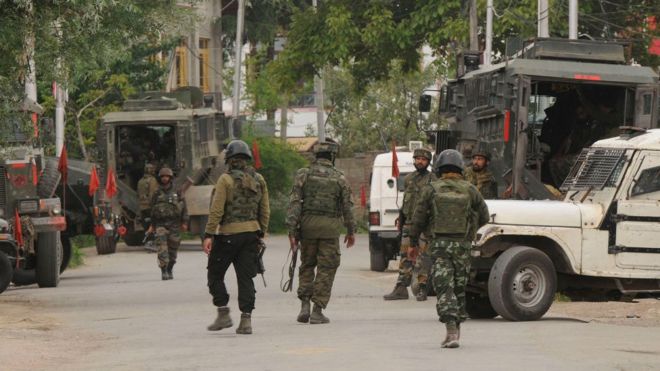 Image copyright GETTY IMAGES



 CHINDIA ALERT: You'll be living in their world, very soon