Chindia Alert: You’ll be Living in their World Very Soon
aims to alert you to the threats and opportunities that China and India present. China and India require serious attention; case of ‘hidden dragon and crouching tiger’.
Without this attention, governments, businesses and, indeed, individuals may find themselves at a great disadvantage sooner rather than later.
The POSTs (front webpages) are mainly 'cuttings' from reliable sources, updated continuously.
The PAGEs (see Tabs, above) attempt to make the information more meaningful by putting some structure to the information we have researched and assembled since 2006.
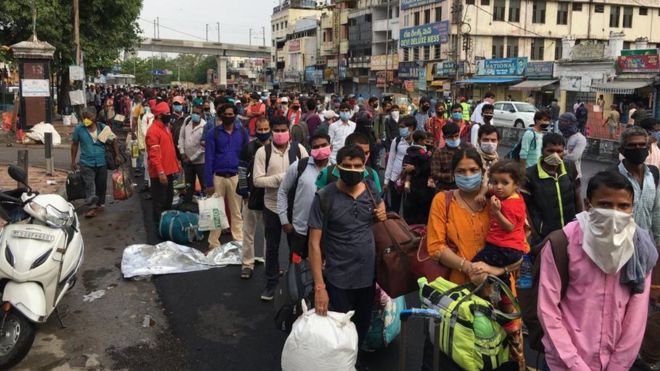
Image caption Passengers gathered outside Secundarabad station in Andhra Pradesh state
India has partially restored train services amid reports of chaos and overcrowding at some stations.
At least 145,000 people will travel in trains on Monday as the country starts to reopen after a prolonged lockdown.
Two hundred trains will now start operations – up from the existing 30 that are currently running.
But maintaining social distancing and cleanliness is proving to be a difficult task as huge crowds gathered outside some stations.
India’s mammoth railway network usually carries 25 million passengers every day.
The ministry of home affairs has issued specific guidelines for the smooth operation of train services. They say that all passengers will have to be screened, social distancing must be followed at the station and in trains and only passengers who have confirmed tickets will be allowed to travel.
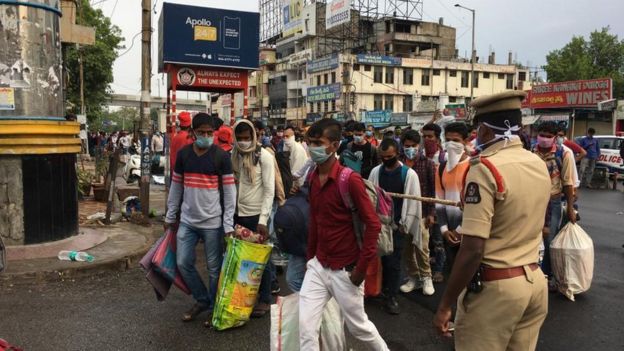
Image caption Police struggled to enforce social distancing due to large crowds
But some stations reported chaotic scenes as officials struggled to enforce these guidelines. BBC Telugu reported that people were standing much too close to each other at Secunderabad railway station in the southern state of Telangana.
“Railway staff and police didn’t allow passengers to go inside the station until at least one hour before the scheduled departure, citing physical distancing measures. This led to some chaos outside the railway station as a large number of passengers had gathered and there was no physical distance maintained. Police later arrived and organised the queues,” BBC Telugu’s Sharath Behara says.
Reporting from Delhi, BBC Hindi’s Salman Ravi said strict social distancing was being followed when passengers boarded trains, and all of them wore masks.
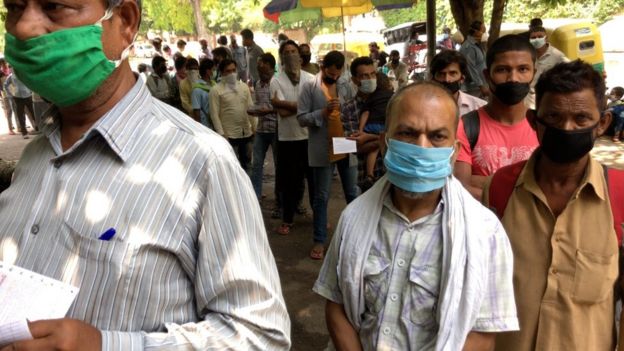
Image caption Passengers waiting outside the train station in Delhi
“But the same was not observed at ticket booking counters. Many people who did not have tickets also turned up at the station and that caused crowding,” he added.
Train services came to a grinding halt when Prime Minister Narendra Modi announced the lockdown on 24 March to stop the spread of coronavirus.
This left millions of daily-wage workers stranded as they desperately tried to go back to their villages from cities. Many of them decided to walk long distances – in some cases more than 1,000 kilometres.
As pressure and criticism mounted, the government started running special trains to ferry migrants. Some 30 trains restarted on 12 May, since then there has been a consistent demand to reopen more routes.
Getting the train network going again is part of the government’s wider strategy to slowly reopen the economy. Millions have lost jobs and factories are struggling to reopen as demand is likely to be sluggish in the coming weeks.
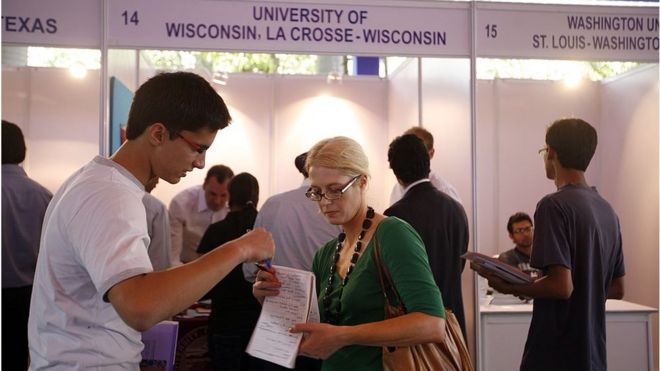
Image copyright GETTY IMAGESImage caption International students are uncertain of the future in the wake of Covid-19
Two years ago, 29-year-old Raunaq Singh started working towards his dream of pursuing an MBA from one of the world’s top business schools.
In January 2020, he was waitlisted by UC Berkeley’s Haas School of Business in California, and was asked to send more information to bolster his case for admission.
“So, I quit my stable job of five years and started working with a mental wellness start-up as a consultant,” Mr Singh says.
“I’m on a major pay cut because the purpose of joining this company wasn’t to earn money, but to add value to my application.”
Fortunately, he was accepted at Berkeley, and was due to start his course in September.
But then the world changed as Covid-19 spread, plunging the immediate future into uncertainty.
Mr Singh is one of hundreds of thousands of Indian students who were planning to study abroad. But now they are not quite sure what will happen given international travel restrictions, new social distancing norms and the sheer uncertainty of what the next few months will bring.
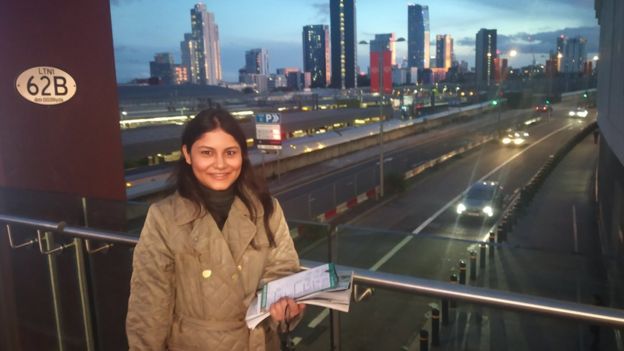
Image copyright MEEHIKA BARUAImage caption Ms Barua is one of the hundreds of thousands of Indians who wants to study abroad
Every year, in June and July, students flood visa centres and consulates to start the paperwork to travel and study abroad. But things look different this year.
“There’s a lot of stress and anxiety and tension at this time but not enough clarity,” says Meehika Barua, 23, who wants to study journalism in the UK.
“We don’t know when international travel restrictions will be lifted or whether we’d be able to get our visas in time. We may also have to take classes online.”
Some universities across the UK and the US are giving international students the option to defer their courses to the next semester or year, while others have mandated online classes until the situation improves.
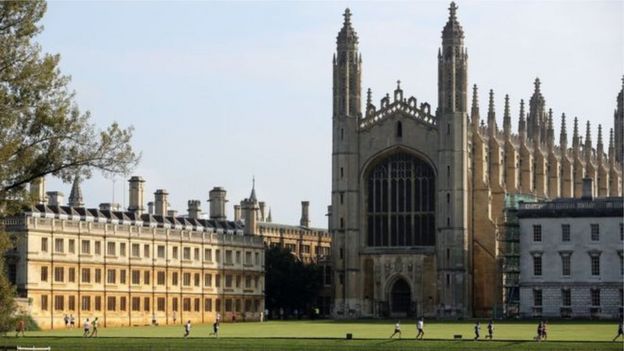
The University of Cambridge recently announced that lectures will be online only until next year. Others, like Greenwich University, will have a mix of online and face-to-face approaches while its international students can defer to the next semester.
“It feels a little unfair, especially after spending a year-and-half to get admission in one of these schools,” Mr Singh says. “Now, a part of the experience is compromised.”
Like him, many others are disappointed at the prospect of virtual classes.
Image copyright PA MEDIAImage caption Cambridge University has announced that all lectures will be online
“The main reason we apply to these universities is to be able to get the experience of studying on campus or because we want to work in these countries. We want to absorb the culture there,” Ms Barua says.
Studying abroad is also expensive. Many US and UK universities charge international students a higher fee. And then there’s the additional cost of applications or standardised tests.
Virtual classes mean they don’t have to pay for a visa, air tickets or living expenses. But many students are hesitant about spending their savings or borrowing money to pay for attending college in their living room.
Even if, months later, the situation improves to some extent, and students could travel abroad and enrol on campus, they say that brings its own challenges.
For one, Mr Singh points out, there is the steep cost of healthcare, and questions over access to it, as countries like the US are experiencing a deluge of infections and deaths.
Image copyright GETTY IMAGESImage caption Students are also unsure of finding jobs overseas after graduation
And then there are the dimming job prospects. The pandemic has squeezed the global economy, so employers are less likely to hire, or sponsor visas for foreign workers.
“For international students, the roller coaster has been more intense because there is increased uncertainty about their ability to get jobs in the US after graduation, and for some, in their ability to get to the US at all,” says Taya Carothers, who works in Northwestern University’s international student office.
The idea of returning to India with an expensive degree and the looming unemployment is scaring students – especially since for many of them, the decision to study abroad is tied to a desire to find a well-paying job there.
“The risk we take when we leave our home country and move to another country – that risk has increased manifold,” Mr Singh adds.
The current crisis – and its economic impact – has affected the decision of nearly half the Indians who wanted to study abroad, according to a recent report by the QS, a global education network.
And logistics will also pose a challenge – colleges have to enforce social distancing across campuses, including dormitories, and accommodate students from multiple time zones in virtual classes.
“Regardless of how good your technology is, you’re still going to face problems like internet issues,” says Sadiq Basha, who heads a study abroad consultancy.
He adds that there might be a knee-jerk reaction as a large number of international students consider deferring their admission to 2021. But he’s positive that “in the long term, the ambitions of Indian students are not going to go down.”
Mr Singh is still waiting to see how things will unfold in the next few months, but he’s almost certain he will enrol and start his first semester of the two-year program online.
“Since I’ve been preparing for over a year now, I think mentally I’m already there,” he says.
BEIJING, May 2 (Xinhua) — A Chinese health official on Saturday urged people to wear masks correctly and avoid travel during peak hours over coronavirus concerns in the May Day holiday.
Travelers are encouraged to reserve visiting slots in advance, and pay attention to their temperatures, said Mi Feng, a spokesperson for the National Health Commission, at a press conference in Beijing.
Some tourist attractions have seen large crowds of tourists not wearing masks Friday, the first day of the five-day May Day holiday, Mi said.
China recorded more than 23 million domestic tourist trips Friday, with the domestic tourism revenue reaching over 9.7 billion yuan (about 1.38 billion U.S. dollars), according to the Ministry of Culture and Tourism.
Researchers conclude that the virus was circulating undetected in France in February
Findings highlight the difficulties governments face in tracing the source of coronavirus outbreaks
Researchers in France have carried out genetic analysis and found that the dominant types of the viral strains in the country did not come from China or Italy. Photo: AP
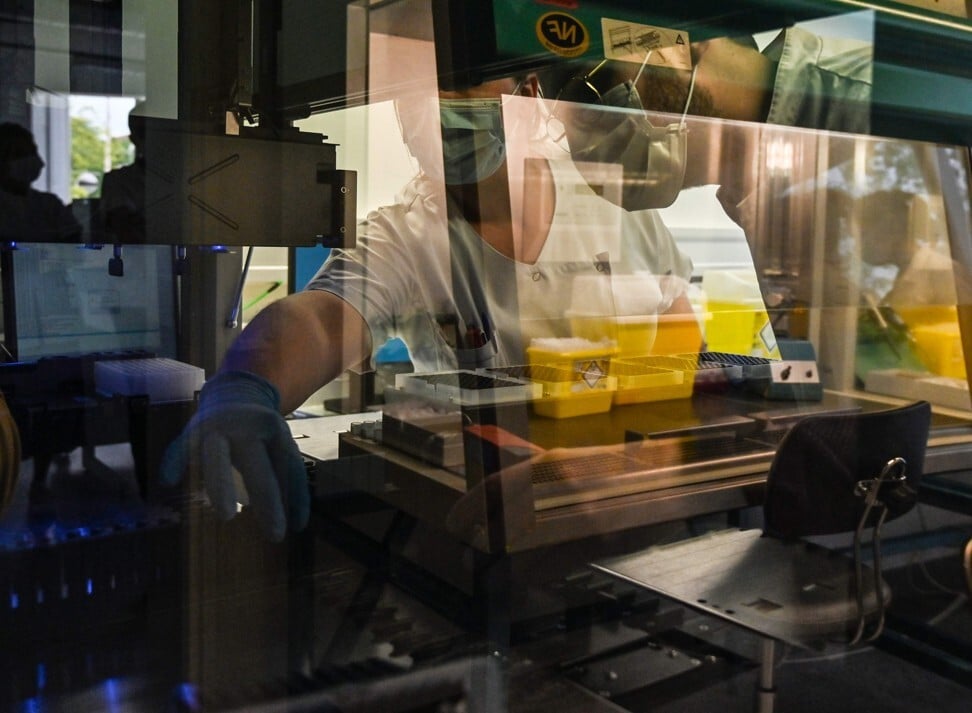
The coronavirus outbreak in France was not caused by cases imported from China, but from a locally circulating strain of unknown origin, according to a new study by French scientists at the Institut Pasteur in Paris.
Genetic analysis showed that the dominant types of the viral strains in France belonged to a clade – or group with a common ancestor – that did not come from China or Italy, the earliest hotspot in Europe.
“The French outbreak has been mainly seeded by one or several variants of this clade … we can infer that the virus was silently circulating in France in February,” said researchers led by Dr Sylvie van der Werf and Etienne Simon-Loriere in a non-peer reviewed paper released on bioRxiv.org last week.
The Covid-19 pandemic has infected more than 128,000 people in France and caused more than 23,000 deaths.
France detected the virus in late January, before any other country in Europe. A few patients with a travel history that included China’s Hubei province were sampled on January 24 and tested positive.
The Covid-19 pandemic has infected more than 128,000 people in France and caused more than 23,000 deaths. Photo: AFP
The French government took quick and decisive measures to trace contacts of the infected people and shut down the chance of further infection.
However, these strains were not found in patients tested after the initial imported cases, suggesting “the quarantine imposed on the initial Covid-19 cases in France appears to have prevented local transmission”, the researchers said.
The Pasteur institute collected samples from more than 90 other patients across France and found the strains all came from one genetic line. Strains following this unique path of evolution had so far only been detected in Europe and the Americas.
Singapore Covid-19 cases to rise as not all migrant workers being tested
28 Apr 2020
The earliest sample in the French clade was collected on February 19 from a patient who had no history of travel and no known contact with returned travellers.
Several patients had recently travelled to other European countries, the United Arab Emirates, Madagascar and Egypt but there was no direct evidence that they contracted the disease in these destinations.
To the researchers’ surprise, some of the later strains collected were genetically older – or closer to the ancestral root – than the first sample in this clade.
Spanish official cries reading names of health workers killed by coronavirus
A possible explanation, according to the authors, was that local transmission had been occurring in France for some time without being detected by health authorities.
The French government may have missed detecting the transmission. According to the researchers, a large proportion of those patients might have had mild symptoms or none at all.
The researchers also found that three sequences later sampled in Algeria were closely related to those in France, suggesting that travellers from France might have introduced the virus to the African country and caused an outbreak.
China says US politicians are lying as Trump calls for Covid-19 damages
29 Apr 2020
Benjamin Neuman, professor and chair of biological sciences with the Texas A&M University-Texarkana, said the French strains might have come from Belgium, where some sequences most closely related to the original strain from China were clustered.
“Since the earliest European strains of [the coronavirus] Sars-CoV-2 seem to be associated with Belgium, the idea that the virus spread from Belgium to both Italy and France at around the same time seems plausible, as this paper contends,” he said.
France is the latest in a growing number of countries and areas where no direct link between China and local outbreaks could be established.
The dominant strains in Russia and Australia, for instance, came from Europe and the United States, respectively, according to some studies.
These findings have drawn fire from some politicians who have tried to deflect domestic anger over their handling of the crisis by blaming China.
Is this the next big hotspot for the ‘little flu’?
28 Apr 2020
“So now the Fake News @nytimes is tracing the CoronaVirus origins back to Europe, NOT China. This is a first!” he tweeted on April 11, referring to a story about the studies in the The New York Times’ science section.
The findings also highlight the difficulties governments face in tracing the source of coronavirus outbreaks.
Less-developed countries may never know where their strains came from due to inadequate testing and sequencing capability.
India, for example, has released the genetic sequence of fewer than 40 samples to the public so far, a small number considering its huge population.
Most of the strains sampled in 35 early cases came from clades that could be traced to Italy and Iran, with only a few from China, according to a recent study. But researchers were not able to track further because of the lack of data.
A scientist on the study, Dr Mukesh Thakur, of the Zoological Survey of India, said it was too early to rule out China as the source of outbreaks in India because the number of samples at hand was limited.
A 20-year-old student studying medicine in Wuhan, for instance, might have come in contact with many people on the way home before she was tested positive on January 30.
Thakur said local media reported that the Indian government quarantined 3,500 people possibly linked to three positive cases imported from Wuhan.
“God knows how many of them tested positive in the subsequent stages,” Thakur said in an email response to the Post’s queries on Tuesday.
Some prominent scientists, including Francis Collins, director of the US National Institutes of Health, said the virus might have been spreading quietly in humans for years, or even decades, without causing a detectable outbreak.
The virus had thus adapted well to the human body. Some genes regulating its binding to host cells were similar, or even identical, to those found in some other highly infectious human viruses, such as HIV and Ebola.
According to some estimates, the ancestor of Sars-CoV-2, the virus causing Covid-19, might have left bats between 50 and 70 years ago. A recent study by a team of geneticists in Oxford University estimated the first outbreak of the current pandemic could have occurred as early as September last year.
They found that the dominant strains circulating in China and Asia were genetically younger than some popular strains in the United States.
BEIJING (Reuters) – China announced on Wednesday that its parliament will open a key annual session on May 22, signalling that Beijing sees the country returning to normal after being reduced to a near-standstill for months by the COVID-19 epidemic.
During the gathering of the National People’s Congress in the capital, delegates will ratify major legislation, and the government will unveil economic targets, set defence spending projections and make personnel changes. The ruling Communist Party also typically announces signature policy initiatives.
The session was initially scheduled to start on March 5 but was postponed due to COVID-19, which has infected nearly 83,000 people and killed more than 4,600 on the mainland after emerging late last year in the central city of Wuhan.
As the epidemic has subsided, economic and social life gradually returned to normal, making it possible for the congress to convene, the official Xinhua news agency quoted the standing committee of the NPC, the legislature’s top decision-making body, as saying.
The committee also appointed Huang Runqiu as the new minister for ecology and environment, a post vacated when predecessor Li Ganjie became deputy Communist Party chief for Shandong province earlier this month, Xinhua reported.
Tang Yijun was also named as the new justice minister to replace Fu Zhenghua, who has reached the retirement age of 65 for ministers.
The Chinese People’s Political Consultative Conference (CPPCC), an advisory body to parliament, has proposed starting its annual session a day before the parliamentary session opens.
Analysts expect China to roll out additional fiscal stimulus in order to cushion the blow from COVID-19, which has developed in to a worldwide pandemic that some fear will trigger a severe global recession.
China’s economy contracted for the first time on record during the January-March period, when the government imposed severe travel and transport restriction to curb the spread of the epidemic.
Parliament is also expected to discuss the anti-government protests in Hong Kong, amid growing speculation that Beijing take steps to strengthen its grip on the city.
It is unclear how long parliament and its advisory body will meet for this time, and people familiar with the matter have told Reuters that this year’s annual sessions could be the shortest in decades due to COVID-19 concerns. Usually more than 5,000 delegates descend on Beijing from all over China for at least 10 days.
Beijing city plans to ease quarantine rules as early as Thursday, two sources familiar with the situation told Reuters, ahead of the key political meetings.
People arriving in the capital from other parts of China will no long have to be quarantined for two weeks unless they come from high-risk areas such as Heilongjiang in the north and some parts of Guangdong in the southeast, the sources said.
Beijing’s Chaoyang district remains the last high-risk area in China, with virus preventive measures continuing to impact on travel and shopping plans
China faces the dilemma of preventing a re-emerge of the pandemic, while also pushing to get its economy back to normal
China’s continued pandemic prevention measures, coupled with still hesitant consumer demand, will inevitably lead to persistent limitations on the nation’s economic recovery, analysts said. Photo: Bloomberg
After nearly three months of being quarantined by herself in Beijing, Mary Zhao was looking forward to the upcoming long weekend at the start of May to be able to finally reunite with her parents.
But Zhao was forced to abandon her plan for the Labour Day holidays as Beijing’s upmarket Chaoyang district, where she lives, remains the only high-risk zone for coronavirus in the entire country.
If she travelled the five hours by car, or two hours via bullet train, to the neighbouring Hebei province, she would first have to undergo a 14-day quarantine before seeing her parents. Her parents would also have the same two week quarantine to look forward to once they returned home if they came to visit their daughter in Beijing.
These strict controls to prevent a re-emergence of the coronavirus outbreak are making a return to normal life impossible for many, and mean the final economic and social cost
from China’s draconian preventive measures could be much larger than expected.
Wuhan declares ‘victory’ as central Chinese city’s last Covid-19 patients leave hospital
It underscores the dilemma facing China’s leaders on how to balance the need to
and to avoid a fresh outbreak. On the surface, China may be able to declare victory as even Wuhan, the city where the virus was first detected, announced that the last Covid-19 patient had left hospital on Sunday. But fears of a renewed outbreak have kept the country’s cinemas and most schools closed, with travel between provinces discouraged.
China’s national borders also remain largely closed, with flights being cut to a minimum, and a mandatory 14-day quarantine for every arrival. In the number of places where new cases have been reported, quarantine requirements have been tightened, including Harbin and a few other cities near the border with Russia.
Chaoyang, the home to one of Beijing’s main business districts and most foreign embassies, changed its risk rating to high from low in the middle of April after three new cases were reported, dealing a fresh blow to the district’s
and forcing many of the 3.5 million residents to cancel their travel plans.
On the outskirts of Beijing, near Beijing Capital International Airport, returning migrant workers to Picun village were ordered to stop at entrance and could only be escorted inside by their landlord, with many villages and residential compounds remaining closed to outsiders.
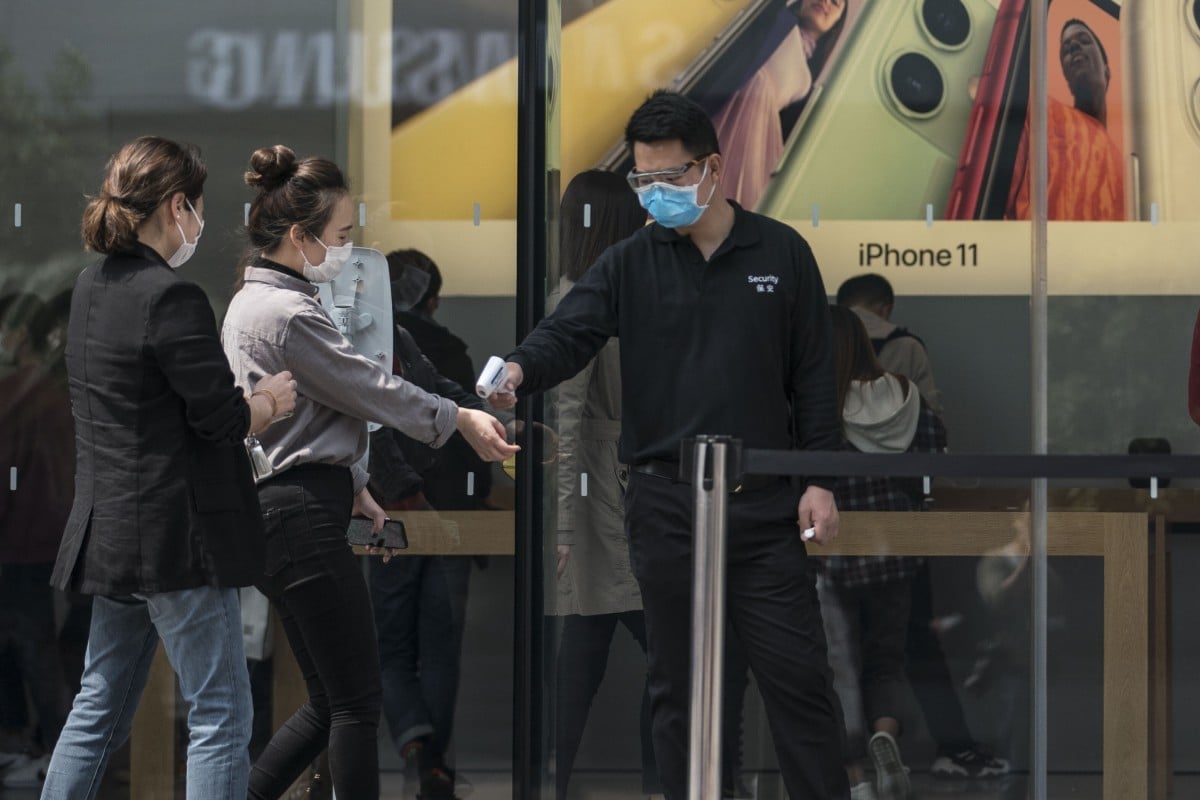
In the high-end shopping district of Guomao, some shops also remain closed as there are few potential customers, while over in the popular Sanlitun area, metal barriers restrict access and temperature checkpoints are still required.
The landmark Apple Store in the popular Taikoo shopping centre is open, but with limited customers allowed inside, there are long queues outside. Customers are required to scan a QR code to check their movements over the last few days before entering.
Coronavirus: More schools reopen in China for students preparing for university entrance exams
“Why do I have to spend 20 minutes just to get into the Apple Store? The sun has almost melted me down,” one visitor complained to the security guards at the front of the shop.
China’s continued pandemic prevention measures, coupled with still hesitant consumer demand, will inevitably lead to persistent limitations on the nation’s economic recovery, analysts said.
Ernai Cui, an economist at research firm Gavekal Dragonomics, said on Monday that China’s cautious approach to lifting restrictions “points to a weak second quarter for consumer services”, adding additional pressure to the economic recovery.Mao Zhenhua, a researcher at the China Institute of Economics at Renmin University, said China’s preventive measures will inevitably be a drag on production, employment and exports.
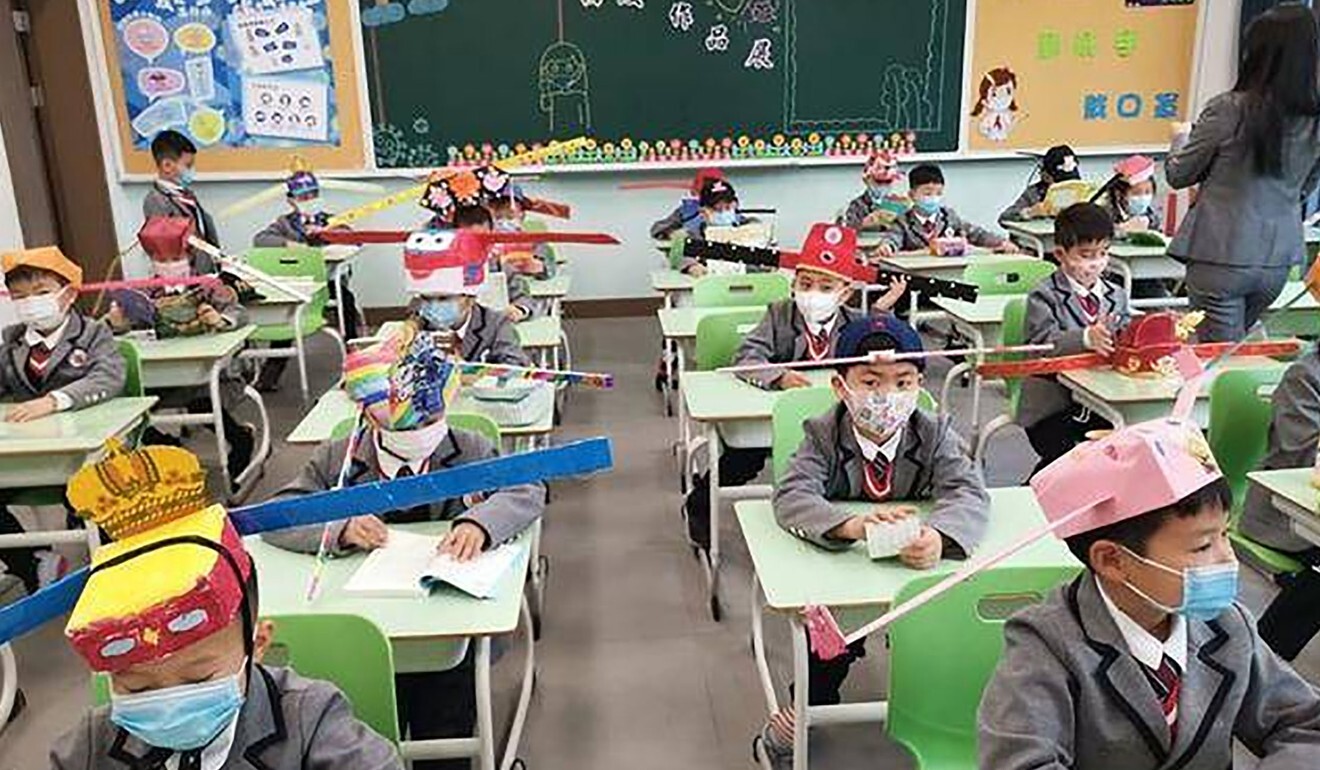
Pupils given headwear modelled on a style worn by officials a thousand years ago to reinforce the message that they must stay a metre away from each other
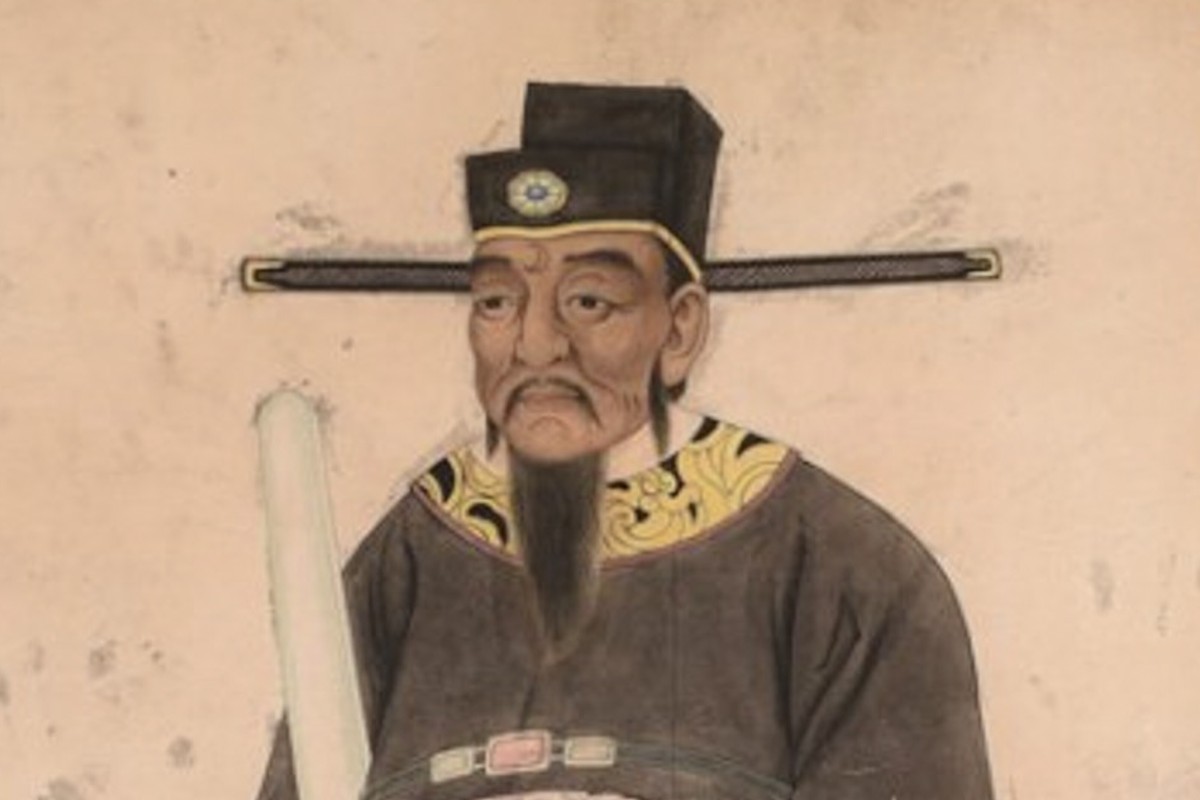
One legend says the hats were given long extensions to stop courtiers whispering among themselves when meeting the emperor
Hats with long extensions were worn by officials during the Song dynasty. Photo: Handout
An ancient Chinese hat has joined face masks and hand sanitisers as one of the weapons in the fight against Covid-19.
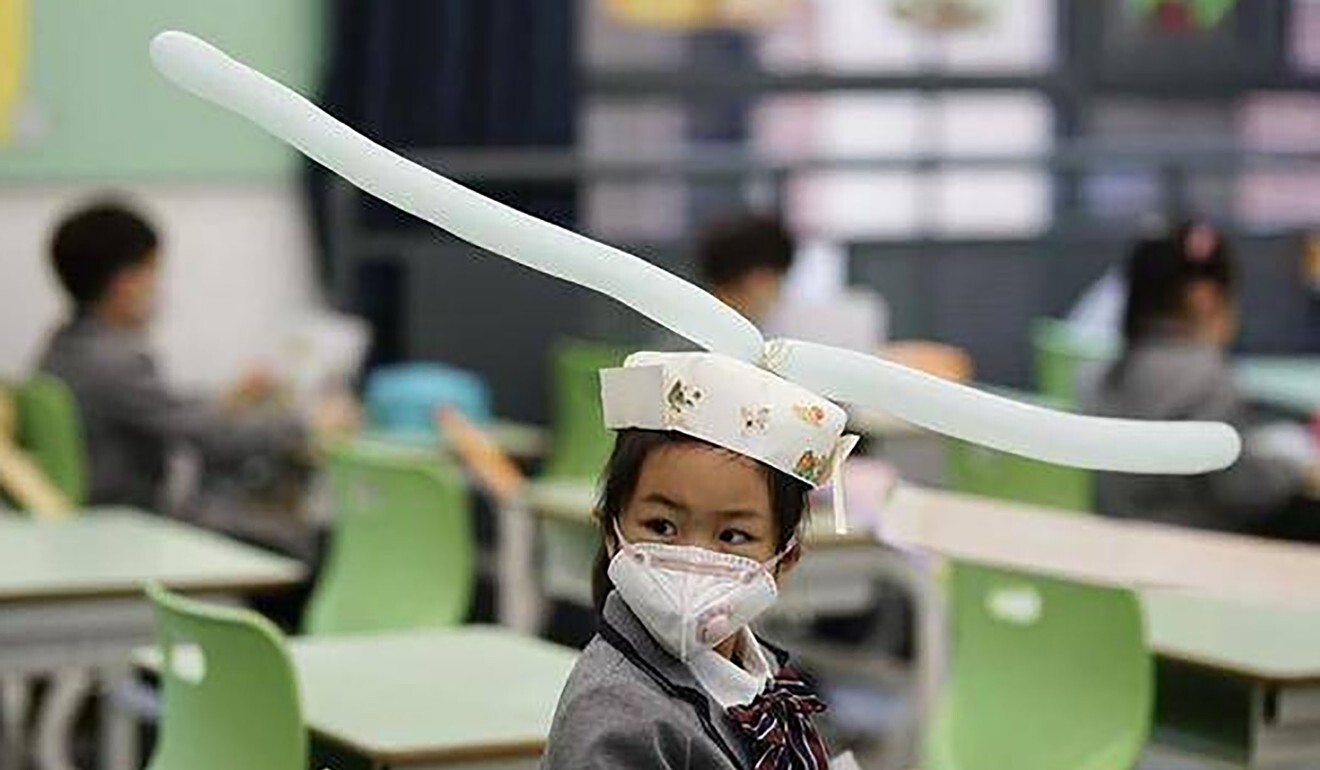
A primary school in Hangzhou in the east of the country took inspiration from the headgear worn by officials in the Song dynasty, which ruled China between 960 and 1279, to reinforce lessons on social distancing.
Pupils at the school wore their own handmade versions of the hats, which have long extensions, or wings, to keep them at least a metre (3ft) apart when they returned to school on Monday, state news agency Xinhua reported.
One legend says that the first Song emperor ordered his ministers to wear hats with two long wings on the sides so that they could not chitchat in court assemblies without being overheard, according to Tsui Lik-hang, a historian at City University of Hong Kong.
Pupils at a school in Hangzhou made their own versions of the hats. Photo: Weibo
However, he warned that this story came from a much later source, adding: “The Song emperors, in fact, were also depicted to have worn this kind of headwear with wing-like flaps.”
The World Health Organisation recommends that people stay at least a metre apart to curb the spread of the coronavirus that causes Covid-19.
Coronavirus droplets may travel further than personal distancing guidelines, study finds
16 Apr 2020
“If you are too close, you can breathe in the droplets, including the Covid-19 virus if the person coughing has the disease,” the global health body advises.
An early childhood education specialist said the hats were a good way to explain the concept of social distancing to young children, who find it difficult to understand abstract concepts.
The pupil’s head gear is designed to drive home the social distancing message. Photo: Weibo
“As children can see and feel these hats, and when the ‘wings’ hit one another, they may be more able to understand the expectations and remember to keep their physical distance,” said Ian Lam Chun-bun, associate head of the department of early childhood
Using pictures of footprints to indicate the right distance to keep when queuing, standing, and even talking to schoolmates was also helpful, said Lam, who recommended visual aids and aids that stimulate other senses, such as hearing and touch.
“We can use sharp colours or special textures, like tactile paving,” he added.
SHENYANG, April 23 (Xinhua) — With trucks standing bumper to bumper and large cranes loading containers on the train, work returned to normal at a logistics base in northeast China’s Liaoning Province.
The base, where the China-Europe freight trains are set to depart in Shenyang, the provincial capital, has seen stable departures since early April as the novel coronavirus epidemic ebbs away.
With the global supply chain being affected by restrictions in air, land, and port travel due to the global pandemic, China-Europe railway has been playing a more important role, experts say.
“The train was operated by staff in different sections, which means it does not require cross-border personnel health inspections, giving it advantages during the pandemic,” said Shan Jing, an industry insider who wrote a book on China-Europe freight trains.
In March, a total of 809 China-Europe freight trains carrying 73,000 containers were sent across China. Both numbers hit a monthly record.
At the Shenyang logistics base, trains depart to travel through Russia, Belarus, Poland and finally reach Germany in around 18 days. As of April 13, a total of 130 trains carrying 11,200 standard containers had departed from the base.
“The province sends a stable number of five trains each week,” said He Ruofan, a business manager with the Shenyang branch of China Railway Container Transport Corp., Ltd, operator of the trains.
The stable operation has made the route a top choice for many Chinese enterprises, said Yao Xiang, a manager with logistics group Sinotrans’s northeast company.
“Many shipping routes have been canceled, and the rest are more and more expensive amid the epidemic,” said Yao, noting the price for air cargo surged 5 to 10 times the normal price as flights decreased from China to Europe.
With increasing departing trains, returning trains on the route have also been increasing, Yao said.
Among the 130 trains that have been sent from the Shenyang base so far this year, 33 returned, carrying construction materials, car parts, mechanical equipment, and daily products.
“These goods provide supplies to large companies like BMW and Michelin’s Shenyang factories,” Yao said.
Medical supplies have also been sent to hard-hit Europe to fight against the coronavirus pandemic.
As of April 18, a total of 448,000 pieces of medical supplies weighing 1,440 tonnes had been sent to European countries via the route, according to China State Railway Group Company, Ltd.
“China-Europe freight trains have shown great service capabilities during the epidemic,” said Shan, the industry insider. “It serves as a new choice for European enterprises, and I believe more people will come to realize the importance of the route.”
SEOUL/BEIJING (Reuters) – China has allowed 200 employees from South Korea’s Samsung Electronics Co Ltd (005930.KS) to enter the country to work on an expansion of the firm’s NAND memory chip factory, the company said on Wednesday.
The move came after China said on Tuesday that it was in talks with some countries to establish fast-track procedures to allow travel by business and technical personnel to ensure the smooth operation of global supply chains.
China said it has reached a consensus on such an arrangement with South Korea, without elaborating on the terms, including whether individuals entering China will be subject to quarantine.
China, where the virus first emerged late last year, blocked entry last month for nearly all foreigners in an effort to curb risks of coronavirus infections posed by travellers from overseas. After bringing the local spread under control with tough containment measures, it is trying to restart its economic engines after weeks of near paralysis.
A chartered China Air Ltd (601111.SS) plane flew in the Samsung Electronics employees on Wednesday, a company spokeswoman said.
Samsung said its employees will follow the local government’s policy upon arrival, without elaborating.
Shaanxi province, where Samsung’s NAND memory chip plant is located, requires people travelling from overseas to undergo a 14-day quarantine, according to South Korea’s foreign ministry.
“Samsung employees will not be exempted from the 14-day quarantine rule imposed by the Shaanxi province. They will get coronavirus tests at the airport upon arrival and will be transported to a local hotel designated by Chinese authorities,” an official at the Consulate General of South Korea in Xi’an told Reuters.
Samsung Electronics in December increased investment at its chip factory in China by $8 billion to boost production of NAND flash memory chips.
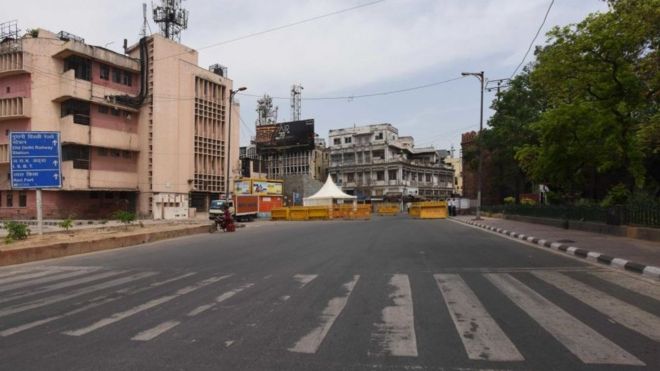
Image copyright GETTY IMAGESImage caption An empty stretch of the road and Delhi Police barricades to screen commuters during lockdown, at Delhi Gate on April 16, 2020 in New Delhi, India.
India has eased some restrictions imposed as part of a nationwide lockdown to curb the spread of the coronavirus.
Most of the new measures are targeted at easing pressure on farming, which employs more than half the nation’s workforce.
Allowing farms to operate again has been seen as essential to avoid food shortages.
But some other measures announced last week, will not be implemented.
This includes the delivery of non-essential items such as mobile phones, computers, and refrigerators by e-commerce firms – the government reversed its decision on that on Sunday.
And none of the restrictions will be lifted in areas that are still considered “hotspots” for the virus – this includes all major Indian cities.
Domestic and international flights and inter-state travel will also remain suspended.
So what restrictions are being eased?
Most of the new measures target agricultural businesses – farming, fisheries and plantations. This will allow crops to be harvested and daily-wagers and others working in these sectors to continue earning.
To restore the supply chain in these industries, cargo trucks will also be allowed to operate across state borders to transport produce from villages to the cities.
Essential public works programmes – such as building roads and water lines in rural areas – will also reopen, but under strict instructions to follow social distancing norms. These are a huge source of employment for hundreds of thousands of daily-wage earners, and farmers looking to supplement their income.
Banks, ATMs, hospitals, clinics, pharmacies and government offices will remain open. And the self-employed – such as plumbers, electricians and carpenters – will also be allowed to work.
Some public and even private workplaces have been permitted to open in areas that are not considered hotspots.
But all businesses and services that reopen are expected to follow social distancing norms.
Who decides what to reopen?
State governments will decide where restrictions can be eased. And several state chief ministers, including Delhi’s Arvind Kejriwal, have said that none of the restrictions will be lifted in their regions.
Mr Kejriwal said the situation in the national capital was still serious and the decision would be reviewed after one week.
India’s most populous state, Uttar Pradesh, will also see all restrictions in place, as will the southern states of Andhra Pradesh, Telangana and Karnataka.
The southern state of Kerala, which has been widely acknowledged for its success in dealing with the virus, has announced a significant easing of the lockdown in areas that it has demarcated as “green” zones.
This includes allowing private vehicular movement and dine-in services at restaurants, with social distancing norms in place. However, it’s implementing what is known as an “odd-even” scheme – private cars with even and odd number plates will be allowed only on alternate days, to limit the number of people on the road.







 CHINDIA ALERT: You'll be living in their world, very soon