Chindia Alert: You’ll be Living in their World Very Soon
aims to alert you to the threats and opportunities that China and India present. China and India require serious attention; case of ‘hidden dragon and crouching tiger’.
Without this attention, governments, businesses and, indeed, individuals may find themselves at a great disadvantage sooner rather than later.
The POSTs (front webpages) are mainly 'cuttings' from reliable sources, updated continuously.
The PAGEs (see Tabs, above) attempt to make the information more meaningful by putting some structure to the information we have researched and assembled since 2006.
Image copyright ANIImage caption People participating in the chariot-pulling festival
Indian officials have suspended a local magistrate and a police official for allowing large crowds to attend a chariot-pulling festival at a Hindu temple on Thursday morning.
A case has also been filed against the trustees of the temple and another 20 people, police told the BBC.
Pictures of the crowds caused outrage after they surfaced on social media.
It comes weeks after Covid-19 clusters were linked to a Muslim religious gathering in the capital, Delhi.
Revoor village, which is in the state’s Kalburagi district, has been sealed off and officials are rushing teams of medical personnel to set up fever clinics there, the deputy commissioner of the district, told the BBC.
Kalburagi recorded India’s first coronavirus-related death – it is also the first district to implement “containment areas”, which involves sealing off villages where infections are reported.
Revoor is also close to another village that has been sealed off after a two-year-old tested positive for coronavirus.
The festival was held despite temple trustees giving officials an undertaking that it would not go ahead, a state lawmaker, Priyank Kharge, told the BBC.
Officials say that the daily rituals were performed at the temple on Wednesday evening in the presence of a few priests and temple trustees.
But early the next morning, the chariot was brought out of the temple premises and was pulled by “hundreds of people,” according to one official. They estimate that under 1,000 devotees attended the event.
China’s economy shrank for the first time in decades in the first quarter of the year, as the virus forced factories and businesses to close.
The world’s second biggest economy contracted 6.8% according to official data released on Friday.
The financial toll the coronavirus is having on the Chinese economy will be a huge concern to other countries.
China is an economic powerhouse as a major consumer and producer of goods and services.
This is the first time China has seen its economy shrink in the first three months of the year since it started recording quarterly figures in 1992.
“The GDP contraction in January-March will translate into permanent income losses, reflected in bankruptcies across small companies and job losses,” said Yue Su at the Economist Intelligence Unit.
Last year, China saw healthy economic growth of 6.4% in the first quarter, a period when it was locked in a trade war with the US.
In the last two decades, China has seen average economic growth of around 9% a year, although experts have regularly questioned the accuracy of its economic data.
Its economy had ground to a halt during the first three months of the year as it introduced large-scale shutdowns and quarantines to prevent the virus spread in late January.
As a result, economists had expected bleak figures, but the official data comes in slightly worse than expected.
Among other key figures released in Friday’s report:
Factory output was down 1.1% for March as China slowly starts manufacturing again.
Retail sales plummeted 15.8% last month as many of shoppers stayed at home.
Unemployment hit 5.9% in March, slightly better than February’s all-time high of 6.2%.
Analysis: A 6% expansion wiped out
Robin Brant, BBC News, Shanghai
The huge decline shows the profound impact that the virus outbreak, and the government’s draconian reaction to it, had on the world’s second largest economy. It wipes out the 6% expansion in China’s economy recorded in the last set of figures at the end of last year.
Beijing has signalled a significant economic stimulus is on the way as it tries to stabilise its economy and recover. Earlier this week the official mouthpiece of the ruling Communist Party, the People’s Daily, reported it would “expand domestic demand”.
But the slowdown in the rest of the global economy presents a significant problem as exports still play a major role in China’s economy. If it comes this will not be a quick recovery.
On Thursday the International Monetary Fund forecast China’s economy would avoid a recession but grow by just 1.2% this year. Job figures released recently showed the official government unemployment figure had risen sharply, with the number working in companies linked to export trade falling the most.
China has unveiled a range of financial support measures to cushion the impact of the slowdown, but not on the same scale as other major economies.
“We don’t expect large stimulus, given that that remains unpopular in Beijing. Instead, we think policymakers will accept low growth this year, given the prospects for a better 2021,” said Louis Kuijs, an analyst with Oxford Economics.
Since March, China has slowly started letting factories resume production and letting businesses reopen, but this is a gradual process to return to pre-lockdown levels.
Media caption Why does China’s economy matter to you?
China relies heavily on its factories and manufacturing plants for economic growth, and has been dubbed “the world’s factory”.
Stock markets in the region showed mixed reaction to the Chinese economic data, with China’s benchmark Shanghai Composite index up 0.9%.
BEIJING (Reuters) – For Zhang Yu, who runs a cafe in one of Beijing’s top tourist spots, business has never been so bad.
To contain the spread of the coronavirus, bars and cafes in the Wudaoying hutong – a top Lonely Planet destination built around a narrow lane – are permitted to provide take-away services only. Non-residents must show proof they have an appointment to enter the area.
Added to which, tourism has plummeted.
“Don’t mention it! This is supposed to be the peak season,” said Zhang, who has run her cafe for five years. “But there are almost no customers as they (authorities) don’t want to have people hanging around here.”
While China’s manufacturing and retail sectors are starting to get back to work as the pace of new infections slows sharply, tourism sites in Beijing remain a shadow of their former and bustling self.
China’s capital city has maintained the highest level of emergency response to the outbreak, so tourist attractions like the Forbidden City remain closed. A 14-day quarantine for new arrivals has stifled travel.
As a result, small business owners running restaurants, souvenir shops and tourism agencies are struggling.
Only a little over 20% of tourism-related businesses in Beijing had resumed operation as of the three-day Qingming national holiday in early April, a survey by on-demand delivery service giant Meituan Dianping showed.
HANGING ON
The only people present in Wudaoying on a recent afternoon were a few elderly residents sitting outside to enjoy the spring sunshine. A cat made its way lazily through empty rooftop bars.
“We used to see more customers in one hour in pre-virus days than we see in a whole day right now,” said a worker at a sandwich restaurant in Wudaoying.
In another popular area, Khazzy, a 32-year-old doctoral student who opened a restaurant last October, has had only four customers all day.
“There are almost no tourists coming to Beijing and the remaining locals have concerns about eating out,” Khazzy said as sunset approached.
Khazzy said he has let five of his 13 staff go and has no idea how long he can stay afloat financially even though his landlord has agreed to waive one month’s rent on the property in Qianmen, near Beijing’s Tiananmen Square.
More than half of the shops in Qianmen remain closed. The manager of a state-backed noodle restaurant said most of the closed stores are privately owned small businesses that can’t secure enough business to support their daily operations.
She said revenues at the noodle restaurant have plunged more than 80%, but staff salaries have not been cut.
Zhang, the cafe owner in Wudaoying, reckoned small businesses could hold on for the next three months.
Zeng Zhenguo (L), a member of the medical assistance team supporting the virus-hit Wuhan in Hubei Province, hugs his wife after 14-day quarantine at the Xianghu area of the First Affiliated Hospital of Nanchang University in Nanchang, east China’s Jiangxi Province, April 15, 2020. The 141 members of the medical assistance team reunited with their families on Wednesday after 14-day quarantine. (Xinhua/Wan Xiang)
WASHINGTON (Reuters) – U.S. President Donald Trump said on Wednesday his government is trying to determine whether the coronavirus emanated from a lab in Wuhan, China, and Secretary of State Mike Pompeo said Beijing “needs to come clean” on what they know.
The source of the virus remains a mystery. General Mark Milley, chairman of the Joint Chiefs of Staff, said on Tuesday that U.S. intelligence indicates that the coronavirus likely occurred naturally, as opposed to being created in a laboratory in China, but there is no certainty either way.
Fox News reported on Wednesday that the virus originated in a Wuhan laboratory not as a bioweapon, but as part of China’s effort to demonstrate that its efforts to identify and combat viruses are equal to or greater than the capabilities of the United States.
This report and others have suggested the Wuhan lab where virology experiments take place and lax safety standards there led to someone getting infected and appearing at a nearby “wet” market, where the virus began to spread.
At a White House news conference Trump was asked about the reports of the virus escaping from the Wuhan lab, and he said he was aware of them.
“We are doing a very thorough examination of this horrible situation that happened,” he said.
Asked if he had raised the subject in his conversations with Chinese President Xi Jinping, Trump said: “I don’t want to discuss what I talked to him about the laboratory, I just don’t want to discuss, it’s inappropriate right now.”
Trump has sought to stress strong U.S. ties with China during the pandemic as the United States has relied on China for personal protection equipment desperately needed by American medical workers.
As far back as February, the Chinese state-backed Wuhan Institute of Virology dismissed rumors that the virus may have been artificially synthesized at one of its laboratories or perhaps escaped from such a facility.
Pompeo, in a Fox News Channel interview after Trump’s news conference, said “we know this virus originated in Wuhan, China,” and that the Institute of Virology is only a handful of miles away from the wet market.
“We really need the Chinese government to open up” and help explain “exactly how this virus spread,” said Pompeo.
“The Chinese government needs to come clean,” he said.
The broad scientific consensus holds that SARS-CoV-2, the virus’ official name, originated in bats.
Trump and other officials have expressed deep skepticism of China’s officially declared death toll from the virus of around 3,000 people, when the United States has a death toll of more than 20,000 and rising.
He returned to the subject on Wednesday, saying the United States has more cases “because we do more reporting.”
“Do you really believe those numbers in this vast country called China, and that they have a certain number of cases and a certain number of deaths; does anybody really believe that?” he said.
Photo taken on April 14, 2020 shows containers at the Lianyungang Port in Lianyungang City, east China’s Jiangsu Province. China’s foreign trade showed signs of stabilizing in March with export and import both beating bearish market expectations, official data showed Tuesday. (Photo by Geng Yuhe/Xinhua)
Residents of nine regions, including Wuhan, Beijing and Shanghai, to be sampled using both nucleic acid and antibody tests, state media reports
Research ‘very important as it will help us to direct our countermeasures in the future’, molecular virologist says
China is using dual testing to determine how many people have been infected with Covid-19 but recovered without showing symptoms. Photo: AP
China has begun a major survey to determine how many people might have been infected with the coronavirus and then recovered without ever showing symptoms, while also assessing immunity levels within different communities, state media reported.
The research will be conducted in six provinces, including Hubei which was the focus of the initial outbreak, as well as Beijing, Shanghai and Chongqing.
, the capital of Hubei and home to about 60 per cent of all infections reported in mainland China, is taking the lead in the study, which involves giving both nucleic acid and antibody tests to 11,000 of its 11 million residents, state news agency Xinhua reported on Wednesday.
Health workers collected throat swabs and blood samples from about 900 people randomly selected from eight subdistricts of the city on Tuesday, Ding Gangqiang, head of the Wuhan epidemiological survey team, was quoted as saying.
“The purpose is to learn about the immunity level in communities and provide scientific support on how we should adjust our disease control strategies,” he said.
Professor Lu Hongzhou, a specialist in infectious diseases who heads the Shanghai Public Health Clinical Centre where Covid-19 patients are being treated, said he supported the research though the collection of samples had yet to start in the city.
“We haven’t received notification from the top [to start],” he said. “The number of infections [in Shanghai] is not very big, but I think we’d better do this so as to have an idea of the scale of asymptomatic carriers.”
Professor Jin Dong-yan, a molecular virologist at the Li Ka Shing Faculty of Medicine at the University of Hong Kong, said that the use of both nucleic acid and antibody tests would enable scientists to determine those people who had been infected but recovered without medical aid and without showing symptoms.
The study into asymptomatic infections got under way in Wuhan in Tuesday. Photo: Simon Song
If a person tested positive in a nucleic acid test, it meant they were carrying the virus, and if positive in an antibodies test, it meant that they had contracted the virus and had recovered, he told the South China Morning Post.
“This is very important as it will help us to direct our countermeasures in the future,” Jin said.
“If we find, say 60 per cent, of the population has acquired immunity, then lockdowns will no longer be meaningful. If it turns out that there are many people with a high viral load but without symptoms, then we should be on high alert and take stricter measures.
“For people in Hubei, the tests can also save them from discrimination when they get back to work – those who prove to have developed immunity are very unlikely to get infected [again] for at least a year,” he said.
Wuhan hotel owners say they’re on the brink of going bust
to the nation’s daily infections tally at the start of April amid concerns that such people could trigger a second outbreak once the widespread lockdowns in cities like Wuhan and elsewhere were lifted.
China reported 103 new coronavirus infections on Wednesday, of which 39 were imported. Of the total, 57 people had no symptoms, including three of the imported cases.
Since the outbreak began, China has reported 82,295 cases, of which 95 per cent have recovered and been discharged from hospital.
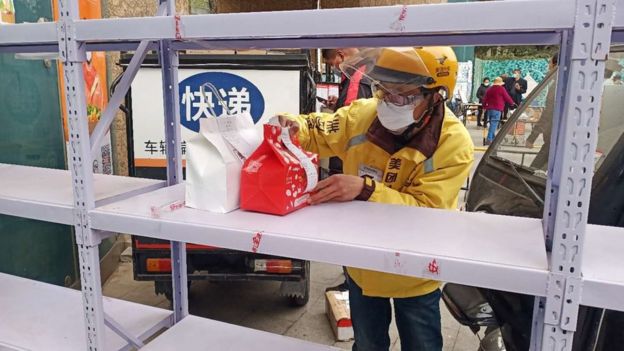
“Doctors and nurses are people who saved me from cancer and gave me strength in the darkest time. I need to return the favour,” says Li Yan, a food delivery rider based in Beijing.
Mr Li was diagnosed with lymph cancer in 2003, when he was just 17 years old. He recovered from the disease and has been full of gratitude ever since for the medical workers who nursed him back to health. With China in a national lockdown, food delivery firms found themselves in hot demand providing meals for residents stuck at home to prevent the spread of the coronavirus.
As a delivery rider for Meituan, one of China’s biggest food delivery firms, Mr Li saw an opportunity to repay the medical professionals he admires by providing them with food and drinks as they worked tirelessly on patients across the city. “Given my past experience, I felt I needed to do something for them in return during the virus outbreak,” he adds.
Beijing is a city of 21 million residents, and Mr Li covers its Tongzhou district, where there are a handful of hospitals with fever clinics, one of which is a designated hospital for Covid-19 treatment. “Many might have concerns delivering for the hospital, but I’ve chosen to deliver for them more often. I just think of the local residents and medical workers who need us. I can’t leave them being hungry. It’s not for money.”
Before the outbreak in China, he delivered more than 50 orders on an average day. But during the first ten days after the coronavirus outbreak in late January, the number of orders dropped to less than 20, as some restaurants were closed. The outbreak also coincided with the Chinese New Year period which is normally a low season.
“By mid-February when the situation was brought more under control, and people’s concerns and fears gradually began to ease, orders started to be restored. I can deliver over 40 orders a day now.”
Image copyright LI YAN
During this time, Meituan brought in a contactless delivery option which allowed food to be dropped off at designated points to avoid contact between customers and riders. “When I called customers to explain, some initially didn’t understand and wanted to cancel the order. But gradually people grew more understanding and began to welcome the contactless approach.”
Empty streets
China was in lockdown for more than two months, although restrictions are now beginning to be lifted. It will still take time before a sense of normalcy returns.
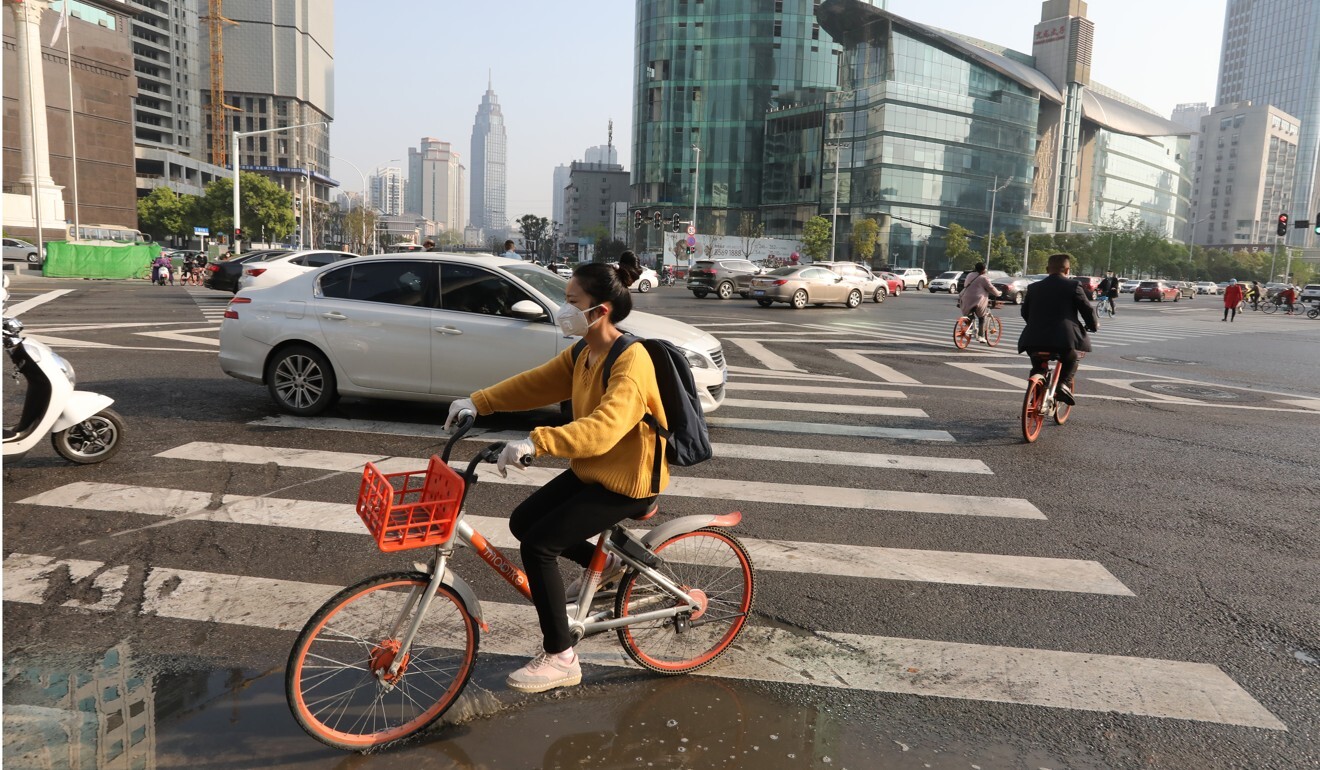
“I remember when the coronavirus first broke out, it was hazy for a few days in Beijing. Streets were empty and stores were closed. An ambulance or a delivery rider occasionally drove by. It felt like I was living in a different world.”
Mr Li says restaurants have started to re-open and people have begun coming back to work in the office since mid-February. Orders are still lower than normal but are improving.
“I miss the hustling Beijing which used to filled with traffic, the days when I could smell car exhaust when I stop at crossroads, the times when I had to walk all the way up to the 6th floor to deliver food, and even times when I was late for a delivery.”
Image copyright LI YAN
When the virus first broke out, face masks and alcohol disinfectant were the most ordered items along with supermarket groceries. “Grains, rice, cooking oil, vegetables, fruits, and solid, packaged food that lasts long. Orders often came in big sizes and transaction prices at around 200 yuan [£23; $28] to 300 yuan on one order.”
Being a food delivery rider, Mr Li feels he can not only give back to the medical community but to the city’s vulnerable too.
“I once received an order that came with a note saying the customer is a 82-year-old who lives alone and couldn’t get downstairs to pick up the food so the rider needs to enter the residential community and deliver food to the door. I had to spend some time communicating with security and finally was allowed in. The door was open when I arrived, and I put the bowl of wontons [a type of dumpling] on the table.”
Tips have increased from happy customers during the pandemic as a result. “Many more send me thank-you notes in the Meituan app and tell me to take care.”
Image copyright LI YAN
Keeping clean
Mr Li has a new routine now which involves lots of disinfecting and temperature checks. “I get my temperature checked dozens of times everyday now, before entering shopping malls, at restaurants, and returning home to the residential compound I live in. I also bring with me disinfectant sprays, a towel in my scooter and use disposable gloves when delivering to areas with reported confirmed cases.”
While he’s providing a vital service, is Mr Li worried about the risk of infection? “I did have worries when the virus spread and was at its worst time here but I feel like I’ve already been there, given what I went through in the fight against cancer.
“I’ve learnt to take things easy, look at the bright side of things and always seek strength in a dark time. As long as I take sufficient precautions, masks, gloves, disinfectants and everything, and follow advice from disease control experts, I think the possibility of getting the virus is pretty low.”
And with a seven-month pregnant wife at home, Mr Li is looking forward to happier times.
TAIPEI (Reuters) – Taiwan waded into the hotly contested politics of the Pacific on Wednesday, donating face masks and thermal cameras to its four diplomatic allies there to combat the coronavirus in a region where China is challenging traditional power of the United States.
The small developing nations lie in the highly strategic waters of the Pacific, dominated since World War Two by the United States and its friends, who have been concerned over China’s moves to expand its footprint there.
Democratic Taiwan has faced intense pressure from China, which claims the island as its territory with no right to state-to-state ties, and is bent on wooing away its few allies.
Taiwan has only 15 formal allies left worldwide after losing two Pacific nations, the Solomon Islands and Kiribati, to China in September.
Beijing has ramped up its diplomatic push into the Pacific, pledging virus aid and medical advice.
In its own aid programme, Taiwan has donated 16 million masks to countries around the world.
“We are a very small country, so it’s easier for us to work with Taiwan than mainland China,” Neijon Edwards, the Marshall Islands ambassador to Taiwan, told Reuters at the donation ceremony in Taipei.
China has been too overbearing, she added.
“It’s pressing too much, and it’s been trying to come to the Marshall Islands, several times, but up to this time we haven’t even opened the door yet.”
While the masks presented at the ceremony are going to Taiwan’s Pacific allies, all its 15 global allies are sharing the thermal cameras.
“Today’s ceremony once again shows that Taiwan is taking concrete actions not only to safeguard the health of Taiwanese people but also to contribute to global efforts to contain COVID-19,” said Foreign Minister Joseph Wu.
Though Pacific Island states offer little economically to either China and Taiwan, their support is valued in global forums such as the United Nations and as China seeks to isolate Taiwan.
China has offered to help developing countries including those of the Pacific, and many see Chinese lending as the best bet to develop their economies.
But critics say Chinese loans can lead countries into a “debt trap”, charges China has angrily rejected.
The debt issue was a serious problem and would only lead to the spread of Chinese influence regionwide, said Jarden Kephas, the ambassador of Nauru.
“They will end up dominating or having a lot of say in those countries because of the amount of debt,” he told Reuters, wondering how the money could ever be repaid. “We are not rich countries.”
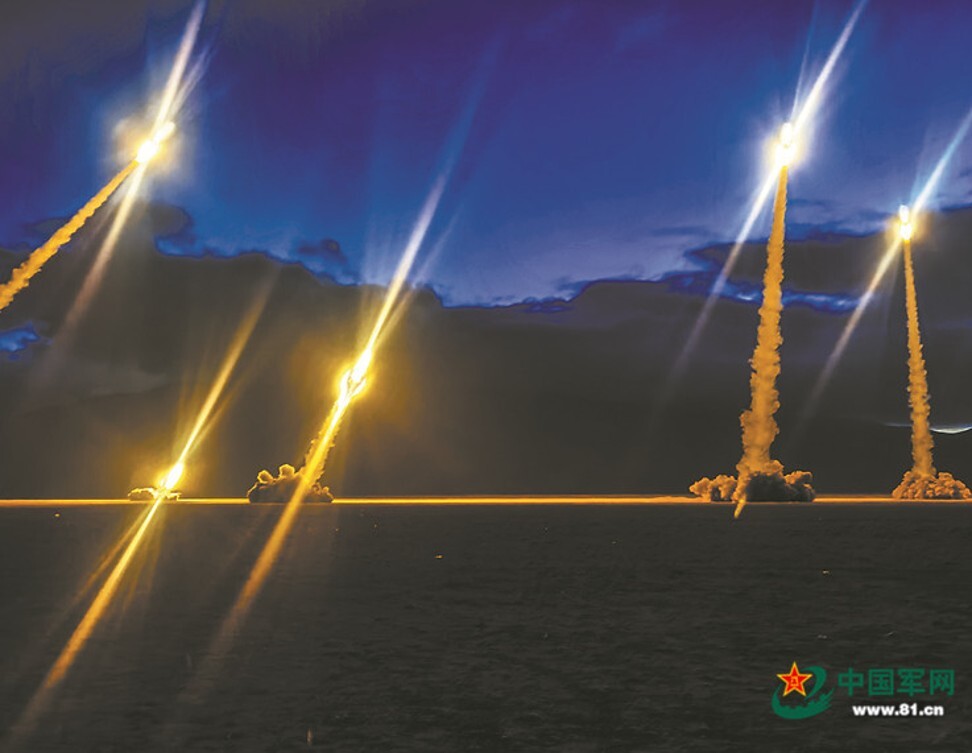
People’s Liberation Army resumes drills, including flotilla exercise in Miyako Strait
Military observers say China is demonstrating its ability while virus hampers US aircraft carriers
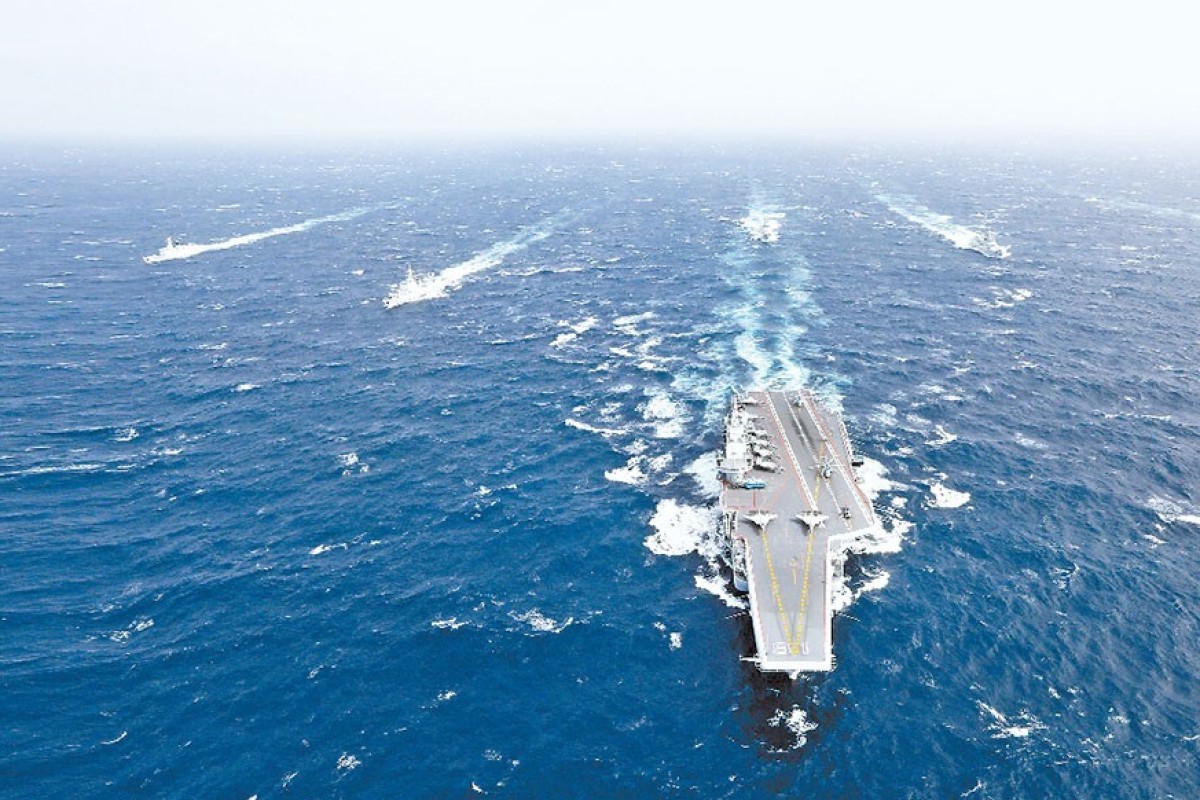
The Liaoning aircraft carrier strike group has resumed activities after being interrupted by the coronavirus pandemic. Photo: Handout
The People’s Liberation Army has resumed regular military drills at home and overseas, moves that military experts say are a show of strength and control over
The ground forces, navy and air force of the PLA’s five theatre commands started military drills this month, with some exercises involving joint operations, according to several reports published by the PLA Daily in recent days.
As the epidemic surged in China, the PLA was forced to suspend all large-scale joint drills because of disruptions to transport and allocations of military resources around the country.
China’s People Liberation Army conducts drills. Photo: Handout
On Saturday, one of the large-scale drills resumed. A six-ship flotilla, led by the
, sailed through the Miyako Strait – just 330km (205 miles) due east of the northernmost tip of Taiwan – on its way to the western Pacific.
“In the future, the Chinese navy will continue to organise similar training schedules to accelerate and improve the combat capability of its aircraft carrier strike groups,” navy spokesman Gao Xiucheng was quoted as saying in PLA Daily.
It is the first time the Liaoning has reappeared in waters near Taiwan since sailors on four United States aircraft carriers sent to the Indo-Pacific region were infected by the coronavirus, making the Chinese carrier the only vessel of its kind active in the western Pacific.
The reappearance of the Liaoning strike group prompted Taiwan to send warships, while the US sent a P-3C Orion anti-submarine aircraft to follow the Chinese flotilla. Taiwanese media reported that the aircraft was the seventh American warplane sent to the region in a week.
Hong Kong-based military analyst Song Zhongping said the Liaoning’s appearance near Taiwan was not only a demonstration of military deterrence to the independence-leaning ruling party in Taiwan, but also a gesture to show off the PLA’s greater ability to contain the coronavirus pandemic than its American counterpart.
“Compared with the PLA, the United States military is weaker and lacks experience in dealing with non-traditional military operations such as battles against epidemics, because those aspects are mostly carried by the US National Guard in various states,” Song said.
“Since the threat of Covid-19 is decreasing, the PLA needs to return to their regular training to prepare for a war to reunify Taiwan by force when necessary. The possible war is very complicated as it [would] involve dealing with foreign militaries, such as US and Japanese navies.”
Beijing-based military expert Zhou Chenming said that the PLA so far had been able to control the infection sources and channels among soldiers and officers, but that the threat of Covid-19 remained.
In pictures published by the PLA Daily, PLA officers do not wear masks while conducting drills.
Both Zhou and Song said that the Covid-19 pandemic had hit the US Navy and left a power vacuum in the region but that the PLA would not use the chance to attack Taiwan.
“Using force to take Taiwan back is still the last step, not the first priority,” Zhou said. “How to manage and maintain Taiwan’s prosperity is the most important issue of the cross-strait relationship.”
Song said the PLA still believed the US Navy had maintained a degree of combat capability even though hundreds of US sailors were infected by the novel coronavirus.


 Image copyright ANI


 Photo taken on April 14, 2020 shows containers at the Lianyungang Port in Lianyungang City, east China’s Jiangsu Province. China’s foreign trade showed signs of stabilizing in March with export and import both beating bearish market expectations, official data showed Tuesday. (Photo by Geng Yuhe/Xinhua)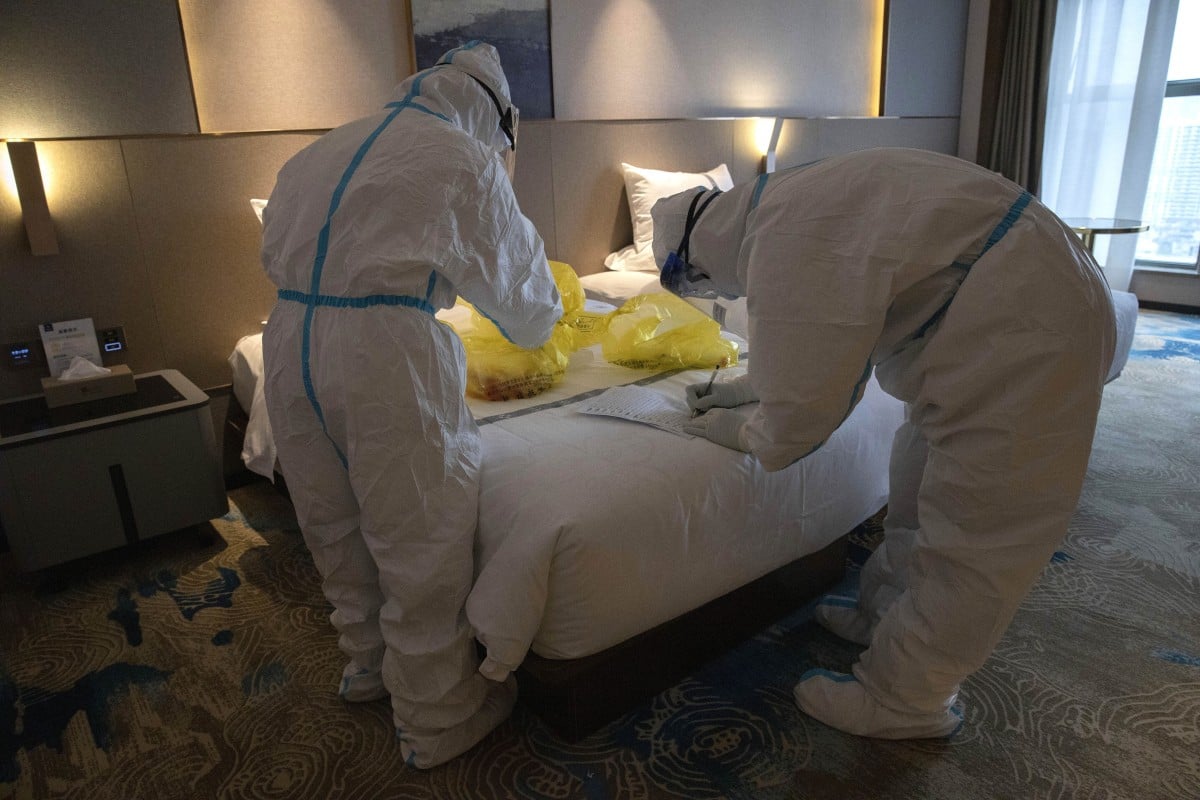



 CHINDIA ALERT: You'll be living in their world, very soon