Chindia Alert: You’ll be Living in their World Very Soon
aims to alert you to the threats and opportunities that China and India present. China and India require serious attention; case of ‘hidden dragon and crouching tiger’.
Without this attention, governments, businesses and, indeed, individuals may find themselves at a great disadvantage sooner rather than later.
The POSTs (front webpages) are mainly 'cuttings' from reliable sources, updated continuously.
The PAGEs (see Tabs, above) attempt to make the information more meaningful by putting some structure to the information we have researched and assembled since 2006.
WASHINGTON (Reuters) – President Donald Trump said on Wednesday he believes China’s handling of the coronavirus is proof that Beijing “will do anything they can” to make him lose his re-election bid in November.
In an interview with Reuters in the Oval Office, Trump talked tough on China and said he was looking at different options in terms of consequences for Beijing over the virus. “I can do a lot,” he said.
Trump has been heaping blame on China for a global pandemic that has killed at least 60,000 people in the United States according to a Reuters tally, and thrown the U.S. economy into a deep recession, putting in jeopardy his hopes for another four-year term.
The Republican president, often accused of not acting early enough to prepare the United States for the spread of the virus, said he believed China should have been more active in letting the world know about the coronavirus much sooner.
Asked whether he was considering the use of tariffs or even debt write-offs for China, Trump would not offer specifics. “There are many things I can do,” he said. “We’re looking for what happened.”
RELATED COVERAGE
China says it has no interest in meddling in U.S. election
“China will do anything they can to have me lose this race,” said Trump. He said he believes Beijing wants his Democratic opponent, Joe Biden, to win the race to ease the pressure Trump has placed on China over trade and other issues.
“They’re constantly using public relations to try to make it like they’re innocent parties,” he said of Chinese officials.
He said the trade deal that he concluded with Chinese President Xi Jinping aimed at reducing chronic U.S. trade deficits with China had been “upset very badly” by the economic fallout from the virus.
A senior Trump administration official, speaking on condition of anonymity, said on Wednesday that an informal “truce” in the war of words that Trump and Xi essentially agreed to in a phone call in late March now appeared to be over.
The two leaders had promised that their governments would do everything possible to cooperate to contain the coronavirus. In recent days, Washington and Beijing have traded increasingly bitter recriminations over the origin of the virus and the response to it.
However, Trump and his top aides, while stepping up their anti-China rhetoric, have stopped short of directly criticizing Xi, who the U.S. president has repeatedly called his “friend.”
Trump also said South Korea has agreed to pay the United States more money for a defense cooperation agreement but would not be drawn out on how much.
“We can make a deal. They want to make a deal,” Trump said. “They’ve agreed to pay a lot of money. They’re paying a lot more money than they did when I got here” in January 2017.
The United States stations roughly 28,500 troops in South Korea, a legacy of the 1950-53 Korean War that ended in an armistice, rather than a peace treaty.
Trump is leading a triage effort to try to keep the U.S. economy afloat through stimulus payments to individuals and companies while nudging state governors to carefully reopen their states as new infections decline.
Trump sounded wistful about the strong economy that he had enjoyed compared with now, when millions of people have lost their jobs and GDP is faltering.
“We were rocking before this happened. We had the greatest economy in history,” he said.
He said he is happy with the way many governors are operating under the strain of the virus but said some need to improve. He would not name names.
Trump’s handling of the virus has come under scrutiny. Forty-three percent of Americans approved of Trump’s handling of the coronavirus, according to the Reuters/Ipsos poll from April 27-28.
But there was some good coronavirus news, as Gilead Sciences Inc said its experimental antiviral drug remdesivir was showing progress in treating virus victims.
Trump has also seeking an accelerated timetable on development of a vaccine.
“I think things are moving along very nicely,” he said.
At the end of the half-hour interview, Trump offered lighthearted remarks about a newly released Navy video purportedly showing an unidentified flying object.
“I just wonder if it’s real,” he said. “That’s a hell of a video.”
The 39 people found dead in a refrigerated trailer in Essex were Chinese nationals, it is understood.
Police are continuing to question lorry driver Mo Robinson, 25, who was arrested on suspicion of murder.
Officers in Northern Ireland have raided two houses and the National Crime Agency said it was working to identify “organised crime groups who may have played a part”.
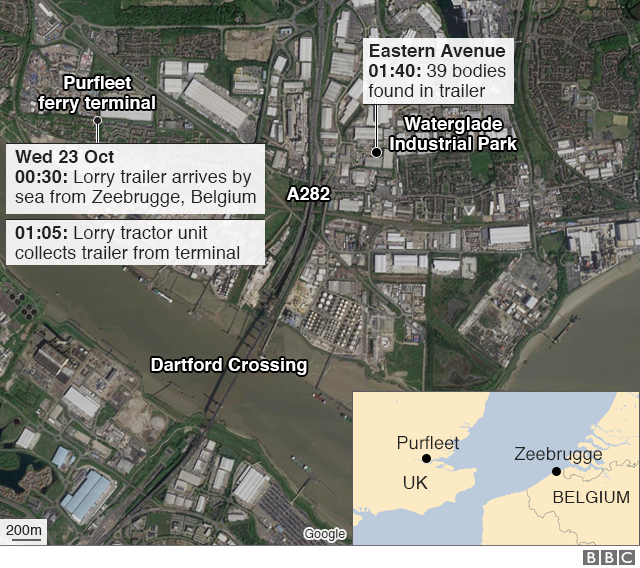
The trailer arrived in Purfleet on the River Thames from Zeebrugge in Belgium.
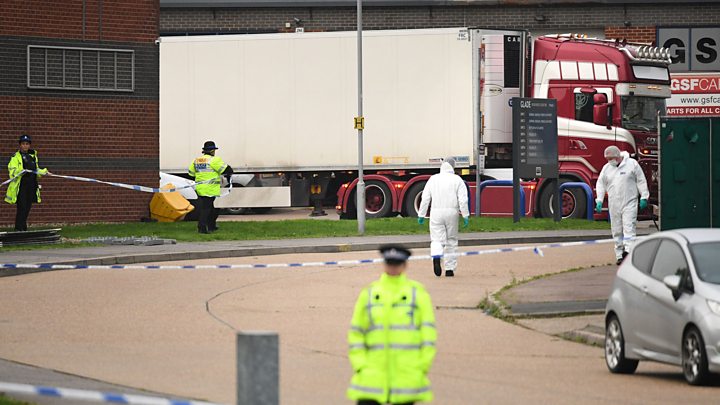
Ambulance staff discovered the bodies of the 38 adults and one teenager in the container at Waterglade Industrial Park in Grays just after 01:30 BST on Wednesday.
The lorry and trailer left the port at Purfleet shortly after 01:05.
Police said the tractor unit – the front part of the lorry – came from Northern Ireland and picked up the trailer from Purfleet.
Image copyright FACEBOOKImage caption The lorry driver has been named locally as Mo Robinson, from County Armagh
Councillor Paul Berry said the village of Laurelvale in County Armagh, where the Robinson family live, was in “complete shock”.
He said he had been in contact with Mr Robinson’s father, who had learned of his son’s arrest on Wednesday through social media.
“The local community is hoping that he [Mo Robinson] has been caught up innocently in this matter but that’s in the hands of Essex Police, and we will leave it in their professional hands to try to catch the perpetrators of this,” he said.
The Belgian Federal Public Prosecutor’s Office said it had opened a case which would focus on the organisers and others involved in the transport.
A spokesman said the container arrived in Zeebrugge at 14:29 on Tuesday and left the port later that afternoon before arriving in Purfleet in the early hours of Wednesday.
It was not clear when the victims were placed in the container or if this happened in Belgium, he said.
Media caption Essex lorry deaths: CCTV shows arrival at industrial park
St Peter and St Paul’s Church in Grays will be open for people to light candles and say prayers between 12:00 and 14:00.
A vigil is being held at 18:00 outside the Home Office to “call for urgent action to ensure safe passage” for people fleeing war and poverty.
The lorry was moved to a secure site at Tilbury Docks on Wednesday so the bodies could be “recovered while preserving the dignity of the victims”.
Essex Police initially suggested the lorry could be from Bulgaria, but later said officers believed it entered the UK from Belgium.
The force said formal identification of the 39 bodies “could be a lengthy process”.
A spokesman for the Bulgarian foreign affairs ministry said the truck was registered in the country under the name of a company owned by an Irish citizen.
He said it was “highly unlikely” the deceased were Bulgarians.
Shaun Sawyer, the National Police Chiefs Council lead for modern slavery and human trafficking, said while forces had prevented thousands of deaths, “tragically, for 39 people that didn’t work yesterday”.
He told BBC Radio 4’s Today programme even if there were routes perceived as easier to get through, organised criminals would still exploit people who could not access those.
“You can’t turn the United Kingdom into a fortress,” added Mr Sawyer, who is the Chief Constable of Devon and Cornwall Police.
Media caption I’ve seen people running out of a lorry’
Thurrock’s Conservative MP Jackie Doyle-Price said there needed to be an international response.
“We have partnerships in place but those efforts need to be rebooted, this is an international criminal world where many gangs are making lots of money and until states act collectively to tackle that it is going to continue,” she said.
Richard Burnett, chief executive of the Road Haulage Association, said temperatures in refrigerated trailers could be as low as -25C.
He described conditions for anyone inside as “absolutely horrendous”.
Prime Minister Boris Johnson said it was an “unimaginable tragedy and truly heartbreaking”.
In 2015, the bodies of 71 people were found in an abandoned lorry on an Austrian motorway. Police suspected the vehicle was part of a Bulgarian-Hungarian human trafficking operation.
Image copyright KOREA FUTURE INITIATIVEImage caption The trade of North Korean women in China is said to be worth $100m a year for criminal organisations
Thousands of North Korean women and girls are being forced to work in the sex trade in China, according to a new report by a London-based rights group.
They are often abducted and sold as prostitutes, or compelled to marry Chinese men, says the Korea Future Initiative.
The trade is worth $100m (£79m) a year for criminal organisations, it says.
The women are often trapped because China repatriates North Koreans, who then face torture at home, it says.
“Victims are prostituted for as little as 30 Chinese yuan ($4.30; £3.40), sold as wives for just 1,000 yuan, and trafficked into cybersex dens for exploitation by a global online audience,” the report’s author Yoon Hee-soon said.
They are coerced, sold, or abducted in China or trafficked directly from North Korea. Many are sold more than once and are forced into at least one form of sexual slavery within a year of leaving their homeland, it adds.
Many are enslaved in brothels in districts in north-east China with large migrant worker populations.
The girls – some as young as nine – and women working in the cybersex industry are forced to perform sex acts and are sexually assaulted in front of webcams. Many of the subscribers are thought to be South Korean.
Women forced into marriage were mostly sold in rural areas for 1,000 to 50,000 yuan, and were raped and abused by their husbands.
Media caption North Korean defectors who had to escape twice
The group collected its information from victims in China and exiled survivors in South Korea.
One woman, named as Ms Pyon from Chongjin City, North Korea, is quoted as saying in the report:
“I was sold [to a brothel] with six other North Korean women at a hotel. We were not given much food and were treated badly…After eight months, half of us were sold again. The broker did bad things to me.”
“When I arrived [at the new brothel] I had bruises on my body. [The broker] was beaten then stabbed in the legs by some members of the gang.”
Another, Ms Kim, said: “There are many South Koreans [in Dalian, China]…We put advertising cards under their doors [in hotels]…The cards are in the Korean-language and advertise what we offer…We are mostly taken to bars [by the pimp].
“South Korean companies want [North Korean prostitutes] for their businessmen…Prostitution was my first experience of meeting a South Korean person.”
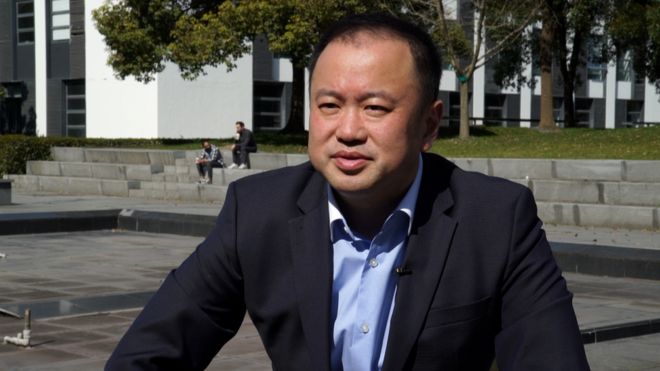
Image captionFrank Liu says his company Intco was the victim of intellectual property theft
There was no break in, no hold up. No glass was smashed. But the factory on the outskirts of Shanghai was the scene of a very modern crime. Someone stole a hoard of intellectual property.
“A couple of years ago one of my IT managers copied ten thousand pages of my entire company’s profile,” Frank Liu told me. His company Intco has been around for 25 years.
He told me the stolen download included “our technology information, our customer list, our purchasing and supply information. Everything.”
Intco is a business that makes medical devices, skirting boards and photo frames. I visited its offices at a business park in Shanghai, and a factory that sits either side of a tree-lined road south of the city.
The company recycles polystyrene waste sent to China from all over the world. Then, using heat moulding and imprinting techniques, it turns it into an array of products which end up on the floors of houses in Brazil or Russia, or hanging on walls displaying photos in the US and Britain.
“We actually have the record of how he stole it,” Mr Liu told me. “He just sold it to establish another company, as his investment.”
Mr Liu feels he has no recourse. He told me he went to the police but nothing happened. He said he still intends to pursue it.
His story is increasingly common here, for both local businesses and foreign firms.
Top officials from the US and China will hold their next round of trade talks this week and protecting intellectual property (IP) is a key demand for Washington. They argue American and other foreign companies in China have endured decades of theft and infringement.
China has taken some steps to address the problem. The country only established copyright laws in the 1980s, but things have progressed relatively quickly since then.
China now has specialist IP courts, albeit – like every aspect of the judicial system – subservient to the ruling Communist Party. They are supposed to settle cases within 12 to 18 months.
Their creation was not due solely to outside pressure from foreign firms.
Chinese business figures like Mr Liu have also called for the country’s legal system to better protect the innovators and entrepreneurs who have turned China into much more than the “copycat” economy it was once labelled.
Benjamin Qiu, an IP lawyer with US law firm Loeb & Loeb, told me that the Chinese are now just as litigious as foreign firms.
Foreign firms are just as likely to win a case – a good case, Mr Qiu added – as domestic plaintiffs. In the past few years Lego and New Balance have both won high-profile cases against copycat manufacturers.
There is no doubt that the trade war with the US has sped up the pace of reform in China.
The Foreign Investment Law states that the transfer of technology from foreign investors to any domestic partner must be voluntary. China has always defended this highly contentious practice by insisting it’s part of an agreed commercial arrangement.
The new law also bars government officials from passing on details of foreign investors IP.
A new era?
Now though comes the hard part – enforcement.
Mr Qiu told me the next step is “detailed regulation coming out after this law, and we want to see actual cases in local courts and also from enforcement agencies.”
If that follows, then he thinks “potentially the foreign IP owners will have more to protect [them] in China.”
Both the EU and American Chambers of Commerce welcomed the new law, but both also criticised what they said was ambiguity in the legislation. The Americans also had concerns that it was rushed through without proper consultation.
Many foreign companies have been stung over the years in China. Most have found the lure of the massive market, or what was once rock bottom labour costs, irresistible.
Some though feel the risk is too high.
A fruit industry executive recently told me his firm wanted to buy new conveyor belts for their farms in China, but the European manufacturers said no. They feared their systems would be copied here, and they’d be wiped out.
Mr Liu can’t do that. He is Chinese and wants to stay in China. But he has taken steps to try to prevent another IP theft.
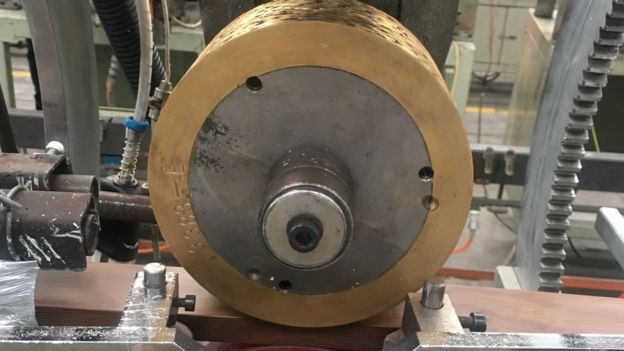
Image captionProduction line used to create photo frames at an Intco factory in Shanghai
He is chief executive of the company he founded, but this year he told me he’s changing his title to include head of research and development. Because he can’t trust anyone else with the firms’ commercial secrets.
Protecting original ideas, techniques and information in China – “it’s a human right” he told me.
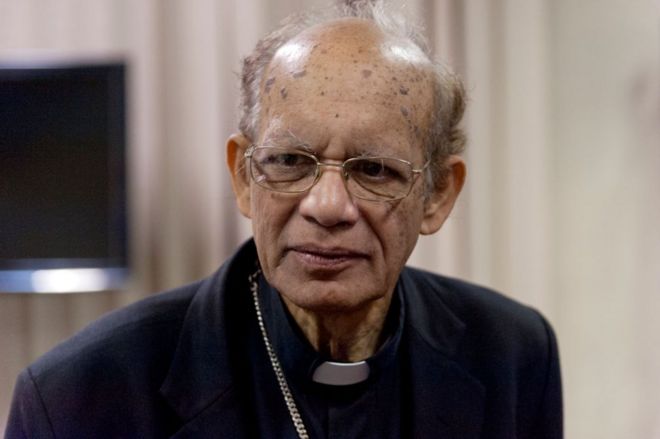
Image copyrightGETTY IMAGESImage captionCardinal Oswald Gracias told the BBC it pained him to hear accusations that he had neglected victims of alleged abuse
One of the Catholic Church’s most senior cardinals has admitted that he could have better handled sexual abuse allegations that were brought to him.
Oswald Gracias, the Archbishop of Mumbai is one of four men organising a major Vatican conference on child abuse this week.
We found two separate cases where the cardinal, who is tipped by some to possibly become the next Pope, is claimed to have failed to respond quickly or offer support to the victims.
Victims and those who supported them allege that Cardinal Gracias did not take allegations of abuse seriously when they were reported to him.
India’s Catholics say there is a culture of fear and silence in the Catholic Church about sexual abuse by priests. Those who have dared to speak out say it has been an ordeal.
A woman’s life changed when her son returned from Mass at the church and told her that the parish priest had raped him.
“I could not understand what should I do?” she said. She did not know this yet, but this event would put her on a collision course with the Catholic Church in India.
Media captionWhy is India’s Catholic church silent about sexual abuse?
The man she reached out to for help was and remains one of the most senior representatives of the Church.
It was nearly 72 hours after the alleged rape that the family briefly met Cardinal Gracias, then president of the Catholic Bishop’s Conference of India and Federation of Asian Bishops’ Conferences.
The issue of sexual abuse within the Church is being called the Vatican’s biggest crisis in modern times, and the integrity of the Catholic Church is said to ride on the outcome of this conference.
Image copyrightGETTY IMAGESImage captionPope Francis with Cardinal Oswald Gracias (fourth from left)
Over the past year, the Catholic Church has been reeling under multiple allegations of sexual abuse around the world.
But while abuse claims have made headlines in North and South America, Europe and Australia, very little is known about the problems in Asian countries. In countries such as India there is a social stigma about reporting abuse.
Among Christians, who are a minority of nearly 28 million people, a culture of fear and silence makes it impossible to gauge the true scale of the problem.
Cardinal Blase Cupich of Chicago – a colleague of Cardinal Gracias on the four-member organising committee – has promised that decisive action in Rome and in dioceses worldwide will follow after the meeting so as to safeguard children and bring justice to the victims.
Cardinal Gracias will open the second day of the summit with a conversation about accountability in the Church.
Media captionBrigitte, a survivor of child sex abuse by a chaplain, explains why she is ready to speak now
This vital role given to him during this crucial conference has made some in India unhappy.
They say his track record in protecting children and women from abusers is questionable. Those we have spoken to who have taken cases to him say they received little support from him.
The mother of the abused boy said: “I told the cardinal about what the priest had done to my child, that my child was in a lot of pain. So he prayed for us and told us he had to go to Rome…my heart was hurt in that moment.
“As a mother, I had gone to him with great expectations that he would think about my son, give me justice, but he said he had no time, he only cared about going to Rome.”
The family say they requested medical help but were offered none.
The cardinal told us it pained him to hear this, and that he was not aware that the boy needed medical help – and if he had been asked, he would have immediately offered it.
The cardinal admits he left for Rome that night without alerting the authorities.
By failing to call the police, Cardinal Gracias may have violated India’s Protection of Children from Sexual Offences Act, 2012 (POCSO).
The provisions of this law state that if the head of any company or institution fails to report the commission of an offence in respect of a subordinate under his control, they shall be punished with imprisonment for a term which may extend to one year, and with a fine.
The cardinal told us he had telephoned his bishop the next day, who told him the family had subsequently informed the police themselves.
Asked if he regretted not calling the police personally at the time, he said: “You know I’m being honest, I’m not 100% sure… but I must reflect on that. I admit whether immediately, the police should have got involved, sure.”
He says he was under a duty to evaluate the credibility of accusations by speaking to the accused man.
Emerging from that meeting, the family decided to go to a doctor.
“He took one look at my boy and said that something has happened to him. This is a police case. Either you report it or I will… so we went to the police that night,” the mother said.
A police medical examination found that the child had been sexually assaulted.
Image copyrightGETTY IMAGESImage captionIndia is home to about 19 million Catholics
A current priest who spoke to us on the condition of anonymity said this was not the first time allegations about this priest had been brought to the cardinal’s attention.
“I met him some years before this [alleged] incident,” the priest told us.
“There were strong rumours about [the accused priest] in the diocese, and like these are about abuse that is taking place. And yet he seems to be moving from one place to another, one parish to another. The cardinal told me directly that he is not aware directly of all these things.”
The cardinal says he cannot recall the conversation. He says he did not recollect any “cloud of suspicion” over the man.
‘A lonely battle’
As part of our investigation, we wanted to see if there were other allegations of the cardinal being slow to act.
We found an instance dating back almost a decade, brought to his attention just a couple of years after becoming archbishop of Mumbai.
Image captionCatholic activist Virginia Saldanha says three legal notices were sent to the cardinal, threatening court action unless took action about the claims of abuse
In March 2009, a woman approached him with accusations of sexual abuse by another priest who conducted retreats.
She says that he took no action against the priest so she reached out to a group of female Catholic activists, who say they forced the cardinal to act.
Under pressure, he finally set up an enquiry committee in December 2011. Six months after the enquiry, there was still no action and the accused priest continued working in his parish.
“We had to send the cardinal three legal notices to act, threaten to take the matter to the courts if he did not act,” said Virginia Saldanha, a devout Catholic who has worked on the women’s desk of multiple Church-affiliated positions for over two decades.
When the cardinal replied, he said: “The priest is not listening to me.”
Image captionThe family says they have been ostracised from the church and isolated within their communities since reporting the sexual assault
During the time, Saldanha said she had to leave the church because “I could not bear to see that man giving Mass in the church. I did not feel like going there.”
The priest was eventually removed from his parish, but the reasons for his departure were never made public.
The punishment, decided by the cardinal personally in October 2011, was a “guided retreat and therapeutic counselling”.
When we pressed him about the speed of process and punishment, the cardinal said it was a “complicated case”.
After a stay in the seminary, the accused priest was briefly given a parish again and still conducts retreats.
Meanwhile, the family of the allegedly raped minor feel abandoned by the institution that they had built their lives around.
“It has been a lonely battle,” the mother concedes. They say they have been ostracised from the church and isolated within their communities.
“After complaining to the police, when we would go into church, people would refuse to talk to us, to sit next to us during Mass. If I went to sit next to someone… they would get up and leave,” she said.
The hostility she encountered eventually “made us leave the church. But it got so difficult for us that we eventually had to change our home as well. We left it all behind”.
Church members say that it is this hostility that makes it harder for victims and their families to speak up.
Caught between an apparently unsupportive clergy and hostile social network, many find their voices faltering.
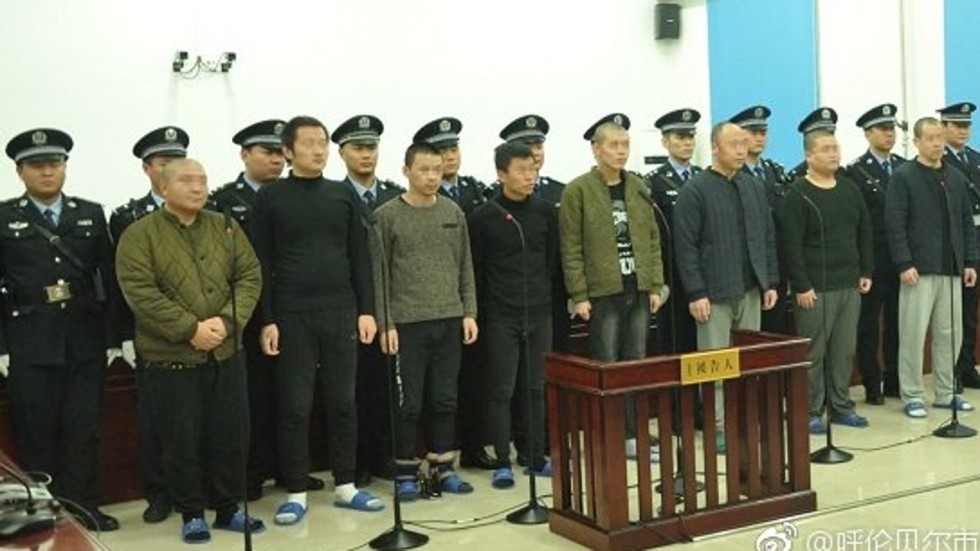
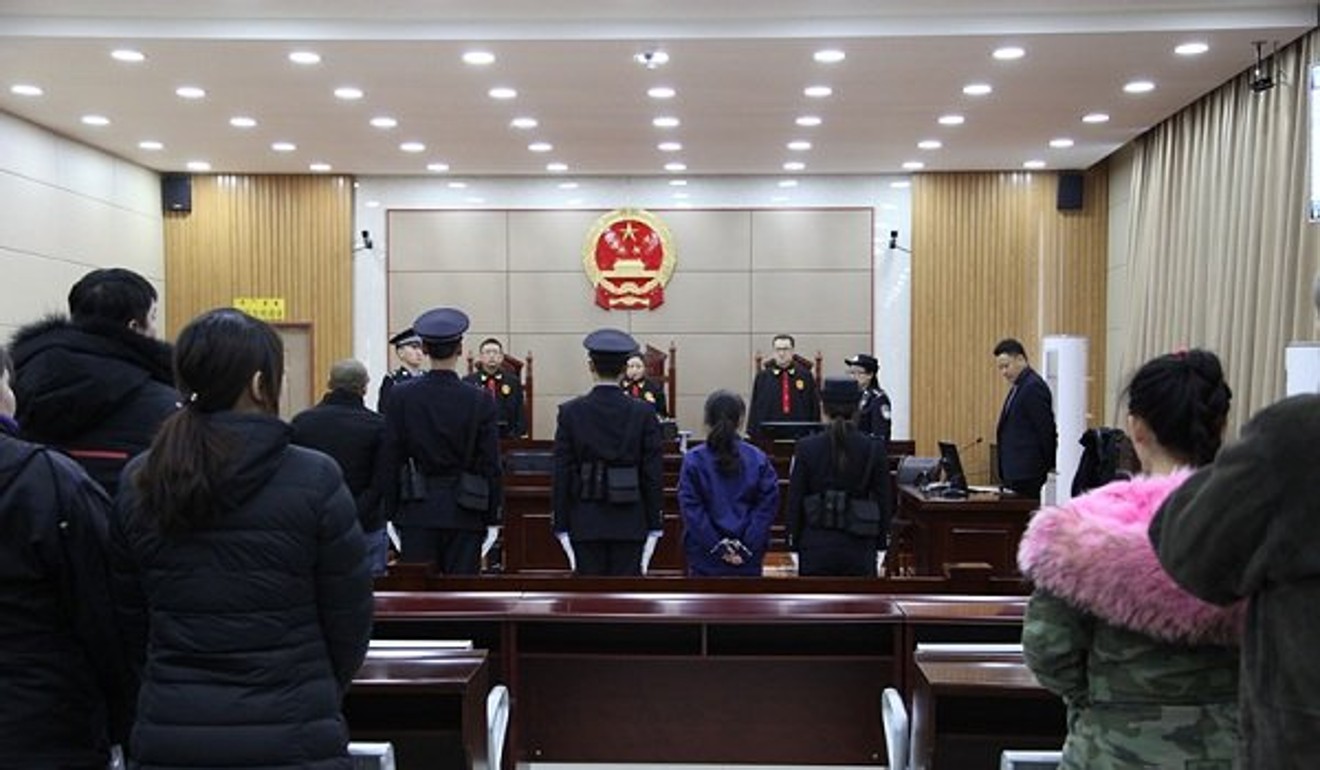
Wang Yinan was one of 19 people convicted of various gang-related crimes in Hulunbuir in the Inner Mongolia autonomous region, Beijing Youth Daily reported on Tuesday.
Wang and eight of his associates were tried in the city on Monday charged with illegally providing loans of between 10,000 yuan (US$1,450) and 30,000 yuan to people via a smartphone app since September 2017.
Those who failed to keep up with their repayments were subjected to physical assault, including being made to stand naked in the snow, the report said. One victim was raped as punishment, it said, without providing any further details of the crime.
Wang’s associates were each sentenced to between one and nine years in prison.
The trials followed a nationwide crackdown on organised crime launched at the start of the year.
Among the others given prison sentences on Monday were Lee Yongbin, who led a group of hired thugs that intimidated people involved in construction conflicts and worked as debt collectors for loan sharks, the report said.
Members of the gang were also charged with “creating public disturbances”, the court heard.
Lee was sentenced to 5½ years in prison, and his associates to between 10 and 30 months.
People present flowers during the unveiling ceremony of the Nanjing Massacre Victims Monument at the Elgin Mills Cemetery in Richmond Hill, Ontario, Canada, Dec. 9, 2018. In order to remember the history of World War II and to maintain a lasting peace in the world, peace-loving people officially launched the Nanjing Massacre Victims Monument in Ontario, Canada on Sunday. (Xinhua/Zou Zheng)
TORONTO, Dec. 9 (Xinhua) — In order to remember the history of World War II and to maintain a lasting peace in the world, peace-loving people officially launched the Nanjing Massacre Victims Monument in Ontario, Canada on Sunday.
Over one thousand representatives from all walks of life in Canada, including Han Tao, Consul General of China in Toronto, attended the launching ceremony in Richmond Hill of Great Toronto Area,
Setting up the Nanjing Massacre Victims Monument was launched by the Confederation of Toronto Chinese Canadian Organizations and Chinese Freemasons of Canada (Toronto).
The book-shape monument is to cover an area of 90 square meters. It is 3.72 meters high, 4.88 meters long, and 9.2 meters wide. It is made of black marble. It is a symbol of a black and heavy period of human history. It is already under process of production.
Lin Xinyong, president of the Confederation of Toronto Chinese Canadian Organizations told Xinhua on Sunday that the Nanjing Massacre is the eternal pain in the Chinese heart.
On Dec 13, 1937, the Japanese army bombed Nanjing and went on a murderous rampage through the city, then China’s capital. The Nanjing Massacre, or Rape of Nanjing, was an episode of mass murder and mass rape committed by Japanese troops against the residents of Nanjing.
That is the tragedy of Chinese and is also the humiliation of human beings. The Nanjing Massacre is being forgotten by more and more people, and the desperation of the victims of the massacre is even less likely to be felt by the people. Almost nobody realizes that such tragedy may come to oneself one day, Lin said.
Remembering history and praying for peace is engraved on the monument and engraved in our minds. The monument is meant to let more people to have a better understanding of the Japanese invaders’ atrocities against humanity and cherish peace, Li added.
Han Tao, Consul General of China in Toronto, told Xinhua the monument will help people of all backgrounds understand the tragic history of the Nanjing Massacre, value peace and safeguard justice, adding that it will also deepen the mutual understanding and friendship between China and Canada and contribute a stable, harmonious and prosperous world.













 CHINDIA ALERT: You'll be living in their world, very soon