Chindia Alert: You’ll be Living in their World Very Soon
aims to alert you to the threats and opportunities that China and India present. China and India require serious attention; case of ‘hidden dragon and crouching tiger’.
Without this attention, governments, businesses and, indeed, individuals may find themselves at a great disadvantage sooner rather than later.
The POSTs (front webpages) are mainly 'cuttings' from reliable sources, updated continuously.
The PAGEs (see Tabs, above) attempt to make the information more meaningful by putting some structure to the information we have researched and assembled since 2006.
Photos showing Indian soldiers purportedly brought down by PLA soldiers at a fist and stick fight circulated among Chinese military websites
WeChat and YouTube become new fighting arenas for soldiers but their governments are playing down Himalayan clashes
A photo showing PLA troops after purportedly bringing down several Indian soldiers at a close-quarters fight at Pangong Lake border area with India, was circulated among Chinese military websites on Sunday. Photo: Handout
People’s Liberation Army soldiers and their Indian counterparts have moved
over border disputes in the Himalayas to social media platforms as both their governments try to play down the fights.
A post with photos showing several Indian soldiers purportedly brought down by PLA soldiers in a fist and stick fight at the Pangong Lake border area with India was circulated among Chinese military websites on Sunday.
On the Chinese social media site WeChat, a Chinese soldier posted photos showing a number of Indian soldiers lying on the ground with a group of PLA soldiers standing nearby with sticks in their hands. The photos were accompanied by a Chinese caption saying the Chinese side “had just one injury but dozens of Indian soldiers were wounded”.
A screen grab of YouTube video in which Indian troops claimed to have captured a Chinese officer, who appeared hurt after a brawl at Pangong Lake in the Himalayas. Photo: Handout
The report was published one day after the Indian side posted a video on YouTube showing that Indian troops had captured a Chinese officer, who appeared badly roughed up during the brawl at Pangong Lake, about 4,350 metres (14,300 feet) above sea level in the Himalayas.
The YouTube video posted by someone on the Indian side did not state the time or date of the incident. Photo: Handout
The crudely made video, which did not include the date of the incident, also showed a damaged PLA military vehicle amid cheering Indian troops.
Two independent sources close to the PLA said “the wounded Chinese officer was an interpreter who was taken in by the Indian troops but was later released with minor injuries after the Chinese side called for reinforcements”.
The sources said soldiers from both sides had turned to social media to give a positive spin to their “acts of bravery” while their commanders wanted to play down the disputes. One source pointed out that the pictures of injured Indian soldiers were posted by a Chinese soldier on his personal social media account and not on official channels.
“Beijing didn’t want its people to think that Chinese soldiers lost in the fight but at the same time it is mindful of not escalating the matter,” said the source, who requested anonymity because of sensitivity of the situation.
India denies that Trump spoke to Modi about border tensions with China
29 May 2020
Beijing-based military expert Zhou Chenming said the Chinese border troops had been told to be “restrained”.
“In border disputes, China always wants to keep the status quo, especially now when both sides should do all they can to avoid fighting,” Zhou said. “China is busy dealing with the Covid-19 pandemic and other issues like Taiwan and Hong Kong, and India also faces a serious Covid-19 situation.”
Rajeev Ranjan Chaturvedy, an international relations expert based in New Delhi, agreed with Zhou’s analysis, saying both China and India understood the seriousness and sensitivity of their border disputes.
“Civilian and military officials of both countries are already in discussion under existing mechanisms,” he said. “The stakes are too high for both countries and the probability of a war [between India and China] is low, in my view.
“Though, the situation is very serious and India is closely monitoring Chinese activities.”
Military and diplomacy analysts believe border skirmishes between China and India will not escalate to war because of a range of factors, including the coronavirus pandemic. Photo: AP
Overseas media reported that both Chinese and Indian militaries had increased deployment to the border, with the PLA moving 5,000 personnel to the area.
Speaking last Wednesday, Chinese foreign ministry spokesman Zhao Lijian did not deny the troop deployment reports but said the overall situation in the China-India border area remained “stable and under control, and the two countries were capable of resolving border issues through dialogue and negotiations”.
Border conflicts between China and India have escalated since 2017, with Indian troops and the PLA staging the most serious confrontation in Doklam near a tri-junction border area – known as Donglang or Donglang Caochang, in Chinese – a territory which is claimed by both China and Bhutan, an ally of India.
BEIJING, May 2 (Xinhua) — A total of 35 parks and scenic spots in Beijing with large passenger flows require online reservations during the May Day holiday, Beijing Gardening and Greening Bureau said Friday.
Besides making reservations on the online platforms of these attractions, visitors can also book the tickets on the official website of Beijing Gardening and Greening Bureau and its official account on WeChat and microblog Sina Weibo.
Parks and scenic spots will embrace a peak of passenger flows during the holiday from May 1 to 5, according to Ye Xiangyang, director of the park management office of the bureau.
Online reservations can help control passenger flow effectively, ensuring the stable order of these popular sites and the health of visitors, Ye said.
Parks in the capital will limit real-time tourist numbers to no more than 30 percent of their maximum tourist capacity during the holiday for the safety of visitors amid the COVID-19 epidemic.
Beijing has lowered its emergency response to the COVID-19 epidemic from the top level to the second level starting Thursday.
Warship joined by at least five escort vessels and analysts say the drills were ‘very significant’ to show the strike group wasn’t hit by coronavirus
Latest exercises also seen as putting pressure on Taiwan’s pro-independence forces, with strike group sailing through the strait
The Liaoning is seen as having a big role in the Chinese military’s plan to unify Taiwan by force. Photo: AFP
China’s first aircraft carrier, the Liaoning, returned to its home port of Qingdao on Thursday after nearly a month of training on the high seas, the People’s Liberation Army said.
According to military analysts, the warship was joined by at least five escort vessels, and the drills showed its crew had not been affected by the coronavirus pandemic and that it remained combat-ready.
The annual cross-region drills included intensive and complicated air and sea operations, the official PLA Daily said in a post on social media on Friday.
“The drills have further improved the real combat training level of the Liaoning carrier strike group, putting its systematic combat capability to the test,” the statement on WeChat said, without giving other details.
It was the longest training session by China’s navy since the PLA resumed all large-scale drills in March, after they were suspended because of disruptions to transport and military resources across the country as the deadly new virus rapidly spread.
Beijing-based naval expert Li Jie said it was important for the carrier to get back to training activities.
“The recent training by the Liaoning carrier strike group is very significant because it’s evidence that none of the 2,000 sailors and commanders on the ship have been hit by Covid-19, and neither have any of the other soldiers and personnel on the other warships and support units,” Li said.
The coronavirus situation has eased in China, where the first cases were reported late last year, but it continues to spread across the globe and has infected more than 3.2 million people worldwide and killed over 233,000.
Sailors on warships like USS Theodore Roosevelt vulnerable as coronavirus spreads
29 Mar 2020
The virus has also hit crew members on at least 40 US Navy warships, and Li said that left China with the only operational aircraft carrier in the region.
“Since the four American aircraft carriers in the Indo-Pacific region have all been struck by the pandemic, China is the only country that can operate an aircraft carrier in the area,” he said.
US warship captain seeks to isolate crew members as coronavirus spreads
Taiwan’s defence ministry reported earlier that the Liaoning flotilla had sailed through the Taiwan Strait twice last month as it headed towards the western Pacific, prompting the self-ruled island to scramble aircraft and send warships to monitor its movements.
Japan’s Ministry of Defence said the Liaoning was escorted by two destroyers, two frigates and a supply ship, and they had passed through the Bashi Channel, a waterway to the south of Taiwan, and headed towards waters east of Taiwan.
As tensions continue to simmer between Taipei and Beijing, the PLA has stepped up activities around the island, which the mainland sees as part of its territory awaiting reunification.
Hong Kong-based military commentator Song Zhongping said the latest naval drills were also aimed at heaping more pressure on Taiwan’s pro-independence forces as well as foreign countries seeking to intervene in cross-strait issues.
Coronavirus: US ‘supports Taiwan joining WHO events’ in ministerial phone call
28 Apr 2020
“Taiwan’s pro-independence forces have become more active and are attempting to take advantage amid the pandemic,” said Song, a military commentator with Phoenix Television.
“The Liaoning would play a major role in the PLA’s plan to unify Taiwan by force, so it’s necessary for the aircraft carrier strike group to get back to operations, step up training and send a warning to Taipei,” he added.
Lu Li-Shih, a former instructor at the naval academy in Taiwan, noted that the PLA Navy had regularly held drills in the waters east of Taiwan in recent years to avoid surveillance by US satellites.
-China will embrace an opportunity for tourism and consumption in the upcoming International Labor Day holiday under regular epidemic prevention and control.
-Among comprehensive prevention and control measures during the holiday, tours to all of Shanghai’s top tourist attractions should be reserved to avoid gatherings of people.
-Internet technologies have also empowered tourism with online booking, live-streaming sessions and “cloud tourism.”
By Xinhua writers Chen Aiping, Sun Wenji
SHANGHAI, April 30 (Xinhua) — The upcoming five-day International Labor Day holiday will be an opportunity for tourism and consumption since China entered the phase of regular epidemic prevention and control.
The number of domestic trips to be made in the holiday is estimated to be over twice the number of that made in the three-day Tomb-sweeping Day holiday in April, said major online travel agencies in China.
How will the country guarantee healthy and safe travels while boosting tourism and consumption in the holiday?
Tourists visit the Yellow Crane Tower in Wuhan, central China’s Hubei Province, April 29, 2020. Wuhan’s landmark Yellow Crane Tower partly reopened to the public on Wednesday. For the time being, there is still a visitor number limit and online booking is needed. (Xinhua/Xiao Yijiu)
BOOMING RESERVATIONS
Among comprehensive prevention and control measures during the holiday, tours to all of Shanghai’s top tourist attractions should be reserved to avoid gatherings of people.
“Safety comes first,” said Yu Xiufen, head of the Shanghai Municipal Administration of Culture and Tourism.
The city, with 84 major tourist attractions and over 5,200 hotels reopened, will be the largest tourist destination as well as the largest tourist source for the holiday, according to booking data from Trip.com Group.
However, reopened tourist sites should receive no more than 30 percent of their daily or real-time visitor capacity, according to a circular jointly released by China’s Ministry of Culture and Tourism and the National Health Commission on April 13.
People enjoy themselves at the Shanghai Happy Valley in east China’s Shanghai Municipality April 5, 2020. (Shanghai Happy Valley/Handout via Xinhua)
“Better travel planning is needed if you don’t want to gather inside the attractions or outside waiting for entry,” said Zheng Bing, a 33-year-old visitor who has booked trips to Zhujiajiao Old Town and Shanghai Happy Valley for her family.
“I can book through the attractions’ official online channels or call them with the required information for a limited number of family members, and check the real-time passenger flow on the WeChat accounts of the Shanghai Municipal Administration of Culture and Tourism,” she said, adding that nearly 200 attractions, museums, art galleries and public cultural centers have launched booking access through Visit Shanghai, an online platform with Shanghai’s cultural and tourism resources.
“In April, the number of tourists who made online bookings increased by 300 percent from March,” said Yu Xiaojiang with Trip.com Group, noting that over 4,000 tourist attractions in China have launched online booking access.
“Nearly 2,000 visitors have booked for May 1, marking the largest daily volume during the holiday. We will take more precise epidemic prevention measures,” said Zhao Shuai, marketing director of Shanghai Happy Valley.
PREPARED DESTINATIONS
China has urged the safe and orderly opening of tourist sites across the country, noting that efforts should be made to control passenger flows, prevent the gatherings of crowds, implement reservation systems and raise public awareness of epidemic prevention and control.
China’s resort island Hainan Province recently announced 20 specific epidemic-control measures in tourism, transportation, dining and shopping sectors while launching holiday promotions to boost consumption.
A customer tries out a pair of sunglasses at a duty-free experience shop in a resort in Sanya, south China’s Hainan Province, April 15, 2020. (Xinhua/Pu Xiaoxu)
“Tourists are required to wear masks, show their health codes and have their temperature checked. All the sales staff are required to wear masks and gloves,” said Zhang Ke, an employee with a duty-free shop in downtown Haikou, capital of Hainan.
One-meter bars were set at the shop’s sales counters and sanitizers were provided, while staff will keep customer flows at a safe distance and disinfect public areas regularly every day, Zhang said.
Over 85 percent of hotels across China have resumed operations, according to Tongcheng-eLong, another online travel agency giant. Over 110,000 hotel suppliers have joined the Safety Hotel Initiative of Tongcheng-eLong in adopting more safety measures, including disinfecting public areas and popularizing coronavirus control knowledge.
In popular destinations such as Shanghai, Yunnan and Hainan, restaurants are encouraged to serve separate dishes. In Shanghai, some 30 percent of restaurants now offer separate dishes for diners.
Tourists will also shoulder more responsibilities with better travel plans and behavior, said He Jianmin, an expert with Shanghai University of Finance and Economics.
INTERNET EMPOWERMENT
“Epidemic-control measures including online booking are also important for ensuring the tourism sector’s high-quality long-term development,” said Zhao Shuai, adding that China will eye booming smart tourist attractions empowered by Internet technologies.
5G infrared thermal imaging temperature measurement has been implemented in public areas including metro stations, commercial centers, airports and train stations in Shanghai and many other cities to monitor people’s body temperature.
A visitor receives body temperature check at the entrance of Shanghai Museum in east China’s Shanghai Municipality, March 13, 2020. (Xinhua/Ren Long)
The Old Town of Lijiang in southwest China’s Yunnan Province implemented a big data system to monitor passenger flows and prevent the gathering of crowds.
Although group tours across provinces were still suspended, online consumption for tourism boosted.
Shanghai has taken measures to promote the recovery of epidemic-hit culture and tourism, and exhibitions, cooking competitions and tours have been held online. Trip.com Group said its sales of travel products had reached 200 million yuan (28.33 million U.S. dollars) in seven recent livestreaming sessions as of Wednesday.
Tour guide Zeng Hongjuan (R) introduces an exhibit via livestreaming on a cellphone platform at the Beijing Auto Museum in Beijing, capital of China, April 30, 2020. Livestreaming shows for this auto museum will be staged from April 30 to May 3 for the upcoming International Labor Day holidays. (Xinhua/Ren Chao)
Scenic spots in Yunnan have cooperated with video platforms to livestream their natural beauty to attract more tourists.
“Go-Yunnan,” an online travel platform, has launched more than 1,400 live feeds allowing people to enjoy the beautiful scenery of Yunnan from home.
“Online tourism, or ‘cloud tourism,’ as a new mode of tourism, helps scenic spots attract more tourists and aids the recovery of Yunnan’s tourism industry,” said Yang Wenwen, head of the platform’s content operation. “I expect ‘cloud tourism’ to drive the future upgrading of China’s tourism industry.”
The number of netizens in China had reached 904 million as of March 2020 and 897 million of them access the Internet through mobile phones, according to the China Internet Network Information Center.
China’s famed Yiwu International Trade Market, a barometer for the health of the nation’s exports, has been hammered by the economic fallout from Covid-19
Export orders have dried up amid sweeping containment measures in the US and Europe and restrictions on foreigners entering China have shut out international buyers
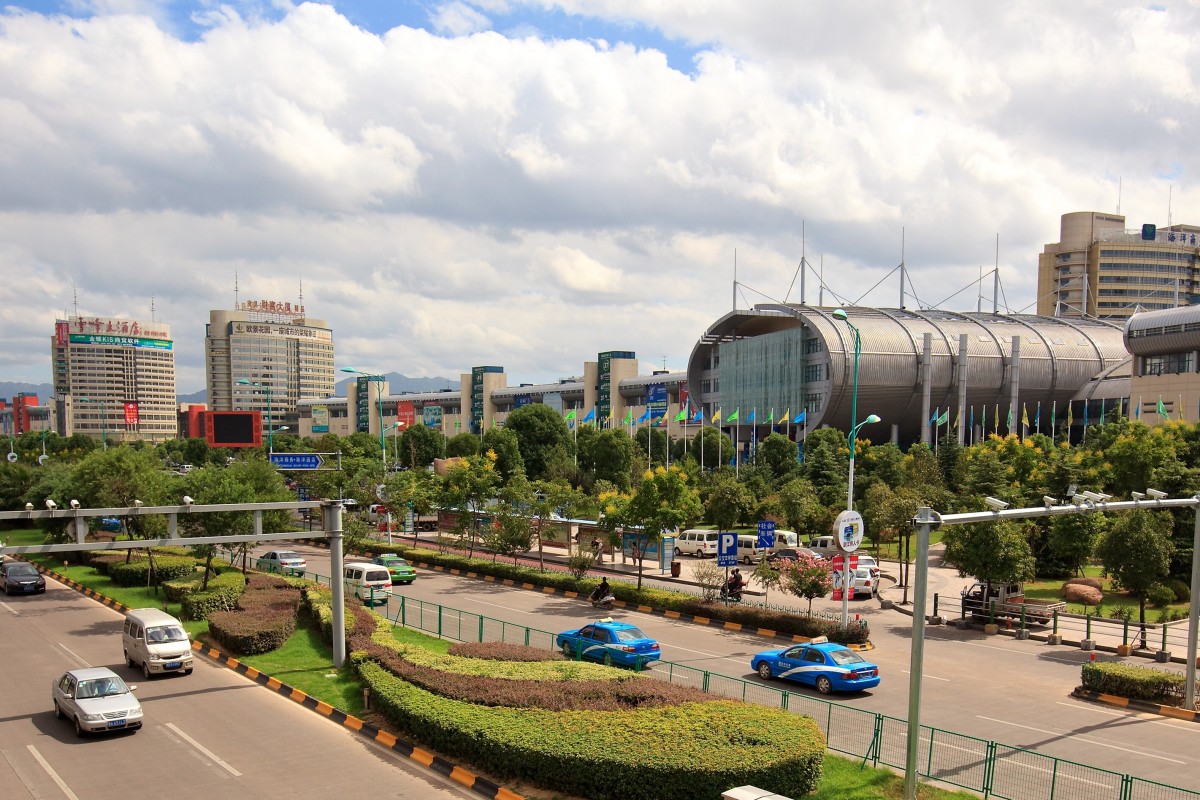
The coronavirus pandemic has severely dented wholesale trade at the Yiwu International Trade Market in China. Photo: SCMP
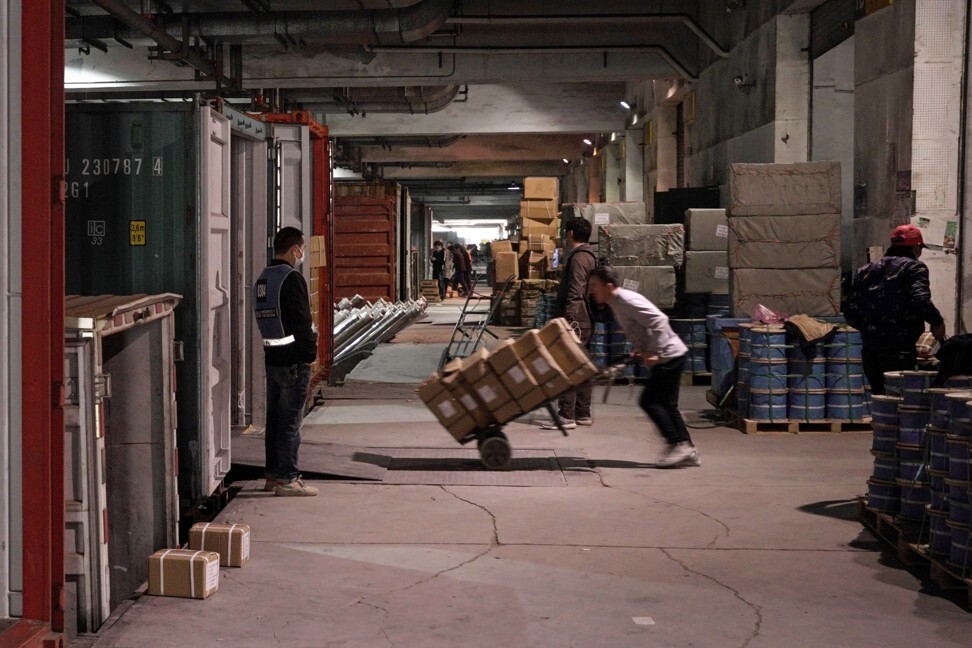
The Yiwu International Trade Market has always been renowned as a window into the vitality of Chinese manufacturing, crammed with stalls showcasing everything from flashlights to machine parts.
But today, as the coronavirus pandemic rips through the global economy, it offers a strikingly different picture – the dismal effect Covid-19 is having on the nation’s exports.
The usually bustling wholesale market, home to some 70,000 vendors supplying 1,700 different types of manufactured goods, is a shadow of its former self.
Only a handful of foreign buyers traipse through aisles of the sprawling 4-million-square-metre (43 million square feet) complex, while store owners – with no customers to tend to – sit hunched over their phones or talking in small groups.
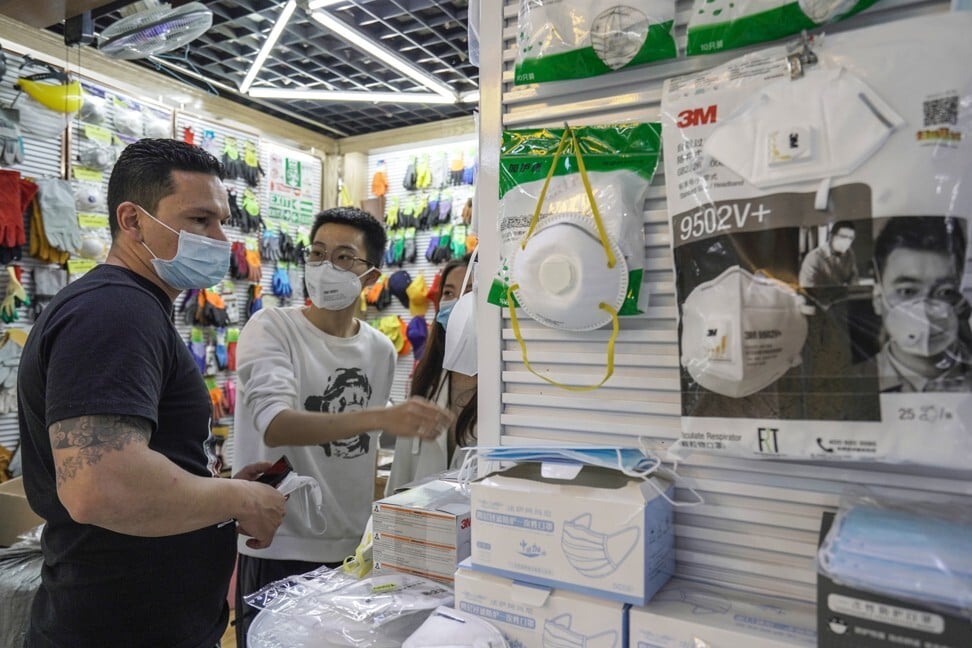
A foreign buyer visits a stall selling face masks. Photo: Ren Wei
“We try to convince ourselves that the deep slump will not last long,” said the owner of Wetell Razor, Tong Ciying, at her empty store. “We cannot let complacency creep in, although the coronavirus has sharply hampered exports of Chinese products.”
Chinese exports plunged by 17.2 per cent in January and February combined compared to the same period a year earlier, according to the General Administration of Customs. The figure was a sharp drop from 7.9 per cent growth in December.
After riding out a supply shock that shut down most of its factories, China is now facing a second wave demand shock, as overseas export orders vanish amid sweeping containment measures to contain the outbreak around the globe.
Nowhere is that clearer to see than in Yiwu. The city of 1.2 million, which lies in the prosperous coastal province of Zhejiang, was catapulted into the international limelight as a showroom for Chinese manufacturing when the country joined the World Trade Organisation in 2001.
Coronavirus: Is the gig economy dead, and should the self-employed worry?
Before the pandemic, thousands of foreign buyers would flock to the mammoth trade market each day to source all manner of products before sending them home.
But the outbreak, which has claimed the lives of more than 113,000 people and infected more than 1.9 million around the world, is proving a major test for the market and the health of the trade dependent city.
Imports and exports via Yiwu last year were valued at 296.7 billion yuan (US$42.2 billion) – nearly double the city’s economic output.
Businesses, however, are facing a very different picture in 2020. Most traders at the market say they have lost at least half their business amid the pandemic, which was first detected in the central Chinese city of Wuhan last year.
Just take a look at the situation in Yiwu and you will understand the extent of the virus’ effect on China’s trade with foreign countries – Tianqing
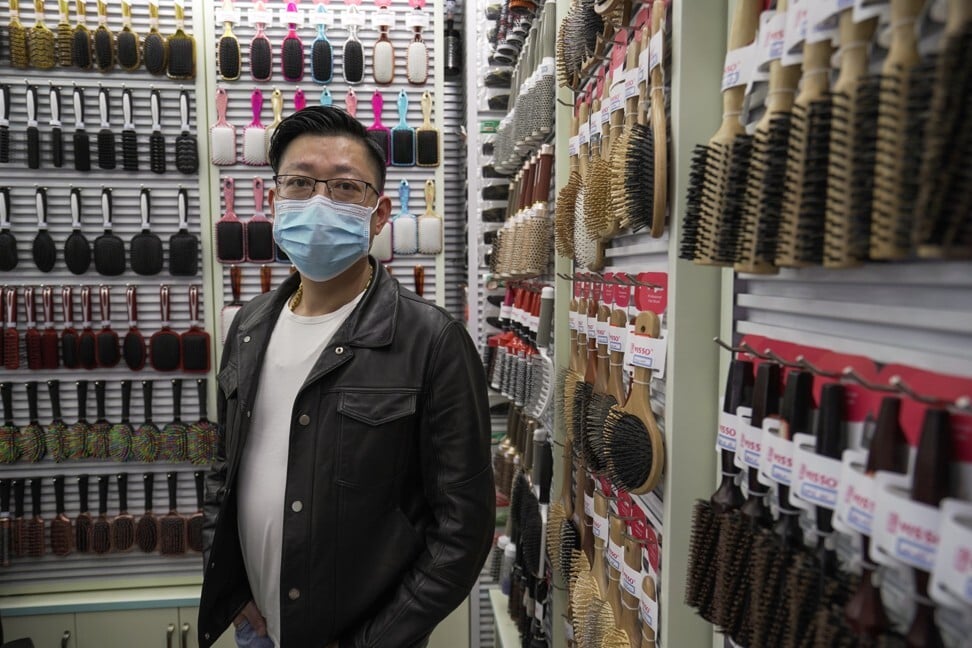
“Yiwu is the barometer for China’s exports,” said Jiang Tianqing, the owner of Beauty Shine Industry, a manufacturer of hair brushes. “Just take a look at the situation in Yiwu and you will understand the extent of the virus’ effect on China’s trade with foreign countries.”
Jiang said his business was only just hanging on thanks to a handful of loyal customers placing orders via WeChat.
“I assume it will be a drawn-out battle against the coronavirus,” he said. “We are aware of the fact that developed economies like the US and Europe have been severely affected.”
The Yiwu market reopened on February 18 after a one-month long hiatus following the Lunar New Year holiday and the government’s order to halt commercial activities to contain the spread of the outbreak.
Jiang Tianqing, owner of hair brush company Beauty Shine Industry. Photo: Ren Wei
But facing the threat of a spike in imported cases, Beijing banned foreigners from entering the country in late March – shutting out potential overseas buyers.
Despite the lack of business, local authorities have urged stall owners to keep their spaces open to display Yiwu’s pro-business attitude, owners said.
“For those bosses who just set up their shops here, it would be a do-or-die moment now since their revenue over the next few months will probably be zero,” said Tong. “I am lucky that my old customers are still making orders for my razors.”
The impact of the coronavirus is just the latest challenge for local merchants, who normally pay 200,000 yuan (US$28,000) per year for a 10-square-metre (108 square feet) stall at the market.
Traders were hard hit by the trade war between China and the United States when the Trump administration imposed a 25 per cent tariff on US$200 billion of Chinese imports last year.
At the time, some Chinese companies agreed to slash their prices to help American buyers digest the additional costs.
“But it is different this time,” said Jiang. “Pricing does not matter. Both buyers and sellers are eager to seal deals, but we are not able to overcome the barriers [to demand caused by the virus].”
Ma Jun, a manager with a LED light bulb trading company, said the only export destination for her company’s products was war-torn Yemen because it was the only country with ports still open.
It is a public health crisis that ravages not just our businesses, but the whole world economy – Dong Xin
Dong Xin, an entrepreneur selling stationery products, said he could not ship the few orders he had because “ocean carriers have stopped operations”.
“It is a public health crisis that ravages not just our businesses, but the whole world economy,” he said. “The only thing can do is to pray for an early end to the pandemic.”
Most wholesale traders in the Yiwu market run manufacturing businesses based outside the city, so a sharp fall in sales has a ripple effect on their factories, potentially resulting in massive job cuts.
Workers pack containers at Yiwu Port, an inland port home to dozens of warehouses. Photo: Ren Wei
At Yiwu Port, an inland logistics hub full of warehouses where goods from the factories are unpacked and repacked for shipping abroad, container truck drivers joke about their job prospects.
“We used to commute between Shaoxing and here five times a week, and now it is down to twice a week,” said a driver surnamed Wang, describing the trip from his home to the shipping port, just over 100km away.
“At the end of the day, we may not be infected with the coronavirus, but our jobs will still be part of the cost of the fight against it.”
Wuhan, where the first cases of the novel coronavirus were detected, is ending a 76-day lockdown
A day before the lockdown was fully lifted, Tencent announces a slew of initiatives focused on helping to revive the digital industry in the city
Passengers leaving Wuhan city are pictured at the Hankou Railway Station in Wuhan city, central China’s Hubei province, on Wednesday morning, April 08, 2020. Photo: SCMP/Simon Song
A day before China lifted a months-long lockdown of Wuhan city, the initial epicentre of the coronavirus pandemic, Chinese internet giant Tencent Holdings pledged to invest in digital government, online education and artificial intelligence (AI) in the city, among other fields.
“During the epidemic, Tencent has been supporting Hubei and Wuhan’s fight against the virus through funds and technology,” the company best known for its gaming business said in a statement posted on Tuesday on WeChat. “In the future, we will also fully support Wuhan’s post-pandemic reconstruction and continue to support the development of Wuhan’s digital industry.”
China’s major tech companies have played a big role in the fight against the coronavirus, and are now playing their part in the economic recovery of Wuhan and other areas that have suffered under extended travel restrictions and business closures.
and Pinduoduo each announced their own initiatives to help revive sales of farm goods from Hubei as the province emerges from its months-long lockdown.
Popular mobile payments app Alipay also created a dedicated section for Wuhan merchants to allow users to buy from merchants in the city, and offered loans to small local merchants in need of financial support, according to an Alipay statement. Alipay is operated by Ant Financial, an affiliate of Alibaba, which owns the South China Morning Post.
How tech has helped China in its public health battle with coronavirus
23 Mar 2020
Wuhan, an industrial powerhouse for the steel, semiconductors and automotive sectors, is emerging from an unprecedented lockdown which began on January 23 and prevented people from moving in and out of the city.
Since restrictions began easing gradually in late March, business activity has shown signs of recovery: Tencent’s mobile payment platform WeChat Pay recorded a 162 per cent increase in offline transactions in a 10-day period from March 25, compared to the same period the previous month, according to a separate statement by Tencent on Wednesday.
Searches for “work resumption certificates” – which businesses need to submit to local authorities to prove their staff can safely restart work – also increased 320 per cent on Baidu, China’s biggest search engine, in the past month, Baidu said in a report on Wednesday.
Tencent declined to provide specific details regarding the size of its latest investment in Wuhan or a timeline for its implementation, but said in the statement that it will involve closer cooperation with city authorities in the areas of digital government, education, smart mobility, AI and cybersecurity to help the city with its digital industries.
Among these initiatives, it will push ahead with a plan to build a headquarters focusing on digital industries in Wuhan, specifically digitalisation for the government and smart city initiatives.
It will also establish a base in Wuhan for its online education initiatives, set up an AI lab and cybersecurity academy and build a school focusing on smart mobility in collaboration with Chinese carmaker Dongfeng Motor Corporation, the company said in the statement.
Buying and paying for meals and supplies online was already second nature for many Chinese before the Covid-19 lockdown
The supply and delivery networks that were already in place were able to work with the authorities in cities like Wuhan
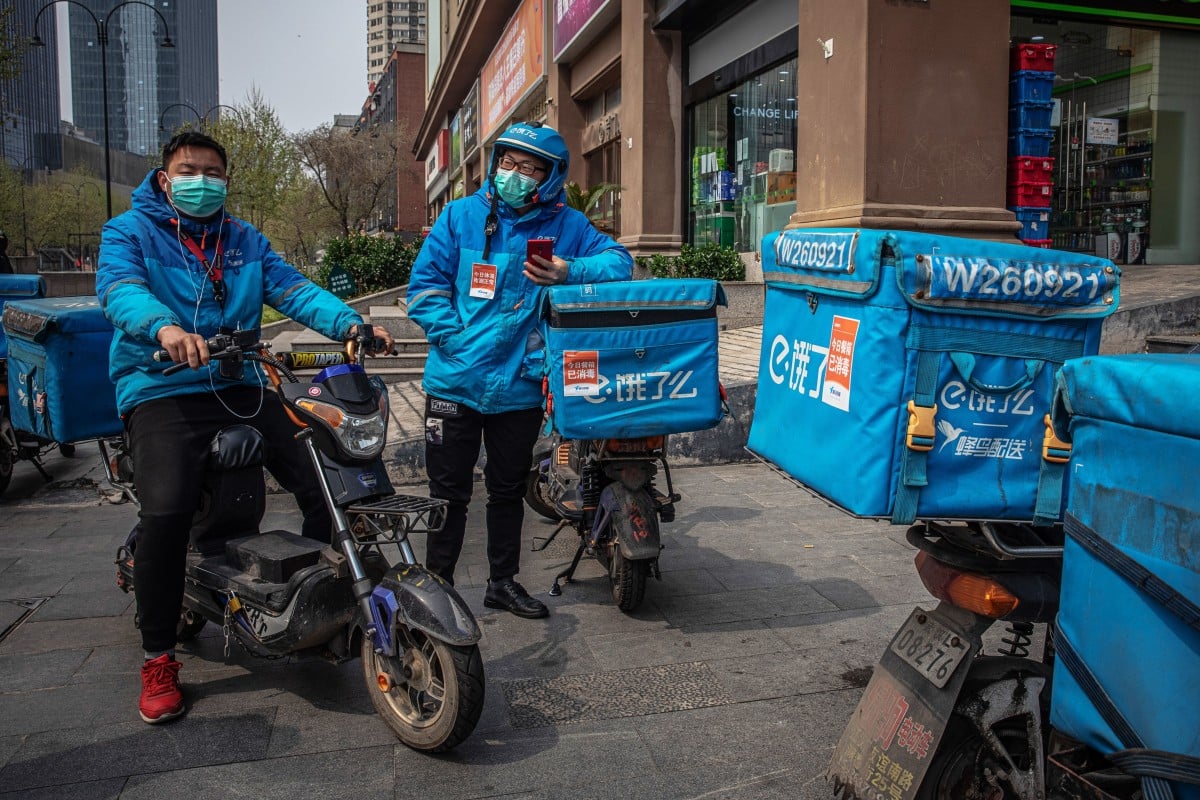
China’s established home delivery system played an important role in getting food and other necessities to residents during the Wuhan lockdown. Photo: EPA-EFE
When Liu Yilin, a retired middle schoolteacher in Wuhan, first heard rumours of a
and shoppers flooded to the markets and malls to snap up supplies.
But as time went on and with residents banned from leaving their homes, he became increasingly concerned about getting hold of fresh supplies of vegetables, fruit and meat until the nation’s vast network of delivery drivers came to the rescue.
“It was such a relief that several necessity purchasing groups organised by community workers and volunteers suddenly emerged on WeChat [a leading social media app] days after the lockdown,” Liu said. “China’s powerful home delivery service makes life much easier at a time of crisis.”
Hu Xingdou, a Beijing-based independent political economist said: “Home delivery played a very important role amid the coronavirus outbreak. To some extent, it prevented people from starving especially in cases when local governments took extreme measures to isolate people.”
According to Liu, people in Wuhan during the lockdown had to stay within their residential communities, with community workers guarding the exits.
Human contact was limited to the internet. Residents placed orders online with farmers, small merchants or supermarkets to buy daily necessities, and community workers helped distribute the goods from deliverymen.
Every morning, Liu passed a piece of paper with his name, phone number and order number to a community worker who would collect the items from a courier at the gate of the residential area.
Thanks to a high population density in urban areas, affluent labour force and people’s openness to digital life, China has built a well-developed home delivery network.
Extensive funding from technology companies has been invested in hardware infrastructure, software to improve logistics and big data and cloud computing to help predict consumers’ behaviour.
Mark Greeven, professor of innovation and strategy at IMD Business School in Lausanne, Switzerland, said: “Whether it is delivery of products, air parcels or fresh food or even medicine or materials for medical use, China has a very well developed system. Much better developed than I think almost any other places in the world.
“Well before the crisis, China had started to embrace digital technology in daily life whether it is in consumption, business, government and smart cities and use of third party payments. All of these things have been in place for a long time and the crisis tested its agility and capability to deal with peak demand.”
China’s e-commerce giants help revive sales of farm goods from Hubei
3 Apr 2020
According to e-commerce giant JD.com, demands for e-commerce and delivery services spiked during the outbreak of Covid-19, the illness caused by the new coronavirus.
It sold around 220 million items between January 20 and February 28, mainly grains and dairy products with the value of beef orders trebling and chicken deliveries quadrupling compared with a year ago.
Tang Yishen, head of JD Fresh, its fresh foods subsidiary, said: “The surge of online demand for fresh merchandise shows the pandemic helped e-commerce providers further penetrate into the life of customers. It also helped upstream farm producers to know and trust us.”
Meituan Dianping, a leading e-commerce platform, said its grocery retail service Meituan Instashopping reported a 400 per cent growth in sales from a year ago in February from local supermarkets.
The most popular items ordered between January 26 and February 8 were face masks, disinfectant, tangerines, packed fresh-cut fruits and potatoes.
The food delivery service Ele.me said that, between January 21 and February 8, deliveries of frozen food surged more than 600 per cent year on year, followed by a nearly 500 per cent growth in delivery of pet-care products. Fresh food deliveries rose by 181 per cent while drink and snack deliveries climbed by 101 per cent and 82 per cent, respectively. Ele.me is owned by Alibaba, the parent company of the South China Morning Post.
Chinese hotpot restaurant chain adapts as coronavirus fears push communal meals off the menu
E-commerce providers used the opportunity to show goodwill and improve their relationship with customers and partners, analysts say.
Sofya Bakhta, marketing strategy analyst at the Shanghai-based Daxue Consulting, said the food delivery sector had made significant headway in reducing physical contact during the outbreak.
Delivery staff left orders in front of buildings, in lifts or temporary shelters as instructed by the clients as most properties no longer allowed them inside.
Some companies also adopted more hi-tech strategies.
In Beijing, Meituan used self-driving vehicles to deliver meals to contactless pickup stations. It also offered cardboard boxes to be used as shields aimed at preventing the spread of droplets among its clients while they ate in their workplaces. In Shanghai, Ele.me employed delivery drones to serve people under quarantine in the most affected regions.
Some companies even “shared” employees to meet the growing labour demand in the food delivery industry that could not be satisfied with their ordinary workforce, Bakhta said.
More employees from restaurants, general retail and other service businesses were “loaned” to food delivery companies, which faced manpower shortages during the outbreak, according to Sandy Shen, senior research director at global consultancy Gartner.
“These arrangements not only ensured the continuity of the delivery service but also helped businesses to retain employees during the shutdown,” she said.
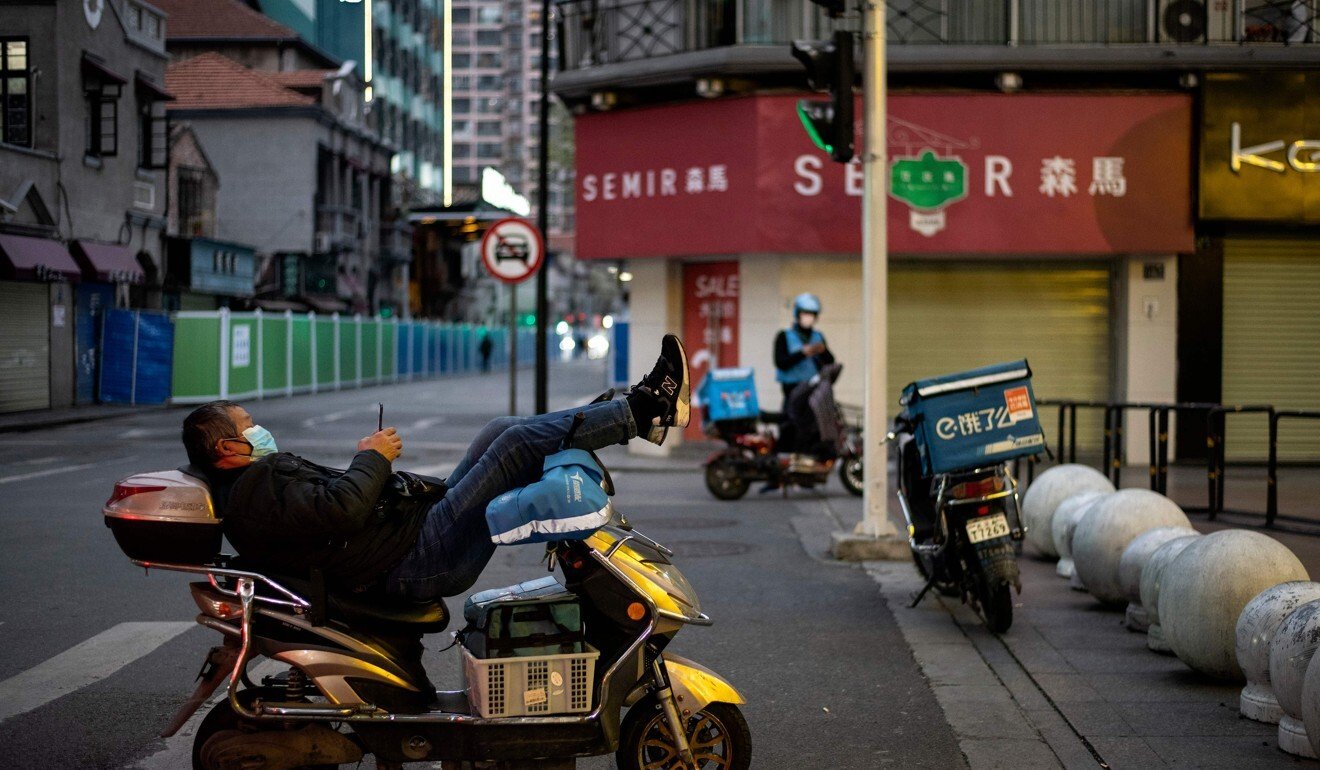
A delivery man takes a break between orders in Wuhan, central China, during the lockdown. Photo: AFP
Mo Xinsheng became one such “on-loan” worker after customers stopped coming to the Beijing restaurant where he worked as a kitchen assistant.
“I wanted to earn some money and meanwhile help people who are trapped at home,” said Mo, who was hired as a delivery man.
But before he could start work he had to go through lengthy health checks before he was allowed into residential compounds.
He also had to work long hours battling the wind and cold of a Beijing winter and carrying heavy loads.
“I work about 10 hours every day just to earn several thousand yuan [several hundred US dollars] a month,” he said.
“Sometimes I almost couldn’t breathe while my hands were fully loaded with packages of rice, oil and other things.
“But I know I’m doing an important job, especially at a time of crisis,” Mo said, “It was not until then that I realised people have become so reliant on the home delivery system.”
Woman uses remote control car to buy steamed buns amid coronavirus outbreak in China
The delivery system has been improved by an effective combination of private sector innovation and public sector coordination, said Li Chen, assistant professor at the Centre for China Studies at Chinese University of Hong Kong.
“[In China,] government units and the Communist Party grass roots organisations have maintained fairly strong mobilisation capabilities to cope with emergencies, which has worked well in the crisis,” he said.
However, Liu, the Wuhan resident, said prices had gone up and vegetables were three times more expensive than they had been over Lunar New Year in 2019.
“There were few varieties that we could choose from, apart from potatoes, cabbage and carrots,” he said.
“But I’m not complaining. It’s good we can still get fresh vegetables at a difficult time. Isn’t it? After all, we are just ordinary people,” he said.
People enjoy sunset on a plank road at the East Lake in Wuhan, capital of central China’s Hubei Province, March 18, 2020. (Xinhua/Shen Bohan)
Arduous efforts have been made since Wuhan was locked down and the efforts have paid off, with the outbreak of the COVID-19 gradually brought under control in this once hardest-hit Chinese city. With sacrifices and persistence, a bright dawn is finally around the corner.
WUHAN, March 24 (Xinhua) — Xia Yongli starts a workday at dawn by having his temperature taken, disinfecting his bus and going through safety checks before hitting the road at 7:00 a.m. sharp.
Over the past eight weeks, the bus driver in the central Chinese city of Wuhan had not driven his familiar route, which is 14 km long and usually takes 40 minutes. Instead, he has been shuttling medics and delivering supplies to shops and supermarkets.
The city, with a population of over 10 million, pressed a “pause” button on Jan. 23 to contain the spread of the rampaging coronavirus behind the COVID-19 epidemic, with all public transport and outbound channels shut down and all residents staying indoors.
The streets of Wuhan are no longer bustling. Shopping blocks, pedestrian streets and other popular places where local people would stroll around are largely left to still figure sculptures.
Arduous efforts have been made since Wuhan was locked down and the efforts have paid off, with the outbreak of the COVID-19 gradually brought under control. Once hardest-hit, Wuhan only had one newly confirmed COVID-19 case reported for six consecutive days between March 18 and 23.
Wuhan had reported a total of 50,006 confirmed cases by March 23, and 43,214 patients had been cured and discharged from hospitals.
With sacrifices and persistence, a bright dawn is finally around the corner. People will be allowed to leave the city and the province from April 8, local authorities said Tuesday.
A staff member conducts disinfection at a subway station in Wuhan, central China’s Hubei Province, March 23, 2020. (Xinhua/Shen Bohan)
To reduce the risk of imported cases, all personnel coming to Wuhan from overseas have to be brought under closed-loop management, with timely quarantine and epidemiological surveys conducted, said Ying Yong, secretary of Hubei Provincial Committee of the Communist Party of China.
“Wuhan had pressed the pause button and is currently in urgent need of restoring its urban functions with safe and ordered operations,” Ying said.
More than 110 bus routes citywide have conducted no-load test runs. Disinfection has been carried out at local metro and railway stations. Checkpoints for epidemic control, 27 on cross-river bridges and nearly 80 others in main urban areas, have been removed.
Infrared thermometers have been installed at subway entrances, with posters of QR codes for real-name registration inside the stations and carriages.
Staff members conduct disinfection on a subway train in Wuhan, central China’s Hubei Province, March 23, 2020. (Xinhua/Xiao Yijiu)
“The traffic on the road is coming back,” said Hu Lijun, general manager of the Wuhan Zhengyuan Gaoli Optical Co., Ltd., a photoelectric encoder manufacturer, whose production capacity has been restored by 80 percent.
Traffic flow at highway exits is also increasing by about 10 percent per day due to a growing number of people returned as Wuhan speeds up resumption of work and production.
There were health staff, community workers and police in each lane at toll-gate checkpoints, scanning health codes and taking body temperatures of the returning workers, disinfecting their vehicles and making registrations.
“Drivers had to queue up at the highway exits in the past to spend five minutes filling a registration form,” said Dong Hongxiang, a police officer, noting that registration time has been cut short now by using PDA scanners.
On March 21, a special train arrived in Wuhan with 1,013 passengers on board, all of whom were employees of Dongfeng Honda, a local joint venture. They were picked up at the train station and sent directly to the factory or their residences.
Workers are busy on the production lines at the workshop of Dongfeng Passenger Vehicle Company in Wuhan, central China’s Hubei Province, March 24, 2020. (Xinhua/Xiao Yijiu)
Wuhan-based enterprises that are important to the national and global industry chains and those closely related to people’s livelihood are allowed to continue operation or resume work, said Cao Guangjing, deputy governor of Hubei.
Hubei serves as one of China’s major auto producers and phosphate fertilizers. Cao said that relevant companies play significant role in the production chains. Their resumption of operation counts.
Preferential measures have been taken to support restart of engine in the city. The State Grid Wuhan electric power company has rolled out new policies to cut or exempt electricity bills for local enterprises, an estimated reduction of 389 million yuan (about 55 million U.S. dollars) by the end of June.
People have also started to venture out, although they cannot go as far or wherever they want.
Wang Tan, a Wuhan resident, stepped out of his home for the first time in two months to get some medicine for his father-in-law at a nearby pharmacy Monday morning.
With a health code on WeChat, Wang said he could visit convenience stores, green groceries and drug stores close to his home and have some free time outdoors inside his residential community, which has been clear of COVID-19 cases for 14 days in a row.
The Guoxinyuan community in Jiang’an District has been epidemic-free for 26 consecutive days. There were kids skipping ropes and the gray-haired doing exercises in open public areas. People observed social distancing while reclaiming a long-lost conversation.
“The public space in our community is quite small, thus no more than 80 people are allowed to have outdoor activities at one time,” said Wei Jilai, who heads the neighborhood committee.
A woman purchases daily necessities at a convenience store in Wuhan, central China’s Hubei Province, March 19, 2020. (Xinhua/Shen Bohan)
As the epidemic recedes, more than 21,000 medical staff from across the country who had fought on the frontline in Wuhan and other places in Hubei are returning home. Before departure, some visited East Lake, one of the well-known tourist attractions in Wuhan, having group photos before cherry trees in blossom to mark the unforgettable days in the city.
Some are leaving, while others stand their ground. Ma Xin, vice president of the Huashan Hospital affiliated to Fudan University in Shanghai, stayed at Wuhan’s Tongji Hospital with his team, treating severe and critically ill patients.
“Most of them have underlying diseases and have to be treated for their complications,” Ma said, stressing that vigilance is still needed at present, especially against imported cases and relapse.
BEIJING (Reuters) – China’s Tencent Holdings Ltd (0700.HK) said on Thursday the coronavirus drove 8 billion visits to its WeChat platform as users flocked to get “health codes” they need to show authorities in order to travel around the country.
Reporting slightly lower than expected fourth quarter profit on Wednesday, the gaming and social media giant said in a statement it did not expect the epidemic to have any significant impact on its financial position to date.
This is markedly different from many companies around the world which have downgraded earnings forecasts due to the virus.
It reported a 21.58 billion yuan (US$3.07 billion) profit for the three months through December. That compared with the 22.85 billion yuan average of 15 analyst estimates compiled by Refinitiv.
Revenue rose 25% to 105.8 billion yuan, versus the 102.9 billion yuan average estimate of 17 analysts. That marked Tencent’s fastest revenue growth since late 2018.
Tencent’s businesses are mainly online-only, positioning it uniquely against other tech giants such as Alibaba Group Holding Ltd (BABA.N) that focus on e-commerce and whose supply chains have been severely disrupted by the outbreak.
“Mobile games are one of the very few entertainment options during the coronavirus outbreak. Comparing the figures in early 2019, downloads of Tencent games increased by 10.4% year over year in this February, and revenue increased by 11.8%,” said analyst Nan Lu at researcher Sensor Tower.
Overall, downloads of all Tencent apps for this February grew 32.3% month-on-month and 42.9% year-on-year, she said.
VIDEO STREAMING
Tencent’s most popular games include Honour of Kings and Peacekeeper Elite. It also operates social media platform WeChat, a video streaming site and a news portal. Its services experienced a surge in traffic as China’s government urged millions of people to stay at home and away from crowded places, analysts said.
Well before the epidemic began in China in late December, prospects were already starting to look up for the company after an especially difficult 2018, when it endured a lengthy freeze in the regulatory approval of new games that wiped billions of dollars off its market value.
A weak point in the January-March quarter, however, will likely be advertising – which made up nearly 20% of revenue in the third quarter – as companies cut back spending amid concerns over the virus’ economic fallout, analysts said.
Shares in Tencent closed 4.5% lower on Wednesday. Tencent’s shares have fallen 11.1% so far this year as the coronavrius roiled global markets, versus a 21% decline in the Hang Seng index .HIS.
Subsidiary Tencent Music Entertainment Group (TME.N) on Tuesday said it would likely see “much softer” first-quarter revenue growth as the outbreak was impacting licensing and advertising revenue.
On the flip side, analyst Kevin Tam at Core Pacific-Yamaichi Securities in Hong Kong wrote in a research note that Tencent could see margin improvement “as a result of stringent control on marketing expenses and higher profitability from video advertising”.
A first batch of 72 bookstores are launching on food delivery platform Meituan “as soon as next week”
Booksellers in China’s capital city have been struggling to stay afloat due to reduced footfall during the epidemic
For illustration: coffee and cake in front of a shelf of books at a bookstore. Photo: SCMP / Dickson Lee
Bookstores in Beijing, struggling to survive amid the coronavirus epidemic, are teaming up with a popular food delivery app to help get books into the hands of readers.
The initiative, co-launched by food delivery company Meituan Dianping and the municipal government of Beijing, will feature a first batch of 72 bookstores.
“Due to the epidemic, 80 per cent of physical bookstores are closed,” the publicity department of the Communist Party of China’s Beijing Municipal Committee told local media. “Although many of them try to launch online programmes to keep customers, it doesn’t make a substantial income for stores … companies want the government to coordinate more resources and platforms to help them.”
The bookstores will not have to pay a fee to join the programme, according to the Beijing publicity department.
Users will be able to purchase books on Meituan “as soon as next week”, the food delivery company said in a statement. “After the launch, we will support bookstores by charging them lower service fees, providing subsidies and launching reward plans to help them get on board quickly,” the company added.
China’s smartphone brands adapt to life under coronavirus restrictions
17 Feb 2020
Bookstores in China’s capital city have been hit hard by the coronavirus outbreak. About 60 per cent of 248 stores in Beijing said they expected their revenues to drop more than 50 per cent year-on-year, while only 48 per cent said their cash flows were sufficient to support operations for another one to three months, according to a report by the Beijing Institute of Culture Innovation and Communication.
With fewer customers patronising physical stores and pressure from rent and employee salaries, more bookstores are looking toward online channels to increase sales. Among those interviewed by the Beijing Institute of Culture Innovation and Communication, 21.8 per cent said they were now selling books only via online channels, 48 per cent had tried advertising on social media platforms like WeChat and Weibo, while 16.9 per cent are promoting books on video-sharing platforms like Douyin and Kuaishou.
An interior view of a bookstore, Bookworm, at Sanlitun, Beijing. File photo: SCMP
Last week, Beijing-based bookstore chain OWSpace, which has 15 year history selling books and drinks, posted an appeal on its WeChat account for loyal customers to pay a 50 yuan to 8,000 yuan membership fee to help with its cash flow.
Among their four physical stores in China, only one in Beijing remains open and traffic is a tenth of what it was before the outbreak, it said.
“The store can only sell 15 books a day on average, and more than half are bought by our own staff. We expect our revenue in February to drop 80 per cent compared to other years,” OWSpace said in the post.
Wu Yanping, the general manager of OWSpace’s offline stores, said one of the chain’s stores in Beijing is joining Meituan’s book delivery platform. The store remains physically closed because it is located in an office park that prohibits anyone who travelled out of Beijing from entering before they complete the mandatory 14-day quarantine period.
“Our Dongfeng store is closed for now but even if it opens later, it will not have much traffic [because of the travel restrictions]. So we hope to sell books along with our coffee and drinks on the delivery platform even with the store closed,” Wu said.
Beijing has initiated a range of measures to help keep bookstores afloat, including subsidising their rent, rewarding stores that stay open during the epidemic and encouraging bookstores to expand their sales channels online.
Wu said that since OWSpace posted its appeal letter, it managed to reopen another store in Hangzhou, in the eastern province of Zhejiang, and traffic to both stores has been “gradually recovering to just under 50 per cent of a normal day [before the outbreak]”.
OWSpace also conducts live streams on Taobao three times a week to introduce books, encourage viewers to appreciate literature and sell the store’s peripheral products.
“Readers are quite enthusiastic about it. There were almost 10,000 people watching our last live stream” Wu said.
Taobao is an e-commerce platform operated by Alibaba Group Holding, which is the parent company of the Post.













 CHINDIA ALERT: You'll be living in their world, very soon
China’s Liaoning aircraft carrier returns home from a month of training
China’s first aircraft carrier, the Liaoning, returned to its home port of Qingdao on Thursday after nearly a month of training on the high seas, the People’s Liberation Army said.
According to military analysts, the warship was joined by at least five escort vessels, and the drills showed its crew had not been affected by the coronavirus pandemic and that it remained combat-ready.
The annual cross-region drills included intensive and complicated air and sea operations, the official PLA Daily said in a post on social media on Friday.
“The drills have further improved the real combat training level of the Liaoning carrier strike group, putting its systematic combat capability to the test,” the statement on WeChat said, without giving other details.
Beijing-based naval expert Li Jie said it was important for the carrier to get back to training activities.
“The recent training by the Liaoning carrier strike group is very significant because it’s evidence that none of the 2,000 sailors and commanders on the ship have been hit by Covid-19, and neither have any of the other soldiers and personnel on the other warships and support units,” Li said.
The coronavirus situation has eased in China, where the first cases were reported late last year, but it continues to spread across the globe and has infected more than 3.2 million people worldwide and killed over 233,000.
Sailors on warships like USS Theodore Roosevelt vulnerable as coronavirus spreads
The virus has also hit crew members on at least 40 US Navy warships, and Li said that left China with the only operational aircraft carrier in the region.
“Since the four American aircraft carriers in the Indo-Pacific region have all been struck by the pandemic, China is the only country that can operate an aircraft carrier in the area,” he said.
Japan’s Ministry of Defence said the Liaoning was escorted by two destroyers, two frigates and a supply ship, and they had passed through the Bashi Channel, a waterway to the south of Taiwan, and headed towards waters east of Taiwan.
As tensions continue to simmer between Taipei and Beijing, the PLA has stepped up activities around the island, which the mainland sees as part of its territory awaiting reunification.
Hong Kong-based military commentator Song Zhongping said the latest naval drills were also aimed at heaping more pressure on Taiwan’s pro-independence forces as well as foreign countries seeking to intervene in cross-strait issues.
Coronavirus: US ‘supports Taiwan joining WHO events’ in ministerial phone call
“Taiwan’s pro-independence forces have become more active and are attempting to take advantage amid the pandemic,” said Song, a military commentator with Phoenix Television.
“The Liaoning would play a major role in the PLA’s plan to unify Taiwan by force, so it’s necessary for the aircraft carrier strike group to get back to operations, step up training and send a warning to Taipei,” he added.
Lu Li-Shih, a former instructor at the naval academy in Taiwan, noted that the PLA Navy had regularly held drills in the waters east of Taiwan in recent years to avoid surveillance by US satellites.
Source: SCMP
Posted in air and sea operations, Aircraft, Aircraft carrier, annual, Beijing, by force, China’s, combat-ready, complicated, coronavirus, Coronavirus pandemic, cross-region drills, destroyers, escort vessels, Friday, frigates, from, high seas, home port, intensive, Japan’s Ministry of Defence, Liaoning, military commentator, military’s plan, month, naval academy, People’s Liberation Army, pla navy, pro-independence forces, Qingdao, returns home, sailing through, sailors, scramble, self-ruled island, social media, strait, strike group, supply ship, Surveillance, Taipei, Taiwan, Taiwan Strait, Taiwan’s, Taiwan’s defence ministry, to unify, training, Uncategorized, US Navy, US satellites, USS Theodore Roosevelt, vulnerable, warship, warships, WeChat, western Pacific, WHO | Leave a Comment »