Chindia Alert: You’ll be Living in their World Very Soon
aims to alert you to the threats and opportunities that China and India present. China and India require serious attention; case of ‘hidden dragon and crouching tiger’.
Without this attention, governments, businesses and, indeed, individuals may find themselves at a great disadvantage sooner rather than later.
The POSTs (front webpages) are mainly 'cuttings' from reliable sources, updated continuously.
The PAGEs (see Tabs, above) attempt to make the information more meaningful by putting some structure to the information we have researched and assembled since 2006.
Image copyright GETTY IMAGESImage caption Within a week of reopening, India has seen a sharp spike in cases
India is roaring – rather than inching – back to life amid a record spike in Covid-19 infections. The BBC’s Aparna Alluri finds out why.
On Saturday, India’s government announced plans to end a national lockdown that began on 25 March.
This was expected – the roads, and even the skies, have been busy for the last 10 days since restrictions started to ease for the first time in two months. Many businesses and workplaces are already open, construction has re-started, markets are crowded and parks are filling up. Soon, hotels, restaurants, malls, places of worship, schools and colleges will also reopen.
But the pandemic continues to rage. When India went into lockdown, it had reported 519 confirmed cases and 10 deaths. Now, its case tally has crossed 173,000, with 4,971 deaths. It added nearly 8,000 new cases on Saturday alone – the latest in a slew of record single-day spikes.
Image copyright GETTY IMAGESImage caption Fast food chains like McDonald’s have begun reopening outlets in parts of India.
So, why the rush to reopen?
The lockdown is simply unaffordable
“It’s certainly time to lift the lockdown,” says Gautam Menon, a professor and researcher on models of infectious diseases.
“Beyond a point, it’s hard to sustain a lockdown that has gone on for so long – economically, socially and psychologically.”
From day one, India’s lockdown came at a huge cost, especially since so many of its people live on a daily wage or close to it. It put food supply chains at risk, cost millions their livelihood, and throttled every kind of business – from car manufacturers to high-end fashion to the corner shop selling tobacco. As the economy sputtered and unemployment rose, India’s growth forecast tumbled to a 30-year-low.
Raghuram Rajan, an economist and former central bank governor, said at the end of April that the country needed to open up quickly, and any further lockdowns would be “devastating”.
The opinion is shared by global consultant Mckinsey, whose report from earlier this month said India’s economy must be “managed alongside persistent infection risks”.
Image copyright GETTY IMAGESImage caption As restrictions ease, Indians are slowly getting used to the new normal
“The original purpose of the lockdowns was to delay the spike so we can put health services and systems in place, so we are able handle the spike [when it comes],” says Dr N Devadasan, a public health expert. “That objective, to a large extent, has been met.”
In the last two months, India has turned stadia, schools and even train coaches into quarantine centres, added and expanded Covid-19 wards in hospitals, and ramped up testing as well as production of protective gear. While grave challenges remain and shortages persist, the consensus seems to be that the government has bought as much time as possible.
“We have used the lockdown period to prepare ourselves… Now is the time to revive the economy,” Delhi Chief Minister Arvind Kejriwal said last week.
The silver lining
For weeks, India’s relatively low Covid-19 numbers baffled experts everywhere. Despite the dense population, disease burden and underfunded public hospitals, there was no deluge of infections or fatalities. Low testing rates explain the former, but not the latter.
In fact, India made global headlines not for its caseload but for its botched handling of the lockdown – millions of informal workers, largely migrants, were left jobless overnight. Scared and unsure, many tried to return home, often desperate enough to walk, cycle or hitchhike across hundreds of kilometres.
Perhaps the choice – between a virus that didn’t appear to be wreaking havoc yet, and a lockdown that certainly was – seemed obvious to the government.
But that is changing quickly as cases shoot up. “I suspect we will keep finding more and more cases, but they will mostly be asymptomatic or will have mild symptoms,” Dr Devadasan says.
The hope – which is also encouraging the government to reopen – is that most of India’s undetected infections are not severe enough to require hospitalisation. And so far, except in Mumbai city, there has been no dearth of hospital beds.
The government, for instance, has been touting India’s mortality rate as a silver lining – at nearly 3%, it’s among the lowest in the world.
But some are unconvinced by that. Dr Jacob John, a prominent virologist, says India has never had, and still doesn’t have, a robust system for recording deaths – in his view, the government is certainly missing Covid-19 deaths because they have no way of knowing of every fatality.
Image copyright GETTY IMAGESImage caption Indians are venturing out again but it’s unclear how many of them are asymptomatic.
And, he says, “what we must aim for is flattening the mortality curve, not necessarily the epidemic curve”.
Dr John, like several other experts, also predicts a peak in July or August, and believes the country is reopening so quickly because the “government realised the futility of such leaky lockdowns”.
A shift in strategy
So is the government gearing up for another lockdown when the peak comes?
While Dr Menon believes the lockdown was well-timed, he says it was too focused on cases coming from abroad.
“There was a hope that by controlling that, we could prevent epidemic spread, but how effective was our screening [at airports]?”
Now, he adds, is the time for “localised lockdowns”.
Media caption Coronavirus: Death and despair for migrants on Indian roads
The federal government has left it to states to decide where, how and to what extent to lift the lockdown as the virus’ progression varies wildly across India.
Maharashtra alone accounts for more than a third of India’s active cases. Add Tamil Nadu, Gujarat and Delhi, and that makes up 67% of the national total.
But other states – such as Bihar – are already seeing a sharp uptick as migrant workers return home.
“Initially, most of your cases were in the cities,” Dr Devadasan says. “But we kept the migrant workers in cities and didn’t allow them to go home. Now, we are sending them back. We have facilitated transporting the virus from urban areas to rural areas.”
While the government has said how many infections have been avoided – up to 300,000 – and lives saved – up to 71,000 – by the lockdown, there is no indication of what lies ahead.
There is only advice: The day the government began to ease restrictions, Mr Kejriwal tweeted, urging people to “follow discipline and control the coronavirus disease” as it was their “responsibility”.
Image copyright GETTY IMAGESImage caption Social distancing will prove to be India’s biggest post-lockdown challenge
Because the alternative – of curfews and constant policing – is unsustainable.
“My worry is more the circumstances of people – it’s not as though they have an option to practise social distancing,” Dr Menon says.
And they don’t – not in joint family homes or one-room hovels packed together in slums, not in crowded markets or busy streets where jostling is second nature, or in temples, mosques, weddings or religious processions where more is always merrier.
The overwhelming message is that the virus is here to stay, and we have to learn to live with it – and the only way to do that, it appears, is to let people live with it.
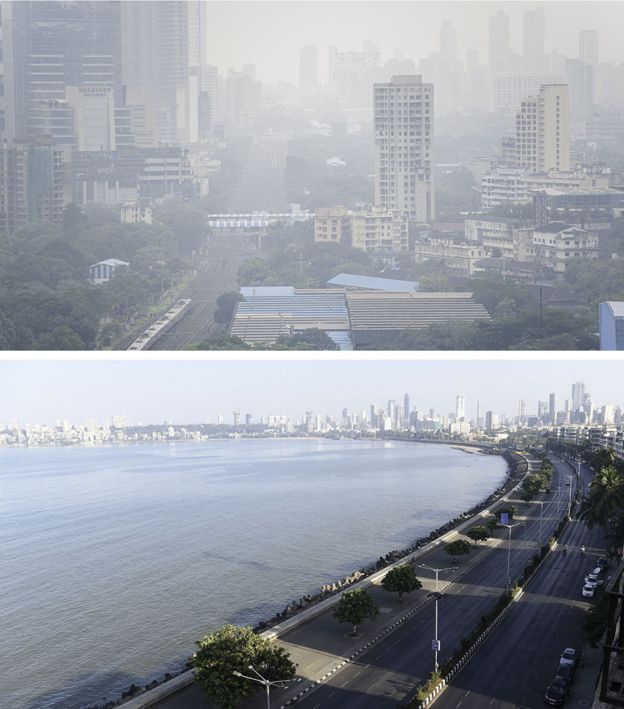
Image copyright GETTY IMAGESImage caption Delhi’sair quality has improved remarkably during the shutdown
When India shut down last month and suspended all transport to contain the spread of coronavirus, the skies over its polluted cities quickly turned an azure blue, and the air, unusually fresh.
As air pollution plummeted to levels unseen in living memory, people shared pictures of spotless skies and even Himalayan peaks from cities where the view had been obscured by fog for decades.
On one social messaging group, a resident of the capital, Delhi, which regularly records some of the foulest air in the world, celebrated the city’s “alpine weather“. Politician and author Shashi Tharoor wrote that the “blissful sight of blue skies and the joy of breathing clean air provides just the contrast to illustrate what we are doing to ourselves the rest of the time”.
Media caption India coronavirus lockdown cleans up Ganges river
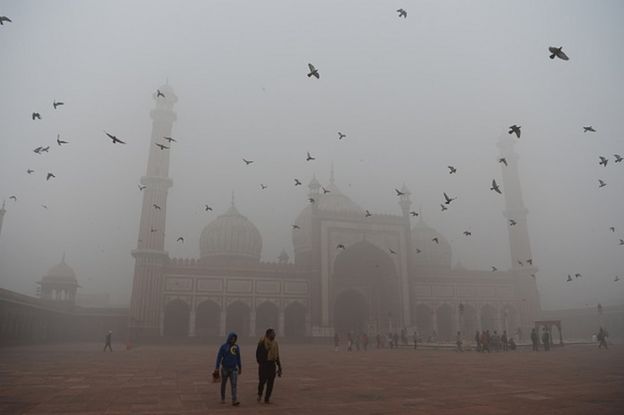
Less than six months ago, Delhi was gasping for breath. Authorities said air quality had reached “unbearable levels”. Schools were shut, flights were diverted, and people were asked to wear masks, avoid polluted areas and keep doors and windows closed.
Delhi and 13 other Indian cities feature on a list of the world’s 20 most polluted. It is estimated that more than a million Indians die every year because of air pollution-related diseases. Industrial smoke, vehicular emissions, burning of trash and crop residue, and construction and road dust are the major contributors.
As urban Indians gazed at the skies and breathed clean air inside their homes, researchers hunkered down to track data on how the grinding lockdown – now extended to 3 May – was impacting air pollution across the country.
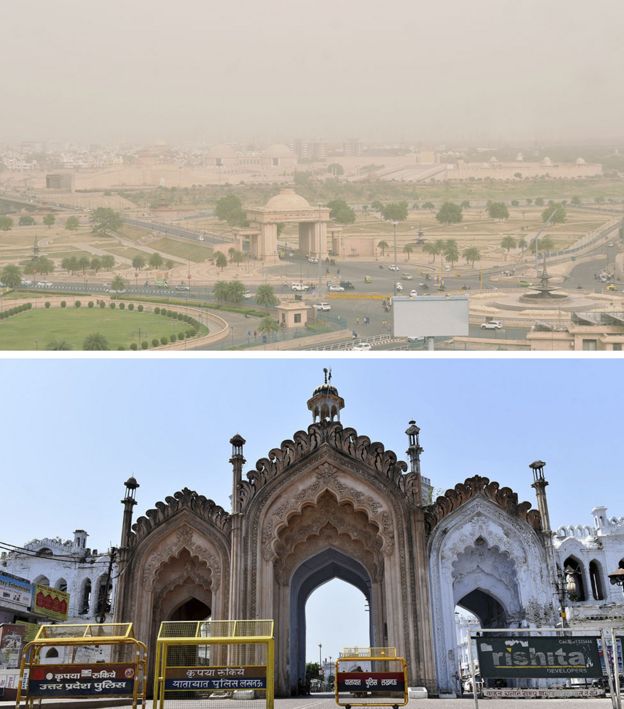
Image copyright GETTY IMAGESImage caption Lucknow is another city on the top 20 world’s most polluted list
“This was an unprecedented opportunity for us to take a close look at how air pollution levels have responded to an extraordinary development,” Sarath Guttikunda, who heads Urban Emissions, an independent research group that provides air quality forecasts, told me.
Dr Guttikunda and his team of researchers looked at the data spewed out by the 100-odd air quality monitoring stations all over India. They decided to concentrate on the capital Delhi and its suburbs – a massive sprawl called the National Capital region, where more than 20 million people live. Last winter, air pollution here had reached more than 20 times the World Health Organization’s safe limit.
Image copyright HINDUSTAN TIMESImage caption The financial capital Mumbai also seems very different
The deadliest particle in Delhi’s foul air is the tiny but deadly PM 2.5, which increases the likelihood of respiratory and cardiovascular diseases. They primarily come from combustion – fires, automobiles and power plants.
Urban Emissions found the levels of PM 2.5 in Delhi during the lockdown plummeted to 20 micrograms per cubic metre with a 20-day average of 35.
To put this into context, between 2017 and 2019, the monthly average of PM 2.5 in the capital was up to four times higher. (The national standard is set at 40, and the WHO has an annual average guideline of just 10 micrograms per cubic metre.)
“If 35 is the average lowest available PM2.5 with limited local emissions, it means that at least 70% of the pollution is locally generated,” Mr Guttikunda told me.
Media caption India coronavirus lockdown cleans up Ganges river
His study also found a marked dip in PM 10, caused mainly by road and construction dust, and nitrogen dioxide, which comes mainly from vehicular emissions, and nearly 90% of vehicles are off the road.
“The current crisis has shown us that clear skies and breathable air can be achieved very fast if concrete action is taken to reduce burning of fossil fuels,” says Sunil Dahiya, of the Centre for Research on Energy and Clean Air, which has also been tracking air pollution levels during the lockdown.
But will this prompt change? After all, urban Indians’ and the media’s panic and outrage during the deadly winter pollution every year soon gets lost in the fog of summer heat and concerns over monsoon rains and droughts.
“We don’t yet have a democratic demand for clean air,” Arunabha Ghosh, Chief Executive Officer of the Council on Energy, Environment and Water, a leading climate think tank, told me. Orders to clean up the air have almost always come from the courts, responding to pleas by NGOs.
Image copyright GETTY IMAGESImage caption Pollution in Delhi peaks during winter
However, Dr Ghosh still hopes that “the experience of blue skies and fresh air could be a trigger to create a democratic demand for clean air in India”.
Crises often trigger life changing reforms. A fatal four-day “pea-souper” that engulfed London in 1952 and killed thousands provoked the passing of the Clean Air Act to reduce the use of smoky fuels.
China tried to clean up its air several times before hosting marquee international events – like the Beijing Olympics in 2008, the World Expo in Shanghai and the Guangzhou Asian Games in 2010 – before sliding back to grey, smoky skies.
But many believe the 2014 Apec meeting in Beijing, when China hosted 21 heads of Asia-Pacific economies, was a turning point. The rare blue skies over Beijing spawned the phrase ‘Apec blue‘. In a rush to clean its air, China introduced a set of far-reaching measures. Over the next four years, this resulted in a 32% drop in average pollution across major Chinese cities.
So could a lockdown to prevent the spread of a pandemic, which has imperilled the health and livelihoods of millions, trigger similar policy changes to clean up India’s air?
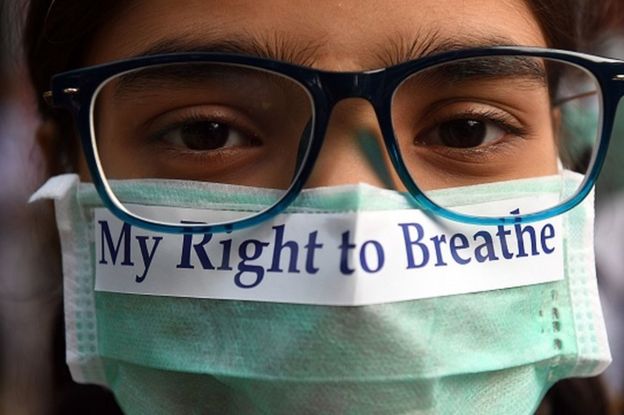
Image copyright GETTY IMAGESImage caption The movement for clean air has been sporadic and mainly pushed by NGOs
Could it move to a shift in reducing traffic on the road by asking people to work from home in shifts now that millions have experienced clean air for the first time in years? (Facing energy shortages after the loss of the Fukushima nuclear power plant, Japan unleashed a Cool Biz campaign to cut down air conditioning in workplaces and reduce carbon emissions by asking office workers to shed their suits.)
Or can India use some of the money from an inevitable stimulus to help kick-start the economy go towards helping green industries? Renewables, experts say, creates more jobs than coal: India has already created nearly 100,000 jobs in solar and wind energy firms.
Can the country use the windfall revenues accruing from the steep decline in oil prices – most of India’s oil is imported – to provide rebates to polluting factories to set up much-needed emission control equipment?
“We have to learn lessons to deploy the economic recovery from the pandemic. We need growth, jobs and sustainable development,” says Dr Ghosh. Cleaning up the air could be the key. For too long, India – and Indians – have ignored their right to breathe easy.
What’s more, if China can reduce air pollution by 32% in four-and-a-half years, why can’t India pledge to reduce pollution by 80% in 80 cities by 2027, which is our 80th anniversary of Independence? asks Dr Ghosh.
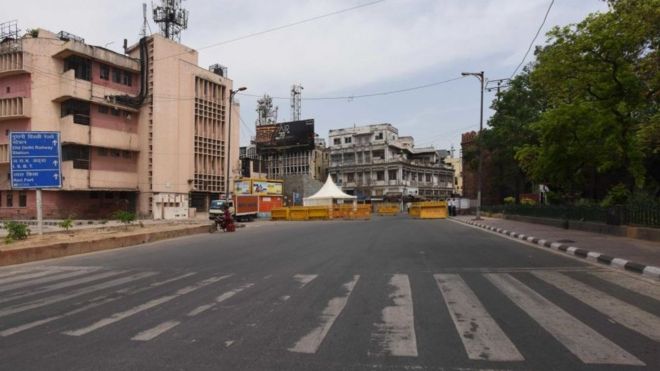
Image copyright GETTY IMAGESImage caption An empty stretch of the road and Delhi Police barricades to screen commuters during lockdown, at Delhi Gate on April 16, 2020 in New Delhi, India.
India has eased some restrictions imposed as part of a nationwide lockdown to curb the spread of the coronavirus.
Most of the new measures are targeted at easing pressure on farming, which employs more than half the nation’s workforce.
Allowing farms to operate again has been seen as essential to avoid food shortages.
But some other measures announced last week, will not be implemented.
This includes the delivery of non-essential items such as mobile phones, computers, and refrigerators by e-commerce firms – the government reversed its decision on that on Sunday.
And none of the restrictions will be lifted in areas that are still considered “hotspots” for the virus – this includes all major Indian cities.
Domestic and international flights and inter-state travel will also remain suspended.
So what restrictions are being eased?
Most of the new measures target agricultural businesses – farming, fisheries and plantations. This will allow crops to be harvested and daily-wagers and others working in these sectors to continue earning.
To restore the supply chain in these industries, cargo trucks will also be allowed to operate across state borders to transport produce from villages to the cities.
Essential public works programmes – such as building roads and water lines in rural areas – will also reopen, but under strict instructions to follow social distancing norms. These are a huge source of employment for hundreds of thousands of daily-wage earners, and farmers looking to supplement their income.
Banks, ATMs, hospitals, clinics, pharmacies and government offices will remain open. And the self-employed – such as plumbers, electricians and carpenters – will also be allowed to work.
Some public and even private workplaces have been permitted to open in areas that are not considered hotspots.
But all businesses and services that reopen are expected to follow social distancing norms.
Who decides what to reopen?
State governments will decide where restrictions can be eased. And several state chief ministers, including Delhi’s Arvind Kejriwal, have said that none of the restrictions will be lifted in their regions.
Mr Kejriwal said the situation in the national capital was still serious and the decision would be reviewed after one week.
India’s most populous state, Uttar Pradesh, will also see all restrictions in place, as will the southern states of Andhra Pradesh, Telangana and Karnataka.
The southern state of Kerala, which has been widely acknowledged for its success in dealing with the virus, has announced a significant easing of the lockdown in areas that it has demarcated as “green” zones.
This includes allowing private vehicular movement and dine-in services at restaurants, with social distancing norms in place. However, it’s implementing what is known as an “odd-even” scheme – private cars with even and odd number plates will be allowed only on alternate days, to limit the number of people on the road.
The US saw 1,169 deaths in 24 hours and its infections are 20 per cent of the global total
China to hold day of mourning for victims; Singapore announces fifth death and school closures; Boris Johnson says he’s still ill; Angela Merkel ends quarantine
A group of nurses gather in the Bronx, New York, for a strike about the lack of personal protective equipment, on April 2, 2020. Photo: EPA-EFE
The number of confirmed coronavirus cases around the world soared past one million on Thursday and deaths topped 50,000 as Europe reeled from the pandemic and the
reported the highest daily death toll so far of any country.
Despite more than half the planet imposing some form of lockdown, the virus claimed thousands more lives, with the US, Spain and Britain seeing the highest number of daily fatalities yet.
Covid-19 is currently spreading the most rapidly in the US, where there have been 243,453 infections and 5,926 deaths, according to a tally by Johns Hopkins University.
The US saw 1,169 deaths in 24 hours, the highest one-day toll recorded in any country since the global pandemic began. The grim record was previously held by Italy, where 969 people died on March 27.
Here are other developments:
Singapore shuts schools, workplaces in ‘circuit-breaking’ move
Singapore’s coronavirus case number hits 1,000 after city state reports biggest single-day spike
Singapore Prime Minister Lee Hsien Loong on Friday afternoon announced most workplaces would be shut from April 7, and schools would be closed from April 8, in its
The city state has 1,114 infections and five people have died. More than 200 have recovered.
Essential services such as food establishments, markets and supermarkets, clinics, hospitals, utilities, transport and banking services will remain open.
Coronavirus: what’s behind Singapore’s U-turn on wearing masks?
4 Apr 2020
Lee on Friday said instead of tightening measures incrementally over the next few weeks, Singapore should “make a decisive move now, to pre-empt escalating infections”.
“Looking at the trend, I am worried that unless we take further steps, things will gradually get worse, or another big cluster may push things over the edge,” Lee said, describing the new measures as a “circuit breaker”.
Medical experts say the stringent measures require the cooperation of citizens to stay at home, given that local infection clusters have ballooned from six at the end of February to more than 20 currently.
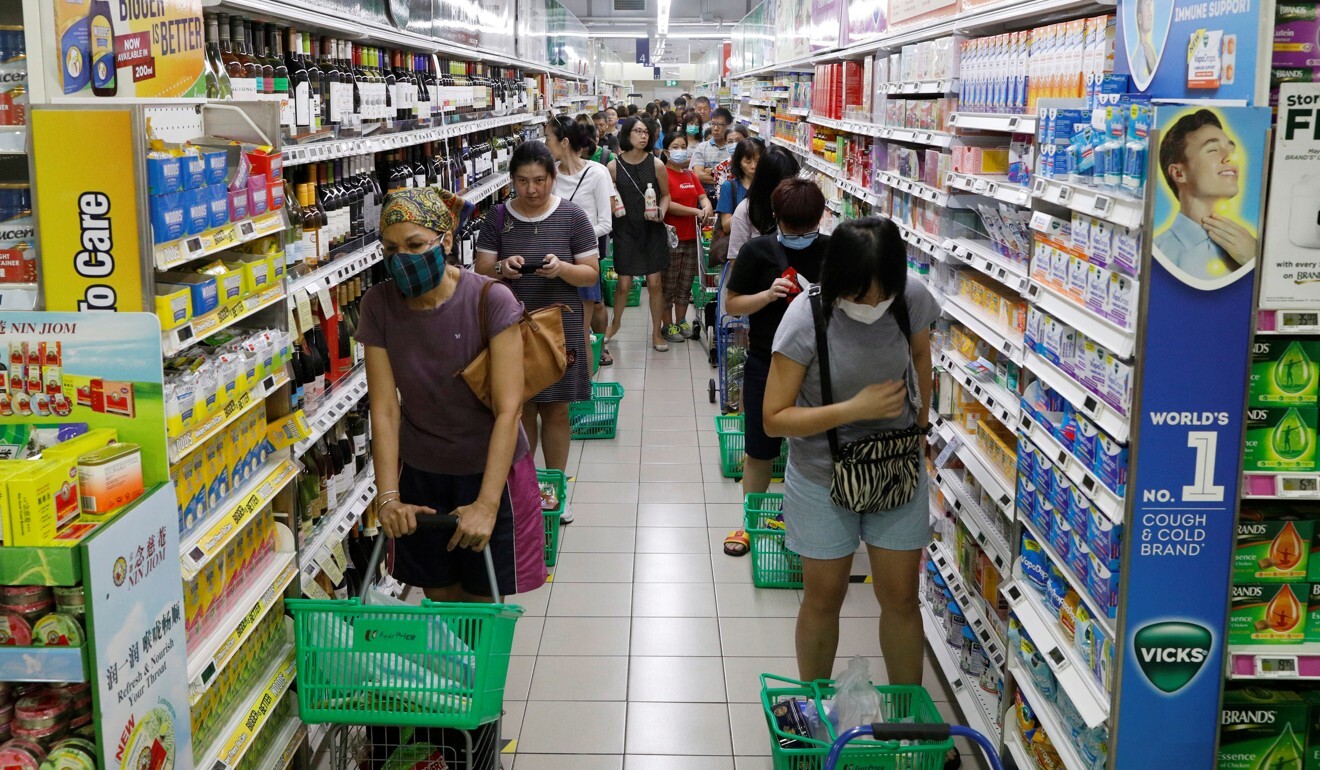
People stand behind markers as they practice physical distancing while queuing up to buy food at a Singapore supermarket on April 3, 2020. Photo: Reuters
The Lion City has launched a website to help individuals with symptoms that might be related to Covid-19 decide whether they should see a doctor or not.
On the Covid-19 Symptom Checker website, individuals will be prompted to answer a short list of questions including their age, if they have any chronic diseases, if they have travelled outside Singapore in the past 14 days, or have been in touch with a suspected or confirmed Covid-19 case.
They will also be asked to choose which symptoms they are experiencing from a predetermined list including symptoms such as cough, difficulty breathing and the loss of taste/smell. The site will then recommend what the person should do next. This includes whether they should see a doctor or continue to monitor their symptoms.
China to hold day of mourning for Covid-19 victims
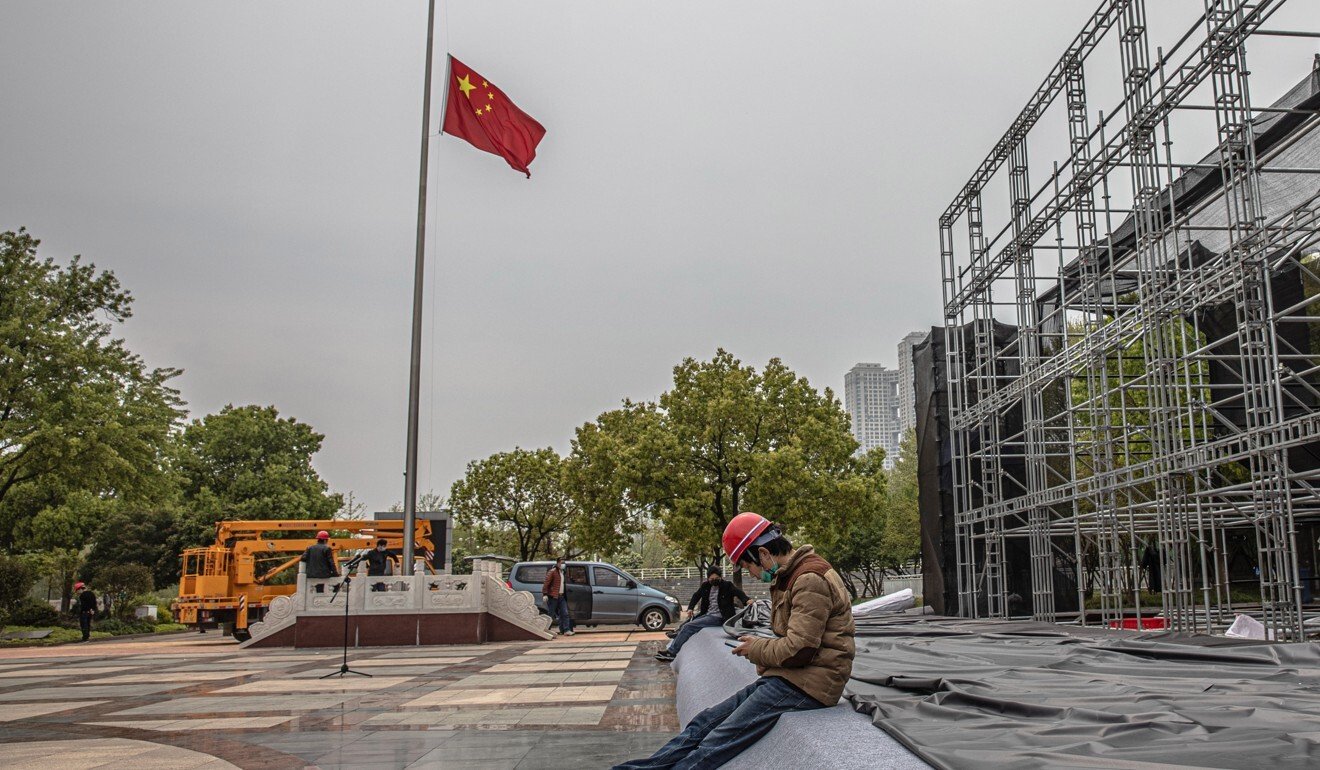
At 10am on April 4, 2020, the public will be asked to observe three minutes of silence. Photo: EPA-EFE
Flags will be flown at half-mast across the country and at embassies overseas, while all public entertainment will be halted for the day, said the State Council, China’s cabinet, on Friday.
At 10am, the public will be asked to observe three minutes of silence, during which sirens will blast out across the country and the owners of cars and boats should sound their vehicles’ horns, the council said.
Saturday also coincides with Ching Ming, or the Tomb-sweeping Festival, when Chinese traditionally gather to remember their ancestors.
China to stage day of mourning for the thousands lost to Covid-19
4 Apr 2020
Mainland China on Friday reported 31 new confirmed coronavirus cases, including two locally transmitted infections, the country’s National Health Commission said.
It also reported four new deaths as of Thursday, all in Wuhan, the city where the outbreak began, the commission said in a statement. The total number of infections now stands at 81,620 and 3,322 deaths have been reported from mainland China to date.
The commission said 60 new asymptomatic coronavirus patients were also reported on Thursday.
UK’s Boris Johnson still ill with virus fever
Boris Johnson #StayHomeSaveLives
✔@BorisJohnson
Another quick update from me on our campaign against #coronavirus.
You are saving lives by staying at home, so I urge you to stick with it this weekend, even if we do have some fine weather.#StayHomeSaveLives
British Prime Minister Boris Johnson remains in isolation with a high temperature, more than a week after testing positive for coronavirus.
Johnson made the announcement in a video posted on Twitter on Friday, saying that even after seven days, “alas I still have one of the symptoms, a minor symptom: I still have a temperature”.
“In accordance with government advice I must continue my self-isolation,” he said.
As virus rages, British love for NHS could make or break Boris Johnson
3 Apr 2020
With coronavirus deaths still rising, the PM is anxious to drum home his message that Britons must obey government orders to stay in their homes as much as possible.
On March 23 he ordered a national lockdown, with the closure of schools, stores, restaurants and leisure facilities. Under emergency laws, police have the power to fine individuals who flout the rules and break up gatherings of more than two people in public.
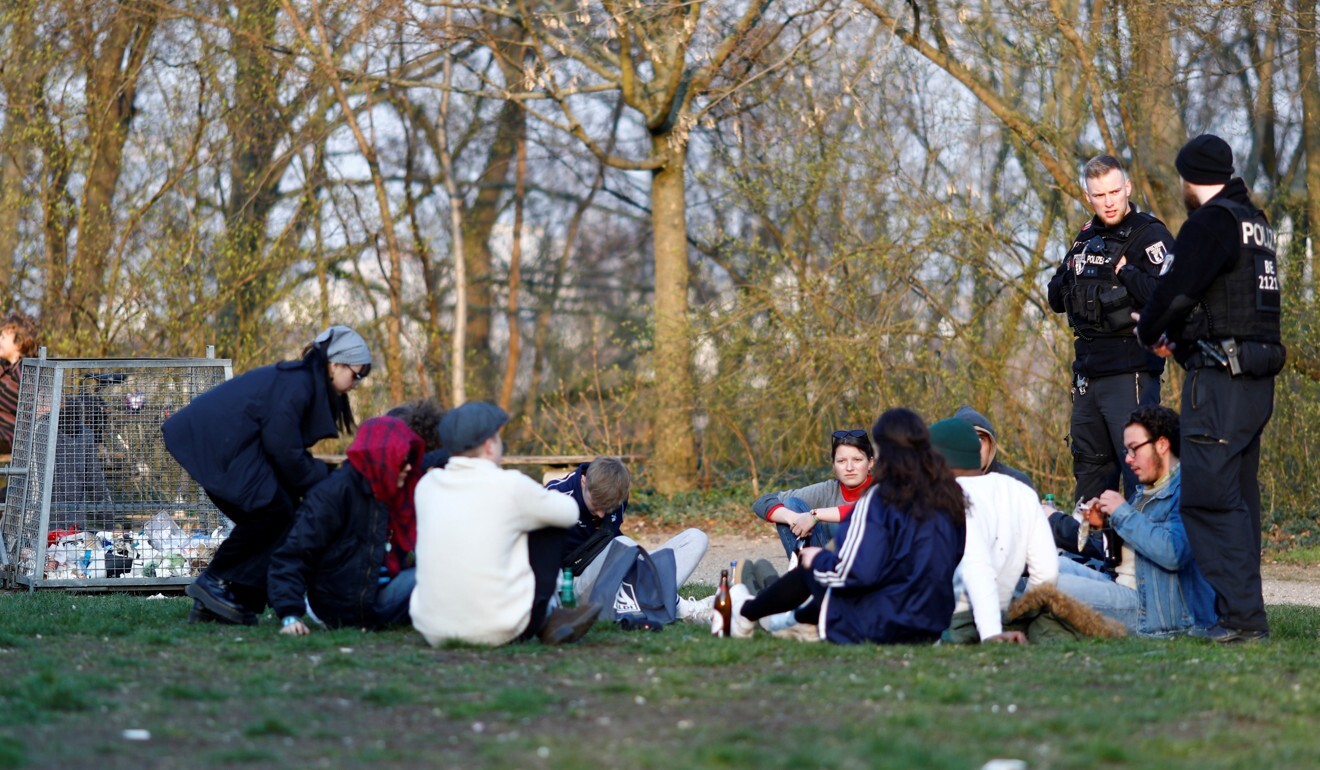
Germany to crack down on people flouting physical distancing rules
Police officers ask people to disperse as they gather at a park in Berlin, Germany, on March 28, 2020. Photo: Reuters
People in Germany risk being fined up to €500 (US$540) for standing too close to each other from Friday, as officials crack down on people flouting rules brought in to control the coronavirus outbreak.
Chancellor Angela Merkel’s government has ordered people not leave their homes unless they have an exceptional reason such as grocery shopping, exercise or medical appointments.
Gatherings of more than two people are banned and a distance of at least 1.5 metres must be kept from others at all times.
Local governments have the power to set fines for transgressors, with city officials in Berlin saying their fines would be as high as 500 euros. Similar announcements have come from across Germany’s 16 states.
Bow ties to face masks: German firms shift gears in virus crisis
2 Apr 2020
According to figures by the Robert Koch Institute (RKI) on Friday, Germany has recorded more than 79,000 cases of the novel coronavirus, and 1,017 deaths, although RKI president Lothar Wieler warned on Friday that the actual number of casualties could be much higher.
“We won’t manage to test every single person … I assume we will have more deaths than are officially recorded,” he said.
Wieler said the mortality rate would “continue to rise” in Germany. German minister’s suicide linked to coronavirus crisis
30 Mar 2020
Meanwhile, Merkel on Friday left her Berlin home for the first time in almost two weeks, after she was forced into quarantine following contact with an infected doctor.
Merkel was tested several times, with all tests coming back negative.
The 65-year-old leader has returned to her office, where she will continue to observe social distancing rules and lead the country via video and audio conferencing, her spokesman said.
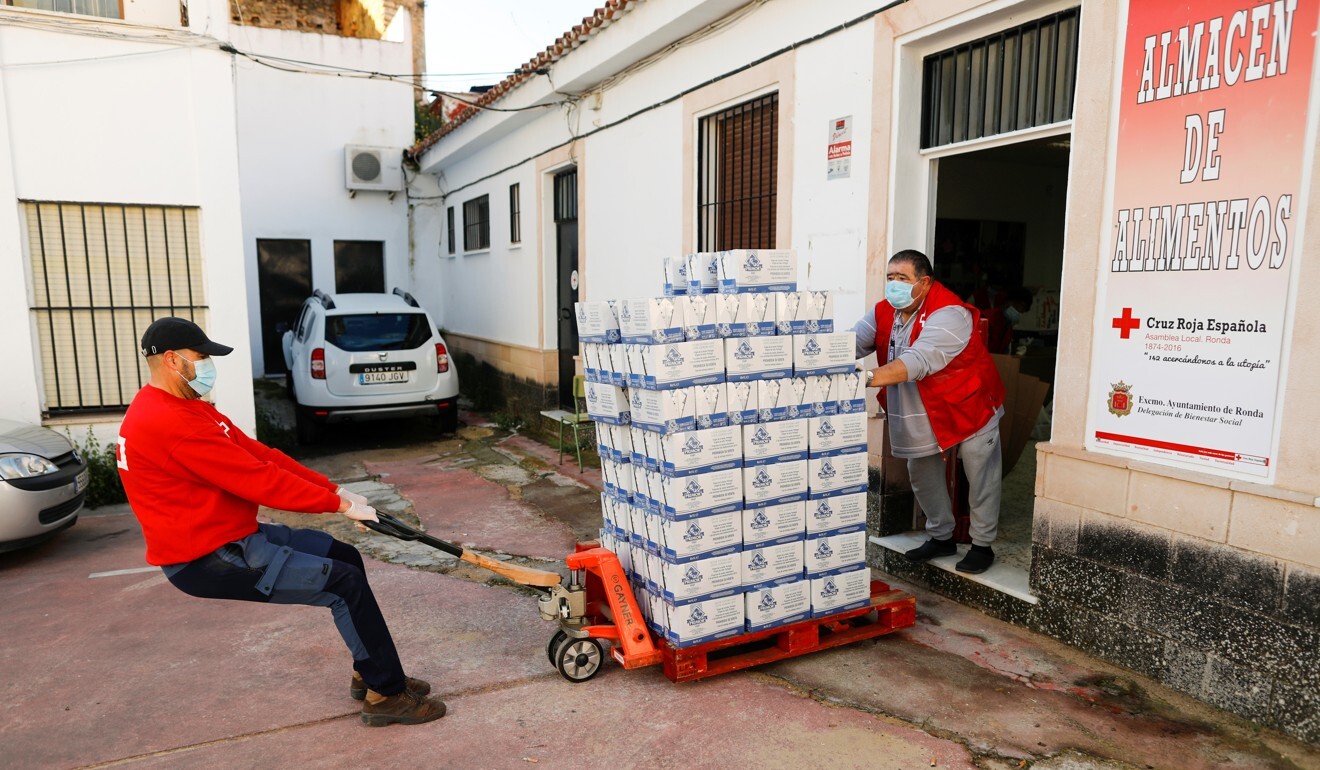
Spain records over 900 virus deaths
Members of the Red Cross prepare food for families in need at a food bank in Ronda, Spain, on April 3, 2020. Photo: Reuters
on Friday recorded over 900 new coronavirus deaths over the past day, bringing the number of casualties to 10,935, in the first decline in new Covid-19 deaths in four days.
The country has the world’s second-highest death toll after Italy, but health ministry figures confirm a consistent downward trend in the rate of new cases and fatalities.
The 932 deaths on Friday was a smaller gain than Thursday’s 950, according to Health Ministry data. The number of confirmed cases also increased by less than the previous day, with 7,472 new infections taking the total to 117,710.
Why Europe’s hospitals – among world’s best – are struggling with virus
1 Apr 2020
Prime Minister Pedro Sanchez’s government has been struggling to bring the virus under control. Hospitals are overwhelmed, nursing homes have been especially hard hit in a nation with one of the world’s oldest populations, and the army has been mobilised.
Sanchez may extend the current four-week lockdown for another two weeks beyond April 11, Spanish media reported on Friday. The stay-at-home order limits people’s movement to shopping for food and essentials, while some workers are also allowed to circulate.
Passengers disembark from virus-hit cruise ship in Florida
The Zaandam cruise ship docked in Florida on Friday. Photo: TNS via ZUMA Wire/dpa
Passengers from an ill-fated cruise were carefully freed from their cabins and allowed to disembark on Friday, following the removal of 14 critically-ill people who were wheeled off to Florida hospitals bracing for an onslaught of coronavirus patients.
The exodus from the Zaandam and its sister ship the Rotterdam, both operated by Holland America Line, was expected to continue throughout the day.
Floridians were getting off first, followed by other passengers. Buses were taking people healthy enough to travel directly to the airport, where they will board chartered flights home without going through the terminal.
Coronavirus nightmare for passengers stuck on MS Zaandam ‘death ship’
30 Mar 2020
“This is a humanitarian situation, and the County Commission’s top priority is protecting our 1.9 million residents while providing a contained disembarkation option for people on board who need to get safely home,” Broward County Mayor Dale Holness said in a statement late on Thursday.
Four people have died on the Zaandam, for reasons not yet disclosed. All told, 107 passengers and 143 crew reported flu-like symptoms during the voyage, but many have since recovered.
It was unclear when the bodies of four passengers who died on the Zaandam would be removed from the ship, which set sail on March 7, the day before the US State Department warned people against cruising during the pandemic.
South Korea’s infections top 10,000
South Korean hospital’s ‘phone booth’ coronavirus tests
on Friday said the number of confirmed coronavirus cases in the country has surpassed 10,000, with 174 deaths linked to Covid-19, the disease caused by the new virus.
The Health and Welfare Ministry reported 86 new coronavirus infections over 24 hours to the end of Thursday, taking the total to 10,062 cases. It also logged five more deaths.
The numbers confirmed an encouraging stabilisation of numbers, which have hovered around the 100 mark for the past three weeks, a clear downward trend which began in March after numbers peaked at the end of February with over 900 cases recorded in a day.
South Korea’s virus response is the opposite of China’s – and it works
15 Mar 2020
For a fourth straight day, more new cases were recorded from Seoul and the surrounding Gyeonggi province, than in what has so far been the outbreak epicentre in the country – North Gyeongsang province and city of Daegu – with the capital area registering 34 new cases, and the latter recording 23.
Imported cases in patients recently returned from abroad also continued to increase, with 22 new infections bringing the total to 264.
Japan to give US$2,800 payouts to households
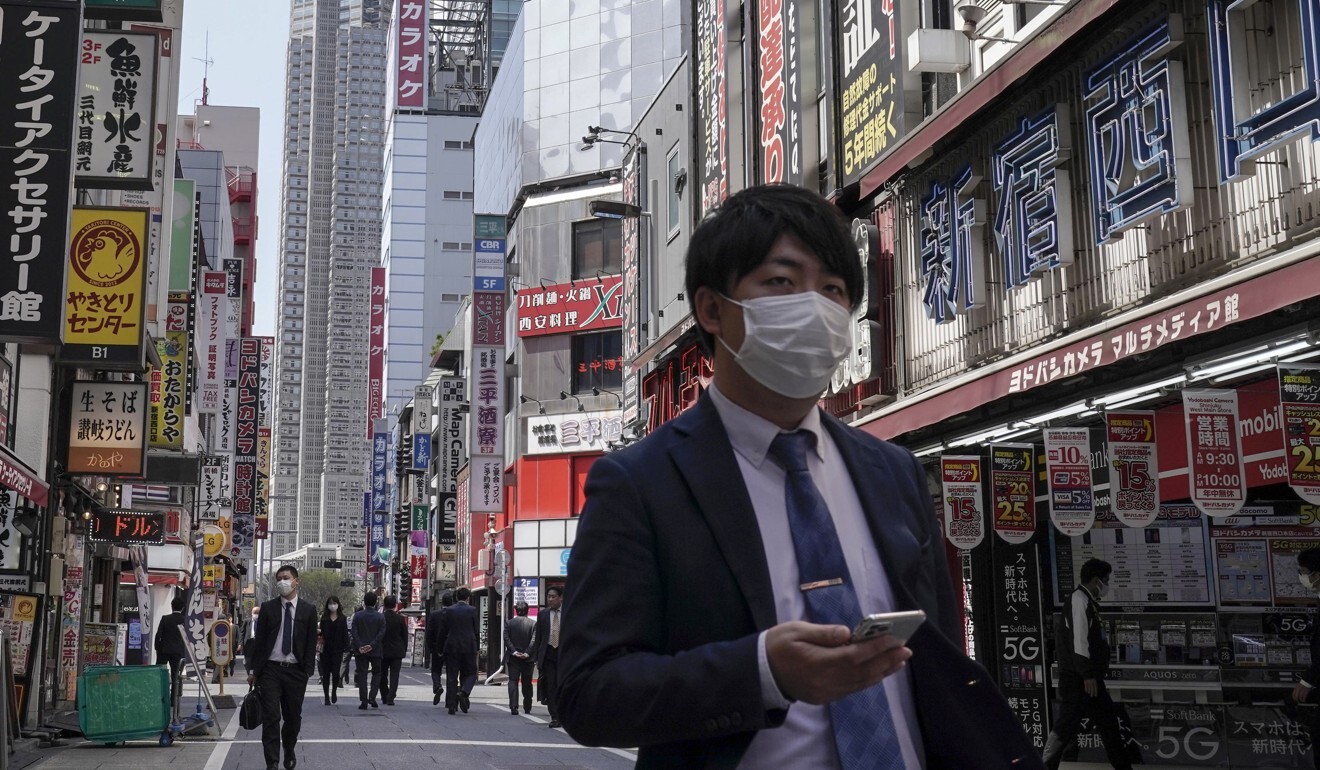
A man seen in a protective mask at Shinjuku in Tokyo, Japan, on April 2, 2020. Photo: EPA-EFE
Japanese ruling party executive Fumio Kishida said on Friday he has agreed with Prime Minister Shinzo Abe to offer 300,000 yen (US$2,800) in cash payments per household that suffers a certain degree of income declines from the coronavirus pandemic.
About 10 million of Japan’s 58 million households are expected to be eligible for the cash programme, a key pillar of an emergency economic package that the government plans to compile possibly on Tuesday.
The relief measure will be funded by a supplementary budget for this fiscal year that the government wants to pass in parliament before Japan’s Golden Week holiday starts in early May.
Coronavirus: Tokyo’s nightlife districts linked to rise in cases
2 Apr 2020
The government will not set a household income limit for the cash handout, which will be tax free, officials said.
“If we set an income limit, we would have to check individual incomes, which would take a lot of time,” Yasutoshi Nishimura, minister in charge of economic and fiscal policy, told a press conference. “Instead of that, we’ll come up with an unprecedented way (to judge who should receive cash).”
Nishimura said recipients will be limited to those who are facing livelihood difficulties, and that civil servants, politicians and major corporate executives who have not been significantly affected by the economic impact of the virus outbreak, for example, will be excluded from the scheme.
Japan weighs cost of Tokyo lockdown and Wagyu beef coupons for households
31 Mar 2020
Abe said the government will provide cash “as soon as possible” not only to households but also to small-and mid-sized business operators that have seen their revenues drop.
Abe has said the package to tackle the coronavirus will be larger than the 56.8 trillion yen emergency package compiled in April 2009 following the previous year’s global financial crisis.
Indonesian Muslims banned from travelling home for Eid al-Fitr
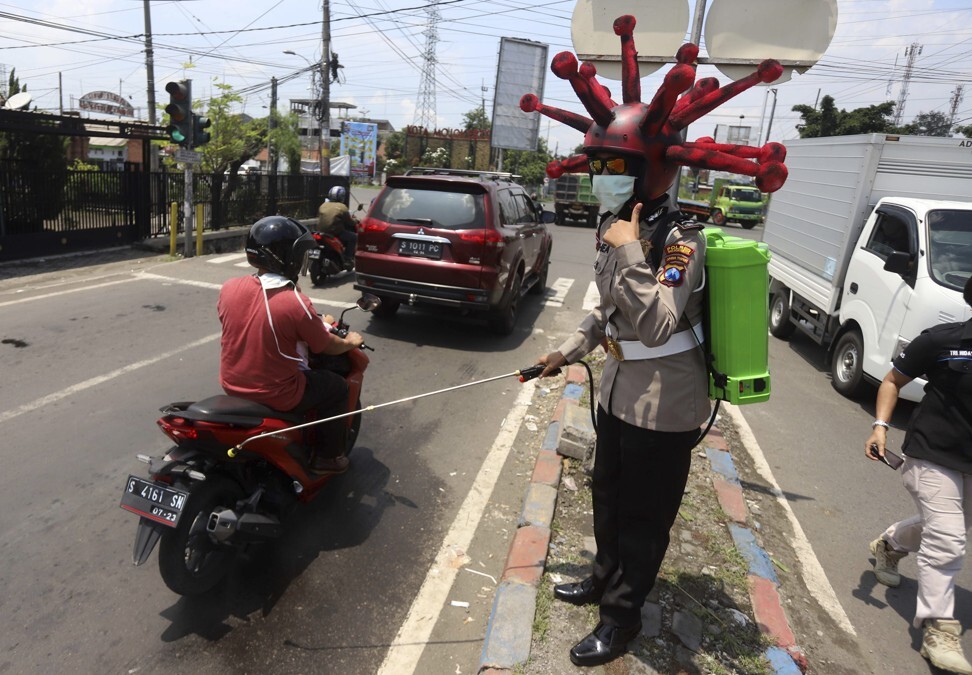
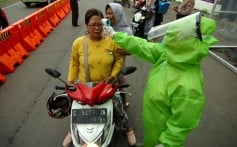
A police officer in a coronavirus helmet sprays disinfectant at a motorcycle in East Java, Indonesia, on April 3, 2020. Photo: AP
Islamic scholars in Indonesia on Friday issued an edict to forbid people from travelling home for Eid al-Fitr, the festival marking the end of the Muslim fasting month of Ramadan, as the country recorded nearly 2,000 infections during the
decided to allow millions of Muslims to travel to celebrate Eid in their hometowns next month, despite fears that they could spread the Covid-19 disease.
“The virus spreads very easily. Doing something like that at a time of a pandemic is haram [forbidden],” the council’s sectary general Anwar Abbas said.
Eid al-Fitr is expected to start on May 23, depending on the sighting of the new moon.
Indonesia frees 18,000 prisoners as virus death toll surges to 170
2 Apr 2020
Indonesia confirmed 196 new infections on Friday, bringing the total number of cases to 1,986.
The death toll rose to 181 after 11 new deaths, making Indonesia the the country with the highest number of fatalities in Asia outside China.
The State Intelligence Agency warned that the outbreak in Indonesia could peak in June with more than 105,000 cases.
Thailand’s night curfew to begin; people banned from making virus pranks
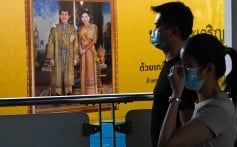
An officer checks the temperature of a passenger in a bus at a health checkpoint in Bangkok, Thailand, on April 3, 2020. Photo: AP
Thailand will on Friday night begin a daily nationwide curfew to try to curb the spread of the coronavirus.
The 10pm-4am curfew, which will run indefinitely, is the latest measure by the government to curb gatherings and have people stay at home as much as possible.
Exceptions include those people transporting medical supplies and health workers travelling to and from work, Prime Minister Prayuth Chan-ocha said.
“We prioritise health over freedom,” Prayuth said. “We might not feel as comfortable as before, but we all need to adapt for survival and have social responsibility, so that we can make it through this crisis.”
In a televised address, Prayuth also asked all Thai citizens abroad to “delay” returning to
until after April 15 in a bid to stop imported cases.
Thai king remains in Germany during pandemic, prompting criticism online
23 Mar 2020
Thais have also been banned from making public gatherings, in an order signed on Friday by defence forces chief General Pornpipat Benyasri.
The order prohibits people from public gatherings, carrying out activities, or gathering for unlawful purposes in a manner that risks spreading the coronavirus.
It also bans any act that aggravates people’s suffering and pranks to spread the virus. Family gatherings at residences and civic activities carried out according to safe social distancing guidelines are allowed.
Violation of the order carries a maximum penalty of two years’ imprisonment and a fine of 40,000 baht (US$1,215).
Pakistan’s mosques remain open amid shutdowns
Coronavirus: In Pakistan food aid is distributed to the poor in Karachi
Mosques in Pakistan were allowed to remain open on Friday, when adherents gather for weekly prayers, even as much of the country had shut down.
Pakistan, with 2,450 confirmed coronavirus cases and 35 deaths, has been sharply criticised for moving too slowly to curb large gatherings.
Prime Minister Imran Khan was relying on restricting the size of congregations attending mosques and advice to stay at home from religious groups like the country’s Islamic Ideology Council.
Coronavirus: Pakistan quarantines pilgrims returning from Iran
4 Mar 2020
However, some provinces had issued their own lockdown orders to prevent Muslims from gathering for Friday prayers.
In southern Sindh province, a complete lockdown was being enforced from noon until 3pm, the time when the faithful gather for prayers. Anyone found on the streets would be arrested, according to the provincial local government minister in a statement.
In eastern Punjab province, where 60 per cent of Pakistan’s 220 million people live, checkpoints had been set up in major cities stopping people from congregating.
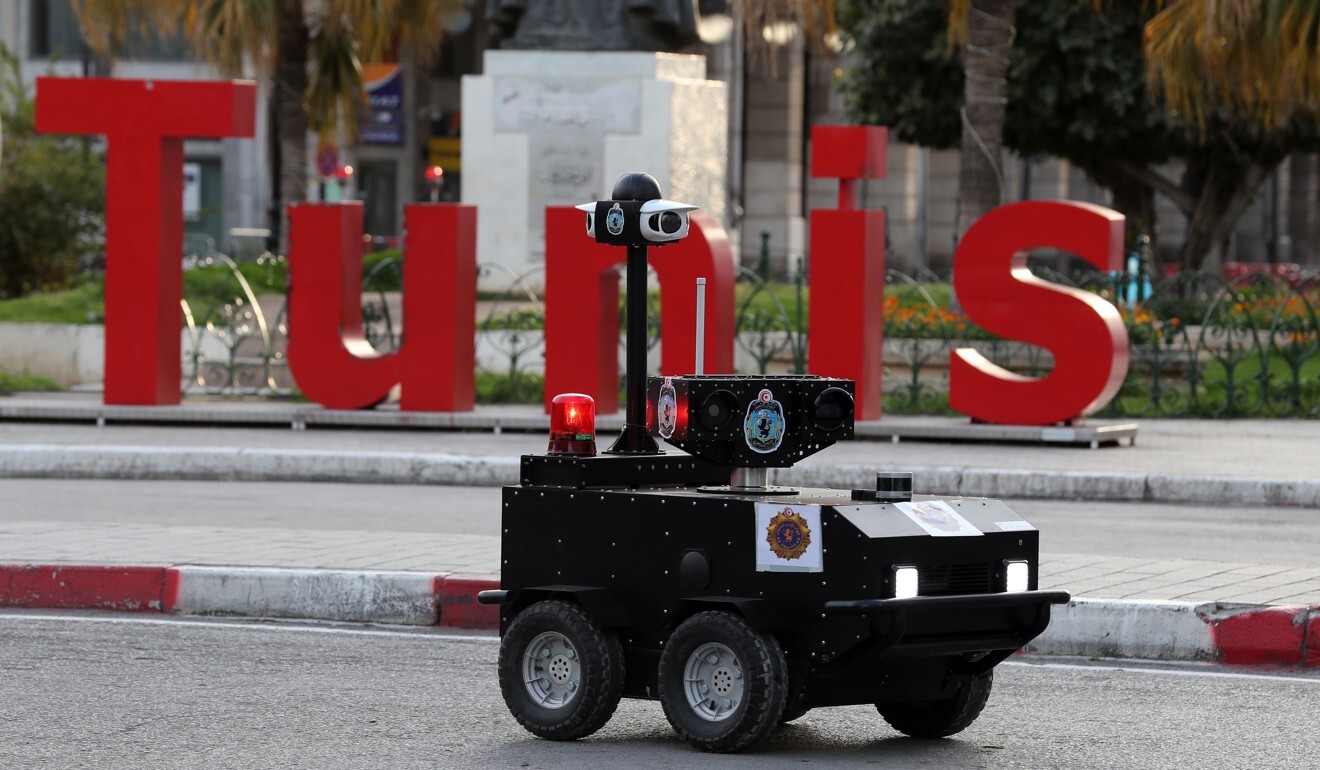
Tunisia ‘robocop’ enforces virus lockdown
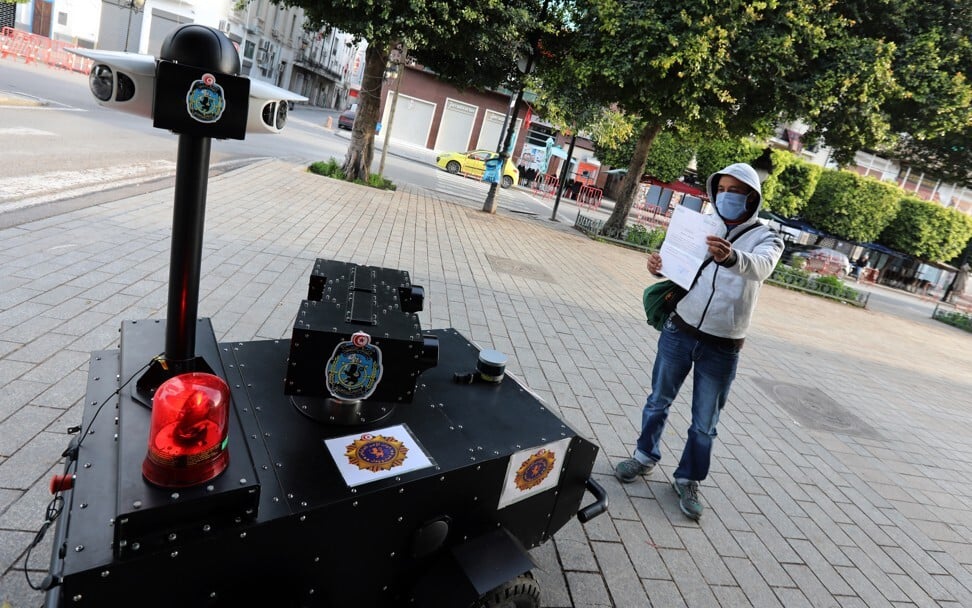
The PGuard robot patrols the streets of Tunis, in Tunisia, on April 1, 2020. Photo: EPA-EFE
Tunisia’s interior ministry has deployed a police robot to patrol the streets of the capital and enforce a lockdown as the country battles the spread of coronavirus.
Known as PGuard, the “robocop” is remotely operated and equipped with infrared and thermal imaging cameras, in addition to a sound and light alarm system.
In images and a soundtrack posted on the interior ministry’s website last month, PGuard calls out to suspected violators of the lockdown: “What are you doing? Show me your ID. You don’t know there’s a lockdown?”
The PGuard robot checks the exit permit of a citizen in Tunis on April 1, 2020. Photo: EPA-EFE
Tunisia has been under night-time curfew since March 17 and authorities imposed stricter lockdown orders from March 22.
Fourteen people have died from coronavirus in Tunisia, where 455 confirmed cases have tested positive for the disease.
The robot’s Tunisian creator Anis Sahbani said the machine was first produced in 2015 essentially to carry out security patrols and it also operates autonomously through artificial intelligence.
The robot, built by Sahbani’s Enova Robotics firm, costs between 100,000 and 130,000 euros (US$100,000 and $140,000), and has been selling mostly overseas to companies for security uses.
France death tally passes 5,000
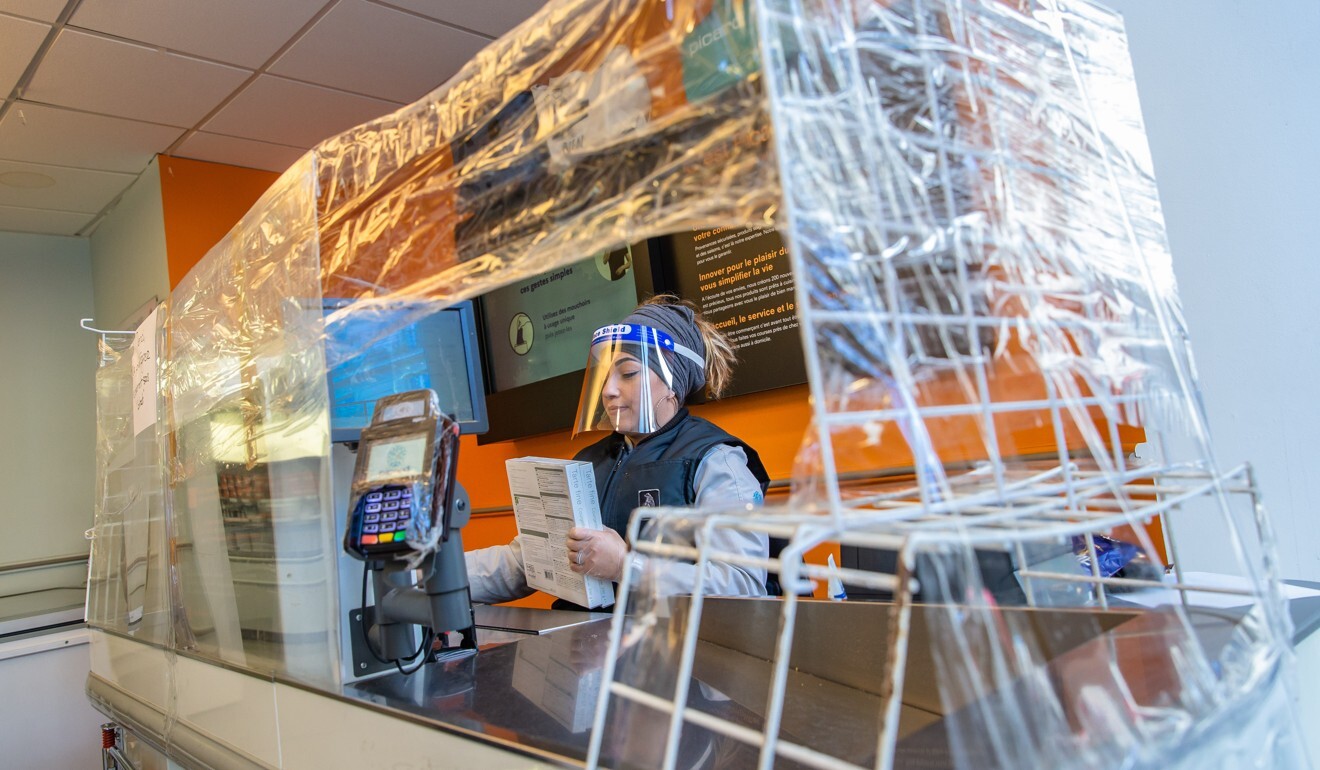
A cashier runs a store counter covered up with a plastic barrier in Paris, France, on April 3, 2020. Photo: Xinhua
reported a jump in coronavirus deaths on Thursday as the country included fatalities in some nursing homes for the first time. Still, a decline in intensive-care admissions suggest the country’s lockdown is starting to slow the pace of the outbreak.
The health ministry reported 471 new hospital deaths from the coronavirus on Thursday. In addition, it reported 884 deaths in a partial count from nursing homes, bringing the total number to 5,387. Nursing homes were not previously included in the statistics.
in number of deaths, behind Italy and Spain. The number of confirmed cases is now at 59,105.
Italy reported another 760 fatalities on Thursday. Its death toll, already the world’s highest, now stands at 13,915. Total infections, including recoveries and deaths, have reached 115,242.
Spain reported 950 more deaths from the coronavirus, the most in a single day, taking the total to 10,003.
India plans staggered exit from lockdown
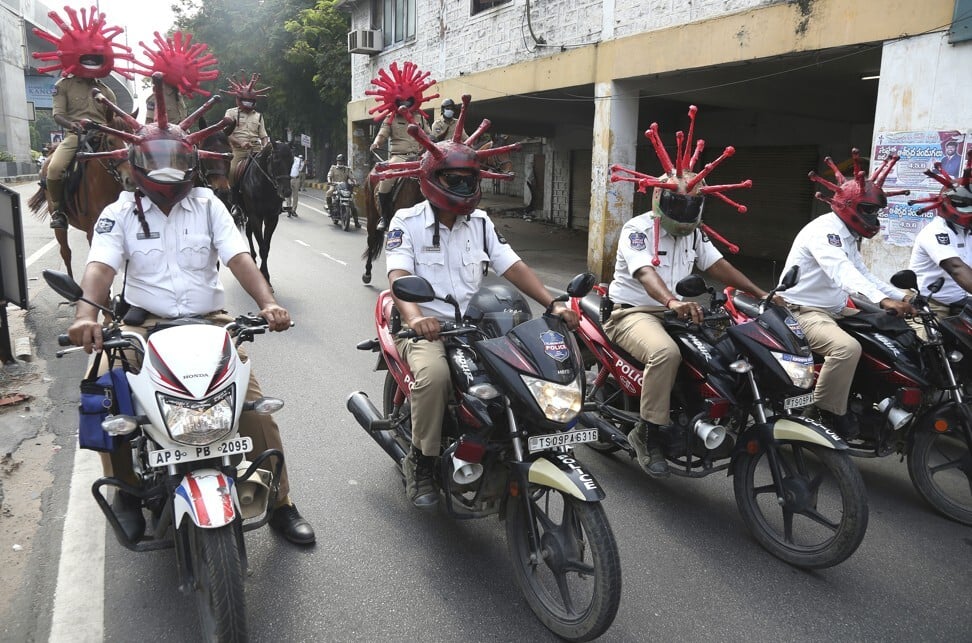
Indian policemen in Hyderabad, India, wear virus-themed helmets for a campaign to raise awareness at preventing the spread of the coronavirus on April 2, 2020. Photo: AP
infections, but the world’s biggest shutdown has left millions without jobs and forced migrant workers to flee to their villages for food and shelter.
After violence, Indian police try humour to enforce virus lockdown
2 Apr 2020
He told state chief ministers that the shutdown had helped limit infections but that the situation remained far from satisfactory around the world and there could be a second wave.
“Prime minister said that it is important to formulate a common exit strategy to ensure staggered re-emergence of the population once lockdown ends,” the government quoted him as saying in a video conference.
India has had 2,069 confirmed infections, of whom 53 have died, low figures by comparison with the US, China, Italy and Spain. But the big worry is the
because of a gathering held by a Muslim missionary group last month that has spawned dozens of cases across the country, officials said.
Five-minute virus tests ‘may give inaccurate results’
A Chinese drug and diagnostic firm has cautioned that the slew of new test kits that promise to detect the coronavirus in just a few minutes may not be as accurate as conventional kits, a potential setback for countries seeking to rapidly test their citizens.
“Such rapid testing is not as accurate as the traditional nucleic acid test that takes about two hours to turn out results,” Wu Yifang, Shanghai Fosun Pharmaceutical Group’s chief executive officer, said. The drugmaker also has a swift testing technology but it’s working on making the results more accurate, according to Wu.
Coronavirus nightmare of China’s ‘recovered’ patients
2 Apr 2020
Abbott Laboratories unveiled a coronavirus test on March 28 that can confirm if someone is infected in as little as five minutes. Shenzhen Bioeasy Biotechnology has been supplying its version of rapid testing kits to the European Union even before getting regulatory approval in China for domestic use.
The faster and easy-to-deploy diagnostic kits seemingly save time and resources for nations under pressure to widen their testing efforts. But there have been reports of faulty kits, like those bought by Spain and the Czech Republic.
Shenzhen Bioeasy, which sold thousands of test kits to Spain, said in a statement on March 27 that false results could be due to improper use of its kits or faulty specimen collection.
Trump tests negative again
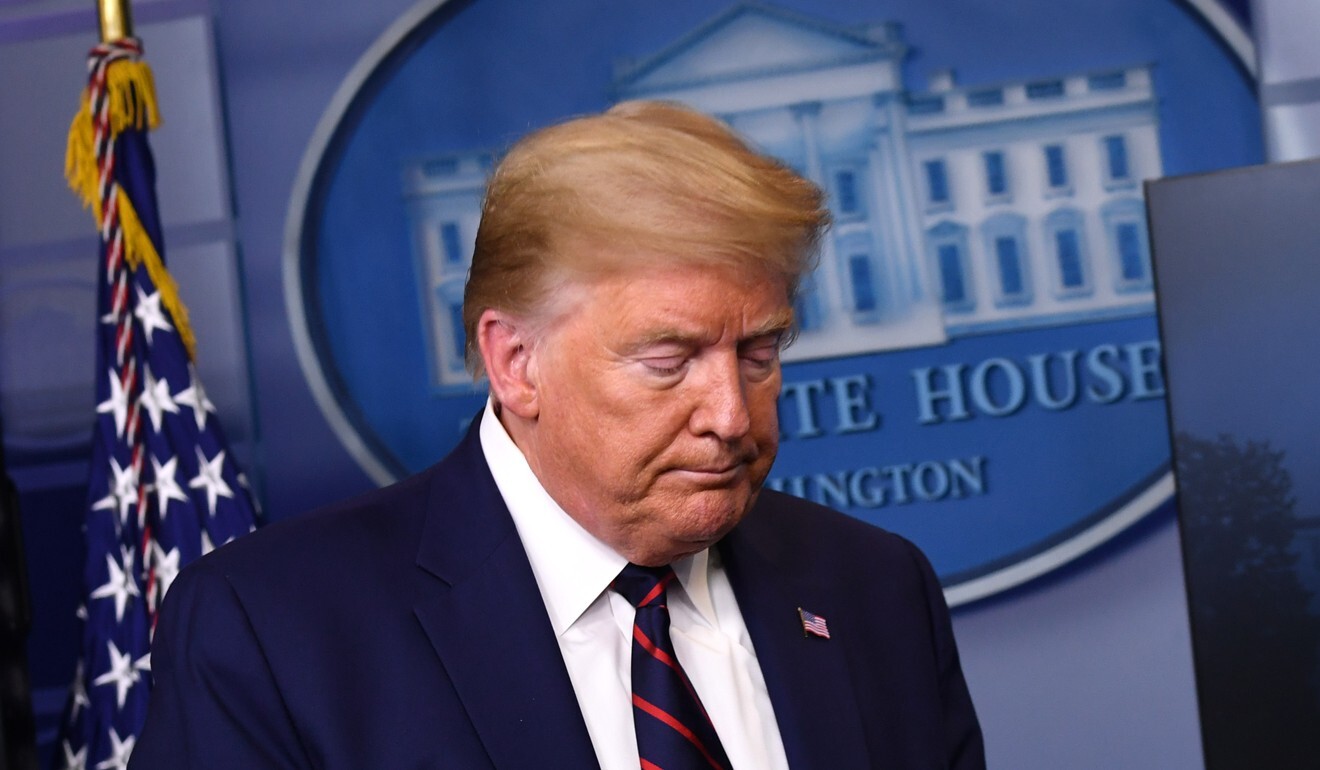
US President Donald Trump was was first tested last month after coming into contact with a Brazilian official who later tested positive. Photo: UPI/Bloomberg
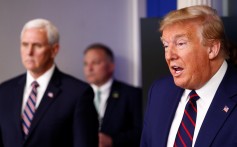
US President Donald Trump on Thursday was tested again to determine whether he had been infected by the coronavirus, and the test came back negative, the White House said.
A letter from Trump’s doctor, Sean Conley, said Trump had undergone what was a second test for coronavirus. He was tested last month after coming into contact with a Brazilian official who later tested positive.
Trump to urge Americans to wear masks when outside
3 Apr 2020
Conley said in a letter released by the White House that Trump was tested with a new, rapid point-of-contact test and the result came back in 15 minutes.
“He is healthy and without symptoms,” Conley said.
Trump said Americans should wear protective face masks if they wish. “If people want to wear them, they can” he said. Scarves work just as well, he said.
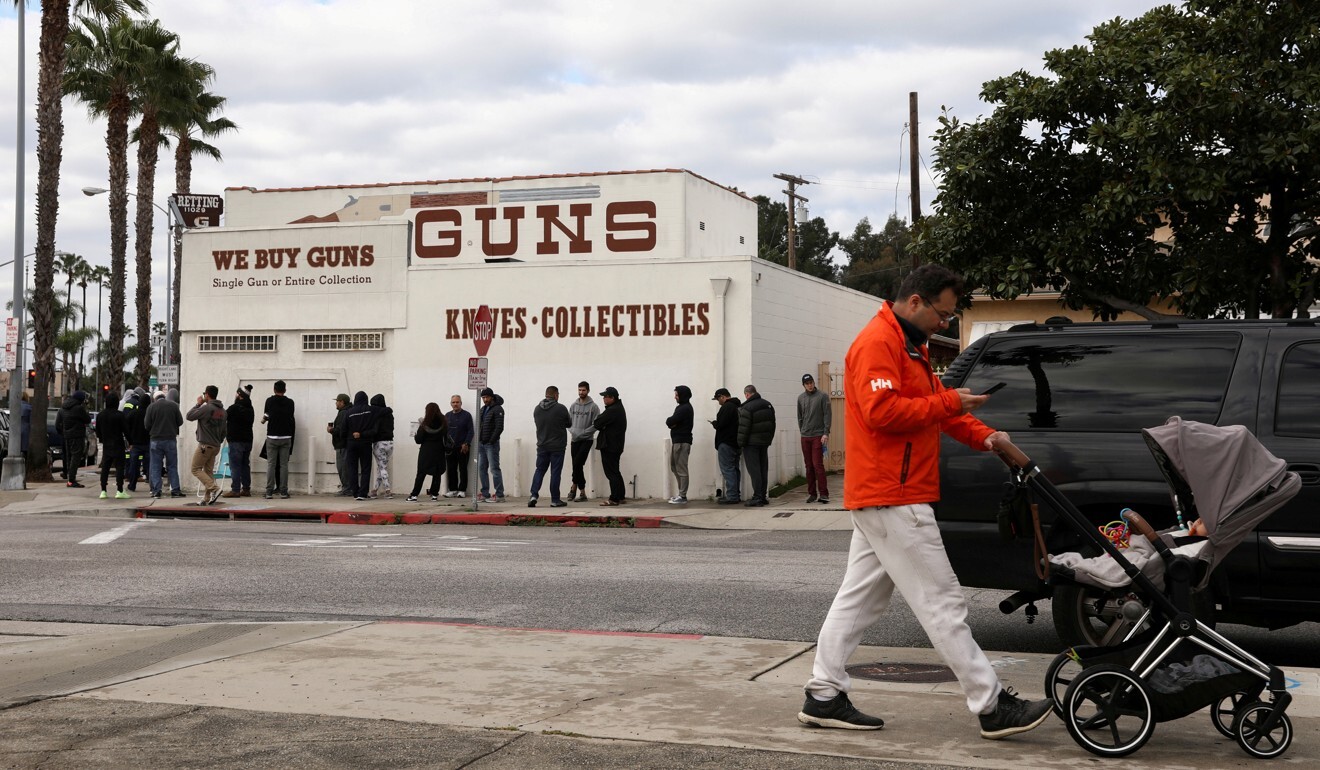
NRA sues NY governor over closure of gun stores
A pedestrian pushes a stroller as people wait in line outside a gun store to buy supplies on March 15, 2020. Photo: Reuters
The National Rifle Association (NRA) sued New York Governor Andrew Cuomo for closing gun shops during the coronavirus pandemic, saying the restriction is unconstitutional and leaves citizens defenceless while prisoners are being released early as a result of the crisis.
Cuomo’s March 20 executive order that included firearms retailers as non-essential businesses, which must close is a “pointless and arbitrary attack on the constitutional rights of New York citizens and residents,” the NRA said in a complaint filed late Thursday in Syracuse, New York.
New York ordered most businesses to close to prevent the spread of the virus, but deemed grocery stores, liquor stores, pharmacies and restaurants that do take-out as essential and allowed them to remain open.
The New York lawsuit follows similar action the NRA took in Northern California, where it sued several cities including San Jose for ordering gun stores to close.
Corona beer producer halts brewing
The Mexican brewer of Corona beer said on Thursday it was suspending production because of the health emergency in the country over the Covid-19 pandemic.
Grupo Modelo said the measure was in line with the Mexican government’s order to suspend all non-essential activities until April 30 to slow the spread of coronavirus.
“We are in the process of lowering production at our plants to the bare minimum,” the company said in a statement, adding it would complete the suspension in the following days.
Mexico’s government has said that only key sectors such as agribusiness will be able to continue to function.
US stops issuing passports, except in emergencies
The US State Department will not be processing new passports and renewals except for emergency cases because of the coronavirus pandemic, the agency’s website said.
“Due to public health measures to limit the spread of Covid-19, effective March 20, 2020, we are only able to offer service for customers with a qualified life-or-death emergency and who need a passport for immediate international travel within 72 hours,” said a March 27 online statement.
How elite US university students brought coronavirus home from campus
3 Apr 2020
Passport applications received on or before March 19 will be processed.
Travellers who paid extra for expedited service can expect to receive their passport in the next two to three weeks.
If you applied in-person at a passport agency or centre before March 19, the agency will contact you about getting your passport.
Image copyright GETTY IMAGESImage caption Millions are workers are defying a curfew and returning home
When I spoke to him on the phone, he had just returned home to his village in the northern state of Rajasthan from neighbouring Gujarat, where he worked as a mason.
In the rising heat, Goutam Lal Meena had walked on macadam in his sandals. He said he had survived on water and biscuits.
In Gujarat, Mr Meena earned up to 400 rupees ($5.34; £4.29) a day and sent most of his earnings home. Work and wages dried up after India declared a 21-day lockdown with four hours notice on the midnight of 24 March to prevent the spread of coronavirus. (India has reported more than 1,000 Covid-19 cases and 27 deaths so far.) The shutting down of all transport meant that he was forced to travel on foot.
“I walked through the day and I walked through the night. What option did I have? I had little money and almost no food,” Mr Meena told me, his voice raspy and strained.
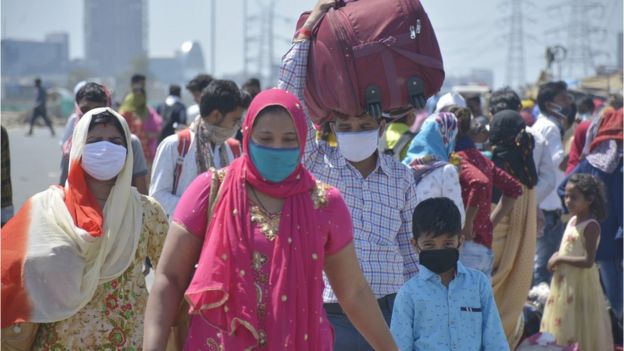
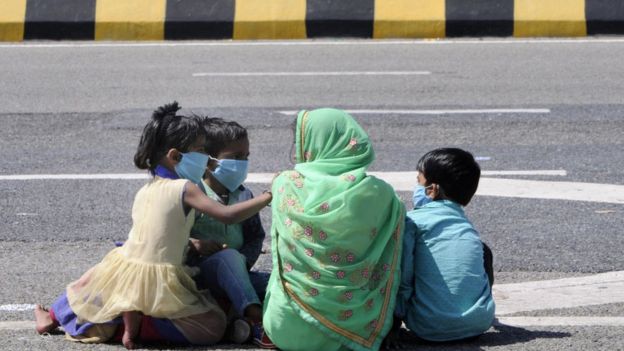
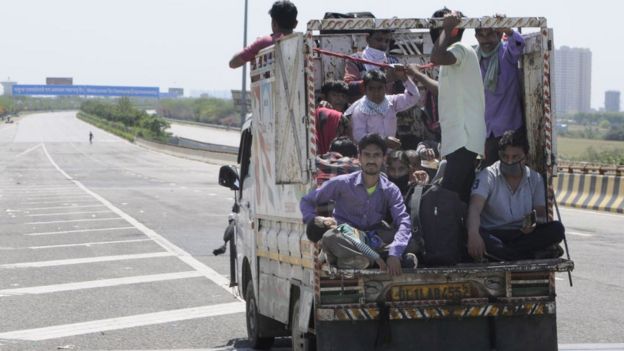
He was not alone. All over India, millions of migrant workers are fleeing its shuttered cities and trekking home to their villages.
These informal workers are the backbone of the big city economy, constructing houses, cooking food, serving in eateries, delivering takeaways, cutting hair in salons, making automobiles, plumbing toilets and delivering newspapers, among other things. Escaping poverty in their villages, most of the estimated 100 million of them live in squalid housing in congested urban ghettos and aspire for upward mobility.
Image copyright GETTY IMAGESImage caption Informal workers are the backbone of India’s big city economies
Last week’s lockdown turned them into refugees overnight. Their workplaces were shut, and most employees and contractors who paid them vanished.
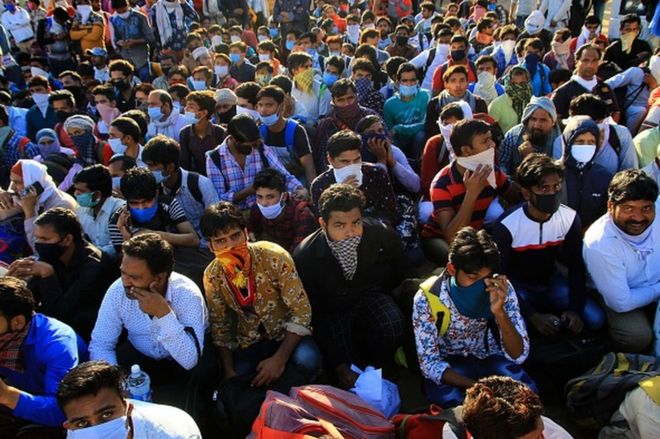
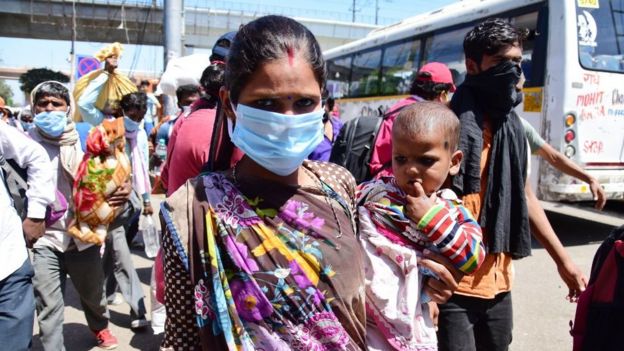
Sprawled together, men, women and children began their journeys at all hours of the day last week. They carried their paltry belongings – usually food, water and clothes – in cheap rexine and cloth bags. The young men carried tatty backpacks. When the children were too tired to walk, their parents carried them on their shoulders.
They walked under the sun and they walked under the stars. Most said they had run out of money and were afraid they would starve. “India is walking home,” headlined The Indian Express newspaper.
The staggering exodus was reminiscent of the flight of refugees during the bloody partition in 1947. Millions of bedraggled refugees had then trekked to east and west Pakistan, in a migration that displaced 15 million people.
Image copyright GETTY IMAGESImage caption Migrant labourers feel they have more social security in their villages
This time, hundreds of thousands of migrant workers are desperately trying to return home in their own country. Battling hunger and fatigue, they are bound by a collective will to somehow get back to where they belong. Home in the village ensures food and the comfort of the family, they say.
Clearly, a lockdown to stave off a pandemic is turning into a humanitarian crisis.
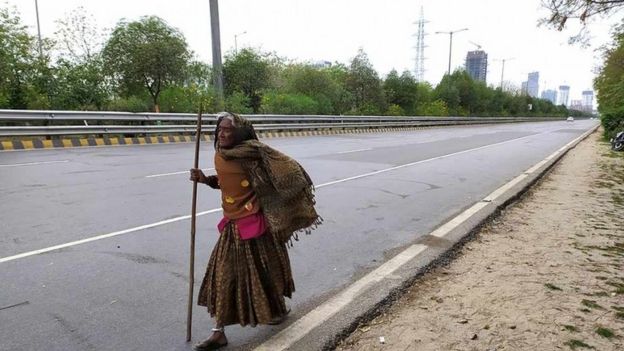
Among the teeming refugees of the lockdown was a 90-year-old woman, whose family sold cheap toys at traffic lights in a suburb outside Delhi.
Kajodi was walking with her family to their native Rajasthan, some 100km (62 miles) away. They were eating biscuits and smoking beedis, – traditional hand-rolled cigarettes – to kill hunger. Leaning on a stick, she had been walking for three hours when journalist Salik Ahmed met her. The humiliating flight from the city had not robbed her off her pride. “She said she would have bought a ticket to go home if transport was available,” Mr Ahmed told me.
Others on the road included a five-year-old boy who was on a 700km (434 miles) journey by foot with his father, a construction worker, from Delhi to their home in Madhya Pradesh state in central India. “When the sun sets we will stop and sleep,” the father told journalist Barkha Dutt. Another woman walked with her husband and two-and-a-half year old daughter, her bag stuffed with food, clothes and water. “We had a place to stay but no money to buy food,” she said.
Then there was Rajneesh, a 26-year-old automobile worker who walking 250km (155 miles) to his village in neighbouring Uttar Pradesh. It would take him four days, he reckoned. “We will die walking before coronavirus hits us,” the man told Ms Dutt.
He was not exaggerating. Last week, a 39-year-old man on a 300km (186 miles) trek from Delhi to Madhya Pradesh complained of chest pain and exhaustion and died; and a 62-year-old man, returning from a hospital by foot in Gujarat, collapsed outside his house and died. Four other migrants, turned away at the borders on their way to Rajasthan from Gujarat, were mowed down by a truck on a dark highway.
As the crisis worsened, state governments scrambled to arrange transport, shelter and food.
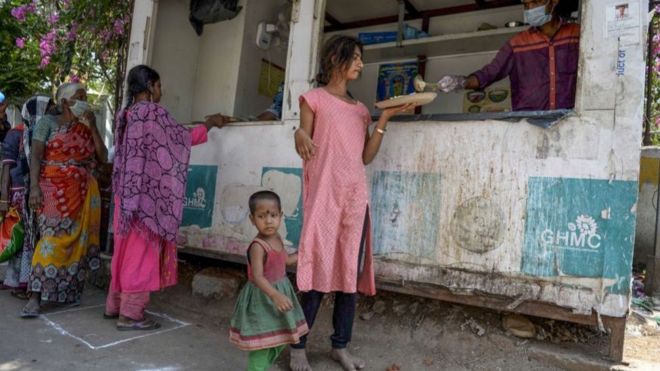
Image copyright SALIK AHMED/OUTLOOKImage caption Ninety-year-old Kajodi Devi is walking from Delhi to her village
But trying to transport them to their villages quickly turned into another nightmare. Hundreds of thousands of workers were pressed against each other at a major bus terminal in Delhi as buses rolled in to pick them up.
Delhi chief minister Arvind Kejriwal implored the workers not to leave the capital. He asked them to “stay wherever you are, because in large gatherings, you are also at risk of being infected with the coronavirus.” He said his government would pay their rent, and announced the opening of 568 food distribution centres in the capital. Prime Minister Narendra Modi apologised for the lockdown “which has caused difficulties in your lives, especially the poor people”, adding these “tough measures were needed to win this battle.”
Whatever the reason, Mr Modi and state governments appeared to have bungled in not anticipating this exodus.
Mr Modi has been extremely responsive to the plight of Indian migrant workers stranded abroad: hundreds of them have been brought back home in special flights. But the plight of workers at home struck a jarring note.
“Wanting to go home in a crisis is natural. If Indian students, tourists, pilgrims stranded overseas want to return, so do labourers in big cities. They want to go home to their villages. We can’t be sending planes to bring home one lot, but leave the other to walk back home,” tweeted Shekhar Gupta, founder and editor of The Print.
Image copyright GETTY IMAGESImage caption There is a precedent for this kind of exodus during crisis
The city, says Chinmay Tumbe, author of India Moving: A History of Migration, offers economic security to the poor migrant, but their social security lies in their villages, where they have assured food and accommodation. “With work coming to a halt and jobs gone, they are now looking for social security and trying to return home,” he told me.
Also there’s plenty of precedent for the flight of migrant workers during a crisis – the 2005 floods in Mumbai witnessed many workers fleeing the city. Half of the city’s population, mostly migrants, had also fled the city – then Bombay – in the wake of the 1918 Spanish flu.
When plague broke out in western India in 1994 there was an “almost biblical exodus of hundreds of thousands of people from the industrial city of Surat [in Gujarat]”, recounts historian Frank Snowden in his book Epidemics and Society.
Half of Bombay’s population deserted the city, during a previous plague epidemic in 1896. The draconian anti-plague measures imposed by the British rulers, writes Dr Snowden, turned out to be a “blunt sledgehammer rather than a surgical instrument of precision”. They had helped Bombay to survive the epidemic, but “the fleeing residents carried the disease with them, thereby spreading it.”
More than a century later, that same fear haunts India today. Hundreds of thousands of the migrants will eventually reach home, either by foot, or in packed buses. There they will move into their joint family homes, often with ageing parents. Some 56 districts in nine Indian states account for half of inter-state migration of male workers, according to a government report. These could turn out to be potential hotspots as thousands of migrants return home.
Image copyright GETTY IMAGESImage caption The fleeing migrants could spread the disease all over the country
Partha Mukhopadhyay, a senior fellow at Delhi’s Centre for Policy Research, suggests that 35,000 village councils in these 56 potentially sensitive districts should be involved to test returning workers for the virus, and isolate infected people in local facilities.
In the end, India is facing daunting and predictable challenges in enforcing the lockdown and also making sure the poor and homeless are not fatally hurt. Much of it, Dr Snowden told me, will depend on whether the economic and living consequences of the lockdown strategy are carefully managed, and the consent of the people is won. “If not, there is a potential for very serious hardship, social tension and resistance.” India has already announced a $22bn relief package for those affected by the lockdown.
The next few days will determine whether the states are able to transport the workers home or keep them in the cities and provide them with food and money. “People are forgetting the big stakes amid the drama of the consequences of the lockdown: the risk of millions of people dying,” says Nitin Pai of Takshashila Institution, a prominent think tank.
“There too, likely the worst affected will be the poor.”
Image copyright GETTY IMAGESImage caption Many Indians face losing their income and some say they could starve
India has announced a $22bn (£19bn) bailout for the country’s poor to help counter the economic effects of the Covid-19 outbreak.
“We don’t want anyone to remain hungry, and we don’t want anyone to remain without money in their hands,” finance minister Nirmala Sitharaman said.
The package, which includes free food and cash transfers, was for “those who need immediate help”, she said.
She also said health workers would get medical insurance of up to $66,500.
Correspondents point out that this amounts to just 1% of India’s GDP – in stark contrast to the US and Singapore which are spending about 10% of their GDP on similar packages.
However, this could be just stage one, with similar packages set to be announced later, they added.
India’s economy was already in the midst of a severe slowdown before the country went into lockdown, shutting workplaces, factories and affecting millions of daily-wage and informal workers.
They form India’s vast informal sector, which constitutes a large part of its workforce. The lockdown and social distancing have left many of them with no viable means of getting any income, and many have expressed fears that they could starve.
Growth had slumped to 4.7% last month – the slowest pace in years – as a steep drop in manufacturing affected overall economic health.
Barclays said the total shutdown cost to India would be around $120bn, or 4% of the country’s GDP.
Ms Sitharaman, who is also the head of an economic task force announced by the prime minister, said that workers under an employment guarantee scheme would get a wage increment, and that recipients of other welfare schemes would also get benefits, like free gas cylinders instead of just subsidised ones.
BEIJING (Reuters) – China on Sunday reported 46 new cases of coronavirus, the fourth straight day with an increase, with all but one of those imported from overseas, and further stepped up measures to intercept cases from abroad as the outbreak worsens globally.
While China says it has drastically reduced the number of domestically transmitted cases – the one reported on Sunday was the first in four days – it is seeing a steady rise in imported cases, mostly from Chinese people returning from overseas.
In a sign of how seriously China is taking the threat of imported cases, all international flights due to arrive in Beijing starting Monday will first land at another airport, where passengers will undergo virus screening, government agencies said on Sunday, in an expansion of existing measures.
International flights that were scheduled to arrive in the capital will land instead at one of 12 airports. Passengers who clear screening will then be permitted to reboard the plane, which will then fly to Beijing, the regulator said.
Separately, Shanghai and Guangzhou both announced that all arriving international passengers will undergo an RNA test to screen for coronavirus, expanding a program that previously only applied to those coming from heavily-hit countries.
RELATED COVERAGE
Emirates airline adds Beijing and Seattle to flight suspensions
Among the new cases from abroad reported on Sunday, a record 14 were in the financial hub of Shanghai and 13 were in Beijing, a decline from 21 the previous day.
The new locally transmitted case was in the southern metropolis of Guangzhou and was also the first known case where the infection of a local person was linked to the arrival of someone from overseas, according to Guangdong province.
Hu Xijin, the editor-in-chief of the Global Times newspaper, called for all cities in China to implement 14-day quarantines for people arriving from abroad.
He also called for quarantine policies to apply to people from Hong Kong and Macau as well, he said on his Weibo account on Sunday.
“I am worried that there are similar cases to the Guangzhou one existing in other parts of the country. There were reports previously that people coming back from abroad returned to their homes in Shanghai without any obstacles,” Hu said.
“It matters to the overall situation of China’s next prevention and control efforts if we can plug the leaks.”
The Global Times is a tabloid published by the Ruling Communist Party’s People’s Daily.
The latest figures from China’s National Health Commission bring total reported coronavirus cases in the country to 81,054, with 3,261 deaths, including six on Saturday. On Saturday, China reported 41 new coronavirus cases for the previous day, all of them imported.
Of all 97 imported cases as of end-Saturday, 92 of them are Chinese nationals and 51 are Chinese students returning from studying abroad, said Gao Xiaojun, spokesman for the Beijing Municipal Health Commission during a press conference on Sunday.
The Beijing health commission announced separately on its website it had two more imported cases on Sunday, bringing the city’s total number of imported cases to 99 as of Sunday noon.
BACK TO A KIND OF NORMAL
China is trying to revive an economy that is widely expected to contract deeply in the current quarter, with life slowly returning to normal in cities such as Beijing and Shanghai, albeit with everyone wearing masks in public.
Still, numerous shops and restaurants remain shut – many have gone out of business – and factories and other workplaces are still not operating at full capacity.
On Sunday, a central bank official called for stepped-up global policy coordination to manage the economic impact of the pandemic. He said China’s recent policy measures were gaining traction, and it has capacity for further action.
Chen Yulu, a deputy governor at the People’s Bank of China (PBOC), also said he expects significant improvement in the Chinese economy in the second quarter.
And while the virus will continue putting upward pressure on near-term consumer prices, there is no basis for long-term inflation or deflation, he told a news briefing.
Globally, roughly 275,000 people have been infected with the virus, and more than 11,000 have died, according to a Reuters tally, with the number of deaths in Italy recently surpassing those in China.
“Now I think the epidemic has been controlled. But this definitely doesn’t mean that it’s over,” said a 25-year-old woman surnamed He who works in the internet sector and was visiting the vast Summer Palace complex in Beijing on Saturday.
“I’m willing to come out today but of course I am still afraid,” she told Reuters.
The central province of Hubei, where the outbreak first emerged late last year in its capital Wuhan, reported its fourth straight day of no new cases.
China has used draconian measures to contain the spread of the virus, including locking down Hubei province.
Three films that opened on Monday morning rake in US$76.6 million by midday
Palme d’Or winner Chen Kaige heads bill with ensemble that has movie-goers in tears
My People, My Country looks at seven events in the past 70 years through the eyes of seven Chinese directors. Photo: Baidu
Three films that paid tribute to the People’s Republic of China on the eve of its 70th anniversary grossed a total of 546 million yuan (US$76.6 million) at the box offices hours after opening on Monday, Maoyan Entertainment, China’s largest movie ticketing app, said.
My People, My Country, consisting of seven short stories by seven directors led by Cannes Palme d’Or winner Chen Kaige, recounted major events since 1949. It took in 225 million yuan.
Milestones including the detonation of China’s atomic bomb in 1964; the handover of Hong Kong from the UK to China in 1997, and the staging of the Summer Olympics in Beijing in 2008, brought back many memories and stirred feelings of national pride, film-goers said.
“I went to see the movie today and saw many primary school students with their parents. Tears welled in my eyes, and I felt touched and proud at the same time. Go China!” one Weibo user wrote.
True-life drama The Captain has proved to a big screen hit with mainland cinema-goers. Photo: Baidu
“This movie used directors of commercial movies, and most of those born in the 1960s and 1970s lived through these moments. I think young people will bring their parents to see the film,” another Weibo user wrote.
True-life drama The Captain, directed by Hong Kong director Andrew Lau Wai-Keung, ran in second with a box office take of 175 million yuan by noon on Monday. The film was based on events in May 2018, when the cockpit window of a Sichuan Airlines flight was shattered at 30,000 feet over the Tibetan Plateau in western China. The decompression pulled the co-pilot halfway out of the cabin as the pilot fought to land the flight safely.
Big-budget film The Climbers, directed by Hong Kong’s Daniel Lee Yan-Kong and featuring stars such as Wu Jing and Zhang Ziyi, retraced the steps of two generations of Chinese mountaineers who scaled Mount Everest by the perilous North Ridge in 1960 and 1975. The film posted earnings of 146 million yuan.
Tencent’s homage to modern China tops gaming charts on eve of 70th anniversary celebrations
Patriotic feelings have been running high this week as the celebration of the 70th anniversary draws near.
My People, My Country’s theme song, Me and My Mother Country, an oldie recorded by Hong Kong’s Faye Wang, has been heard in shops, restaurants and workplaces all across the mainland.
The Climbers was directed by Hong Kong’s Daniel Lee Yan-Kong. Photo: Baidu
Last week, 200 million WeChat users responded to a campaign by internet company Tencent to add a national flag or Happy National Day sticker to their social media profile picture, The Beijing News reported. Demand was so heavy Tencent’s servers were overwhelmed for a short time.


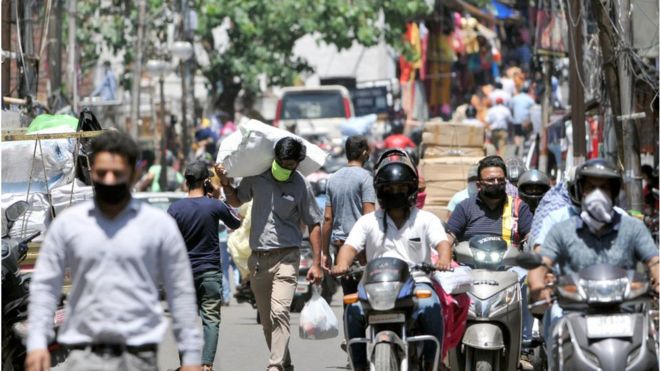 Image copyright GETTY IMAGES
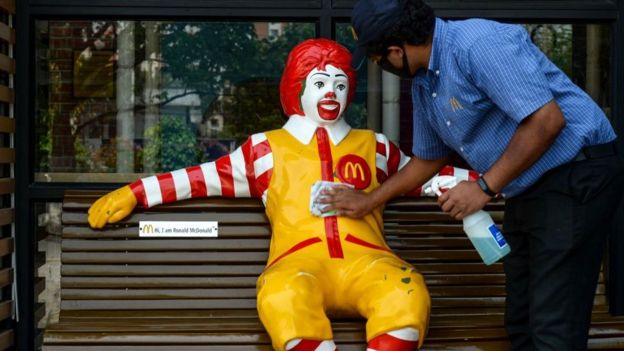 Image copyright GETTY IMAGES
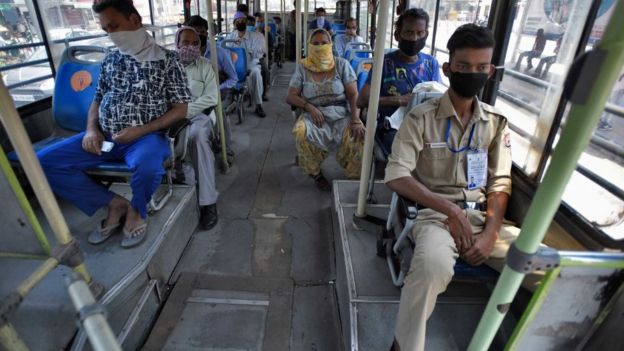 Image copyright GETTY IMAGES
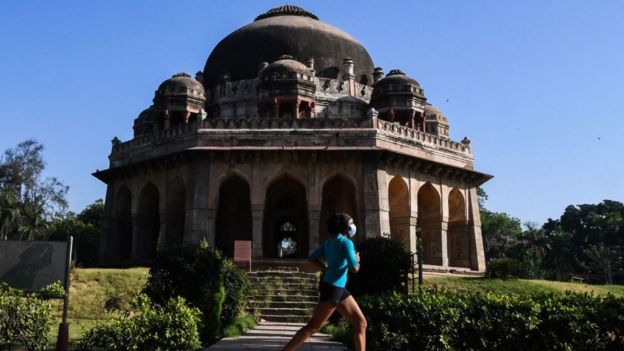 Image copyright GETTY IMAGES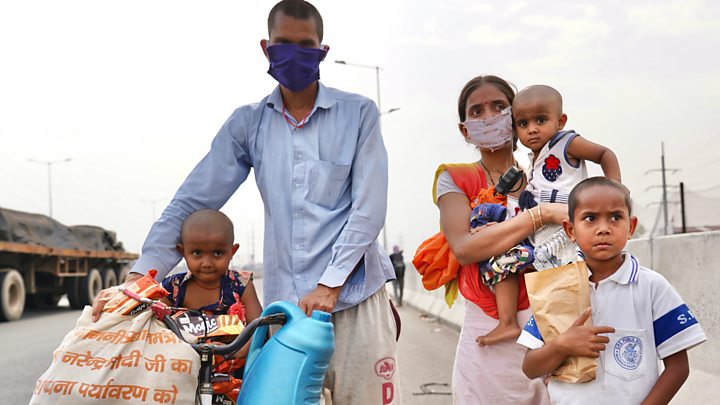
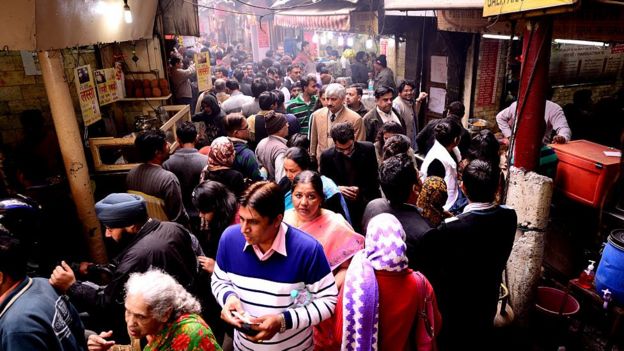 Image copyright GETTY IMAGES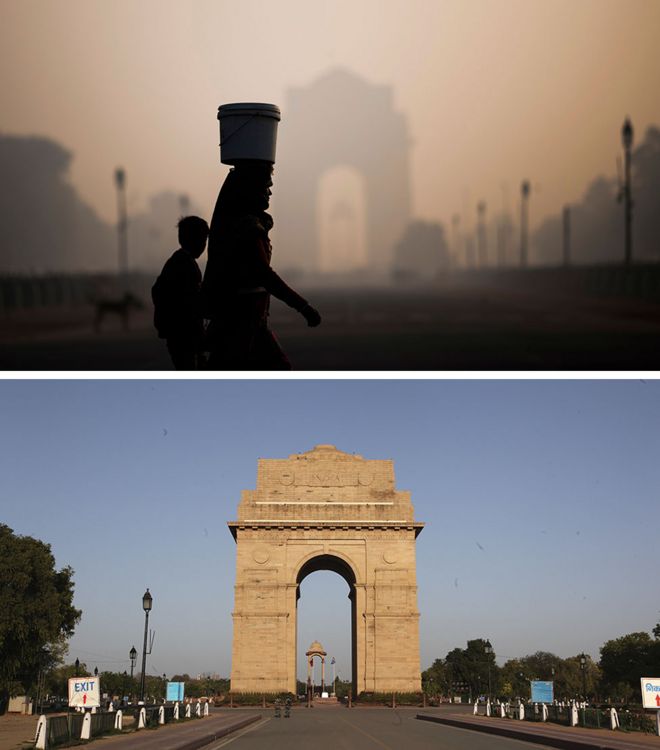

















 CHINDIA ALERT: You'll be living in their world, very soon