Chindia Alert: You’ll be Living in their World Very Soon
aims to alert you to the threats and opportunities that China and India present. China and India require serious attention; case of ‘hidden dragon and crouching tiger’.
Without this attention, governments, businesses and, indeed, individuals may find themselves at a great disadvantage sooner rather than later.
The POSTs (front webpages) are mainly 'cuttings' from reliable sources, updated continuously.
The PAGEs (see Tabs, above) attempt to make the information more meaningful by putting some structure to the information we have researched and assembled since 2006.
People walk in Huahongyuan residential area in Zhanyi District in Qujing, southwest China’s Yunnan Province, Nov. 22, 2019. In 2013, under the guidance of local government, farmers in Songlin community started to build a new residential area following the principle to integrate environmental improvement, infrastructure construction and industrial development into building beautiful countryside. In 2016, the farmers moved in the newly-built Huahongyuan residential area and conducted various ways to boost income. (Xinhua/Yang Zongyou)
LHASA, Oct. 13 (Xinhua) — A senior official has called for enhanced efforts in eradicating poverty in west China’s underdeveloped areas and making sure to win the battle against poverty on schedule.
Hu Chunhua, a member of the Political Bureau of the Communist Party of China Central Committee and chief of the State Council leading group of poverty alleviation and development, made the remarks when he inspected poverty-eradication work in Tibet Autonomous Region from Oct. 11 to 13.
Parts of Tibet, Xinjiang Uygur Autonomous Region, and provinces of Sichuan, Qinghai, Gansu and Yunnan are major targeted areas for the country to win an overall combat against poverty on schedule.
Hu said the poverty alleviation campaign has entered a crucial stage and the country will continue its efforts unswervingly to ensure all rural population living in poverty-hit areas will be lifted out of poverty.
More efforts should be made to satisfy the need of poor population in terms of compulsory education, basic medical care, safe housing and drinking water.
To consolidate achievements of poverty relief campaign, more measures should be taken, including boosting poverty-alleviation industries and county-level economy, and enhancing follow-up support for people relocated from harsh living conditions, he added.
Participants sing in a chorus performance in Kunming, capital of southwest China’s Yunnan Province, Sept. 22, 2019. A total of 3,500 participants took part in a chorus performance here on Sunday to celebrate the upcoming National Day. (Xinhua/Hu Chao)
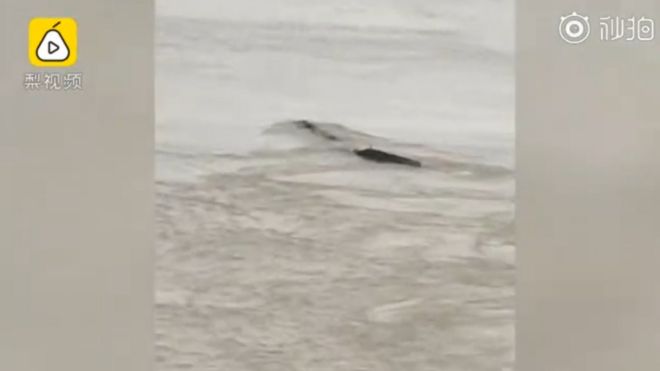
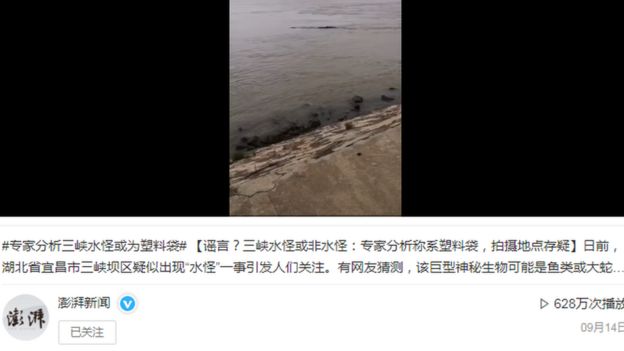
Image copyright PEAR VIDEOImage caption Grainy footage showed something that appeared to have a tail slithering back and forth in the water
Something is lurking in the deep in China’s famous Yangtze River – and social media discussion is rife over what it might be.
On Friday, footage appeared on China’s popular Sina Weibo microblog of what appeared to be a long, black creature, manoeuvring through the waters, and it has dominated online discussion ever since.
Footage has quickly racked up millions of views, and theories are rife.
Specialists have weighed in – but some think there may be a simple, and less murky, explanation.
Excitement over footage
A video filmed off the coast of the city of Yichang in western Hubei province, close to the Three Gorges Dam, captured the unusual scene.
Locals are filmed watching the creature from the shore – and social media users have similarly been captivated over theories about what the creature might be.
Many have posted using the hashtag #ThreeGorgesMonsterPhotos, and specialists have begun to weigh in with their thoughts.
In an interview with Pear Video, Professor Wang Chunfang from the Huazhong Agricultural University dismissed the idea of it being a new species, saying it was likely a simple “water snake”.
Some users said that “external factors such as pollution” could have a role to play in a sea snake growing to an extraordinary size. But not everyone was convinced.
Separate footage has led some users to question whether the unidentified object is actually a living creature at all.
Image copyright THE PAPERImage caption Millions have watched footage of the item, but some think it might be a piece of simple rubbish
Popular news website The Paper shared separate footage of something long and black moving in the water that appeared to be less animated.
It asked if the whole thing was simply “a rumour” – and interviewed a biologist, Ding Li, who said that the object was neither a fish nor a snake, but simply “a floating object”.
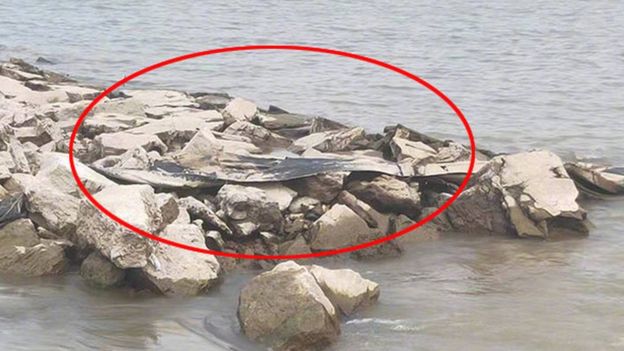
A picture has since gone viral showing a long piece of black cloth washed up on some rocks, fuelling discussion this might have been the mysterious object.
Image copyright THE PAPERImage caption The appearance of some cloth washed up on some rocks has got users asking if they were mistaken
Both have led to jokes about whether the local government was trying to attract tourism to the area, given the millions of dollars involved in building and maintaining the Three Gorges Dam.
Others have made jokes about the quality of the footage, despite the rapid development in China of high quality smartphones.
Some joked that the user obviously didn’t have a Huawei phone. Another said: “Monsters always appear only when there are few pixels.”
So what does live in the Yangtze?
Image copyright AFPImage caption Giant Chinese salamanders live in the Yangtze river. They can grow to 1.8 metres in length
The Yangtze River is the longest river in Asia, and at 3,900 miles in length (6,300km), is the third longest in the world.
But pollution has severely affected the river in recent years, meaning that its ecosystem has become narrower, rather than wider.
The largest creature thought to exist in the waters at present is the Chinese giant salamander, which can reach some 1.8m in length.
This species is critically endangered, largely as a result of pollution.
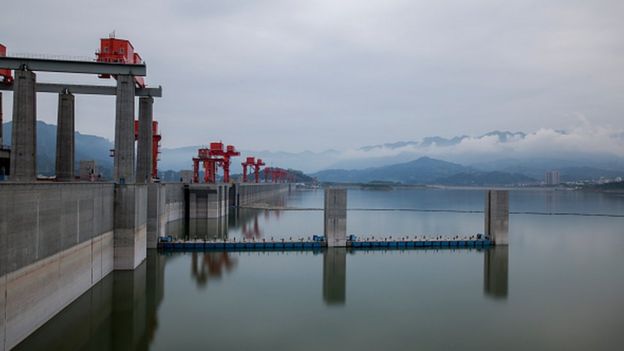
Image copyright ZHANG PENG/GETTY IMAGESImage caption The Three Gorges Dam is the world’s latest hydroelectric dam
China’s other ‘Nessies’
China is no stranger to conspiracy theories about mythical creatures lurking in the deep.
Since 1987, questions have been asked about whether a “Lake Monster” exists in the Kanas Lake in north-western Xinjiang, following numerous reports of sightings.
However, specialists believe that this is a giant taimen, a species of salmon that can grow to 180cm long, the official China Daily said.
BEIJING, Aug. 25 (Xinhua) — The water quality of China’s major rivers, lakes and coastal waters is improving, while in general, the water ecology is not optimistic, an official report showed.
The report was made by an inspection team tasked with examining the enforcement of the water pollution prevention and control law, under the Standing Committee of the National People’s Congress, China’s top legislature.
From April to June, the law enforcement inspection team was divided into four groups and went to eight provinces, including Sichuan, Jiangsu, Hunan, Hebei, Guangdong, Anhui, Yunnan and Guizhou, to carry out law enforcement inspections.
The inspection groups visited 31 cities and carried out on-site inspections of 201 organizations, villages and projects.
At the same time, 23 other provincial-level regions were entrusted to carry out similar investigations to achieve full coverage of law enforcement inspections.
According to the report, in 2018, 71 percent of the national surface water sections were of good quality and the water quality of major rivers, lakes and coastal waters was stable and good.
However, the report also points out that inadequate law implementation is still prominent, and the overall situation of China’s water environment is not optimistic.
Kunming tests support for new rules that demand travellers wear earphones when using noisy electronic devices
Cities across China are listening to the complaints of commuters and ordering owners of noisy mobile phones and music devices to turn them down and wear earphones. Photo: Shutterstock
Kunming, the capital of southwestern Yunnan province, plans to become the third mainland Chinese city to ban public transport users from listening to loud music, watching noisy videos or talking loudly on phones.
Acting on complaints from passengers, the city is testing public support for a change to its subway passenger code of conduct that would ban excessive noise, the municipal transport bureau said last week.
At least two other cities, Beijing and Lanzhou – the capital of northwestern Gansu province – have barred travellers from talking loudly or turning up their electronic devices on the underground.
Kunming’s proposed amendment includes a ban on loud conversation, with administrative penalties for people found breaking the rules. The public have until September 5 to give feedback on the proposal.
“Some passengers ignore other people and play their electronic devices with the sound on, causing a great disturbance to others. Such behaviour needs to be regulated,” the bureau said.
The proposal was popular on social media.
“I’d suggest operators of high-speed trains and civil aviation also adopt this ban,” one user of the Weibo microblogging service wrote. “Don’t you have the money to buy earphones?”
Some Hongkongers have phones checked for protest photos at mainland China border amid anti-government unrest
“I’m strongly in favour – the most effective way to improve our manners is to give clear rules,” another user said.
Lanzhou, which opened its first subway line in June, banned on passengers from playing devices without wearing headphones from the day the first train rolled.
Also in June, Beijing issued a code of conduct for public transport passengers that included a ban on excessive noise. Penalties there included personal credit system demerits, black marks that could be removed by working as a subway volunteer for an hour.
Cai Rui and Wu Chen are the proud parents of twins but they had to go abroad for the IVF treatment they needed to bring the children into the world
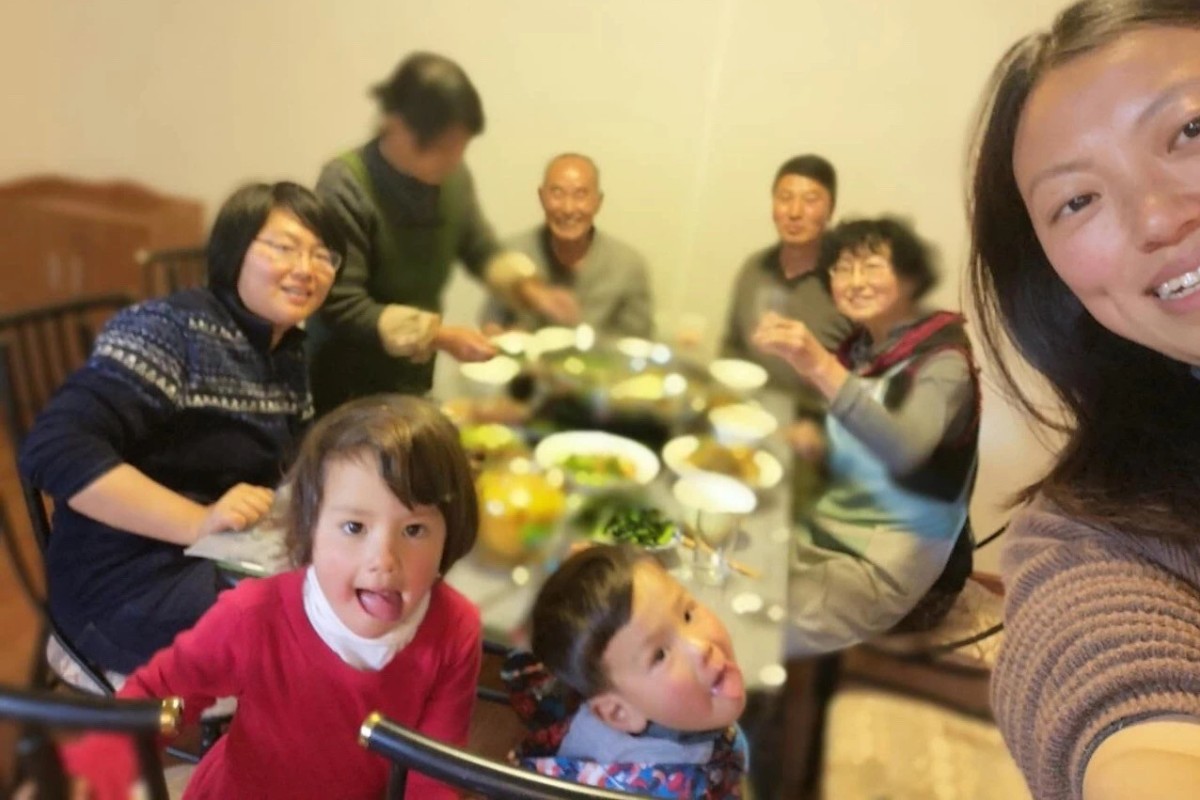
Wu Chen (far left) and Cai Rui (right) are raising their young family together in China. Photo: Cai Rui
When three-year-old twins Harry and Helen are asked about their dad, they have a set answer.
The children tell the curious that they do have a father but he lives in the United States.
Harry and Helen live on the outskirts of Kunming in the southwestern Chinese province of Yunnan with their two mothers, Cai Rui and Wu Chen.
Cai gave birth to the twins after being implanted at a US IVF clinic with ova from Wu and sperm from an American donor.
The couple were forced to seek treatment abroad because Chinese clinics will only perform IVF procedures on couples who can produce a marriage certificate – something limited to heterosexuals.
For Cai and Wu, it was a leap into the unknown – there was little information in China and few others had gone public about their experience.
But their biological clocks were ticking and the couple were used to taking difficult paths.
Gay Chinese find a place to be themselves on ‘Rainbow Cruise’ to Vietnam
Cai and Wu met while studying in Britain and registered their marriage there in 2014. Both women were in their thirties and soon began thinking about having children.
They looked forward to being mothers and felt the experience would strengthen their relationship even more, Cai said.
“I think it’s natural for a woman to aspire to be a mother once she turns 30,” she said. “We were both aware that the older a woman is, the harder it is for her to get pregnant. So it’s an immediate thing for us.”
Their parents were also worried about the couple’s welfare as they grew older.
“Our parents have accepted our relationship, thinking it’s our own choice. However, they worried that when we are old, there will be no children to look after us,” Cai said.
Wu Chen (left) and Cai Rui (right) brought their twin children Helen and Harry into the world with help from IVF treatment in the United States. Photo: Cai Rui
The couple embarked on two rounds of IVF in London, with Cai impregnated with Wu’s fertilised ova, but both rounds failed.
They then returned to China and searched for other options but at the time there were few posts by Chinese lesbians sharing their experience of having babies abroad, Cai said.
So they contacted three clinics in the US and finally decided to go through one in Portland, Oregon, in large part because of the city’s gay-friendly reputation.
Cai said that when it came time to choose a sperm donor, they were less concerned about his outward appearance and more focused on his physical and mental health, his academic record and his experience growing up.
“We wanted to make sure our baby’s father was a healthy and interesting guy,” she said.
The couple chose the sperm of a white man and implanted two fertilised eggs into Cai’s body to raise the chances of success. Twelve weeks later, the couple flew back to Beijing where Harry and Helen were born on April 1, 2016.
Thanks to a more relaxed population policy since 2016, Cai was able to register the children as a single mother while the children were given her partner’s surname.
“So my lover is their biological mother and I am their birth mother,” Cai said.
Small victory for China’s online lesbian community as censored forum is restored, but another remains blocked
The family lived in Beijing for about a year before moving to Yunnan for work commitments. Cai said there had not been any big problems raising the children there apart from some annoying questions from neighbours about why the children are biracial and why the father is not in the home.
“These questions are like flies around us. But they’re not a big deal and won’t affect our life,” she said.
She said she told various villagers in their community about the children’s conception and they responded by saying, “What an advanced lifestyle you have!”
Twins Harry and Helen celebrate Lunar New Year. Photo: Cai Rui
The couple have also tried to explain the situation to the twins.
“We instilled diverse family values in them from a very young age, through everything including cartoon books they read and stories we made up by ourselves,” Cai said.
“So we told [them] that you have a father. But the reason for forming a family is love. We don’t have love with your father, so he doesn’t live with us.”
About four years ago the couple opened a public account on social media app WeChat called Rainbow Babies, to share their experience with other lesbians on the mainland. Cai said the account had more than 17,000 followers, many responding by relating their own stories about IVF.
One woman wrote on the platform that she and her partner had been together for 10 years and after having a daughter they were pregnant with a boy.
“I am not confident of us lesbians raising a boy. Do you have any tips to share with us?” the woman wrote.
Why China’s gays and lesbians are still stuck in the closet
Another woman wrote that since she and her partner decided to have a baby, they had confronted obstacles at every step in the process, but the biggest benefit was that “after so many hardships, our love has been consolidated and we have cherished each other more than before”.
Cai said the most popular destinations for mainland lesbians seeking IVF treatment were the US, Thailand and Cambodia, with at least 1,000 either pregnant or having given birth.
“Some people are hesitant to have babies because of social pressure. [But] as times goes by and women get older, the possibility of them getting pregnant becomes lower,” Cai said.
Cai said she and Wu were often praised for their courage but they were in the habit of choosing a tougher road.
“On many occasions, this habit is the most reliable way to push us to keep our innocent heart and to do things to be ourselves,” she said.
Villagers clean a house damaged by floods at Jiangbei Village of Banlan Township, Rongan County, south China’s Guangxi Zhuang Autonomous Region,July 14, 2019. A series of reconstructing and rescuing works have been done since Rong’an was hit by heavy rains recently. (Xinhua/Huang Xiaobang)
BEIJING, July 14 (Xinhua) — At least 17 people were killed or missing and thousands evacuated as torrential downpours unleashed floods and toppled houses in central, eastern and southern China.
The National Meteorological Center on Sunday renewed a blue alert for rainstorms, predicting heavy rain in Zhejiang, Fujian, Jiangxi, Hunan, Guangdong, Yunnan, Sichuan provinces, as well as Guangxi Zhuang Autonomous Region and Tibet Autonomous Region.
Some of those regions will see up to 120 mm of torrential rainfall, it said.
China has a color-coded weather warning system, with red representing the most severe, followed by orange, yellow and blue.
As of 8 a.m. Sunday, at least 17 people died or were reported missing following rain-triggered floods in central Hunan Province, which also forced more than 470,000 people to be relocated and 179,000 were in urgent need of aid.
Four hydrometric stations along the Yangtze River in Xianning city, central Hubei Province, have reported the river water reaching or surpassing a level that can activate local anti-flood work.
In eastern Anhui Province, rain-triggered floods have affected more than 51,000 people and damaged over 2,700 hectares of crops.
The floods have forced the evacuation of 926 people, and caused a direct economic loss of more than 59.6 million yuan (8.66 million U.S. dollars) in the province.
As of Saturday noon, 330,000 people in 18 counties of Jiangxi Province have been affected by rainstorm-triggered floods, with over 10,500 residents relocated.
Poyang Lake, China’s largest freshwater lake in the lower reaches of the Yangtze, is swelling above the alarming level, according to the hydrographic department in Jiangxi.
The water level of the lake reached 20.08 meters as of 8 a.m. Saturday, 1.08 m above the warning level, as recorded by Xingzi Hydrometric Station on the lake.
In south China’s Guangxi Zhuang Autonomous Region, rainstorm has affected more than 360,000 people as of 5 p.m. Sunday, damaging over 35,000 hectares of crops, according to the region’s emergency management department.
The disastrous weather in Guangxi has prompted the region to activate a level-II emergency response and send special work teams and relief materials to the ravaged areas.
In some of the disaster-hit towns, flood water from subterranean rivers has inundated roads.
“After torrential downpours, waters on mountains and underground rivers converge into low-lying lands, which may lead to waterlogging. In affected villages, the water depth in some people’s houses can exceed two meters,” said Liao Bin, an official with Jiuwei Town, Hechi City.
Local authorities have dispatched boats and wooden rafts to transfer the stranded people, set up temporary relocation sites, and deliver living supplies to blocked villages.
Since June, the southwestern province of Guizhou has allocated a total of 16.5 million yuan for its hardest-hit 16 counties.
International schools and companies offering extracurricular services have sprung up to prepare children to study overseas
Families disenchanted with exam-based classes and intense competition for tertiary places look offshore for alternatives
A group of young Chinese students tour the University of Cambridge in England. Photo: Alamy
On a sunny summer’s day, 24 schoolchildren head off on a four-day field trip to Guizhou province in southwestern China.
The children, aged eight to 16, have gone into the far reaches of the mountainous province not to see its picturesque Huangguoshu waterfall or to meet people from the ethnic Miao minorities. Instead, they are there to see the Five-hundred-metre Aperture Spherical Telescope, or Fast – the world’s biggest radio telescope, built in 2016.
The trip was organised by All in One Education, a Shenzhen-based company offering extracurricular classes and educational trips for Chinese students who aim to study abroad.
The agency has organised similar trips to Hebei and Yunnan provinces, catering to parents who want to expand their children’s horizons.
“This kind of experience is not usually available to students who follow the traditional Chinese education model, but it does appeal to those who go to international schools and schools that emphasise exploration,” Zhang Yong, the teacher leading the field trip, said.
Zhang said other agencies in China arranged educational trips abroad, including to universities such as Harvard and Oxford.
Many Chinese parents want their children to have a broader education than they get in the public schools system. Photo: Reuters
The companies are part of an industry targeting an ever-growing market of parents who have high expectations for their children and who are anxious to ensure their children go to the best schools they can afford.
The services are also aimed at parents who see studying abroad as a way to avoid the intense competition and discipline of the Chinese education system.
Crunch time as gaokao exam season starts for China’s university hopefuls
An overseas education has long been reserved for the privileged few in China but it is becoming more of an option as people become more affluent and more services open up to cater to the demand to give the best to the next generation.
According to the Ministry of Education, 662,100 people studied abroad last year, 53,700 more than in 2017.
For Shanghai parent Iris Wang the best means a Western university. She said that not only were Western universities better than their Chinese equivalents but she had also lost faith in China’s secondary education system.
With her daughter starting at an international middle school in September, Wang is now planning for the child to go overseas for experience and study.
She said that although the teachers working in public schools in China were responsible, the system itself was too rigid.
“In summer, the pupils have to take naps at noon, and teachers write down the names of those who don’t sleep and tell their parents,” she said. “And even if you don’t want to take nap, you are not allowed to take a walk or talk; you must rest your heads and arms on the table.”
Many middle-class Chinese parents are seeking alternatives to the public education system. Photo: AP
Such rules are common in Chinese public schools and meant to instil a sense of discipline among the pupils.
“But educating kids is not the same as making a product on an assembly line,” Wang said.
By withdrawing her daughter from the public system, Wang has forfeited her child’s chance to go to a Chinese high school or university.
It’s a route more Chinese parents are taking, according to a report released in April by the Social Sciences Academic Press and the 21st Century Education Research Institute, a Beijing-based think tank. In 2018, there were 821 international schools in China, up 12 per cent from a year earlier.
Wang has not just sent her daughter to an international school but has also begun researching the next steps, convinced that her daughter should leave China early to better adapt to university abroad.
“She will need to learn the language, develop a different learning mindset, as well as adapt to the lifestyle there,” Wang said.
China’s infamous gaokao university entrance exam
Shenzhen mother Yao Li has also decided that an early exit from the Chinese education system would be good for her daughter, who is still in primary school.
Yao plans to send her daughter to an international secondary school so she can receive a Western education and eventually apply to schools abroad.
Compared with the traditional Chinese education, which focused on exams as measures of excellence, an international education could give a child more possibilities, she said.
“The competition in China for a good education is so fierce that my child will not have sufficient room for development if she stays here,” she said. “We hope that she can become more international and have more diverse abilities as well.”
Why did one of China’s elite universities need to offer big money to get the best students?
Yao has already signed her daughter up for extracurricular classes such as English, art and public speaking, hoping that she can develop a diverse set of skills instead of focusing on academic results alone.
Zhang, the teacher at All In One Education, said there was a huge market in China catering to parents who are interested in such classes.
“The reason is simple, the university entrance examination in China is very difficult,” Zhang said. “So parents in areas like Shenzhen who are doing well will send their children abroad to study instead.”
But making the decision to send a child to an international school is just the start. For the middle-class parents who are preparing their children early, there are many more decisions to make, many more classes to attend and many more tests to take.
“We will have to think about which country to send her to in a year or so,” Wang from Shanghai said. “The options are different and so are the preparations – even the language tests required are different, one is TOEFL, one is IELTS.”









 CHINDIA ALERT: You'll be living in their world, very soon