14/10/2019

Senior official stresses eradicating poverty in west China on schedule

LHASA, Oct. 13 (Xinhua) — A senior official has called for enhanced efforts in eradicating poverty in west China’s underdeveloped areas and making sure to win the battle against poverty on schedule.

Hu Chunhua, a member of the Political Bureau of the Communist Party of China Central Committee and chief of the State Council leading group of poverty alleviation and development, made the remarks when he inspected poverty-eradication work in Tibet Autonomous Region from Oct. 11 to 13.

Parts of Tibet, Xinjiang Uygur Autonomous Region, and provinces of Sichuan, Qinghai, Gansu and Yunnan are major targeted areas for the country to win an overall combat against poverty on schedule.

Hu said the poverty alleviation campaign has entered a crucial stage and the country will continue its efforts unswervingly to ensure all rural population living in poverty-hit areas will be lifted out of poverty.

More efforts should be made to satisfy the need of poor population in terms of compulsory education, basic medical care, safe housing and drinking water.

To consolidate achievements of poverty relief campaign, more measures should be taken, including boosting poverty-alleviation industries and county-level economy, and enhancing follow-up support for people relocated from harsh living conditions, he added.

Source: Xinhua

14/10/2019

Xi returns to Beijing after informal meeting with Indian PM, visit to Nepal

NEPAL-KATHMANDU-CHINA-XI JINPING-FAREWELL CEREMONY

Nepali President Bidya Devi Bhandari hosts a grand farewell ceremony for Chinese President Xi Jinping at the airport in Kathmandu, Nepal, Oct. 13, 2019. Nepali Vice President Nanda Bahadur Pun, Prime Minister K.P. Sharma Oli, Chairman of the National Assembly Ganesh Prasad Timilsina, cabinet members and senior army generals also attended the ceremony. Chinese President Xi Jinping returned to Beijing from Kathmandu on Sunday. (Xinhua/Gao Jie)

BEIJING, Oct. 13 (Xinhua) — Chinese President Xi Jinping returned to Beijing Sunday evening after his second informal meeting with Indian Prime Minister Narendra Modi in India and a state visit to Nepal.

Xi’s entourage, including Ding Xuexiang, member of the Political Bureau of the Communist Party of China (CPC) Central Committee, member of the Secretariat of the CPC Central Committee, and director of the General Office of the CPC Central Committee; Yang Jiechi, member of the Political Bureau of the CPC Central Committee and director of the Office of the Foreign Affairs Commission of the CPC Central Committee; State Councilor and Foreign Minister Wang Yi; and He Lifeng, vice chairman of the National Committee of the Chinese People’s Political Consultative Conference and head of the National Development and Reform Commission, also returned to Beijing on the same plane.

As Xi and his entourage were leaving Kathmandu on Sunday noon local time, people of Nepal flocked to both sides of a road leading to the airport, waving flags and playing music to see the Chinese guests off.

Nepali President Bidya Devi Bhandari hosted a grand farewell ceremony for Xi at the airport. Nepali Vice President Nanda Bahadur Pun, Prime Minister K.P. Sharma Oli, Chairman of the National Assembly Ganesh Prasad Timilsina, cabinet members and senior army generals also attended the ceremony, which featured a 21-gun salute and the playing of national anthems of China and Nepal.

Calling his visit to Nepal a “very successful” one, Xi told Bhandari that upon his arrival, he had been warmly welcomed by the Nepali government and people.

Xi said he was convinced that the China-Nepal friendship enjoyed lasting popularity among the two peoples and will be unbreakable.

Expressing his appreciation for the arrangements made by the Nepali president, government and people, Xi said he was very satisfied with the visit that had resulted in the upgrading of bilateral relations.

He called for joint efforts to further develop the friendly relations between the two countries.

Bhandari said Xi’s successful and fruitful visit has become a milestone in the history of bilateral ties.

The Nepal-China relationship has entered a new era and stepped on a new height, Bhandari said, adding that Nepal will resolutely work with China to promote friendly and good neighborly relations and strategic cooperative partnership.

Source: Xinhua

13/10/2019

Vice premier stresses education, healthcare for Greater Bay Area

BEIJING, Oct. 12 (Xinhua) — Chinese Vice Premier Sun Chunlan has called for efforts to boost social causes such as education and healthcare in south China’s Guangdong Province to better serve the Guangdong-Hong Kong-Macao Greater Bay Area.

Sun, also a member of the Political Bureau of the Communist Party of China Central Committee, made the remarks during a three-day research tour in Guangdong that ended Saturday.

She visited major higher education and medical institutions in the province and presided over a symposium in Shenzhen, asking local departments to make more specific policies and measures to serve the construction of the Greater Bay Area, enhance their coordination and help push the development of the area to a new level.

Sun urged efforts to optimize the structure of higher education of the Greater Bay Area and encouraged universities in Guangdong to open up their resources in scientific research to universities and research institutes in Hong Kong and Macao.

She also asked for further cooperation and exchanges of talent in medical care within the Greater Bay Area, better implementation of the policies that grant Hong Kong and Macao’s medical institutions and doctors access to the mainland, and deeper cooperation in traditional Chinese medicine.

Li Xi, a member of the Political Bureau of the CPC Central Committee and secretary of the CPC Guangdong Provincial Committee, attended the events along the tour.

Source: Xinhua

13/10/2019

China, Nepal upgrade ties

NEPAL-KATHMANDU-CHINA-XI JINPING-BIDYA DEVI BHANDARI-MEETING

Chinese President Xi Jinping meets with Nepali President Bidya Devi Bhandari in Kathmandu, Nepal, Oct. 12, 2019. (Xinhua/Xie Huanchi)

KATHMANDU, Oct. 12 (Xinhua) — China and Nepal agreed on Saturday to upgrade their relations to a strategic partnership of cooperation featuring ever-lasting friendship for development and prosperity.

The agreement was made and announced when Chinese President Xi Jinping met with his Nepali counterpart, Bidya Devi Bhandari.

Xi said that he came to Nepal as scheduled after Bhandari warmly invited him for a visit this year when they met in Beijing in April. He also agreed that as what Bhandari has said there is only friendship and cooperation between China and Nepal.

Xi said that he saw sincere smile on the faces of the Nepali people and felt the friendship from the deep of their heart toward the Chinese people, adding that he felt once again that the China-Nepal friendship enjoys broad consensus and solid foundation in Nepal.

The two peoples have shared weal and woe, and set an example of friendly exchanges between neighboring countries, said Xi, adding that he hopes to carry forward the traditional friendship and take the bilateral relationship to a new and higher level via the visit.

Xi called on the two sides to consolidate the political foundation of bilateral ties, and set the building of a community with a shared future as a long-term goal for the development of China-Nepal relations.

The Chinese president appreciated Nepal’s firm adherence to the one-China policy, saying that China will as always support Nepal in safeguarding its national independence, sovereignty and territorial integrity.

The two sides should build an all-round cooperation pattern, carry out the construction of a trans-Himalayan connectivity network, and expand exchanges and cooperation in various fields, Xi said.

Noting that China just celebrated the 70th anniversary of the founding of the People’s Republic of China (PRC), Xi said that China will continue to deepen reform and expand opening-up so as to advance high-quality development.

A stable, open and prosperous China will always be a development opportunity for Nepal and the rest of the world, the Chinese leader added.

For her part, Bhandari warmly welcomed Xi’s state visit to Nepal and congratulated again on the 70th anniversary of the founding of the PRC, saying that Nepal is willing to learn from China’s successful experience of development.

Bhandari said she believes that the Chinese people, under the leadership of the Communist Party of China, will realize the Chinese Dream of national rejuvenation, which will definitely bring benefits to Nepal, and help promote regional peace, development and prosperity.

Noting that Xi is the first Chinese president to visit Nepal in 23 years, Bhandari said the visit is of historic significance, adding that the two countries’ announcement of establishing a strategic partnership of cooperation will consolidate the two countries’ traditional friendship, enrich the contents of bilateral ties and usher in a new era for the Nepal-China relationship.

Nepal, she said, respects China’s sovereignty and territorial integrity and will never allow any anti-China force to engage in anti-China activities in Nepal, adding that Nepal is willing to actively participate in the Belt and Road Initiative and the building of a trans-Himalayan connectivity network.

Nepal is the second leg of Xi’s two-country trip, which also took him to the southern Indian city of Chennai for an informal meeting with Indian Prime Minister Narendra Modi.

Source: Xinhua

13/10/2019

Xi, Modi agree to trim trade deficit, boost mutual trust amid US-China tensions

  • The leaders agreed to set up a mechanism to boost economic ties and tackle India’s trade deficit with China after their second informal summit
  • As 2020 is the 70th anniversary of diplomatic ties between both countries, India and China will hold 70 events next year to promote relations
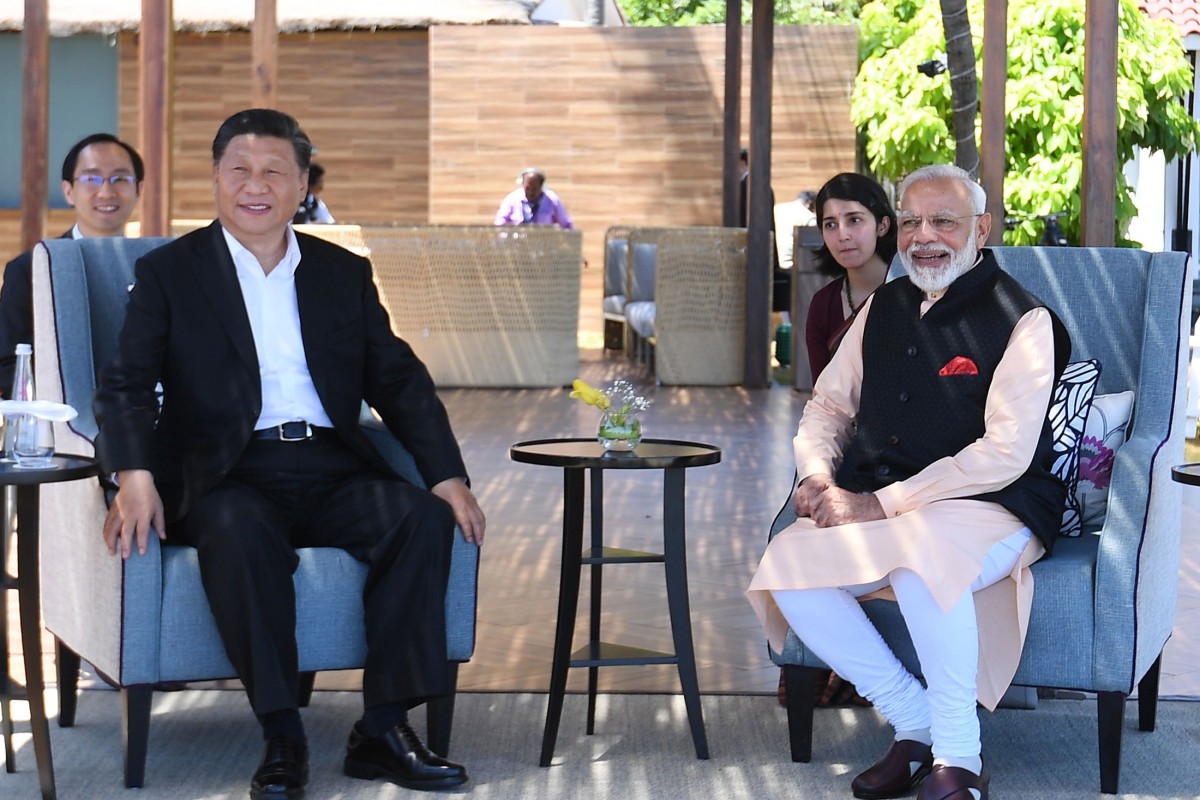
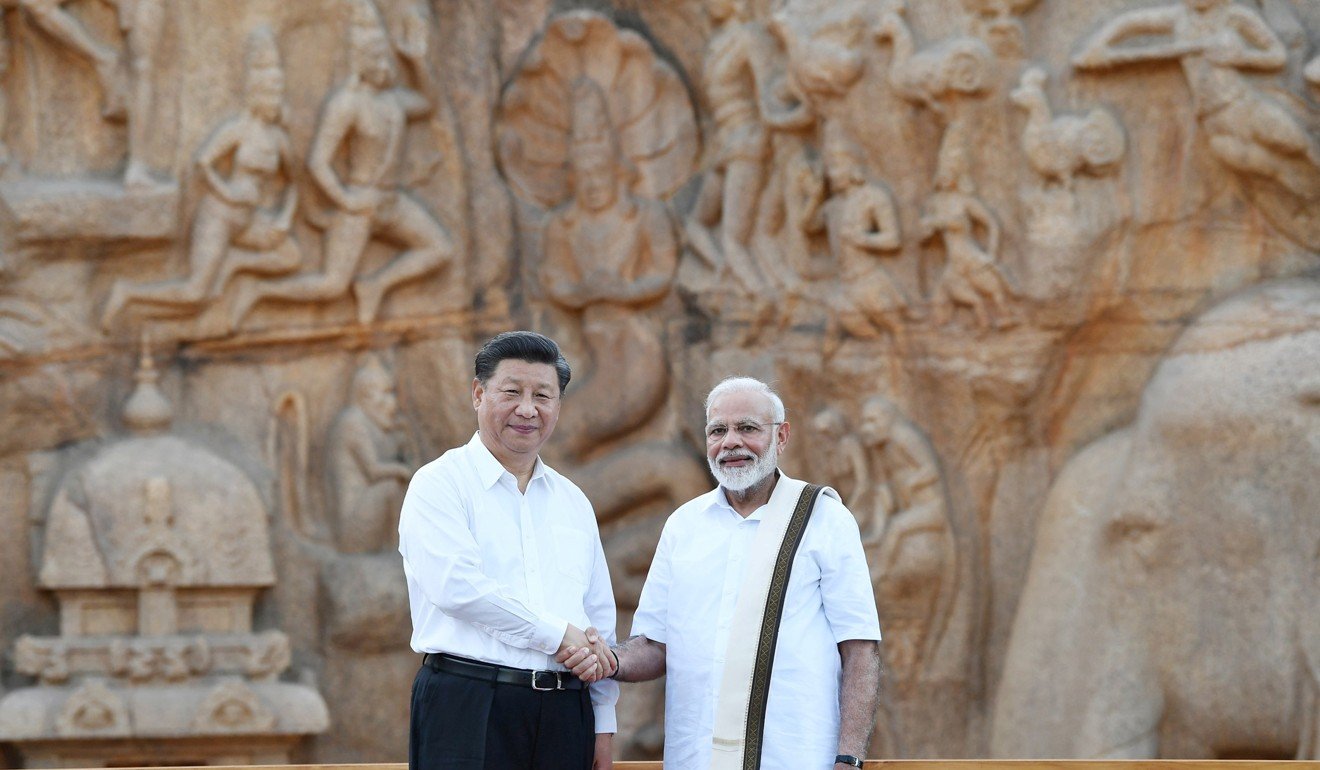
Indian Prime Minister Narendra Modi and Chinese President Xi Jinping during their meeting in Mamallapuram, Chennai. Photo: EPA
Chinese President Xi Jinping and Indian Prime Minster Narendra Modi concluded their second informal summit on Saturday by pledging to overcome trade differences and appreciate “each other’s autonomous foreign policies”, signalling an effort to focus on mutual interests rather than on long-standing contentious issues.
Modi remarked that both sides had agreed to be “sensitive” to each other’s concerns and not let differences escalate into disputes, while Xi called for communication to “alleviate suspicions” and for India and China to enhance strategic mutual trust, according to state news broadcaster CCTV.
Their desire to look beyond irritants in diplomatic ties, including a decades-long border row and China’s close military ties with India’s arch rival, Pakistan, comes as Beijing is embroiled in a tariff war with Washington that has rocked the global economy.
In a sign of China’s willingness to address India’s trade deficit with it, the leaders agreed to launch a “High Level Economic and Trade Dialogue”.
As Xi meets Modi, Chinese in Chennai hope to witness the ‘Wuhan spirit’
Chinese Vice-Premier Hu Chunhua and Indian Finance Minister Nirmala Sitharaman will meet regularly to discuss ways to boost two-way trade and investments, Indian foreign secretary Vijay Gokhale said in a media briefing.
India has a US$53 billion trade deficit with China, which makes up almost a third of its total trade deficit. It is also facing pressure to decide if it will commit to the China-led

Regional Comprehensive Economic Partnership

(RCEP), which aims to create the world’s largest trading bloc involving 16 countries before the end of the year.

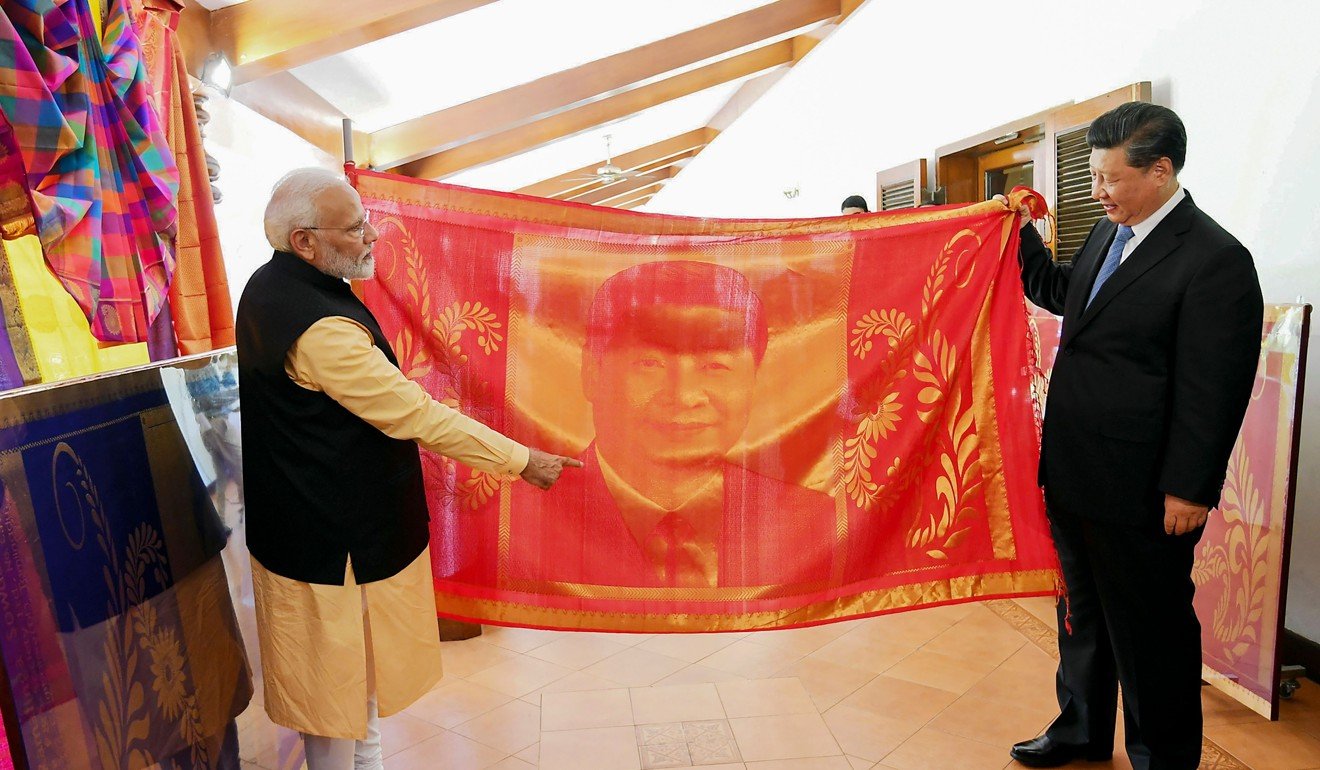
Narendra Modi exchanges gifts with Xi Jinping. Photo: AFP

Negotiations are ongoing with talks taking place in Bangkok this week, but India’s domestic producers have opposed the agreement over fears of a flood of Chinese imports. On Friday, the Indian government rejected clauses in the agreement related to e-commerce, according to reports.

Gokhale told the media briefing that both leaders, who met in the coastal town of Mamallapuram about 50km away from Chennai, briefly discussed the RCEP.

“PM Modi said India was looking forward to the RCEP but it is important that RCEP is balanced, that a balance is maintained in trade in goods, trade in services and investments,” he said, adding that Xi agreed to further discussions of India’s concerns on the issue.

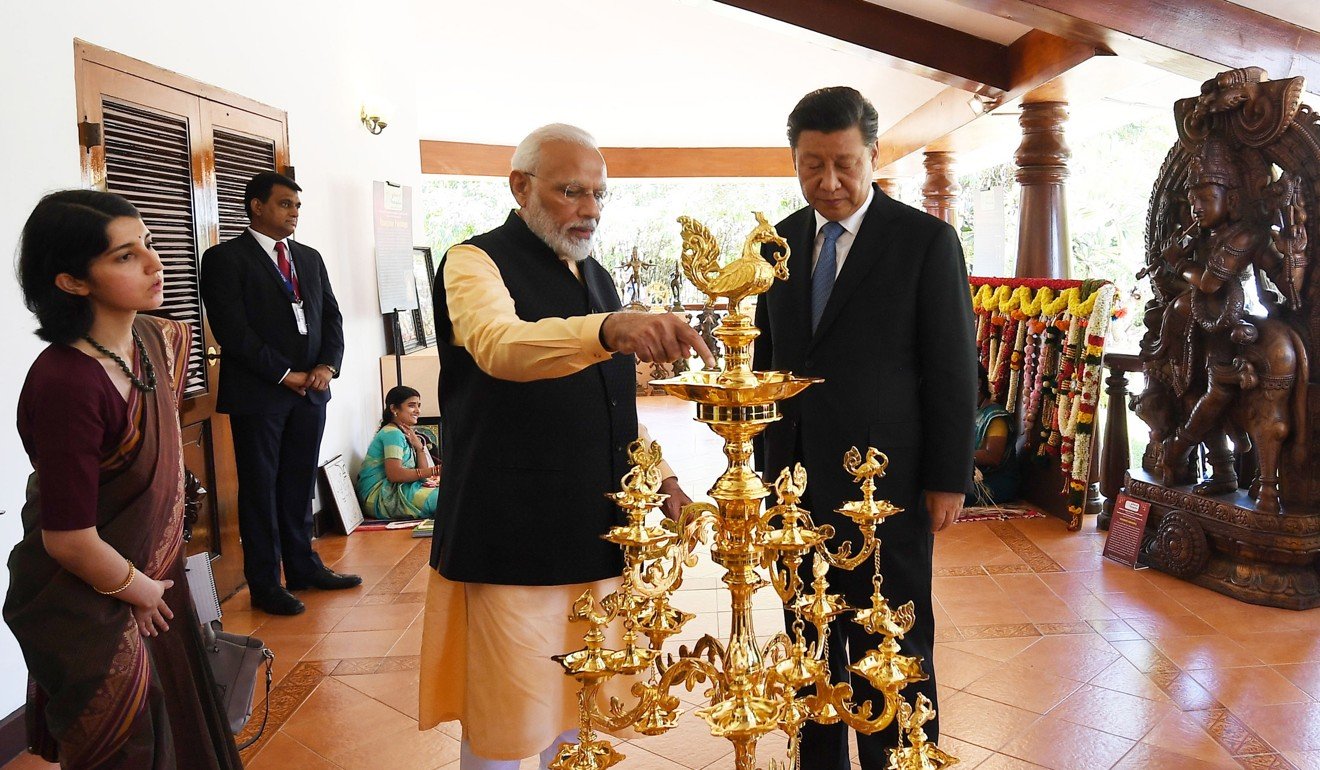
Narendra Modi with Xi Jinping in Mamallapuram. Photo: EPA

CCTV said Xi had six suggestions for how China and India could further improve ties, including assessing each other correctly and stepping up cooperation between their militaries. Besides economic and trade dialogue, China welcomed Indian pharmaceutical and IT companies to invest there, he said.

“We should look at disputes with a correct mind, and not let disputes affect cooperation.

“Both sides should properly and fairly get a solution for border disputes that are acceptable to each other … [and] cautiously handle each other’s core interests, and take proper measures to control issues that cannot be resolved immediately,” the president reportedly said.

Gokhale told reporters that both countries had agreed to pursue, through special representatives, an ongoing dialogue on their disputed border. China and India have held more than 20 rounds of talks to resolve their boundary dispute, over which they went to war in 1962. Different mechanisms have been set up to maintain peace along the 4,000-kilometre (2,485-mile) so-called Line of Actual Control.

Xi and Modi bank on chemistry as they talk trade and terrorism

Gokhale confirmed that the leaders – who met for a total of seven hours over Friday and Saturday, with the bulk of their time spent in one-on-one talks – did not discuss 

Kashmir

, a region that is currently divided between India and Pakistan but which both nuclear-armed rivals claim in full.

Since India revoked the autonomy of the area it controls in August and imposed a lockdown,

Pakistan

has lobbied its allies – including its all-weather friend China – to support its opposition to the move. New Delhi had reacted sharply to Beijing’s move to take the matter to the United Nations, insisting that it was a purely bilateral issue. Two days before the summit, Xi had hosted Pakistan Prime Minister Imran Khan and had assured him of China’s support on all core issues, a statement that had irked India.

Gokhale said both leaders “emphasised the importance of having independent and autonomous foreign policies”.
“President Xi said that the two countries needed to have more extensive dialogue in order to understand each other’s perspectives on major global and regional issues,” he added.
Narendra Modi exchanges gifts with Xi Jinping. Photo: AFP

The leaders also discussed terrorism, with a statement issued later by New Delhi saying both sides would make efforts to ensure the international community strengthened its framework “against training, financing and supporting terrorist groups throughout the world and on a non-discriminatory basis”.

The China-led multilateral Financial Action Task Force, which has been investigating Pakistan’s efforts to stamp out the financing of terrorism, is expected to decide soon if it would add Islamabad to its blacklist along with Iran and North Korea, a move that could invite stringent economic sanctions and drive away international financial institutions, both of which could affect Pakistan’s already-indebted economy adversely.

Gokhale added that as 2020 is the 70th anniversary of diplomatic ties between both countries, India and China will hold 70 events next year to promote people-to-people ties, with Modi accepting an invitation by Xi for the next informal summit to be held in China.

Both leaders had struck positive notes on the summit – with Xi describing their discussions as “candid” and between friends and Modi hailing the “Chennai Connect” meeting as marking a new era of cooperation between both countries.

War games, Kashmir and a US$57b question: the issues as Xi meets Modi

But analysts said they would be looking to see how the newly-announced high-level mechanism on trade panned out.

Narayani Basu, a New Delhi-based author, foreign policy analyst and China watcher felt the summit had achieved its purpose of bagging small wins for both sides.

“Discussing contentious issues would have defeated the purpose of the summit. The idea behind such a summit must be that despite the overarching posturing on different divergent issues, the two countries can achieve the easily-achievable wins. That is what the summit seems to have tried doing.”

But in terms of actual outcomes, she said she remained sceptical.

“I don’t think there has been much progress in the ties between the two countries since the last summit in Wuhan. Hence, this time, there is a lot more caution and scepticism towards such a summit,” she said, referring to the first summit last year in the Chinese city of Wuhan.

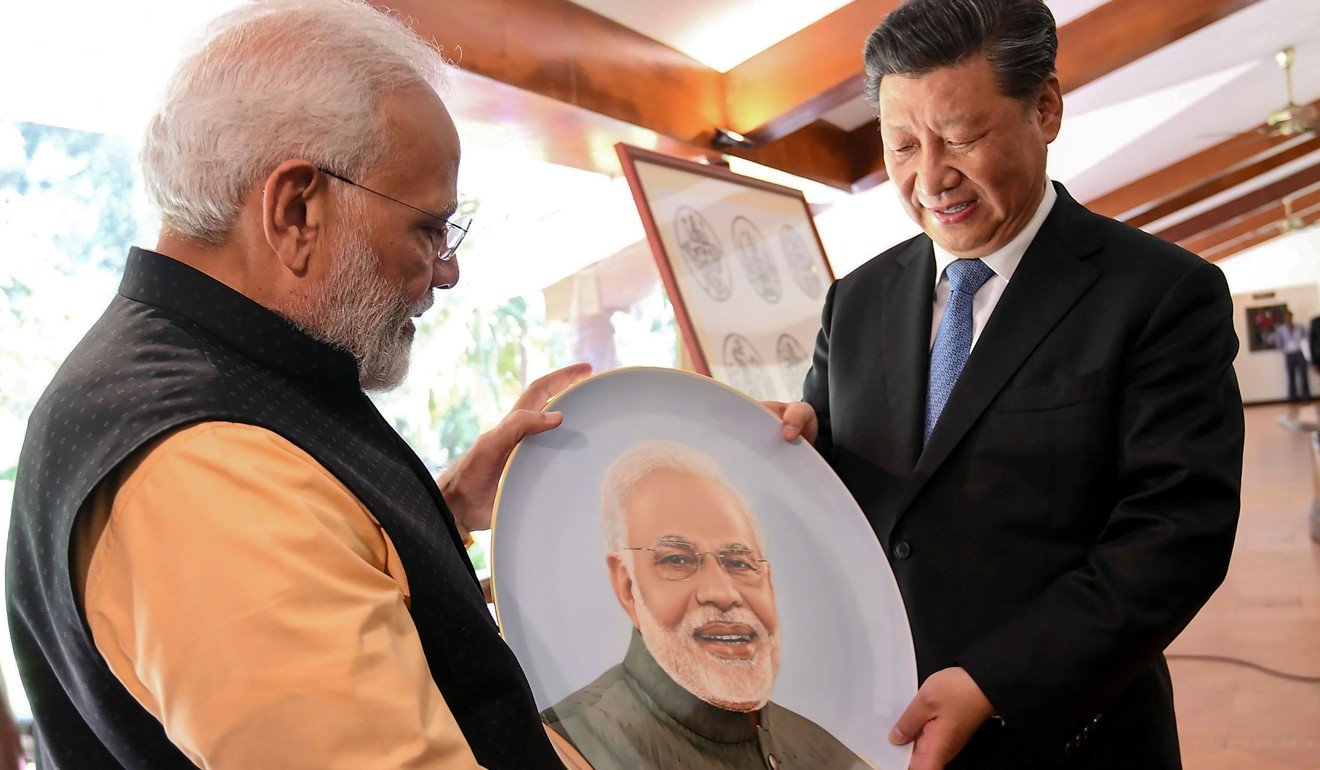
During Xi’s visit to southern India, which lasted 24 hours in all, Modi took him on a personal tour of temple monuments dating back to the seventh and eighth century in Mamallapuram when regional leaders had trade ties with Chinese provinces. He was also shown local artisan handicrafts and art forms, and gifted a handwoven silk portrait, a lamp and a painting.

Xi gave Modi a porcelain plate with the image of the prime minister’s face printed on it.

Xi Jinping with Narendra Modi in Mamallapuram. Photo: Reuters

On Friday, New Delhi announced that visa rules for Chinese nationals visiting India would be relaxed, with multiple-entry visas with a validity period of five years available from this month onwards. At present, most visas are single-entry and usually for between 30 and 60 days. Visa fees would also be reduced, the government said, with the multiple-entry visa costing US$80.

This was aimed at further enhancing “people-to-people exchanges between the two countries and [encouraging] more Chinese tourists to choose India as a destination for tourism purposes,” it said in a statement.

Xi left Chennai on Saturday afternoon and arrived in Nepal, which lies in between India and China. He will be the first Chinese president to visit Nepal in 22 years and is expected to sign a slew of deals with Nepal’s Prime Minister K.P. Sharma Oli, including the planned extension of the rail link from remote, mountainous Tibet to Nepal’s capital, Kathmandu.

The link will be part of Beijing’s ambitious infrastructure project to boost trade, the 

Belt and Road Initiative

(BRI), that Nepal joined two years ago.

More than 120 countries have signed on to the BRI, including Pakistan, where a series of projects worth US$46 billion are being constructed under the China-Pakistan Economic Corridor (CPEC). India has snubbed the BRI and questioned the transparency of funding agreements.
Source: SCMP
13/10/2019

Japan, Thailand and Singapore benefit as Chinese tourists skip Hong Kong over golden week

  • The likes of Saudi Arabia also saw an upswing in travellers from the mainland after the release of its new visa programme
  • But fewer Chinese tourists went abroad this year, with a 15 per cent drop from 2018 attributed to more opting to visit local historical sites
Chinese tourists take photos in front of the Imperial Palace in Tokyo, Japan. Photo: Reuters
Fewer Chinese travellers went overseas during “golden week” this year – but for those who did, Japan, Thailand and Singapore were the top-ranked destinations as tourists from the mainland gave Hong Kong a miss, according to China’s largest travel company Ctrip.
Chinese government data showed only 6.07 million people travelled during the national holiday between October 1-6, a 15.1 per cent drop from the corresponding period last year. Analysts attributed this to Chinese tourists opting for a “staycation”, as 782 million people – a 7 per cent increase from last year – chose to celebrate the 70th anniversary of the People’s Republic of China by visiting local historical sites.
How a new wave of Indian travellers are transforming tourism in Southeast Asia
For those who did venture abroad, JapanThailand and Singapore ranked as the top three most-booked countries in Asia during the week, according to Chinese travel firm Ctrip, as tourists from the mainland skipped protest-hit Hong Kong for other destinations.
The city, now in its 19th week of anti-government protests, over the week saw a 50 per cent overall drop in tourism from last year, as well as a 47.8 per cent reduction in border crossings at the Luohu border checkpoint, according to government figures.

Japan remained the most popular destination for Chinese tourists. In the first half of 2019, the nation saw 4.5 million visitors from China, up 11.7 per cent from the same period in 2018. In order of popularity, the top-visited cities were Osaka, Tokyo, Kyoto, Sapporo and Nagoya, according to Japanese media.

Over the same week, Japan increased its sales tax from 8 to 10 per cent, but Chinese shoppers – who accounted for 37 per cent, or US$15.4 billion, of the spending by international visitors to the nation last year – were undeterred.

Japan saw the highest volume of overseas transactions over the week, according Alipay Mobile, the world’s largest mobile payment platform. The firm declined to share the exact amount Chinese tourists had spent in Japan, but reported average spending per international traveller during golden week had increased by 15 per cent to 2,500 yuan (US$350).

From Nissan sales to Tsushima tourism, trade spat with Korea hits Japan in the pocket

Alipay is operated by Ant Financial, an affiliate of Alibaba Group Holding, which owns the Post.

Japanese department stores such as Sogo and Seibu celebrated the Chinese national holiday by holding golden week events and sales at 15 different branches across the nation, with food and arts promotions targeting Chinese shoppers.

Chinese travellers to Japan want cultural experiences involving local customs such as temple tours, heritage sites and cultural events, according to Emily Guo, a researcher at Hong Kong-based marketing research firm Cherry Blossoms.

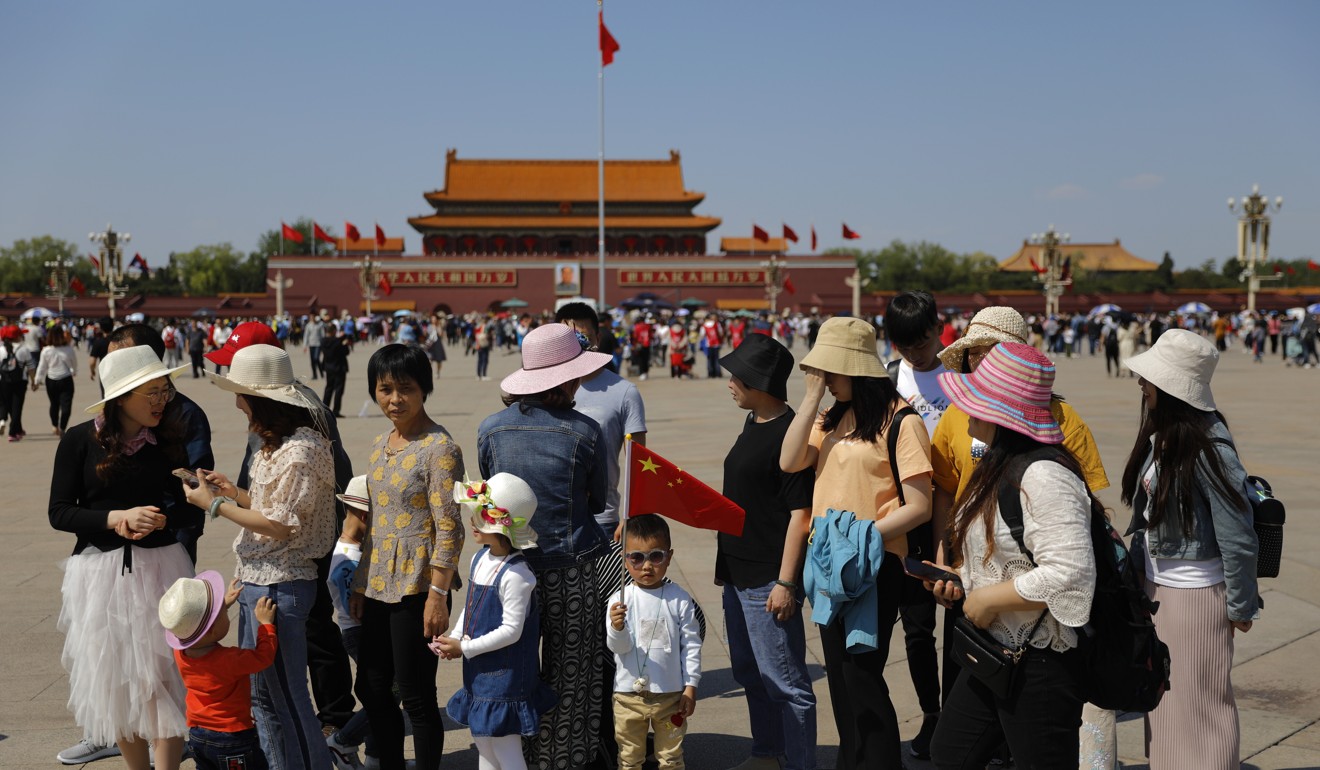
Chinese tourists visit Tiananmen Square in Beijing. Analysts say 782 million people opted for “staycations” at local historical sites over golden week this year. Photo: EPA

Experts say Thailand – the second-most booked country during golden week, according to Ctrip – saw many repeat travellers return to the country. The nation saw 1.03 million arrivals from China in August, up 19 per cent from 2018.

Guo said these travellers were more budget-conscious than those who travelled to Japan, and enjoyed the good value and picturesque scenery for sharing on social media.

“They have already travelled to Southeast Asia before, and are therefore looking for personalised and local experiences like interacting with Thai residents, jungle treks and food tours,” she said, adding that many are willing to spend extra on immersive experiences such as a hotel in the countryside, or on a room with a forest view.

Thailand’s tourism industry gets jitters after currency surges, visitor numbers from China fall

According to Alipay Mobile, the sale of “durian experience” packages for Chinese tourists looking to taste the spiky, pungent fruit at local farms increased by 60 per cent in Thailand and Malaysia from last year.

Shopping remained on the agenda, too. Thailand ranked second for the highest volume of overseas transactions during the week, according to data from Alipay Mobile. Most Chinese shoppers frequented duty-free shops, convenience stores and local malls, according to local press.

Singapore remained a destination of choice for tourists from the mainland. The city was among the most popular “traditional destinations” for them, according to China’s culture and tourism ministry, with others including Malaysia, Thailand, Japan, Australia, France, Italy, and Russia.

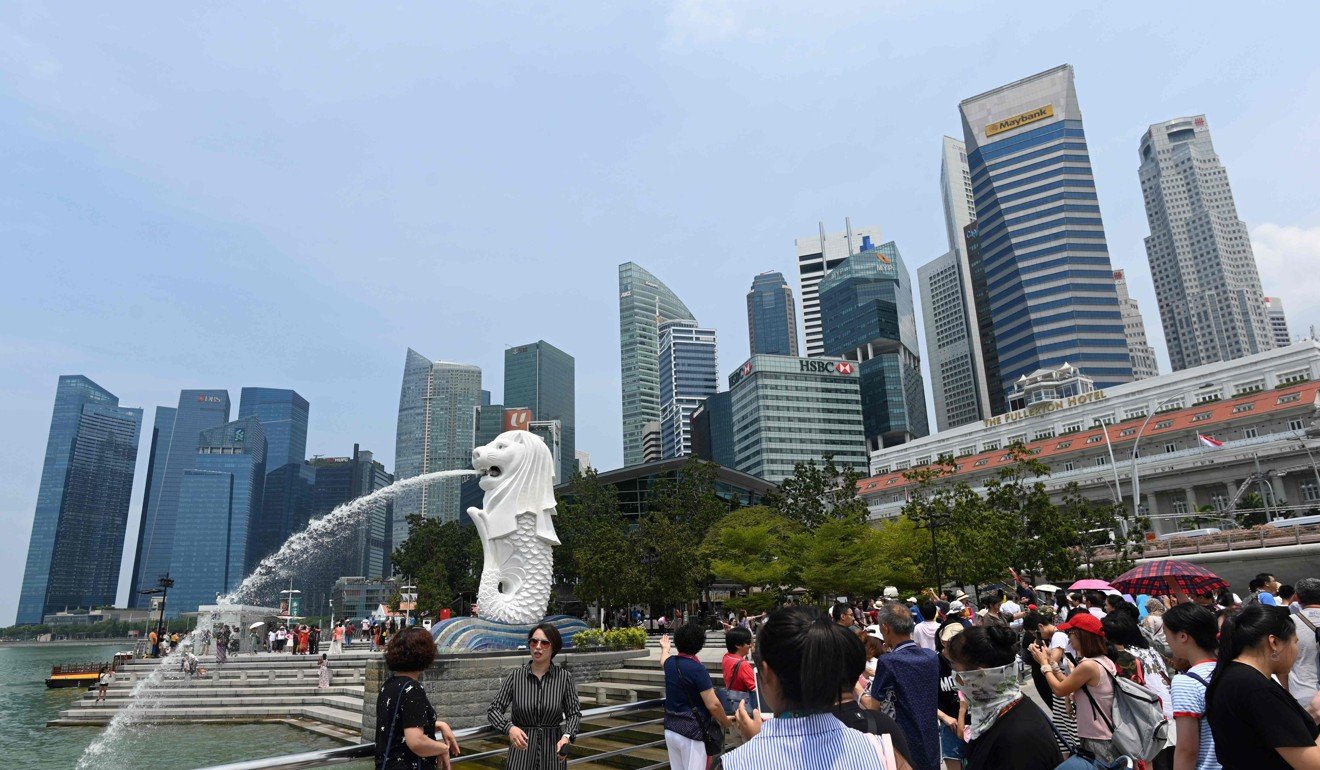
Chinese tourists visiting Singapore over golden week also seized the opportunity to check out property in the Lion City. Photo: AFP

July saw the Lion City break its record for the number of Chinese arrivals, at close to 390,000, an unprecedented 46 per cent jump from the previous month.

Analysts have attributed this to a diversion of tourists from Hong Kong, but property agents such as Clarence Foo, associate deputy group director at OrangeTee & Tie, said some of these Chinese tourists were using the golden week as a chance to eye Singaporean real estate.

“Compared to a normal week, there were probably 15 to 20 per cent more Chinese visitors who viewed property,” said Foo, who counts Singaporean and international buyers among his clients.” They are certainly more keen on Singapore [property] now as there isn’t another comparable investment destination in Asia.”

Meanwhile, the Middle East is emerging as a popular shopping destination for Chinese tourists. According to Ctrip, Dubai saw 501,000 travellers from the mainland in the first half of 2019, an 11 per cent increase from last year.

Saudi Arabia has also experienced a surge in Chinese tourists, with 7,931 heading to the country since it launched its new instant tourist visa programme on September 27. With the new visa, which can be obtained online or upon arrival, tourists can stay in the country for up to 90 days, and unwed foreign men and women can for the first time share hotel rooms.

“Saudi Arabia has the potential to become very popular with Chinese tourists,” said Guo from Cherry Blossoms, adding that travellers from the mainland are increasingly looking for exciting new adventures. “It’s a status symbol for them to visit a country others haven’t visited before.”

Source: SCMP

12/10/2019

China’s Xi and India’s Modi discuss proposals to improve ties hit by Kashmir

MAMALLAPURAM, India, (Reuters) – Chinese President Xi Jinping said on Saturday he had a free and frank discussion with Indian Prime Minister Narendra Modi and would pursue proposals the two leaders discussed to improve bilateral ties.

Xi and Modi held several hours of one-on-one talks in a southern seaside Indian town in their second annual summit designed to break through decades of distrust between their countries over border disputes, a ballooning trade deficit and China’s close military ties with India’s arch rival, Pakistan.

“Yesterday and today we have engaged in candid discussions and as friends,” Xi said in opening remarks as the two leaders sat down for formal talks with their delegations.

“I look forward to further discussions, I may follow up on proposals discussed yesterday,” he said, without elaborating.

Ties were ruffled when India revoked the special status of the Himalayan territory of Kashmir in August, angering both Pakistan, which claims the region, and its all-weather ally China.

Modi noted in his opening remarks that he and Xi had agreed to manage their differences prudently and not let them snowball into disputes.

The neighbours are expected to move forward on a set of confidence building measures along their border including border trade, tourism and even joint military patrols to boost trust, officials said.

India and China share a 3,500 km (2,200 mile) border, over which they went to war in 1962. Its course remains unresolved despite more than 20 rounds of talks.

Modi took Xi on a personal tour of temple monuments dating back to the seventh and eighth century at Mamallapuram in southern India when regional leaders had trade ties with Chinese provinces.

India’s Foreign Secretary Vijay Gokhale said the two leaders spent nearly five hours discussing bilateral issues that have often been fraught.

The two leaders discussed economic issues, including India’s $53 billion trade deficit with China in 2018/19, and ways to tackle it, Gokhale said.

China, for its part, was expected to urge India to take an independent decision on telecom equipment maker Huawei’s bid for India’s proposed 3G network and not be swayed by U.S. pressure. The United States has asked its allies not to use Huawei equipment, which it says China could exploit for spying.

Sources told Reuters in August that China had warned of “reverse sanctions” on Indian firms engaged in business in China should India block Huawei Technologies [HWT.UL] because of U.S. pressure.

Xi will head to Nepal later on Saturday where he is expected to push for China’s further involvement in developing its infrastructure as part of his signature One Belt One Road initiative to boost trade and transport links across Asia.
Source: Reuters
11/10/2019

Spotlight: Film, yoga, smartphone industries enhance China-India links

INDIA-CHINA-FILM-YOGA-SMARTPHONE

 People practice yoga at a park in New Delhi, India, June 21, 2019. TO GO WITH: Spotlight: Film, yoga, smartphone industries enhance China-India links (Xinhua/Zhang Naijie)

by Xinhua writers Chen Jian, Zhao Xu, Zhang Xingjun

CHENNAI, India, Oct. 11 (Xinhua) — “I would like to see a lot of collaboration between creative people from China and India, making stories that people from both countries would love to see,” said Bollywood star Aamir Khan before a film-promotion trip to China in early 2018.

As one of the most recognized Indian actors in China, Khan’s biographical sports film “Dangal” raked in nearly 1.3 billion yuan (190 million U.S. dollars) in the Chinese box office in 2017, making it the highest-grossing Indian film of all time in China.

Inspired by the real journey of an Indian wrestler, Khan acted the part of a strict father who turned his daughters into world-class athletes.

From “Dangal” and “Secret Superstar” to “Hichki” and “Thugs of Hindostan,” Bollywood hits have been immensely popular among Chinese moviegoers in recent years. Older generations were impressed by Indian films like “Awara” (1951) and “Caravan” (1971), which featured spectacular song-and-dance scenes.

Khan, who has visited China several times, said he felt Chinese and Indian people have many things in common. For example, both peoples attach great importance to family, he told Xinhua.

“Many people get to know a certain country through watching their movies. Through my work, quite a few foreign viewers start to know the sorrows and happiness of ordinary Indian people,” Khan said, adding that artists can help people with different cultural backgrounds understand each other.

Bollywood actress Rani Mukerji, whose Hindi comedy-drama film “Hichki” was screened in China last year, said Chinese audience watching her film with Chinese subtitles reacted similarly to Indian fans.

“You realize that you don’t have to know the language to connect with the film. I think that’s what makes movies so, so special … If the emotions are universal, it can connect anywhere,” she told Xinhua in an interview earlier this year.

In “Hichki,” Mukerji played the leading role of an aspiring teacher with Tourette Syndrome, who must prove herself by educating a group of underprivileged students.

Taking note of Bollywood’s developed industrial system and China’s huge film market, the Indian actress is also looking forward to India-China film co-productions.

“I am actually very keen to do India-China co-productions where I can be part of a Chinese film or Chinese actors can be part of Indian films,” she said.

YOGA IN CHINA

Before Yu Songsong, a young man from southwest China’s Guizhou Province, started to practice yoga, he knew little about India, where the practice originated.

Having spent the last six years learning yoga, he is attracted by the yoga culture and eager to travel to India.

Yu used to suffer from an emotional disorder. “It was yoga that turned me around. I was no longer lost. I’ve found a direction for my life,” he said.

Yu started to practice yoga when he was a freshman and became a vegetarian. “The physical and mental practices relieved me of psychological distress,” he said.

Through yoga, Yu is engaging in a comparative study in the philosophies of China and India, two ancient civilizations in the world.

“In the class, we discuss and compare the traditional Chinese theory that ‘man is an integral part of nature’ and the Indian idea that ‘the Buddha and I are one.’ Through this, we explore the similarities that underline the culture and civilizations of the two countries,” he said.

The China-India Yoga College, established at Kunming’s Yunnan Minzu University in June 2015, is China’s first yoga college. Fifty branches are planned to be opened in China’s major cities in the next three to five years, and are attracting batches of Indian yoga teachers to China, with 38-year-old Subbulakshmi Velusamy being one of them.

Velusamy arrived in Kunming in late 2015 and quickly adapted to the climate and life there. She said the local diet is light, which is very palatable to yoga practitioners and vegetarians.

Velusamy said teaching yoga in Yunnan was a wonderful experience as the Chinese people around her were very helpful and kind.

“They often chat with me after class and invite me to parties,” she told Xinhua in an earlier interview.

Velusamy said she was eager to learn about the ancient Chinese civilization. At the same time she introduced yoga to more Chinese as a unique and valuable Indian cultural asset.

Indian Prime Minister Narendra Modi has played a significant role in spreading yoga at home and abroad. He was instrumental in urging the United Nations to mark June 21 as International Yoga Day.

“Beyond exercise and health, yoga is about life, self-awareness and a connection with your soul. So I expect my students to understand their consciousness in today’s technologically-driven world,” said Rama Rathore, a yoga trainer in New Delhi.

CHINESE SMARTPHONE BRANDS

Smartphones are becoming easily available to everyone thanks to their affordable prices. With the exploding growth of Internet data usage and its access across the country, millions of Indians are now connected with the world thanks to their smartphones.

“It is the people’s window to the world and the growth opportunity in this sector is huge,” said Saifi Ali, a head researcher associated with a leading telecom operator located in Gurgaon on the outskirts of New Delhi.

“India has overtaken the United States in the smartphone market,” he said.

Meanwhile, Chinese smartphone brands, such as Xiaomi, Oppo and Vivo, have been successful in India’s fast growing market, according to global market research firm Canalys.

Xiaomi has been the leading smartphone brand in India for eight consecutive quarters, with a 28.3-percent market share for the second quarter of this year.

Xiaomi has become the first brand in India to sell more than 100 million smartphones within a span of five years, since the company began operations in the country in 2014.

Jobs and technical training provided by the Chinese companies have helped many Indian workers to enhance their technical skills and earn good money.

Neeraj Sharma, 25, is an Indian employee at MCM, a Noida-based Chinese company of smart terminal equipment. Sharma said he has learned a lot from the company and his technical skills have also improved.

“From here I started learning practical knowledge. Everything I know about the technology we are using here for SMT (Surface Mount Technology) and also in assembly is from this company. I started from the very lowest designation and right now I am working as a floor-in-charge there,” he told Xinhua in a recent interview.

Thanks to his stable income from MCM, Sharma, who is from the northern Uttar Pradesh state, has fulfilled his dream of buying a house in Noida, outside New Delhi.

“I came here, so at that time I had planned to buy a house here for my family. Right now I have already bought a small house. Maybe further in the future I will have a flat,” he said.

Source: Xinhua

11/10/2019

Vice premier calls for solid progress in Xiongan New Area development

CHINA-HEBEI-XIONGAN-HAN ZHENG-RESEARCH TRIP (CN)

Chinese Vice Premier Han Zheng, also a member of the Standing Committee of the Political Bureau of the Communist Party of China Central Committee, inspects the progress of local relocation work during his research trip in Xiongan New Area, north China’s Hebei Province, Oct. 9, 2019. (Xinhua/Zhang Ling)

XIONGAN, Oct. 10 (Xinhua) — Vice Premier Han Zheng has called for solid progress in the high-quality development of the Xiongan New Area in north China’s Hebei Province.

Han, also a member of the Standing Committee of the Political Bureau of the Communist Party of China Central Committee, made the remarks during a research trip to Xiongan Wednesday.

Hailing the smooth progress in the development of the new area, Han said authorities should provide more incentives to guide high-quality resources including education and healthcare into the area, while efforts should be made to make Xiongan more intelligent.

Calling the building of the area “a strategy that will have lasting importance for a millennium to come and a significant national event,” Han stressed high standards and solid progress in the area’s development.

Environmental protection and treatment should be a priority while particular attention should be given to improving the ecology of the Baiyangdian Lake in Xiongan, he said.

Reforms and innovation should be carried out in the new area, which will gradually be granted provincial-level authority for economic and social management, Han added.

China announced plans in 2017 to establish the Xiongan New Area, located about 100 km southwest of Beijing. It is a key move in pushing the coordinated development of the Beijing-Tianjin-Hebei region.

Source: Xinhua

10/10/2019

Taiwan leader rejects China’s ‘one country, two systems’ offer

President Tsai Ing-wen also vowed in a National Day speech to defend Taiwan’s sovereignty, saying her government would safeguard freedom and democracy as Beijing ramps up pressure on the self-ruled island it considers a wayward province.

Tsai, who is seeking re-election in January amid criticism of her policy towards China, referred to the arrangement for the return of the former British colony of Hong Kong to Chinese rule in 1997 as a failure.

Hong Kong has been hit by months of anti-government protests triggered by widespread resentment of what many city residents see as relentless efforts by Beijing to exert control of their city despite the promises of autonomy.

China has proposed that Taiwan be brought under Chinese rule under a similar arrangement, but Tsai said Beijing’s policies towards the island were a danger to regional stability.

“China is still threatening to impose its ‘one country, two systems’ model for Taiwan. Their diplomatic offensives and military coercion pose a serious challenge to regional stability and peace,” Tsai said.

“The overwhelming consensus among Taiwan’s 23 million people is our rejection of ‘one country, two systems,’ regardless of party affiliation or political position.”
Taiwan’s National Day, marking the anniversary of the start of a 1911 uprising that led to the end of dynastic rule in China and the founding of a republic, was celebrated in Taipei with singing, dancing and parades.
Cold War hostility between the island and the mainland had eased over the past decade or so as both sides focused more on expanding business ties, but relations have cooled considerably since Tsai took office in 2016.
China suspects Tsai and her independence-leaning Democratic Progressive Party of pushing for the island’s formal independence, and this year threatened it with war if there was any such move.
Tsai denies seeking independence and reiterated that she would not unilaterally change the status quo with China.

FLASHPOINT

Despite her assurances, Beijing has stepped up pressure on the island to seek “reunification” and backed up its warnings by flying regular bomber patrols around it.

Beijing also says Taiwan does not have the right to state-to-state relations and is keen to isolate it diplomatically.

Seven countries have severed diplomatic ties with the Taiwan and switched allegiance to Beijing since Tsai coming to power. It now has formal diplomatic ties with just 15 nations.

But Tsai said Taiwan was undaunted.

“The determination of the Taiwanese people to embrace the world has never wavered,” she said, adding that Taiwan must work with “like-minded countries” to ensure peace and stability across the Taiwan Strait.

Tsai said under her watch Taiwan has boosted its combat capabilities with the purchase of advanced weapons and development of home-made aircraft.

Taiwan unveiled its largest defence spending increase in more than a decade in August, aiming to purchase more advanced weapons from overseas.

The island has long been a flashpoint in the U.S.-China relationship.

In July, the United States approved the sale of an $2.2 billion worth of weapons to Taiwan, angering Beijing.

The United States has no formal ties with Taiwan but is bound by law to help provide it with the means to defend itself.

Source: Reuters

Law of Unintended Consequences

continuously updated blog about China & India

ChiaHou's Book Reviews

continuously updated blog about China & India

What's wrong with the world; and its economy

continuously updated blog about China & India