11/06/2019

Huawei: ‘We stand naked in front of the world’

Huawei logoImage copyrightAFP

Huawei has denied that it has any links to the Chinese government.

Huawei’s cyber-security chief John Suffolk told MPs on Monday that the tech giant had never been asked by China or any other government to “do anything untoward”.

Mr Suffolk said Huawei welcomed outsiders to analyse its products and detect engineering or coding flaws.

“We stand naked in front of the world, but we would prefer to do that, because it enables us to improve our products.”

He added: “We want people to find things, whether they find one or one thousand, we don’t care. We are not embarrassed by what people find.”

Huawei was invited to the Technology and Science Select Committee to answer questions from MPs on the security of its equipment, and its links to the Chinese government.

The US has encouraged allies to block Huawei – the world’s largest maker of telecoms equipment – from their 5G networks, saying the Chinese government could use its products for surveillance.

Huawei cyber-security chief John SuffolkImage copyright PARLIAMENT TV
Image caption Huawei’s cyber-security chief John Suffolk said the tech giant has no access to mobile networks

“We’ve never had a request from the Chinese government to do anything untoward at all,” said Mr Suffolk.

“We have never been asked by the Chinese government or any other government, I might add, to do anything that would weaken the security of a product.”

MPs raised concerns about Chinese human rights abuses, such as reports that up to a million Muslims are in detention centres in Xinjiang province.

They asked whether Huawei was required to provide equipment to Xinjiang province, especially in light of the 2017 Chinese intelligence law, which requires individuals and associations to comply with Chinese intelligent agencies.

Mr Suffolk said: “We have had to go through a period of clarification with the Chinese government, that has come out and made it quite clear that that is not the requirement of any company.

“We’ve had that validated via our lawyers and revalidated by Clifford Chance…according to our legal advice, that does not require Huawei to undertake anything that weakens Huawei’s position in terms of security.”

Remote access

MPs asked whether Huawei would be able to remotely access the UK’s 5G mobile networks via its equipment.

A woman using 5G to access the internet on her smartphoneImage copyright GETTY IMAGES
Image caption Huawei said it would have no access to any data on a 5G mobile network

In reply, Mr Suffolk stressed that Huawei is a provider of telecommunications equipment to mobile network operators.

“We don’t run networks, and because we don’t run the network, we have no access to any of the data that is running across that network,” he said.

He also explained that Huawei is only one of about 200 vendors who would be providing various different bits of equipment that would eventually make up a 5G network in the UK.

However, if an operator were to have a problem with Huawei equipment, a support centre based in Romania would be able to remotely access the equipment to fix the problem.

MPs wanted to know whether it would be possible for a 5G network to be used to track an individual user.

In response, Mr Suffolk explained that mobile phone technology requires the mobile operator to constantly track a user’s phone, in order to be able to connect them to the mobile network.

By that logic, the operator is constantly tracking all of its customers, all the time.

He also told MPs that only about 30% of the the components in Huawei products are actually made by the company – the rest of the components are obtained from a global supply chain that Huawei closely monitors in order to prevent security breaches.

Source: The BBC
11/06/2019

Aarey forest: The fight to save Mumbai’s last ‘green lung’

Aarey ForestImage copyright GETTY IMAGES
Image caption Aarey forest is in Mumbai city

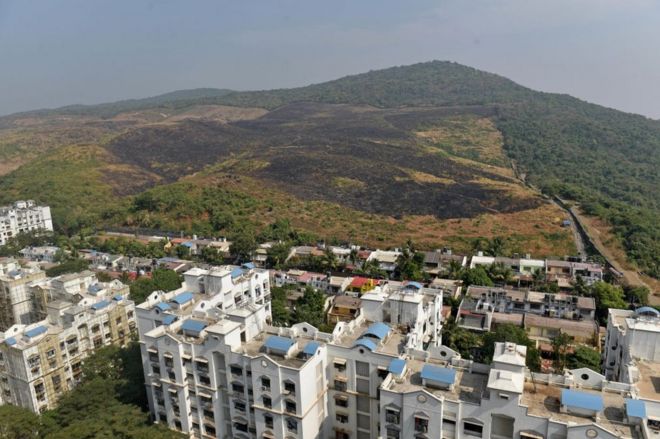
The Aarey forest, a verdant strip that lies at the heart of India’s bustling Mumbai city, is often referred to as its last green lung. But now, locals say, it’s under threat from encroachment. BBC Marathi’s Janhavee Moole reports.

As a child, Stalin Dayanand used to picnic in the Aarey forest.

“It was the only place where you could go and play, climb trees or just sit and eat under the shade of a tree and be close to nature,” says Stalin, who prefers to go by his first name.

Now the 54-year-old is the director of an NGO that works to protect forests and wetlands. He is fighting for Aarey.

On 6 June, the government cleared 40 hectares (99 acres) of the 1,300 hectare forest to build a zoo, complete with a night safari.

Another slice of it is being claimed by Mumbai’s new metro rail which is currently under construction. Thousands of trees will have to be felled to construct a new multi-level parking unit for the metro.

Media caption What happens if you ban plastic?

Stalin has petitioned India’s Supreme Court challenging the construction, but the case is still pending.

Locals and environmental activists like him are up in arms because they fear the government will eventually clear the way for private builders to encroach on the Sanjay Gandhi National Park, which lies to the north of Aarey. Spread over 104 sq km (40 sq miles), this protected area makes Mumbai one of the rare cities to have a jungle within its boundaries.

Their concern is partly fuelled by the fact that this is prime location in a city where land is scarce and real estate prices are among the most expensive in the world.

But officials dismiss these fears as unfounded and point out that the construction for the metro only requires 30 hectares of the 1,300 hectares that make up the Aarey forest.

“This is the most suitable land due to its size, shape and location,” says Ashwini Bhide, managing director of the Mumbai metro rail corporation.

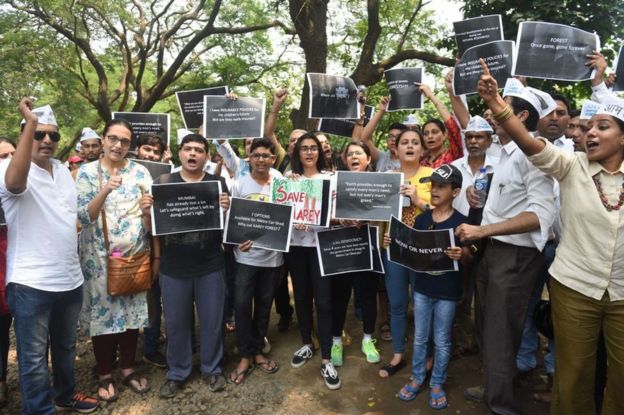
Residents of Aarey colony and Aam Aadmi Party members protest against cutting of trees to build a metro shed at Aarey Colony on 2 October 2018 in Mumbai, India.Image copyright GETTY IMAGES
Image caption Plans to fell trees in the forest have led to protests

She adds that the city badly needs a “mass rapid transport system”. India’s financial hub is congested and infamous for its crawling traffic jams and its local train system heavily overburdened.

Officials say that the metro will eventually carry around 1.7 million passengers every day and bring down the number of vehicles on the road by up to 650,000. The city’s current colonial-era railway system, which is effectively its lifeline, ferries some 7.5 million people between Mumbai’s suburbs and its heart on a daily basis.

But they have been up against the city’s residents, including activists and conservationists, ever since news emerged in 2014 that trees would be cut to make way for the metro.

Presentational grey line

Read more India stories

Presentational grey line

What makes the issue complicated is that the Aarey forest is the site of competing claims.

It’s locally known as the Aarey “milk colony” because most of the land was given to the department of dairy development in 1951. But they are allowed to grow cattle fodder only on a fraction of the land. The rest of it is densely forested and dotted with lakes, and the Mithi river flows through it.

Aarey is also home to tribal communities who live in settlements known as “padas”.

“We are not getting basic facilities here, and now metro authorities want to take away the jungle which belongs to us too,” says Asha Bhoye, who belongs to the Konkani tribe and lives in one of the 29 padas. Plans to relocate some of the tribal communities have also met with resistance and led to protests.

Stalin alleges that instead of declaring the Aarey forest a protected area, the state government has used the opportunity to parcel away pieces of it first to the dairy development department and now to other projects.

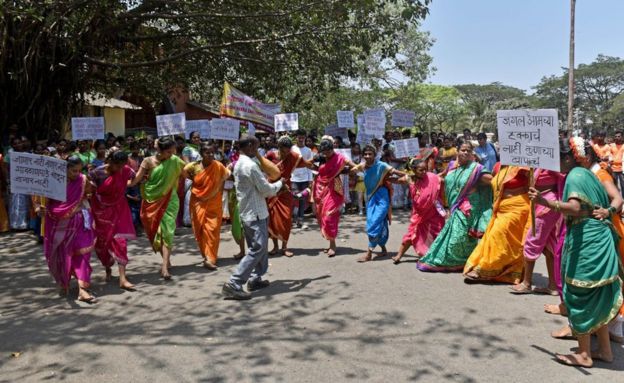
Aadivasi Halka Sanvardhan Samiti and Tribals of Aarey colony protesting to demand protection of Aare forest.Image copyright GETTY IMAGES
Image caption Tribals who live in Aarey demand that it be declared a protected area

“Aarey Forest is part of the same forest as Sanjay Gandhi National Park and we are fighting for the national park itself. In the name of public good, the land is being opened up for developers. It’s a systematic effort to destroy the forest.”

Activists fear that after the parking units are built, other projects will be permitted, further threatening the area’s ecology and wildlife, which includes leopards.

So locals have joined the fight enthusiastically, even leading hikes into the forest to raise awareness. “We bring people here, make them familiar with the forest – there are many species of spiders like trapdoor spiders, the site [of the parking unit] is a leopard site,” says Yash Marwa, a screenwriter who is among those campaigning for the forest.

“Mumbai needs to be liveable”, he adds. “We need to talk about good quality of air and life before talking about infrastructure and development.”

Stalin agrees, saying that “air quality and temperature seem to be last among people’s priorities.”

But he is determined to not give up.

“If I couldn’t do something for my city I’d consider I’ve failed myself.”

Source: The BBC

10/06/2019

Why China struggles to win friends and make itself heard

  • Beijing has to reconcile the competing needs to appear tough to the Chinese public and conciliatory to an international audience
  • China feels US has long had the advantage in shaping global opinion but it now needs to make itself heard
China must appear tough for an increasingly nationalistic audience at home and be conciliatory to an international audience wary of China’s assertive foreign and defence policy. Photo: Xinhua
In just the last week, a Chinese official posed a question that would resonate among his fellow cadres: as China rises, why are we not making more friends and why are our voices not heard?
The question has gained weight as the trade war with the United States has deepened, and Chinese officials have scrambled to win the battle of public opinion at home and abroad.
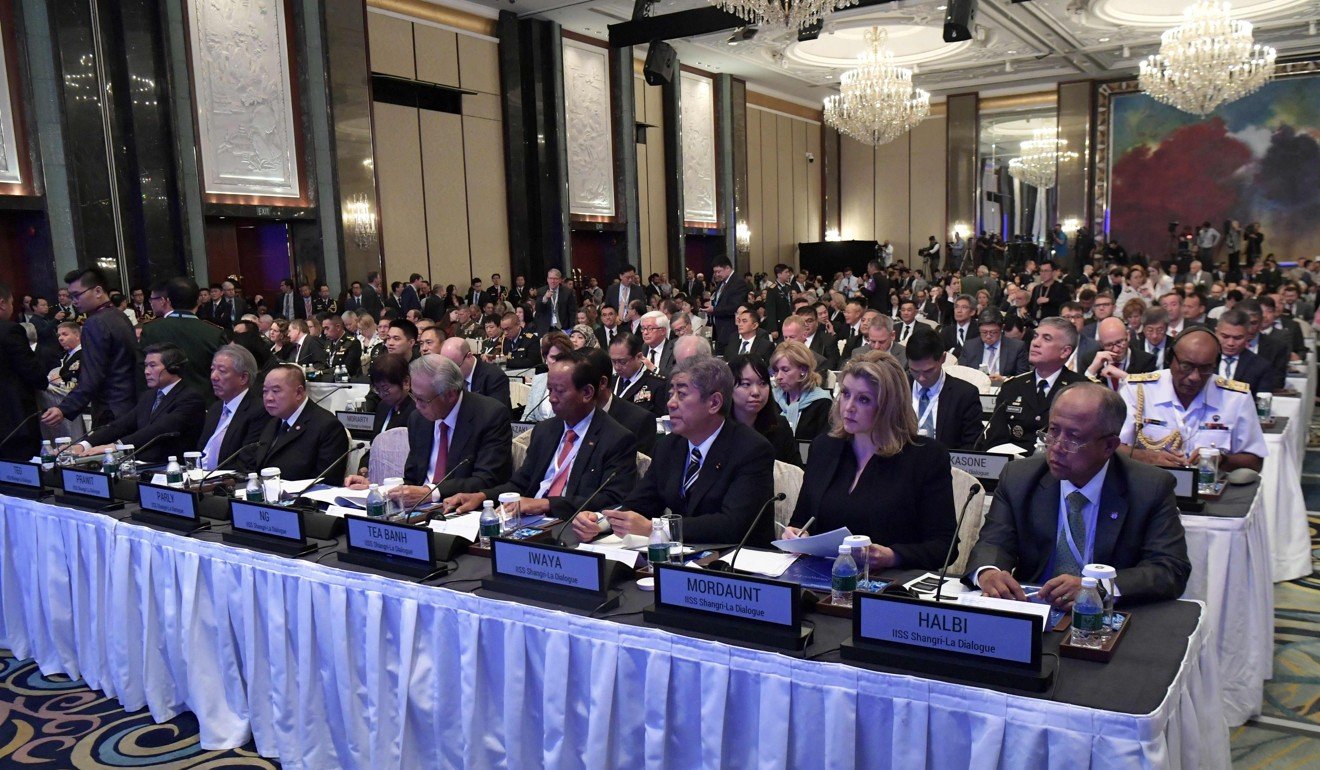
It also came to the fore at the annual Shangri-La Dialogue security forum in Singapore on the weekend, when Chinese officials were faced with balancing the need to appear tough for an increasingly nationalistic audience at home and being conciliatory to an international audience wary of China’s assertive foreign and defence policy.
Senior Colonel Zhao Xiaozhuo, a senior fellow at the People’s Liberation Army’s Academy of Military Sciences and a public diplomacy veteran for the military, said the expectations clashed in Singapore.
“Currently there are two parallel worlds in the public opinion landscape, one domestic and another international, and the two of them are basically split and in two extremes,” Zhao said.
“[The Shangri-La Dialogue] is a place where the two worlds clash. As the Chinese delegation [at the forum] we need to show our position, but it is becoming more difficult to balance [the expectations of the two sides].
“If you are tough, the domestic audience will be satisfied, but it won’t bode well with the international audience. But if we appear to be soft, we will be the target of overwhelming criticism at home.”
China asks state media to pick battles carefully with long US trade war looming, sources say

Zhao said this was an unprecedented challenge for Chinese cadres, who must also satisfy the expectations of the leadership.

“Our task was about diplomacy and making friends. But [with the tough position] you may not be able to make friends, and might even exacerbate the tension,” he said.

The pressure was immense when Chinese Defence Minister General Wei Fenghe took to the stage on Sunday in a rare appearance at the forum. Concerned about how Wei’s performance would be received at home, Beijing ordered Chinese media to minimise their coverage of acting US defence secretary Patrick Shanahan’s address in case it made China appear weak, according to a source familiar with the arrangements for Chinese media.

In his speech, Wei struck a defiant tone, vowing that the PLA would “fight at all costs” for “reunification” with Taiwan and that China was ready to fight the US to the end on the trade front.

Chinese Defence Minister Wei Fenghe makes a rare appearance at the Shangri-La Dialogue in Singapore. Photo: Reuters

Major General Jin Yinan, from the PLA’s National Defence University, a member of the Chinese delegation to the Singapore summit, said Wei’s speech defied expectations that China would show restraint with the US, and demonstrated China’s confidence on the world stage.

The public response at home was immediate and positive. Tens of thousands of Chinese internet users flooded social media platforms such as the Twitter-like Weibo service to express their approval for Wei’s hard line.

“This is the attitude that the Chinese military should show to the world,” one commenter said.

“I am proud of my country for being so strong and powerful,” another said.

Over the past year, Beijing’s propaganda apparatus has tightly controlled the domestic media narrative on the trade war, barring independent reporting on the tensions. But since the breakdown of trade talks in early May, the authorities have gone one step further by escalating nationalistic rhetoric in newspapers and on television.

How Donald Trump’s tweets outgunned China’s heavy media weapons in the trade war publicity battle

China has also tried to make its case to the world with an official statement. On the same day that Wei addressed the gathering in Singapore, the State Council, China’s cabinet, put China’s side of the dispute in a white paper, saying the US should bear responsibility for the breakdown of the trade talks.

A Chinese delegate at the forum said Beijing felt Washington had long had the advantage in shaping global opinion and there was an urgent need for China to make itself heard.

“We should get more used to voicing our position through Western platforms. The US has been criticising us on many issues. But why should the Americans dominate all the platforms and have the final say over everything?” the delegate said.

Before Wei’s appearance at the dialogue, China had not sent such a high-ranking official for eight years. It had long sought to play down the importance of the forum, seeing it as a platform wielded by the US and its Western allies to attack China.

In 2002, China set up the Beijing Xiangshan Forum to rival the Singapore gathering and amplify its voice on security issues.

But Chinese officials are well aware that Xiangshan does not have the same impact and profile as the Shangri-La Dialogue, according to Collin Koh, a research fellow at the S. Rajaratnam School of International Studies at Nanyang Technological University in Singapore.

“[At the same time, the long absence of high-level Chinese representation to the Shangri-La Dialogue also] raises the question of whether it might be sustainable in the long run for [the dialogue] if they continue to not have such ministerial representation [from China],” Koh said.

Zhao, who is also the director of the Xiangshan forum’s secretariat office, agreed that China lagged the US in promoting the image of the military and in winning public opinion.

“China has not fought a war in 30 years. We have only built some islands in the South China Sea and yet have received so much criticism from the international media. The US has engaged in many wars but they are seldom criticised. This reflects that China is in a disadvantaged position in international discourse,” he said.

Expectations collided at the Shangri-La Dialogue in Singapore this month. Photo: AFP
In a rare conciliatory gesture – and just days before the 30th anniversary of the crackdown on pro-democracy protesters in Tiananmen Square – Wei took questions from a room of international delegates on a range of sensitive issues, including the crackdown and China’s mass internment camps in Xinjiang. While he largely toed the official line in his reply, his presence at the forum and willingness to address the questions raised hopes that China would become a more responsible partner in global affairs despite its continuing disputes with the US.
Andrea Thompson, US undersecretary of state for arms control and international security, said Wei’s attendance at the Singapore gathering was a “positive sign” and she hoped that China would be more open and transparent in addressing issues such as arms control and cybersecurity.
“I appreciate that he is here. I think it’s important to have a dialogue … There will be areas where we will agree, and some areas where we disagree, but you still have to have dialogue,” Thompson said.
Source: SCMP
10/06/2019

China’s massive military spending is creating a ripple effect across the Asia-Pacific region

  • With a defence budget second only to the US, China is amassing a navy that can circle the globe and developing state-of-the-art autonomous drones
  • The build-up is motivating surrounding countries to bolster their own armed forces, even if some big-ticket military equipment is of dubious necessity
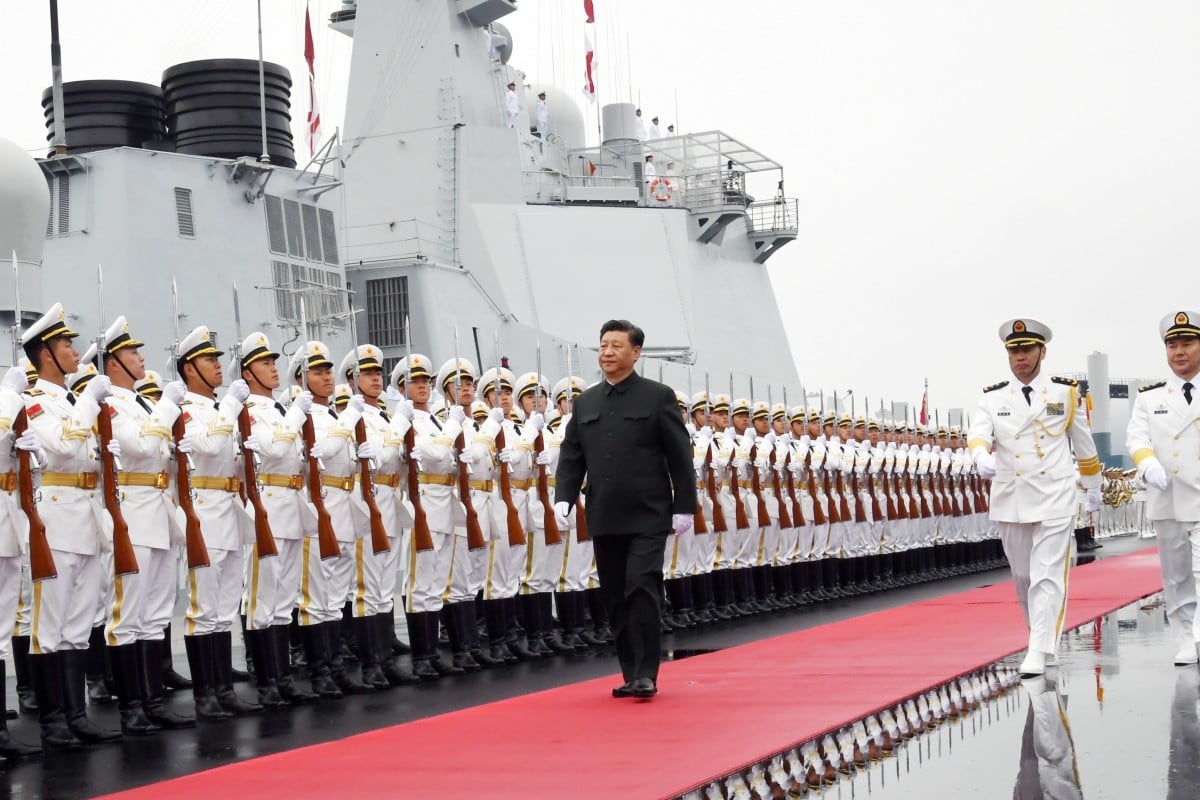
Chinese President Xi Jinping reviews an honour guards before a naval parade in Qingdao. Photo: Xinhua
The Asia-Pacific region is one of the fastest-growing markets for arms dealers, with economic growth, territorial disputes and long-sought military modernisation propelling a 52 per cent increase in defence spending over the last decade to US$392 billion in 2018, according to the Stockholm International Peace Research Institute.
The region accounts for more than one-fifth of the global defence budget and is expected to grow. That was underscored last week by news of 
Taiwan

’s bid to strike a

US$2 billion deal

to purchase US tanks and missiles.

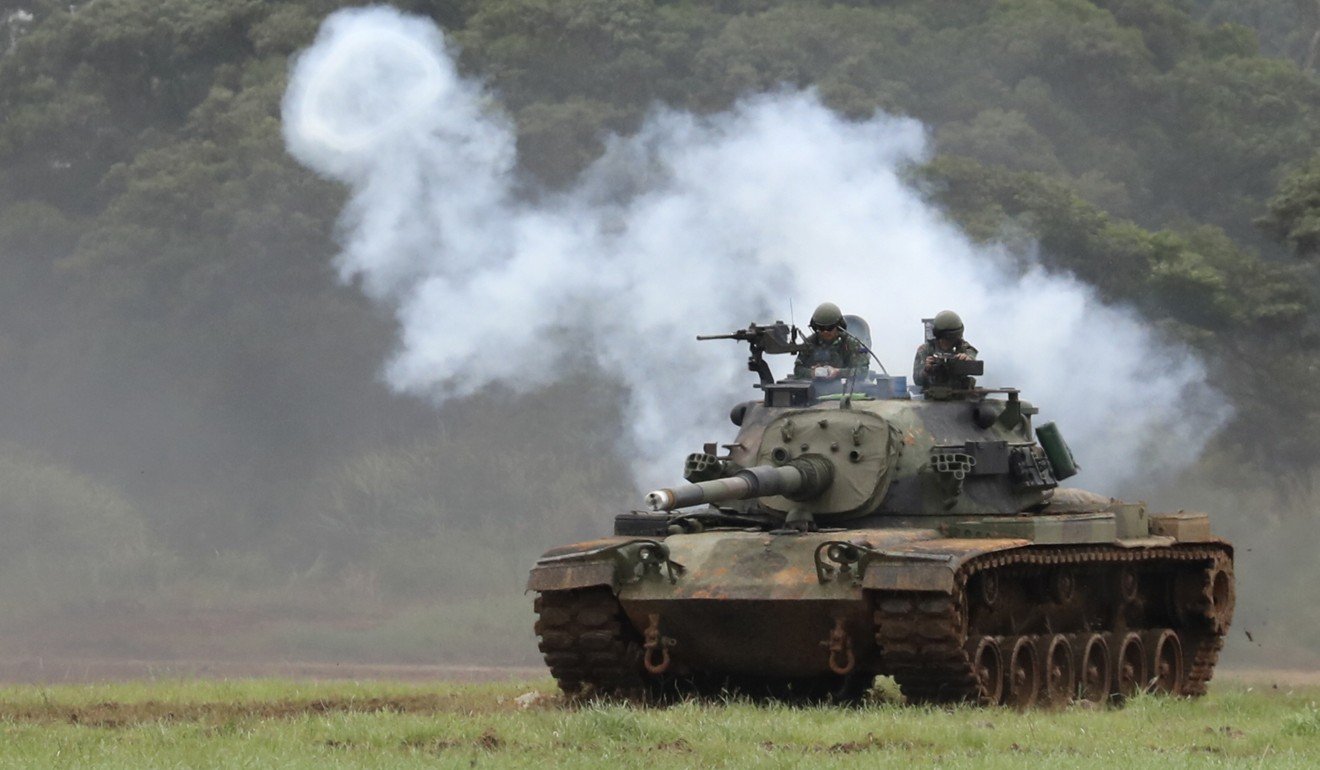
Taiwanese Soldiers on a CM11 battle tank, jointly developed with US arms manufacturer General Dynamics. Photo: EPA
The biggest driver in arms purchases, however, is 
China

– responsible for 64 per cent of military

spending in the region. With a defence budget that is second only to the

US

, China is amassing a navy that can circle the globe and developing state-of-the-art autonomous drones. The build-up is motivating surrounding countries to bolster their armed forces too – good news for purveyors of submarines, unmanned vehicles and warplanes.

It is no coincidence that the recent 
Shangri-La Dialogue

in

Singapore

, a security conference attended by

defence

chiefs, was sponsored by military contractors including Raytheon,

Lockheed Martin

and

BAE Systems

.

Opinion: How the Shangri-La Dialogue turned into a diplomatic coup for China

Kelvin Wong, a Singapore-based analyst for Jane’s, a trade publication that has been covering the defence industry for 121 years, has developed a niche in infiltrating China’s opaque defence industry by attending obscure trade shows that are rarely advertised outside the country.

He said the US is eager to train allies in Asia and sell them arms, while also stepping up its “freedom of navigation” naval operations in contested waters in the

South China Sea

and Taiwan Strait. It has lifted a ban on working with

Indonesia

’s special forces over atrocities committed in

East Timor

. And it is considering restarting arms sales to the

Philippines

.

In his speech at the Shangri-La Dialogue, acting US Defence Secretary Patrick Shanahan touted American advancements in technology “critical to deterring and defeating the threats of the future” and said any partner could choose to win access to that technology by joining the US defence network.
Wong said the message was clear: “Buy American.”
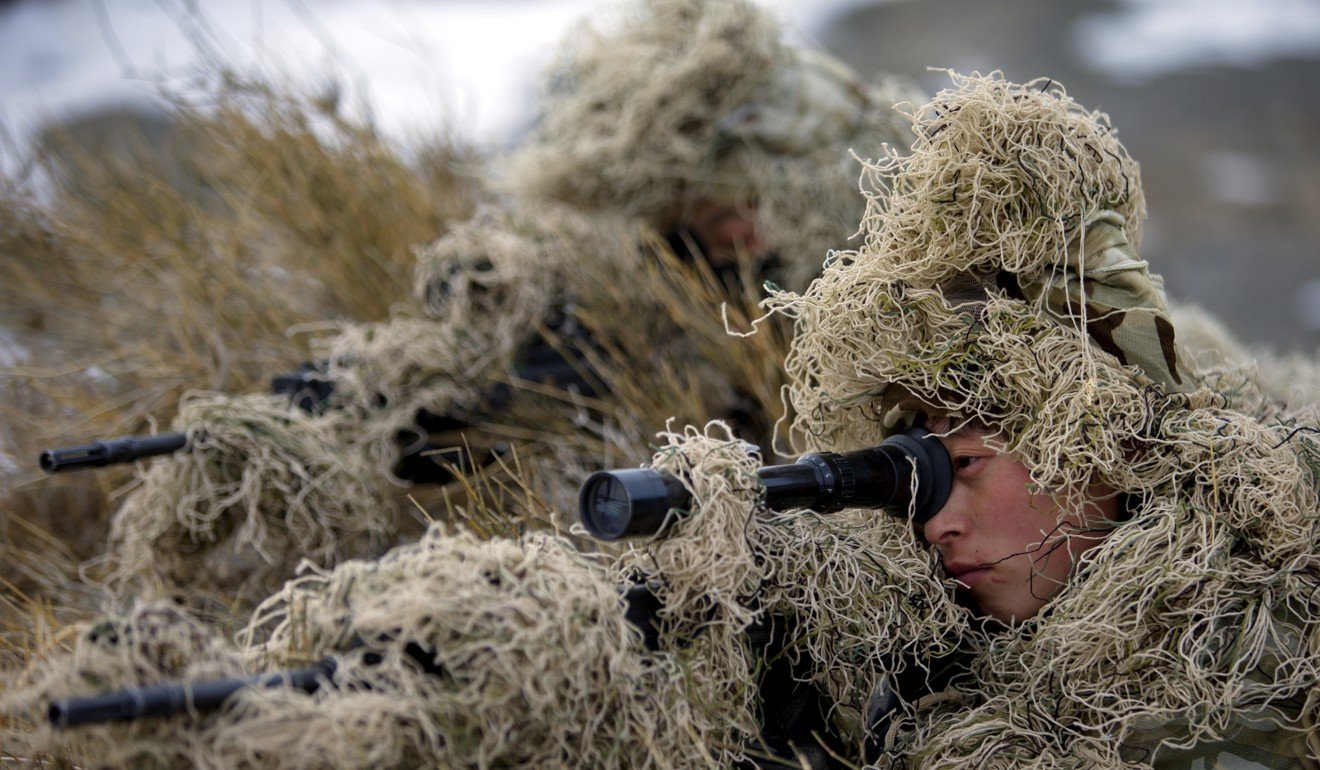
Analysts say Chinese soldiers have less training, motivation and lower morale than their Western counterparts. Photo: Reuters
The analyst said there is a growing admission among the Chinese leadership that the

People’s Liberation Army

has an Achilles’ heel: its own personnel.

He said one executive at a Chinese defence firm told him: “The individual Chinese soldier, in terms of morale, training, education and motivation, (cannot match) Western counterparts. So the only way to level up is through the use of unmanned platforms and 
artificial intelligence

.”

To that end, China has developed one of the world’s most sophisticated drone programmes, complete with custom-built weapon systems. By comparison, Wong said,
US drones rely on weapons originally developed for helicopters.
Wong got to see one of the Chinese drones in action two years ago after cultivating a relationship with its builder, the state-owned China Aerospace Science & Technology Corporation. He viewed a demonstration of a 28-foot-long CH-4 drone launching missiles at a target with uncanny ease and precision.
“Everyone knew they had this,” Wong said. “But how effective it was, nobody knew. I could personally vouch they got it down pat.”
China unveils its answer to US Reaper drone – how does it compare?

That is what Bernard Loo Fook Weng, a military expert at Singapore’s S. Rajaratnam School of International Studies, told the author Robert Kaplan for his 2014 book, Asia’s Cauldron, about simmering tensions in the South China Sea.

He was describing the competition for big-ticket military equipment of dubious necessity.

Southeast Asia

is littered with examples of such purchases.

Thailand

owns an aircraft carrier without any aircraft. Indonesia dedicated about one-sixth of its military budget to the purchase of 11

Russian

Su-35 fighter jets. And

Malaysia

splurged on two

French

submarines it could not figure out how to submerge.

“It’s keeping up with the Joneses,” Wong said. “There’s an element of prestige to having these systems.”

Submarines remain one of the more debatable purchases, Wong said. The vessels aren’t ideal for the South China Sea, with its narrow shipping lanes hemmed in by shallow waters and coral reefs. Yet they provide smaller countries with a powerful deterrence by enabling sneak attacks on large ships.

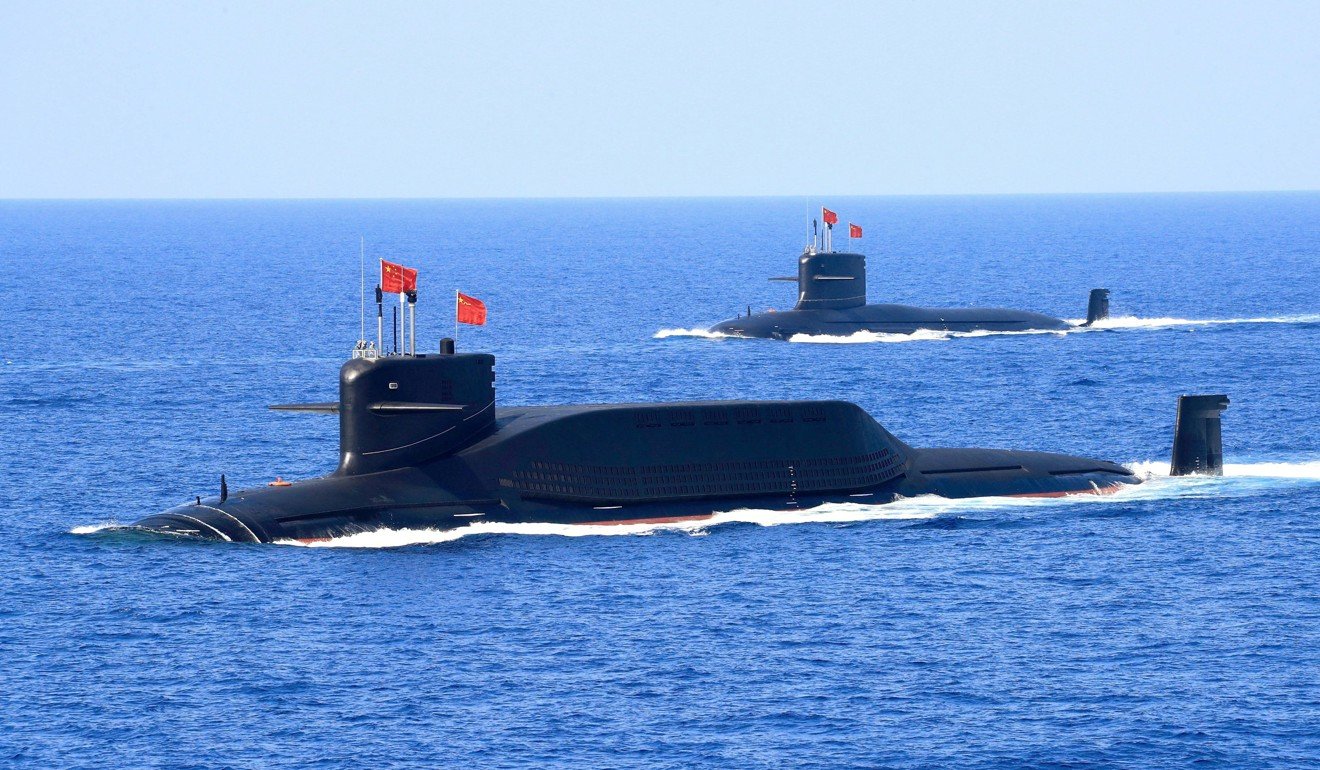
Nuclear-powered PLA Navy ballistic missile submarines in the South China Sea. Photo: Reuters
Asia and

Australia

are home to 245 submarines, or 45 per cent of the global fleet, according to the US-based naval market intelligence firm AMI International.

The Philippines remains one of the last coastal nations in the region without a sub – though it is in talks with Russian builders to acquire some.
Singapore recently received the first of four advanced

German

Type 218 submarines with propulsion systems that negate the need to surface more frequently. If the crew did not need to eat, the submarine could stay under water for prolonged periods. Wong said the craft were specially built for Asian crews.

“The older subs were designed for larger Europeans so the ergonomics were totally off,” he said.
Singapore, China deepen defence ties, plan larger military exercises
Tiny Singapore plays a crucial role securing the vital sea lanes linking the Strait of Malacca with the South China Sea. According to the

World Bank,

the country dedicates 3.3 per cent of its gross domestic product to defence, a rate higher than that of the United States.

State-of-the-art equipment defines the Singapore Armed Forces. Automation is now at the centre of the country’s military strategy, as available manpower is shrinking because of a rapidly ageing population.
Wong said Singapore is investing in autonomous systems and can operate frigates with 100 crew members – 50 fewer than they were originally designed for.

“We always have to punch above our weight,” he said.

Source: SCMP

10/06/2019

‘There is no water. Why should people stay here?’

Hatkarwadi
Image caption Hatkarwadi hasn’t seen decent rains in three years

Every morning Dagadu Beldar, 75, wakes up and cooks rice and lentils in his village home in India’s western state of Maharashtra. After that, there’s little else to do.

For the past three years, Mr Beldar has lived alone in his gloomy one-room hut in Hatkarwadi, a stony hillside outback ringed by forests. Drought forced his wife and three sons out of the village. The earth was parched and the wells were dry. There was little water to drink and bathe in, and the family’s millet farm lay barren.

Two sons found work at a sugar factory in Sangli, a cane-growing district some 400km (248 miles) away. Their mother looked after the third son, who went to school there. Hatkarwadi had become a bad memory.

With age, Mr Beldare is going deaf. He mostly keeps to himself in his dark room.

“He’s a very lonely man. He hasn’t seen his family in three years. All because of water,” says Ganesh Sadgar, a neighbour.

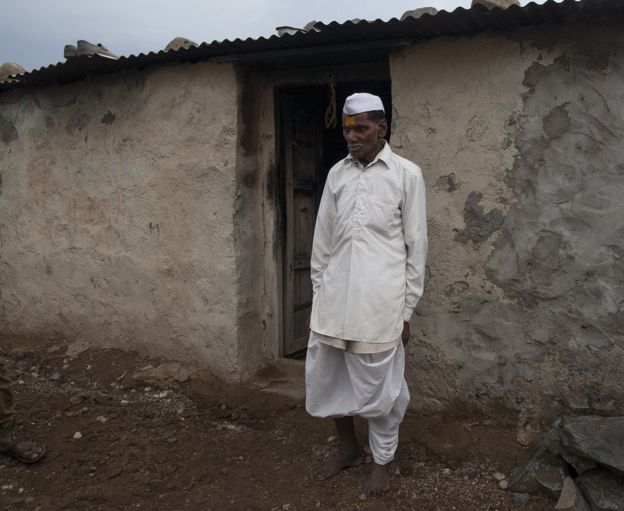
Dagadu Beldar
Image caption Dagadu Beldar lives alone after his family left the village because of lack of water

Across the lane, 75-year-old Kishan Sadgar’s only son left home a decade ago to work in a sugar factory far away. He lives with his wife and a pet dog. “My son hardly comes home,” he says. “And when he comes he wants to leave after two or three days because there’s no water here.”

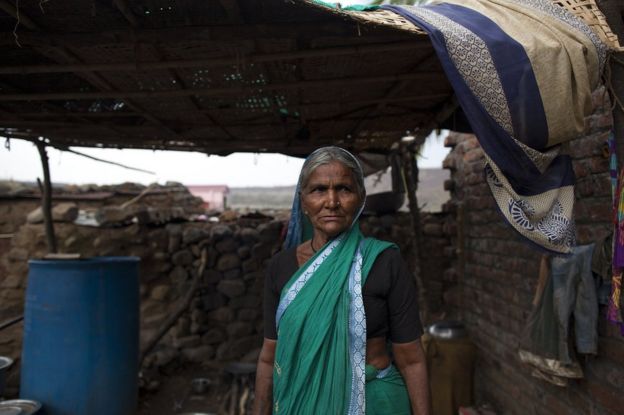
A few doors away, Saga Bai lives with her 14-year-old deaf mute daughter, Parvati. Her only son, Appa, left home years ago to work in a factory. “He hardly comes home. He says he will come only if it rains,” says Ms Bai.

And Ganesh Sadgar, the only graduate in the village, is unable to find a bride because “no woman wants to come here because there’s no water”.

Hatkarwadi is located in Beed, a sprawling sun-baked district which has been impoverished by lack of rain. Not long ago, more than 1,200 people lived in its 125 squat homes. More than half of them, mostly men, have left, leaving behind bolted, abandoned homes. These water refugees eke a living in faraway towns and cities, where they have found work in cane farms, sugar factories, construction sites or as taxi drivers.

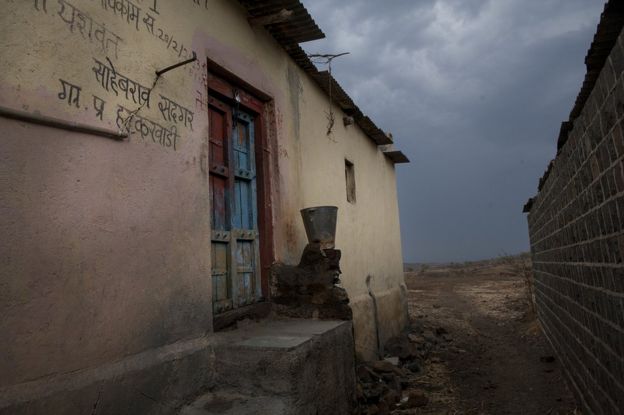
Abandoned house in Hatkarwadi
Image caption Yashwant Sahibrao Sadgar locked his home and left the village a year ago because of lack of water

“There is no water. Why should people stay here?” says Bhimrao Beldar, the 42-year-old headman of the village.

The night before I arrived in the village, there had been a brief burst of rain. Next morning, promising grey clouds seemed to be the harbinger of bountiful rains. By mid-afternoon, however, the sky began burning again, extinguishing any such hopes. That’s how fickle hopes are here. The last time the village had “decent rains” was three years ago.

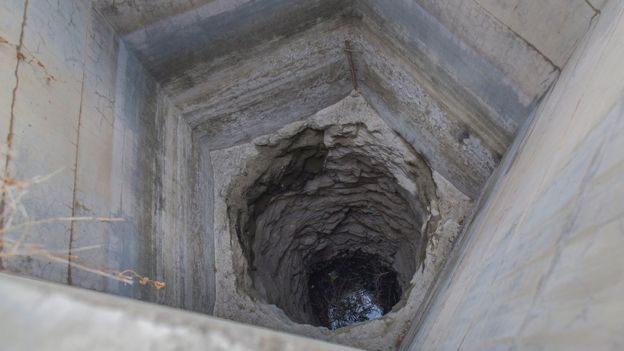
The cruel summer has sucked the life out of Hatkarwadi. The earth is brown and cracked. Cotton and millet farms have withered away. Only two of the 35 wells have some water left. There are a dozen borewells, but the fast receding water table is forcing farmers to drill deep – up to 650ft – to extract water.

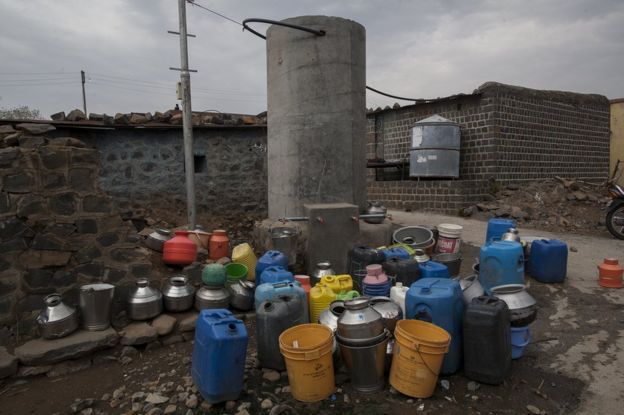
Hatkarwadi pump
Image caption The only source of water is a few functioning borewells

Even a minor gale snaps electricity lines, so the borewells often don’t work. Water tankers – the lifeline of the drought-hit – refuse to supply because of the precarious state of the narrow strip of tar which serves as the connecting road to the village.

There’s nothing to feed the animals, so 300 buffaloes have been moved to a fodder camp uphill where the animals live with their owners under tarp. Some 75 new toilets built under a federal government programme to end open defecation lie unused because there’s no water. Most villagers borrow drinking and bathing water from well-to-do neighbours who own borewells.

Hatkarwadi is a speck on the map of Beed, where more than a million people have been hit by the drought. Deforestation has reduced forest cover to a bare 2% of the total area of the district. Only 16% of the farms are irrigated. When monsoons are good, the rain-fed farms yield cotton, soya bean, sugarcane, sorghum and millet for 650,000 farmers.

Hatkarwadi well
Image caption Most of the village’s 35 wells are dry

For the last six years, Beed has seen declining rainfall. Irregular rainfall patterns have been playing havoc with crops. A 10-day-pause in rainfall can end up damaging crops. Last year’s abundant rains – 99% of the average yearly rainfall of 690mm – still led to crop failure because there were four long interruptions.

The main Godavari river is running dry. Nearly all of the 140 big and small dams in Beed are out of water, as are the 800-odd wells. Two of the major dams now have what officials call “dead water” – low lying stored water, contaminated with sediments and mud. This is the water which is being pumped into ponds from where nearly a thousand tankers pick up supplies, spike them with chlorine and transport them to 300-odd thirsty villages.

Saga Bai
Image caption Saga Bai says her son returns to the village ‘only when it rains’

Half of Beed’s 800,000 cattle have been moved to more than 600 cattle camps because of lack of fodder. More than 40,000 people have taken up work under a jobs for work scheme, and officials are opening it up for others to prevent people from going into penury. The drought hasn’t spared people living in towns: the 250,000 residents of Beed town are getting piped water only once a week or sometimes a fortnight.

“This is the worst drought in a decade,” says Astik Kumar Pandey, the senior-most official of Beed. “We are hoping that our drinking water supplies last until end of July and then we have abundant rains”.

The crippling drought in Maharashtra is part of a larger climate catastrophe which has gripped India. More than 40% of the land, by one estimate, is facing drought and more than 500 million people living in at least 10 states are badly affected.

Media caption ‘Men don’t care about drought as women fetch the water’

P Sainath, the founder and editor of the online People’s Archive of Rural India, says the lack of water is an “explosive problem”. But drought alone has not contributed to the crisis, he says. It also has to do with the appropriation of water by the well-to-do at the expense of the poor, and the skewed allocation of water.

“The transfer of water from the farms to the industry, from food crops to water guzzling cash crops, from rural to urban areas, and from livelihood to lifestyle purposes for multiple swimming polls in urban high-rises has also led to this situation.”

Back in his office in Beed, Astik Kumar Pandey peers over a live map tracking the movement of GPS-tagged water tankers in the district. It’s a dense mass of red (stationary tankers picking up supplies) and green (tankers on their way with water) trucks clogging the heart of the district.

“This is how bad the situation is. We are hoping that the rains arrive soon”.

Source: The BBC

09/06/2019

China, Japan express willingness to enhance communication, cooperation

TOKYO, June 9 (Xinhua) — Cai Qi, member of the Political Bureau of the Communist Party of China (CPC) Central Committee and secretary of the CPC Beijing Municipal Committee wrapped up a visit to Japan on Sunday, with both sides expressing willingness to maintain the good momentum of bilateral relations and further enhance cooperation and communication.

At the invitation of the Liberal Democratic Party and the Komeito Party, Cai led a delegation of the CPC to Japan from Thursday to Sunday. During the visit, he met with Secretary-General of the ruling Liberal Democratic Party Toshihiro Nikai and other party leaders and government officials.

Cai said that currently Sino-Japanese relations are returning to the right track and showing positive development momentum. The Chinese side is ready to work with Japan to implement the important consensus reached by the two leaders of the states, strengthen high-level exchanges, enhance political mutual trust, tighten public opinion ties, increase inter-party, local and Olympic exchanges and cooperation, and jointly open up new prospects for bilateral relations.

He also stated China’s stance on the trade frictions between China and the United States, saying that China and Japan should strengthen communication and coordination, jointly address the challenges of protectionism and unilateralism, promote the construction of an open world economy, and make important contributions to promoting the development and prosperity of Asia and the world.

The Japanese side said that Japan attaches great importance to Chinese President Xi Jinping’s upcoming attendance at the G20 Summit in Osaka and hopes to take this opportunity to achieve positive results in promoting free trade and raise bilateral relations to a new level.

Japan is willing to continue to deepen exchanges and cooperation with China in political parties, localities, the Olympics, youth and other fields, and inject new impetus into the improvement and development of bilateral relations, the Japanese side added.

Source: Xinhua

09/06/2019

China Focus: Marine ranching restores ecology on desertified seabeds

SHIJIAZHUANG, June 9 (Xinhua) — A decade after the launch of a pilot project to restore ecology in overexploited offshore seawaters, some local fish species which had disappeared, returned to the coastal area of Tangshan, a major industrial city in north China’s Hebei Province.

Algae, shellfish and other fish grow abundantly and form the marine biologic chain in the 4,000-mu (266 hectares) seawater area, run by Tangshan Marine Ranching Co., Ltd.

In collaboration with leading domestic ocean research institutes, the private company has succeeded in transforming the desertified seabeds into an “undersea forest” and rebuilding the marine ecosystem, through dropping artificial reefs into the sea, artificial breeding and releasing of fish since 2009.

“The biomass in the area with artificial reefs underneath is 30 times that of the neighboring seawaters without reefs,” said Zhang Zhenhai, chairman of the company.

“The ecological environment is in good shape in the piloted area,” he said. This condition is in sharp contrast to what Zhang saw in the early 2000s when he planned to develop marine tourism but realized that the worsening offshore environment would only lead tourism to a dead end. Then he decided to restore the environment for sustainable development.

China’s marine ranching must put ecological restoration and construction in the first place because the offshore areas in many regions have suffered severe damage due to excessive fishing and pollution, Zhang said.

At an accumulative investment of 150 million yuan (21.7 million U.S. dollars), the marine ranch at Xiangyun Bay in Tangshan is one of the first group of state-level demonstration marine ranching zones. The ranch’s investment comes from government subsidy, bank loans and the company’s own fund.

Nearly 200 local villagers have stopped traditional fishing methods due to decreasing fishery resources. They work for Zhang’s marine ranch to offer tourists an ocean fishing experience, part of the company’s recreational fishery program.

After making a living by fishing for 26 years, Yang Xingwu bought a leisure boat in 2011 and joined the fleet of 19 boats to showcase fishing for tourists at the Tangshan marine ranch developed by Zhang’s company.

“We earned 40,000 to 50,000 yuan a year in the past from fishing, which was a tiring job and sometimes dangerous due to strong winds on the sea,” said Yang, 52, from a village along the coast of the Bohai Sea.

Now, Yang invites tourists to his boat to experience the life of a fisherman. “It is much safer and stable. My annual income has doubled.”

Zhang Hongrong, 86, from a fishing village in Laoting County in Tangshan, said until the 1970s, the Bohai Sea still abounded in fish, yet in recent years, some fish became almost extinct due to overfishing and pollution.

“It is really a blessing in my lifetime to see some fish species reappear in the sea,” the old fisherman said.

Based on the restoration experiment, Tangshan Marine Ranching plans to plant eelgrass on a preliminary seawater area of around 6.5 hectares and extend the restoration project to 1,300 hectares of seawater area.

“The rehabilitation of marine ecology needs a big environment,” said Zhang, chairman of the company. “After two or three years, the restoration project will show its ecological and economic benefits.”

By the end of 2018, China had completed the construction of 233 marine ranches, which include 86 state-level demonstration marine ranching zones, producing considerable output in both economic and ecological terms, data with the Ministry of Agriculture and Rural Affairs show.

This year, the country aims to build more than ten national demonstration marine ranches, according to the ministry.

Source: Xinhua

09/06/2019

India’s Modi calls for global conference on terrorism

MALE, Maldives (Reuters) – Indian Prime Minister Narendra Modi has called for a global conference to tackle the threat of terrorism in the region and around the world.

During a speech on his first foreign visit since winning re-election, he told the Maldivian parliament in Male that “terrorism is not just a threat for a country, but to the entire civilisation”.

“The international community has actively arranged for global convention and many conferences on the threat of climate change. Why not on the issue of terrorism?” Modi said.

He called for a global conference “so that there can be meaningful and result-oriented discussions for plugging the loopholes that terrorists and their supporters exploit”.

India is pursuing what it calls a “neighbourhood first” foreign policy centred on its allies in South Asia, although there is little sign of a warming in relations with arch rival Pakistan.

His trip to the Maldives is being viewed as a statement of intent to counter the rise of China, which has been making strategic inroads in the Indian Ocean in recent years and seeking closer military ties, to the alarm of New Delhi.

“In the neighbourhood, Maldives is priority,” Modi said in his speech.

During the visit, Modi has signed a slew of agreements with the island nation encompassing ferry services, port terminals and a new national cricket stadium.

His next stop is Sri Lanka’s capital, Colombo, where security is likely to be high on the agenda.

A wave of bombings on Easter Sunday killed more than 250 people across Sri Lanka despite repeated warnings from Indian intelligence services about a militant plot.

Source: Reuters

08/06/2019

Factbox: China, Africa to embrace closer economic, trade ties

BEIJING, June 8 (Xinhua) — China and African countries will see more intimate economic and trade ties as the first China-Africa Economic and Trade Expo will open on June 27 in Changsha, the capital city of Hunan Province.

A total of 53 African countries have confirmed to attend the expo, and international organizations including the United Nations Industrial Development Organization, the World Food Programme and the World Trade Organization will also send representatives to attend the event.

Here are some facts and figures revealing the growing vitality of trade between China and Africa as well as broader economic exchanges.

— China has been the largest trading partner of Africa for 10 consecutive years.

— In 2018, trade volume between China and Africa amounted to 204.2 billion U.S. dollars, up 20 percent year on year.

— China’s imports of non-resource products from Africa have increased significantly. In 2018, China’s imports from Africa went up 32 percent year on year, with the imports of agricultural products up 22 percent.

— China’s exports of mechanical, electrical and high-tech products accounted for 56 percent of its total exports to African countries.

— China has finished the negotiations of a free trade agreement with Mauritius.

— More than 3,700 Chinese enterprises have been set up in Africa by the end of 2018, with combined direct investment over 46 billion dollars.

— China’s financial institutions have established more than 10 branches in Africa.

— South Africa and seven other countries have included the Chinese currency renminbi (RMB), or the yuan, in their foreign exchange reserves.

— China has formed RMB clearing arrangements with Zambia and signed currency swap agreements with four African countries including Morocco.

Source: Xinhua

08/06/2019

China, India vow to enhance mutual trust, expand cooperation

NEW DELHI, June 8 (Xinhua) — A delegation of the Communist Party of China (CPC) concluded its four-day visit to India on Saturday, and both sides pledged to enhance mutual trust and boost cooperation in various fields.

During the visit, head of the CPC delegation Li Xi, who is a member of the Political Bureau of the CPC Central Committee and the secretary of the CPC Guangdong Provincial Committee, met with Indian External Affairs Minister S. Jaishankar, National General Secretary of the Bharatiya Janata Party Ram Madhav, President of Indian National Congress Rahul Gandhi, and Gujarat Chief Minister Vijay Rupani, and also attended the Guangdong-Gujarat economic and trade exchange activities.

Li said that under the guidance of the leaders of both countries, China-India relations have shown a strong momentum of development, adding that his visit is aimed at implementing the important consensus of the leaders, enhancing mutual trust and expanding pragmatic cooperation.

Li introduced China’s firm position, confidence and determination on China-U.S. trade frictions.

China and India share common interests in promoting world multi-polarization, economic globalization, and maintaining multilateralism, said Li, adding that China is willing to work with India to jointly meet challenges and share development opportunities.

Li briefed the Indian side about the historic achievements and changes that have been making in China since the founding of the People’s Republic of China in 1949 and over 40 years of implementing the reform and opening-up policy, especially after the 18th CPC National Congress in 2012.

The CPC is willing to exchange experiences in governance with the major political parties in India and consolidate the political foundation of China-India relations, said the senior official.

Guangdong Province hopes to deepen exchanges and cooperation with India’s local governments so as to continuously inject momentum into the closer development partnership between China and India, he added.

The Indian side, speaking highly of the significance of Li’s visit, said it would help maintain the good momentum of the bilateral relations.

They expressed their willingness to maintain high-level exchanges with China, strengthen exchanges and cooperation with the government, political parties and localities, and continuously enhance understanding and mutual trust to promote the continuous development of India-China relations and jointly promote world peace, stability and prosperity.

Source: Xinhua

Law of Unintended Consequences

continuously updated blog about China & India

ChiaHou's Book Reviews

continuously updated blog about China & India

What's wrong with the world; and its economy

continuously updated blog about China & India