11/03/2019
BEIJING, March 10 (Xinhua) — A program to provide medical treatment to impoverished people with serious diseases in rural areas was expanded with about 649,000 cases diagnosed last year, the Health News reported.
In 546,000 cases, the patients have received inpatient treatment, the newspaper said.
The program was expanded to cover 21 kinds of serious diseases from the previous nine kinds in 2018, according to the report earlier this week.
Lung, liver and breast cancers were newly added to the program.
The program is expected to cover 25 diseases this year, and 30 by 2020, according to Jiao Yahui, a senior health official.
Source: Xinhua
Posted in Health News, impoverished rural people, Jiao Yahui, Lung, liver and breast cancers, Medical program, senior health official, serious diseases, Uncategorized |
Leave a Comment »
11/03/2019
BEIJING, March 10 (Xinhua) — China has made substantial progress in renovating the dilapidated houses in rural areas, said the Ministry of Housing and Urban-Rural Development (MOHURD).
Over 6 million registered poor households have seen their dilapidated houses renovated since the country launched the “three tough battles” against major risks, poverty and pollution in November 2015, the MOHURD said.
In 2018 alone, 1.57 million registered rural poor households saw their dilapidated houses renovated, according to the National Bureau of Statistics.
China plans to renovate another 15 million units of shanty houses from 2018 to 2020 to speed up its urbanization drive and improve people’s livelihood.
Source: Xinhua
Posted in China alert, dilapidated houses, Ministry of Housing and Urban-Rural Development (MOHURD), National Bureau of Statistics (NBS), progress, renovating, Uncategorized, Urbanization |
Leave a Comment »
11/03/2019
-
Chinese President Xi Jinping, also general secretary of the Communist Party of China Central Committee and chairman of the Central Military Commission, joins deliberation with deputies from Fujian Province at the second session of the 13th National People’s Congress in Beijing, capital of China, March 10, 2019. (Xinhua/Li Xueren)
BEIJING, March 10 (Xinhua) — President Xi Jinping on Sunday afternoon joined deliberation with deputies from Fujian Province at the second session of the 13th National People’s Congress, China’s national legislature.
“[We] should create a favorable development environment for innovation, entrepreneurship and creativity,” said Xi, also general secretary of the Communist Party of China Central Committee and chairman of the Central Military Commission.
China should seek momentum from reform and opening up, unleash to the maximum the whole society’s power for innovation, entrepreneurship and creativity, and keep improving the country’s influence and competitiveness in a world that is undergoing profound changes, Xi said.
Xi stressed creating favorable conditions for the development of small and medium-sized enterprises and young people, and establishing an acceleration mechanism for high-tech companies.
He urged solid implementation of the policies and measures to encourage, guide and support the development of the private sector.
Fujian must leverage the combined strengths of the special economic zone, pilot free trade zone, comprehensive experimental zone and the core zone of the 21st Century Maritime Silk Road, and keep exploring new approaches, Xi said.
Xi called for efforts to explore new ways for integrated development across the Taiwan Strait.
The two sides of the Taiwan Strait should enhance economic and trade cooperation, infrastructure connectivity, energy and resource exchanges, and shared industry standards, he said.
Cross-Strait cooperation and cultural exchanges should be strengthened, he added.
Xi stressed the importance of implementing the people-centered development concept in the work on Taiwan, urging efforts to benefit Taiwan compatriots in the same way as people on the mainland are served.
He encouraged listening to the voice of Taiwan compatriots and research on what other policies and measures can be introduced to bring them benefits.
Xi said that this year marks the 70th anniversary of the founding of New China, and it is necessary to ensure that no one in the country’s old revolutionary base areas falls behind in the process of building a moderately prosperous society in all respects.
He called for adherence to targeted poverty alleviation and efforts to identify the root causes of poverty to enhance the effectiveness of anti-poverty measures.
More efforts should be put into coordinating economic development with ecological protection, Xi said.
Source: Xinhua
Posted in 21st Century Maritime Silk Road,, Addis Ababa, annual legislative session, Austrian aid workers, best selling modern passenger aircraft, black box, black box voice recorders, Boeing 737, Boeing shares, cabinet secretary for transport, Cayman Airways, Chairman of the Central Military Commission, China alert, China's national legislature, Civil Aviation Administration of China (CAAC), cockpit voice recorder, Communist Party of China Central Committee, crashes, development of the private sector., digital flight data, ecological protection, Ethiopia, Ethiopian Airlines, Ethiopian state TV, Ethiopian-Kenyan national, flight tracking website, FlightRadar24, foreign ministries, Fujian deputies, global summit, high-tech companies, India alert, Indonesia, Indonesia’s Lion Ai, Indonesian capital, Italian archaeologist, Jakarta, James Macharia, Nairobi, National People's Congress, Nigerian-Canadian professor, Norwegian Red Cross worker, pilot, President Xi, Red Cross jackets, second disaster, U.N. members, U.S. Federal Aviation Administration (FAA), Uncategorized, United Nations’ staff, Yared Getachew, Zanzibar |
Leave a Comment »
11/03/2019
SRINAGAR, India (Reuters) – India should talk to Pakistan and separatists in Kashmir to defuse tension raised by a suicide attack on an Indian paramilitary convoy that was claimed by Pakistan-based militants, a former chief minister of the state said.
Mehbooba Mufti, who was the chief minister of Jammu and Kashmir from early 2014 to June last year when Prime Minister Narendra Modi’s Hindu nationalist party withdrew support for her regional party, said an ongoing crackdown on militants and those supporting secession could further alienate the people.
India has vowed to kill all the militants in the country’s only Muslim-majority state if they don’t give up arms, after a 20-year-old local man killed 40 paramilitary troopers in a suicide attack last month.
The attack nearly led to another war between the arch rivals India and Pakistan, which both claim the Himalayan region in full but rule in part.
“I strongly feel that there has to be a dialogue process internally as well as externally, with Pakistan,” Mufti said in an interview on Friday. “The situation is going to get worse if some kind of political process is not initiated on the ground now.”
Indian officials have repeatedly ruled out talks with Pakistan unless it acts on militant groups based there. India says its warplanes late last month bombed a militant camp in Pakistan, which responded with an aerial attack the next day.
Indian Foreign Secretary Vijay Gokhale said on the day of the strike that it had killed many Jaish-e-Mohammed “terrorists”. Pakistan said no one was killed.
Pakistan Prime Minister Imran Khan, who has sought to speak with Modi amid the hostility, said no militant group would be allowed to operate from his country to carry out attacks abroad, days after his government announced a sweeping crackdown against Islamist militant organisations.
“This confrontational attitude – no talks, no discussion -has an impact,” Mufti said. “Whatever relationship we have with Pakistan, it has a direct impact on Jammu and Kashmir and we are the worst sufferers of this animosity.”
Indian authorities have arrested many separatist leaders in Kashmir in the past few weeks, and the chief of Modi’s ruling Bharatiya Janata Party (BJP) said recently that the government had made it clear to them that “if they want to live in India, they will have to speak the language of India, not Pakistan’s”.
Mufti, whose father was also a chief minister of Jammu and Kashmir, said the tough stance by Indian authorities would only lead to “some calm on the surface” that won’t last. India killed 248 militants in Kashmir in 2018 – the highest in a decade.
“Once you start choking the space for dissent in a democracy, people feel pushed to the wall and then it leads to further dissent and alienation,” she said.
Mufti said India’s general election – starting April 11 and whose results will be declared on May 23 – could delay the process of any inter-party talks on Kashmir.
Source: Reuters
Posted in Bharatiya Janata Party (BJP), Chief Minister, chief minister of Jammu and Kashmir, crackdown, Democracy, former ally, general election, Imran Khan, India alert, Indian Foreign Secretary, Islamist militant organisations, Jaish-e-Mohammed, Jammu and Kashmir, Mehbooba Mufti, militants, Muslim-majority state, Pakistan, paramilitary convoy, paramilitary troopers, PM Modi, Prime minister, Prime Minister Narendra Modi, separatists, suicide attack, terrorists, Uncategorized, Vijay Gokhale |
Leave a Comment »
11/03/2019
China’s Chang’e-4 lunar exploration mission was the first one to land on the far side of the moon – the side that’s not visible from earth – on January 3.
INDIA Updated: Mar 11, 2019 13:47 IST
The top space agencies – the China National Space Administration (CNSA) and Indian Space Research Organisation (ISRO) – confirmed the information but did not share details why the cooperation failed to take off.(Corbis via Getty Images)
A rare opportunity for India and China to cooperate in a high-profile space mission fell through after the two countries disagreed on the nature of the Indian payload to be carried on the Chang’e-4 lunar mission, it has emerged.
China’s Chang’e-4 lunar exploration mission was the first one to land on the far side of the moon – the side that’s not visible from earth – on January 3. Since landing, the mission has sent back stunning first-time images from the moon’s surface. It has been carrying out a series of scientific research tasks involving multiple countries and organisations.
China’s lunar exploration chief Wu Weiren called the mission a “huge stride” for China.
It could have been a breakthrough stride for Sino-India cooperation in space – both countries have successful space programs – as well had Chang’e-4 carried the Indian payload.
The top space agencies – the China National Space Administration (CNSA) and Indian Space Research Organisation (ISRO) – confirmed the information but did not share details why the cooperation failed to take off.
“In April 2015, Xu Dazhe, the incumbent administrator of CNSA wrote a letter to the heads of the world’s major space agencies, invited them to participate in the piggy-back cooperation of Chang’ e-4 mission, which received positive responses from more than a dozen national space agencies,” the Chinese agency told HT over email.
“China also received applications from India for the piggy-back cooperation. However, due to the different nature of the missions of the two sides, the Indian payload on Chang’ e-4 could not be carried through (after) the evaluation,” the agency said.
The payload in this context could have been a satellite or space probe equipment.
“No, we will not be able to comment on that … Yes, we will not comment on that,” an ISRO spokesperson said.
Several countries including Germany, Sweden, the Netherlands, and Russia have cooperated in the ongoing mission.
India and China formally established the Sino-Indian Joint Committee on Space Cooperation in 2015. In the same year, the first meeting of the joint committee was held in Beijing, and the outline of Sino-Indian space cooperation was signed.
“The outline includes 19 projects in seven areas: Remote sensing satellites, space-based meteorology, space science and lunar and deep space exploration, education and training, piggy-back launch services, satellite navigation, and space components,” CNSA said.
“The MoUs signed have provided a platform (for the two countries) to work but there is nothing as of now; all at dialogue stage. There are international forums where they are there and we are there but nothing (bilateral),” ISRO’s spokesperson said.
Last year, the then Indian ambassador to China Gautam Bambawale visited CNSA twice in half a year and exchanged views with Zhang Kejian, the CNSA head, on promoting Sino-Indian space cooperation.
“The two sides reviewed the course of Sino-Indian space cooperation in recent years, agreed to further promote the process of Sino-Indian space cooperation with an active and open attitude of cooperation, and agreed to convene the second meeting of the Sino-Indian Space Joint Committee in 2019,” CNSA said.
The Chinese space agency said it is open to cooperating with India.
“CNSA is open to international cooperation in lunar and deep space exploration… and international cooperation for a series of deep space exploration activities, such as Chang’ e 6 sampling return, the Mars exploration, and asteroid exploration, Jupiter galaxy, and planetary crossing exploration,” it said.
“We are willing to work hand in hand with space agencies, space institutions, and foreign space exploration enthusiasts to explore the mysteries of the universe.”
Source: Hindustan Times
Posted in administrator of CNSA, Chang’e-4 lunar exploration mission, China alert, China National Space Administration (CNSA), CNSA head, exploration chief, far side of the moon, Gautam Bambawale, Germany, India alert, Indian ambassador to China, Indian Space Research Organisation (ISRO), lunar mission, Mars exploration, MoUs, mysteries of the universe, Russia, scientific research tasks, Sino-Indian Joint Committee on Space Cooperation, Sweden, the Netherlands, Uncategorized, Wu Weiren, Xu Dazhe, Zhang Kejian |
Leave a Comment »
11/03/2019
Mudasir Ahmed Khan alias ‘Mohd Bhai’, the mastermind of the 14 February Pulwama terror attack, was killed in an encounter earlier today in South Kashmir.
Mudasir was a Jaish-e-Mohammed (JeM) terrorist and the one who arranged the vehicle and the explosives for Adil Ahmed Dar, the suicide bomber who attacked a CRPF convoy killing 44 troopers.
He was among three terrorists killed in Tral in south Kashmir’s Pulwama district by security forces an overnight encounter, which began after the terrorists opened fire during a cordon and search operation in Pinglish area.
Police said that among the three terrorists neutralised at Pinglish in Tral, two were locals and one was Pakistani national.
Bodies of all three terrorists are charred beyond recognition and police have sought assistance of their family members for DNA test to establish their identity.
Mobile phone record indicates that Mudasir was in constant touch with Adil after providing the van to him.
Mudasir was a 23-year-old resident of Mir Mohalla of Tral in Pulwama. The son of a labourer, Mudasir was an electrician with a graduate degree.
He joined the JeM sometime in 2017 as an overground worker and was later drawn into the terror outfit by Noor Mohammed Tantrey, alias ‘Noor Trali’, who is believed to have helped the terror group’s revival in the Kashmir Valley.
Mudasir disappeared from his home on 14 January 2018 following the killing of Tantray in December 2017. The same month, his role came under lens in the Lethpora attack on a CRPF camp that left five personnel dead.
Officials believe that Mudasir was also involved in the terror strike at the army camp in Sunjawan in February 2018, in which six personnel and a civilian were killed.
The National Investigation Agency (NIA), which is probing the 14 February terror attack, had carried out searches at Mudasir’s residence on 27 February.
Authorities are also looking for another JeM operative, identified as Sajjad Bhat, a resident of Bijbehara in south Kashmir, who was one who bought the vehicle used in the attack on the CRPF convoy.
Source: The Statesman
Posted in Adil Ahmed Dar, army camp, attack, Bijbehara, CRPF, DNA test, electrician, graduate degree, identity, India alert, Jaish-e-Mohammed (JeM), JeM, Kashmir Valley, Lethpora, mastermind, Mohd Bhai, Mudasir Ahmed Khan, National Investigation Agency (NIA), Noor Mohammed Tantrey, Noor Trali, Pakistani, Pinglish, Pulwama, Sajjad Bhat, South Kashmir, suicide bomber, Sunjawan, terrorist, Tral, Uncategorized |
Leave a Comment »
10/03/2019
Chinese President Xi Jinping, also general secretary of the Communist Party of China (CPC) Central Committee and chairman of the Central Military Commission, joins deliberation with deputies from central China’s Henan Province at the second session of the 13th National People’s Congress in Beijing, capital of China, March 8, 2019. (Xinhua/Xie Huanchi)
BEIJING, March 8 (Xinhua) — Chinese President Xi Jinping on Friday called for more efforts to implement the rural revitalization strategy with the chief goal to modernize agriculture and rural areas.
“The top task for implementing the rural revitalization strategy is to ensure supply of important farm produce, grain in particular,” said Xi, also general secretary of the Communist Party of China Central Committee and chairman of the Central Military Commission.
He made the remarks when joining deliberation with deputies from Henan Province at the second session of the 13th National People’s Congress, China’s national legislature.
Efforts should be made to promote the supply-side structural reform in the agricultural sector to achieve food security while building a modern and efficient agriculture, Xi added.
Xi also called for enhanced protection of agriculture ecological environment and prevention and treatment of pollution in rural areas.
Xi stressed strict penalties on crimes involving food safety so as to ensure safe farm produce for the public.
Efforts should be made to strengthen the leadership of grassroots Party units in the rural areas, Xi said, noting that the practices of rural residents’ self-governance should be further explored.
Xi also called for measures to promote two-way flow and equal exchange of factors, including human resources, lands and capital, between urban and rural areas.
“The task to eradicate extreme poverty must be fulfilled by 2020,” Xi stressed.
Implementation of the rural revitalization strategy and seeking progress in work related with agriculture, rural areas and farmers should be taken into consideration and promoted in the overall economic and social development, Xi said.
Li Keqiang, Wang Huning and Han Zheng — members of the Standing Committee of the Political Bureau of the CPC Central Committee — on Friday also separately joined deliberation with NPC deputies.
Premier Li Keqiang stressed building a business environment that is fair and convenient for enterprises under all forms of ownership, when joining a deliberation with deputies from Hubei Province.
He called for efforts to fully carry out the reforms of tax and fee cuts and further stimulate the market vitality.
Wang Huning, a member of the Secretariat of the CPC Central Committee, asked deputies from central China’s Hunan Province to take bigger steps in pushing forward high-quality development.
He also called for taking a people-centered approach to further live up to people’s new expectations for their cultural lives.
Joining the deliberation of the Beijing delegation, Vice Premier Han Zheng underlined deepening the coordinated development of the Beijing-Tianjin-Hebei region to further relieve Beijing of functions nonessential to its role as the capital.
Source: Xinhua
Posted in Beijing, Beijing-Tianjin-Hebei region, business environment, capital, Chairman of the Central Military Commission, China alert, China's national legislature, Chinese President Xi Jinping, cultural lives, delegation, general secretary of the Communist Party of China Central Committee, Han Zheng, Henan province, high-quality development, Hunan Province, implementation, Li Keqiang, National People's Congress, ownership, people-centered approach, rural revitalization strategy, Secretariat of the CPC Central Committee, Standing Committee of the Political Bureau of the CPC Central Committee, Uncategorized, Wang Huning |
Leave a Comment »
10/03/2019
The “ChinaSat 6C” satellite is launched by a Long March-3B carrier rocket from the Xichang Satellite Launch Center in southwest China’s Sichuan Province, March 10, 2019. It will provide high-quality radio and TV transmission services. (Xinhua/Guo Wenbin)
XICHANG, March 10 (Xinhua) — China Sunday sent a new communication satellite into orbit from the Xichang Satellite Launch Center in southwest China’s Sichuan Province.
The “ChinaSat 6C” satellite was launched at 0:28 a.m. Beijing Time by a Long March-3B carrier rocket. It will provide high-quality radio and TV transmission services.
The satellite has been sent to the geostationary orbit, and can cover China, Australia, New Zealand and the South Pacific island countries.
The satellite was developed by the China Academy of Space Technology, and will be operated by the China Satellite Communications Co., Ltd.
The launch marks the 300th mission of the Long March carrier rocket series developed by the China Aerospace Science and Technology Corporation.
Source: Xinhua
Posted in Australia, Beijing, China Academy of Space Technology, China Aerospace Science and Technology Corporation, China alert, China Satellite Communications Co., Ltd, ChinaSat 6C, communication satellite, launches, Long March carrier rocket, Long March-3B carrier rocket, New Zealand, sichuan province, South Pacific island countries, Uncategorized, Xichang Satellite Launch Center |
Leave a Comment »
10/03/2019
WUHAN, March 9 (Xinhua) — The city of Wuhan, capital of central China’s Hubei Province, will invest 40 billion yuan (about 6 billion U.S. dollars) to provide key support to the development of high-tech infrastructure by 2022, local authorities said.
The province and its capital will forge ahead with high-tech industries by raising a 10-billion-yuan fund per year for major projects, platforms, industrial parks, equipment and talent teams, from 2019 to 2022.
So far, a research facility of precise gravity measurement, a national major science and technology infrastructure, is under construction in the Huazhong University of Science and Technology in Wuhan.
In the past few years, the city has completed a pulsed high magnetic field facility and opened China’s first national bio-safety level four lab, which requires the highest level of biological safety.
Wuhan will work with universities, institutes and enterprises to achieve great breakthroughs in various fields including integrated electromagnetic energy, optoelectronics, microelectronics, geomatics, and new materials, as well as build national laboratories.
Data released at the city’s science and technology conference for 2019 on Friday showed that the value added of the hi-tech industries in Wuhan exceeded 300 billion yuan last year, accounting for 20.56 percent of the city’s gross domestic product.
With 3,536 high-tech enterprises in total, the city is making efforts to build itself into a tech hub of the country.
Source: Xinhua
Posted in breakthroughs, China alert, enterprises, equipment, geomatics, hi-tech industries, high-tech infrastructure, Huazhong University of Science and Technology, hubei province, industrial parks, institutes, integrated electromagnetic energy, major projects, major science and technology infrastructure, microelectronics, national bio-safety level four lab, national laboratories, new materials, optoelectronics, platforms, precise gravity measurement, pulsed high magnetic field facility, research facility, science and technology conference, talent teams, tech hub, Uncategorized, universities, Wuhan, yuan |
Leave a Comment »
10/03/2019
- Foreign lifestyle experiences are becoming more popular as citizens seek to escape pollution, food and medicine safety worries and authoritarian government controls
- Citizens encountering more barriers to their dreams of travelling abroad, with severe limits on moving money overseas and restrictions on visiting foreign countries
Thailand, including the likes of Chiang Mai, the United States, Australia, Canada, New Zealand are popular destinations for Chinese families. Photo: Shutteratock
Xu Zhangle and her husband and their two children are a typical middle-class couple from Shenzhen, and along with 60 other Chinese families, they are going on an extended holiday to Thailand in July, where they hope to enjoy an immigrant-like life experience.
The family have paid a travel agent around 50,000 yuan (US$7,473) for the stay in Chiang Mai in the mountainous north of the country, including transport, a three-week summer camp for their daughters at a local international school, rent for a serviced apartment and daily expenses.
Zhangle loves Chiang Mai’s relaxed lifestyle and easy atmosphere and wants to live as a local for a month or even longer, instead of having to rush through a short-term holiday.
“It would not be just [tourist] travelling but rather a life away from the mainland.” she said.
Recently, upper middle-class citizens have increased their efforts to safeguard their wealth and achieve more freedom by spending more time abroad.
They have invested considerable amounts of money in overseas properties and applied for long-stay visas, although many of their attempts have ended in failure.
Chinese citizens are encountering more barriers to their dreams of travelling abroad, with severe limits on moving money overseas and restrictions on visiting foreign countries.
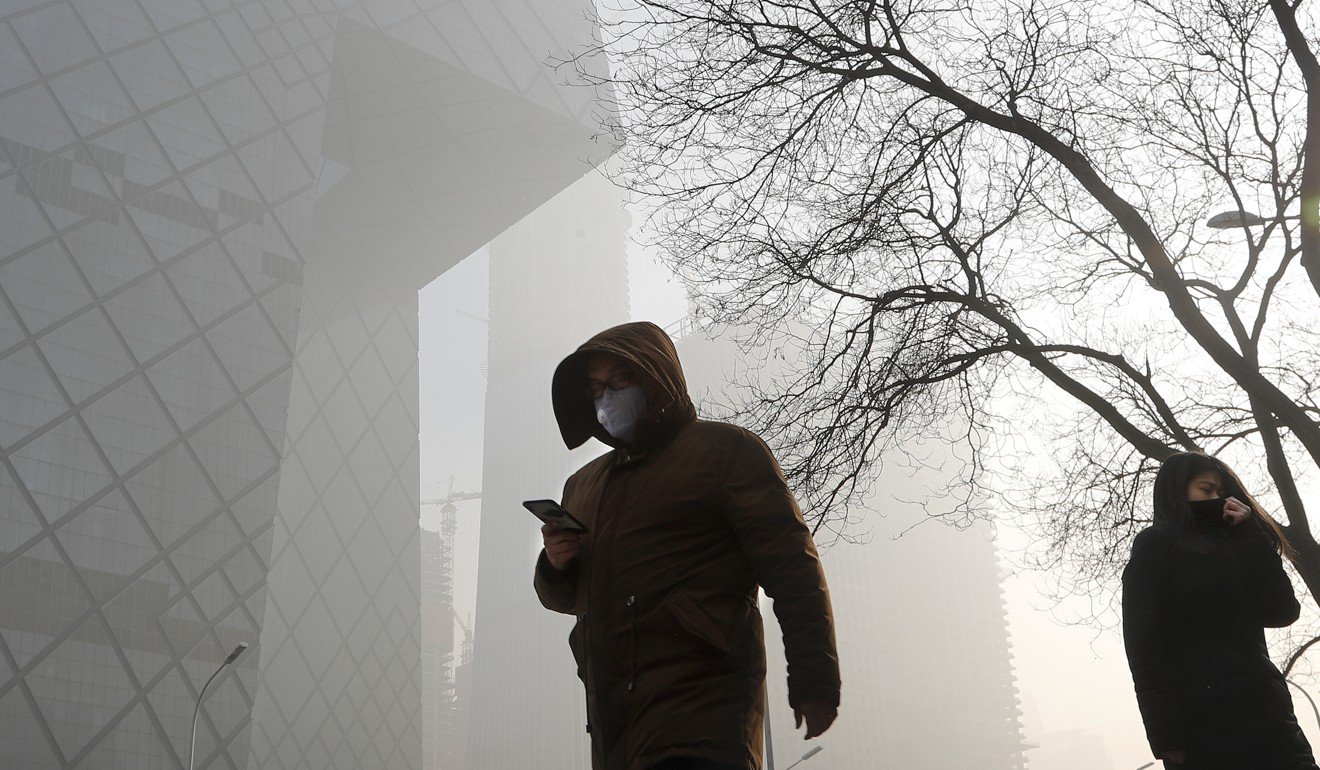
Still, growing anxieties about air pollution, food and medicine safety and an increasingly authoritarian political climate are pushing middle class families to look for new ways to circumvent the obstacles so they can live outside China.
Among the options, there is growing demand for sojourns abroad of a month or more, to enjoy a foreign lifestyle for a brief period to make up for the fact that their emigration dreams may have stalled.
“I think this is becoming a trend. Chinese middle-class families are facing increasing difficulties to emigrate and own homes overseas. On the other hand, they still yearn for more freedom, for a better quality of life than what is found in first-tier cities in China.
They are eager to seek alternatives to give themselves and their children a global lifestyle,” said Cai Mingdong, founder of Zhejiang Newway, an online tour and education operator in Ningbo, south of Shanghai.
“First, the availability of multiple-entry tourist visas and the sharp drop in air ticket prices have made it convenient and practical to stay abroad for from a few weeks to up to three months each year.”
Blacklist labels millions of Chinese citizens and businesses untrustworthy
Now, many well-to-do Chinese middle class families can get a tourist visa for five or even 10 years that allows them to stay in a number of countries — including the United States, Australia, Canada, New Zealand and other Asian countries — for up to six months at a time.
“In 2011, a round-trip air ticket from Shanghai to New Zealand cost 14,000 yuan (US$2,000), but now is about 4,000 (US$598),” added Cai.
This opens up the possibility for many middle-class families who are not eligible to emigrate, to live abroad for short periods of time.
Many wealthy Chinese middle class families can get a tourist visa for five or even 10 years that allows them to stay in several countries including the United States, Australia, Canada, New Zealand and other Asian countries, for up to six months at a time. Photo: AP
Chinese tourists made more than 140 million trips outside the country in 2018, a 13.5 per cent increase from the previous year, spending an estimated US$120 billion, according to the China Tourism Academy, an official research institute under the Ministry of Culture and Tourism.
“In [the Thai cities of] Bangkok and Chiang Mai, there are more and more Chinese who stay there to experience the local lifestyle, which is different from theirs in China. The life there is very different from that in China,” said Owen Zhu, who now lives in the Bangkok condo he bought last year.
“The freedom, culture and community are diversified. The quality of air, food and services are much higher than in first-tier cities in China, but the prices are more affordable.
“In Bangkok, in many international apartment complexes where foreigners live, the monthly rent for a one-bedroom [apartment] is about 2,000 (US$298) to 3,000 yuan.”
China’s richest regions are also home to the most blacklisted firms
A one-bedroom apartment in Shenzhen in southern China is twice as expensive, with rents continuing to rise rapidly.
There are global goods, and it is easy to socialise with different people from around the world,” Zhu added
“Many Chinese people around me, really, come to Thailand to live for a while and go back to China, but then come back again after a few months.”
Both Cai and Zhu said they discovered the new phenomenon among China’s middle class and decided it was a business opportunity.
Growing anxieties about air pollution, food and medicine safety and an increasingly authoritarian political climate are pushing middle class families to look for new ways to circumvent the obstacles so they can live outside China. Photo: AP
Zhu is in the process of registering a company in Bangkok and plans to build an online platform to service the needs of Chinese citizens living abroad who do not own property or have immigration status, especially members of the LGBT community.
Cai said dozens of Chinese families in the Yangtze River Delta had paid him to send their children to schools in New Zealand or Europe for around three or four weeks in the middle of the school year, while the parents rent villas in the area, with New Zealand and Toronto in Canada among the most popular destinations.
Last year, Zheng Feng, a single mother and freelance writer from Beijing, rented a small villa in Australia for a month for them, a friend and their children to escape Beijing’s pollution and experience life overseas.
“To be honest, I don’t have enough money to invest in a property or a green card in Australia. But it’s very affordable for me and my son to pay about 30,000 yuan (US$4,484) to live abroad for one or two months.” Zheng said.
China says 2018 growth was worth more than Australia’s whole GDP
Zheng will join the Xu family in Chiang Mai later this year and she is also planning a similar trip to England next year.
Zheng’s friend, Alice Yu, invested in an American EB-5 investor visa a few years ago, and plans to make one or two month-long trips abroad each year until her family is finally able to move to the United States.
Demand for the EB-5 investor visa in China seems to be waning given heightened uncertainty about the future of the programme and US immigration law in general under US President Donald Trump.
Approval for the visa can now take up to 10 years, resulting in a huge backlog that has further dampened interest and led to a significant dip in investment inflows into the US from foreign individuals.
A one-bedroom apartment in Bangkok can cost around bout 2,000 (US$298) to 3,000 yuan a month. Photo: AFP
“Maybe it will soon become standard for a real Chinese middle-class family to have the time and money to enjoy a long stay at a countryside villa overseas,” said Yu.
“Regardless of whether we can get a long-term visa for the United States, I want my children grow up in a global lifestyle and with more freedom than just growing up on the mainland. So do all wealthy and middle class Chinese families, I think.”
Karen Gao’s son started studying at an international school in Chiang Mai in June, at the cost of about 70,000 yuan (US$10,462) a year, after she quit her job as a public relations manager in Shenzhen and moved to Thailand on a tourist visa.
For better or worse? China’s complicated employment explained
“A few months each year for good air, good food and no censorship and internet control, but cheaper living costs compared to Beijing, it sounds like a really good deal to go,” said Gao, who has now been offered a guardian visa to accompany her son, who has already been given a student visa.
“In Shenzhen, I wasn’t able to get him into school because I had no [local] residence permit.
“It would be the best choice for us because we feel so uncertain and worried about investing and living in the mainland.”
Last year, Gao, like thousands of other private investors mostly middle class people living in first-tier cities, suffered significant losses when their investments in hotels and inns in Dali, Yunnan province, were demolished amid the local government’s campaign to curb pollution and improve the environment around Lake Erhai.
“We were robbed by the officials without proper compensation,” Gao said.
Source: SCMP
Posted in air pollution, air ticket prices, Alice Yu, Asian countries, Australia, authoritarian government, authoritarian political climate, Bangkok, barriers, Beijing, Blacklist labels, Cai Mingdong, canada, cheaper living costs, Chiang Mai, China alert, China Tourism Academy, chinese families, circumvent the obstacles, Citizens, compensation, condo, countryside villa overseas, daily expenses, Dali, daughters, destinations, easy atmosphere, emigrate overseas, experience life overseas, food and medicine safety, Foreign lifestyle experiences, founder, GDP, good air, good food, hotels and inns, husbands, immigrant-like life experience., international school, Karen Gao, LGBT community, local international school, long holidays abroad, long-stay visas, mainland, middle class familie, middle-class couple, Ministry of Culture and Tourism, mountainous north, moving money overseas, multiple-entry tourist visas, New Zealand, Ningbo, no censorship and internet control, official research institute, online tour and education operator, overseas properties, Owen Zhu, Pollution, relaxed lifestyle, residence permit, restrictions, serviced apartment, Shanghai, Shenzhen, short-term holiday, single mother and freelance writer, student visa, Thailand, Transport, travelling abroad, Uncategorized, United States, US immigration law, US President Donald Trump, wealthy families, Xu family, Xu Zhangle, yuan, Yunnan Province, Zhejiang Newway, Zheng Feng |
Leave a Comment »





 CHINDIA ALERT: You'll be living in their world, very soon