Archive for ‘70th anniversary’

29/09/2019

China, Russia pledge to enhance extensive cooperation, legislative coordination

RUSSIA-CHINA-LI ZHANSHU-VISIT

Li Zhanshu, chairman of the Standing Committee of the National People’s Congress of China, meets with Russian President Vladimir Putin in Moscow, Russia, Sept. 25, 2019. Li paid an official goodwill visit to Russia from Sept. 25 to 28. (Xinhua/Pang Xinglei)

MOSCOW, Sept. 28 (Xinhua) — China’s top legislator Li Zhanshu and top Russian officials have agreed to further strengthen bilateral comprehensive cooperation and continue to promote legislative coordination for stronger ties.

Li, chairman of the Standing Committee of the National People’s Congress of China, on Saturday completed an official visit to Russia, during which he held talks with Russian President Vladimir Putin and the heads of both houses of the Russian parliament.

The Russian leaders congratulated China on the 70th anniversary of the founding of the People’s Republic of China and hailed the great achievements China has made in the past seven decades. The two sides also exchanged congratulations on the 70th anniversary of the establishment of diplomatic relations between China and Russia.

When meeting Putin, Li said, under the strategic guidance of the heads of state of the two countries, China-Russia relations have hit an unprecedented high and entered a new era of higher level and greater development.

Under the current international situation, China and Russia should strengthen mutual support, jointly build strategic support and security barriers between the two countries, and promote the construction of a new type of international relations and a community with a shared future for mankind, Li said.

He called on the two sides to bring their political mutual trust and strategic cooperation to a new height, and push economic and trade cooperation to a new level, so as to move forward their comprehensive strategic partnership of coordination for a new era.

For his part, Putin lauded Russia-China ties as a model of relations between the world’s major countries.

He said the comprehensive strategic partnership of coordination for a new era between the two countries, built in compliance with the international law, is in the interests of the two countries and the two peoples.

Noting that the current bilateral cooperation in various areas is steadily advancing towards the established goals, Putin urged the two countries to further strengthen all-round cooperation and develop their ties on the basis of existing achievements.

Li also met with Valentina Matviyenko, speaker of the Russian Federation Council, or the upper house of parliament, and Vyacheslav Volodin, speaker of the Russian State Duma, or the lower house of parliament.

During his talks with the heads of Russian parliament, Li said the cooperation between legislative bodies, as an important part of the China-Russia comprehensive strategic partnership of coordination for a new era, is expected to prioritize the implementation of the consensus reached by the two heads of state.

According to him, the two sides should promote communication and collaboration for the sake of the development of bilateral ties and, in particular, strengthen the exchanges of experience on foreign-related legal construction, so as to effectively deal with unilateralism and protectionism as well as defend the national sovereignty, security and interests of the two countries.

Li also called for better synergy between the China-proposed Belt and Road Initiative and the Russia-led Eurasian Economic Union, further cooperation in high-tech fields as well as sub-national cooperation and people-to-people exchanges.

For her part, Matviyenko said China’s development has proved to the world that a country can follow its own development path in line with its national conditions.

She said the people of the two countries work closely together and respect each other’s national interests, adding that no matter how the international situation changes, the long-term friendly cooperation between the two countries will remain unchanged.

The legislative bodies of the two countries should provide legal support and guarantee for the development of bilateral relations, Matviyenko said.

Volodin also urged the legislative bodies to make good use of existing cooperation mechanisms in a bid to promote cooperation in various fields, resist external interference and safeguard a fair and just international order.

Li and Volodin also attended the fifth meeting of the China-Russia committee for parliamentary cooperation.

In his speech, Li talked about China’s historic achievements in the past 70 years and spoke highly of the contribution of legislative cooperation to the development of bilateral relations.

He expressed hopes that both sides, after thorough studies, will come up with new ideas and new measures for legislative cooperation in a new era, better use the committee for parliamentary cooperation as a platform, and further enrich China-Russia relations.

While in Moscow, the top Chinese legislator also visited the Tomb of the Unknown Soldier and inspected the Moscow metro project of the China Railway Construction Corporation.

He also exchanged views on strengthening local cooperation with Rustam Minnikhanov, president of Russia’s Tatarstan Republic, in its capital of Kazan and visited the Kazan Helicopter Plant and Kazan Federal University.

Source: Xinhua

29/09/2019

Flowerbeds built in Beijing to celebrate 70th anniversary of founding of PRC

CHINA-BEIJING-NATIONAL DAY-PREPARATION-FLOWERBEDS (CN)

Photo taken on Sept. 28, 2019 shows a flowerbed titled “Story of Spring” in Beijing, capital of China. Flowerbeds were built along the Chang’an Avenue to celebrate the 70th anniversary of the founding of the People’s Republic of China. (Xinhua/Wang Quanchao)

Source: Xinhua

29/09/2019

China anniversary: The deep cuts of 70 years of Communist rule

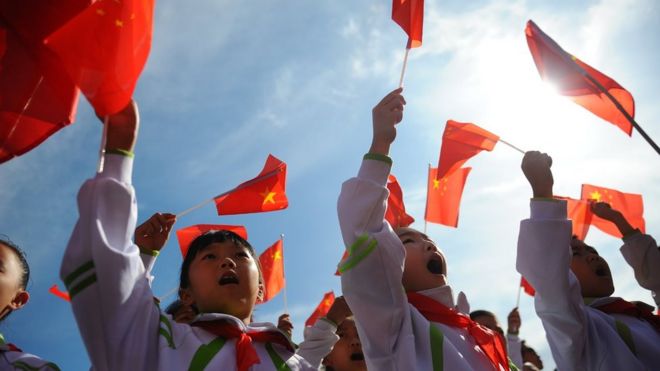
Children waving Chinese flagsImage copyright GETTY IMAGES
Image caption China’s version of its past is a story of prosperity, progress and sacrifice for the common good

China’s extraordinary rise was a defining story of the 20th Century, but as it prepares to mark its 70th anniversary, the BBC’s John Sudworth in Beijing asks who has really won under the Communist Party’s rule.

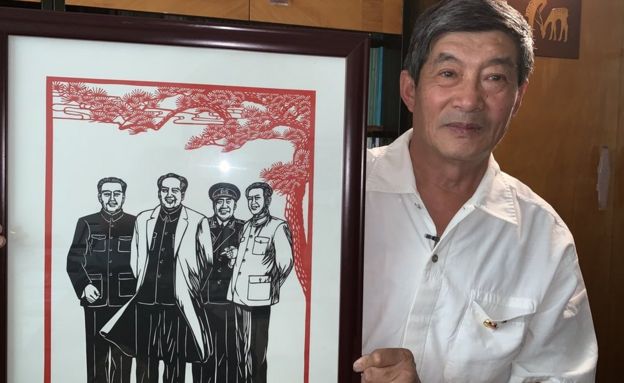
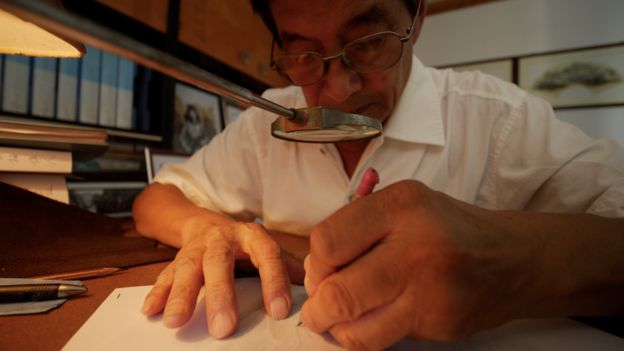
Sitting at his desk in the Chinese city of Tianjin, Zhao Jingjia’s knife is tracing the contours of a face.

Cut by delicate cut, the form emerges – the unmistakable image of Mao Zedong, founder of modern China.

The retired oil engineer discovered his skill with a blade only in later life and now spends his days using the ancient art of paper cutting to glorify leaders and events from China’s communist history.

“I’m the same age as the People’s Republic of China (PRC),” he says. “I have deep feelings for my motherland, my people and my party.”

Zhao Jingjia with a paper cut of Mao Zedong
Image caption For people like Zhao Jingjia, China’s success outweighs the “mistakes” of its leaders

Born a few days before 1 October 1949 – the day the PRC was declared by Mao – Mr Zhao’s life has followed the dramatic contours of China’s development, through poverty, repression and the rise to prosperity.

Now, in his modest but comfortable apartment, his art is helping him make sense of one of the most tumultuous periods of human history.

“Wasn’t Mao a monster,” I ask, “responsible for the deaths of tens of millions of his countrymen?”

“I lived through it,” he replies. “I can tell you that Chairman Mao did make some mistakes but they weren’t his alone.”

“I respect him from my heart. He achieved our nation’s liberation. Ordinary people cannot do such things.”

On Tuesday, China will present a similar, glorious rendering of its record to the world.

The country is staging one of its biggest ever military parades, a celebration of 70 years of Communist Party rule as pure, political triumph.

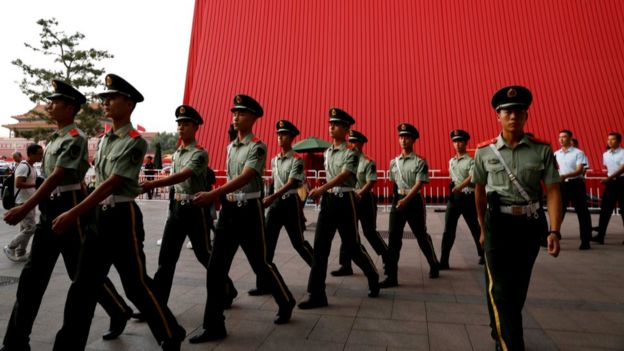
Beijing will tremble to the thunder of tanks, missile launchers and 15,000 marching soldiers, a projection of national power, wealth and status watched over by the current Communist Party leader, President Xi Jinping, in Tiananmen Square.

An incomplete narrative of progress

Like Mr Zhao’s paper-cut portraits, we’re not meant to focus on the many individual scars made in the course of China’s modern history.

It is the end result that matters.

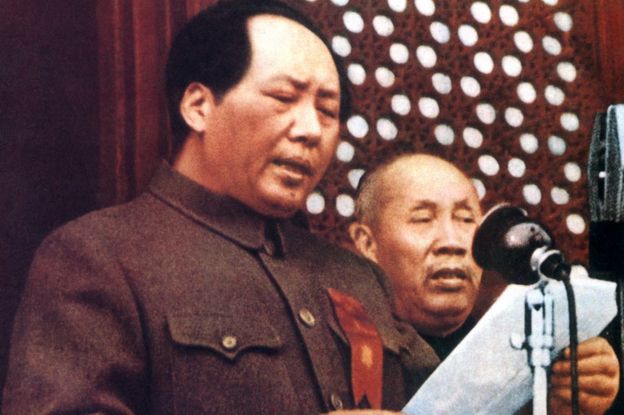
Mao Zedong declares the People's Republic of China in Beijing on 1 Oct 1949Image copyright XINHUA/AFP
Image caption Mao Zedong pronounces the dawn of the People’s Republic of China on 1 October 1949

And, on face value, the transformation has been extraordinary.

On 1 October 1949, Chairman Mao stood in Tiananmen Square urging a war-ravaged, semi-feudal state into a new era with a founding speech and a somewhat plodding parade that could muster only 17 planes for the flyby.

This week’s parade, in contrast, will reportedly feature the world’s longest range intercontinental nuclear missile and a supersonic spy-drone – the trophies of a prosperous, rising authoritarian superpower with a 400 million strong middle class.

It is a narrative of political and economic success that – while in large part true – is incomplete.

New visitors to China are often, rightly, awe-struck by the skyscraper-festooned, hi-tech megacities connected by brand new highways and the world’s largest high-speed rail network.

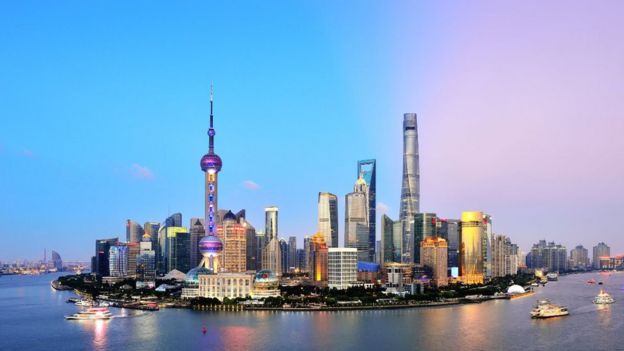
Shanghai skylineImage copyright GETTY IMAGES
Image caption Those in China’s glittering cities may accept the trade-off of political freedom for economic growth

They see a rampant consumer society with the inhabitants enjoying the freedom and free time to shop for designer goods, to dine out and to surf the internet.

“How bad can it really be?” the onlookers ask, reflecting on the negative headlines they’ve read about China back home.

The answer, as in all societies, is that it depends very much on who you are.

Many of those in China’s major cities, for example, who have benefited from this explosion of material wealth and opportunity, are genuinely grateful and loyal.

In exchange for stability and growth, they may well accept – or at least tolerate – the lack of political freedom and the censorship that feature so often in the foreign media.

For them the parade could be viewed as a fitting tribute to a national success story that mirrors their own.

But in the carving out of a new China, the knife has cut long and deep.

The dead, the jailed and the marginalised

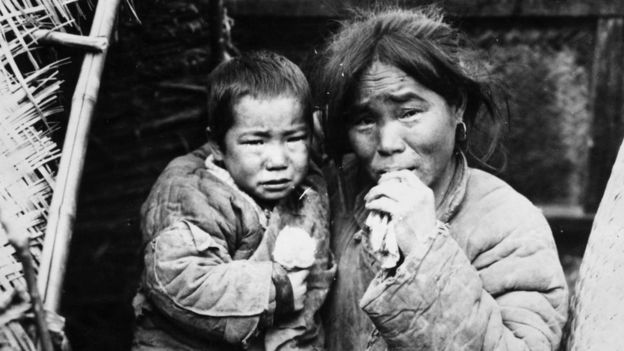
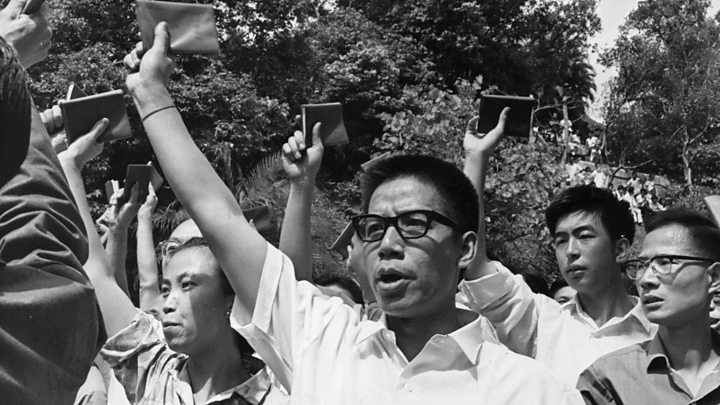
Mao’s man-made famine – a result of radical changes to agricultural systems – claimed tens of millions of lives and his Cultural Revolution killed hundreds of thousands more in a decade-long frenzy of violence and persecution, truths that are notably absent from Chinese textbooks.

Archive image of a starving woman and child during the famine in ChinaImage copyright GETTY/TOPICAL
Image caption Tens of millions starved to death under Mao, as China radically restructured agriculture and society

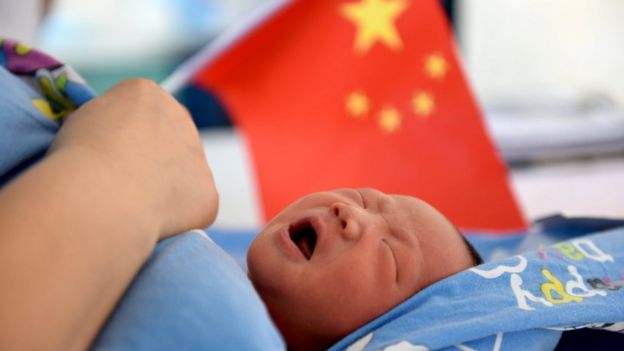
After his death, the demographically calamitous One Child Policy brutalised millions over a 40-year period.

Still today, with its new Two Child Policy, the Party insists on violating that most intimate of rights – an individual’s choice over her fertility.

The list is long, with each category adding many thousands, at least, to the toll of those damaged or destroyed by one-party rule.

Chinese baby in front of Chinese flagImage copyright GETTY IMAGES
Image caption Beijing still regulates how many children families can have

There are the victims of religious repression, of local government land-grabs and of corruption.

There are the tens of millions of migrant workers, the backbone of China’s industrial success, who have long been shut out of the benefits of citizenship.

A strict residential permit system continues to deny them and their families the right to education or healthcare where they work.

And in recent years, there are the estimated one and a half million Muslims in China’s western region of Xinjiang – Uighurs, Kazakhs and others – who have been placed in mass incarceration camps on the basis of their faith and ethnicity.

China continues to insist they are vocational schools, and that it is pioneering a new way of preventing domestic terrorism.

The stories of the dead, the jailed and the marginalised are always much more hidden than the stories of the assimilated and the successful.

Viewed from their perspective, the censorship of large parts of China’s recent history is not simply part of a grand bargain to be exchanged for stability and prosperity.

People holding pictures of Mao and the Little Red Book in Tiananmen Square, 1966

Getty
Timeline of modern China

  • 1949 Mao declares the founding of the People’s Republic of China
  • 1966-76 Cultural Revolution brings social and political upheaval
  • 1977 Deng Xiaoping initiates major reforms of China’s economy
  • 1989 Army crushes Tiananmen Square pro-democracy protests
  • 2010 China becomes the world’s second-largest economy
  • 2018 Xi Jinping is cleared to be president for life
It is something that makes the silence of their suffering all the more difficult to penetrate.

It is the job of foreign journalists, of course, to try.

‘Falsified, faked and glorified’

But while censorship can shut people up, it cannot stop them remembering.

Prof Guo Yuhua, a sociologist at Beijing’s Tsinghua University, is one of the few scholars left trying to record, via oral histories, some of the huge changes that have affected Chinese society over the past seven decades.

Her books are banned, her communications monitored and her social media accounts are regularly deleted.

“For several generations people have received a history that has been falsified, faked, glorified and whitewashed,” she tells me, despite having been warned not to talk to the foreign media ahead of the parade.

“I think it requires the entire nation to re-study and to reflect on history. Only if we do that can we ensure that these tragedies won’t be repeated.”

People with poster of Mao ZedongImage copyright GETTY IMAGES
Image caption Can progress really be attributed to the leadership?

A parade, she believes, that puts the Communist Party at the front and centre of the story, misses the real lesson, that China’s progress only began after Mao, when the party loosened its grip a bit.

“People are born to strive for a better, happier and more respectful life, aren’t they?” she asks me.

“If they are provided with a tiny little space, they’ll try to make a fortune and solve their survival problems. This shouldn’t be attributed to the leadership.”

‘Our happiness comes from hard work’

As if to prove the point about how the unsettled, censored pasts of authoritarian states continue to impact the present, the parade is for invited guests only.

Mao's portrait hanging in Tiananmen SquareImage copyright GETTY IMAGES
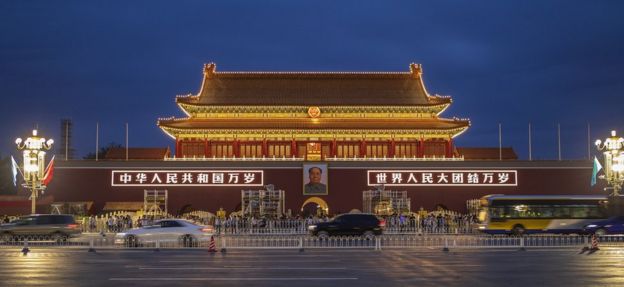
Image caption Mao’s portrait will, as it always is, be watching over the events in Tiananmen Square

Another anniversary, of which Tiananmen Square is the centrepiece, is also being measured in multiples of 10 – it is 30 years since the bloody suppression of the pro-democracy protests that shook the foundations of Communist Party rule.

The troops will be marching – as they always do on these occasions – down the same avenue on which the students were gunned down.

The risk of even a lone protester using the parade to mark a piece of history that has largely been wiped from the record is just too great.

With central Beijing sealed off, ordinary people in whose honour it is supposedly being held, can only watch it on TV.

Zhao

Back in his Tianjin apartment, Zhao Jingjia shows me the intricate detail of a series of scenes, each cut from a single piece of paper, depicting the “Long March”, a time of hardship and setback for the Communist Party long before it eventually swept to power.

“Our happiness nowadays comes from hard work,” he tells me.

It is a view that echoes that of the Chinese government which, like him, has at least acknowledged that Mao made mistakes while insisting they shouldn’t be dwelt on.

“As for the 70 years of China, it’s extraordinary,” he says. “It can be seen by all. Yesterday we sent two navigation satellites into space – all citizens can enjoy the convenience that these things bring us.”

Media caption What was China’s Cultural Revolution?

Source: The BBC

28/09/2019

China’s National Day parade to showcase advances in nuclear deterrence

  • Military experts say PLA modernisation brought about during Xi Jinping’s presidency will be the main focus of October 1 celebration in Beijing
  • It’s necessary for China to ‘show some of its muscle’ amid the trade dispute with the US, observer says
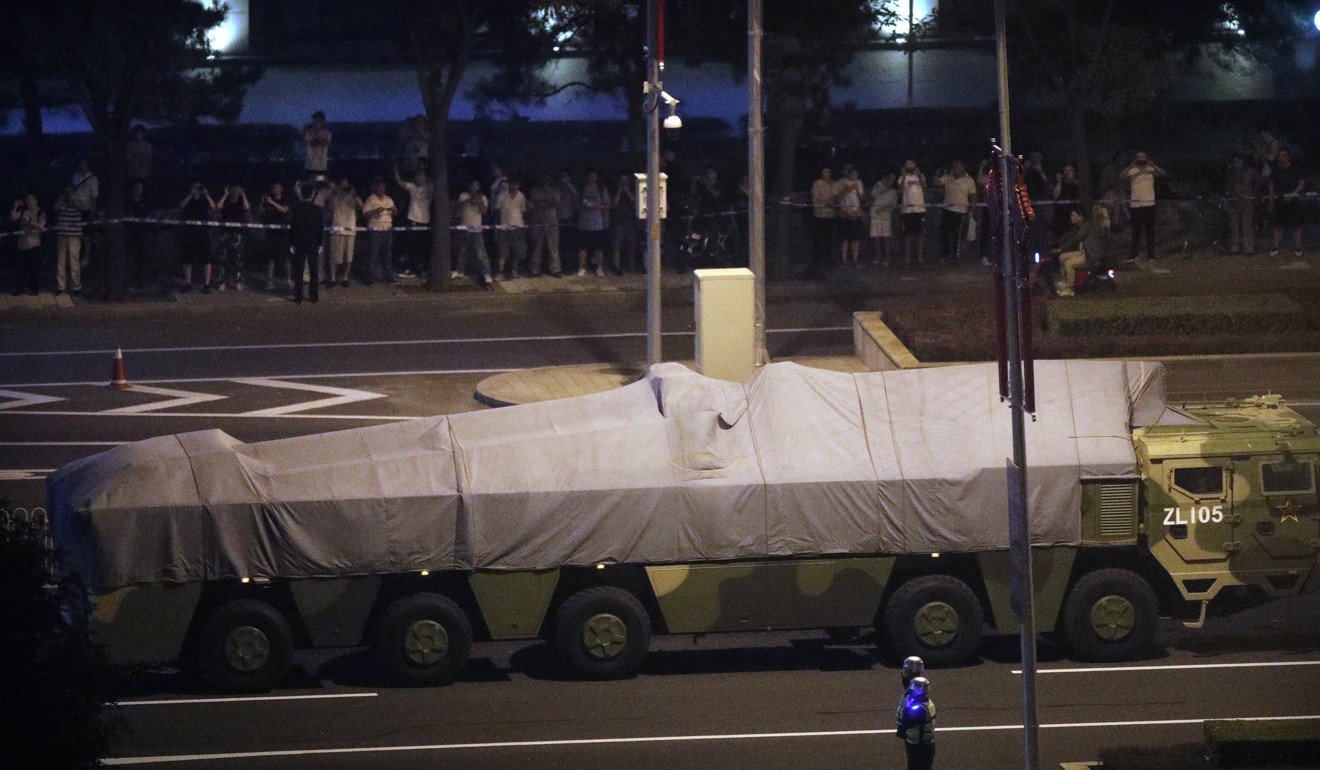
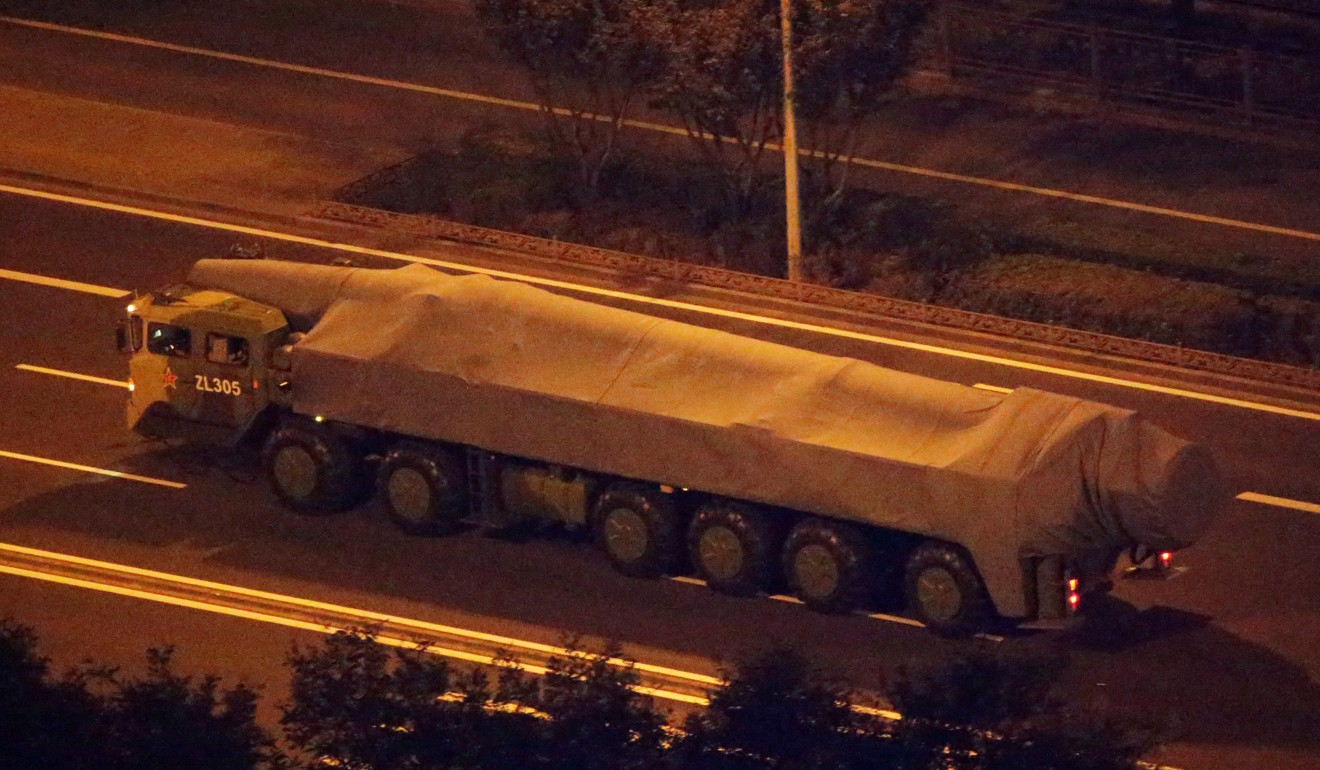
China’s land-based DF-41 intercontinental ballistic missile will be among the military hardware on show on October 1. Photo: Reuters

China plans to show off its most advanced active weapon systems at the upcoming National Day parade, which will be the biggest of the 14 such events it has held over the past seven decades.

The parade, to be held on October 1 to mark the 70th anniversary of the founding of the People’s Republic, will highlight the military modernisation – particularly in nuclear deterrence – that has taken place since President Xi Jinping came to power in late 2012, according to military experts.

The People’s Liberation Army (PLA) offered a glimpse of those weapons during rehearsals for the parade in downtown Beijing from September 14.

As part of the celebrations, Xi, who also chairs the Central Military Commission, will inspect 48 squads on the ground and more than a dozen airborne squadrons, according to a military insider involved in support services for the parade.

More than a dozen airborne squadrons will take part in the National Day parade. Photo: Kyodo

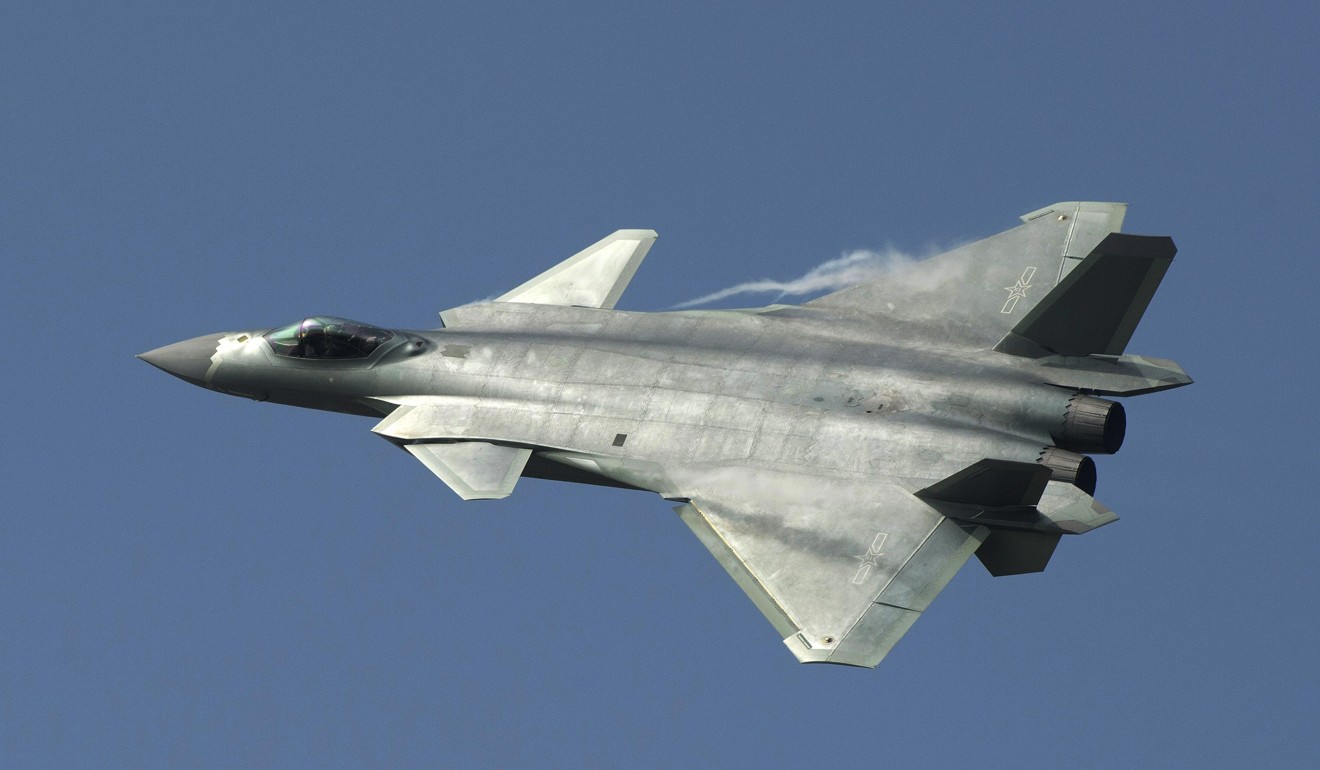
The squadrons will include the air force’s first stealth fighter, the J-20; the main active warplanes such as the J-10 and J-11B; and armed helicopters like the Z-20. However, the J-8 fighter jet would not appear this year, the source said, confirming that the first interceptor built in China has been formally retired.

“The ground march will be led by several hero forces from the five theatre commands, which is different from previous squads selected from the ground forces, air force and navy,” said the insider, who requested anonymity because of the sensitivity of the matter.

“The main goal of this year’s parade is to promote the military modernisation of the PLA under President Xi’s leadership over the past seven years, with the military overhaul being one of the key achievements.”

Thirty-three of the 48 squads would be “weapon squads”, while the 13 others would be made up of infantry troops from the five theatre commands, the source said.

National Day fireworks in Hong Kong cancelled over safety fears

As part of the PLA’s sweeping military reforms, the army’s previous seven military commands were reshaped into five theatre commands, while the four former general headquarters were dissolved and replaced by 15 small functional departments.

In September 2015, Xi announced the PLA would shed 300,000 troops, cutting its size to 2 million, a move aimed at turning the PLA into a more nimble and combat-ready fighting force on a par with international standards.

Xi also split the former Second Artillery Corps into the Rocket Force and the Strategic Support Force, with the latter backing up the military’s electronic warfare units in cyberspace and outer space.

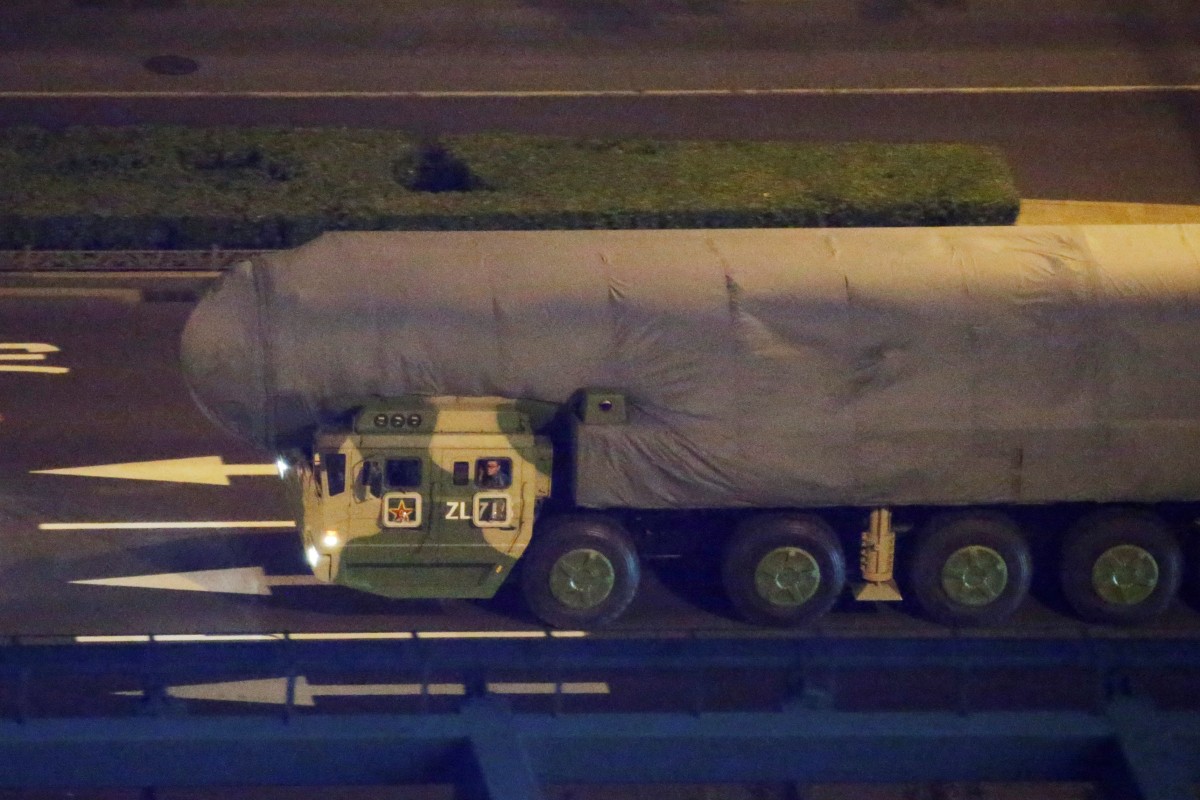
Among the 33 weapon squads, the highlights are expected to be the PLA’s strategic nuclear missiles such as the Rocket Force’s land-based DF-41 intercontinental ballistic missile (ICBM), the DF-21D anti-ship ballistic missile, the DF-17 hypersonic missile and the sea-launched JL-2, or Big Wave-2.

Adam Ni, a researcher at Macquarie University in Australia, said that showing off different types of missiles on land and sea indicated that the PLA was improving its nuclear deterrence capabilities by perfecting a three-pronged military force structure, or the so-called nuclear triad.

The DF-17 hypersonic ballistic missile will be one of the highlights of the parade. Photo: AP

The DF-41 is capable of carrying multiple warheads and many decoys, making it harder to detect than silo-based systems and better able to survive a first strike.

Ni said the DF-41 was China’s next-generation cutting-edge weapon.

“It’s actually an advanced ICBM and has a range to hit practically anywhere in the world, including the continental United States,” Ni said.

“The DF-41 is the ultimate symbol of the destructive potential of Chinese armed forces, just as nuclear weapons are similar symbols of the US and Russia.”

The JL-2 – which has a shorter range of 7,000km (4,350 miles) and can be launched by the PLA Navy’s Type 094 submarines – is unable to hit anywhere on the American continent when launched from submarines in the South China Sea and coastal areas of China.

China tests new warships in live-fire drills near Vietnam

However, China is developing the JL-3, which has a range of about 9,000km; the upgraded version of the JL-2, with a flight test conducted in June, though it is still less than the 12,000km range of the American Trident II.

“China is stepping up its military modernisation, which includes a number of aspects; the land-based aspect is introducing more mobile and survivable missile systems,” Ni said.

“The game change will happen when China is able to hit the whole US continent with its missile submarines in Chinese coastal waters.”

In military terms, survivable refers to the ability to remain mission capable after a single engagement.

The DF-17 is a land-to-land short-range strategic missile capable of delivering both nuclear and conventional payloads. The US intelligence community has estimated that it will reach initial operational capability by 2020. But if the missile is displayed in the parade, that means it is active already.

China conducted two tests of the DF-17 in November 2017, with the first launched from the Jiuquan Space Launch Centre in Inner Mongolia.

An insider said the main goal of this year’s parade is to promote the military modernisation of the PLA. Photo: Reuters

Hong Kong-based military commentator Song Zhongping said the nuclear weapons that would go on show in the parade would all be strategic missiles designed to improve China’s deterrent capabilities.

The show comes after the PLA delivered a national defence white paper in July stressing its goal to “maintain national strategic security by deterring other countries from using or threatening to use nuclear weapons against China”.

Unlike in the past, this year’s report stated that the US and China were now competing superpowers, and that the PLA’s growing forces were developing to the point that they could challenge the US.

Zhou Chenming, a Beijing-based military observer, said it was also necessary for the PLA to “show some of its muscle” amid the ongoing trade dispute between Beijing and Washington.

“To prevent misunderstanding, most of the weapons are just strategic equipment, not tactical arms, because Beijing still doesn’t want to irritate Washington,” he said.

About 280,000 people were involved in the rehearsals for the parade and related support services, according to Xinhua.

Source: SCMP

24/09/2019

Exhibition opens to mark 70th anniversary of PRC founding

CHINA-BEIJING-PRC-70TH FOUNDING ANNIVERSARY-EXHIBITION-OPENING (CN)

Chinese Premier Li Keqiang, also a member of the Standing Committee of the Political Bureau of the Communist Party of China (CPC) Central Committee, delivers a speech during the opening ceremony of a grand exhibition of achievements in commemoration of the 70th anniversary of the founding of the People’s Republic of China (PRC) at the Beijing Exhibition Center in Beijing, capital of China, Sept. 23, 2019. (Xinhua/Rao Aimin)

BEIJING, Sept. 23 (Xinhua) — A grand exhibition of achievements in commemoration of the 70th anniversary of the founding of the People’s Republic of China (PRC) opened Monday at the Beijing Exhibition Center.

Premier Li Keqiang, also a member of the Standing Committee of the Political Bureau of the Communist Party of China (CPC) Central Committee, attended the opening ceremony and delivered a speech.

The exhibition comprehensively reflects the practices, achievements and experience of the past 70 years, which witnessed great improvements in the country’s economy and people’s living conditions, said Li.

It also records the continuous rise of China’s international status and influence, as well as China’s contribution to the cause of world peace and development, according to Li.

Noting that China remains the largest developing country in the world, Li called for more efforts to secure even greater victories in the future.

The country should work for high-quality development, comprehensively deepen reform, and build a market-oriented international business environment based on the rule of law, said Li, adding that it will implement a proactive policy of opening up to the outside world and promote economic globalization.

The opening ceremony was presided over by Wang Huning, a member of the Standing Committee of the Political Bureau of the CPC Central Committee and a member of the Secretariat of the CPC Central Committee.

About 1,000 people attended the opening ceremony.

Source: Xinhua
24/09/2019

China 70th anniversary: Pigeon ban and lockdowns as countdown begins

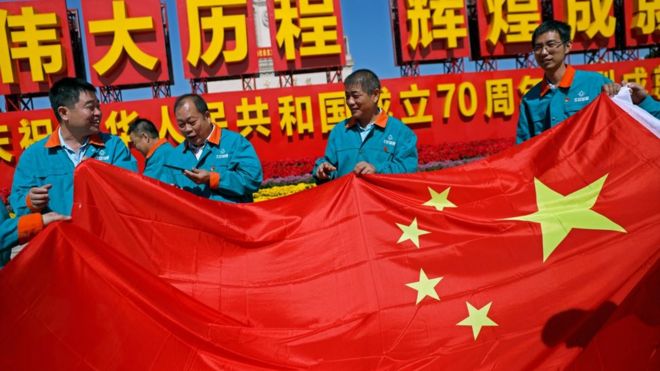
Chinese workers with Chinese flagImage copyright EPA
Image caption China is getting dressed up for its big birthday party

One week from now, the People’s Republic of China will mark its 70th anniversary with celebrations on a scale not seen in China in decades.

Beijing is pulling out all stops and 1 October will be flush with fireworks, fanfare and a huge military parade.

To ensure it goes smoothly, authorities have been ramping up security in the capital – and online – for weeks.

But with yet more protests expected in Hong Kong, the territory might just rain on China’s parade.

What is it all about?

The birth of modern China was declared on 1 October 1949, after the communists under Mao Zedong won the civil war that followed World War Two.

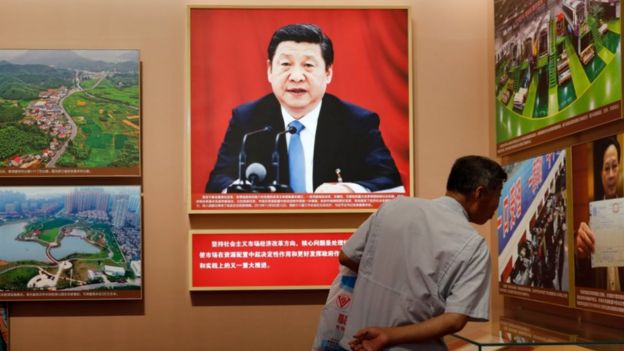
Portrait of Xi JinpingImage copyright EPA
Image caption Exhibitions are highlighting the achievements of the Communist Party

The date is marked every year, but celebrations for this 70th anniversary are expected to eclipse previous events.

It’s the first big anniversary since China has emerged as a global power. While 10 years ago China was a superpower in the making, it is now the world’s second largest economy, almost eye-to-eye with the United States.

What to expect?

The main celebrations will take place in the capital, Beijing, where there will be a grand military parade with “advanced weapons” on display, followed by a “mass pageant”.

President Xi Jinping – considered the most powerful Chinese leader since Mao – will address the Chinese people. His speech is expected to celebrate China’s rapid growth and which will be closely watched for any indication of the country’s direction in the coming years.

The president will also hand out honours for contributions to the country and in the evening there will be a grand gala and fireworks show.

All official Chinese celebrations are carefully choreographed and the success of this one is particularly important to the government.

The Dos and Don’ts

The parade – open to invited guests only – will take place around Tiananmen Square in central Beijing. The surrounding area will be practically under lockdown, and in fact has been so several times already.

During rehearsals leading up to the big day, hotels near Tiananmen Square told guests that for several hours each day, no-one would be able to leave the hotel or return to it should they be out, leading to much travel chaos and rebookings.

Many shops and restaurants in the centre are also closed or have shortened hours and some subway stations are temporarily shut.

Chinese paramilitary policeImage copyright EPA
Image caption Security is tight ensure the party goes to plan

Trains to Beijing are running numerous safety checks on their passengers and vehicles going into the city are also being tightly watched.

On the big day itself, areas around Tiananmen Square will be blocked and guarded. Local residents will need to identify themselves if they want to pass.

To ensure the sun will shine brightly on the celebration in notoriously polluted Beijing, several coal plants and construction sites in and around the city have been ordered to stop work for the duration.

There’s also a ban on any low-flying aerial vehicles in place. That means anything from light aircraft to drones, balloons and even racing pigeons.

Censorship galore

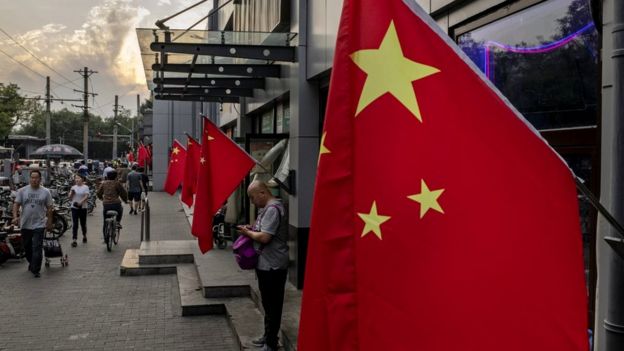
Across much of the city centre, there are national flags set up at every door. Voluntary inspectors are monitoring the streets and locals have told the BBC they’re being questioned after having even brief conversations with foreigners

One person said she was asked by an inspector: “Who were those foreigners? Why were they here?”

The tight control naturally extends online as well. Popular social media platform Weibo said it was deleting content that “distorts” or “insults” the country’s history ahead of the anniversary.

Chinese flags outside a row of shopsImage copyright GETTY IMAGES
Image caption Every house and every shop is sporting a national flag

Chinese journalists are always expected to toe the party line anyway, but starting in October they will have to pass an extra test to prove they are versed particularly in Xi Jinping’s teachings, officially called Xi Jinping Thought on Socialism with Chinese Characteristics, which has been written into the constitution.

Whether or not they pass the exam will then determine whether they’ll be accredited as journalists.

“The fundamental point with this ‘training’ and indoctrination process isn’t so much about the content,” David Bandurski of China Media Watch told the BBC.

“It is about reinforcing the message and understanding among journalists that they work, first and foremost, for the Chinese Communist Party, and serve its agenda.”

So not only will the events be choreographed – the domestic coverage of them will also be tightly guarded.

What about Hong Kong?

Despite Beijing’s determination to let its achievements shine on 1 October, there’s a good chance Hong Kong will pull focus.

Anti-Beijing protests always take place in Hong Kong on China’s National Day, but this time, the activists know that the world is watching.

Anti-government protests have rocked the city for months and the situation shows no sign of dying down.

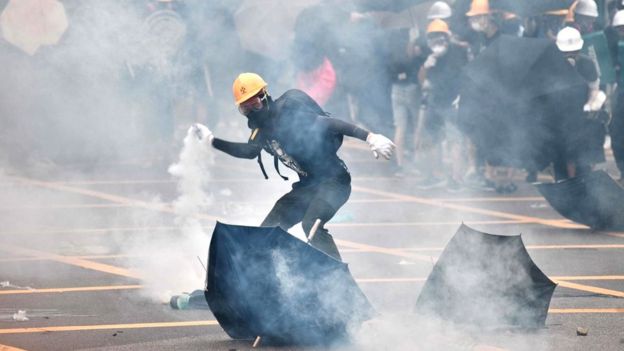
Clashes between police and activists have been becoming increasingly violent, with police using tear gas and activists storming parliament.

Protester throwing a tear gas can back at the policeImage copyright AFP
Image caption The protests have often escalated into violent clashes

That means two things for 1 October: official celebrations in the territory are being toned down to avoid clashes – the annual fireworks display has been cancelled – while at the same time, activists are planning to step up their protests.

On Sunday 29 September, a “Global Anti Totalitarianism March” is scheduled to take place at various locations around the world in support of Hong Kong.

On 1 October itself, a march in central Hong Kong is planned with everyone asked to wear black.

If the past weeks’ demonstrations are anything to go by, the smiles and celebrations in Beijing will be competing for media space with pictures of tear gas and angry young protesters in Hong Kong.

Source: The BBC

23/09/2019

Chinese across New Zealand celebrate PRC’s 70th anniversary

AUCKLAND, Sept. 22 (Xinhua) — Chinese communities’ representatives from the south and north islands of New Zealand gathered together to celebrate the 70th anniversary of the founding of the People’s Republic of China on Sunday in New Zealand’s biggest city Auckland.

The event started with the China national flag-raising ceremony. Then the organizer released elegant white doves to delivery the best wishes to the motherland.

Steven Wong, the president of the Chinese Association of New Zealand, who initiated and organized the event, welcomed the leaders of Chinese communities across New Zealand in his opening speech.

“This year is the 70th anniversary of China. Please allow me to say happy birthday to our motherland. Best wishes for the prosperity of our homeland, for China and New Zealand friendship and the peace of the world,” he said.

Zhou Wei, vice Chinese consul-general in Auckland, said “on behalf of the Chinese Consulate General in Auckland, I would like to thank all friends here and all over New Zealand for your great support and valuable contribution to the development of China-New Zealand relations.”

“The seventy years after the founding of a new China has ushered in the best development in China’s history. China has developed from a poor and lagged-behind country to the world’s second-largest economy, the largest industrial producer, the largest goods trader, the largest foreign exchange reserve country and the largest trading partner and export market of nearly 130 countries and regions including New Zealand,” Zhou highlighted.

Phil Goff, Auckland mayor, said in Chinese, “Happy National Day! Congratulation to the people, and the government of the People’s Republic of China, for the great achievements over the past 70 years.”

In 2008, then New Zealand Trade Minister Phil Goff signed the historic Free Trade Agreement between New Zealand and China in Beijing, making New Zealand the first developed country to negotiate an FTA with China. It is New Zealand’s largest trade deal since the 1983 Closer Economic Relations Trade Agreement with Australia.

Goff recalled the history and stressed the hard work and strong values of New Zealand Chinese. “Thank you for being the bridge to build a strong relationship between New Zealand and the People’s Republic of China. Our two-way trade with China now tops 28 billion New Zealand dollars in 2018. For many years in a row, China has been New Zealand’s largest trading partner, largest source of international students and second largest source of overseas tourists,” he said.

Peter Goodfellow, the president of the New Zealand National Party, the biggest party in New Zealand Parliament, acknowledged the greatness of having Chinese and Chinese communities in New Zealand.

“It is great that we all acknowledged how far China has come in the past 70 years, what a great story it is.”

Then over 700 people from the main cities including Auckland, Wellington and Christchurch enjoyed a celebration gala.

Source: Xinhua

22/09/2019

Chinese fighter jets seen in skies over Beijing as preparations for National Day parade step up

  • October 1 event is intended to be a showcase for military’s progress under Xi Jinping, with J-20 stealth fighters set to take pride of place
  • Domestically developed weapons are main focus of event despite long-standing problems in building  aircraft engines
Chinese J-10 jets perform at the Dubai air show in 2017. Photo: AFP

China has stepped up intensive rehearsals for the upcoming National Day parade, which military insiders say is designed to showcase the achievements of Chinese President Xi Jinping’s modernisation drive.

The parade on October 1 will mark the 70th anniversary of the founding of the People’s Republic and will focus on weapons developed since Xi came to power in late 2012, despite long-standing problems in aircraft engine development.

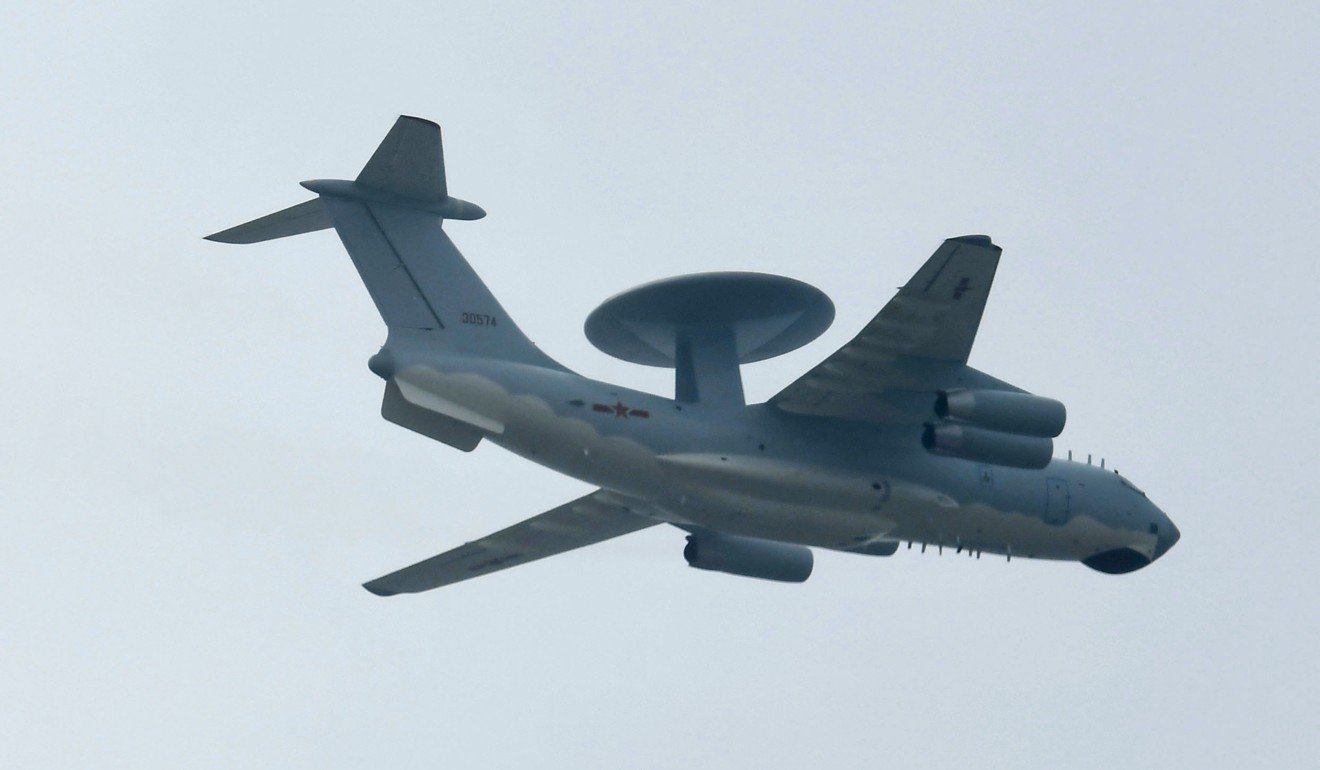
Video clips circulating on mainland social media in recent days have shown at least seven types of aircraft – including the KJ-2000 airborne early warning and control aircraft and J-10 and J-11B fighter jets – taking part in rehearsals over the countryside  around Beijing.

A military insider said the country’s first stealth fighter jet, the J-20, had been rehearsing over the western suburbs of the capital since April.

“There will be up to seven J-20 displayed in the military parade, which is the largest formation since its formal deployment to the Chinese air force in 2017,” the military insider said.

“The J-20 has entered mass production. So far at least 70 J-20s have been made, even though all of them are still equipped with Russian AL-31 engines.”

Earlier this month, the People’s Liberation Army Air Force released a video of a flight of seven J-20s, the largest formation seen so far, suggesting that the fifth-generation warplane has gone into mass production as an arms race with the United States mounts in the region.

The second-largest J-20 formation was shown in an air force video for PLA Day on August 1, when five of the jets were shown.

China has been forced to deploy the J-20 ahead of its schedule since the US has increased the deployment of its fifth-generation stealth fighter jets like the F-22 and F-35s in the Asia-Pacific region.

The US and its allies, including Japan and South Korea, will have more than 200 F-35s by 2025, which means China also needs a similar number of stealth fighters.

To meet demand, China has been working on the development of a purpose-built thrust engine for its stealth fighter since the early 2000s, but has yet to achieve international quality control standards due to problems that include single-crystal turbine blade technology.

China’s air force spreads its wings in 70th anniversary video

Hong Kong-based military commentator Song Zhongping said aircraft engine development had been a long-standing shortcoming but it would not affect the practical fighting capacity of the J-20, which currently uses Russian engines.

“The J-20 hasn’t used the domestic engines so far because it wants a better one, and it still has time,” Song said.

“Other [Chinese-developed] warplanes like the J-10, J-11 and multipurpose attack helicopters are all modified and advanced types, indicating comprehensive achievements amid China’s military modernisation over the past years.”

A Chinese J-20 stealth fighter has entered mass production. Photo: EPA-EFE

Besides the domestically developed aircraft, Beijing is going to display its strategic nuclear missiles, such as the DF-41 intercontinental ballistic missile and the JL-2 submarine-launched ballistic missile, as centrepieces of its National Day military parade, according to a Beijing-based military source.

Xi, who also chairs the powerful Central Military Commission, inspected the country’s biggest military parade at the Zhurihe Combined Tactics Training Base in Inner Mongolia in 2017 to celebrate the 90th anniversary of the PLA, but the source said the weapons displayed in Zhurihe had been developed under the leadership of Xi’s predecessor, Hu Jintao.

“Xi needs to highlight his personal achievements in his era, that’s why this year’s parade has political aims more than military significance,” the source said.

The source also highlighted the significance of the People’s Republic marking its 70th anniversary because the Soviet Union did not survive for that length of time.

“Xi is attempting to tell the outside world that Chinese communist regime has been consolidated under his leadership.”

Source: SCMP

22/09/2019

China’s National Day parade to showcase advances in nuclear deterrence

  • Military experts say PLA modernisation brought about during Xi Jinping’s presidency will be the main focus of October 1 celebration in Beijing
  • It’s necessary for China to ‘show some of its muscle’ amid the trade dispute with the US, observer says
China’s land-based DF-41 intercontinental ballistic missile will be among the military hardware on show on October 1. Photo: Reuters

China plans to show off its most advanced active weapon systems at the upcoming National Day parade, which will be the biggest of the 14 such events it has held over the past seven decades.

The parade, to be held on October 1 to mark the 70th anniversary of the founding of the People’s Republic, will highlight the military modernisation – particularly in nuclear deterrence – that has taken place since President Xi Jinping came to power in late 2012, according to military experts.

The People’s Liberation Army (PLA) offered a glimpse of those weapons during rehearsals for the parade in downtown Beijing from September 14.

As part of the celebrations, Xi, who also chairs the Central Military Commission, will inspect 48 squads on the ground and more than a dozen airborne squadrons, according to a military insider involved in support services for the parade.

More than a dozen airborne squadrons will take part in the National Day parade. Photo: Kyodo

The squadrons will include the air force’s first stealth fighter, the J-20; the main active warplanes such as the J-10 and J-11B; and armed helicopters like the Z-20. However, the J-8 fighter jet would not appear this year, the source said, confirming that the first interceptor built in China has been formally retired.

“The ground march will be led by several hero forces from the five theatre commands, which is different from previous squads selected from the ground forces, air force and navy,” said the insider, who requested anonymity because of the sensitivity of the matter.

“The main goal of this year’s parade is to promote the military modernisation of the PLA under President Xi’s leadership over the past seven years, with the military overhaul being one of the key achievements.”

Thirty-three of the 48 squads would be “weapon squads”, while the 13 others would be made up of infantry troops from the five theatre commands, the source said.

National Day fireworks in Hong Kong cancelled over safety fears

As part of the PLA’s sweeping military reforms, the army’s previous seven military commands were reshaped into five theatre commands, while the four former general headquarters were dissolved and replaced by 15 small functional departments.

In September 2015, Xi announced the PLA would shed 300,000 troops, cutting its size to 2 million, a move aimed at turning the PLA into a more nimble and combat-ready fighting force on a par with international standards.

Xi also split the former Second Artillery Corps into the Rocket Force and the Strategic Support Force, with the latter backing up the military’s electronic warfare units in cyberspace and outer space.

Among the 33 weapon squads, the highlights are expected to be the PLA’s strategic nuclear missiles such as the Rocket Force’s land-based DF-41 intercontinental ballistic missile (ICBM), the DF-21D anti-ship ballistic missile, the DF-17 hypersonic missile and the sea-launched JL-2, or Big Wave-2.

Adam Ni, a researcher at Macquarie University in Australia, said that showing off different types of missiles on land and sea indicated that the PLA was improving its nuclear deterrence capabilities by perfecting a three-pronged military force structure, or the so-called nuclear triad.

The DF-17 hypersonic ballistic missile will be one of the highlights of the parade. Photo: AP

The DF-41 is capable of carrying multiple warheads and many decoys, making it harder to detect than silo-based systems and better able to survive a first strike.

Ni said the DF-41 was China’s next-generation cutting-edge weapon.

“It’s actually an advanced ICBM and has a range to hit practically anywhere in the world, including the continental United States,” Ni said.

“The DF-41 is the ultimate symbol of the destructive potential of Chinese armed forces, just as nuclear weapons are similar symbols of the US and Russia.”

The JL-2 – which has a shorter range of 7,000km (4,350 miles) and can be launched by the PLA Navy’s Type 094 submarines – is unable to hit anywhere on the American continent when launched from submarines in the South China Sea and coastal areas of China.

China tests new warships in live-fire drills near Vietnam
However, China is developing the JL-3, which has a range of about 9,000km; the upgraded version of the JL-2, with a flight test conducted in June, though it is still less than the 12,000km range of the American Trident II.
“China is stepping up its military modernisation, which includes a number of aspects; the land-based aspect is introducing more mobile and survivable missile systems,” Ni said.
“The game change will happen when China is able to hit the whole US continent with its missile submarines in Chinese coastal waters.”
In military terms, survivable refers to the ability to remain mission capable after a single engagement.
The DF-17 is a land-to-land short-range strategic missile capable of delivering both nuclear and conventional payloads. The US intelligence community has estimated that it will reach initial operational capability by 2020. But if the missile is displayed in the parade, that means it is active already.
China conducted two tests of the DF-17 in November 2017, with the first launched from the Jiuquan Space Launch Centre in Inner Mongolia.
An insider said the main goal of this year’s parade is to promote the military modernisation of the PLA. Photo: Reuters

Hong Kong-based military commentator Song Zhongping said the nuclear weapons that would go on show in the parade would all be strategic missiles designed to improve China’s deterrent capabilities.

The show comes after the PLA delivered a national defence white paper in July stressing its goal to “maintain national strategic security by deterring other countries from using or threatening to use nuclear weapons against China”.

Unlike in the past, this year’s report stated that the US and China were now competing superpowers, and that the PLA’s growing forces were developing to the point that they could challenge the US.

Zhou Chenming, a Beijing-based military observer, said it was also necessary for the PLA to “show some of its muscle” amid the ongoing trade dispute between Beijing and Washington.

“To prevent misunderstanding, most of the weapons are just strategic equipment, not tactical arms, because Beijing still doesn’t want to irritate Washington,” he said.

About 280,000 people were involved in the rehearsals for the parade and related support services, according to Xinhua.

Source: SCMP

19/09/2019

Chinese premier meets Putin on bilateral ties

RUSSIA-MOSCOW-CHINA-LI KEQIANG-PUTIN-MEETING

Chinese Premier Li Keqiang meets with Russian President Vladimir Putin at the Kremlin in Moscow, Russia, Sept. 18, 2019. (Xinhua/Liu Bin)

MOSCOW, Sept. 18 (Xinhua) — Chinese Premier Li Keqiang on Wednesday met with Russian President Vladimir Putin at the Kremlin to discuss bilateral relations.

Li arrived at Moscow after holding talks and co-chairing the 24th regular meeting between Chinese and Russian heads of government with his Russian counterpart, Dmitry Medvedev, in St. Petersburg.

The Chinese premier firstly extended Chinese President Xi Jinping’s sincere greetings to Putin.

Recalling his meeting with Medvedev, Li said this visit helped draw a comprehensive plan for exchanges and cooperation between China and Russia in various fields, and achieved a lot of new results.

The three-day visit came as the two countries are celebrating the 70th anniversary of their diplomatic ties. During Xi’s visit to Russia in June this year, China-Russia relationship was elevated to a comprehensive strategic partnership of coordination for a new era.

China and Russia are each other’s biggest neighbor, said Li, adding that a healthy and stable development of bilateral relations is not only beneficial to both sides, but also conducive to the region and the world.

China is willing to continue to consolidate friendship, deepen cooperation and strengthen exchanges with Russia, as well as jointly safeguard an international system with the United Nations at its core and a multilateral trading system based on the World Trade Organization’s rules, which is of great significance for promoting development, prosperity, peace and stability of the world, said the premier.

Noting that China and Russia have broad prospects for cooperation, Li said that China stands ready to better synergize the Belt and Road Initiative (BRI) with the Eurasian Economic Union, to promote the simultaneous increase in both the scale and the quality of the two-way trade.

“China is further expanding opening up and the huge market potential will bring more opportunities to enterprises from all over the world including Russia,” Li said, expressing hopes that the two countries can continue to open up to each other, broaden investment and market access and create more cooperation opportunities for enterprises from the two countries.

With joint efforts, China-Russia practical cooperation will achieve more fruitful results and deliver greater benefits to the two peoples in the new era, Li said.

Congratulating on the 70th anniversary of the founding of the People’s Republic of China, Putin said relations with China are a priority of Russian diplomacy.

Bilateral cooperation has recorded remarkable achievements since the two countries established diplomatic ties 70 years ago, he said, noting that their relations have been upgraded to a comprehensive strategic partnership of coordination for a new era.

Russia-China relations are an important stabilizing factor in international relations, Putin said.

Noting the meeting between Li and Medvedev has effectively promoted bilateral practical cooperation with its many new results, he pledged Russia’s willingness to better align its development strategy with the BRI, constantly expand the two countries’ trade and promote common development.

Also on Wednesday, Li laid a wreath at the Tomb of the Unknown Soldier in Moscow.

Source: Xinhua

Law of Unintended Consequences

continuously updated blog about China & India

ChiaHou's Book Reviews

continuously updated blog about China & India

What's wrong with the world; and its economy

continuously updated blog about China & India