Archive for ‘angered’

17/02/2020

Coronavirus: Americans from quarantined cruise ship flown from Japan

Media caption Americans are taken from the docked ship to Haneda airport in Tokyo

Two planes carrying hundreds of US citizens from a coronavirus-hit cruise ship have left Japan, officials say.

One plane has landed at a US Air Force air base in California, and its passengers will be isolated at military facilities for 14 days.

There were some 400 Americans on board the Diamond Princess. The ship with some 3,700 passengers and crew has been in quarantine since 3 February.

Meanwhile, China reported a total of 2,048 new cases on Monday.

Of those new cases, 1,933 were from Hubei province, the epicentre of the outbreak.

More than 70,500 people across China have been infected by the virus. In Hubei alone, the official number of cases stands at 58,182, with 1,692 deaths. Most new cases and deaths have been reported in Wuhan, Hubei’s largest city.

In other developments:

  • In Japan, a public gathering to celebrate the birthday of new Emperor Naruhito later this week has been cancelled, due to concerns over the spread of the virus while organisers of the Tokyo marathon due to take place on 1 March are considering whether to cancel the amateur part of the race, reports say
  • In China, the National People’s Congress standing committee said it would meet next week to discuss a delay of this year’s Congress – the Communist Party’s most important annual gathering – because of the outbreak
  • At the weekend, an American woman tested positive for the virus in Malaysia after leaving a cruise liner docked off the coast of Cambodia
  • A Russian court has ordered a woman who escaped from a quarantine facility to go back and stay there until she is confirmed to be disease-free, Fontanka news agency reports. Alla Ilyina has until Wednesday to return

What’s happening on the Diamond Princess?

The cruise ship was put in quarantine in Japan’s port of Yokohama after a man who disembarked in Hong Kong was found to have the virus.

On Monday, Japanese officials said there were 99 new cases of infections on board the ship, bringing the total to 454 confirmed cases. It is the largest cluster of cases outside China.

A Russian woman who was on board and tested positive is thought to be the first Russian national to contract the virus after the two previous cases found in Russia were Chinese nationals, Reuters news agency reports.

She will be taken to a hospital for treatment, the Russian embassy in Japan said.

At least 40 US citizens who were on board are infected and will be treated in Japan, Dr Anthony Fauci, Director of the National Institute of Allergy and Infectious Diseases told US broadcaster CBS.
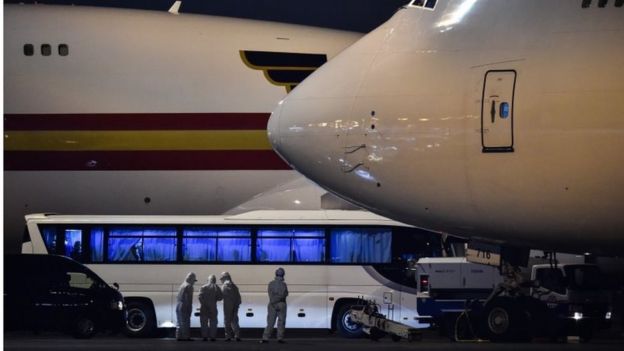
Aircraft wait to take Americans home from Japan after they were taken off the quarantined cruise ship, Diamond Princess, 17 February 2020Image copyright AFP
Image caption Those bound for the US left from Tokyo’s Haneda Airport

The two aircraft chartered by the US government left Tokyo’s Haneda Airport in the early hours of Monday. The second flight was due to land at another base in Texas.

More than 300 passengers are being repatriated voluntarily, the US state department said. Fourteen of them were reported during transit to have tested positive for the virus and were being kept separate from the other passengers, it said.

Those entering the US will undergo a 14-day quarantine, on top of the time they have already spent confined on the ship.

“And the reason for that,” Dr Fauci added, “is that the degree of transmissibility, on that cruise ship, is essentially akin to being in a hotspot.”

Some of the Americans have declined to be evacuated, preferring to wait until the ship quarantine comes to an end on 19 February.

Passenger Matt Smith, a lawyer, said he would not want to travel on a bus to the plane with possibly infected people.

To assist with relief efforts, Japan’s government has given away 2,000 iPhones to passengers on the ship – one for each cabin.

The smartphones were distributed so people could use an app, created by Japan’s health ministry, which links users with doctors, pharmacists and mental health counsellors. Phones registered outside of Japan are unable to access the app.

Other evacuation flights have been arranged to repatriate residents of Israel, Hong Kong and Canada. On Monday, Australia announced that it would evacuate 200 of its citizens too.

What is happening in China?

According to official figures for 16 February, 100 people died from the virus in Hubei, down from 139 on Saturday.

The Chinese authorities are tightening curbs on movement to combat the outbreak. People in Hubei province, which has 60 million people, have been ordered to stay at home, though they will be allowed to leave in an emergency.

In addition, a single person from each household will be allowed to leave the building or compound they live in every three days to buy food and essential items.

On housing estates, one entrance will be kept open. It will be guarded to ensure that only residents can enter or leave.

All businesses will stay closed, except chemists, hotels, food shops and medical services.

There will be a ban on the use of private cars, but vehicles used for the delivery of essential goods are exempt.

Media caption Medics in Wuhan resort to shaving their heads in a bid to prevent cross-infection of the coronavirus

In the Chinese capital, Beijing, authorities have ordered everyone returning to the city to go into quarantine for 14 days or risk punishment.

China’s central bank will also disinfect and store used banknotes before recirculating them in a bid to stop the virus spreading.

New cases spiked last week after a change in the way they were counted, but have been falling since.

National Health Commission spokesman Mi Feng said the figures showed China was managing to curb the outbreak.

“The effects of epidemic prevention and control in various parts of the country can already be seen.”

The proportion of infected patients considered to be in a “serious condition” has dropped nationwide from more than 15% to just over 7%, according to China’s State Council.

Taiwan has reported a death from the illness – a taxi driver, 61, who had not travelled abroad recently but had diabetes and hepatitis B, Health Minister Chen Shih-chung said.

The minister said many of his passengers had come from China.

Outside China, there have been more than 500 cases in nearly 30 countries. Four others have died outside mainland China – in France, Hong Kong, the Philippines and Japan.

Meanwhile, a plane carrying 175 evacuated Nepalis, mostly students, has arrived in Kathmandu from Wuhan.

The virus is a new strain of coronavirus and causes an acute respiratory disease which has been named Covid-19.

Source: The BBC
16/02/2020

Coronavirus: China announces drop in new cases for third straight day

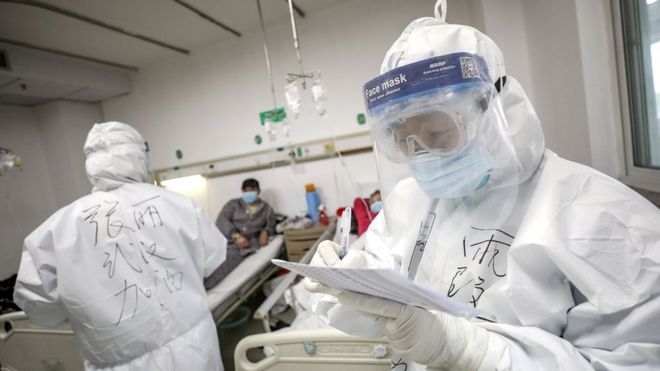
A medical worker in protective suitImage copyright REUTERS
Image caption Over 1,660 have died in China since the coronavirus outbreak began

China has announced a drop in new cases from the coronavirus outbreak for a third consecutive day.

On Sunday, authorities reported 2,009 new cases and 142 more deaths nationwide.

New cases spiked earlier in the week after a change in the way they were counted but have been falling ever since.

In total more than 68,000 people have been infected in China, with the death toll standing at 1,665.

Outside of China there have been more than 500 cases in nearly 30 countries. Four people have died – in France, Hong Kong, the Philippines and Japan.

The measures China has taken to stop the spread of the coronavirus are starting to have an impact, Mi Feng, a spokesman at the National Health Commission, said on Sunday.

In other developments:

  • The number of people who have tested positive on the Diamond Princess cruise ship, which is being held in quarantine in Japan, has risen to 355. The US and Canada are sending planes to evacuate their citizens
  • A Chinese tourist has died in France – the first fatality outside Asia
  • An 83-year-old American woman has tested positive after disembarking another cruise ship that was turned away by a number of countries before being allowed to dock in Cambodia
  • In the UK, all but one of nine people being treated have been discharged from hospital

On Saturday, World Health Organization (WHO) head Tedros Adhanom Ghebreyesus praised Beijing’s response to the outbreak.

“China has bought the world time. We don’t know how much time,” he said. “We’re encouraged that outside China, we have not yet seen widespread community transmission.”

How is China coping?

Tens of millions of Chinese still face heavy restrictions on their day-to-day life as part of the government’s efforts to halt the spread of the disease, which causes a disease named Covid-19.

Much of the response has focused on the hard-hit province of Hubei and its capital Wuhan, where the outbreak began. The city is all but sealed off from the rest of the country.

Foreign Minister Wang Yi said that along with a drop in infections within Hubei there had also been a rapid increase in the number of people who had recovered.

As part of measures to contain the coronavirus, Beijing has ordered everyone returning to the city to go into quarantine for 14 days or risk punishment.

China’s central bank will also disinfect and store used banknotes before recirculating them in a bid to stop the virus spreading.

Media caption Medics in Wuhan resort to shaving their heads in a bid to prevent cross-infection of the coronavirus

In another development Chinese state media published a speech from earlier this month in which Chinese President Xi Jinping said he said he had given instructions on 7 January on containing the outbreak.

At the time, local officials in the city of Wuhan were downplaying the severity of the epidemic.

This would suggest senior leaders were aware of the potential dangers of the virus before the information was made public.

With the government facing criticism for its handling of the outbreak, analysts suggest the disclosure is an attempt to show the party leadership acted decisively from the start.

Source: The BBC

10/02/2020

Chinese warplanes make second Taiwan incursion in space of two days

  • Taiwan sends fighters to intercept mainland military aircraft after they cross dividing line in Taiwan Strait
  • Incursion comes at end of visit to Washington by vice-president-elect William Lai that angered Beijing
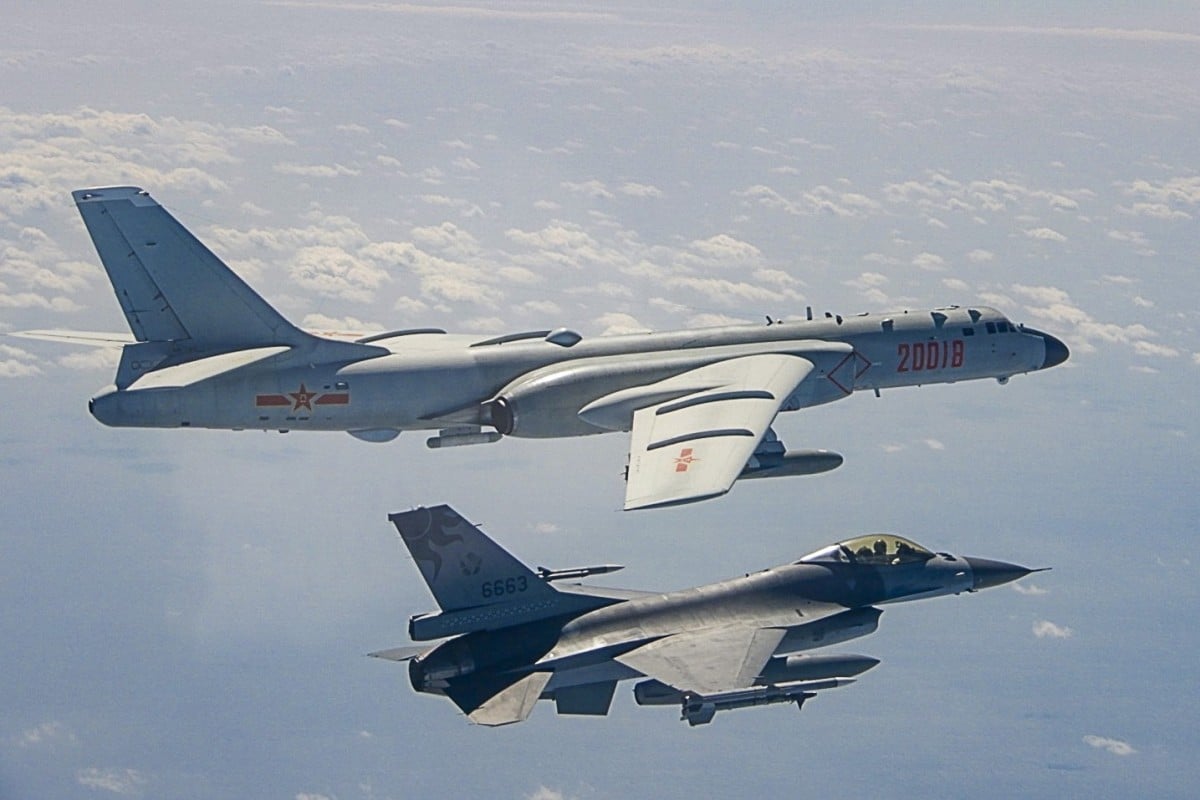
A Taiwanese fighter jet shadows a mainland Chinese bomber over the Taiwan Strait on Monday. Photo: Military News Agency, ROC

Taiwan sent warplanes to intercept a group of mainland Chinese jets that had briefly approached the island on Monday, the second such incident in two days.

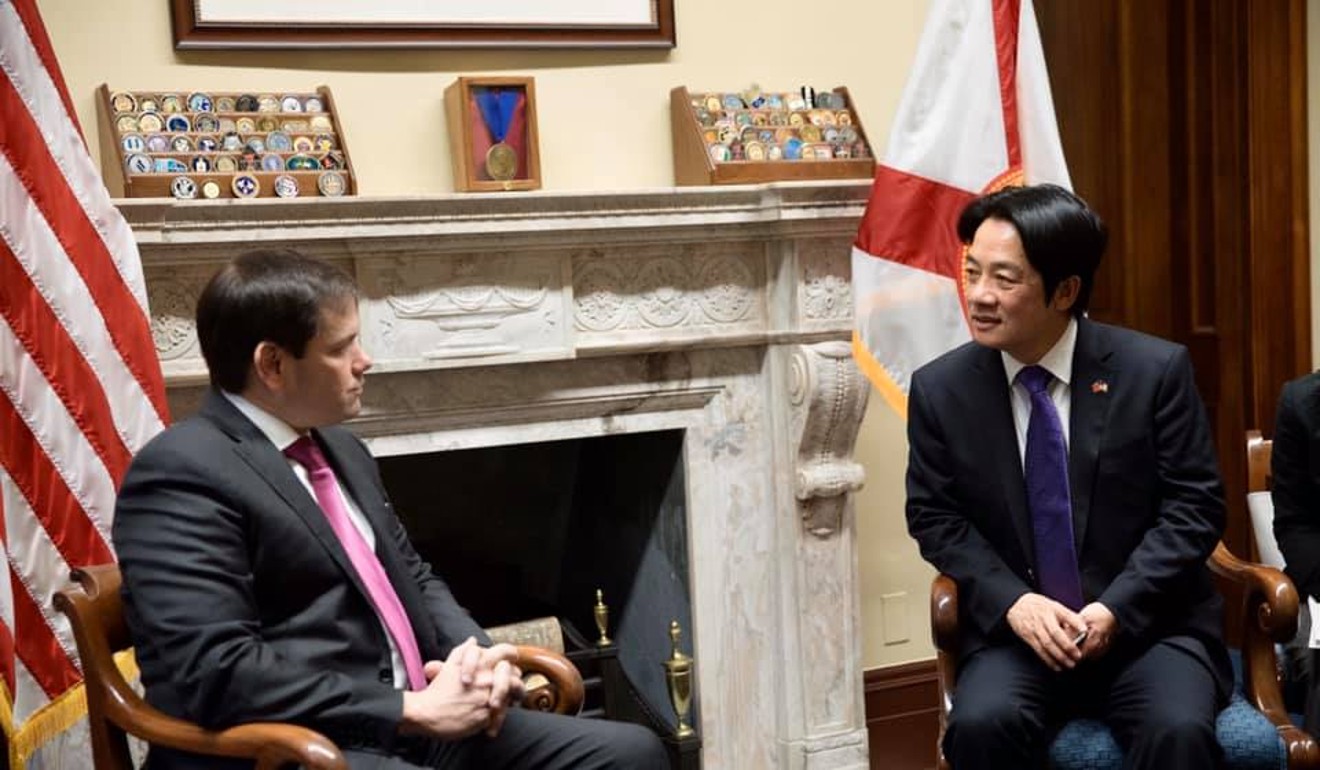
The incident came as the island’s vice-president-designate William Lai Ching-te concluded an eight-day visit to the US that had angered Beijing.

The mainland warplanes, including H-6 bombers, briefly crossed the median line in the Taiwan Strait on their way to the western Pacific through the Bashi Channel in the morning for long-haul training exercises, Taiwan’s defence ministry said in a statement on Monday.

“Our air force scrambled fighter jets to shadow, intercept and disperse the communist warplanes through radio broadcasting,” the ministry said, adding the mainland planes later left the area.

The mainland warplanes later returned to their home base after their morning drill, the military said.

It was the second day in a row that the mainland warplanes flew past Taiwan after a group of aircraft, including J-11 fighter jets, KJ-500 early warning aircraft and H-6 bombers, flew over the Bashi Channel on Sunday before returning to their bases via the Miyako Strait northeast of Taiwan, the ministry said.

“The military has full surveillance and control of the communist long-haul training activities and the public can rest assured of our capability to uphold security or our national territory,” it said.

Meanwhile, Lai completed his eight-day “private” visit to Washington, during which he met the National Security Council and other US officials and senators.

Lai, who left for the US last Sunday to attend the National Prayer Breakfast – an annual gathering of political and religious leaders in Washington – was considered the highest-level Taiwanese official to meet with National Security Council officials since the US switched diplomatic recognition to Beijing from Taipei in 1979.

The visit was hailed as a diplomatic breakthrough for the island because until now Washington has been reluctant to allow such exchanges for fear of angering Beijing, which has repeatedly demanded that the US adhere to the “one-China” policy.

Taiwan scrambles jets as mainland Chinese air force flies around island

9 Feb 2020

Beijing views Taiwan as a wayward province that must be brought back to the mainland fold – by force if necessary.

It has suspended official exchanges with Taiwan since Tsai Ing-wen of the independence-leaning Democratic Progressive Party was first elected president in 2016 and refused to accept the one-China principle as the basis for cross-strait exchanges.

Since then, Beijing has staged war games close to the island and poached seven of Taiwan’s allies to heap pressure on the president, who was reelected last month.

A People’s Liberation Army spokesperson said on Sunday the flight was a “necessary action” under “current security situation across the Taiwan Strait”.

Vice-President-elect William Lai Ching-te met National Security Council officials on his visit to the White House. Photo: Facebook
Observers said Lai’s US visit was made possible due to a new US policy to allow high-level official and military exchanges with Taiwan, which has been included in the US security alliance to counter the mainland’s military expansion in the Indo-Pacific region.

They said Lai is still technically a civilian until he takes office in May, and the US can always use this status to defend its move, although the visit has prompted strong protests from the Chinese foreign ministry.

Observers also said Taiwan’s efforts in seeking to join the World Health Organisation amid the deadly coronavirus outbreak have also riled Beijing, which has repeatedly said the island is a mainland province with no right to join international bodies which require statehood for membership.

Taipei complains to World Health Organisation after coronavirus case is classed as ‘Taiwan, China’

23 Jan 2020

On Monday, Ma Xiaoguang, a spokesman for the mainland’s Taiwan Affairs Office, warned the Tsai government against “playing with fire” by “trying to use its strengthening ties with the US to plot independence”.

“This is a sheer provocation,” Ma said, adding what the People’s Liberation Army did was to protect the national sovereignty and territorial integrity of the mainland and to maintain cross-strait peace.

Song Zhongping, a military commentator for Hong Kong Phoenix Television, said the patrol was aimed at the separatist movement on the island.

“Such a patrol is for war-preparedness … and has become a routine practice and a resolution to effectively attack the pro-independence force,” said Song, a former instructor for the PLA’s Second Artillery, the predecessor of the Rocket Force.

A Beijing-based military source close to the PLA, who requested anonymity, said the warplanes were equipped with missiles, which has become a standard procedure for PLA’s air drills.

Source: SCMP

28/09/2019

China restores ties with Kiribati, site of space tracking station

NEW YORK (Reuters) – China and the Pacific island state of Kiribati restored diplomatic ties on Friday after the former diplomatic ally of Taiwan abandoned Taipei.

A poor but strategic country which is home to a mothballed Chinese space tracking station, Kiribati announced last week that it was cutting relations with self-ruled Taiwan in favour of China, which claims Taiwan as a wayward province with no right to state-to-state ties.

China and Kiribati had ties until 2003, when Tarawa established relations with Taipei, causing China to break off diplomatic relations.

Up until that time, China had operated a space tracking station in Kiribati, which played a role in tracking China’s first manned space flight.

The Chinese government’s top diplomat State Councillor Wang Yi and Kiribati’s President Taneti Maamau signed a communique on restoring diplomatic relations at the Chinese mission to the United Nations in New York.

“We highly prize this important and the correct decision,” Wang told a news conference. “Let’s hope for our friendship to last forever. We will work together to grow together towards a bright and prosperous future.”

Speaking alongside Wang, Maamau said there was much to learn from China.

“I do believe that there is much to learn and gain from the People’s Republic of China and the re-establishment of our diplomatic relations is just the beginning,” he said.

There was no mention of the space tracking station at the news conference, nor in the joint communique between the two countries released by China’s Foreign Ministry.

China’s space programme is overseen by the military.

China’s Defence Ministry this week declined comment on the Kiribati facility.

Last week was difficult for Taiwan, as the Solomon Islands also ditched it for Beijing. The Solomon Islands foreign minister signed a deal on diplomatic ties in China last Saturday.

Both the Solomon Islands and Kiribati are small developing nations but lie in strategic waters that have been dominated by the United States and its allies since World War Two. China’s moves to expand its influence in the Pacific have angered Washington.

A former Taiwanese ambassador to Kiribati, Abraham Chu, told Taiwan’s Central News Agency last weekend that China had never fully removed the tracking station in Kiribati and that it “could come back at any time”.

Taiwan now has formal relations with just 15 countries, mostly small and poor nations in Latin America and the Pacific, including Nauru, Tuvalu and Palau. China has signalled it is coming for the rest of Taiwan’s allies.

Source: Reuters

Law of Unintended Consequences

continuously updated blog about China & India

ChiaHou's Book Reviews

continuously updated blog about China & India

What's wrong with the world; and its economy

continuously updated blog about China & India