Chindia Alert: You’ll be Living in their World Very Soon
aims to alert you to the threats and opportunities that China and India present. China and India require serious attention; case of ‘hidden dragon and crouching tiger’.
Without this attention, governments, businesses and, indeed, individuals may find themselves at a great disadvantage sooner rather than later.
The POSTs (front webpages) are mainly 'cuttings' from reliable sources, updated continuously.
The PAGEs (see Tabs, above) attempt to make the information more meaningful by putting some structure to the information we have researched and assembled since 2006.
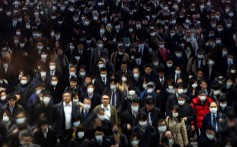
Young people starting out in the jobs market face a hit to their prospects that could endure years after the Covid-19-induced downturn has run its course
A generation of angry youth raises the spectre of political instability
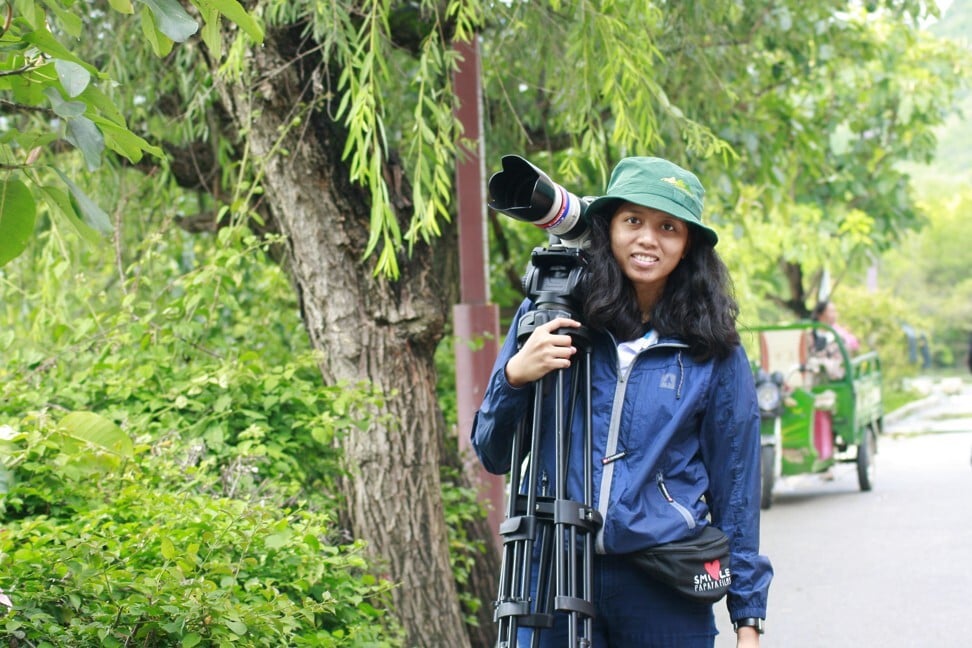
Freelance filmmaker Anita Reza Zein had grown used to jam-packed production schedules requiring her to put in long hours and run on little sleep. Until Covid-19 struck.
Today, the talented Indonesian is suddenly free. With five projects on hold and many more potentially cancelled, she now spends her time working on a personal project, doing research for her work and occasionally going for a ride on a bicycle.
“I feel calm and patient although I’m jobless. Maybe because it’s still the third week [of social distancing] and I still have enough savings from my previous work,” said the 26-year-old, who is from Yogyakarta. “But I imagine life will become tougher in the next few months if the situation gets worse.”
Like her, millions of youths are now part of a job market in Southeast Asia that has been ravaged by the coronavirus pandemic. They are the unlucky cohort of 2020 whose fortunes have changed so drastically, so quickly.
Freelance filmmaker Anita Reza Zein now spends most of her time at home as her projects have all been frozen due to the spread of Covid-19. Photo: Anita Reza Zein
Just three months ago, many eager graduates were about to partake in a strong economy and possibly land decent pay cheques.
Today, job offers are being withdrawn and hiring halted, leading to a spike in regional youth unemployment in the short term. In the long term, the effects on the Covid-19 cohort could lead to wider social and political problems.
JOB MARKETS SHUT
The virus’ impact on economies and the job market in the region has been swift and devastating. Borders have been slammed shut, workers ordered to stay at home, and thousands of companies closed every week.
The biggest problem is the lack of certainty about how long this will last – the longer the governments keep their countries on lockdown, the worse the economic impact.
In Indonesia, for example, the virus has caused almost 2.8 million people to lose their jobs, according to the Manpower Ministry and the Workers Social Security Agency. Likewise, in Malaysia, an estimated 2.4 million people are expected to lose their jobs, going by data from the Malaysian Institute of Economic Research (MIER).
is bracing itself for a 5.3 per cent contraction in GDP for the full year, the worst since the Asian financial crisis in 1997.
“We think about seven million jobs have been lost already, and the figure will hit 10 million if the outbreak drags on for two to three more months,” said Kalin Sarasin, council member and head of the Thai Chamber of Commerce.
Lockdown for 34 million people in capital Jakarta as Indonesia fights surge in coronavirus deaths
For young jobseekers, the outbreak of the Covid-19 pandemic could hurt even more, with companies unwilling to open up new jobs for them.
“My clients who were open to fresh graduates previously have realigned searches [for candidates] who have at least one year of experience, as it’s a lot faster for someone with experience to scale up quickly and contribute,” said Joanne Pek, a recruiter at Cornerstone Global Partners’ Singapore office.
For many small and medium-sized enterprises (SMEs) such as Singapore-based restaurant chain The Soup Spoon, saving jobs – rather than recruiting – is the priority.
“We don’t want to let anyone go during this period, so we’re focused on protecting jobs,” said co-founder and director Benedict Leow, who employs some 250 workers.
THE COVID-19 COHORT
The looming economic downturn could have distinct consequences for the Class of 2020 that will outlast the economic downturn itself.
For one thing, the paucity of jobs could result in the Covid-19 cohort becoming a “lost generation” of sorts, said Achim Schmillen, a senior economist at the World Bank Social Protection and Jobs Global Practice.
“Research from around the globe shows that graduating in a recession can have significant and long-lasting impacts that can affect the entire career. In particular, it can lead to large initial earnings losses which only slowly recede over time,” he said.
Coronavirus: why there’s no quick fix for a Covid-19 vaccine
12 Apr 2020
Economics professor Jeff Borland of the University of Melbourne said that international studies showed that what happened to people when they first entered the labour market would affect them for the rest of their working lives.
“Many international studies have shown that trying to move into employment during a major economic downturn cuts the probability of employment and future earnings for a decade or more.
“Why this occurs is less well-established. Reasons suggested include being forced to take lower-quality jobs, losing skills and losing psychological well-being,” he said in a piece published on The Conversation website.
Malaysia sets up Covid-19 test zones in the capital to hunt for ‘hidden’ coronavirus cases
This could create “lasting scarring” on the graduates this year, said labour economist Walter Theseira.
“If their careers start badly, it would affect their earnings for a number of years because they would lack the same experience as peers who started in a more secure position,” the associate professor of economics at Singapore University of Social Sciences said.
Shrinking salaries and the downsizing of companies mean that graduates might have to seek out professions outside their areas of study to survive, said Grace Lee Hooi Yean, head of the Economics Department at Monash University, Malaysia.
She said youth unemployment in the country, which stands at 11.67 per cent, could rise sharply.
“This looming crisis could trap a generation of educated and capable youth in a limbo of unmet expectations and lasting vulnerability if the graduates are not ready to face reality and adapt to the new challenges,” she said.
How long will a coronavirus vaccine take? A Q&A with Jerome Kim
12 Apr 2020
This is fast becoming the reality for final-year medical student Rebecca K. Somasundaram, who has been left without a job due to the pandemic.
After being offered a residency programme at a top specialist hospital in Kuala Lumpur, she was notified a month ago that her placement had been made void until further notice. This has thrown the 24-year-old’s plans into disarray as she was hoping to enter the workforce soon to pay off her student debts. Her plans to get married next year have also been put on hold temporarily.
“I am in constant talks with the hospital to see if there is any way I can join them soon but seeing how things are unfolding so quickly, I am slowly losing hope,” she said.
Over in Indonesia, the pandemic will trigger job losses on a national scale. To combat this, the government would need to introduce strong fiscal measures and beef up its social protection policies, said the country’s former minister of finance Muhamad Chatib Basri.
Many people on lower incomes tend to work in the extraction industry, such as mining and palm oil, and these are the first industries hit due to the global slowdown.
“The rich will be able to brave the storm, but the poor have no means to do so,” he said.
Singapore migrant workers under quarantine as coronavirus hits dormitories
SPECTRE OF 1997
With partial lockdowns imposed in the capital of Jakarta, more needs to be done to ensure that vulnerable citizens have access to food and financial support.
Without government intervention, economic woes could soon translate into political instability, a scenario last seen in the Asian financial crisis.
In 1997, waves of discontent sparked racial riots in Indonesia that toppled the country’s long-time strongman Suharto, while in Thailand a political crisis created the conditions for populist leader Thaksin Shinawatra to rise.
Rising discontent could have serious implications at the ballot boxes, warned Basri, who said young voters were a key voting bloc for President Joko “Jokowi” Widodo.
Coronavirus: food security, Asia’s next battle in a post-Covid world
6 Apr 2020
In last year’s general elections, Jokowi proved a hit among the lower-educated youth who had benefited from the creation of largely unskilled jobs during his tenure.
“With more young people expected to become unemployed in the coming months, things will only get worse from here,” said Basri, who added that the country’s youth unemployment stood at almost 20 per cent in 2018.
Indonesia, which has 268 million people and is Southeast Asia’s largest economy, had 133 million workers as of last August, according to official data.
Close to 10 per cent or about 12.27 million are university graduates but among this group, about 5.67 per cent or some 730,000 were unemployed. This was higher than the country’s overall unemployment rate at that time, which was 5.28 per cent.
‘Ghosts’ deployed to scare Indonesians into staying home to slow spread of the coronavirus
GETTING IT RIGHT
Economists say, however, that all is not lost. Much will depend on policy and how governments focus on battling the virus on the public health and economic fronts. They point to Singapore, which has launched a robust response to the crisis.
On April 6, the Singapore government announced its third budget in two months to help companies and households tide over the crisis. In all, Singapore’s total stimulus package, which aims to save jobs and keep funds flowing to companies, will cost the government a massive S$59.9 billion (US$42 billion).
The Singapore government was also preparing for a labour market that would be reluctant to hire fresh graduates on a full-time basis, said Theseira.
“There are plans to implement large-scale subsidised traineeships, which may be more palatable to companies which are worried about taking on permanent headcount this year,” he noted. “As the economic situation improves, they can be converted to permanent positions.”
The next coronavirus: how a biotech boom is boosting Asian defences
4 Mar 2020
While jobs were being created for fresh graduates, many would still have to temper their expectations, such as taking jobs with lower starting pay, said DBS Bank economist Irvin Seah.
“There are still some jobs to go around. There are still some companies that may need workers. But they will need to be realistic,” he said.
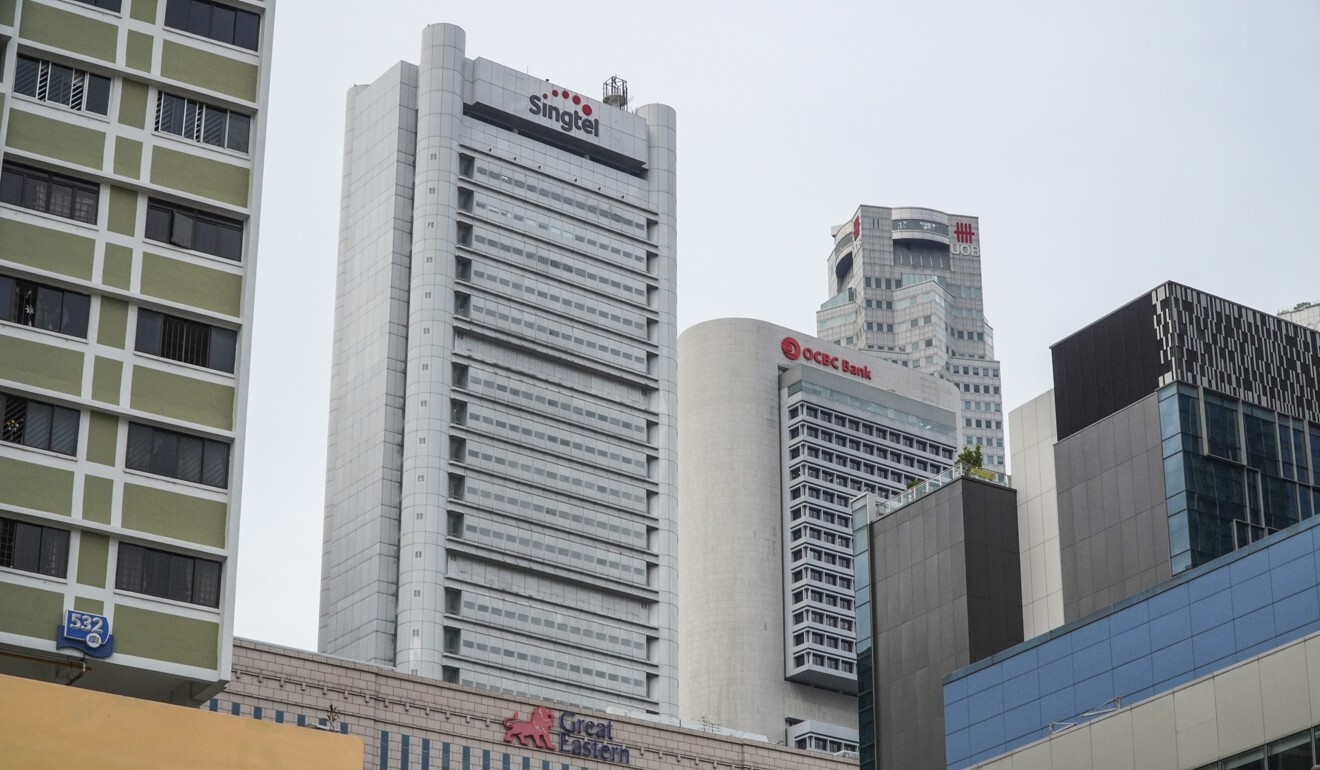
For instance, despite the downturn, Singapore telco Singtel expects to recruit over 300 fresh graduates for various permanent positions this year, according to Aileen Tan, the company’s Group Chief Human Resources Officer. Many of the new hires will be in new growth areas such as the Internet of Things, analytics and cloud.
The Singtel Comcentre building in Singapore. Photo: Roy Issa
Other companies that continue to hire include those in tech across the region, including e-commerce giant Shopee, food-delivery service Foodpanda and Amazon.
In Australia, Borland suggested helping young people to remain plugged into the labour market through government-funded paid internships, or even offering them loans to go for further studies and prevent a spell of unemployment.
For now, while some young jobseekers are taking a wait-and-see approach, the reality is hitting hard for others.
Final-year National University of Singapore student H.P. Tan had all but secured a job at a public relations firm last month, after three rounds of interviews.
The Faculty of Arts and Social Sciences undergraduate was rejected via an email from the agency, which said that they could no longer hire after Covid-19 started to drastically cut business.
“When I got that rejection, it was a turning point. I didn’t think I would be directly impacted,” said the 23-year-old.
“I also applied to a few other agencies but the response has been slow, so I am now freaking out at the possibility of not being able to find a job after graduation.”
BEIJING (Reuters) – China will promote the sales of export products in domestic markets, as foreign trade faces unprecedented challenges due to the coronavirus pandemic, an assistant commerce minister said on Friday.
As the coronavirus spreads to almost all of China’s trading partners, the world’s second-largest economy is set to reach a grim milestone for full year growth, with the pace of expansion likely to be the slowest since the Cultural Revolution ended in 1976. And, the export sector is facing millions of job losses and factory shutdowns.
“Due to the rapid spread of the epidemic in the world, foreign demand has slumped and the biggest difficulty facing foreign trade companies is the plunge in orders,” said Ren Hongbin, the assistant minister at the Ministry of Commerce.
He said firms across the board have had their orders cancelled or delayed, and new orders are “very hard to sign”.
“The uncertainty about the pandemic has become the biggest uncertainty for foreign trade development.”
Forecasters expect China’s 2020 growth could be nearer the 2.0% mark – the slowest in over 40 years – due to the sweeping impact of the pandemic both at home and overseas. The economy grew 6.1% last year.
China’s overseas shipments fell 17.2% in January-February from the same period a year earlier, marking the steepest fall since February 2019. Imports sank 4% from a year earlier.
Among the government measures to support the sector, China is accelerating efforts to build online trade fairs and guiding exporters to work with e-commerce retailers for sales in domestic markets and coordinating with its trading partners to stabilise supply chains, said Ren.
The Canton Fair, China’s oldest and biggest trade fair due to take place online, will feature live-streaming services for participants, Li Xingqian, another commerce ministry official, told the same briefing. The fair was originally scheduled to begin on April 15, but was postponed due to the coronavirus outbreak.
China is willing to boost trade relations with other countries, including the United States, under the new circumstances, said Ren, adding that Beijing hopes to work together with Washington to promote bilateral trade.
Both countries have been engaged in a near two-year long trade war with tit-for-tat tariffs on each other’s goods, before negotiators called a truce with an interim trade deal in January.
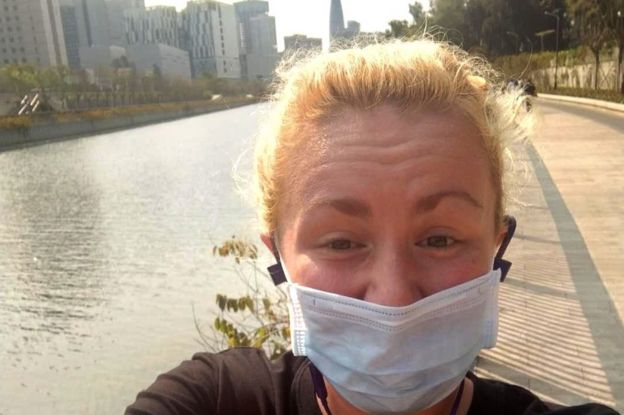
Image copyright JEN SMITHImage caption Jen Smith lives in Shenzhen, where it’s compulsory to wear a mask outside at all times
My Money is a series looking at how people spend their money – and the sometimes tough decisions they have to make. Here, Jen Smith, a children’s TV presenter from Shenzhen in southern China, takes us through a week in her life, as the country slowly emerges from the coronavirus pandemic.
Over to Jen…
Since being in lockdown I’ve been bingeing on Keeping Up With the Kardashians. It starts with one episode after dinner, blink, and suddenly it’s 3am. YouTube, Facebook, Google and Instagram are all banned here, so you’d think I’d be a binge-free socialite after a year and a half living in China. Well, those sites are banned unless you have a VPN – I pay $120 (£97) a year for mine, so Sunday was a late night, with a lie-in until 10.30 this morning.
I go for a run – mask and all, as it’s currently illegal to be outside without one. I make my coffee (bought in the UK), fruit smoothie (about 20 yuan, $2.82, £2.27) and cereal (80 yuan a packet) before cycling to work.
Today is a bit of a crazy day in the studio. I work as a children’s TV presenter. My company has profited from the lockdown as more children are watching the shows non-stop – meaning a rapid turnaround for us.
We shoot two shows from 2-6pm then “break” for a meeting. We discuss tomorrow’s shoot while I eat dinner – homemade aubergine curry. It is normal for the Chinese to eat breakfast, lunch and dinner at work. Normally the company gives all staff 25 yuan through a food-ordering app, and the whole company would eat together. However, because of the current social distancing, that social time is in the far distant past!
I make it home for 8pm, order some deep-fried cauliflower as a snack (45 yuan) and start the inevitable Kardashian binge.
Total spend: 65 yuan ($9.10, £7.37)
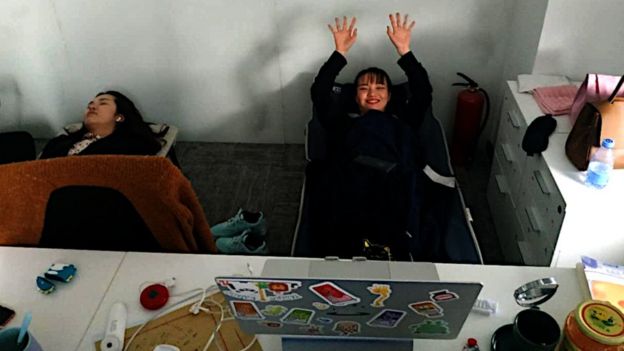
Image copyright JEN SMITHImage caption Workers often have a midday nap in the office
It’s a much earlier start (7.30am), but the same morning routine. On my cycle to work I notice that the traffic is almost back to normal – Shenzhen is inhabited by well over 12 million people, so as you can imagine rush hour is intense. This doesn’t change the fact that everywhere you go you have to scan a QR code – leaving my apartment, using the walkway by the river, and getting into the building I work in.
After a morning of shooting I eat homemade potato curry and settle down for a nap. Naptime is such a commonality in China that people store camp beds at the office. I order a coffee and banana chips (20 yuan) for a pick-me-up before the afternoon’s shooting.
It’s St Paddy’s Day so I head to the local pubs area, catch dinner at a French restaurant (222 yuan), then a few drinks (25 yuan – mainly bought by men at the bar for us) before a very tipsy cycle home.
Total spend: 242 yuan ($34, £25)
Image copyright JEN SMITHImage caption A disposable cover reduces the risk of transmitting the virus by touching lift buttons
The morning’s shoot (thankfully) was cancelled, so I nursed a hangover in bed until around 11am, at which point I had a phone meeting for a company that I do “plus-size” modelling for (for context I’m a UK size 12). I eat a bowl of cereal and order more cauliflower (45 yuan) while I watch a film.
At 2.30pm an intern picks me up, and we head to the government building to apply for a new work visa. Ironically, the image taken for my visa is Photoshopped to remove wrinkles, freckles and my frizzy hair. When I ask why this is being done for an identification document, the intern replies that the government wants it to be neat, and “the Chinese way” is to have altered photos.
I don’t argue, and have an interview before I hand in my passport. The whole process takes around two hours, so I order food to my house while on the way home (150 yuan for burger, salad and cake!) I take a taxi across town which ends up being 39.05 yuan.
The day starts at 8.30am with coffee and reading, before I get a manicure (280 yuan). My nail lady has been very worried about the state of my hands during the virus, so she spends a whopping two and a half hours treating them while I watch a film (0.99 yuan – bought by her). Because the manicure was so long I don’t have time to eat lunch before our fitness shoot, which runs from 2-5.30pm. I then have an appointment to sign into a building which I’ll shoot in tomorrow.
The building is near a supermarket called Ole (one of the only western supermarkets), and I pick up groceries for 183 yuan before heading home to cook, listen to podcasts and prep for the big day of shooting on Friday.
Total spend: 463 yuan ($64, £52.5)
Image copyright JEN SMITHImage caption Jen filming in front of a green screen – a more colourful digital background will be added later in post-production
Fridays are generally my busiest day. The way the Chinese seem to function, is a boss will say “I want this done now” and then employees rush to finish it. Generally, they will write scripts on Monday and Tuesday, discuss Wednesday, then we shoot later in the week. The poor editors, despite mandatory office hours during the week, then have to work tirelessly through the weekend to achieve a Sunday evening deadline.
I start with mashed avocado and a hard-boiled egg before work. The morning shoot runs from 9.30-11.40am, and I have an early lunch – homemade curry again, before my regular nap time. The afternoon shoot is three hours, so I have time to pop home and shower before a live stream at 6pm. I take a taxi to and from the live stream which ends up being 28 yuan.
Total spend: 28 yuan ($3.92, £3.18)
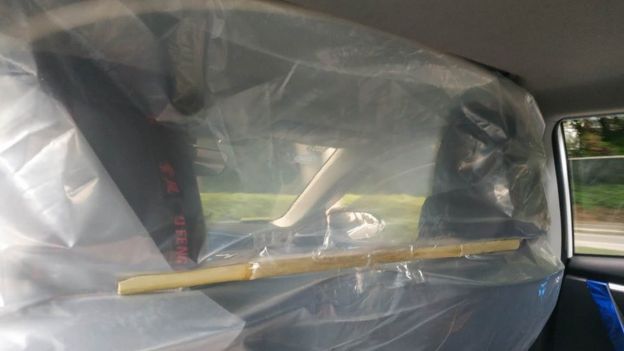
Image copyright JEN SMITHImage caption A taxi driver has improvised a screen to reduce the risk of picking up Covid-19 from a passenger
Finally the weekend! Although things are slowly getting better in China after the coronavirus outbreak, there’s still not too much to do. So I use this time to write, play my piano and generally chill inside. Around 3pm, I venture outside to the shops to pick up some snacks (159.60 yuan) before settling in to ring my family back in the UK with a homemade cocktail – a friend of mine in Canada is doing a daily live stream, “quarantinis” where he teaches you how to make cocktails!
What’s interesting is that a lot of people have started leaving their houses again, but it is still illegal to go outside without a mask on, and temperature checks are taken everywhere. I was even refused entry to a building due to being foreign. I imagine this is because recently the only new cases are being brought in by non-Chinese travelling back to China.
Total spend: 159.60 yuan ($22, £18)
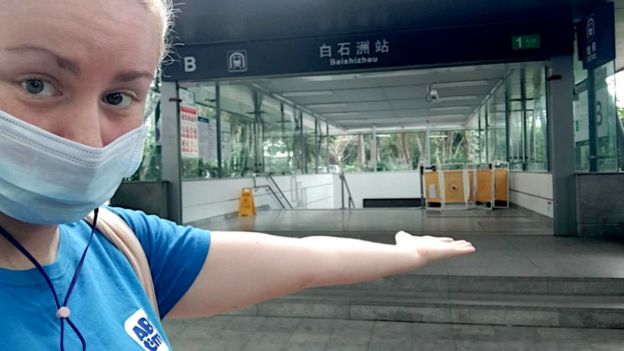
Image copyright JEN SMITHImage caption Shenzhen’s Metro system is still very quiet
It’s another slow day for me as many foreigners have not yet returned to China, so most of my friends are out of the country. I start the day by reviewing potential scripts.
This takes me to 1.30pm without realising I haven’t eaten. I decide to go for a quick run and I return to eat mashed avocado and a hard-boiled egg.
I home-bleach my hair with products bought in the UK, then head back to editing again. About half way through the afternoon I take a little break to practice Chinese. I use an app which is fantastic and free! Definitely worth everyone downloading this during social distancing so you can learn new skills!
For dinner I order online again, a three-dish meal for 160 yuan.
Japan risks massive financial losses and a political blow for Shinzo Abe’s government if the Tokyo Olympics are cancelled or postponed
The Olympics were last cancelled in 1940 after Japan invaded China and the outbreak of World War II, but the Zika virus did not stop the 2016 Rio Games
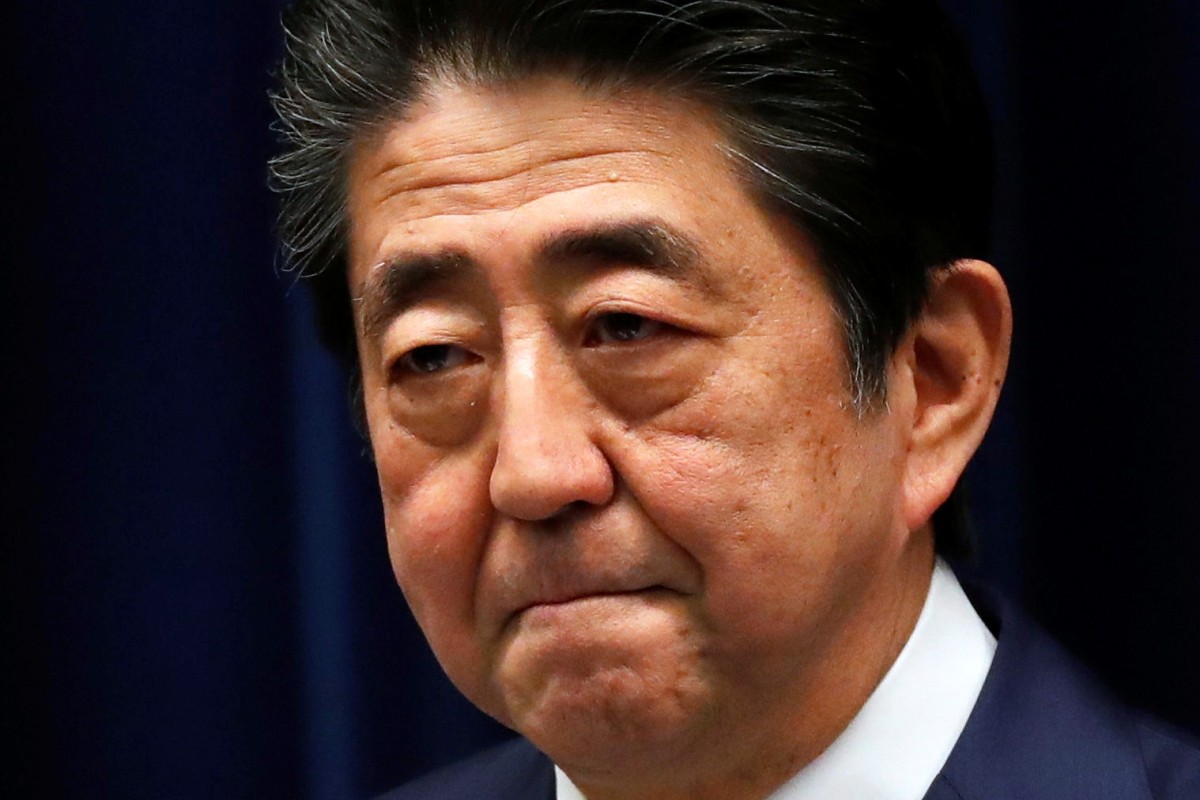
Japan’s Prime Minister Shinzo Abe attends a news conference on the coronavirus. An analyst said the cancellation of the Olympic Games would not only be a financial blow, but would also dent the political pride of his government, which wanted to show the world that Japan could host a successful Olympics. Photo: Reuters
, which explains the government’s single-minded commitment to going ahead with the event in the face of the threat posed by the novel coronavirus.
The Japanese government on Wednesday morning reiterated that the Games would go ahead in July as scheduled, with chief cabinet secretary Yoshihide Suga declaring that preparations were continuing despite the spread of the virus worldwide.
The previous day, the International Olympic Committee (IOC) threw its weight behind Tokyo’s position. “We are preparing for a successful Olympic Games, Tokyo 2020,” said IOC head Thomas Bach.
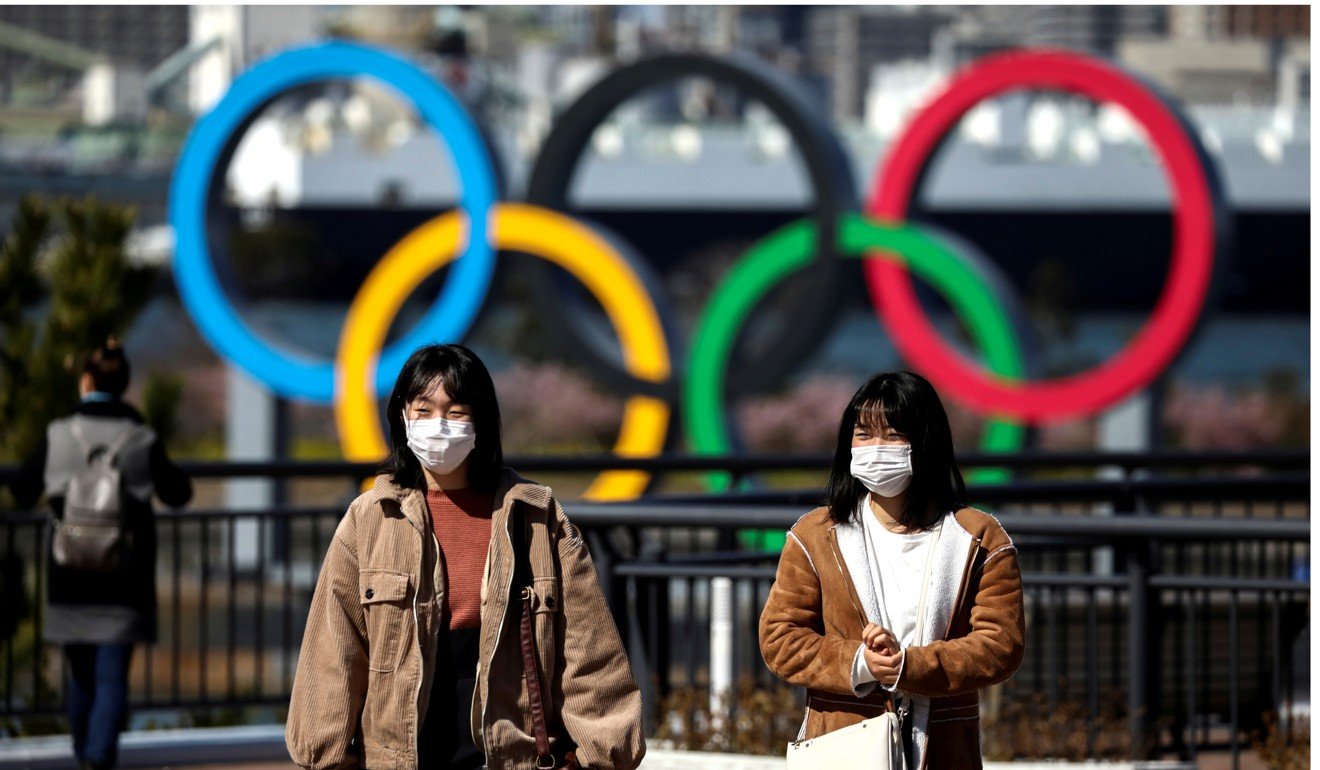
People wearing protective face masks are seen in front of the Olympic rings at the waterfront area at Odaiba Marine Park in Tokyo, Japan. Photo: Reuters
“I would like to encourage all the athletes to continue their preparations … with great confidence and full steam,” he said. “From our side, we will continue to support the athletes and the national Olympic committees.”
Both statements came on the heels of a comment by Seiko Hashimoto, Japan’s minister with responsibility for the Games, who suggested that the contract with the IOC “could be interpreted as allowing for a postponement” until later in the year. On Thursday, Hashimoto acknowledged to the Upper House budget committee that a cancellation or delay of the games would be “unacceptable for the athletes”.
Stephen Nagy, an associate professor of international relations at Tokyo’s International Christian University, said a great deal is at stake for Japan as the last time a modern Olympic Games was cancelled was in 1940 – ironically as a result of Japan’s invasion of China in July 1937, and the outbreak of World War II. Meanwhile, the Rio Games in Brazil went on as planned in 2016 despite the outbreak of the Zika virus.
While the 1940 cancellation has largely been forgotten, it would unquestionably cause serious loss of face to the Abe administration if events did conspire to halt Tokyo 2020, he said.
I think it’s much more about the national political pride of ‘Team Abe’Economist Noriko Hama
Noriko Hama, an economist at Doshisha University in Kyoto believes a number of issues are behind the government’s refusal to contemplate the Games being postponed or cancelled, but one is dominant.
“Yes, it’s about the money that has already been spent on facilities and new infrastructure and the windfall from tens of thousands of foreign tourists, but I think it’s much more about the national political pride of ‘Team Abe’,” she said.
“They wanted to show the world that they could do this, that they would be one of the very few cities to host an Olympics for a second time and that it would be a massive success,” she said. “It’s about chest-thumping.”
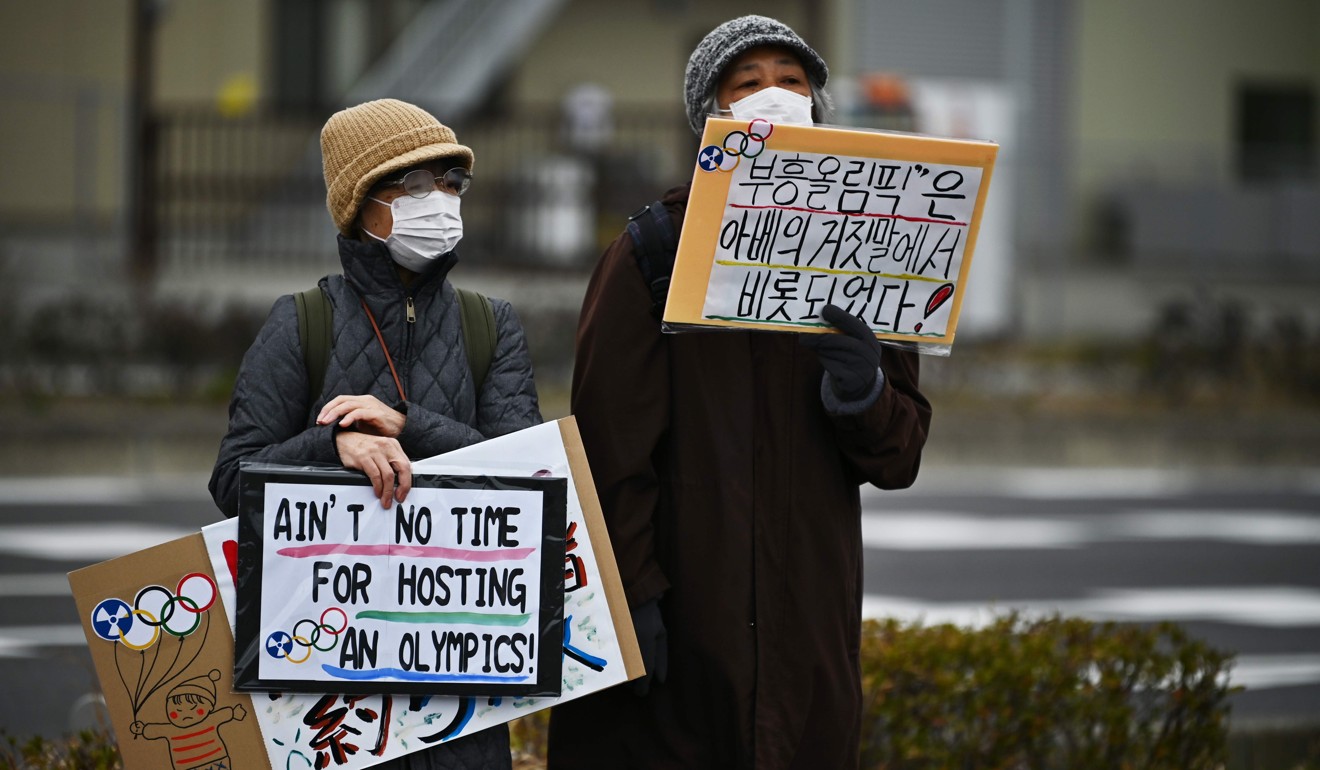
Protesters hold placards during a demonstration against the Olympics, Prime Minister Shinzo Abe and nuclear energy. Photo: AFP
Hama pointed out that many Japanese people had been sceptical about the Games, and for a variety of reasons.
Many are unhappy at the cost, which was previously estimated at 1.06 trillion yen (US$9.81 billion) but organisers confirmed in December had risen to 1.35 trillion yen (US$12.35 billion), plus another 3 billion yen required to move the marathon and walking events from Tokyo to Sapporo, in Hokkaido, to avoid the heat and humidity of the capital.
Others said the Games will cause widespread disruption to the lives of ordinary people and that Tokyo was still not fully prepared for the huge numbers of people that will inevitably flood the city. Some voiced concerns that holding the Games at the peak of a Japanese summer would cause problems for athletes, officials and spectators alike. There have been predictions that the heat is going to cause loss of life.
Only an apocalypse – or government ineptitude – can stop the Olympics
29 Feb 2020
“But there is this strange sort of blind obstinacy that is driving the whole thing forward regardless,” said Hama. “And now the coronavirus has added another layer of very serious concern and I believe the government need to think very carefully what they are going to do.”
Nagy said the Japanese government would be reluctant to postpone the Games as that would “once again tarnish the brand”.
“Seven or eight years ago, Japan was largely seen as a stagnant country that was struggling to shake off the legacy of two decades of economic underperformance, but that changed quite suddenly,” he said.
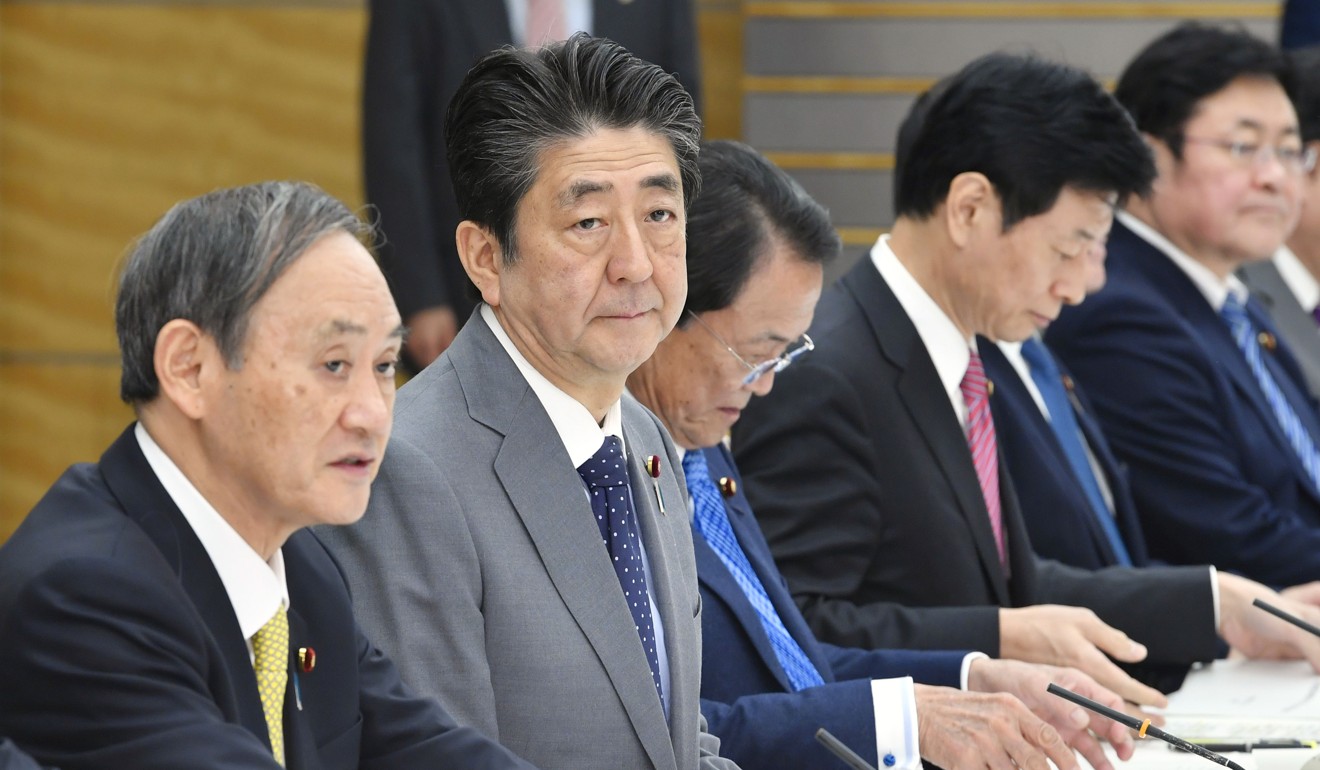
Japan’s chief cabinet secretary Yoshihide Suga and Prime Minister Shinzo Abe attend a meeting with other ministers in Tokyo. Photo: Kyodo
“Now the ‘Japan brand’ is strong and vibrant as they have successfully hosted G-7 conferences and, more importantly, last year’s Rugby World Cup.”
The rugby served to put Japan on the world stage, said Nagy, and everyone went away feeling very positive and it worked exceptionally well as a “dry run” for the Olympics.
Other considerations are the massive amount of money that was spent on preparing for the Games, as well as the political capital that Abe was obliged to use up to win the right to be the host city and then smooth the way in the run-up to the event.
Hong Kong backs IOC’s Olympic pledge despite coronavirus threat
4 Mar 2020
Dick Pound, a senior member of the IOC, said there is a window of two to three months in which organisers must make a decision, meaning there could only be clarity by the end of May. He told Associated Press that if the coronavirus situation worsens, it would probably mean a cancellation.
“You just don’t postpone something on the size and scale of the Olympics. There’s so many moving parts, so many countries and different seasons, and competitive seasons, and television seasons. You can’t just say, ‘We’ll do it in October’,” he said. It was also unlikely that the IOC would move the Games to another city at such short notice.
In the meantime, the local organising committee said it had stepped up its measures to protect runners and spectators for the torch relay, including limiting the number of visitors at venues and monitoring the health of runners.
While the Japanese government remains defiant that the Olympics will go ahead as scheduled, Nagy said both Abe and the IOC were walking a “fine line” on making a final decision.
“There are simply no good choices at this point,” he said. “Policymakers just do not know how long this virus is going to stick around, whether it is going to mutate or anything else. But there will come a point when they absolutely have to make a decision.
Coronavirus fear, paranoia reveal cracks in Japan’s polite facade
3 Mar 2020
“If they wait too long and the outbreak goes on longer than anticipated, then they risk the possibility of a poor public turnout and people getting ill,” he said. “But if they cancel too early and the virus disappears, then they will be accused of being alarmist and of wasting all the effort and money that has already gone into the Games.
“The best they can do, in the circumstances, is to use science and facts and compare this outbreak to previous cycles – and then hope the decision that they do make is the right one.”
Cathay Pacific is latest to wield axe, while Taiwan’s new restrictions on visitors from Hong Kong is another blow
More cancellations expected in the coming days as spread of deadly virus continues
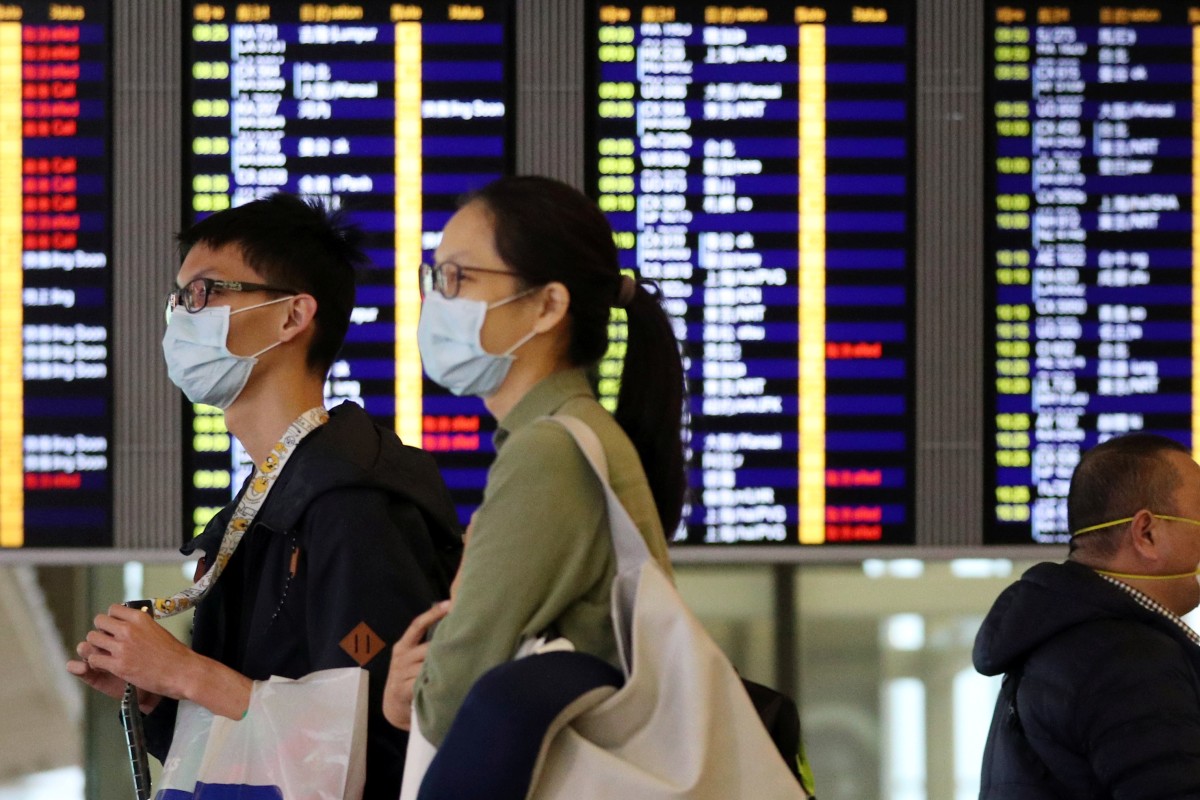
The air industry in Hong Kong and beyond has been thrown into disarray by the coronavirus outbreak. Photo: Reuters
Hundreds more Hong Kong flights are set to be dropped as the floodgates open on airlines cancelling services during the city’s fight against the coronavirus.
Carriers based in Asia, Australia, South Africa and Middle East revealed on Friday morning and the previous night they would cut all or some of their flights to the city.
Cathay Pacific is the latest to wield the axe, announcing on Friday afternoon new suspensions of major Hong Kong routes to London, New York and across mainland China because of the virus.
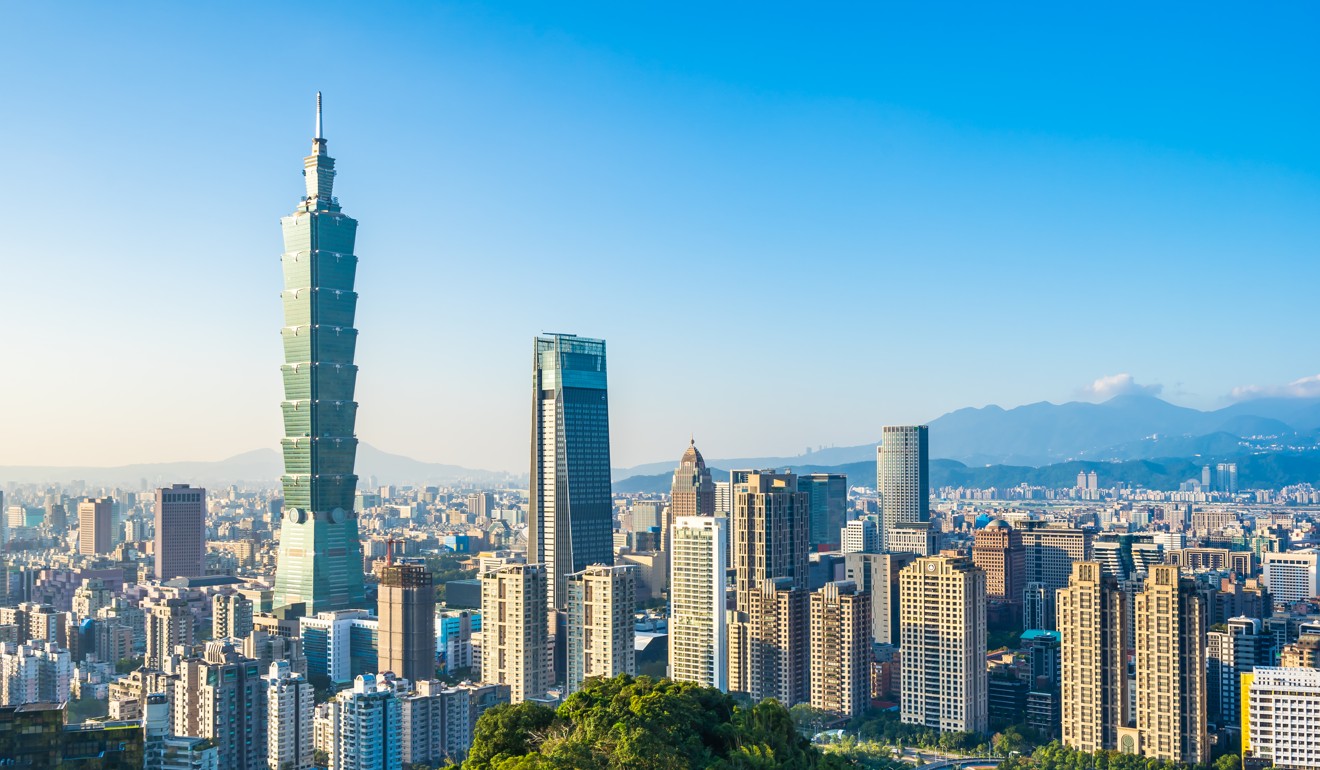
Flights running on the busy route between Hong Kong and Taiwan’s capital Taipei are subject to major cuts. Photo: Shutterstock
The contagion, which started in the central Chinese city of Wuhan, has infected more than 31,400 people, mostly in mainland China, killing more than 635. In Hong Kong, 24 people have been infected, one of those fatally, as of Friday afternoon.
Passengers abandoning travel plans en masse have been compounded by the introduction of entry restrictions across the world against recent visitors to mainland China, some targeting those who had been to Hong Kong.
Destinations suspended by Cathay Pacific until March 28 include London Gatwick, Rome, Washington DC, Newark, Male, Davao, Clark, Jeju and Taichung.
All mainland cities with the exception of Beijing, Shanghai, Chengdu and Xiamen would also be dropped over that period. The company said the decision was made “in view of the novel coronavirus outbreak and the subsequent drop in market demand”.
Hong Kong airport to segregate all flights to and from mainland China
7 Feb 2020
It followed Cathay Pacific Group revealing earlier this week there would be a 30 per cent reduction of flights across its worldwide schedule, as well as a 90% cut of mainland flights.
Budget carrier HK Express, controlled by Cathay, said on Thursday it would scrap 82 flights between February 12 and March 26, mostly to destinations such as Seoul and Osaka.
Hong Kong Airlines (HKA) at the same time revealed it would gradually impose even deeper cuts to flights it operated in mainland China and the rest of Asia until March 28.
The ailing carrier will suspend 10 routes and reduce flights on a further 15, amounting to an estimated 128 flights a week being axed. HKA has already cut 214 mainland Chinese flights between January 30 until February 11.
As Taiwan’s new restrictions took effect on Friday – ordering the home or hotel quarantine of anyone entering the self-ruled island who had visited Hong Kong or Macau within the previous 14 days – carriers based there slashed their schedules.
China Airlines would go from running 18 daily Hong Kong flights to just two from next week until March 28, according to Airline Route data published on Thursday.
Eva Air would switch from more than 11 daily flights to fewer than four a day for the rest of the month.
As health professionals treat coronavirus patients, global search for cures and vaccines accelerates
Eighty flights operate between Hong Kong and Taipei every week, a journey that regularly tops tables ranking the world’s busiest. But under the cuts to come more than half have already been scrapped.
Outside Asia, two airlines on Thursday cut ties with Hong Kong. The struggling Virgin Australia blamed the coronavirus and the anti-government protests that have gripped Hong Kong since June.
It concluded that “current circumstances demonstrate that Hong Kong is no longer a commercially viable route”.
The near-bankrupt South African Airways (SAA) has cancelled its route from Johannesburg amid a wholesale restructuring of the state-owned business. SAA had suspended flying to Hong Kong after November 21 last year amid the city’s civil unrest.
Hong Kong Airlines to axe 400 jobs as coronavirus adds to carrier’s cash woes
7 Feb 2020
Meanwhile, American Airlines said on Thursday it would restart flights between Dallas Fort Worth and Hong Kong on February 21, while Hong Kong’s Airport Authority extended the cancellation of its Los Angeles flight to the city until March 27.
The US carrier warned its schedules were subject to an ongoing “review”. Currently there is no US carrier flying to Hong Kong International Airport after United Airlines also withdrew all services until February 20.
Among the Middle East carriers, Emirates was halving its four daily Airbus A380 flights to Hong Kong from next week until March 28. Etihad is also making minor adjustments, Airline Route data showed on Thursday.
Image copyright WEIBOImage caption She posted pictures of her meal on social media platform WeChat
The Chinese embassy in Paris has tracked down a woman from Wuhan who said she took tablets to pass airport health checks.
The woman boasted on social media that she had been suffering from a fever, but managed to reduce her symptoms with medicine.
She later posted pictures showing herself dining at what she claimed was a Michelin-starred restaurant in Lyon.
The embassy has now confirmed that her symptoms are under control.
The woman left Wuhan – where the new coronavirus emerged late last year – before flights were suspended, but when thermal scanning was in place.
Since yesterday, public transport has been shut down, with residents told not to leave the city.
At least 25 people with the virus have died. It was first reported to the World Health Organization 31 December.
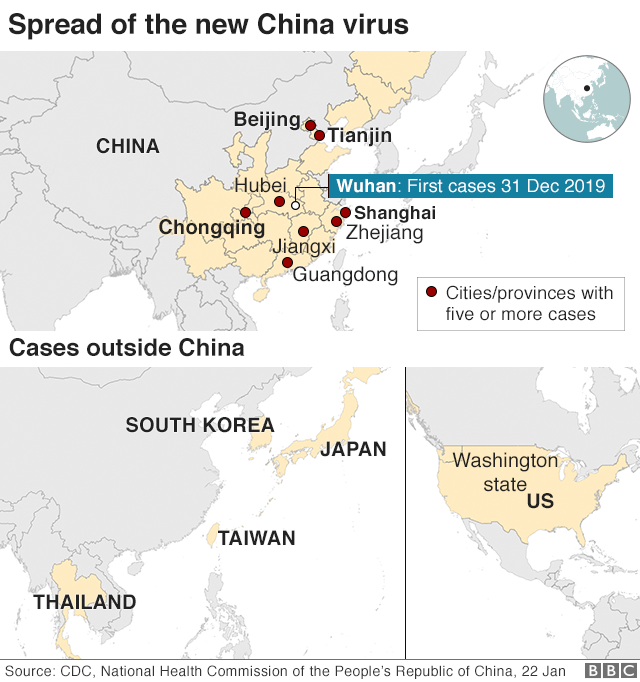
The virus has spread to countries as far as South Korea, Japan and the US.
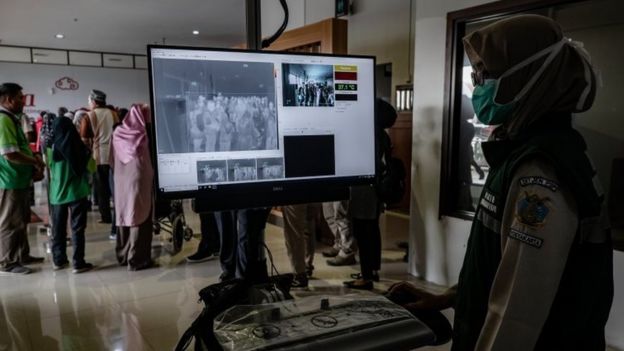
Image copyright GETTY IMAGESImage caption People have been thermally scanned when leaving Wuhan, and arriving at their destination. This picture was taken in Indonesia on Thursday
The woman detailed her journey to Lyon on social media site WeChat.
“Finally I can have a good meal, I feel like I’ve been starving for two days. When you are in a gourmet city of course you have to eat Michelin [food],” she wrote.
“Just before I left, I had a low fever and cough. I was scared to death and rushed to eat [fever-reducing] medicine. I kept on checking my temperature. Luckily I managed to get it down and my exit was smooth.”
She also posted pictures of the meal she enjoyed. It is not clear exactly when she arrived.
Her post quickly went viral and she was widely criticised by other social media users.
The Chinese embassy in Paris said it had received calls and emails about the woman. It said she had taken antipyretics, and that it attached “great importance” to the case.
The embassy said it contacted her on Wednesday evening and asked her to refer herself to medical services.
On Thursday, in a new statement, the embassy said the woman’s temperature was under control, and that she had no more fever or cough symptoms.
It added that she did not require “further examinations” at this point.
Media caption Fears over coronavirus in China trigger face mask shortage
China has effectively quarantined nearly 20 million people in Hubei province. Other major cities in China like Beijing and Shanghai are also affected.
Authorities have cancelled all large-scale celebrations in Beijing. Temple fairs are banned, film releases postponed and the Forbidden City will be closed to the public.
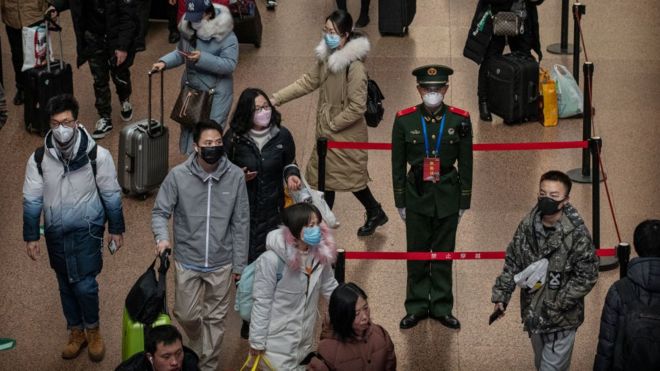
All this comes as millions of Chinese people are travelling across the country for Lunar New Year.
Currently known as 2019-nCoV, the virus is understood to be a new strain of coronavirus not previously identified in humans.
As public health concerns rise over a new virus, the impact is being felt by China’s travel and tourism sector.
More than 400m Chinese were expected to travel over the Lunar New Year which starts today, normally one of the busiest periods for airlines, hotels and tourist attractions.
Instead, flights and hotels are being cancelled as people face travel restrictions or choose to stay home.
The virus has already taken 25 lives, with more than 800 cases globally.
Many airlines have agreed to refund fares or let passengers rebook free of charge if affected, while major hotel chains are now following suit as more travel restrictions are announced.
After the Civil Aviation Administration of China announced that airlines should give refunds for cancelled flights, the country’s three major airlines, China Southern Airlines, China Eastern Airlines and China Air all saw their share prices take a dive. China Eastern Airlines has seen its value fall about 13% this week.
Hong Kong’s national carrier Cathay Pacific was among the first airlines to allow passengers scheduled to fly to or from Wuhan to reschedule for free while, at the same time, allowing cabin crew to wear surgical masks on flights.
Wuhan is where the first cases in the outbreak were reported. The flu-like virus has since spread to several our parts of China and internationally with cases being confirmed in Singapore, Thailand and the US among others countries.
China’s biggest online travel agency, Trip.com, is also waiving cancellation fees on all hotels, car rentals and tickets for tourist attractions to Wuhan and is ”actively monitoring the situation to ensure the safety of all travellers”.
Hotels and casinos hit
Hotel groups are also paying out refunds to tourists who want to cancel trips to Wuhan and other parts of China.
Both InterContinental Hotels Group (IHG) and Hyatt will allow guests to change or cancel stays at the majority of their Chinese hotels over the Lunar New Year holiday. IHG has 443 hotels in China, Hong Kong, Macau and Taiwan under different brands, with four in Wuhan.
Casino operators have also seen shares fall, particularly those with businesses in Macau. The city is home to casinos owned by Las Vegas Sands and Wynn Resorts.
The release of seven movies over the Lunar New Year has also been postponed.
Blow to economy
Tourism has become an increasingly important part of the Chinese economy and is estimated to contribute about 11% of China’s economic growth and employ about 28 million people.
In 2018, 62.9 million tourists visited China, ranking it the fourth most popular tourist destination behind France, Spain and the US, according to the UN’s World Tourism Rankings.
Outside of China, luxury goods brands are also likely to take a battering as Chinese tourists stay at home rather than travel overseas for shopping sprees. LVMH, which owns the Burberry, Louis Vuitton and Hermes brands, saw its value slide this week.
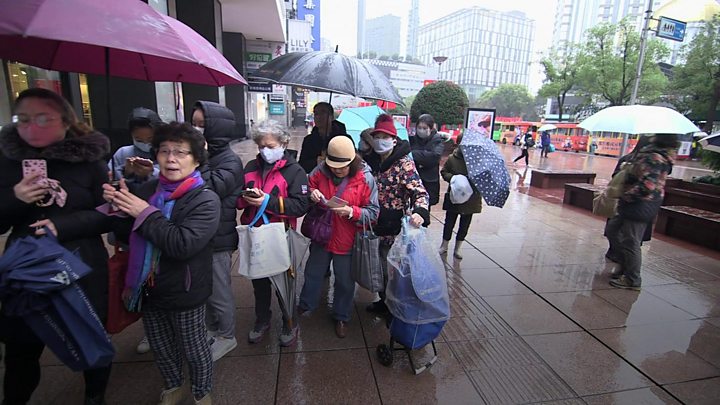
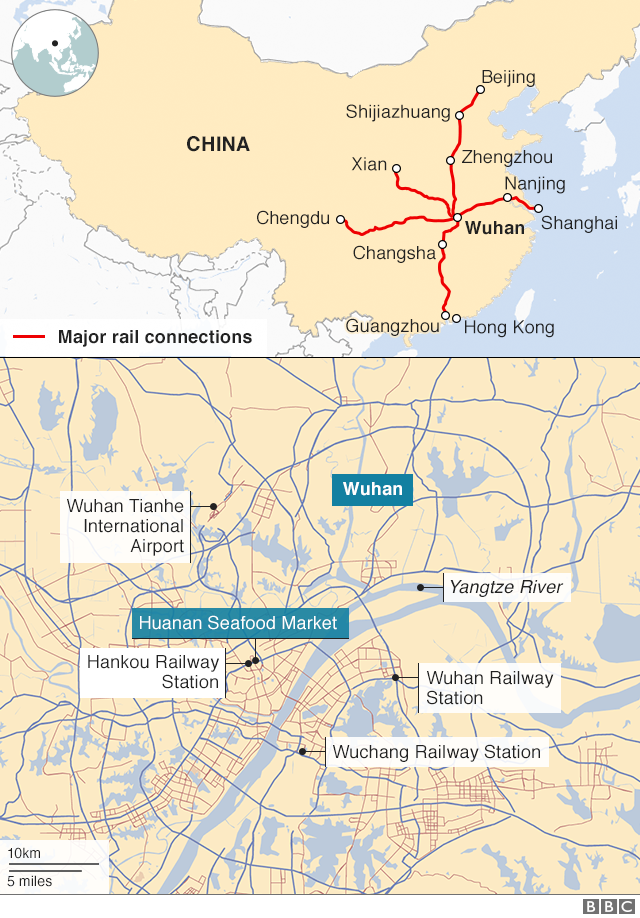
Wuhan, a Chinese city of eleven million people, has temporarily shut down its public transport as it tries to halt the outbreak of a new strain of virus.
Those living in the city have been advised not to leave, in a week when millions of Chinese are travelling for the upcoming Lunar New Year holiday.
The respiratory illness has spread to other parts of China, with some cases in other countries including the US.
There are more than 500 confirmed cases and 17 people have died.
Known for now as 2019-nCoV, the virus is understood to be a new strain of coronavirus not previously identified in humans. The Sars (severe acute respiratory syndrome) virus that killed nearly 800 people globally in the early 2000s was also a coronavirus, as is the common cold.
All the fatalities so far have been in Hubei, the province around Wuhan.
Meanwhile, after a day of discussions in Geneva, the World Health Organization’s (WHO) emergency committee has announced it will not yet declare a “global emergency” over the new virus.
Director general Dr Tedros Ghebreyesus said more information was needed about the spread of the infection. The committee of health experts will meet again on Thursday.
A global emergency is the highest level of alarm the WHO can sound and has previously been used in response to swine flu, Zika virus and Ebola.
What measures have been announced?
From Thursday, all flights and passenger train services out of Wuhan have been stopped.
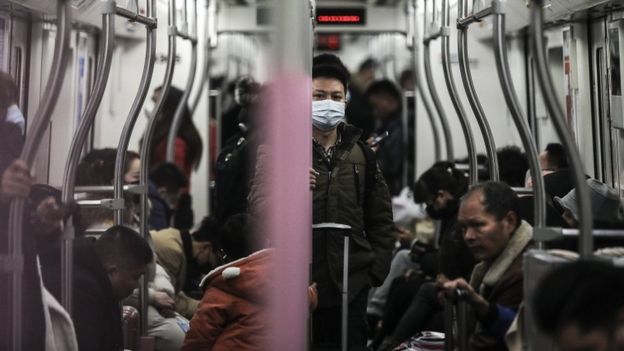
Bus, subway and ferry services all shut down from 10:00 local time (02:00 GMT).
A special command centre in Wuhan set up to contain the virus said the move was meant to “resolutely contain the momentum of the epidemic spreading”.
Those living in Wuhan had already been told to avoid crowds and minimise public gatherings.
State news agency Xinhua said tourist attractions and hotels in the city had been told to suspend large-scale activities while libraries, museums and theatres were cancelling exhibitions and performances.
A Lunar New Year prayer-giving ceremony at the city’s Guiyuan Temple, which attracted 700,000 people last year, has also been cancelled.
The hashtag “Wuhan is sealed off” was trending on Chinese social media website Weibo.
One user said worries about food and disinfectant made it feel like “the end of the world”, while another said they were on the “verge of tears” when Chinese officials announced the shut-down.
The WHO’s Dr Ghebreyesus described the latest measures as “very strong” and said they would “not only control the outbreak, they will minimise spread internationally”.
Chinese officials said the country was now at the “most critical stage” of prevention and control.
“Basically, do not go to Wuhan. And those in Wuhan please do not leave the city,” said National Health Commission vice-minister Li Bin in one of the first public briefings since the beginning of the outbreak.
Like shutting down London before Christmas
By James Gallagher, BBC health and science correspondent
Wuhan is starting to look like a city in quarantine.
Officials had already warned residents not to leave the city and visitors not to come.
Now the reported public transport ban – which includes flights – slams many of the routes in and out of the city shut.
Image copyright GETTY IMAGESImage caption Subways in Wuhan will be temporarily shut
It is a significant attempt to stop the spread of this new virus, which we now know can spread from person to person.
Limiting transport will cut the chance of the virus reaching other cities in China and other countries around the world.
This all comes just as millions of people are travelling across China for the week-long holiday that is Lunar New Year.
If you’re struggling for context – imagine shutting down London in the week before Christmas.
The big question left is the roads – and whether any of Wuhan’s 11 million inhabitants will be able to simply drive away.
The patient in Macau is said to be a businesswoman who arrived from Wuhan over the weekend.
The first US case was confirmed on Tuesday. President Donald Trump said the situation was “totally under control” and that he trusted the information being provided by Chinese authorities.
There have been three cases in Thailand, one in Korea, one in Japan and one in Taiwan.
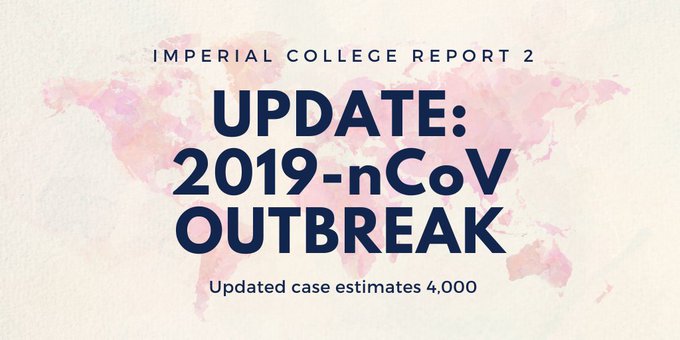
Although only about 500 cases have been confirmed, calculations by scientists at the MRC Centre for Global Infectious Disease Analysis at Imperial College London suggest there are 4,000 people sick with the virus in Wuhan.
Our estimate at 4,000 cases is more than double the past estimate due to increase of number of cases outside China. This should not be interpreted as implying the outbreak has doubled in size.
The virus originated in a seafood market in Wuhan that “conducted illegal transactions of wild animals”, authorities said. The market has since been shut down.
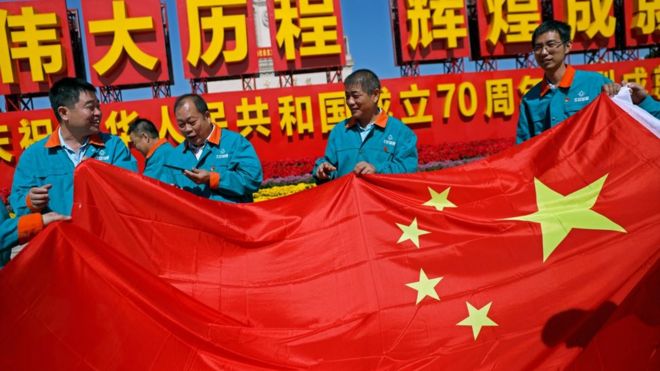
Image copyright EPAImage caption China is getting dressed up for its big birthday party
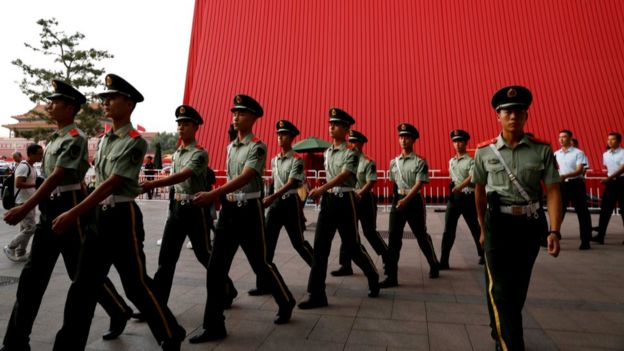
One week from now, the People’s Republic of China will mark its 70th anniversary with celebrations on a scale not seen in China in decades.
Beijing is pulling out all stops and 1 October will be flush with fireworks, fanfare and a huge military parade.
To ensure it goes smoothly, authorities have been ramping up security in the capital – and online – for weeks.
But with yet more protests expected in Hong Kong, the territory might just rain on China’s parade.
What is it all about?
The birth of modern China was declared on 1 October 1949, after the communists under Mao Zedong won the civil war that followed World War Two.
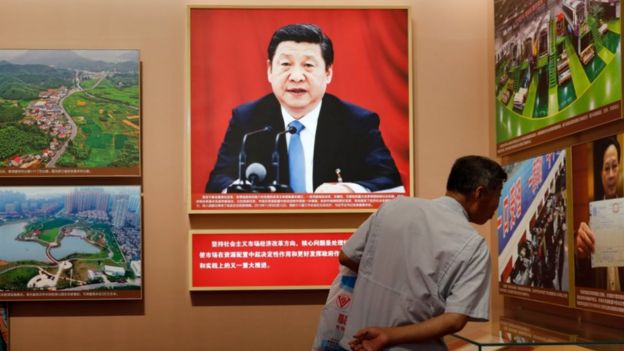
Image copyright EPAImage caption Exhibitions are highlighting the achievements of the Communist Party
The date is marked every year, but celebrations for this 70th anniversary are expected to eclipse previous events.
It’s the first big anniversary since China has emerged as a global power. While 10 years ago China was a superpower in the making, it is now the world’s second largest economy, almost eye-to-eye with the United States.
What to expect?
The main celebrations will take place in the capital, Beijing, where there will be a grand military parade with “advanced weapons” on display, followed by a “mass pageant”.
President Xi Jinping – considered the most powerful Chinese leader since Mao – will address the Chinese people. His speech is expected to celebrate China’s rapid growth and which will be closely watched for any indication of the country’s direction in the coming years.
The president will also hand out honours for contributions to the country and in the evening there will be a grand gala and fireworks show.
All official Chinese celebrations are carefully choreographed and the success of this one is particularly important to the government.
The Dos and Don’ts
The parade – open to invited guests only – will take place around Tiananmen Square in central Beijing. The surrounding area will be practically under lockdown, and in fact has been so several times already.
During rehearsals leading up to the big day, hotels near Tiananmen Square told guests that for several hours each day, no-one would be able to leave the hotel or return to it should they be out, leading to much travel chaos and rebookings.
Many shops and restaurants in the centre are also closed or have shortened hours and some subway stations are temporarily shut.
Image copyright EPAImage caption Security is tight ensure the party goes to plan
Trains to Beijing are running numerous safety checks on their passengers and vehicles going into the city are also being tightly watched.
On the big day itself, areas around Tiananmen Square will be blocked and guarded. Local residents will need to identify themselves if they want to pass.
To ensure the sun will shine brightly on the celebration in notoriously polluted Beijing, several coal plants and construction sites in and around the city have been ordered to stop work for the duration.
There’s also a ban on any low-flying aerial vehicles in place. That means anything from light aircraft to drones, balloons and even racing pigeons.
Censorship galore
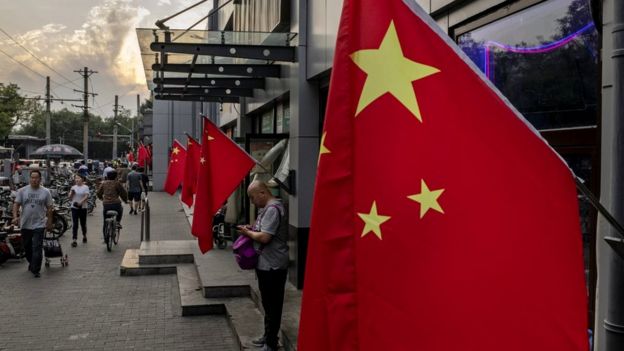
Across much of the city centre, there are national flags set up at every door. Voluntary inspectors are monitoring the streets and locals have told the BBC they’re being questioned after having even brief conversations with foreigners
One person said she was asked by an inspector: “Who were those foreigners? Why were they here?”
The tight control naturally extends online as well. Popular social media platform Weibo said it was deleting content that “distorts” or “insults” the country’s history ahead of the anniversary.
Image copyright GETTY IMAGESImage caption Every house and every shop is sporting a national flag
Chinese journalists are always expected to toe the party line anyway, but starting in October they will have to pass an extra test to prove they are versed particularly in Xi Jinping’s teachings, officially called Xi Jinping Thought on Socialism with Chinese Characteristics, which has been written into the constitution.
Whether or not they pass the exam will then determine whether they’ll be accredited as journalists.
“The fundamental point with this ‘training’ and indoctrination process isn’t so much about the content,” David Bandurski of China Media Watch told the BBC.
“It is about reinforcing the message and understanding among journalists that they work, first and foremost, for the Chinese Communist Party, and serve its agenda.”
So not only will the events be choreographed – the domestic coverage of them will also be tightly guarded.
What about Hong Kong?
Despite Beijing’s determination to let its achievements shine on 1 October, there’s a good chance Hong Kong will pull focus.
Anti-Beijing protests always take place in Hong Kong on China’s National Day, but this time, the activists know that the world is watching.
Anti-government protests have rocked the city for months and the situation shows no sign of dying down.
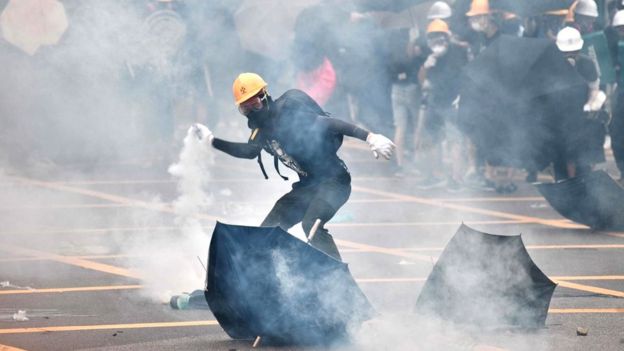
Clashes between police and activists have been becoming increasingly violent, with police using tear gas and activists storming parliament.
Image copyright AFPImage caption The protests have often escalated into violent clashes
That means two things for 1 October: official celebrations in the territory are being toned down to avoid clashes – the annual fireworks display has been cancelled – while at the same time, activists are planning to step up their protests.
On Sunday 29 September, a “Global Anti Totalitarianism March” is scheduled to take place at various locations around the world in support of Hong Kong.
On 1 October itself, a march in central Hong Kong is planned with everyone asked to wear black.
If the past weeks’ demonstrations are anything to go by, the smiles and celebrations in Beijing will be competing for media space with pictures of tear gas and angry young protesters in Hong Kong.
At least 13 people have been killed and more than a million forced from their homes as Typhoon Lekima hit China.
Sixteen people were also missing after a landslide was triggered by the storm, state media reported.
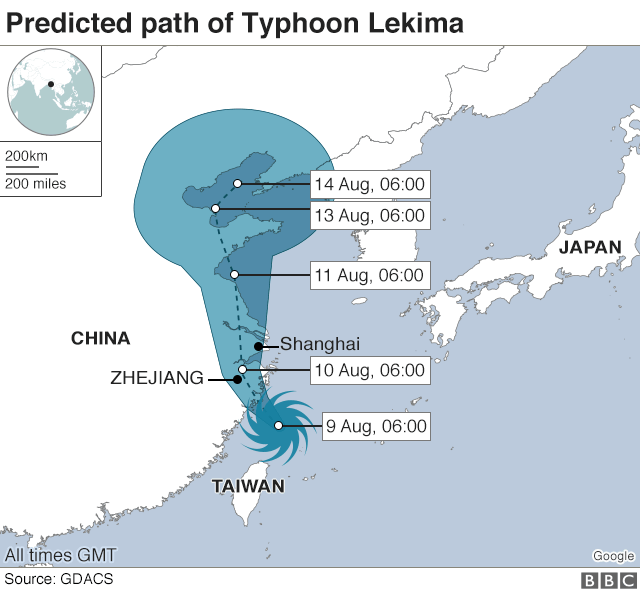
Lekima made landfall in the early hours of Saturday in Wenling, between Taiwan and China’s financial capital Shanghai.
The storm was initially designated a “super typhoon”, but weakened slightly before landfall – when it still had winds of 187km/h (116mph).
The fatal landslide happened when a dam broke in Wenzhou, near where the storm made landfall, state media said.
Lekima is now slowly winding its way north through the Zhejiang province, and is expected to hit Shanghai, which has a population of more than 20 million.
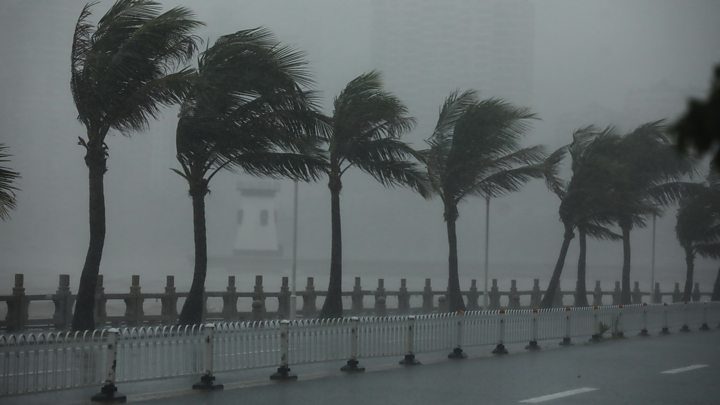
Emergency crews have battled to save stranded motorists from floods. Fallen trees and power cuts are widespread.
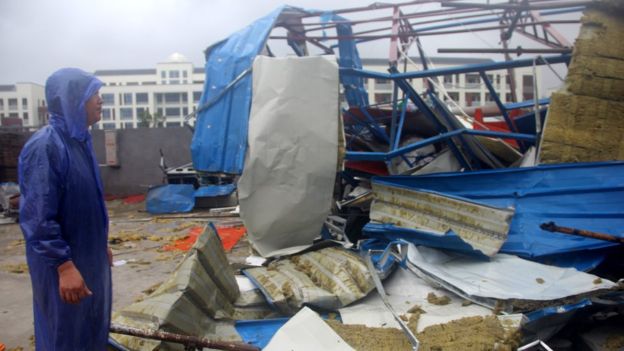
Image copyright EPAImage caption A worker looks for his belongings at a construction site shelter collapsed by the storm
Authorities have cancelled more than a thousand flights and cancelled train services as the city prepares for the storm.
It is expected to weaken further by the time it reaches Shanghai, but will still bring a high risk of dangerous flooding.
The city evacuated some 250,000 residents, with another 800,000 in the Zhejiang province also being taken from their homes.
An estimated 2.7 million homes in the region lost power as power lines toppled in the high winds, Chinese state media said.
It is the ninth typhoon of the year, Xinhua news said – but the strongest storm seen in years. It was initially given China’s highest level of weather warning but was later downgraded to an “orange” level.
Media caption Typhoon Lekima inches towards China
Chinese weather forecasters said the storm was moving north at just 15km/h (9mph).
It earlier passed Taiwan, skirting its northern tip and causing a handful of injuries and some property damage.
Coming just a day after a magnitude six earthquake, experts warned that the combination of earth movement and heavy rain increased the risk of landslides.
Lekima is one of two typhoons in the western Pacific at the moment.
Further east, Typhoon Krosa is spreading heavy rain across the Northern Mariana Islands and Guam. It is moving north-west and could strike Japan some time next week, forecasters said.
























 CHINDIA ALERT: You'll be living in their world, very soon