Chindia Alert: You’ll be Living in their World Very Soon
aims to alert you to the threats and opportunities that China and India present. China and India require serious attention; case of ‘hidden dragon and crouching tiger’.
Without this attention, governments, businesses and, indeed, individuals may find themselves at a great disadvantage sooner rather than later.
The POSTs (front webpages) are mainly 'cuttings' from reliable sources, updated continuously.
The PAGEs (see Tabs, above) attempt to make the information more meaningful by putting some structure to the information we have researched and assembled since 2006.
Image copyright GETTY IMAGESImage caption Within a week of reopening, India has seen a sharp spike in cases
India is roaring – rather than inching – back to life amid a record spike in Covid-19 infections. The BBC’s Aparna Alluri finds out why.
On Saturday, India’s government announced plans to end a national lockdown that began on 25 March.
This was expected – the roads, and even the skies, have been busy for the last 10 days since restrictions started to ease for the first time in two months. Many businesses and workplaces are already open, construction has re-started, markets are crowded and parks are filling up. Soon, hotels, restaurants, malls, places of worship, schools and colleges will also reopen.
But the pandemic continues to rage. When India went into lockdown, it had reported 519 confirmed cases and 10 deaths. Now, its case tally has crossed 173,000, with 4,971 deaths. It added nearly 8,000 new cases on Saturday alone – the latest in a slew of record single-day spikes.
Image copyright GETTY IMAGESImage caption Fast food chains like McDonald’s have begun reopening outlets in parts of India.
So, why the rush to reopen?
The lockdown is simply unaffordable
“It’s certainly time to lift the lockdown,” says Gautam Menon, a professor and researcher on models of infectious diseases.
“Beyond a point, it’s hard to sustain a lockdown that has gone on for so long – economically, socially and psychologically.”
From day one, India’s lockdown came at a huge cost, especially since so many of its people live on a daily wage or close to it. It put food supply chains at risk, cost millions their livelihood, and throttled every kind of business – from car manufacturers to high-end fashion to the corner shop selling tobacco. As the economy sputtered and unemployment rose, India’s growth forecast tumbled to a 30-year-low.
Raghuram Rajan, an economist and former central bank governor, said at the end of April that the country needed to open up quickly, and any further lockdowns would be “devastating”.
The opinion is shared by global consultant Mckinsey, whose report from earlier this month said India’s economy must be “managed alongside persistent infection risks”.
Image copyright GETTY IMAGESImage caption As restrictions ease, Indians are slowly getting used to the new normal
“The original purpose of the lockdowns was to delay the spike so we can put health services and systems in place, so we are able handle the spike [when it comes],” says Dr N Devadasan, a public health expert. “That objective, to a large extent, has been met.”
In the last two months, India has turned stadia, schools and even train coaches into quarantine centres, added and expanded Covid-19 wards in hospitals, and ramped up testing as well as production of protective gear. While grave challenges remain and shortages persist, the consensus seems to be that the government has bought as much time as possible.
“We have used the lockdown period to prepare ourselves… Now is the time to revive the economy,” Delhi Chief Minister Arvind Kejriwal said last week.
The silver lining
For weeks, India’s relatively low Covid-19 numbers baffled experts everywhere. Despite the dense population, disease burden and underfunded public hospitals, there was no deluge of infections or fatalities. Low testing rates explain the former, but not the latter.
In fact, India made global headlines not for its caseload but for its botched handling of the lockdown – millions of informal workers, largely migrants, were left jobless overnight. Scared and unsure, many tried to return home, often desperate enough to walk, cycle or hitchhike across hundreds of kilometres.
Perhaps the choice – between a virus that didn’t appear to be wreaking havoc yet, and a lockdown that certainly was – seemed obvious to the government.
But that is changing quickly as cases shoot up. “I suspect we will keep finding more and more cases, but they will mostly be asymptomatic or will have mild symptoms,” Dr Devadasan says.
The hope – which is also encouraging the government to reopen – is that most of India’s undetected infections are not severe enough to require hospitalisation. And so far, except in Mumbai city, there has been no dearth of hospital beds.
The government, for instance, has been touting India’s mortality rate as a silver lining – at nearly 3%, it’s among the lowest in the world.
But some are unconvinced by that. Dr Jacob John, a prominent virologist, says India has never had, and still doesn’t have, a robust system for recording deaths – in his view, the government is certainly missing Covid-19 deaths because they have no way of knowing of every fatality.
Image copyright GETTY IMAGESImage caption Indians are venturing out again but it’s unclear how many of them are asymptomatic.
And, he says, “what we must aim for is flattening the mortality curve, not necessarily the epidemic curve”.
Dr John, like several other experts, also predicts a peak in July or August, and believes the country is reopening so quickly because the “government realised the futility of such leaky lockdowns”.
A shift in strategy
So is the government gearing up for another lockdown when the peak comes?
While Dr Menon believes the lockdown was well-timed, he says it was too focused on cases coming from abroad.
“There was a hope that by controlling that, we could prevent epidemic spread, but how effective was our screening [at airports]?”
Now, he adds, is the time for “localised lockdowns”.
Media caption Coronavirus: Death and despair for migrants on Indian roads
The federal government has left it to states to decide where, how and to what extent to lift the lockdown as the virus’ progression varies wildly across India.
Maharashtra alone accounts for more than a third of India’s active cases. Add Tamil Nadu, Gujarat and Delhi, and that makes up 67% of the national total.
But other states – such as Bihar – are already seeing a sharp uptick as migrant workers return home.
“Initially, most of your cases were in the cities,” Dr Devadasan says. “But we kept the migrant workers in cities and didn’t allow them to go home. Now, we are sending them back. We have facilitated transporting the virus from urban areas to rural areas.”
While the government has said how many infections have been avoided – up to 300,000 – and lives saved – up to 71,000 – by the lockdown, there is no indication of what lies ahead.
There is only advice: The day the government began to ease restrictions, Mr Kejriwal tweeted, urging people to “follow discipline and control the coronavirus disease” as it was their “responsibility”.
Image copyright GETTY IMAGESImage caption Social distancing will prove to be India’s biggest post-lockdown challenge
Because the alternative – of curfews and constant policing – is unsustainable.
“My worry is more the circumstances of people – it’s not as though they have an option to practise social distancing,” Dr Menon says.
And they don’t – not in joint family homes or one-room hovels packed together in slums, not in crowded markets or busy streets where jostling is second nature, or in temples, mosques, weddings or religious processions where more is always merrier.
The overwhelming message is that the virus is here to stay, and we have to learn to live with it – and the only way to do that, it appears, is to let people live with it.
Image copyright AFPImage caption Embankments have been washed away in Bangladesh
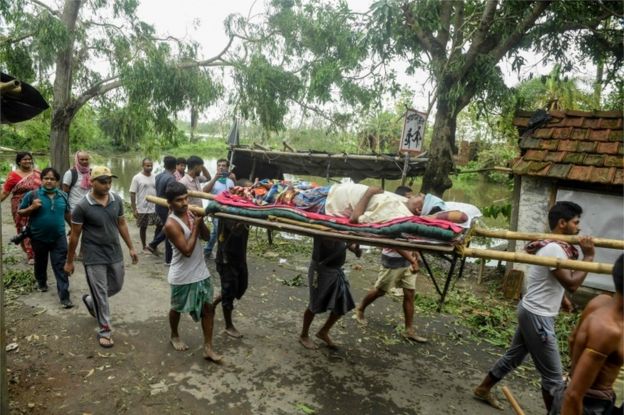
Millions of people across Bangladesh and eastern India are taking stock of the devastation left by Cyclone Amphan.
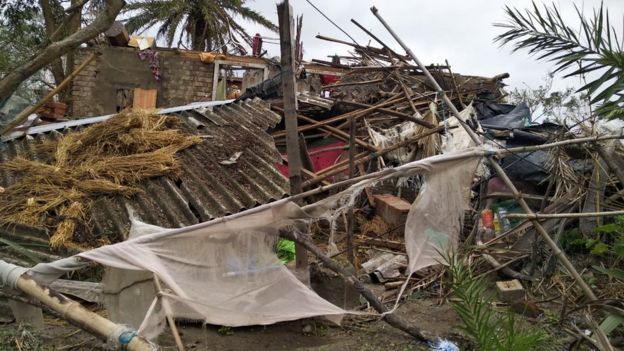
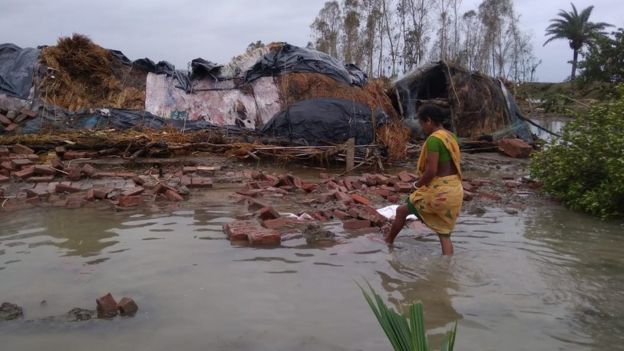
A massive clean-up operation has begun after the storm left 84 dead and flattened homes, uprooted trees and left cities without power.
India’s Prime Minister Narendra Modi has arrived in West Bengal state to conduct an aerial survey.
Authorities in both countries had evacuated millions of people before the storm struck.
Covid-19 and social-distancing measures made mass evacuations more difficult, with shelters unable to be used to full capacity.
Officials also said people were afraid and reluctant to move to shelters for fear of contracting the virus.
The cyclone arrived with winds gusting up to 185km/h (115mph) and waves as high as 15ft.
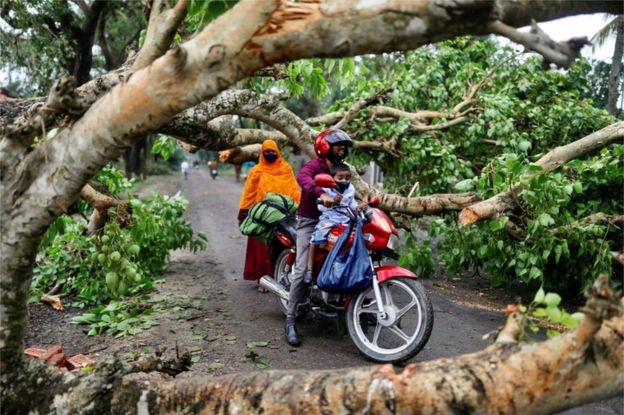
Image copyright REUTERSImage caption Roads have been blocked by falling trees in BangladeshImage copyright AFPImage caption Many people have been injured in wall collapses in Bengal
It is the first super cyclone to form in the Bay of Bengal since 1999. Though its winds had weakened by the time it struck, it was still classified as a very severe cyclone.
Three districts in India’s West Bengal – South and North 24 Parganas and East Midnapore – were very badly hit.
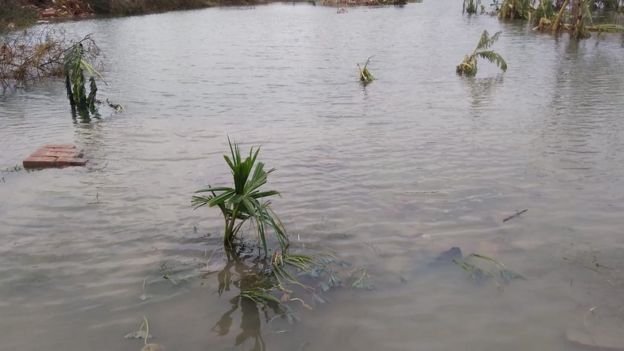
In Bangladesh, there are reports of tens of thousands of homes damaged or destroyed and many villages submerged by storm surges in low-lying coastal areas like Khulna and Satkhira.
The affected areas include the Sunderbans, mangroves spread over an area of more than 10,000 square kilometres that spans both India and Bangladesh – the swampy islands are home to more than four million of the world’s poorest people.
Image copyright MUKTIImage caption Many homes, built of brick and mud, have been washed away
Those in the Sunderbans say it is too early to estimate casualties in the area, which is now cut-off from the mainland by the storm.
“There are houses which have collapsed and people could be trapped in them but we don’t know yet,” Debabrat Halder, who runs an NGO in one of the villages, told the BBC.
He recalls cyclone Bulbul in November 2019, which was followed by a huge incidence of fever, diarrhoea and flu, and is afraid that that the same may happen again.
And worse, he adds, is that the flooding from contaminated sea water, has likely destroyed the soil.
“Nothing will grow in this soil,” he says, adding that it will likely take years to convert it into fertile land again.
Image copyright MUKTIImage caption The Sunderbans delta is frequently hit by severe stormsImage copyright MUKTIImage caption Crops have all been destroyed by the flooding
Kolkata, the capital of West Bengal, and one of India’s biggest cities has been devastated. Its roads are flooded and the city was without power for more than 14 hours.
The state’s chief minister, Mamata Banerjee, said the devastation in Kolkata was “a bigger disaster than Covid-19”.
But assessment of the damage is being hampered by blocked roads and flooding in all these areas.
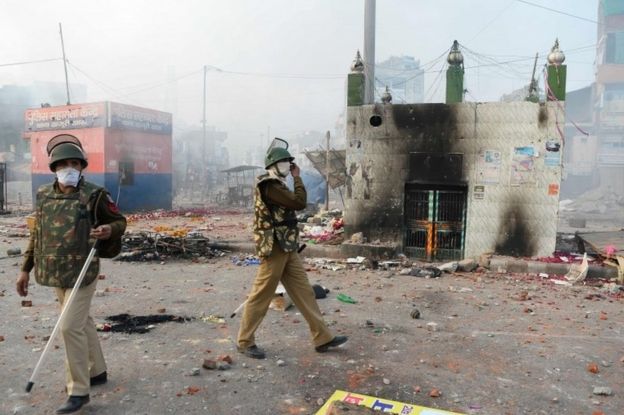
Seven people have been killed in Delhi in protests against India’s controversial new citizenship law, as US President Donald Trump made his first official visit to the country.
Violence has erupted again in parts of north-east Delhi, which saw deadly clashes between supporters and opponents of the law on Monday night.
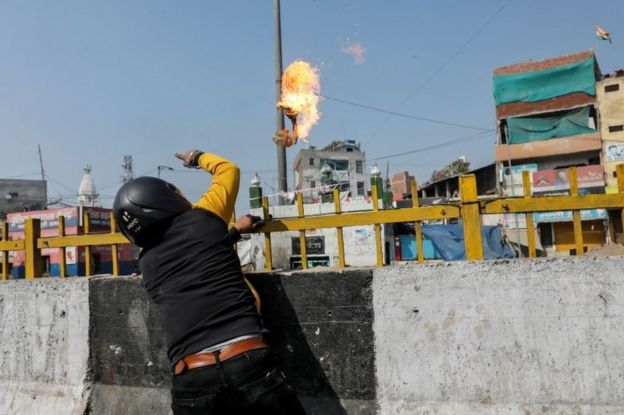
Two journalists have been attacked and BBC reporters in the area say mobs are throwing stones and shouting slogans.
There are fears of further clashes.
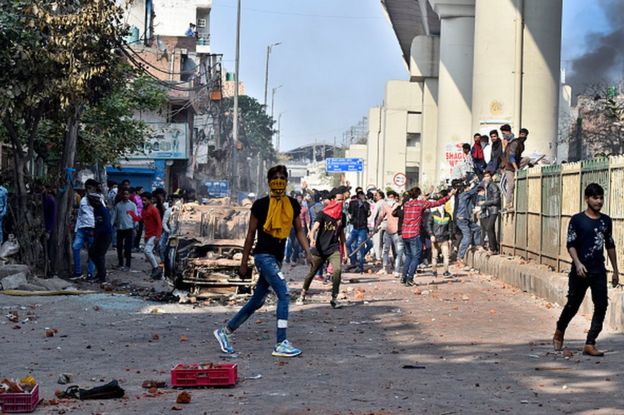
Mobs in parts of north-east Delhi are throwing stones at each other, and the situation remains tense, according to BBC correspondents.
Gokulpuri, in #Delhi today. The BBC saw mobs of people with sticks and stones chanting ‘Jai Shri Ram’. Parts of Delhi are witnessing the worst violence and rioting India’s capital has seen in decades. Seven confirmed dead. #DelhiViolence
A policeman and six civilians have died in Delhi’s deadliest violence since the Citizenship Amendment Act (CAA) – which critics say is anti-Muslim – was passed last year.
Around 150 people, including 48 policemen, are reportedly injured.
Image copyright AFP
“There are around 200 people, some are holding the Indian flag in their hands, others are holding saffron flags, generally associated with right-wing Hindu groups. They are chanting Jai Shri Ram [hail Lord Ram],” BBC Hindi reporter Faisal Mohammed said.
The crowd was also shouting “shoot the traitors”, our reporter added.
Correspondents say the timing of the unrest is an embarrassment to Prime Minister Narendra Modi as he hosts the US president and the violence has taken the spotlight away from Mr Trump’s visit.
Where is the violence?
It broke out in three Muslim-majority areas in north-east Delhi on Sunday and has continued since.
The violence in the area has seen protesters firmly split along religious lines, BBC reporters at the scene say.
Both sides have blamed each other for starting the clashes.
Image copyright REUTERSImage caption The violence in the Muslim-majority areas in north-east Delhi began on Sunday
The violence has been linked to a BJP leader, Kapil Mishra, who had threatened a group of protesters staging a sit-in against the CAA over the weekend, telling them that they would be forcibly evicted once Donald Trump had left India.
The clashes spilled into Monday and police fired tear gas shells and led baton charges to disperse the stone-throwing crowds. TV footage showed flames and smoke billowing from buildings.
Eyewitnesses said they saw charred vehicles and streets full of stones in areas like Jaffrabad and Chand Bagh on Tuesday morning. Police were allowing people to enter only after checking their identity cards. Some Metro stations have also been shut.
Who are the dead and injured?
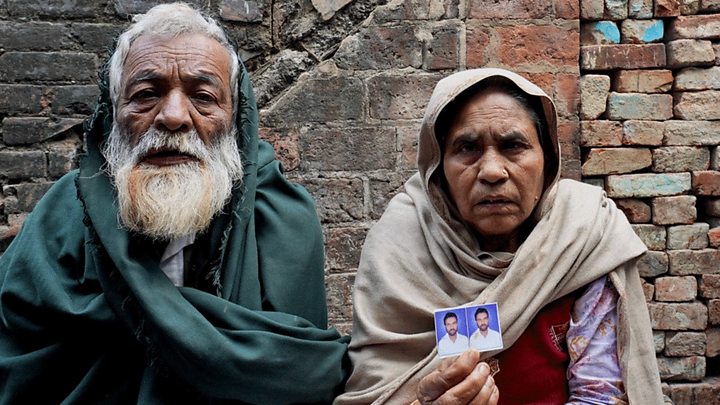
Six civilians and one policeman have been killed in the violence so far.
“One of the seriously injured is a senior police officer. He has now been moved to another hospital for specialised treatment,” an official said.
Two journalists belonging to the NDTV news channel were badly beaten while they were out reporting on Tuesday morning.
Shahid Alvi, an auto rickshaw driver, died because of a bullet injury he suffered during the protest. His brother Rashid told BBC Hindi that Shahid was married just a month ago.
“He was shot in the stomach and died while we were taking him to the hospital,” he said.
Another victim has been identified as Rahul Solanki.
His brother, Rohit Solanki, told BBC Hindi that he died after being shot as he tried to escape from a mob.
“He had gone out to buy groceries when he was suddenly surrounded. He was shot at point blank range. We tried taking him to four hospitals but we were turned away,” he said.
What are officials doing?
Delhi’s freshly re-elected Chief Minister Arvind Kejriwal, called on the federal government to restore law and order.
“There are not enough police on the streets [in the affected areas]. Local police are saying they are not getting orders from above to control the situation, and they are not able to take action,” he told reporters.
The capital’s police force reports directly to Mr Modi’s ruling Bharatiya Janata Party (BJP)-led government.
Home Minister Amit Shah, who is in-charge of Delhi’s police forces, is holding a meeting with Mr Kejriwal to discuss the situation.
Image copyright GETTY IMAGESImage caption The police and protesters fought pitched battles on the streets of Delhi
What is the citizenship act about?
The Citizenship Amendment Act (CAA) grants amnesty to non-Muslim immigrants from three nearby Muslim-majority countries.
The new law has raised fears that India’s secular status is at risk.
Critics say it discriminates against Muslims. But the government says the protests are unnecessary as it only seeks to give amnesty to persecuted minorities.
Protests so far have been largely led by Muslim women and men, but a lot of Hindus have also joined them.
NEW DELHI (Reuters) – India’s ruling party was projected to lose a key state election on Tuesday, the vote count showed, in its first electoral test since deadly anti-government protests erupted nearly two months ago.
The Hindu-nationalist Bharatiya Janata Party (BJP) led by Prime Minister Narendra Modi won a bigger majority in a general election in May, but it has lost a string of state elections since then.
The protests, in which at least 25 people have been killed, erupted across the country in mid-December, after the BJP passed a new citizenship law critics say violates India’s secular constitution and discriminates against minority Muslims.
In counting for state polls held in India’s capital New Delhi, data from India’s Election Commission showed the liberal Aam Aadmi Party, led by the city’s chief minister, Arvind Kejriwal, leading 57 out of 70 seats.
The BJP ran a campaign accusing protesters of supporting India’s arch-rival Pakistan and was projected to win 13 seats, up from three in 2015 but far below its own expectations. The party’s local chief Manoj Tiwari had predicted it would win a majority.
AAP activists in distinctive white boat-shaped caps danced outside party headquarters in New Delhi as the result became clear, TV channels showed.
Neelanjan Sircar, an assistant professor at Ashoka University near New Delhi, said that local issues, including delivery of basic services like education and health, appeared to sway voters towards the AAP, even as the BJP ran a polarising campaign on the back of Modi’s image.
“Modi is a larger than life character at the national level, which obviously gives the BJP a huge advantage in national politics,” Sircar said.
“But it doesn’t translate to state level politics, where the BJP often doesn’t have a charismatic face.”
Bespectacled former bureaucrat Kejriwal, 51, formed AAP in 2012 amid an anti-corruption movement that swept India.
The party won a stunning victory in 2015 state elections in the capital, wiping out the BJP and Congress, the party that has ruled India for half its post-independence history.
The Congress – the main opposition at national level – was projected to win no seats in Delhi on Tuesday, data showed, reflecting the deep decline in its fortunes.
Image copyright GETTY IMAGESImage caption Mr Kejriwal has proposed free travel on buses and the city’s famed Delhi metro rail service
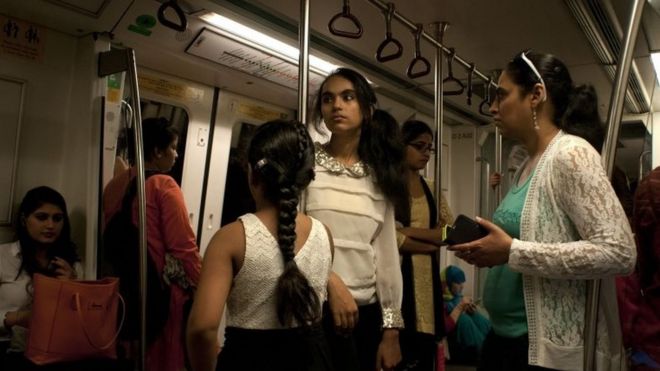
The chief minister of India’s capital Delhi created a minor sensation when he announced that women would no longer have to pay for public transport.
Arvind Kejriwal said that free rides on city buses and the metro would help improve women’s safety in the city.
Delhi reports some of the highest numbers of rape in India. The 2012 gang rape and murder of a student on a bus in the city sparked massive protests.
However not everyone is convinced that Mr Kejriwal’s proposal will help.
Dinesh Mohan, a transport expert with the Indian Institute of Technology in Delhi, told the BBC that making public transport free wouldn’t solve the problem.
“You need to think about the entire journey and not just the metro – you have to take into account how safe or unsafe sidewalks are and what the journey to the metro station is like in the first place. So if the idea is to make it safer for women, that experience has to be continuous. Safety can’t begin and end at the metro station. I don’t see any thought behind this initiative yet.”
Despite Mr Kejriwal’s announcement, women will have to wait a while to see if it is actually implemented.
The proposal still has to be approved by the federal government because it is an equity partner along with the Delhi government in the Delhi Metro Rail Corporation.
But Mr Kejriwal has said that the federal government’s permission is not necessary as the Delhi government will bear the cost.
Delhi transport minister Kailash Gahlot said since this qualifies as a subsidy, they did not require any such permission.
Some have dismissed the entire thing as a pre-election gimmick by Mr Kejriwal – Delhi will hold state assembly elections next year.
Architect and urban planner Sonal Shah said on Twitter that a number of factors had to be taken into consideration for women’s safety to be addressed effectively. She said that transport access was “not equal for men and women”, adding that a number of existing issues with public transport had to be addressed first.
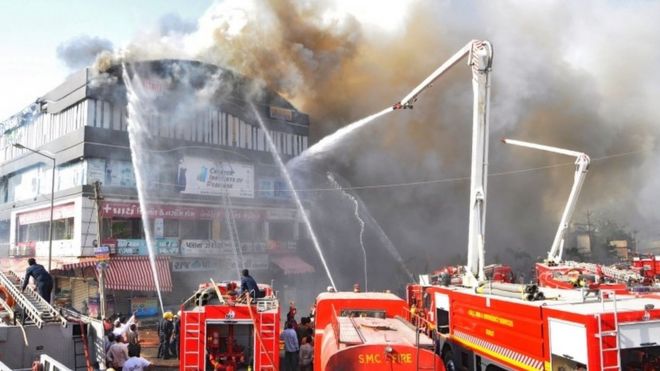
Image copyright GETTY IMAGESImage caption The fire ripped through tuition classes in the western state of Gujarat
At least 19 students have died in a fire at a school in India, officials said.
Students were seen jumping and falling from the building in the western city of Surat as black smoke billowed from windows.
Most of the victims were teenagers who had been studying at a tuition centre.
The initial cause of the fire was not immediately clear. Officials said the blaze spread through packed classrooms because of flammable roofing.
At least 20 others sustained serious injuries and were being treated in hospital in Gujarat.
“The students lost their life both because of the fire and jumping out of the building,” Deepak Sapthaley, a local fire official, told AFP.
All of the dead were aged below 20 years and many were trapped because the fire began near the staircase, Reuters reported.
Prime Minister Narendra Modi offered his condolences on Twitter and called for local authorities to provide assistance.
Narendra Modi
✔@narendramodi
Extremely anguished by the fire tragedy in Surat. My thoughts are with bereaved families. May the injured recover quickly. Have asked the Gujarat Government and local authorities to provide all possible assistance to those affected.
An inquiry into the incident has been ordered and a report is expected within three days, said the spokesman for the office of Gujarat Chief Minister Vijay Rupani.
ENJERLA/NEW DELHI, India (Reuters) – It was supposed to be Johnson & Johnson’s biggest manufacturing plant in India. It was to eventually employ at least 1,500 people and help bring development to a rural area near Hyderabad in southern India.
Yet, three years after the U.S. healthcare company completed construction of production facilities for cosmetics and baby products on the 47-acre site, they stand idle.
Two sources familiar with J&J’s operations in India and one state government official told Reuters production at the plant, at Penjerla in Telangana state, never began because of a slowing in the growth in demand for the products.
One of them said that demand didn’t rise as expected because of two shock policy moves by Prime Minister Narendra Modi: a late 2016 ban on then circulating high-value currency notes, and the nationwide introduction of a goods and services tax (GST) in 2017.
J&J spokespeople in its Mumbai operations in India and at its global headquarters in New Brunswick, New Jersey, declined to respond to a list of questions from Reuters.
Modi’s office did not respond to a call and an email with questions.
Aimed at rooting out corruption and streamlining the tax system, the double whammy of ‘demonetization’ and GST – were two of Modi’s signature policy moves. But instead of encouraging economic activity as intended, they did the opposite, at least in 2016-2018, by sapping consumer demand, according to some economists.
Many businesses, especially small and medium-sized enterprises, complained publicly – some in their financial statements – that they suffered a drop off in orders. The suspended J&J project stands as one of the most vivid examples of the impact on the broader investment picture.
In the first month after demonetization, some business surveys showed that sales of products such as shampoos and soap fell more than 20 percent.
Lack of jobs growth and a farm-income crisis because of low crop prices have hurt Modi in the current general election, according to several political strategists.
Still, Modi and his ruling Hindu nationalist Bharatiya Janata Party are expected by many of the strategists to be in a position to get a second term – probably with support of some other parties – when votes are counted on Thursday, partly because of his strong stance on national security issues.
BIG INVESTMENTS, GREAT EXPECTATIONS
A range of Modi’s business policies, such as capping prices of medical devices, forcing tech companies to store more data locally and stricter e-commerce regulations have in the past two years hurt plans of American multinationals such as J&J, Mastercard, Amazon and Walmart-owned Flipkart.
The groundbreaking of the J&J facility in Penjerla, its third in the country, was carried out with much fanfare in 2014, attended by Telangana state’s Chief Minister Chandrashekar Rao, who hailed the foreign investment as a big win for local communities. A document dated April 2017 that lists products the company planned to make at the facility, submitted to the Telangana government and reviewed by Reuters, names baby oil, baby shampoo, baby lotion, baby hair oil, face wash and creams.
Shaukat Ali, running a tea shop under a bamboo stall on barren land outside the plant, said local workers check in routinely for possible vacancies at the J&J site, but nothing has come up in years.
At the local pollution control board office, the member secretary Satyanarayana Reddy said the J&J plant had all the required approvals and he was not sure why it hadn’t started production.
“It is unusual for such a big plant to stay idle for so long,” he said. “But there is no problem from our side.”
Chandrasekhar Babu, an additional director at the Telangana industries department, said a J&J company official told him the plant hadn’t started due to lack of demand.
GST and demonetization were two key reasons the plan didn’t kick off, one of the sources said, adding that lack of consumer demand since then dented company’s plans.
The second source familiar with J&J’s plans said the company miscalculated Indian market demand.
On a recent visit by a Reuters reporter to the J&J plant, plush, furnished conference rooms and cubicles sat inactive; M. Sairam, who said he was the site manager, told Reuters production areas with machines were idle too.
PLANNED FURTHER EXPANSION
Local officials had hoped the initial J&J plant would be only the beginning. After the groundbreaking in 2014, Pradeep Chandra, who was Telangana’s special chief secretary of industries, told Business Today magazine that “based on the extent of land (J&J) have acquired we believe that they are looking at much larger expansion here.”
Local media reports at the time said the J&J facility would employ some 1,500 people.
A J&J official, who was not identified by name, was reported subsequently in December 2016 in India’s Business Standard assaying that the $85 million plant would be operational by 2018 after it had overcome procedural delays. The official was quoted as saying the company had earmarked an additional $100 million for expansion.
Vikas Srivastava, the managing director of J&J Consumer(India), who was at the 2014 groundbreaking, did not respond to calls for comment.
Reuters also talked to two workers outside a sprawling Procter & Gamble facility making detergents and diapers, which is next to the J&J plant. They said they were part of the P&G plant’s production team and the plant had been running below capacity.
A P&G spokesperson denied that, saying the plant was “operating at full capacity in line with our business plans”. “India is a priority market for P&G globally and in recent quarters, P&G’s business in India has registered strong double-digit growth consistently,” the company said.
The weak rural economy, where most Indians work, has also hurt growth in sales of basic items such as detergents and shampoo in the past year.
Hindustan Unilever Ltd, an industry bellwether that would compete with the likes of J&J and P&G in some categories, said its volume growth shrank to 7 percent in the quarter ended March 31, down from double-digit growth in the previous five quarters.
The company warned that the daily consumer goods segment in India was “recession resistant … not recession proof.”
Image copyright GETTY IMAGESImage caption Mr Modi said he will not forgive Pragya Thakur
India is in full election mode: voting began on 11 April, and the final ballot will be cast on 19 May with results out on 23 May. Every day, the BBC will be bringing you all the latest updates on the twists and turns of the world’s largest democracy.
What happened?
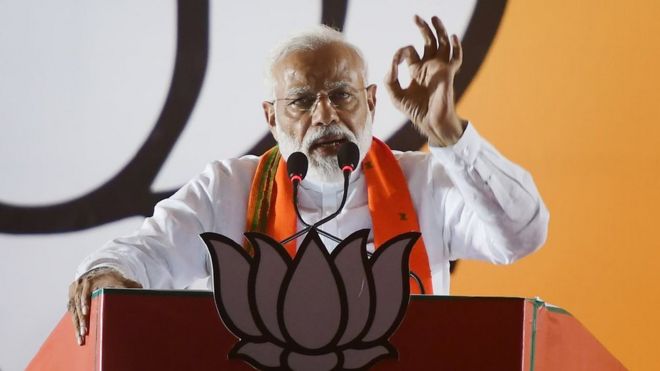
Indian Prime Minister Narendra Modi has attended first ever press conference at the Bharatiya Janata Party (BJP) head office in Delhi – days before Indians take part in the final stage of voting.
But journalists were left disappointed as he did not take any questions, and instead largely talked about his government’s achievements.
“I have come to thank the country for blessing me. I have seen a lot of ups and downs but the country stayed with me,” he said.
Mr Modi also spoke of his pride in India’s democratic process and said he needs to show the world “how diverse our democracy is”.
Mr Modi was seated next to party president Amit Shah. He said he would not take questions because the press conference was Mr Shah’s.
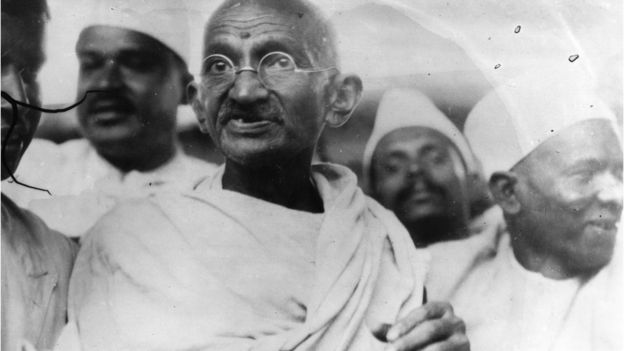
Earlier, the prime minister said he would “never be able to forgive” those who have “insulted” Mahatma Gandhi.
Mr Modi’s statement comes after controversial Bharatiya Janata Party (BJP) politician Pragya Thakur called Nathuram Godse – the man who assassinated Mahatma Gandhi – a “patriot”.
Ms Thakur apologised after several leaders, including those from the BJP, criticised her.
“Such statements should be condemned. There is no place in society for such comments. She [Ms Thakur] may have apologised, but I will never be able to forgive her,” he said in an interview to News24 TV channel.
Why does this matter?
This is the first time Mr Modi has attended a press conference as prime minister while in India. Most of his press conferences have been on state visits to other countries and often involved little more than reading out an official statement.
He has given some one-on-one interviews to Indian media, though critics say that these have largely been tightly controlled and given to journalists seen as sympathetic to him. However in recent weeks he has given a flurry of interviews to several leading publications and television channels, including those that have been critical of him.
But if people were expecting a complete about-turn in his media policy this time, they would have been disappointed.
This caused some frustration among journalists on Twitter.
Also on Friday, a BJP candidate apologised for calling Gandhi’s killer a patriot
Image copyright GETTY IMAGES
What is happening?
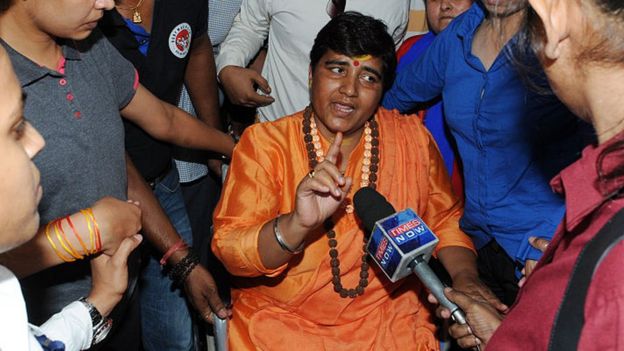
Bharatiya Janata Party (BJP) politician Pragya Thakur has apologised after calling Nathuram Godse – the man who assassinated Mahatma Gandhi – a “patriot”.
Several political parties had criticised her comment and her own party demanded that she should publicly apologise.
“It was my personal opinion. My intention was not to hurt anyone’s sentiments. If I’ve hurt anyone, I do apologise. What Gandhi Ji has done for the country cannot be forgotten. My statement has been twisted by the media,” Ms Thakur said on Thursday evening.
She made the comment after actor-turned politician Kamal Haasan said Godse was India’s first Hindu “extremist” earlier this week.
Why does this matter?
The BJP as well as opposition parties immediately reacted to her comment, which also caused a storm on social media.
BJP spokesperson GVL Narasimha Rao said that the party does not agree with her statement, and asked her to publicly apologise.
The main opposition Congress party demanded an apology from Prime Minister Narendra Modi and said that the BJP should take “punitive action” against Ms Thakur.
Congress spokesperson Randeep Surjewala said that “insulting martyrs is in the BJP DNA” and that the “soul of the nation” has been hurt by her remarks.
Congress party leader Priyanka Gandhi also lashed out at the BJP.
Political analysts also say that her comments have put the BJP in a tough spot, since Mr Modi and BJP president Amit Shah defended their decision to field her as a candidate despite terror charges against her.
Her candidature caused outrage as she is an accused of involvement in a blast that killed seven people and injured 100 others. Ms Thakur denies all charges against her.
However, Ms Thakur’s comments do reflect the views of some right-wing Hindus who support the BJP and have long seen Gandhi as too moderate.
Godse, who shot Gandhi in the chest three times at point-blank range on 30 January 1948, was also an activist with nationalist right-wing groups, including those closely associated with the BJP.
Hindu hardliners in India accuse Gandhi of having betrayed Hindus by being too pro-Muslim, and even for the division of India and the bloodshed that marked Partition, which saw India and Pakistan created after independence from Britain in 1947.
On Thursday, a ruling party candidate called Gandhi’s killer a patriot
What happened?
Controversial Bharatiya Janata Party (BJP) politician Pragya Thakur made headlines again. This time it was for calling Nathuram Godse – the man who assassinated Mahatma Gandhi – a “patriot”.
Her comment was made in response to a statement by southern actor-turned politician Kamal Haasan who had said India’s first “extremist” was a Hindu”, referring to Godse.
His statement, made on Monday, was heavily criticised by the BJP, which accused him of indulging in “divisive politics” and filed a complaint against him with the Election Commission of India.
Why does this matter?
The BJP responded by criticising Ms Thakur and asking her to publicly apologise.
“BJP does not agree with this statement, we condemn it. Party will ask her for clarification, she should apologise publicly for this statement,” party spokesperson GVL Narasimha Rao told reporters.
Image copyright GETTY IMAGES
Ms Thakur has seen her fair share of controversy. Her candidature caused outrage as she is an accused of involvement in a blast that killed seven people and injured 100 others. On 18 April, she said that police officer Hemant Karkare had died in the November 2008 Mumbai terror attacks because she had “cursed” him. She was then banned from campaigning for 72 hours as a result.
A team led by Mr Karkare had arrested her for questioning in connection with the Malegaon blast.
During her campaign, she also said she was “proud” of her part in the demolition of the 16th Century Babri mosque. In 1992, right-wing Hindu mobs razed the mosque to the ground, claiming it was built on the site of a temple destroyed by Muslim rulers. The site, which is in the city of Ayodhya, has been a religious flashpoint for Hindus and Muslims for decades.
Campaigning ended in West Bengal a day before deadline
What happened?
The Election Commission (EC) told political parties to end their campaigning in West Bengal state, a day before the deadline in the wake of poll-related violence.
The campaign will end on Thursday at 10pm local time, and voting will be held on Sunday.
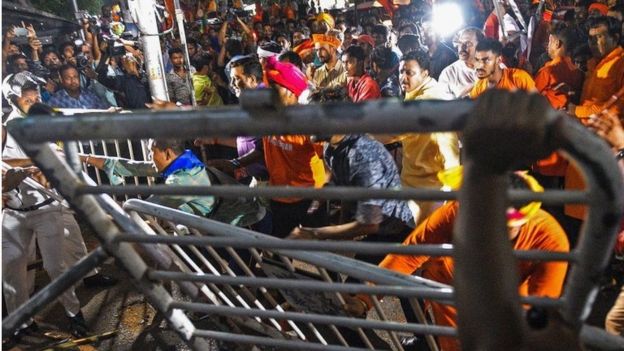
The decision comes after clashes broke out between the Bharatiya Janata Party (BJP) workers and protesters believed to be from the ruling Trinamool Congress (TMC) in Kolkata (formerly Calcutta) on Tuesday.
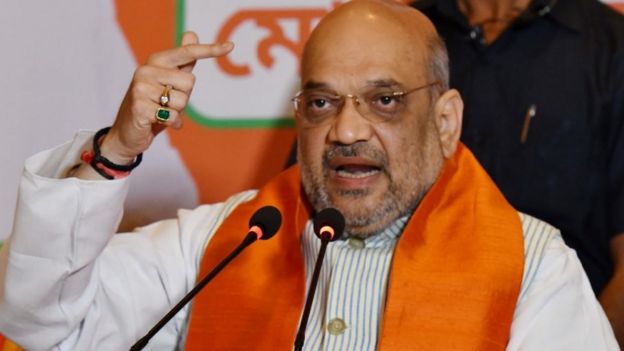
It happened during a roadshow of BJP chief Amit Shah. Several people were injured and vehicles were set on fire. A statue of renowned Bengali reformer Iswarchandra Vidyasagar was also vandalised in the clashes.
Both parties have accused each other of starting the violence.
Why does this matter?
Image copyright GETTY IMAGESImage caption Violence took place during BJP chief Amit Shah’s rally in Kolkata on Tuesday
The BJP welcomed the decision, saying it validated their argument that the state had “descended into anarchy” under the leadership of chief minister Mamata Banerjee.
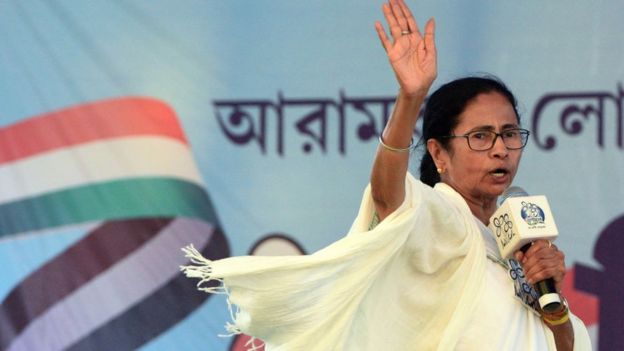
Ms Banerjee said that the move was “undemocratic” and “it had insulted the people of Bengal”.
“Tomorrow, [Prime Minister Narendra] Modi has two meetings in Bengal. When he finishes, the campaigning also ends… Instead of punishing Amit Shah, the Election Commission has given a gift to the BJP,” she said.
Image copyright AFPImage caption Several people were injured and vehicles were set on fire during the violence
Both parties are locked into a fierce election battle to win most out West Bengal’s 42 seats. Ms Banerjee has ambitions of becoming the prime minister in case a nationwide coalition of regional parties wins enough seats.
The state has also become crucial for the BJP as it’s trying to expand its reach in the eastern state. It won only two seats in the 2014 election.
The BJP performed well in northern states like Uttar Pradesh and Rajasthan in 2014, but this time it’s expected to suffer loses against a coalition of regional parties and the main opposition Congress.
So the party is trying to make up for the losses in West Bengal.
On Wednesday, the TMC and the BJP accused each other of poll violence
Image copyright GETTY IMAGES
What happened?
The war of words between West Bengal state chief minister Mamata Banerjee and the governing Bharatiya Janata Party (BJP) intensified ahead of voting on Sunday.
The latest verbal duel comes after violence was reported during BJP chief Amit Shah’s roadshow in Kolkata (formerly Calcutta) on Tuesday.
Clashes broke out between BJP supporters and protesters who were holding “Amit Shah go back” posters.
Some people suffered minor injuries and a few vehicles were set on fire.
The BJP said the protest was “orchestrated” and called it an “attempt to strangulate democracy”.
Why does this matter?
The eastern state has become politically crucial for the BJP as it has intensified campaigning in the past few days.
And that has sparked a feverish electoral battle between the BJP and Ms Banerjee’s Trinamool Congress (TMC).
“What does Amit Shah think of himself? Is he above everything? Is he god that no one can protest against him?” Ms Banerjee said.
In reply, Mr Shah accused the TMC of not following democratic norms during elections.
“Have faith in the people of Bengal that they’d face the TMC goons,” he said.
Prime Minister Narendra Modi is scheduled to hold more rallies in the coming days, so one can expect more verbal fireworks from the two leaders.
On Tuesday, the saga of the morphed Mamata meme continued
What happened?
India’s top court stepped in to release an activist belonging to India’s governing Bharatiya Janata Party (BJP) who was sent to prison for sharing a doctored image of West Bengal Chief Minister Mamata Banerjee.
Priyanka Sharma was sentenced to two weeks in prison on 10 May after she shared a picture of Bollywood star Priyanka Chopra and her husband Nick Jonas at the Met Gala – but with Ms Banerjee’s head superimposed on to Chopra’s body.
Earlier the court had said Ms Sharma could be released only if she apologised to Ms Banerjee, but later waived this condition.
Why does this matter?
The battle for West Bengal in this general election has been absolutely bruising.
The BJP, led by Prime Minister Narendra Modi himself, has been campaigning hard for votes in the state. This has brought them toe-to-toe with the state’s feisty chief minister. The fact that voting for West Bengal’s 42 seats has been split across all nine phases of voting has meant that the battle has been long and drawn-out.
And with just one phase to go before voting finally ends, the gloves are well and truly off. The two parties have traded insults on the campaign stage, their workers have attacked each other, and the violence on the ground has intensified. And now the battle has spread to cyberspace as well.
The country’s finance minister Arun Jaitley jumped at news of Ms Sharma’s release to call Ms Banerjee a dictator.
Analysts say that this political row is so bitter because the BJP has clearly identified West Bengal as one of the states where they may be able to make gains this election. This becomes more important for the party in the context of their fight in the politically crucial state of Uttar Pradesh, which sends the most number of MPs (80) to parliament.
They are up against a powerful coalition of regional parties there, and many expect them to lose seats as a result.
And PM Modi said Rahul Gandhi should be ashamed of 1984 riots
What happened?
Prime Minister Narendra Modi said that main opposition Congress party chief Rahul Gandhi should be “ashamed of himself” over his colleague’s remark on the 1984 anti-Sikh riots.
Mr Modi was replying to a controversial statement made by Sam Pitroda, who is a strategist of the Congress party.
In his reply to a question about the Congress’ role in the riots, Mr Pitroda had said “so what?”.
“I don’t think so, this is also another lie, and what about 1984? You speak about what you [Mr Modi] have done in five years. It [the riots] happened in 1984, so what?” he said.
Mr Gandhi said he was “ashamed” of Mr Pitroda’s statement, and asked him to apologise.
Mr Pitroda later said his statement was “twisted” and he did not mean to hurt sentiments.
But Mr Modi said the Congress chief “must apologise”.
“I was watching that naamdar [the dynast] told his guru that he should be ashamed of what he said. I want to ask naamdar, you pretended to scold your mentor for what? Because he exposed what was always in the Congress’s heart, and in the discussions of the naamdar family? Because he made public a family secret? Naamdar, it is you who should be ashamed,” Mr Modi said.
Why does this matter?
The controversy matters because it comes days ahead of voting for the 13 seats in the northern state of Punjab.
The BJP, which has formed a coalition with regional Shiromani Akali Dal, is locked in a bitter electoral battle with the ruling Congress in the state.
Sikhs are a majority in the state and the 1984 riots is still an emotional issue for many of them.
More than 3,000 Sikhs were killed in 1984 after the assassination of former prime minister Indira Gandhi by her Sikh bodyguards.
They were angry at her decision to send the army into the Golden Temple – Sikhism’s holiest shrine – to flush out militants earlier in the year.
The killing of Mrs Gandhi, who belonged to the Congress, saw mobs attack and murder members of the Sikh community across the country.
And both parties appear to be trying to come across as pro-Sikh ahead of the vote on 19 May.
On Sunday, Delhi voted but not enthusiastically
Image copyright GETTY IMAGESImage caption Delhi’s voter turnout was lower than in 2014
What happened?
Sunday saw India’s capital Delhi vote along with several other states in the polls – the penultimate phase of the country’s mammoth general election.
Voters turned out to vote, but in fewer numbers than they did in 2014. The election commission said that around 60% of the capital’s registered voters had actually cast ballots, which was about a five percent drop from 2014.
Delhi Chief Electoral Officer Ranbir Singh expressed disappointment, saying that the turnout did not match expectations.
Why does this matter?
The election commission is right to be disappointed – it had run a series of campaigns in the city, encouraging more people to vote.
But it was not as though polling in Delhi was an entirely smooth process. Some voters complained that their names were missing from electoral lists even though they had all the necessary documents. There were also reports that around 1,200 Electronic Voting Machines (EVMs) had malfunctioned across the city, delaying the polling process.
The fact that Delhi became a three-cornered contest after the main opposition Congress and the Aam Aadmi Party (AAP), which controls the Delhi state assembly, failed to stitch up an alliance may also have put voters off. Many analysts believe that this failure will only split voters who were against prime minister Narendra Modi’s Bharatiya Janata Party (BJP) and effectively hand them victory.
So they may have decided to just stay home, and not bother queuing up in the blistering heat – it touched 40C on Sunday.
India is in full election mode: voting began on 11 April, and the final ballot will be cast on 19 May with results out on 23 May. Every day, the BBC will be bringing you all the latest updates on the twists and turns of the world’s largest democracy.
Ruling party candidate calls Gandhi’s killer a patriot
What is happening?
Controversial Bharatiya Janata Party (BJP) politician Pragya Thakur has made headlines again. This time it was for calling Nathuram Godse – the man who assassinated Mahatma Gandhi – a “patriot”.
Her comment was made in response to a statement by southern actor-turned politician Kamal Haasan who had said India’s first “extremist” was a Hindu”, referring to Godse.
#WATCH BJP Bhopal Lok Sabha Candidate Pragya Singh Thakur says ‘Nathuram Godse was a ‘deshbhakt’, is a ‘deshbhakt’ and will remain a ‘deshbhakt’. People calling him a terrorist should instead look within, such people will be given a befitting reply in these elections
His statement, made on Monday, was heavily criticised by the BJP, which accused him of indulging in “divisive politics” and filed a complaint against him with the Election Commission of India.
Why does this matter?
The BJP has responded by criticising Ms Thakur and asking her to publicly apologise.
“BJP does not agree with this statement, we condemn it. Party will ask her for clarification, she should apologise publicly for this statement,” party spokesperson GVL Narasimha Rao told reporters.
However, Ms Thakur’s comments do reflect the views of some right-wing Hindus who support the BJP and have long seen Gandhi as too moderate.
Godse, who shot Gandhi in the chest three times at point-blank range on 30 January 1948, was also an activist with nationalist right-wing groups, including those closely associated with the BJP.
Hindu hardliners in India accuse Gandhi of having betrayed Hindus by being too pro-Muslim, and even for the division of India and the bloodshed that marked Partition, which saw India and Pakistan created after independence from Britain in 1947.
Ms Thakur has seen her fair share of controversy. Her candidature caused outrage as she is an accused of involvement in a blast that killed seven people and injured 100 others. On 18 April, she said that police officer Hemant Karkare had died in the November 2008 Mumbai terror attacks because she had “cursed” him. She was then banned from campaigning for 72 hours as a result.
A team led by Mr Karkare had arrested her for questioning in connection with the Malegaon blast.
During her campaign, she also said she was “proud” of her part in the demolition of the 16th Century Babri mosque. In 1992, right-wing Hindu mobs razed the mosque to the ground, claiming it was built on the site of a temple destroyed by Muslim rulers. The site, which is in the city of Ayodhya, has been a religious flashpoint for Hindus and Muslims for decades.
Campaigning ends in West Bengal a day before deadline
What happened?
The Election Commission (EC) has told political parties to end their campaigning in West Bengal state, a day before the deadline in the wake of poll-related violence.
The campaign will end on Thursday at 10pm local time, and voting will be held on Sunday.
The decision comes after clashes broke out between the Bharatiya Janata Party (BJP) workers and protesters believed to be from the ruling Trinamool Congress (TMC) in Kolkata (formerly Calcutta) on Tuesday.
It happened during a roadshow of BJP chief Amit Shah. Several people were injured and vehicles were set on fire. A statue of renowned Bengali reformer Iswarchandra Vidyasagar was also vandalised in the clashes.
Both parties have accused each other of starting the violence.
Why does this matter?
Image copyright GETTY IMAGESImage caption Violence took place during BJP chief Amit Shah’s rally in Kolkata on Tuesday
The BJP welcomed the decision, saying it validated their argument that the state had “descended into anarchy” under the leadership of chief minister Mamata Banerjee.
Ms Banerjee said that the move was “undemocratic” and “it had insulted the people of Bengal”.
“Tomorrow, [Prime Minister Narendra] Modi has two meetings in Bengal. When he finishes, the campaigning also ends… Instead of punishing Amit Shah, the Election Commission has given a gift to the BJP,” she said.
Image copyright AFPImage caption Several people were injured and vehicles were set on fire during the violence
Both parties are locked into a fierce election battle to win most out West Bengal’s 42 seats. Ms Banerjee has ambitions of becoming the prime minister in case a nationwide coalition of regional parties wins enough seats.
The state has also become crucial for the BJP as it’s trying to expand its reach in the eastern state. It won only two seats in the 2014 election.
The BJP performed well in northern states like Uttar Pradesh and Rajasthan in 2014, but this time it’s expected to suffer loses against a coalition of regional parties and the main opposition Congress.
So the party is trying to make up for the losses in West Bengal.
TMC, BJP accused each other of poll violence
Image copyright GETTY IMAGES
What happened?
The war of words between West Bengal state chief minister Mamata Banerjee and the governing Bharatiya Janata Party (BJP) intensified ahead of voting on Sunday.
The latest verbal duel comes after violence was reported during BJP chief Amit Shah’s roadshow in Kolkata (formerly Calcutta) on Tuesday.
Clashes broke out between BJP supporters and protesters who were holding “Amit Shah go back” posters.
Some people suffered minor injuries and a few vehicles were set on fire.
The BJP said the protest was “orchestrated” and called it an “attempt to strangulate democracy”.
Why does this matter?
The eastern state has become politically crucial for the BJP as it has intensified campaigning in the past few days.
And that has sparked a feverish electoral battle between the BJP and Ms Banerjee’s Trinamool Congress (TMC).
“What does Amit Shah think of himself? Is he above everything? Is he god that no one can protest against him?” Ms Banerjee said.
In reply, Mr Shah accused the TMC of not following democratic norms during elections.
“Have faith in the people of Bengal that they’d face the TMC goons,” he said.
Prime Minister Narendra Modi is scheduled to hold more rallies in the coming days, so one can expect more verbal fireworks from the two leaders.
On Tuesday, the saga of the morphed Mamata meme continued
What happened?
India’s top court stepped in to release an activist belonging to India’s governing Bharatiya Janata Party (BJP) who was sent to prison for sharing a doctored image of West Bengal Chief Minister Mamata Banerjee.
Priyanka Sharma was sentenced to two weeks in prison on 10 May after she shared a picture of Bollywood star Priyanka Chopra and her husband Nick Jonas at the Met Gala – but with Ms Banerjee’s head superimposed on to Chopra’s body.
Earlier the court had said Ms Sharma could be released only if she apologised to Ms Banerjee, but later waived this condition.
Why does this matter?
The battle for West Bengal in this general election has been absolutely bruising.
The BJP, led by Prime Minister Narendra Modi himself, has been campaigning hard for votes in the state. This has brought them toe-to-toe with the state’s feisty chief minister. The fact that voting for West Bengal’s 42 seats has been split across all nine phases of voting has meant that the battle has been long and drawn-out.
And with just one phase to go before voting finally ends, the gloves are well and truly off. The two parties have traded insults on the campaign stage, their workers have attacked each other, and the violence on the ground has intensified. And now the battle has spread to cyberspace as well.
The country’s finance minister Arun Jaitley jumped at news of Ms Sharma’s release to call Ms Banerjee a dictator.
Humour, wit, sarcasm survive in a free society. They have no place in autocracies. Dictators laugh at people. They don’t like people laughing at them. Bengal, today is a case in point.
Analysts say that this political row is so bitter because the BJP has clearly identified West Bengal as one of the states where they may be able to make gains this election. This becomes more important for the party in the context of their fight in the politically crucial state of Uttar Pradesh, which sends the most number of MPs (80) to parliament.
They are up against a powerful coalition of regional parties there, and many expect them to lose seats as a result.
And PM Modi said Rahul Gandhi should be ashamed of 1984 riots
What happened?
Prime Minister Narendra Modi said that main opposition Congress party chief Rahul Gandhi should be “ashamed of himself” over his colleague’s remark on the 1984 anti-Sikh riots.
Mr Modi was replying to a controversial statement made by Sam Pitroda, who is a strategist of the Congress party.
In his reply to a question about the Congress’ role in the riots, Mr Pitroda had said “so what?”.
“I don’t think so, this is also another lie, and what about 1984? You speak about what you [Mr Modi] have done in five years. It [the riots] happened in 1984, so what?” he said.
Mr Gandhi said he was “ashamed” of Mr Pitroda’s statement, and asked him to apologise.
Mr Pitroda later said his statement was “twisted” and he did not mean to hurt sentiments.
But Mr Modi said the Congress chief “must apologise”.
“I was watching that naamdar [the dynast] told his guru that he should be ashamed of what he said. I want to ask naamdar, you pretended to scold your mentor for what? Because he exposed what was always in the Congress’s heart, and in the discussions of the naamdar family? Because he made public a family secret? Naamdar, it is you who should be ashamed,” Mr Modi said.
Why does this matter?
The controversy matters because it comes days ahead of voting for the 13 seats in the northern state of Punjab.
The BJP, which has formed a coalition with regional Shiromani Akali Dal, is locked in a bitter electoral battle with the ruling Congress in the state.
Sikhs are a majority in the state and the 1984 riots is still an emotional issue for many of them.
More than 3,000 Sikhs were killed in 1984 after the assassination of former prime minister Indira Gandhi by her Sikh bodyguards.
They were angry at her decision to send the army into the Golden Temple – Sikhism’s holiest shrine – to flush out militants earlier in the year.
The killing of Mrs Gandhi, who belonged to the Congress, saw mobs attack and murder members of the Sikh community across the country.
And both parties appear to be trying to come across as pro-Sikh ahead of the vote on 19 May.
On Sunday, Delhi voted but not enthusiastically
Image copyright GETTY IMAGESImage caption Delhi’s voter turnout was lower than in 2014
What happened?
Sunday saw India’s capital Delhi vote along with several other states in the polls – the penultimate phase of the country’s mammoth general election.
Voters turned out to vote, but in fewer numbers than they did in 2014. The election commission said that around 60% of the capital’s registered voters had actually cast ballots, which was about a five percent drop from 2014.
Delhi Chief Electoral Officer Ranbir Singh expressed disappointment, saying that the turnout did not match expectations.
Why does this matter?
The election commission is right to be disappointed – it had run a series of campaigns in the city, encouraging more people to vote.
But it was not as though polling in Delhi was an entirely smooth process. Some voters complained that their names were missing from electoral lists even though they had all the necessary documents. There were also reports that around 1,200 Electronic Voting Machines (EVMs) had malfunctioned across the city, delaying the polling process.
The fact that Delhi became a three-cornered contest after the main opposition Congress and the Aam Aadmi Party (AAP), which controls the Delhi state assembly, failed to stitch up an alliance may also have put voters off. Many analysts believe that this failure will only split voters who were against prime minister Narendra Modi’s Bharatiya Janata Party (BJP) and effectively hand them victory.
So they may have decided to just stay home, and not bother queuing up in the blistering heat – it touched 40C on Sunday.
NEW DELHI (Reuters) – Hundreds of people holding candles and the national flag marched through the northern Indian city of Amritsar on Friday, on the eve of the centenary of the colonial-era Jallianwala Bagh massacre that British Prime Minister Theresa May has called a “shameful scar.”
On April 13, 1919, some 50 British Indian army soldiers began shooting at unarmed civilians who were taking part in a peaceful protest against oppressive laws enforced in the Punjab region.
At least 379 Sikhs were killed, according to the official record, although local residents said in the past the toll was far higher. The massacre took place in the walled enclosure of Jallianwala Bagh, which is still pocked with bullet marks.
The massacre became a symbol of colonial cruelty and for decades Indians have demanded an apology from Britain, including during Queen Elizabeth’s visit to Amritsar in 1997.
On Wednesday, May told the British parliament that “the tragedy of Jallianwala Bagh in 1919 is a shameful scar on British Indian history”, but she did not issue a formal apology.
In 2013, then British Prime Minister David Cameron described the killings as a “deeply shameful event” in a visitor book at the site, now marked by a 46-foot (14-metre) high flame-shaped memorial.
“There are events in the histories of nations which are difficult to forget and they hold a very emotionally charged space in a nation’s memory,” Navtej Sarna, a Sikh who has served as India’s High Commissioner to the United Kingdom, told Reuters.
“We have an excellent relationship with the United Kingdom today but it’s a question of assuaging sentiments and healing a wound which has been festering as part of our shared history.” India gained independence from Britain in 1947.
Security in the city – also home to Sikhism’s holiest shrine the Golden Temple – has been stepped up as hundreds of visitors and groups are likely to arrive at the site, Amritsar Police Commissioner S.S. Srivastava said.
Residents of the city, tourists, visitors, top government officials and students took part in the candle lit evening march from a building called Townhall to the massacre site.
The march of about one kilometre was accompanied by loudspeakers playing patriotic songs and onlookers thronged the roadsides. At the end of the march, people observed a two-minute silence.
Punjab state’s Chief Minister Amarinder Singh and Governor V P Badnore took part in the march while Rahul Gandhi, president of the opposition Congress party, was expected to visit the city later in the evening.


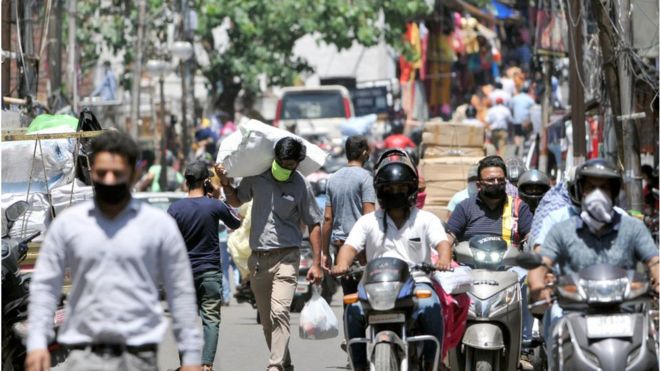 Image copyright GETTY IMAGES
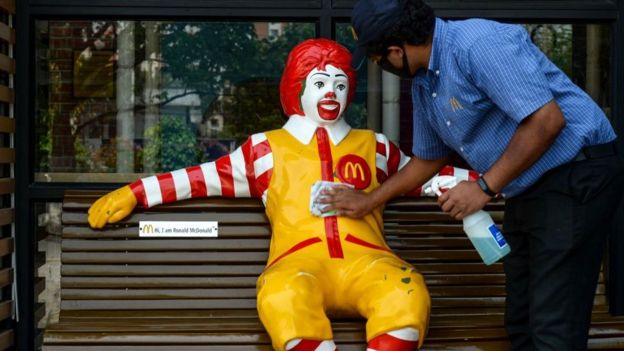 Image copyright GETTY IMAGES
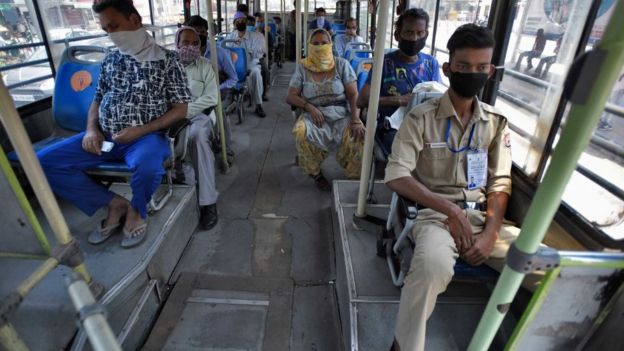 Image copyright GETTY IMAGES
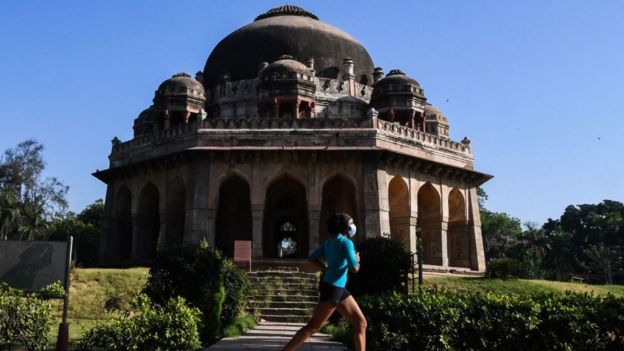 Image copyright GETTY IMAGES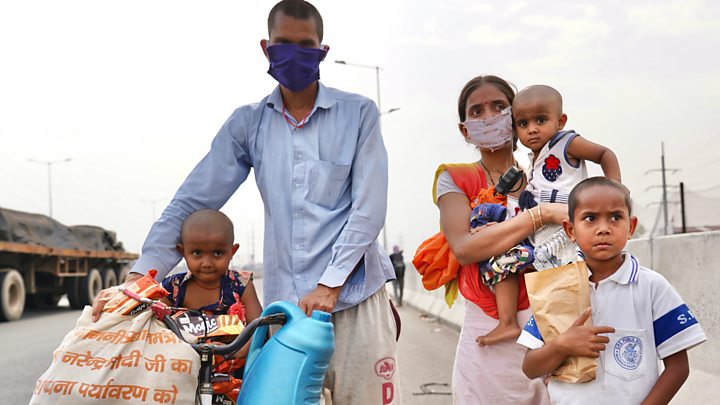
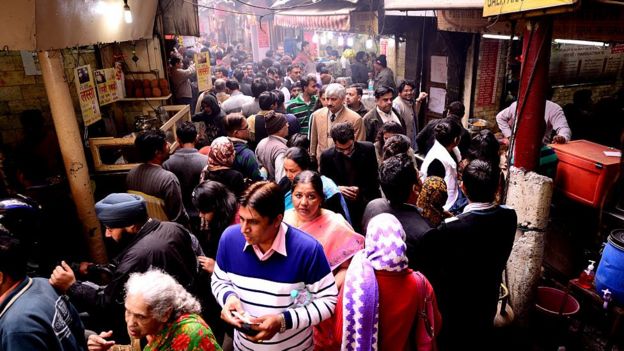 Image copyright GETTY IMAGES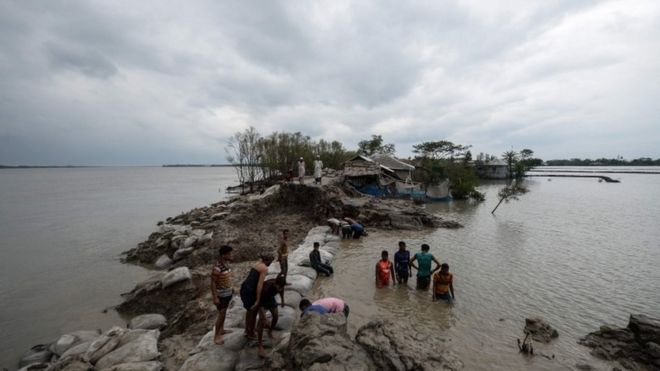







 CHINDIA ALERT: You'll be living in their world, very soon
Gandhi killer ‘patriot’ comment by BJP candidate draws outrage
India is in full election mode: voting began on 11 April, and the final ballot will be cast on 19 May with results out on 23 May. Every day, the BBC will be bringing you all the latest updates on the twists and turns of the world’s largest democracy.
Ruling party candidate calls Gandhi’s killer a patriot
What is happening?
Controversial Bharatiya Janata Party (BJP) politician Pragya Thakur has made headlines again. This time it was for calling Nathuram Godse – the man who assassinated Mahatma Gandhi – a “patriot”.
Her comment was made in response to a statement by southern actor-turned politician Kamal Haasan who had said India’s first “extremist” was a Hindu”, referring to Godse.
End of Twitter post by @ANI
His statement, made on Monday, was heavily criticised by the BJP, which accused him of indulging in “divisive politics” and filed a complaint against him with the Election Commission of India.
Why does this matter?
The BJP has responded by criticising Ms Thakur and asking her to publicly apologise.
“BJP does not agree with this statement, we condemn it. Party will ask her for clarification, she should apologise publicly for this statement,” party spokesperson GVL Narasimha Rao told reporters.
However, Ms Thakur’s comments do reflect the views of some right-wing Hindus who support the BJP and have long seen Gandhi as too moderate.
Godse, who shot Gandhi in the chest three times at point-blank range on 30 January 1948, was also an activist with nationalist right-wing groups, including those closely associated with the BJP.
Hindu hardliners in India accuse Gandhi of having betrayed Hindus by being too pro-Muslim, and even for the division of India and the bloodshed that marked Partition, which saw India and Pakistan created after independence from Britain in 1947.
Ms Thakur has seen her fair share of controversy. Her candidature caused outrage as she is an accused of involvement in a blast that killed seven people and injured 100 others. On 18 April, she said that police officer Hemant Karkare had died in the November 2008 Mumbai terror attacks because she had “cursed” him. She was then banned from campaigning for 72 hours as a result.
A team led by Mr Karkare had arrested her for questioning in connection with the Malegaon blast.
During her campaign, she also said she was “proud” of her part in the demolition of the 16th Century Babri mosque. In 1992, right-wing Hindu mobs razed the mosque to the ground, claiming it was built on the site of a temple destroyed by Muslim rulers. The site, which is in the city of Ayodhya, has been a religious flashpoint for Hindus and Muslims for decades.
Campaigning ends in West Bengal a day before deadline
What happened?
The Election Commission (EC) has told political parties to end their campaigning in West Bengal state, a day before the deadline in the wake of poll-related violence.
The campaign will end on Thursday at 10pm local time, and voting will be held on Sunday.
The decision comes after clashes broke out between the Bharatiya Janata Party (BJP) workers and protesters believed to be from the ruling Trinamool Congress (TMC) in Kolkata (formerly Calcutta) on Tuesday.
It happened during a roadshow of BJP chief Amit Shah. Several people were injured and vehicles were set on fire. A statue of renowned Bengali reformer Iswarchandra Vidyasagar was also vandalised in the clashes.
Both parties have accused each other of starting the violence.
Why does this matter?
The BJP welcomed the decision, saying it validated their argument that the state had “descended into anarchy” under the leadership of chief minister Mamata Banerjee.
Ms Banerjee said that the move was “undemocratic” and “it had insulted the people of Bengal”.
“Tomorrow, [Prime Minister Narendra] Modi has two meetings in Bengal. When he finishes, the campaigning also ends… Instead of punishing Amit Shah, the Election Commission has given a gift to the BJP,” she said.
Both parties are locked into a fierce election battle to win most out West Bengal’s 42 seats. Ms Banerjee has ambitions of becoming the prime minister in case a nationwide coalition of regional parties wins enough seats.
The state has also become crucial for the BJP as it’s trying to expand its reach in the eastern state. It won only two seats in the 2014 election.
The BJP performed well in northern states like Uttar Pradesh and Rajasthan in 2014, but this time it’s expected to suffer loses against a coalition of regional parties and the main opposition Congress.
So the party is trying to make up for the losses in West Bengal.
TMC, BJP accused each other of poll violence
What happened?
The war of words between West Bengal state chief minister Mamata Banerjee and the governing Bharatiya Janata Party (BJP) intensified ahead of voting on Sunday.
The latest verbal duel comes after violence was reported during BJP chief Amit Shah’s roadshow in Kolkata (formerly Calcutta) on Tuesday.
Clashes broke out between BJP supporters and protesters who were holding “Amit Shah go back” posters.
Some people suffered minor injuries and a few vehicles were set on fire.
The BJP said the protest was “orchestrated” and called it an “attempt to strangulate democracy”.
Why does this matter?
The eastern state has become politically crucial for the BJP as it has intensified campaigning in the past few days.
And that has sparked a feverish electoral battle between the BJP and Ms Banerjee’s Trinamool Congress (TMC).
“What does Amit Shah think of himself? Is he above everything? Is he god that no one can protest against him?” Ms Banerjee said.
In reply, Mr Shah accused the TMC of not following democratic norms during elections.
“Have faith in the people of Bengal that they’d face the TMC goons,” he said.
Prime Minister Narendra Modi is scheduled to hold more rallies in the coming days, so one can expect more verbal fireworks from the two leaders.
On Tuesday, the saga of the morphed Mamata meme continued
What happened?
India’s top court stepped in to release an activist belonging to India’s governing Bharatiya Janata Party (BJP) who was sent to prison for sharing a doctored image of West Bengal Chief Minister Mamata Banerjee.
Priyanka Sharma was sentenced to two weeks in prison on 10 May after she shared a picture of Bollywood star Priyanka Chopra and her husband Nick Jonas at the Met Gala – but with Ms Banerjee’s head superimposed on to Chopra’s body.
Earlier the court had said Ms Sharma could be released only if she apologised to Ms Banerjee, but later waived this condition.
Why does this matter?
The battle for West Bengal in this general election has been absolutely bruising.
The BJP, led by Prime Minister Narendra Modi himself, has been campaigning hard for votes in the state. This has brought them toe-to-toe with the state’s feisty chief minister. The fact that voting for West Bengal’s 42 seats has been split across all nine phases of voting has meant that the battle has been long and drawn-out.
And with just one phase to go before voting finally ends, the gloves are well and truly off. The two parties have traded insults on the campaign stage, their workers have attacked each other, and the violence on the ground has intensified. And now the battle has spread to cyberspace as well.
The country’s finance minister Arun Jaitley jumped at news of Ms Sharma’s release to call Ms Banerjee a dictator.
End of Twitter post by @arunjaitley
Analysts say that this political row is so bitter because the BJP has clearly identified West Bengal as one of the states where they may be able to make gains this election. This becomes more important for the party in the context of their fight in the politically crucial state of Uttar Pradesh, which sends the most number of MPs (80) to parliament.
They are up against a powerful coalition of regional parties there, and many expect them to lose seats as a result.
And PM Modi said Rahul Gandhi should be ashamed of 1984 riots
What happened?
Prime Minister Narendra Modi said that main opposition Congress party chief Rahul Gandhi should be “ashamed of himself” over his colleague’s remark on the 1984 anti-Sikh riots.
Mr Modi was replying to a controversial statement made by Sam Pitroda, who is a strategist of the Congress party.
In his reply to a question about the Congress’ role in the riots, Mr Pitroda had said “so what?”.
“I don’t think so, this is also another lie, and what about 1984? You speak about what you [Mr Modi] have done in five years. It [the riots] happened in 1984, so what?” he said.
Mr Gandhi said he was “ashamed” of Mr Pitroda’s statement, and asked him to apologise.
Mr Pitroda later said his statement was “twisted” and he did not mean to hurt sentiments.
But Mr Modi said the Congress chief “must apologise”.
“I was watching that naamdar [the dynast] told his guru that he should be ashamed of what he said. I want to ask naamdar, you pretended to scold your mentor for what? Because he exposed what was always in the Congress’s heart, and in the discussions of the naamdar family? Because he made public a family secret? Naamdar, it is you who should be ashamed,” Mr Modi said.
Why does this matter?
The controversy matters because it comes days ahead of voting for the 13 seats in the northern state of Punjab.
The BJP, which has formed a coalition with regional Shiromani Akali Dal, is locked in a bitter electoral battle with the ruling Congress in the state.
Sikhs are a majority in the state and the 1984 riots is still an emotional issue for many of them.
More than 3,000 Sikhs were killed in 1984 after the assassination of former prime minister Indira Gandhi by her Sikh bodyguards.
They were angry at her decision to send the army into the Golden Temple – Sikhism’s holiest shrine – to flush out militants earlier in the year.
The killing of Mrs Gandhi, who belonged to the Congress, saw mobs attack and murder members of the Sikh community across the country.
And both parties appear to be trying to come across as pro-Sikh ahead of the vote on 19 May.
On Sunday, Delhi voted but not enthusiastically
What happened?
Sunday saw India’s capital Delhi vote along with several other states in the polls – the penultimate phase of the country’s mammoth general election.
Voters turned out to vote, but in fewer numbers than they did in 2014. The election commission said that around 60% of the capital’s registered voters had actually cast ballots, which was about a five percent drop from 2014.
Delhi Chief Electoral Officer Ranbir Singh expressed disappointment, saying that the turnout did not match expectations.
Why does this matter?
The election commission is right to be disappointed – it had run a series of campaigns in the city, encouraging more people to vote.
But it was not as though polling in Delhi was an entirely smooth process. Some voters complained that their names were missing from electoral lists even though they had all the necessary documents. There were also reports that around 1,200 Electronic Voting Machines (EVMs) had malfunctioned across the city, delaying the polling process.
The fact that Delhi became a three-cornered contest after the main opposition Congress and the Aam Aadmi Party (AAP), which controls the Delhi state assembly, failed to stitch up an alliance may also have put voters off. Many analysts believe that this failure will only split voters who were against prime minister Narendra Modi’s Bharatiya Janata Party (BJP) and effectively hand them victory.
So they may have decided to just stay home, and not bother queuing up in the blistering heat – it touched 40C on Sunday.
Source: The BBC
Posted in Aam Aadmi Party (AAP), Amit Shah, Arun Jaitley, assassinated, Ayodhya, Babri mosque, Bharatiya Janata Party (BJP) politician, bjp candidate, Chief Minister, comment, Congress party chief, Delhi, Delhi Chief Electoral Officer, Election Commission, Election Commission (EC), Electronic Voting Machines (EVMs), extremist, finance minister, Gandhi killer, Hindu, Hindus, Indira Gandhi, Iswarchandra Vidyasagar, Kolkata, Kolkata / Calcutta, mahatma gandhi, Mamata Banerjee, Muslims, Nathuram Godse, outrage, patriot, PM Modi, Pragya Thakur, Priyanka Chopra, Priyanka Sharma, Punjab, rahul gandhi, Ranbir Singh, Sikh bodyguards, Trinamool Congress (TMC), Uncategorized, West Bengal | Leave a Comment »