Chindia Alert: You’ll be Living in their World Very Soon
aims to alert you to the threats and opportunities that China and India present. China and India require serious attention; case of ‘hidden dragon and crouching tiger’.
Without this attention, governments, businesses and, indeed, individuals may find themselves at a great disadvantage sooner rather than later.
The POSTs (front webpages) are mainly 'cuttings' from reliable sources, updated continuously.
The PAGEs (see Tabs, above) attempt to make the information more meaningful by putting some structure to the information we have researched and assembled since 2006.
People work at a construction site of a utility tunnel in Wuhan, central China’s Hubei Province, April 30, 2020. (Xinhua/Xiao Yijiu)
BEIJING, May 1 (Xinhua) — China is getting the world’s largest workforce back to work as the nationwide battle against COVID-19 has secured major strategic achievements.
The unprecedented fight has nurtured new trends in the workplace. For example, more attention is being paid to public health and e-commerce to boost consumption and emerging sectors brought by new applications based on the country’s rapid new infrastructure development of 5G networks and data centers.
In this aerial photo taken on April 29, 2020, representatives of frontline health workers fighting COVID-19 attend a bell-ringing ceremony at the Yellow Crane Tower, or Huanghelou, a landmark in Wuhan, central China’s Hubei Province. (Xinhua/Xiao Yijiu)
ANGELS OF PUBLIC HEALTH
Ye Man, head nurse of gastrointestinal department of Hubei General Hospital East District, one of the five remaining COVID-19 designated hospitals in Wuhan, is taking her first weeklong vacation since January.
The 34-year-old mother of two started to take a week off on Monday, one day after her hospital cleared all remaining confirmed COVID-19 patients. The nine ICU wards in her hospital had been kept occupied over the past several months.
Friday marked International Workers’ Day, and the start of China’s five-day public holiday. Ye said she planned to visit urban parks with her family during the holiday.
At her busiest point, she and her colleagues took care of a ward filled with 40 COVID-19 patients.
“It was a really tough time,” she recalled. She had to wear a protective gown and a mask for nine hours a day and be separated from her family to avoid possible cross-infections.
Wuhan, capital of central China’s Hubei Province and once hard hit by COVID-19, cleared all confirmed cases in hospitals on April 26. Over 42,000 medical workers mobilized nationwide to aid Hubei have contributed to achieving a decisive outcome in the fight to defend Hubei and Wuhan.
In an inspection tour to Wuhan on March 10, President Xi Jinping, also general secretary of the Communist Party of China Central Committee and chairman of the Central Military Commission, lauded medical workers as “the most beautiful angels” and “messengers of light and hope.”
To reward brave and dedicated medics, major tourist sites in Hubei are offering free entry to medical staff over the following two years.
Chinese President Xi Jinping, also general secretary of the Communist Party of China Central Committee and chairman of the Central Military Commission, learns about development of the black fungus industry in Jinmi Village of Xiaoling Township in Zhashui County, Shangluo City, northwest China’s Shaanxi Province, April 20, 2020. (Xinhua/Xie Huanchi)
LIVESTREAMING ANCHORS
“We have a new batch of supplies today. Those who did not get the goods should hurry to buy now,” said Li Xuying, a livestreaming anchorwoman selling agaric mushrooms in Zhashui, a small county deep in the Qinling Mountains in northwest China’s Shaanxi Province.
Li has been prepared for a boom of online shopping in the holiday, because online buyers rushed to her livestreaming website to place orders, after Xi inspected the county and chatted with her in the village of Jinmi during a recent tour to Shaanxi.
“I used to sell goods worth about 50,000 yuan (7,070 U.S. dollars) on average after a six-hour livestreaming session. Now the sales are 10 times that,” she said.
Li was one of the 10 sales staff sent by the local agricultural e-commerce firm to Chinese e-commerce platform Taobao’s headquarters for livestreaming training. She said livestreaming is effective in bridging buyers and farmers, through which viewers can watch planting and harvesting online.
With the number of netizens in China reaching 904 million in March, e-commerce has been one of the popular means of promoting the sale of farm produce and helping farmers shake off poverty. Despite the impact of COVID-19, the country is determined to eradicate absolute poverty by the end of this year.
Workers work at the construction site of a 5G base station at Chongqing Hi-tech Zone in Chongqing, southwest China, April 15, 2020. (Xinhua/Wang Quanchao)
HI-TECH WORKERS IN “NEW INFRASTRUCTURE” BUILDING
As an elasticity calculation engineer of Alibaba Cloud, Zhao Kun and his colleagues always stay on alert for high data flow, for example, brought by the anticipated online shopping spike during the holiday.
“The profession, which may sound obscure, is actually closely connected to everyone’s life, as cloud computing is the infrastructure supporting high-tech applications of artificial intelligence and blockchain,” said Zhao.
The Chinese leadership has underscored expediting “new infrastructure” development to boost industrial and consumption upgrading and catalyze new growth drivers.
Seizing the opportunities of industrial digitization and digital industrialization, China needs to expedite the construction of “new infrastructure” projects such as 5G networks and data centers, and deploy strategic emerging sectors and industries of the future including the digital economy, life health services and new materials, President Xi has said.
During the epidemic, Zhao and his colleagues expanded more than 100,000 cloud servers to ensure the stable operation of “cloud classrooms” and “cloud offices” for millions of people working and studying from home.
In the “new infrastructure” building, people like Zhao contribute to constructing the virtual infrastructure of an ecosystem, which enables e-commerce, e-payment, online teaching and the digital transformation of manufacturing and supply chain management.
In early April, China released a plan on promoting the transformation of enterprises toward digitalization and intelligence by further expanding the application of cloud and data technologies, to nurture new business models of the digital economy.
GUBEI WATER TOWN, China (Reuters) – The mock Qing dynasty village nestled below the Great Wall would normally be teeming with tourists on Labour Day, but the thin crowds on Friday showed that while China’s coronavirus epidemic has subsided, people’s fears could take longer to fade.
During holidays, some 100,000 visitors a day would traipse round the quaint stone-paved streets of Gubei Water Town, 110 kilometres (68 miles) northeast of Beijing. Its marketing manager reckoned on getting just a tenth of that number this year.
“People have concerns about the virus and are unwilling to travel long distances,” said Guo Baorong. For a start, there will be no international tourists this time, he said, noting foreigners would normally make up around 15% of visitors.
About 70% of China’s tourist attractions had reopened as of Thursday, according to China’s Ministry of Culture and Tourism, but all sites have had to cap visitors to 30% of designed capacity.
More sites, including the Forbidden City in Beijing, were set to reopen Friday.
Staff at the entrance to Gubei Water Town checked visitors’ temperatures and health tracking codes. And inside, lines on the ground directed tourists to stand one meter apart and stores used ropes to keep crowds from forming. Like everywhere in China since the lockdowns were imposed to stem the epidemic, everyone wore masks.
Still, in places where tourists squeezed together as the streets narrowed, staff shouted at them to spread out.
Some tourists enjoyed the smaller crowds.
Xiao Chen, a 24-year-old student wearing traditional Chinese garb known as “Hanfu” came to Gubei to take pictures around ancient architecture.
“It’s good to come out of the city. There was barely anyone in Gubei Water Town yesterday, and even today, it’s not crowded,” she said.
The tranquility may not last. Room bookings jumped on Thursday after Beijing and nearby areas began easing coronavirus restrictions, with about 90% of accommodation now reserved.
“We were not expecting that many people to come in,” said Guo.
– The last nine poverty-stricken county-level regions in east China’s Anhui Province have been removed from the country’s list of impoverished counties.
– This marks that all county-level regions in the Yangtze River Delta, consisting of Shanghai and the provinces of Jiangsu, Zhejiang and Anhui, have been officially lifted out of poverty for the first time in history.
HEFEI, April 29 (Xinhua) — Sitting in front of his smartphone, Zhang Chuanfeng touts dried sweet potatoes to viewers on China’s popular video-sharing app Douyin, also known as TikTok.
“These are made from sweet potatoes I grew myself. They are sweet and have an excellent texture,” said Zhang while livestreaming in Tangjiahui Township of Jinzhai County in east China’s Anhui Province. Tucked away in the boundless Dabie Mountains, the township used to have the biggest poor population in the county.
Aerial photo taken on April 16, 2020 shows residential buildings in Dawan Village of Jinzhai County, east China’s Anhui Province. (Xinhua/Liu Junxi)
Jinzhai County is among the last nine county-level regions in Anhui that have been removed from the country’s list of impoverished counties, according to an announcement issued by the provincial government Wednesday. They are also the last group of county-level regions that bid farewell to poverty in the Yangtze River Delta.
E-COMMERCE
Zhang might seem like a typical e-commerce businessman reaping success in China’s booming livestreaming industry. But his road to success has been a lot bumpier: he suffers from dwarfism.
A little more than 1.4 meters tall, Zhang has a babyface, making him “look like a junior school student,” he said. But the man, 38, is the father of a nine-year-old boy.
For Zhang, life was tough before 2014. “Nobody wanted me because of my ‘disabilities’ when I went out to look for jobs,” he said. “I was turned down again and again.”
Zhang was put on the government’s poverty list in 2014 as China implemented targeted poverty-relief measures. With the help of local officials, he got a bank loan of 10,000 yuan (about 1,400 U.S. dollars) and bought 22 lambs. He tended the animals whole-heartedly and seized every opportunity to learn how to raise them more professionally.
Zhang Chuanfeng feeds his lambs in Zhufan Village of Jinzhai County, east China’s Anhui Province, April 26, 2017. (Xinhua/Zhang Duan)
Within a year, the number of his lambs expanded to hundreds. In 2016, Zhang’s earnings exceeded 100,000 yuan, more than enough for him to cast off poverty.
Riding on this success, Zhang began to seek new opportunities. He rented a shop and started selling products online to embrace an e-commerce strategy the local government introduced in 2017.
More than 100 online shops, including Zhang’s, in the county have helped more than 7,000 poverty-stricken households sell about 73 million yuan worth of local specialties since 2018. Zhang alone earned 500,000 yuan from a sales revenue of 5 million yuan last year.
A villager arranges local specialties for sale at Dawan Village of Jinzhai County, east China’s Anhui Province, April 17, 2020. (Xinhua/Liu Junxi)
WICKERWORK SUCCESS
About 100 km north of Jinzhai lies Funan, a place that used to be vulnerable to constant floods.
Zhang Chaoling, who lives by the Huaihe River in Funan County, had to flee her hometown at a young age due to floods, but has flourished on a willow plantation along the river later.
“The land is largely covered by silt following continual flooding in the past. It is an ideal place to plant willows and make wickerwork,” Zhang said.
Zhang left her hometown for Guangzhou in 1993 and found a job in a garment factory. A few years later, she founded a trading company with her husband in Guangzhou, selling wickerwork products from her hometown to other countries.
Zhang returned to her hometown and set up a wickerwork production base in 2011. Funan is famous for its delicate wickerwork. Skilled craftsmen traditionally use local willow as a raw material to weave products such as baskets, furniture and home decorations.
A villager arranges wickerwork products in Funan County, east China’s Anhui Province, April 15, 2020. (Photo by Zhou Mu/Xinhua)
“The flood is well controlled now. I remember the last huge flood came in 2007,” Zhang said.
Taking advantage of the fertile land along the Huaihe River, she plants over 130 hectares of willow trees and employs hundreds of locals mostly in their 50s and 60s.
“I can process 100 to 150 kg of willow twigs per day, from which I make around 80 yuan,” said Geng Shifen, who peels willow twigs with a clamp next to the plantation.
A total of 130,000 people are engaged in the wickerwork industry in Funan, creating an output of nearly 9 billion yuan in 2019, and helping 15,000 locals shake off poverty, local statistics showed.
POVERTY REDUCTION FEAT
The Anhui provincial government Wednesday announced that its last nine county-level regions including Jinzhai and Funan are removed from the country’s list of impoverished counties.
This marks that all 31 impoverished county-level regions in Anhui have shaken off poverty, echoing China’s efforts to eradicate absolute poverty by the end of 2020.
With the announcement, all county-level regions in the Yangtze River Delta have been officially lifted out of poverty for the first time in history.
A bus runs on a rural road in Jinzhai County, east China’s Anhui Province, April 17, 2020. (Xinhua/Liu Junxi)
Covering a 358,000-square-km expanse, the Yangtze River Delta, consisting of Shanghai and the provinces of Jiangsu, Zhejiang and Anhui, is one of the most populated and economically dynamic areas in China, contributing one-fourth of the country’s GDP.
Anhui had a population of 63.65 million as of 2019, official data showed. The poor population in the province had decreased from 4.84 million in 2014 to 87,000 in 2019, and the poverty headcount ratio had been reduced from 9.1 percent to 0.16 percent during the period, according to the provincial poverty relief office.
A county can be removed from the list if its impoverished population drops to less than 2 percent, according to a national mechanism established in April 2016 to eliminate poverty in affected regions. The ratio can be loosened to 3 percent in the western region.
By the end of 2019, 5.51 million people in China were still living in poverty.
“We will continue our work to prevent people from returning to poverty, and help the remaining poor population shake off poverty by all means,” said Jiang Hong, director of the Anhui provincial poverty relief office.
BEIJING/SHANGHAI (Reuters) – China’s biggest listed banks posted higher profits in the first quarter despite the wider impact of the coronavirus pandemic on the economy, though margins shrank.
The world’s largest commercial lender Industrial and Commercial Bank of China Ltd (ICBC) (601398.SS)(1398.HK) on Tuesday reported a 3.04% rise in first quarter net profit compared to a year earlier, while Bank of Communications Co Ltd (BoCom) (601328.SS)(3328.HK) reported a 1.8% rise.
Meanwhile at Agricultural Bank of China Ltd (AgBank) (1288.HK)(601288.SS) and China Construction Bank Ltd (CCB) (601939.SS)(0939.HK), first quarter net profit rose 4.79% and 5% respectively from the same period last year.
Following suit, Bank of China Ltd (BOC) (601988.SS) (3988.HK) posted on Wednesday a 3.17% rise in first-quarter net profit.
The growth came despite China’s economy posting the first quarterly contraction since at least 1992 due to the coronavirus pandemic. The government restricted people from travelling and going back to work to contain the spread of the virus, reducing revenue for companies and income for residents.
China’s largest banks are historically more resilient than their smaller kin, as they lend more to state-backed enterprises and have larger capital reserves.
However, despite this firmer base, net interest margins shrank at four of the five lenders, as loan prime rate reform and looser monetary policy weighed, said analysts.
AgBank did not report its net interest margin, the difference between what banks pay on deposits and earn on loans.
SOURED DEBT
ICBC, AgBank and CCB bucked the trend of the wider banking sector by posting steady non-performing loan (NPL) ratios.
The banking sector’s NPL ratio climbed in the first quarter to 2.04%, the banking and insurance regulator said, the highest level since the global financial crisis.
The rise came despite Chinese regulators moving to give banks leeway, allowing them to postpone some loan repayments until the end of June, as credit card and mortgage defaults surged.
About one-third of Chinese bank loans are to sectors including transport and retail that are significantly stressed by the pandemic, according to S&P Global.
“You can see generally from banks’ results that some lenders have reported falling asset quality, the NPL ratios have risen quite a lot,” said Richard Cao, an analyst at Guotai Junan International on Monday.
The largest banks are best placed to absorb such losses with a better ability to get financing and withstand a substantial volume of bad loans, S&P said in a research note in April.
NEW YORK/SAN FRANCISCO (Reuters) – Amazon.com Inc (AMZN.O) has bought cameras to take temperatures of workers during the coronavirus pandemic from a firm the United States blacklisted over allegations it helped China detain and monitor the Uighurs and other Muslim minorities, three people familiar with the matter told Reuters.
China’s Zhejiang Dahua Technology Co Ltd (002236.SZ) shipped 1,500 cameras to Amazon this month in a deal valued close to $10 million, one of the people said. At least 500 systems from Dahua – the blacklisted firm – are for Amazon’s use in the United States, another person said.
The Amazon procurement, which has not been previously reported, is legal because the rules control U.S. government contract awards and exports to blacklisted firms, but they do not stop sales to the private sector.
However, the United States “considers that transactions of any nature with listed entities carry a ‘red flag’ and recommends that U.S. companies proceed with caution,” according to the Bureau of Industry and Security’s website. Dahua has disputed the designation.
The deal comes as the U.S. Food and Drug Administration warned of a shortage of temperature-reading devices and said it wouldn’t halt certain pandemic uses of thermal cameras that lack the agency’s regulatory approval. Top U.S.-based maker FLIR Systems Inc (FLIR.O) has faced an up to weeks-long order backlog, forcing it to prioritize products for hospitals and other critical facilities.
Amazon declined to confirm its purchase from Dahua, but said its hardware complied with national, state and local law, and its temperature checks were to “support the health and safety of our employees, who continue to provide a critical service in our communities.”
The company added it was implementing thermal imagers from “multiple” manufacturers, which it declined to name. These vendors include Infrared Cameras Inc, which Reuters previously reported, and FLIR, according to employees at Amazon-owned Whole Foods who saw the deployment. FLIR declined to comment on its customers.
Dahua, one of the biggest surveillance camera manufacturers globally, said it does not discuss customer engagements and it adheres to applicable laws. Dahua is committed “to mitigate the spread of the COVID-19” through technology that detects “abnormal elevated skin temperature — with high accuracy,” it said in a statement.
The U.S. Department of Commerce, which maintains the blacklist, declined comment. The FDA said it would use discretion when enforcing regulations during the public health crisis as long as thermal systems lacking compliance posed no “undue risk” and secondary evaluations confirmed fevers.
Dahua’s thermal cameras have been used in hospitals, airports, train stations, government offices and factories during the pandemic. International Business Machines Corp (IBM.N) placed an order for 100 units, and the automaker Chrysler placed an order for 10, one of the sources said. In addition to selling thermal technology, Dahua makes white-label security cameras resold under dozens of other brands such as Honeywell, according to research and reporting firm IPVM.
Honeywell said some but not all its cameras are manufactured by Dahua, and it holds products to its cybersecurity and compliance standards. IBM and Chrysler’s parent Fiat Chrysler Automobiles NV (FCHA.MI) did not comment.
The Trump Administration added Dahua and seven other tech firms last year to the blacklist for acting against U.S. foreign policy interests, saying they were “implicated” in “China’s campaign of repression, mass arbitrary detention, and high-technology surveillance against Uighurs, Kazakhs, and other members of Muslim minority groups.”
More than one million people have been sent to camps in the Xinjiang region as part of China’s campaign to root out terrorism, the United Nations has estimated.
Dahua has said the U.S. decision lacked “any factual basis.” Beijing has denied mistreatment of minorities in Xinjiang and urged the United States to remove the companies from the list.
A provision of U.S. law, which is scheduled to take effect in August, will also bar the federal government from starting or renewing contracts with a company using “any equipment, system, or service” from firms including Dahua “as a substantial or essential component of any system.”
Amazon’s cloud unit is a major contractor with the U.S. intelligence community, and it has been battling Microsoft Corp (MSFT.O) for an up to $10 billion deal with the Pentagon.
Top industry associations have asked Congress for a year-long delay because they say the law would reduce supplies to the government dramatically, and U.S. Secretary of State Mike Pompeo said last week that policies clarifying the implementation of the law were forthcoming.
FACE DETECTION & PRIVACY
The coronavirus has infected staff from dozens of Amazon warehouses, ignited small protests over allegedly unsafe conditions and prompted unions to demand site closures. Temperature checks help Amazon stay operational, and the cameras – a faster, socially distant alternative to forehead thermometers – can speed up lines to enter its buildings. Amazon said the type of temperature reader it uses varies by building.
To see if someone has a fever, Dahua’s camera compares a person’s radiation to a separate infrared calibration device. It uses face detection technology to track subjects walking by and make sure it is looking for heat in the right place.
An additional recording device keeps snapshots of faces the camera has spotted and their temperatures, according to a demonstration of the technology in San Francisco. Optional facial recognition software can fetch images of the same subject across time to determine, for instance, who a virus patient may have been near in a line for temperature checks.
Amazon said it is not using facial recognition on any of its thermal cameras. Civil liberties groups have warned the software could strip people of privacy and lead to arbitrary apprehensions if relied on by police. U.S. authorities have also worried that equipment makers like Dahua could hide a technical “back door” to Chinese government agents seeking intelligence.
In response to questions about the thermal systems, Amazon said in a statement, “None of this equipment has network connectivity, and no personal identifiable information will be visible, collected, or stored.”
Dahua made the decision to market its technology in the United States before the FDA issued the guidance on thermal cameras in the pandemic. Its supply is attracting many U.S. customers not deterred by the blacklist, according to Evan Steiner, who sells surveillance equipment from a range of manufacturers in California through his firm EnterActive Networks LLC.
“You’re seeing a lot of companies doing everything that they possibly can preemptively to prepare for their workforce coming back,” he said.
BEIJING (Reuters) – China’s factory activity likely rose for a second straight month in April as more businesses re-opened from strict lockdowns implemented to contain the coronavirus outbreak, which has now paralysed the global economy.
The official manufacturing Purchasing Manager’s Index (PMI), due for release on Thursday, is forecast to fall to 51 in April, from 52 in March, according to the median forecast of 32 economists polled by Reuters. A reading above the 50-point mark indicates an expansion in activity.
While the forecast PMI would show a slight moderation in China’s factory activity growth, it would be a stark contrast to recent PMIs in other economies, which plummeted to previously unimaginable lows.
That global slump, caused by heavy government-ordered lockdowns, as well as the cautious resumption of business in China, suggests any recovery in the world’s second-largest economy is likely to be some way off.
“The recovery so far has been led by a bounce-back in production, however, the growth bottleneck has decisively shifted to the demand side, as global growth has weakened and consumption recovery has lagged amid continued social distancing,” Morgan Stanley said in a note.
“The expected slump in external demand has likely capped further recovery in industrial production.”
The latest official data showed 84% of mid-sized and small business had reopened as of April 15, compared with 71.7% on March 24.
Hobbled by the coronavirus, China’s economy shrank 6.8% in the first quarter from a year earlier, the first contraction since current quarterly records began.
That has left Chinese manufacturers with reduced export orders and a logistics logjam, as many exporters grapple with rising inventory, high costs and falling profits. Some have let workers go as part of the cost-cutting efforts.
A China-based brokerage Zhongtai Securities estimated that the country’s real unemployment rate, measured using international standards, could exceed 20%, equal to more than 70 million job losses and much higher than March’s official reading of 5.9%.
Sheng Laiyun, deputy head at the statistics bureau, said on Sunday migrant workers and college graduates are facing increasing pressures to secure jobs, while official jobless surveys show nearly 20% of employed workers not working in March.
Chinese authorities have rolled out more support to revive the economy. The People’s Bank of China earlier in April cut the amount of cash banks must hold as reserves and reduced the interest rate on lenders’ excess reserves.
Photo taken with a mobile phone on April 24, 2020 shows a handover ceremony of medical equipment donated by China Railway Rolling Stock Corporation (CRRC) Zhuzhou Locomotive Co. Ltd. in Berlin, Germany. China Railway Rolling Stock Corporation (CRRC), the world’s largest rolling stock manufacturer by production volume, donated a shipment of medical equipment to Germany via the German Red Cross on Friday to help the country fight the coronavirus. Responding to the call from the German government and the Chinese Embassy in Germany, and in accordance with an arrangement between CRRC and CRRC Zhuzhou Locomotive Co. Ltd. (CRRC ZELC), the company donated 1,000 protective suits, 20,000 FFP2 masks and 80,000 surgical masks. (CRRC ZELC/Handout via Xinhua)
BERLIN, April 24 (Xinhua) — China Railway Rolling Stock Corporation (CRRC), the world’s largest rolling stock manufacturer by production volume, donated a shipment of medical equipment to Germany via the German Red Cross on Friday to help the country fight the coronavirus.
Responding to the call from the German government and the Chinese Embassy in Germany, and in accordance with an arrangement between CRRC and CRRC Zhuzhou Locomotive Co. Ltd. (CRRC ZELC), the company donated 1,000 protective suits, 20,000 FFP2 masks and 80,000 surgical masks.
CRRC ZELC said that the donated materials will be distributed to medical staff and volunteers who are fighting the pandemic on the frontlines.
Cheng Jian, general manager of CRRC ZELC Verkehrstechnik GmbH, said that the only way to overcome the crisis is to unite strengths and meet the challenges together.
“We wish to undertake our social responsibility as part of the community. We firmly believe that with joint efforts of the international community, Germany will quickly overcome the crisis, and production and life will return to normal soon,” Cheng said.
According to Jens Quade, president of the Mueggelspree regional branch of the German Red Cross, the risk of new coronavirus infections could be reduced through the generous donation from CRRC ZELC.
“The donated material will be distributed to the Berlin Red Cross, Berlin hospitals and/or medical institutions. We will do our best to provide the necessary assistance to the people who are most in need,” Quade said.
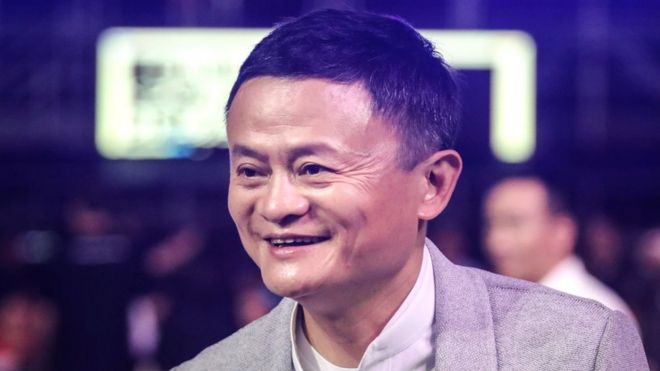
The richest man in China opened his own Twitter account last month, in the middle of the Covid-19 outbreak. So far, every one of his posts has been devoted to his unrivalled campaign to deliver medical supplies to almost every country around the world.
“One world, one fight!” Jack Ma enthused in one of his first messages. “Together, we can do this!” he cheered in another.
The billionaire entrepreneur is the driving force behind a widespread operation to ship medical supplies to more than 150 countries so far, sending face masks and ventilators to many places that have been elbowed out of the global brawl over life-saving equipment.
But Ma’s critics and even some of his supporters aren’t sure what he’s getting himself into. Has this bold venture into global philanthropy unveiled him as the friendly face of China’s Communist Party? Or is he an independent player who is being used by the Party for propaganda purposes? He appears to be following China’s diplomatic rules, particularly when choosing which countries should benefit from his donations, but his growing clout might put him in the crosshairs of the jealous leaders at the top of China’s political pyramid.
Other tech billionaires have pledged more money to fight the effects of the virus – Twitter’s Jack Dorsey is giving $1bn (£0.8bn) to the cause. Candid, a US-based philanthropy watchdog that tracks private charitable donations, puts Alibaba 12th on a list of private Covid-19 donors. But that list doesn’t include shipments of vital supplies, which some countries might consider to be more important than money at this stage in the global outbreak.
The world’s top coronavirus financial donors
How Alibaba compares to the top five. No one else other than the effervescent Ma is capable of dispatching supplies directly to those who need them. Starting in March, the Jack Ma foundation and the related Alibaba foundation began airlifting supplies to Africa, Asia, Europe, Latin America and even to politically sensitive areas including Iran, Israel, Russia and the US.
Ma has also donated millions to coronavirus vaccine research and a handbook of medical expertise from doctors in his native Zhejiang province has been translated from Chinese into 16 languages. But it’s the medical shipments that have been making headlines, setting Ma apart.
“He has the ability and the money and the lifting power to get a Chinese supply plane out of Hangzhou to land in Addis Ababa, or wherever it needs to go,” explains Ma’s biographer, Duncan Clark. “This is logistics; this is what his company, his people and his province are all about.”
A friendly face
Jack Ma is famous for being the charismatic English teacher who went on to create China’s biggest technology company. Alibaba is now known as the “Amazon of the East”. Ma started the company inside his tiny apartment in the Chinese coastal city of Hangzhou, in the centre of China’s factory belt, back in 1999. Alibaba has since grown to become one of the dominant players in the world’s second largest economy, with key stakes in China’s online, banking and entertainment worlds. Ma himself is worth more than $40bn.
Officially, he stepped down as Alibaba’s chairman in 2018. He said he was going to focus on philanthropy. But Ma retained a permanent seat on Alibaba’s board. Coupled with his wealth and fame, he remains one of the most powerful men in China.
Media caption The BBC’s Secunder Kermani and Anne Soy compare how prepared Asian and African countries are
It appears that Ma’s donations are following Party guidelines: there is no evidence that any of the Jack Ma and Alibaba Foundation donations have gone to countries that have formal ties with Taiwan, China’s neighbour and diplomatic rival. Ma announced on Twitter that he was donating to 22 countries in Latin America. States that side with Taiwan but who have also called for medical supplies – from Honduras to Haiti – are among the few dozen countries that do not appear to be on the list of 150 countries. The foundations repeatedly refused to provide a detailed list of countries that have received donations, explaining that “at this moment in time, we are not sharing this level of detail”.
However, the donations that have been delivered have certainly generated a lot of goodwill. With the exception of problematic deliveries to Cuba and Eritrea, all of the foundations’ shipments dispatched from China appear to have been gratefully received. That success is giving Ma even more positive attention than usual. China’s state media has been mentioning Ma almost as often as the country’s autocratic leader, Xi Jinping.
AFP
So far…
Over 150 countries have received donations from Jack Ma, including about:
120.4mface masks
4,105,000testing kits
3,704ventilators
Source: Alizila
It’s an uncomfortable comparison. As Ma soaks up praise, Xi faces persistent questions about how he handled the early stages of the virus and where, exactly, the outbreak began.
The Chinese government has dispatched medical teams and donations of supplies to a large number of hard-hit countries, particularly in Europe and South-East Asia.
However, those efforts have sometimes fallen flat. China’s been accused of sending faulty supplies to several countries. In some cases, the tests it sent were being misused but in others, low-quality supplies went unused and the donations backfired.
In contrast, Jack Ma’s shipments have only boosted his reputation.
“It’s fair to say that Ma’s donation was universally celebrated across Africa,” says Eric Olander, managing editor of the China Africa Project website and podcast. Ma pledged to visit all countries in Africa and has been a frequent visitor since his retirement.
“What happens to the materials once they land in a country is up to the host government, so any complaints about how Nigeria’s materials were distributed are indeed a domestic Nigerian issue,” Olander adds. “But with respect to the donation itself, the Rwandan leader, Paul Kagame, called it a “shot in the arm” and pretty much everyone saw it for what it was which was: delivering badly-needed materials to a region of the world that nobody else is either willing or capable of helping at that scale.”
Walking the tightrope
But is Ma risking a backlash from Beijing? Xi Jinping isn’t known as someone who likes to share the spotlight and his government has certainly targeted famous faces before. In recent years, the country’s top actress, a celebrated news anchor and several other billionaire entrepreneurs have all “disappeared” for long periods. Some, including the news anchor, end up serving prison sentences. Others re-emerge from detention, chastened and pledging their allegiance to the Party.
“There’s a rumour that [Jack Ma] stepped down in 2018 from being the chairman of the Alibaba Group because he was seen as a homegrown entrepreneur whose popularity would eclipse that of the Communist Party,” explains Ashley Feng, research associate at the Centre for New American Security in Washington DC. Indeed, Ma surprised many when he suddenly announced his retirement in 2018. He has denied persistent rumours that Beijing forced him out of his position.
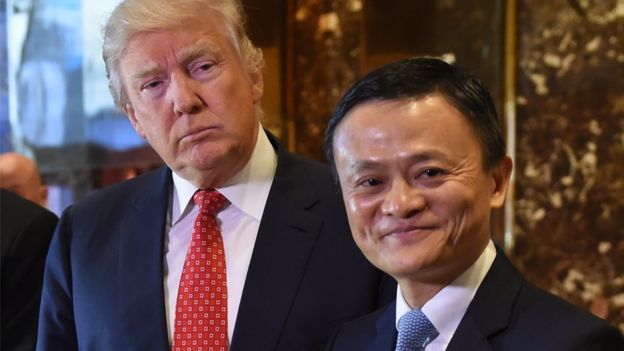
Image copyright GETTY IMAGESImage caption Ma discussed trade with then-President-elect Donald Trump in January 2017
Duncan Clark, Ma’s biographer, is also aware of reports that Ma was nudged away from Alibaba following a key incident in January 2017. The Chinese billionaire met with then-President-elect Donald Trump in Trump Tower, ostensibly to discuss Sino-US trade. The Chinese president didn’t meet with Trump until months later.
“There was a lot of speculation of time that Jack Ma had moved too fast,” Clark says. “So, I think there’s lessons learned from both sides on the need to try to coordinate.”
“Jack Ma represents a sort of entrepreneurial soft power,” Clark adds. “That also creates challenges though, because the government is quite jealous or nervous of non-Party actors taking that kind of role.”
Technically, Ma isn’t a Communist outsider: China’s wealthiest capitalist has actually been a member of the Communist Party since the 1980s, when he was a university student.
But Ma’s always had a tricky relationship with the Party, famously saying that Alibaba’s attitude towards the Party was to “be in love with it but not to marry it”.
Even if Ma and the foundations connected to him are making decisions without Beijing’s advance blessing, the Chinese government has certainly done what it can to capitalise on Ma’s generosity. Chinese ambassadors are frequently on hand at airport ceremonies to receive the medical supplies shipped over by Ma, from Sierra Leone to Cambodia.
China has also used Ma’s largesse in its critiques of the United States. “The State Department said Taiwan is a true friend as it donated 2 million masks,” the Chinese Foreign Ministry tweeted in early April. “Wonder if @StateDept has any comment on Jack Ma’s donation of 1 million masks and 500k testing kits as well as Chinese companies’ and provinces’ assistance?”
Perhaps Ma can rise above what’s happened to so many others who ran afoul of the Party. China might just need a popular global Chinese figure so much that Ma has done what no one else can: make himself indispensable.
“Here’s the one key takeaway from all that happened with Jack Ma and Africa: he said he would do something and it got done,” explains Eric Olander. “That is an incredibly powerful optic in a place where foreigners often come, make big promises and often fail to deliver. So, the huge Covid-19 donation that he did fit within that pattern. He said he would do it and mere weeks later, those masks were in the hands of healthcare workers.”
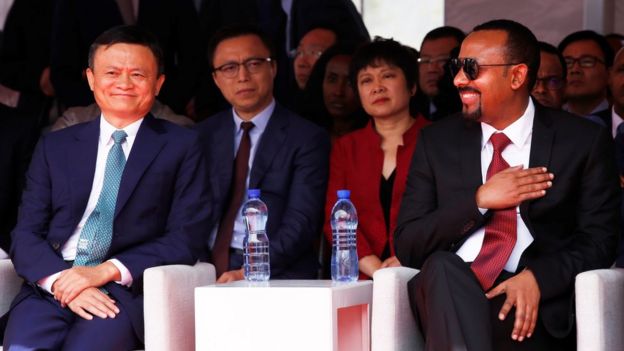
Image copyright GETTY IMAGESImage caption Ma at an Electronic World Trade Platform event with Ethiopian Prime Minister Abiy Ahmed last year
Duncan Clark argues that Ma already had a seat at China’s high table because of Alibaba’s economic heft. However, his first-name familiarity with world leaders makes him even more valuable to Beijing as China tries to repair its battered image.
“He has demonstrated the ability, with multiple IPOs under his belt, and multiple friendships overseas, to win friends and influence people. He’s the Dale Carnegie of China and that certainly, we’ve seen that that’s irritated some in the Chinese government but now it’s almost an all hands on deck situation,” Clark says.
There’s no doubt that China’s wider reputation is benefiting from the charitable work of Ma and other wealthy Chinese entrepreneurs. Andrew Grabois from Candid, the philanthropic watchdog that’s been measuring global donations in relation to Covid-19, says that the private donations coming from China are impossible to ignore.
“They’re taking a leadership role, the kind of thing that used to be done by the United States,” he says. “The most obvious past example is the response to Ebola, the Ebola outbreak in 2014. The US sent in doctors and everything to West Africa to help contain that virus before it left West Africa.”
Chinese donors are taking on that role with this virus.
“They are projecting soft power beyond their borders, going into areas, providing aid, monetary aid and expertise,” Grabois adds.
So, it’s not the right time for Beijing to stand in Jack Ma’s way.
“You know, this is a major crisis for the world right now,” Duncan Clark concludes. “But obviously, it’s also a crisis for China’s relationship with the rest of the world. So they need anybody who can help dampen down some of these those pressures.”
SHANGHAI (Reuters) – China’s smog-prone northern province of Hebei met its air quality targets by a big margin over the winter after concerted efforts to tackle emissions, a local official said on Sunday, without mentioning coronavirus-related factory shutdowns.
Average PM2.5 concentrations over the October-March period dropped 15% from a year earlier to 61 micrograms per cubic metre, while sulphur dioxide also fell by a third, said He Litao, vice-head of the provincial environmental bureau.
Most experts have attributed the significant decline in air pollution throughout China in the first quarter to the coronavirus outbreak and tough containment measures, which saw cities and entire provinces locked down and sharply reduced traffic and industrial activity throughout the country.
With millions staying at home, concentrations of lung-damaging PM2.5 particles fell by nearly 15% in more than 300 Chinese cities in the first three months of 2020.
Shanghai saw emissions fall by nearly 20% in the first quarter, while in Wuhan, where the pandemic originated, monthly averages dropped more than a third compared to last year.
However, He of the Hebei environmental bureau attributed the local decline in pollution to the “conscientious implementation” of government decisions even in the face of unfavourable weather conditions.
According to a winter action plan published last year, 10 cities in Hebei were expected to cut lung-damaging small particles known as PM2.5 by 1%-6% compared to the previous year.
Despite the decline, average PM2.5 was still much higher than China’s official standard of 35 micrograms, and the recommended World Health Organization level of 10 micrograms.
KATHMANDU, April 19 (Xinhua) — A German scholar has recently found that the right to education for Uygurs and people of other ethnic groups is well protected in China’s Xinjiang region, as young people there enjoy increasingly better opportunities.
Michael Heinrich, who has been teaching German in Minzu University of China for more than five years, said in an article published on Online Khabar news website in March that he has “paid close attention to the development of Chinese education in recent years, especially the education situation in ethnic minority areas.”
Heinrich said he has taught a Xinjiang Uygur student, who often talks with him about the education situation in her hometown and appreciates government policies on education.
The Uygur student has told Heinrich that she lives in a place where she receives Islamic religious education and China’s nine-year compulsory education, and the Uygur students in Xinjiang can enjoy preferential policies, such as extra points in college entrance examination, special policies for college admissions, and employment policy support.
In recent years, the Chinese government has intensified policy support on education in Xinjiang Uygur Autonomous Region, and increased investment in educational resources, especially those on vocational education, the article read.
“Through vocational education, more Uyghur Muslim students can enhance their survival skills and work harder by themselves and improve their living standards with these hands,” it said.
For some time, Xinjiang has been plagued by terrorism, religious extremism and separatism, according to the passage, and carrying out vocational education and training in Xinjiang is an effective measure to promote the rule of law and a practical action to protect the vital interests of people of all ethnic groups there.
It is also a just move in fighting extremism and terrorism to contribute to the stability in Xinjiang, it added.
Some Western media outlets as well as some U.S. politicians often slander the Chinese government under the guise of “human rights,” which does not only disregard the facts but also interferes with China’s sovereignty, Heinrich pointed out.
The situation in Xinjiang that they saw was completely different from the stories told by some Western politicians and media, Heinrich quoted some people who have visited Xinjiang and witnessed its development as saying.
The rights to life and development of people of all ethnic groups in Xinjiang are protected to the largest extent, Heinrich added.






 CHINDIA ALERT: You'll be living in their world, very soon