Chindia Alert: You’ll be Living in their World Very Soon
aims to alert you to the threats and opportunities that China and India present. China and India require serious attention; case of ‘hidden dragon and crouching tiger’.
Without this attention, governments, businesses and, indeed, individuals may find themselves at a great disadvantage sooner rather than later.
The POSTs (front webpages) are mainly 'cuttings' from reliable sources, updated continuously.
The PAGEs (see Tabs, above) attempt to make the information more meaningful by putting some structure to the information we have researched and assembled since 2006.
Visitors tour the desert on camels at Shapotou Scenic Area in Zhongwei, northwest China’s Ningxia Hui Autonomous Region, Oct. 3, 2019. Since the start of the National Day holiday, Shapotou Scenic Area has entered its peak season for tourism. (Photo by Yang Zhisen/Xinhua)
Chinese geologists think they have formula that could help to increase control of market in the elements hi-tech industries depend upon
Simple combination of clay mined for porcelain production, granite bedrock and acid rain could point to lucrative sources of rare earths
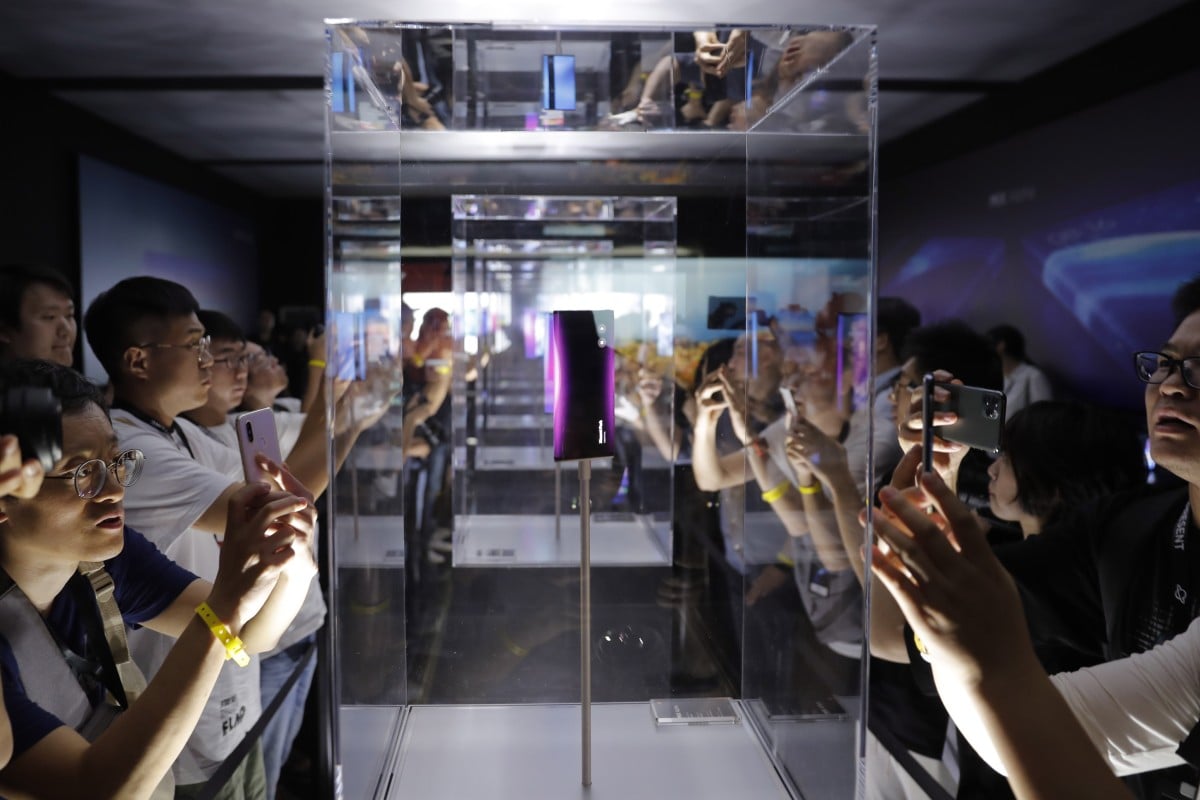
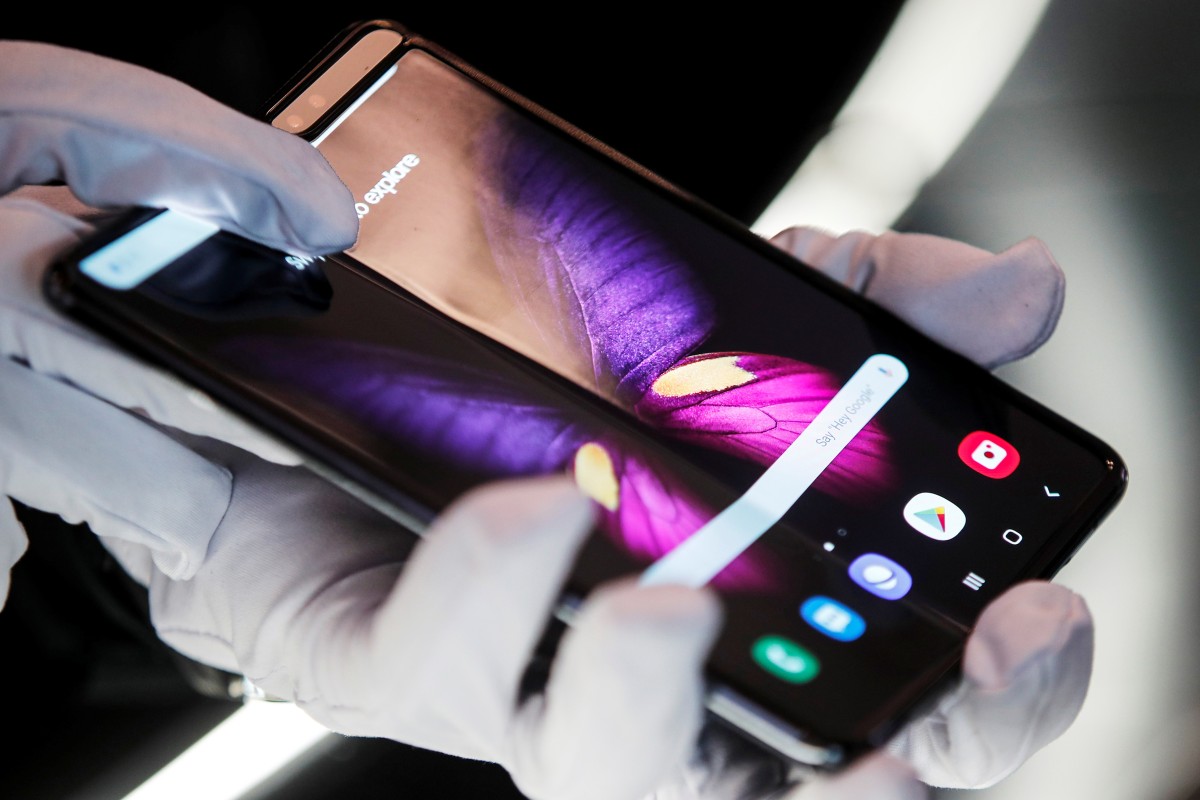
China has 80 per cent of the reserves of rare earth elements the world needs to keep talking on its smartphones, and geologists in Guangzhou think they know why. Photo: EPA
Geologists in southern China say they have isolated a series of critical factors that could make it easier to find rare earth elements used in hi-tech consumer goods such as smartphones.
China has more than 80 per cent of the world’s reserves of heavy rare earths such as terbium, dysprosium and holmium concentrated in a few provinces to the south of the country.
The reason for the concentration is one of the biggest puzzles in geology, but researchers at the Guangzhou Institute of Geochemistry in Guangdong province say the answer may be found in a combination of clay deposits, acid rain and granite that is distinctive to southern China.
Professor He Hongping and his colleagues came to the conclusion by testing the interaction between rare earths and different types of clay. Through their research they found that kaolinite – or china clay – was the best at absorbing rare earths from water.
The clay, named after Gaoling village near Jingdezhen, a centuries-old ceramic production centre in east China’s Jiangxi province, is a raw material for porcelain production.
While kaolinite is found in many countries, those places do not have rare earth deposits – probably because of the lack of acid rain, He said.
“You need the right environment.”
He said that rocks that contained tiny amounts of rare earth elements weathered faster in an acid environment, but the acidity could not be too high or the rare earth might run off before it could be captured by the clay.
Why Beijing cut tax rate on rare earths amid trade war
Rainwater with the right natural acidity often occurred in areas around 20 degrees latitude, such as southern China, he said.
The last step was to locate the source rock. Granite formed in volcanic eruptions between 100 million and 200 million years ago is considered to be the main source of rare earths.
He said that part of the Pacific tectonic plate containing rare elements might have been forced under the Eurasian Plate and was pushed to the surface as magma that formed rocks.
Other countries could learn from the Chinese experience, said He, whose team submitted their findings to the research journalChemical Geology.
Recent discoveries in Vietnam, Australia and North Carolina in the United States conformed to the Guangzhou team’s theory, but there was still more research to do, he said.
“Rare earth deposits are quite unlike minerals such as copper. Sometimes they occur in this mountain but not in another nearby with almost the same geological features.
Sometimes they occur in one half of the mountain but not in the other.”
With China and the US engaged in a trade war, and Beijing cutting taxes on mining companies looking for these elements, the pressure was on to unlock the secrets of China’s abundant rare earth deposits, he said.
Does China’s dominance in rare earths hold leverage in trade war?
Dr Huang Fan, associate researcher with the China Geological Survey, said the Guangzhou discovery would help geologists to find more rare earths.
Most rare earth mines were located along the borders between provinces such as Guangdong and Jiangxi, but recently there were discoveries on a plateau in Yunnan province, where few geologists believed rare earths could be found, he said.
“There are many more rare earth deposits out there waiting for us.”
said on Friday it has ended the production of smartphones in its last factory in China.
Operations at the plant in the south China city of Huizhou, Guangdong province, ended last month, it said in an email.
The company made “the difficult decision to cease operations of Samsung Electronics Huizhou” in order “to enhance efficiency” in its manufacturing, it said.
Samsung’s market share in China has dwindled to near insignificance as competitors like Huawei and Xiaomi have taken the upper hand. It once had 15 per cent of China’s smartphone market.
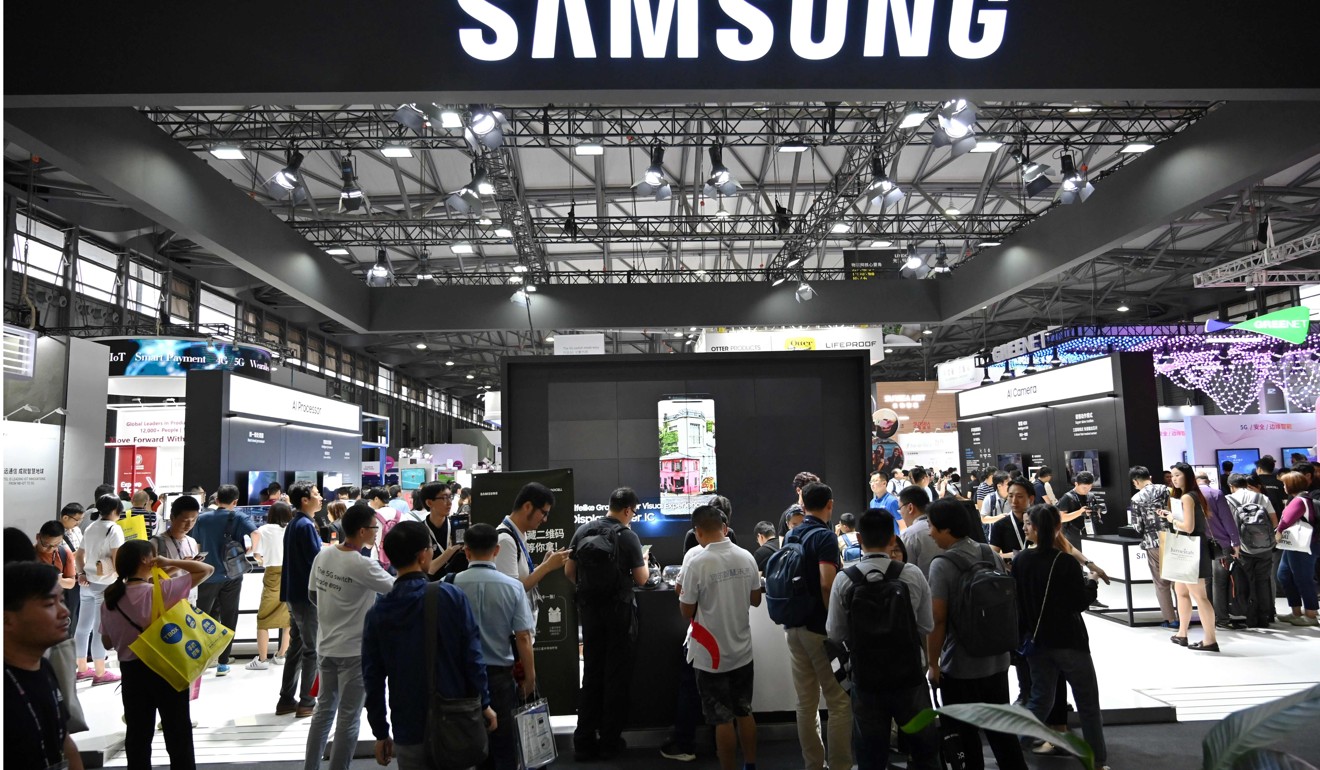
Samsung once had a 15 per cent share of China’s smartphone market. Photo: AFP
The South Korean giant has moved a large share of its smartphone production to Vietnam and closed a factory in northeastern China’s Tianjin last year.
“The production equipment will be reallocated to other global manufacturing sites depending on our global production strategy based on market needs,” the statement said.
Samsung is the world’s biggest manufacturer of semiconductors and smartphones and a major producer of display screens. But the flagship of South Korea’s largest conglomerate is currently weathering a spell of slack demand for computer chips.
Like other South Korean electronics makers, it also is facing the impact of tightened Japanese controls on exports of hi-tech materials used in semiconductors and displays.
On Wednesday, Sony said it was closing its Beijing smartphone plant and would only make smartphones in Thailand.
“In China, people buy low-priced smartphones from domestic brands and high-end phones from Apple or Huawei,” Park Sung-soon, an analyst at Cape Investment & Securities, said.
“Samsung has little hope there to revive its share.”
Samsung’s factory in Huizhou was built in 1992, according to the company. South Korean media said it employed 6,000 workers and produced 63 million units in 2017.
Samsung manufactured 394 million handsets around the world in 2107, according to its annual report.
BEIJING, Oct. 2 (Xinhua) — China on Wednesday said it welcomes the statements of the Democratic People’s Republic of Korea (DPRK) and the United States to resume dialogue and hopes the two sides will grasp the opportunity to strive for positive outcomes.
Foreign Ministry spokesperson Hua Chunying made the comments in a press statement issued Wednesday night.
“We have noticed the statements made by both the DPRK and the United States on resuming contact and dialogue. We welcome that,” said Hua.
China has always supported the DPRK-U.S. dialogue and a political settlement of the Korean Peninsula issue, said Hua.
“Under current circumstances, we hope both the DPRK and the United States will grasp the opportunity and meet each other halfway to achieve positive results from the dialogue,” she said.
DPRK First Vice Foreign Minister Choe Son Hui said in a statement on Tuesday that Pyongyang and Washington have agreed to have preliminary contact on Oct. 4 and hold working-level talks on Oct. 5. It is said the U.S. has confirmed this.
The denuclearization talks between Pyongyang and Washington have hit a stalemate since the second summit between top DPRK leader Kim Jong Un and U.S. President Donald Trump in Hanoi in February ended without any agreement.
Managers of the Leshan Giant Buddha and Jiuzhaigou National Park restrict ticket sales as millions head off for the holiday break
Park authorities in charge of the Leshan Giant Buddha in Sichuan have restricted visitor numbers in golden week. Photo: Xinhua
Several major tourist attractions in China have capped visitor numbers during this year’s National Day “golden week” holiday as millions take the chance to travel.
October 1 marked the start of a week-long break on the mainland, with an estimated 800 million people expected to go on trips in China or overseas, about 10 per cent more than last year, according to the China Tourism Academy.
The academy estimated that 726 million people would take domestic trips in this peak holiday period – a 9.4 per cent increase from last year, but that is the lowest level of growth since 2007 as pressure from China’s slowing economy and the trade war with the United States take their toll.
Managers at the scenic area surrounding the Leshan Giant Buddha – a 71-metre (233 feet) tall ancient statue carved into a cliff in southwestern Sichuan province – said last week that daily tickets would be capped at 22,400 during the holiday, which runs until Monday.
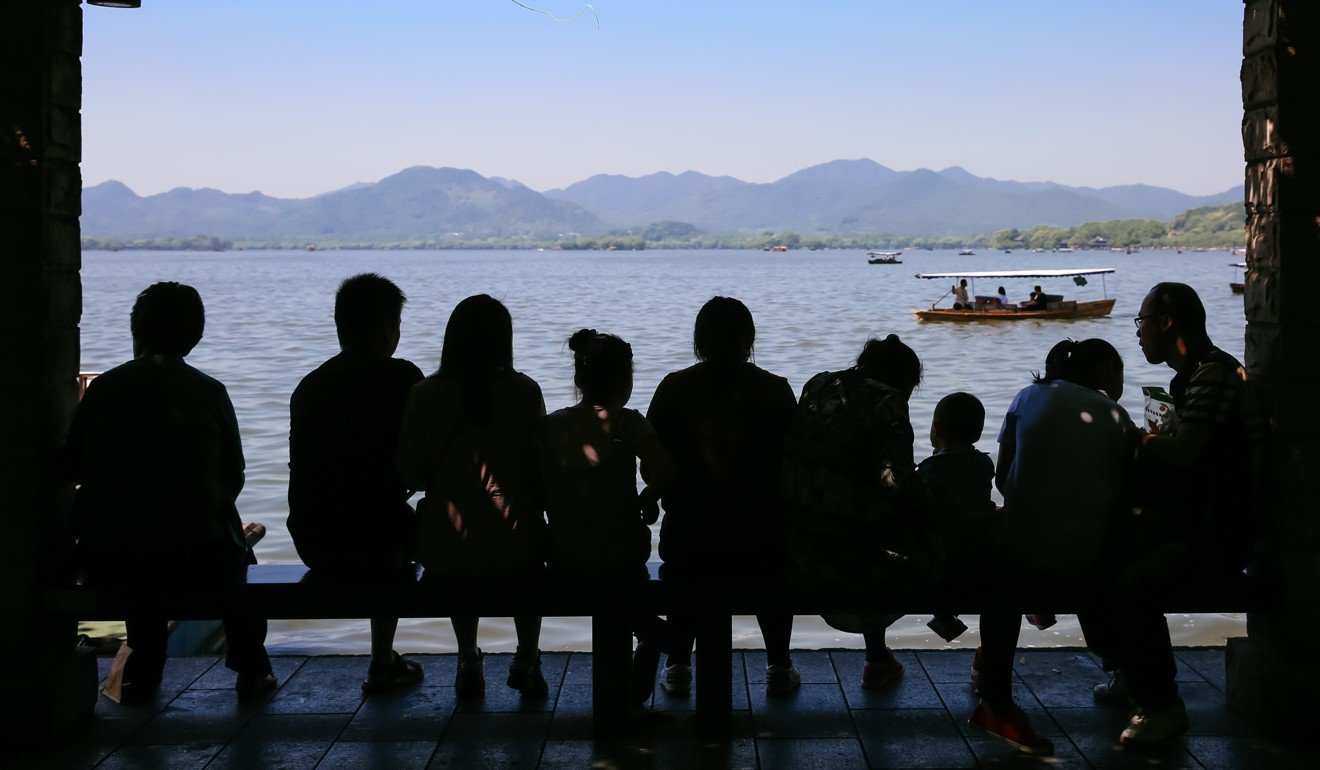
West Lake in Hangzhou, Zhejiang province, drew 300,400 visitors as golden week started. Photo: Xinhua
The park said it would update visitors on daily ticket sales through social media.
“Today’s tickets for the Giant Buddha have reached the limit and sales have stopped,” the park management committee said on its Weibo account on Tuesday. “To all tourists, please rearrange your itinerary. You can visit the areas surrounding the Giant Buddha scenic spot,” it said, adding that tickets could be booked online for any day for the rest of golden week.
“I expected it to be chock-full of people, but actually today it’s still relatively calm. I had lots of fun,” a visitor to the Giant Buddha told Pear Video on Tuesday.
Hong Kong protests leave ‘golden week’ tourist boom in tatters
Jiuzhaigou National Park in Sichuan said last week that it would be limiting visitors to 5,000 per day during golden week and said on Monday that tickets had sold out.
The network of valleys known for its natural scenery was devastated by an earthquake in August 2017, and reopened with limited access in March 2018.
However, there were no restrictions at other attractions. In eastern Zhejiang province, 340,400 visitors went through the gates at Hangzhou’s West Lake on Tuesday, the Global Times’ Chinese edition reported.
“There’s too many people. I have never seen so many of them in my life,” one tourist was quoted as saying.
A guide also said that instances of “uncivilised behaviour”, such as trampling on the gardens, were down compared to last year.
“During the major holidays, many tourist attractions are so crowded that tourists can barely move an inch,” Hangzhou Daily said in an editorial on Monday.
“Not only is the tourist experience bad, but there are also safety hazards such as being trampled on, and this puts a lot of pressure on nearby public transport and food establishments.”
Travel booking platform Ctrip said that tourists heading overseas were increasingly seeking out new destinations, with bookings to places such as the Czech Republic, Austria, Croatia, Malta and Cambodia up by 45 per cent this year.
However, bookings for Hong Kong had fallen substantially after nearly four months of anti-government protests, Ctrip said.
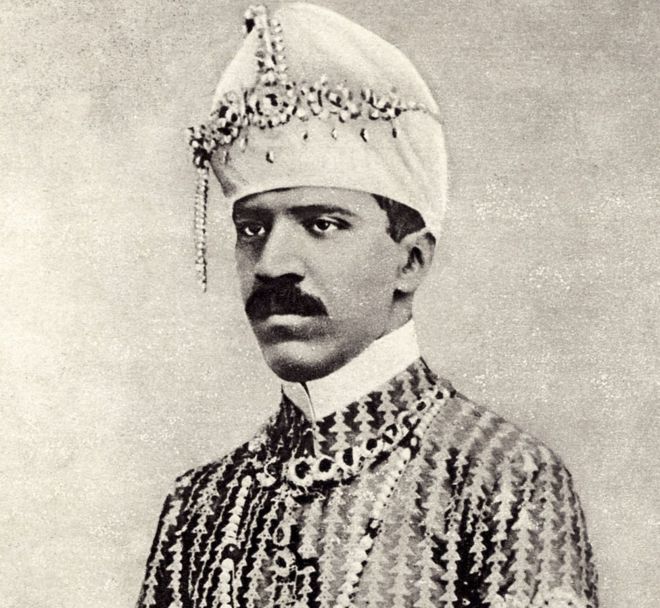
Image copyright GETTY IMAGESImage caption Mir Osman Ali Khan was once the world’s richest man
A London court has ruled that £35m ($42m) held in a UK bank account must go to the descendants of an Indian royal, and not to Pakistan.
The dispute began in 1948 when the last Nizam (king) of Hyderabad deposited £1m in the UK account, held by the then Pakistan high commissioner. With interest, the sum has grown to £35m.
The judge ruled there was no evidence to back Pakistan’s claims to the money.
The origins of the dispute go back to the 1947 partitioning of British India.
Hyderabad, which was a princely state, was annexed by India in 1948 in a military operation – the cash transfer had been made shortly before that.
The Nizam, Mir Osman Ali Khan, had not been able to decide whether his state should be in Pakistan or India.
His descendants alleged that he had asked for the money to be returned weeks after the annexation by India took place, but then Pakistan refused to give it back.
The court case had been fought by his family together with the Indian state.
National Westminster Bank, in which the money had been deposited, refused to release the funds to either party until the case was resolved by the courts.
The interest on the original deposit saw the money grow to £35m by 2019.
Pakistan argued it had been given the money in order to procure arms but the court determined it had the right to rule in the case, given that the money had been deposited in a British bank account.
“The court today made it clear that it did not think the money was handed to Pakistan outright. There is overwhelming evidence that Pakistan only held the money as a trustee and it actually belonged to the Nizam,” Paul Hewitt, the lawyer for one of the grandsons, told the BBC’s Gaggan Sabherwal.
Mr Hewitt said the case, which had begun when his client was a child, was finally being resolved when he was in his 80s.
“We welcome the judgment of Justice Marcus Smith,” Najaf Ali Khan, one of the Nizam’s grandsons, told BBC Telugu.
“The High Court has rightly rejected Pakistan’s claim. The family has long awaited this judgement.”
India’s foreign ministry also welcomed the verdict in a press statement.
Pakistan could seek to appeal, but otherwise the money will be given to the Nizam’s grandsons and the state of India.
The trip comes amid growing resistance from European leaders over what they see as China’s failure to change long-term practices unfair to foreign investors
French President’s trip to Beijing follows Chinese leader’s visit to France in March
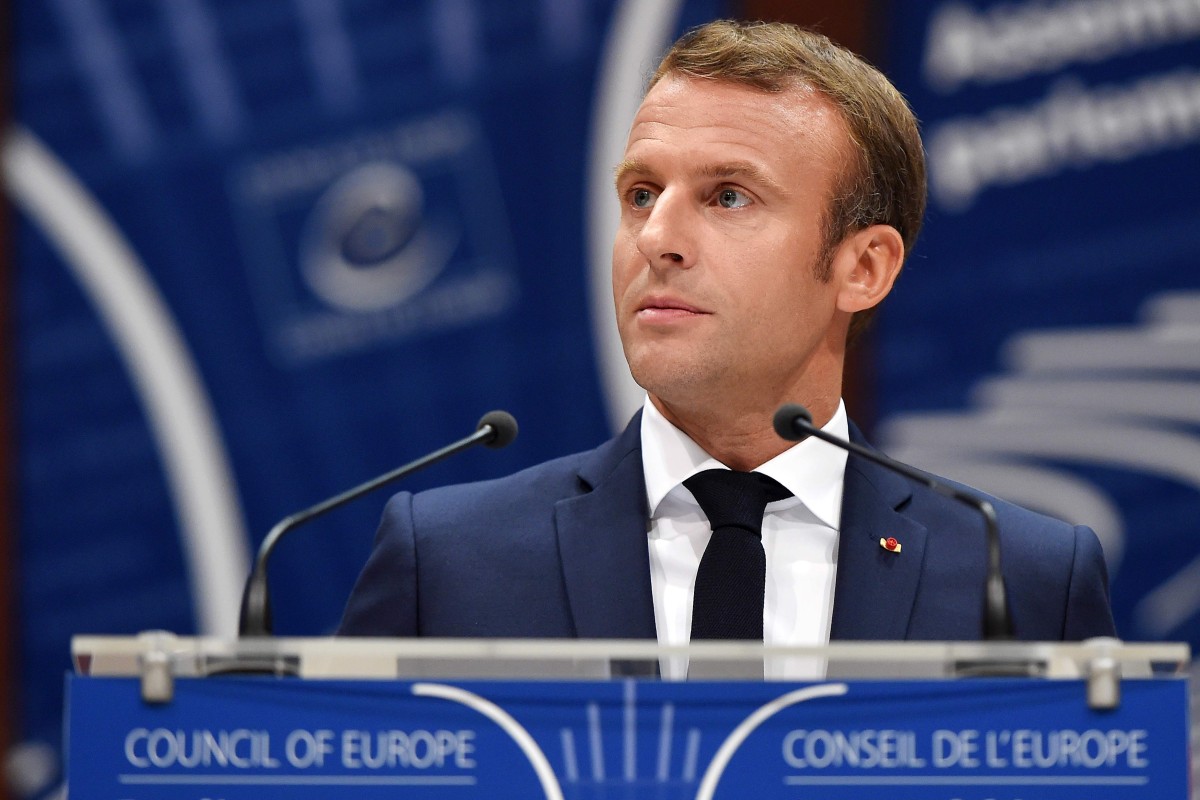
President Emmanuel Macron of France speaks to the Council of Europe parliamentary assembly on Tuesday. Photo: AFP
French President Emmanuel Macron will visit China next month as Europe’s most diplomatically active leader focuses on climate change cooperation and trade promotion with Asia’s leading power, a source briefed on the Elysee Palace’s discussions said.
This will be the second Chinese tour for Macron since he took office in 2017, and it will come amid escalating resistance from European politicians and business communities over what they see as China’s failure to change long-standing practices unfair to foreign investors.
His visit also comes at a time when France – as well as the European Union as a whole – is bracing for Washington’s potential levies of tariffs on European products, and the lack of progress on climate change policies with US President Donald Trump’s administration.
“President Macron will meet President Xi [Jinping], while France strives for better cooperation with China on climate and trade,” the source said. “His itinerary is still in the pipeline, but he is expected to visit Beijing and Shanghai.”
Macron, 41, who is widely seen as emerging as Europe’s most aggressive leader filling the political vacuum left by German Chancellor Angela Merkel’s political twilight, has cast himself as an honest broker between Russia and Ukraine, and between the US and Iran.
He has also been critical of China’s influence in Europe, joining forces with Merkel to push for a tougher EU stance on the world’s second biggest economy.
In March, when Xi claimed a major diplomatic victory by clinching a memorandum of understanding with Italy on the Belt and Road Initiative, Macron declared: “The time of European naivety is ended. For many years we had an uncoordinated approach and China took advantage of our divisions.”
Macron also backed investment screening mechanisms for Chinese business moves in Europe, while endorsing plans to change the EU’s notoriously strict antitrust rules in order to facilitate mergers between large European groups and companies to counter Chinese companies’ global ambitions.
Macron urges Iran and US to show ‘courage of building peace’
The EU is also wary of China’s effort to “divide and rule” the European Union. Greece and Hungary – both recipients of large amounts of Chinese investments – have repeatedly wanted to water down EU’s stance on issues deemed sensitive to Beijing, including the South China Sea and China’s human rights violations.
“It would be good [for Macron] to stress that 17+1 is irritating,” said Joerg Wuttke, president of EU Chamber of Commerce in China, in reference to China’s engagement with a group of EU and non-EU member states in eastern and southeastern Europe.
“After all, the EU has a ‘one China’ policy, [so] EU could expect this position from China too.”
Macron’s domestic call for EU unity has translated into diplomatic appeals, with China being one of the targets.
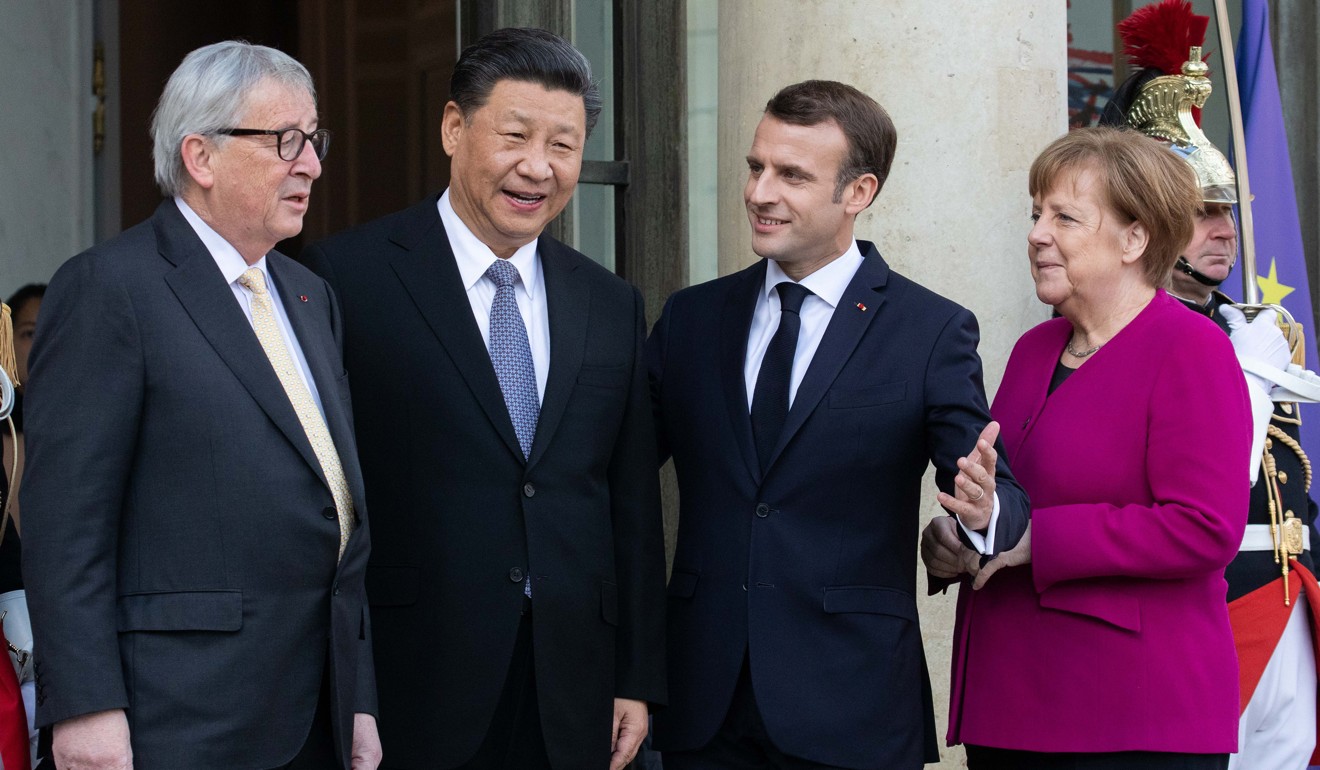
(From left) Jean-Claude Juncker, president of the European Commission; Xi Jinping, China’s leader; Emmanuel Macron, France’s president; and Angela Merkel, Germany’s chancellor, ahead of a meeting in Paris on March 26. Photo: Christophe Morin/Bloomberg
When Xi visited France in March, Macron hosted him at the Elysee Palace in the presence of Merkel and European Commission President Jean-Claude Juncker, showcasing European solidarity when it comes to EU-China policies.
In terms of French-Chinese bilateral ties, trade imbalances have persisted after Macron called for a “rebalancing” during his last visit.
France has a 1.4 per cent market share in China, compared with China’s 9 per cent market share in France. China represents France’s largest bilateral trade deficit, totalling €US$29.2 billion (US$31.9 billion) last year, ahead of Germany.
The EU has been calling for reciprocal investment treatment with China, a call that European business leaders in China expect Macron to make.
France bids farewell to late president Jacques Chirac
“We [Europe] need … a solid investment agreement to allow EU business to conduct their affairs in a similar manner as Chinese companies can operate in Europe. The agreement should be finalised in 2020, but not at all cost,” said Wuttke.
“The last thing EU business needs in China is a weak agreement that institutionalises imbalances,” he added.
Part of that involves building “more efficient defensive tools to prevent abusive technology transfers and to address the deep asymmetry in EU-China relations when it comes to access to public procurement markets,” said Mathieu Duchâtel, director of Asia programme at the Paris-based think tank Institut Montaigne.
Duchâtel added that it was also important to convey the message to Beijing that there are areas for cooperation even amid a more defensive China policy from France.
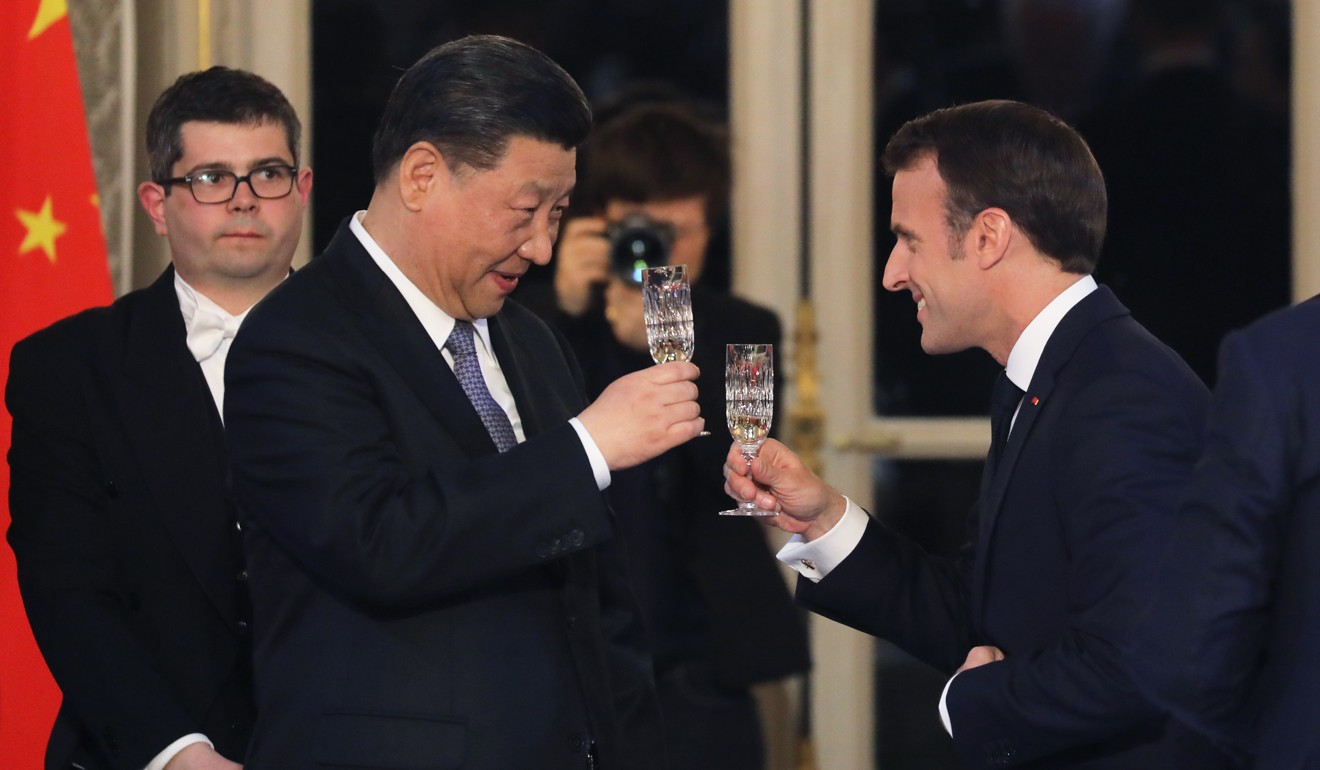
Chinese President Xi Jinping and French leader Emmanuel Macron toast raise a toast during a state dinner in Paris on March 25. Photo: EPA-EFE
One such area is the climate and environment, where China is “an important partner” for France to reach its goal of global carbon neutrality by 2050, he said.
“The energy/environment agenda is a political priority in Paris and one of very few issues on which cooperation with China remains promising and will continue to create business opportunities,” he said.
China is the world’s biggest carbon polluter, producing around 30 per cent of the planet’s man-made carbon dioxide. It remains committed to the 2015 Paris accord on climate change, even after Trump pulled the US out of the deal.
Under the agreement, the long-term temperature goal is to keep the increase in global average temperature to well below 2°C above pre-industrial levels, and to pursue efforts to limit the increase to 1.5°C.
BEIJING, Sept. 28 (Xinhua) — The resumption of diplomatic ties between the governments of China and Kiribati fully demonstrates that the one-China principle meets the shared aspiration of the people and constitutes an irresistible trend of the times, Foreign Ministry Spokesperson Geng Shuang said Saturday.
Chinese State Councilor and Foreign Minister Wang Yi and Kiribati’s President and Foreign Minister Taneti Mamau on Friday signed a communique on resuming diplomatic relations at the ambassadorial level between the two countries at the Chinese Permanent Mission to the United Nations in New York.
Geng stressed that there is but one China in the world, that the government of the People’s Republic of China is the sole legitimate government that represents the whole of China and that Taiwan is an inalienable part of China’s territory.
“This is an objective fact, a universally recognized norm of international relations and a general consensus of the international community,” Geng said.
The government of the Republic of Kiribati recognizes and undertakes to stay committed to the one-China principle, sever the so-called “diplomatic relations” with Taiwan authorities and resume diplomatic relations with China. “We support this important decision which Kiribati government has made on its own as an independent sovereign state,” Geng said.
“This again fully demonstrates that the one-China principle meets the shared aspiration of the people and constitutes an irresistible trend of the times,” Geng added.
Relations between China and Pacific island nations are maintaining rapid growth. People of the two countries hold amicable feelings toward each other, he said. “It is the common expectation of all sectors of Kiribati to resume diplomatic relations and strengthen cooperation with China. It is in the fundamental and long-term interests of the two countries and peoples.”
China stands ready to strengthen pragmatic cooperation and friendly exchanges with Kiribati in various fields on the basis of the one-china principle and the Five Principles of Peaceful Coexistence to benefit the two countries and peoples, said the spokesperson.
Li Zhanshu, chairman of the Standing Committee of the National People’s Congress of China, meets with Russian President Vladimir Putin in Moscow, Russia, Sept. 25, 2019. Li paid an official goodwill visit to Russia from Sept. 25 to 28. (Xinhua/Pang Xinglei)
MOSCOW, Sept. 28 (Xinhua) — China’s top legislator Li Zhanshu and top Russian officials have agreed to further strengthen bilateral comprehensive cooperation and continue to promote legislative coordination for stronger ties.
Li, chairman of the Standing Committee of the National People’s Congress of China, on Saturday completed an official visit to Russia, during which he held talks with Russian President Vladimir Putin and the heads of both houses of the Russian parliament.
The Russian leaders congratulated China on the 70th anniversary of the founding of the People’s Republic of China and hailed the great achievements China has made in the past seven decades. The two sides also exchanged congratulations on the 70th anniversary of the establishment of diplomatic relations between China and Russia.
When meeting Putin, Li said, under the strategic guidance of the heads of state of the two countries, China-Russia relations have hit an unprecedented high and entered a new era of higher level and greater development.
Under the current international situation, China and Russia should strengthen mutual support, jointly build strategic support and security barriers between the two countries, and promote the construction of a new type of international relations and a community with a shared future for mankind, Li said.
He called on the two sides to bring their political mutual trust and strategic cooperation to a new height, and push economic and trade cooperation to a new level, so as to move forward their comprehensive strategic partnership of coordination for a new era.
For his part, Putin lauded Russia-China ties as a model of relations between the world’s major countries.
He said the comprehensive strategic partnership of coordination for a new era between the two countries, built in compliance with the international law, is in the interests of the two countries and the two peoples.
Noting that the current bilateral cooperation in various areas is steadily advancing towards the established goals, Putin urged the two countries to further strengthen all-round cooperation and develop their ties on the basis of existing achievements.
Li also met with Valentina Matviyenko, speaker of the Russian Federation Council, or the upper house of parliament, and Vyacheslav Volodin, speaker of the Russian State Duma, or the lower house of parliament.
During his talks with the heads of Russian parliament, Li said the cooperation between legislative bodies, as an important part of the China-Russia comprehensive strategic partnership of coordination for a new era, is expected to prioritize the implementation of the consensus reached by the two heads of state.
According to him, the two sides should promote communication and collaboration for the sake of the development of bilateral ties and, in particular, strengthen the exchanges of experience on foreign-related legal construction, so as to effectively deal with unilateralism and protectionism as well as defend the national sovereignty, security and interests of the two countries.
Li also called for better synergy between the China-proposed Belt and Road Initiative and the Russia-led Eurasian Economic Union, further cooperation in high-tech fields as well as sub-national cooperation and people-to-people exchanges.
For her part, Matviyenko said China’s development has proved to the world that a country can follow its own development path in line with its national conditions.
She said the people of the two countries work closely together and respect each other’s national interests, adding that no matter how the international situation changes, the long-term friendly cooperation between the two countries will remain unchanged.
The legislative bodies of the two countries should provide legal support and guarantee for the development of bilateral relations, Matviyenko said.
Volodin also urged the legislative bodies to make good use of existing cooperation mechanisms in a bid to promote cooperation in various fields, resist external interference and safeguard a fair and just international order.
Li and Volodin also attended the fifth meeting of the China-Russia committee for parliamentary cooperation.
In his speech, Li talked about China’s historic achievements in the past 70 years and spoke highly of the contribution of legislative cooperation to the development of bilateral relations.
He expressed hopes that both sides, after thorough studies, will come up with new ideas and new measures for legislative cooperation in a new era, better use the committee for parliamentary cooperation as a platform, and further enrich China-Russia relations.
While in Moscow, the top Chinese legislator also visited the Tomb of the Unknown Soldier and inspected the Moscow metro project of the China Railway Construction Corporation.
He also exchanged views on strengthening local cooperation with Rustam Minnikhanov, president of Russia’s Tatarstan Republic, in its capital of Kazan and visited the Kazan Helicopter Plant and Kazan Federal University.






 CHINDIA ALERT: You'll be living in their world, very soon