Chindia Alert: You’ll be Living in their World Very Soon
aims to alert you to the threats and opportunities that China and India present. China and India require serious attention; case of ‘hidden dragon and crouching tiger’.
Without this attention, governments, businesses and, indeed, individuals may find themselves at a great disadvantage sooner rather than later.
The POSTs (front webpages) are mainly 'cuttings' from reliable sources, updated continuously.
The PAGEs (see Tabs, above) attempt to make the information more meaningful by putting some structure to the information we have researched and assembled since 2006.
PLA commander says new law will help to crack down on separatist and foreign forces in ‘two sessions’ interview
Military has ‘determination, confidence and ability’ to safeguard national security interests and Hong Kong prosperity
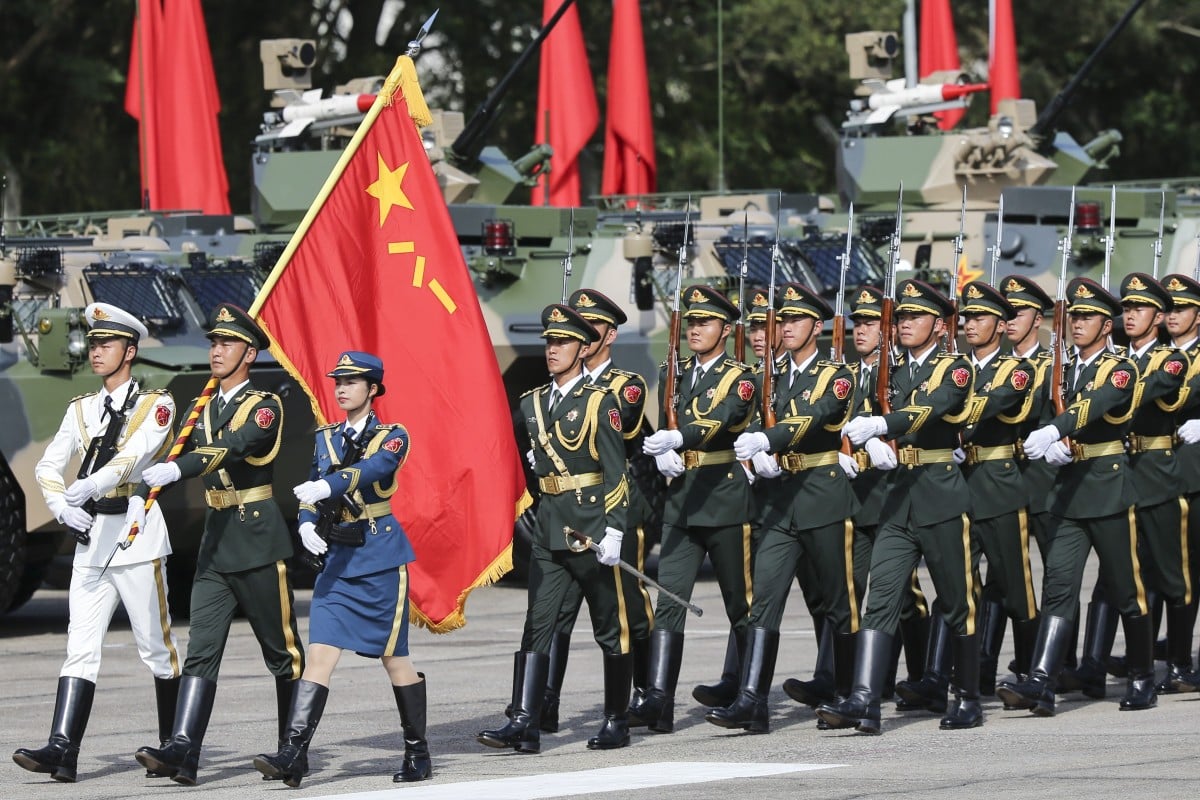
China’s People’s Liberation Army has said its Hong Kong garrison will “resolutely” safeguard national security and sovereignty. Photo: Sam Tsang
The People’s Liberation Army has said the Chinese military will “resolutely” safeguard China’s national security and sovereignty, in its first statement since Beijing announced plans to impose a sweeping national security law in Hong Kong.
Chen Daoxiang, commander of the PLA’s Hong Kong garrison, said it would “act with firm resolve to implement the central government’s decision and plans” as well as continuing to implement the “one country, two systems” policy in the city.
How China is drafting a new Hong Kong national security law at the National People’s Congress
Speaking on the sidelines of China’s annual parliamentary meetings, also known as the
, Chen told state broadcaster CCTV that the new law would help to crack down on separatist and foreign forces aiming to undermine China’s national unity.
“[The garrison] will implement, according to law, various tasks delegated by the party and the people, and has the determination, confidence and ability to safeguard national security and development interest as well as Hong Kong’s continuing prosperity,” he said.
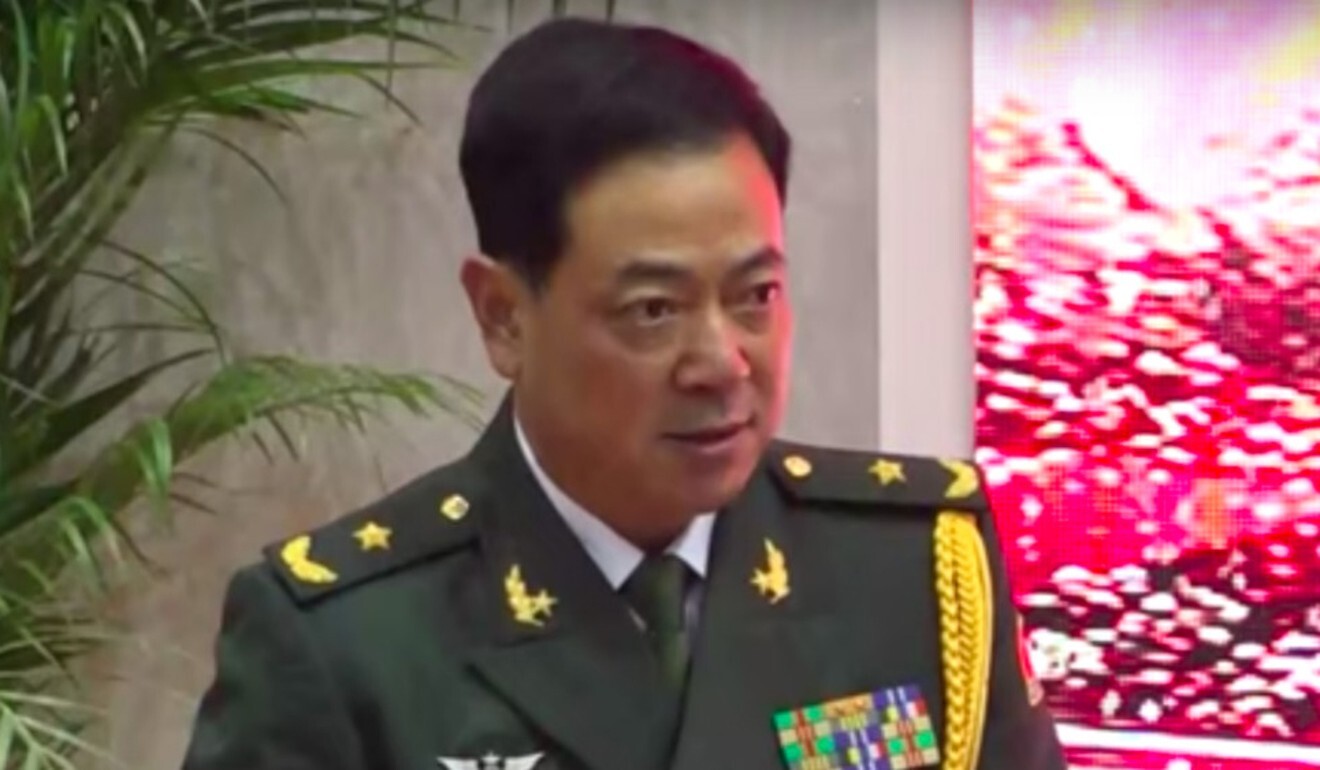
Commander of the PLA Hong Kong garrison Chen Daoxiang. Photo: Weibo
The proposal to impose a national security law in Hong Kong – which will give Beijing more direct control over the city – was introduced by China’s legislature on Friday. Beijing has blamed foreign forces for inciting last year’s months-long protests in Hong Kong, sparked by opposition to a separate and now-withdrawn extradition bill, and described the unrest as a grave threat to national security.
Separately, CCTV reported that a group of top military officials said in a session on Tuesday that there was a “great urgency” for Beijing to impose the law in a bid to address the “new risks and challenges” in governing the city.
The officials, who included Central Military Commission vice-chairmen Xu Qiliang and Zhang Youxia, said the plan was a “very timely, necessary and important” step to prevent and punish efforts to undermine China’s national sovereignty and security.
They reiterated the PLA’s commitment to opposing intervention from foreign forces in Hong Kong as well as maintaining China’s national unity and territorial integrity.
“Hong Kong affairs are purely China’s internal affairs. We resolutely oppose efforts by any foreign country, organisation and individual in interfering with Hong Kong affairs, and will resolutely guard against and contain any attempts by external forces in … engaging any separatist, subversion and infiltration activities,” they said, according to CCTV.
The planned national security law has drawn strong condemnation from the US government, with Secretary of State Mike Pompeo calling it a “death knell” for the territory’s relative autonomy. White House national security adviser Robert O’Brien said on Sunday that the US government would likely impose sanctions on China if Beijing went ahead with the plan.
Xie Haifeng’s story is one of luck and resilience and he has made it his mission to help others through adversity
Professional dancer owes part of his success to the city of Hong Kong and one of its doctors who helped survivors through recovery
Xie Haifeng was 15 when he lost his leg in one of modern China’s most devastating disasters. Photo: Handout
When the rumbling began, Xie Haifeng thought someone was shaking his bed. Perhaps one of the other 800 children in the school dormitory was being naughty. Or maybe it was a small quake. Then came the unmistakable sound of screams.
Xie, then a 15-year-old pupil at Muyi Town Middle School in the southwestern Chinese province of Sichuan, started running. He fell as the dorm building collapsed around him. When he tried to stand up, he realised something was missing. His left leg was gone.
What Xie thought was a small quake turned out to be one of the most devastating disasters in modern Chinese history.
The Sichuan earthquake of May 2008 left at least 87,000 people dead and shook the country to its core. It was less than three month before Beijing would host its first Olympic Games, an opportunity to show the world its strength and ambition.
Instead, 7,444 schools had crumbled like tofu in an area known to be seismically active. Their rubble was a stark demonstration of the weak foundation of China’s progress and its tragic consequences. At Xie’s school, the shoddily built walls and ceilings crushed 600 children. Only 300 survived.
It still frightens me to recall the earthquake.Xie Haifeng, dancer
Xie considers himself lucky. “If I had run just one second more slowly, I would have been dead. If I had run one second faster, I would have been completely fine. But anyway, I am lucky to be alive,” he said. A dozen years later, his story is also one of resilience. Defying all the odds, Xie is now a professional dancer for a troupe in Sichuan and has made it his mission to help others through adversity.
The journey from his hospital bed to the stage was long and difficult and even though many years have passed, “it still frightens me to recall the earthquake”. But, he said: “I have forgiven fate and accepted the reality that I have only one leg.”
Xie’s trauma was a particularly difficult blow to his family. His older sister was already handicapped, after injuring her arm in an accident. When his mother, a migrant worker in the northwestern province of Gansu, arrived at the hospital a few days after the earthquake, she had no idea of the extent of Xie’s condition.
“When I woke up in the evening, I saw my mother weeping beside my bed. I told myself I should be strong,” Xie said, adding that his mother initially thought he had suffered only bruises. He was sent for treatment to a hospital in the prosperous southern city of Shenzhen, along with other survivors who had been left with disabilities by the earthquake.
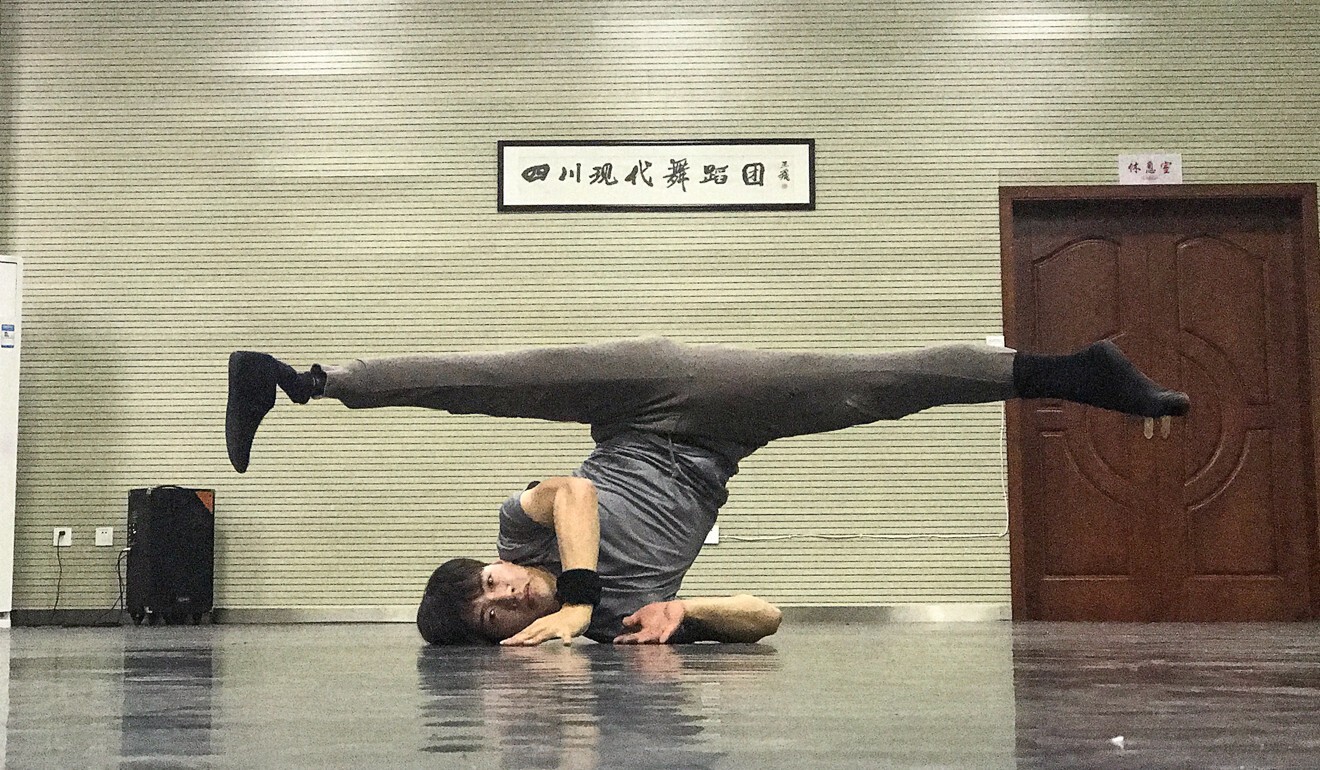
Defying all the odds, Xie Haifeng is now a professional dancer. Photo: Handout
It was there that Xie was inspired to make the most of his life. A team of athletes visited the hospital and he was shocked to see one of them, a volleyball player, walking on a prosthetic leg.
Xie began to wear a prosthesis and after rehabilitation training returned to his hometown in 2009 where he was admitted to Qingchuan High School. At first, he was self-conscious and felt inferior to his peers. He did not dare to wear shorts in summer and said he seldom talked to the other students.
The following year he was introduced to members of the Chengdu Disabled People’s Art Troupe, where he found a new and welcoming home. Xie quit school and joined the troupe, despite his parents’ opposition. They were convinced study was the only way for rural students like their son to get out of poverty.
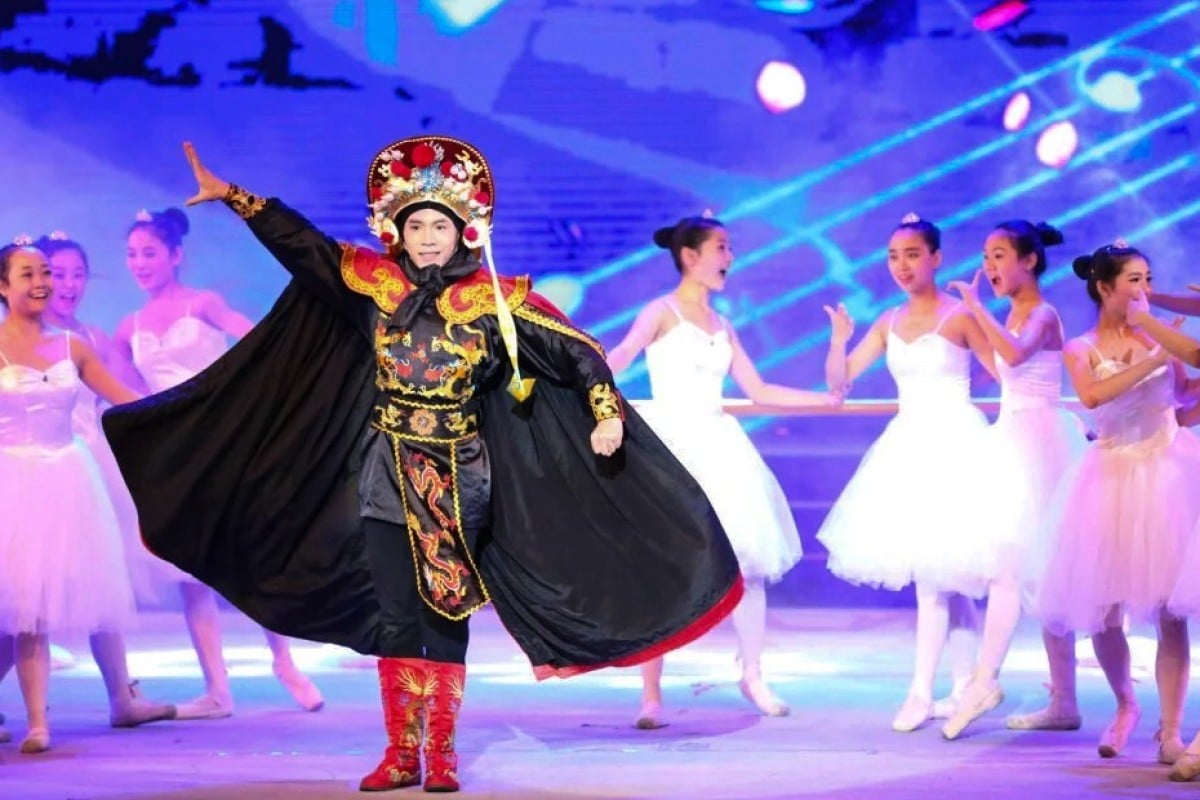
Xie learned Sichuan opera and was soon performing its art of bian lian, or
– a skill that requires rapid mask changes in a dazzling sleight of hand – on stage until the troupe was disbanded in 2011, leaving him unemployed for six months.
China marks 10-year anniversary of Sichuan earthquake
But the misfortune led to an improbable opportunity when he was hired by the Sichuan Provincial Disabled People’s Art Troupe and trained to dance. At 19, and with no experience, Xie found the training far more difficult than those who had started at the more usual age of five or six.
His body was too stiff, he said, and in the first months he spent 10 hours each day just stretching and building flexibility. It was just the beginning of a long and often arduous process.
“That agony is too much to be described,” Xie said about the pain of dancing on a prosthetic leg. “During the first six months’ training, I broke three artificial legs.”
More than once, he wondered whether he had chosen the right path. But, ultimately, his gruelling effort paid off and Xie has performed in Singapore, Hong Kong and Macau. In 2013, he won a gold medal at a national dancing competition for people with disabilities.
“My dances won me applause and recognition from the audience. I feel relieved and I think my heart belongs to the stage,” he said.
Xie broke three artificial legs during his first six months of dance training. Photo: Handout
Xie said he owed part of his success to Hong Kong which in 2008 donated HK$20 billion (US$2.5 billion) in aid to Sichuan and sent doctors to treat the injured. Among the volunteers was Poon Tak-lun, a Hong Kong orthopaedist who flew to Sichuan every two weeks from 2008 to 2013 to treat patients.
At a gala show in 2013 to express gratitude from the people of Sichuan to Hong Kong, Xie met Poon and the two became good friends, thanks to their common interest in the arts.
“Dr Poon promised to pay for all the costs of installing and repairing my artificial leg in the future. He told me to focus on dancing without worrying about the leg’s costs,” Xie said.
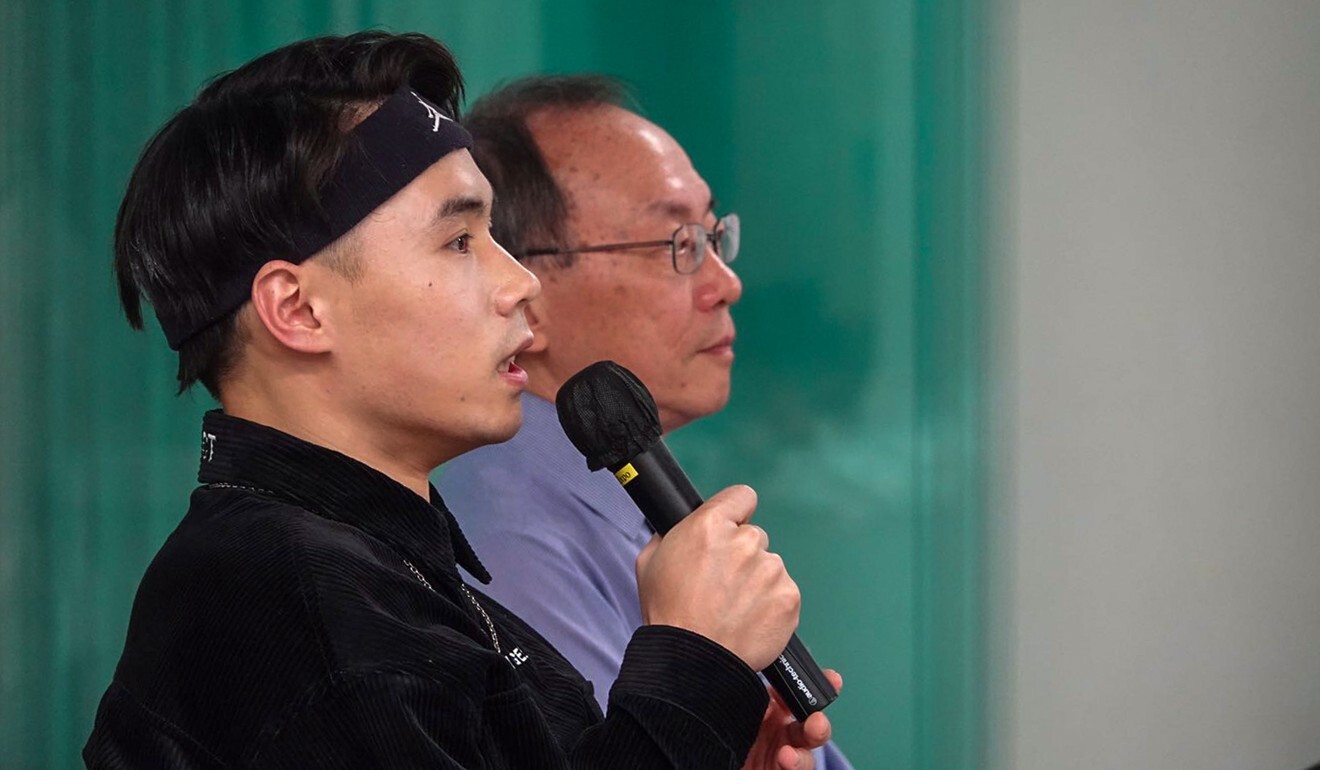
Xie Haifeng (pictured left with friend Poon Tak-lun) gives a speech to students in Hong Kong. Photo: Handout
Grateful for the help he received from Poon and Hong Kong, Xie has sought to return the favour by doing what he does best.
“I have no other skills except dancing and performing. So I thought of sharing my experience to encourage young students in Hong Kong,” he said.
Xie travels to Hong Kong about twice a year to perform and visit schools. In 2019, he visited the city four times, performing dances and Sichuan opera, and giving speeches at more than 10 primary and secondary schools.
“I encourage them to study hard. I said there are many people in this world who have more difficulties than them but still insist on pursuing their dreams, so they should not give up their dreams,” Xie said.
When he is not dancing and giving inspirational speeches, Xie said he lived a life like everyone else – climbing mountains, swimming and proudly walking on the leg he gained after almost losing everything in Sichuan’s deadly earthquake.
LONDON (Reuters) – China has betrayed the people of Hong Kong so the West should stop kowtowing to Beijing for an illusory great pot of gold, said Chris Patten, the last governor of the former British colony.
Beijing is set to impose new national security legislation on Hong Kong after a sustained campaign of pro-democracy protests last year in the city, which enjoys many freedoms not allowed on mainland China.
“The Hong Kong people have been betrayed by China,” Patten was quoted as saying by The Times newspaper. Britain has a “moral, economic and legal” duty to stand up for Hong Kong, he said.
Patten watched as the British flag was lowered over Hong Kong when the colony was handed back to China in 1997 after more than 150 years of British rule.
Hong Kong’s autonomy was guaranteed under the “one country, two systems” agreement principle enshrined in the 1984 Sino-British Joint Declaration signed by then Chinese Premier Zhao Ziyang and British Prime Minister Margaret Thatcher.
But China’s plans to impose national security laws on Hong Kong risk destroying the Declaration, Patten said. The United States has branded the laws a “death knell” for the city’s autonomy.
“What we are seeing is a new Chinese dictatorship,” Patten said. “The British government should make it clear that what we are seeing is a complete destruction of the Joint Declaration.”
Hong Kong leader Carrie Lam said her government will “fully cooperate” with the Chinese parliament to safeguard national security, which she said would not affect rights, freedoms or judicial independence.
Patten said the West should stop chasing the illusory promise of Chinese gold.
“We should stop being fooled that somehow at the end of the all the kowtowing there’s this great pot of gold waiting for us. It’s always been an illusion,” Patten said.
“We keep on kidding ourselves that unless we do everything that China wants we will somehow miss out on great trading opportunities. It’s drivel.”
The British government did not immediately comment on Saturday.
Prime Minister Boris Johnson’s spokesman said on Friday the government was monitoring the situation and as a party to the Joint Declaration the UK was committed to the upholding Hong Kong’s autonomy and respecting the one country, two systems model.
BEIJING (Reuters) – Tang Yue, a 27-year-old teacher from the city of Guilin in southwest China, steam-presses a blue dress and takes dozens of photographs before picking one to clinch her 200th online sale.
For a growing number of Chinese like Tang, hit by job losses, furloughs and salary cuts, the consumer economy has begun to spin in reverse. They are no longer buying – they are selling.
Instead of emerging from the coronavirus epidemic and returning to the shopping habits that helped drive the world’s second-largest economy, many young people are offloading possessions and embracing a new-found ethic for hard times: less is more.
With Tang’s monthly salary of about 7,000 yuan ($988), the self-described shopaholic said she has bought everything from Chanel lipsticks to Apple’s (AAPL.O) latest iPad in the past three years.
But the adrenaline rush that comes with binge-shopping is gone, said Tang, whose wages have been slashed with the suspension of all the classes on tourism management she usually teaches.
“The coronavirus outbreak was a wake-up call,” she said. “When I saw the collapse of so many industries, I realised I had no financial buffer should something unfortunate happen to me.”
There is no guarantee that the nascent minimalist trend will continue once the coronavirus crisis is fully over, but if it does, it could seriously damage China’s consumer sector and hurt thousands of businesses from big retailers to street-corner restaurants, gyms and beauty salons.
To be sure, there are signs that pent-up demand will drive a rush of spending as authorities reopen malls, leisure venues and tourist spots. In South Korea, the first major economy outside of China to be hit by the virus, people thronged malls this weekend to go “revenge shopping” to make up for time lost in lockdown.,
There are some signs that a similar trend will take hold in China, where some upscale malls are starting to get busy, although luxury firm Kering SA (PRTP.PA) – which owns Gucci, Balenciaga and other fashion brands – has said it is hard to predict how or when sales in China might come back.
A recent McKinsey & Co survey showed that between 20% and 30% of respondents in China said they would continue to be cautious, either consuming slightly less or, in a few cases, a lot less.
“The lockdown provided consumers with a lot of time and reasons to reflect and consider what is important to them,” said Mark Tanner, managing director at Shanghai-based research and marketing consultancy China Skinny.
“With much more of their days spent in their homes, consumers also have more time and reasons to sort through things they don’t feel they need – so they’re not living around clutter that is common in many apartments.”
#DITCHYOURSTUFF
Tang made a spreadsheet to keep track of her nearly 200 cosmetic products and hundreds of pieces of clothing. She then marked a few essentials in red that she wanted to keep. In the past two months, she has sold items worth nearly 5,000 yuan on second-hand marketplaces online.
Bargain-hunting online has become a new habit for some Chinese as the stigma that once hung over second-hand goods has begun to fade.
Idle Fish, China’s biggest online site for used goods, hit a record daily transaction volume in March, its parent company Alibaba (BABA.N) told Reuters.
Government researchers predict that transactions for used goods in China may top 1 trillion yuan ($141 billion) this year.
Posts with the hashtag #ditchyourstuff have trended on Chinese social media in recent weeks, garnering more than 140 million views.
Jiang Zhuoyue, 31, who works as an accountant at a traditional Chinese medicine company in Beijing – one of the few industries that may benefit from the health crisis – has also decided to turn to a simpler life.
“I used to shop too much and could be easily lured by discounts,” said Jiang. “One time Sephora offered 20% off for all goods, I then bought a lot of cosmetics because I feel I’m losing money if I don’t.”
Jiang, the mother of a 9-month-old baby, said she recently sold nearly 50 pieces of used clothing as the lockdown gave her the opportunity to clear things out. “It also offered me a chance to rethink what’s essential to me, and the importance of doing financial planning,” she said.
Eleven Li, a 23-year-old flight attendant, said she used to spend her money on all manner of celebrity-endorsed facial masks, snacks, concert tickets and social media activity, but now has no way to fund her spending.
“I just found a new job late last year, then COVID-19 came along, and I haven’t been able to fly once since I joined, and I’ve gotten no salary at all,” said Li, who said she was trying to sell her Kindle.
Some are even selling their pets, as they consider leaving big cities like Beijing and Shanghai where the high cost of living is finally catching up with them.
NO RETURN TO OLD WAYS?
As the coronavirus comes under control in China, the government is gradually releasing cities from lockdown, easing transport restrictions and encouraging consumers to venture back into malls and restaurants by giving out billions-worth of cash vouchers, worth between 10 yuan and 100 yuan.
But many people say they are still worried about job security and potential wage cuts because of the struggling economy. Nationwide retail sales have plunged every month so far this year.
Xu Chi, a Shanghai-based senior strategic analyst with Zhongtai Securities, said some Chinese consumers may prove the ‘21 Day Habit Theory,’ a popular scientific proposition that it only takes that long to establish new habits.
“We believe people’s spending patterns follow the well-known theory, which means most people in China, having been cooped-up at home for more than a month and not having binge-shopped, may break the habit and not return to their old ways,” Xu said.
Jiang said she was determined not to return to her free-spending ways and planned to cook more at home.
“I’ll turn to cheaper goods for some luxury brands,” she said. “I’ll choose Huawei’s smartphone, because (Apple’s) iPhone has too much brand premium.”
Tang, who has recently used 100 yuan of shopping coupons to stock up on food, is going to hold the purse strings even tighter.
“I’ve set my monthly budget at 1,000 yuan,” she said. “Including one – and just one – bottle of bubble tea.”
SHANGHAI, May 2 (Xinhua) — Shanghai’s 130 main tourist attractions have received over 1 million visitors in the first two days of the five-day May Day holiday.
The scenic sites received 456,000 visitors on Friday and 633,000 more on Saturday, marking a growing travel and leisure demand, according to the Shanghai Municipal Administration of Culture and Tourism.
The city requires reservations for tours of all tourist attractions to prevent crowding while tourist sites should not exceed 30 percent of their daily or real-time visitor capacity.
Tourists are also required to wear face masks, show their health QR codes and have their body temperatures taken for their safety.
“I feel safe and confident with the new reservation measures,” said Li Zhi, who has booked tours to the Zhujiajiao ancient town and Shanghai Oriental Land.
Under the reservation system, tourist sites are also better prepared to prevent crowding and provide better tour experiences to customers, according to Huang Ying with Shanghai Oriental Land.
Patten says to watch out for any future attempts by Beijing to ‘undermine the rule of law and to corrupt the electoral process in the months ahead’
The plea comes as the ruling Conservative Party in Britain toughens up China policies
Chris Patten is an outspoken critic of the Chinese government’s handling of Hong Kong affairs. Photo: AFP
Britain’s last colonial governor of Hong Kong, Chris Patten, has asked the British government to watch out for Chinese attempts to interfere with the city’s affairs while the world grapples with the coronavirus pandemic.
He made the plea to Foreign Secretary Dominic Raab as the ruling Conservative Party toughens up China policies, amid what many party members see as Beijing’s deliberate failures to be transparent about the initial Covid-19 outbreaks.
The call also comes amid growing worry among Hong Kong’s pro-democracy activists, as police have rounded up dissidents and Beijing authorities have stepped up the rhetoric of national security concerns.
Patten, an outspoken critic of the Chinese government’s handling of Hong Kong affairs, said: “I hope we can … count on the British government to call out China for its breaches of the [Sino-British] Joint Declaration and to watch carefully for future attempts by Beijing to undermine the rule of law and to corrupt the electoral process in the months ahead.”
Wave of arrests of Hong Kong pro-democracy figures draws global criticism
The declaration provided for Hong Kong’s status quo until 2047.
The Foreign Office has not responded to an inquiry by the Post on Patten’s letter.
Citing their roles in unlawful protests, Hong Kong police rounded up at least 15 opposition camp activists earlier this month, including media tycoon Jimmy Lai Chee-ying and prominent barrister Martin Lee Chu-ming, known as the city’s “father of democracy”.
On Tuesday, a bipartisan group of US lawmakers wrote Secretary of State Mike Pompeo requesting that his department’s upcoming assessment of Hong Kong’s autonomy reflect a recent wave of arrests by the city’s authorities of pro-democracy activists.
Hong Kong police to respond with force to any Labour Day protests
30 Apr 2020
Patten also asked the British government to investigate the origin of the coronavirus.
“I would be grateful for your assurance that the British government will press for an expert mission to Wuhan and will encourage other countries to do the same,” he wrote, underscoring the need to “make sure that we know everything about the nature of the virus in order to fight it effectively. We also need to prevent anything similar happening in the future.”
On Wednesday, Britain’s ambassador to the US Karen Pierce backed calls for an investigation into the origins of the novel coronavirus and the response of the World Health Organisation.
“We need to learn after all these crises, just as we did after Ebola in 2014. We need to learn how we can always do things better,” she said.
The comments came after Britain’s foreign affairs parliamentary committee asked the government whether it plans to use international bodies to hold China to account over the Covid-19 pandemic.
Outbound flights from Beijing were 15 times higher on one travel site within half an hour of Beijing relaxing quarantine requirements on the city
The rebound in bookings spells some hope for online travel providers in China as the country emerges from a pandemic which saw widespread travel restrictions
Passengers arrive from a domestic flight at Beijing Capital Airport on March 27, 2020. Photo: AFP
Within an hour of Beijing downgrading its emergency response level, relaxing quarantine requirements for some arrivals to the Chinese capital city, travel bookings on some sites surged up to 15 times.
Thirty minutes after the announcement on Wednesday, bookings for outbound flights from Beijing were 15 times higher than before the announcement on Qunar, one of the biggest online travel service providers in China. Searches for travel packages and hotel bookings on the platform also increased three-fold, according to a Qunar report.
On Alibaba Group Holding‘s Fliggy travel platform, bookings for flight and trains heading in and out of Beijing increased 500 per cent and 300 per cent respectively one hour after the announcement, compared to the same time a day ago, according to a Fliggy report. Alibaba owns the South China Morning Post.
Bookings for flight and train tickets in Beijing for the upcoming Labour Day long weekend also increased more than 300 per cent and 160 per cent respectively on Chinese group buying site Meituan Dianping on Wednesday after the announcement compared to the day before, while searches for the attractions in the Beijing area on the platform increased almost three times from a week ago, according to Meituan.
“The surge in searches for travel in Beijing was because the lockdown measures in the city were the strictest in the country after work resumed,” said Jiang Xinwei, senior analyst with Analysys. “Consumption among residents was suppressed [during the lockdowns], so there is now a rebound in bookings.”
China’s online travel sites prepare for surge in domestic tourism
21 Mar 2020
The rebound in bookings spells some hope for online travel providers in China as the country gradually emerges from a pandemic which the Chinese government responded to by implementing strict quarantine measures, shutting down tourist attractions and suspending group tours.
Beijing-based consultancy Analysys estimates that China’s national tourism economy lost at least 10 billion yuan (US$1.4 billion) a day on average during the outbreak, with travel service providers like Qunar and Ctrip overloaded with millions of booking changes as well as cancellation and refund requests.
The relaxation of travel restrictions in and out of Beijing also comes ahead of a
, which starts on Friday and is the first extended public holiday after Lunar New Year in late January.
In November, the Chinese government lengthened the holiday from the original three days to five to stimulate consumption and encourage travelling amid a slowing economy weighed down by the US-China trade war.
Some cities, such as Huzhou in eastern China’s Zhejiang province and Kunming in southwestern province Yunnan, have issued travel vouchers to stimulate consumption for the tourist industry, according to the Ministry of Culture and Tourism.
Ctrip estimated that there would be more than 86 million domestic tourists during the long weekend – more than double the number of travellers seen during the Ching Ming Festival in April, which recorded 43 million tourists, according to the China Tourism Academy.
However, Jiang said the rebound this week does not mean the Chinese travel industry is out of the red. “The travel industry will recover partially during the public holiday, but this will not be more than 60 per cent [of levels before the pandemic],” he said. “The government needs to do more to signal that travelling is safe and encourage residents to do so.”
BEIJING (Reuters) – China announced on Wednesday that its parliament will open a key annual session on May 22, signalling that Beijing sees the country returning to normal after being reduced to a near-standstill for months by the COVID-19 epidemic.
During the gathering of the National People’s Congress in the capital, delegates will ratify major legislation, and the government will unveil economic targets, set defence spending projections and make personnel changes. The ruling Communist Party also typically announces signature policy initiatives.
The session was initially scheduled to start on March 5 but was postponed due to COVID-19, which has infected nearly 83,000 people and killed more than 4,600 on the mainland after emerging late last year in the central city of Wuhan.
As the epidemic has subsided, economic and social life gradually returned to normal, making it possible for the congress to convene, the official Xinhua news agency quoted the standing committee of the NPC, the legislature’s top decision-making body, as saying.
The committee also appointed Huang Runqiu as the new minister for ecology and environment, a post vacated when predecessor Li Ganjie became deputy Communist Party chief for Shandong province earlier this month, Xinhua reported.
Tang Yijun was also named as the new justice minister to replace Fu Zhenghua, who has reached the retirement age of 65 for ministers.
The Chinese People’s Political Consultative Conference (CPPCC), an advisory body to parliament, has proposed starting its annual session a day before the parliamentary session opens.
Analysts expect China to roll out additional fiscal stimulus in order to cushion the blow from COVID-19, which has developed in to a worldwide pandemic that some fear will trigger a severe global recession.
China’s economy contracted for the first time on record during the January-March period, when the government imposed severe travel and transport restriction to curb the spread of the epidemic.
Parliament is also expected to discuss the anti-government protests in Hong Kong, amid growing speculation that Beijing take steps to strengthen its grip on the city.
It is unclear how long parliament and its advisory body will meet for this time, and people familiar with the matter have told Reuters that this year’s annual sessions could be the shortest in decades due to COVID-19 concerns. Usually more than 5,000 delegates descend on Beijing from all over China for at least 10 days.
Beijing city plans to ease quarantine rules as early as Thursday, two sources familiar with the situation told Reuters, ahead of the key political meetings.
People arriving in the capital from other parts of China will no long have to be quarantined for two weeks unless they come from high-risk areas such as Heilongjiang in the north and some parts of Guangdong in the southeast, the sources said.
QINGDAO, April 27 (Xinhua) — New cargo train services have been launched between east China’s Shandong Province and countries of Shanghai Cooperation Organization (SCO).
A train carrying 45 containers departed Monday from the intermodal transportation center of the demonstration zone for China-SCO local economic and trade cooperation in the city of Qingdao, according to the demonstration zone.
The train, loaded with excavators and land levelers worth a total of 20 million yuan (2.8 million U.S. dollars), is expected to arrive at Almaty, Kazakhstan, in eight days.
With the intermodal transportation center in Qingdao as the cargo distribution center, the monthly train services will deliver cargo to more than 30 cities of SCO countries, including Tashkent, Minsk and Ulan Bator.
City at centre of outbreak finally able to declare itself clear of disease after months in lockdown and thousands of deaths
Risk of infection remains, however, with some patients testing positive for coronavirus that causes disease without showing symptoms
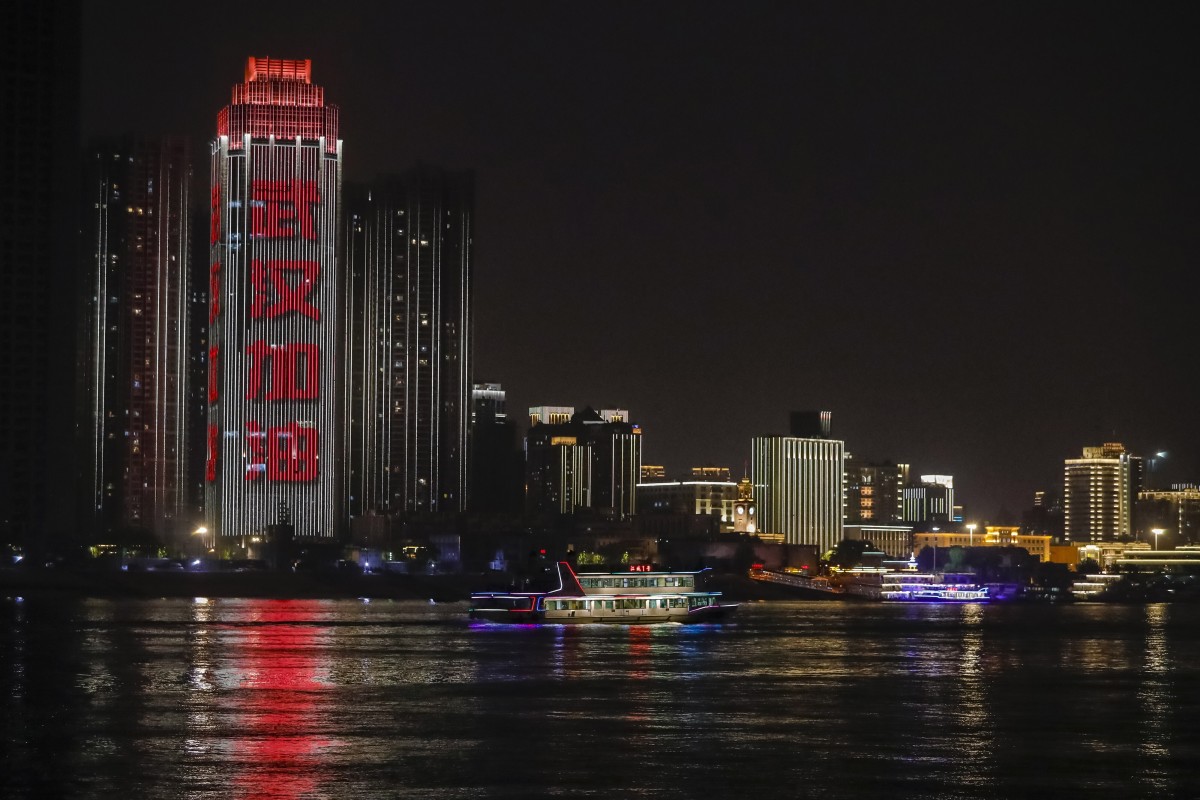
Ferries and other public transport services resumed in Wuhan last week. Photo: Xinhua
The city of Wuhan, the initial epicentre of the coronavirus pandemic, no longer has any Covid-19 patients in hospital after the last 12 were discharged on Sunday.
Their release ended a four-month nightmare for the city, where the disease was first detected in December. The number of patients being treated for Covid-19, the disease caused by a new coronavirus, peaked on February 18 at 38,020 – nearly 10,000 of whom were in severe or critical condition.
“With the joint efforts of Wuhan and the national medical aid given to Hubei province, all cases of Covid-19 in Wuhan were cleared as of April 26,” Mi Feng, a spokesman for the National Health Commission said on Sunday afternoon.
The announcement came only one day after the city discharged the last patient who had been in a severe condition. That patient also was the last severe case in Hubei province.
The last patient discharged from Wuhan Chest Hospital, a 77-year-old man surnamed Ding, twice tested negative for Sars-CoV-2, the virus that causes Covid-19, and was released at noon on Sunday.
“I missed my family so much!” Ding told Changjing Daily.
Another unidentified patient exclaimed as he left the hospital: “The air outside is so fresh! The weather is so good today!”
Wuhan faced a long journey to bring its patient count down to zero.
The city of 11 million, the capital of Hubei province and a transport hub for central China, was put under a strict lockdown on January 23 that barred anyone from entering or exiting the city without official approval for 76 days until it was officially lifted on April 8.
Coronavirus: Wuhan, Los Angeles officials discuss getting back to work after lockdown
22 Apr 2020
Residents were ordered to stay in their apartments as the city stopped public transport and banned private cars from city streets. As the epidemic worsened, more than 42,000 medical staff from across the country were sent to the city and to Hubei province to help ease the burden on the local health care system.
Wuhan was the hardest hit city in China, accounting for 50,333 of the 82,827 locally transmitted Covid-19 cases recorded in China. More than 4,600 died in the country from the disease.
On March 13, the city reported for the first time that there were no new suspected cases of the infection, and five days later there were no confirmed cases.
The number of discharged patients bottomed out at 39.1 per cent at the end of February, gradually climbing to 92.2 per cent by last Thursday.
“Having the patients in the hospital cleared on April 26 marks a major achievement for the city’s Covid-19 treatment,” the Wuhan Health Commission said in a statement.
However, having no severe cases in hospital does not mean all the discharged patients will require no further treatment as they may still need further care.
“Clearing all the severe cases marks a decisive victory for the battle to safeguard Wuhan,” health minister Ma Xiaowei told state broadcaster China Central Television on Saturday.
“Some patients who have other conditions are being treated in specialised hospitals. It has been properly arranged.”
Coronavirus: Chinese writer hit by nationalist backlash over diary about Wuhan lockdown
18 Apr 2020
Ten patients aged between 42 and 85 who have been declared coronavirus-free are still in intensive care at the city’s Tongji Hospital where they are being treated for kidney problems and other complications arising from Covid-19. Some still need ventilators to help them breathe.
These 10 patients are under 24-hour care, with 190 nurses on four-hour rotations. There are other patients in a similar condition in two other hospitals in Wuhan, according to the Hubei Broadcasting and Television Network.
However, the discharge of the last batch of Covid-19 patients does not mean that the risk of infection is gone.
The city reported 20 new cases of people testing positive for Sars-CoV-2, the official name for the coronavirus that causes the disease, but who do not yet show symptoms.
There are 535 such carriers under medical observation. Past data shows some of these asymptomatic carriers will develop symptoms, and so will be counted as Covid-19 patients under China’s diagnosis and treatment plan.
China’s coronavirus infection curve has flattened out with about 694 imported cases of Covid-19 on top of about 800 locally transmitted ones now under treatment.
The national health commission spokesman warned that people still need to be on high alert as the virus is continuing to spread around the globe, with no sign yet of a slowdown.
“[We] must not drop our guard and loosen up. [We] must discover cases in time and deal with them quickly,” Mi said, citing the continued pressure from cases imported by people returning from overseas.
“The next step will be to implement the requirements of the central government and continue to guard against imported cases and a rebound of domestic transmitted cases.”






 CHINDIA ALERT: You'll be living in their world, very soon