Chindia Alert: You’ll be Living in their World Very Soon
aims to alert you to the threats and opportunities that China and India present. China and India require serious attention; case of ‘hidden dragon and crouching tiger’.
Without this attention, governments, businesses and, indeed, individuals may find themselves at a great disadvantage sooner rather than later.
The POSTs (front webpages) are mainly 'cuttings' from reliable sources, updated continuously.
The PAGEs (see Tabs, above) attempt to make the information more meaningful by putting some structure to the information we have researched and assembled since 2006.
Image copyright AFP / GETTYImage caption Shoppers walking past a broadcast of Chinese Premier Li Keqiang delivering his speech at the opening of the NPC on Thursday
China’s ruling Communist Party has set in motion a controversial national security law for Hong Kong, a move seen as a major blow to the city’s freedoms.
The law to ban “treason, secession, sedition and subversion” could bypass Hong Kong’s lawmakers.
Critics say China is breaking its promise to allow Hong Kong freedoms not seen elsewhere in China.
It is likely to fuel public anger and may even trigger fresh protests and demands for democratic reform.
The plan was submitted at the annual National People’s Congress (NPC), which largely rubber-stamps decisions already taken by the Communist leadership, but is still the most important political event of the year.
Hong Kong, a semi-autonomous region and an economic powerhouse, was always meant to have introduced such laws after the handover from British control to Chinese rule in 1997.
After last year’s wave of sustained and violent protest, Beijing is now attempting to push them through, arguing “law-based and forceful measures” must be taken to “prevent, stop and punish” such protests in the future.
On Friday, Hong Kong’s government said it would co-operate with Beijing to enact the law, adding it would not affect the city’s freedoms.
That article says Hong Kong “must improve” national security, before adding: “When needed, relevant national security organs of the Central People’s Government will set up agencies in Hong Kong to fulfil relevant duties to safeguard national security in accordance with the law.”
China could essentially place this law into Annex III of the Basic Law, which covers national laws that must be implemented in Hong Kong – either by legislation, or decree.
Addressing the congress, Premier Li Keqiang spoke of the economic impact of the coronavirus and on Hong Kong and Macau said: “We’ll establish sound legal systems and enforcement mechanisms for safeguarding national security in the two Special Administrative Regions.”
What do opponents say the dangers are?
Hong Kong is what is known as a “special administrative region” of China.
It has observed a “one country, two systems” policy since Britain returned sovereignty in 1997, which has allowed it certain freedoms the rest of China does not have.
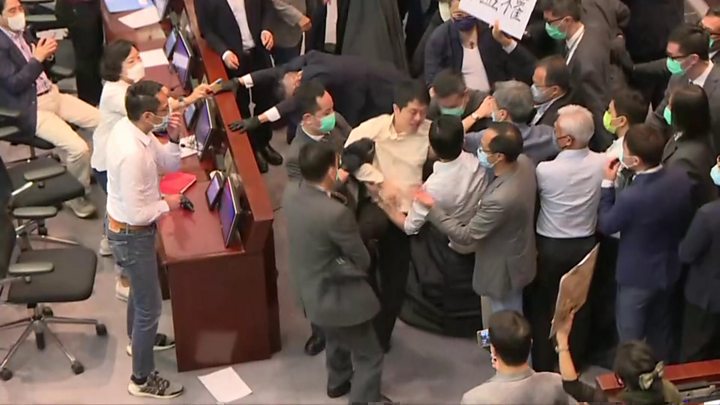
Pro-democracy activists fear that China pushing through the law could mean “the end of Hong Kong” – that is, the effective end of its autonomy and these freedoms.
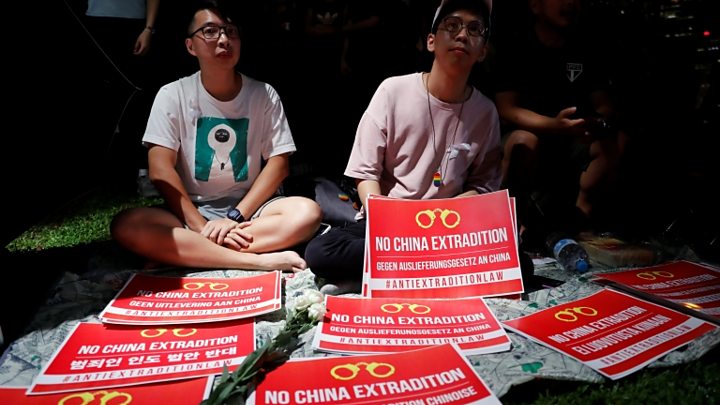
Last year’s mass protests in Hong Kong were sparked by a bill that would have allowed extraditions to mainland China.
Media caption Former Hong Kong governor Chris Patten: “UK should tell China this is outrageous”
The bill was paused, then withdrawn – but the protests continued until the virus outbreak at the end of the year.
The US has also weighed in, with President Trump saying the US would react strongly if it went through – without giving details.
It is currently considering whether to extend Hong Kong’s preferential trading and investment privileges.
Why is China doing this?
Mr Wang said the security risks had become “increasingly notable” – a reference to last year’s protests.
“Considering Hong Kong’s situation at present, efforts must be made at the state-level to establish and improve the legal system and enforcement mechanisms,” he is quoted as saying in state media.
Media caption The BBC’s Helier Cheung on Hong Kong’s 2019 protests
Beijing may also fear September’s elections to Hong Kong’s legislature.
If last year’s success for pro-democracy parties in district elections is repeated, government bills could potentially be blocked.
What is Hong Kong’s legal situation?
Hong Kong was under British control for more than 150 years up to 1997.
The British and Chinese governments signed a treaty – the Sino-British Joint Declaration – that agreed Hong Kong would have “a high degree of autonomy, except in foreign and defence affairs”, for 50 years.
This was enshrined in the Basic Law, which runs out in 2047.
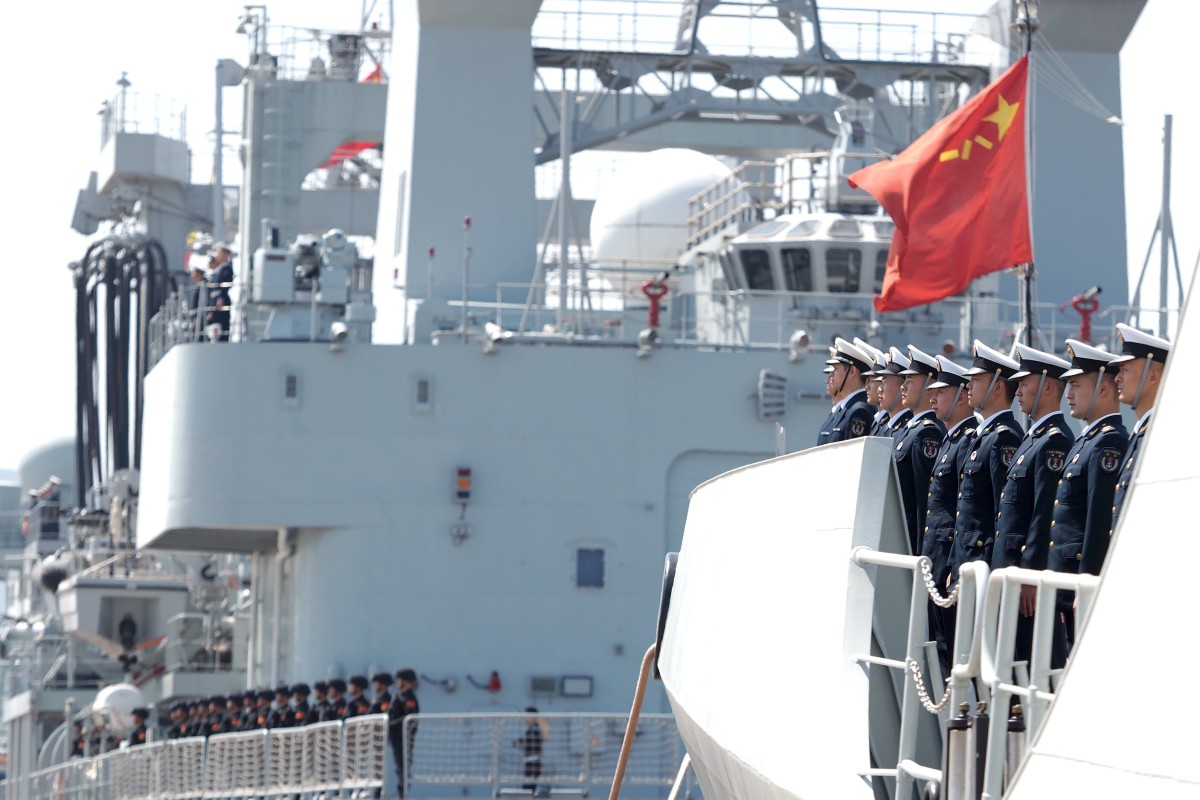
Defence spending could show the effect of economic headwinds but is still expected to increase
PLA’s modernisation and strategic priorities demand spending is maintained even after GDP’s first contraction since records began, observers say
China has made modernising its military and expanding its weaponry a priority. Photo: Xinhua
China’s upcoming defence budget will be only slightly hit by the economic downturn that followed the coronavirus outbreak, and a modest increase is still expected as it continues to develop its military capability, analysts said.
The government’s military budget is expected to be revealed, as is the norm, at this year’s session of the National People’s Congress (NPC), China’s legislative body. Delayed by over two months because of the pandemic, it will finally be convened on May 22.
Last year the defence expenditure announced at the NPC session was
China has said its military expenditure has always been kept below 2 per cent of its GDP over the past 30 years, although its official figures have long been described by Western observers as opaque, with significant omissions of important items.
The South China Sea dispute explained
In a report earlier this week, the Stockholm International Peace Research Institute estimated that China’s actual military spending in 2019 was US$261 billion, the world’s second highest, after the United States’ US$732 billion.
John Lee, adjunct professor at the University of Sydney and senior fellow at the Hudson Institute in Washington, estimated that this year the Chinese defence budget would remain roughly the same or increase modestly, in line with growth levels of recent years.
“In the current environment, Beijing is keen to emphasise that China has recovered substantially from Covid-19 and that its power trajectory is unaffected by recent events,” Lee said. “At the same time, it would be aware of the anger towards the Communist Party for allowing the virus to become a pandemic.
“Regardless of what the reality might be, I would be surprised if there were a dramatic increase or a significant cut.”
First made-in-China aircraft carrier, the Shandong, enters service
China’s GDP suffered a 6.8 per cent decline in the first quarter, the first contraction since quarterly records began in 1992, after an extensive shutdown while it contained its coronavirus outbreak. However, the official increases in the military budget have since 2011 always exceeded overall GDP growth.
The Chinese government may focus more on job creation, social welfare and poverty alleviation, but not at the expense of military investment, according to Collin Koh, research fellow from the S Rajaratnam School of International Studies at Singapore’s Nanyang Technological University in Singapore.
“I tend to think it will be more or less the same,” Koh said. “To reduce [the budget] may send the wrong signal to would-be adversaries, both domestic and external: that Beijing has lost the will to keep up its military modernisation to assert core national interests.”
PLA flexes military muscle near Taiwan ‘in show of Covid-19 control’
15 Apr 2020
The People’s Liberation Army (PLA) began a massive – and costly – reform in 2015, with a personnel reshuffle, change in structure, upgraded equipment and enhanced training to better resemble battle scenarios. That was supposed to be complete this year.
Given the deteriorating relationship with the United States and rising tensions in the Taiwan Strait and South China Sea, the PLA faces challenges requiring a steady increase in investment, according to Hong Kong-based military commentator Song Zhongping.
Taiwan shows off its military power after presidential election
Macau-based military expert Antony Wong Dong predicted there would still be about 6-7 per cent growth in the budget “no matter what”.
“The PLA played an important role in the fight against the contagion, so a decrease in spending would not be accepted,” Wong said.
That role included the deployment of more than 4,000 military medics to help treat Covid-19 patients, and helping to transport medical supplies.
Wong said it would be a crucial year for the PLA in completing its preparation for potential military action against Taiwan, which would be so strategically important that “[President] Xi Jinping himself would never allow it to be affected by a shortage of funding”.
China’s military draws on 6G dream to modernise its fighting forces
18 Apr 2020
But a slight increase in budget would be sufficient to meet defence needs and maintain a deterrence against potential threats, including preventing self-ruled Taiwan taking the opportunity to declare independence, naval expert Li Jie said.
Beijing views Taiwan as a breakaway province to be reunified with the mainland, by force if necessary. Its relationship with Taipei has been strained, and dialogue halted, since Tsai Ing-wen, of the pro-independence Democratic Progressive Party, was elected the island’s president in 2016. Tsai was re-elected for a second term in January.
Li estimated that the budget would probably be kept at the same level or show a “slight” increase from last year.
“It would feed the ‘China threat’ theory and raise international concerns if the Chinese government expands military spending too much,” he said.
BEIJING (Reuters) – China announced on Wednesday that its parliament will open a key annual session on May 22, signalling that Beijing sees the country returning to normal after being reduced to a near-standstill for months by the COVID-19 epidemic.
During the gathering of the National People’s Congress in the capital, delegates will ratify major legislation, and the government will unveil economic targets, set defence spending projections and make personnel changes. The ruling Communist Party also typically announces signature policy initiatives.
The session was initially scheduled to start on March 5 but was postponed due to COVID-19, which has infected nearly 83,000 people and killed more than 4,600 on the mainland after emerging late last year in the central city of Wuhan.
As the epidemic has subsided, economic and social life gradually returned to normal, making it possible for the congress to convene, the official Xinhua news agency quoted the standing committee of the NPC, the legislature’s top decision-making body, as saying.
The committee also appointed Huang Runqiu as the new minister for ecology and environment, a post vacated when predecessor Li Ganjie became deputy Communist Party chief for Shandong province earlier this month, Xinhua reported.
Tang Yijun was also named as the new justice minister to replace Fu Zhenghua, who has reached the retirement age of 65 for ministers.
The Chinese People’s Political Consultative Conference (CPPCC), an advisory body to parliament, has proposed starting its annual session a day before the parliamentary session opens.
Analysts expect China to roll out additional fiscal stimulus in order to cushion the blow from COVID-19, which has developed in to a worldwide pandemic that some fear will trigger a severe global recession.
China’s economy contracted for the first time on record during the January-March period, when the government imposed severe travel and transport restriction to curb the spread of the epidemic.
Parliament is also expected to discuss the anti-government protests in Hong Kong, amid growing speculation that Beijing take steps to strengthen its grip on the city.
It is unclear how long parliament and its advisory body will meet for this time, and people familiar with the matter have told Reuters that this year’s annual sessions could be the shortest in decades due to COVID-19 concerns. Usually more than 5,000 delegates descend on Beijing from all over China for at least 10 days.
Beijing city plans to ease quarantine rules as early as Thursday, two sources familiar with the situation told Reuters, ahead of the key political meetings.
People arriving in the capital from other parts of China will no long have to be quarantined for two weeks unless they come from high-risk areas such as Heilongjiang in the north and some parts of Guangdong in the southeast, the sources said.
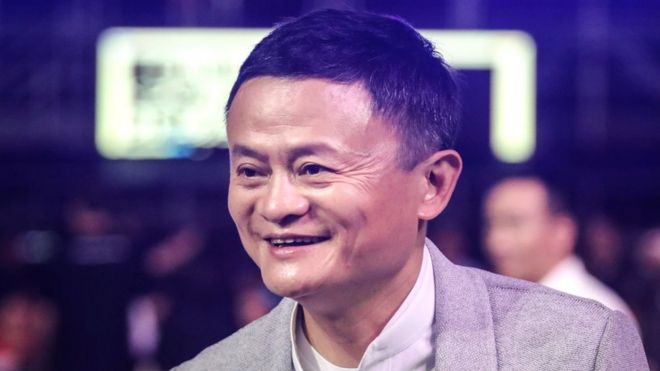
The richest man in China opened his own Twitter account last month, in the middle of the Covid-19 outbreak. So far, every one of his posts has been devoted to his unrivalled campaign to deliver medical supplies to almost every country around the world.
“One world, one fight!” Jack Ma enthused in one of his first messages. “Together, we can do this!” he cheered in another.
The billionaire entrepreneur is the driving force behind a widespread operation to ship medical supplies to more than 150 countries so far, sending face masks and ventilators to many places that have been elbowed out of the global brawl over life-saving equipment.
But Ma’s critics and even some of his supporters aren’t sure what he’s getting himself into. Has this bold venture into global philanthropy unveiled him as the friendly face of China’s Communist Party? Or is he an independent player who is being used by the Party for propaganda purposes? He appears to be following China’s diplomatic rules, particularly when choosing which countries should benefit from his donations, but his growing clout might put him in the crosshairs of the jealous leaders at the top of China’s political pyramid.
Other tech billionaires have pledged more money to fight the effects of the virus – Twitter’s Jack Dorsey is giving $1bn (£0.8bn) to the cause. Candid, a US-based philanthropy watchdog that tracks private charitable donations, puts Alibaba 12th on a list of private Covid-19 donors. But that list doesn’t include shipments of vital supplies, which some countries might consider to be more important than money at this stage in the global outbreak.
The world’s top coronavirus financial donors
How Alibaba compares to the top five. No one else other than the effervescent Ma is capable of dispatching supplies directly to those who need them. Starting in March, the Jack Ma foundation and the related Alibaba foundation began airlifting supplies to Africa, Asia, Europe, Latin America and even to politically sensitive areas including Iran, Israel, Russia and the US.
Ma has also donated millions to coronavirus vaccine research and a handbook of medical expertise from doctors in his native Zhejiang province has been translated from Chinese into 16 languages. But it’s the medical shipments that have been making headlines, setting Ma apart.
“He has the ability and the money and the lifting power to get a Chinese supply plane out of Hangzhou to land in Addis Ababa, or wherever it needs to go,” explains Ma’s biographer, Duncan Clark. “This is logistics; this is what his company, his people and his province are all about.”
A friendly face
Jack Ma is famous for being the charismatic English teacher who went on to create China’s biggest technology company. Alibaba is now known as the “Amazon of the East”. Ma started the company inside his tiny apartment in the Chinese coastal city of Hangzhou, in the centre of China’s factory belt, back in 1999. Alibaba has since grown to become one of the dominant players in the world’s second largest economy, with key stakes in China’s online, banking and entertainment worlds. Ma himself is worth more than $40bn.
Officially, he stepped down as Alibaba’s chairman in 2018. He said he was going to focus on philanthropy. But Ma retained a permanent seat on Alibaba’s board. Coupled with his wealth and fame, he remains one of the most powerful men in China.
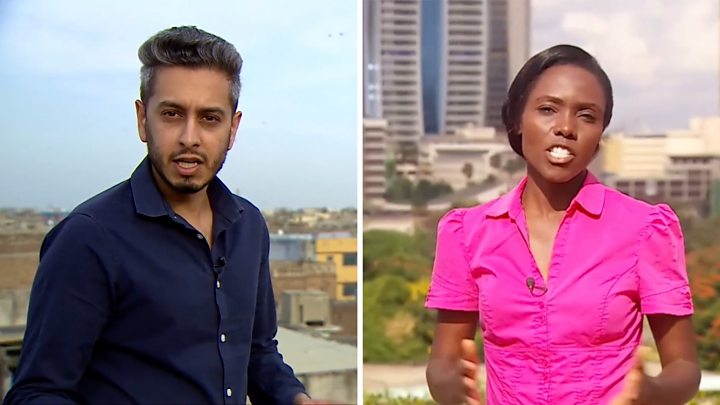
Media caption The BBC’s Secunder Kermani and Anne Soy compare how prepared Asian and African countries are
It appears that Ma’s donations are following Party guidelines: there is no evidence that any of the Jack Ma and Alibaba Foundation donations have gone to countries that have formal ties with Taiwan, China’s neighbour and diplomatic rival. Ma announced on Twitter that he was donating to 22 countries in Latin America. States that side with Taiwan but who have also called for medical supplies – from Honduras to Haiti – are among the few dozen countries that do not appear to be on the list of 150 countries. The foundations repeatedly refused to provide a detailed list of countries that have received donations, explaining that “at this moment in time, we are not sharing this level of detail”.
However, the donations that have been delivered have certainly generated a lot of goodwill. With the exception of problematic deliveries to Cuba and Eritrea, all of the foundations’ shipments dispatched from China appear to have been gratefully received. That success is giving Ma even more positive attention than usual. China’s state media has been mentioning Ma almost as often as the country’s autocratic leader, Xi Jinping.
AFP
So far…
Over 150 countries have received donations from Jack Ma, including about:
120.4mface masks
4,105,000testing kits
3,704ventilators
Source: Alizila
It’s an uncomfortable comparison. As Ma soaks up praise, Xi faces persistent questions about how he handled the early stages of the virus and where, exactly, the outbreak began.
The Chinese government has dispatched medical teams and donations of supplies to a large number of hard-hit countries, particularly in Europe and South-East Asia.
However, those efforts have sometimes fallen flat. China’s been accused of sending faulty supplies to several countries. In some cases, the tests it sent were being misused but in others, low-quality supplies went unused and the donations backfired.
In contrast, Jack Ma’s shipments have only boosted his reputation.
“It’s fair to say that Ma’s donation was universally celebrated across Africa,” says Eric Olander, managing editor of the China Africa Project website and podcast. Ma pledged to visit all countries in Africa and has been a frequent visitor since his retirement.
“What happens to the materials once they land in a country is up to the host government, so any complaints about how Nigeria’s materials were distributed are indeed a domestic Nigerian issue,” Olander adds. “But with respect to the donation itself, the Rwandan leader, Paul Kagame, called it a “shot in the arm” and pretty much everyone saw it for what it was which was: delivering badly-needed materials to a region of the world that nobody else is either willing or capable of helping at that scale.”
Walking the tightrope
But is Ma risking a backlash from Beijing? Xi Jinping isn’t known as someone who likes to share the spotlight and his government has certainly targeted famous faces before. In recent years, the country’s top actress, a celebrated news anchor and several other billionaire entrepreneurs have all “disappeared” for long periods. Some, including the news anchor, end up serving prison sentences. Others re-emerge from detention, chastened and pledging their allegiance to the Party.
“There’s a rumour that [Jack Ma] stepped down in 2018 from being the chairman of the Alibaba Group because he was seen as a homegrown entrepreneur whose popularity would eclipse that of the Communist Party,” explains Ashley Feng, research associate at the Centre for New American Security in Washington DC. Indeed, Ma surprised many when he suddenly announced his retirement in 2018. He has denied persistent rumours that Beijing forced him out of his position.
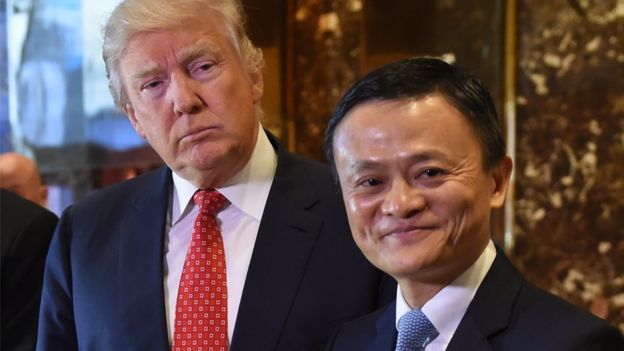
Image copyright GETTY IMAGESImage caption Ma discussed trade with then-President-elect Donald Trump in January 2017
Duncan Clark, Ma’s biographer, is also aware of reports that Ma was nudged away from Alibaba following a key incident in January 2017. The Chinese billionaire met with then-President-elect Donald Trump in Trump Tower, ostensibly to discuss Sino-US trade. The Chinese president didn’t meet with Trump until months later.
“There was a lot of speculation of time that Jack Ma had moved too fast,” Clark says. “So, I think there’s lessons learned from both sides on the need to try to coordinate.”
“Jack Ma represents a sort of entrepreneurial soft power,” Clark adds. “That also creates challenges though, because the government is quite jealous or nervous of non-Party actors taking that kind of role.”
Technically, Ma isn’t a Communist outsider: China’s wealthiest capitalist has actually been a member of the Communist Party since the 1980s, when he was a university student.
But Ma’s always had a tricky relationship with the Party, famously saying that Alibaba’s attitude towards the Party was to “be in love with it but not to marry it”.
Even if Ma and the foundations connected to him are making decisions without Beijing’s advance blessing, the Chinese government has certainly done what it can to capitalise on Ma’s generosity. Chinese ambassadors are frequently on hand at airport ceremonies to receive the medical supplies shipped over by Ma, from Sierra Leone to Cambodia.
China has also used Ma’s largesse in its critiques of the United States. “The State Department said Taiwan is a true friend as it donated 2 million masks,” the Chinese Foreign Ministry tweeted in early April. “Wonder if @StateDept has any comment on Jack Ma’s donation of 1 million masks and 500k testing kits as well as Chinese companies’ and provinces’ assistance?”
Perhaps Ma can rise above what’s happened to so many others who ran afoul of the Party. China might just need a popular global Chinese figure so much that Ma has done what no one else can: make himself indispensable.
“Here’s the one key takeaway from all that happened with Jack Ma and Africa: he said he would do something and it got done,” explains Eric Olander. “That is an incredibly powerful optic in a place where foreigners often come, make big promises and often fail to deliver. So, the huge Covid-19 donation that he did fit within that pattern. He said he would do it and mere weeks later, those masks were in the hands of healthcare workers.”
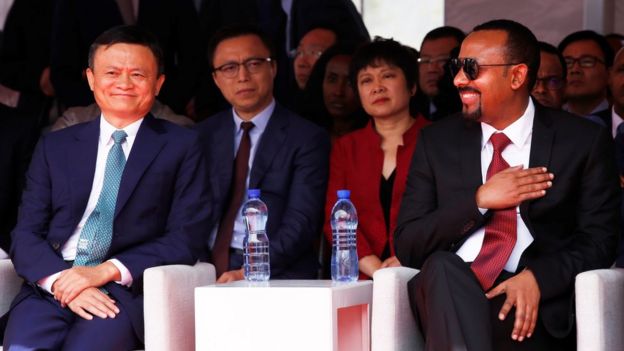
Image copyright GETTY IMAGESImage caption Ma at an Electronic World Trade Platform event with Ethiopian Prime Minister Abiy Ahmed last year
Duncan Clark argues that Ma already had a seat at China’s high table because of Alibaba’s economic heft. However, his first-name familiarity with world leaders makes him even more valuable to Beijing as China tries to repair its battered image.
“He has demonstrated the ability, with multiple IPOs under his belt, and multiple friendships overseas, to win friends and influence people. He’s the Dale Carnegie of China and that certainly, we’ve seen that that’s irritated some in the Chinese government but now it’s almost an all hands on deck situation,” Clark says.
There’s no doubt that China’s wider reputation is benefiting from the charitable work of Ma and other wealthy Chinese entrepreneurs. Andrew Grabois from Candid, the philanthropic watchdog that’s been measuring global donations in relation to Covid-19, says that the private donations coming from China are impossible to ignore.
“They’re taking a leadership role, the kind of thing that used to be done by the United States,” he says. “The most obvious past example is the response to Ebola, the Ebola outbreak in 2014. The US sent in doctors and everything to West Africa to help contain that virus before it left West Africa.”
Chinese donors are taking on that role with this virus.
“They are projecting soft power beyond their borders, going into areas, providing aid, monetary aid and expertise,” Grabois adds.
So, it’s not the right time for Beijing to stand in Jack Ma’s way.
“You know, this is a major crisis for the world right now,” Duncan Clark concludes. “But obviously, it’s also a crisis for China’s relationship with the rest of the world. So they need anybody who can help dampen down some of these those pressures.”
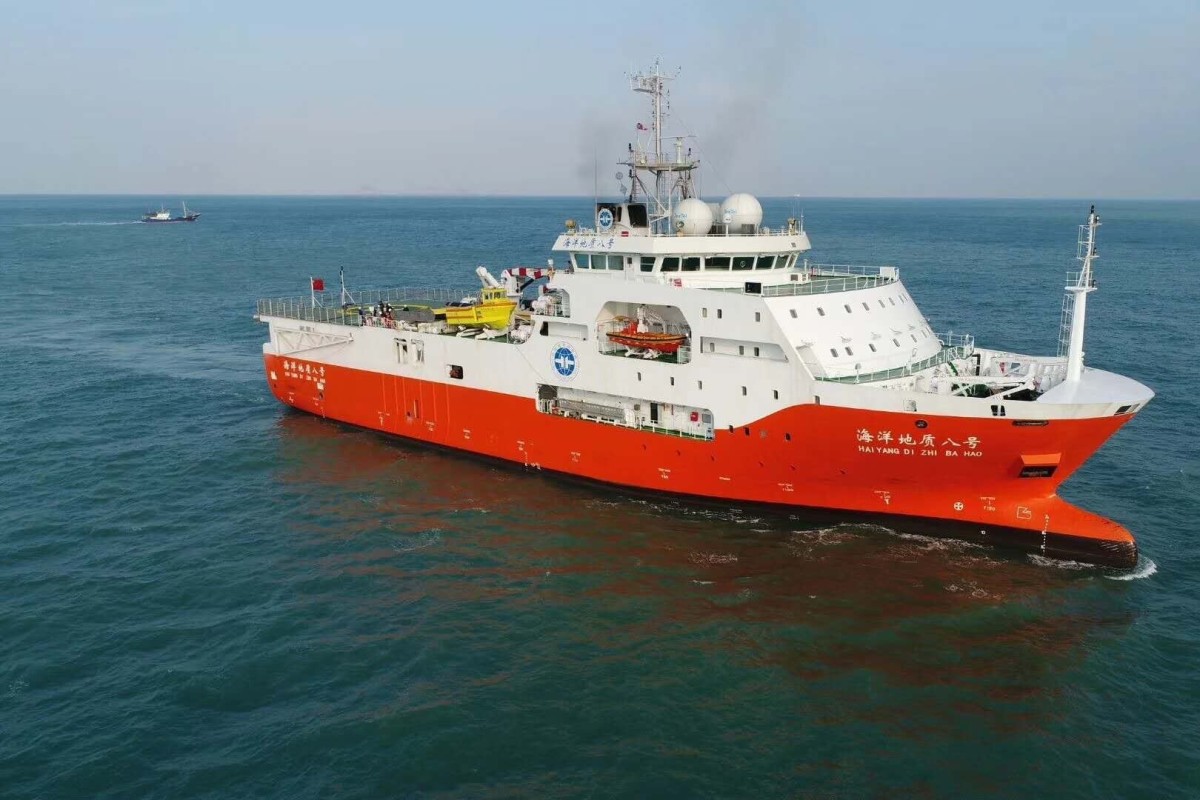
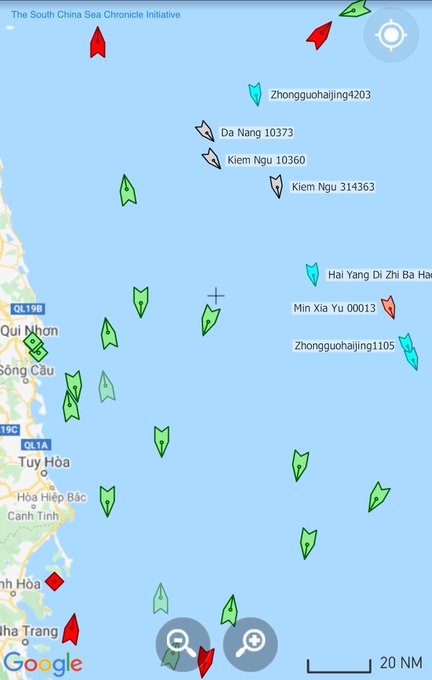
Vietnamese vessels last year spent months shadowing the Chinese Haiyang Dizhi 8 survey vessel in resource-rich waters that are a potential global flashpoint as the
China and Vietnam ‘likely to clash again’ as they build maritime militias
12 Apr 2020
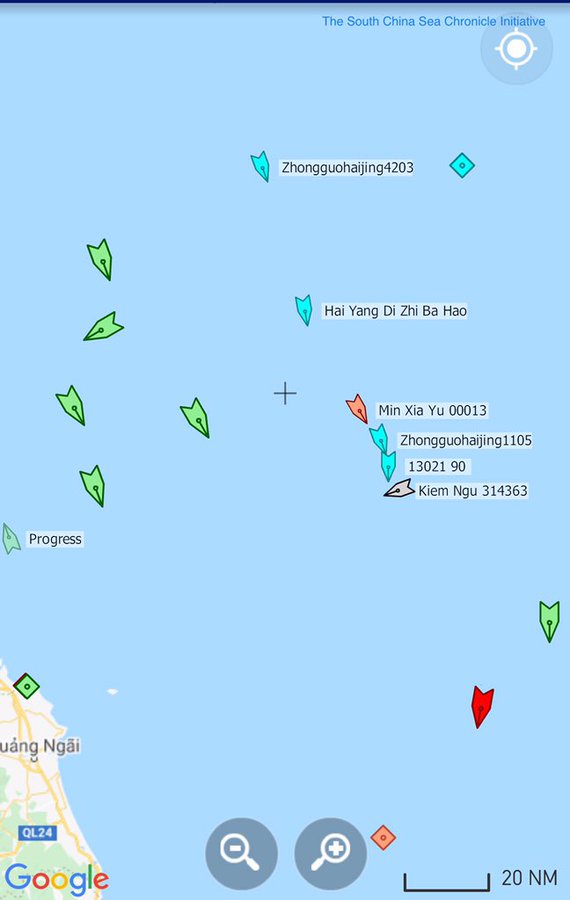
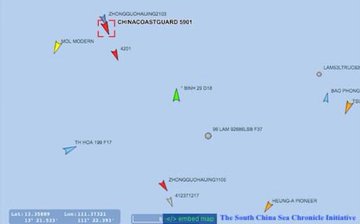
On Tuesday, the ship, which is used for offshore seismic surveys, appeared again 158km off Vietnam’s coast, within its exclusive economic zone (EEZ), flanked by at least one Chinese coastguard vessel, according to data from Marine Traffic, a website that tracks shipping.
At least three Vietnamese vessels were moving with the Chinese ship, according to data issued by the Marine Traffic site.
South China Sea News@SCS_news
·
Haiyang Dizhi 8 is heading toward #SouthChinaSea with several escort ships.
South China Sea News@SCS_news
About 50 nm ahead of Haiyang Dizhi 8 is a group of at least 3 #China Coast Guard ships, including the largest 5901. #SouthChinaSea
The presence of the Haiyang Dizhi 8 in Vietnam’s EEZ comes towards the scheduled end of a 15-day nationwide lockdown in Vietnam aimed at curbing the spread of the coronavirus.
“We call on the PRC to remain focused on supporting international efforts to combat the global pandemic, and to stop exploiting the distraction or vulnerability of other states to expand its unlawful claims in the South China Sea,” the US State Department said in a statement, referring to China.
Vietnam pulls DreamWorks’ ‘Abominable’ over South China Sea map
, which also has disputed claims in the South China Sea, has raised its concerns too.
On Saturday, the Global Times, published by the official People’s Daily newspaper of China’s ruling Communist Party, said Vietnam had used the fishing boat incident to distract from its “ineptitude” in handling the coronavirus.
Vietnam’s Ministry of Foreign Affairs did not immediately respond to a request for comment.
Helped by a mass quarantine and aggressive contact-tracing, Vietnam has recorded 265 cases of the novel coronavirus and no deaths. Nearly 122,000 coronavirus tests have been carried out in Vietnam.
China and Vietnam have for years been at loggerheads over the potentially energy-rich waters, called the East Sea by Vietnam.
China’s U-shaped “nine-dash line” on its maps marks a vast expanse of the waters that it claims, including large parts of Vietnam’s continental shelf where it has awarded oil concessions.
and Brunei claim some of the waters that China claims to the south.
During the stand-off last year, at least one Chinese coastguard vessel spent weeks in waters close to an oil rig in a Vietnamese oil block, operated by Russia’s Rosneft, while the Haihyang Dizhi 8 conducted suspected oil exploration surveys in large expanses of Vietnam’s EEZ.
“The deployment of the vessel is Beijing’s move to once again baselessly assert its sovereignty in the South China Sea,” said Ha Hoang Hop, at the Singapore-based ISEAS-Yusof Ishak Institute.
“China is using the coronavirus distraction to increase its assertiveness in the South China Sea, at a time when the US and Europe are struggling to cope with the new coronavirus.”
The team is expected to provide technical advice on epidemic prevention and control as well as treatment protocols
The Southeast Asian nation on Tuesday recorded its largest daily increase in coronavirus deaths and infections
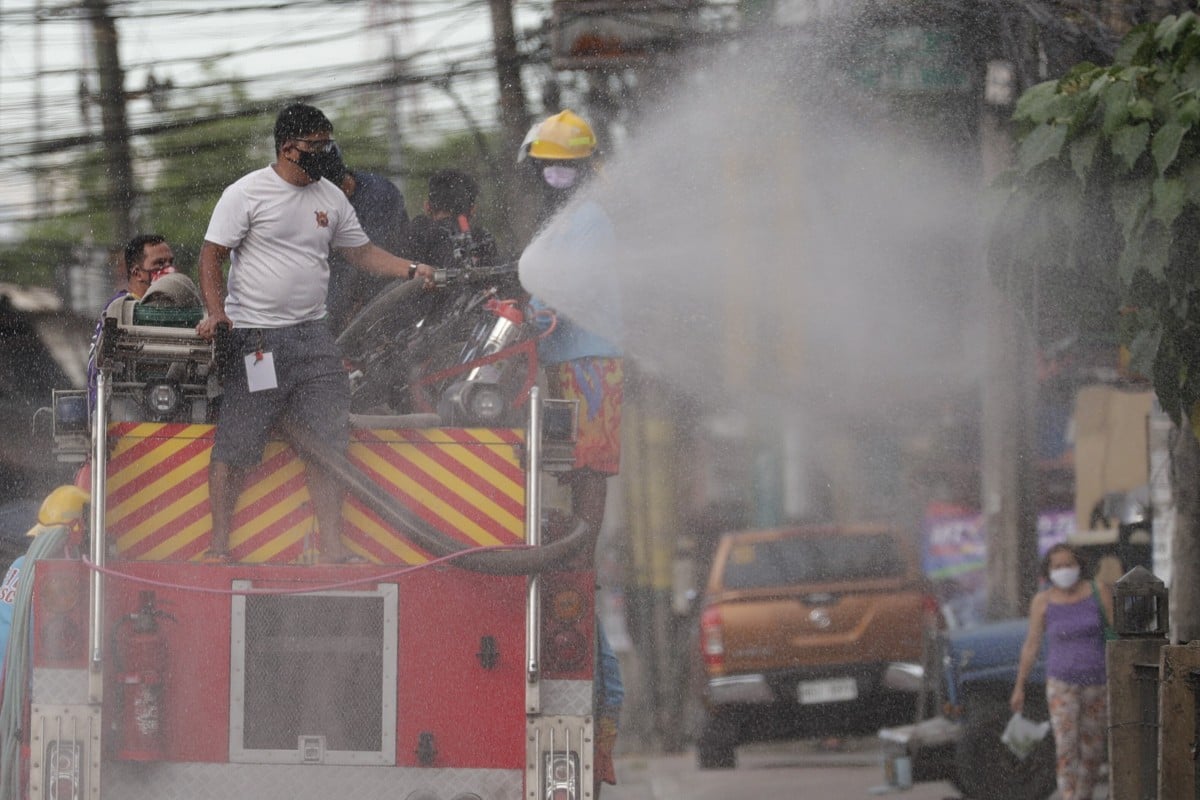
A fireman sprays disinfectant from the back of a fire truck to help curb the spread of the coronavirus during a localised quarantine in Manila. Photo: AP
on Tuesday recorded its largest daily increase in coronavirus deaths and infections, as it awaited the arrival of a Chinese medical team to support its embattled frontline health care workers.
Ten more people died from the Covid-19 disease, bringing the total to 88, while 538 new infections were reported for a total of 2,084.
Among those included in the latest count of positives is former senator Ferdinand “Bongbong” Marcos, whose condition, according to his spokesman Victor Rodriguez, is now “stable” and “improving”.
Health undersecretary Maria Rosario Vergeire said the ministry had opened new labs and run more than 15,000 tests, a five-fold jump from about 3,000 last week. She added that more hospitals were seeking government approval to function as testing centres.
Medical evacuation plane crashes at Manila airport in Philippines, killing eight on board
29 Mar 2020
“We have six more laboratories to conduct tests,” Vergeire said. “We are also conducting contact tracing to find possibly infected persons.”
Philippine hospitals are struggling with a shortage of protective gear, manpower and testing capacity, as are medical facilities around the world. At least 13 doctors have died as of Tuesday and the Philippine Medical Association estimates that over 5 per cent of health workers are currently under quarantine due to Covid-19.
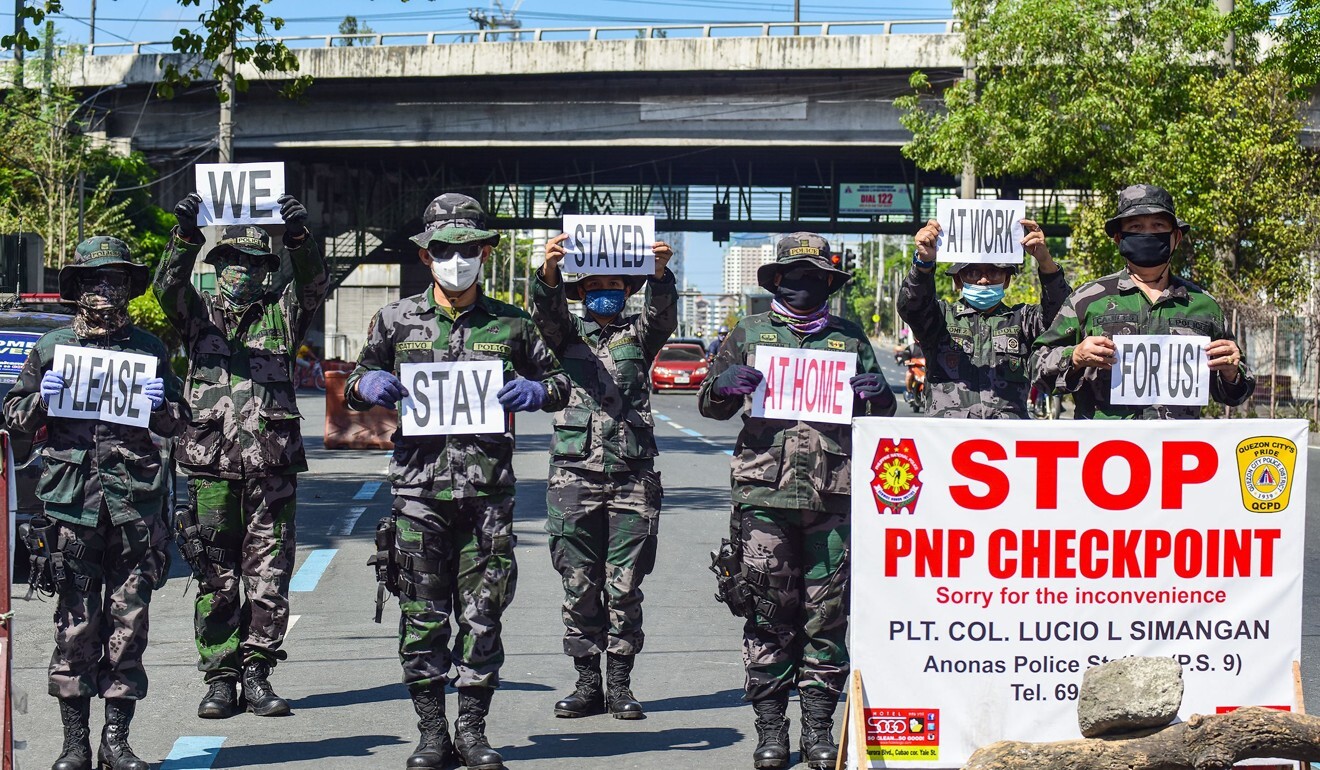
Police personnel in Manila hold up placards reminding people to stay at home. Photo: AFP
The country’s ambassador to China, Chito Sta Romana, confirmed a statement by the Chinese embassy in Manila that Beijing would send an expert team to the Philippines to provide technical advice on epidemic prevention and control as well as treatment protocols.
Sta Romana said the team was made of up of “experienced doctors and public health officials who specialise in infectious diseases”, but could not say when they would arrive.
An infectious disease doctor who spoke on condition of anonymity said the Chinese medical team would only give advice.
Coronavirus: in Philippines, leak shows politicians and relatives received ‘VIP’ testing
25 Mar 2020
“There was an offer to see patients but it was rebuffed because of local laws on practice,” he said, referring to a law that bans foreign doctors from practising medicine in the Southeast Asian nation.
Philippine foreign secretary Teodoro Locsin Jnr on Saturday tweeted that the Department of Health was “blocking their arrival”. His tweet, now deleted, had said “Don’t piss me off. Let them in.”
Health secretary Francisco Duque told local media that Locsin took down his tweet after hearing that the department was preparing hotel accommodation and translators for the expert team.
According to an ethnic Chinese businessman who is a member of a foundation involved in the visit, the team was supposed to have arrived on March 27. It will comprise doctors, nurses and researchers from hospitals and disease prevention agencies in Fujian province who specialise in areas such as infectious diseases, emergency medicine and integrated traditional Chinese and Western medicine.
An estimated 1.2 million ethnic Chinese call the Philippines – which has a population of 107 million people – home, with many tracing their ancestry to Fujian province.
The businessman, who declined to be named, showed This Week in Asia a screenshot of the team’s name list, which included an official from Fujian province’s United Work Front Department, the controversial Communist Party department responsible for promoting its influence around the world.
Beijing has dispatched teams of medical experts to countries struggling with a surge in Covid-19 cases, including Iran and Italy, and has also donated testing kits and other medical supplies.
The Philippine health department apologised over the weekend for comments made by undersecretary Vergeire that some of the kits donated by China had yielded only “40 per cent accuracy” and could not be used.
The Chinese embassy in Manila had rejected the suggestions, and shared a mobile text message supposedly from Duque to Ambassador Huang Xilian that thanked the Chinese government for the test kits.
Philippine President Rodrigo Duterte addresses the nation during a live broadcast on March 30. Photo: AP
Vergeire also issued a correction to her earlier statement, and said she was referring to “another brand” of test kits from China that a private foundation was going to donate.
Political risk analyst Ramon Casiple, who chairs the Institute for Political and Electoral Reforms, said at this point in the Philippines’ coronavirus fight “any help is welcome”.
He said he did not expect any negative political backlash towards the Chinese experts, even though on social media Filipinos have continued to blame China for failing to contain the outbreak in Hubei province, where cases first emerged.
Coronavirus: Philippines’ Luzon lockdown hits domestic helper agencies in Singapore
20 Mar 2020
The Philippines has locked down its main island of Luzon – where about a third of the population lives, and where 70 per cent of economic activity takes place – for the past two weeks, resulting in supply chain disruptions and millions of poor families losing any source of income.
’s critics have questioned what he has done with emergency powers granted to him that came bundled with a 275 billion peso (US$5.4 billion) emergency fund. A report showed that Duterte, through the Department of Social Welfare and Development, had managed to deliver emergency food aid to only 4,753 of the 18 million targeted families.
On Tuesday, finance secretary Carlos Dominguez said the government was planning a stimulus package to help companies and the poorest households.
“This planned stimulus package is already being crafted and will be responsive to the uncertainties of the situation,” Dominguez said in a statement, without elaborating. “At this point, nobody knows how bad this pandemic will get or how long it will last.”
Senate defence committee chair Panfilo Lacson warned that some people “are eating corn fungus to stave off hunger” and “if the executive does not act with dispatch, we may have a serious social problem to face”.
Communist Party of the Philippines founding chairman Jose Maria Sison agreed with Lacson but added, “it is therefore just for the broad masses of the people to be outraged and demand collective action against Duterte, his servant generals and the Department of Health because of their incompetence, corruption and stupidity.”
However, Senate President Vicente Sotto urged the public to “cut [Duterte] some slack”.
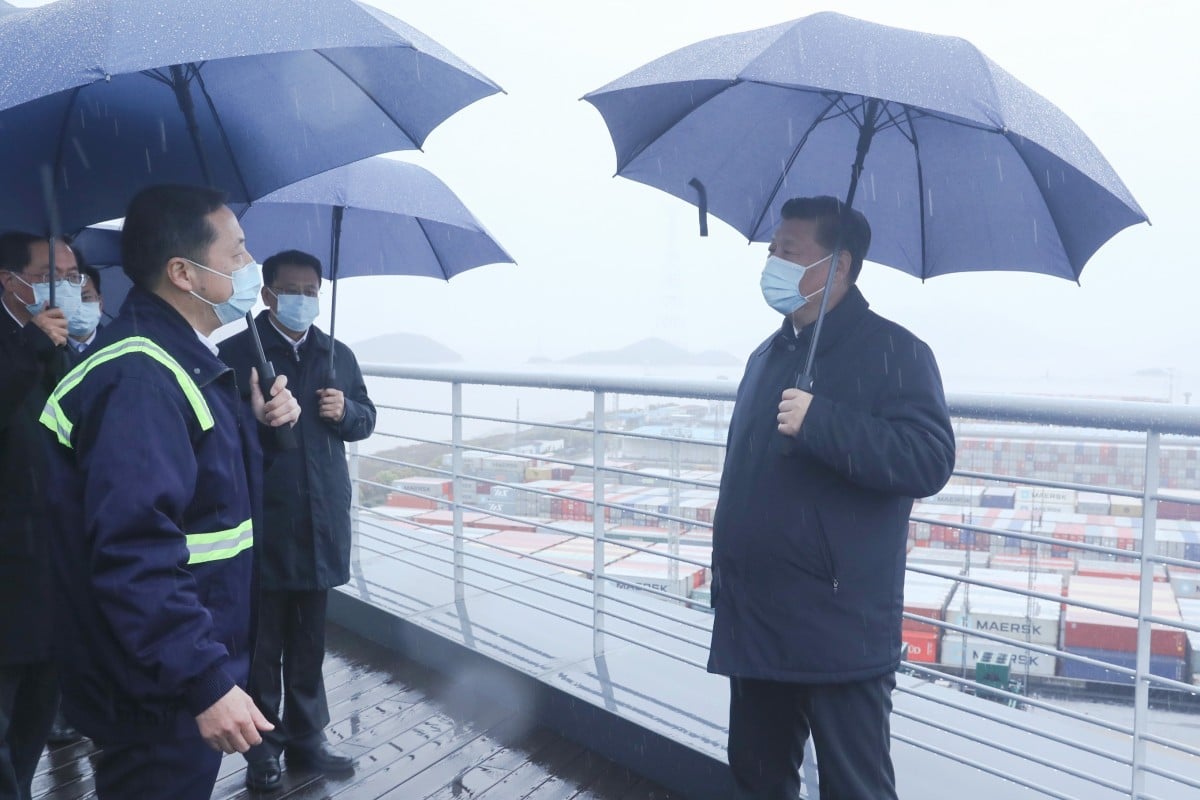
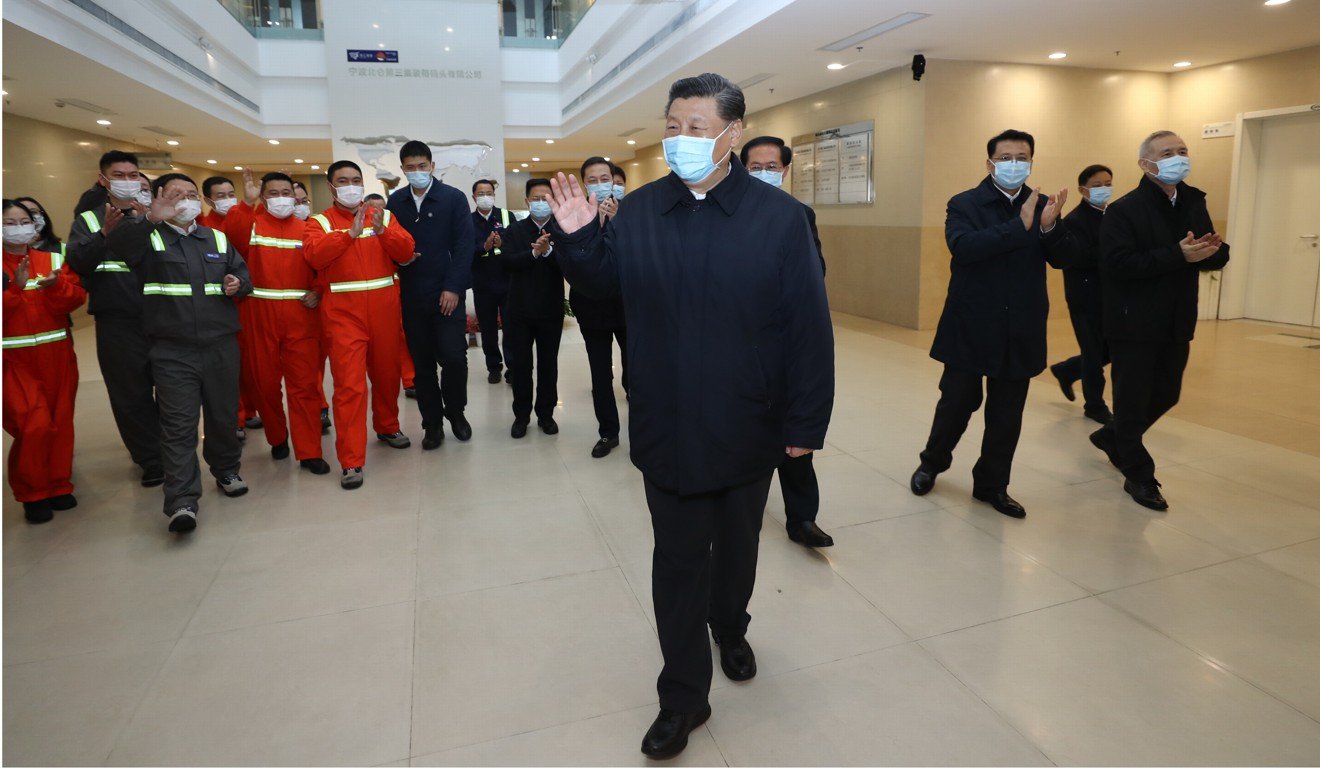
visited the industrial powerhouse of Zhejiang province on Sunday in a move state media described as a clear message the country was ready to get the economy back on track amid the “new normal” of dealing with the coronavirus.
The trip, to Ningbo – one of the world’s busiest ports and a trade hub for eastern China – was Xi’s first outside Beijing since he visited Wuhan, the initial epicentre of the Covid-19 outbreak, earlier in the month.
As well as a visiting the port, he spoke to workers at an industrial zone for car part manufacturers, where he learned about the latest efforts to restart production, Xinhua said in a brief report.
The visit came after two months of almost total lockdown in many parts of the country that disrupted businesses, transport and people’s daily lives, and ground the economy to a near standstill.
While local transmissions of the coronavirus in China appear to be under control, Beijing has implemented strict measures to prevent imported cases, including slashing international flights and banning most foreigners from entering the country.
In a separate report, Xinhua said Xi’s visit sent “a clear message” that China was resuming its industrial production and social activities, and described the fight against the coronavirus as the “new normal”.
Reviving the economy and battling a deadly disease were Xi’s “two tough battles”, it said.
Xi’s choice of destination was a clear message that restarting the economy is a top priority. Photo: Xinhua
Zhejiang is something of a power base for Xi, who spent nearly five years there during his climb through the ranks of the Communist Party.
One of the country’s biggest trading hubs, the province generated 3 trillion yuan (US$423.2 billion) in foreign trade last year, or more than 13 per cent of the national total, according to official figures.
“It’s a highly export-oriented economy … which has made it crucial not only to China’s development plan but also to safeguarding the stability of the global supply chain,” Xinhua said.
Observers said Xi’s visit was evidence of Beijing’s determination to get the economy back up and running as soon as possible.
Zhao Xijun, an economics professor at Renmin University, said Ningbo was a key part of the export economy and a base for many local and foreign entrepreneurs.
“It is a clear signal that China, after getting domestic infections under control, is now prioritising economic growth,” he said.
“It also shows the country will keep developing its economy and opening up its markets.”
But hopes of a quick recovery for the Chinese economy have been dashed by the spread of the coronavirus across Europe and the United States, causing a sharp decline in demand for Chinese goods.
Xi spent five years in Zhejiang while climbing the ranks of the Communist Party. Photo: Xinhua
In a meeting on Friday, the Communist Party’s Politburo said it would step up macroeconomic policy adjustments and pursue a more proactive fiscal policy while optimising measures to control the coronavirus to speed up the restoration of production, doing whatever it could to “minimise the losses caused by the epidemic”.
“China has successfully reopened much of its economy from the extremes of the coronavirus lockdown, but now faces a new problem: an impending collapse in demand for its exports as its customers go into lockdowns of their own,” Gavekal Dragnomics said in a research report.
“That shock to industry and manufacturing employment means that China will not enjoy the hoped-for V-shaped recovery in growth.”
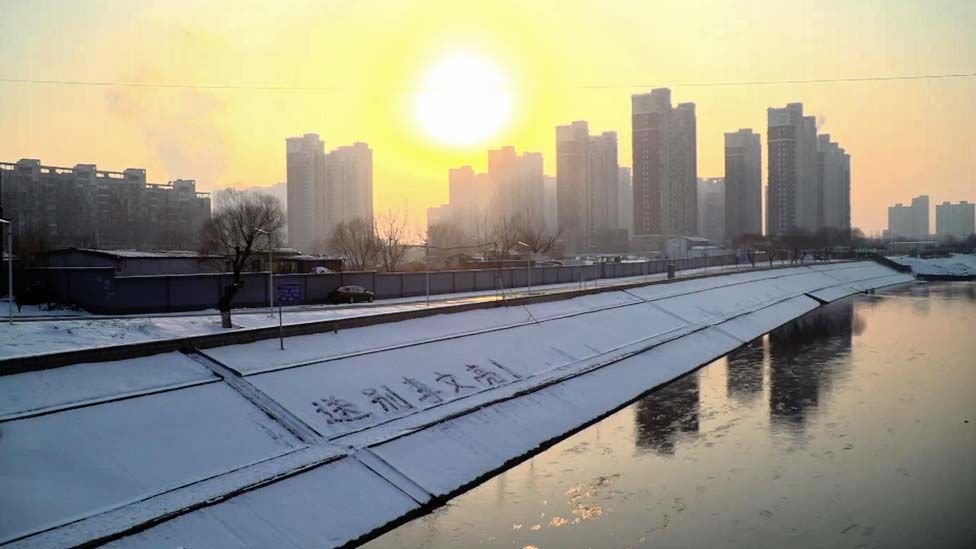
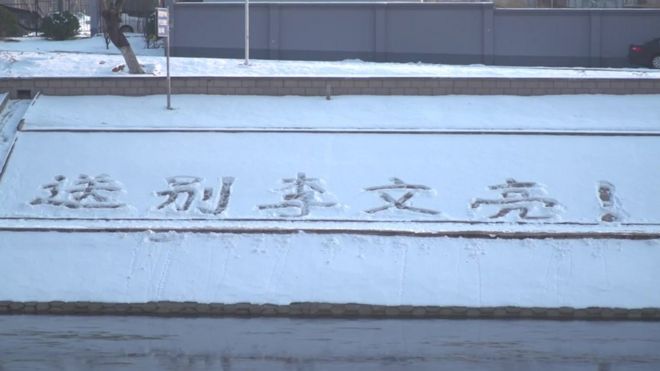
Image caption A message written in the snow alongside the Tonghui river reads “Goodbye Li Wenliang!”
On a cold Beijing morning, on an uninspiring, urban stretch of the Tonghui river, a lone figure could be seen writing giant Chinese characters in the snow.
The message taking shape on the sloping concrete embankment was to a dead doctor.
“Goodbye Li Wenliang!” it read, with the author using their own body to make the imprint of that final exclamation mark.
Five weeks earlier, Dr Li had been punished by the police for trying to warn colleagues about the dangers of a strange new virus infecting patients in his hospital in the Chinese city of Wuhan.
Now he’d succumbed to the illness himself and pictures of that frozen tribute spread fast on the Chinese internet, capturing in physical form a deep moment of national shock and anger.
Image copyright GETTY IMAGESImage caption A worker in a Chinese factory wears a protective mask
There’s still a great deal we don’t know about Covid-19, to give the disease caused by the virus its official name. Before it took its final fatal leap across the species barrier to infect its first human, it is likely to have been lurking inside the biochemistry of an – as yet unidentified – animal. That animal, probably infected after the virus made an earlier zoological jump from a bat, is thought to have been kept in a Wuhan market, where wildlife was traded illegally.
Beyond that, the scientists trying to map its deadly trajectory from origin to epidemic can say little more with any certainty.
But while they continue their urgent, vital work to determine the speed at which it spreads and the risks it poses, one thing is beyond doubt. A month or so on from its discovery, Covid-19 has shaken Chinese society and politics to the core.
That tiny piece of genetic material, measured in ten-thousandths of a millimetre, has set in train a humanitarian and economic catastrophe counted in more than 1,000 Chinese lives and tens of billions of Chinese yuan. It has closed off whole cities, placing an estimated 70 million residents in effective quarantine, shutting down transport links and restricting their ability to leave their homes. And it has exposed the limits of a political system for which social control is the highest value, breaching the rigid layers of censorship with a tsunami of grief and rage.
The risk for the ruling elite is obvious.
It can be seen in their response, ordering into action the military, the media and every level of government from the very top to the lowliest village committee.
The consequences are now entirely dependent on questions no one knows the answers to; can they pull off the complex task of bringing a runaway epidemic under control, and if so, how long might it take?
Across the world, people seem unsure how to respond to the small number of cases being detected in their own countries. The public mood can swing between panic – driven by the pictures of medical workers in hazmat suits – to complacency, brought on by headlines that suggest the risk is no worse than flu. The evidence from China suggests that both responses are misguided. Seasonal flu may well have a low fatality rate, measured in fractions of 1%, but it’s a problem because it affects so many people around the world.
The tiny proportion killed out of the many, many millions who catch it each year still numbers in the hundreds of thousands – individually tragic, collectively a major healthcare burden.
Very early estimates suggested the new virus may be at least as deadly as flu – precisely why so much effort is now going into stopping it becoming another global pandemic. But one new estimate suggests it could prove even deadlier yet, killing as many as 1% of those who contract it. For any individual, that risk is still relatively small, although it’s worth noting such estimates are averages – just like flu, the risks fall more heavily on the elderly and already infirm.
Image copyright REUTERSImage caption Despite the death toll, an increasing number of patients are recovering
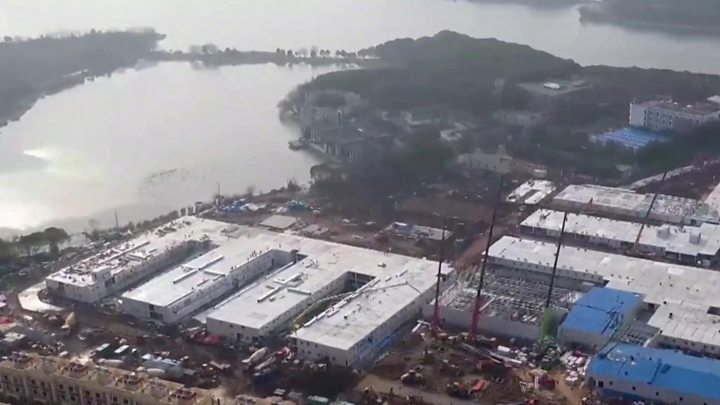
But China’s experience of this epidemic demonstrates two things. Firstly, it offers a terrifying glimpse of the potential effect on a healthcare system when you scale up infections of this kind of virus across massive populations. Two new hospitals have had to be built in Wuhan in a matter of days, with beds for 2,600 patients, and giant stadiums and hotels are being used as quarantine centres, for almost 10,000 more.
Despite these efforts, many have still struggled to find treatment, with reports of people dying at home, unregistered in the official figures. Secondly, it highlights the importance of taking the task of containing outbreaks of new viruses extremely seriously. The best approach, most experts agree, is one based on transparency and trust, with good public information and proportionate, timely government action.
But in an authoritarian system, with strict censorship and an emphasis on political stability above all else, transparency and trust are in short supply.
Media caption Aerial time-lapse shows Wuhan hospital construction
But those measures have become necessary only because its initial response looked like the very definition of complacency.
There’s ample evidence that the warning signs were missed by the authorities, and worse, ignored. By late December, medical staff in Wuhan were beginning to notice unusual symptoms of viral pneumonia, with a cluster linked to the market trading in illegal wildlife. On 30 December, Dr Li Wenliang, an ophthalmologist working in Wuhan’s Central Hospital, posted his concerns in a private medical chat group, advising colleagues to take measures to protect themselves. He’d seen seven patients who appeared to be suffering with an illness similar to Sars – another coronavirus that began in an illegal Chinese wildlife market in 2002 and went on to kill 774 people worldwide.
The case received national media attention, with a high-profile state-run TV report announcing that in total, eight people in Wuhan were being investigated for “spreading rumours”. The authorities, though, were well aware of the outbreak of illness. The day after Dr Li posted his message, China notified the World Health Organization, and the day after that, the suspected source – the market – was closed down.
But despite the multiplying cases and the concerns among medics that human-to-human transmission was taking place, the authorities did little to protect the public. Doctors were already setting up quarantine rooms and anticipating extra admissions when Wuhan held its important annual political gathering, the city’s People’s Congress.
Image caption Images from Chinese state TV show the large banquet in Wuhan
Most remarkable of all perhaps, the following day, Wuhan held a Lunar New Year dance performance, attended by senior officials from across the surrounding province of Hubei. A state media report of the event, since hurriedly deleted but captured here, says the performers, some with runny noses and feeling unwell, “overcame the fear of pneumonia… winning praise from the leaders”.
By the time the national authorities had woken up to the impending disaster, and closed the city down on 23 January, it was too late – the epidemic was out of control. Before Wuhan’s transport links were cut, an estimated five million people had left the city for the Lunar New Year break, travelling across China and the world.
The parallels in failures to pass bad news up the chain of command and the incentives to put the short-term interests of political stability ahead of public safety, seem all too apparent. Li Wenliang, who’d gone back to work after being warned to keep quiet, soon discovered he’d also been infected.
He died earlier this month, leaving a five-year-old son and a pregnant wife.
Anger was already simmering over the authorities’ failure to issue timely warnings, with the crisis now being aired in full view. Wuhan’s politicians were blaming senior officials for failing to authorise the release of the information; senior officials appeared to be preparing to hang Wuhan’s politicians out to dry.
But the death of a man, silenced for simply trying to protect his colleagues, burst open the dam with a wave of online fury directed not just at individuals, but at the system itself. So great was the public outrage, China’s censors appeared unsure what to censor and what to let through. The hashtag #Iwantfreedomofspeech was viewed almost two million times before it was blocked. Aware of the tide of emotion, the Party began paying its own tributes to Dr Li.
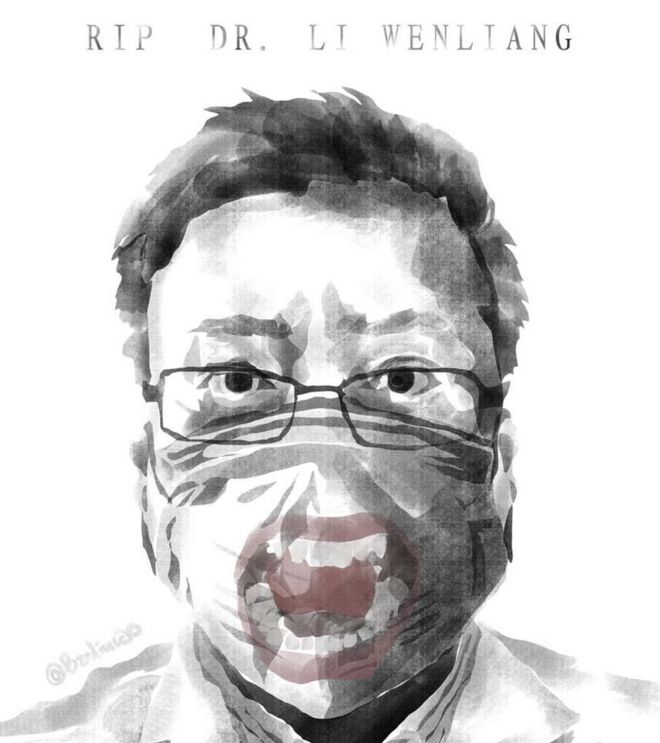
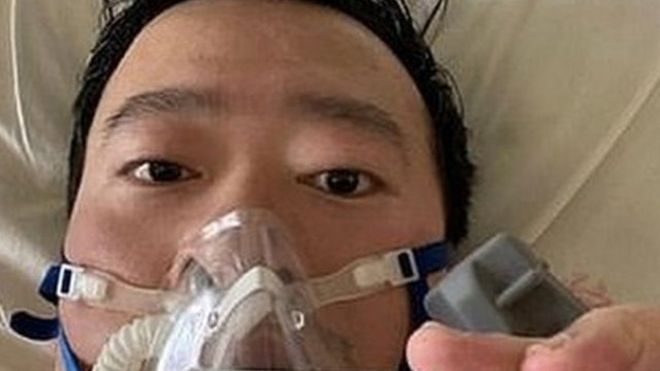
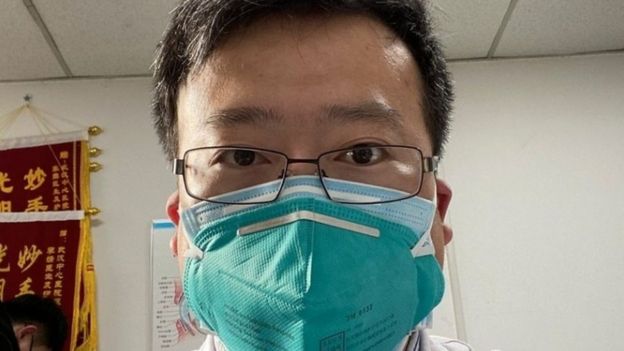
Image copyright COURTESY BADIUCAOImage caption Doctor Li Wenliang tried to warn authorities about the new virus and died after contracting it
China’s rulers, untroubled by the inconveniences of the ballot box, have far deeper and older fears of what might sweep them from office. The wars, famines and diseases that shook the dynasties of old have given them their inheritance; an acute historical sense of the danger of the unforeseen crisis. They will also know well what Chernobyl did for the legitimacy of the ruling Communist Party in the former USSR.
“It’s impossible to know if Li Wenliang’s death will serve as the catalyst for something bigger,” Jude Blanchette, an expert on Chinese politics at the Center for Strategic and International Studies in Washington, tells me. “But the raw emotion that surged when news of his condition broke indicates deep levels of frustration and anger exist within the country.”
Precisely because it feels the weight of history, however, the Communist Party has made holding onto power a living obsession, and it has an ever more formidable domestic security apparatus to help it to do so. Over the past few decades it has proven nothing if not resilient, enduring through political chaos, devastating earthquakes and man-made disasters.
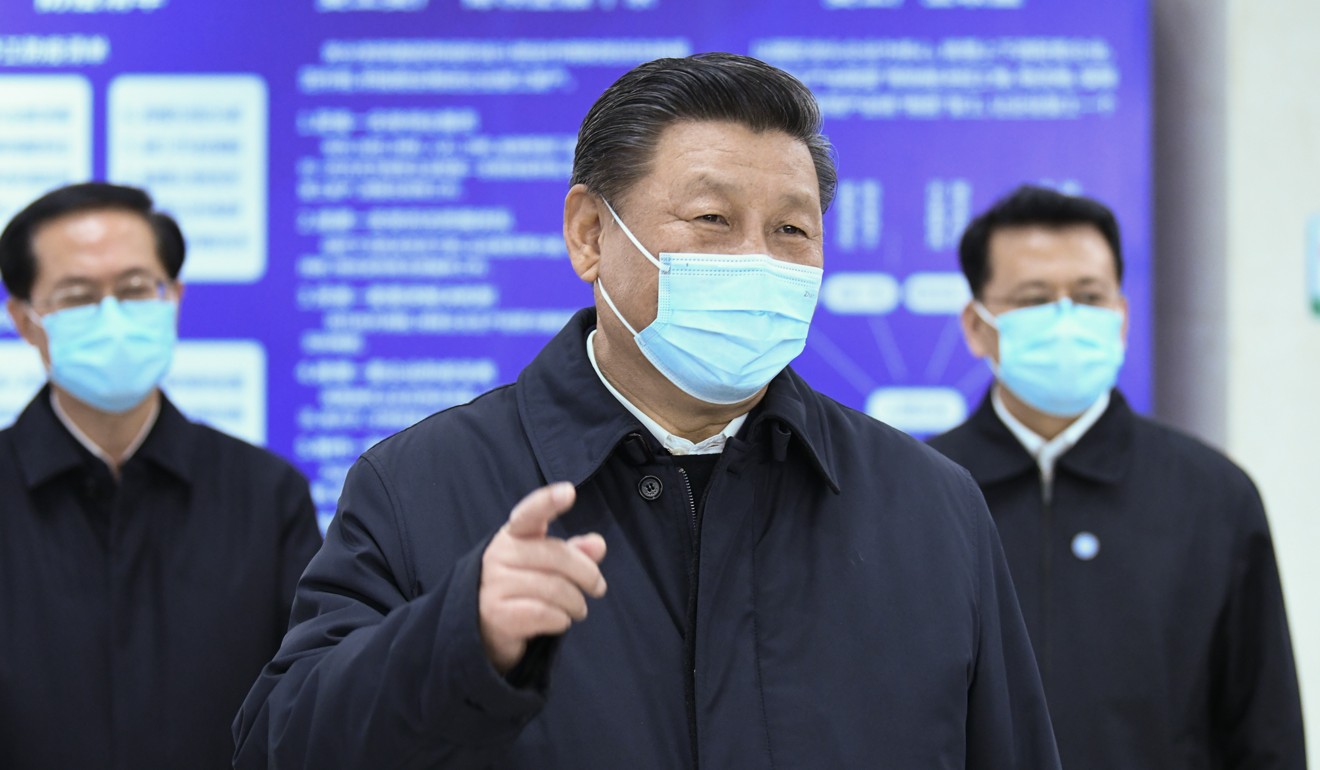
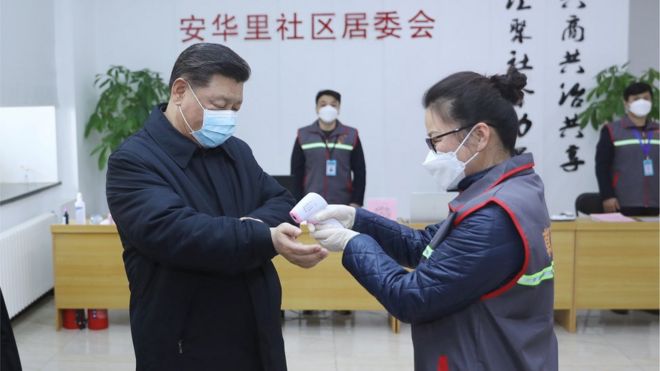
But one sign that might hint at an awareness of just how great the current risks are comes in the role being played by China’s President Xi Jinping. This week – for the first time since the crisis began – he ventured out to meet health workers involved in the fight, visiting a hospital and a virus control centre in Beijing.
In contrast, his premier, Li Keqiang, has been sent to the front lines in Wuhan and appointed head of a special working group to tackle the epidemic.
While it is common for the premier to be the face of reassurance during national disasters, some observers see another reason why Mr Xi might be wise to be seen to delegate.
Image copyright EPAImage caption China’s president has kept a low profile since the outbreak began
“Xi’s absence from this crisis is yet another demonstration that he doesn’t so much lead as he does command,” Mr Blanchette says. “He’s clearly worried that this crisis will blow up in his face, and so he’s pushed out underlings to be the public face of the CCP’s response.”
Already there are signs that the censorship is being ratcheted up once again, with Mr Xi ordering senior officials to “strengthen the control over online media”.
A few days ago, I spoke by phone to the lawyer and blogger, Chen Qiushi, who’d travelled to Wuhan in an attempt to provide independent reporting about the situation. Videos from Mr Chen, and a fellow activist, Fang Bin, have been widely watched, showing not the ranks of patriotic soldier-medics and the building of hospitals that fill state media coverage, but overcrowded waiting rooms and body bags.
He told me he was unsure how long he’d be able to carry on. “The censorship is very strict and people’s accounts are being closed down if they share my content,” he said.
Mr Chen has since gone missing.
Friends and family believe he’s been forced into Wuhan’s quarantine system, in an attempt to silence him.
China’s leaders now find their fate linked to the daily charts of infection rates, published city by city, province by province. There are some signs that the extraordinary quarantine measures may be having an effect – outside of Hubei Province, the worst affected area, the number of new daily infections is falling.
But with the need to try to restart the economy – all but frozen now for over a week – the country has begun a slow return to work.
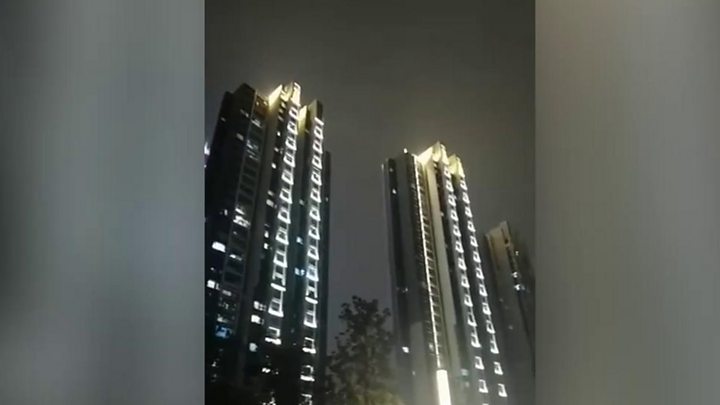
Media caption “Wuhan, add oil!”: Watch residents shouting to boost morale in quarantined city
Strict quarantine measures will remain in force in the worst affected areas, but workers from other parts of the country are trickling back to the cities, with the task of monitoring and managing their movements being handed to local neighbourhood committees.
It will be a difficult balancing act.
Too tough an approach risks further choking off business activity, commerce and travel in a consumer environment already suffocating under the deep psychological fear of contagion. Too lax, and any one of the many potential reservoirs of infection, now scattered across the country, could explode into another, separate epidemic.
That would require further harsh action, knocking domestic confidence and prolonging the international border closures and flight restrictions put in place at such enormous economic cost.
Questions about the systemic failings behind the disaster are dismissed as foreign “prejudice”, as the propaganda machine cranks into overdrive, channelling the narrative and muting the criticisms.
But the devastating scale and scope of China’s world-threatening catastrophe have already revealed something important. The thousands who have lost family members, the millions living under the quarantine measures and the workers and businesses bearing the financial costs have been asking those difficult questions too.
Image caption A tribute in snow to doctor Li Wenliang
On the snowy banks of the Tonghui river, the giant tribute to Li Wenliang remains intact. When we visited, a few locals were taking photos and talking quietly to each other.
A police car crawled slowly by.
Soon, with the warming weather, the characters will be gone.
BEIJING (Reuters) – China tentatively plans to hold its delayed annual gathering of parliament in late April or early May, two people involved in preparations told Reuters, as new coronavirus cases in the country drop sharply even as they surge elsewhere.
The annual meetings of the National People’s Congress (NPC) and the Chinese People’s Political Consultative Conference (CPPCC), known as the “two sessions”, were scheduled for early March but were delayed due to the virus outbreak, with no new date announced.
Holding the events, which typically draw a combined 5,000 delegates to Beijing’s Great Hall of the People, would be a major indication that the Chinese leadership sees things as returning to normal.
The State Council Information Office and the media department of the Standing Committee of the NPC did not immediately respond to faxed requests for comment on Monday.
The outbreak that originated in the central city of Wuhan has infected more than 80,000 people in the country, killed 3,200 and wreaked economic havoc, causing factory output to plunge at the sharpest pace in three decades.
The NPC’s timing is not finalised, and one of the people said the number of attendees may be reduced, with those visiting from outside Beijing needing to undergo quarantine.
People now arriving in the capital from elsewhere in China must spend two weeks in quarantine.
“We still have to play it by ear, as the coronavirus rapidly spreads across the world,” said the person, declining to be identified given the sensitivity of the matter.
The NPC, China’s parliament, usually sits for at least 10 days. The CPPCC, a largely ceremonial advisory body, runs in parallel.
During parliament, legislators pass laws and unveil economic targets, defence spending projections and other important policy decisions. It is also an occasion for China’s ruling Communist Party to announce major policy and personnel changes.
This year, the NPC is expected to discuss the recent months of anti-government protests in Hong Kong, with China’s economy also expected to be a key item on the agenda.
News of his death was met with an intense outpouring of grief on Chinese social media site Weibo – but this quickly turned into anger.
There had already been accusations against the government of downplaying the severity of the virus – and initially trying to keep it secret.
Dr Li’s death has fuelled this further and triggered a conversation about the lack of freedom of speech in China.
The country’s anti-corruption body has now said it will open an investigation into “issues involving Dr Li”.
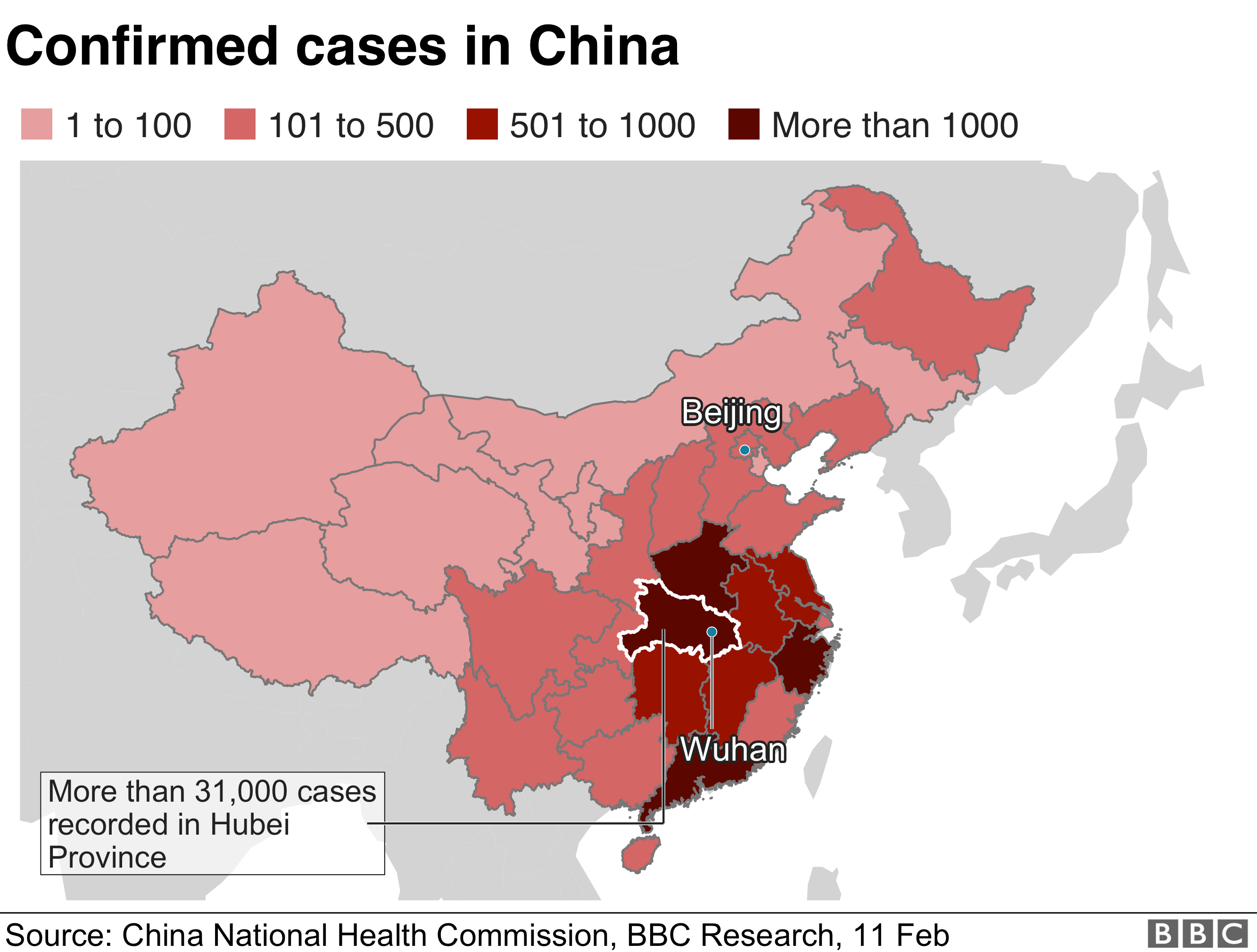
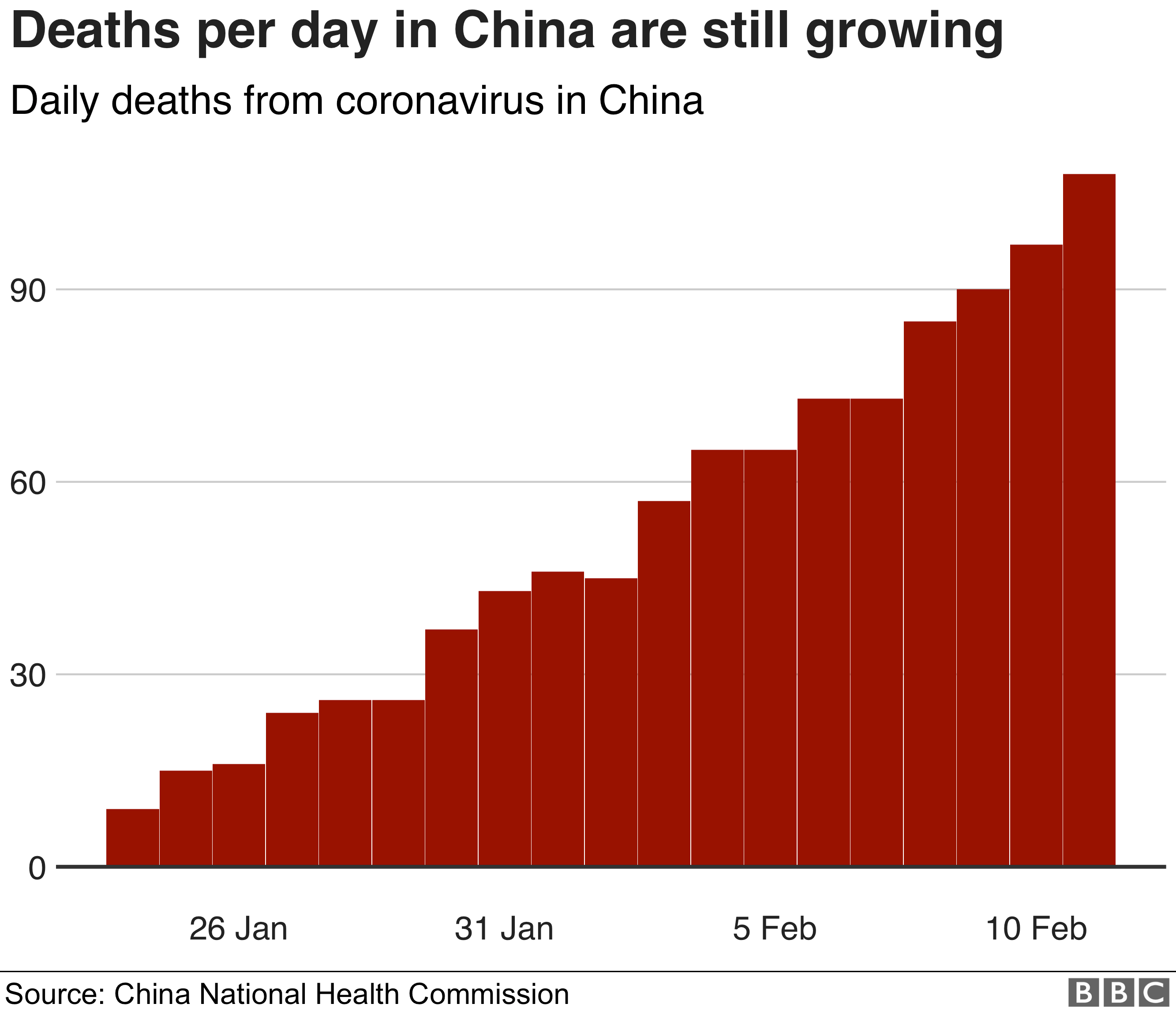
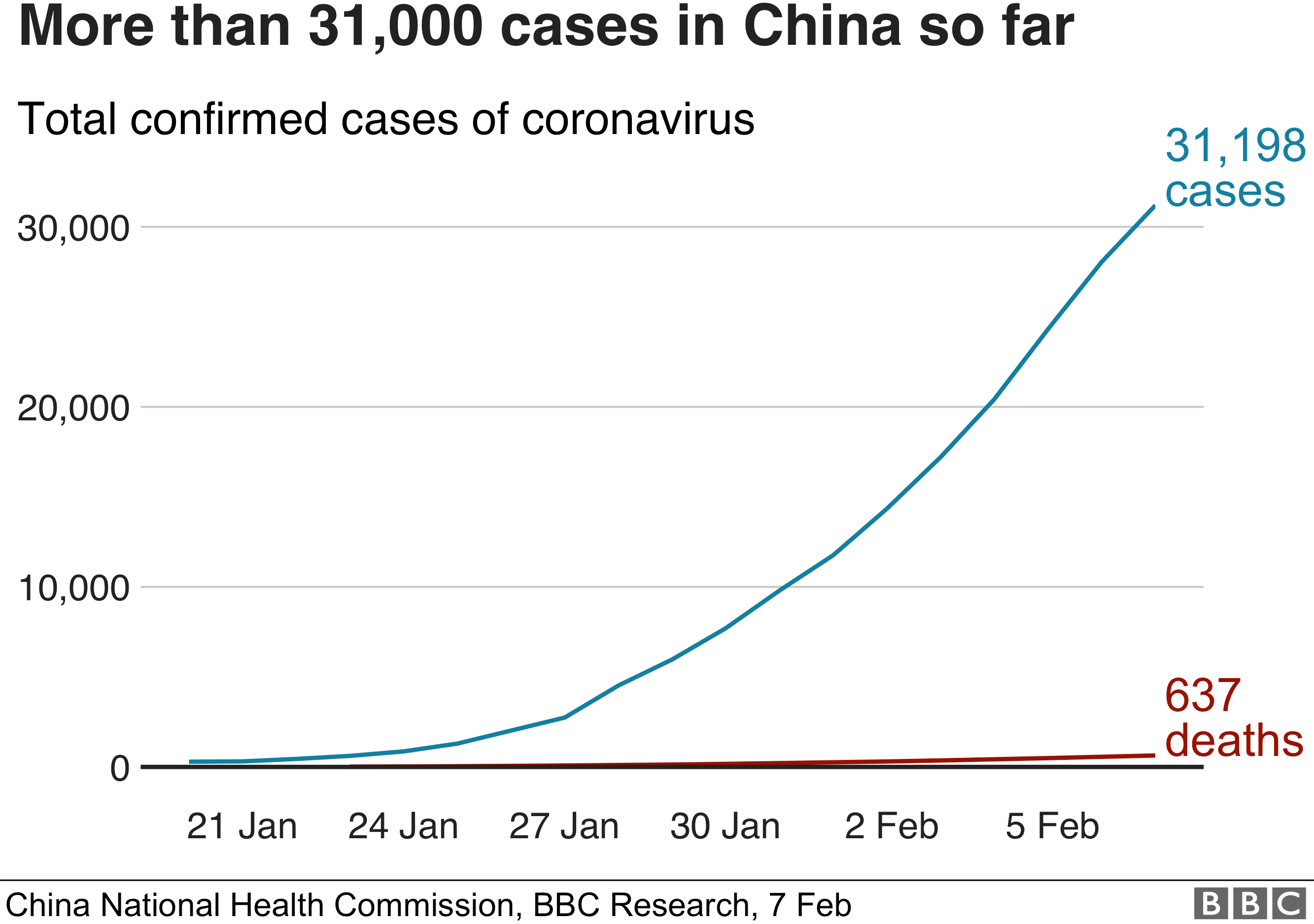
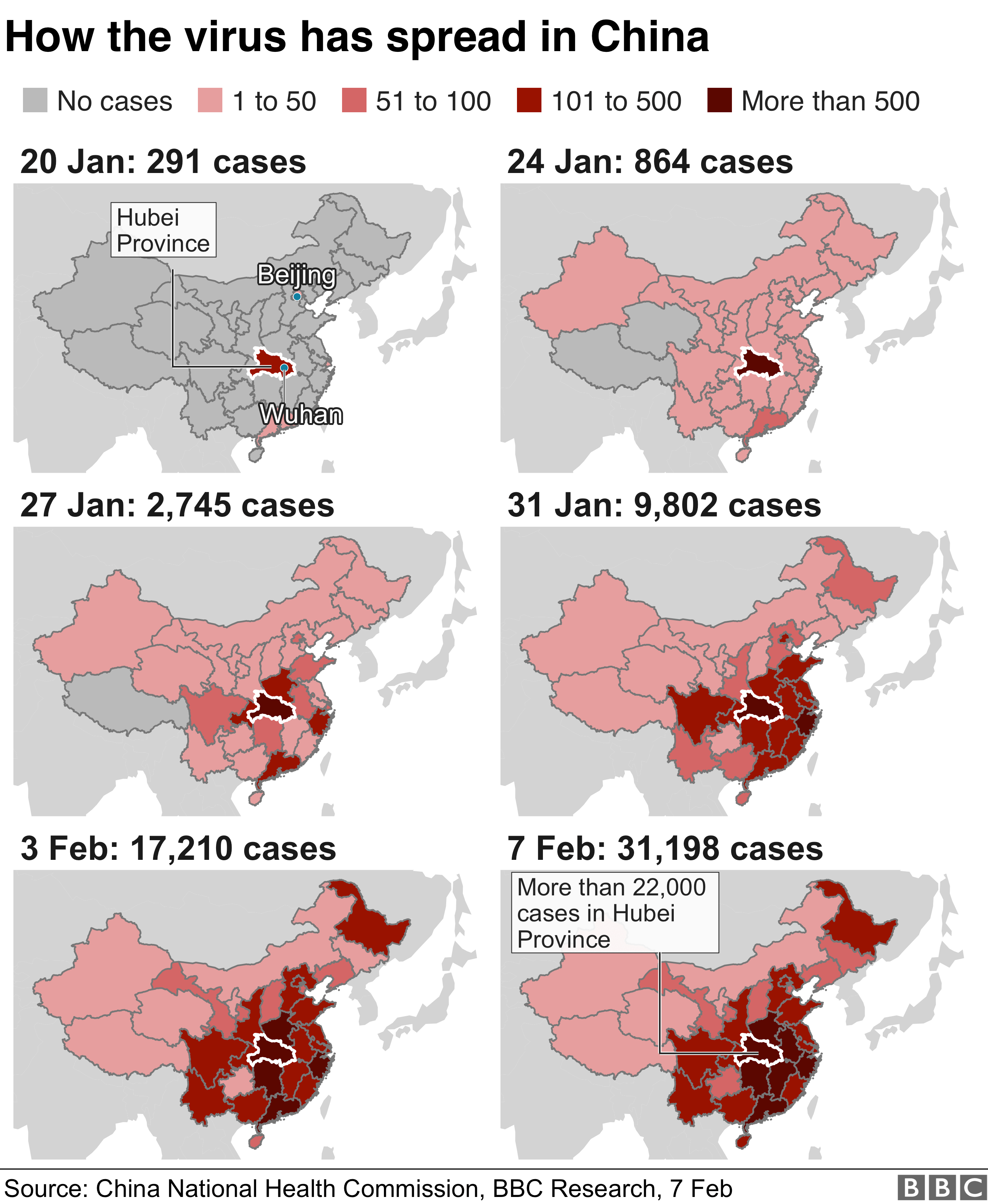
The Chinese government has previously admitted “shortcomings and deficiencies” in its response to the virus, which has now killed 636 people and infected 31,161 in mainland China.
According to Chinese site Pear Video, Dr Li’s wife is due to give birth in June.
What has the public reaction been?
Chinese social media has been flooded with anger – it is hard to recall an event in recent years that has triggered as much grief, rage and mistrust against the government.
The top two trending hashtags on the website were “Wuhan government owes Dr Li Wenliang an apology” and “We want freedom of speech”.
Both hashtags were quickly censored. When the BBC searched Weibo on Friday, hundreds of thousands of comments had been wiped. Only a handful remain.
“This is not the death of a whistleblower. This is the death of a hero,” said one comment on Weibo.
A photo circulating on Twitter reportedly sourced from messaging platform WeChat also shows a message in Chinese saying “Farewell Li Wenliang” written in the snow on a riverbank.
Many have now taken to posting under the hashtag “Can you manage, do you understand?” – a reference to the letter Dr Li was told to sign when he was accused of disturbing “social order”.
These comments do not directly name him – but are telling of the mounting anger and distrust towards the government.
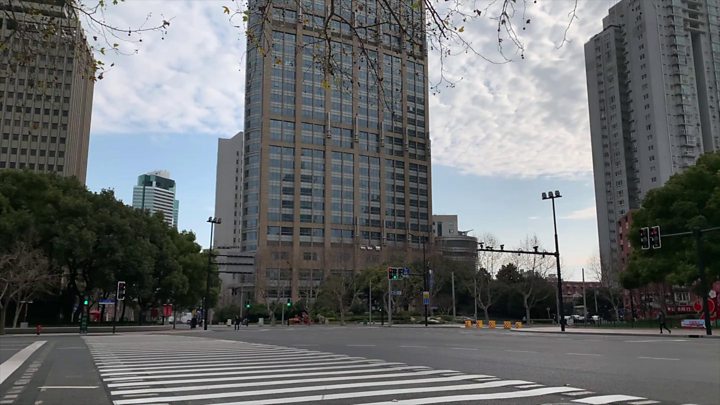
Media caption Coronavirus: Shanghai’s deserted streets and metro
“Do not forget how you feel now. Do not forget this anger. We must not let this happen again,” said one comment on Weibo.
“The truth will always be treated as a rumour. How long are you going to lie? What else do you have to hide?” another said.
“If you are angry with what you see, stand up,” one said. “To the young people of this generation, the power of change is with you.”
An epic political disaster
The death of Dr Li Wenliang has been a heart-breaking moment for this country. For the Chinese leadership it is an epic political disaster.
It lays bare the worst aspects of China’s command and control system of governance under Xi Jinping – and the Communist Party would have to be blind not to see it.
If your response to a dangerous health emergency is for the police to harass a doctor trying to blow the whistle, then your structure is obviously broken.
The city’s mayor – reaching for excuses – said he needed clearance to release critical information which all Chinese people were entitled to receive.
Now the spin doctors and censors will try to find a way to convince 1.4 billion people that Dr Li’s death is not a clear example of the limits to the party’s ability to manage an emergency – when openness can save lives, and restricting it can kill.
He was initially declared dead at 21:30 on Thursday (13:30GMT) by state media outlets the Global Times, People’s Daily and others.
Hours later the Global Times contradicted this report – saying he had been given a treatment known as ECMO, which keeps a person’s heart pumping.
Journalists and doctors at the scene said government officials had intervened – and official media outlets had been told to change their reports to say the doctor was still being treated.
But early on Friday, reports said doctors could not save Dr Li and his time of death was 02:58 on Friday.
Image copyright LI WENLIANGImage caption Li Wenliang contracted the virus while working at Wuhan Central Hospital
What did Li Wenliang do?
Dr Li, an ophthalmologist, posted his story on Weibo from a hospital bed a month after sending out his initial warning.
He had noticed seven cases of a virus that he thought looked like Sars – the virus that led to a global epidemic in 2003.
On 30 December he sent a message to fellow doctors in a chat group warning them to wear protective clothing to avoid infection.
Four days later he was summoned to the Public Security Bureau where he was told to sign a letter.
In the letter he was accused of “making false comments” that had “severely disturbed the social order”. Local authorities later apologised to Dr Li.
In his Weibo post he describes how on 10 January he started coughing, the next day he had a fever and two days later he was in hospital. He was diagnosed with the coronavirus on 30 January.
Media caption The BBC’s online health editor on what we know about the virus
Singapore has raised its Disease Outbreak Response System Condition (Dorscon) level from yellow to orange. This means that the disease is deemed severe and spreads easily from person to person but has not spread widely and is being contained
Chinese President Xi Jinping has told his US counterpart Donald Trump that China is “fully confident and capable of defeating the epidemic”. The country has introduced more restrictive measures to try to control the outbreak:
The capital Beijing has banned group dining for events such as birthdays. Cities including Hangzhou and Nanchang are limiting how many family members can leave home each day
Hubei province has switched off lifts in high-rise buildings to discourage residents from going outside.
The virus has now spread to more than 25 countries. There have been more than 28,000 cases worldwide but only two of the deaths have been outside mainland China.


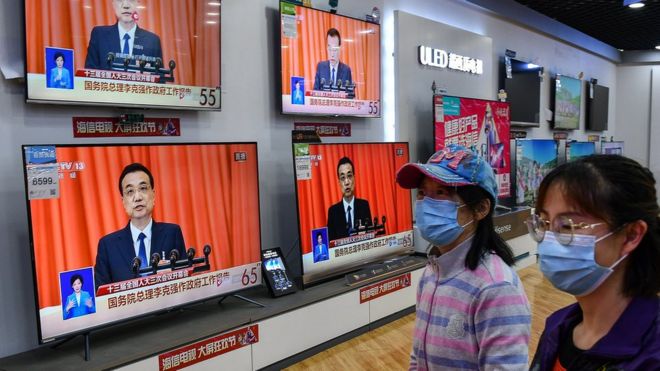 Image copyright AFP / GETTY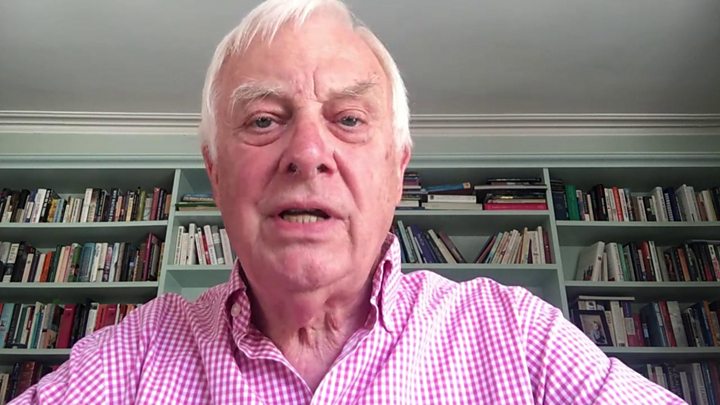














 CHINDIA ALERT: You'll be living in their world, very soon