Archive for ‘crackdown’

13/09/2019

Thousands detained in Indian Kashmir crackdown, official data reveals

SRINAGAR/NEW DELHI (Reuters) – Authorities in Indian Kashmir have arrested nearly 4,000 people since the scrapping of its special status last month, government data shows, the most clear evidence yet of the scale of one of the disputed region’s biggest crackdowns.

Muslim-majority Kashmir, claimed by both India and Pakistan, has been in turmoil since India stripped its portion of the region of its autonomy and statehood on Aug. 5, leading to clashes between security forces and residents and inflaming tension with Pakistan.

India said the removal of the status that its part of Kashmir has held since independence from Britain in 1947 would help integrate it into the Indian economy, to the benefit of all.

In an attempt to stifle the protests that the reform sparked in Kashmir, India cut internet and mobile services and imposed curfew-like restrictions in many areas.

It has also arrested more than 3,800 people, according to a government report dated Sept. 6 and seen by Reuters, though about 2,600 have since been released.

A spokeswoman for India’s interior ministry did not respond to a request for comment. Neither did Jammu and Kashmir police.

It was not clear on what basis most of the people were being held but an Indian official said some were held under the Public Safety Act, a law in Jammu and Kashmir state that allows for detention for up to two years without charge.

The data for the first time shows the extent of the detentions, as well as indicating who was picked up and where.

More than 200 politicians, including two former chief ministers of the state were arrested, along with more than 100 leaders and activists from an umbrella organisation of pro-separatist political groups.

The bulk of those arrested – more than 3,000 – were listed as “stone pelters and other miscreants”. On Sunday, 85 detainees were shifted to a prison in Agra in northern India, a police source said.

Rights group Amnesty International said the crackdown was “distinct and unprecedented” in the recent history of the region and the detentions had contributed to “widespread fear and alienation”.

“The communication blackout, security clampdown and detention of the political leaders in the region has made it worse,” said Aakar Patel, head of Amnesty International India.

‘RIGHT TO LIFE’

India says the detentions are necessary to maintain order and prevent violence, and points to the relatively limited number of casualties compared with previous bouts of unrest.

The government says only one person is confirmed to have died compared with dozens in 2016, when the killing of a militant leader sparked widespread violence.

“The right to life is the most important human right,” India’s national security adviser Ajit Doval told reporters recently.

The report contains data from the 13 police districts that make up the Kashmir Valley, the most populous part of the Himalayan region where the main city of Srinagar is located.

The largest number of arrests have been in Srinagar, the data shows, at nearly 1,000. Earlier unrest often centred in rural areas.

Of the detained political leaders, more than 80 were from the People’s Democratic Party, formerly in coalition in Jammu and Kashmir state with the ruling Bharatiya Janata Party.

About 70 are from the National Conference, which has for years dominated politics in Indian Kashmir, and more than a dozen from India’s main opposition Congress party.

Police also arrested more than 150 people accused of association with militant groups fighting Indian rule.

An Indian official said it was likely that more than 1,200 people were still held, including all the high-profile politicians and separatists mentioned in the report, while dozens more are being arrested every day.

In the 24 hours before the report was compiled, more than two dozen people were arrested, mainly on suspicion of throwing stones at troops, the data showed.

The data did not include those under informal house arrest, nor people detained in a round-up of separatists that began in February after a bomb attack by a Pakistan-based militant group on Indian troops.

Days before India’s move to strip Kashmir of special status, one prominent separatist leader told Reuters that more than 250 people with links to the movement were already in detention.

Source: Reuters
01/08/2019

Will China send in the troops to stamp out protests in Hong Kong?

  • Fears are growing in the city that the military could be called in to quell unrest
  • But the costs and complexities of doing so mean Beijing is highly unlikely to give the orders, observers say
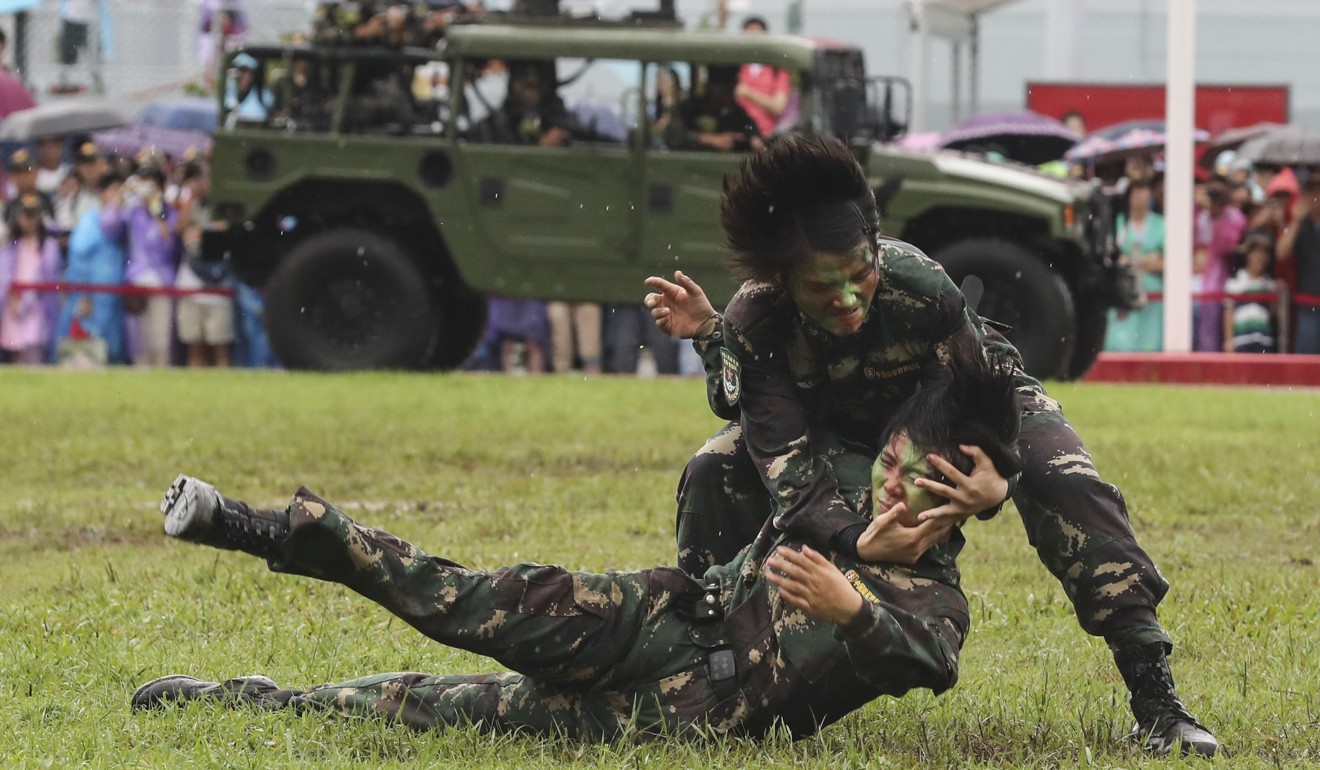
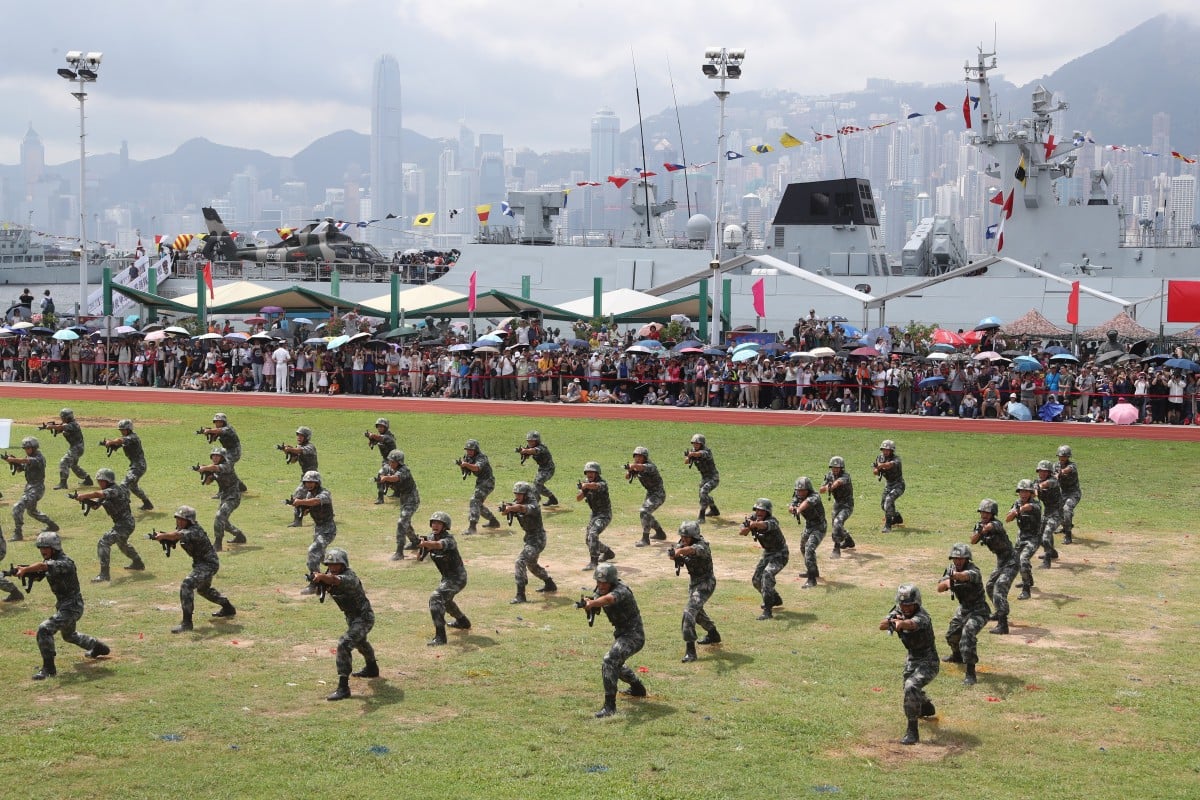
PLA soldiers show their skills during a naval base open day in Hong Kong. The PLA has had a presence in Hong Kong since the city’s return to Chinese sovereignty. Photo: K.Y. Cheng
It is a prospect dreaded by many in Hong Kong, but debate is growing in mainland China about whether the central government should end weeks of upheaval in the city by sending in the People’s Liberation Army (PLA).
The PLA has had a presence in Hong Kong since the city’s return to Chinese sovereignty but – unlike in mainland China – memories of the military’s bloody suppression of pro-democracy students and activists in Beijing in 1989 are still strong in the city three decades on.
Still, images of protesters vandalising Beijing’s liaison office in downtown Hong Kong on Sunday have fanned nationalist anger across the mainland, prompting calls for PLA intervention.

Concerns only deepened on Wednesday when defence ministry spokesman Wu Qian commented on the recent clashes and protests in Hong Kong. Without suggesting any action or plans by the PLA, Wu made clear that the Garrison Law, which governs the operations of PLA troops in Hong Kong, already stipulates that the PLA is legally allowed to help the city maintain law and order at the request of Hong Kong’s government.

“We are closely following the developments in Hong Kong, especially the violent attack against the central government’s liaison office by radicals on July 21,” Wu said.

“Some behaviour of the radical protesters is challenging the authority of the central government and the bottom line of ‘one country, two systems’,” he warned, referring to the formula that grants Hong Kong a high degree of autonomy for 50 years. “This is intolerable.”

Both Article 14 and Article 18 of the Basic Law – the city’s mini-constitution – spell out how and under what circumstances the PLA troops in Hong Kong can be used.

While the legality is clear, analysts still believe that given the exorbitant political cost and complexities involved, using the military would remain an unlikely last resort.

Even Hu Xijin, editor-in-chief of China’s nationalist tabloid Global Times, has spoken out against the idea, citing its “huge political cost” and the “severe uncertainty” it might bring to the situation.

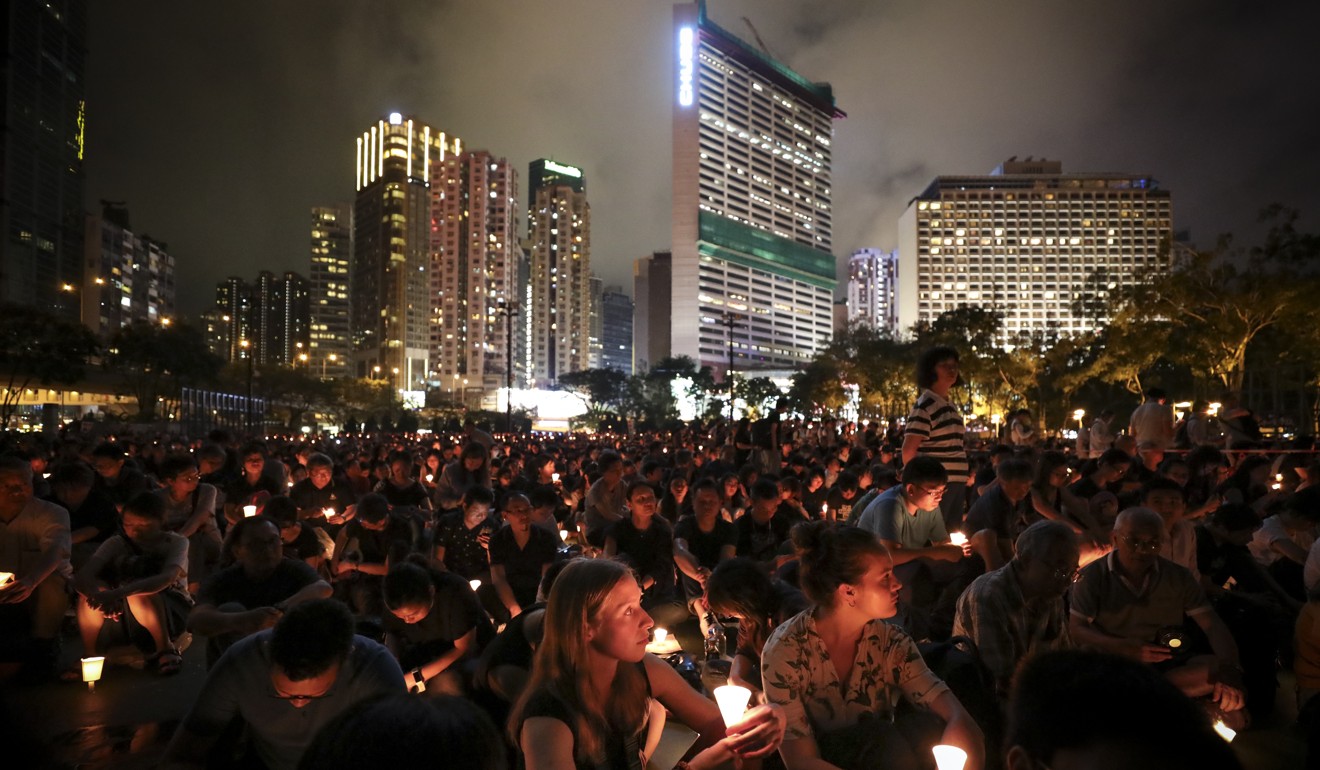
Crowds hold candles at a vigil in Victoria Park in Hong Kong in June to mark the 30th anniversary of the Tiananmen Square crackdown. Photo: James Wendlinger

“Once the PLA has taken charge of the situation in Hong Kong and quelled the riots, what’s next?” Hu said in a social media post on Monday.

Hu said there were no governance procedures in place that would allow the PLA to operate in Hong Kong and return things to normal. He also warned that any such action would be followed by international condemnation and a severe backlash among the Hong Kong public.

“The [PLA’s] Hong Kong garrison is the symbol of national sovereignty. It is not a fire brigade for law and order in Hong Kong,” he said.

Any move to use the Chinese troops will create a furore in the US Congress … They will re-examine the Hong Kong Policy Act very carefully Larry Wortzel, senior fellow at American Foreign Policy Council

The South China Morning Post reported last week that military force was not an option for mainland leaders working on a strategy to resolve the city’s biggest political crisis in decades.
And in June Major General Chen Daoxiang, commander of the Hong Kong garrison, assured David Helvey, US principal deputy assistant secretary of defence for Indo-Pacific security affairs, that Chinese troops would not interfere in the city’s affairs, according to Reuters.
The comments support analysts’ assessments that deploying the PLA is not a viable solution to Hong Kong’s crisis.
“Will the mobilisation of PLA troops further inflame the situation? There might be people who will resist or even revolt against the PLA, and that may lead to bloodshed,” said Lau Siu-kai, vice-chairman of the Chinese Association of Hong Kong and Macau Studies, a semi-official think tank.

The last time Beijing sent in troops to quell pro-democracy protests was during the Tiananmen Square crackdown on June 4, 1989 – bloodshed that has stained the PLA and the Communist Party to this day, despite decades of efforts to wipe it from public memory.

The last time Beijing sent in troops to quell pro-democracy protests was during the Tiananmen Square crackdown in 1989. Photo: Reuters

“Although they don’t like to admit it, they know they made a mistake in the way they used the PLA [in 1989],” said Larry Wortzel, a long-time PLA watcher, who witnessed the crackdown as an assistant military attache at the US embassy in Beijing 30 years ago.

“In subsequent years, when there were major demonstrations, they managed to handle them with either the People’s Armed Police [PAP] or the Public Security Bureau [PSB], or in some cases a combination of both,” said Wortzel, now a senior fellow in Asian security at the American Foreign Policy Council in Washington.

If the military was deployed [in Hong Kong], it would mean China was ready to shut its doors completely Chen Daoyin, a Shanghai-based political analyst

The PAP is a 1.5 million-strong paramilitary police force tasked with maintaining domestic security and order, while the PSB is the country’s police force.
The June 4 crackdown is still widely remembered in Hong Kong, where tens of thousands gather every year on its anniversary for a candlelight vigil in the heart of the city.
“The activities in Hong Kong and the Chinese Communist Party’s conduct there have really had a profound impact on thinking in Taiwan. It has killed any chance with any political party of [supporting] the one country, two systems,” Wortzel said.
Chinese military can be deployed at Hong Kong’s request to contain protests, Beijing says
“The last thing President Xi Jinping and the Politburo Standing Committee would want to do, if they can avoid it, is to use the PLA [in Hong Kong].”
The situation in Hong Kong is also being closely watched in the West, with many international firms basing regional headquarters in the Asian financial hub, thanks to its capitalist system and rule of law.
Deploying the PLA to Hong Kong would certainly spark an international outcry and draw huge pressure from Western countries, said Liang Yunxiang, an international affairs expert at Peking University.

“Britain, of course, would have the harshest criticism since it governed Hong Kong for a long time and signed treaties with China to ensure Beijing would keep its commitment to one country, two systems,” Liang said.

In the United States, the repercussions could go beyond verbal condemnation to a shift in policy that might fundamentally change Hong Kong’s status as an international financial centre and prompt an exodus of businesses, according to Wortzel.

“Any move to use the Chinese troops will create a furore in the US Congress … They will re-examine the Hong Kong Policy Act very carefully,” he said, referring to the bill passed in 1992 that allows Hong Kong to be treated as a non-sovereign entity distinct from mainland China on trade and economic matters.

Hong Kong head blasts violence, amid further extradition bill unrest

“They will simply treat Hong Kong like another Chinese city, which affects export controls and how the financial industry operates.”

Just last month, members of Congress reintroduced the bipartisan Hong Kong Human Rights and Democracy Act. If the legislation is passed, the US could revoke Hong Kong’s special status under American law if Beijing fails to ensure the city has “sufficient autonomy”.

The crisis comes as Beijing’s ties with Washington are already strained by a year-long trade war that has spilled into other areas of bilateral relations.

PLA troops go through their paces for the public at their Hong Kong barracks during an open day. Photo: Edward Wong

There is also mounting international pressure on China over issues such as its mass internment and political indoctrination of an estimated million or more members of Muslim minorities in Xinjiang, despite the Chinese government’s repeated denials of ill-treatment of the inmates and attempts to defend its policies.

Chen Daoyin, a Shanghai-based political analyst, said the increasing scrutiny China faced from Western countries – whether in the form of punitive tariffs or restrictions on technology – made it all the more important for China to keep Hong Kong as an open channel to connect with the world.

“If the military was deployed [in Hong Kong], it would mean China was ready to shut its doors completely,” Chen said.

Lau, from the Chinese Association of Hong Kong and Macau Studies, said the PLA should only be deployed as a last resort.

Two calls per second ‘jammed emergency lines’ during Hong Kong violence

“It would be a huge blow to the principle of ‘letting Hong Kong people govern Hong Kong with a high degree of autonomy’, since it will prove that Hong Kong people are not up to the task of governing themselves,” he said.

Hu, from Global Times, said the PLA troops could be used only if the authorities lost control of the city or an armed rebellion broke out.

Short of that, he said, the central government should let the chaos in Hong Kong run its course and wait for the public mood to flip.

This strategy of sitting it out hinges on the city’s police force holding the line and stopping Hong Kong’s slide into total anarchy.

Wortzel also warned that there were lines protesters should not cross – or risk provoking the use of military force.

“For instance, to this point, demonstrators have not gone up against the PLA garrison or any of its outposts. If they did that, I think it’s possible – actually it is very likely – that there will be a limited mobilised response [to defend the facilities],” he said.

While most analysts said the chance of Beijing resorting to military force was slim, the very idea – ludicrous to even discuss three months ago – has become a popular topic on social media on the mainland, where the discussion is not censored and many commenters support it.

The official media have been careful not to touch the subject but they too have stepped up rhetoric against the protests in Hong Kong.

In a rare move, state-run China Central Television has run commentaries and reports about protests in Hong Kong during its main evening news for five days in a row.

Only the most politically important issues receive such unusual treatment.

Source: SCMP

30/05/2019

Chinese education officials sacked for investigating four-year-olds in anti-mafia crackdown

  • Parents in Jiangsu province were shocked by a form that said a kindergarten class had been investigated and ‘no pupils were found to be involved in organised crime’
  • Officials fired or disciplined for ‘causing serious negative publicity’
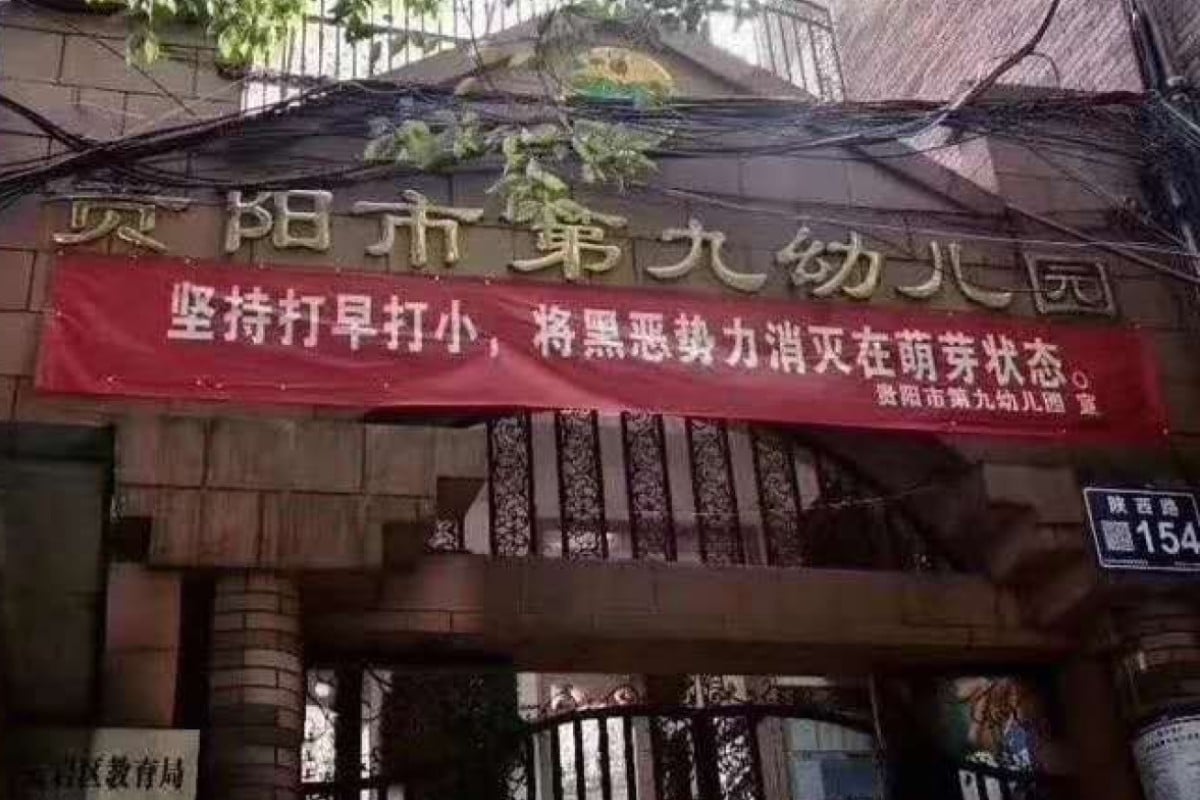
A kindergarten in Guiyang put up a banner on its entrance that read: “Crack down early and crack down young. Eliminate the dark and evil forces when they are still budding”. It was later removed. Photo: Weibo
Education officials in eastern China have been sacked or disciplined after targeting kindergarten pupils in a crackdown on organised crime.
Residents in Wuxi, a city in Jiangsu province, were shocked when a note saying that 35 pupils aged four and five at Xinguang Kindergarten had been investigated as part of the wider crackdown on mafia-style gangs was leaked online.
The form, signed by two teachers, concluded: “No pupils were found to be involved in organised crime”.
Copies of the document started circulating on social media, triggering a widespread backlash and ridicule.
Some social media users accused the kindergarten of box-ticking and questioned whether staff would have been capable of discovering whether any parents were involved in organised crime.
China’s war on organised crime, corrupt officials sees 79,000 people detained

One said that if officials really wanted to nip criminal tendencies in the bud, they were starting too late, adding: “Why not start when they are in the womb and crack down in the maternity hospital?”

An unidentified staff member from the Wuxi Education Bureau confirmed that schools were being targeted in the crackdown on organised crime, telling Chengdu Economic Daily: “Banners are hung everywhere inside and outside the school premises”.However, they insisted: “There was no wrongdoing by the kindergarten. We are mainly targeting teachers and parents for the publicity.”

But on Thursday the Wuxi government backed down and criticised education officials in Xishan district for misinterpreting the crackdown on organised crime and “putting on an unrealistic show”.

Three senior officials from the Xishan district authority were disciplined for their roles in “causing serious negative publicity”.

China’s fentanyl firms back crackdown on opioid

Feng Dongyan, the chief and party secretary of Xishan district education bureau, was given a party warning.

Wang Zhaoyu, director of the bureau’s general office, and Lu Zhongxian, the director in charge of education inspection of the bureau, lost their jobs and were given a serious party disciplinary warning.

Beijing started the campaign targeting grass-roots criminal organisations and their “protective umbrellas” last year.

More than 3,000 people have been punished so far, but the campaign has also been ridiculed for taking aim at the wrong targets.

Last month a kindergarten in Guiyang in Guizhou province put up a banner at its entrance reading: “Crack down early and crack down young. Eliminate the dark and evil forces when they are still budding”.

The kindergarten said the banner was “meant for the public” but took it down after an online backlash.

Source: SCMP

25/04/2019

Chinese media call for crackdown on motorists using mobile phones after latest fatal crash

  • Stiff penalties like those given to drink-drivers needed to make people wake up to the risks, newspaper says
  • Commentary comes after woman who died in high-speed crash is found to have used her phone 34 times in 30 minutes
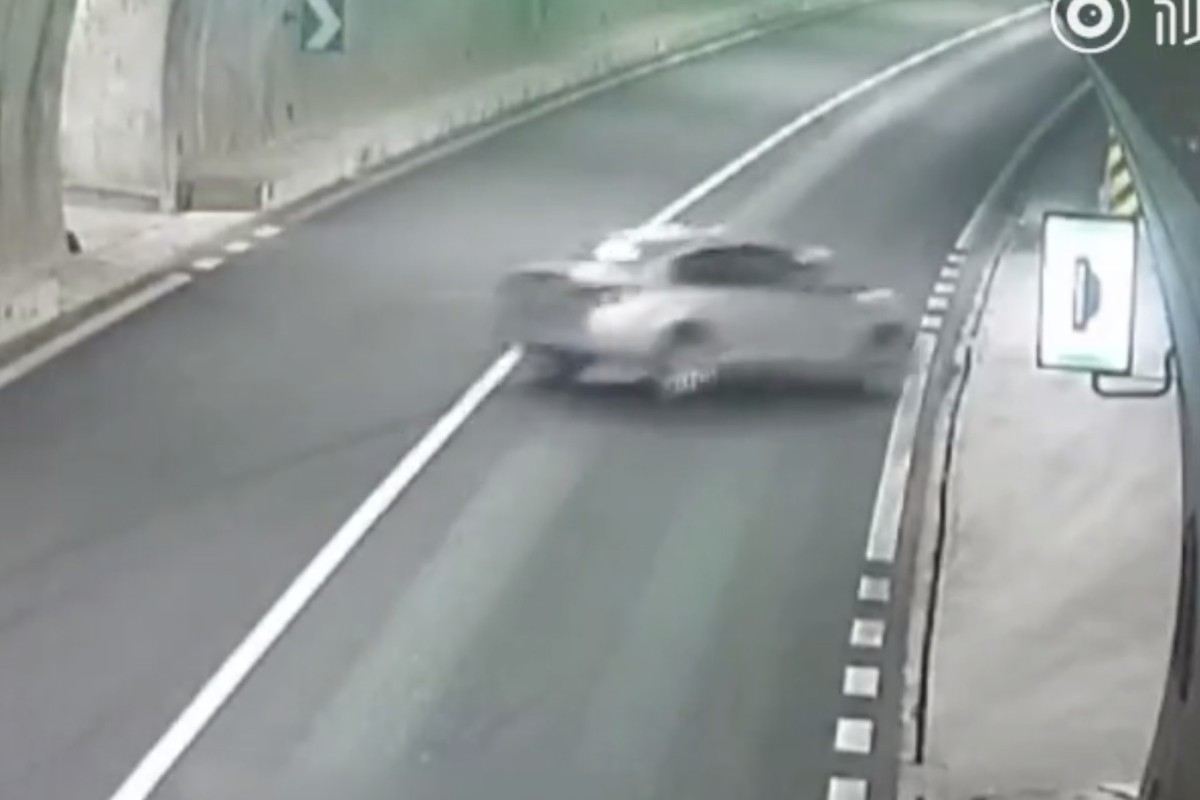
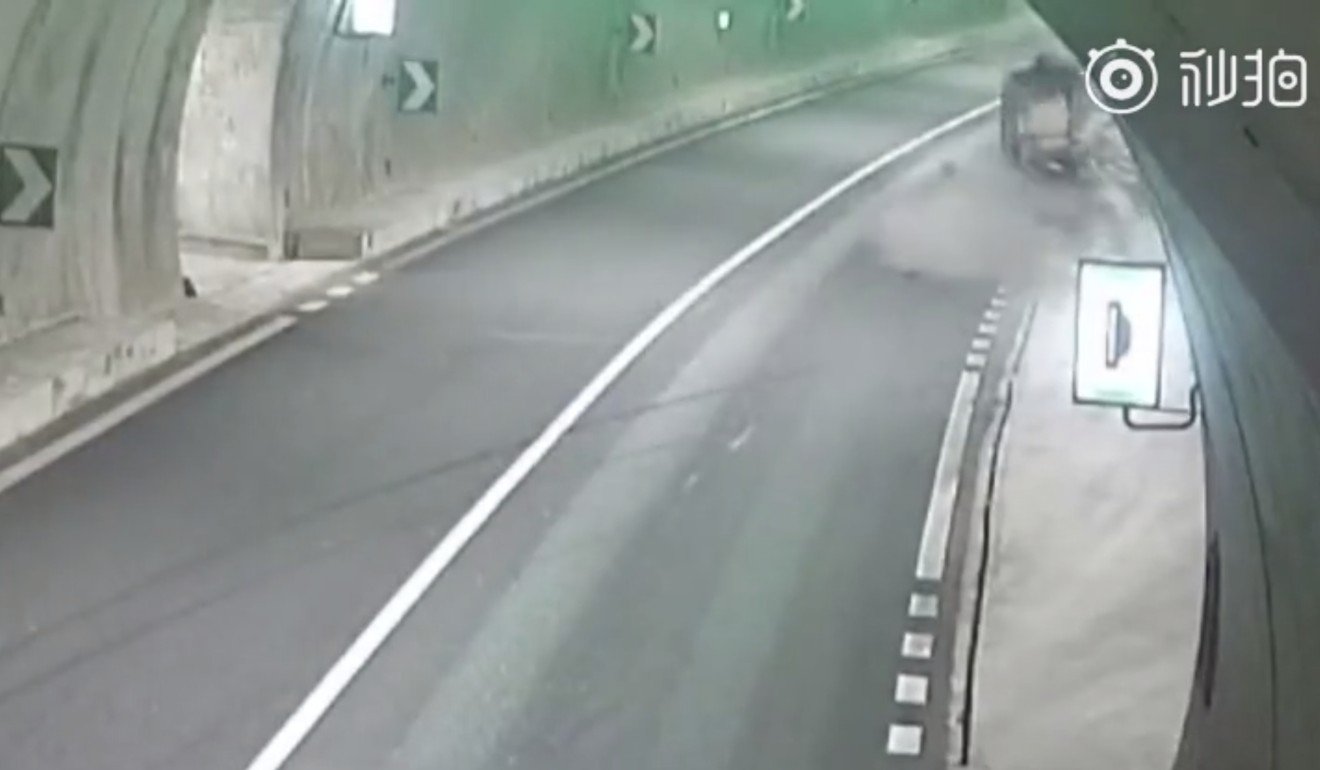
The fatal crash in Fujian province was caught on surveillance camera and the footage was shown by Pearvideo.com. Photo: Weibo
The death of a woman in a high-speed car accident who is believed to have been sending messages on her phone at the time of the crash has sparked calls in the Chinese media for harsher punishments for reckless driving.
“Death or causing death as the result of driving when using a phone is a very serious consequence of people becoming slaves to mobile phones,” Beijing Youth Daily said in a commentary on Thursday.
“To reverse the harm caused by this behaviour, they must be punished in line with the punishments for drink-driving.”
The article came after Pearvideo.com on Sunday published footage from a surveillance camera of the fatal accident in southeast China’s Fujian province. The film shows the woman’s car speeding through a tunnel before veering on to the wrong side of the road and crashing into a wall. It then flips over and bursts into flames.
The victim is believed to have been using her phone at the time of the crash. Photo: Weibo

A police officer interviewed in the video said the driver, who was not identified, had not been wearing a seat belt at the time of the accident and had been observed speeding, cutting in and out of lanes and using her phone 34 times in just 30 minutes.

“I think all four factors contributed to her accident,” he said. “But the fundamental ones were speeding and using a mobile phone when driving.”

Five children killed as driver crashes into group crossing road

The video report said the woman sent a total of 16 text and voice messages from behind the wheel, one of which said that she was driving at 120km/h (75mph).

While drink-driving is a criminal offence in China – with a maximum penalty of six months’ detention, loss of licence and a five-year ban – the top punishment for using a phone while behind the wheel is a 200 yuan (US$30) fine and the loss of two licence points. Drivers start with 12 points and can be suspended from driving if they lose them all.

The film shows the car crashing into a wall before flipping over and bursting into flames. Photo: Weibo

According to a Ministry of Transport survey cited by Beijing Youth Daily, people are 2.8 times more likely to have an accident if they make a phone call while driving and 23 times more likely if they look at their handset.

While the strict enforcement of drink-driving laws has helped to change motorists’ behaviour, using a phone behind the wheel is still widely regarded as acceptable behaviour, the commentary said.

“I don’t know how many disasters like the woman in Sanming [a city in Fujian] are needed to alert people,” it said.

“[But] amending the road traffic safety law to make [the offence of] driving while using a mobile phone equivalent to that of drink-driving and implementing corresponding penalties can … help to reduce the devastating consequences.”

A commentary on Gmw.com, the website of the official Guangming Daily newspaper, also called for the offence to be criminalised.

People know the risks but disregard them because the legal consequences are very small, it said.

Source: SCMP

11/03/2019

Modi’s former ally in Kashmir urges India to talk to Pakistan

SRINAGAR, India (Reuters) – India should talk to Pakistan and separatists in Kashmir to defuse tension raised by a suicide attack on an Indian paramilitary convoy that was claimed by Pakistan-based militants, a former chief minister of the state said.

Mehbooba Mufti, who was the chief minister of Jammu and Kashmir from early 2014 to June last year when Prime Minister Narendra Modi’s Hindu nationalist party withdrew support for her regional party, said an ongoing crackdown on militants and those supporting secession could further alienate the people.

India has vowed to kill all the militants in the country’s only Muslim-majority state if they don’t give up arms, after a 20-year-old local man killed 40 paramilitary troopers in a suicide attack last month.

Pakistan Prime Minister Imran Khan, who has sought to speak with Modi amid the hostility, said no militant group would be allowed to operate from his country to carry out attacks abroad, days after his government announced a sweeping crackdown against Islamist militant organisations.
“This confrontational attitude – no talks, no discussion -has an impact,” Mufti said. “Whatever relationship we have with Pakistan, it has a direct impact on Jammu and Kashmir and we are the worst sufferers of this animosity.”
Indian authorities have arrested many separatist leaders in Kashmir in the past few weeks, and the chief of Modi’s ruling Bharatiya Janata Party (BJP) said recently that the government had made it clear to them that “if they want to live in India, they will have to speak the language of India, not Pakistan’s”.
Mufti, whose father was also a chief minister of Jammu and Kashmir, said the tough stance by Indian authorities would only lead to “some calm on the surface” that won’t last. India killed 248 militants in Kashmir in 2018 – the highest in a decade.
“Once you start choking the space for dissent in a democracy, people feel pushed to the wall and then it leads to further dissent and alienation,” she said.
Mufti said India’s general election – starting April 11 and whose results will be declared on May 23 – could delay the process of any inter-party talks on Kashmir.
Source: Reuters
07/03/2019

Pakistan seizes religious schools in intensified crackdown on militants

ISLAMABAD (Reuters) – Pakistan intensified its crackdown against Islamist militants on Thursday, with the government announcing it had taken control of 182 religious schools and detained more than 100 people as part of its push against banned groups.

The move represents Pakistan’s biggest move against banned organisations in years and appears to be targeting Islamic welfare organisations that the United States says are a front for militant activities.

Pakistan is facing pressure from global powers to act against groups carrying out attacks in India, including Jaish-e-Mohammed (JeM), which claimed responsibility for the Feb. 14 attack that killed at least 40 Indian paramilitary police.

The escalating tension in the wake of the bombing led to a major confrontation between the nuclear-armed rivals, with both countries carrying out aerial bombing missions and even engaging in a brief dogfight that prompted fears of a war.

Pakistani officials say the crackdown is part of a long-planned drive and not a response to Indian anger over what New Delhi calls Islamabad’s failure to rein in militant groups operating on Pakistani soil.

Previous large-scale crackdowns against anti-India militants have broadly been cosmetic, with the proscribed groups able to survive and continue operations.

The interior ministry said law enforcement agencies had placed 121 people in “preventive detention” as part of the crackdown that began this week.

“Provincial governments have taken in their control management and administration of 182 seminaries (madaris)”, the ministry said in a statement, referring to religious schools.

What to do with madrasas is a thorny issue in Pakistan, a deeply conservative Muslim nation where religious schools are often blamed for radicalisation of youngsters but are the only education available to millions of poor children.

The interior ministry said other institutions from different groups had been taken over, including 34 schools or colleges, 163 dispensaries, 184 ambulances, five hospitals and eight offices of banned organisations.
Many banned groups such as JeM run seminaries, which counter-terrorism officials say are used as recruiting grounds for militant outfits
Jamaat-ud-Dawa (JuD), which operates hospitals and a fleet of ambulances, is estimated to run about 300 madrasas across the country. Pakistan’s government banned the group this week.
JuD calls itself a humanitarian charity but the U.S. State Department has designated it a “foreign terrorist organisation” and calls it a front for Lashkar-e-Taiba (LET), a Pakistan-based group accused of orchestrating attacks in India, including the 2008 Mumbai attack that killed 166 people.
An image casts doubt on India airstrike claims
JuD called the crackdown unfair and said it would seek to counter the government action in courts.
“The whole nation is asking that what message the government wants to send by sealing welfare organisations and kicking students out,” said JuD spokesman Yahya Mujahid.
Pakistan has long used Islamist groups to pursue its aims in the region, but it has denied New Delhi’s accusations it actively supports militants fighting Indian forces in India’s part of Muslim-majority Kashmir.
The South Asian neighbours have fought three wars since independence from Britain in 1947, two of them over Kashmir which they both claim in whole but rule in part.
Source: Reuters
25/02/2019

India toughens Kashmir crackdown; five dead in battle with militants, more detained

SRINAGAR (Reuters) – Five people were killed in a gun battle between members of a Pakistani militant group and Indian security forces in disputed Kashmir on Sunday as India intensified a security

Indian authorities have killed at least eight JeM militants and detained around 50 militants, sympathizers and their relatives since the bomb attack, which also sparked the roundup of separatists which India says is needed to head off trouble ahead of a general election to be held by May.

Most of those rounded up over the last two days were linked to the Islamist party Jamaat-e-Islami (JeI).

“Since JeI has a wider network across Kashmir and they are mobilising anti-India protests, their arrest could help in curbing such protests ahead of elections,” the senior police officer said.


One well-known separatist leader, Abdul Gani Bhat, was placed under house arrest, according to his political party.

Separatists called a strike to protest against the detentions. Many shops, petrol stations, and businesses closed, with few people and vehicles on streets in sensitive areas, except for troop patrols.

In some areas of the main city of Srinagar, the government limited the movement of people and vehicles.

“The restrictions have been imposed as a precautionary measure to avoid any untoward incident,” the police said.

FUEL SUPPLIES LOW


The government of Jammu and Kashmir said fuel rationing had been introduced in the Kashmir Valley where there was only enough gasoline for one day, diesel for four days and no liquefied petroleum gas (LPG).

The government said it would seek to increase supplies to the region and that shortages are the result of road blockages after the suicide bomb attack.

Indian paramilitary troops in riot gear arrived in strength at first light, said Shakeel Ahmad, a resident of Nowhatta in the Srinagar district.

“At places, they have blocked the main roads with steel barricades and concertina wire,” he said.

State Governor Satya Pal Malik called on residents not to believe “rumours of any extreme nature”. The government said an increase in police numbers was to prevent candidates and voters from being intimidated into not standing or voting in the general election.

Separatist leader Mirwaiz Umar Farooq, who chairs the Hurriyat Conference of separatist groups, said arbitrary arrests and jailing of leaders, activists and young people for their political beliefs had happened across Kashmir for 30 years.

“Intimidating activists and leadership will not deter them from their path, nor will it stop people from demanding the resolution of the Kashmir dispute through self-determination,” he said.

Reuters’ telephone calls to the Indian home ministry to seek comment went unanswered.

TENSIONS RAISED

The suicide bomb attack has raised tensions between India and Pakistan which both claim Kashmir in full but rule it in part. India blames Pakistan for harbouring militant groups operating in Kashmir, which Pakistan denies.

After the attack, India dropped trade privileges for Pakistan and prepared to send as many as 10,000 more troops to the contested area, according to a home ministry letter seen by Reuters.

The Indian army said that early on Sunday evening Pakistan violated the two nations’ ceasefire at the Rajouri area of the border, through shelling from mortars and small arms fire. Defence spokesman Lieutenant Colonel Devender Anand said the Indian army was “retaliating strongly and effectively”.

Ceasefire violations are not unusual along the border.

A Pakistani security official said Pakistani forces had not initiated any action but had responded to Indian firing.

Kashmir is likely to be a key issue in India’s election, distracting from concerns about how Prime Minister Narendra Modi and his Bharatiya Janata Party have managed the economy.

Modi has promised a strong response to the attack, saying in a monthly radio broadcast on Sunday that it had caused anguish to all of India.

Modi added that the army had vowed to destroy the militants and those who helped them.

Islamabad has warned it would respond with “full force” if attacked. On Sunday, Foreign Minister Shah Mehmood Qureshi called on India to show restraint or it would put “the entire region’s peace and security at stake”.
India’s Supreme Court will hear a case this week seeking to drop a constitutional provision that bars non-residents from moving to the state of Jammu and Kashmir that encompasses the Muslim-majority region.


If passed, it could further escalate tensions.

Source: Reuters

18/02/2019

New media facilitates crackdown on corruption in China

BEIJING, Feb. 18 (Xinhua) — The widely used new media has become an efficient tool for China’s anti-graft body to promote information transparency.

Commentary in a newspaper administrated by the Communist Party of China Central Commission for Discipline Inspection and the National Supervisory Commission said Monday netizens can find the latest information released by the top anti-graft watchdog on its website and post suggestions there.

People can report corrupt practices and other violations of disciplines and laws online, such as posting on the micro-blogging site Weibo, sending a message to anti-graft authorities’ accounts on the instant messaging tool WeChat or reporting through an app run by the top anti-graft authority.

Varied reporting channels have helped expose more officials violating disciplines and laws that were hard to be found out by anti-graft authorities in the past, the commentary said.

Improved information transparency has also helped ensure more objective and fair investigations, it added.

Anti-graft authorities can post online information of corrupt officials, including those fleeing overseas, meaning there will be more chances to capture them, said the commentary.

It also said as anti-graft authorities’ articles and video clips are reaching more people online through Weibo, Wechat and their apps, people are now able to learn about the ongoing crackdown on corruption, which also benefits the anti-graft work.

Source: Xinhua

18/12/2018

China’s pre-Christmas church crackdown raises alarm

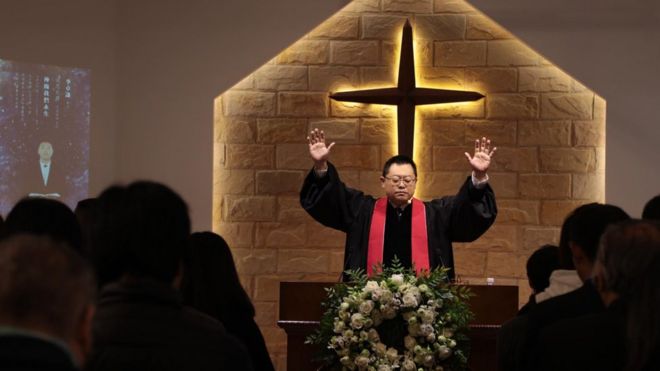
Wang Yi preaching at Early Rain Covenant ChurchImage copyrightFACEBOOK/EARLY RAIN
Image captionWang Yi was the outspoken leader of an influential unofficial church

A recent surge of police action against churches in China has raised concerns the government is getting even tougher on unsanctioned Christian activity.

Among those arrested are a prominent pastor and his wife, of the Early Rain Covenant Church in Sichuan. Both have been charged with state subversion.

And on Saturday morning, dozens of police raided a children’s Bible class at Rongguili Church in Guangzhou.

China is officially atheist, though says it allows religious freedom.

But it has over the years repeatedly taken action against religious leaders it considers to be threatening to its authority or to the stability of the state, which, according to Human Rights Watch, “makes a mockery of the government’s claim that it respects religious beliefs”.

The government pressures Christians to join one of the Three-Self Patriotic churches, state-sanctioned bodies which toe the Communist Party line and are led by approved priests.

Silencing of a critic

Despite this, the Christian population has grown steadily in recent years. There are now an estimated 100 million Christians in China, many of them worshipping in so-called underground churches.

Wang Yi is the leader of one such church, the Early Rain Covenant Church in Chengdu, the capital of south-western Sichuan province.

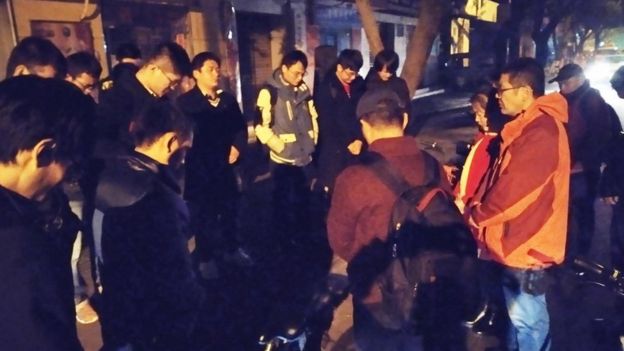
Early Rain members praying in publicImage copyrightFACEBOOK/EARLY RAIN
Image captionEarly Rain Covenant Church had posted pictures on Facebook of their public prayer meetings

The church is unusual in that it worships openly and regularly posts evangelical material online. The church says it has about 800 followers spread across the city. It also runs a small school.

Pastor Wang is also known for being outspoken – he has been fiercely critical of the state’s control of religion and had organised a widely shared petition against new legislation brought in this year which allowed for tighter surveillance of churches and tougher sanctions on those deemed to have crossed the line.

On 9 December, police raided the church and arrested Pastor Wang and his wife Jiang Rong. Over the following two days, at least 100 church members, including Wang’s assistant, were taken away.

One member of the church, who asked not to be identified for fear of reprisals, told the BBC that the lock on the church school had been broken, churchgoers’ homes had been ransacked and some were “under house arrest or are followed all the time”.

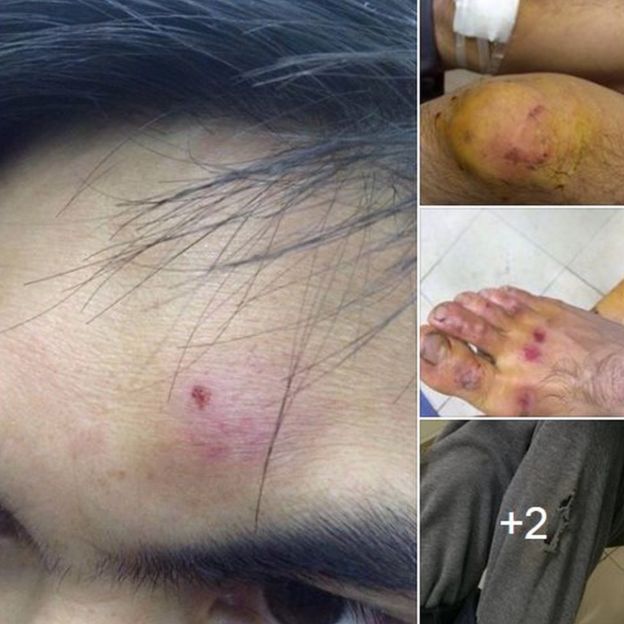
Facebook post showing alleged injuries to church members during detentionImage copyrightFACEBOOK/EARLY RAIN
Image captionThe church posted images it said showed injuries inflicted during police detention

She said police and other officials had been going to congregants’ homes to pressure them to sign documents pledging to leave the church and to take their children out of its school.

“On Sunday, some members tried to gather at other places for worship, but got taken away as well. The Church building has been manned with police and plain-clothes officers, not allowing anyone to enter to do worship service.”

The church alleges that some of those detained and then released were mistreated in custody.

Forty-eight hours after he was arrested, Early Rain Covenant Church released a letter from Pastor Wang, which he had pre-written for release in case something like this ever happened to him.

In it, he said he respected the Chinese authorities and was “not interested in changing any political or legal institutions in China”.

But he said he was “filled with anger and disgust at the persecution of the church by this Communist regime”.

“As a pastor of a Christian church, I must denounce this wickedness openly and severely. The calling that I have received requires me to use non-violent methods to disobey those human laws that disobey the Bible and God,” he said.

Pastor Wang and his wife – who have an 11-year-old son – have been charged with inciting subversion of state power, one of the most serious crimes against the state and a charge which is often used to silence dissidents. It carries a potential jail term of 15 years. Several senior members of the church face similar charges.

Jin Mingri, head pastor of the Zion churchImage copyrightGETTY IMAGES
Image captionJin Mingri resisted government pressure to install monitoring cameras in his Zion church in Beijing

Across the country in Guangzhou, the doors have also been sealed on the Rongguili Church, another un-sanctioned community.

On Saturday, a children’s Bible class was interrupted by the arrival of dozens of police officers.

Witnesses said they declared the church an illegal gathering, confiscated Bibles and other materials and shut the doors.

Officers took names and addresses and ordered everyone present to hand over their phones.

In September, the Zion church, one of the largest unofficial churches in Beijing was abruptly shut down. It had recently refused a request from the government to install security cameras to monitor its activities.

“I fear that there is no way for us to resolve this issue with the authorities,” Pastor Jin Mingri told Reuters news agency at the time.

There have also been a string of church demolitions, forced removal of crosses or other arrests over the year.

Human Rights Watch said the raids at Early Rain and at Rongguili Church were a further sign that under President Xi Jinping, China is seeking to tighten control over all aspects of society.

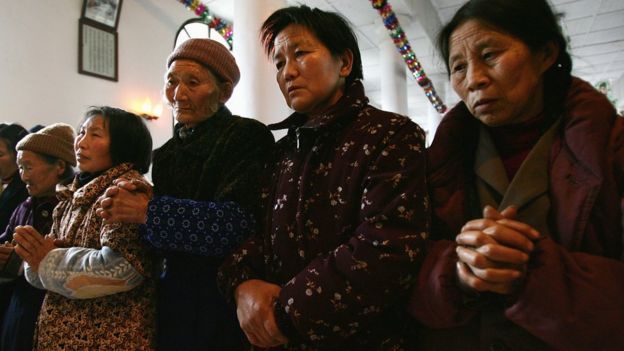
Women worship at a state-sanctioned Catholic church in Sichuan (file image)Image copyrightGETTY IMAGES
Image captionChina wants its Christians to worship at churches that are state-backed and closely monitored

“As major holidays in many parts of the world – Christmas and New Year – are approaching, we call on the international community to continue to pay attention to the situation of China’s independent churches and speak against the Chinese government’s repression,” said the group’s Hong Kong-based researcher Yaqiu Wang.

The Early Rain member who did not want to be identified said the idea of the Three-Self Patriotic churches was “hilarious”, saying they “don’t spread genuine gospel, but spread the thoughts of loving the Party, loving the country”.

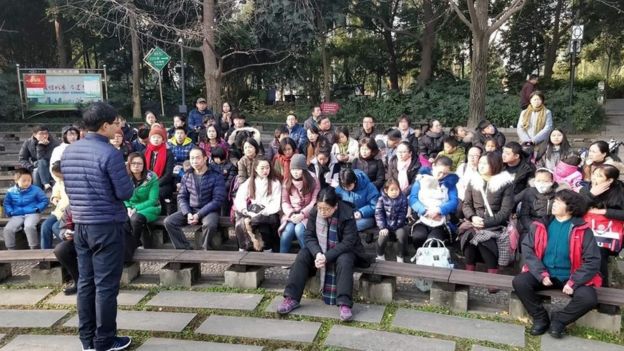
Members of Early Rain Covenant Church worship outside on 16 DecemberImage copyrightEARLY RAIN
Image captionWith their church closed, Early Rain members worshipped outdoors last Sunday

Another Christian in Chengdu told the BBC such churches were “against Jesus, against gospel”.

He described the scale of the operations against Early Rain as “unprecedented” but said more could be expected, adding: “I’m very lucky they haven’t found me yet.”

The Early Rain community would survive, he said, but would now go further underground.

“We will continue the gathering. The church is shut down so it’s impossible to have a big gathering, but there will be small gatherings on Sunday and on Christmas Day.”

Ultimately, he said, repression might even increase the profile of the faith in China.

“Without repression, people may doubt about our religion. But when repression occurs, pastors and members’ reactions will make people who don’t believe in Jesus realise the charm of Christianity.”

11/12/2018

Men ‘detained for burning low-quality coal’ in northern China amid winter crackdown

  • But county government denies environment department statement, saying the men were ‘criticised and educated’ for using the banned heating fuel

That is according to the local environment department, which said in a statement on Saturday that the men, both surnamed Zhao, were detained by police in Quyang, Hebei province, last week.

But later in the day, the local government denied the department’s statement, saying it was “misinformation” and that the authorities had only “criticised and educated the men who burned low-quality coal”.

The environment department’s statement was later removed from its official account on social network WeChat.

China’s push to clean up its toxic air saw many local governments across the north of the country rush through a coal ban last winter. But a shortage of natural gas to replace coal heating systems left many households shivering in freezing temperatures, forcing the authorities into a U-turn on the ban. Without a reliable energy supply, the ban was relaxed and people in low-income areas were instead asked to choose high-quality coal over the low-end product to reduce emissions.

Ahead of winter this year, Quyang – located about 230km south of Beijing – is one of the local governments in northern China that has again cracked down on heating fuel used by families and businesses with a total ban on low-grade coal since late October.

It vowed to put a stop to pollution caused by low-quality coal and sent 30 law enforcement officers to villages in the county without central heating in late November to check that people were sticking to the ban, according to a statement on the local government’s website.

“Anyone who burns low-quality coal and pollutes the air will be detained and their image will be broadcast on TV so that others can learn a lesson from them,” the Quyang government said on November 27.

Since then, county authorities have confiscated 1,147 tonnes of low-quality coal and warned 13 households that have burned it, according to the local government.

It is not the first time Chinese have been detained for burning low-end coal or other fuel that is prohibited. In early November, Quyang authorities detained a Xiguo man for five days after police found him burning grass and hay on a hillside in the village.

“The hay burning was producing a lot of smoke and polluting the air … so Quyang police decided to detain him for five days,” the local environment department said.

County police said the detention was in line with the Security Administration Punishment Act, which states that “residents who do not obey government regulations in emergency or special times shall be detained for up to 10 days”.

In a case last winter, a man in Kaifeng, in central Henan province, was detained for eight days in December for burning low-quality coal, according to Bianliang Evening Post.

Beijing has said it will be less severe with its pollution curbs this winter as it grapples with slower economic growth and the trade war with the United States.

Last winter, it imposed blanket bans on industrial production in the Beijing-Tianjin-Hebei region, which is often the worst affected by choking smog. But in September the environment ministry said it would let steel plants continue producing as long as their emissions met standards.

Law of Unintended Consequences

continuously updated blog about China & India

ChiaHou's Book Reviews

continuously updated blog about China & India

What's wrong with the world; and its economy

continuously updated blog about China & India