Chindia Alert: You’ll be Living in their World Very Soon
aims to alert you to the threats and opportunities that China and India present. China and India require serious attention; case of ‘hidden dragon and crouching tiger’.
Without this attention, governments, businesses and, indeed, individuals may find themselves at a great disadvantage sooner rather than later.
The POSTs (front webpages) are mainly 'cuttings' from reliable sources, updated continuously.
The PAGEs (see Tabs, above) attempt to make the information more meaningful by putting some structure to the information we have researched and assembled since 2006.
Chinese President Xi Jinping, also general secretary of the Communist Party of China Central Committee and chairman of the Central Military Commission, checks the ecological protection work of the Fenhe River in Taiyuan, capital city of north China’s Shanxi Province, May 12, 2020. (Xinhua/Li Xueren)
BEIJING, May 13 (Xinhua) — Chinese President Xi Jinping attaches great importance to ecological conservation and environmental protection. He has spoken of the issue on many occasions. The following are some highlights of his quotes.
— Lucid waters and lush mountains are invaluable assets.
— Ecological conservation and environmental protection are contemporary causes that will benefit many generations to come.
— A sound ecological environment is the basic foundation for the sustainable development of humanity and society.
— We should adhere to the integrated protection and restoration of mountains, rivers, forests, farmlands, lakes and grasslands, and coordinate efforts to strengthen ecological and environmental protection in river basins with efforts to promote an energy revolution, green production and lifestyle, and economic transformation and development.
— A good ecological environment is the fairest public product and the most accessible welfare for the people.
— The quality of the eco-environment is the key to building a moderately prosperous society in all respects.
— Economic development should not be achieved at the cost of the ecology. The ecological environment itself is the economy. Protecting the environment is developing productivity.
— We shall protect ecosystems as preciously as we protect our eyes, and cherish them as dearly as we cherish our lives.
— The history of civilizations shows that the rise or fall of a civilization is closely tied to the quality of the ecological environment.
BEIJING, April 28 (Xinhua) — China has achieved much progress in environmental protection and taken the lead in green development in recent years.
The efforts have exemplified Chinese President Xi Jinping’s proposal of “working together for a green and better future for all” made a year ago in his speech at the opening ceremony of the International Horticultural Exhibition 2019 Beijing.
In the keynote speech, Xi proposed a five-point initiative on promoting green development, namely pursuing harmony between man and nature, pursuing the prosperity based on green development, fostering a passion for nature-caring lifestyle, pursuing a scientific spirit in ecological governance, and joining hands to tackle environmental challenges.
China’s hard work on environment protection has paid off.
The ecological environment has improved significantly. People are enjoying more days of blue sky, cleaner water, and fertile land.
China has achieved the goal of zero growth of desertified land by 2030 set by the United Nations ahead of time. Besides, forest stock volume increased by 4.56 billion cubic meters compared with that of 2005.
Carbon dioxide emissions per unit of GDP in 2018 fell by 45.8 percent compared with that of 2005, exceeding the target set for the year.
After more than 30 years of hard work, the seventh largest desert in China, the Kubuqi Desert in Inner Mongolia Autonomous Region, once known as the “sea of death” difficult for birds to fly across, has turned into a green valley.
In January 2020, in a letter in reply to the student representatives of the Global Alliance of Universities on Climate, the Chinese president mentioned his thoughts about ecological civilization in his youth.
“Over four decades ago, I lived and worked for many years in a small village on the Loess Plateau in western China. Back then, the ecology and environment there was seriously damaged due to over-development and the local people were trapped in poverty as a result,” Xi wrote.
“This experience taught me that man and nature are a community of life and that the damage done to nature will ultimately hurt mankind,” said Xi.
China’s progress and achievements are recognized worldwide.
The ecological civilization and green development advocated by China are actually an endeavor to find a way to balance economic development and environmental protection, said John Cobb, Jr., the founding president of the Institute for Postmodern Development of China and member of the American Academy of Arts and Sciences.
Noting that the endeavor is a remarkable exploration, he expressed his hope that it will succeed.
China is on the right path in dealing with global climate change and achieving sustainable development, said Borge Brende, president of the World Economic Forum.
In addition to making efforts at home, China has also rolled out a series of measures to support the global combat against climate change.
In September 2015, ahead of the Paris climate change conference, Xi pledged a 20-billion-yuan (3-billion-U.S. dollars) China South-South Climate Cooperation Fund, which was dedicated to help other developing countries combat climate change.
China has also been fulfilling the obligations of the United Nations Framework Convention on Climate Change and the Paris Agreement, and achieved the goal of its intended nationally determined contributions submitted to the secretariat of the Climate Change Convention as scheduled.
UN Secretary-General Antonio Guterres expressed his appreciation for China’s important contributions to addressing the climate change and building a green “Belt and Road,” and said he expects China to continue to play a leading role in addressing the climate change and other issues.
“Lucid waters and lush mountains are invaluable assets,” a concept put forward by Xi in 2005 when he visited Yucun Village in southeast China’s Zhejiang Province as the party chief of the province, has become the motto of the Lao Ministry of Natural Resources and Environment.
In March 2020, when Xi returned to Yucun, he said that economic development should not be achieved at the expense of the ecological environment. To protect the ecological environment is to develop the productive forces, he said.
The history of civilizations shows that the rise or fall of a civilization is closely tied to its relationship with nature, Xi said at the International Horticultural Exhibition last year.
Only by joining hands can the humankind advance a global ecological civilization and march towards the bright future of building a community with a shared future for mankind.
Remains of two of river’s estimated 1,012 porpoises found in less than a week
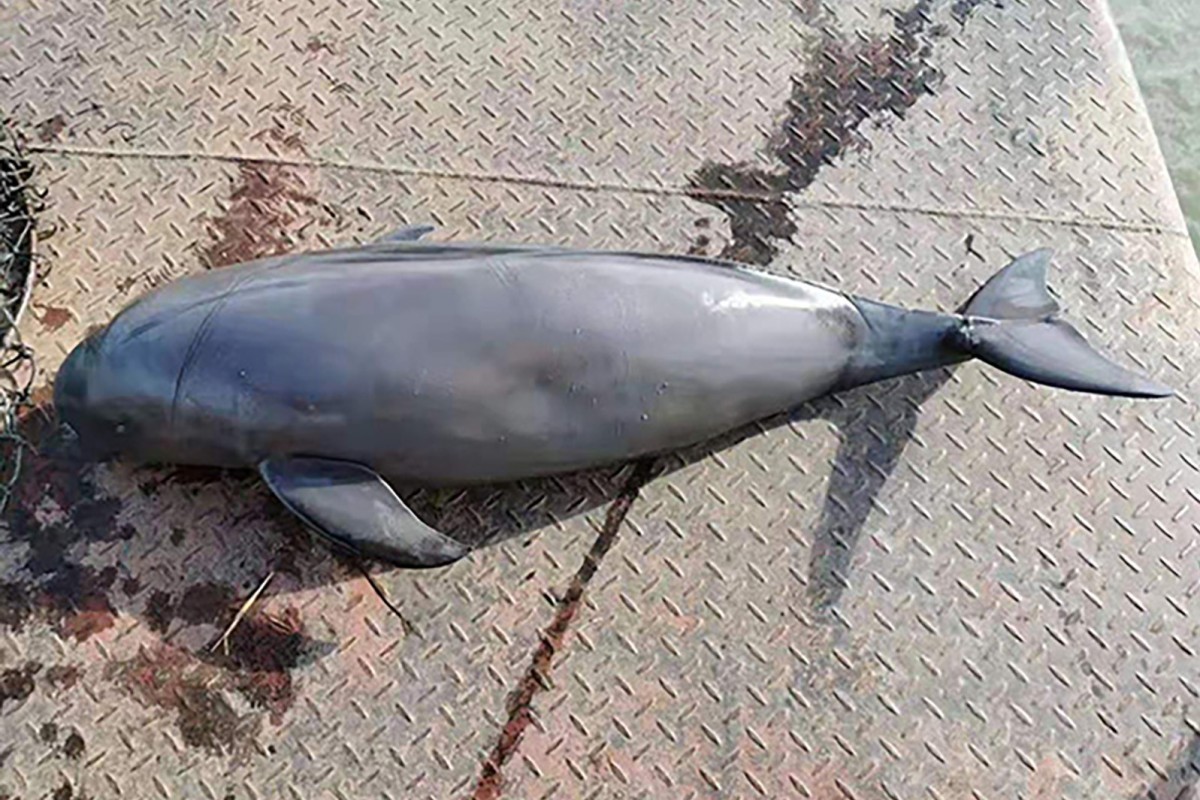
The finless porpoise found dead in the Yangtze River in Hubei on Monday was the second fatality in a week. Photo: 163.com
Two endangered finless porpoises have been found dead in the Yangtze River in the space of a week, according to mainland Chinese media reports.
One was found on Monday in Jiayu county, central Hubei province, four days after the remains of another were recovered from Dongting Lake, a tributary of the Yangtze in central Hunan province, news website Thepaper.cn reported.
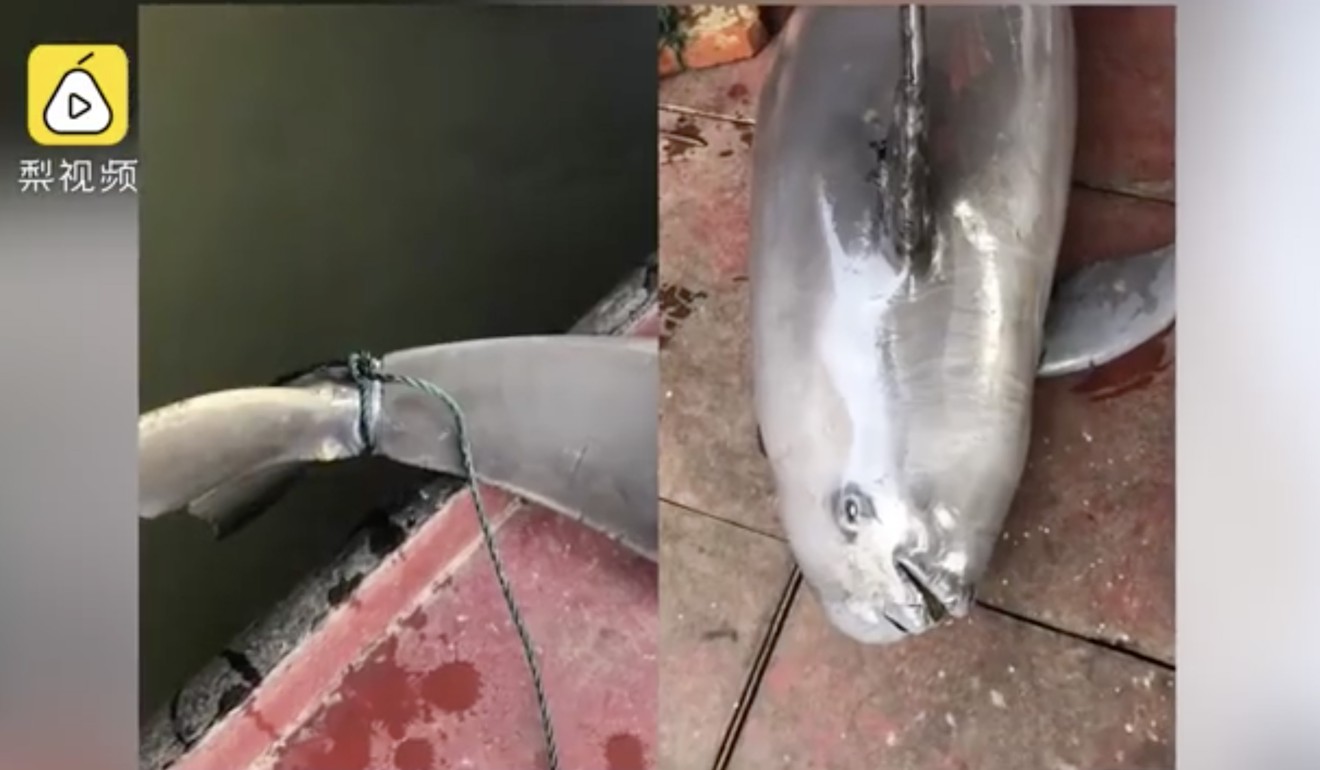
The Dongting Lake carcass was tied with a rope and weighted with bricks, and authorities in Hunan said the creature became tangled in a fishing net. The Hubei death is under investigation.
The Yangtze’s finless porpoises are “extremely endangered”, the Ministry of Agriculture and Rural Affairs said in a 2016 action plan to protect the species. Last year, vice-minister Yu Kangzhen said surveys showed there were about 1,012 of the animals in the river.
The tail of a dead finless porpoise pulled from Dongting Lake in Hunan appears to have been tied to weights. Photo: Pear Video
In 2017, China raised its protection for the mammals to its highest level because of the critical dangers they faced. Experts said that as the river’s “flagship” species, the porpoise was an indicator for the Yangtze’s ecology.
The porpoise discovered in Hubei was small and it had suffered superficial wounds, investigators were quoted as saying. They estimated that it was found soon after its death.
Xiaoxiang Morning Post quoted fisheries authorities in Yueyang, near Dongting Lake, as saying the porpoise in Hunan was found with weights around its tail.
Two porpoise carcasses found on separate Hong Kong shores
Officials said the fishermen who set the net feared they would be blamed for the creature’s death and tied bricks to its tail to sink it.
Other fishermen who witnessed the incident told the authority, leading to the discovery of the body, the report said. The investigation is ongoing and the suspects are still at large.
A fishing authority spokesman told the newspaper that the porpoise’s death showed the difficulty of balancing conservation with the livelihoods of fishermen.
“It’s difficult to figure out a good model to protect the porpoises without affecting fishermen’s business,” he said.
In mainland China, finless porpoises are referred to as “giant pandas in water” because of their endangered status. Their numbers fell from 2,700 in 1991 to 1,800 in 2006, and there were 1,045 finless porpoises in 2012, according to agriculture ministry data.
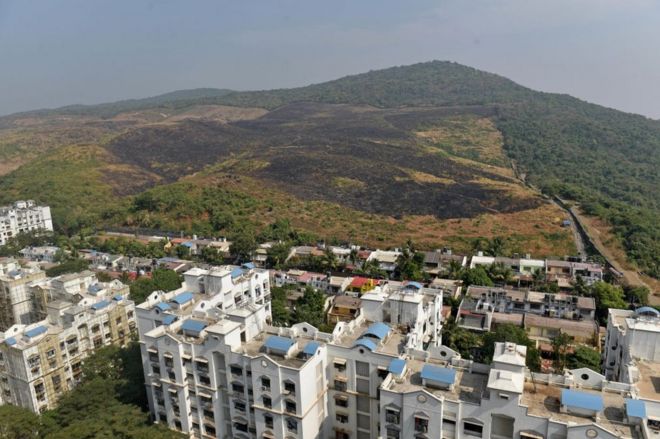
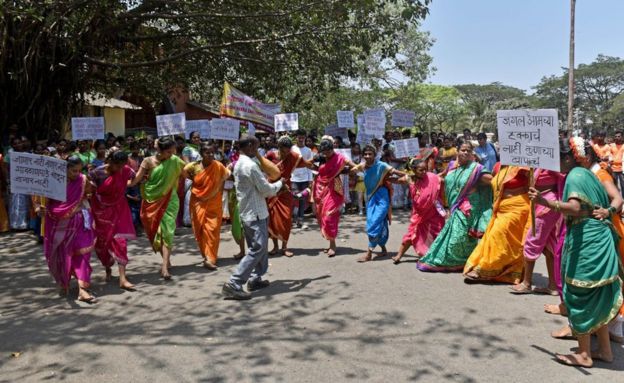
Image copyright GETTY IMAGESImage caption Aarey forest is in Mumbai city
The Aarey forest, a verdant strip that lies at the heart of India’s bustling Mumbai city, is often referred to as its last green lung. But now, locals say, it’s under threat from encroachment. BBC Marathi’s Janhavee Moole reports.
As a child, Stalin Dayanand used to picnic in the Aarey forest.
“It was the only place where you could go and play, climb trees or just sit and eat under the shade of a tree and be close to nature,” says Stalin, who prefers to go by his first name.
Now the 54-year-old is the director of an NGO that works to protect forests and wetlands. He is fighting for Aarey.
On 6 June, the government cleared 40 hectares (99 acres) of the 1,300 hectare forest to build a zoo, complete with a night safari.
Another slice of it is being claimed by Mumbai’s new metro rail which is currently under construction. Thousands of trees will have to be felled to construct a new multi-level parking unit for the metro.
Media caption What happens if you ban plastic?
Stalin has petitioned India’s Supreme Court challenging the construction, but the case is still pending.
Locals and environmental activists like him are up in arms because they fear the government will eventually clear the way for private builders to encroach on the Sanjay Gandhi National Park, which lies to the north of Aarey. Spread over 104 sq km (40 sq miles), this protected area makes Mumbai one of the rare cities to have a jungle within its boundaries.
Their concern is partly fuelled by the fact that this is prime location in a city where land is scarce and real estate prices are among the most expensive in the world.
But officials dismiss these fears as unfounded and point out that the construction for the metro only requires 30 hectares of the 1,300 hectares that make up the Aarey forest.
“This is the most suitable land due to its size, shape and location,” says Ashwini Bhide, managing director of the Mumbai metro rail corporation.
Image copyright GETTY IMAGESImage caption Plans to fell trees in the forest have led to protests
She adds that the city badly needs a “mass rapid transport system”. India’s financial hub is congested and infamous for its crawling traffic jams and its local train system heavily overburdened.
Officials say that the metro will eventually carry around 1.7 million passengers every day and bring down the number of vehicles on the road by up to 650,000. The city’s current colonial-era railway system, which is effectively its lifeline, ferries some 7.5 million people between Mumbai’s suburbs and its heart on a daily basis.
But they have been up against the city’s residents, including activists and conservationists, ever since news emerged in 2014 that trees would be cut to make way for the metro.
What makes the issue complicated is that the Aarey forest is the site of competing claims.
It’s locally known as the Aarey “milk colony” because most of the land was given to the department of dairy development in 1951. But they are allowed to grow cattle fodder only on a fraction of the land. The rest of it is densely forested and dotted with lakes, and the Mithi river flows through it.
Aarey is also home to tribal communities who live in settlements known as “padas”.
“We are not getting basic facilities here, and now metro authorities want to take away the jungle which belongs to us too,” says Asha Bhoye, who belongs to the Konkani tribe and lives in one of the 29 padas. Plans to relocate some of the tribal communities have also met with resistance and led to protests.
Stalin alleges that instead of declaring the Aarey forest a protected area, the state government has used the opportunity to parcel away pieces of it first to the dairy development department and now to other projects.
Image copyright GETTY IMAGESImage caption Tribals who live in Aarey demand that it be declared a protected area
“Aarey Forest is part of the same forest as Sanjay Gandhi National Park and we are fighting for the national park itself. In the name of public good, the land is being opened up for developers. It’s a systematic effort to destroy the forest.”
Activists fear that after the parking units are built, other projects will be permitted, further threatening the area’s ecology and wildlife, which includes leopards.
So locals have joined the fight enthusiastically, even leading hikes into the forest to raise awareness. “We bring people here, make them familiar with the forest – there are many species of spiders like trapdoor spiders, the site [of the parking unit] is a leopard site,” says Yash Marwa, a screenwriter who is among those campaigning for the forest.
“Mumbai needs to be liveable”, he adds. “We need to talk about good quality of air and life before talking about infrastructure and development.”
Stalin agrees, saying that “air quality and temperature seem to be last among people’s priorities.”
But he is determined to not give up.
“If I couldn’t do something for my city I’d consider I’ve failed myself.”
Even as northern China, including Beijing, Tianjin, and Hebei province, continues to suffer from hazardous air—“people with respiratory issues are advised to stay indoors or wear protective masks,” the official English language China Daily advised earlier today, Nov.20—some relief may be on the longer-term horizon.
Chinese authorities in Hebei province, one of China’s largest steel-producing regions, announced they plan to relocate steel, cement, and glass factories overseas over the next decade. The many industrial factories that surround Beijing and Tianjin are known to be a major source of the lung-choking smog that periodically smothers much of northern China. Hebei province alone produces 200 million tons of steel annually, or about one-quarter of China’s total production.
“The initiative comes at a time when local steel, cement, and glass producers are struggling, with sluggish growth in the world’s second-largest economy crippling demand for their products. In many cases, it has led to severe overcapacity,” the official Xinhua News Agency reported Nov. 19.
By 2017, according to Hebei authorities, Hebei plans to move 5 million tons of steel production capacity, the same amount for cement, and 3 million “weight boxes” of glass production (a weight box is roughly 50 kg, the paper explained). Much more will be moved in the following six years, through 2023, including 20 million tons of steel, 30 million of cement, and 10 million weight boxes of glass production, Xinhua reported.
While steel manufacturers will be encouraged through unspecified preferential policies to relocate some production in Africa and Asia, cement and glass producers will go to those two regions, as well as South America and Central and East Europe.
“Hebei is a major source of industrial pollutants blamed for the notorious choking smog that often spreads to neighboring regions like Beijing,” Xinhua reported.
SO YOU want to live in a country that is guided by a philosophy of “ecological civilisation”, run by people with the vision to implement policies that will benefit their children even if it costs more in the short term? Move to China.
Not convinced? Last week, news circulated that China is considering limiting its greenhouse gas emissions so that they peak in 2030, followed by an orchestrated fall.
It was one man’s view, expressed at a Beijing conference, not an official announcement. But He Jiankun is chairman of China’s Advisory Committee on Climate Change, and his words are in line with actions China is now taking to address global warming.
“China is already doing a lot,” says Fergus Green of the London School of Economics. “They are probably making the most progress of any country, given that they are starting from a position that is far more challenging.”
“Things are changing very, very fast,” says Changhua Wu of The Climate Group think tank in Beijing.
To be clear, China is still the biggest emitter of carbon dioxide. Cities like Beijing are plagued by smog, and efforts to clean them up may just move the pollution elsewhere. But there is a huge push for change.
Water scarcity and awareness that China will suffer from global warming are factors, but it is health concerns that loom large. The air in many cities is dangerous to breathe, the water is toxic and there are often food health scares. “People are fed up,” says Wu.
Premier Li Keqiang has declared a “war on pollution”. His leadership has drawn up a philosophical framework called ecological civilisation. It aims to “bring everything back to the relationship between man and nature”, says Wu, and is driving major changes.
Prompted by the idea that used resources must be paid for, China has launched carbon trading schemes in six areas. There, companies must pay to pollute, and abide by a cap on overall emissions. A seventh scheme should start within weeks. They will form the world’s second largest carbon trading scheme, after Europe’s. A national programme should begin this decade.
China has set targets to make more wealth using less energy and it is on course to meet them. It contributes one-fifth of global investment in renewables, more than any other nation, has more installed wind power than anywhere else and in 2013 doubled its solar capacity.
The smog is turning people off dirty power. Construction of coal-fired power stations peaked in 2007 (see graph), and smaller power stations are being switched off. According to the London-based think tank Carbon Tracker, 10 out of 30 provinces have cut their coal use, and wind capacity is growing twice as fast as coal. “The coal-fired power plants that China is building are some of the most high-tech and efficient available,” says Carbon Tracker’s Luke Sussams. There are also schemes in place to make people who pollute water pay those who suffer as a result.
Environmentalists have pushed policies like these for years. But while Western nations debate them, China is testing them and rolling out those that work.
Each year, China’s Ministry of Environmental Protection (MEP) releases a “state of the environment” report (PDF); it’s a rather grim annual ritual. For all the talk about China’s new “war on pollution” and money pouring into wind farms and river cleanup campaigns, the reality is that, according to most metrics, China’s environmental situation is getting worse, not better.
Air pollution in China receives the most attention globally. Despite a recent stretch of fairly nice days in Beijing, according to the MEP’s report, in 2013 only three major Chinese cities met the government’s own standards for urban air quality.
Water pollution—and water shortages—may be an even graver problem. The pollution level in several major rivers, including the Yangtze and its tributaries, has grown more severe since 2010. Meanwhile 11 percent of the land in the Yangtze’s watershed and adjacent areas was watered by acid rain. Sixty percent of groundwater-testing sites nations wide ranked as “poor” or “very poor” in water quality.
At 7 a.m. on a recent March morning, Xu Xiaoshun hops behind the wheel and turns the key. His Chang’an Leopard truck puffs out some black smoke and shivers to life as Xu begins his daily gamble. Every morning, including weekends, he leaves the one-room apartment he shares with his wife, drives almost 10 kilometers (six miles) to a market, picks up construction materials, and delivers them to job sites in and around Hangzhou, a city of 8.8 million. Often, his route takes him through areas of the city where his truck is banned because of its dirty emissions. “This truck isn’t allowed on some roads,” Xu says as he steps on the gas. “But when an order comes, I must take a risk.”
As air pollution in China becomes a national crisis—only three of the 74 cities monitored last year had acceptable air quality, according to a March report from the Ministry of Environmental Protection—Hangzhou and other cities have declared war on dirty cars and trucks. High-emission vehicles such as Xu’s must display yellow stickers on their windshields. (Cleaner cars are marked with green ones.) In Hangzhou, yellow-tagged cars and trucks are banned from the city’s main areas from 6 a.m. to midnight.
About 13 percent of China’s 224 million vehicles had yellow labels as of 2012, but they accounted for more than half of carbon monoxide emissions and more than 80 percent of airborne particulates, government statistics show. Cities across the nation must meet a national goal of forcing all yellow-label vehicles off the roads by 2017. In Hengshui, one of China’s most polluted cities, officials have mandated a phaseout of diesel-powered vehicles more than nine years old, triggering grumblings from owners in online forums.
China stands out for its greenness in a new environmental ranking
CHINA is the world’s biggest polluter, so it is no surprise that it fares poorly on some measures of pollution in a new global index of environmental performance. The shock is that it also stands out for its world-beating greenness in other areas on the same index.
The Environmental Performance Index (EPI), a joint product of America’s Yale and Columbia universities, is the latest volume in a long-running biennial ranking of 178 countries on a variety of measures of environmental performance. New this year are assessments of performance in waste-water treatment and combating climate change, as well as the clever use of satellite data (to track trends in forestry and air pollution) in order to top up traditional computer modelling and official data.
The report’s conclusions are more cheerful than most green report cards. The experts believe countries are doing well in improving access to safe drinking water and sanitation, and in bringing down child mortality. However, the global trends are worrying in other areas like fisheries, wastewater treatment and air quality. Overall, Switzerland came out top. Somalia came last. China was 118th, a middling ranking that beats India (155th) but falls well below South Africa (72nd), Russia (73rd) and Brazil (77th).
However, that average masks a huge divergence in China’s performance in two areas. Using satellite data, the boffins worked out, for the first time, what global exposures were to fine particulate matter (known as PM2.5) from 2000 to 2012. China ranked at the bottom on air pollution, with nearly all of its population exposed to levels of PM2.5 pollution deemed unhealthy by the World Health Organisation (WHO). Though less frequently criticised than Beijing, Delhi’s air is also terrible—but China as a whole fares worse. In 2012 the average human exposure to PM2.5 for all of China was 48 micrograms per cubic metre, but the national figure for India was only 32 units (the WHO says anything above 10 units is unhealthy).
The surprise is that China has done very well on carbon. The experts calculate that, unusually among big emerging economies, it slowed the rate at which its greenhouse-gas emissions have grown in the past decade. That is partly a natural result of its development, which has led to investment in better technology and cleaner industries, but it is also thanks to policies to improve efficiency and boost renewable energy.
Environmentalists the world over can breathe a little easier knowing that the biggest global polluter has started to slow the rise in its greenhouse-gas emissions and may one day even reduce them. If only China’s urban residents could breathe a little easier, too.
China shut down 8,347 heavily polluting companies last year in northern Hebei province, which has the worst air in the country, state news agency Xinhua said on Thursday, as the government moves to tackle a problem that has been a source of discontent.
Local authorities will block new projects and punish officials in regions where pollution is severe due to lax enforcement, Xinhua cited Yang Zhiming, deputy director of the Hebei provincial bureau of environmental protection, as saying.
High pollution levels have sparked widespread public anger and officials concerned about social unrest have responded by implementing tougher policies.
Hebei, the country\’s biggest steel producer, is home to as many as seven of its 10 most polluted cities, Xinhua said, citing statistics published monthly by the Ministry of Environmental Protection.
Pollution in Hebei often spreads to neighboring Beijing and Tianjin. On Thursday, Beijing was blanketed in its worst smog in months. An index measuring PM2.5 particles, especially bad for health, reached 500 in much of the capital in the early hours.
Some small high-polluting plants are being relocated to remote areas to avoid oversight, Xinhua quoted Yang as saying. He said the government would \”beef up the industrial crackdown\”.
China has drawn up dozens of laws and guidelines to improve the environment but has struggled to enforce them in the face of powerful enterprises.






 CHINDIA ALERT: You'll be living in their world, very soon