Chindia Alert: You’ll be Living in their World Very Soon
aims to alert you to the threats and opportunities that China and India present. China and India require serious attention; case of ‘hidden dragon and crouching tiger’.
Without this attention, governments, businesses and, indeed, individuals may find themselves at a great disadvantage sooner rather than later.
The POSTs (front webpages) are mainly 'cuttings' from reliable sources, updated continuously.
The PAGEs (see Tabs, above) attempt to make the information more meaningful by putting some structure to the information we have researched and assembled since 2006.
China’s leadership has made it clear to its people that the world will become more dangerous and they must be prepared for hard times
Beijing’s relatively small stimulus response to Covid-19 suggests it wants to save its economic policy ammunition for a bigger battle
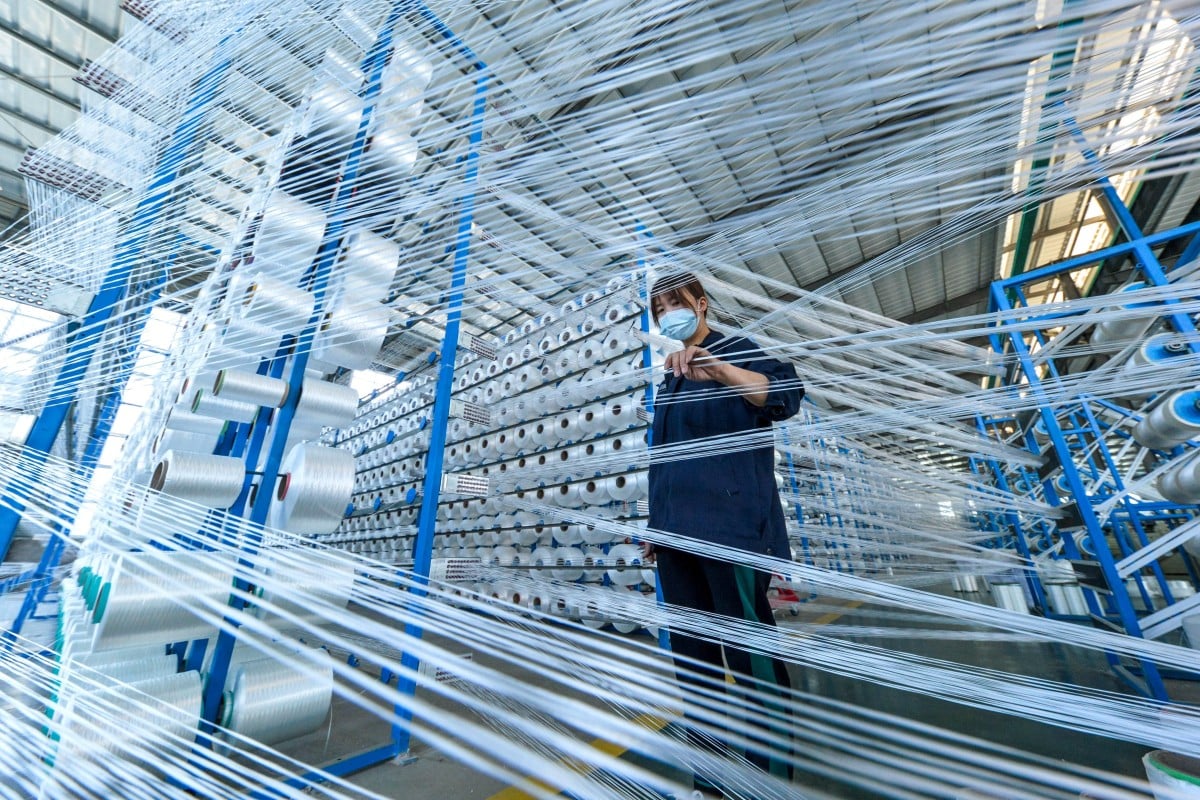
China opted not to set a GDP target for 2020. Photo: Xinhua
Beijing’s decision not to set an annual GDP target for 2020 – for the first time since 2002 – is a sign it is putting stability ahead of growth as part of its preparations for an escalating conflict with the United States.
Economic development has always been the central theme for Beijing since it established diplomatic relations with the US in 1979. But this year it has given priority to job creation and tackling poverty. The coronavirus outbreak might appear to have been the reason for the shift, but the underlying factor is the tension with the US.
Covid-19 offered a preview of what a decoupling of China and US might look like: aircraft grounded, cargo flows disrupted, value chains broken, goodwill and cooperation lost, blame games started.
Both countries have suffered heavy human and economic losses from the coronavirus, yet that did not inspire them to work together. Instead, hostility and rivalry has thrived, and neither wants to blink first.
The Chinese leadership has made it clear to its people that the world will become more dangerous and they must be prepared for hard times. As such, the government is saving its economic policy ammunition.
While the stimulus plans introduced in the US, Germany, Japan and France exceed 10 per cent of their national GDP and interest rates have been cut to the bone, Beijing stopped at just 1 trillion yuan (US$140 billion) worth of special treasury bonds and 1.6 trillion yuan of additional local government bonds. In total, about 2.6 per cent of GDP.
Interest rates in China – 2.7 per cent on 10-year bonds – are some of the highest among major economies.
China’s 6.6 per cent defence spending boost lowest in three decades
23 May 2020
China’s budget fiscal deficit has increased to 3.6 per cent of GDP for 2020, but the larger deficit is mainly from tax and fee cuts instead of increased fiscal expenses, except for an increased military spending.
Beijing is calling on provincial and local authorities to tighten their belts, which is unusual for a government that has huge assets and can increase spending at any time through quantitative easing.
So why is the government, which is known for intervening in the economy, being so restrained?
It is bracing itself for a perceived period of turbulence and hardship as its relationship with the US turns sour. It is putting jobs and social stability on top of its agenda, instead of growth.
Beijing is refraining from excessive spending, eliminating sources of potential instability, making appeals to the most vulnerable social groups, and saving its power for a bigger test.
Against that backdrop, the National People’s Congress passed the national security legislation on Hong Kong. Beijing knew the bill would anger the US, but did it anyway.
Hong Kong is known as China’s gateway to the international capital market and the largest offshore yuan market, but Beijing is ready to trade losses on the financial and economic front for potential gain on a fortified national security fence.
All this points to the suggestion that Beijing is preparing for the possibility of decoupling from the US, even if it doesn’t necessarily want to.
The threat of a new Cold War is clouding the world. The theme of life for one or two generations of people on both sides of the Pacific may shift from growth and prosperity to struggle and confrontation.
China and the US have yet to collide totally, but that moment is drawing near.
Embassy in France removes ‘false image’ on Twitter in latest online controversy amid accusations of spreading disinformation
After months of aggressive anti-US posts by Chinese diplomats Beijing is cracking down on ‘smear campaigns’ at home
Beijing’s ‘Wolf Warrior’ diplomacy has coincided with a rise of nationalist content on Chinese social media. Photo: Reuters
Beijing is battling allegations that it is running a disinformation campaign on social media, as robust posts by its diplomats in Western countries promoting nationalist sentiment have escalated into a spat between China and other countries, especially the United States.
In the latest in a series of online controversies, the Chinese embassy in France claimed its official Twitter account had been hacked after it featured a cartoon depicting the US as Death, knocking on a door marked Hong Kong after leaving a trail of blood outside doors marked Iraq, Libya, Syria, Ukraine and Venezuela. The inclusion in the image of a Star of David on the scythe also prompted accusations of anti-Semitism.
Top China diplomats call for ‘Wolf Warrior’ army in foreign relations
25 May 2020
“Someone posted a false image on our official Twitter account by posting a cartoon entitled ‘Who is Next?’. The embassy would like to condemn it and always abides by the principles of truthfulness, objectivity and rationality of information,” it said on Monday.
The rise of China’s aggressive “Wolf Warrior” diplomacy has been regarded by analysts as primarily aimed at building support for the government at home but the latest incident is seen as an attempt by Beijing to take back control of the nationalist narrative it has unleashed.
Florian Schneider, director of the Leiden Asia Centre in the Netherlands, said the removal of the embassy’s tweet reflected a constant concern in Beijing about the range of people – including ordinary citizens – who were involved in spreading nationalistic material online.
“The state insists that its nationalism is ‘rational’, meaning it is meant to inspire domestic unity through patriotism but without impacting national interests or endangering social stability,” he said.
“This makes nationalism a mixed blessing for the authorities … if nationalist stories demonise the US or Japan or some other potential enemy, then any Chinese leader dealing diplomatically with those perceived enemies ends up looking weak.
“Trying to guide nationalist sentiment in ways that further the leadership’s interests is a difficult balancing act and I suspect this is partly the reason why the authorities are currently trying to clamp down on unauthorised, nationalist conspiracy theories.”
Too soon: Chinese advisers tell ‘Wolf Warrior’ diplomats to tone it down
The report came after months of social media posts – including by Chinese diplomats – defending China against accusations it had mishandled the coronavirus pandemic and attacking the US and other perceived enemies.
In March, Chinese foreign ministry spokesman Zhao Lijian promoted a conspiracy theory on Twitter suggesting the virus had originated in the US and was brought to China by the US Army. His comments were later downplayed, with China’s ambassador to the US Cui Tiankai saying questions about the origin of the virus should be answered by scientists.
Schneider said this showed that the state-backed nationalistic propaganda online was at risk of backfiring diplomatically.
“The authorities have to constantly worry that they might lose control of the nationalist narrative they unleashed, especially considering how many people produce content on the internet, how fast ideas spread, and how strongly commercial rationales drive misinformation online,” he said.
Last month, a series of widely shared social media articles about people in different countries “yearning to be part of China” resulted in a diplomatic backlash against Beijing. Kazakhstan’s foreign ministry summoned the Chinese ambassador in April to lodge a formal protest against the article.
Following the incident, the Cyberspace Administration of China, the country’s internet regulator which manages the “firewall” and censors material online, announced a two-month long “internet cleansing” to clear privately owned accounts which engage in “smear campaigns”.
The article had at least 100,000 readers, with 753 people donating money to support the account. According to Xigua Data, a firm that monitors traffic on Chinese social media, the account garnered more than 1.7 million page views for 17 articles in April.
According to a statement from WeChat, the account was closed for fabricating facts, stoking xenophobia and misleading the public.
A journalism professor at the University of Hong Kong said this case differed from the Chinese embassy’s tweet, despite both featuring anti-US sentiment.
Masato Kajimoto, who leads research on news literacy and the misinformation ecosystem, said the closure of the WeChat account seemed to be more about Chinese authorities feeling the need to regulate producers of media content whose motivations were often financial rather than political.
“I would think the government doesn’t like some random misinformation going wild and popular, which affects the overall storylines they would like to push, disseminate and control,” he said.
One way for China to respond to the situation was to fact-check social media and to position itself as a protector facts and defender of the integrity of public information, he said.
“In the age of social media, both fake news and fact-checking are being weaponised by people who try to influence or manipulate the narrative in one way or another,” Kajimoto said.
“Not only China but also many other authoritarian states in Asia are now fact-checking social media. Governments in Singapore, Thailand, Indonesia and other countries all do that.
“Such initiatives benefit them because they can decide what is true and what is not.”
A pedestrian waits to cross a street in Brussels, Belgium, May 6, 2020. (Xinhua/Zhang Cheng)
— New single-day COVID-19 deaths continue to drop in France
— Italy sees fewer COVID-19 patients, number of active infections falls to 70,187
— New deaths from COVID-19 keep falling in Spain as PM seeks final extension of State of Alarm
— Deaths from coronavirus top 9,000 in Belgium
BRUSSELS, May 16 (Xinhua) — The following are the latest developments of the COVID-19 pandemic in European countries.
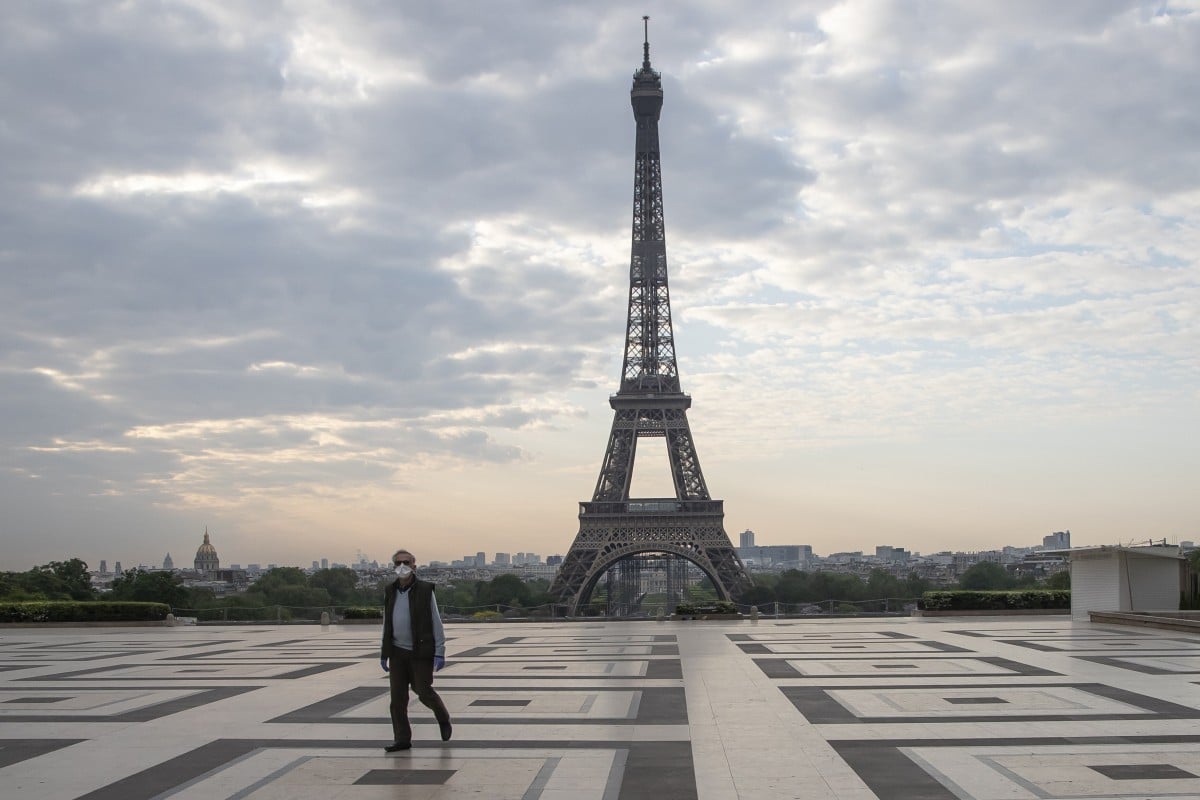
A man makes a phone call near the Eiffel Tower at the Trocadero Palace, Paris, France, May 15, 2020. (Xinhua/Gao Jing)
PARIS — France had registered 96 new deaths from COVID-19 over the past 24 hours, fewer than the previous two 24-hour periods, while the balance of the coronavirus-related hospitalization remains negative, France’s Health Ministry said on Saturday.
According to the ministry, the 96 new single-day deaths were lower than 104 registered on Friday and 351 on Thursday. So far, 27,625 people have succumbed to the coronavirus-caused disease across France.
Meanwhile, France is now the world’s fourth worst-hit country in terms of human loss caused by COVID-19 after the United States, Britain and Italy.
As of Saturday, the country had recorded 142,291 confirmed cases, a single-day increase of 372, slower than Friday’s 563. A total of 61,066 patients had recovered and returned home since early March.
People wait in line outside a cocktail bar in Rome, Italy, May 12, 2020. (Xinhua/Cheng Tingting)
ROME — The number of COVID-19 hospitalizations and intensive care (ICU) patients dropped in Italy over the past 24 hours, according to the latest tally posted by the Civil Protection Department on Saturday.
Recoveries rose by 2,605 from a day earlier, bringing the total to 122,810.
Nationwide, the number of active infections fell to 70,187, down from 72,070 on Friday.
Of those who tested positive for the new coronavirus, 775 are in intensive care, down by 33 from Friday, and 10,400 are hospitalized with symptoms, down by 392.
The death toll on Saturday was 153, bringing the total to 31,763 since the outbreak was first recorded in Italy’s northern Lombardy region in February.
The total number of COVID-19 cases combining infections, fatalities and recoveries has risen to 224,760, up from 223,885 on Friday.
A security guard offers disinfectant gel to a woman at the entrance of a building in Barcelona, Spain, on May 11, 2020. (Photo by Sergi Camara/Xinhua)
MADRID — The Spanish Ministry of Health, Consumer Affairs and Social Welfare confirmed on Saturday falls in the number of new deaths from COVID-19 as well as new cases.
The total number of deaths in Spain rose to 27,563 after 102 people lost their lives to COVID-19 in the 24-hour period until 21:00 hours local time on Friday.
This was the lowest number of deaths in a 24-hour period since March 16, with 50 of the deaths in the regions of Madrid and Catalonia.
The same period also saw a slight fall in the number of new cases. The Health Ministry reported 539 new infections, down from 549 reported 24 hours earlier, taking the total number of confirmed cases to 230,698.
Also on Saturday, Spanish Prime Minister Pedro Sanchez said he will seek a fifth and final extension of the State of Alarm, which was imposed on March 15 to control the spread of the coronavirus.
Speaking in a televised speech, Sanchez said the upcoming final State of Alarm, which will come into effect on May 24 if approved, will be “different” from others.
“It is expected to be the last State of Alarm. We are going to request in the Congress of Deputies that it should last for a month,” he said. All the previous four extensions have been 15 days.
Few people are seen at the Saint-Hubert Royal Galleries shopping street in Brussels, Belgium, May 6, 2020. (Xinhua/Zhang Cheng)
BRUSSELS — With an increase of 47 deaths reported in the last 24 hours, the novel coronavirus had caused a total of 9,005 deaths in Belgium since the beginning of the epidemic, said the public health institute Sciensano on Saturday.
Of the 9,005 deaths, 48 percent took place in hospitals, 51 percent in nursing homes, and about 0.6 percent elsewhere, according to Sciensano. Deaths in hospitals were all confirmed COVID-19 cases. Of the fatalities in nursing homes, 23 percent were confirmed by test while the other were presumed by symptoms.
Also in the past 24 hours, 345 new cases of COVID-19 have been confirmed, raising the cumulative cases to 54,989 in Belgium.
American destroyer’s mission comes a week before Taiwanese president officially starts second term in office
Increased military activity in the region could have unintended consequences but unlikely to lead to direct conflict, observer says
The guided-missile destroyer USS McCampbell made a transit through the Taiwan Strait on Thursday. Photo: US Navy
The United States sent a warship through the Taiwan Strait on Thursday as the Chinese military embarked on more than two months of live-fire naval drills off the mainland’s northern coast.
According to Taiwan’s defence ministry, the Arleigh Burke-class guided-missile destroyer transited the narrow body of water separating Taiwan from mainland China from north to south “in a routine mission”.
“It is continuing its southward voyage and the military is monitoring its movement through the intelligence it has gathered,” the ministry said.
In a statement on its Facebook page, the US Pacific Fleet said the McCampbell transited the Taiwan Strait as part of ongoing operations in the Indo-Pacific.
Analysts said the passage was a response to the People’s Liberation Army’s increasing military activity near Taiwan and in the wider region.
“This will become a new routine as a kind of US security commitment to maintain stability in the Indo-Pacific region,” said Soong Hseik-wen, professor of strategic studies and international relations at National Chung Cheng University in Taiwan.
Beijing urges France to cancel contract to sell arms to Taiwan
13 May 2020
The PLA has staged a series of war games, including fly-bys and warship transits through the strait, in recent months in response to what Beijing sees as growing pro-independence moves by the Tsai government and her party. China has also warned the US against supplying weapons to the island, which Beijing considers to be a wayward province that must return to the mainland fold, by force if necessary.
Mainland China has suspended official exchanges with Taiwan since Tsai was first elected president in 2016 and refused to accept the one-China policy, which Beijing says must be the foundation for any talks.
The PLA has embarked on 11 weeks of naval exercises off the coast of Tangshan in northern China, barring all other vessels from a 25km (15 mile) radius of the drill area, according to the China Maritime Safety Administration.
Taiwanese support closer ties with US over China, few identify as solely Chinese, Pew Research survey finds
13 May 2020
Both Beijing and Washington have ramped up military activities near Taiwan in recent months during the coronavirus pandemic, moves that some observers say run the risk of miscommunication.
Alexander Huang Chieh-cheng, professor of strategic studies and international relations at Tamkang University in Taipei, said no one could exclude the possibility of unintended incidents when both the US and the mainland were stepping up their presence in the region.
“Rational analysts would however argue that the two nuclear powers are not likely to engage in or escalate to direct military conflict,” he said.
Huang said he believed cross-strait relations would worsen during Tsai’s second term in office, which begins on May 20.
“The already damaged relationship between Taiwan and mainland China has worsened since the pandemic mainly due to travel bans and Taiwan’s increased international visibility,” he said.
On Tuesday, Japan’s Kyodo News reported that the PLA was planning a large-scale beach landing exercise near Hainan province in August, simulating a takeover of the Pratas Islands, which are controlled by Taiwan and also known as the Dongsha Islands.
In Taipei, Major General Lin Wen-huang said Taiwan was monitoring the PLA movements and “has contingency plans in place for the South China Sea to strengthen combat readiness and defence preparedness on both the Spratly and Pratas islands”.
Taiwan’s coastguard also announced on Wednesday that its Pratas Islands Garrison was scheduled to conduct an annual live-fire exercise in June to ensure the “effectiveness of various mortar and machine-gun positions”.
Taiwan shows off its military power after presidential election
Shanghai-based military commentator Ni Lexiong said that both the US Navy and PLA were increasing activities during the pandemic because neither side could afford to show weaknesses that the other might take advantage of.
The destroyer’s passage and the PLA’s drills were all part of such efforts, Li said.
But he agreed that both countries were unwilling, unable, and unlikely to have a real conflict.
“They are both bluffing. It’s a fake crisis,” he said. “A pandemic always ends or prevents a war if you look at history.
“I also don’t believe the PLA would want to take over the Dongsha or Taiping islands [in the South China Sea], because these islets alone are not worth a military campaign and all the consequences of that. The only target valuable enough for the PLA is Taiwan.”
The United States suffered the most from the pandemic, with 1,305,199 cases and a death toll of 78,469.
NEW YORK, May 9 (Xinhua) — Global confirmed COVID-19 cases topped 4 million on Saturday, reaching 4,004,224 as of 4:32 p.m. (2032 GMT), according to the Center for Systems Science and Engineering at Johns Hopkins University.
According to the CSSE, a total of 277,860 people worldwide have died of the disease.
Police officers walk past closed retail stores along Broadway in New York, the United States, on May 8, 2020. (Photo by Michael Nagle/Xinhua)
The United States suffered the most from the pandemic, with 1,305,199 cases and a death toll of 78,469. Countries with over 150,000 cases included Spain, Italy, the United Kingdom, Russia, France and Germany, according to the CSSE data.
A COVID-19 patient is wheeled out from an EHPAD (Housing Establishment for Dependant Elderly People) in Epinay sur Seine near Paris, France, on April 22, 2020. (Photo by Aurelien Morissard/Xinhua)
The first suspected cases of COVID-19 infection in France could date back to Nov. 16 last year, a hospital in eastern France said. Before this announcement, the first COVID-19 infection cases officially recorded in France were on Jan. 24, 2020.
PARIS, May 8 (Xinhua) — The first suspected cases of COVID-19 infection in France could date back to Nov. 16 last year, some nine weeks earlier than the official record of the country’s first confirmed cases, a hospital in eastern France said Thursday.
“Doctor Michel Schmitt, head of the medical imaging department at the Albert Schweitzer hospital in Colmar, has reviewed 2,456 chest scans performed between Nov. 1 and April 30, for all reasons (cardiac, pulmonary, traumatic, tumor pathologies),” said the hospital in a press release.
A suspected patient of COVID-19 is transferred to an EHPAD in Epinay sur Seine near Paris, France, April 22, 2020. (Photo by Aurelien Morissard/Xinhua)
The typical scans compatible with COVID-19 infection have been also reviewed in a second then a third reading by two other experienced radiologists. According to this retrospective study, the first cases of contamination with COVID-19 were thus identified from Nov. 16 in this hospital, it said.
Albert Schweitzer hospital added that it has launched a collaboration with France’s National Center for Scientific Research to start an epidemiological exploitation of these results.
Before this announcement, the first case of COVID-19 infection in east France was officially identified in late February. It involved a 36-year-old man who returned from a trip to Lombardy, then hotspot of the epidemic in Italy.
A giant mask is seen on a residential building in Saint-Mande, near Paris, France, on May 2, 2020. (Photo by Aurelien Morissard/Xinhua)
The first COVID-19 infection cases officially recorded in France were on Jan. 24, 2020 relating to individuals who had recently arrived or returned from China.
France on Thursday registered 178 new deaths caused by the novel coronavirus, taking the tally to 25,987. As hospitalization data continued to slow, the government said on Thursday that the country would start to unwind the nearly-two-month anti-coronavirus lockdown from Monday.
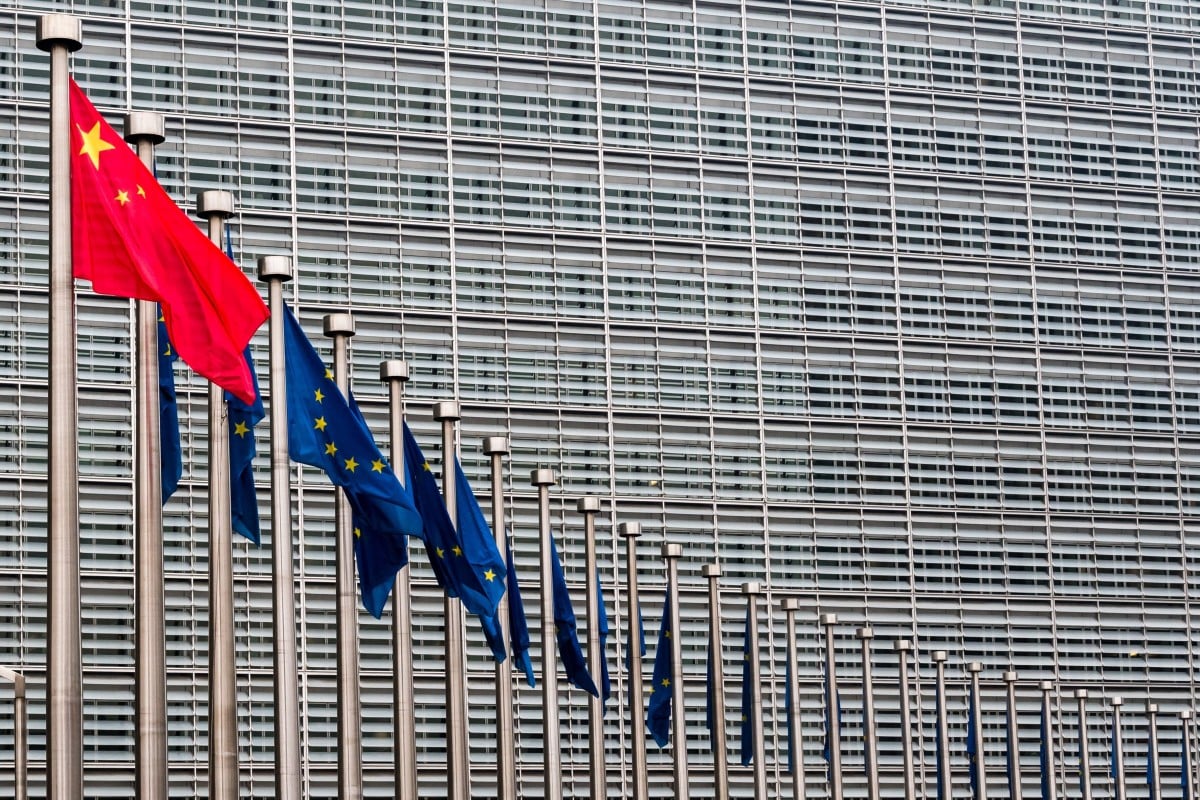
European nations are divided over how best to deal with Beijing, which looms larger in their policy and public debates
Think tanks came together and reported on China’s much-touted medical aid and ‘mask diplomacy’ during Covid-19 crisis
European nations are looking to be more cohesive in their approach towards relations with China. Photo: Bloomberg
As Beijing steps up its pressure campaign on Europe in the wake of the Covid-19 pandemic, their relations look set to become more diverse and contested amid growing distrust and wariness of China’s expanding influence, according to new research.
The study, based on analysis of China’s role in 19 European countries’ handling of the coronavirus crisis, showed that Europe remained largely divided over how to deal with Beijing, which has figured ever more prominently in policy and public debates in many parts of the continent.
A total of 28 experts from 21 think tanks across the continent, collectively known as the European Think-tank Network on China, were involved in the research.
It came on the heels of a diplomatic debacle in the past week that saw the European Union reportedly bowing to pressure by China. The EU reportedly toned down part of a report documenting Beijing’s disinformation efforts to deflect the blame and rewrite the global coronavirus narrative.
Although a spokesperson for the EU denied those allegations, the saga has “moreover revealed the pressures that China has placed on
officials during the crisis”, according to John Seaman, editor of the report and a research fellow at the French Institute of International Relations.
In a phone call on Wednesday, Chinese Premier Li Keqiang and European Commission President Ursula von der Leyen shrugged off concerns about their discord and vowed to boost the fight against the virus and boost economic recovery, according to Xinhua.
Germany ‘rejected China’s bid for positive spin’ on pandemic response
27 Apr 2020
According to Seaman, the Covid-19 crisis hit at a time when traditionally trade-driven China-EU relations had grown more complex and competitive after the European Commission said for the first time last year that Beijing was a systemic rival.
“Debates over the need to adopt more coherent strategies towards China have been emerging across Europe. In many ways, the current crisis has become a catalyst for a number of trends that have been shaping Europe-China relations in recent years, while in other ways it has turned the tables,” he said in the report.
“It has simultaneously brought Europe and China into closer cooperation, pushed them further apart, and seemingly underlined the fractures that exist within Europe on how to approach an increasingly influential China.”
A growing number of European countries, including Sweden and Britain, have joined the United States and Australia in calling for an international inquiry into China’s handling of the pandemic. Leaders from Germany and France have also pressed Beijing for greater transparency about the origin of the deadly virus.
The European think tanks’ report was also focused on China’s unusually aggressive coronavirus diplomacy, with Chinese embassies and ambassadors shifting the blame on to Western democracies and promoting Beijing’s messaging “with varying degrees of dogmatism, divisiveness and moderation” on Twitter and in traditional media.
“While China’s increasingly proactive public diplomacy is widespread, and there appears to be a relative degree of consistency in messaging, there is a diversity in method that ranges from low key (Latvia or Romania) to charm offensive (Poland, Portugal, Italy or Spain) to provocative or aggressive (Sweden, Germany or France),” the report said.
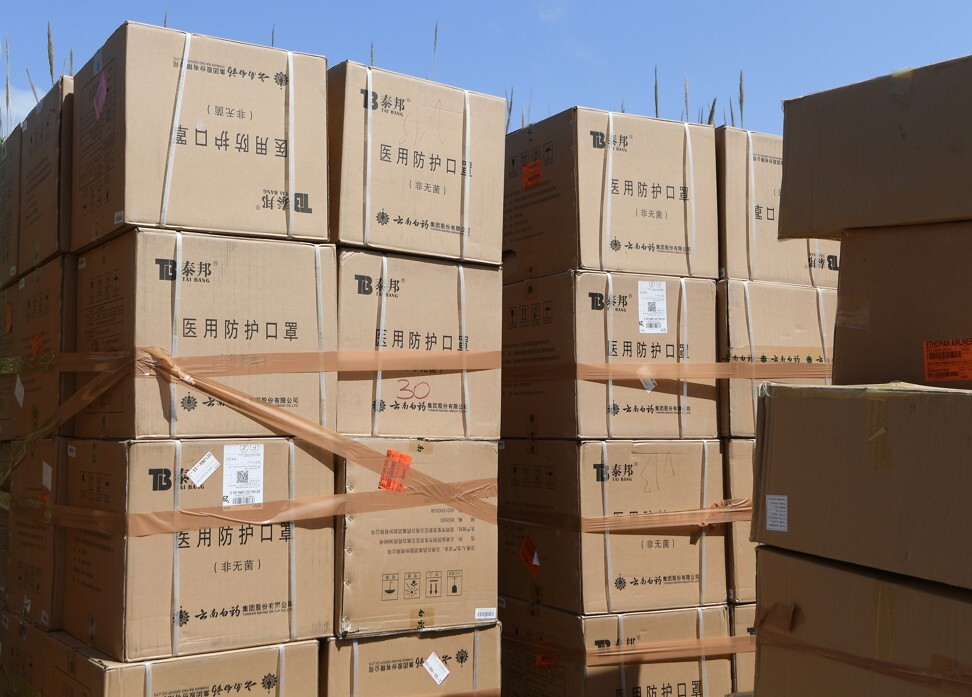
It examined China’s much-touted medical aid and “mask diplomacy” and found “a correlation between Chinese companies with commercial interests in the country and donations from these companies” in countries including Greece, Hungary, Italy, Portugal and Spain.
Boxes of medical supplies from China in Rome. Some European nations are growing wary about China’s diplomatic overreach and apparent willingness to alter the coronavirus narrative. Photo: Xinhua
Many countries have pushed back against China’s diplomatic overreach and its preferred narrative that has served to “[underline] the apparent successes of its autocratic governance model, ignoring its clear downfalls in managing the crisis initially, while sowing doubt on the effectiveness of liberal democracies”, according to Seaman.
While the European Union’s foreign policy chief Josep Borrell warned of Beijing’s geopolitical game to expand its influence through spinning and “politics of generosity”, countries such as Germany and Sweden have moved to tighten investment screening, 5G and industrial policies targeting Chinese firms.
Zhang Ming, China’s top envoy to the EU, last week dismissed the concerns about China’s alleged ploy to use the vulnerabilities of other countries to advance China’s geopolitical interests, such as with the country’s embattled tech giant Huawei and the ambitious Belt and Road Initiative.
“Disinformation is our common enemy and we need to make joint efforts to eradicate it,” Zhang said, claiming China had been a victim of unspecified disinformation campaigns.
The report also noted that China’s actions towards Europe in times of crisis looked set to amplify the fractures across the continent and prompt further debates about the need for a coherent EU strategy on China.
A poll of more than 12,000 people across the 28 EU member countries by German think tank Bertelsmann Stiftung in September last year showed 45 per cent of Europeans saw China as a competitor while only 9 per cent believed their countries shared the same political interests or values with China.
Another survey of 16 European countries released by the Pew Research Centre in December also showed the continent remained deeply divided over how to approach China.
While people in most of western Europe and some of Central and Eastern Europe, such as Slovak and Czech, saw China negatively, 51 per cent in Greece had a positive view of China and those in Russia, Ukraine, Poland, Bulgaria and Lithuania tended to see China more favourably.
Researchers conclude that the virus was circulating undetected in France in February
Findings highlight the difficulties governments face in tracing the source of coronavirus outbreaks
Researchers in France have carried out genetic analysis and found that the dominant types of the viral strains in the country did not come from China or Italy. Photo: AP
The coronavirus outbreak in France was not caused by cases imported from China, but from a locally circulating strain of unknown origin, according to a new study by French scientists at the Institut Pasteur in Paris.
Genetic analysis showed that the dominant types of the viral strains in France belonged to a clade – or group with a common ancestor – that did not come from China or Italy, the earliest hotspot in Europe.
“The French outbreak has been mainly seeded by one or several variants of this clade … we can infer that the virus was silently circulating in France in February,” said researchers led by Dr Sylvie van der Werf and Etienne Simon-Loriere in a non-peer reviewed paper released on bioRxiv.org last week.
The Covid-19 pandemic has infected more than 128,000 people in France and caused more than 23,000 deaths.
France detected the virus in late January, before any other country in Europe. A few patients with a travel history that included China’s Hubei province were sampled on January 24 and tested positive.
The Covid-19 pandemic has infected more than 128,000 people in France and caused more than 23,000 deaths. Photo: AFP
The French government took quick and decisive measures to trace contacts of the infected people and shut down the chance of further infection.
However, these strains were not found in patients tested after the initial imported cases, suggesting “the quarantine imposed on the initial Covid-19 cases in France appears to have prevented local transmission”, the researchers said.
The Pasteur institute collected samples from more than 90 other patients across France and found the strains all came from one genetic line. Strains following this unique path of evolution had so far only been detected in Europe and the Americas.
Singapore Covid-19 cases to rise as not all migrant workers being tested
28 Apr 2020
The earliest sample in the French clade was collected on February 19 from a patient who had no history of travel and no known contact with returned travellers.
Several patients had recently travelled to other European countries, the United Arab Emirates, Madagascar and Egypt but there was no direct evidence that they contracted the disease in these destinations.
To the researchers’ surprise, some of the later strains collected were genetically older – or closer to the ancestral root – than the first sample in this clade.
Spanish official cries reading names of health workers killed by coronavirus
A possible explanation, according to the authors, was that local transmission had been occurring in France for some time without being detected by health authorities.
The French government may have missed detecting the transmission. According to the researchers, a large proportion of those patients might have had mild symptoms or none at all.
The researchers also found that three sequences later sampled in Algeria were closely related to those in France, suggesting that travellers from France might have introduced the virus to the African country and caused an outbreak.
China says US politicians are lying as Trump calls for Covid-19 damages
29 Apr 2020
Benjamin Neuman, professor and chair of biological sciences with the Texas A&M University-Texarkana, said the French strains might have come from Belgium, where some sequences most closely related to the original strain from China were clustered.
“Since the earliest European strains of [the coronavirus] Sars-CoV-2 seem to be associated with Belgium, the idea that the virus spread from Belgium to both Italy and France at around the same time seems plausible, as this paper contends,” he said.
France is the latest in a growing number of countries and areas where no direct link between China and local outbreaks could be established.
The dominant strains in Russia and Australia, for instance, came from Europe and the United States, respectively, according to some studies.
These findings have drawn fire from some politicians who have tried to deflect domestic anger over their handling of the crisis by blaming China.
Is this the next big hotspot for the ‘little flu’?
28 Apr 2020
“So now the Fake News @nytimes is tracing the CoronaVirus origins back to Europe, NOT China. This is a first!” he tweeted on April 11, referring to a story about the studies in the The New York Times’ science section.
The findings also highlight the difficulties governments face in tracing the source of coronavirus outbreaks.
Less-developed countries may never know where their strains came from due to inadequate testing and sequencing capability.
India, for example, has released the genetic sequence of fewer than 40 samples to the public so far, a small number considering its huge population.
Most of the strains sampled in 35 early cases came from clades that could be traced to Italy and Iran, with only a few from China, according to a recent study. But researchers were not able to track further because of the lack of data.
A scientist on the study, Dr Mukesh Thakur, of the Zoological Survey of India, said it was too early to rule out China as the source of outbreaks in India because the number of samples at hand was limited.
A 20-year-old student studying medicine in Wuhan, for instance, might have come in contact with many people on the way home before she was tested positive on January 30.
Thakur said local media reported that the Indian government quarantined 3,500 people possibly linked to three positive cases imported from Wuhan.
“God knows how many of them tested positive in the subsequent stages,” Thakur said in an email response to the Post’s queries on Tuesday.
Some prominent scientists, including Francis Collins, director of the US National Institutes of Health, said the virus might have been spreading quietly in humans for years, or even decades, without causing a detectable outbreak.
The virus had thus adapted well to the human body. Some genes regulating its binding to host cells were similar, or even identical, to those found in some other highly infectious human viruses, such as HIV and Ebola.
According to some estimates, the ancestor of Sars-CoV-2, the virus causing Covid-19, might have left bats between 50 and 70 years ago. A recent study by a team of geneticists in Oxford University estimated the first outbreak of the current pandemic could have occurred as early as September last year.
They found that the dominant strains circulating in China and Asia were genetically younger than some popular strains in the United States.
Researchers from Imperial College in London looked at how 11 countries had responded to the crisis and estimated how many lives had been saved by intervention
Some of the worst affected countries such as Italy and Spain would have seen tens of thousands more deaths, according to the model
Empty streets outside the Colosseum in Rome. Photo: AFP
Mass lockdowns and widespread social distancing may have prevented 59,000 Covid-19 deaths, according to a new model from Imperial College in London.
A team of researchers – including Neil Ferguson, whose projections helped inform the British government’s response to the outbreak and Samir Bhatt – estimated that tens of thousands of lives had been saved in 11 countries as a result of measures such as case isolation, school closures, bans on mass gatherings as well as local and national lockdowns.
The measures had a “substantial impact in reducing transmission” for countries with more advanced epidemics, with an estimated 38,000 deaths averted in Italy and 16,000 in Spain, but it is “too early to be sure” about similar reductions for countries in the earlier stages of the outbreak, researchers said.
Most countries in the model – Austria, Belgium, Denmark, France, Germany, Norway, Sweden, Switzerland and the United Kingdom – began their interventions between March 12 and 14.
“While we cannot determine which set of interventions have been most successful, taken together, we can already see changes in the trends of new deaths,” the researchers said.
“We note that substantial innovation is taking place, and new, more effective interventions or refinements of current interventions, alongside behavioural changes will further contribute to reductions in infections.”
The report, published on Monday, also estimated that between 7 and 43 million people had been infected in the 11 countries by late March – somewhere between 1.88 per cent and 11.43 per cent of the population – and said a large number of cases had probably gone unreported.
On average, the proportion of the population infected in the assessed countries was 4.9 per cent, with the highest estimates in Spain and Italy, and the lowest in Germany and Norway.
The coronavirus that causes Covid-19 first began to spread late last year in central China, but has since become a devastating global pandemic, with the most confirmed cases in the United States, Italy, Spain, Germany, France and mainland China.
Life under Italy’s lockdown: the hard lessons other countries must learn
2 Apr 2020
A separate study by Ferguson and other researchers, including Imperial College epidemiologist Azra Ghani, published on Monday in The Lancet found that the overall case fatality ratio for Covid-19 was lower than estimates for the severe acute respiratory syndrome (Sars) and Middle East respiratory syndrome (Mers) coronaviruses, but “substantially higher” than those of recent influenza pandemics such as the H1N1 influenza in 2009.
“With the rapid geographical spread observed to date, Covid-19 therefore represents a major global health threat in the coming weeks and months,” the researchers said.
“Our estimate of the proportion of infected individuals requiring hospitalisation, when combined with likely infection attack rates (around 50–80 per cent), show that even the most advanced health care systems are likely to be overwhelmed.
“These estimates are therefore crucial to enable countries around the world to best prepare as the global pandemic continues to unfold.”
Italy ‘still proud to be part of EU’ amid stronger ties with China and coronavirus pandemic
2 Apr 2020
The study also found that the risk of death increased significantly for individuals in older age groups, although they noted early results indicate children are not at a lower risk of infection compared with adults.
Using data from China, researchers estimated the overall case fatality ratio to be at 1.38 per cent, with a lower ratio of 0.32 per cent for under-60s, compared with 6.4 per cent for over-60s and rising to 13.4 per cent for people who were over 80.
“It is clear from the data that has emerged from China that case fatality ratio increases substantially with age,” they said.
The age gradient was also observed in cases outside China, where the fatality ratio was estimated at 1.4 per cent for people under the age of 60, compared with 4.5 per cent for those 60 and over.
The US saw 1,169 deaths in 24 hours and its infections are 20 per cent of the global total
China to hold day of mourning for victims; Singapore announces fifth death and school closures; Boris Johnson says he’s still ill; Angela Merkel ends quarantine
A group of nurses gather in the Bronx, New York, for a strike about the lack of personal protective equipment, on April 2, 2020. Photo: EPA-EFE
The number of confirmed coronavirus cases around the world soared past one million on Thursday and deaths topped 50,000 as Europe reeled from the pandemic and the
reported the highest daily death toll so far of any country.
Despite more than half the planet imposing some form of lockdown, the virus claimed thousands more lives, with the US, Spain and Britain seeing the highest number of daily fatalities yet.
Covid-19 is currently spreading the most rapidly in the US, where there have been 243,453 infections and 5,926 deaths, according to a tally by Johns Hopkins University.
The US saw 1,169 deaths in 24 hours, the highest one-day toll recorded in any country since the global pandemic began. The grim record was previously held by Italy, where 969 people died on March 27.
Here are other developments:
Singapore shuts schools, workplaces in ‘circuit-breaking’ move
Singapore’s coronavirus case number hits 1,000 after city state reports biggest single-day spike
Singapore Prime Minister Lee Hsien Loong on Friday afternoon announced most workplaces would be shut from April 7, and schools would be closed from April 8, in its
The city state has 1,114 infections and five people have died. More than 200 have recovered.
Essential services such as food establishments, markets and supermarkets, clinics, hospitals, utilities, transport and banking services will remain open.
Coronavirus: what’s behind Singapore’s U-turn on wearing masks?
4 Apr 2020
Lee on Friday said instead of tightening measures incrementally over the next few weeks, Singapore should “make a decisive move now, to pre-empt escalating infections”.
“Looking at the trend, I am worried that unless we take further steps, things will gradually get worse, or another big cluster may push things over the edge,” Lee said, describing the new measures as a “circuit breaker”.
Medical experts say the stringent measures require the cooperation of citizens to stay at home, given that local infection clusters have ballooned from six at the end of February to more than 20 currently.
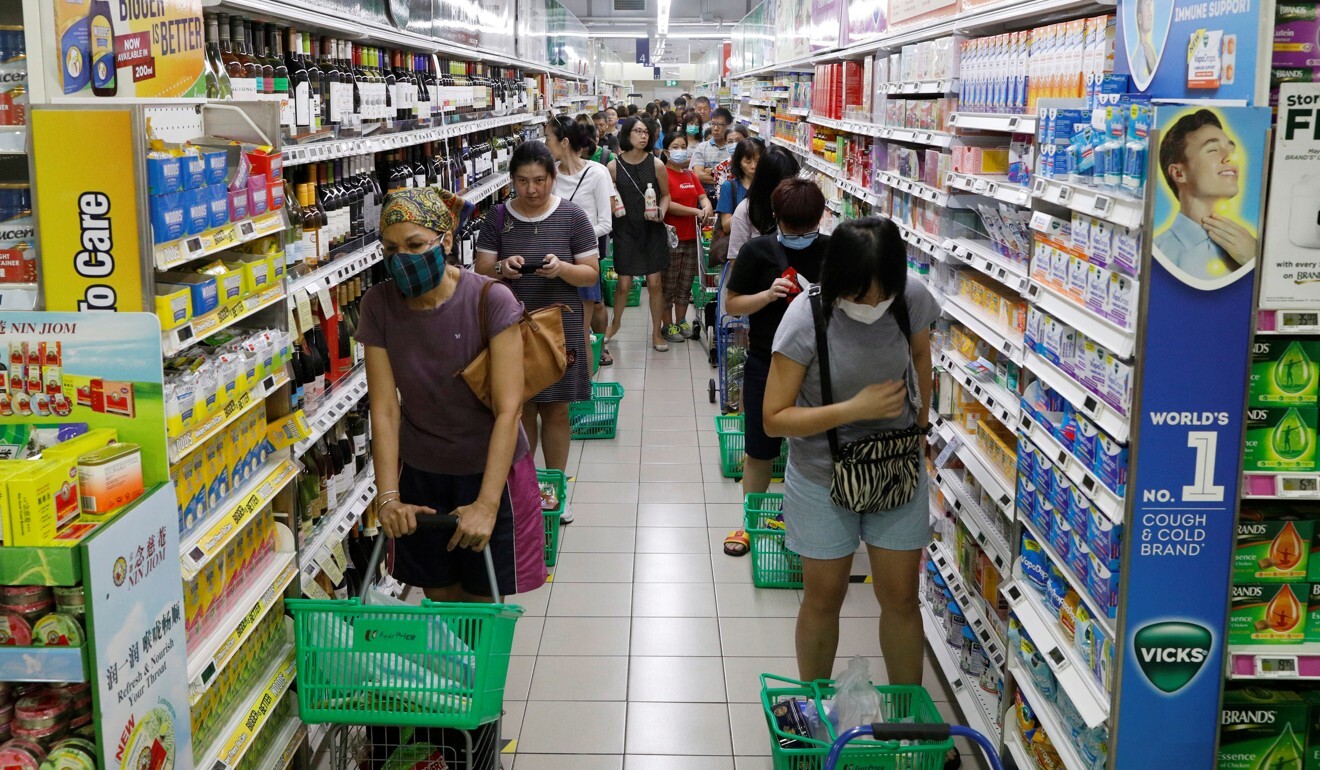
People stand behind markers as they practice physical distancing while queuing up to buy food at a Singapore supermarket on April 3, 2020. Photo: Reuters
The Lion City has launched a website to help individuals with symptoms that might be related to Covid-19 decide whether they should see a doctor or not.
On the Covid-19 Symptom Checker website, individuals will be prompted to answer a short list of questions including their age, if they have any chronic diseases, if they have travelled outside Singapore in the past 14 days, or have been in touch with a suspected or confirmed Covid-19 case.
They will also be asked to choose which symptoms they are experiencing from a predetermined list including symptoms such as cough, difficulty breathing and the loss of taste/smell. The site will then recommend what the person should do next. This includes whether they should see a doctor or continue to monitor their symptoms.
China to hold day of mourning for Covid-19 victims
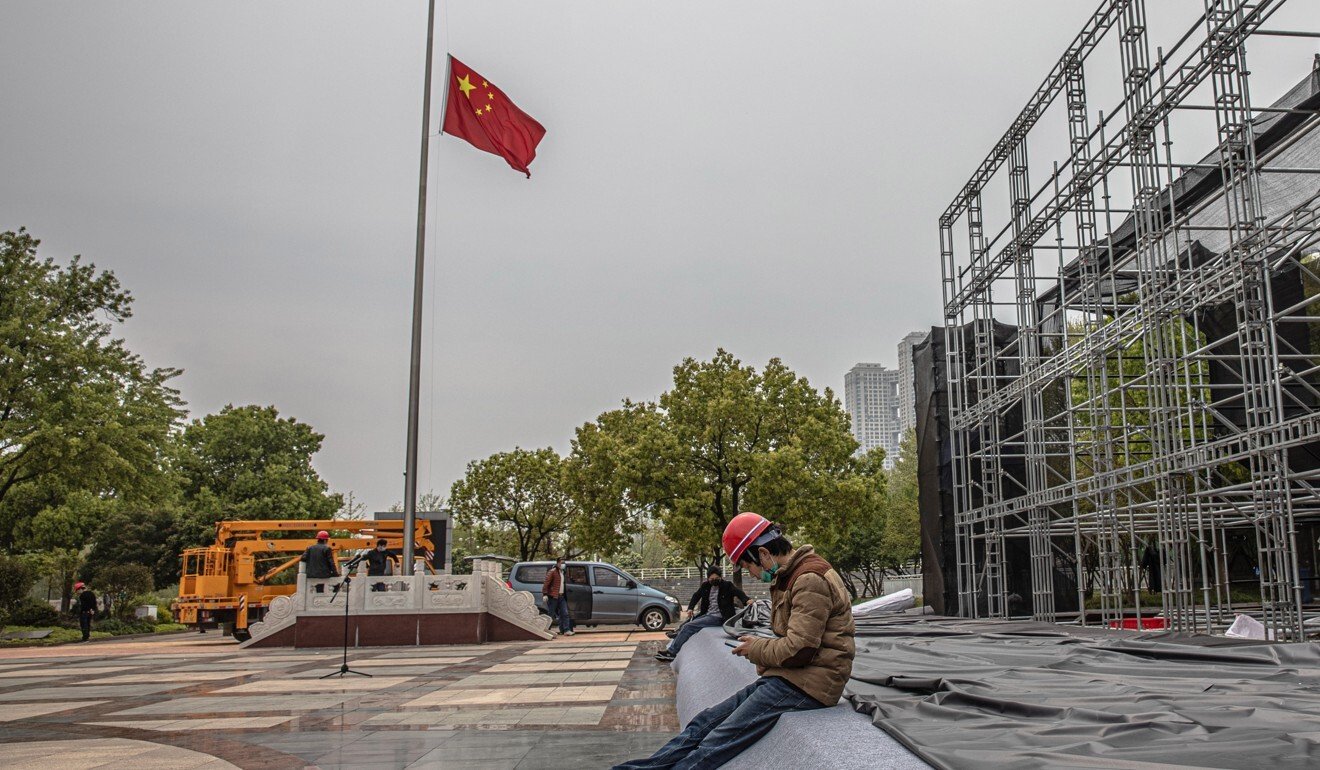
At 10am on April 4, 2020, the public will be asked to observe three minutes of silence. Photo: EPA-EFE
Flags will be flown at half-mast across the country and at embassies overseas, while all public entertainment will be halted for the day, said the State Council, China’s cabinet, on Friday.
At 10am, the public will be asked to observe three minutes of silence, during which sirens will blast out across the country and the owners of cars and boats should sound their vehicles’ horns, the council said.
Saturday also coincides with Ching Ming, or the Tomb-sweeping Festival, when Chinese traditionally gather to remember their ancestors.
China to stage day of mourning for the thousands lost to Covid-19
4 Apr 2020
Mainland China on Friday reported 31 new confirmed coronavirus cases, including two locally transmitted infections, the country’s National Health Commission said.
It also reported four new deaths as of Thursday, all in Wuhan, the city where the outbreak began, the commission said in a statement. The total number of infections now stands at 81,620 and 3,322 deaths have been reported from mainland China to date.
The commission said 60 new asymptomatic coronavirus patients were also reported on Thursday.
UK’s Boris Johnson still ill with virus fever
Boris Johnson #StayHomeSaveLives
✔@BorisJohnson
Another quick update from me on our campaign against #coronavirus.
You are saving lives by staying at home, so I urge you to stick with it this weekend, even if we do have some fine weather.#StayHomeSaveLives
British Prime Minister Boris Johnson remains in isolation with a high temperature, more than a week after testing positive for coronavirus.
Johnson made the announcement in a video posted on Twitter on Friday, saying that even after seven days, “alas I still have one of the symptoms, a minor symptom: I still have a temperature”.
“In accordance with government advice I must continue my self-isolation,” he said.
As virus rages, British love for NHS could make or break Boris Johnson
3 Apr 2020
With coronavirus deaths still rising, the PM is anxious to drum home his message that Britons must obey government orders to stay in their homes as much as possible.
On March 23 he ordered a national lockdown, with the closure of schools, stores, restaurants and leisure facilities. Under emergency laws, police have the power to fine individuals who flout the rules and break up gatherings of more than two people in public.
Germany to crack down on people flouting physical distancing rules
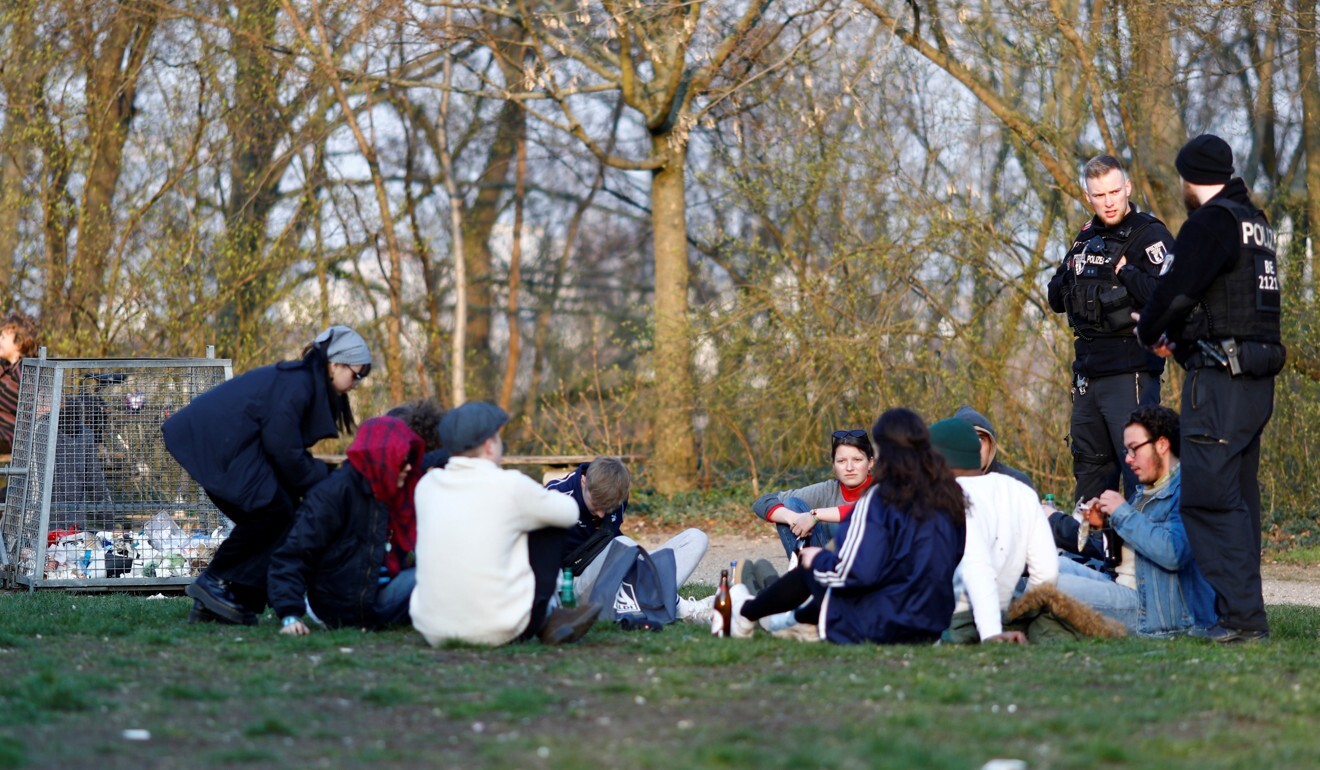
Police officers ask people to disperse as they gather at a park in Berlin, Germany, on March 28, 2020. Photo: Reuters
People in Germany risk being fined up to €500 (US$540) for standing too close to each other from Friday, as officials crack down on people flouting rules brought in to control the coronavirus outbreak.
Chancellor Angela Merkel’s government has ordered people not leave their homes unless they have an exceptional reason such as grocery shopping, exercise or medical appointments.
Gatherings of more than two people are banned and a distance of at least 1.5 metres must be kept from others at all times.
Local governments have the power to set fines for transgressors, with city officials in Berlin saying their fines would be as high as 500 euros. Similar announcements have come from across Germany’s 16 states.
Bow ties to face masks: German firms shift gears in virus crisis
2 Apr 2020
According to figures by the Robert Koch Institute (RKI) on Friday, Germany has recorded more than 79,000 cases of the novel coronavirus, and 1,017 deaths, although RKI president Lothar Wieler warned on Friday that the actual number of casualties could be much higher.
“We won’t manage to test every single person … I assume we will have more deaths than are officially recorded,” he said.
Wieler said the mortality rate would “continue to rise” in Germany. German minister’s suicide linked to coronavirus crisis
30 Mar 2020
Meanwhile, Merkel on Friday left her Berlin home for the first time in almost two weeks, after she was forced into quarantine following contact with an infected doctor.
Merkel was tested several times, with all tests coming back negative.
The 65-year-old leader has returned to her office, where she will continue to observe social distancing rules and lead the country via video and audio conferencing, her spokesman said.
Spain records over 900 virus deaths
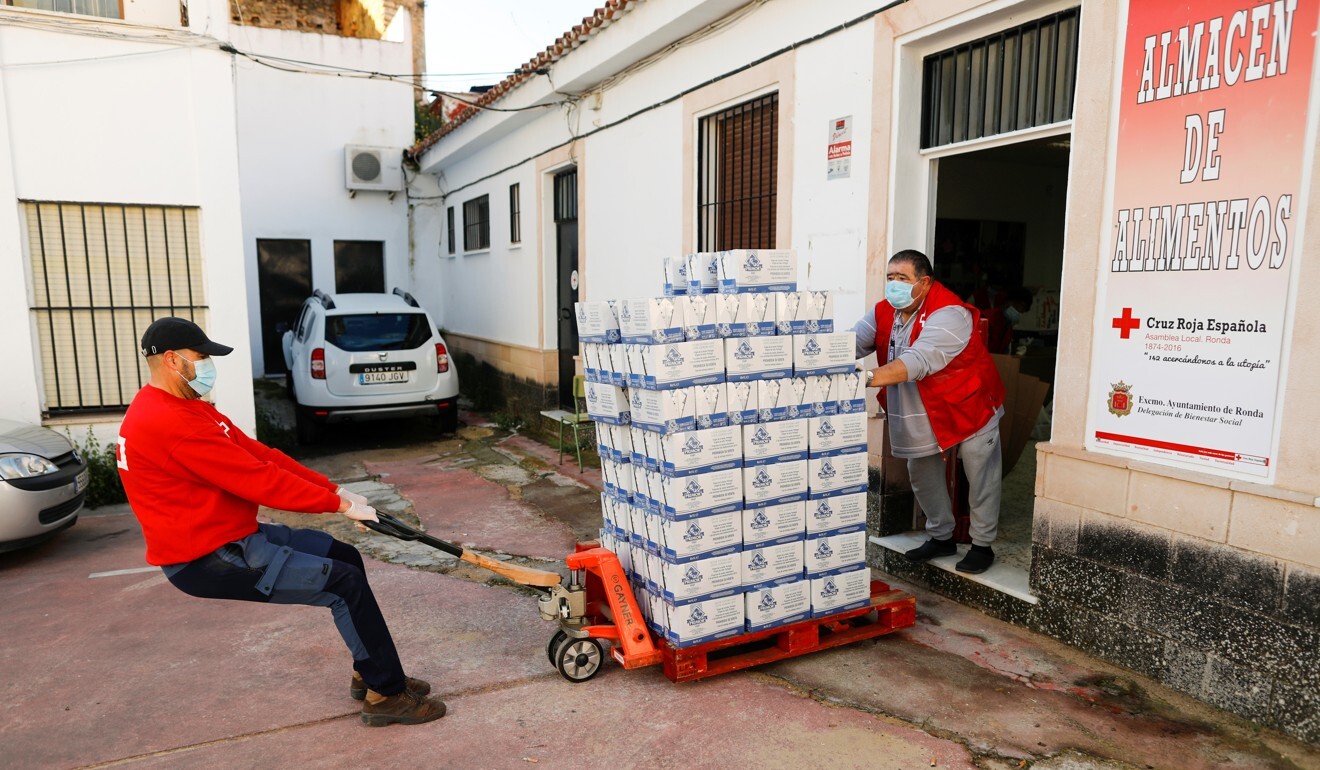
Members of the Red Cross prepare food for families in need at a food bank in Ronda, Spain, on April 3, 2020. Photo: Reuters
on Friday recorded over 900 new coronavirus deaths over the past day, bringing the number of casualties to 10,935, in the first decline in new Covid-19 deaths in four days.
The country has the world’s second-highest death toll after Italy, but health ministry figures confirm a consistent downward trend in the rate of new cases and fatalities.
The 932 deaths on Friday was a smaller gain than Thursday’s 950, according to Health Ministry data. The number of confirmed cases also increased by less than the previous day, with 7,472 new infections taking the total to 117,710.
Why Europe’s hospitals – among world’s best – are struggling with virus
1 Apr 2020
Prime Minister Pedro Sanchez’s government has been struggling to bring the virus under control. Hospitals are overwhelmed, nursing homes have been especially hard hit in a nation with one of the world’s oldest populations, and the army has been mobilised.
Sanchez may extend the current four-week lockdown for another two weeks beyond April 11, Spanish media reported on Friday. The stay-at-home order limits people’s movement to shopping for food and essentials, while some workers are also allowed to circulate.
Passengers disembark from virus-hit cruise ship in Florida
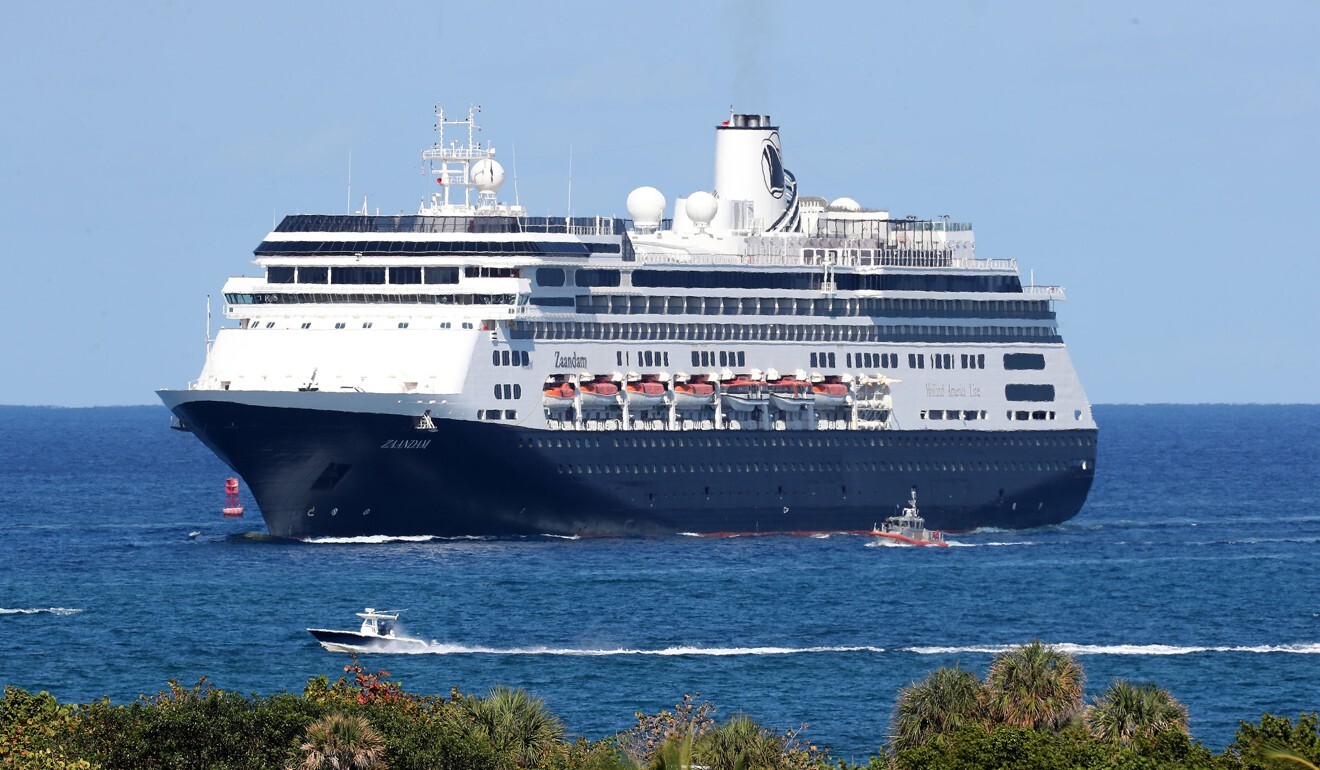
The Zaandam cruise ship docked in Florida on Friday. Photo: TNS via ZUMA Wire/dpa
Passengers from an ill-fated cruise were carefully freed from their cabins and allowed to disembark on Friday, following the removal of 14 critically-ill people who were wheeled off to Florida hospitals bracing for an onslaught of coronavirus patients.
The exodus from the Zaandam and its sister ship the Rotterdam, both operated by Holland America Line, was expected to continue throughout the day.
Floridians were getting off first, followed by other passengers. Buses were taking people healthy enough to travel directly to the airport, where they will board chartered flights home without going through the terminal.
Coronavirus nightmare for passengers stuck on MS Zaandam ‘death ship’
30 Mar 2020
“This is a humanitarian situation, and the County Commission’s top priority is protecting our 1.9 million residents while providing a contained disembarkation option for people on board who need to get safely home,” Broward County Mayor Dale Holness said in a statement late on Thursday.
Four people have died on the Zaandam, for reasons not yet disclosed. All told, 107 passengers and 143 crew reported flu-like symptoms during the voyage, but many have since recovered.
It was unclear when the bodies of four passengers who died on the Zaandam would be removed from the ship, which set sail on March 7, the day before the US State Department warned people against cruising during the pandemic.
South Korea’s infections top 10,000
South Korean hospital’s ‘phone booth’ coronavirus tests
on Friday said the number of confirmed coronavirus cases in the country has surpassed 10,000, with 174 deaths linked to Covid-19, the disease caused by the new virus.
The Health and Welfare Ministry reported 86 new coronavirus infections over 24 hours to the end of Thursday, taking the total to 10,062 cases. It also logged five more deaths.
The numbers confirmed an encouraging stabilisation of numbers, which have hovered around the 100 mark for the past three weeks, a clear downward trend which began in March after numbers peaked at the end of February with over 900 cases recorded in a day.
South Korea’s virus response is the opposite of China’s – and it works
15 Mar 2020
For a fourth straight day, more new cases were recorded from Seoul and the surrounding Gyeonggi province, than in what has so far been the outbreak epicentre in the country – North Gyeongsang province and city of Daegu – with the capital area registering 34 new cases, and the latter recording 23.
Imported cases in patients recently returned from abroad also continued to increase, with 22 new infections bringing the total to 264.
Japan to give US$2,800 payouts to households
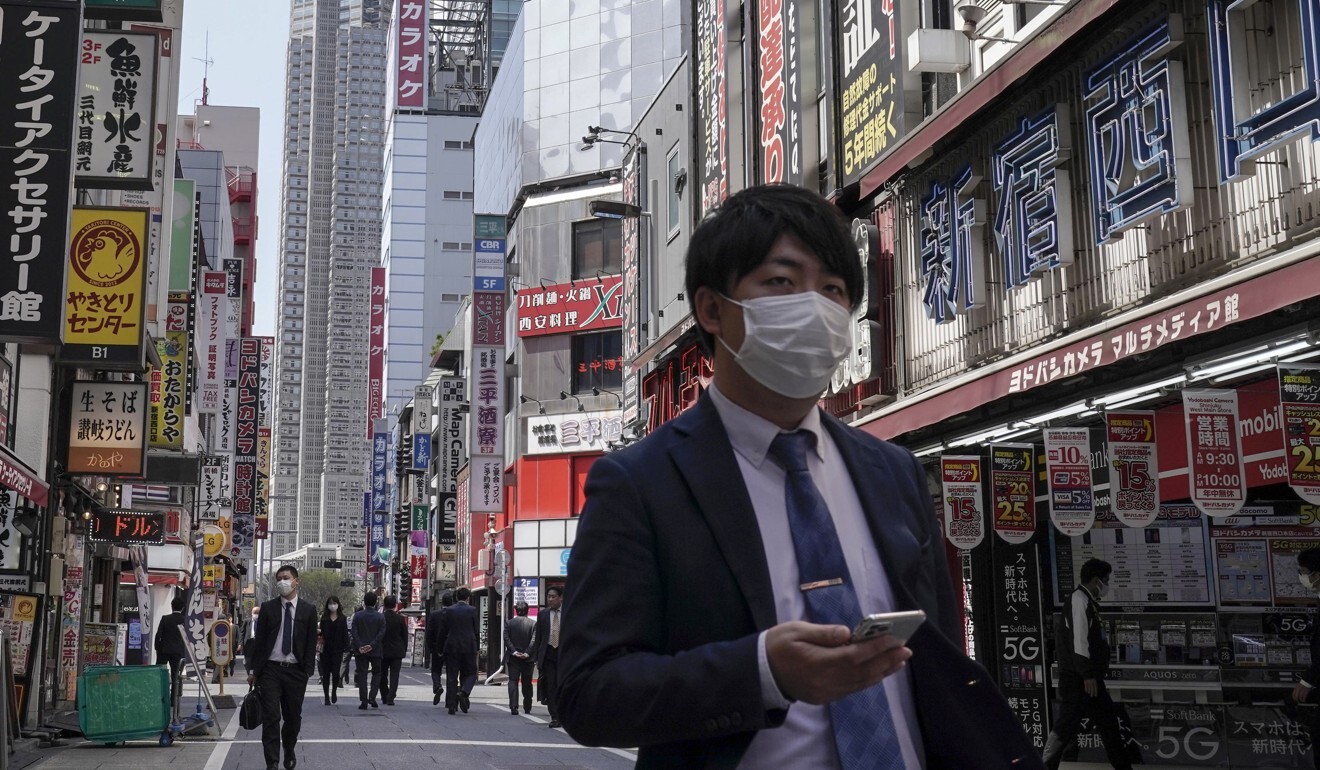
A man seen in a protective mask at Shinjuku in Tokyo, Japan, on April 2, 2020. Photo: EPA-EFE
Japanese ruling party executive Fumio Kishida said on Friday he has agreed with Prime Minister Shinzo Abe to offer 300,000 yen (US$2,800) in cash payments per household that suffers a certain degree of income declines from the coronavirus pandemic.
About 10 million of Japan’s 58 million households are expected to be eligible for the cash programme, a key pillar of an emergency economic package that the government plans to compile possibly on Tuesday.
The relief measure will be funded by a supplementary budget for this fiscal year that the government wants to pass in parliament before Japan’s Golden Week holiday starts in early May.
Coronavirus: Tokyo’s nightlife districts linked to rise in cases
2 Apr 2020
The government will not set a household income limit for the cash handout, which will be tax free, officials said.
“If we set an income limit, we would have to check individual incomes, which would take a lot of time,” Yasutoshi Nishimura, minister in charge of economic and fiscal policy, told a press conference. “Instead of that, we’ll come up with an unprecedented way (to judge who should receive cash).”
Nishimura said recipients will be limited to those who are facing livelihood difficulties, and that civil servants, politicians and major corporate executives who have not been significantly affected by the economic impact of the virus outbreak, for example, will be excluded from the scheme.
Japan weighs cost of Tokyo lockdown and Wagyu beef coupons for households
31 Mar 2020
Abe said the government will provide cash “as soon as possible” not only to households but also to small-and mid-sized business operators that have seen their revenues drop.
Abe has said the package to tackle the coronavirus will be larger than the 56.8 trillion yen emergency package compiled in April 2009 following the previous year’s global financial crisis.
Indonesian Muslims banned from travelling home for Eid al-Fitr
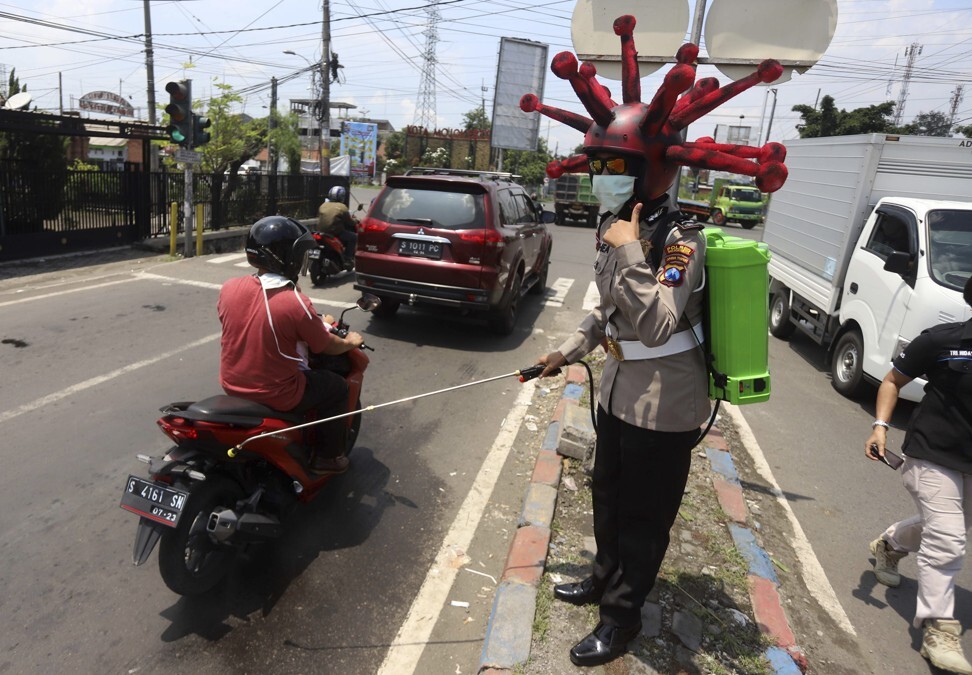
A police officer in a coronavirus helmet sprays disinfectant at a motorcycle in East Java, Indonesia, on April 3, 2020. Photo: AP
Islamic scholars in Indonesia on Friday issued an edict to forbid people from travelling home for Eid al-Fitr, the festival marking the end of the Muslim fasting month of Ramadan, as the country recorded nearly 2,000 infections during the
decided to allow millions of Muslims to travel to celebrate Eid in their hometowns next month, despite fears that they could spread the Covid-19 disease.
“The virus spreads very easily. Doing something like that at a time of a pandemic is haram [forbidden],” the council’s sectary general Anwar Abbas said.
Eid al-Fitr is expected to start on May 23, depending on the sighting of the new moon.
Indonesia frees 18,000 prisoners as virus death toll surges to 170
2 Apr 2020
Indonesia confirmed 196 new infections on Friday, bringing the total number of cases to 1,986.
The death toll rose to 181 after 11 new deaths, making Indonesia the the country with the highest number of fatalities in Asia outside China.
The State Intelligence Agency warned that the outbreak in Indonesia could peak in June with more than 105,000 cases.
Thailand’s night curfew to begin; people banned from making virus pranks
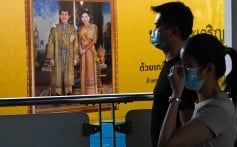
An officer checks the temperature of a passenger in a bus at a health checkpoint in Bangkok, Thailand, on April 3, 2020. Photo: AP
Thailand will on Friday night begin a daily nationwide curfew to try to curb the spread of the coronavirus.
The 10pm-4am curfew, which will run indefinitely, is the latest measure by the government to curb gatherings and have people stay at home as much as possible.
Exceptions include those people transporting medical supplies and health workers travelling to and from work, Prime Minister Prayuth Chan-ocha said.
“We prioritise health over freedom,” Prayuth said. “We might not feel as comfortable as before, but we all need to adapt for survival and have social responsibility, so that we can make it through this crisis.”
In a televised address, Prayuth also asked all Thai citizens abroad to “delay” returning to
until after April 15 in a bid to stop imported cases.
Thai king remains in Germany during pandemic, prompting criticism online
23 Mar 2020
Thais have also been banned from making public gatherings, in an order signed on Friday by defence forces chief General Pornpipat Benyasri.
The order prohibits people from public gatherings, carrying out activities, or gathering for unlawful purposes in a manner that risks spreading the coronavirus.
It also bans any act that aggravates people’s suffering and pranks to spread the virus. Family gatherings at residences and civic activities carried out according to safe social distancing guidelines are allowed.
Violation of the order carries a maximum penalty of two years’ imprisonment and a fine of 40,000 baht (US$1,215).
Pakistan’s mosques remain open amid shutdowns
Coronavirus: In Pakistan food aid is distributed to the poor in Karachi
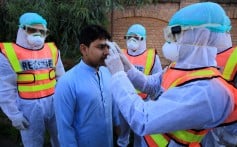
Mosques in Pakistan were allowed to remain open on Friday, when adherents gather for weekly prayers, even as much of the country had shut down.
Pakistan, with 2,450 confirmed coronavirus cases and 35 deaths, has been sharply criticised for moving too slowly to curb large gatherings.
Prime Minister Imran Khan was relying on restricting the size of congregations attending mosques and advice to stay at home from religious groups like the country’s Islamic Ideology Council.
Coronavirus: Pakistan quarantines pilgrims returning from Iran
4 Mar 2020
However, some provinces had issued their own lockdown orders to prevent Muslims from gathering for Friday prayers.
In southern Sindh province, a complete lockdown was being enforced from noon until 3pm, the time when the faithful gather for prayers. Anyone found on the streets would be arrested, according to the provincial local government minister in a statement.
In eastern Punjab province, where 60 per cent of Pakistan’s 220 million people live, checkpoints had been set up in major cities stopping people from congregating.
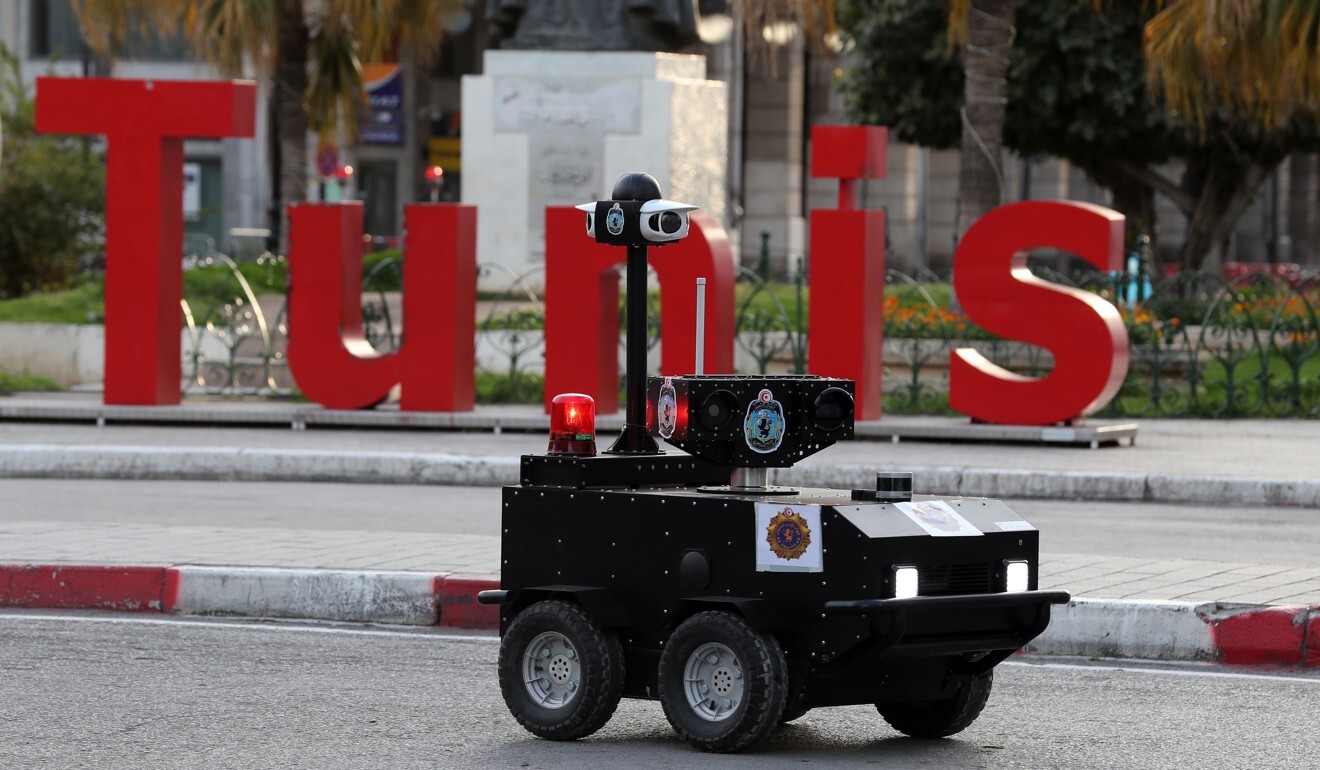
Tunisia ‘robocop’ enforces virus lockdown
The PGuard robot patrols the streets of Tunis, in Tunisia, on April 1, 2020. Photo: EPA-EFE
Tunisia’s interior ministry has deployed a police robot to patrol the streets of the capital and enforce a lockdown as the country battles the spread of coronavirus.
Known as PGuard, the “robocop” is remotely operated and equipped with infrared and thermal imaging cameras, in addition to a sound and light alarm system.
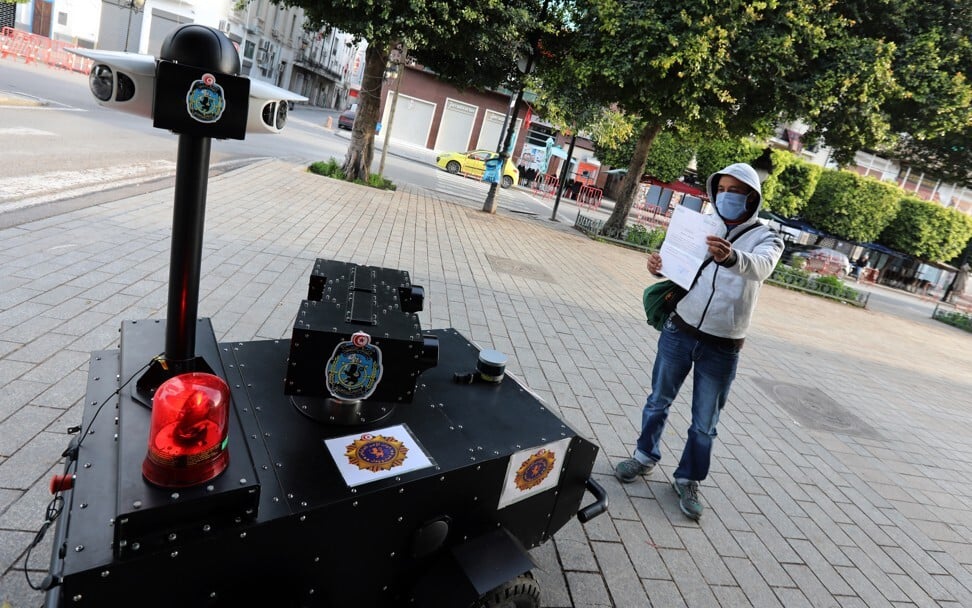
In images and a soundtrack posted on the interior ministry’s website last month, PGuard calls out to suspected violators of the lockdown: “What are you doing? Show me your ID. You don’t know there’s a lockdown?”
The PGuard robot checks the exit permit of a citizen in Tunis on April 1, 2020. Photo: EPA-EFE
Tunisia has been under night-time curfew since March 17 and authorities imposed stricter lockdown orders from March 22.
Fourteen people have died from coronavirus in Tunisia, where 455 confirmed cases have tested positive for the disease.
The robot’s Tunisian creator Anis Sahbani said the machine was first produced in 2015 essentially to carry out security patrols and it also operates autonomously through artificial intelligence.
The robot, built by Sahbani’s Enova Robotics firm, costs between 100,000 and 130,000 euros (US$100,000 and $140,000), and has been selling mostly overseas to companies for security uses.
France death tally passes 5,000
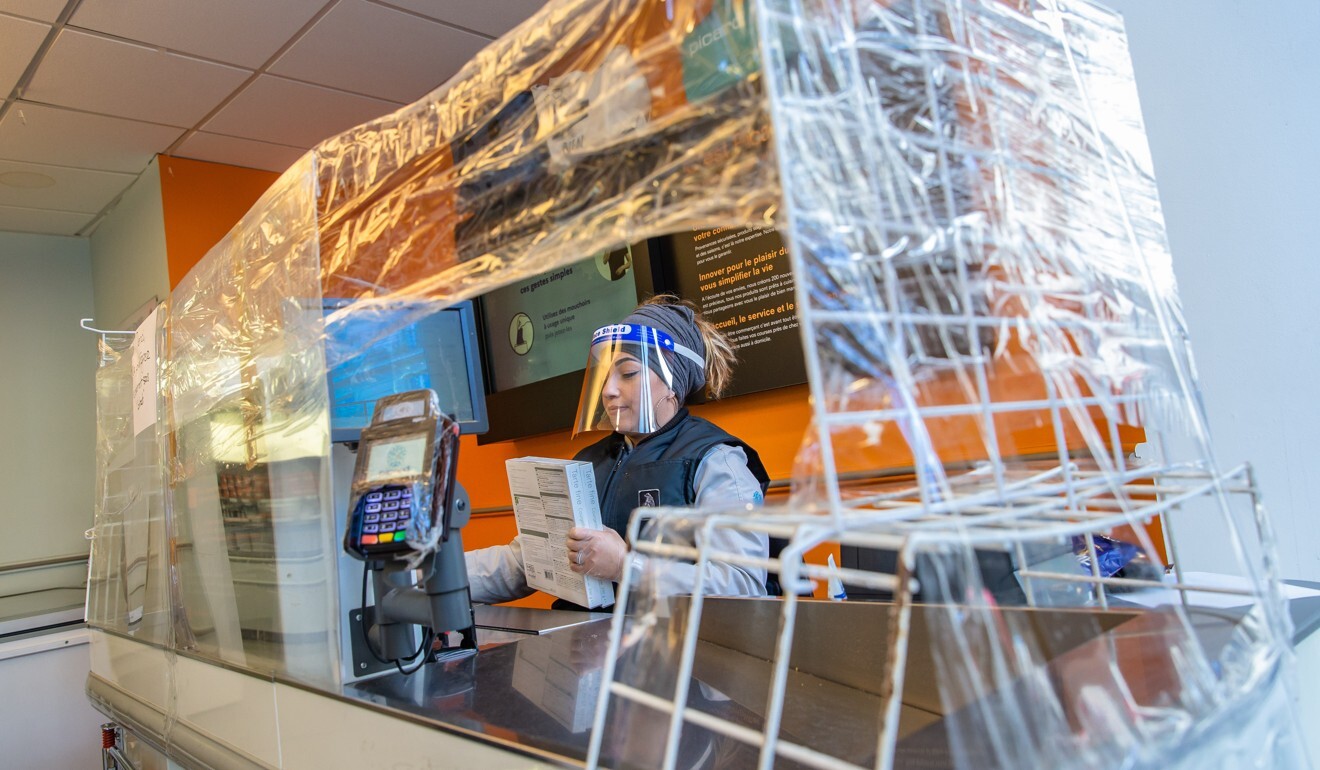
A cashier runs a store counter covered up with a plastic barrier in Paris, France, on April 3, 2020. Photo: Xinhua
reported a jump in coronavirus deaths on Thursday as the country included fatalities in some nursing homes for the first time. Still, a decline in intensive-care admissions suggest the country’s lockdown is starting to slow the pace of the outbreak.
The health ministry reported 471 new hospital deaths from the coronavirus on Thursday. In addition, it reported 884 deaths in a partial count from nursing homes, bringing the total number to 5,387. Nursing homes were not previously included in the statistics.
in number of deaths, behind Italy and Spain. The number of confirmed cases is now at 59,105.
Italy reported another 760 fatalities on Thursday. Its death toll, already the world’s highest, now stands at 13,915. Total infections, including recoveries and deaths, have reached 115,242.
Spain reported 950 more deaths from the coronavirus, the most in a single day, taking the total to 10,003.
India plans staggered exit from lockdown
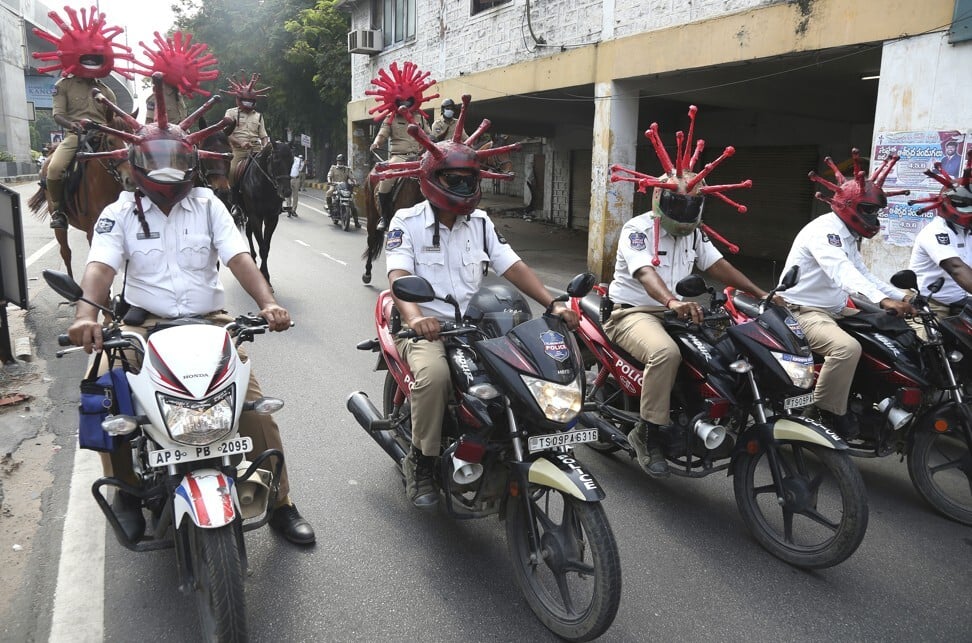
Indian policemen in Hyderabad, India, wear virus-themed helmets for a campaign to raise awareness at preventing the spread of the coronavirus on April 2, 2020. Photo: AP
infections, but the world’s biggest shutdown has left millions without jobs and forced migrant workers to flee to their villages for food and shelter.
After violence, Indian police try humour to enforce virus lockdown
2 Apr 2020
He told state chief ministers that the shutdown had helped limit infections but that the situation remained far from satisfactory around the world and there could be a second wave.
“Prime minister said that it is important to formulate a common exit strategy to ensure staggered re-emergence of the population once lockdown ends,” the government quoted him as saying in a video conference.
India has had 2,069 confirmed infections, of whom 53 have died, low figures by comparison with the US, China, Italy and Spain. But the big worry is the
because of a gathering held by a Muslim missionary group last month that has spawned dozens of cases across the country, officials said.
Five-minute virus tests ‘may give inaccurate results’
A Chinese drug and diagnostic firm has cautioned that the slew of new test kits that promise to detect the coronavirus in just a few minutes may not be as accurate as conventional kits, a potential setback for countries seeking to rapidly test their citizens.
“Such rapid testing is not as accurate as the traditional nucleic acid test that takes about two hours to turn out results,” Wu Yifang, Shanghai Fosun Pharmaceutical Group’s chief executive officer, said. The drugmaker also has a swift testing technology but it’s working on making the results more accurate, according to Wu.
Coronavirus nightmare of China’s ‘recovered’ patients
2 Apr 2020
Abbott Laboratories unveiled a coronavirus test on March 28 that can confirm if someone is infected in as little as five minutes. Shenzhen Bioeasy Biotechnology has been supplying its version of rapid testing kits to the European Union even before getting regulatory approval in China for domestic use.
The faster and easy-to-deploy diagnostic kits seemingly save time and resources for nations under pressure to widen their testing efforts. But there have been reports of faulty kits, like those bought by Spain and the Czech Republic.
Shenzhen Bioeasy, which sold thousands of test kits to Spain, said in a statement on March 27 that false results could be due to improper use of its kits or faulty specimen collection.
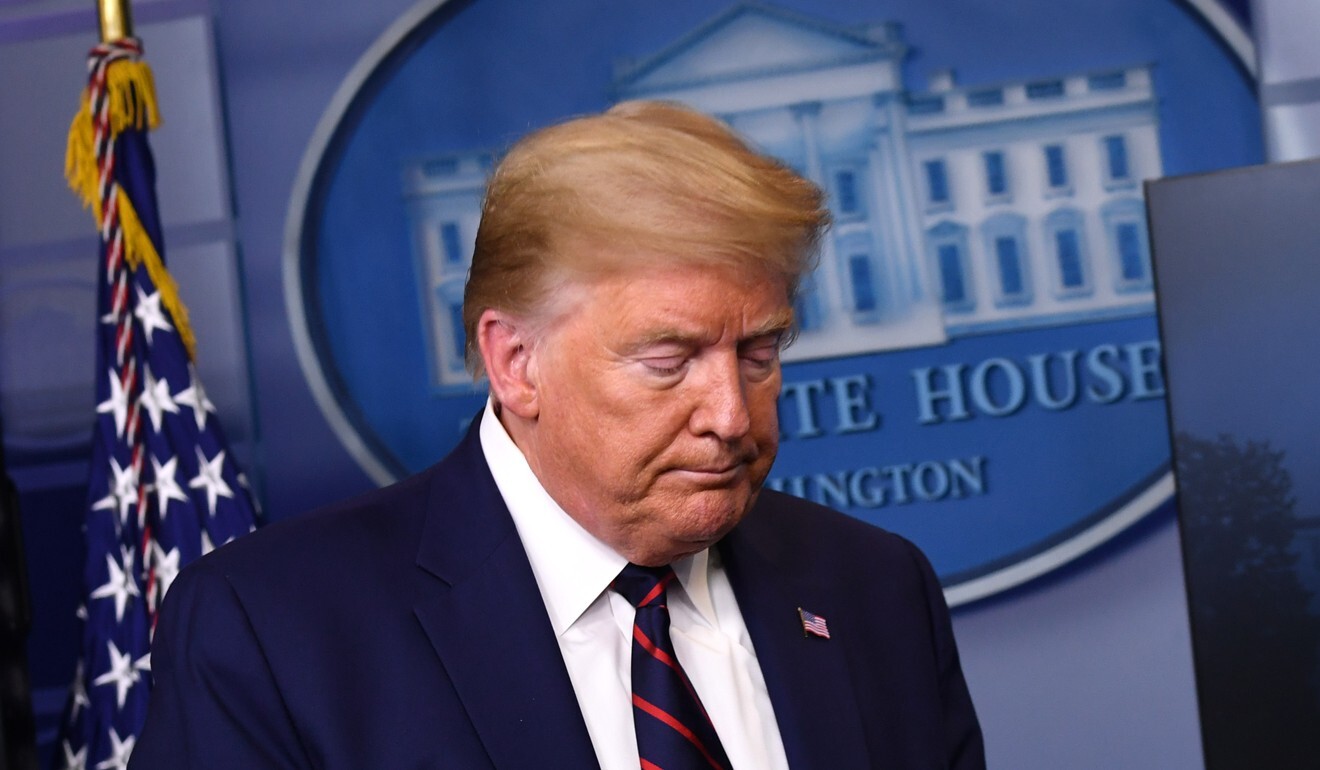
Trump tests negative again
US President Donald Trump was was first tested last month after coming into contact with a Brazilian official who later tested positive. Photo: UPI/Bloomberg
US President Donald Trump on Thursday was tested again to determine whether he had been infected by the coronavirus, and the test came back negative, the White House said.
A letter from Trump’s doctor, Sean Conley, said Trump had undergone what was a second test for coronavirus. He was tested last month after coming into contact with a Brazilian official who later tested positive.
Trump to urge Americans to wear masks when outside
3 Apr 2020
Conley said in a letter released by the White House that Trump was tested with a new, rapid point-of-contact test and the result came back in 15 minutes.
“He is healthy and without symptoms,” Conley said.
Trump said Americans should wear protective face masks if they wish. “If people want to wear them, they can” he said. Scarves work just as well, he said.
NRA sues NY governor over closure of gun stores
A pedestrian pushes a stroller as people wait in line outside a gun store to buy supplies on March 15, 2020. Photo: Reuters
The National Rifle Association (NRA) sued New York Governor Andrew Cuomo for closing gun shops during the coronavirus pandemic, saying the restriction is unconstitutional and leaves citizens defenceless while prisoners are being released early as a result of the crisis.
Cuomo’s March 20 executive order that included firearms retailers as non-essential businesses, which must close is a “pointless and arbitrary attack on the constitutional rights of New York citizens and residents,” the NRA said in a complaint filed late Thursday in Syracuse, New York.
New York ordered most businesses to close to prevent the spread of the virus, but deemed grocery stores, liquor stores, pharmacies and restaurants that do take-out as essential and allowed them to remain open.
The New York lawsuit follows similar action the NRA took in Northern California, where it sued several cities including San Jose for ordering gun stores to close.
Corona beer producer halts brewing
The Mexican brewer of Corona beer said on Thursday it was suspending production because of the health emergency in the country over the Covid-19 pandemic.
Grupo Modelo said the measure was in line with the Mexican government’s order to suspend all non-essential activities until April 30 to slow the spread of coronavirus.
“We are in the process of lowering production at our plants to the bare minimum,” the company said in a statement, adding it would complete the suspension in the following days.
Mexico’s government has said that only key sectors such as agribusiness will be able to continue to function.
US stops issuing passports, except in emergencies
The US State Department will not be processing new passports and renewals except for emergency cases because of the coronavirus pandemic, the agency’s website said.
“Due to public health measures to limit the spread of Covid-19, effective March 20, 2020, we are only able to offer service for customers with a qualified life-or-death emergency and who need a passport for immediate international travel within 72 hours,” said a March 27 online statement.
How elite US university students brought coronavirus home from campus
3 Apr 2020
Passport applications received on or before March 19 will be processed.
Travellers who paid extra for expedited service can expect to receive their passport in the next two to three weeks.
If you applied in-person at a passport agency or centre before March 19, the agency will contact you about getting your passport.




























 CHINDIA ALERT: You'll be living in their world, very soon