Chindia Alert: You’ll be Living in their World Very Soon
aims to alert you to the threats and opportunities that China and India present. China and India require serious attention; case of ‘hidden dragon and crouching tiger’.
Without this attention, governments, businesses and, indeed, individuals may find themselves at a great disadvantage sooner rather than later.
The POSTs (front webpages) are mainly 'cuttings' from reliable sources, updated continuously.
The PAGEs (see Tabs, above) attempt to make the information more meaningful by putting some structure to the information we have researched and assembled since 2006.
A graduating foreign student takes selfies at Zhejiang University in Hangzhou, east China’s Zhejiang Province, June 28, 2018. (Xinhua/Long Wei)
BEIJING, May 18 (Xinhua) — Chinese President Xi Jinping extended welcome to excellent youth from all countries in the world to study in China in his Sunday reply to a letter from all Pakistani students studying in the University of Science and Technology Beijing (USTB).
In his letter, Xi encouraged the students to communicate more with their Chinese peers and join hands with youth from all countries to contribute to promoting people-to-people connectivity and building a community with a shared future for humanity.
Learning that the students have enriched their knowledge and made quite a few Chinese friends while studying in China, Xi said he felt happy for the achievements they have made.
“As you have felt, since the COVID-19 epidemic broke out, the Chinese government and schools have always cared for the lives and health of foreign students studying in China, providing all-round help for them,” Xi noted.
The Chinese government and people put people’s lives first and treat foreigners in the country the same as Chinese nationals, making no exception in offering them care, Xi wrote.
Photo taken on Nov. 7, 2019 shows the autumn scenery of the University of Science and Technology Beijing in Beijing, capital of China. (Xinhua/Chen Yehua)
Xi said he learned that many foreign students have expressed their support to the Chinese people in various ways during China’s fight against COVID-19.
“A friend in need is a friend indeed,” he said, adding that China will continue providing various help to all foreign students studying in the country.
While welcoming excellent youth from other countries to study in China, Xi encouraged them to learn more about the country, communicate more with their Chinese peers and tell the world more about the China they see.
The USTB currently has 52 Pakistani students. They recently wrote about their experiences and feelings of studying in China in a letter to Xi and expressed their gratitude to the university for providing care and help for them after the COVID-19 outbreak.
They also expressed their aspirations to join in building the Belt and Road after graduation and contribute to enhancing China-Pakistan friendship.
The statement, issued on 27 April but only reported this week, singles out stadiums, exhibition centres, museums and theatres as public facilities where it’s especially important to ban plagiarism.
“City constructions are the combination of a city’s external image and internal spirit, revealing a city’s culture,” the government statement says.
It calls for a “new era” of architecture to “strengthen cultural confidence, show the city’s features, exhibit the contemporary spirit, and display the Chinese characteristics”.
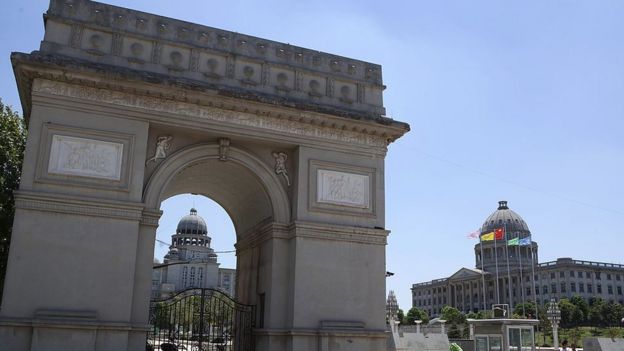
Image copyright STR / AFP / GETTYImage caption – Not the Arc de Triomphe, but a college gate in Wuhan
The guidelines on “foreign” architecture were mostly welcomed on Chinese social media.
“The ban is great,” wrote a Weibo user, according to state media the Global Times. “It’s much better to protect our historical architectures than build fake copycat ones.”
Another recalled seeing an imitation White House in Jiangsu province. “It burned my eyes,” she said.
Image copyright OLIVIER CHOUCHANA / GETTYImage caption Thames Town, an English-themed town near Shanghai, pictured in 2008
In 2013, the BBC visited “Thames Town”, an imitation English town in Songjiang in Shanghai.
The town features cobbled streets, a medieval meeting hall – even a statue of Winston Churchill – and was a popular spot for wedding photos.
“Usually if you want to see foreign buildings, you have to go abroad,” said one person. “But if we import them to China, people can save money while experiencing foreign-style architecture.”
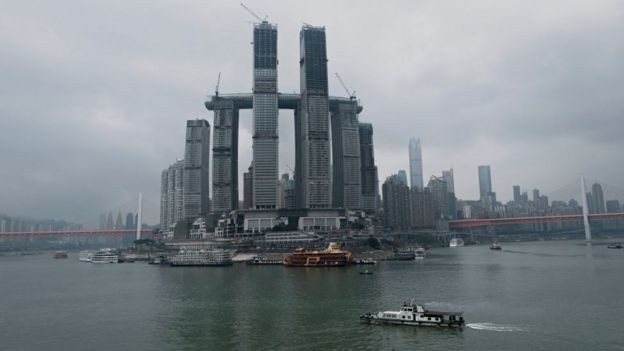
Image copyright WANG ZHAO / GETTYImage caption – Raffles City, Chongqing, in 2019 – mimicking the Marina Bay Sands hotel in Singapore
China, of course, is not the only country to borrow – or copy – other countries’ designs.
Las Vegas in the US revels in its imitations of iconic foreign architecture including the Eiffel Tower and Venetian canals.
Thailand also has developments that mimic the Italian countryside and charming English villages, mainly aimed at domestic tourists.
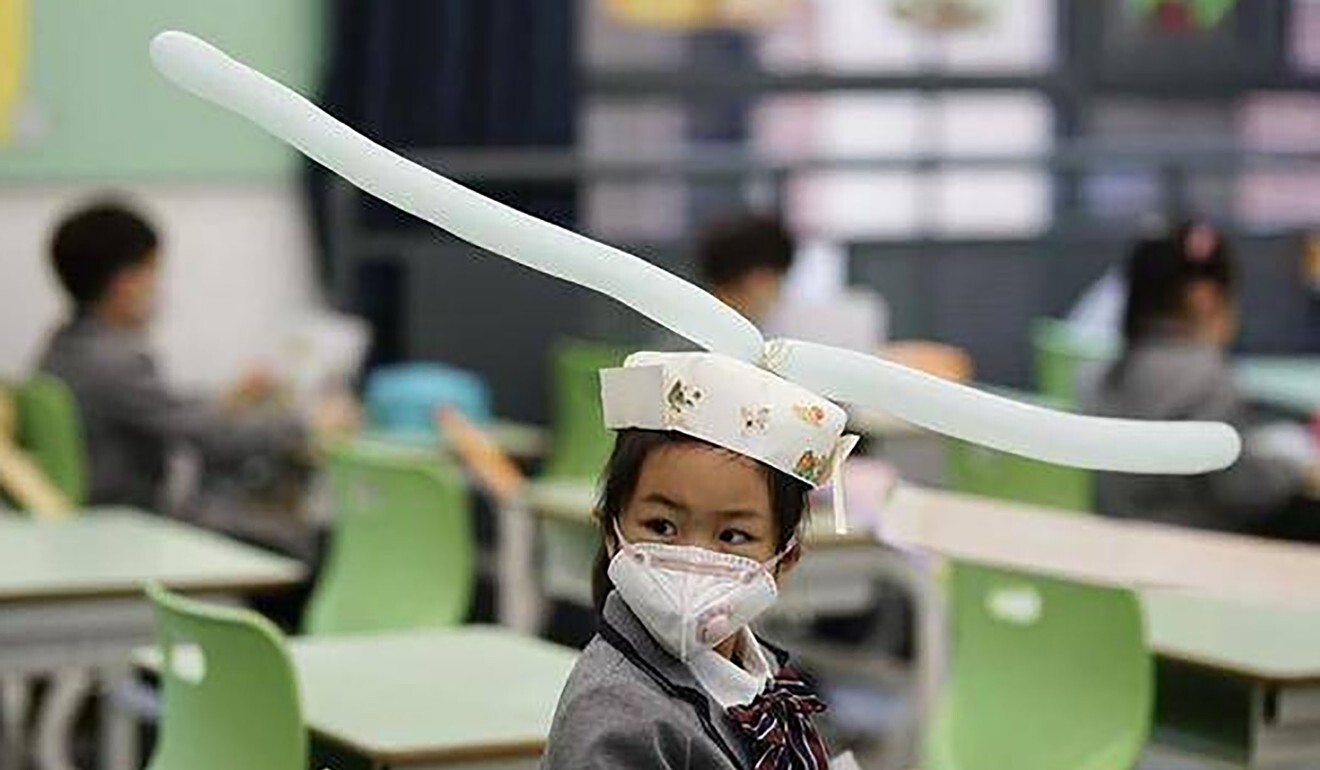
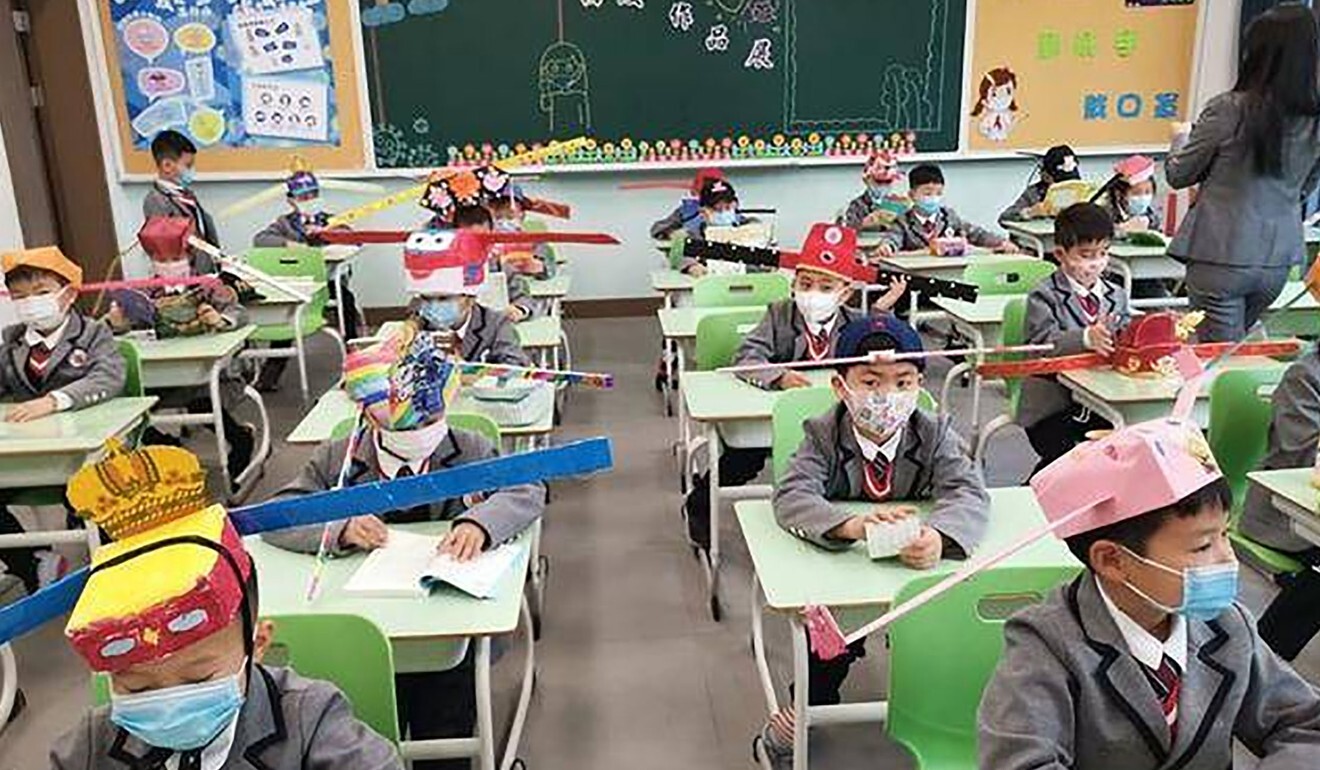
Pupils given headwear modelled on a style worn by officials a thousand years ago to reinforce the message that they must stay a metre away from each other
One legend says the hats were given long extensions to stop courtiers whispering among themselves when meeting the emperor
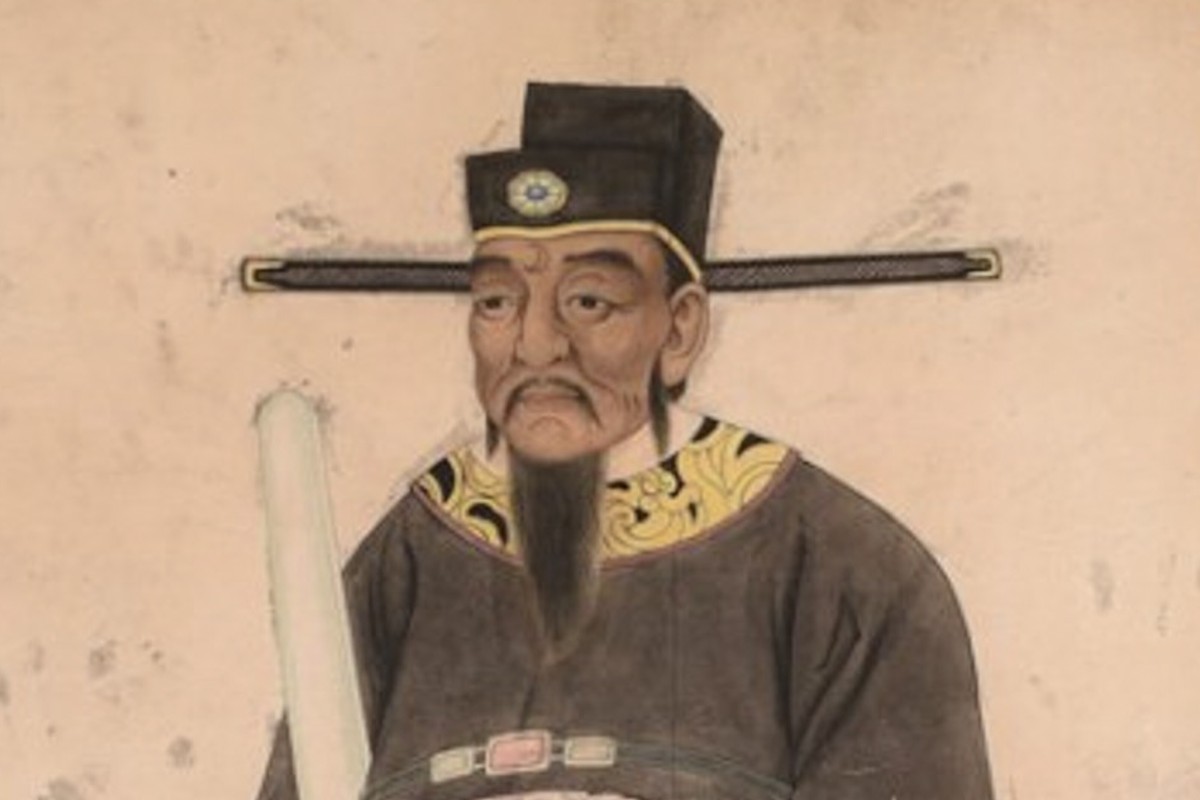
Hats with long extensions were worn by officials during the Song dynasty. Photo: Handout
An ancient Chinese hat has joined face masks and hand sanitisers as one of the weapons in the fight against Covid-19.
A primary school in Hangzhou in the east of the country took inspiration from the headgear worn by officials in the Song dynasty, which ruled China between 960 and 1279, to reinforce lessons on social distancing.
Pupils at the school wore their own handmade versions of the hats, which have long extensions, or wings, to keep them at least a metre (3ft) apart when they returned to school on Monday, state news agency Xinhua reported.
One legend says that the first Song emperor ordered his ministers to wear hats with two long wings on the sides so that they could not chitchat in court assemblies without being overheard, according to Tsui Lik-hang, a historian at City University of Hong Kong.
Pupils at a school in Hangzhou made their own versions of the hats. Photo: Weibo
However, he warned that this story came from a much later source, adding: “The Song emperors, in fact, were also depicted to have worn this kind of headwear with wing-like flaps.”
The World Health Organisation recommends that people stay at least a metre apart to curb the spread of the coronavirus that causes Covid-19.
Coronavirus droplets may travel further than personal distancing guidelines, study finds
16 Apr 2020
“If you are too close, you can breathe in the droplets, including the Covid-19 virus if the person coughing has the disease,” the global health body advises.
An early childhood education specialist said the hats were a good way to explain the concept of social distancing to young children, who find it difficult to understand abstract concepts.
The pupil’s head gear is designed to drive home the social distancing message. Photo: Weibo
“As children can see and feel these hats, and when the ‘wings’ hit one another, they may be more able to understand the expectations and remember to keep their physical distance,” said Ian Lam Chun-bun, associate head of the department of early childhood
Using pictures of footprints to indicate the right distance to keep when queuing, standing, and even talking to schoolmates was also helpful, said Lam, who recommended visual aids and aids that stimulate other senses, such as hearing and touch.
“We can use sharp colours or special textures, like tactile paving,” he added.
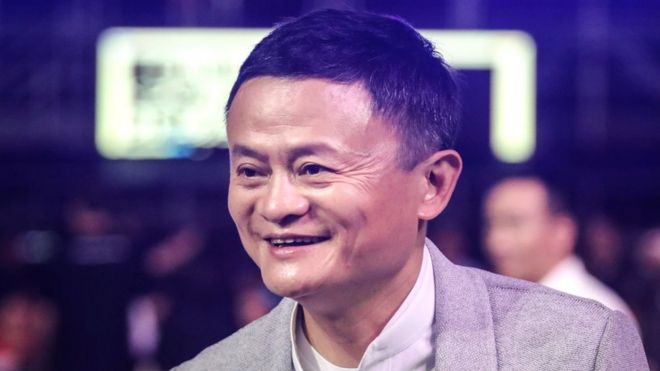
The richest man in China opened his own Twitter account last month, in the middle of the Covid-19 outbreak. So far, every one of his posts has been devoted to his unrivalled campaign to deliver medical supplies to almost every country around the world.
“One world, one fight!” Jack Ma enthused in one of his first messages. “Together, we can do this!” he cheered in another.
The billionaire entrepreneur is the driving force behind a widespread operation to ship medical supplies to more than 150 countries so far, sending face masks and ventilators to many places that have been elbowed out of the global brawl over life-saving equipment.
But Ma’s critics and even some of his supporters aren’t sure what he’s getting himself into. Has this bold venture into global philanthropy unveiled him as the friendly face of China’s Communist Party? Or is he an independent player who is being used by the Party for propaganda purposes? He appears to be following China’s diplomatic rules, particularly when choosing which countries should benefit from his donations, but his growing clout might put him in the crosshairs of the jealous leaders at the top of China’s political pyramid.
Other tech billionaires have pledged more money to fight the effects of the virus – Twitter’s Jack Dorsey is giving $1bn (£0.8bn) to the cause. Candid, a US-based philanthropy watchdog that tracks private charitable donations, puts Alibaba 12th on a list of private Covid-19 donors. But that list doesn’t include shipments of vital supplies, which some countries might consider to be more important than money at this stage in the global outbreak.
The world’s top coronavirus financial donors
How Alibaba compares to the top five. No one else other than the effervescent Ma is capable of dispatching supplies directly to those who need them. Starting in March, the Jack Ma foundation and the related Alibaba foundation began airlifting supplies to Africa, Asia, Europe, Latin America and even to politically sensitive areas including Iran, Israel, Russia and the US.
Ma has also donated millions to coronavirus vaccine research and a handbook of medical expertise from doctors in his native Zhejiang province has been translated from Chinese into 16 languages. But it’s the medical shipments that have been making headlines, setting Ma apart.
“He has the ability and the money and the lifting power to get a Chinese supply plane out of Hangzhou to land in Addis Ababa, or wherever it needs to go,” explains Ma’s biographer, Duncan Clark. “This is logistics; this is what his company, his people and his province are all about.”
A friendly face
Jack Ma is famous for being the charismatic English teacher who went on to create China’s biggest technology company. Alibaba is now known as the “Amazon of the East”. Ma started the company inside his tiny apartment in the Chinese coastal city of Hangzhou, in the centre of China’s factory belt, back in 1999. Alibaba has since grown to become one of the dominant players in the world’s second largest economy, with key stakes in China’s online, banking and entertainment worlds. Ma himself is worth more than $40bn.
Officially, he stepped down as Alibaba’s chairman in 2018. He said he was going to focus on philanthropy. But Ma retained a permanent seat on Alibaba’s board. Coupled with his wealth and fame, he remains one of the most powerful men in China.
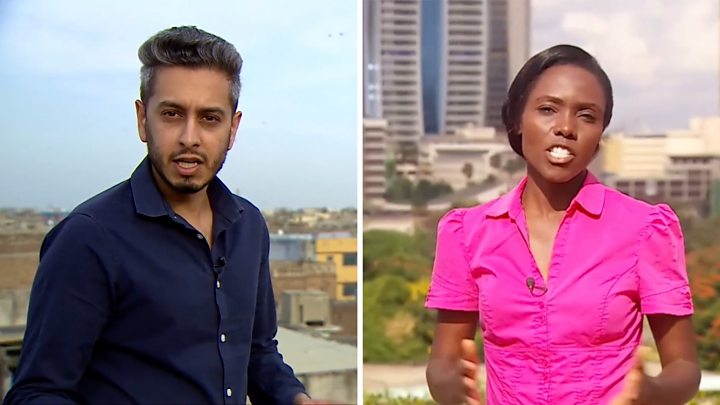
Media caption The BBC’s Secunder Kermani and Anne Soy compare how prepared Asian and African countries are
It appears that Ma’s donations are following Party guidelines: there is no evidence that any of the Jack Ma and Alibaba Foundation donations have gone to countries that have formal ties with Taiwan, China’s neighbour and diplomatic rival. Ma announced on Twitter that he was donating to 22 countries in Latin America. States that side with Taiwan but who have also called for medical supplies – from Honduras to Haiti – are among the few dozen countries that do not appear to be on the list of 150 countries. The foundations repeatedly refused to provide a detailed list of countries that have received donations, explaining that “at this moment in time, we are not sharing this level of detail”.
However, the donations that have been delivered have certainly generated a lot of goodwill. With the exception of problematic deliveries to Cuba and Eritrea, all of the foundations’ shipments dispatched from China appear to have been gratefully received. That success is giving Ma even more positive attention than usual. China’s state media has been mentioning Ma almost as often as the country’s autocratic leader, Xi Jinping.
AFP
So far…
Over 150 countries have received donations from Jack Ma, including about:
120.4mface masks
4,105,000testing kits
3,704ventilators
Source: Alizila
It’s an uncomfortable comparison. As Ma soaks up praise, Xi faces persistent questions about how he handled the early stages of the virus and where, exactly, the outbreak began.
The Chinese government has dispatched medical teams and donations of supplies to a large number of hard-hit countries, particularly in Europe and South-East Asia.
However, those efforts have sometimes fallen flat. China’s been accused of sending faulty supplies to several countries. In some cases, the tests it sent were being misused but in others, low-quality supplies went unused and the donations backfired.
In contrast, Jack Ma’s shipments have only boosted his reputation.
“It’s fair to say that Ma’s donation was universally celebrated across Africa,” says Eric Olander, managing editor of the China Africa Project website and podcast. Ma pledged to visit all countries in Africa and has been a frequent visitor since his retirement.
“What happens to the materials once they land in a country is up to the host government, so any complaints about how Nigeria’s materials were distributed are indeed a domestic Nigerian issue,” Olander adds. “But with respect to the donation itself, the Rwandan leader, Paul Kagame, called it a “shot in the arm” and pretty much everyone saw it for what it was which was: delivering badly-needed materials to a region of the world that nobody else is either willing or capable of helping at that scale.”
Walking the tightrope
But is Ma risking a backlash from Beijing? Xi Jinping isn’t known as someone who likes to share the spotlight and his government has certainly targeted famous faces before. In recent years, the country’s top actress, a celebrated news anchor and several other billionaire entrepreneurs have all “disappeared” for long periods. Some, including the news anchor, end up serving prison sentences. Others re-emerge from detention, chastened and pledging their allegiance to the Party.
“There’s a rumour that [Jack Ma] stepped down in 2018 from being the chairman of the Alibaba Group because he was seen as a homegrown entrepreneur whose popularity would eclipse that of the Communist Party,” explains Ashley Feng, research associate at the Centre for New American Security in Washington DC. Indeed, Ma surprised many when he suddenly announced his retirement in 2018. He has denied persistent rumours that Beijing forced him out of his position.
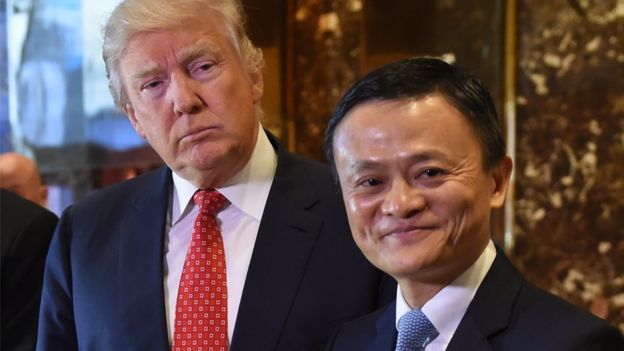
Image copyright GETTY IMAGESImage caption Ma discussed trade with then-President-elect Donald Trump in January 2017
Duncan Clark, Ma’s biographer, is also aware of reports that Ma was nudged away from Alibaba following a key incident in January 2017. The Chinese billionaire met with then-President-elect Donald Trump in Trump Tower, ostensibly to discuss Sino-US trade. The Chinese president didn’t meet with Trump until months later.
“There was a lot of speculation of time that Jack Ma had moved too fast,” Clark says. “So, I think there’s lessons learned from both sides on the need to try to coordinate.”
“Jack Ma represents a sort of entrepreneurial soft power,” Clark adds. “That also creates challenges though, because the government is quite jealous or nervous of non-Party actors taking that kind of role.”
Technically, Ma isn’t a Communist outsider: China’s wealthiest capitalist has actually been a member of the Communist Party since the 1980s, when he was a university student.
But Ma’s always had a tricky relationship with the Party, famously saying that Alibaba’s attitude towards the Party was to “be in love with it but not to marry it”.
Even if Ma and the foundations connected to him are making decisions without Beijing’s advance blessing, the Chinese government has certainly done what it can to capitalise on Ma’s generosity. Chinese ambassadors are frequently on hand at airport ceremonies to receive the medical supplies shipped over by Ma, from Sierra Leone to Cambodia.
China has also used Ma’s largesse in its critiques of the United States. “The State Department said Taiwan is a true friend as it donated 2 million masks,” the Chinese Foreign Ministry tweeted in early April. “Wonder if @StateDept has any comment on Jack Ma’s donation of 1 million masks and 500k testing kits as well as Chinese companies’ and provinces’ assistance?”
Perhaps Ma can rise above what’s happened to so many others who ran afoul of the Party. China might just need a popular global Chinese figure so much that Ma has done what no one else can: make himself indispensable.
“Here’s the one key takeaway from all that happened with Jack Ma and Africa: he said he would do something and it got done,” explains Eric Olander. “That is an incredibly powerful optic in a place where foreigners often come, make big promises and often fail to deliver. So, the huge Covid-19 donation that he did fit within that pattern. He said he would do it and mere weeks later, those masks were in the hands of healthcare workers.”
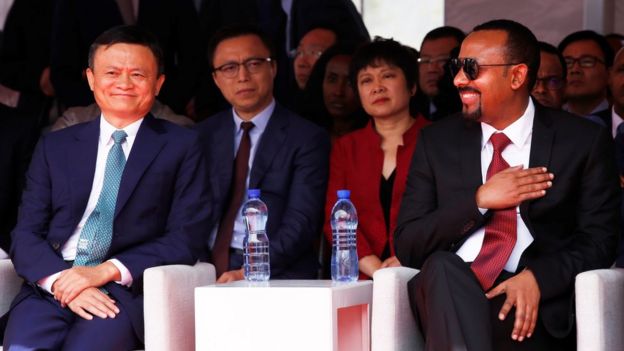
Image copyright GETTY IMAGESImage caption Ma at an Electronic World Trade Platform event with Ethiopian Prime Minister Abiy Ahmed last year
Duncan Clark argues that Ma already had a seat at China’s high table because of Alibaba’s economic heft. However, his first-name familiarity with world leaders makes him even more valuable to Beijing as China tries to repair its battered image.
“He has demonstrated the ability, with multiple IPOs under his belt, and multiple friendships overseas, to win friends and influence people. He’s the Dale Carnegie of China and that certainly, we’ve seen that that’s irritated some in the Chinese government but now it’s almost an all hands on deck situation,” Clark says.
There’s no doubt that China’s wider reputation is benefiting from the charitable work of Ma and other wealthy Chinese entrepreneurs. Andrew Grabois from Candid, the philanthropic watchdog that’s been measuring global donations in relation to Covid-19, says that the private donations coming from China are impossible to ignore.
“They’re taking a leadership role, the kind of thing that used to be done by the United States,” he says. “The most obvious past example is the response to Ebola, the Ebola outbreak in 2014. The US sent in doctors and everything to West Africa to help contain that virus before it left West Africa.”
Chinese donors are taking on that role with this virus.
“They are projecting soft power beyond their borders, going into areas, providing aid, monetary aid and expertise,” Grabois adds.
So, it’s not the right time for Beijing to stand in Jack Ma’s way.
“You know, this is a major crisis for the world right now,” Duncan Clark concludes. “But obviously, it’s also a crisis for China’s relationship with the rest of the world. So they need anybody who can help dampen down some of these those pressures.”
Lockdown may have been lifted, but shops, bars and restaurants remain empty in Beijing, showing struggle facing economic recovery
Controls have been returning in other parts of China, where cinemas and tourist attractions shut amid fears of new wave of infections
The nearly two month-long lockdown has changed the consumption behaviour of Chinese residents, many of whom have turned to home cooking to cut their spending. Photo: AFP
China’s urban lockdown may have eased, but deserted streets and stores in the capital Beijing this week suggest that for the services sector, the impact of the coronavirus outbreak could be deeper and longer than expected.
Many restaurants, cafes and pubs remained closed in the city, where vigilance remains high about a second wave of infections. Among those that were open, there were few customers to be seen.
The usually crowded Wangfujing shopping street was quiet on Wednesday, with just a few shoppers patronising what is usually the heartbeat of the city’s commerce and tourism. There were more staff than consumers at the Apple store, while everyone wore a mask. Shops along the pedestrianised zone closed their doors before sunset, but many did not open at all.
In a downtown food court, a handful of people dined during what would usually be the lunch rush hour, each restricted to their own small table to maintain social distancing, in great contrast with the usual frantic dash for seats.
Coronavirus: What impact will the economic fallout from the Covid-19 pandemic have on you?
While China has largely stemmed the domestic spread of Covid-19, threats of imported cases, with the virus having infected over one million people worldwide, and asymptomatic carriers continue to hamper the recovery in China’s
A survey published on Friday showed that in March, sentiment among small service sector firms remained depressed. The Caixin / Markit services purchasing managers’ index (PMI) was 43.0 for last month, with a number below 50 meaning the sector is shrinking. “There are too few people now. We only sold about a hundred bowls of noodles, that was just half of our normal level,” said one Beijing street vendor, who had also cut many items from the menu due to insufficient demand.
A bookstore in the city centre held an official opening ceremony after a soft opening followed by a two and a half month-long forced shutdown, but received only four visitors on a morning, one of which was the South China Morning Post reporter. All four were required to go through a body temperature check and write down their personal contact details before entering.
Service sector workers said the situation was surreal and that they were worried that there was no end in sight.
“I have never seen KFC look like this,” said an employee of the fast food chain restaurant at Wangfujing, pointing to the virtually empty dining hall.
A grocer at a nearby food market continually shook her head when talking about the decline in customers, but said she felt lucky that she could come back to Beijing from her hometown before the 14-day mandatory quarantine requirement was imposed on February 14.
This situation is not restricted to Beijing. When the Chinese government reopened around 500 cinemas nationwide in March, each one attracted on average
Now, many places across China are reimposing controls amid fears of a new spike in infections, the same fear leading people to stay home instead of going to those venues which have reopened.
Shanghai has closed tourist attractions while Sichuan has again closed karaoke lounges. Cinemas have also been reclosed across the country.
President Xi Jinping said during a visit to Hangzhou last Sunday that China must remain alert. “If you want to watch a movie, rather than going to a cinema, you can watch it online,” Xi said.
Services account for 60 per cent of China’s economy and the majority of employment. The slowness of the sector’s recovery is placing huge pressure on the world’s second
at a time when manufacturers are seeing export orders nosedive.
Liang Zhonghua, chief macro analyst at Zhongtai Securities, a brokerage, said that China’s damaged consumption alone could drag economic growth down by 4.5 per cent in the second quarter.
“(Chinese) residents’ fear of the epidemic is not over,” he wrote in a note this week.
Beijing’s malls still empty after coronavirus lockdown lifted
In Beijing all travellers entering the city are required to undergo a 14-day quarantine, while mass gatherings are still forbidden.
The containment measures have stopped many migrant workers from getting back to
, if they still exist. Many local residents still choose to work from home, even though authorities had been trying to encourage people to go out and spend money.
On April 1, the traffic flow on Beijing’s subway system was 3.05 million passengers a day, less than a third of the level a year ago, according to the operator, while car traffic was still about 15 per cent less than it was last year, government data showed.
I will keep cooking for myself, even when everything goes back to normal, it is much healthier and cheaper – Beijing resident
The nearly two month-long lockdown has changed the consumption behaviour of Chinese residents, many of whom have turned to home cooking to cut their spending.
“I will keep cooking for myself, even when everything goes back to normal, it is much healthier and cheaper,” said a Beijing lawyer whose family name is Li.
The effect of this behavioural shift is borne out in the 17.9 per cent drop in retail sales in the capital over the first two months of the year, only slightly better than the nationwide drop of 20.5 per cent.
Beijing businesses have clubbed together to issue some 150 million yuan in
Chinese President Xi Jinping, also general secretary of the Communist Party of China Central Committee and chairman of the Central Military Commission, visits the Xixi National Wetland Park during an inspection in Hangzhou, east China’s Zhejiang Province, March 31, 2020. (Xinhua/Yan Yan)
HANGZHOU, March 31 (Xinhua) — Xi Jinping, general secretary of the Communist Party of China Central Committee, on Tuesday inspected wetland conservation and technology-based urban management in the city of Hangzhou, east China’s Zhejiang Province.
During the inspection, Xi visited the Xixi National Wetland Park and the City Brain, a smart city platform aiming to improve urban management.
Hangzhou’s City Brain project was launched in 2016 to help the city make plans in areas including public security, transport and healthcare with the use of big data, cloud computing and artificial intelligence, among other cutting-edge technologies.
With a total area of 11.5 square kilometers, the Xixi National Wetland Park is the first national wetland park in the country.
A first batch of 72 bookstores are launching on food delivery platform Meituan “as soon as next week”
Booksellers in China’s capital city have been struggling to stay afloat due to reduced footfall during the epidemic
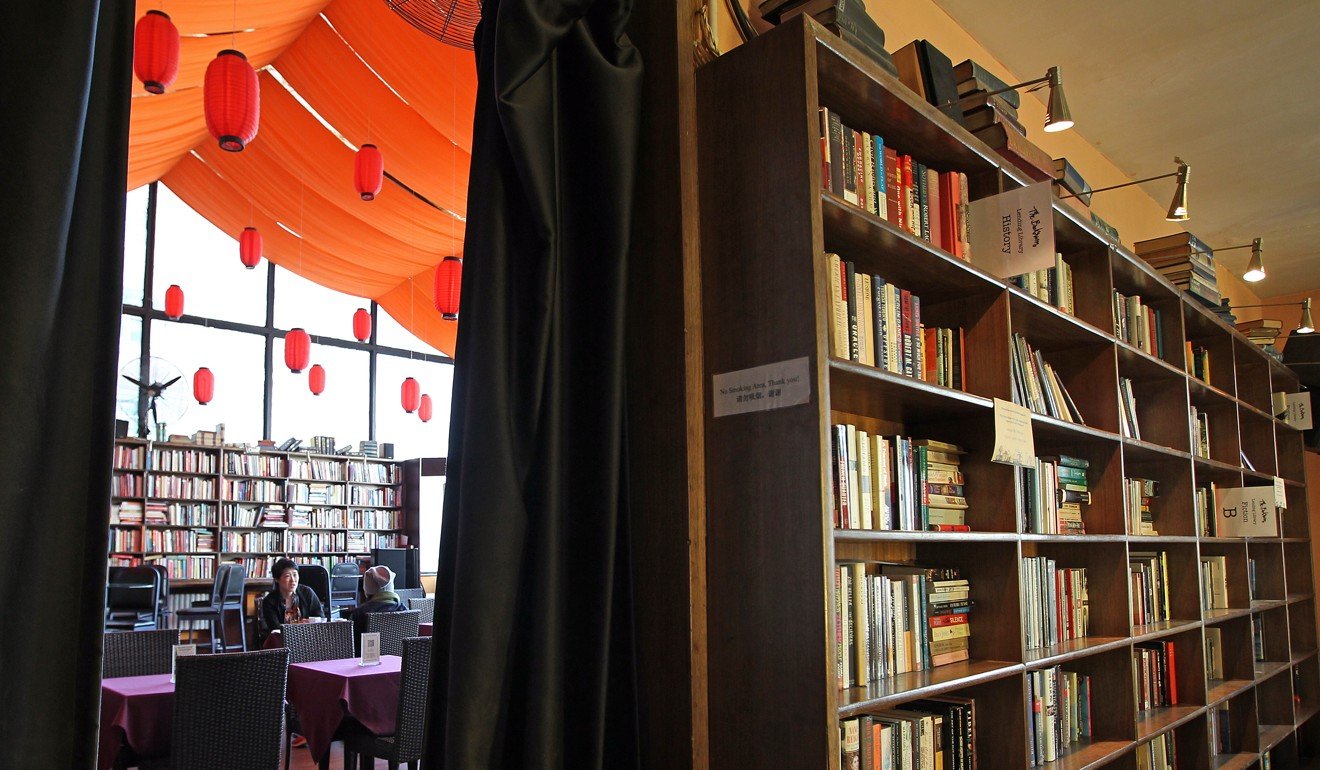
For illustration: coffee and cake in front of a shelf of books at a bookstore. Photo: SCMP / Dickson Lee
Bookstores in Beijing, struggling to survive amid the coronavirus epidemic, are teaming up with a popular food delivery app to help get books into the hands of readers.
The initiative, co-launched by food delivery company Meituan Dianping and the municipal government of Beijing, will feature a first batch of 72 bookstores.
“Due to the epidemic, 80 per cent of physical bookstores are closed,” the publicity department of the Communist Party of China’s Beijing Municipal Committee told local media. “Although many of them try to launch online programmes to keep customers, it doesn’t make a substantial income for stores … companies want the government to coordinate more resources and platforms to help them.”
The bookstores will not have to pay a fee to join the programme, according to the Beijing publicity department.
Users will be able to purchase books on Meituan “as soon as next week”, the food delivery company said in a statement. “After the launch, we will support bookstores by charging them lower service fees, providing subsidies and launching reward plans to help them get on board quickly,” the company added.
China’s smartphone brands adapt to life under coronavirus restrictions
17 Feb 2020
Bookstores in China’s capital city have been hit hard by the coronavirus outbreak. About 60 per cent of 248 stores in Beijing said they expected their revenues to drop more than 50 per cent year-on-year, while only 48 per cent said their cash flows were sufficient to support operations for another one to three months, according to a report by the Beijing Institute of Culture Innovation and Communication.
With fewer customers patronising physical stores and pressure from rent and employee salaries, more bookstores are looking toward online channels to increase sales. Among those interviewed by the Beijing Institute of Culture Innovation and Communication, 21.8 per cent said they were now selling books only via online channels, 48 per cent had tried advertising on social media platforms like WeChat and Weibo, while 16.9 per cent are promoting books on video-sharing platforms like Douyin and Kuaishou.
An interior view of a bookstore, Bookworm, at Sanlitun, Beijing. File photo: SCMP
Last week, Beijing-based bookstore chain OWSpace, which has 15 year history selling books and drinks, posted an appeal on its WeChat account for loyal customers to pay a 50 yuan to 8,000 yuan membership fee to help with its cash flow.
Among their four physical stores in China, only one in Beijing remains open and traffic is a tenth of what it was before the outbreak, it said.
“The store can only sell 15 books a day on average, and more than half are bought by our own staff. We expect our revenue in February to drop 80 per cent compared to other years,” OWSpace said in the post.
Wu Yanping, the general manager of OWSpace’s offline stores, said one of the chain’s stores in Beijing is joining Meituan’s book delivery platform. The store remains physically closed because it is located in an office park that prohibits anyone who travelled out of Beijing from entering before they complete the mandatory 14-day quarantine period.
“Our Dongfeng store is closed for now but even if it opens later, it will not have much traffic [because of the travel restrictions]. So we hope to sell books along with our coffee and drinks on the delivery platform even with the store closed,” Wu said.
Beijing has initiated a range of measures to help keep bookstores afloat, including subsidising their rent, rewarding stores that stay open during the epidemic and encouraging bookstores to expand their sales channels online.
Wu said that since OWSpace posted its appeal letter, it managed to reopen another store in Hangzhou, in the eastern province of Zhejiang, and traffic to both stores has been “gradually recovering to just under 50 per cent of a normal day [before the outbreak]”.
OWSpace also conducts live streams on Taobao three times a week to introduce books, encourage viewers to appreciate literature and sell the store’s peripheral products.
“Readers are quite enthusiastic about it. There were almost 10,000 people watching our last live stream” Wu said.
Taobao is an e-commerce platform operated by Alibaba Group Holding, which is the parent company of the Post.
BEIJING (Reuters) – China reported a sharp decrease in new deaths and cases of the coronavirus on Saturday but a doubling of infections in South Korea and 10 new cases in Iran added to unease about its rapid spread and global reach.
Mainland China had 397 new confirmed cases of coronavirus infections on Friday, down from 889 a day earlier, but only 31 cases were outside of the virus epicentre of Hubei province, the lowest number since the National Health Commission started compiling nationwide data a month ago.
But infection numbers continued to rise elsewhere, with outbreaks worsening in South Korea, Italy and Lebanon and Iran, prompting a warning from the World Health Organization that the window of opportunity to contain the international spread was closing..
South Korea saw another spike in infections, with 229 new confirmed cases, taking its tally to 433. Officials warned that could rise substantially as more than 1,000 people who attended a church at the centre of the outbreak had shown flu-like symptoms.
Iran, which had no reported cases earlier this week, saw 10 new cases, one of which had died, taking the number to 28 infections and five deaths.
RELATED COVERAGE
South Korea coronavirus cases more than double in a day
Second coronavirus patient dies in Italy – ANSA news agency
Concerns about the virus weighed on U.S. stocks on Friday, driven by an earlier spike in cases in China and data showing stalling U.S. business activity in February. [MKTS/GLOB]
It has spread to some 26 countries and territories outside mainland China, killing 13 people, according to a Reuters tally.
WHO director-general Tedros Adhanom Ghebreyesus on Twitter expressed concern on Saturday about cases with no clear link to China and called on all countries to invest urgently in preparedness. He made an appeal for $675 million to support the most vulnerable countries.
On Friday, he said now was the time to act decisively.
“We still have a chance to contain it,” he said. “If we don’t, if we squander the opportunity, then there will be a serious problem on our hands.”
An outbreak in northern Italy worsened with its first two deaths, among 17 confirmed cases including its first known instance of local transmission.
Japan confirmed 14 new coronavirus cases on Saturday, among those a teacher who had shown symptoms while working at her school.
Japan is facing growing questions about whether it is doing enough to contain its spread, and concern about whether it could scupper this year’s Tokyo Olympics. Organisers on Saturday postponed the start of training for volunteers as a precaution.
The Bank of Japan’s governor on Saturday shrugged off talk that the widening epidemic is triggering an outflow of funds from Asia.
The total number of confirmed cases in mainland China rose to 76,288, with the death toll at 2,345 as of the end of Friday. Hubei reported 106 new deaths, of which 90 were in Wuhan.
But new, albeit isolated findings about the coronavirus could complicate efforts to thwart it, including the Hubei government’s announcement on Saturday that an elderly man took 27 days to show symptoms after infection, almost twice the presumed 14-day incubation period.
That follows Chinese scientists reporting that a woman from Wuhan had travelled 400 miles (675 km) and infected five relatives without showing signs of infection, offering new evidence of asymptomatical spreading.
State television on Saturday showed the arrival in Wuhan of the “blue whale”, the first of seven river cruise ships it is bringing in to house medical workers, tens of thousands of which have been sent to Hubei to contain the virus.
Senior Chinese central bank officials sought to ease global investors’ worries about the potential damage to the world’s second-largest economy from the outbreak, saying interest rates would be guided lower and that the country’s financial system and currency were resilient.
Chen Yulu, a deputy governor of the People’s Bank of China, said policymakers had plenty of tools to support the economy, and were fully confident of winning the war against the epidemic.
“We believe that after this epidemic is over, pent-up demand for consumption and investment will be fully released, and China’s economy will rebound swiftly,” Chen told state television.
China has recently cut several key lending rates, including the benchmark lending rate on Thursday, and has urged banks to extend cheap loans to the worst-hit companies which are struggling to resume production and are running out of cash.
The transport ministry said businesses would resume operations on a larger scale later this month and said more roads, waterways and ports were returning to normal.
Online media and Weibo users posted footage and images on Saturday of some malls reopening, including in the cities of Wuxi, Hangzhou and in Gansu province, with shoppers queuing in near-empty streets outside for mandatory temperature checks as trickles of customers in masks perused luxury goods shops and makeup counters.
Some analysts believe China’s economy could contract in the first quarter from the previous three months due to the combined supply and demand shocks caused by the epidemic and strict government containment measures. On an annual basis, some warn growth could fall by as much as half from 6% in the fourth quarter.
However, transport restrictions remain in many areas and while more firms are reopening, the limited data available suggests manufacturing is still at weak levels, with disruptions starting to spillover into global supply chains.
Samsung Electronics (005930.KS) said on Saturday that one coronavirus case had been confirmed at its mobile device factory complex in Gumi, causing a shutdown of its entire facility.
Finance leaders from the Group of 20 major economies were set to discuss risks to the world economy in Saudi Arabia this weekend.
The WHO’s Tedros on Twitter said 13 priority countries in Africa had been identified for help because of their direct links to China or high travel volume. That would include 30,000 personal protective kits on the way to six countries and 60,000 more for 19 states in the weeks ahead.
Hong Kong and Thailand are likely to suffer most from the novel coronavirus outbreak because of close their economic ties with China
A drop in Chinese tourist arrivals and imports, as well as supply chain disruptions are likely to weigh on regional economy
Thailand’s economy could be one of the most affected by the coronavirus outbreak due to its close ties with China, especially in the tourism sector. Photo: Bloomberg
Hong Kong and Thailand are likely to be the hardest hit Asian economies outside mainland China from the deadly coronavirus outbreak, according to analysts.
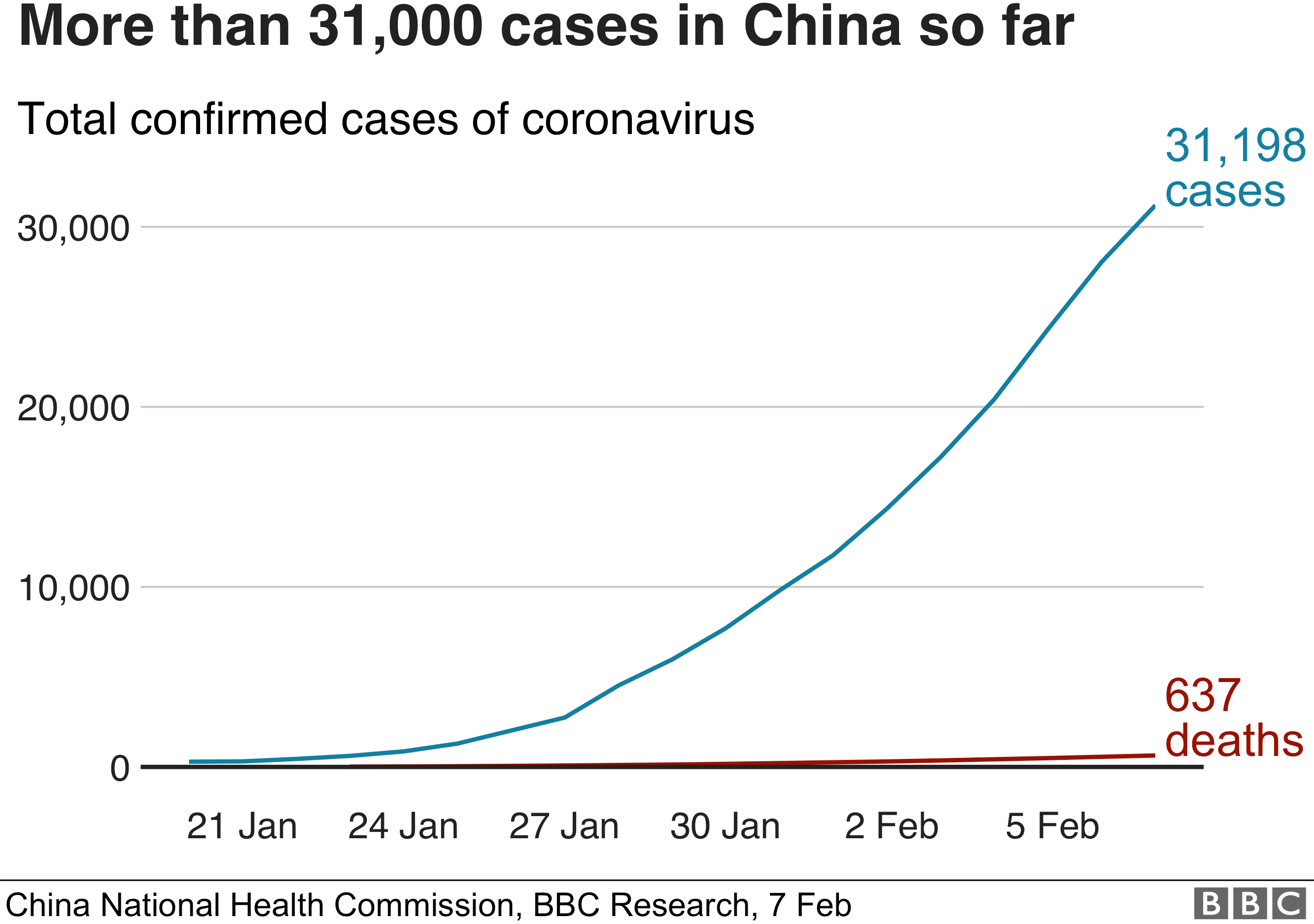
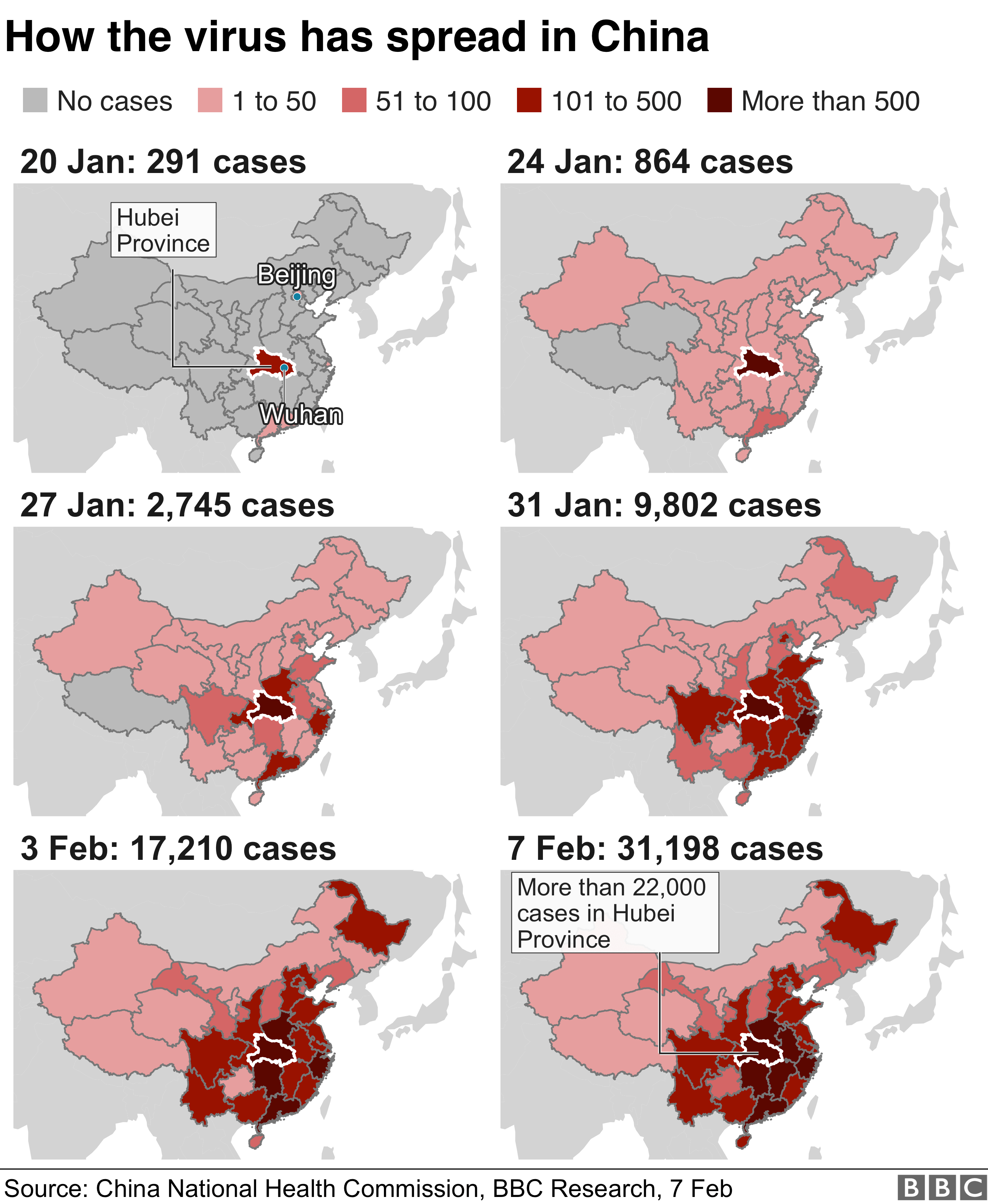
The 2019-nCoV, which had claimed the lives of nearly 640 people and infected more than 31,000 in mainland China by Friday, is viewed as even more damaging than the severe acute respiratory syndrome (Sars) epidemic in 2002-2003 because of prolonged factory closures and transport restrictions that have locked down many Chinese cities.
China has become more closely integrated with the rest of Asia since the Sars outbreak, meaning the disruptions to China’s industrial and export sectors, combined with a sharp drop in economic activity in the first quarter, will have significant repercussions across the region, particularly through tourism and trade, analysts said.
“A collapse in tourism arrivals from China will be the first shock wave for the rest of the region,” said Gareth Leather, senior Asia economist at Capital Economics. “Factory closures in China will affect the rest of the region by disrupting regional supply chains.”
A collapse in tourism arrivals from China will be the first shock wave for the rest of the region. Factory closures in China will affect the rest of the region by disrupting regional supply chainsGareth Leather
Hong Kong would likely be the most affected because of its status as a trade hub, its tight linkages to the Chinese economy and the sharp decline in tourism expenditure that is expected, UBS economist William Deng noted.
“Due to the risk of infection, domestic households significantly reduced such activities as dining out, shopping and entertainment,” Deng wrote in a recent note. He cut Hong Kong’s gross domestic product (GDP) growth forecast to minus 1.8 per cent for 2020, against his previous projection of a 0.5 per cent drop.
A community outbreak spread by human-to-human transmission has started in the city, said Professor Yuen Kwok-yung, a top microbiologist at the University of Hong Kong on Wednesday.
Thailand could be the next most affected due to its dependence on Chinese tourism. Outside Hong Kong and Macau, the country has the highest exposure to China as a share of GDP in the region.
China locks down Hangzhou, mega-city far from epicentre of coronavirus outbreak
ANZ Bank’s head of Asia research Khoon Goh said that the novel coronavirus could knock US$760 million from Thailand’s economy in the first quarter. Hong Kong could could see losses of US$1.4 billion. Travel services as a share of GDP were 11.2 per cent in Thailand and 9.4 per cent in Hong Kong.
“The Thai economy would expand at a slower rate in 2020 than previously forecast and much further below its potential due to the outbreak of coronavirus,” Bank of Thailand said in a statement after it slashed interest rates to a record low on Wednesday.
South Korean and Taiwanese businesses will also have negative spillover effects from the coronavirus outbreak because of supply chain disruptions and weaker consumer sentiment inside and outside China, analysts said.
South Korean car and tech companies that rely on parts from Chinese suppliers are exposed to potential production disruptions stemming from factory closures and the evacuation of Korean workers from China-based production lines, said Sean Hwang, corporate finance group analyst at Moody’s Investors Group.
Coronavirus: here are the places and airlines restricting travel to China
For instance, Hyundai Motor Company closed some if its South Korea-based plants on February 4 because of a shortage of wiring harnesses.
Korean customers are also limiting their trips to bricks-and-mortar retail stores such as E Mart and Lotte Shopping to avoid crowds amid the outbreak, potentially leading to a significant decline in revenue and earnings, Hwang said.
Although Singapore is not as closely tied to China as Hong Kong, the city state could still see a knock-on effect from China’s expected near-term downturn, as its economy has become much more integrated with the world’s second largest economy since the Sars outbreak.
The number of Chinese tourists rose six times from 568,000 in 2003 to 3.4 million in 2018, said Irvin Seah, senior economist at DBS Bank.
Coronavirus outbreak: global businesses shut down operations in China
“We expect a decline of about 1 million tourists or about SGD1 billion (US$722 million) of lost tourism receipts for every three months of travel ban,” Seah said. “We have lowered our full-year GDP growth forecast to 0.9 per cent, down from 1.4 per cent previously.”
Taiwan has banned Chinese visitors as well as foreigners who have visited Hong Kong and Macau from entering the island due the coronavirus. International cruise ships are also unable to dock on the island, which will lead to at least 112 liner visits cancelled by the end of March, affecting around 144,000 passengers, said the Taiwan International Ports Corporation.
Capital Economics’ Leather said the economic impact on Taiwan from 2019-nCoV could stand out from the rest of Asia, as it had the most exposure in value-added, intermediate exports to China – 18 per cent of GDP.
20 coronavirus infections confirmed on cruise ship in Japan, as thousands remain under quarantine
Elsewhere, Malaysia’s commodity driven trade growth this year has been threatened by the almost 20 per cent fall in crude oil prices, a decline triggered by fears that the coronavirus outbreak would dampen China’s imports. Malaysia’s purchasing managers’ index, a survey of manufacturers, dropped to 48.8 in January from 50.0 the prior month prior, data released this week showed. The drop was blamed on slowing output, with new orders dropping the most since September amid a decline in exports.
“The Bank Negara Malaysia’s surprising policy rate cut at the last meeting on 22 January, just around the time the coronavirus started to dominate headlines, tells us that the central bank is ahead of the curve in recognising the risk,” said Prakash Sakpal, Asia economist at ING Bank said.
India and Indonesia will be the least affected given the small contribution the tourism sector makes to their economies, and the low share of visitors from China, ANZ’s Goh said.
News of his death was met with an intense outpouring of grief on Chinese social media site Weibo – but this quickly turned into anger.
There had already been accusations against the government of downplaying the severity of the virus – and initially trying to keep it secret.
Dr Li’s death has fuelled this further and triggered a conversation about the lack of freedom of speech in China.
The country’s anti-corruption body has now said it will open an investigation into “issues involving Dr Li”.
The Chinese government has previously admitted “shortcomings and deficiencies” in its response to the virus, which has now killed 636 people and infected 31,161 in mainland China.
According to Chinese site Pear Video, Dr Li’s wife is due to give birth in June.
What has the public reaction been?
Chinese social media has been flooded with anger – it is hard to recall an event in recent years that has triggered as much grief, rage and mistrust against the government.
The top two trending hashtags on the website were “Wuhan government owes Dr Li Wenliang an apology” and “We want freedom of speech”.
Both hashtags were quickly censored. When the BBC searched Weibo on Friday, hundreds of thousands of comments had been wiped. Only a handful remain.
“This is not the death of a whistleblower. This is the death of a hero,” said one comment on Weibo.
A photo circulating on Twitter reportedly sourced from messaging platform WeChat also shows a message in Chinese saying “Farewell Li Wenliang” written in the snow on a riverbank.
Many have now taken to posting under the hashtag “Can you manage, do you understand?” – a reference to the letter Dr Li was told to sign when he was accused of disturbing “social order”.
These comments do not directly name him – but are telling of the mounting anger and distrust towards the government.
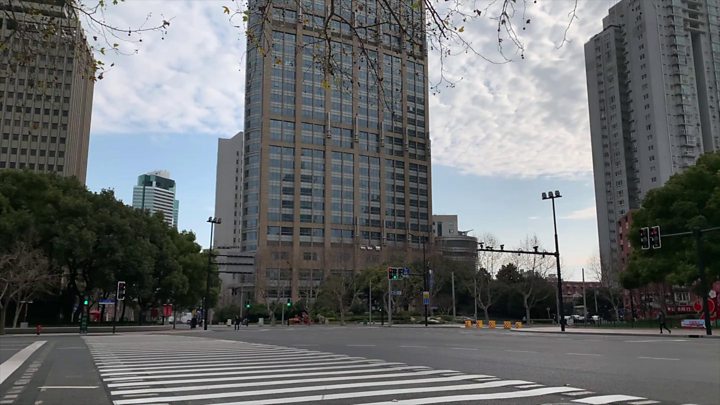
Media caption Coronavirus: Shanghai’s deserted streets and metro
“Do not forget how you feel now. Do not forget this anger. We must not let this happen again,” said one comment on Weibo.
“The truth will always be treated as a rumour. How long are you going to lie? What else do you have to hide?” another said.
“If you are angry with what you see, stand up,” one said. “To the young people of this generation, the power of change is with you.”
An epic political disaster
The death of Dr Li Wenliang has been a heart-breaking moment for this country. For the Chinese leadership it is an epic political disaster.
It lays bare the worst aspects of China’s command and control system of governance under Xi Jinping – and the Communist Party would have to be blind not to see it.
If your response to a dangerous health emergency is for the police to harass a doctor trying to blow the whistle, then your structure is obviously broken.
The city’s mayor – reaching for excuses – said he needed clearance to release critical information which all Chinese people were entitled to receive.
Now the spin doctors and censors will try to find a way to convince 1.4 billion people that Dr Li’s death is not a clear example of the limits to the party’s ability to manage an emergency – when openness can save lives, and restricting it can kill.
He was initially declared dead at 21:30 on Thursday (13:30GMT) by state media outlets the Global Times, People’s Daily and others.
Hours later the Global Times contradicted this report – saying he had been given a treatment known as ECMO, which keeps a person’s heart pumping.
Journalists and doctors at the scene said government officials had intervened – and official media outlets had been told to change their reports to say the doctor was still being treated.
But early on Friday, reports said doctors could not save Dr Li and his time of death was 02:58 on Friday.
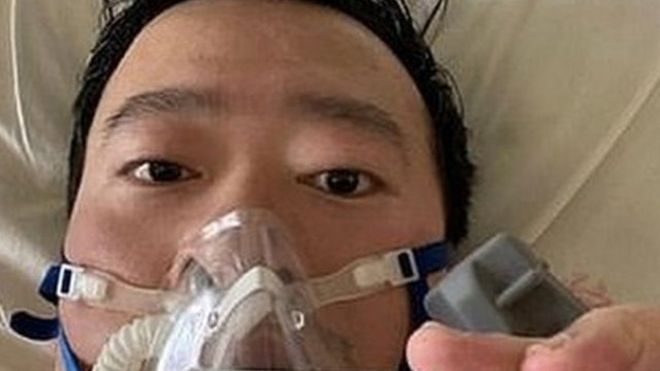
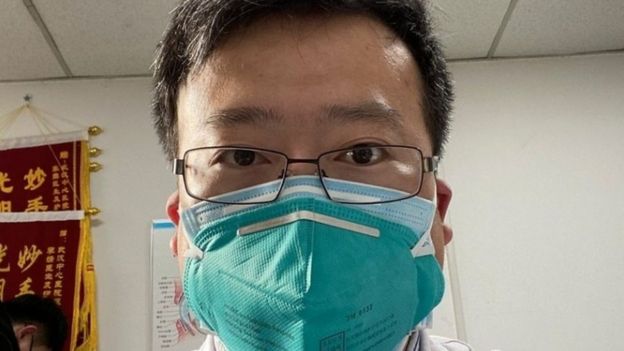
Image copyright LI WENLIANGImage caption Li Wenliang contracted the virus while working at Wuhan Central Hospital
What did Li Wenliang do?
Dr Li, an ophthalmologist, posted his story on Weibo from a hospital bed a month after sending out his initial warning.
He had noticed seven cases of a virus that he thought looked like Sars – the virus that led to a global epidemic in 2003.
On 30 December he sent a message to fellow doctors in a chat group warning them to wear protective clothing to avoid infection.
Four days later he was summoned to the Public Security Bureau where he was told to sign a letter.
In the letter he was accused of “making false comments” that had “severely disturbed the social order”. Local authorities later apologised to Dr Li.
In his Weibo post he describes how on 10 January he started coughing, the next day he had a fever and two days later he was in hospital. He was diagnosed with the coronavirus on 30 January.
Media caption The BBC’s online health editor on what we know about the virus
Singapore has raised its Disease Outbreak Response System Condition (Dorscon) level from yellow to orange. This means that the disease is deemed severe and spreads easily from person to person but has not spread widely and is being contained
Chinese President Xi Jinping has told his US counterpart Donald Trump that China is “fully confident and capable of defeating the epidemic”. The country has introduced more restrictive measures to try to control the outbreak:
The capital Beijing has banned group dining for events such as birthdays. Cities including Hangzhou and Nanchang are limiting how many family members can leave home each day
Hubei province has switched off lifts in high-rise buildings to discourage residents from going outside.
The virus has now spread to more than 25 countries. There have been more than 28,000 cases worldwide but only two of the deaths have been outside mainland China.














 CHINDIA ALERT: You'll be living in their world, very soon