Chindia Alert: You’ll be Living in their World Very Soon
aims to alert you to the threats and opportunities that China and India present. China and India require serious attention; case of ‘hidden dragon and crouching tiger’.
Without this attention, governments, businesses and, indeed, individuals may find themselves at a great disadvantage sooner rather than later.
The POSTs (front webpages) are mainly 'cuttings' from reliable sources, updated continuously.
The PAGEs (see Tabs, above) attempt to make the information more meaningful by putting some structure to the information we have researched and assembled since 2006.
Iranian news outlet quotes military official as saying exercise will be held soon, but Chinese media silent on reported manoeuvres
An Iranian news source says China, Russia and Iran are planning a joint naval exercise soon. Photo: Xinhua
China, Russia and Iran are planning a joint naval drill in the Sea of Oman and northern Indian Ocean “soon” a semi-official Iranian news outlet reported on Saturday, just days after the United States blamed Iran for a drone attack on Saudi Arabian oil facilities.
General Ghadir Nezami Pour, head of international affairs and defence diplomacy of the Iranian Armed Forces General Staff, said the drill would take place in international waters, Iran Press news agency reported.
“The exercises have different goals including the exchange of tactical and military experiences and sometimes they seek political goals which show a kind of convergence between participants,” he was quoted as saying.
“Officials at the level of defence minister, chief of staff of the armed forces and commanders of the armed forces will come to Iran in the near future and these actions reflect Iran’s active defence diplomacy.”
The comments came in the aftermath of the September 14 missile strikes on Saudi Arabia’s Abqaiq and Khurais oil facilities.
Washington accused Tehran of masterminding the attacks, allegations that Iran denied.
Tehran warned that any military action by the United States or Saudi Arabia would result in “all-out war”.
US Secretary of State Mike Pompeo initially condemned the attacks on the oil facilities as an “act of war” but later said the US was seeking a peaceful solution to the crisis.
On Friday, Chinese President Xi Jinping condemned the attacks during a phone conversation with Saudi Arabia’s King Salman, adding that he hoped the incident would receive a full and fair investigation.
There was no report of the joint drill plan in Chinese media.
Analysts said the exercise was possible as China might want to show support for Iran.
“The timing of the joint exercise might be a bit sensitive and some might take it as a show of China’s support for Iran should there be any military conflicts between countries,” Beijing-based naval expert Li Jie said.
“But it might well be a regular military exchange between the countries if it is held in international waters and without targeting another country.”
China calls for calm in aftermath of drone strikes on Saudi oil facilities
Ni Lexiong, a military specialist and professor at Shanghai University of Political Science and Law, said the drill was to send the message that China would side with Iran “in extreme scenarios”.
“I don’t see things will go that far, but the navy drill is to send the intimidating message,” Ni said.
Two years ago China and Iran conducted a joint naval exercise near the Strait of Hormuz in the Persian Gulf after Washington accused Tehran of sending fast attack boats to harass US warships passing through the area.
Major General Mohammad Baqeri, Chief of Staff of the Iranian Armed Forces, was in Beijing for a three-day visit earlier this month and agreed that the two countries would have more visits with senior military officials and advance cooperation in training.
China still accounts for more than half of Iran’s oil exports, according to the United States, complicating Washington’s efforts to economically isolate Tehran in its “maximum pressure campaign”.
Settlements along the route linking Europe and Asia thrived by providing accommodation and services for countless traders
Formally established during the Han dynasty, it was a 19th-century German geographer who coined the term Silk Road
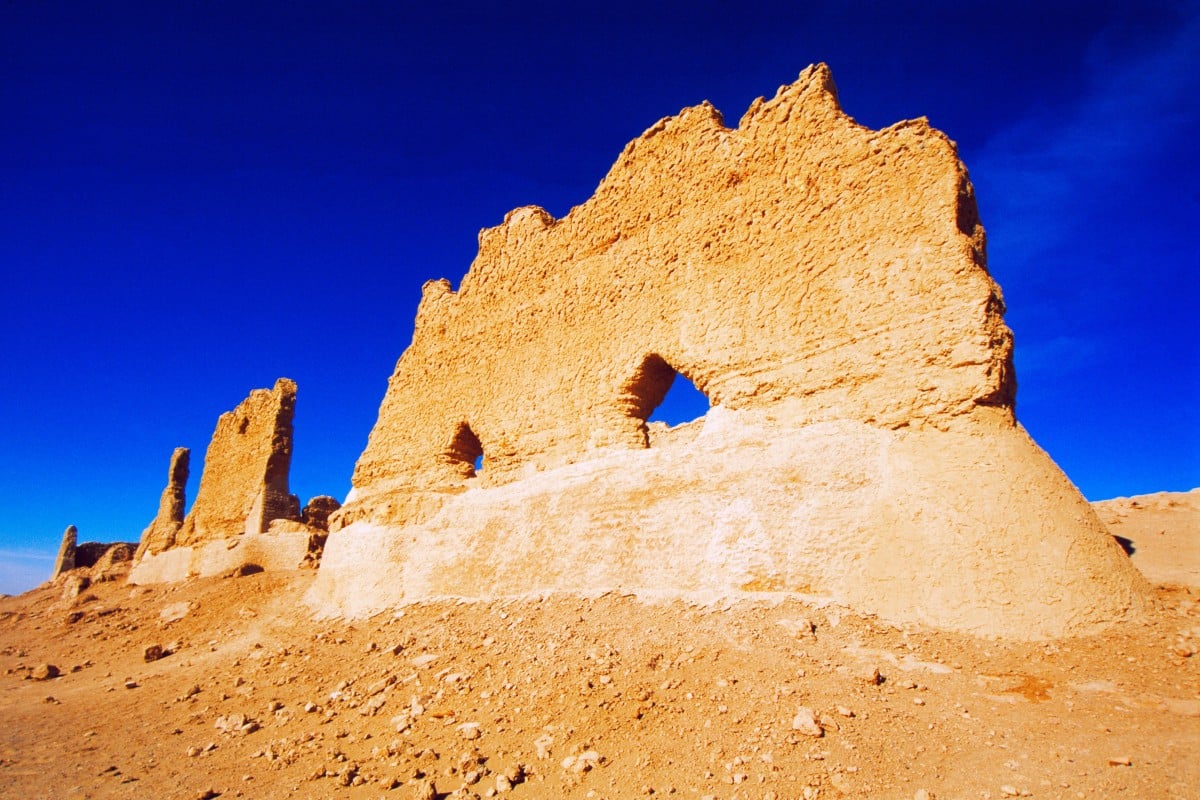
The ruins of a fortified gatehouse and customs post at Yunmenguan Pass, in China’s Gansu province. Photo: Alamy
We have a German geographer, cartographer and explorer to thank for the name of the world’s most famous network of transcontinental trade routes.
Formally established during the Han dynasty, in the first and second centuries BC, it wasn’t until 1877 that Ferdinand von Richthofen coined the term Silk Road (historians increasingly favour the collective term Silk Routes).
The movement of merchandise between China and Europe had been taking place long before the Han arrived on the scene but it was they who employed troops to keep the roads safe from marauding nomads.
Commerce flourished and goods as varied as carpets and camels, glassware and gold, spices and slaves were traded; as were horses, weapons and armour.
Merchants also moved medicines but they were no match for the bubonic plague, which worked its way west along the Silk Road before devastating huge swathes of 14th century Europe.
What follows are some of the countless kingdoms, territories, (modern-day) nations and cities that grew rich on the proceeds of trade, taxes and tolls.
China
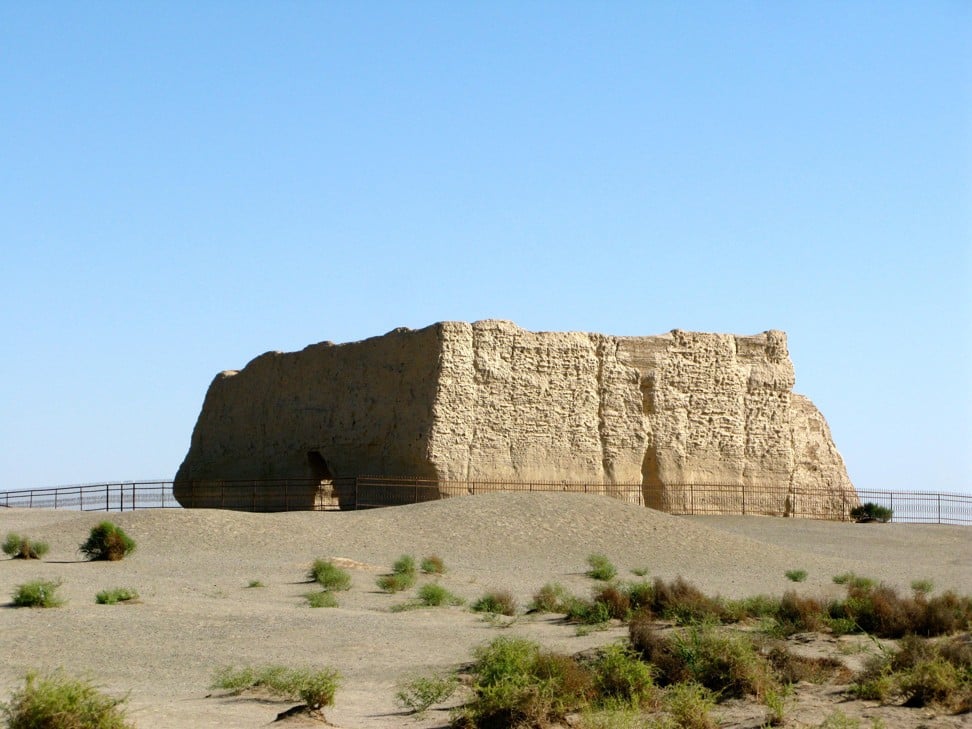
A watchtower made of rammed earth at Dunhuang, a desert outpost at the crossroads of two major Silk Road routes in China’s northwestern Gansu province. Photo: Alamy
Marco Polo worked in the Mongol capital, Khanbaliq (today’s Beijing), and was struck by the level of mercantile activity.
The Venetian gap-year pioneer wrote, “Every day more than a thousand carts loaded with silk enter the city, for a great deal of cloth of gold and silk is woven here.”
Light, easy to transport items such as paper and tea provided Silk Road traders with rich pickings, but it was China’s monopoly on the luxurious shimmering fabric that guaranteed huge profits.
So much so that sneaking silk worms out of the empire was punishable by death.
The desert outpost of Dunhuang found itself at the crossroads of two major Silk Road trade arteries, one leading west through the Pamir Mountains to Central Asia and another south to India.
Built into the Great Wall at nearby Yunmenguan are the ruins of a fortified gatehouse and customs post, which controlled the movement of Silk Road caravans.
Also near Dunhuang, the Mogao Caves contain one of the richest collections of Buddhist art treasures anywhere in the world, a legacy of the route to and from the subcontinent.
Afghanistan
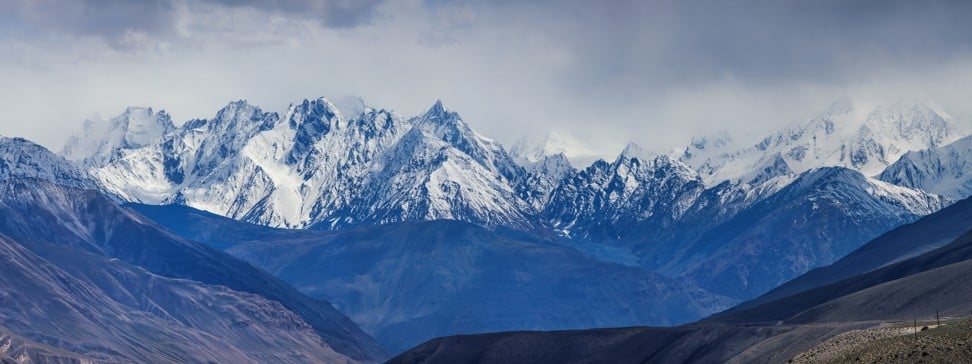
Afghanistan’s mountainous terrain was an inescapable part of the Silk Road, until maritime technologies would become the area’s undoing. Photo: Shutterstock
For merchants and middlemen hauling goods through Central Asia, there was no way of bypassing the mountainous lands we know today as Afghanistan.
Evidence of trade can be traced back to long before the Silk Road – locally mined lapis lazuli stones somehow found their way to ancient Egypt, and into Tutankhamun’s funeral mask, created in 1323BC.
Jagged peaks, rough roads in Tajikistan, roof of the world
Besides mercantile exchange, the caravan routes were responsible for the sharing of ideas and Afghanistan was a major beneficiary. Art, philosophy, language, science, food, architecture and technology were all exchanged, along with commercial goods.
In fact, maritime technology would eventually be the area’s undoing. By the 15th century, it had become cheaper and more convenient to transport cargo by sea – a far from ideal development for a landlocked region.
Iran
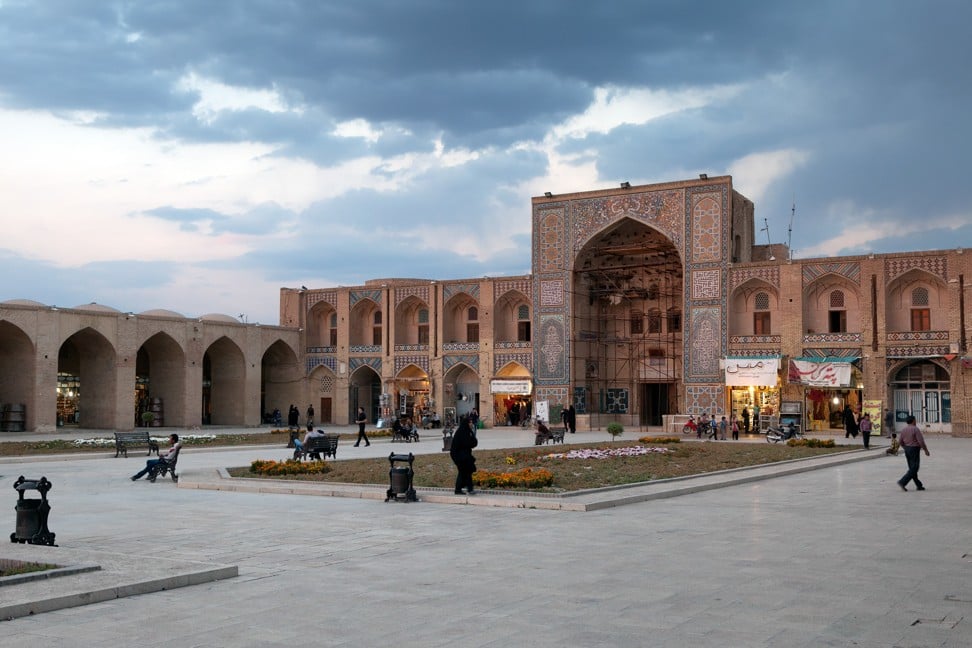
The Ganjali Khan Complex, in Iran. Photo: Shutterstock
Thanks to the Silk Road and the routes that preceded it, the northern Mesopotamian region (present-day Iran) became China’s closest trading partner. Traders rarely journeyed the entire length of the trail, however.
Merchandise was passed along by middlemen who each travelled part of the way and overnighted in caravanserai, fortified inns that provided accommodation, storerooms for goods and space for pack animals.
The good, bad and ugly sides to visiting Chernobyl and Kiev
With so many wheeler-dealers gathering in one place, the hostelries developed into ad hoc marketplaces.
Marco Polo writes of the Persian kingdom of Kerman, where craftsmen made saddles, bridles, spurs and “arms of every kind”.
Today, in the centre of Kerman, the former caravanserai building forms part of the Ganjali Khan Complex, which incorporates a bazaar, bathhouse and mosque.
Uzbekistan
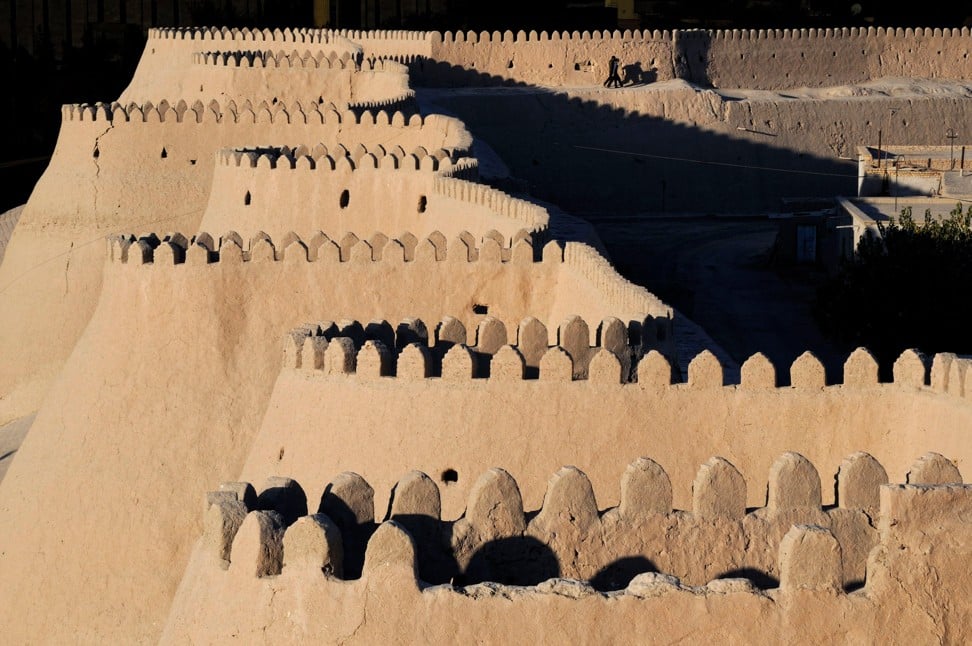
A fort in Khiva, Uzbekistan. Photo: Alamy
The double-landlocked country boasts some of the Silk Road’s most fabled destinations. Forts, such as the one still standing at Khiva, were built to protect traders from bandits; in fact, the city is so well-preserved, it is known as the Museum under the Sky.
The name Samarkand is also deeply entangled with the history of the Silk Road.
The earliest evidence of silk being used outside China can be traced to Bactria, now part of modern Uzbekistan, where four graves from around 1500BC-1200BC contained skeletons wrapped in garments made from the fabric.
Three thousand years later, silk weaving and the production and trade of textiles remain one of Samarkand’s major industries.
Georgia
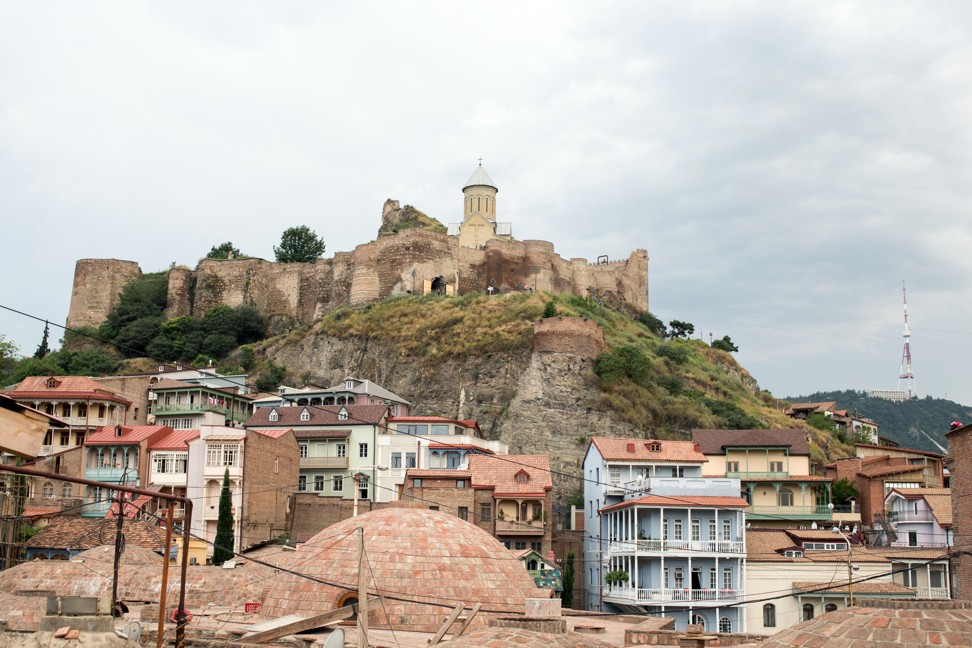
A street in old town of Tbilisi, Georgia. Photo: Alamy
Security issues in Persia led to the opening up of another branch of the legendary trade route and the first caravan loaded with silk made its way across Georgia in AD568.
Marco Polo referred to the weaving of raw silk in “a very large and fine city called Tbilisi”.
Today, the capital has shaken off the Soviet shackles and is on the cusp of going viral.
Travellers lap up the city’s monasteries, walled fortresses and 1,000-year-old churches before heading up the Georgian Military Highway to stay in villages nestling in the soaring Caucasus Mountains.
Public minibuses known as marshrutka labour into the foothills and although the vehicles can get cramped and uncomfortable, they beat travelling by camel.
Jordan
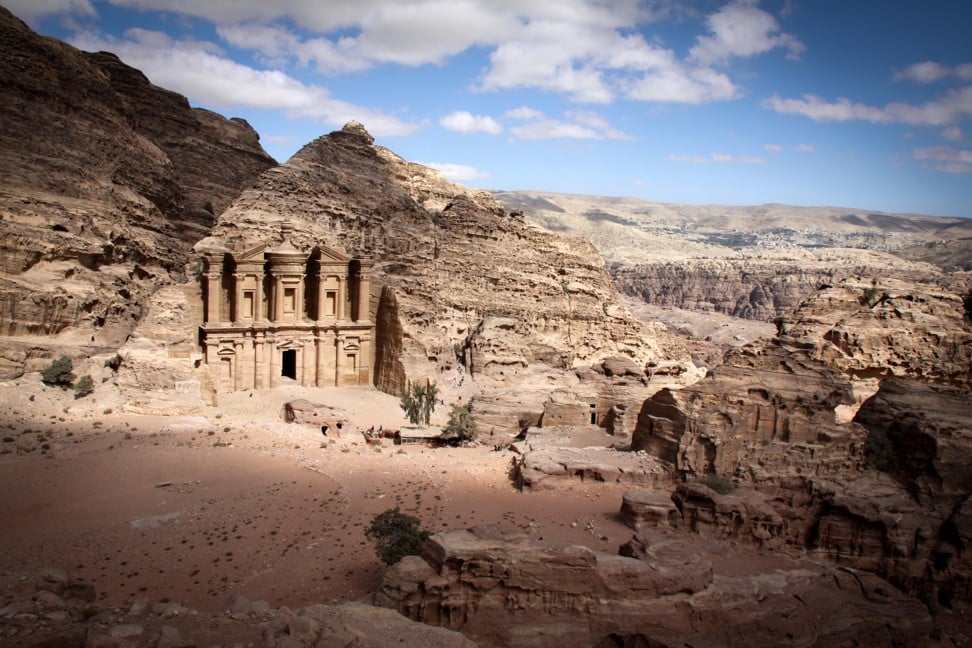
Petra, in Jordan. Photo: Alamy
The location of the Nabataean capital, Petra, wasn’t chosen by chance.
Savvy nomadic herders realised the site would make the perfect pit-stop at the confluence of several caravan trails, including a route to the north through Palmyra (in modern-day Syria), the Arabian peninsula to the south and Mediterranean ports to the west.
Huge payments in the form of taxes and protection money were collected – no wonder the most magnificent of the sandstone city’s hand-carved buildings is called the Treasury.
The Red Rose City is still a gold mine – today’s tourists pay a hefty
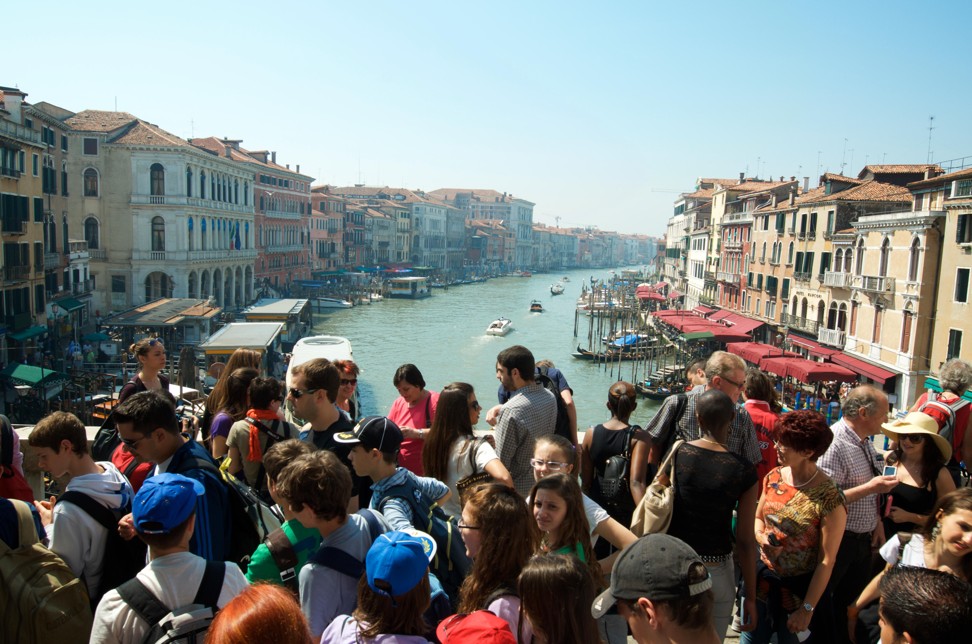
Trade enriched Venice beyond measure, helping shape the Adriatic entrepot into the floating marvel we see today.
Besides the well-documented flow of goods heading west, consignments of cotton, ivory, animal furs, grapevines and other goods passed through the strategically sited port on their way east.
Ironically, for a city built on trade and taxes, the biggest problem Venice faces today is visitors who don’t contribute enough to the local economy.
A lack of spending by millions of day-tripping tourists and cruise passengers who aren’t liable for nightly hotel taxes has prompted authorities to introduce a citywide access fee from January 2020.
Two thousand years ago, tariffs and tolls helped Venice develop and prosper. Now they’re needed to prevent its demise.
BEIJING, July 4 (Xinhua) — Chinese President Xi Jinping has appointed six new ambassadors in accordance with a decision by the Standing Committee of the National People’s Congress, according to a statement from the national legislature Thursday.
Chen Hai was appointed ambassador to Myanmar, replacing Hong Liang.
Chang Hua was appointed ambassador to Iran, replacing Pang Sen.
Liao Liqiang was appointed ambassador to Egypt, replacing Song Aiguo.
Xu Erwen was appointed ambassador to Croatia, replacing Hu Zhaoming.
Yi Xianliang was appointed ambassador to Norway, replacing Wang Min.
Chen Xu was appointed China’s permanent representative and ambassador to the United Nations Office at Geneva and other international organizations in Switzerland, replacing Yu Jianhua.
First Qatar, and now Saudi Arabia, are competing to dominate China’s fast-growing natural gas market, already the third largest in the world, as Beijing encourages the switch from coal to cleaner, greener energy
A PetroChina LNG tank at Rudong port in Nantong, Jiangsu province. China’s massive and rapidly growing appetite for natural gas is sparking off a scramble in the Middle East, as energy producers compete to become the biggest player in the market. Photo: Reuters
As more countries turn towards clean energy, the geoeconomic impact of natural gas as a fuel has become second only to that of oil. Over the past decade, the global demand for this carbon-free energy source has risen considerably and one major buyer is China.
The third largest global market for natural gas, China has implemented government policies to replace the use of coal as fuel and millions of households are switching over to clean energy. Consequently, China’s market for gas expanded by a record 43 billion cubic metres last year to reach 280 billion cubic metres at the end of 2018.
, China’s gas consumption should continue to grow in the year ahead. As the demand spirals further, natural gas consumption in China is estimated to grow to around 620 billion cubic metres in 2030.
Prioritising its energy security, Beijing last year approved a 22-year gas supply deal between QatarGas and PetroChina International Co. The agreement is PetroChina’s largest LNG supply deal by volume, and will provide 3.4 million tonnes of liquefied natural gas annually.
With this deal, which QatarGas initiated with Total and ExxonMobil Corp as partners, Qatar achieved regional dominance and filled a vacuum left by major gas producer Iran, currently the target of US sanctions. Interestingly, Beijing has also unwittingly sparked off a competition between Qatar and Saudi Arabia, the kingpins of the Middle Eastern energy industry.
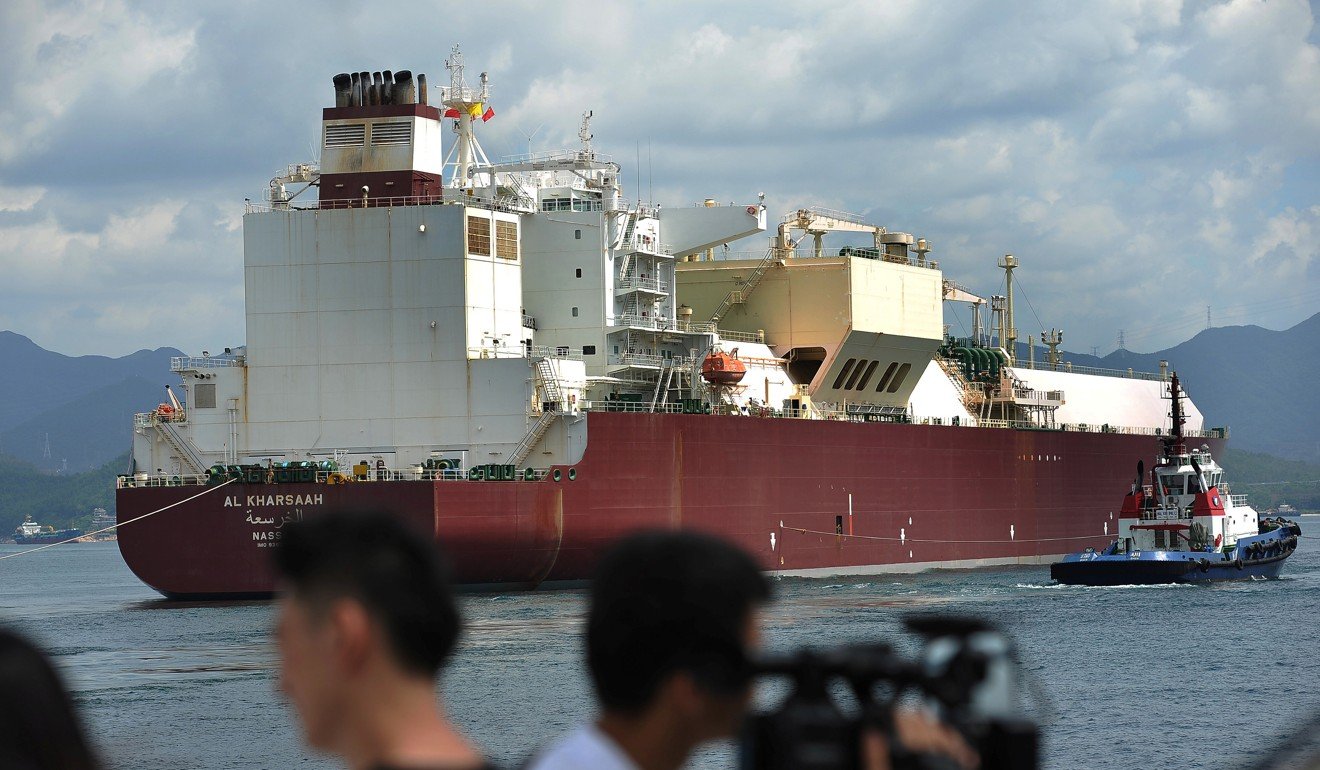
A vessel carrying Qatar LNG looking to berth in Shenzhen, China last August. Qatar’s recent deal highlighted the massive and growing Chinese appetite for natural gas. Photo: Reuters
China to become world’s top natural gas importer in 2019: report
By exporting gas, as well as oil, Qatar sail unruffled through the
imposed by Saudi Arabia, the United Arab Emirates, Bahrain and Egypt in June 2017, over allegations that Qatar supports terrorism and is friendly with Iran, which the region sees as an enemy. Qatar denies this. Meantime, Qatar plans to further increase its gas output. To attract more buyers, it is offering attractive long-term supply contracts to other countries in the region.
Inspired by the success of Qatar Gas, Saudi Arabia has stepped up its efforts to capture this new market. The Saudi state-owned oil giant Aramco plans to build an “energy bridge” between Saudi Arabia and China to better meet Beijing’s growing requirements for oil, gas, including LNG, said Aramco’s chief executive Amin Nasser at an industry event in Beijing in March.
Aramco, already a major supplier of crude oil to China, would need to invest US$150 billion over the next decade to realise its plans to convert crude oil into chemicals, and eventually become a gas producer. “We need to help our stakeholders – including here in China and the wider Asia region – realise that oil and gas will remain vital to world energy for decades to come,” said Nasser.
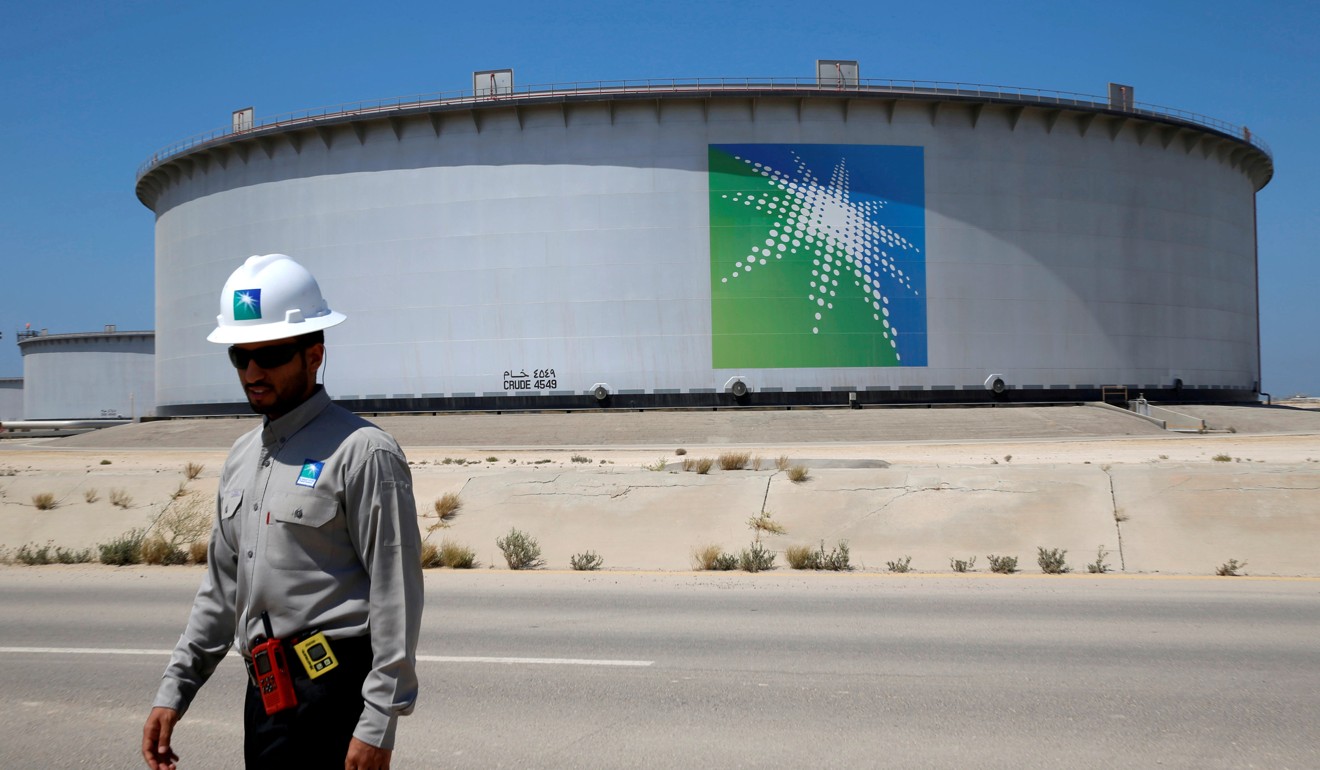
An Aramco employee near an oil tank in Saudi Arabia. Aramco has grand ambitions to become a major producer of natural gas. Photo: Reuters
The vision of Saudi Arabia as a major natural gas producer is in in line with Saudi Crown Prince Mohammed bin Salman’s economic plan Vision 2030. Riyadh has only Qatar to beat, with Iran on the back foot. Under sanctions pressure, Tehran, despite plans to increase gas exports, has clung on to just 1 per cent of the natural gas market, exporting 36.24 million cubic metres daily. Yet Iran was once part of the so-called regional gas troika along with Russia and Qatar, and is located at the cusp of several energy transit corridors. China, defying sanctions, continues to buy oil from Iran.
In around five years, Riyadh could become a major gas exporter. Saudi Arabia has already replaced Iran as the main energy provider in countries such as China, Pakistan and India, and has made huge investments in energy projects in these countries.
However, Qatar is also playing smart, sharply lowering its prices to clinch deals and make the right business connections. The competition for the growing natural gas market is a long game. The main possible setback for Riyadh is that its gas reserves do not match those in Qatar and Iran.
NEW DELHI (Reuters) – U.S. Secretary of State Mike Pompeo met India’s Prime Minister Narendra Modi on Wednesday for talks on trade and defence issues that have strained ties between the countries.
Just days before Pompeo’s visit, India slapped higher retaliatory tariffs on 28 U.S. products following Washington’s withdrawal of key trade privileges for New Delhi.
Indian broadcasters showed footage of Pompeo exchanging handshakes with Modi at the prime minister’s official residence in the capital New Delhi on Wednesday morning. Neither side released details of the meeting.
India’s relations with Russia and Iran – both under U.S. sanctions – are also a sore point.
Under U.S. pressure, India has stopped buying oil from Iran, one of its top suppliers. The United States has also stepped up pressure on India not to proceed with its purchase of S-400 surface-to-air missile systems from Russia.
Pompeo is scheduled to have lunch with foreign minister Subrahmanyam Jaishankar, followed by a news conference at 1400 local time (0930 GMT), the foreign ministry said.
He is expected to round off the trip with a policy speech hosted by the U.S. Embassy on Wednesday evening, before departing on Thursday for the G20 summit in Japan.
headed to Tehran this week for the first visit by a sitting Japanese prime minister in four decades, some in the diplomatic world imagined he could be the man to bring
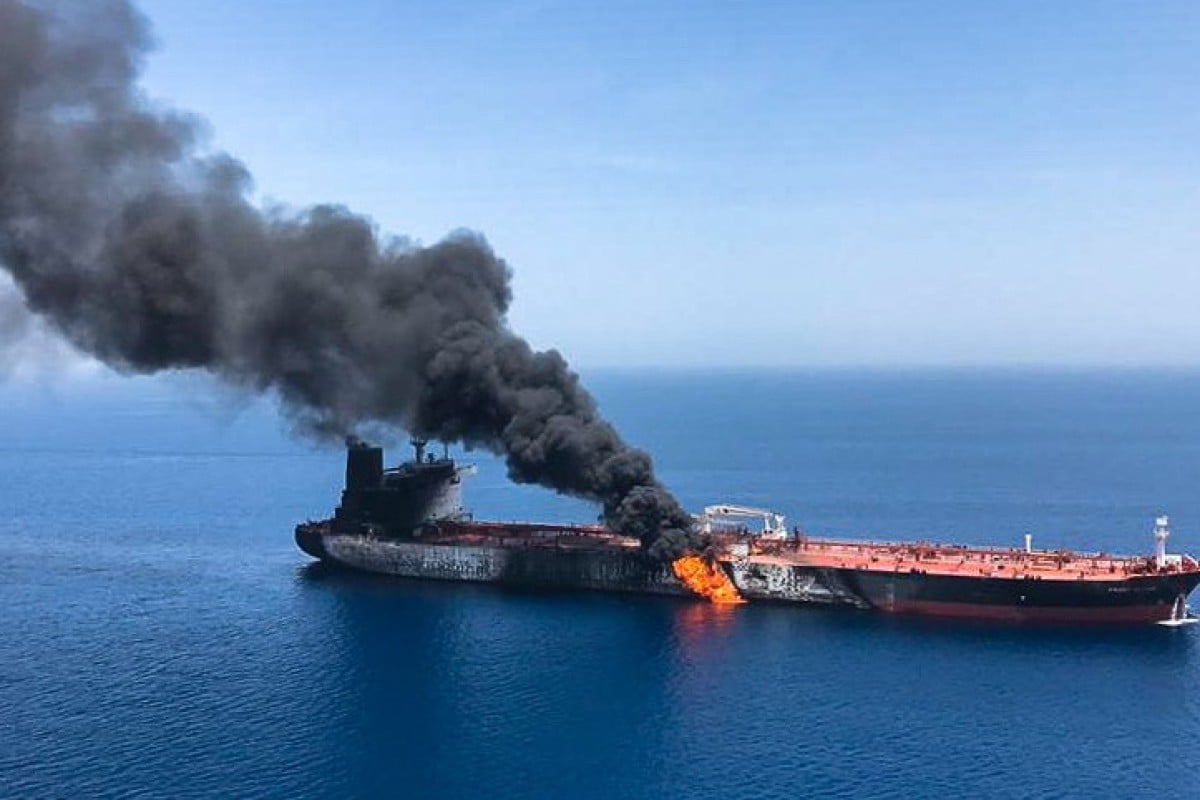
Those hopes were torpedoed on Thursday when, on the same day Abe was meeting Iran’s supreme leader Ayatollah Khamenei, explosions ripped through two oil tankers, one Japanese and one Norwegian, near the Strait of Hormuz, a strategically significant shipping lane.
The attack immediately overshadowed an earlier success for Abe, who had met President Hassan Rowhani a day before and was assured Iran would stick to the terms of a 2015 agreement limiting its nuclear activities.
Washington accused Iran of being behind the attack on the tankers, releasing a video on Friday that it said showed Iran’s revolutionary guard removing an unexploded mine from one of the ships, and warning that it would “defend its interests”.
Iranian President Hassan Rowhani and Japanese Prime Minister Shinzo Abe meet Iran’s Supreme Leader Ayatollah Ali Khamenei in Tehran. Photo: Reuters
Tehran, for its part, claimed to have been set up, with its foreign minister Mohammad Javad Zarif saying “suspicious doesn’t begin to describe” the incident. So much, then, for hopes of mediation.
, who had encouraged the Japanese leader’s visit, admitted on Twitter soon afterwards that when it came to negotiating, “they are not ready, and neither are we!”
Still, the incident exposed more than just the naivety of those hoping for an Abe-led breakthrough. In raising the stakes in Washington’s confrontation with Tehran, it also threw the spotlight on Iran’s dwindling number of allies – and perhaps most significantly on its largest trading partner, China – which face mounting pressure to rethink the relationship.
Tanker attacks: world divided over Iran role as Saudi prince breaks silence
said Beijing would promote its ties with Iran “however the situation changes” – a comment made during a meeting with Iranian President Hassan Rowhani on the sidelines of the Shanghai Cooperation Organisation summit in Kyrgyzstan – but diplomatic observers question just how far China can go in accommodating its controversial trading partner.
BEST FRIENDS FOREVER?
Iran has long been able to count on support from China, which accounts for 30 per cent of the Islamic republic’s exports and imports, and its willingness to defy US pressure is a gamble at least partly based on an assumption it can continue to count on Beijing’s support.
As Iran’s largest economic partner – Chinese direct investment in Iran hit a record high of nearly US$4 billion last year, according to data analysis project ChinaMed – Beijing already plays a key role in relieving US pressure on Iran, said Mohsen Shariatinia, assistant professor of regional studies at Shahid Beheshti University in Tehran.
But experts warn that reliance will come into question as China becomes increasingly hamstrung by its own problems.
China has enough problems of its own, starting with US pressure on Huawei. Photo: EPA
– which, as analysts point out, originally ignited over allegations it was defying US sanctions on Iran. Beijing will also be well aware of the need to keep
, its second-biggest oil supplier and Tehran’s critic-in-chief, happy.
On the other hand, analysts say, China will be wary of being seen to abandon its old friend, as doing so would send a message to other nations at odds with Washington that they could no longer look to China as a diversification strategy.
“This could mean Chinese investment is vulnerable to US interference,” said Esfandyar Batmanghelidj, founder of Bourse Bazaar, a media company that supports business diplomacy between Europe and Iran.
Sanctions drive Iranian students away from US towards Asia
Doing so, Batmanghelidj said, would put a question mark over one of China’s most significant foreign policies of recent years – President Xi’s signature
Tensions between Iran and the US have reached boiling point in recent weeks, after the Trump administration last month ended waivers on sanctions for nations importing Iranian oil – a move the US says is aimed at making the republic “radioactive to the international community” and which Rowhani has described as an “economic war against Iran”.
So far, China has largely stuck by the Islamic Republic, continuing to buy fuel from it despite the latest wave of US sanctions on Iranian oil that followed Trump’s decision last year to withdraw the US from the landmark 2015 agreement curbing Tehran’s nuclear development.
The deal had been widely lauded as a triumph of multilateralism and the dawning of a new economic era for Iran.
US releases video of ‘Iranian forces removing unexploded mine’ from ship
Part of its eagerness to support Iran has stemmed from the Islamic Republic’s key position in the Belt and Road plan. In 2017 alone, China signed deals for more than US$15 billion in Iranian infrastructure investment, according to the
Planned projects include high-speed rail lines, upgrades to the nation’s electrical grid, and natural gas pipelines. The two nations have also vowed to boost bilateral trade to US$600 billion in the next seven years.
“China sees Iran as its Western gateway, where not only is it a big market in itself, but it will also be the gateway to the rest of the
and ultimately to Europe for China,” said Anoush Ehteshami, professor of international relations at Durham University in Britain.
Nisha Mary Mathew, at the Middle East Institute in Singapore, said that China’s relationship with Iran was not just economic – but primarily strategic, with both nations envisioning an international order that was no longer dominated by the US and its Western allies.
DEFIANCE, FOR NOW
If the belt and road gives China good reason to stick with Iran, there are plenty of voices urging just that action. As Andrea Ghiselli at Shanghai’s Fudan University pointed out, US sanctions until now have only strengthened the hardline factions in Iran’s government.
The combination of the US withdrawal from the nuclear deal – which had the support of the international community – along with Europe’s tepid efforts to rescue it, may have emboldened those favouring resistance over negotiation.
Xi’s supportive comments in Kyrgyzstan were only the latest in a string of remarks from China that could encourage such factions.
If Trump kills off Huawei, do Asia’s 5G dreams die?
After China’s Foreign Minister Wang Yi met Iranian Foreign Minister Mohammad Javad Zarif in Beijing last month, the ministry’s spokesman Lu Kang said China’s economic relationship with Iran was “reasonable and lawful”.
Two months prior to that, China’s Minister of Commerce Zhong Shan, while hosting his Iranian counterpart Farhad Dejpasand, had claimed China’s “determination to maintain and develop the China-Iran comprehensive strategic partnership is unshakeable”.
Chinese President Xi Jinping with Iranian President Hassan Rowhani. Photo: AFP
Even so, the pressure is getting to some. In February, Foreign Minister Zarif temporarily resigned, in what Andrea Ghiselli at Fudan University in Shanghai called a clear sign of the “changing and precarious power balance with Iran’s foreign policy establishment”.
And nowhere is the pressure felt more keenly than the economy and China’s ability to serve as a lifeline.
“The real anxiety in Iran right now is about market share,” said Bourse and Bazaar’s Batmanghelidj. “If you’re exporting zero oil and your customers are buying oil elsewhere, you lose market share.
“The government wants to know if it agreed to go back to the negotiating table and the US promised sanctions relief, that there are people who are going to buy in significant volume.”
TURNING POINT: HUAWEI
For many analysts, the event most likely to have changed the equation in Beijing’s eyes is the arrest by the Canadian authorities of
, the chief financial officer of Chinese telecom giant Huawei.
Meng’s arrest came at the request of the US government, which claimed her company had violated sanctions by selling equipment to Iran.
Many observers saw the action as Washington’s way of signalling to Chinese companies that they would face repercussions if they eased the pressure on Iran by continuing to trade.
“Going after Huawei was about going after Chinese enterprises – signalling that they can no longer trade with Iran with impunity,” Batmanghelidj said.
Since then, Chinese firms have shown increased skittishness towards trading with Iran. According to China’s General Customs Administration, Chinese exports to Iran declined by more than half between October 2018 and February 2019, from over US$1 billion to just under US$500 million.
Mohammad Ali Shabani, a researcher at the School of Oriental and African Studies in London, said other countries in the region were now watching to see if China would blink in the face of US pressure. “This could have dire consequences for China’s image as a reliable partner,” he said.
NOT JUST ABOUT AMERICA
There are reasons beyond US pressure that may factor into Beijing’s thinking. It has long stated its opposition to Iranian nuclear weapons development, and Chinese Foreign Minister Wang Yi has said that China is “ready” to take on “its due responsibilities and make a greater contribution to world peace and common development”.
Trade war: here are Beijing’s options – and none look any good
Zhao Hong, at the Research School of Southeast Asian Studies at Xiamen University, said that in stepping up as a responsible world power Beijing faced a dilemma over its approach to Iran.
“Chinese leaders have to painfully balance an impulse towards economic cooperation with Iran against other vital interests, including convincing Washington that China is a responsible stakeholder,” he wrote in the Journal of Contemporary China.
Saudi Aramco’s Ras Tanura oil refinery. The country is China’s second-largest oil supplier after Russia. Photo: Reuters
Then there is China’s relationship with Iran’s chief adversary, Saudi Arabia, to consider. Riyadh is China’s second-largest oil supplier, behind Russia, and it plays a central role in Beijing’s energy strategy.
According to International Trade Centre data, more than 12 per cent of China’s imported oil came from Saudi Arabia last year, compared with just 6 per cent from Iran. Last year, Saudi Arabia shipped 56.73 million tonnes of oil to China, or 1.135 million barrels per day.
Why would Kim Jong-un trust Trump, now that he’s ripped up Iran’s nuclear deal?
This April, China imported 6.3 million tonnes of oil from Saudi Arabia, nearly twice the 3.24 million tonnes it imported from Iran, according to China’s General Administration of Customs.
Iran’s comparatively small share of China’s oil imports market and its heavy reliance on China as a trading partner add up to a deeply uneven relationship, experts say, and it is this imbalance that will encourage the US that China may be open to rethinking its ties.
As Jon Alterman, director of the Middle East programme at Washington DC think tank the Centre for Strategic and International Studies, pointed out, while China was Iran’s largest trading partner, Iran represented less than 1 per cent of China’s international trade.
“Iran needs China,” Alterman said. “But to China, Iran is expendable.”
In the last half of the 20th century US worries about a rising Japan led to tariffs and technology mistrust
Differences in the Chinese experience may predict a different outcome
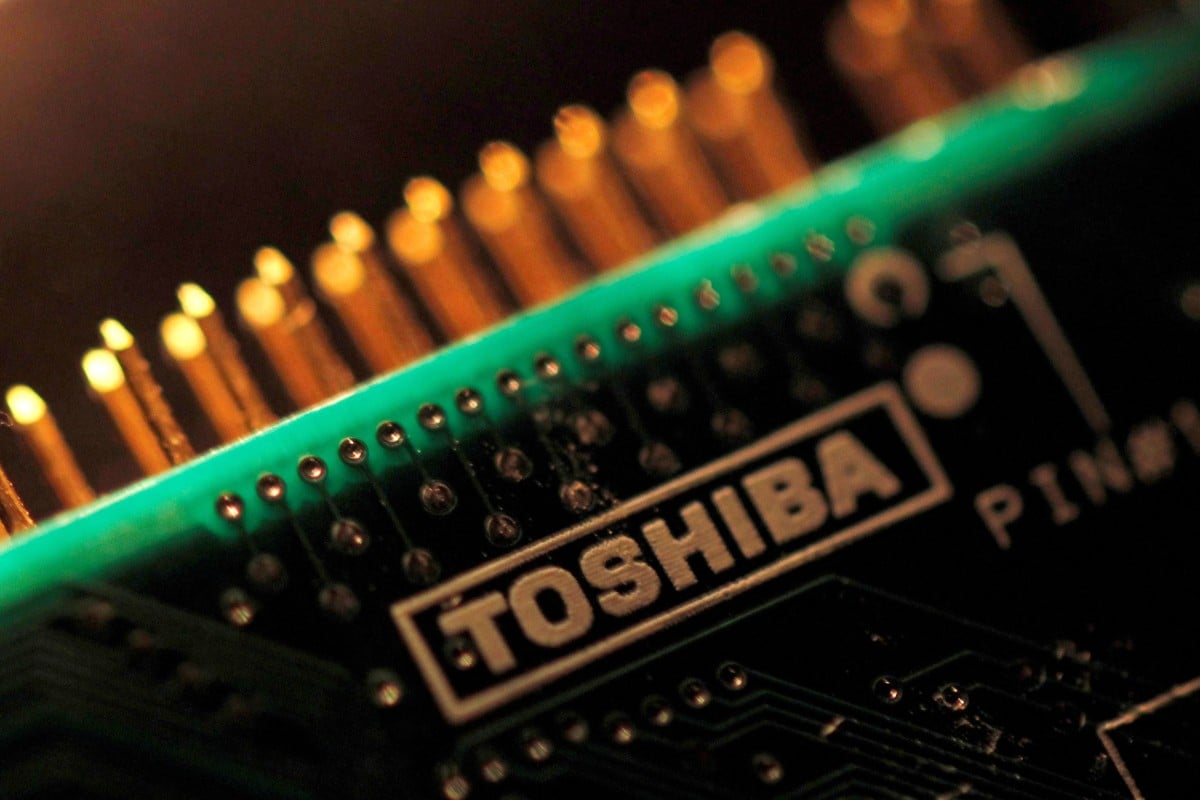
Toshiba was one of the companies affected by US actions to prevent the rise of Japan in a trade war that echoes in today’s tensions between the US and China. Photo: Reuters
If history is a mirror to the future, the similarities between the spiralling technology stand-off between China and the US and the economic wars waged by the US with Japan – which peaked in the 1980s and 1990s – may be instructive. But there are differences between the two which may predict a different outcome.
The US-Japan economic tensions started in the 1950s over textiles, extended to synthetic fibres and steel in the 1960s, and escalated – from the 1970s to 1990s – to colour televisions, cars and semiconductors, as Japan’s adjusted industrial policy and technology development moved it up the industrial chain.
Boosted by government support, Japan’s semiconductor industry surpassed the US as the world’s largest chip supplier in the early 1980s, causing wariness and discontent in the US over national security risks and its loss of competitiveness in core technologies.
The Reagan administration regarded Japan as the biggest economic threat to the US. Washington accused Tokyo of state-sponsored industrial policies, intellectual property theft from US companies, and of dumping products on the American market.
The US punished Japanese companies for allegedly stealing US technology and illegally selling military sensitive products to the Soviet Union. It also forced Japan to sign deals to share its semiconductor technologies and increase its purchases of US semiconductor products.
“The Trump administration is using similar tactics against China that were used against Japan in the 1980s and 1990s,” said an adviser to the Chinese government, on condition of anonymity, adding that the US was continuing its hegemony to curtail China’s tech development and was trying to mobilise its allies to follow suit.
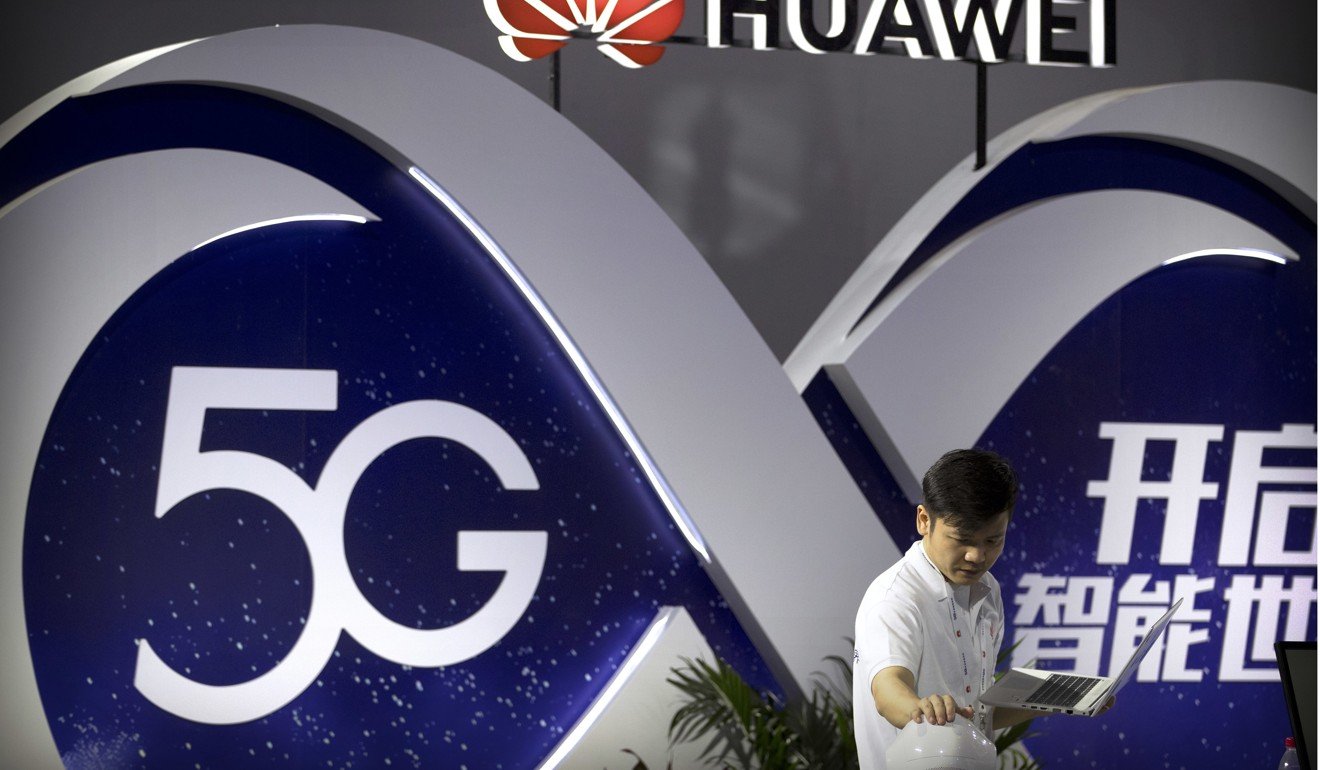
After talks to end the US-China trade faltered last month, Huawei – a global leader in the 5G market – is now standing at centre stage of a protracted technology stand-off between Beijing and Washington, which has grown increasingly wary of the rising competitiveness of Chinese tech companies.
Zhang Monan, a researcher with the Beijing-based China Centre for International Economic Exchanges, does not foresee an easing of the rivalry between the US and China.
“The current US-China conflicts are more complicated than those between the US and Japan,” she said.
“The US will only get more intense in its containment of China and the tech rivalry won’t ease, even if China and the US could reach a deal to de-escalate the trade tensions.”
Huawei is at the centre of a technology stand-off between Beijing and Washington. Photo: AP
Back in 1982, the US justice department charged senior officials at Hitachi with conspiracy to steal confidential computer information from IBM and take it back to Japan. IBM also sued Hitachi. The two companies settled the case out of court and Hitachi paid 10 billion yen (US$92.3 million) to IBM in royalties in 1983, while accepting IBM inspections of its new software products for the next five years.
Toshiba, a major electronics producer in Japan, and Norway’s Kongsberg Vaapenfabrikk secretly sold sophisticated milling machines to the Soviet Union from 1982 to 1984, helping to make its submarines quieter and harder to detect. This transfer of sensitive military technology in the middle of an arms race between the US and the Soviet Union was not revealed until 1986.
The US issued a three-year ban on Toshiba products in 1987 and the company ran full-page advertisements in more than 90 American newspapers apologising for its actions.
In 1985, the US imposed 100 per cent tariffs on Japanese semiconductors. A year later, in its five-year semiconductor deal with the US, Japan agreed to monitor its export prices, increase imports from the US, and submit to inspections by the Office of the United States Trade Representative.
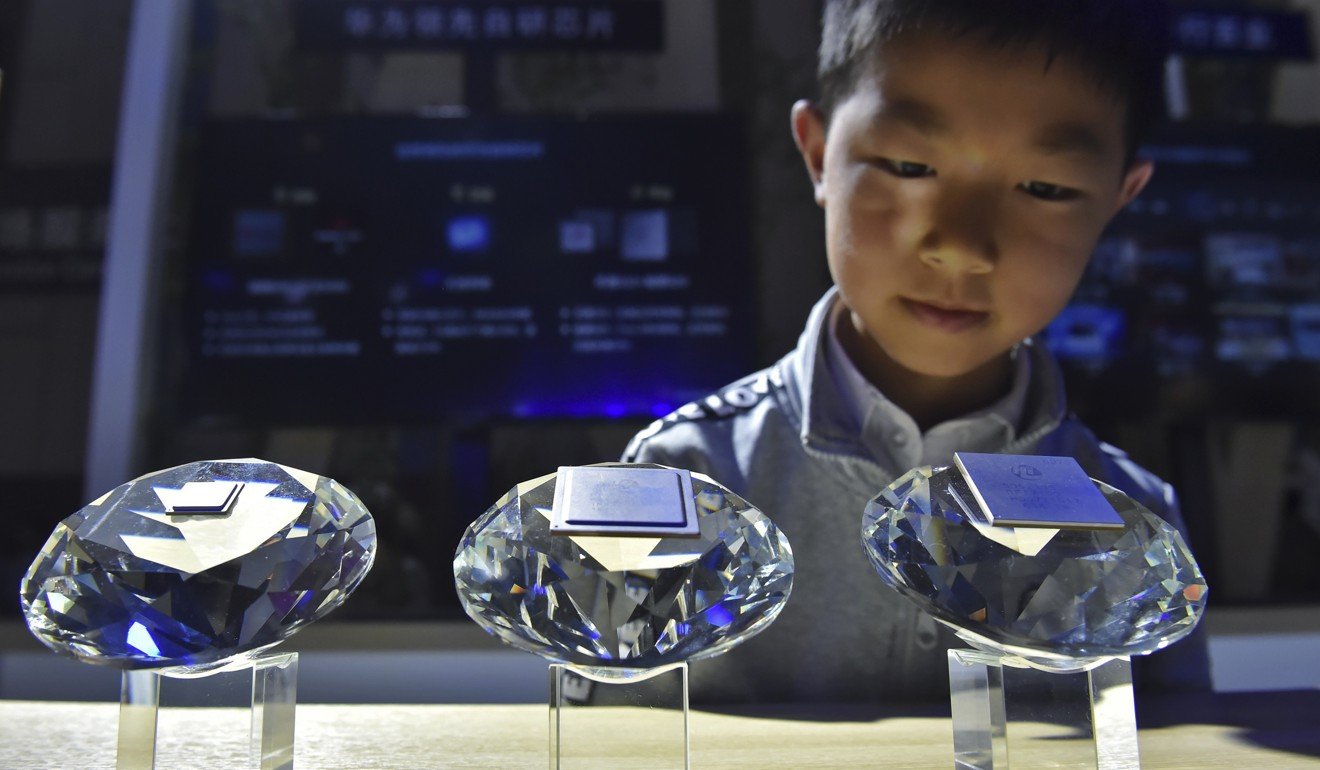
A display of chips designed by Huawei for 5G base stations on show at the China International Big Data Industry Expo. Photo: AP
This was followed by a second five-year semiconductor deal in 1991, in which Japan agreed to double the US market share in Japan to 20 per cent. In yet another bilateral semiconductor deal in 1989 Japan was required to open its semiconductor patents to the US.
Meanwhile, the US government boosted its efforts to help American businesses cement their industrial leverage in the chip sector and unveiled rules to protect its domestic chip industry.
The two countries were irreconcilable in 1996 on how to measure their respective market share. Overall market circumstances had also changed by then, with the US becoming competitive in microprocessing, and South Korea and Taiwan emerging as strong rivals to Japan.
Its dominance in semiconductors lost, Japan reached out to Europe for a range of cooperative technology deals.
Cooperate, don’t confront: academic advises Beijing on trade war tactics
“History can tell that high technology matters greatly to national security strategies. It is not a process of mere market competition. It follows the law of the jungle,” Zhang said.
The US has intensified its investment scrutiny by rolling out the Foreign Investment Risk Review Modernisation Act last year, which extends the regulation to key industrial technology sectors.
Zhang predicted the US would continue to contain China’s technological development in key sectors such as AI, aerospace, robots and nanotechnology – all of which are of great importance to Beijing.
The US has said Chinese tech giants Huawei and ZTE present a national security risk. Last April it cut US supplies to ZTE, citing violations of sanctions against Iran and North Korea. The ban was removed three months later after ZTE paid US$1.4 billion in fines.
It was a wake-up call for China to develop its own core technologies. The subsequent US ban on Huawei added to the urgency to do so, observers said.
Wang Yiwei, a professor in international relations with Renmin University, said China had to develop its own hi-tech know-how while continuing the opening up process.
“China has paid a price to learn whose globalisation it is,” he said.
“We may see some extent of disengagement with the US in technology and dual-use sectors, but China can speed up cooperation with European countries, and other countries such as Israel, to offset the risks from the US.”
In December, the US filed criminal charges against Huawei and its chief financial officer Sabrina Meng Wanzhou, alleging bank fraud, obstruction of justice and technology theft.
The squeeze continued last month with the US blacklisting Huawei, restricting its access to American hi-tech supplies and putting pressure on its allies to freeze the company out of the 5G market. So far, those allies, including Germany and Japan, have remained hesitant about meeting the US request and refrained from siding with either country.
Chinese foreign ministry spokesman Geng Shuang said on Monday that Huawei had obtained 46 commercial contracts in 30 countries as of June 6, “including some US allies and some European countries that the US has been working hard to persuade out of the contracts”.
For Zhang, the differences between Japan’s experience of US concerns of technological advancement and China’s may offer some hope for Chinese ambitions.
“Dependent on US for security protection, Japan was limited in [its ability to] push back and was already a developed country,” she said.
“But China has huge domestic market potential to address the imbalance [between] economic and technology development. This remains a big attraction to multinational companies, which would enable China to integrate into global innovation and technology cooperation, but China has to figure out how to dispel the doubts on its growth model.”
Chinese State Councilor and Foreign Minister Wang Yi (R) meets with visiting Iranian Foreign Minister Mohammad Javad Zarif in Beijing, capital of China, May 17, 2019. (Xinhua/Yin Bogu)
BEIJING, May 17 (Xinhua) — China hopes to work with the Iranian side to eliminate complicated disturbing factors and make efforts for the full implementation of the Iran nuclear deal, Chinese State Councilor and Foreign Minister Wang Yi said on Friday.
Wang made the remarks when meeting with visiting Iranian Foreign Minister Mohammad Javad Zarif.
“China firmly opposes unilateral sanctions and the so-called ‘long-arm jurisdiction’ imposed by the United States on Iran,” Wang said, pledging to maintain the Joint Comprehensive Plan of Action, also known as the Iran nuclear deal, and safeguard the authority of the United Nations and basic norms governing international relations.
China welcomes Iran to actively take part in the joint building of the Belt and Road and hopes to strengthen mutually beneficial cooperation, Wang said.
Zarif praised China for its important role in defending the Iran nuclear deal and vowed to strengthen bilateral and multilateral coordination so as to safeguard multilateralism and common interests of the two countries.
WASHINGTON/NEW YORK (Reuters) – The Trump administration on Wednesday took aim at China’s Huawei Technologies Co Ltd, banning the firm from buying vital U.S. technology without special approval and effectively barring its equipment from U.S. telecom networks on national security grounds.
Taken together, the two moves threaten Huawei’s ability to continue to sell many products because of its reliance on American suppliers, and represents a significant escalation in the U.S. government’s worldwide campaign against the company.
The steps also come at a delicate time in relations between China and the United States as the world’s two largest economies ratchet up tariffs in a battle over what U.S. officials call China’s unfair trade practices.
Washington believes the handsets and network equipment for telecommunications companies made by Huawei could be used by the Chinese state to spy on Americans.
Huawei, which has repeatedly denied the allegations, said in a statement that “restricting Huawei from doing business in the U.S. will not make the U.S. more secure or stronger; instead, this will only serve to limit the U.S. to inferior yet more expensive alternatives, leaving the U.S. lagging behind in 5G deployment.”
“In addition, unreasonable restrictions will infringe upon Huawei’s rights and raise other serious legal issues.”
The ban on U.S. suppliers, which appears similar to one on Huawei rival ZTE Corp. last year, could hit the shares of Huawei’s biggest U.S. suppliers, including chipmakers Qualcomm Inc and Broadcom Inc (AVGO.O).
In the first action taken on Wednesday, President Donald Trump signed a long-awaited executive order declaring a national emergency and barring U.S. companies from using telecommunications equipment made by firms posing a national security risk.
The order invoked the International Emergency Economic Powers Act, which gives the president the authority to regulate commerce in response to a national emergency that threatens the United States. It directs the Commerce Department, working with other government agencies, to draw up an enforcement plan by October.
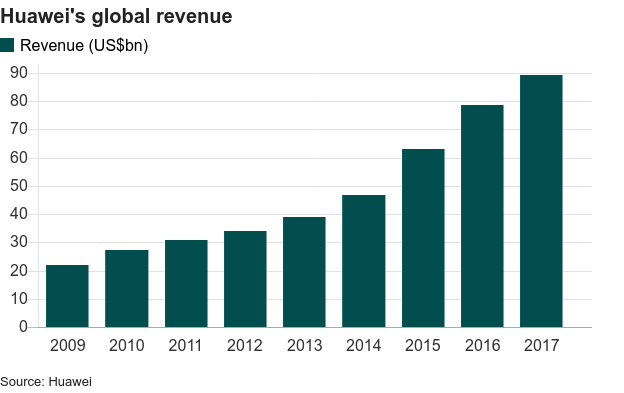
Members of Congress said Trump’s order was squarely aimed at Chinese companies like Huawei, which generated $93 billion in revenue last year and is seen as a national champion in China.
“China’s main export is espionage, and the distinction between the Chinese Communist Party and Chinese ‘private-sector’ businesses like Huawei is imaginary,” Republican Senator Ben Sasse said.
ENTITY LIST
Soon after the White House announced the order had been signed, the Commerce Department said it had added Huawei and 70 affiliates to its so-called Entity List – a move that bans the telecom giant from buying parts and components from U.S. companies without U.S. government approval.
U.S. officials told Reuters the decision would make it difficult, if not impossible, for Huawei, the largest telecommunications equipment producer in the world, to sell some products because of its reliance on U.S. suppliers. It will take effect in the coming days.
Commerce Secretary Wilbur Ross said in a statement Trump backed the decision that will “prevent American technology from being used by foreign owned entities in ways that potentially undermine U.S. national security or foreign policy interests.”
With Huawei on the Entity List, U.S. suppliers will need to apply for licenses to provide the Chinese company with anything subject to U.S. export control regulations. Obtaining such licenses will be difficult because they will have to show the transfer of items will not harm U.S. national security, said John Larkin, a former export control officer in Beijing for the Commerce Department.
The United States in January unsealed a 13-count indictment against Huawei accusing the company and its chief financial officer of conspiring to defraud global financial institutions by misrepresenting Huawei’s relationship with a suspected front company that operated in Iran.
The indictment was unsealed a month after CFO Meng Wanzhou was arrested in Canada on a U.S. warrant for her role in the alleged fraud. Meng, who maintains her innocence, is fighting extradition.
5G NETWORKS
Reuters reported on Tuesday that Trump was expected to sign his long-awaited executive order this week. The order does not specifically name any country or company, but U.S. officials have previously labeled Huawei a “threat”.
The United States has been actively pushing other countries not to use the Chinese company’s equipment in next-generation 5G networks that it calls “untrustworthy.” In August, Trump signed a bill that barred the U.S. government from using equipment from Huawei and another Chinese provider, ZTE Corp.
ZTE was added to the Commerce Department’s Entity List in March 2016 over allegations it organised an elaborate scheme to hide its re-export of U.S. items to sanctioned countries in violation of U.S. law.
The restrictions prevented suppliers from providing ZTE with U.S. equipment, potentially freezing the company’s supply chain, but the restrictions were suspended in a series of temporary reprieves, allowing the company to maintain ties to U.S. suppliers until it agreed to a plea deal a year later.
The status of Huawei and ZTE has taken on new urgency as U.S. wireless carriers rollout 5G networks.
While the big wireless companies have already cut ties with Huawei, small rural carriers continue to rely on both Huawei and ZTE switches and other equipment because they tend to be cheaper. Trump’s order applies to future purchases and does not address existing hardware, officials said Wednesday.
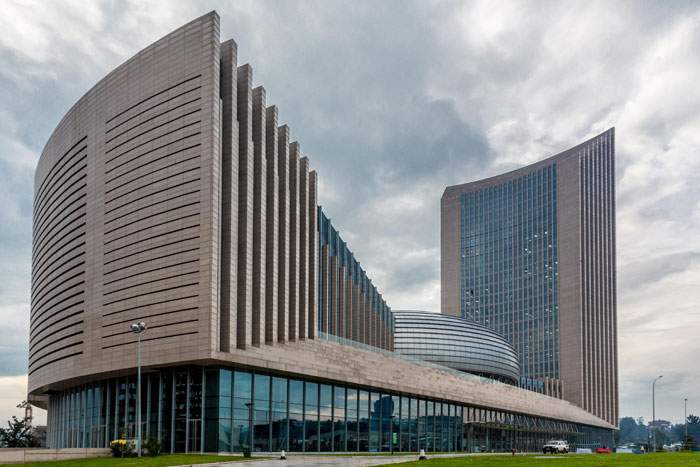
The African Union headquarters in Addis Ababa is a shiny spaceship-like structure that glistens in the afternoon sun.
With its accompanying skyscraper, it stands out in the Ethiopian capital.
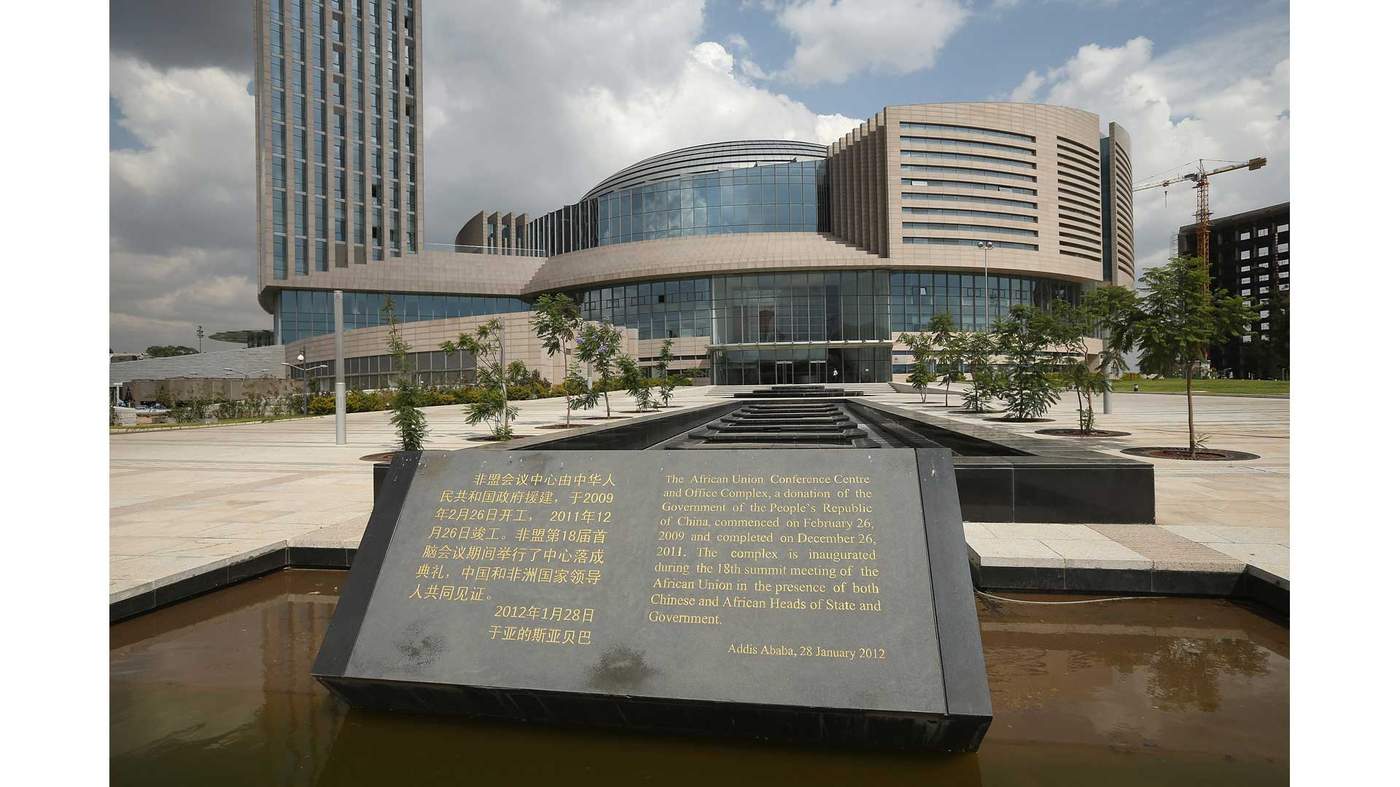
Greetings in Mandarin welcome visitors as they enter the lifts, and the plastic palm trees bear the logos of the China Development Bank.
African Union HQ, Addis Ababa
Everywhere, there are small indications that the building was made possible through Chinese financial aid.
In 2006, Beijing pledged $200m to build the headquarters. Completed in 2012, everything was custom-built by the Chinese – including a state-of-the-art computer system.
For several years, the building stood as a proud testament to ever-closer ties between China and Africa. Trade has rocketed over the past two decades, growing by about 20% a year, according to international consultancy McKinsey. China is Africa’s largest economic partner.
But in January 2018, French newspaper Le Monde Afrique dropped a bombshell.
It reported that the AU’s computer system had been compromised.
The newspaper, citing multiple sources, said that for five years, between the hours of midnight and 0200, data from the AU’s servers was transferred more than 8,000km away – to servers in Shanghai.
This had allegedly continued for 1,825 days in a row.
Le Monde Afrique reported that it had come to light in 2017, when a conscientious scientist working for the AU recorded an unusually high amount of computer activity on its servers during hours when the offices would have been deserted.
It was also reported that microphones and listening devices had been discovered in the walls and desks of the building, following a sweep for bugs.
The reaction was swift.
Both AU and Chinese officials publicly condemned the report as false and sensationalist – an attempt by the Western media to damage relations between a more assertive China and an increasingly independent Africa.
But Le Monde Afrique said that AU officials had privately expressed concerns about just how dependent they were on Chinese aid – and what the consequences of that could be.
In the midst of all of this, one fact remained largely unreported.
The main supplier of information and communication technology systems to the AU headquarters was China’s best-known telecoms equipment company – Huawei.
The company says it had “nothing” to do with any alleged breach.
Huawei “served as the key ICT provider inside the AU’s headquarters”, said Danielle Cave of the Australian Strategic Policy Institute, in a review of the alleged incident.
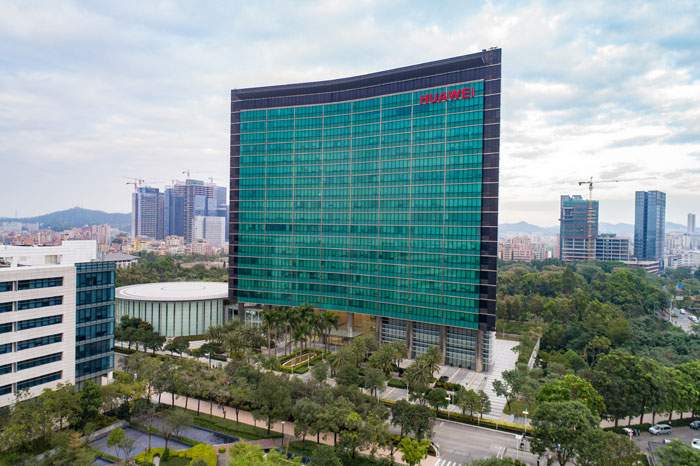
Huawei headquarters in Shenzhen, China
“This doesn’t mean the company was complicit in any theft of data. But… it’s hard to see how – given Huawei’s role in providing equipment and key ICT services to the AU building and specifically to the AU’s data centre – the company could have remained completely unaware of the apparent theft of large amounts of data, every day, for five years.”
There is no evidence to indicate that Huawei’s telecoms network equipment was ever used by the Chinese government – or anyone else – to gain access to the data of their customers.
Indeed, no-one has ever gone on record to confirm that the AU system was compromised in the first place.
But these reports played into years of suspicions about Huawei – that a large Chinese company might find itself unduly influenced by the Chinese government.
Ren and the rise of Huawei
“When I first started out 30 years ago… we didn’t really have any telephones. The only phones we had were those hand-cranked phones that you see in old World War II films. We were pretty undeveloped then.”
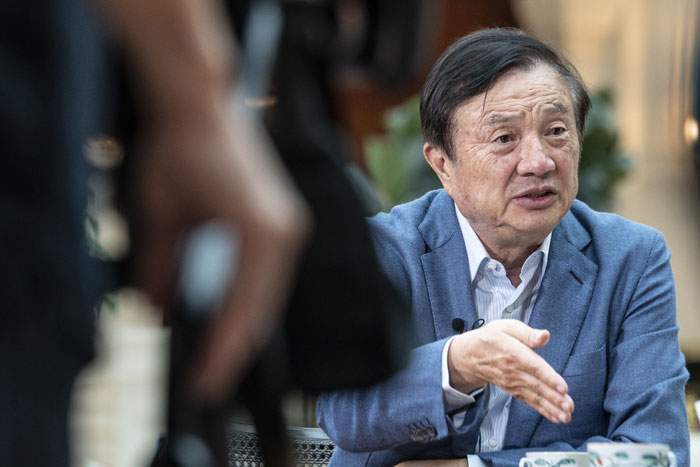
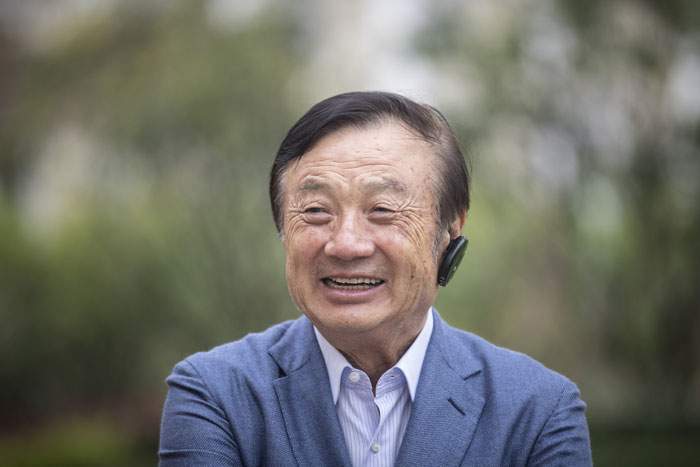
Huawei’s founder and chairman Ren Zhengfei is reminiscing to the BBC about the origins of the world’s second-biggest smartphone firm, while sitting in the Huawei headquarters in Shenzhen – a symbol of the success that he’s worked his whole lifetime for.
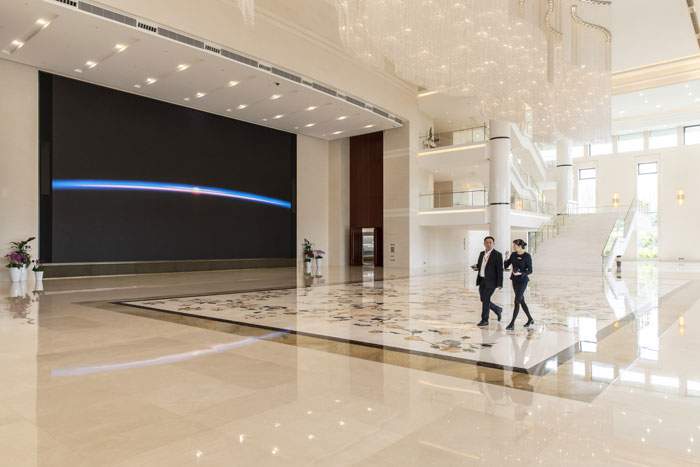
A long marbled staircase, covered in plush red carpet, greets you as you first walk in.
At the top of the stairs, a giant painting depicts a traditional Chinese New Year scene.
Inside Huawei’s Shenzhen HQ
A few kilometres away in Dongguan, Huawei’s latest campus is even more eye-catching.
The site – designed to accommodate the company’s 25,000 R&D staff – comprises 12 “villages”, each of which recreates the architecture of a different European city, among them Paris, Bologna and Granada.
It’s as if Silicon Valley had been re-imagined by Walt Disney. Long corridors of Roman pillars and picturesque French cafes adorn the campus, with a train connecting the different areas, running through manicured gardens and past an artificial lake.
It’s a world away from the environment that Mr Ren found himself in when he first started the company in 1987. “I founded Huawei when China began to implement its reform and opening up policy,” he says. “At that time, China was shifting from a planned economy to a market economy. Not only people like myself, but even the most senior government officials, did not have the vaguest idea of what a market economy was. It seemed it was hard to survive.”
Ren was born in 1944 in Southern China – a tumultuous, chaotic place, one of the poorest regions in an already destitute country.
For a long time, hardship was all he ever knew.
He was from a family of seven children. “They were very poor,” says David De Cremer, who has co-written a book on Ren and Huawei.
“I think hardship is something that you can see throughout his life, and which he keeps emphasising himself.”
To escape that life of poverty and drudgery, Ren did what many young Chinese men of that era did. He joined the army.
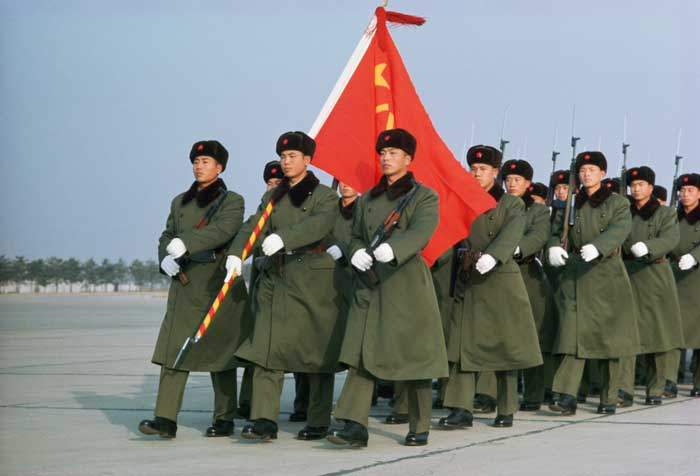
Soldiers from the People’s Liberation Army, 1972
“I was a very low-ranking officer in the People’s Liberation Army,” he says. “I served in an ordinary construction project, not a field unit. At the time, I was a technician of a company in the military, and then I became an engineer.”
He left the military in 1983 when China began to downsize its forces, and went into the electronics business.
By his own admission, he wasn’t a great businessman at first.
“I was someone who had been in the military all my life at the time, used to doing what I was told,” he says. “Suddenly, I began to work in a market economy. I was at a total loss. So I too suffered losses, I too was deceived, and I was cheated.”
But he was quick to learn, and was a keen student of Western business practices and European history.
“I did research on what exactly a market economy was all about,” he says. “I read books on laws, including those about European and US laws. At that time, there were very few books on Chinese laws, and I had to read those on European and US laws.”
Five years later, he founded Huawei – the name can be translated as “splendid achievement” or “China is able” – to sell simple telecoms equipment to the rural Chinese market. Within a few years, Huawei was developing and producing the equipment itself.
Sometime in the early 90s, Huawei won a government contract to provide telecoms equipment for the People’s Liberation Army.
By 1995, the company was generating sales of around US$220,000, mainly from selling to the rural market.
The following year Huawei was given the status of a Chinese “national champion”. In practice, this meant the government closed the market to foreign competition.
At a time when China’s economy was growing by an average of 10% per year, this was no small advantage. But it was only when Huawei started to expand overseas in 2000, that it really saw its sales soar.
In 2002, Huawei made US$552m from its international market sales. By 2005 its international market contracts exceeded its domestic business for the first time.
Ren’s early days in business instilled in him a desire to protect his company from the whims and fancies of the stock market. Huawei is privately held and employee-owned. This gave Ren the power to plough more money back into research and development. Each year, Huawei spends US$20bn on R&D – one of the biggest such budgets in the world.
“Publicly listed companies have to pay a lot of attention to their balance sheets,” he says. “They can’t invest too much, otherwise profits will drop and so will their share prices. At Huawei, we fight for our ideals. We know that if we fertilise our ‘soil’ it will become more bountiful. That’s how we’ve managed to pull ahead and succeed.”
One story from the early days of the company tells how Ren was cooking for his staff (he loves to cook, or so the story goes). Suddenly he rushed out of the kitchen and announced to the room: “Huawei will be a top three player in the global communications market 20 years from now!”
And that’s exactly what happened. In fact, those ambitions were surpassed.
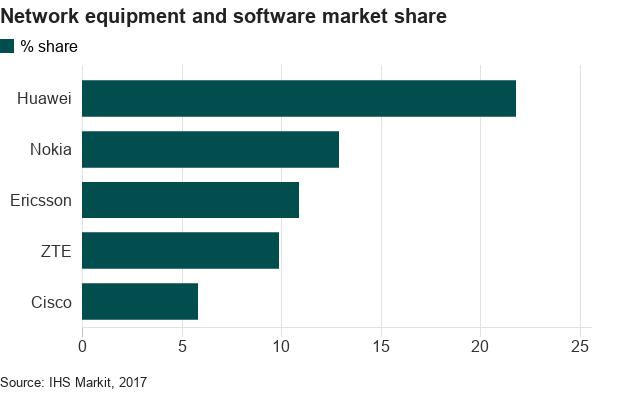
Today, Huawei is the world’s biggest seller of network telecommunications equipment.
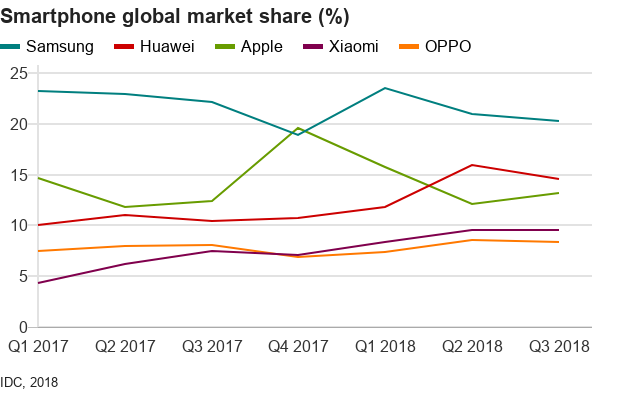
From aspiring to be a company like Apple, it now sells more smartphones than Apple.
But shadows have continued to loom over Huawei’s international success.
Ren and Huawei’s links to the Chinese Communist Party have raised suspicions that the company owes its meteoric rise to its powerful political connections in China. The US has accused Huawei of being a tool of the Chinese government.
It’s an accusation which Ren denies. “Please don’t think that Huawei has become what it is today because we have special connections,” he says. “Even 100% state-owned companies have failed. Do good connections mean you will succeed then? Huawei’s success is still very much due to our hard work.”
The case against
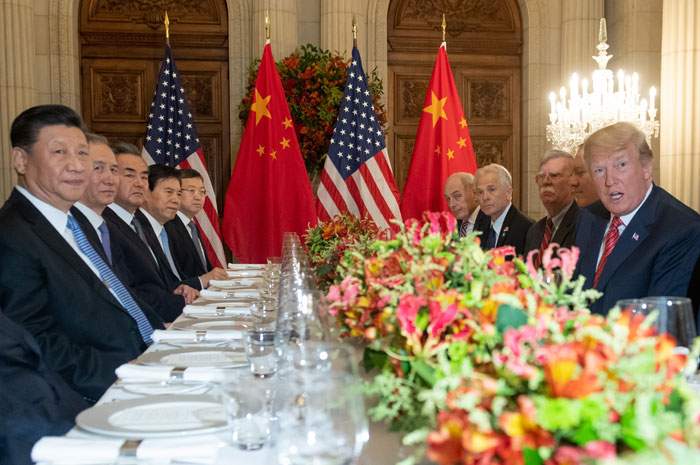
It was 1 December 2018. US President Donald Trump and China’s President Xi Jinping were dining on grilled sirloin followed by caramel rolled pancakes at the G20 summit in Buenos Aires.
They had a lot to discuss. The US and China were in the middle of a trade war – imposing tariffs on each other’s goods – and growth forecasts for both countries had recently been cut as a result. This was adding to the fear of a slowing global economy.
In the event, the two leaders agreed a truce in the trade war, with Donald Trump tweeting that “Relations with China have taken a BIG leap forward!”
Xi Jinping and Donald Trump at dinner, December 2018
But thousands of kilometres north in Canada, an arrest was taking place that would throw doubt on this rapprochement.
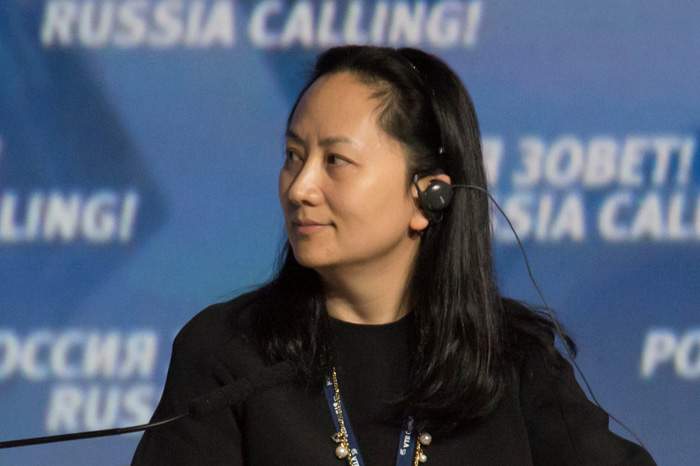
Meng Wanzhou, Huawei’s chief financial officer and Ren Zhengfei’s eldest daughter, had been detained by Canadian officials while transferring between flights at Vancouver airport.
The arrest had come at the request of the US, who accused her of breaking sanctions against Iran.
“When she was detained, as her father, my heart broke,” says Ren, visibly emotional. “How could I watch my child suffer like this? But what happened, has happened. We can only depend on the law to solve this problem.”
Meng Wanzhou being driven to court in Canada
Huawei’s problems were just beginning. Nearly two months later, the US Department of Justice filed two indictments against Huawei and Ms Meng.
Under the first indictment, Huawei and Ms Meng were charged with misleading banks and the US government about their business in Iran.
The second indictment – against Huawei – involved criminal charges including obstruction of justice and the attempted theft of trade secrets.
Both Huawei and Ms Meng deny the charges.
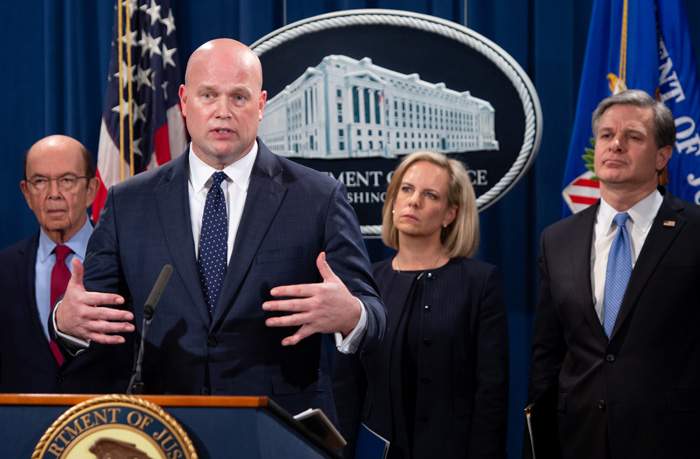
January 2019: Acting US attorney general Matthew Whittaker announces charges against Huawei and Meng Wanzhou
The charge of stealing trade secrets centres on a robotic tool – developed by T-Mobile – known as Tappy.
According to legal documents, Huawei had tried to buy Tappy, a device which mimicked human fingers by tapping mobile phone screens rapidly to test responsiveness.
T-Mobile was in partnership with Huawei at the time, but it rebuffed the Chinese firm’s offers, fearing it would use the technology to make phones for T-Mobile’s competitors.
It’s alleged that one of Huawei’s US employees then smuggled Tappy’s robotic arm into his satchel so that he could send its details to colleagues in China.
After the alleged theft was discovered, the Huawei employee claimed that the arm had mistakenly fallen into his bag.
Huawei claimed that the employee had been acting alone, and the case was settled out of court in 2014. But the latest case is built on email trails between managers in China and the company’s US employees, linking Huawei management to the alleged theft.
The indictment also details evidence of a bonus scheme from 2013, offering Huawei employees financial rewards for stealing confidential information from competitors.
Huawei has denied any such scheme exists.
Meng Wanzhou, photographed in 2014
This is not the first time that Huawei has been accused of stealing trade secrets. Over the years companies like Cisco, Nortel and Motorola have all pointed the finger at the Chinese firm.
But US fears about Huawei are about much more than industrial espionage. For more than a decade, the US government has seen the company as little more than an arm of the Chinese Communist Party.
These concerns have been brought to the fore with the advent of “fifth generation” or 5G mobile internet, which promises download speeds 10 or 20 times faster than at present, and much greater connectivity between devices.
As the world’s biggest telecoms infrastructure provider, Huawei is one of the companies best placed to build new 5G networks. But the US has warned its intelligence partners that awarding contracts to Huawei would be tantamount to allowing the Chinese spy on them.
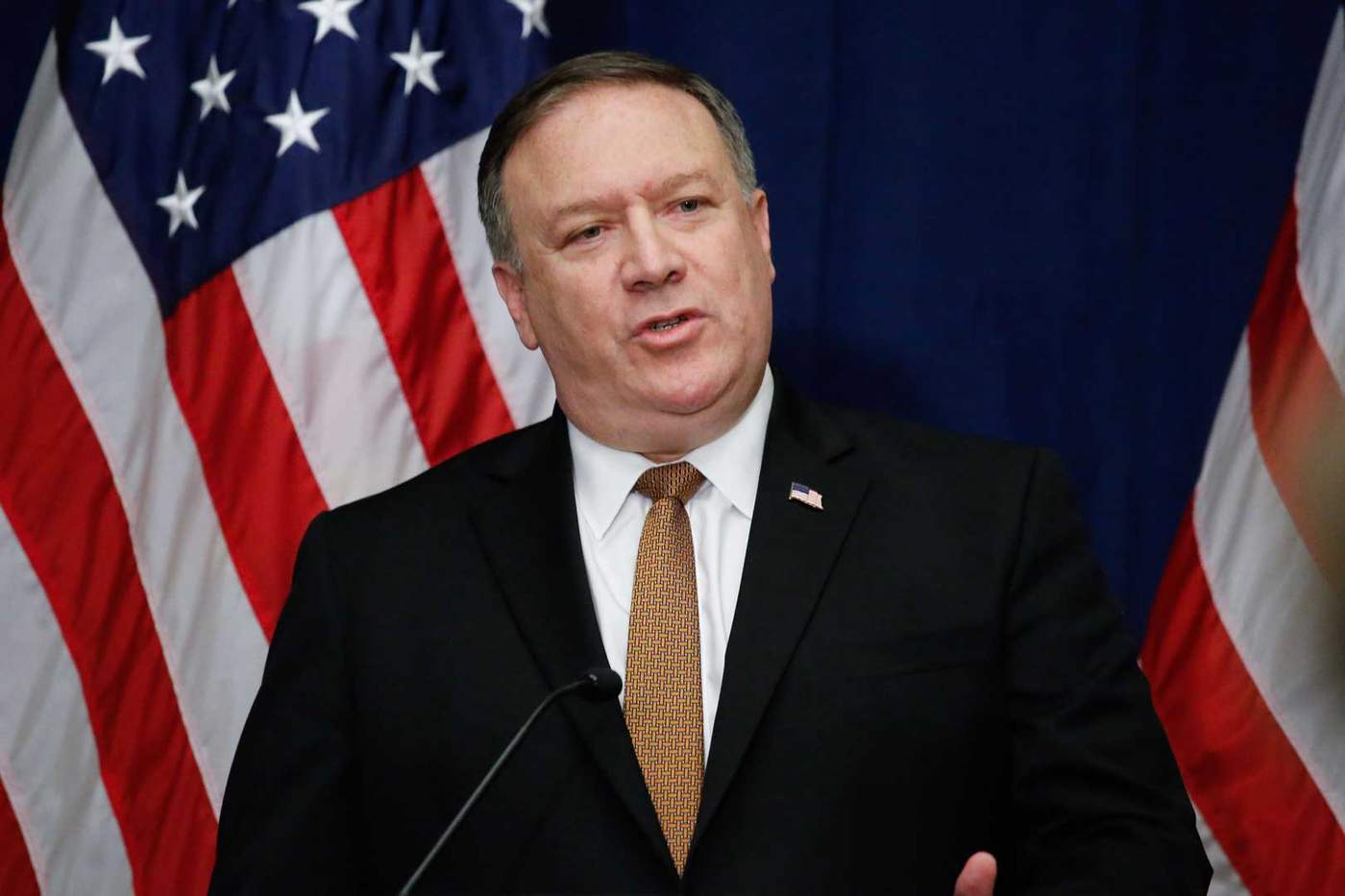
US Secretary of State Mike Pompeo recently cautioned against Huawei, saying, “If a country adopts this and puts it in some of their critical information systems, we won’t be able to share information with them.”
US Secretary of State Mike Pompeo
The UK, Germany and Canada are reviewing whether Huawei’s products pose a security threat.
Australia went a step further last year, and banned equipment suppliers “likely to be subject to extrajudicial directions from a foreign government”.
Huawei was not mentioned by name, but Danielle Cave of the Australian Strategic Policy Institute says the company posed a national security risk because of its government links.
She cites an article in Chinese law that makes it impossible for any company to refuse to help the Chinese Communist Party in intelligence gathering.
“Admittedly, what is missing from this debate is the smoking gun,” she says.
“For the average person who has a Huawei smartphone it’s not a big deal. But if you’re a Western government that has key national security to protect – why would you allow this access to a company that is in the political system that China is in?”
For his part, Ren says that Huawei’s resources have never and would never be used to spy for the Chinese government.
“The Chinese government has clearly said that it won’t ask companies to install backdoors,” he says. A “backdoor” is a term used to describe a secret entry point in software or a computer system that gives access to the person or entity who installed it to the inner workings of the system.
“Huawei will not do it either,” he continues. “Our sales revenues are now hundreds of billions of dollars. We are not going to risk the disgust of our country and our customers all over the world because of something like that. We will lose all our business. I’m not going to take that risk.”
Xi’s China
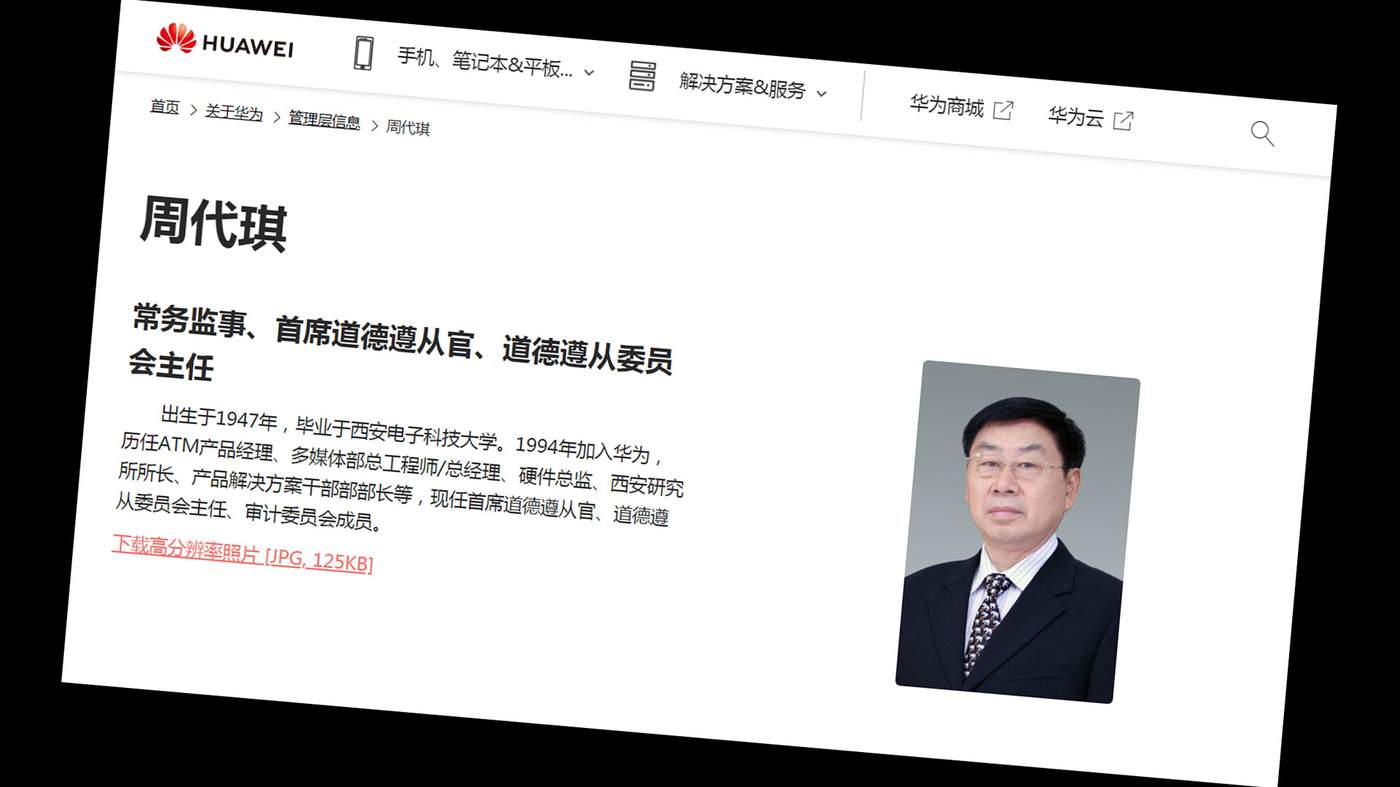
Zhou Daiqi is Huawei’s chief ethics and compliance officer.
He’s been with the company for nearly 25 years, in a number of different positions – chief engineer, director of the hardware department, head of the research centre in Xi’an, according to his biography on the company’s website. He is also understood to combine his high-ranking executive duties with another role – party secretary of Huawei’s Communist Party committee.
All companies in China are required by law to have a Communist Party committee.
Zhou Daiqi’s profile on Huawei’s website
The official line is that they exist to ensure that employees uphold the country’s moral and social values. Representatives of the committee are also often tasked with helping workers with financial problems.
But critics of China’s one-party system argue that they allow the state to exert control on corporate China. And they say the level of this control has increased in recent years.
“[President] Xi Jinping is exerting greater control over the business community in China,” says Elliott Zaagman, who regularly advises Chinese companies on their PR strategy. “As these companies gain power and influence overseas, the party doesn’t want to lose control over them.”
Ren, however, argues that the role of Huawei’s Communist Party committee is far less important than many in the West believe.
“[It] serves only to educate its employees,” he says. “It is not involved in any business decisions.”
In China, most chief executives are Communist Party members.
Every year, they dutifully turn up to the National People’s Congress along with local and national party chiefs, officials and chief executives.
It’s where the big economic decisions are voted on – although no proposal is put forward which hasn’t already been agreed upon.
Still, big CEOs come to show their commitment to the party, and to contribute to working papers that are meant to help the government understand the concerns of the business community.
Being a member of the party is very much a networking opportunity – in the way one would join a business association.
Elliott Zaagman argues that this is a system that demands loyalty.
“There is no separation from the party and the state,” he says.
“The system in China encourages the lack of transparency in companies like Huawei.”
The worry is that these close links mean that if the Communist Party asked a company to do something, they would have no choice but to comply.
And if that company is one that is involved in sensitive global telecoms infrastructure projects, it’s easy to see why Western observers would be worried.
There is no evidence to indicate that Huawei is in any way under the orders of the Chinese government, or that Beijing has any plans to dictate business plans and strategy at Huawei – particularly when it comes to spying.
But the way in which the Chinese Communist Party has robustly defended Huawei has raised questions about how independent the company is of its influence.
For example, Beijing stated that Ms Meng’s detention was a rights abuse .
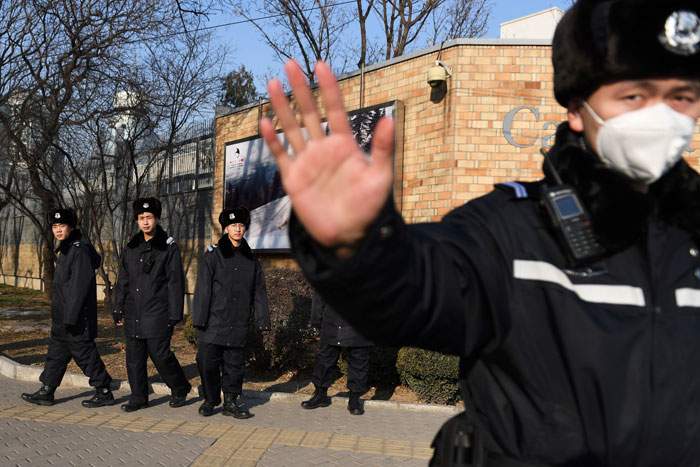
And while her extradition case to the US was moving forward, China detained two Canadian citizens and accused them of stealing state secrets. Critics say the detentions are linked to Ms Meng’s arrest.
December 2018: Chinese police patrol outside Canada’s embassy in Beijing
While not commenting on the arrest of the Canadians, Ren says China’s defence of Huawei is understandable.
“It is the Chinese government’s duty to protect its people,” he says. “If the US attempts to gain competitive edge by undermining China’s most outstanding hi-tech talent, then it is understandable if the Chinese government, in turn, protects its hi-tech companies.”
Over the past few years, there have been signs of a bigger push by the government to get private companies, and in particular tech firms, to cooperate with party rules – even when they are firmly resistant.
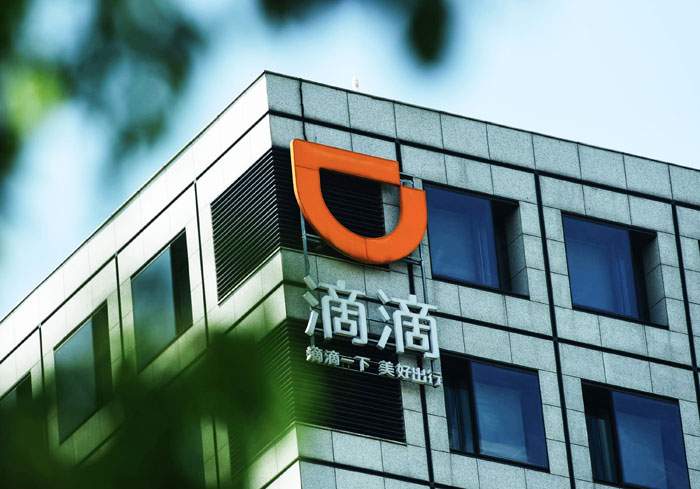
A Didi Chuxing logo adorns a building in Hangzhou, China
China’s ride-hailing giant Didi Chuxing’s troubles are an example of the struggles Chinese firms face when they try to uphold their independence in the face of government pressure.
Chinese attitudes to data collection and data privacy are different to those in the West – many people don’t care if businesses have access to their data, arguing that it adds to the convenience of life and work.
Government access to data in China is not the free-for-all that many outside of China assume it to be
Samm Sacks, CSIS
So it wasn’t unusual when, after the murders of two of its passengers by Didi drivers, regulators used the scandal to force Didi to share more corporate data with the government. But Didi resisted – citing customer privacy. Under Chinese law, it had no choice but to comply.
When it did, it handed over “three boxes of data printed on paper, including 95 hard copies for authorities to review”.
According to Samm Sacks of the Center for Strategic and International Studies (CSIS), the case demonstrates that “government access to data in China is not the free-for-all that many outside China assume it to be”.
She says this indicates that there appears to be “a kind of tug of war between the government and companies over data”.
How this plays out will determine how Chinese companies are viewed by foreign governments when they do business overseas.
Companies like Huawei have grown up in a system where to survive and thrive they needed strong links to the Chinese government – there was and is no other choice. But these links could harm their reputation abroad.
“It’s two different systems,” says Zaagman. “Think of it like an electrical outlet. China’s plug doesn’t fit in to the outlets we have in the West.”
What’s at stake
“Basically you want to connect to everything that can be connected.”
Zhu Peiying, head of Huawei’s 5G wireless labs, is showing off devices that can connect to the new technology. From a smart toothbrush that collects data about how well you brush your teeth, to a smart cup that reminds you when you should drink some water, this is a world where everything you can think of is being measured and analysed.
At its most sophisticated, everything in entire cities would be connected – driverless cars, the temperature of buildings, the speed of public transport – the list is endless.
Huawei is thought to be a year ahead of its competitors in terms of its technological expertise and what it can offer customers, according to industry sources.
It’s also thought that the company can offer prices that are about 10% cheaper than its competitors, although critics claim this is because of state support.
Ren dismisses this, saying that Huawei doesn’t receive government subsidies.
He says the real reason behind the US resistance to Huawei is its superior technology.
“There’s no way the US can crush us,” he says. “The world needs Huawei because we are more advanced. Even if they persuade more countries not to use us temporarily we could just scale things down a bit.”
Many analysts say that Huawei’s exclusion from US networks could actually cause the US to fall behind in its 5G capabilities.
“It would mean we wouldn’t be able to participate in any blended network [using Huawei] in Europe or Asia,” says Samm Sacks of CSIS. “That would put us at a significant disadvantage.”
What this would mean in reality is a world of two internets – or what analysts are calling a “digital iron curtain” – dividing the world into parts that do business with Chinese companies like Huawei, and those that don’t.
Because of US pressure on its allies, Huawei has been on an aggressive public relations campaign to win over customers and government stakeholders.
In recent days, Vodafone’s boss Nick Read called on the US to share any evidence it has about Huawei, while Andrus Ansip, the European Commission’s vice president for the digital single market, said in a tweet that he had met with Huawei’s rotating CEO to discuss the importance of being open and transparent, as they explored ways of working together.
But suspicions about Huawei remain.
One security firm reports a sharp rise in inquiries by Asian government clients about Huawei.
“Some have asked us how much they should worry about whether Huawei is really a liability,” says an analyst who consults to Asian governments, on condition of anonymity.
Ren is sanguine about such concerns.
“For countries who believe in them [suspicions about Huawei] we will hold off,” he says. “For countries who feel Huawei is trustworthy, we may move a little faster. The world is so big. We can’t walk across every corner of it.”
But this is about more than just one company or one CEO and his family.
Increasingly, this is perceived as a battle between two world orders, and which one is the future.
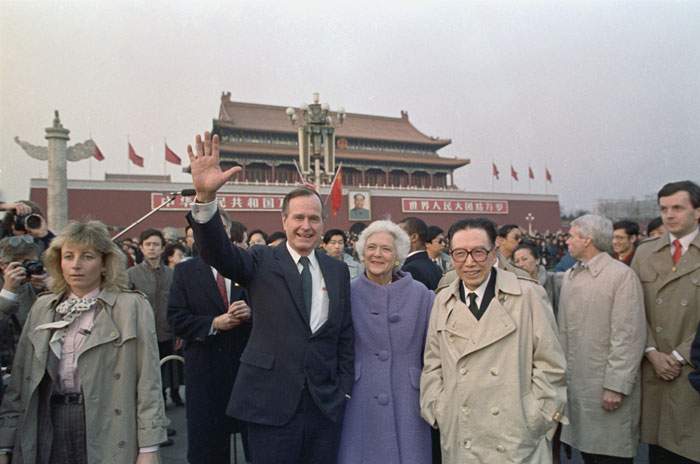
In the early days of China opening up, US presidents like George HW Bush espoused the merits of engagement.
“No nation on Earth has discovered a way to import the world’s goods and services while stopping foreign ideas at the border,” he said in a 1991 speech. “Just as the democratic idea has transformed nations on every continent, so, too, change will inevitably come to China.”
1989: George HW Bush in Beijing – he encouraged economic engagement with China
Previous US administrations believed that economic engagement in China would lead to China following a freer, more “liberal” path.
There’s no denying China has made remarkable strides in the past 40 years. The economy grew by an annual average of 10% for three decades, helping to lift 800 million people out of poverty. It is now the second-largest economy in the world, only surpassed by the US.
Some estimates put China’s economy ahead of America’s by 2030.
It achieved this while maintaining one-party rule and the supremacy of the Communist Party.
But its success has raised concerns that it is only possible with a huge amount of government control over the country’s companies. The fear is that control could be used to achieve the Communist Party’s goals – which are at this point unclear.
“It’s a double-edged sword for China,” says Danielle Cave. “[Because of its laws] the Chinese Communist Party has made it virtually impossible for Chinese companies to expand without attracting understandable and legitimate suspicion.”
Added to this, China has become more authoritarian under Xi Jinping’s rule.
President Xi Jinping
“Xi is systematically undermining virtually every feature that made China so distinct and helped it work so well in the past,” writes Jonathan Tepperman, editor in chief of Foreign Policy.
“His efforts may boost his own power and prestige in the short term and reduce some forms of corruption. On balance, however, Xi’s campaign will have disastrous long-term consequences for his country and the world.”
But Ren dismisses this, insisting that China is more open than ever before.
“If this meeting took place 30 years ago,” he says of our interview, “it would have been very dangerous for me. Today, I can be straightforward when answering difficult questions. This shows that China has a more open political environment.”
Still, Ren is hopeful of the direction China will take in the future.
“China has more or less tried to close itself off from the outside world for 5,000 years,” he says. “Yet we had found ourselves poor, lagging behind other nations. It was only in the past 30 years since Deng Xiaoping opened China’s doors to the world that China has become more prosperous. Therefore, China must continue to move forward on the path of reform and opening-up.”
In one of Huawei’s vast campus sites across Shenzen, lies a man-made lake. Swimming in these serene waters are two black swans.
There is a story that Ren put the birds here to remind employees of “black swan” events – unpredictable and catastrophic financial eventualities that are impossible to prepare for. He dismisses this as an urban myth, but it’s hard not to read something into it.
For Huawei, and Ren, these are highly uncertain times with no way of telling what lies ahead.









 CHINDIA ALERT: You'll be living in their world, very soon