Chindia Alert: You’ll be Living in their World Very Soon
aims to alert you to the threats and opportunities that China and India present. China and India require serious attention; case of ‘hidden dragon and crouching tiger’.
Without this attention, governments, businesses and, indeed, individuals may find themselves at a great disadvantage sooner rather than later.
The POSTs (front webpages) are mainly 'cuttings' from reliable sources, updated continuously.
The PAGEs (see Tabs, above) attempt to make the information more meaningful by putting some structure to the information we have researched and assembled since 2006.
SRINAGAR, India (Reuters) – Tensions in disputed Kashmir after a deadly suicide bombing earlier this year are having a severe impact on human rights in the region, a United Nations report released on Monday said.
Muslim-majority Kashmir is claimed in full by India and Pakistan, who both rule it in part and have fought two wars over the territory. They came close to a third in February after the suicide bombing of a convoy claimed by a Pakistan-based militant group killed 40 paramilitary police.
India accuses Pakistan of funding these groups, who want independence for Indian-administered Kashmir, a claim Islamabad denies.
The report, by the U.N. Human Rights Council, says that arbitrary detentions during search operations by Indian troops are leading to a range of human rights violations.
Despite the high numbers of civilians killed in the vicinity of gun battles between security forces and militants, “there is no information about any new investigation into excessive use of force leading to casualties”, it said.
The report was also critical of special legal regimes used by India in Kashmir, saying accountability for violations committed by troops remains virtually non-existent.
The report says that in nearly three decades that emergency laws have been in force in Jammu and Kashmir, there has not been a single prosecution of armed forces personnel granted by the central government in a civilian court.
It called for the repeal of special powers protecting troops from prosecution.
The United Nations also flagged a spike in hate crimes against Kashmiris in the rest of India following the February attacks, calling on India to do more to prevent the violence.
In response, India’s Foreign Ministry spokesman Raveesh Kumar said the report presented a “false and motivated narrative” on the state of the region.
“Its assertions are in violation of India’s sovereignty and territorial integrity and ignore the core issue of cross-border terrorism,” Kumar added in a statement.
Though the majority of the allegations in the report pertain to Indian-administered Kashmir, it was also critical of Pakistan for detentions of separatists in its portion of the region.
A spokesman for the Pakistan embassy in New Delhi did not immediately respond to a request for comment.
Rahul Gandhi, who had fronted the opposition campaign against Prime Minister Narendra Modi, has owned responsibility for the crushing defeat at the meeting.
LOK SABHA ELECTIONSUpdated: May 25, 2019 14:07 IST
HT Correspondent
Hindustan Times, NewDelhi
Seated next to Rahul Gandhi as he shared his brief analysis of the election is UPA chairperson Sonia Gandhi (Sanjeev Verma/ HT Photo)
Congress president Rahul Gandhi on Saturday is leading a review of his party’s devastating performance in the Lok Sabha elections at a meeting of the Congress Working Committee, or CWC.
Rahul Gandhi, who had fronted the opposition campaign against Prime Minister Narendra Modi, has owned responsibility for the crushing defeat at the meeting. Seated next to Rahul Gandhi as he shared his brief analysis of the election is UPA chairperson Sonia Gandhi and former Prime Minister Manmohan Singh. Sister Priyanka Gandhi Vadra, former minister P Chidambaram and Congress’s leader in the outgoing Lok Sabha Mallikarjun Kharge was also present.
Television channels initially said Rahul Gandhi had offered to resign at the CWC which was rejected by the top panel but later put out a clarification. Three senior Congress including Uttar Pradesh unit chief Raj Babbar, HK Patil, who was tasked to oversee the Karnataka Congress campaign and Odisha Congress chief Niranjan Patnaik have resigned after the election debacle.
The Congress won just about 52 seats in the Lok Sabha in this round of national elections, a shade better than its worst performance ever, in the 2014 elections, when it ended up with 44 seats.
Congress leaders have indicated that the CWC could go for a deeper analysis of the election outcome that goes beyond the obvious. Some drastic action could also follow.
Senior Congress leaders assembled at the party’s Working Committee meeting in New Delhi.
For now, the Congress’s top priority is to get the party fighting fit in Maharashtra, Haryana and Jharkhand that will head to assembly elections later this year. Assembly elections in Jammu and Kashmir are likely to be held anytime soon and Delhi will go to the polls in February next year.
The party chiefs in many states are likely to be replaced and new teams put in place within a week or two. This will be in line with a realisation in the Congress that a revival at the national level is possible only when the party resurrects itself in the states.
Some new general secretaries and in-charges of states are also expected to be appointed soon.
Gandhi had made it clear at an unusually brief news conference after the poll verdict came on Thursday that the party was determined to fight back. “Have faith and we will work and sort this out in the time to come,” Gandhi said, his message to party workers and supporters. “Love never loses, and I am certain that we will emerge stronger and work better… love will guide us.
The Congress which did not get the post of the Leader of Opposition in the Lok Sabha in 2014 may not get it this time also. A party should get 10 per cent, or 55 of the 543 Lok Sabha seats, to be entitled to the Leader of Opposition designation for its leader.
Rahul Gandhi has already taken responsibility for the party’s performance in the Lok Sabah elections but hasn’t elaborated on the next step yet.
Women make up nearly half of India’s 900 million voters, but they are still poorly represented in the country’s law-making bodies. One political party is trying to correct the balance by nominating 41% female candidates. The BBC’s Geeta Pandey travelled to the state of West Bengal to see how they are faring.
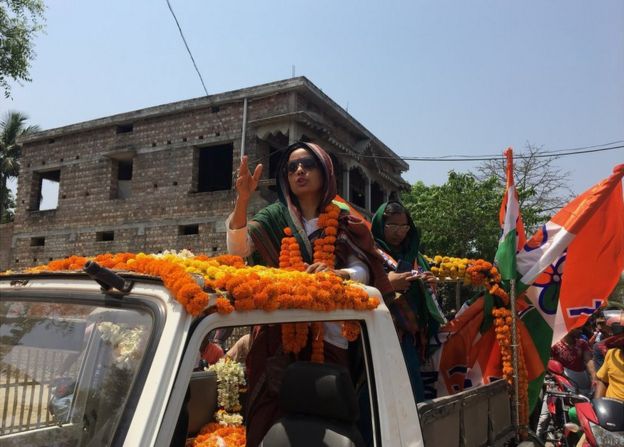
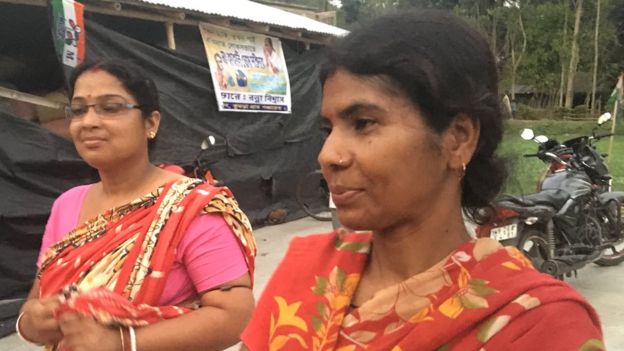
On a bright sunny morning, as an open jeep decorated with bright yellow and orange flowers hurtles along the dirt track from one village to the next, women in colourful saris and men rush to greet Mahua Moitra.
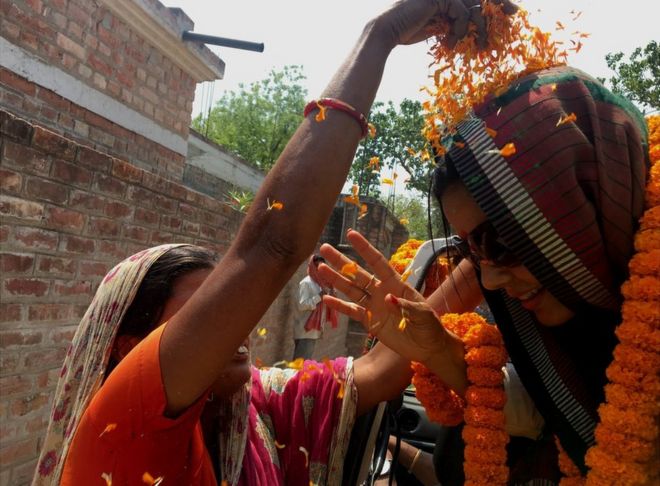
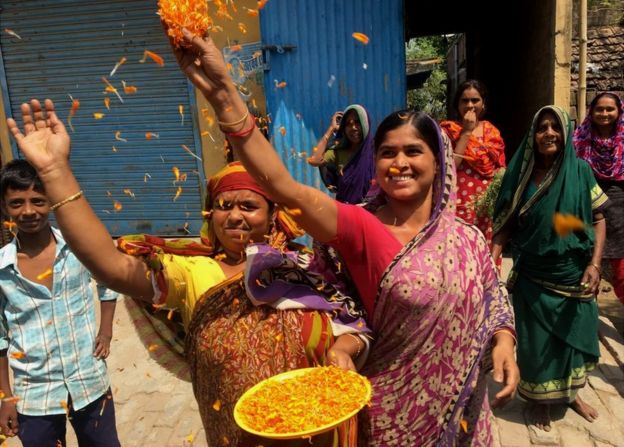
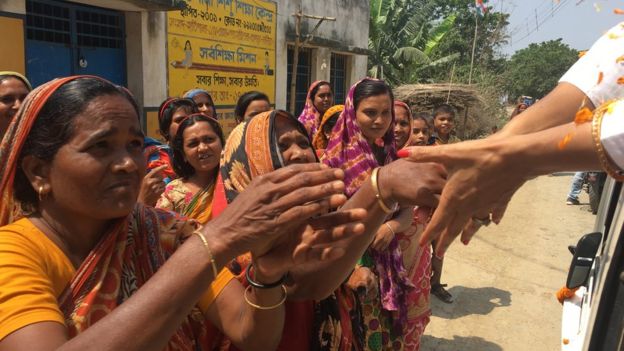
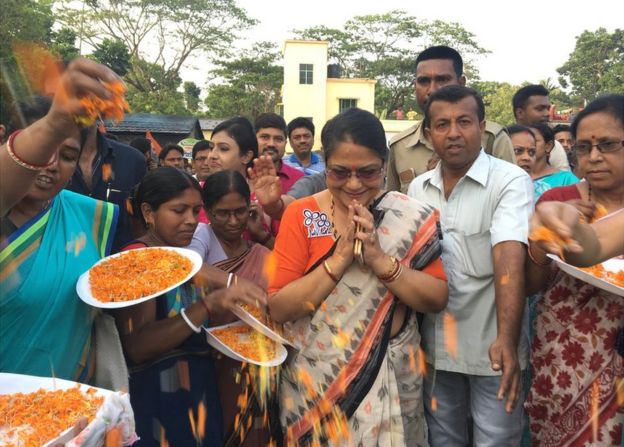
They shower bright orange marigold petals on her, place garlands around her neck and many reach out to shake and kiss her hands. She waves at them, greeting them with her palms joined: “Give me your blessings.”
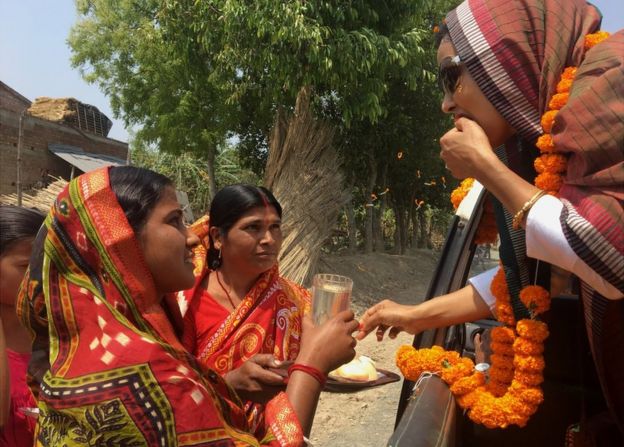
Young men and women whip out their smartphones to take photos and selfies. On the way, she’s offered coconut water and sweets.
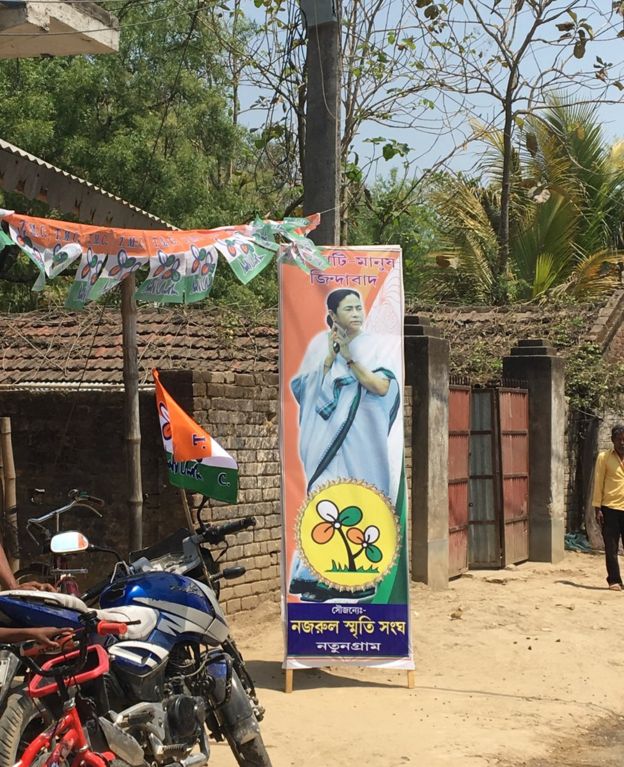
Ms Moitra, who is contesting the general election as a candidate of the state’s governing Trinamool Congress Party (TMC), is campaigning in her constituency Krishnanagar.
Image caption On the campaign trail, women offer coconut water and sweetsImage caption Supporters throw marigold petals at Mahua Moitra
In one village, party workers tell her about an old man who’s too ill to come to meet her, so she walks to his home to greet him.
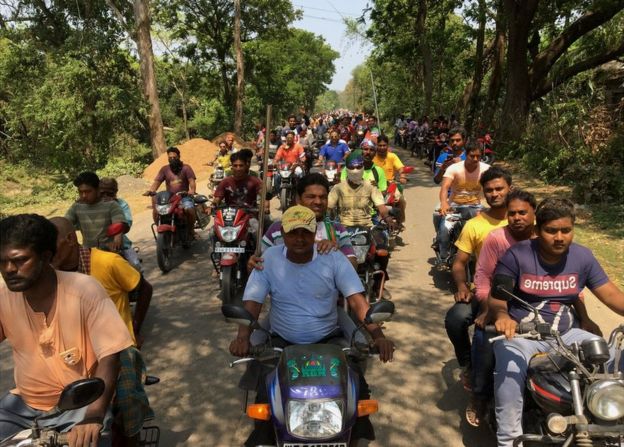
Her jeep is followed by dozens of bikes and their riders, all young men, chanting slogans like “Long live Trinamool Congress, Long live Mamata Banerjee.”
The loud, colourful procession is led by a small truck, fitted with loudspeakers, from which announcements asking people to vote for Ms Moitra are played on a loop.
With the election season well under way in India and political leaders criss-crossing the length and breadth of the country, addressing rallies, I’m travelling across the country to see if the high-decibel campaigns are addressing the real issues that actually affect millions of people. One of them is getting more women into parliament.
A bill to reserve 33% of seats for women in parliament and regional assemblies has been pending since 1996, so the decision by the TMC – led by West Bengal Chief Minister Mamata Banerjee – to give 41% of her party nominations to women has created a huge buzz.
Image caption Ms Moitra quit her banker’s job in London to return to India and enter politics
Ms Banerjee, who set up the TMC in 1998 after falling out with the Congress party, is a feisty politician who was named one of Time magazine’s 100 most influential people in the world in 2012.
Her female candidates, says my BBC Bengali colleague Subhajyoti Ghosh, are an “interesting mix” of career politicians and first-timers. They include actors, doctors, a tribal activist and the 25-year-old widow of a recently-murdered politician.
Ms Moitra, the TMC’s national spokesperson and a member of the state assembly since 2016, is among 17 women who have made it to the party’s list of 42 general election nominees.
A former investment banker with JP Morgan, she gave up a well-paying job in London in 2009 to return to the heat and dust of Indian politics.
Her decision left her family aghast. Her parents, she told me, thought she was “insane”. Some party workers too had their doubts – “she’s a memsahib”, they said at the time, “she won’t survive”.
Image caption Mamata Banerjee was named one of Time magazine’s 100 most influential people in the world in 2012But she has survived – and thrived. In 2016, she won the Karimpur assembly seat that no non-Left party had won since 1972 and has now set her eyes on the national parliament.
She’s agreed to let me follow her on the campaign trail, so for two days I’ve been a “fly on the wall” – standing behind her in her jeep, travelling in her car, watching her strategise with party workers, aides and confidants.
The previous evening, I had watched her be the chief guest at a college cricket match and address a gathering at the local market in Plassey.
A four-hour drive from Kolkata, Plassey is the site of the famous 1757 battle between the British East India Company and the local ruler supported by the French.
Image caption Her jeep is followed by dozens of supporters on bikesImage caption Many women reach out to shake hands with Ms Moitra
“What’s the point of saying you killed all those terrorists in Pakistan? It’s not important who you killed in Pakistan or how many. What’s important is you failed to protect our soldiers.”
She talks about how the government has failed to create jobs and accuses the BJP of trying to divide Hindus and Muslims.
“You have taken away our livelihoods and you’re trying to teach us about [the Hindu god] Ram and [Muslim saint] Rahim? I don’t have to write my religion on my forehead,” she declares to loud claps from her supporters.
Elections in the past were to change the government, she says, but this election is to save the constitution of India. “It is no ordinary vote.”
Her main rival is the BJP’s Kalyan Chaubey, a former footballer who played in goal for India. So drawing a football analogy, she declares: “I’m an A-league centre-forward player, stop my goal if you can. I am here to win.”
Kakoli Ghosh Dastidar, a founder member of the TMC and two-term MP, says to nominate so many women is part of a “continuous process” followed by Mamata Banerjee because “you can’t develop a society without uplifting the status of its women”.
In the last general election in 2014, she points out that the party nominated 33% women and 12 of their 34 MPs in the outgoing lower house were women.
Ms Banerjee, she says, believes that gender sensitive laws will come only if more women are in power.
At a campaign rally that Dr Ghosh Dastidar addresses in Kumhra Kashipur village in her constituency Barasat, women are seated in the front rows.
Their opinion though is divided over whether having more women in parliament will actually benefit other women.
Image caption Dr Kakoli Ghosh Dastidar is among the founder members of the TMC and a two-term MP
Supriya Biswas says it’s easier if their MP is a woman because then it’s easier to approach her. “For, who can understand a woman better than a woman?”
Archana Mallick and Meena Mouli, who live just across from the rally ground, point to the broken roads near their homes and complain about poor medical facilities in their village. They say that the candidate’s gender is “inconsequential” and what’s important is “who works for our benefit”.
Saswati Ghosh, professor of economics at Kolkata’s City College, says that politics in India is “still very patriarchal” and it’s “absolutely necessary” to elect more women MPs.
“It is important to have more women in lawmaking bodies because I think after a certain number, you’ll reach the threshold level and that will lead to change. I don’t know if 33% is the magic number that will change the quality of discourse, maybe 25% can do the trick?”
Image caption Archana Mallick and Meena Mouli say a candidate’s gender is “inconsequential”
Critics, however, question whether celebrities are the right candidates to bring about that change.
Prof Ghosh says actors and celebrities make for “winnable candidates” and that’s why all parties choose them even though sometimes they may not be the right candidates to reach that threshold.
But, she says that Ms Banerjee is a strong leader who’s regarded by many women as “a role model who inspires more women to come into politics”.
And that’s something that many Indians think the country sorely needs.
In their manifestos, the main opposition Congress party has promised to pass the women’s reservation bill, if elected to power. So has the ruling Bharatiya Janata Party, although it had made similar promises in its last manifesto and did nothing about it.
By allotting 41% seats to women, Ms Banerjee has shown that one doesn’t need to set artificial quotas to elect more women.
India has suspended trade across the Line of Control in Jammu and Kashmir with effect from Friday. The Ministry of Home Affairs issued the order to this effect on Thursday.
INDIAUpdated: Apr 18, 2019 20:20 IST
HT Correspondent
Hindustan Times, New Delhi
The Home Ministry said reopening of Line of Control trade will be revisited after placing a stricter regulatory and enforcement mechanism in place.(HT file photo)
India suspended trade across the Line of Control in Jammu and Kashmir over concern that the route was being misused by Pakistan-based elements to smuggle weapons, narcotics and fake currency, the Ministry of Home Affairs said on Thursday. New Delhi said the Centre will revisit the decision to suspend LoC trade at Jammu and Kashmir’s Salamabad and Chakkan-da-Bagh after putting in place a stricter regulatory and enforcement mechanism.
Cross-LoC trade is meant to facilitate exchange of goods of common use between local populations across the LoC in Jammu & Kashmir. The trade is allowed through two Trade Facilitation Centres located at Salamabad, Uri, District Baramulla and Chakkan-da-Bagh, District Poonch. The trade takes place four days a week. The Trade is based on Barter system and zero duty basis.
The home ministry decision comes after the federal anti-terror probe agency National Investigation Agency told the government that a “significant number of trading concerns engaged in LoC trade” were linked with banned terror organisations involved in fuelling terrorism”.
“Investigations have further revealed that some individuals, who have crossed over to Pakistan, and joined militant organizations have opened trading firms in Pakistan. These trading firms are under the control of militant organizations and are engaged in LoC trade,” a home ministry statement said.
The home ministry said there were also inputs to indicate the LoC route is likely to be misused to a “much larger extent” to evade higher duties after India withdrew the most favoured nation to Pakistan.
Relations between India and Pakistan have been under strain since Pulwama terror attack in February when 40 jawans of the Central Reserve Police Force were killed on Jammu-Srinagar highway.
The cross-LoC trade between Jammu and Kashmir and Pakistan-occupied Kashmir had resumed on Tuesday after nearly two weeks. The trade and travel across the LoC had been suspended on April 1 in the wake of heavy shelling from the Pakistani side. Three people including a Border Security Force officer, a woman and a five-year-old girl died in Poonch.
The relation between India and Pakistan has been under strain since Pulwama terror attack in February when 40 jawans of the Central Reserve Police Force were killed on Jammu-Srinagar highway.
Trade and travel across the LoC had been suspended on April 1 in the wake of heavy shelling from the Pakistani side. Three people including a Border Security Force officer, a woman and a five-year-old girl died in Poonch.
The cross-LoC trade between Jammu and Kashmir and Pakistan-occupied Kashmir had just resumed on Tuesday after nearly two weeks.
Beijing also rejected the report that the US, the UK and France asked China to lift the technical hold on Azhar by April 23, failing which they will move a formal resolution for discussion, vote and passage at the UN Security Council (UNSC).
WORLDUpdated: Apr 17, 2019 15:31 IST
Indo Asian News Service
Beijing
China on Wednesday said the issue of blacklisting Pakistan-based terrorist Masood Azhar at the UN panel was heading towards a settlement and asked the US not to force through its own resolution on the matter.(AP)
China on Wednesday said the issue of blacklisting Pakistan-based terrorist Masood Azhar at the UN panel was heading towards a settlement and asked the US not to force through its own resolution on the matter.
Beijing also rejected the report that the US, the UK and France asked China to lift the technical hold on Azhar by April 23, failing which they will move a formal resolution for discussion, vote and passage at the UN Security Council (UNSC).
“On the issue of the listing of Masood Azhar, China’s position remains unchanged. We are also having communication with relevant parties and the matter is moving towards the direction of settlement,” Chinese Foreign Ministry spokesperson Lu Kang said here.
Asked to elaborate further, Lu did not answer clearly.
“The matter is now moving in the direction of settlement. As to the specifics for the discussion in the 1267 committee, there are clear procedures and regulations regarding UNSC and its subsidiary bodies. We think members should follow and abide by such procedures.”
He was responding to a question whether anything was achieved after China claimed “positive progress” on the issue of declaring Azhar a terrorist.
China in the past has put four technical holds on the resolutions by India, the US, the UK and France to ban Azhar at the UN 1267 sanctions committee.
Beijing’s latest technical hold came last month after Azhar’s outfit claimed responsibility for the deadly attack in Jammu and Kashmir that killed 40 Indian military personnel in February.
This prompted the US to draft a new resolution and take it directly to the Security Council for an informal discussion. Beijing slammed the move, saying this will complicate matters when some progress has already been achieved.
Lu again reiterated it when asked if China will support such a resolution in the Security Council.
“Regarding what you said relevant parties are forcing a new resolution through the Security Council. We firmly oppose that. In relevant discussions, most members expressed that this issue should be discussed within the 1267 committee and they don’t hope to bypass the 1267 committee to handle the issue.
“We hope the relevant country can respect the opinions of most members of the Security Council to act in a cooperative manner and to help resolve this issue properly within the framework of the 1267 committee,” he added.
Asked if Beijing has been set a deadline of April 23 to lift the technical hold on resolution banning Azhar at the 1267 committee, Lu said: “I don’t know from where you get such information, but the Security Council and it’s subsidiary bodies like the 1267 committee, they have clear rules of procedures and you have to seek clarification from those sources.”
“China’s position is very clear. This issue should be resolved through cooperation and we don’t believe that any efforts without the consensus of most members will achieve satisfying results.”
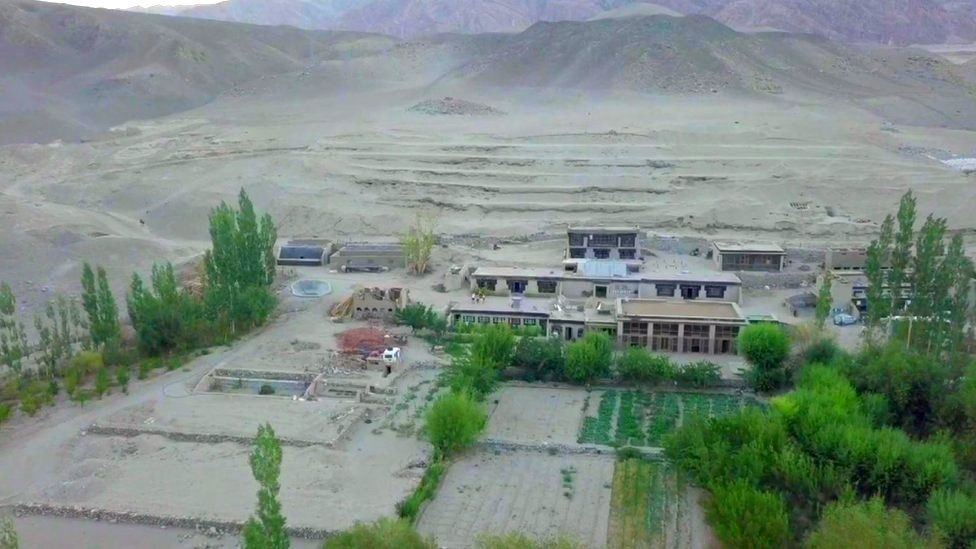
Image captionThe school’s surrounding mountainous landscape is almost devoid of vegetation as it is above the tree line
Secmol is a school pioneering practical green education in one of the world’s harshest environments.
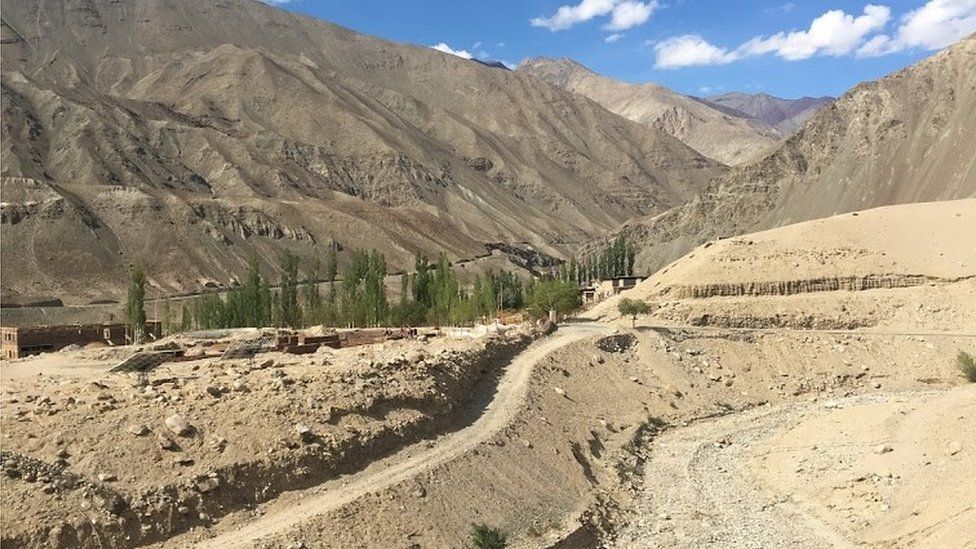
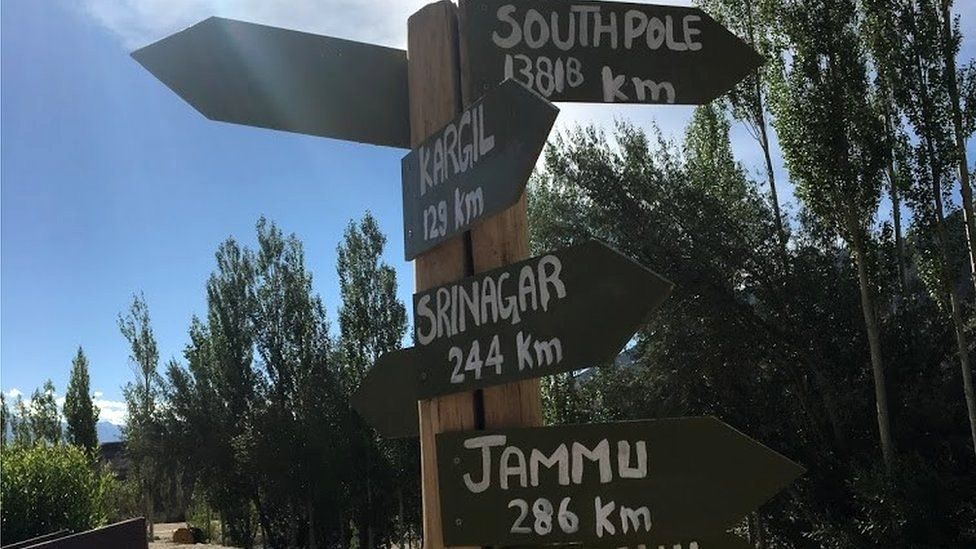
Its campus is perched nearly 11,000ft (3,350m) up in the pre-Himalayan mountains along the Indus River in Ladakh, in the Indian state of Jammu and Kashmir.
The teenage pupils at Secmol (Students’ Educational and Cultural Movement of Ladakh) lack wi-fi and almost all phone coverage, in an area only accessible by air during the long harsh winter when deep snow renders roads out of the province impassable.
The surrounding mountainous landscape is almost devoid of vegetation as it is above the tree line.
Image copyrightSUMEDH CHAPHEKAR
The school even sets its own time zone to maximise sunlight, which also reminds every student and visitor that when they pass the gates they are entering a different world.
Pupils are all from the regular Ladakhi school system and only those who have failed their year 10 exams are permitted to attend. There are also a number of university students who form a core part of the community along with the teachers.
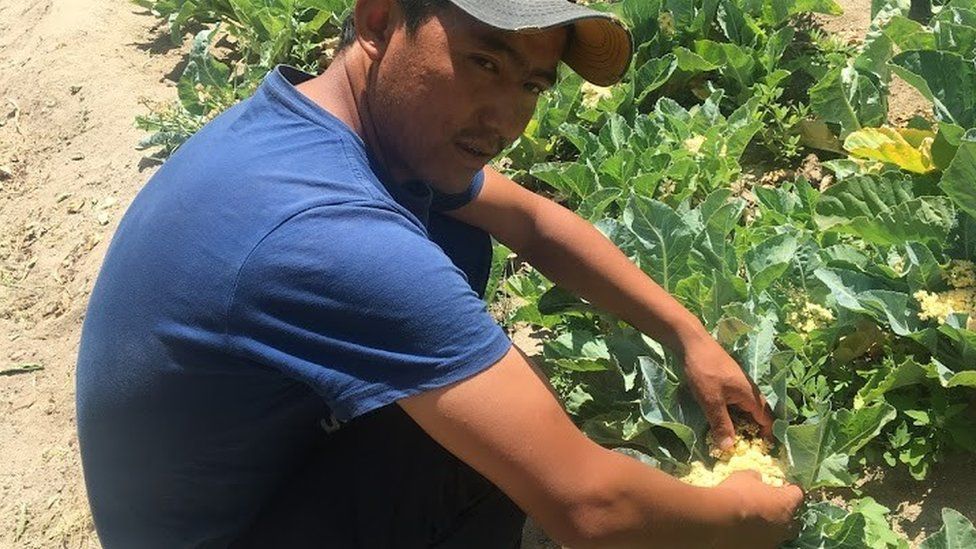
School director Konchok Norgay explained to the BBC that the students learn about the environment for an hour or two each day.
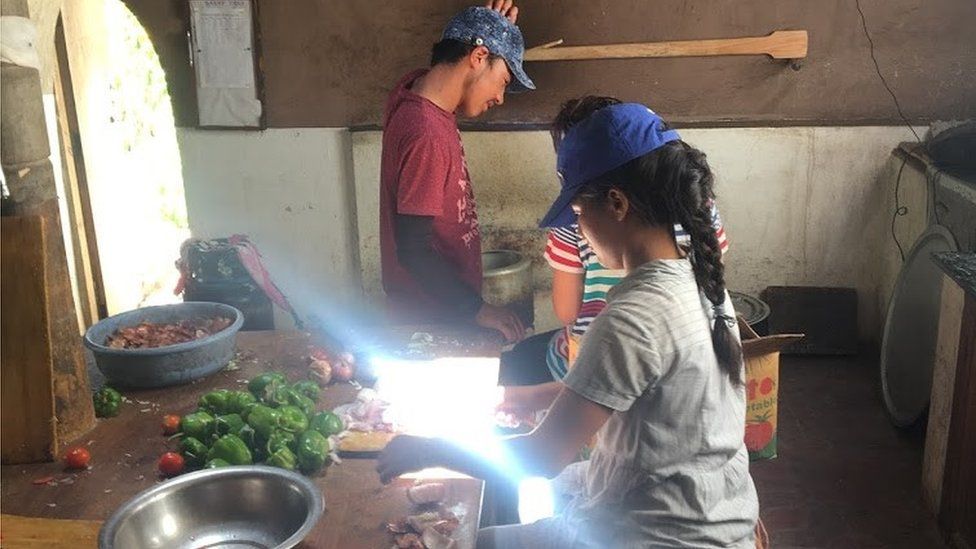
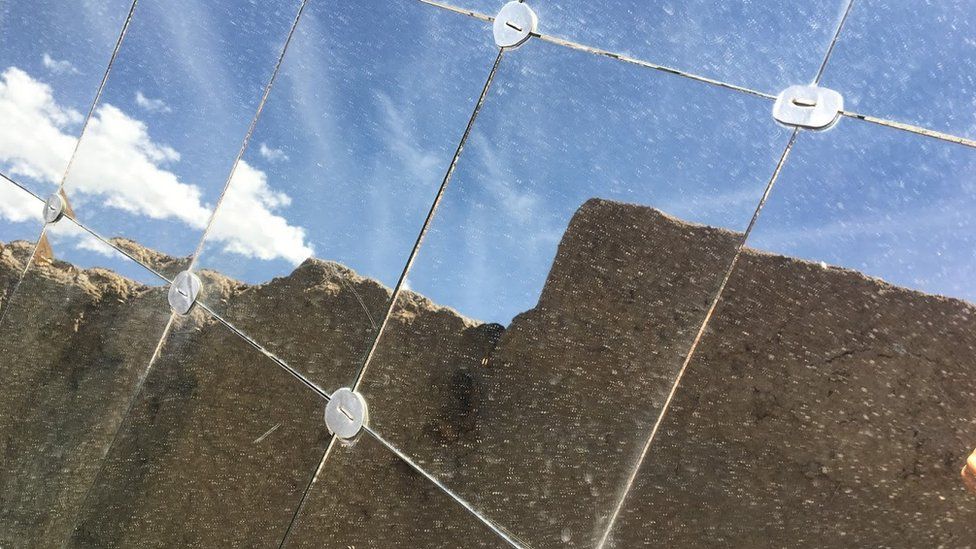
In a typical maths lesson, they may calculate if the water from the spring is enough for tree planting, or work out the efficiency of the solar cooker that they use for heating water.
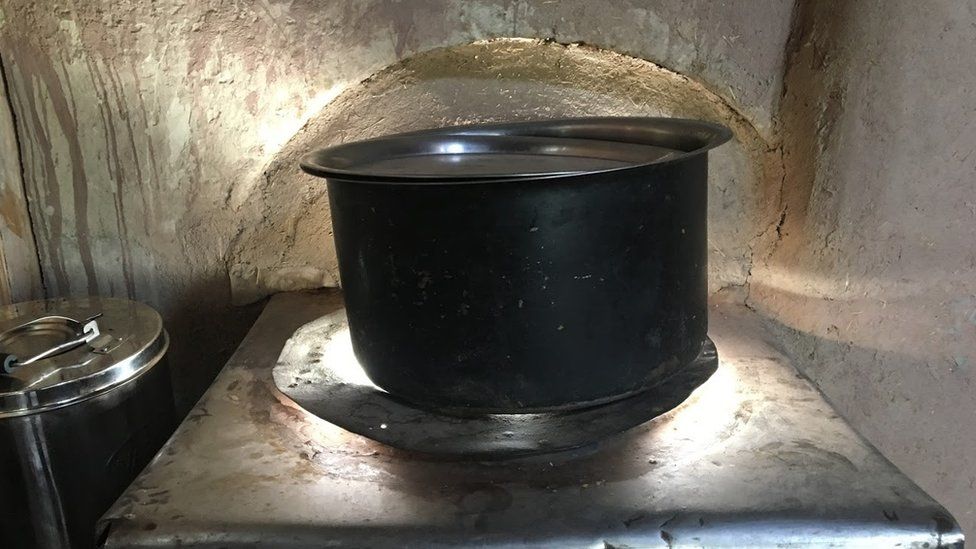
The solar cooker looks impressive, with mirrors crafted to catch the harsh sunlight, focusing their power to create intense heat.
But it is currently only used to boil water for tea.
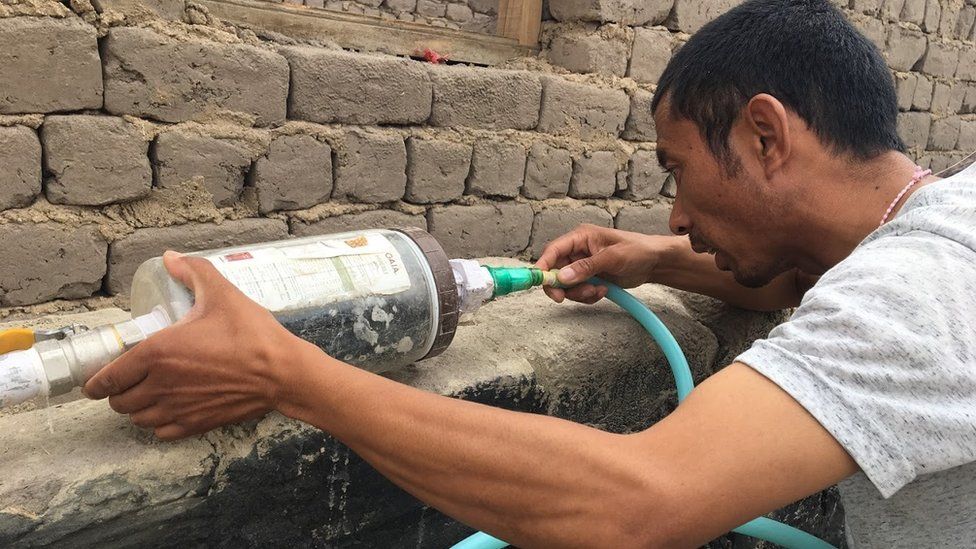
Norgay proudly showed off his experimental biogas methane digester, which is powered by slurry.
Dung is mixed with water and then placed in a long tube and left for several days.
The gas rises to the top, and is filtered through steel wool to ensure the gas does not corrode the oven, before reaching a plastic inflatable reserve tank.
“It’s fantastic as not only do you use less commercial gas, but you use natural materials instead,” student Stanzin Sungrab says. “And we can use the slurry waste as fertiliser in the kitchen garden.”
Each student must perform daily responsibility shifts and develop their confidence with nightly presentations to the rest of the school and visitors.
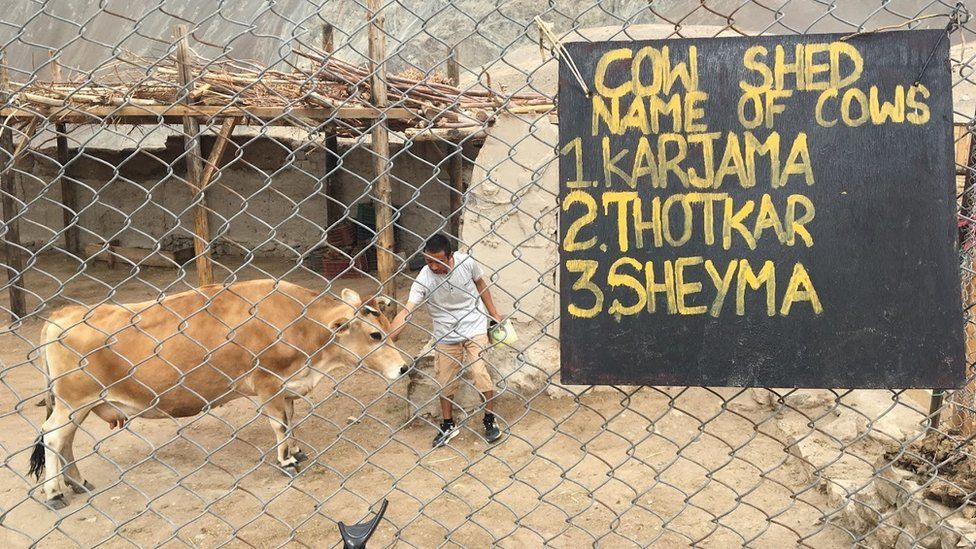
Stanzin has spent many hours developing relationships with Karjama, Thotkar and Sheyma, the campus cows.
When students are not on the 04:00 breakfast preparation shift, the day starts at 07:00 with a seven-minute group meditation.
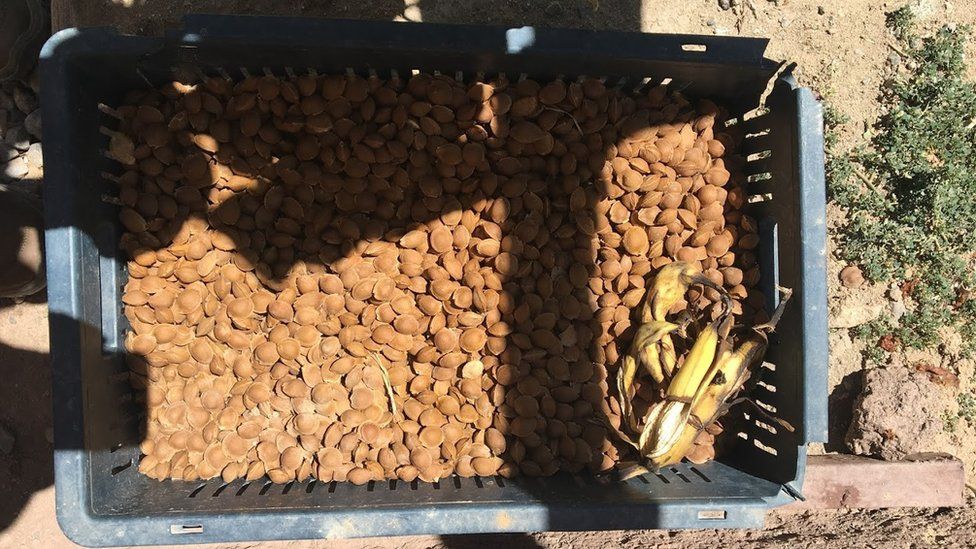
Students are encouraged to focus on goals for the day over a meal of cold roti bread and homemade apricot jam.
The apricot stones are sent to a neighbouring monastery, where the kernels are recycled into apricot oil.
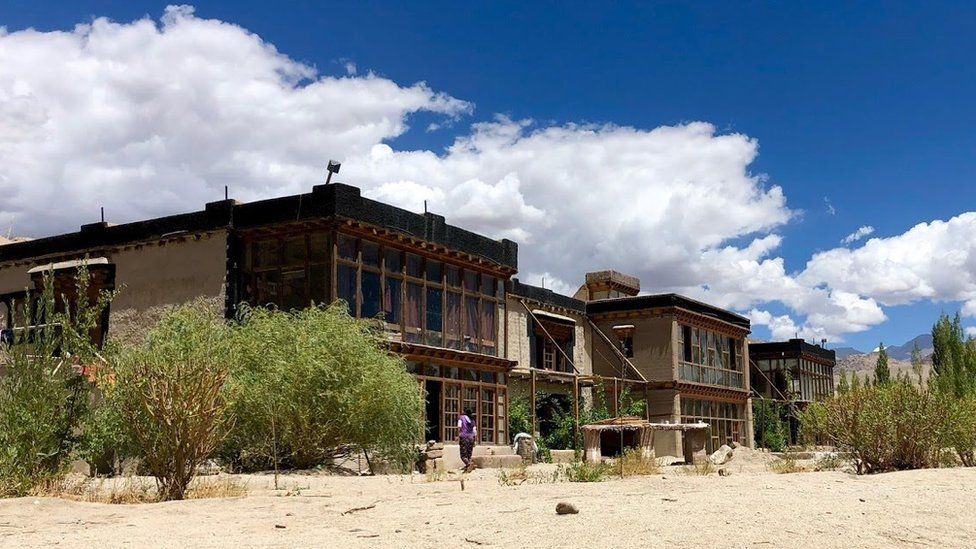
Innovation is hard-wired into the architecture of the campus, challenged by an environment where winter temperatures typically reach -15C to -25C, and summer can often peak at 30C.
Ladakh has longstanding environmental credentials – even if the recent sprouting of large concrete hotels and increasing pollution in the capital Leh are challenging its green record.
“We banned plastic bags here 30 years ago,” says Sonam Gatso, who operates a local green organisation.
Sonam also believes local Buddhist culture helps promote environmental awareness. “We try to be compassionate as we believe in Karma – cause-and-effect. If you do wrong to anyone else or the environment, wrong will come to you.”
Secmol is an impressive school, but how far can its lessons extend beyond its innovative but isolated campus?
Urgain Nurbu, a former Secmol student who is now living on campus again, has been so inspired by what he learnt that he organised an environmental youth camp in his remote village.
The camp-goers make rain jackets from old plastic, and Urgain invites environmental speakers to inspire the young people.
One graduate has started her own eco-travel company, another makes environmentally-themed films.
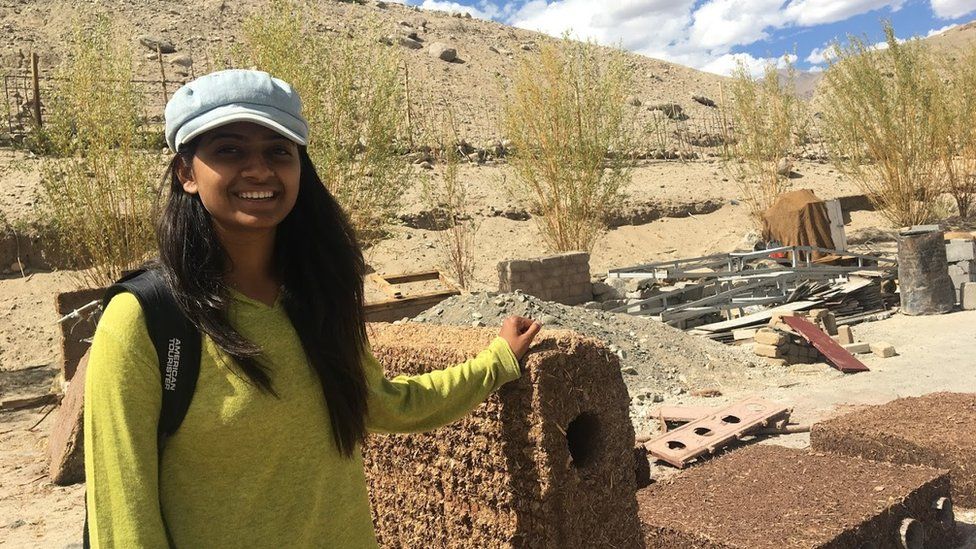
Shara, an architectural student, is now experimenting with creating pre-fabricated building blocks from mud, wood shavings and straw.
She is part of a team designing a new university in the area which plans to teach eco-tourism and green architecture, scaling the influence of ideas nurtured in Secmol’s pioneering atmosphere.
For now, the school’s impact is achieved by transforming individual mindsets to create a sense of shared responsibility.
“My grandfather told me how quiet and beautiful our village used to be and there were fish in the river,” student Padma Doma told the BBC.
“That’s why it’s so important to me to protect our precious environment. In the future, maybe it can be like that again.
“I want to go home and convince my family to segregate their garbage. Will they listen? Perhaps not, but I will try, and if I see somebody throwing away a packet, I will pick it up.”
Stanzin feels this is “a really critical time for our planet”.
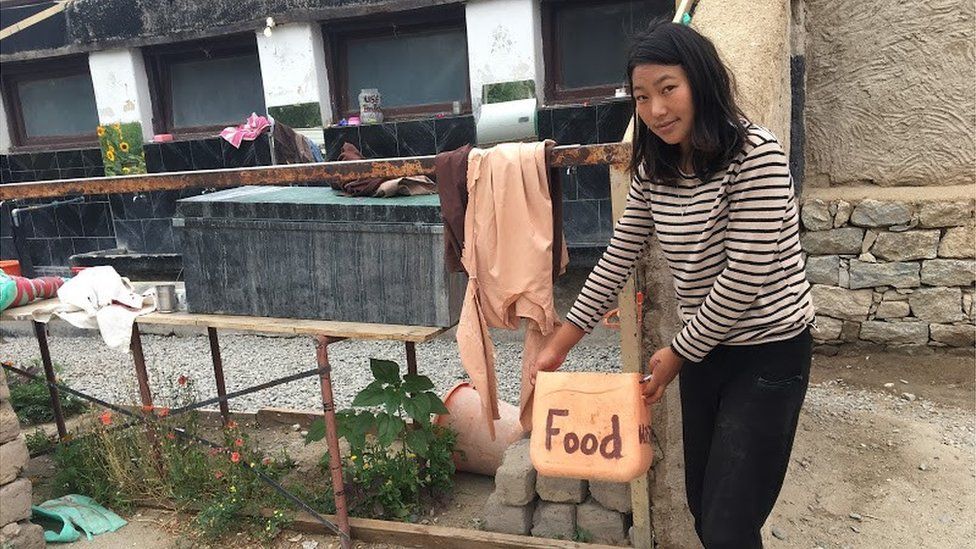
“In our homes we throw away garbage but here we recycle. In our homes we throw away plastic but here we use it for insulation.”
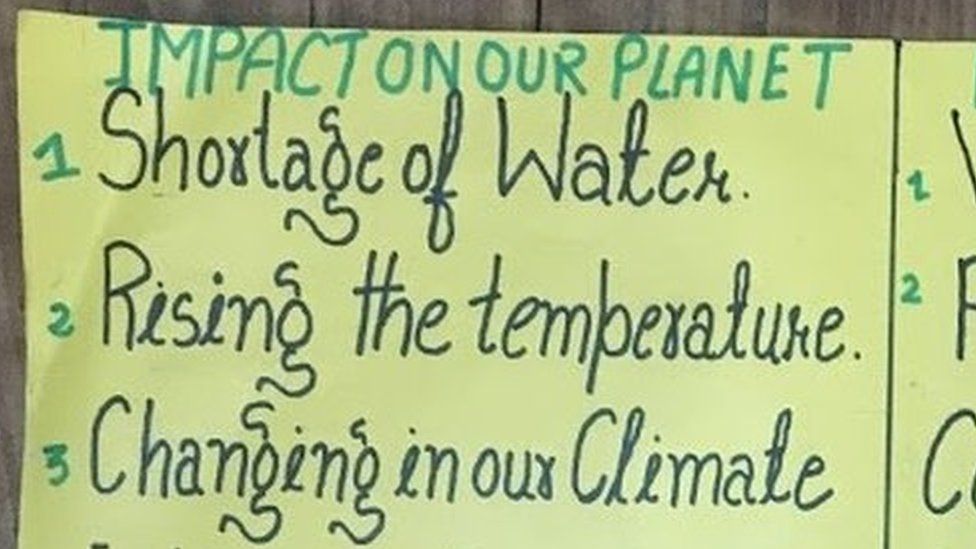
As the environment is so harsh, Ladakhis are very conscious of subtle changes in the weather, and have become increasingly aware of climate change, he says.
“Last year, we didn’t have much snow so there’s not enough snowmelt in the springtime. Because we are so high up and everything must be treasured, you learn to understand the value of the smallest drop of water.”
All photos Emily Kasriel unless indicated. Subject to copyright.
The bonhomie witnessed between India and China over the last one year after the informal summit between Prime Minister Narendra Modi and Chinese President Xi Jinping in Wuhan April last year has clearly evaporated following the Chinese action
Even as China asserted on Thursday that the ‘Wuhan Spirit’ was still on, there is a sense of betrayal in New Delhi over Beijing’s decision to stand by its ‘all-weather friend’ Pakistan by blocking the designation of JeM chief Masood Azhar as a global terrorist by the UN Security Council.
The bonhomie witnessed between India and China over the last one year after the informal summit between Prime Minister Narendra Modi and Chinese President Xi Jinping in Wuhan April last year has clearly evaporated following the Chinese action.
Amid the growing clamour in India for boycotting China after it used its veto power to block listing of Masood Azhar as a global terrorist, New Delhi has expressed disappointment over Beijing’s move while reaffirming its determination to pursue all avenues to bring the JeM chief to justice for terror attacks in different parts of India.
A number of reasons, including the significant role Pakistan plays in China’s ties with the Islamic world and Beijing’s anxiety over spill-over effect of a ban on Azhar in China’s own restive Muslim-dominated Xinjiang region, could have played a role in Beijing deciding to yet again stonewall any action by the UNSC against the JeM chief, observers say.
Despite its burgeoning trade relationship with India, China has never hidden the fact that it needed Pakistan more than any other country for achieving its geo-strategic goals in the region. Pakistan’s importance for China has increased manifold in recent years in view of the heavy economic and manpower investments it has made in the China-Pakistan Economic Corridor (CPEC) as part of President Xi’s signature Belt and Road Initiative (BRI).
Sources said it was quite clear to New Delhi over the past few days that China was adopting double standards in the global fight against terrorism only to shield Pakistan. China, they said, could no longer take shelter under ‘lame excuses’ like India had not provided any ‘updated material’ on Azhar’s terrorist activities in India which could compel Beijing to reconsider its position on the JeM chief.
Sources pointed out that India had submitted to China and other key nations ‘clinching and irrefutable’ evidence linking JeM to terror attacks in India, including the Pulwama attack. All other members of the UNSC, including those in the non-permanent category, solidly backed India’s effort to get the JeM chief banned but China put a spanner in their works yet again, they regretted.
The US, meanwhile, said responsible UNSC members might be forced to other actions at the Security Council if Beijing continued to block Masood’s designation.
China’s veto against banning Masood Azhar has once again highlighted the deep-rooted suspicion and mistrust between India and China on strategic issues, particularly the fight against terrorism. Despite pledging to work with India in combating terror, China has done precious little to assuage India’s concerns over terrorism emanating from Pakistan.
China has, in fact, praised Pakistan on many occasions for its role in the global war against terrorism. Beijing’s contention has been that Pakistan itself has been one of the main victims of terrorism and it must be supported in combating the menace.
There is also a feeling in Chinese circles that the situation in Jammu and Kashmir is the prime reason for terrorism in India. The argument being advanced by them is that while Kashmir is a disputed territory, Xinjiang is a province of China and, therefore, a comparison can not be drawn between the two regions.
SRINAGAR, India (Reuters) – India should talk to Pakistan and separatists in Kashmir to defuse tension raised by a suicide attack on an Indian paramilitary convoy that was claimed by Pakistan-based militants, a former chief minister of the state said.
Mehbooba Mufti, who was the chief minister of Jammu and Kashmir from early 2014 to June last year when Prime Minister Narendra Modi’s Hindu nationalist party withdrew support for her regional party, said an ongoing crackdown on militants and those supporting secession could further alienate the people.
India has vowed to kill all the militants in the country’s only Muslim-majority state if they don’t give up arms, after a 20-year-old local man killed 40 paramilitary troopers in a suicide attack last month.
The attack nearly led to another war between the arch rivals India and Pakistan, which both claim the Himalayan region in full but rule in part.
“I strongly feel that there has to be a dialogue process internally as well as externally, with Pakistan,” Mufti said in an interview on Friday. “The situation is going to get worse if some kind of political process is not initiated on the ground now.”
Indian officials have repeatedly ruled out talks with Pakistan unless it acts on militant groups based there. India says its warplanes late last month bombed a militant camp in Pakistan, which responded with an aerial attack the next day.
Indian Foreign Secretary Vijay Gokhale said on the day of the strike that it had killed many Jaish-e-Mohammed “terrorists”. Pakistan said no one was killed.
Pakistan Prime Minister Imran Khan, who has sought to speak with Modi amid the hostility, said no militant group would be allowed to operate from his country to carry out attacks abroad, days after his government announced a sweeping crackdown against Islamist militant organisations.
“This confrontational attitude – no talks, no discussion -has an impact,” Mufti said. “Whatever relationship we have with Pakistan, it has a direct impact on Jammu and Kashmir and we are the worst sufferers of this animosity.”
Indian authorities have arrested many separatist leaders in Kashmir in the past few weeks, and the chief of Modi’s ruling Bharatiya Janata Party (BJP) said recently that the government had made it clear to them that “if they want to live in India, they will have to speak the language of India, not Pakistan’s”.
Mufti, whose father was also a chief minister of Jammu and Kashmir, said the tough stance by Indian authorities would only lead to “some calm on the surface” that won’t last. India killed 248 militants in Kashmir in 2018 – the highest in a decade.
“Once you start choking the space for dissent in a democracy, people feel pushed to the wall and then it leads to further dissent and alienation,” she said.
Mufti said India’s general election – starting April 11 and whose results will be declared on May 23 – could delay the process of any inter-party talks on Kashmir.
The Chinese foreign ministry on Thursday released a statement in Chinese following the visit of vice-foreign minister Kong Xuanyou to Pakistan, lauding Islamabad’s response.
WORLDUpdated: Mar 07, 2019 16:42 IST
Sutirtho Patranobis
Hindustan Times, Beijing
Kong visited Pakistan as Islamabad faced pressure from global powers to act against groups carrying out attacks in India, including Jaish-e-Mohammed (JeM), which claimed responsibility for the February 14 attack that killed 40 CRPF personnel in Pulwama.(REUTERS File Photo)
China has praised Pakistan for its handling of the tense situation with India, appreciating Islamabad’s “restraint” in the aftermath of the Pulwama terror attack in Jammu and Kashmir in February.
The Chinese foreign ministry on Thursday released a statement in Chinese following the visit of vice-foreign minister Kong Xuanyou to Pakistan, lauding Islamabad’s response.
“China has paid close attention to the present situation between Pakistan and India, and appreciates Pakistan remaining calm and exercising restraint from the beginning, and persisting in pushing to lower the temperature with India via dialogue,” the foreign ministry statement said.
It paraphrased Kong’s discussions with Pakistan’s leadership comprising Prime Minister Imran Khan, army chief General Qamar Javed Bajwa and foreign minister Shah Mehmood Qureshi.
In turn, the statement quoted the Pakistani side thanking China’s “objective and fair position” on the situation and for its efforts to promote the “cooling” of the situation.
Kong visited Pakistan as Islamabad faced pressure from global powers to act against groups carrying out attacks in India, including Jaish-e-Mohammed (JeM), which claimed responsibility for the February 14 attack that killed 40 CRPF personnel in Pulwama.
The Pulwama suicide attack – the worst in Kashmir in decades – led to the most serious conflict in years between the nuclear-armed neighbours with India carrying out a strike on a JeM camp in Balakot and then a dogfight over the skies of Kashmir.
The crisis seems to have eased after Pakistan returned IAF Wing Commander Abhinandan Varthaman last Friday, nearly two days after he was captured.
Kong was quoted as telling the Pakistani leadership that China maintains that the sovereignty and territorial integrity of all countries should be earnestly respected and that Beijing is unwilling to see acts that violate the norms of international relations.
The statement quoted Kong as saying that China calls on Pakistan and India to refrain from taking actions to aggravate the situation, show goodwill and flexibility, launch dialogue as soon as possible, and work together to maintain regional peace and stability.
China is willing to continue to play a constructive role in this regard, Kong is quoted to have said.
According to the statement, the Pakistani leaders appreciated China’s objective and fair position on the situation in Pakistan and India and thanked China for its efforts to promote the cooling of the situation.
It added that the Pakistani side reiterated that it is unwilling to see an escalation of the situation and is willing to resolve the contradictions and differences between the two sides through dialogue and peacefully, and welcomes China and the international community to play an active role in this regard.
The incident comes less than a month after over 44 CRPF personnel were killed and many injured on February 14 in Jammu and Kashmir’s Pulwama.
SNS Web | New Delhi | March 7, 2019 12:47 pm
Security personnel carry out investigation at the site where a blast took place after a grenade attack by militants at the busy main bus terminus in Jammu and Kashmir, on March 7, 2019. (Photo: IANS)
One person was killed and 29, including a woman injured in a blast after a grenade was tossed at a bus in the general bus stand in the heart of Jammu on Thursday. The condition of five injured is said to be serious.
The killed youth has been identified as a 17-year-old Mohammad Sharik of Haridwar in Uttrakhand.
Minister of State for Defence Subhash Bhamre said a local investigation has been initiated into the incident. He further said the government has given complete liberty to the forces to take all necessary steps.
The Jammu and Kashmir Police has been rushed to the site of the blast.
The Chinese grenade exploded in the bus at about 12 noon. The driver and conductor were among the injured rushed to the Government Medical College, Jammu. The injured include passengers belonging to Bihar, Punjab, Haryana, Uttrakhand, Jammu and the Kashmir valley.
Visuals from the blast site showed the damaged bus of the J&K Road Transport Corporation (JKSRTC) in which the grenade exploded.
The area has been cordoned off by the security personnel. Nature and the cause is being ascertained, police said.
Fifteen suspects have been rounded up for interrogation.
The grenade attack has coincided with the shifting of detained separatist Yasin Malik to the Jammu’s Kot-Bhalwal jail.
Police suspected the JeM outfit behind the attack. Some radicals had threatened of revenge during the recent communal tension here when about six cars were burnt.
K Vijay Kumar and KK Sharma, both advisors to the Governor, visited the spot to take stock of the situation. The divisional commissioner, deputy commissioner and senior police and civil officers also visited the spot.
This is the third grenade attack in the bus stand during the past few months.
The blast comes at a time when Jammu and Kashmir is on a high alert following the heightened tensions between India and Pakistan in the wake of the Pulwama terror attack.
Former chief minister Mehbooba Mufti condemned the incident and called for unity to defeat terror elements in the state.
“I condemn this act of terror in the strongest possible terms. My prayers for speedy recovery of those injured. The perpetrators are out there to inflict pain and divide us. Our unity has to be our tool to defeat them,” Mufti tweeted.
The provincial president of National Conference, Devender Rana, visited the hospital to inquire about the wellbeing of injured persons.
The incident comes less than a month after over 44 CRPF personnel were killed and many injured on February 14 in one of the deadliest terror strikes in Jammu-Kashmir when a Jaish-e-Mohammad (JeM) suicide bomber blew up an explosive-laden vehicle near their bus in Pulwama district.
The bus was part of a convoy of 78 vehicles carrying around 2500 CRPF personnel from Jammu to Srinagar.









 CHINDIA ALERT: You'll be living in their world, very soon