Chindia Alert: You’ll be Living in their World Very Soon
aims to alert you to the threats and opportunities that China and India present. China and India require serious attention; case of ‘hidden dragon and crouching tiger’.
Without this attention, governments, businesses and, indeed, individuals may find themselves at a great disadvantage sooner rather than later.
The POSTs (front webpages) are mainly 'cuttings' from reliable sources, updated continuously.
The PAGEs (see Tabs, above) attempt to make the information more meaningful by putting some structure to the information we have researched and assembled since 2006.
WINDHOEK, May 1 (Xinhua) — China’s poverty eradication policy and deliberate attempts to improve the lives of the rural population is a model for Namibia and Africa in general to follow in dealing with inequality in society, experts have said.
University of Namibia social and political analyst Ndumbah Kwamwayah said China has laid a strong foundation in dealing with poverty and emancipating its people since the days of Mao Zedong.
“Chinese literature especially the life journey of Chairman Mao is a good benchmark for developing countries that want to find ways of creating equal societies. If you check here in Namibia inequality and rural poverty are there despite our economy being agro-based.
“We need to take a cue from countries like China who have created better societies through improving agriculture production and mechanization through investing heavily in local people,” he said.
According to Kamwayah, China continues to value its agro-based economy as well as investment in rural development.
“China through its leaders in the past and present has come up with strong policies of decentralizing key services and also curbing rural urban drift through developing villages. Chinese literature also strongly captures the aspect of local development.
“In Namibia there are many regions including the Kunene, Zambezi and Kavango which are heavily affected by poverty. These need deliberate policies to be improved,” he said.
Political analyst from University of Namibia, Hoze Riruako said poverty eradication remains one of the biggest challenges confronting Namibia in contemporary times.
“What is more important is not to reproduce the Chinese way of doing things but to pick certain traits that can dent poverty and rural development from them,” he said.
WASHINGTON (Reuters) – President Donald Trump said on Wednesday he believes China’s handling of the coronavirus is proof that Beijing “will do anything they can” to make him lose his re-election bid in November.
In an interview with Reuters in the Oval Office, Trump talked tough on China and said he was looking at different options in terms of consequences for Beijing over the virus. “I can do a lot,” he said.
Trump has been heaping blame on China for a global pandemic that has killed at least 60,000 people in the United States according to a Reuters tally, and thrown the U.S. economy into a deep recession, putting in jeopardy his hopes for another four-year term.
The Republican president, often accused of not acting early enough to prepare the United States for the spread of the virus, said he believed China should have been more active in letting the world know about the coronavirus much sooner.
Asked whether he was considering the use of tariffs or even debt write-offs for China, Trump would not offer specifics. “There are many things I can do,” he said. “We’re looking for what happened.”
RELATED COVERAGE
China says it has no interest in meddling in U.S. election
“China will do anything they can to have me lose this race,” said Trump. He said he believes Beijing wants his Democratic opponent, Joe Biden, to win the race to ease the pressure Trump has placed on China over trade and other issues.
“They’re constantly using public relations to try to make it like they’re innocent parties,” he said of Chinese officials.
He said the trade deal that he concluded with Chinese President Xi Jinping aimed at reducing chronic U.S. trade deficits with China had been “upset very badly” by the economic fallout from the virus.
A senior Trump administration official, speaking on condition of anonymity, said on Wednesday that an informal “truce” in the war of words that Trump and Xi essentially agreed to in a phone call in late March now appeared to be over.
The two leaders had promised that their governments would do everything possible to cooperate to contain the coronavirus. In recent days, Washington and Beijing have traded increasingly bitter recriminations over the origin of the virus and the response to it.
However, Trump and his top aides, while stepping up their anti-China rhetoric, have stopped short of directly criticizing Xi, who the U.S. president has repeatedly called his “friend.”
Trump also said South Korea has agreed to pay the United States more money for a defense cooperation agreement but would not be drawn out on how much.
“We can make a deal. They want to make a deal,” Trump said. “They’ve agreed to pay a lot of money. They’re paying a lot more money than they did when I got here” in January 2017.
The United States stations roughly 28,500 troops in South Korea, a legacy of the 1950-53 Korean War that ended in an armistice, rather than a peace treaty.
Trump is leading a triage effort to try to keep the U.S. economy afloat through stimulus payments to individuals and companies while nudging state governors to carefully reopen their states as new infections decline.
Trump sounded wistful about the strong economy that he had enjoyed compared with now, when millions of people have lost their jobs and GDP is faltering.
“We were rocking before this happened. We had the greatest economy in history,” he said.
He said he is happy with the way many governors are operating under the strain of the virus but said some need to improve. He would not name names.
Trump’s handling of the virus has come under scrutiny. Forty-three percent of Americans approved of Trump’s handling of the coronavirus, according to the Reuters/Ipsos poll from April 27-28.
But there was some good coronavirus news, as Gilead Sciences Inc said its experimental antiviral drug remdesivir was showing progress in treating virus victims.
Trump has also seeking an accelerated timetable on development of a vaccine.
“I think things are moving along very nicely,” he said.
At the end of the half-hour interview, Trump offered lighthearted remarks about a newly released Navy video purportedly showing an unidentified flying object.
“I just wonder if it’s real,” he said. “That’s a hell of a video.”
SEOUL (Reuters) – South Korean officials are calling for caution amid reports that North Korean leader Kim Jong Un may be ill or is being isolated because of coronavirus concerns, emphasising that they have detected no unusual movements in North Korea.
At a closed door forum on Sunday, South Korea’s Unification Minister Kim Yeon-chul, who oversees engagement with the North, said the government has the intelligence capabilities to say with confidence that there was no indications of anything unusual.
Rumours and speculation over the North Korean leader’s health began after he made no public appearance at a key state holiday on April 15, and has since remained out of sight.
South Korea media last week reported that Kim may have undergone cardiovascular surgery or was in isolation to avoid exposure to the new coronavirus.
Unification minister Kim cast doubt on the report of surgery, arguing that the hospital mentioned did not have the capabilities for such an operation.
Still, Yoon Sang-hyun, chairman of the foreign and unification committee in South Korea’s National Assembly, told a gathering of experts on Monday that Kim Jong Un’s absence from the public eye suggests “he has not been working as normally”.
“There has not been any report showing he’s making policy decisions as usual since April 11, which leads us to assume that he is either sick or being isolated because of coronavirus concerns,” Yoon said.
North Korea has said it has no confirmed cases of the new coronavirus, but some international experts have cast doubts on that claim.
On Monday, North Korean state media once again showed no new photos of Kim nor reported on his whereabouts.
However, they did carry reports that he had sent a message of gratitude to workers building a tourist resort in Wonsan, an area where some South Korean media reports have said Kim may be staying.
“Our government position is firm,” Moon Chung-in, the top foreign policy adviser to South Korean President Moon Jae-in, said in comments to news outlets in the United States.
“Kim Jong Un is alive and well. He has been staying in the Wonsan area since April 13. No suspicious movements have so far been detected.”
Satellite images from last week showed a special train possibly belonging to Kim at Wonsan, lending weight to those reports, according to 38 North, a Washington-based North Korea monitoring project.
Though the group said it was probably the North Korean leader’s personal train, Reuters has not been able to confirm that independently, or whether he was in Wonsan.
A spokeswoman for the Unification Ministry said on Monday she had nothing to confirm when asked about reports that Kim was in Wonsan.
Last week China dispatched a team to North Korea including medical experts to advise on Kim Jong Un, according to three people familiar with the situation.
Reuters was unable to immediately determine what the trip by the Chinese team signalled in terms of Kim’s health.
On Friday a South Korean source told Reuters their intelligence was that Kim Jong Un was alive and would likely make an appearance soon.
Experts have cautioned that Kim has disappeared from state media coverage before, and that gathering accurate information in North Korea is notoriously difficult.
North Korea’s state media last reported on Kim’s whereabouts when he presided over a meeting on April 11.
Kim, believed to be 36, vanished from state media for more than a month in 2014 and North Korean state TV later showed him walking with a limp.
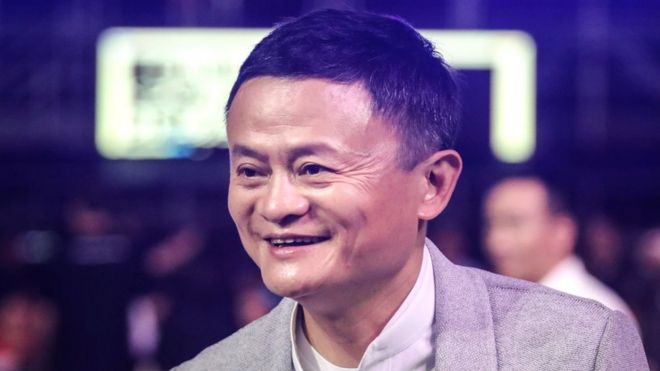
The richest man in China opened his own Twitter account last month, in the middle of the Covid-19 outbreak. So far, every one of his posts has been devoted to his unrivalled campaign to deliver medical supplies to almost every country around the world.
“One world, one fight!” Jack Ma enthused in one of his first messages. “Together, we can do this!” he cheered in another.
The billionaire entrepreneur is the driving force behind a widespread operation to ship medical supplies to more than 150 countries so far, sending face masks and ventilators to many places that have been elbowed out of the global brawl over life-saving equipment.
But Ma’s critics and even some of his supporters aren’t sure what he’s getting himself into. Has this bold venture into global philanthropy unveiled him as the friendly face of China’s Communist Party? Or is he an independent player who is being used by the Party for propaganda purposes? He appears to be following China’s diplomatic rules, particularly when choosing which countries should benefit from his donations, but his growing clout might put him in the crosshairs of the jealous leaders at the top of China’s political pyramid.
Other tech billionaires have pledged more money to fight the effects of the virus – Twitter’s Jack Dorsey is giving $1bn (£0.8bn) to the cause. Candid, a US-based philanthropy watchdog that tracks private charitable donations, puts Alibaba 12th on a list of private Covid-19 donors. But that list doesn’t include shipments of vital supplies, which some countries might consider to be more important than money at this stage in the global outbreak.
The world’s top coronavirus financial donors
How Alibaba compares to the top five. No one else other than the effervescent Ma is capable of dispatching supplies directly to those who need them. Starting in March, the Jack Ma foundation and the related Alibaba foundation began airlifting supplies to Africa, Asia, Europe, Latin America and even to politically sensitive areas including Iran, Israel, Russia and the US.
Ma has also donated millions to coronavirus vaccine research and a handbook of medical expertise from doctors in his native Zhejiang province has been translated from Chinese into 16 languages. But it’s the medical shipments that have been making headlines, setting Ma apart.
“He has the ability and the money and the lifting power to get a Chinese supply plane out of Hangzhou to land in Addis Ababa, or wherever it needs to go,” explains Ma’s biographer, Duncan Clark. “This is logistics; this is what his company, his people and his province are all about.”
A friendly face
Jack Ma is famous for being the charismatic English teacher who went on to create China’s biggest technology company. Alibaba is now known as the “Amazon of the East”. Ma started the company inside his tiny apartment in the Chinese coastal city of Hangzhou, in the centre of China’s factory belt, back in 1999. Alibaba has since grown to become one of the dominant players in the world’s second largest economy, with key stakes in China’s online, banking and entertainment worlds. Ma himself is worth more than $40bn.
Officially, he stepped down as Alibaba’s chairman in 2018. He said he was going to focus on philanthropy. But Ma retained a permanent seat on Alibaba’s board. Coupled with his wealth and fame, he remains one of the most powerful men in China.
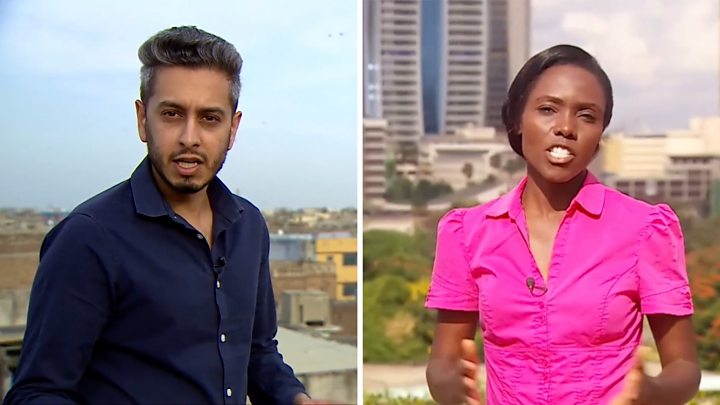
Media caption The BBC’s Secunder Kermani and Anne Soy compare how prepared Asian and African countries are
It appears that Ma’s donations are following Party guidelines: there is no evidence that any of the Jack Ma and Alibaba Foundation donations have gone to countries that have formal ties with Taiwan, China’s neighbour and diplomatic rival. Ma announced on Twitter that he was donating to 22 countries in Latin America. States that side with Taiwan but who have also called for medical supplies – from Honduras to Haiti – are among the few dozen countries that do not appear to be on the list of 150 countries. The foundations repeatedly refused to provide a detailed list of countries that have received donations, explaining that “at this moment in time, we are not sharing this level of detail”.
However, the donations that have been delivered have certainly generated a lot of goodwill. With the exception of problematic deliveries to Cuba and Eritrea, all of the foundations’ shipments dispatched from China appear to have been gratefully received. That success is giving Ma even more positive attention than usual. China’s state media has been mentioning Ma almost as often as the country’s autocratic leader, Xi Jinping.
AFP
So far…
Over 150 countries have received donations from Jack Ma, including about:
120.4mface masks
4,105,000testing kits
3,704ventilators
Source: Alizila
It’s an uncomfortable comparison. As Ma soaks up praise, Xi faces persistent questions about how he handled the early stages of the virus and where, exactly, the outbreak began.
The Chinese government has dispatched medical teams and donations of supplies to a large number of hard-hit countries, particularly in Europe and South-East Asia.
However, those efforts have sometimes fallen flat. China’s been accused of sending faulty supplies to several countries. In some cases, the tests it sent were being misused but in others, low-quality supplies went unused and the donations backfired.
In contrast, Jack Ma’s shipments have only boosted his reputation.
“It’s fair to say that Ma’s donation was universally celebrated across Africa,” says Eric Olander, managing editor of the China Africa Project website and podcast. Ma pledged to visit all countries in Africa and has been a frequent visitor since his retirement.
“What happens to the materials once they land in a country is up to the host government, so any complaints about how Nigeria’s materials were distributed are indeed a domestic Nigerian issue,” Olander adds. “But with respect to the donation itself, the Rwandan leader, Paul Kagame, called it a “shot in the arm” and pretty much everyone saw it for what it was which was: delivering badly-needed materials to a region of the world that nobody else is either willing or capable of helping at that scale.”
Walking the tightrope
But is Ma risking a backlash from Beijing? Xi Jinping isn’t known as someone who likes to share the spotlight and his government has certainly targeted famous faces before. In recent years, the country’s top actress, a celebrated news anchor and several other billionaire entrepreneurs have all “disappeared” for long periods. Some, including the news anchor, end up serving prison sentences. Others re-emerge from detention, chastened and pledging their allegiance to the Party.
“There’s a rumour that [Jack Ma] stepped down in 2018 from being the chairman of the Alibaba Group because he was seen as a homegrown entrepreneur whose popularity would eclipse that of the Communist Party,” explains Ashley Feng, research associate at the Centre for New American Security in Washington DC. Indeed, Ma surprised many when he suddenly announced his retirement in 2018. He has denied persistent rumours that Beijing forced him out of his position.
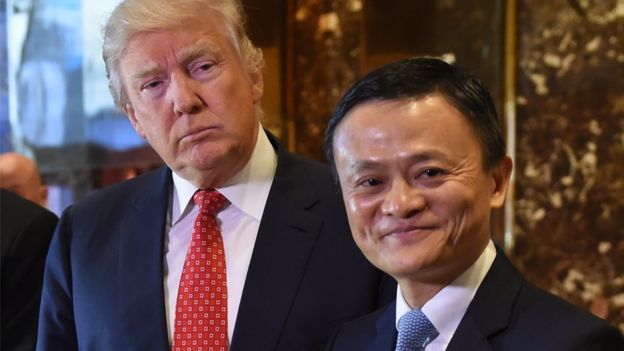
Image copyright GETTY IMAGESImage caption Ma discussed trade with then-President-elect Donald Trump in January 2017
Duncan Clark, Ma’s biographer, is also aware of reports that Ma was nudged away from Alibaba following a key incident in January 2017. The Chinese billionaire met with then-President-elect Donald Trump in Trump Tower, ostensibly to discuss Sino-US trade. The Chinese president didn’t meet with Trump until months later.
“There was a lot of speculation of time that Jack Ma had moved too fast,” Clark says. “So, I think there’s lessons learned from both sides on the need to try to coordinate.”
“Jack Ma represents a sort of entrepreneurial soft power,” Clark adds. “That also creates challenges though, because the government is quite jealous or nervous of non-Party actors taking that kind of role.”
Technically, Ma isn’t a Communist outsider: China’s wealthiest capitalist has actually been a member of the Communist Party since the 1980s, when he was a university student.
But Ma’s always had a tricky relationship with the Party, famously saying that Alibaba’s attitude towards the Party was to “be in love with it but not to marry it”.
Even if Ma and the foundations connected to him are making decisions without Beijing’s advance blessing, the Chinese government has certainly done what it can to capitalise on Ma’s generosity. Chinese ambassadors are frequently on hand at airport ceremonies to receive the medical supplies shipped over by Ma, from Sierra Leone to Cambodia.
China has also used Ma’s largesse in its critiques of the United States. “The State Department said Taiwan is a true friend as it donated 2 million masks,” the Chinese Foreign Ministry tweeted in early April. “Wonder if @StateDept has any comment on Jack Ma’s donation of 1 million masks and 500k testing kits as well as Chinese companies’ and provinces’ assistance?”
Perhaps Ma can rise above what’s happened to so many others who ran afoul of the Party. China might just need a popular global Chinese figure so much that Ma has done what no one else can: make himself indispensable.
“Here’s the one key takeaway from all that happened with Jack Ma and Africa: he said he would do something and it got done,” explains Eric Olander. “That is an incredibly powerful optic in a place where foreigners often come, make big promises and often fail to deliver. So, the huge Covid-19 donation that he did fit within that pattern. He said he would do it and mere weeks later, those masks were in the hands of healthcare workers.”
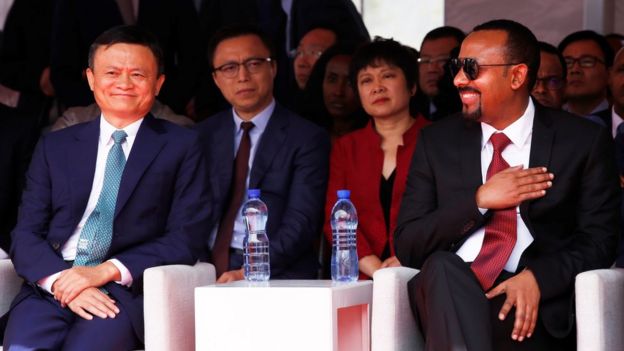
Image copyright GETTY IMAGESImage caption Ma at an Electronic World Trade Platform event with Ethiopian Prime Minister Abiy Ahmed last year
Duncan Clark argues that Ma already had a seat at China’s high table because of Alibaba’s economic heft. However, his first-name familiarity with world leaders makes him even more valuable to Beijing as China tries to repair its battered image.
“He has demonstrated the ability, with multiple IPOs under his belt, and multiple friendships overseas, to win friends and influence people. He’s the Dale Carnegie of China and that certainly, we’ve seen that that’s irritated some in the Chinese government but now it’s almost an all hands on deck situation,” Clark says.
There’s no doubt that China’s wider reputation is benefiting from the charitable work of Ma and other wealthy Chinese entrepreneurs. Andrew Grabois from Candid, the philanthropic watchdog that’s been measuring global donations in relation to Covid-19, says that the private donations coming from China are impossible to ignore.
“They’re taking a leadership role, the kind of thing that used to be done by the United States,” he says. “The most obvious past example is the response to Ebola, the Ebola outbreak in 2014. The US sent in doctors and everything to West Africa to help contain that virus before it left West Africa.”
Chinese donors are taking on that role with this virus.
“They are projecting soft power beyond their borders, going into areas, providing aid, monetary aid and expertise,” Grabois adds.
So, it’s not the right time for Beijing to stand in Jack Ma’s way.
“You know, this is a major crisis for the world right now,” Duncan Clark concludes. “But obviously, it’s also a crisis for China’s relationship with the rest of the world. So they need anybody who can help dampen down some of these those pressures.”
Faced with a backlash from the West over its handling of the early stages of the pandemic, Beijing has been quietly gaining ground in Asia
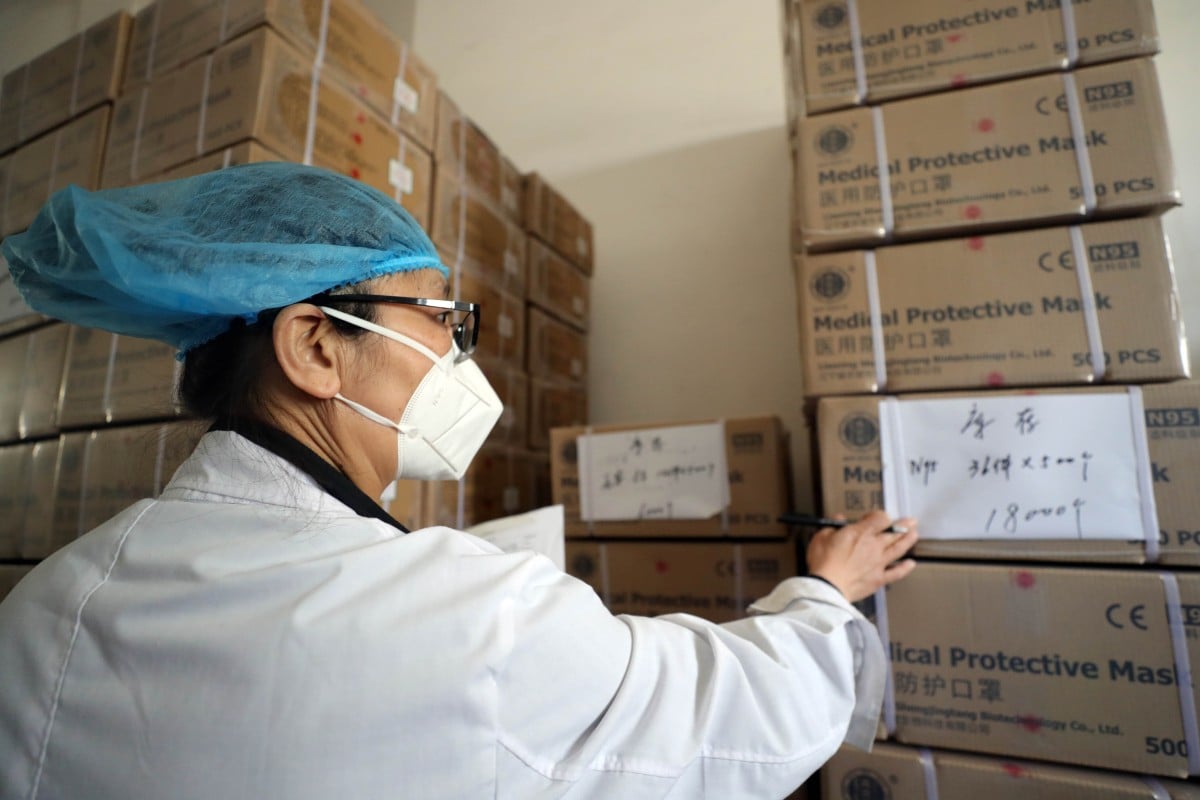
Teams of experts and donations of medical supplies have been largely welcomed by China’s neighbours
Despite facing some criticism from the West, China’s Asian neighbours have welcomed its medical expertise and vital supplies. Photo: Xinhua
While China’s campaign to mend its international image in the wake of its handling of the coronavirus health crisis has been met with scepticism and even a backlash from the US and its Western allies, Beijing has been quietly gaining ground in Asia.
Teams of experts have been sent to Cambodia, the Philippines, Myanmar, Pakistan and soon to Malaysia, to share their knowledge from the pandemic’s ground zero in central China.
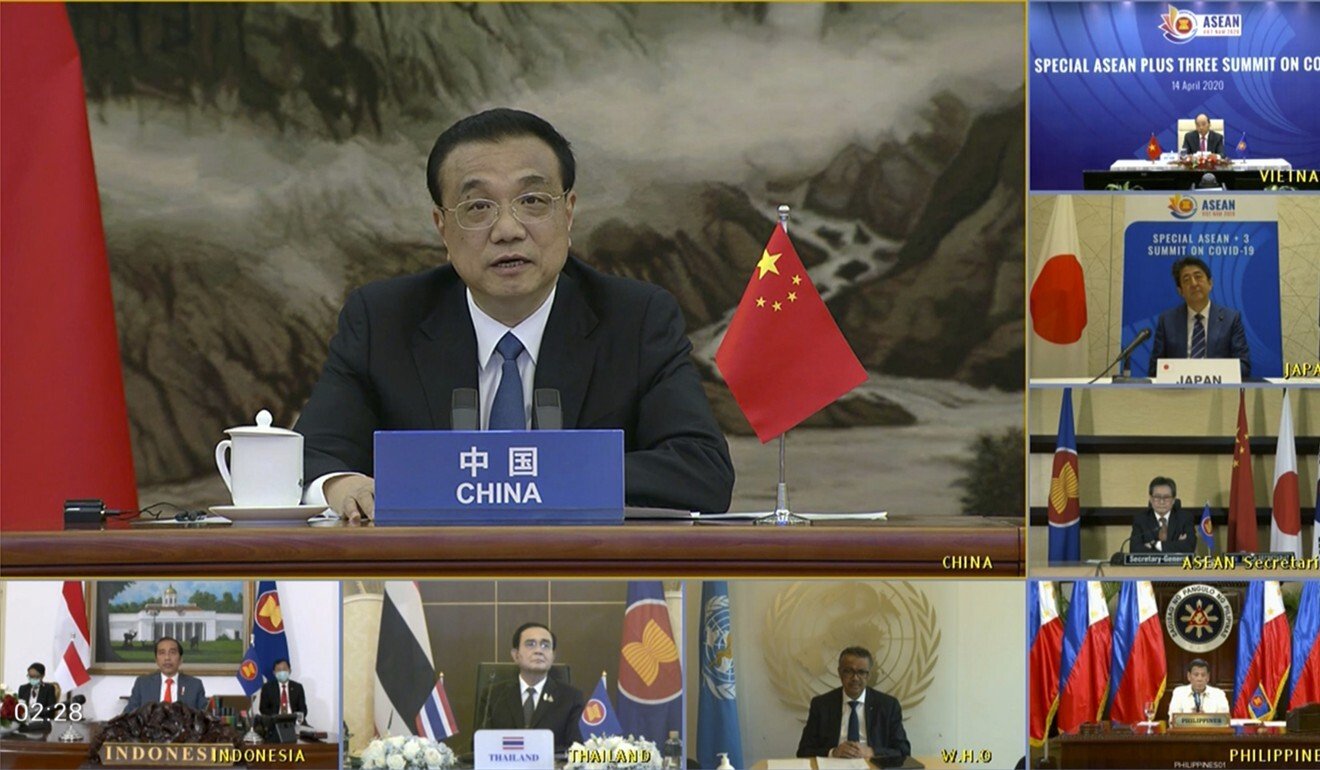
China has also held a series of online “special meetings” with its Asian neighbours, most recently on Tuesday when Premier Li Keqiang discussed his country’s experiences in combating the disease and rebooting a stalled economy with the leaders of the Association of Southeast Asian Nations (Asean), Japan and South Korea.
Chinese Prime Minister Li Keqiang speaks to Asean Plus Three leaders during a virtual summit on Tuesday. Photo: AP
Many Western politicians have publicly questioned Beijing’s role and its subsequent handling of the crisis but Asian leaders – including Philippine President Rodrigo Duterte and Japanese Prime Minister Shinzo Abe – have been reluctant to blame the Chinese government, while also facing criticism at home for not closing their borders with China soon enough to prevent the spread of the virus.
An official from one Asian country said attention had shifted from the early stages of the outbreak – when disgruntled voices among the public were at their loudest – as people watched the virus continue its deadly spread through their homes and across the world.
“Now everybody just wants to get past the quarantine,” he said. “China has been very helpful to us. It’s also closer to us so it’s easier to get shipments from them. The [medical] supplies keep coming, which is what we need right now.”
The official said also that while the teams of experts sent by Beijing were mainly there to observe and offer advice, the gesture was still appreciated.
Another Asian official said the tardy response by Western governments in handling the outbreak had given China an advantage, despite its initial lack of transparency over the outbreak.
“The West is not doing a better job on this,” he said, adding that his government had taken cues from Beijing on the use of propaganda in shaping public opinion and boosting patriotic sentiment in a time of crisis.
“Because it happened in China first, it has given us time to observe what works in China and adopt [these measures] for our country,” the official said.
Experts in the region said that Beijing’s intensifying campaign of “mask diplomacy” to reverse the damage to its reputation had met with less resistance in Asia.
Why China’s ‘mask diplomacy’ is raising concern in the West
29 Mar 2020
“Over the past two months or so, China, after getting the Covid-19 outbreak under control, has been using a very concerted effort to reshape the narrative, to pre-empt the narrative that China is liable for this global pandemic, that China has to compensate other countries,” said Richard Heydarian, a Manila-based academic and former policy adviser to the Philippine government.
“It doesn’t help that the US is in lockdown with its domestic crisis and that we have someone like President Trump who is more interested in playing the blame game rather than acting like a global leader,” he said.
Shahriman Lockman, a senior analyst with the foreign policy and security studies programme at Malaysia’s Institute of Strategic and International Studies, said that as the US had withdrawn into its own affairs as it struggled to contain the pandemic, China had found Southeast Asia a fertile ground for cultivating an image of itself as a provider.
China’s first-quarter GDP shrinks for the first time since 1976 as coronavirus cripples economy
Beijing’s highly publicised delegations tasking medical equipment and supplies had burnished that reputation, he said, adding that the Chinese government had also “quite successfully shaped general Southeast Asian perceptions of its handling of the pandemic, despite growing evidence that it could have acted more swiftly at the early stages of the outbreak in Wuhan”.
“Its capacity and will to build hospitals from scratch and put hundreds of millions of people on lockdown are being compared to the more indecisive and chaotic responses seen in the West, especially in Britain and the United States,” he said.
Coronavirus droplets may travel further than personal distancing guidelines
16 Apr 2020
Lockman said Southeast Asian countries had also been careful to avoid getting caught in the middle of the deteriorating relationship between Beijing and Washington as the two powers pointed fingers at each other over the origins of the new coronavirus.
“The squabble between China and the United States about the pandemic is precisely what Asean governments would go to great lengths to avoid because it is seen as an expression of Sino-US rivalry,” he said.
“Furthermore, the immense Chinese market is seen as providing an irreplaceable route towards Southeast Asia’s post-pandemic economic recovery.”
Aaron Connelly, a research fellow in Southeast Asian political change and foreign policy with the International Institute for Strategic Studies in Singapore, said Asian countries’ dependence on China had made them slow to blame China for the pandemic.
“Anecdotally, it seems to me that most Southeast Asian political and business elites have given Beijing a pass on the initial cover-up of Covid-19, and high marks for the domestic lockdown that followed,” he said.
“This may be motivated reasoning, because these elites are so dependent on Chinese trade and investment, and see little benefit in criticising China.”
China and Vietnam ‘likely to clash again’ as they build maritime militias
12 Apr 2020
The cooperation with its neighbours as they grapple with the coronavirus had not slowed China’s military and research activities in the disputed areas of the South China Sea – a point of contention that would continue to cloud relations in the region, experts said.
Earlier this month an encounter in the South China Sea with a Chinese coastguard vessel led to the sinking of a fishing boat from Vietnam, which this year assumed chairmanship of Asean.
And in a move that could spark fresh regional concerns, shipping data on Thursday showed a controversial Chinese government survey ship, the Haiyang Dizhi 8, had moved closer to Malaysia’s exclusive economic zone.
The survey ship was embroiled in a months-long stand-off last year with Vietnamese vessels within Hanoi’s exclusive economic zone and was spotted again on Tuesday 158km (98 miles) off the Vietnamese coast.
Summit between Chinese, South Korean and Japanese leaders could yield results for future of Korean peninsula, analyst says
North Korea has promised an unwelcome “Christmas present” if the US does not show the “right attitude” for talks. Photo: KCNA
Chinese President Xi Jinping has again stressed the need for tensions on the Korean peninsula to be resolved through dialogue, as the deadline looms in North Korea’s threat to give the United States an unwelcome “Christmas gift”
.
With just over a week to go until Pyongyang’s year-end deadline for Washington to change what it says a policy of hostility, Xi held separate talks with South Korean President Moon Jae-in and Japanese Prime Minister Shinzo Abe in Beijing on Monday.
Moon and Abe will also join Chinese Premier Li Keqiang for a trilateral summit in Chengdu, Sichuan province, on Tuesday.
The first trilateral leadership talks took place in 2008, but were not held in 2013 and 2014, or in 2016 and 2017.
Xi said China and South Korea “both insist on maintaining peace and stability on the peninsula, and advocate solving problems through dialogue and consultation”, state news agency Xinhua reported on Monday.
“China supports South Korea in continuing to improve its relationship with
and injecting impetus for the Korean peninsula peace talks,” the report said.
Moon said the suspension of talks between the US and North Korea and heightened tensions along the peninsula “are not beneficial to both our countries and North Korea”, according to South Korean news agency Yonhap.
Moon also said that China had played an “important role” in efforts for the denuclearise the peninsula, the report said.
North Korea has signalled impatience over the stalled talks with the US, and the fading hopes for an end to Washington’s economic sanctions.
In April, North Korean leader Kim Jong-un said that he would “wait” until the end of the year to decide whether the US had the “right attitude” to allow a resumption of negotiations, but no signs of further talks have emerged.
Then earlier this month Pyongyang warned that Washington would receive a “Christmas gift”, and US actions would determine whether the present would be good or bad.
In an apparent sign of frustration with the US, North Korean news agency KCNA reported on Sunday that Kim held a meeting of the Workers’ Party of Korea to “bolster the overall armed forces of the country” to deal with the “the fast-changing situation”.
The US imposed crippling sanctions on North Korea’s economy in 2017, though many countries, including China, South Korea and Japan, have also tightened measures against the North.
South Korea and Japan both scaled back people-to-people links in 2016, China banned coal exports to the North in 2017. Earlier this year, Trump thanked China and Russia for maintaining sanctions against Pyongyang.
As diplomats make last-ditch attempts to stop renewed confrontation, US special envoy for North Korea Stephen Biegun shuttled around the region last week, meeting senior officials in China, South Korea and Japan. Biegun urged North Korea to return to negotiations, and said the US “does not have a deadline” for talks.
China and Russia also proposed last week that the United Nations Security Council
Xi’s meeting with Moon also comes as Beijing tries to mend ties with Seoul to prevent neighbouring nations from getting closer to Washington.
Relations between China and South Korea deteriorated in 2017 after Seoul deployed a US-led missile defence system known as THAAD, which Beijing deemed as a security threat to its own territory.
On Monday, both Xi and Moon said in their meeting that they looked forward to improving relations between their countries.
“We have been friends and partners that have continued close cooperation,” Xi said. “We have a wide range of common understandings in various fields, including on further developing bilateral relations, facilitating regional peace, stability and prosperity, and defending multilateralism and a free trade system.”
Sun Xingjie, a North Korea specialist at Jilin University, said the US signal was “very clear” in Beigun’s comments.
“They still want to continue discussions,” he said.
Sun also said the talks in Chengdu on Tuesday would likely play an important role in the future of resolving problems on the Korean peninsula.
“After returning to the platform these last couple years, I believe this will become an important, normalised place for discussions. Whatever problems they run into, the platform should continue to move forward,” Sun said.
BEIJING (Reuters) – The spectre of new confrontation between Pyongyang and Washington hangs over meetings between China, Japan and South Korea this week, with growing risks North Korean actions could end an uneasy detente and upend recent diplomatic efforts.
South Korean President Moon Jae-in and Japanese Prime Minister Shinzo Abe are expected to meet Chinese President Xi Jinping separately on Monday. They will then travel to the southwestern city of Chengdu for a trilateral meeting with Chinese Premier Li Keqiang. Though they are expected to discuss various economic matters, North Korea appears likely to dominate the agenda.
Pyongyang has grown increasingly frustrated that its halt of nuclear and long-range missile tests has not ended the crippling economic sanctions against it. It set a Dec. 31 deadline for the United States to make concessions, but Washington has been unmoved.
Some experts believe North Korea may be readying to test an intercontinental ballistic missile launch soon, which would likely end the 2018 agreement struck by its leader, Kim Jong Un, and U.S. President Donald Trump.
“Safeguarding the stability and peace of the Korean Peninsula and pushing for a political solution to the Korean Peninsula issue are in the interests of China, Japan and South Korea,” Chinese Vice Foreign Minister Luo Zhaohui told reporters on Thursday at a briefing on the trilateral meetings.
U.S. special envoy for North Korea Stephen Biegun met with two senior Chinese diplomats during his two-day visit to Beijing this week, following similar meeting in South Korea and Japan days earlier, as diplomats make last-ditch attempts to prevent new confrontation.
North Korea has not responded to his public call to resume dialogue, however.
“The silence, even after Biegun’s speech in Seoul, makes me concerned,” Jenny Town, managing editor at the North Korea monitoring website 38 North, said on Twitter.
Beijing, jointly with Russia, proposed on Monday that the United Nations Security Council lift some sanctions in what it calls an attempt to break the current deadlock and seeks to build support. But it’s unclear whether Beijing can convince Seoul and Tokyo to break ranks from Washington, which has made its opposition clear and can veto any resolution.
Though South Korea sees China as instrumental in reviving negotiations, it has so far sidestepped questions on whether it supports the new proposal by Beijing and Moscow. Japan, which has historically been a staunch supporter of sanctions against North Korea, has also refrained from commenting on the proposal.
“With the (2020 Tokyo) Olympics coming up, North Korea going wild would pose a problem for Japan,” said Narushige Michishita, professor at Japan’s National Graduate Institute for Policy Studies.
“But bilateral talks with North Korea, for example, will probably be a better approach for Japan than easing UN sanctions.”
NEW DELHI (Reuters) – India’s Jammu and Kashmir state withdrew the security details for 18 separatist leaders and 155 other opposition figures on Wednesday after an Islamist suicide bomber killed 40 paramilitary troopers last week.
The restive mountain state is currently administered by India’s federal government after Prime Minister Narendra Modi’s Bharatiya Janata Party walked out a coalition with a major Kashmiri party.
The separatist leaders had been allocated security personnel to protect them from militants after they entered talks with the federal government.
In a statement, the Jammu and Kashmir state government said it “felt that providing security to these separatist leaders is a wastage of scarce state resources which could be better utilized elsewhere”.
Besides the separatist leaders, the security of 155 political figures and activists – some from mainstream opposition parties – was also withdrawn, the statement said.
“Through this (step), over 1,000 police personnel and over 100 vehicles are freed to do regular police work,” it said.
Both India and Pakistan lay claim to Kashmir and have twice gone to war over it since independence from Britain in 1947. India accuses Pakistan of fomenting decades of sporadic insurgency in its only Muslim-majority state.
Pakistan denies that, saying it only offers political support to the Kashmiri people.
PRAYAGRAJ, India (Reuters) – In a desert tent guarded by armed police and a thick-set bouncer, Laxmi Narayan Tripathi is blessing a constant stream of pilgrims, who garland her with marigolds and kneel to touch her feet.
Tripathi, a tattooed transgender leader and a former reality TV star, has become an unlikely icon at India’s Kumbh Mela, a huge religious festival being held on the banks of the Ganges river in the city of Prayagraj. Up to 150 million people are expected to attend by the time the festival ends in March.
On Tuesday, her religious movement, called the Kinnar Akhada, became the first transgender group to bathe at the confluence of the holy Ganges and the Yamuna rivers on the first day of the ancient festival, traditionally reserved for reclusive Hindu priests, almost all of whom are men.
“After centuries down the line, it was when the community finally got its due,” Tripathi told Reuters, seated on a pedestal next to her Michael Kors bag, juggling calls on an iPhone.
Many at the festival cheer Tripathi for reclaiming the lost place in Hinduism for India’s “third gender”, known as the hijras, worshipped as demi-gods for thousands of years, but ridiculed and sidelined during British colonial rule.
A law passed in 1871 classed the hijras as “criminals”.
Little changed after independence and hijras were pariahs, living in tribes, begging or soliciting for sustenance and harassed by police.
It was only in 2014 that the Supreme Court officially recognised transgender people as a third gender.
Tripathi is one of the best known. But her support for building a controversial Hindu temple on the site of a demolished mosque has angered some in the LGBT community, who allege she is courting support from India’s powerful religious right to further her own influence.
FALL AND RISE
The place of hijras in Indian culture dates back to the Ramayana, a more-than 2,000 year-old Hindu epic poem venerated and performed across India.
In the text, the god-king Ram is exiled from the holy city of Ayodhya, with the entire kingdom following him into the forest. He orders them to turn back, but returning after 14 years, finds the hijras waiting for him in the same spot. Impressed by their devotion, he grants them the power to invoke blessings and curses on people.
For centuries, though their lives were far from easy, hijras held a special role in India’s royal courts, tasked with guarding harems and rising to influential positions.
Today, despite their legal recognition, many still face prejudice in what is a conservative country, forced into sex work or seeking alms at weddings and births, a long-held practice among hijras. Hate crimes against them are common and HIV prevalence within the community is many times higher than the general population.
“The ritual seeking of alms is now seen as begging,” said Anindya Hajra, a transgender activist at the Pratyay Gender Trust. “It criminalises and pushes an already vulnerable community to its very brink.”
COLOURFUL LIFE
Born in 1979 in Thane, a suburb of India’s financial capital Mumbai, Tripathi says she had a difficult childhood scarred with abuse by a close relative. A sickly child who was bullied at school for being feminine, she grew in confidence after learning Bharatanatyam, a classical Indian dance.
“I chose not to remember the prejudice,” she said. “Rather I think (about) the good things that have happened to me, and be a flamboyant rainbow.”
Long recognised as one of the most influential figures in the LGBT community in India, she become famous across the country when she appeared on reality TV show “Bigg Boss” in 2011. She was a petitioner in the landmark court ruling that recognised transgender people.
In 2015, she founded her Akhara and began a campaign to have hijras represented at the at the first “Shahi Snan”, or royal bath, of the Kumbh Mela.
“It all started to reclaim the lost position in the dharma,” Tripathi said, referring to the Hindu cosmic law underlying correct behaviour and social order. “I was not very religious until 2015 – life changed.”
ANCIENT TRADITION
Devout Hindus believe bathing in the waters of the Ganges absolves people of sins and doing so at the time of the Kumbh Mela, or the “festival of the pot”, brings salvation from the cycle of life and death.
At the festival, 13 religious orders, or Akhara, set up camp on the banks of the Ganges.
The umbrella body overseeing the Akharas initially refused to recognise the Kinnar Akhara as the 14th order.
But Tripathi has forged close bonds with the largest of the other holy orders at the Kumbh Mela, the Juna Akhara. They agreed to bathe together.
On the first royal bathing day on Tuesday, Tripathi rose at 4 a.m., dressed in a saffron sari and applied her makeup. She and her dozens of disciples then began the long procession to the river on a fleet of elaborately decorated trucks.
At the banks of the Ganges, they waited for their turn to bathe. Tripathi met with Hari Giri, the leader of Juna Akhara.
Her Kinnar Akhara “was there, is there, and will always be there”, Giri told Tripathi.
Shortly after sunrise, she plunged into the waters, to the cheers of the crowds who gathered to watch.
DIVISIVE FIGURE
Tripathi has courted controversy with support for the building of a temple dedicated to Ram on the site of a former mosque in Ayodhya which was demolished by hardline Hindus in 1992, leading to riots in which thousands died.
Many Hindus claim the mosque was built over an ancient temple that marked the birthplace of Ram, and the row is expected to be a major issue in a general election due to be held in the country by May. Many activists of India’s ruling Hindu nationalist Bharatiya Janata Party have been agitating for the construction of a temple at the site, alarming the country’s sizeable Muslim minority.
“There has been an attempt by the right to co-opt trans voices to suit a certain version of history,” said Hajra, the activist. “Our apprehension is also that some are trying to further (their) own personal career moves.”
A letter signed in November by hundreds of transgender people and rights groups accused Tripathi of fuelling “the right-wing politics of communal hatred”.
She is unrepentant.
“Where my Lord Ram was born, there the temple has to come,” she said. The Mughals “brought (the temple) down and then they enslaved us all”, she said, referring to the Muslim emperors who ruled India in the 16th and 17th century.
Tripathi plans to spend the rest of the Kumbh festival at her Akhara, receiving visitors among her colourful band of followers, who have little in common with the holy men living monastic lives in the other camps.
“We are not celibate,” she said. “We are demi-gods, not saints. We have our own rules.”
BEIJING, Dec. 29 (Xinhua) — Top Chinese leaders watched a New Year gala featuring traditional operas on Saturday evening in Beijing.
Leaders of the Communist Party of China (CPC) and the state Xi Jinping, Li Keqiang, Li Zhanshu, Wang Yang, Wang Huning, Zhao Leji, Han Zheng and Wang Qishan, joined an audience of nearly a thousand at the National Center for the Performing Arts.
The program included classic opera excerpts featuring historical stories, martial heroes and love stories, as well as modern excerpts featuring stalwart CPC members, life on a small island, the Long March, among others.
An opera piece named “Towards the Future” expressed the strong faith of the Chinese people under the leadership of the CPC Central Committee with Xi Jinping at the core, to fight for a decisive victory in finishing the building of a moderately prosperous society in all respects and for the realization of the Chinese dream of the rejuvenation of the Chinese nation.
The show featured various forms of traditional operas, including Peking Opera, Kunqu opera and Cantonese Opera.







 CHINDIA ALERT: You'll be living in their world, very soon
South Korean officials call for caution amid reports that North Korean leader Kim is ill
SEOUL (Reuters) – South Korean officials are calling for caution amid reports that North Korean leader Kim Jong Un may be ill or is being isolated because of coronavirus concerns, emphasising that they have detected no unusual movements in North Korea.
At a closed door forum on Sunday, South Korea’s Unification Minister Kim Yeon-chul, who oversees engagement with the North, said the government has the intelligence capabilities to say with confidence that there was no indications of anything unusual.
Rumours and speculation over the North Korean leader’s health began after he made no public appearance at a key state holiday on April 15, and has since remained out of sight.
South Korea media last week reported that Kim may have undergone cardiovascular surgery or was in isolation to avoid exposure to the new coronavirus.
Unification minister Kim cast doubt on the report of surgery, arguing that the hospital mentioned did not have the capabilities for such an operation.
Still, Yoon Sang-hyun, chairman of the foreign and unification committee in South Korea’s National Assembly, told a gathering of experts on Monday that Kim Jong Un’s absence from the public eye suggests “he has not been working as normally”.
“There has not been any report showing he’s making policy decisions as usual since April 11, which leads us to assume that he is either sick or being isolated because of coronavirus concerns,” Yoon said.
North Korea has said it has no confirmed cases of the new coronavirus, but some international experts have cast doubts on that claim.
On Monday, North Korean state media once again showed no new photos of Kim nor reported on his whereabouts.
However, they did carry reports that he had sent a message of gratitude to workers building a tourist resort in Wonsan, an area where some South Korean media reports have said Kim may be staying.
“Our government position is firm,” Moon Chung-in, the top foreign policy adviser to South Korean President Moon Jae-in, said in comments to news outlets in the United States.
“Kim Jong Un is alive and well. He has been staying in the Wonsan area since April 13. No suspicious movements have so far been detected.”
Satellite images from last week showed a special train possibly belonging to Kim at Wonsan, lending weight to those reports, according to 38 North, a Washington-based North Korea monitoring project.
Though the group said it was probably the North Korean leader’s personal train, Reuters has not been able to confirm that independently, or whether he was in Wonsan.
A spokeswoman for the Unification Ministry said on Monday she had nothing to confirm when asked about reports that Kim was in Wonsan.
Last week China dispatched a team to North Korea including medical experts to advise on Kim Jong Un, according to three people familiar with the situation.
Reuters was unable to immediately determine what the trip by the Chinese team signalled in terms of Kim’s health.
On Friday a South Korean source told Reuters their intelligence was that Kim Jong Un was alive and would likely make an appearance soon.
Experts have cautioned that Kim has disappeared from state media coverage before, and that gathering accurate information in North Korea is notoriously difficult.
North Korea’s state media last reported on Kim’s whereabouts when he presided over a meeting on April 11.
Kim, believed to be 36, vanished from state media for more than a month in 2014 and North Korean state TV later showed him walking with a limp.
Source: Reuters
Posted in "unusual", 11, 15, 2014, 36, 38 North, absence, alive and well, amid, anything, appearance, April, area, arguing, assume, avoid, because, began, being isolated, belonging, Building, call for, calling, capabilities, cardiovascular, cast, caution, Chairman, China, claim, closed door, comments, concerns, confidence, confirmed cases, coronavirus, detected, disappeared, dispatched, doubt, emphasising, engagement, experts, exposure, firm, foreign and unification committee, foreign policy adviser, forum, Friday, gathering, Government, gratitude, health, Hospital, ill, including, independently, indications, intelligence, international experts, isolation, key, Kim, Kim Jong Un, last week, leaders, lending weight, limp, media, medical experts, meeting, mentioned, message, minister, Monday, monitoring project, month, movements, National Assembly, new coronavirus, news outlets, Normally, North, North Korea, North Korean leader, North Korean state TV, officials, operation, out of sight, oversees, personal train, photos, policy decisions, presided, President Moon Jae-in, public appearance, public eye, remained, reported, reports, Resort, Reuters, Rumours, Seoul, showed, sick, signalled, since, South Korea’s, South Korean, South Korean President, special train, speculation, spokeswoman, state holiday, State media, staying, suggests, Sunday, surgery, team, tourist, Uncategorized, undergone, unification, Unification minister, Unification Ministry, United States, unusual, vanished, walking, Washington-based, whereabouts, Wonsan, workers, working | Leave a Comment »