Archive for ‘New Delhi’

20/10/2019

Indian soldiers, Pakistani civilians among dead in Kashmir clash

SRINAGAR, India (Reuters) – India and Pakistan blamed one another for cross-border shelling in the disputed Kashmir region which killed and injured soldiers and civilians on both sides and made it one of the deadliest days since New Delhi revoked Kashmir’s special status in August.

India said there was heavy shelling by Pakistan across the border in northern Kashmir’s Tangdhar region late on Saturday night, killing two Indian soldiers and one civilian. Islamabad said one of its soldiers and three civilians died after India violated the ceasefire, according to the spokesman for the Pakistani Armed Forces.

Kashmir has been a disputed subject between the two nuclear-armed neighbours since they both got independence in 1947, and they have fought two of their three wars over the region.

Tensions between the two countries have flared and there has been intermittent cross-border firing since Aug. 5 when New Delhi flooded Indian Kashmir with troops to quell unrest after it revoked the region’s special autonomous status.

Islamabad has warned that changing Kashmir’s status would escalate tensions but India says the withdrawal of special status is an internal affair and is aimed at faster economic development of the territory.

Reuters was unable to independently verify the claims made by both sides on the shelling, which marks an escalation from the small arms fire usually exchanged by the two armies.

There was an unprovoked ceasefire violation by Pakistan, said Indian defence spokesman Colonel Rajesh Kalia.

“Our troops retaliated strongly causing heavy damage and casualties to the enemy,” Kalia said.

An Indian army source said the shelling was cover to assist militants enter India because of which a “calibrated escalation of area weapons was undertaken”. The Indian army “retains the right to respond at a time and place of it’s choosing” if the Pakistani army continues to do this, he said.

Pakistan, meanwhile, also claimed that India’s attack was unprovoked and deliberately targeted at civilians.

Major General Asif Ghafoor, a spokesman for the Pakistan Armed Forces, said Pakistan responded “effectively,” killing 9 Indian soldiers, injuring several others and destroying 2 bunkers.

“The Indian army shall always get a befitting response,” he said.

Indian forces in Kashmir have gone “berserk”, Raja Farooq Haider, prime minister of Pakistan’s Azad Kashmir region, said, adding that six civilians died and 8 were injured.

“This is the height of savagery. The world must not stay silent over it. #KashmirNeedsAttention,” he said in a tweet.

Source: Reuters

19/10/2019

After parliamentary win, India’s BJP set to sweep state elections-poll

NEW DELHI/MUMBAI (Reuters) – India’s ruling Bharatiya Janata Party (BJP) is set to sweep two state polls next week, the first since Prime Minister Narendra Modi’s landslide win in a parliamentary election in May, a leading pollster said.

The BJP is set to comfortably win elections in the western state of Maharashtra and the northern state of Haryana, leaving the main opposition Congress party trailing, according to a survey by polling agency CVoter released on Friday.

CVoter estimates that a BJP-led alliance in Maharashtra will pick up 194 of the 288 seats on offer. In Haryana, the party is predicted to win 83 of the state’s 90 seats, leaving just three for Congress.

Voting in the elections will be held on Monday with the results expected to be announced on Thursday.

Several Congress party officials conceded they had all but given up hope of posing a serious challenge to Modi and the BJP.

In particular, the resignation of Congress chief Rahul Gandhi in July, after weeks of drama following the loss to the BJP in the general election, has sown internal confusion, triggering infighting and exits, two party officials in New Delhi said.

“It’s going to be a rout, and it will deflate morale even further,” one of the officials said, referring to the state elections. “It’s like a slow-moving disaster.”

They requested anonymity because they are not authorised to speak to the media.

Pranav Jha, the secretary in charge of Congress’s communication department, said the party was undergoing a period of “cleansing and churning” and remained committed to taking on the BJP.

“The people of India…can see through the diversionary drama of the ruling party, and realise that jobs, economy and issues of farmers can only be put on track by the Congress party,” Jha told Reuters.

Modi, analysts say, has moved decisively, including withdrawing special rights for Muslim-majority Jammu and Kashmir state, and consolidating the BJP’s hold over India’s Hindu-majority electorate.

INFIGHTING, INDIFFERENCE

In Maharashtra, one of India’s most industrialised states which includes Mumbai, two Congress officials said the top leadership’s relative indifference and infighting had hurt their already weak campaign.

Congress’s state wing had asked for Gandhi, his mother and current party chief Sonia Gandhi, and his charismatic sister Priyanka Gandhi Vadra to join the campaign, one of the two officials said.

But only Rahul Gandhi came and spoke at a handful of rallies.

“Senior leaders from BJP have covered every district. They have been visiting Maharashtra for the last two months to build momentum,” said one Congress official, who is contesting the upcoming poll.

“There wasn’t any concrete effort from Congress leaders in New Delhi to give energy to our cadre,” he said.

The list of recent resignations from the party include Ashok Tanwar, Congress’s former chief in Haryana who quit earlier this month and is now campaigning against his old party.

“The state of affairs in the Congress party is so dire that the decision makers can’t win an election themselves, while the soldiers on ground who stay in touch with the masses are neglected,” Tanwar wrote in his resignation letter.

The situation has even riled Congress allies. Two leaders from the Nationalist Congress Party, which is in alliance with the Congress in Maharashtra, said their partner was slack.

“It looks like Congress is not very serious about the state elections,” one of the leaders said. “Congress is not in the picture. Congress leaders are not attacking the ruling party the way we expected.”

In New Delhi, Congress officials said there was a sense of inertia at the party headquarters, without any understanding of who will become president after Sonia Gandhi, who is only holding charge temporarily.

“Without a clear leadership, nothing is going to change,” one of the officials said, “If it continues like this, the party will fade away.”

Source:Reuters

18/10/2019

Tens of thousands to run in New Delhi, one of the world’s most heavily polluted cities

NEW DELHI (Reuters) – Tens of thousands of runners have signed up for the Indian capital’s half marathon and other races on Sunday, officials said, despite the air quality hitting dangerous levels in one of the most heavily polluted cities in the world.

New Delhi’s air quality index was around 300 on Thursday, classified as very poor and meaning prolonged exposure can cause respiratory illness.

Delhi Chief Minister Arvind Kejriwal, who has described the city as a “gas chamber” in winter, has ordered emergency measures, including restricting the number of private vehicles on the roads under an “odd-even” scheme based on number plates.

Race organisers said pollution was a worry but they would take steps to reduce the impact on runners. Hours ahead of and throughout the race, the course will be sprayed with water.

“The air quality is a concern and will remain a concern, there is no question about it,” said Vivek Singh, joint managing director of Procam International that conducts the race sponsored by telecom operator Bharti Airtel.

“The measures that we take for those few hours to give our runners a good experience have worked in the past.”

The race has been moved this year to avoid a sharp rise in pollutants during Diwali, the Hindu festival of lights, when hundreds of thousands of firecrackers are lit.

But farmers burning crop stubble in the states north of Delhi have turned the air over Delhi toxic. The forecast for the next few days and into Sunday is “very poor”.

A record 40,633 people have signed up for the 21-km, 10-km and a 5-km races. Last year there were 34,916 runners, many of whom wore masks.

A former Olympic gold medallist, Carmelita Jeter of the United States, is the international event ambassador.

Doctors have advised citizens to restrict their outdoor activities and said runners must be made aware of the risks they are taking.

“Just two weeks before the odd-even scheme comes into play, how have the civic authorities allowed more than 30,000 people to expose themselves to toxic air?” asked said Desh Deepak, senior chest physician at the city’s Ram Manohar Lohia Hospital.

Source: Reuters

16/10/2019

China’s former ambassador to India joins team dedicated to fight against climate change

  • Luo Zhaohui, who was credited with helping to resolve 2017 Doklam stand-off peacefully, joins group set up to tackle global warming
Luo Zhaohui previously served as China’s ambassador to India. Photo: Handout

China’s former ambassador to India Luo Zhaohui has joined a national team in charge of fighting climate change, the Chinese government website has announced.

The team, led by Premier Li Keqiang, will be responsible for coming up with proposals to tackle the problem, develop proposals for energy conservation and analyse the impact of climate change on socio-economic development.

China is currently the world’s largest polluter, accounting for a quarter of the world’s total emissions, making it crucial in the effort to curb global warming.

The US withdrawal from the Paris Climate Agreement in 2017 also makes China the largest single economy committed to the efforts to limit emissions.

As well as taking up the position on the National Leading Group Dealing with Climate Change, Energy Conservation and Emissions Reduction, Luo was also promoted to the position of deputy foreign minister in late May.

In this post, Luo is in charge of Beijing’s relations with its Asian neighbours, replacing Kong Xuanyou, who was named China’s new ambassador to Japan.

Luo was credited by diplomatic observers as having helped bring relations with India back on track after the 2017 Doklam stand-off, one of the worst border disputes in decades between the two sides.

In July 2017, Luo told media in New Delhi that the Chinese people were deeply angry over the “occupation” by Indian troops of its sovereign territory but helped to resolve the situation through diplomatic means, paving the way for an informal summit between President Xi Jinping and Prime Minister Narendra Modi in Wuhan last year.

Luo, 57, has also served in diplomatic missions in Singapore and the US and was head of the foreign ministry’s department for Asian affairs.

He previously served as ambassador to Pakistan and Canada before being posted to the embassy in New Delhi in India in 2016.

Source: SCMP

13/10/2019

Xi, Modi agree to trim trade deficit, boost mutual trust amid US-China tensions

  • The leaders agreed to set up a mechanism to boost economic ties and tackle India’s trade deficit with China after their second informal summit
  • As 2020 is the 70th anniversary of diplomatic ties between both countries, India and China will hold 70 events next year to promote relations
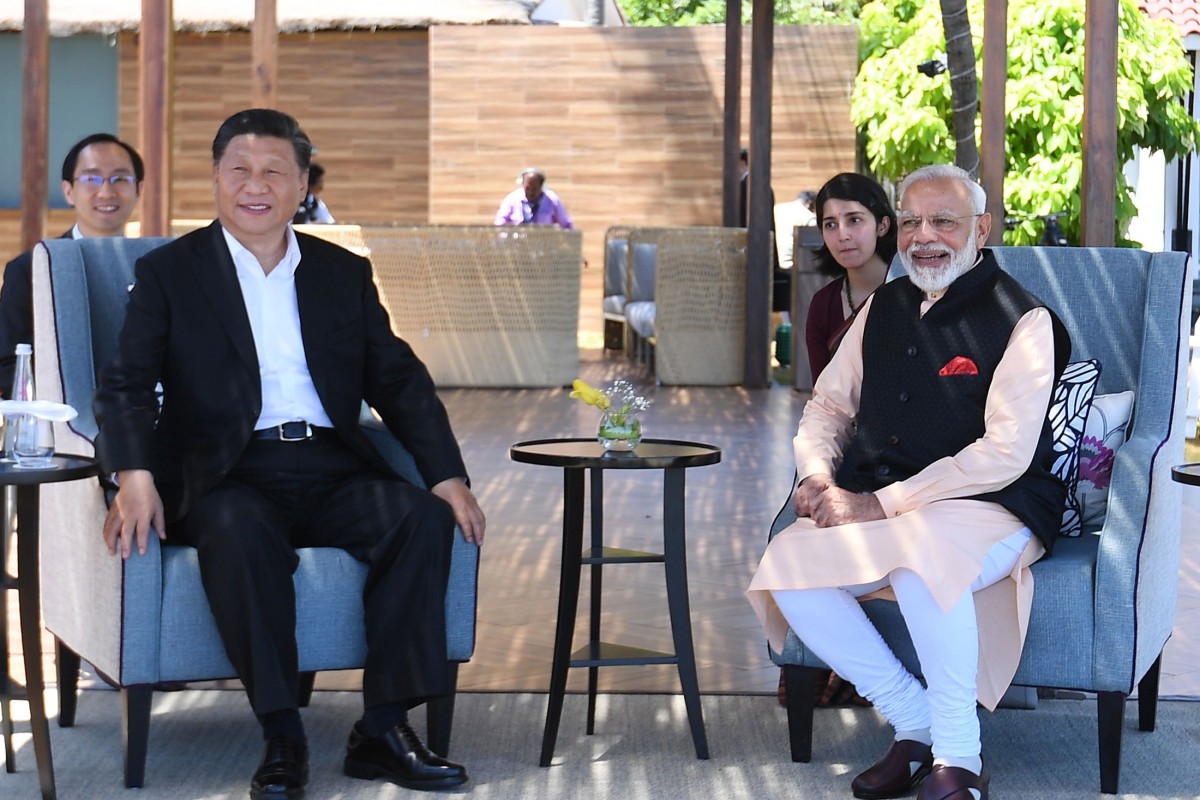
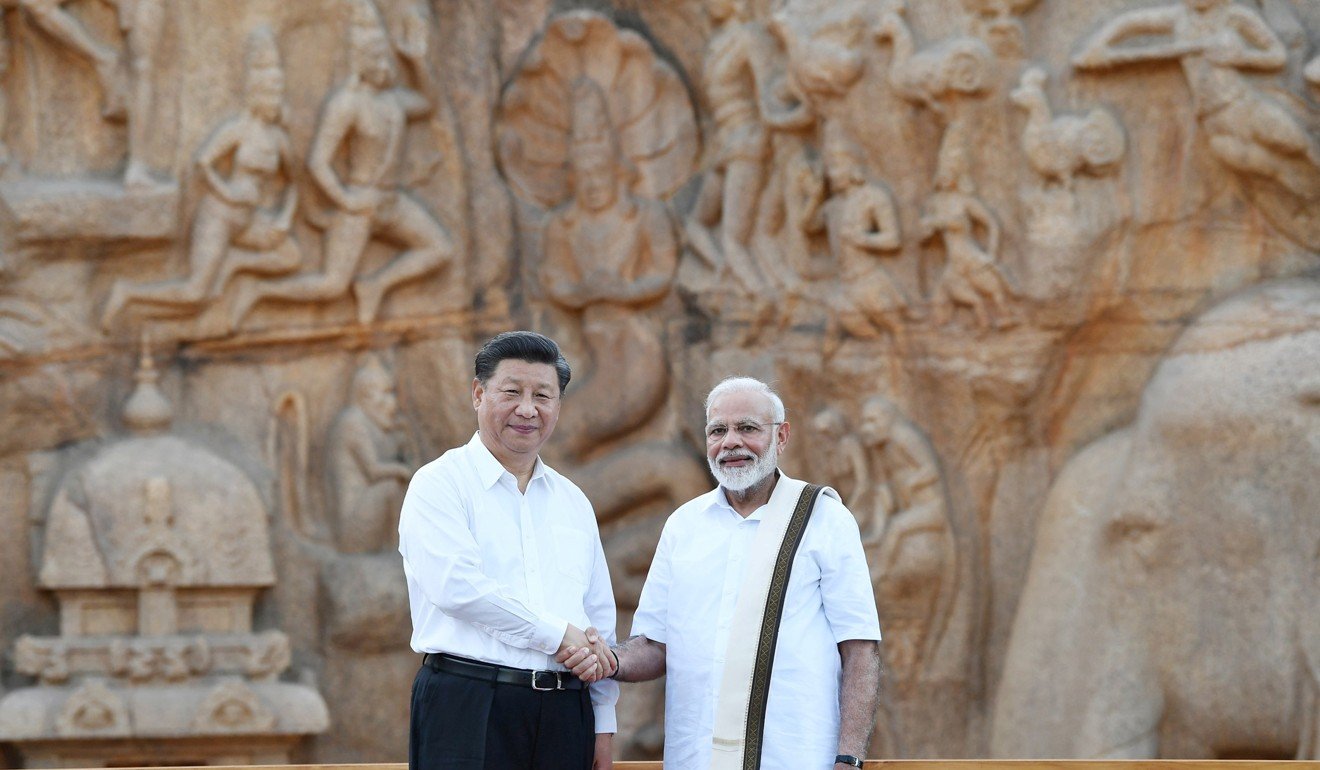
Indian Prime Minister Narendra Modi and Chinese President Xi Jinping during their meeting in Mamallapuram, Chennai. Photo: EPA
Chinese President Xi Jinping and Indian Prime Minster Narendra Modi concluded their second informal summit on Saturday by pledging to overcome trade differences and appreciate “each other’s autonomous foreign policies”, signalling an effort to focus on mutual interests rather than on long-standing contentious issues.
Modi remarked that both sides had agreed to be “sensitive” to each other’s concerns and not let differences escalate into disputes, while Xi called for communication to “alleviate suspicions” and for India and China to enhance strategic mutual trust, according to state news broadcaster CCTV.
Their desire to look beyond irritants in diplomatic ties, including a decades-long border row and China’s close military ties with India’s arch rival, Pakistan, comes as Beijing is embroiled in a tariff war with Washington that has rocked the global economy.
In a sign of China’s willingness to address India’s trade deficit with it, the leaders agreed to launch a “High Level Economic and Trade Dialogue”.
As Xi meets Modi, Chinese in Chennai hope to witness the ‘Wuhan spirit’
Chinese Vice-Premier Hu Chunhua and Indian Finance Minister Nirmala Sitharaman will meet regularly to discuss ways to boost two-way trade and investments, Indian foreign secretary Vijay Gokhale said in a media briefing.
India has a US$53 billion trade deficit with China, which makes up almost a third of its total trade deficit. It is also facing pressure to decide if it will commit to the China-led

Regional Comprehensive Economic Partnership

(RCEP), which aims to create the world’s largest trading bloc involving 16 countries before the end of the year.

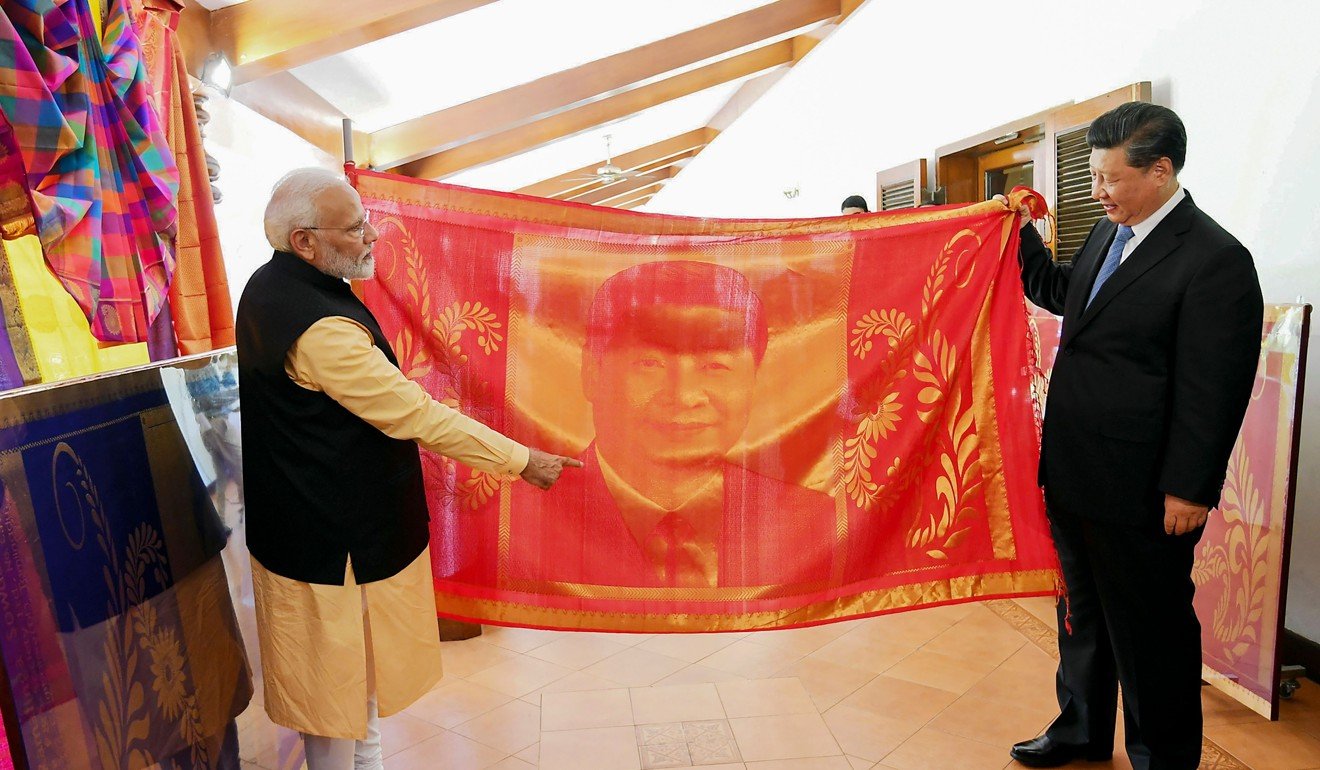
Narendra Modi exchanges gifts with Xi Jinping. Photo: AFP

Negotiations are ongoing with talks taking place in Bangkok this week, but India’s domestic producers have opposed the agreement over fears of a flood of Chinese imports. On Friday, the Indian government rejected clauses in the agreement related to e-commerce, according to reports.

Gokhale told the media briefing that both leaders, who met in the coastal town of Mamallapuram about 50km away from Chennai, briefly discussed the RCEP.

“PM Modi said India was looking forward to the RCEP but it is important that RCEP is balanced, that a balance is maintained in trade in goods, trade in services and investments,” he said, adding that Xi agreed to further discussions of India’s concerns on the issue.

Narendra Modi with Xi Jinping in Mamallapuram. Photo: EPA

CCTV said Xi had six suggestions for how China and India could further improve ties, including assessing each other correctly and stepping up cooperation between their militaries. Besides economic and trade dialogue, China welcomed Indian pharmaceutical and IT companies to invest there, he said.

“We should look at disputes with a correct mind, and not let disputes affect cooperation.

“Both sides should properly and fairly get a solution for border disputes that are acceptable to each other … [and] cautiously handle each other’s core interests, and take proper measures to control issues that cannot be resolved immediately,” the president reportedly said.

Gokhale told reporters that both countries had agreed to pursue, through special representatives, an ongoing dialogue on their disputed border. China and India have held more than 20 rounds of talks to resolve their boundary dispute, over which they went to war in 1962. Different mechanisms have been set up to maintain peace along the 4,000-kilometre (2,485-mile) so-called Line of Actual Control.

Xi and Modi bank on chemistry as they talk trade and terrorism

Gokhale confirmed that the leaders – who met for a total of seven hours over Friday and Saturday, with the bulk of their time spent in one-on-one talks – did not discuss 

Kashmir

, a region that is currently divided between India and Pakistan but which both nuclear-armed rivals claim in full.

Since India revoked the autonomy of the area it controls in August and imposed a lockdown,

Pakistan

has lobbied its allies – including its all-weather friend China – to support its opposition to the move. New Delhi had reacted sharply to Beijing’s move to take the matter to the United Nations, insisting that it was a purely bilateral issue. Two days before the summit, Xi had hosted Pakistan Prime Minister Imran Khan and had assured him of China’s support on all core issues, a statement that had irked India.

Gokhale said both leaders “emphasised the importance of having independent and autonomous foreign policies”.
“President Xi said that the two countries needed to have more extensive dialogue in order to understand each other’s perspectives on major global and regional issues,” he added.
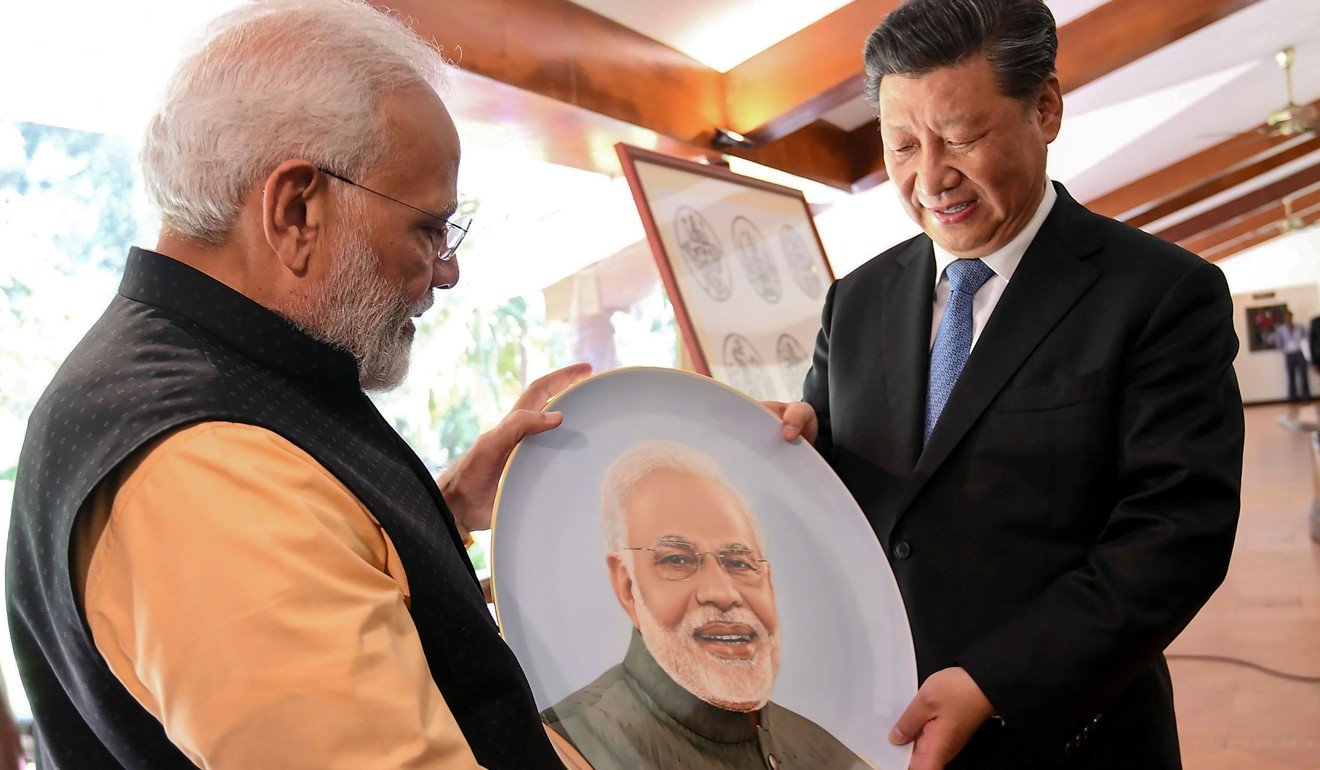
Narendra Modi exchanges gifts with Xi Jinping. Photo: AFP

The leaders also discussed terrorism, with a statement issued later by New Delhi saying both sides would make efforts to ensure the international community strengthened its framework “against training, financing and supporting terrorist groups throughout the world and on a non-discriminatory basis”.

The China-led multilateral Financial Action Task Force, which has been investigating Pakistan’s efforts to stamp out the financing of terrorism, is expected to decide soon if it would add Islamabad to its blacklist along with Iran and North Korea, a move that could invite stringent economic sanctions and drive away international financial institutions, both of which could affect Pakistan’s already-indebted economy adversely.

Gokhale added that as 2020 is the 70th anniversary of diplomatic ties between both countries, India and China will hold 70 events next year to promote people-to-people ties, with Modi accepting an invitation by Xi for the next informal summit to be held in China.

Both leaders had struck positive notes on the summit – with Xi describing their discussions as “candid” and between friends and Modi hailing the “Chennai Connect” meeting as marking a new era of cooperation between both countries.

War games, Kashmir and a US$57b question: the issues as Xi meets Modi

But analysts said they would be looking to see how the newly-announced high-level mechanism on trade panned out.

Narayani Basu, a New Delhi-based author, foreign policy analyst and China watcher felt the summit had achieved its purpose of bagging small wins for both sides.

“Discussing contentious issues would have defeated the purpose of the summit. The idea behind such a summit must be that despite the overarching posturing on different divergent issues, the two countries can achieve the easily-achievable wins. That is what the summit seems to have tried doing.”

But in terms of actual outcomes, she said she remained sceptical.

“I don’t think there has been much progress in the ties between the two countries since the last summit in Wuhan. Hence, this time, there is a lot more caution and scepticism towards such a summit,” she said, referring to the first summit last year in the Chinese city of Wuhan.

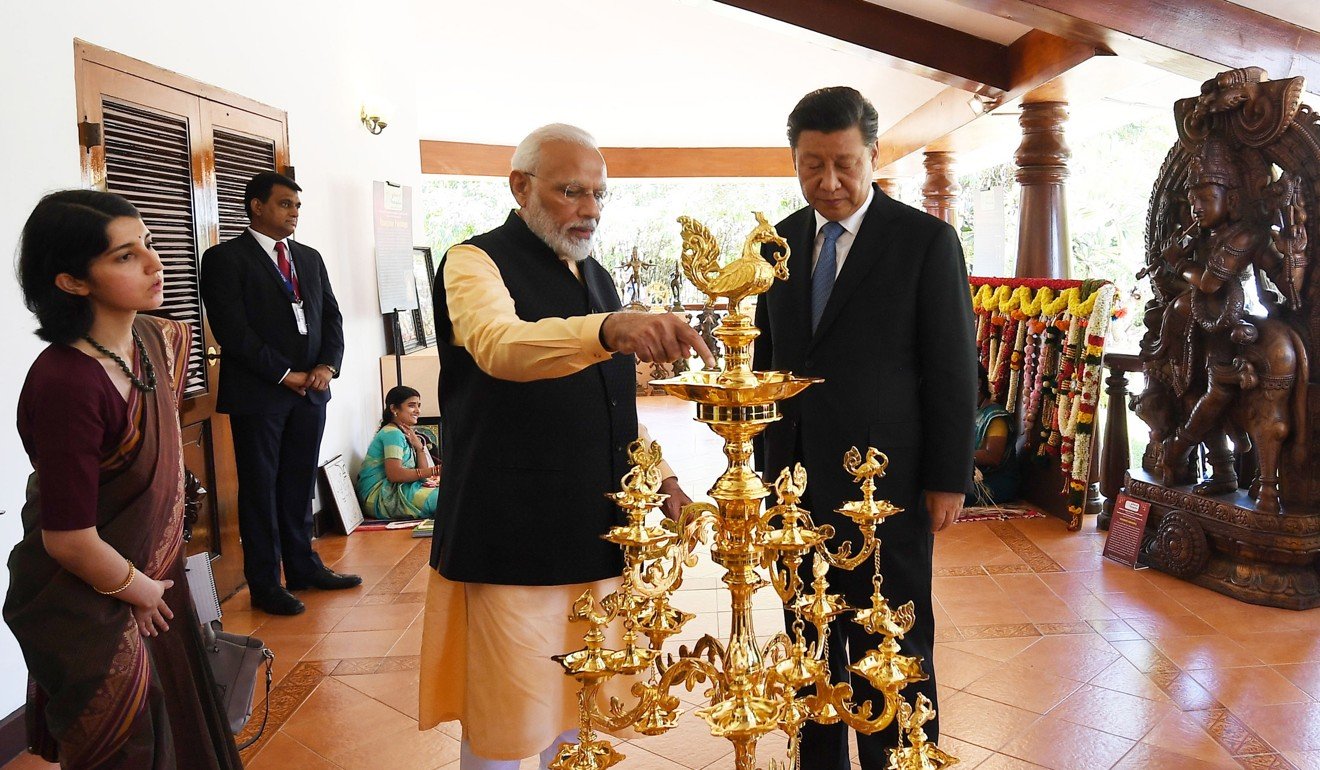
During Xi’s visit to southern India, which lasted 24 hours in all, Modi took him on a personal tour of temple monuments dating back to the seventh and eighth century in Mamallapuram when regional leaders had trade ties with Chinese provinces. He was also shown local artisan handicrafts and art forms, and gifted a handwoven silk portrait, a lamp and a painting.

Xi gave Modi a porcelain plate with the image of the prime minister’s face printed on it.

Xi Jinping with Narendra Modi in Mamallapuram. Photo: Reuters

On Friday, New Delhi announced that visa rules for Chinese nationals visiting India would be relaxed, with multiple-entry visas with a validity period of five years available from this month onwards. At present, most visas are single-entry and usually for between 30 and 60 days. Visa fees would also be reduced, the government said, with the multiple-entry visa costing US$80.

This was aimed at further enhancing “people-to-people exchanges between the two countries and [encouraging] more Chinese tourists to choose India as a destination for tourism purposes,” it said in a statement.

Xi left Chennai on Saturday afternoon and arrived in Nepal, which lies in between India and China. He will be the first Chinese president to visit Nepal in 22 years and is expected to sign a slew of deals with Nepal’s Prime Minister K.P. Sharma Oli, including the planned extension of the rail link from remote, mountainous Tibet to Nepal’s capital, Kathmandu.

The link will be part of Beijing’s ambitious infrastructure project to boost trade, the 

Belt and Road Initiative

(BRI), that Nepal joined two years ago.

More than 120 countries have signed on to the BRI, including Pakistan, where a series of projects worth US$46 billion are being constructed under the China-Pakistan Economic Corridor (CPEC). India has snubbed the BRI and questioned the transparency of funding agreements.
Source: SCMP
11/10/2019

Spotlight: Film, yoga, smartphone industries enhance China-India links

INDIA-CHINA-FILM-YOGA-SMARTPHONE

 People practice yoga at a park in New Delhi, India, June 21, 2019. TO GO WITH: Spotlight: Film, yoga, smartphone industries enhance China-India links (Xinhua/Zhang Naijie)

by Xinhua writers Chen Jian, Zhao Xu, Zhang Xingjun

CHENNAI, India, Oct. 11 (Xinhua) — “I would like to see a lot of collaboration between creative people from China and India, making stories that people from both countries would love to see,” said Bollywood star Aamir Khan before a film-promotion trip to China in early 2018.

As one of the most recognized Indian actors in China, Khan’s biographical sports film “Dangal” raked in nearly 1.3 billion yuan (190 million U.S. dollars) in the Chinese box office in 2017, making it the highest-grossing Indian film of all time in China.

Inspired by the real journey of an Indian wrestler, Khan acted the part of a strict father who turned his daughters into world-class athletes.

From “Dangal” and “Secret Superstar” to “Hichki” and “Thugs of Hindostan,” Bollywood hits have been immensely popular among Chinese moviegoers in recent years. Older generations were impressed by Indian films like “Awara” (1951) and “Caravan” (1971), which featured spectacular song-and-dance scenes.

Khan, who has visited China several times, said he felt Chinese and Indian people have many things in common. For example, both peoples attach great importance to family, he told Xinhua.

“Many people get to know a certain country through watching their movies. Through my work, quite a few foreign viewers start to know the sorrows and happiness of ordinary Indian people,” Khan said, adding that artists can help people with different cultural backgrounds understand each other.

Bollywood actress Rani Mukerji, whose Hindi comedy-drama film “Hichki” was screened in China last year, said Chinese audience watching her film with Chinese subtitles reacted similarly to Indian fans.

“You realize that you don’t have to know the language to connect with the film. I think that’s what makes movies so, so special … If the emotions are universal, it can connect anywhere,” she told Xinhua in an interview earlier this year.

In “Hichki,” Mukerji played the leading role of an aspiring teacher with Tourette Syndrome, who must prove herself by educating a group of underprivileged students.

Taking note of Bollywood’s developed industrial system and China’s huge film market, the Indian actress is also looking forward to India-China film co-productions.

“I am actually very keen to do India-China co-productions where I can be part of a Chinese film or Chinese actors can be part of Indian films,” she said.

YOGA IN CHINA

Before Yu Songsong, a young man from southwest China’s Guizhou Province, started to practice yoga, he knew little about India, where the practice originated.

Having spent the last six years learning yoga, he is attracted by the yoga culture and eager to travel to India.

Yu used to suffer from an emotional disorder. “It was yoga that turned me around. I was no longer lost. I’ve found a direction for my life,” he said.

Yu started to practice yoga when he was a freshman and became a vegetarian. “The physical and mental practices relieved me of psychological distress,” he said.

Through yoga, Yu is engaging in a comparative study in the philosophies of China and India, two ancient civilizations in the world.

“In the class, we discuss and compare the traditional Chinese theory that ‘man is an integral part of nature’ and the Indian idea that ‘the Buddha and I are one.’ Through this, we explore the similarities that underline the culture and civilizations of the two countries,” he said.

The China-India Yoga College, established at Kunming’s Yunnan Minzu University in June 2015, is China’s first yoga college. Fifty branches are planned to be opened in China’s major cities in the next three to five years, and are attracting batches of Indian yoga teachers to China, with 38-year-old Subbulakshmi Velusamy being one of them.

Velusamy arrived in Kunming in late 2015 and quickly adapted to the climate and life there. She said the local diet is light, which is very palatable to yoga practitioners and vegetarians.

Velusamy said teaching yoga in Yunnan was a wonderful experience as the Chinese people around her were very helpful and kind.

“They often chat with me after class and invite me to parties,” she told Xinhua in an earlier interview.

Velusamy said she was eager to learn about the ancient Chinese civilization. At the same time she introduced yoga to more Chinese as a unique and valuable Indian cultural asset.

Indian Prime Minister Narendra Modi has played a significant role in spreading yoga at home and abroad. He was instrumental in urging the United Nations to mark June 21 as International Yoga Day.

“Beyond exercise and health, yoga is about life, self-awareness and a connection with your soul. So I expect my students to understand their consciousness in today’s technologically-driven world,” said Rama Rathore, a yoga trainer in New Delhi.

CHINESE SMARTPHONE BRANDS

Smartphones are becoming easily available to everyone thanks to their affordable prices. With the exploding growth of Internet data usage and its access across the country, millions of Indians are now connected with the world thanks to their smartphones.

“It is the people’s window to the world and the growth opportunity in this sector is huge,” said Saifi Ali, a head researcher associated with a leading telecom operator located in Gurgaon on the outskirts of New Delhi.

“India has overtaken the United States in the smartphone market,” he said.

Meanwhile, Chinese smartphone brands, such as Xiaomi, Oppo and Vivo, have been successful in India’s fast growing market, according to global market research firm Canalys.

Xiaomi has been the leading smartphone brand in India for eight consecutive quarters, with a 28.3-percent market share for the second quarter of this year.

Xiaomi has become the first brand in India to sell more than 100 million smartphones within a span of five years, since the company began operations in the country in 2014.

Jobs and technical training provided by the Chinese companies have helped many Indian workers to enhance their technical skills and earn good money.

Neeraj Sharma, 25, is an Indian employee at MCM, a Noida-based Chinese company of smart terminal equipment. Sharma said he has learned a lot from the company and his technical skills have also improved.

“From here I started learning practical knowledge. Everything I know about the technology we are using here for SMT (Surface Mount Technology) and also in assembly is from this company. I started from the very lowest designation and right now I am working as a floor-in-charge there,” he told Xinhua in a recent interview.

Thanks to his stable income from MCM, Sharma, who is from the northern Uttar Pradesh state, has fulfilled his dream of buying a house in Noida, outside New Delhi.

“I came here, so at that time I had planned to buy a house here for my family. Right now I have already bought a small house. Maybe further in the future I will have a flat,” he said.

Source: Xinhua

09/10/2019

India’s Modi to host China’s Xi at summit with ties strained by Kashmir

NEW DELHI (Reuters) – India’s Prime Minister Narendra Modi will welcome Chinese President Xi Jinping at an informal summit this week, the Indian foreign ministry said on Wednesday, their talks coming at a time of strained ties over the disputed region of Kashmir.

The meeting in the southern Indian city of Chennai on Oct. 11-12 is aimed at enhancing the rapport the leaders built when they met in the Chinese city of Wuhan last year to help stabilise ties after a standoff in another contested section of their long border, far removed from Kashmir.

But India’s decision in August to withdraw special status for Kashmir drew sharp condemnation from Pakistan and its old ally, China, which took the matter to the U.N. Security Council.

During a meeting with Pakistan Prime Minister Imran Khan in Beijing on Wednesday, Xi said that he was watching the situation in Kashmir closely, the official Xinhua News Agency reported.

Xi said that the right and wrong of the situation was clear and India and Pakistan should resolve the dispute via peaceful dialogue, according to Xinhua.

India says its revocation of the special status of Muslim-majority Kashmir, which was accompanied by a crackdown on dissent by the security forces, is an internal matter aimed at developing the Himalayan territory, which is also claimed by Pakistan, more quickly.

India will make clear that any change to its Jammu and Kashmir state is an internal affair if the Chinese side were to raise the matter in the forthcoming talks, a government source said.

China’s close security ties with Pakistan have long been a matter of concern in New Delhi and in recent years India has drawn closer to the United States to help balance China’s rising weight across the region.

“The forthcoming Chennai Informal Summit will provide an opportunity for the two leaders to continue their discussions on overarching issues of bilateral, regional and global importance and to exchange views on deepening India-China Closer Development Partnership,” the Indian ministry said in a statement.

“OMINOUS SIGNALS

China, which has been criticised by the United States for its treatment of members of Muslim ethnic minorities, said it believed India and Pakistan must refrain from taking unilateral action in Kashmir and has expressed concern over human rights violations there. India has dismissed those concerns.

Srikanth Kondapalli, professor of Chinese studies at New Delhi’s Jawaharlal Nehru University, said it was important for the nuclear-armed neighbours to stabilise relations as both dealt with domestic and regional issues.

“The second informal meeting as such is significant given these ominous signals at bilateral, regional and global levels,” he said.

Xi will also make a state visit to Nepal at the end of his India visit, the first by a Chinese president in 22 years, the Nepali foreign ministry said.

China has deepened ties with India’s neighbours, building ports and power stations in an arc stretching from Bangladesh to Sri Lanka and Pakistan as part of its grand Belt and Road energy and infrastructure plan.

Ahead of Xi’s trip to India, China invited Pakistan’s Prime Khan for talks and said it supports Pakistan in safeguarding its independent sovereignty and territorial integrity.

The Himalayan region of Kashmir is divided between India, Pakistan and China. India rules the populous Kashmir Valley and the Hindu-dominated region around Jammu city, while Pakistan controls a wedge of territory in the west, and China holds a thinly populated high-altitude area in the north.
During Xi’s visit, Modi is expected to raise economic issues, including India’s $53 billion trade deficit with China in 2018/19, and the smaller presence of Indian companies in China compared with that of other major economies.
Source: Reuters
13/09/2019

Thousands detained in Indian Kashmir crackdown, official data reveals

SRINAGAR/NEW DELHI (Reuters) – Authorities in Indian Kashmir have arrested nearly 4,000 people since the scrapping of its special status last month, government data shows, the most clear evidence yet of the scale of one of the disputed region’s biggest crackdowns.

Muslim-majority Kashmir, claimed by both India and Pakistan, has been in turmoil since India stripped its portion of the region of its autonomy and statehood on Aug. 5, leading to clashes between security forces and residents and inflaming tension with Pakistan.

India said the removal of the status that its part of Kashmir has held since independence from Britain in 1947 would help integrate it into the Indian economy, to the benefit of all.

In an attempt to stifle the protests that the reform sparked in Kashmir, India cut internet and mobile services and imposed curfew-like restrictions in many areas.

It has also arrested more than 3,800 people, according to a government report dated Sept. 6 and seen by Reuters, though about 2,600 have since been released.

A spokeswoman for India’s interior ministry did not respond to a request for comment. Neither did Jammu and Kashmir police.

It was not clear on what basis most of the people were being held but an Indian official said some were held under the Public Safety Act, a law in Jammu and Kashmir state that allows for detention for up to two years without charge.

The data for the first time shows the extent of the detentions, as well as indicating who was picked up and where.

More than 200 politicians, including two former chief ministers of the state were arrested, along with more than 100 leaders and activists from an umbrella organisation of pro-separatist political groups.

The bulk of those arrested – more than 3,000 – were listed as “stone pelters and other miscreants”. On Sunday, 85 detainees were shifted to a prison in Agra in northern India, a police source said.

Rights group Amnesty International said the crackdown was “distinct and unprecedented” in the recent history of the region and the detentions had contributed to “widespread fear and alienation”.

“The communication blackout, security clampdown and detention of the political leaders in the region has made it worse,” said Aakar Patel, head of Amnesty International India.

‘RIGHT TO LIFE’

India says the detentions are necessary to maintain order and prevent violence, and points to the relatively limited number of casualties compared with previous bouts of unrest.

The government says only one person is confirmed to have died compared with dozens in 2016, when the killing of a militant leader sparked widespread violence.

“The right to life is the most important human right,” India’s national security adviser Ajit Doval told reporters recently.

The report contains data from the 13 police districts that make up the Kashmir Valley, the most populous part of the Himalayan region where the main city of Srinagar is located.

The largest number of arrests have been in Srinagar, the data shows, at nearly 1,000. Earlier unrest often centred in rural areas.

Of the detained political leaders, more than 80 were from the People’s Democratic Party, formerly in coalition in Jammu and Kashmir state with the ruling Bharatiya Janata Party.

About 70 are from the National Conference, which has for years dominated politics in Indian Kashmir, and more than a dozen from India’s main opposition Congress party.

Police also arrested more than 150 people accused of association with militant groups fighting Indian rule.

An Indian official said it was likely that more than 1,200 people were still held, including all the high-profile politicians and separatists mentioned in the report, while dozens more are being arrested every day.

In the 24 hours before the report was compiled, more than two dozen people were arrested, mainly on suspicion of throwing stones at troops, the data showed.

The data did not include those under informal house arrest, nor people detained in a round-up of separatists that began in February after a bomb attack by a Pakistan-based militant group on Indian troops.

Days before India’s move to strip Kashmir of special status, one prominent separatist leader told Reuters that more than 250 people with links to the movement were already in detention.

Source: Reuters

12/09/2019

India wants industry protected in China-backed trade deal – minister

NEW DELHI (Reuters) – India will only sign a 16-member Asia-Pacific trade pact if its local industry is protected and if the deal would not lead to indiscriminate imports, the trade minister said on Wednesday.

Talks are ongoing to negotiate the China-initiated Regional Comprehensive Economic Partnership (RCEP), Piyush Goyal said, without specifying whether India would sign the deal in 2019.

New Delhi had asked South Korea and Japan to review free trade agreements with India, he added.

Source: Reuters

07/09/2019

Chinese Foreign Minister Wang Yi visits Pakistan amid tensions over Kashmir

  • He is expected to join a trilateral dialogue with his counterparts from Pakistan and Afghanistan, and observers say he may try to mediate in Kashmir dispute
  • Trip also includes a stop in Nepal that could pave way for a visit by Xi Jinping
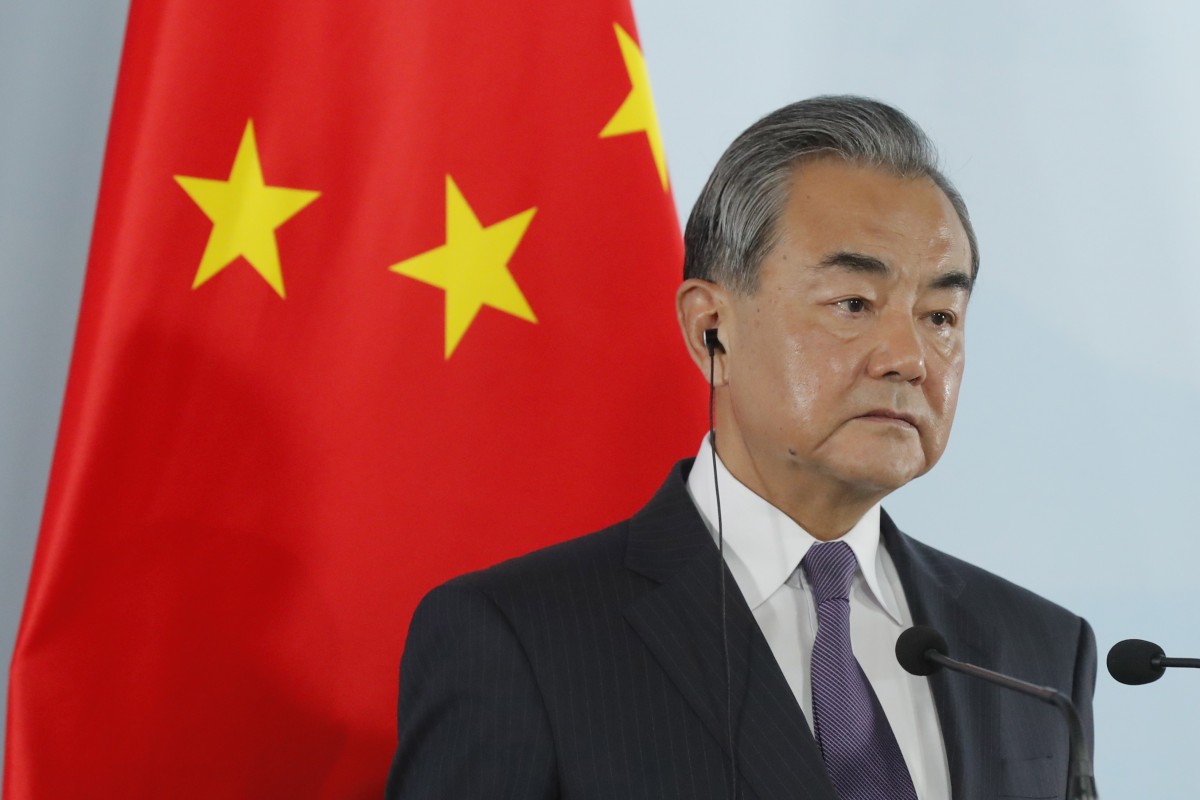
Chinese Foreign Minister Wang Yi may try to act as a negotiator in the Kashmir dispute. Photo: EPA-EFE
Chinese Foreign Minister Wang Yi began a four-day trip to Pakistan and Nepal on Saturday, amid escalating tensions between Islamabad and New Delhi over

Kashmir

.

Wang was expected to join a trilateral dialogue with the foreign ministers of Pakistan and Afghanistan in Islamabad, foreign ministry spokesman Geng Shuang said on Friday. He will also travel to Nepal.

Beijing has criticised India’s decision last month to strip the Jammu and Kashmir autonomous state of its special status and break it into two federally controlled territories, calling it “unacceptable”.

China also formally backed Pakistan’s request for the United Nations Security Council to hold “closed consultations” on the revocation of the state’s autonomy.

Meanwhile, observers say the Chinese foreign minister could attempt to act as a negotiator in the complex border dispute.
“Wang might try to play a role to mediate between the two sides to resolve the crisis,” said Wang Dehua, head of the Institute for South and Central Asia Studies at the Shanghai Municipal Centre for International Studies. “This has been China’s long-held position on the issue.”

Pang Zhongying, an international relations researcher at Ocean University of China in Qingdao, agreed.

“[Indian Prime Minister] Narendra Modi has visited China a couple of times and it is likely [Chinese President] Xi Jinping will visit India soon,” he said. “If Xi is to visit India later this year, China may try to contain its differing views with India on Kashmir.”

Modi has proposed an informal summit with Xi later this year that may be held in the religious hub of Varanasi, Modi’s parliamentary constituency. New Delhi said in May that Indian officials were working with the Chinese side to finalise the details, but Beijing has yet to confirm Xi’s visit.

India dismisses Beijing’s concerns over Kashmir because ‘it won’t have any impact on China’
Wang Yi was also due to visit India later this month for border talks, but the trip had to be postponed at the request of New Delhi because of scheduling problems, Hindustan Times reported, citing China’s foreign ministry.

The row over Kashmir has escalated in the past month. Pakistani Prime Minister Imran Khan said on Friday that Islamabad would make the fullest possible response to New Delhi’s actions in disputed Kashmir and that the global community would be responsible for any “catastrophic” aftermath.

Since Modi withdrew special rights for Indian-administered Kashmir on August 5, India has flooded the Kashmir valley with troops, restricted the movements of residents and cut off communication.

Both India and Pakistan claim the whole of Kashmir, which was partitioned between the two following the end of British rule in 1948, and they have subsequently fought wars over the territory.

China has its own territorial dispute with India over the part of Kashmir it controls. In early August, Chinese foreign ministry spokeswoman Hua Chunying 

called Modi’s move “unacceptable”

and said it was not binding. Beijing later appeared to soften its rhetoric, with Hua calling for a solution through dialogue and negotiation, without criticising either side.

The Chinese foreign minister will also visit Nepal, where he is expected to meet his counterpart, the president and prime minister. The trip could pave the way for an expected visit by Xi to Nepal.
Source: SCMP
Law of Unintended Consequences

continuously updated blog about China & India

ChiaHou's Book Reviews

continuously updated blog about China & India

What's wrong with the world; and its economy

continuously updated blog about China & India