Archive for ‘Peking University’

09/08/2019

Chinese scientists discover oldest fossil forest in Asia

WASHINGTON, Aug. 8 (Xinhua) — Chinese scientists discovered the oldest fossil forest in Asia, lending more clues to how those ancient plants evolved to become coal finally.

The study published on Thursday in the journal Current Biology reported the largest example of a patch of forest that grew in the Devonian period, which was 419 million to 359 million years ago.

It was made up of 250,000 square meters of fossilized lycopsid trees near Xinhang Town in east China’s Anhui Province.

The lycopsids in the fossilized forest resembled palm trees, and grew in a coastal environment prone to flooding. They were normally less than 3.2 meters tall, but the tallest one was estimated at 7.7 meters, according to the study.

Giant lycopsids would later thrive in a period that followed the Devonian, and became much of the coal that is mined today. The Xinhang forest in Anhui showed the early root systems, which made their height possible in the Carboniferous period (359 million to 299 million years ago), according to the study.

The forest also contributes to our understanding of atmospheric carbon dioxide decline and coastal consolidation at that time.

“The large density as well as the small size of the trees could make Xinhang forest very similar to a sugarcane field, although the plants in Xinhang forest are distributed in patches,” said the paper’s lead author Wang Deming, a professor in the School of Earth and Space Sciences at Peking University.

“It might also be that the Xinhang lycopsid forest was much like the mangroves along the coast, since they occur in a similar environment and play comparable ecologic roles,” said Wang.

Source: Xinhua

01/08/2019

Will China send in the troops to stamp out protests in Hong Kong?

  • Fears are growing in the city that the military could be called in to quell unrest
  • But the costs and complexities of doing so mean Beijing is highly unlikely to give the orders, observers say
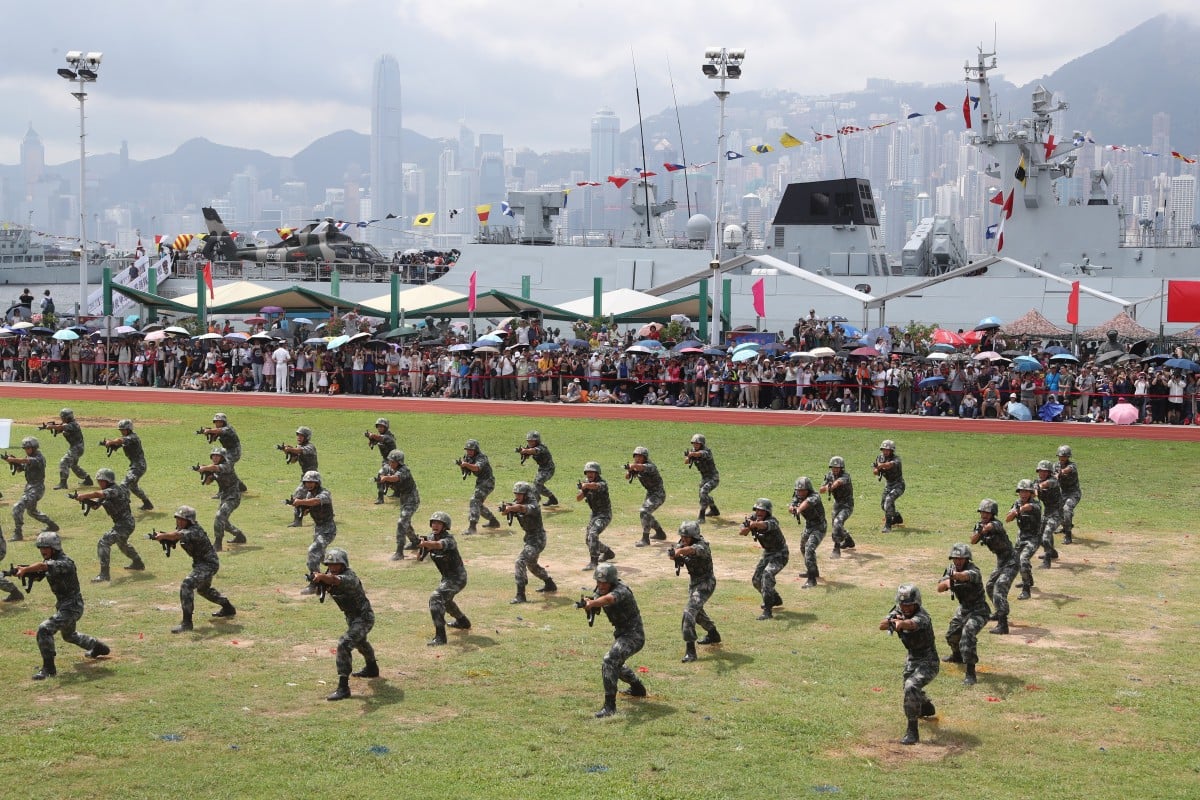
PLA soldiers show their skills during a naval base open day in Hong Kong. The PLA has had a presence in Hong Kong since the city’s return to Chinese sovereignty. Photo: K.Y. Cheng
It is a prospect dreaded by many in Hong Kong, but debate is growing in mainland China about whether the central government should end weeks of upheaval in the city by sending in the People’s Liberation Army (PLA).
The PLA has had a presence in Hong Kong since the city’s return to Chinese sovereignty but – unlike in mainland China – memories of the military’s bloody suppression of pro-democracy students and activists in Beijing in 1989 are still strong in the city three decades on.
Still, images of protesters vandalising Beijing’s liaison office in downtown Hong Kong on Sunday have fanned nationalist anger across the mainland, prompting calls for PLA intervention.

Concerns only deepened on Wednesday when defence ministry spokesman Wu Qian commented on the recent clashes and protests in Hong Kong. Without suggesting any action or plans by the PLA, Wu made clear that the Garrison Law, which governs the operations of PLA troops in Hong Kong, already stipulates that the PLA is legally allowed to help the city maintain law and order at the request of Hong Kong’s government.

“We are closely following the developments in Hong Kong, especially the violent attack against the central government’s liaison office by radicals on July 21,” Wu said.

“Some behaviour of the radical protesters is challenging the authority of the central government and the bottom line of ‘one country, two systems’,” he warned, referring to the formula that grants Hong Kong a high degree of autonomy for 50 years. “This is intolerable.”

Both Article 14 and Article 18 of the Basic Law – the city’s mini-constitution – spell out how and under what circumstances the PLA troops in Hong Kong can be used.

While the legality is clear, analysts still believe that given the exorbitant political cost and complexities involved, using the military would remain an unlikely last resort.

Even Hu Xijin, editor-in-chief of China’s nationalist tabloid Global Times, has spoken out against the idea, citing its “huge political cost” and the “severe uncertainty” it might bring to the situation.

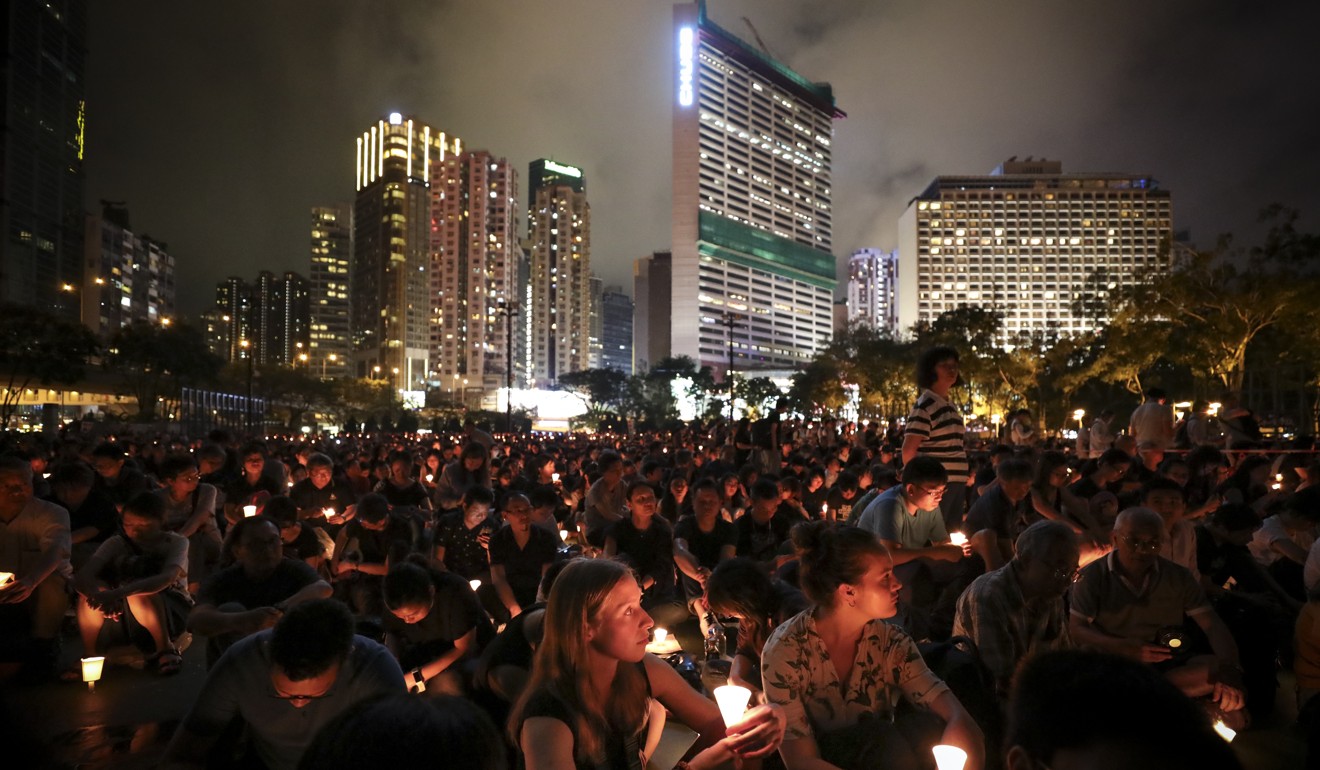
Crowds hold candles at a vigil in Victoria Park in Hong Kong in June to mark the 30th anniversary of the Tiananmen Square crackdown. Photo: James Wendlinger

“Once the PLA has taken charge of the situation in Hong Kong and quelled the riots, what’s next?” Hu said in a social media post on Monday.

Hu said there were no governance procedures in place that would allow the PLA to operate in Hong Kong and return things to normal. He also warned that any such action would be followed by international condemnation and a severe backlash among the Hong Kong public.

“The [PLA’s] Hong Kong garrison is the symbol of national sovereignty. It is not a fire brigade for law and order in Hong Kong,” he said.

Any move to use the Chinese troops will create a furore in the US Congress … They will re-examine the Hong Kong Policy Act very carefully Larry Wortzel, senior fellow at American Foreign Policy Council

The South China Morning Post reported last week that military force was not an option for mainland leaders working on a strategy to resolve the city’s biggest political crisis in decades.
And in June Major General Chen Daoxiang, commander of the Hong Kong garrison, assured David Helvey, US principal deputy assistant secretary of defence for Indo-Pacific security affairs, that Chinese troops would not interfere in the city’s affairs, according to Reuters.
The comments support analysts’ assessments that deploying the PLA is not a viable solution to Hong Kong’s crisis.
“Will the mobilisation of PLA troops further inflame the situation? There might be people who will resist or even revolt against the PLA, and that may lead to bloodshed,” said Lau Siu-kai, vice-chairman of the Chinese Association of Hong Kong and Macau Studies, a semi-official think tank.

The last time Beijing sent in troops to quell pro-democracy protests was during the Tiananmen Square crackdown on June 4, 1989 – bloodshed that has stained the PLA and the Communist Party to this day, despite decades of efforts to wipe it from public memory.

The last time Beijing sent in troops to quell pro-democracy protests was during the Tiananmen Square crackdown in 1989. Photo: Reuters

“Although they don’t like to admit it, they know they made a mistake in the way they used the PLA [in 1989],” said Larry Wortzel, a long-time PLA watcher, who witnessed the crackdown as an assistant military attache at the US embassy in Beijing 30 years ago.

“In subsequent years, when there were major demonstrations, they managed to handle them with either the People’s Armed Police [PAP] or the Public Security Bureau [PSB], or in some cases a combination of both,” said Wortzel, now a senior fellow in Asian security at the American Foreign Policy Council in Washington.

If the military was deployed [in Hong Kong], it would mean China was ready to shut its doors completely Chen Daoyin, a Shanghai-based political analyst

The PAP is a 1.5 million-strong paramilitary police force tasked with maintaining domestic security and order, while the PSB is the country’s police force.
The June 4 crackdown is still widely remembered in Hong Kong, where tens of thousands gather every year on its anniversary for a candlelight vigil in the heart of the city.
“The activities in Hong Kong and the Chinese Communist Party’s conduct there have really had a profound impact on thinking in Taiwan. It has killed any chance with any political party of [supporting] the one country, two systems,” Wortzel said.
Chinese military can be deployed at Hong Kong’s request to contain protests, Beijing says
“The last thing President Xi Jinping and the Politburo Standing Committee would want to do, if they can avoid it, is to use the PLA [in Hong Kong].”
The situation in Hong Kong is also being closely watched in the West, with many international firms basing regional headquarters in the Asian financial hub, thanks to its capitalist system and rule of law.
Deploying the PLA to Hong Kong would certainly spark an international outcry and draw huge pressure from Western countries, said Liang Yunxiang, an international affairs expert at Peking University.

“Britain, of course, would have the harshest criticism since it governed Hong Kong for a long time and signed treaties with China to ensure Beijing would keep its commitment to one country, two systems,” Liang said.

In the United States, the repercussions could go beyond verbal condemnation to a shift in policy that might fundamentally change Hong Kong’s status as an international financial centre and prompt an exodus of businesses, according to Wortzel.

“Any move to use the Chinese troops will create a furore in the US Congress … They will re-examine the Hong Kong Policy Act very carefully,” he said, referring to the bill passed in 1992 that allows Hong Kong to be treated as a non-sovereign entity distinct from mainland China on trade and economic matters.

Hong Kong head blasts violence, amid further extradition bill unrest

“They will simply treat Hong Kong like another Chinese city, which affects export controls and how the financial industry operates.”

Just last month, members of Congress reintroduced the bipartisan Hong Kong Human Rights and Democracy Act. If the legislation is passed, the US could revoke Hong Kong’s special status under American law if Beijing fails to ensure the city has “sufficient autonomy”.

The crisis comes as Beijing’s ties with Washington are already strained by a year-long trade war that has spilled into other areas of bilateral relations.

PLA troops go through their paces for the public at their Hong Kong barracks during an open day. Photo: Edward Wong

There is also mounting international pressure on China over issues such as its mass internment and political indoctrination of an estimated million or more members of Muslim minorities in Xinjiang, despite the Chinese government’s repeated denials of ill-treatment of the inmates and attempts to defend its policies.

Chen Daoyin, a Shanghai-based political analyst, said the increasing scrutiny China faced from Western countries – whether in the form of punitive tariffs or restrictions on technology – made it all the more important for China to keep Hong Kong as an open channel to connect with the world.

“If the military was deployed [in Hong Kong], it would mean China was ready to shut its doors completely,” Chen said.

Lau, from the Chinese Association of Hong Kong and Macau Studies, said the PLA should only be deployed as a last resort.

Two calls per second ‘jammed emergency lines’ during Hong Kong violence

“It would be a huge blow to the principle of ‘letting Hong Kong people govern Hong Kong with a high degree of autonomy’, since it will prove that Hong Kong people are not up to the task of governing themselves,” he said.

Hu, from Global Times, said the PLA troops could be used only if the authorities lost control of the city or an armed rebellion broke out.

Short of that, he said, the central government should let the chaos in Hong Kong run its course and wait for the public mood to flip.

This strategy of sitting it out hinges on the city’s police force holding the line and stopping Hong Kong’s slide into total anarchy.

Wortzel also warned that there were lines protesters should not cross – or risk provoking the use of military force.

“For instance, to this point, demonstrators have not gone up against the PLA garrison or any of its outposts. If they did that, I think it’s possible – actually it is very likely – that there will be a limited mobilised response [to defend the facilities],” he said.

While most analysts said the chance of Beijing resorting to military force was slim, the very idea – ludicrous to even discuss three months ago – has become a popular topic on social media on the mainland, where the discussion is not censored and many commenters support it.

The official media have been careful not to touch the subject but they too have stepped up rhetoric against the protests in Hong Kong.

In a rare move, state-run China Central Television has run commentaries and reports about protests in Hong Kong during its main evening news for five days in a row.

Only the most politically important issues receive such unusual treatment.

Source: SCMP

06/07/2019

China Focus: Peacebuilders in China-Japan friendship

TIANJIN/BEIJING, July 6 (Xinhua) — Even at the age of 100, Yang Enze, one of the founders of China’s optical communication, does not stop his research and teaching as a professor at Tianjin University.

Besides his pioneering achievements as the chief engineer of China’s first optical communication project for practical use in the 1970s, Yang is also known as a survivor and a witness of the war of Japanese aggression against China.

“I was admitted to Wuhan University in 1937, the year when Japanese troops attacked the Lugou Bridge, also known as Marco Polo Bridge, on the outskirts of Beijing, on July 7,” said the senior recalling the start of his academic study.

The incident marked the beginning of Japan’s full-scale war against China during World War II and triggered China’s full-scale resistance against the invasion.

Ahead of the 82nd anniversary of the incident that falls on Sunday, Yang said because of the war, his university in central China’s Hubei Province was relocated to southwestern province of Sichuan to avoid the enemy forces. “Even in Sichuan, there were a lot of Japanese bombings, but none of the students missed any of the classes as long as there was no air-raid siren,” he recalled.

It was at that time he and many of his peers cemented the belief that the country needed advanced science and technology for reconstruction and revival.

“I have always kept in mind late chairman Mao Zedong’s words that it was Japanese militarists’ crime that was to blame for the war, not Japanese civilians, ” Yang said, noting that he still gets in touch with many Japanese scholars.

He established the first optical communication laboratory in Tianjin in 1985, when he was invited to teach at Tianjin University. In Yang’s career, he has made friends with several leading experts from Japan at international conferences and even kept friendship with some of them.

Also in Tianjin, Morita Naomi, a Japanese language teacher in Nankai University, works as a consultant to the school’s research institute of Zhou Enlai-Daisaku Ikeda.

“By involving in the research of the friendship between the late Chinese premier and the Japanese philosopher, I want to search for the core factors that help consolidate the friendship between the two peoples,” said Naomi.

She came to Nankai to pursue a master-degree study in Modern Chinese and Chinese Literature in 2010 and has stayed ever since.

When she first arrived, she had troubles even in learning Chinese phonics. Now she can read and speak Chinese fluently, write beautiful Chinese characters, and study ancient Chinese literature independently.

As a teacher, she feels frustrated that most of her Chinese students are more likely to be attracted by Japanese animation and games rather than Japanese literature.

According to the school’s statistics, nearly half of the undergraduates in the 2019 class of Japanese major chose to work in Japanese-funded enterprises or Japanese-related enterprises after graduation.

Naomi said Japanese visitors to China are more likely to choose destinations like Beijing, Shanghai and Guangzhou. Peking University in Beijing impresses young Japanese most.

According to a report released by the China Tourism Academy, China received 2.69 million Japanese visitors in 2018, making Japan China’s fourth largest source of foreign tourists. In the same year, Chinese made 9.06 million outbound visits to Japan as a direct destination.

The academy released the report at the 2019 China-Japan Tourism Forum Dalian held on May 26, which focused on promoting win-win cooperation on cultural exchanges and tourism between the two countries.

China and Japan agreed to push forward bilateral relations along the right track of peace, friendship and cooperation, at the summit of the Group of 20 (G20) major economies held in Osaka, Japan, in June.

This year marks the 70th anniversary of the founding of the People’s Republic of China, and Japan has also entered the Era of Reiwa. It is also the China-Japan Youth Exchange Promotion Year, for promoting friendship and cooperation in a wide range of areas between the two peoples.

“We keep the wartime memory not because we bear the hatred, but because we want the younger generations to cherish what they own today and move towards a better future,” said 70-year-old Zhen Dong, who on Friday visited an exhibition on Beijing’s past, held in Beijing Municipal Archives.

Zhao Hongwei, a professor with Tokyo-based Hosei University, said when it comes to the bilateral relations between China and Japan, it is very important to promote the free trade agreement and expand the markets of both sides.

Source: Xinhua

01/07/2019

Crunch time as gaokao exam season starts for China’s university hopefuls

  • Annual tests still an academic pressure cooker for students wanting to get into the nation’s top universities, despite efforts to change the system
  • The gruelling exam is the sole criteria for admission to university in China
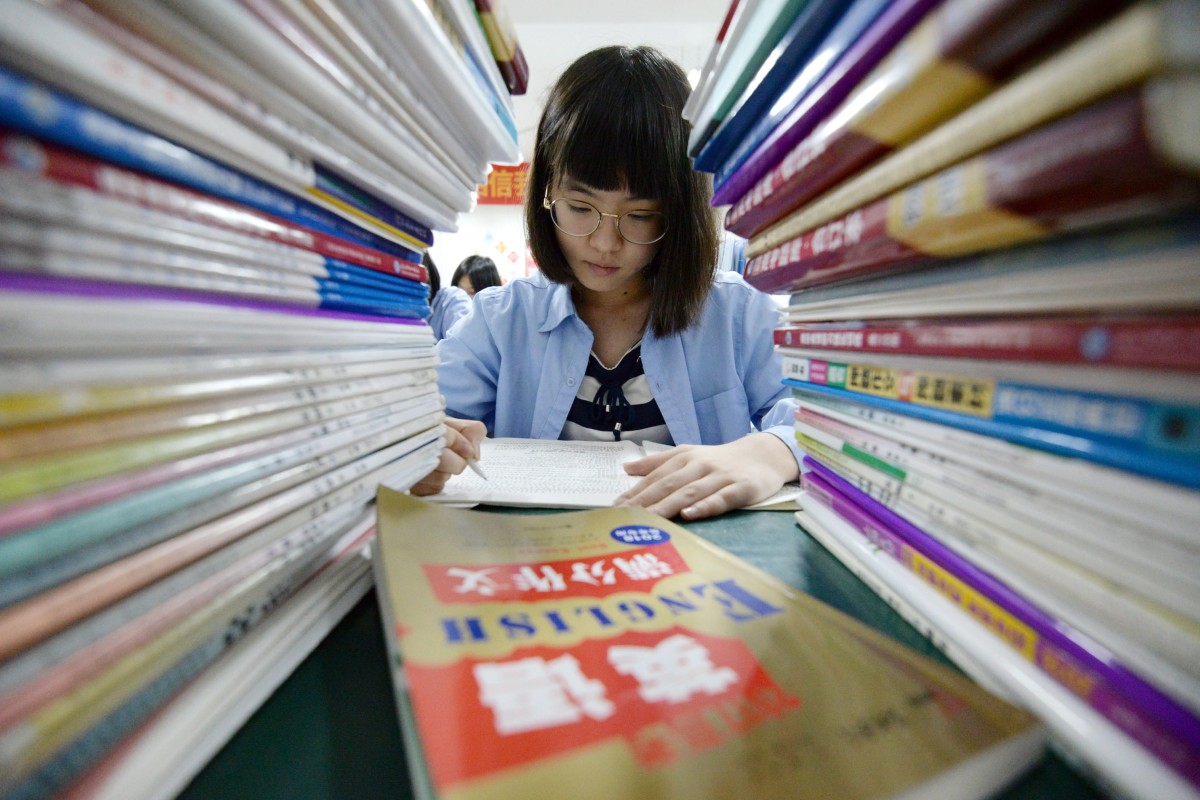
After months of study, China’s high school students are about to be put to the test in the annual “university entrance examinations which begin on Friday. Photo: EPA-EFE
For the past six months, the life of 18-year-old Shanghai student Xiao Qing has revolved around preparation for one of China’s annual rites of passage.
Every day at school, from 7.20am to 5.30pm, the final-year secondary school student in Changning district has studied previous test papers for the gaokao, officially known as the National Higher Education Entrance Examination.
“Sometimes I feel my bottom hurts from sitting for so many hours,” she said. “We feel like we are test machines.”
Xiao Qing will put all of that preparation to the real test from Friday, when over two to three days she will be among more than 10 million people trying to qualify for one of the spots at a Chinese university.
Most students get just one shot at the gaokao, the sole criteria for admission to university in China. It’s a gruelling process that has been criticised over the years as too focused on rote learning, putting too much pressure on students and privileging applicants living near the best universities.
Education authorities have gone some way to try to address these problems. In 2014, the Ministry of Education started letting students choose half of their subjects to introduce some flexibility into the system.

Apart from the compulsory subjects of Chinese, mathematics and English, students are now supposed to be able to choose any three of six other subjects: physics, chemistry, biology, politics, history and geography.

Previously, secondary school students had been split strictly into liberal arts or science majors in a system that was introduced in 1952 and revived in 1977 after being suspended during the Cultural Revolution.

Last go at exam success for China’s ‘gaokao grandpa’

Wen Dongmao, a professor from Peking University’s Graduate School of Education, said the changes expanded the opportunity for students to follow their interests.

“The new gaokao gives students plenty of choices of subjects to learn and to be evaluated on. I think people should choose which subject to learn based on what they are interested in,” Wen said.

Gaokao reform is designed according to some methods by overseas universities, like American and Hong Kong schools. Its direction is right, but there will be inevitable problems brought by it.”

One of the problems is the uneven implementation of the changes throughout the country, with just 14 of China’s 31 provinces, municipalities and autonomous regions having introduced them.

In the eastern province of Anhui, for example, the reforms were supposed to go in effect from September last year but were postponed without reason, news portal Caixin.com reported.

The report quoted a teacher from Hefei No 1 Middle School in the provincial capital as saying the school was not ready for the changes.

Is the university entrance exam in China the worst anywhere?

“Shanghai and Zhejiang are economically advanced and we are not at that level,” he was quoted as saying. “It’s a big challenge for us to manage so many students’ choices of gaokao subjects.”

In neighbouring Jiangxi province, a high school history teacher said many places opposed the reform mainly “because of the shortage of resources”.

“It’s hard to roll out gaokao reform because we don’t have enough teachers or classrooms to handle the students’ various choices of subjects. Students can choose three out of six courses and that means there are 20 potential combinations,” the teacher was quoted as saying.

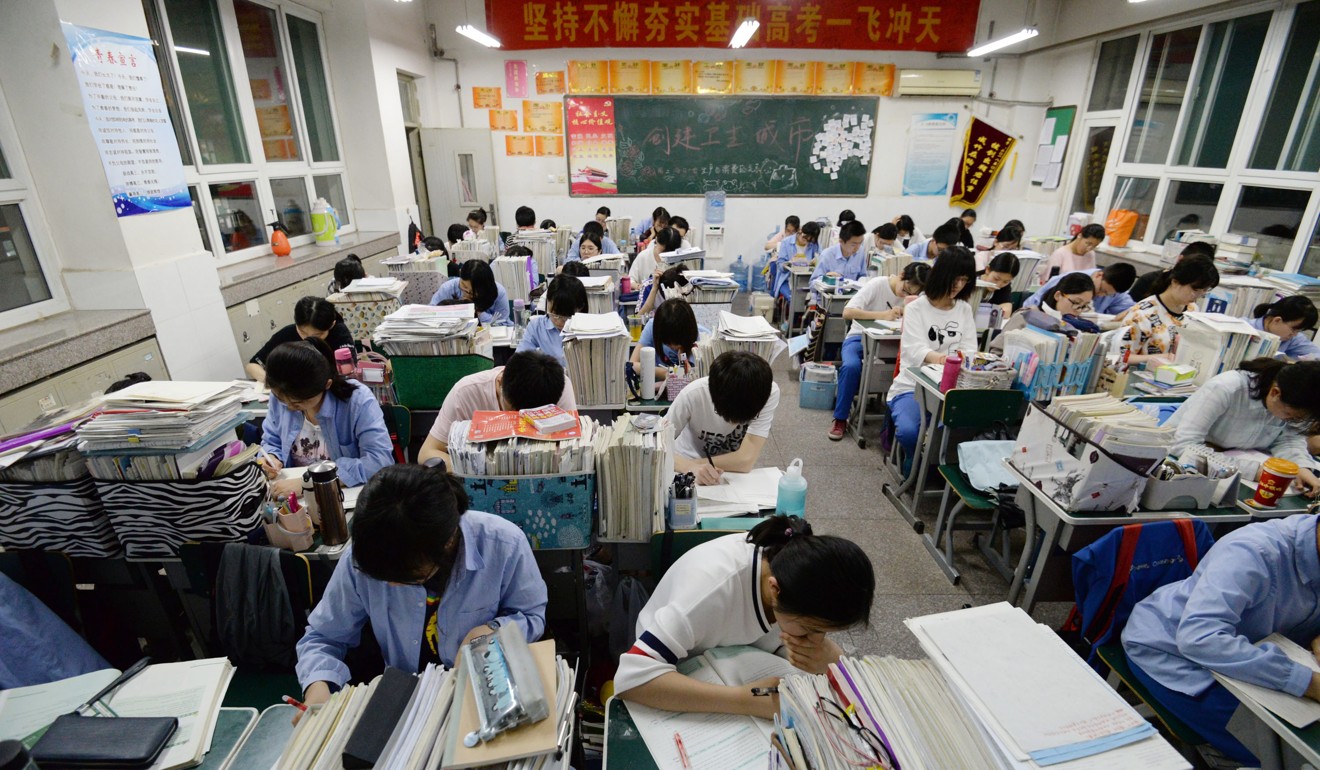
Chinese high school students study late into the night for the National Higher Education Entrance Examination. Photo: EPA-EFE

In addition, the system allows students to take the tests in more than one year and submit the highest scores when applying to universities.

“I heard from teachers in other provinces that students will take the tests of the selected subjects again and again for fear that other students will overtake them. That’s exhausting and will just put more burden on the students,” the Jiangxi teacher said.

He also said the gaokao process put extra pressure on teachers who feared the tests would push students to extremes. One of his students contemplated jumping from a bridge after she thought she had done poorly in the Chinese section of the exam.

“She called me, saying she felt it was the end of the world. I was shocked and hurried to the bridge,” he was quoted as saying. He spoke to her for more than an hour about before the girl came down, going on to get a decent score.

Critics also say the system is weighted in favour of students in bigger cities such as Beijing, Tianjin and Shanghai, home to the country’s top universities.

China private education industry is booming despite economic slowdown

Li Tao, an academic from the China Rural Development Institute at Northeast China Normal University in Changchun, Jilin province, said about 20-25 per cent of gaokao candidates from Beijing, Tianjin and Shanghai were admitted to China’s elite universities, compared with just 5 or 6 per cent in places like Sichuan, Henan and Guangdong.

Li said that was because the top universities were funded by local governments and gave preference to applicants from those areas.

“To make it fairer, the Ministry of Education has insisted over the years that elite universities cannot have more than 30 per cent of incoming students from the area in which it is located,” he said.

Despite these challenges, gaokao was still a “fair” way to get admitted to university in China, Li said.

Gaokao is the fairest channel to screen applicants on such a large scale, to my knowledge,” he said. “It does not check your family background and every student does the same test paper [if they are from the same region]. Its score is the only factor in evaluating a university applicant.”

Fake nursing degree scandal prompts China-wide fraud check

In Shanghai, as the clock ticks closer to the gaokao test day, Xiao Qing said she was feeling the pressure.

She said she would keep up her test prep to ensure she got the score she needed to study art in Beijing.

“I am trying my utmost and don’t want to regret anything in the future,” she said.

At the same time, she is not pinning her entire life on it.

“Life is a long journey and it is not decided solely by gaokao,” she said.

“I don’t agree with my classmates that life will be easy after gaokao. I think we still need to study hard once we get to university.”

Source: SCMP

04/06/2019

World’s largest technical professional society bans Huawei staff from peer review of research

  • IEEE’s ban has ignited a backlash from its Chinese members, resulting in calls to boycott the organisation
Staff at Huawei Technologies have been banned by the Institute of Electrical and Electronics Engineers from taking part in the peer review of research papers, including serving as editors for journals, after the Chinese telecommunications equipment maker was added to a US trade blacklist. Photo: AP
The US government’s efforts to reduce the influence of Huawei Technologies, the world’s largest telecommunications equipment supplier, has extended beyond business to cover scientific research.
That development emerged as the New York-based Institute of Electrical and Electronics Engineers (IEEE) moved to ban Huawei employees from the peer review of research papers, including serving as editors for its journals, after the Chinese hi-tech champion was added to a US trade blacklist.
The decision by IEEE, the world’s biggest technical professional organisation, was leaked online across Chinese social media on Wednesday, igniting a backlash from some of the country’s leading scientists who described the move as “anti-science” and “violating academic freedom”.

Zhang Haixia, a professor with the Institute of Microelectronics at Peking University, announced on her WeChat account on Wednesday that she was quitting IEEE because the decision to comply with the trade blacklist went “far beyond the basic line of science and technology” and challenged her professional integrity.

US is waging a tech war against this district in Shenzhen
“As a professor, I do not accept this,” Zhang wrote online in a public letter addressed to IEEE president-elect Toshio Fukuda.
Her resignation letter was viewed more than 40,000 times since it was posted online. The most popular comments on its thread included calls for Chinese scientists to boycott IEEE.

In a statement on May 30, the IEEE said it must comply with its legal obligations under the laws of the US and other jurisdictions and that compliance with regulations “protects the IEEE, our volunteers, and our members”.

It said Huawei employees are only barred from the peer reviewing process and that they can continue to participate in individual membership, corporate membership, enjoy voting rights and take part in a variety of other activities, including the submission of technical papers for publication.

Huawei said it had no comment about the peer review ban.

The issue between Huawei and IEEE has come amid a raging tech war between the world’s two biggest economies, which recently escalated when the US government placed Huawei and its affiliates under the US Entity List on May 16. That bars the Chinese group from buying hardware, software and services from American hi-tech suppliers without US approval.

A succession of major American technology companies, from Google and Microsoft to Intel and Qualcomm, have suspended their dealings with Huawei to comply with the US trade ban.

Growing disquiet in China as US steps up war on tech champions

US President Donald Trump has also signed an executive order barring US companies from using telecoms equipment made by companies that pose a threat to national security.

The trade blacklist, which is maintained by the Bureau of Industry and Security under the US Department of Commerce, identifies organisations and individuals believed to be involved, or pose a significant risk of becoming involved, in activities contrary to America’s national security or foreign policy interests.

A non-profit organisation founded in January 1963, IEEE had more than 422,000 members in more than 160 countries as of December 31 last year. More than 50 per cent of its members, who are rooted in electrical and computer sciences, engineering and related disciplines, are from outside the US.

Technology is true target of US attack on China, says diplomat

It also publishes around 200 transactions, journals and magazines, and sponsors more than 1,900 conferences in 103 countries.

There is no official data on how many IEEE members are based in mainland China. Public information online, however, showed that at least 80 Huawei employees are members of the organisation.

China’s biggest chip maker to delist from NYSE as US targets tech

In a statement released on May 16, IEEE said that as a corporation organised in New York, it must comply with its legal obligation under US laws. It said the US government’s export restriction covers not only physical goods and software but also technical information.

In the leaked IEEE email, the organisation warned its members of “severe legal implications” if they continue to use Huawei staff as reviewers or editors for the peer review process of its journals.

“IEEE is registered in the US, but we should suggest experts at all levels of IEEE to move its headquarters to places such as Switzerland,” said Zhou Zhihua, a leading computer science professor at Nanjing University and an IEEE fellow, in a post on microblogging site Sina Weibo. “More importantly, let’s show more support to China-produced English-language journals.”

Source: SCMP

26/05/2019

China Focus: Rare all-white panda spotted in China

CHINA-SICHUAN-ALL-WHITE PANDA (CN)

Infrared camera image taken on April 20, 2019 shows an all-white giant panda in the Wolong National Nature Reserve in southwest China’s Sichuan Province. A rare all-white panda has been captured on cameras in the Wolong National Nature Reserve in southwest China’s Sichuan Province, the reserve management authorities said on Saturday. (Xinhua)

CHENGDU, May 25 (Xinhua) — A rare all-white panda has been captured on camera in the Wolong National Nature Reserve in southwest China’s Sichuan Province, the reserve management authorities said on Saturday.

The panda was captured in mid-April by an infrared camera about 2,000 meters above sea level in the wild, the authorities said.

The panda has no spots on its body and its eyes look red. It was crossing the forest at the time.

“Judging from pictures, the panda is an albino, one to two years old,” said Li Sheng, a researcher with Peking University and a specialist in bears, who studied the pictures.

The panda is a rare all-white individual in wild pandas, which showed that the albinism genes exist in the wild population of giant pandas in Wolong, he said.

“The panda looked strong and its steps were steady, a sign that the genetic mutation may not have quite impeded its life,” Li said, adding that the gender of the panda cannot be decided based on current data.

Albinism exists in different vertebrate species. The albino mutation inhibits melanin synthesis in animal’s body. Albino usually does not affect animal’s physical makeup and functions. It could make them easier to be discovered and more sensitive to direct sunlight, Li said.

The albino mutation is a recessive gene. Only when the parent pandas both carry such gene, can the baby show the albino traits.

If this white panda would mate with a normal panda, their first generation babies will still be black and white. But their babies, carrying the albino gene, will possibly give birth to all-white pandas if their partners also carry such genes, Li said.

In order to better protect the ecosystems, the Wolong nature reserve has been using infrared cameras to monitor the distribution and activities of wild animals in its seven demonstration areas.

Previously, some rare brown giant pandas were found in China’s Qinling Mountains. The cause of the brown fur color was also considered as genetic mutation by some researchers.

Source: Xinhua

07/03/2019

China ‘exaggerated’ GDP data by 2 percentage points for at least nine years, new study says

  • Mainland has overestimated its nominal and real growth rates by about 2 full percentage points on average between 2008 to 2016
  • Calculations suggest that the current nominal size of the economy is about 18 per cent lower than the official level of US$13.4 trillion at the end of 2018

13 Feb 2019

The paper, “A Forensic Examination of China’s National Account”, was submitted to the “Brookings Papers on Economic Activity”, a journal published by the US-based Brookings Institute. Photo: EPA
China has overestimated its nominal and real growth rates by about 2 full percentage points on average between 2008 to 2016, with the miscalculation increasing each year, according to a new study published on Thursday.
The results indicate that the actual size of China’s economy at the end of 2018 was well below the government’s official estimate.
It also raises questions not only about the quality of economic data from the world’s second largest economy, but also the willingness of the government to take the steps necessary to accurately report information.
Using the study’s findings and applying them to government figures starting with the level of nominal gross domestic product (GDP) at the end of 2007 and the growth rate for 2008, calculations by the South China Morning Post show that the current nominal size of the Chinese economy is about 18 per cent lower than the official level of 90 trillion yuan (US$13.4 trillion) at the end of 2018.
The calculation assumes that the government’s official 2017 and 2018 nominal growth rates are overestimated by 2 percentage points, as suggested by the study.

Overestimates of growth in 2007 and previous years would further reduce the current size of the Chinese economy.

SCMP calculations show the adjusted nominal GDP level in China is about US$11.5 trillion using current exchange rates, still more than twice the size of Japan’s economy at US$5.16 trillion, but well below the economy of the United States at US$20 trillion.

The paper, “A Forensic Examination of China’s National Account”, was submitted to the “Brookings Papers on Economic Activity”, a journal published by the US-based think tank Brookings Institute twice a year on macroeconomic issues that are influencing the public policy debate. It will be formally presented in Washington on Thursday.
“Our estimates suggest that the extent by which local governments exaggerate local GDP accelerated after 2008, but the magnitude of the adjustment by the NBS did not change in tandem,” the authors said.

The study focuses primarily on nominal, non-inflation adjusted growth.

The paper comes at a sensitive time for Chinese policymakers, who are battling a slowing economy due to their campaign to reduce debt and risky lending as well as the effect of the trade war with the United States. The inflation-adjusted growth rate of 6.6 per cent last year was the slowest since 1990.

On Tuesday, the government announced that it had lowered its growth target for 2019 to a range of 6 to 6.5 per cent, down from “about 6.5 per cent” last year due to the multiple headwinds the economy is facing. The government also announced new tax cuts and additional government spending to help stabilise growth.
The paper’s four authors – Chen Wei, Chen Xilu and Michael Song from the Chinese University of Hong Kong and Chang-Tai Hsieh from the University of Chicago – used a mix of economic indicators that are less likely to have been manipulated by authorities to prove that the National Bureau of Statistics (NBS) have not done enough to correct the errors in the data collected from provincial governments over the past decade.

Our estimates suggest that the extent by which local governments exaggerate local GDP accelerated after 2008, but the magnitude of the adjustment by the NBS did not change in tandem.Report authors

It has long been believed that local Chinese officials inflate figures reflecting their economic performance, which is closely tied to their opportunity for promotion. Since 2003, the NBS has produced a national gross domestic product (GDP) figure that is lower than aggregate provincial data after examining other data such as the census and land sales.

Local statistics bureaus generally overstate industrial output as a portion of overall production as well as the size of investment within overall expenditures, the two different approaches to calculating GDP, according to the paper. The methods of data collection are often the cause, for example, calculations of investment spending have been based purely on government reports on specific projects rather than on the financial statements of the investing firms involved.

One method that the authors used to probe the accuracy of the NBS’s adjustments was comparing the growth of official GDP with the growth of revenue from value-added tax (VAT), which taxes the value added to a product at each stage of production.

Local governments have fewer incentives to manipulate VAT revenue, since a large portion of it is eventually transferred to the central government, therefore overstating VAT would only increase fiscal revenue losses.

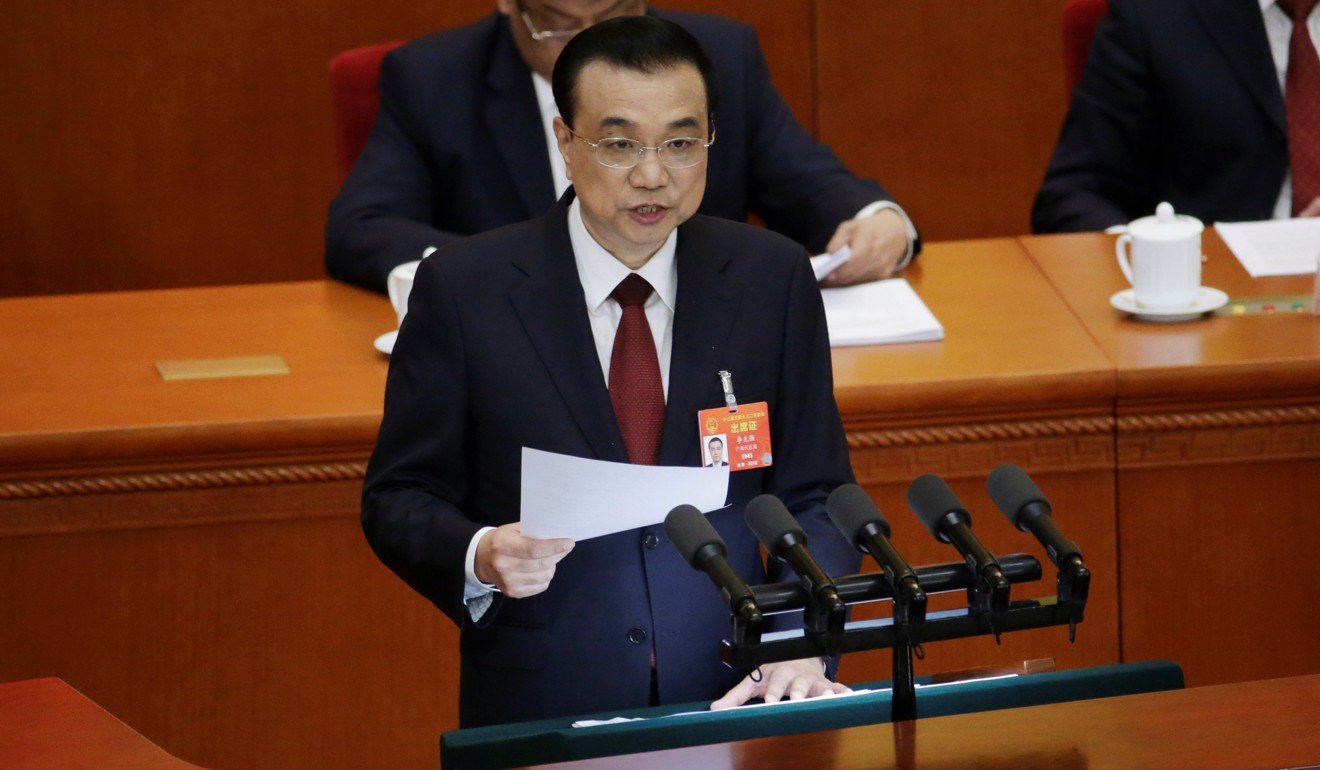
Premier Li Keqiang confirmed China had lowered its growth target for 2019 to a range of 6 to 6.5 per cent at the National People’s Congress on Tuesday. Photo:

Although the NBS adjusts downwards local statistics, it does not report the adjusted local statistics, perhaps out of a desire to not confront powerful local leaders.Report authors

“Although the NBS adjusts downwards local statistics, it does not report the adjusted local statistics, perhaps out of a desire to not confront powerful local leaders,” the authors said.

Since September, the NBS has named and shamed local governments on its website for manipulating data, but it remains to be seen if local governments fall in line.

In a post in January, the NBS said it had passed 14 cases of data falsification on to local governments before February 2018 but that it had not been updated even though local officials are required by law to punish those responsible for manipulating data within six months after receiving a notice of a violation.

The NBS’s ability to fix China’s GDP data problem is bound by its limited political power, the authors indicated.

“There are three problems with China’s GDP. One is that it doesn’t necessarily measure the right thing. Two is statistical bias in the way data is collected. Three is really a macro policy problem by the government which should write down all the bad debt,” said Michael Pettis, professor of finance at Peking University.

“The NBS is only trying to fix the second problem.”

Source: SCMP

Law of Unintended Consequences

continuously updated blog about China & India

ChiaHou's Book Reviews

continuously updated blog about China & India

What's wrong with the world; and its economy

continuously updated blog about China & India